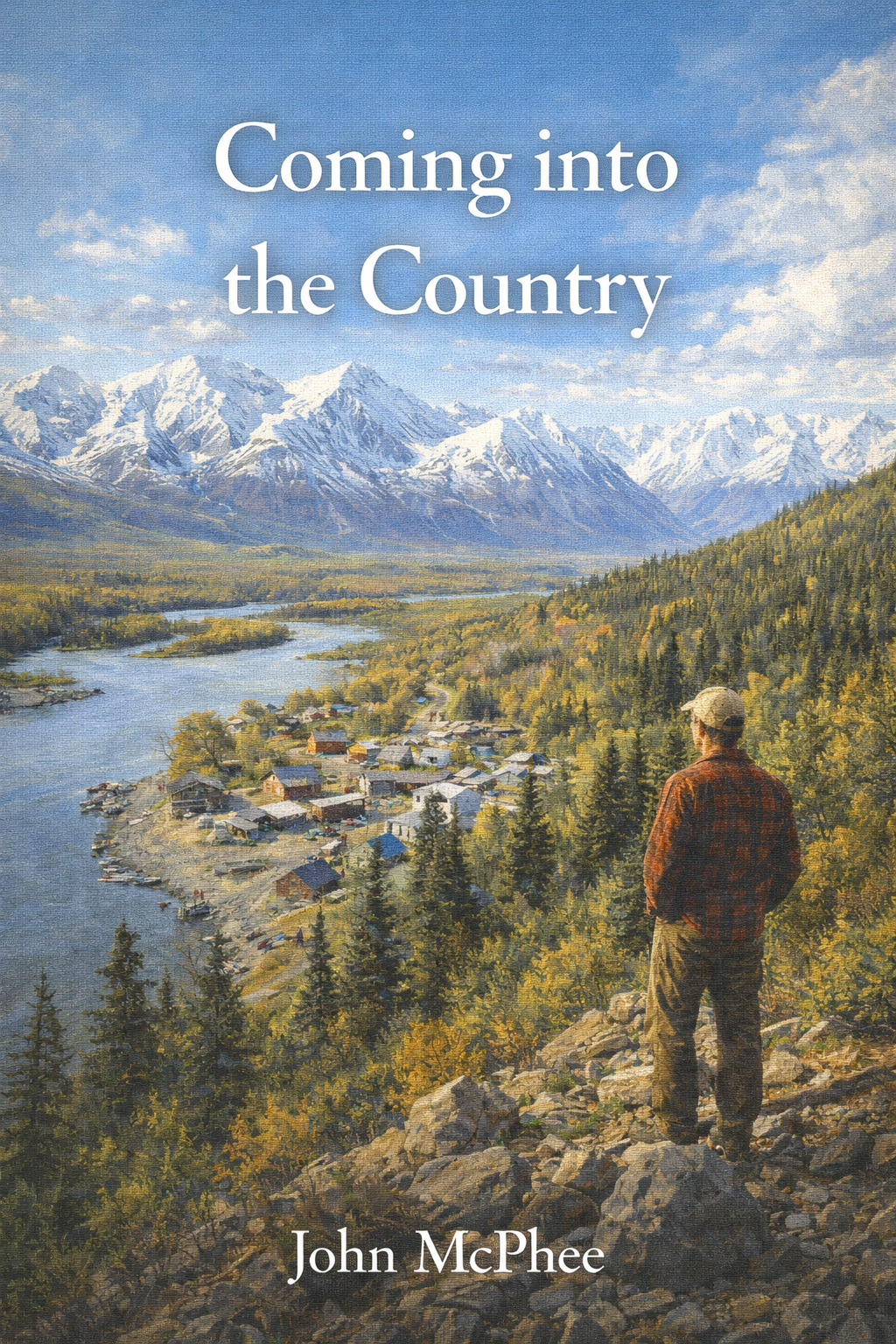
Coming into the Country
Chapter Summaries
What's Here for You
Embark on an extraordinary expedition into the raw, untamed heart of Alaska with John McPhee's "Coming into the Country." This is more than just a travelogue; it's an invitation to confront the profound questions surrounding our relationship with the wild, human ambition, and the very essence of what it means to forge a life on the edge of civilization. You'll be transported to the biting cold of the Salmon River, where the delicate balance of nature is palpable, and then soar above breathtaking landscapes with a committee seeking a new capital, a journey that reveals the soul of a state in the making. McPhee doesn't just describe Alaska; he immerses you in its spirit, introducing you to individuals like Donna Kneeland who have mastered the art of living in harmony with this formidable environment, shaping their lives far from the familiar hum of the modern world. Prepare to gain a deeper appreciation for the resilience of the human spirit, the enduring power of wilderness, and the complex interplay between progress and preservation. This book offers an intellectual adventure steeped in vivid sensory detail, a contemplative exploration that will leave you pondering the vastness of nature and your place within it. It’s a journey that promises to expand your understanding of self-reliance, the allure of the frontier, and the profound beauty that lies in embracing the wild.
THE ENCIRCLED RIVER
The author, John McPhee, guides us down the Salmon River in Alaska, a journey that becomes a profound exploration of wilderness, human impact, and the delicate balance of nature. He describes the biting cold of the forty-six-degree water, a stark contrast to the penetrating Arctic sun that can cause headaches, yet finds relief in dipping his bandanna into the frigid flow. The river itself is a character, impossibly clear, its bed distinct beneath the surface where salmon, oblivious to the boats, surge in their spawning rituals, some already succumbing to the current, their bodies whitening reminders of life's cycles. McPhee notes the sheer abundance of salmon, a testament to the river's purity, yet this abundance is juxtaposed with the precariousness of life on the margin, where plants and animals exist in cycles vulnerable to change. He recounts a moment of near-disaster as the group nearly falls into the river, their near-tumble revealing a massive, recently gouged pit in the gravel, a silent story of a bear's frustrated lunge for a fish, reminding them of the wild's untamed power and unpredictable encounters. The narrative then pivots to a deeper contemplation of Alaska's myth versus reality, as Bob Fedeler articulates the disappointment of those who expect a fish on every cast, highlighting the immense cost and inaccessibility of true wilderness for most. This leads to a discussion about the proposed national monument and wild river designations, a complex political and conservationist struggle over millions of acres, contrasting the vastness of Alaska with its sparse population and the conflicting desires of developers and preservers. John Kauffmann, a planner deeply connected to this landscape, embodies the tension between preservation and access, his meticulous fly-fishing a quiet protest against the commodification of nature, and his release of a small grayling a poignant affirmation of the wild's intrinsic value. The journey continues, revealing the stark beauty of the tundra, the resilience of its flora and fauna, and the subtle, yet profound, impact of human presence, from the discarded plastic bags to the looming possibility of roads and bridges. The author observes the forest Eskimos, their lives interwoven with the river's bounty and the cycles of caribou, a culture deeply connected to the land yet increasingly shaped by external forces and the introduction of private property concepts. A pivotal encounter with a grizzly bear, a magnificent, immense creature grazing peacefully amidst a swale of blueberries, underscores the raw, untamed essence of this place, forcing a revision of travel plans and a deep respect for the wild's dominant inhabitants. This encounter, and the subsequent realization of the bear's need for vast, undisturbed territory, amplifies the central dilemma: how to balance human access and development with the preservation of ecosystems that support such magnificent, wild life. The chapter concludes with a reflection on the inherent risks of such journeys, the need for humility in the face of nature's power, and the enduring paradox of Alaska—a land of immense scale, seemingly infinite wildness, yet profoundly vulnerable to human ambition and the ever-present drive for exploitation, leaving the reader with a sense of awe, respect, and a lingering question about the future of these last great wildernesses.
WHAT THEY WERE HUNTING FOR
John McPhee, in "Coming into the Country," transports us to the vast, untamed landscapes of Alaska, where the very idea of a new capital city becomes a crucible for the state's identity. The narrative unfolds with a breathtaking aerial survey, following a committee tasked with finding a new seat of government, a quest born from a voter initiative to move away from the geographically isolated Juneau. This journey, traversing the dramatic Alaska Range and the sprawling Susitna Valley, reveals not just potential landscapes but the deep fissures in Alaskan society: the intense rivalry between Anchorage and Fairbanks, the complex relationship between development and wilderness, and the persistent tension between old ways and the relentless march of progress. McPhee masterfully weaves together the voices of Alaskans—from the native perspective of Willie Hensley, who serves as chairman of the Capital Site Selection Committee, to the pragmatic concerns of homesteaders and the ambitious pronouncements of Anchorage boosters—to illustrate a core dilemma: how to reconcile the dream of a modern, centrally located capital with the raw, often unforgiving reality of the Alaskan environment and its sparse, fiercely independent population. The search for a site becomes a profound exploration of what Alaska truly is, a land of immense scale where human settlement is still a fragile overlay on an ancient wilderness, and where the pursuit of a new capital magnifies questions about economic sustainability, political influence, and the very definition of progress. The committee’s meticulous, almost scientific approach, employing McHarg’s overlay technique to analyze terrain, hydrology, and wildlife habitats, underscores the monumental challenge of finding a place that satisfies stringent criteria—proximity to roads and railroads, suitable airport conditions, state ownership, and minimal environmental impact—while simultaneously acknowledging that such a rational process often clashes with the deeply held, sometimes contradictory desires of the people whose lives will be shaped by the decision. Ultimately, McPhee suggests that the selection process itself, fraught with political maneuvering, economic speculation, and deeply ingrained regional identities, is as revealing as any potential site, highlighting Alaska’s unique position as a foreign country populated by Americans, where grand ambitions often collide with the stark realities of a land that demands respect and a people who have learned to live by their own rules, even as they grapple with the intoxicating promise of oil wealth and the relentless pressure to expand.
COMING INTO THE COUNTRY
Part 1: John McPhee invites us into the rugged, untamed heart of Alaska's upper Yukon, a place where people don't just live, they *come into the country*, forging lives far from the familiar hum of civilization. We meet Donna Kneeland, who arrived in 1975, quickly mastering the art of fur tanning and embracing a life of self-reliance, her very survival a testament to her connection with the land, even as she grapples with the remnants of the culture she left behind, like a parka she never needs in Alaska's extreme cold. Then there's Dick Cook, a former geophysicist who sought transformation, trading a life of professional expectation for the demanding independence of trapping, learning to live on tens of thousands of acres with nature as his only authority, a man who consciously limits his income to maximize his freedom, finding profound satisfaction in the sheer act of survival and the unadulterated joy of prospecting. The narrative then shifts to Eagle, a small settlement that serves as a gateway to this vast wilderness, a place where individuals like John Borg, the multi-hatted postmaster and mayor, embody the resilience and multifaceted roles required to sustain a community at the edge of the world. Borg, a former mailman seeking refuge from the overwhelming crowds of Anchorage, becomes the linchpin of Eagle, his post office a hub of connection and information, a place where mail delivery is the week's main entertainment and where the rhythm of life is dictated by weather and the capricious arrival of planes. Through these lives, McPhee reveals a profound truth: the Alaskan wild doesn't just test people; it fundamentally reshapes them, revealing that the desire for a different kind of life, one stripped of societal constraints and driven by primal needs, draws a unique breed of individual to this remote frontier. The central tension lies in the constant negotiation between embracing absolute self-sufficiency and acknowledging the inescapable pull of culture and community, a delicate balance that defines existence in this starkly beautiful landscape. We see individuals like Jim Dungan, a former assembly line worker and Marine, rebuilding his life after a devastating accident, his spirit unbroken as he dreams of gold and independence, embodying the resilient, almost stubborn optimism that fuels survival here. Even the landscape itself, with its dramatic ice runs on the Yukon and its unpredictable weather, acts as a character, shaping human endeavor and demanding respect. The author highlights that the allure of the country isn't just about escaping the 'rat race' of the Lower Forty-Eight, but about discovering a deeper sense of self, where a person's worth is measured not by what they earn, but by what they can endure and create with their own hands. The story culminates in the understanding that while technology is a constant presence, its integration is a personal choice, a line each individual must draw between necessity and luxury, a compromise that defines their unique relationship with the wild. It's a profound exploration of the human spirit's capacity to adapt, to find meaning, and to carve out an existence in one of the planet's most challenging and awe-inspiring environments.
Conclusion
John McPhee's "Coming into the Country" offers a profound and multifaceted reflection on Alaska, moving beyond romanticized notions of wilderness to reveal its complex realities. The book masterfully synthesizes core takeaways concerning the inherent fragility masked by perceived abundance, the subtle yet significant impacts of human presence, and the critical need to preserve entire ecosystems, not just isolated vistas. McPhee challenges the often-conflicting desires for development and resource extraction against the long-term ecological and cultural well-being of both wildlife and indigenous populations. The encounter with apex predators like the grizzly bear serves as a humbling reminder of humanity's place within a larger natural order, underscoring the importance of respect and dominion. The very concept of 'pristine' is deconstructed, showing how even seemingly untouched areas bear the marks of natural cycles and enduring human influence. Emotionally, the book evokes a sense of awe at the sheer scale and wildness of Alaska, coupled with a poignant awareness of its vulnerability. It conveys the profound satisfaction and personal transformation found in forging an independent existence through direct engagement with nature's challenges, a stark contrast to the artificiality of conventional society. There's a deep respect for the resilience and resourcefulness of those who choose this path, a spirit of self-sufficiency that balances isolation with vital community connections. The narrative also touches on the frustration and tension arising from the clash between competing visions of progress – the unfettered 'Dallas scenario' versus the conservationist 'Sierra Club syndrome' – and the often-overlooked human costs of speculative development fueled by resource wealth. Practically, McPhee imparts wisdom on the necessity of careful planning and governance that respects local values and environmental realities. The pursuit of a new capital city becomes a microcosm for these larger debates, highlighting the tension between efficient governance and preserving vast landscapes. The book underscores that true progress is contested and often influenced by economic motives and political maneuvering. Ultimately, "Coming into the Country" is a powerful call for a more nuanced understanding of our relationship with wild places, emphasizing that adapting to such environments demands constant learning, resourcefulness, and a deep, abiding respect for nature as the ultimate authority, forging a character defined by resilience and a profound connection to the land.
Key Takeaways
The perceived abundance of Alaskan wilderness often masks its inherent fragility and the immense cost of access, challenging romanticized notions of easy access to nature.
Human presence, even in seemingly untouched landscapes, creates subtle but significant impacts, necessitating careful consideration of resource use and preservation.
True wilderness preservation requires protecting entire ecosystems and watersheds, not just isolated scenic spots, to maintain ecological integrity and biodiversity.
The pursuit of development in pristine environments often creates a tension between economic interests and the long-term ecological and cultural well-being of both wildlife and indigenous populations.
Encountering apex predators like the grizzly bear in their natural habitat offers a profound, often humbling, perspective on humanity's place within the natural world and the importance of respecting their dominion.
The concept of 'pristine' is complex, as even areas untouched by industrial development bear the marks of natural cycles and the subtle, enduring influence of human presence and traditional practices.
The drive for resource extraction and development in vast, seemingly inexhaustible landscapes like Alaska must be carefully balanced with conservation efforts to ensure the perpetuation of natural habitats for future generations.
The quest for a new capital city in Alaska reveals a profound societal tension between the desire for centralized, efficient governance and the preservation of vast, wild landscapes, forcing a confrontation with the true cost of progress.
Alaskan identity is deeply intertwined with its immense geography and the independent spirit of its inhabitants, making any attempt at centralized planning a complex negotiation between competing regional interests and a deep-seated resistance to external control.
The pursuit of development, particularly fueled by resource wealth like oil, often creates a speculative economic bubble that can overshadow rational planning and lead to the exploitation of both land and people.
Effective governance in a vast, sparsely populated territory requires more than just logical placement; it demands an understanding of local values, a respect for the environment, and a willingness to engage diverse perspectives, even when they are in conflict.
The definition of 'progress' in Alaska is contested, with starkly different visions—from the 'Dallas scenario' of unfettered development to the 'Sierra Club syndrome' of conservation—clashing over how best to manage the state's future.
Even meticulously planned initiatives can be influenced by underlying economic motives and political maneuvering, demonstrating that the 'how' and 'why' of decision-making are often as significant as the decision itself.
True self-sufficiency in the wilderness requires a conscious negotiation between embracing isolation and maintaining vital community connections.
The pursuit of independence in extreme environments often involves a deliberate rejection of conventional measures of success, such as high income, in favor of autonomy and skill development.
Individuals drawn to remote wilderness often seek to escape perceived societal restrictions and artificiality, finding a more authentic existence through direct engagement with nature's challenges.
Adapting to the Alaskan wild necessitates a profound respect for its power and unpredictability, demanding constant learning, resourcefulness, and a willingness to accept nature as the ultimate authority.
The Alaskan frontier offers a unique crucible for personal transformation, where the demands of survival forge a different kind of character, one defined by resilience, practical knowledge, and a deep connection to the land.
While technology is often a necessary tool for survival, the Alaskan way of life emphasizes finding a personal balance, integrating essential modern conveniences without succumbing to their potential to diminish self-reliance.
Action Plan
Reflect on the perceived 'myth' versus the 'reality' of accessible wilderness in your own experience and consider the costs of true remoteness.
Examine the balance between development and conservation in areas you are familiar with, and consider the long-term implications of resource extraction.
When experiencing nature, observe the subtle signs of ecological cycles and the impact of both natural and human forces on the environment.
Consider the ethical implications of human presence in wild habitats and practice mindful observation rather than intrusive interaction.
Evaluate the accessibility of natural spaces in your region and consider how to advocate for or support the preservation of wild ecosystems.
When planning outdoor excursions, research the local ecology and potential wildlife encounters, preparing with respect for the animals' territory and habits.
Contemplate the concept of 'carrying capacity' in natural environments and its relevance to human activity and resource consumption.
Consider the true costs—economic, environmental, and social—beyond initial projections when evaluating large-scale development or relocation projects.
Examine the underlying motivations and regional biases that shape public policy and planning decisions.
Seek out diverse perspectives, especially from those with deep connections to the land, when making decisions that impact communities and environments.
Reflect on the balance between progress and preservation, and how to foster sustainable growth that respects natural and cultural landscapes.
Analyze the language used in political and economic discourse, identifying how words can be used to persuade or obscure underlying intentions.
Appreciate the value of wilderness and undeveloped land, recognizing its intrinsic worth beyond immediate economic exploitation.
Reflect on your own definition of self-sufficiency and identify areas where you can increase your practical skills.
Consider the trade-offs between convenience and independence in your daily life.
Examine the external pressures or societal expectations that influence your choices and aspirations.
Identify a personal 'line' between embracing modern tools and maintaining a connection to more fundamental ways of living.
Seek out opportunities to learn a new practical skill, however small, that enhances your sense of capability.
Contemplate what 'country' or environment allows you to feel most authentically yourself, and why.
Evaluate the elements of your life that are driven by necessity versus those driven by comfort or luxury.