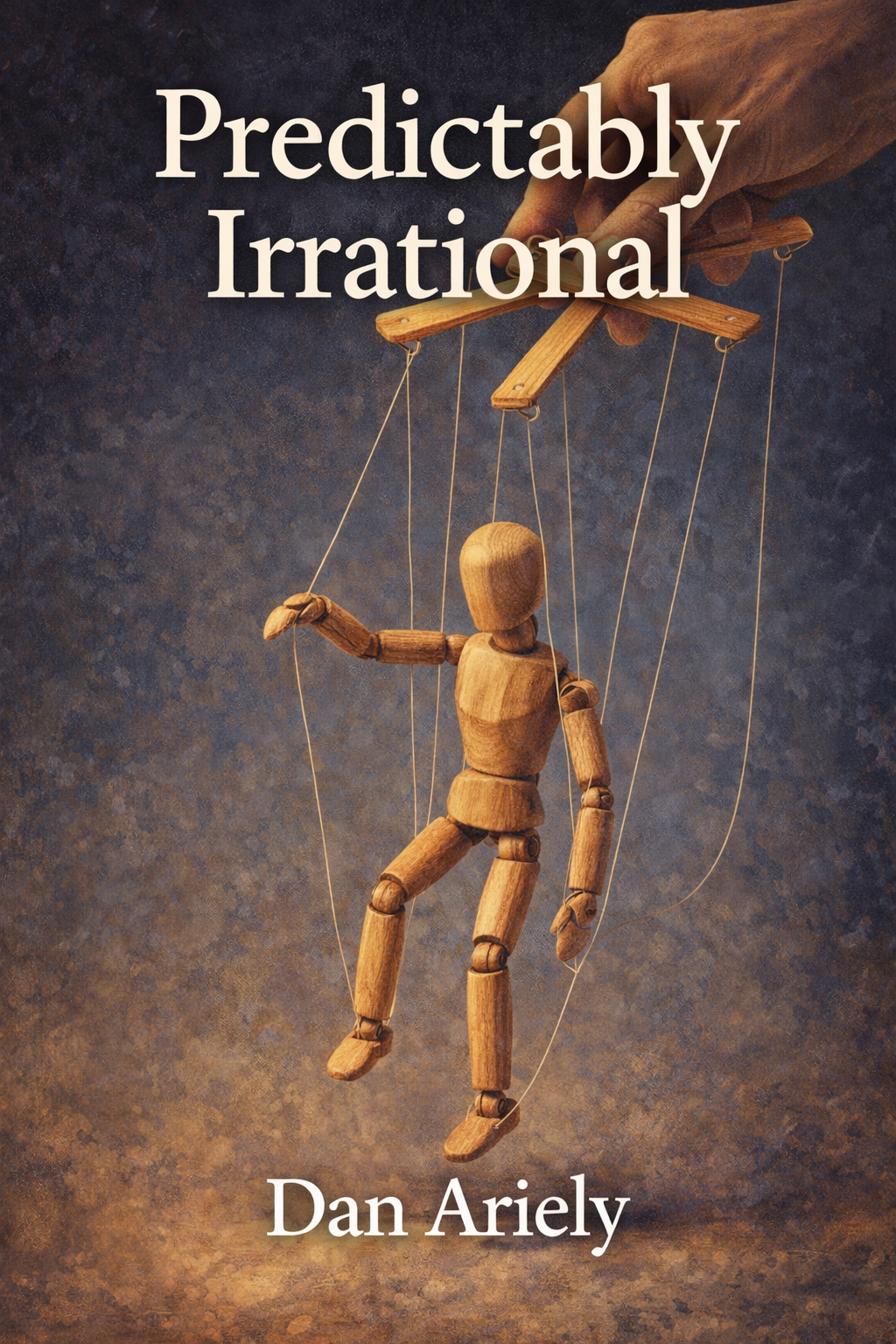
Predictably Irrational
Chapter Summaries
What's Here for You
Prepare to have your assumptions about human behavior delightfully dismantled. Dan Ariely's "Predictably Irrational" isn't just a book; it's a journey into the fascinating, often humorous, and surprisingly systematic ways we all make decisions that defy pure logic. Are you tired of feeling like you're making sound choices, only to later question your own reasoning? Ariely pulls back the curtain, revealing that our decisions aren't made in a vacuum. Instead, they're heavily influenced by context, comparison, and an array of invisible forces. You'll discover why the allure of 'free' can lead us astray, how social norms clash with market demands, and why we often overvalue what we own. Ever wondered about your own procrastination habits or the surprising impact of price on your perception? This book dives deep into these questions and more. Ariely uses captivating real-world examples and ingenious experiments to demonstrate that our irrationalities are not random errors, but rather predictable patterns. By understanding these patterns, you'll gain a powerful new lens through which to view your own choices and the behavior of those around you. This isn't about judgment; it's about enlightenment. You'll emerge with a keener sense of self-awareness, armed with insights that can lead to better decision-making in your personal life, your finances, and even your understanding of the world. Get ready for a thought-provoking, intellectually stimulating, and ultimately empowering exploration of the human mind, delivered with Ariely's signature wit and engaging storytelling. This book promises to make you smarter about your own smarts.
The Truth about Relativity
The author, Dan Ariely, pulls back the curtain on a fundamental human tendency: our inability to make decisions in absolute terms. We are, he explains, creatures of context, constantly comparing options rather than evaluating them on their intrinsic merit. Consider the classic Economist magazine subscription ad: an Internet-only option for $59, a print-only for $125, and a print-and-Internet bundle for the exact same $125. This seemingly illogical pricing, Ariely reveals, is a masterful deployment of relativity. The print-only option, a 'decoy,' exists solely to make the bundle appear as an unmissable deal, effectively offering the online subscription for free. This isn't a trick unique to publishers; television salesman Sam strategically prices his sets, ensuring the one he *wants* to sell becomes the appealing middle choice. Restaurant consultant Gregg Rapp uses the same principle, placing a prohibitively expensive dish on the menu to steer diners towards the second-most-expensive, highly profitable option. Ariely illustrates this with a simple visual: a middle circle appears to change size depending on whether it's surrounded by larger or smaller circles. We, too, are wired to see things in relation to their surroundings, lacking an internal 'value meter.' This reliance on comparison can lead us astray, especially when faced with options that are difficult to compare directly, like two houses—one a contemporary, the other a colonial needing a new roof. We shy away from the unknown contemporary and the flawed colonial, opting for the 'perfect' colonial, not because it's objectively better, but because the decoy makes it seem so. The decoy effect, Ariely argues, extends even to personal choices, like who we date. Experiments show that presenting a slightly less attractive version of a person (the decoy) makes the original version appear significantly more appealing. This principle, Ariely warns, while a powerful tool for marketers and salespeople, can also be a source of personal misery. Envy and dissatisfaction often spring from comparing our lives to those who appear slightly better off, a phenomenon amplified in our hyper-connected world where executive salaries skyrocket not because of increased value, but due to constant comparison with peers. The author poses a crucial question: can we escape this cycle? He suggests we can, by consciously controlling our comparisons, seeking out smaller circles of influence, and shifting our focus from narrow, relative gains to broader, absolute value. The $7 saved on a pen feels significant when compared to a $25 price tag, but insignificant when compared to a $455 suit, even though the saving is the same—a testament to our relative thinking. Ultimately, Ariely urges us to recognize relativity's pervasive influence, to understand that our perceptions are shaped by the context we're given, and to actively choose the comparisons that lead to contentment rather than discontent.
The Fallacy of Supply and Demand
The author, Dan Ariely, invites us to explore the subtle, often invisible forces that shape our perception of value, revealing how our decisions, much like those of goslings imprinting on their first sight, can be anchored by initial, seemingly arbitrary influences. We witness this through the tale of Salvador Assael, who transformed the humble Tahitian black pearl into a coveted treasure by strategically associating it with high society and exorbitant prices, a tactic echoing Konrad Lorenz's discovery of imprinting in goslings, where first impressions become lasting directives. Ariely then guides us through a series of compelling experiments, notably one at MIT, where the last two digits of students' social security numbers surprisingly dictated their bids for wine, demonstrating the potent, yet arbitrary, nature of these initial price anchors. This phenomenon, termed 'arbitrary coherence,' illustrates how an initial, often random, price point doesn't just influence present decisions but creates a coherent, albeit irrational, framework for all future valuations within that category. The narrative journeys further, showing how these anchors, once set, are remarkably sticky, influencing our purchasing habits and even our relocation decisions, as people often remain anchored to the housing prices of their previous locales. Ariely probes deeper, asking if we can truly escape these anchors, revealing through further experiments with annoying sounds that the first anchor encountered holds a tenacious grip, often overriding subsequent attempts to reset our valuations. This leads to the concept of 'self-herding,' where our own past behaviors, like repeatedly choosing Starbucks, reinforce initial decisions, transforming them into deeply ingrained habits, sometimes divorced from rational re-evaluation. The story culminates in a powerful exploration of how these arbitrary anchors can distort the fundamental economic principles of supply and demand, suggesting that our willingness to pay is not an independent measure of value but is heavily influenced by supply-side variables and our memory of past prices, rather than true preferences. Ultimately, Ariely urges us to examine our own 'imprints and anchors,' encouraging a conscious interrogation of our habitual behaviors and initial decisions to foster a more deliberate and less irrational approach to life's myriad choices, moving from blind adherence to thoughtful re-evaluation.
The Cost of Zero Cost
The author, Dan Ariely, invites us to peer into the captivating, often bewildering, world of 'free.' He explains that zero is not merely a price point; it’s an emotional hot button, a siren song that can lead even the most rational among us into irrational decision-making. Consider the allure of a free coffee when you don't even drink coffee, or the extra helpings at a buffet when your stomach aches – these are not isolated incidents, but rather symptoms of a deeper human tendency. Ariely illustrates this with a compelling experiment involving chocolates: when Lindt truffles were priced at 15 cents and Hershey's Kisses at 1 cent, most chose the truffle. Yet, when the Kisses became free and the truffles a mere 14 cents, the tide dramatically shifted, with nearly 70% abandoning the superior truffle for the free, ordinary Kiss. This phenomenon, Ariely reveals, stems from our deep-seated fear of loss; the perceived absence of risk with 'free' items blinds us to the potential downsides, the hidden costs lurking beneath the surface. He further probes this by presenting children with a choice between a small Snickers bar for free and a larger one by trading a few Hershey's Kisses, finding that many opted for the free, smaller candy, sacrificing a demonstrably better deal. The author extends this to everyday decisions, from choosing credit cards with hidden long-term costs to the temptation of free shipping that prompts unnecessary purchases, much like the French Amazon division's initial indifference to free shipping, only to surge in sales when it was presented as a mere one-franc cost. Even time, Ariely notes, is subject to this 'zero price effect,' drawing crowds to museums on free admission days, despite the ensuing chaos and diminished experience. The core insight is that the emotional pull of 'free' is so powerful it overrides logical cost-benefit analysis, making us overvalue something simply because it costs nothing. This irrationality, while a trap, can also be leveraged, as seen in strategies for social policy and even social dining, where alternating who pays the bill can significantly reduce the collective 'pain of paying.' Ultimately, Ariely guides us to recognize this potent bias, urging us to pause and question the true cost when the price tag reads zero, lest we find ourselves accumulating free trinkets while missing out on genuinely valuable opportunities.
The Cost of Social Norms
Dan Ariely, in his chapter 'The Cost of Social Norms,' invites us to consider the invisible currents that govern our interactions, revealing how we navigate two distinct worlds: one of warm, fuzzy social norms and another of sharp-edged market norms. He illustrates this with a striking, albeit hypothetical, Thanksgiving dinner scenario where offering payment for a lovingly prepared meal shatters the warmth, replacing familial gratitude with awkward silence and hurt feelings. This collision, Ariely explains, occurs because market norms, with their emphasis on explicit costs and benefits, fundamentally alter the landscape when introduced into social exchanges, which are typically characterized by reciprocity, intrinsic motivation, and communal bonds. Through a series of experiments, Ariely demonstrates this phenomenon, starting with a simple task of dragging circles onto a screen; participants paid a small sum of fifty cents worked less than those paid five dollars, and, remarkably, worked less than those who received no payment at all, operating purely under social norms. This suggests that even a small monetary incentive can extinguish the intrinsic motivation that social norms foster, effectively replacing a desire to help with a calculation of minimal compensation. The author further explores how gifts, unlike cash, can preserve social norms, as a Snickers bar or a box of chocolates, when not explicitly priced, maintain the spirit of giving and connection, whereas mentioning the cost of the gift immediately shifts the interaction into the market realm. This principle extends beyond simple tasks, influencing behaviors like self-reliance and willingness to help; thinking about money, Ariely shows, makes individuals more independent and less inclined to seek or offer assistance, mirroring the self-interested nature of market exchanges. The long-term consequences are profound, as evidenced by a daycare center's failed attempt to curb tardiness with fines, which, instead of reinforcing social responsibility, created a market transaction that parents were willing to pay for, and which persisted even after the fines were removed, demonstrating how market norms can permanently displace social ones. Ultimately, Ariely implores us to recognize that while money is a powerful tool for trade and specialization, its intrusion into social relationships—whether in dating, business, or employment—often comes at a steep price, eroding trust, loyalty, and the very fabric of human connection, urging us to preserve the delicate balance and champion the often-underestimated power of social norms.
The Power of a Free Cookie
The author, Dan Ariely, invites us to a chaotic scene at Filenes Basement's 'Running of the Brides,' a stark illustration of demand amplified by drastically reduced prices, where traditional economics would see only the allure of a bargain. Yet, Ariely reveals this is where market rules, the domain of self-interest, collide with social norms, our innate inclination towards fairness and consideration for others. He recounts an experiment with office cookies: when offered for free, people took fewer, mindful of their colleagues, embodying social norms. But when a nickel was introduced, the market norm took over, and people grabbed more, unconcerned with others. This led to a crucial insight: the introduction of any price, even a nominal one, shifts us from caring social animals to selfish maximizers. To test this further, Ariely and his colleagues conducted an experiment with Starburst candies. While a price of one cent drew more customers than none, the astonishing finding was that customers took *fewer* candies when they were free, limiting themselves to one each, a clear demonstration of social norms curbing individual desire. This contrasts sharply with economists' predictions, where a price drop should increase consumption per person. The tension here lies in understanding how the presence or absence of a price tag dictates our behavior, transforming us from considerate individuals into purely self-interested agents. Ariely then explores how effort, unlike money, can maintain social norms. In another experiment, when participants earned a truffle by finding pairs of 's' in a document, they took more than those who got them for free but significantly fewer than those who paid a nominal fee, suggesting effort occupies a middle ground, preserving some social consciousness. The core dilemma is thus laid bare: how do we navigate situations where market and social norms intersect, and can we leverage this understanding for societal good? Ariely posits that by not mentioning prices, or by introducing effort instead of cash, we can keep social norms active, encouraging consideration for others and treating resources as communal goods, rather than pure market commodities where morality becomes irrelevant, as seen in the potential for 'cap and trade' systems to commodify pollution. The ultimate resolution presented is that when prices are zero, or when exchanges are framed through effort rather than money, we become less selfish, more mindful of collective welfare, and our actions are guided by a sense of shared responsibility, a profound shift from the unbridled acquisition seen at Filenes.
The Influence of Arousal
The author, Dan Ariely, invites us to consider a profound truth about ourselves: we are not simply one unified being, but rather a collection of selves, each with distinct motivations and behaviors, especially when emotions run high. Through a series of experiments conducted with young men at Berkeley, Ariely and his collaborator George Loewenstein sought to understand the dramatic impact of sexual arousal on decision-making. They observed that when participants were in a calm, rational state, they predicted a certain set of behaviors and preferences, often adhering to moral guidelines and safe practices. However, when placed in a state of heightened sexual arousal, these same individuals exhibited significantly different, often riskier, tendencies. For instance, their willingness to engage in behaviors considered immoral or unsafe, such as foregoing condoms or engaging in unusual sexual acts, more than doubled in the aroused state compared to their own predictions when cold. This stark contrast, a consistent finding across all participants, revealed a fundamental inability to accurately predict how our 'hot' selves would behave, even for emotions as familiar as sexual desire. Ariely draws a parallel to Robert Louis Stevenson's 'Dr. Jekyll and Mr. Hyde,' illustrating the internal struggle between our rational self and our more primal, passionate self, but adds a crucial layer: we consistently underestimate the power of Mr. Hyde. This underprediction is not limited to sexual arousal; the same phenomenon applies to anger, hunger, or fear, leading to impulsive decisions we later regret. The core tension lies in this disconnect – our inability to bridge the gap between our 'cold' and 'hot' states. The chapter resolves by urging awareness and proactive strategies, suggesting that recognizing this dual nature is the first step toward mitigating its negative consequences. By understanding that our rational mind can be completely overridden by passion, we can begin to implement safeguards, much like placing a tempting email in a draft folder or delaying a significant purchase after an exciting test drive, acknowledging that prevention is far more effective than attempting to control the storm once it has begun.
The Problem of Procrastination and Self-Control
The author, Dan Ariely, delves into the pervasive human struggle with procrastination and self-control, a battle waged daily against the siren call of immediate gratification. He observes a stark contrast between America's consumerist tendencies, evidenced by shrinking savings rates and ever-expanding closets, and the more disciplined financial habits of other nations, setting the stage for a deep dive into why we consistently fail to do what we know is best for our long-term well-being. Ariely posits that this isn't merely a matter of willpower, but a fundamental clash between our 'cool' rational selves and the 'hot' emotional impulses that hijack our intentions, much like students who vow to study but are swept away by the allure of social activities. To understand this phenomenon, Ariely recounts a series of experiments with his students, where offering them the freedom to set their own deadlines for papers paradoxically led to poorer performance than when deadlines were externally imposed. This revealed a crucial insight: while we often recognize our tendency to procrastinate, we may not be adept at setting the right self-imposed boundaries. The experiments demonstrated that clearly defined, even externally dictated, deadlines were the most effective cure for procrastination, leading to better grades. However, the most hopeful finding was that simply providing a tool for pre-commitment, like self-set deadlines with penalties, significantly improved outcomes, suggesting that awareness of our weakness is the first step toward overcoming it. This principle extends beyond academia; Ariely illustrates its application in areas like healthcare, where the unpleasantness of preventive check-ups leads to widespread avoidance, and personal finance, where impulsive credit card spending depletes savings. He proposes 'pre-commitment' mechanisms as powerful solutions – from the 'ice glass' method for curbing credit card use to the concept of a 'self-control credit card' that allows users to set spending limits and penalties in advance. Even the addictive nature of email and smartphone use, Ariely explains through Skinner's principles of variable reinforcement, can be managed by introducing more predictable, fixed schedules. His own experience undergoing a difficult medical treatment with interferon highlights the power of pairing an immediate, desirable reward—watching movies—with an unpleasant but necessary task, thereby creating a positive association and enabling adherence. Ultimately, Ariely concludes that our greatest challenges often stem not from external threats, but from our internal inability to make smart choices and overcome self-destructive behaviors, emphasizing that simplification and the strategic harnessing of desire are key to navigating the complexities of self-control and living a more intentional life.
The High Price of Ownership
Dan Ariely, in 'The High Price of Ownership,' invites us to witness a compelling drama unfold at Duke University, where the fervor for basketball transcends mere fandom, transforming into a ritualistic quest for tickets. Students endure grueling camps, sleepless nights, and arbitrary air horns, all to secure a chance at experiencing a game, only to find that for the most coveted contests, even reaching the front of the line guarantees not a ticket, but a lottery number. This elaborate system, observed by Ariely and Ziv Carmon, served as the perfect backdrop to explore a fundamental human bias: the endowment effect. They discovered that students who *won* tickets, thereby owning them, valued them astronomically higher—demanding around $2,400—than those who *lost* the lottery and were willing to pay, on average, only $175. This stark fourteen-fold difference, Ariely explains, stems from our irrational tendency to fall in love with what we possess. This 'ownership' isn't just about material goods; it's about how possession, even virtual, warps our perception. We focus on what we might lose rather than what we might gain, and we mistakenly assume others share our deeply ingrained emotional connection. Ariely reveals that this bias is amplified by the effort we invest, leading to the 'Ikea effect,' where the more we build or assemble something, the more we value it. Even the anticipation of ownership, as seen in online auctions or trial promotions, can create a powerful sense of possession, making it incredibly difficult to relinquish. This is why, Ariely notes, moving down the economic ladder, like selling a beloved, customized home, feels like a profound loss, a psychological pain we go to great lengths to avoid. The author shares a personal anecdote of his own meticulously renovated home in Cambridge, which prospective buyers failed to appreciate because they didn't see it as 'theirs' but as a potential space for *their* own lives and memories, a stark lesson that the buyers wanted *their* home, not the seller's. Ultimately, Ariely posits that while there's no true cure for the pervasive bias of ownership, awareness is the first step toward making more rational decisions, reminding us that our perspective shifts dramatically once something is considered 'ours.'
Keeping Doors Open
The author, Dan Ariely, invites us to consider a fundamental human paradox: our relentless drive to keep options open, even when it leads us astray. He paints a vivid picture of this compulsion through the historical account of Xiang Yu, a Chinese commander who, by burning his ships and crushing his cooking pots, forced his troops into a singular focus on victory or annihilation. This radical act, antithetical to our natural inclination, highlights our common tendency to hoard possibilities. We see this in our everyday lives: the expandable computer system we might never fully utilize, the insurance on a new TV for a rare malfunction, or the multitude of activities we enroll our children in, hoping one will spark brilliance, yet potentially diluting their focus. Ariely reveals that this constant pursuit of 'what if' comes at a cost, often leading us to computers with excessive features, warranties we don't need, and precious time lost for ourselves and our children, preventing true mastery in any single area. He illustrates this with the story of his student, Joe, torn between architecture and computer science, and another student, Dana, struggling to end a dying relationship for a new one, both paralyzed by the fear of closing a door. To understand this behavior, Ariely and Jiwoong Shin devised the 'door game,' a computer experiment where participants clicked on doors to earn money, discovering that while people are adept at finding satisfaction when the goal is clear, the real challenge emerges when options begin to close. In a modified game, doors disappeared if neglected for too long, compelling participants to frantically jump between options, ultimately earning significantly less money—about 15% less—than those who simply stuck with a good option. This frantic juggling act, Ariely explains, is not only stressful but uneconomical, a pattern mirrored in our own lives when we chase after opportunities of little worth or fail to recognize when truly valuable doors are closing too slowly to be noticed. The core insight is that this irrational impulse to keep doors open, even worthless ones, is deeply ingrained, yet we can learn to consciously close them, much like Rhett Butler's definitive 'Frankly, my dear, I don't give a damn,' a line resonating with the power of decisive closure. However, Ariely also cautions against the paralysis of choice when faced with two equally attractive options, using the fable of the donkey choosing between two haystacks and the example of Congress’s gridlock to demonstrate how indecision, even between similar choices, can lead to missed opportunities and significant costs.
The Effect of Expectations
The author, Dan Ariely, delves into the profound and often unseen power of expectations, revealing how our preconceived notions can dramatically shape our perceptions and even our physiological experiences. He begins by illustrating this with the simple, yet potent, example of two friends watching a football game, each seeing the same play through the distorting lens of their team loyalties, a phenomenon that extends far beyond sports to political divides and personal conflicts. To explore this further, Ariely and his colleagues conducted a series of compelling experiments, most notably at MIT's Muddy Charles pub, where they subtly altered participants' expectations about beer. By adding a few drops of balsamic vinegar to Budweiser, they created 'MIT Brew,' finding that participants who were unaware of the addition overwhelmingly enjoyed it, while those forewarned about the vinegar found it distasteful. This highlights a core insight: our beliefs about what we are about to experience can often override our actual sensory input, demonstrating that expectation can become a self-fulfilling prophecy. The experiments then extended to coffee, where the presentation of additives—whether in fancy glass containers or humble Styrofoam cups—significantly influenced participants' reported enjoyment and willingness to pay, even though the additives themselves were never used. The tension here lies in understanding whether expectations merely color our beliefs or fundamentally alter the physical experience. Ariely's research suggests the latter, particularly when he describes a later beer experiment where knowledge of the vinegar *after* tasting the beer had a far less negative impact than when revealed beforehand, indicating that expectations can reshape neural activity and sensory perception, making the *timing* of information crucial. This principle, Ariely explains, is not confined to taste; it extends to how we perceive everything from expensive wine in specific glasses to the perceived quality of a movie based on marketing. The famous Coke vs. Pepsi studies, using fMRI, further illuminate this, showing that brand knowledge activates higher cognitive centers, enhancing pleasure beyond the basic taste. Stereotypes, too, are presented as powerful expectations that can influence both our own behavior and the behavior of those stereotyped, as seen in the math exam experiment with Asian-American women. Ultimately, Ariely concludes that while expectations can lead us astray, making objective assessment difficult, they are also essential cognitive tools that help us navigate a complex world. The resolution comes in recognizing this bias, understanding that our 'truth' is often filtered, and that sometimes, as in conflicts, a 'blind' approach or a neutral third party is necessary to see more clearly, much like tasting the beer without knowing about the vinegar allowed its true flavor to emerge. The chapter leaves us with the understanding that our minds are not passive receptors of reality, but active constructors of it, profoundly shaped by what we believe is coming.
The Power of Price
Dan Ariely, in 'The Power of Price,' invites us to confront a profound, often unconscious, influence on our experiences: the price tag. He masterfully illustrates how our expectations, deeply intertwined with cost, shape not only our perception but also the objective reality of a product or treatment's efficacy. We begin with a startling historical detour into medicine, where Leonard Cobb's 1955 study on angina pectoris revealed that a sham surgery provided relief comparable to the actual procedure, a phenomenon later echoed in J. B. Moseley's 2002 study on arthroscopic knee surgery. These cases highlight the potent placebo effect, where belief and expectation, rather than the intervention itself, drive perceived and even actual improvement. The author delves into the two primary mechanisms behind this: belief, the faith we place in the drug, procedure, or caregiver, and conditioning, our body's learned response to familiar cues, much like Pavlov's dogs salivating at a bell. Ariely then pivots to the central question: can price alone alter our experience? Through a series of compelling experiments, he demonstrates that it can, powerfully. In one study, participants experiencing induced pain reported significant relief from a placebo painkiller, VeladoneRx, when it was presented at $2.50 per dose, but experienced far less relief when the same placebo was priced at a mere 10 cents. This effect was even more pronounced for those who frequently dealt with pain, underscoring the deep-seated belief that higher cost equates to higher quality, especially when our well-being is at stake. The influence of price extends beyond pharmaceuticals, impacting everyday products like energy drinks, where students consuming a full-priced SoBe Adrenaline Rush performed measurably better on cognitive tasks than those who received the same drink at a discounted price. This isn't merely subjective feeling; the price tag seems to unlock a more potent, objective outcome. Ariely introduces a crucial nuance: while we are prone to this unconscious bias, conscious reflection on the price-quality relationship can mitigate its effects, allowing us to break free from the automatic assumption that discounts diminish value. The chapter grapples with the ethical complexities of this phenomenon: should physicians prescribe placebos, even if they are merely 'shams,' when they demonstrably improve patient outcomes? The historical example of the 'royal touch' illustrates how deeply ingrained this connection between perceived authority and healing can be, blurring the lines between psychology and physiology. Ariely concludes by posing critical questions about healthcare costs and accessibility, urging us to consider how we can harness the power of expectation without succumbing to irrational price inflation, and acknowledging the profound, often unexamined, role our beliefs play in shaping our physical and mental realities, sometimes more so than the interventions themselves.
The Cycle of Distrust
Dan Ariely, in 'The Cycle of Distrust,' invites us to peer into the growing chasm of suspicion that separates us from businesses and, by extension, each other. He begins by sharing a personal anecdote, a frustrating encounter with a cable company's deceptive 'free' offer, a common experience that seeds a broader unease. This leads to a pivotal question: how do we quantify distrust? Ariely and his colleagues devised a clever 'free money' experiment, setting up a booth offering cash, only to find that even with $50 literally on the table, a vast majority hesitated, their minds already scanning for the inevitable catch. This low uptake, even when the offer seemed unambiguous, revealed a deep-seated skepticism, a suspicion that no one is truly giving something for nothing. This distrust, Ariely explains, mirrors the 'Tragedy of the Commons,' where individual short-term gain—like overfishing a shared resource—ultimately depletes it for everyone. He illustrates this with the Public Goods Game, a scenario where a single defector, hoarding their resources while others contribute, erodes the cooperative spirit, leaving everyone with less than they could have achieved together. This erosion isn't just theoretical; it bleeds into our perception of truth itself, as demonstrated when participants questioned even obvious facts like 'the sun is yellow' when attributed to a political party. The impact is profound, coloring our direct experiences, like listening to a stereo, making us enjoy it less if we suspect the marketing is biased. The chapter grapples with this pervasive distrust, showing how it can even penalize honesty in areas like online dating or resume writing, forcing individuals to 'cheat just a little' to compete. Yet, Ariely offers a glimmer of hope, highlighting exemplary cases like Johnson & Johnson's swift, sacrificial response to the Tylenol crisis, and modern companies proactively engaging with customers online, demonstrating that transparency and genuine sacrifice can begin to mend broken trust. He posits that trust, like clean air, is a public good, and companies that treat it as such, like Timberland, can foster loyalty and earn genuine respect, suggesting that a return to bedrock principles of honesty and transparency might just be the path forward, a moral imperative for the long-term health of both business and society.
The Context of Our Character, Part I
Dan Ariely, in 'The Context of Our Character, Part I,' invites us to peer beneath the surface of everyday life, revealing a landscape where dishonesty, particularly in its subtler forms, thrives far beyond the dramatic headlines of grand larceny. He posits that while we might imagine dishonesty as a calculated act by hardened criminals weighing risks and rewards, the reality is far more pervasive and, perhaps, unsettling. It is the quiet compromise, the slightly inflated expense report, the borrowed office supply – small transgressions that, when multiplied across society, dwarf the financial toll of conventional crime. Ariely and his colleagues embarked on a series of ingenious experiments, beginning at the prestigious Harvard Business School, to understand the elasticity of integrity. They discovered that when presented with opportunities to cheat, even seemingly honest individuals, those who generally see themselves as upright, will indeed bend the rules, but typically only a little. In a controlled study, students were given a test and then opportunities to self-score, with increasing levels of concealment for their actions. The results were startling: cheating occurred, but it didn't escalate dramatically even when the risk of being caught vanished entirely, suggesting an internal mechanism, a moral compass, that resists complete abandonment. This observation led Ariely to question the very nature of honesty, moving beyond simple cost-benefit analyses that Adam Smith once proposed. He leans towards a more Freudian perspective, where societal virtues are internalized, forming a superego that guides our actions. Yet, this internal monitor seems most active for significant transgressions, leaving smaller deviations unchecked by conscious ethical deliberation. The true tension arises when this internal monitor is dormant, leaving us susceptible to minor dishonesties, much like a housekeeper restocking toilet paper in a shared house only to find it vanish by morning, a microcosm of the 'tragedy of the commons.' To combat this, Ariely explores potent remedies. Recalling the Ten Commandments, even imperfectly, or signing an honor code statement before a task, proved remarkably effective in curbing dishonesty, not because of the specific moral tenets, but because the mere contemplation of a moral benchmark, a reminder of shared values or professional obligations, reactivates our internal ethical compass. This suggests that societal structures, like professional oaths, which once served as powerful reminders, have eroded, leaving individuals more vulnerable to compromise, as seen in the declining ethics within professions like law and medicine. The chapter concludes with a call to action: to actively reintroduce these moral reminders into our lives, not necessarily through religious dogma, but through secular oaths, personal commitments, and by recognizing our inherent susceptibility to dishonesty when personal gain conflicts with moral standards, urging us to avoid such temptations proactively, lest we slide down a slippery slope towards a society crippled by distrust.
The Context of Our Character, Part II
The author, Dan Ariely, embarks on a fascinating exploration into the subtle yet powerful ways context shapes our moral compass, particularly when it comes to honesty. He begins by observing a simple experiment: leaving Cokes and dollar bills in MIT dorm refrigerators. The Cokes vanished rapidly, but the dollar bills remained untouched, a stark initial clue that our relationship with money profoundly influences our actions. Ariely then probes this further, posing a dilemma about taking a red pencil from work versus taking the equivalent value in cash from an open petty cash box, revealing a common discomfort with direct cash theft. This discomfort, he explains, stems from our remarkable ability to rationalize dishonesty when it's one step removed from tangible money. To dissect this phenomenon, Ariely and his colleagues designed a pivotal experiment using tokens in a cafeteria setting. Students were paid for solving math problems, but the crucial variable was how they received their compensation: directly in cash, by tearing up their worksheets and reporting their score, or by receiving tokens for each correct answer, which could then be exchanged for cash a short distance away. The results were astonishing: while those who could cheat by simply reporting their score saw a modest increase in dishonesty, the group receiving tokens engaged in significantly more cheating, more than doubling the rate of dishonesty compared to the cash group. This demonstrated a core insight: the introduction of a non-monetary intermediary, even one immediately convertible to cash, acts as a powerful buffer, allowing our moral constraints to loosen. Ariely draws parallels to real-world scenarios like corporate accounting fraud, insurance claims, wardrobing, and expense report padding, where the detachment from cash enables individuals and organizations to rationalize ethically questionable behavior. He posits that the very design of currency, with its symbols of authority and trust like "In God We Trust," primes us for honesty, a stark contrast to the ambiguity of non-monetary exchanges. The chapter culminates in a sobering reflection: the dishonesty observed in these experiments, even when amplified by tokens, likely represents only the *lower bound* of human ethical compromise, particularly in an age of increasingly electronic transactions where cash is fading, making it easier to stray from our moral moorings without direct confrontation with money. The narrative arc moves from a curious observation to a deep dive into the mechanics of rationalized dishonesty, resolving in a call to recognize our inherent vulnerability to this 'blindness' when faced with the seductive distance from cash.
Beer and Free Lunches
Dan Ariely, in his exploration of predictably irrational behavior, invites us to a bustling pub on Franklin Street, the Carolina Brewery, where the aroma of hops and the murmur of conversation set the stage for a fascinating experiment. He and Jonathan Levav, driven by curiosity, wondered if the simple act of ordering beer aloud in sequence would influence choices, foster conformity or uniqueness, and ultimately affect enjoyment. The prevailing assumption, rooted in standard economics, is that we are rational beings, meticulously weighing options to maximize our satisfaction. Yet, Ariely’s research consistently paints a different picture, one where our decisions are subtly, yet powerfully, swayed by context and social dynamics. In their first experiment, they offered free beer samples, meticulously noting orders taken sequentially and aloud versus those written down privately. The results were striking: when ordering publicly, people chose a wider variety of beers, often opting for less appealing ones to project individuality, particularly those with a high 'need for uniqueness'. This pursuit of appearing distinct, Ariely reveals, can lead to a sacrifice of personal utility for reputational utility, resulting in less enjoyment of the very beer they chose. The first person to order, however, remained unaffected, enjoying their selection as much as those who ordered in private, highlighting the immediate impact of social comparison. This tension between the desire to be unique and the pursuit of genuine enjoyment forms the core dilemma. A subsequent study at Duke, involving wine and MBA students, further solidified this, correlating the tendency for varied choices with personality traits related to uniqueness. Even cultural differences played a role, with a study in Hong Kong showing a tendency towards conformity in public ordering, still leading to regrettable choices but rooted in a desire for belonging rather than distinction. The overarching insight is that our decisions are not purely rational calculations; they are deeply influenced by our environment and our desire to project a certain image, leading to systematic, predictable errors. Ariely posits that this understanding of our irrationality is not a cause for despair, but rather an opportunity. He introduces the concept of 'free lunches' – not in the literal sense of a costless meal, but as interventions, tools, and policies that can help us make better decisions by acknowledging and mitigating our inherent biases. Whether it's planning your restaurant order in advance, announcing it to your companions, or ideally, ordering first, these small strategies can reclaim some of the lost enjoyment. The 'Save More Tomorrow' program, for instance, cleverly leverages our aversion to present sacrifice by allowing individuals to commit to increasing retirement savings with future salary raises, a mechanism that has demonstrably boosted savings rates by making future-oriented choices psychologically easier. Ultimately, Ariely urges us to recognize that we are often pawns in a complex game, influenced by forces we don't fully comprehend, but this awareness empowers us to be more vigilant, to think differently, and to design systems that help us navigate our predictable irrationality, leading to greater well-being.
Conclusion
Dan Ariely's 'Predictably Irrational' masterfully illuminates the pervasive, yet often unseen, ways our decisions deviate from pure rationality. The core takeaway is that our choices are not made in a vacuum but are deeply embedded in context, relativity, and emotional states. We are consistently swayed by comparisons, making us susceptible to 'decoy effects' and arbitrary anchors that shape our perceived value and willingness to pay. This 'arbitrary coherence' means initial impressions, even if random, can exert lasting influence, creating habits we rarely re-evaluate. The allure of 'free' is a potent example of this irrationality, overriding logical cost-benefit analyses due to the powerful psychological pull of zero cost, often masking hidden downsides and the fear of loss. Furthermore, Ariely reveals the tension between social and market norms, demonstrating how introducing monetary considerations can erode intrinsic motivation and damage relationships, highlighting the importance of framing our interactions carefully. Our emotional states, particularly arousal, create distinct 'selves' with different motivations and moral compasses, making it difficult to predict our behavior when under duress. This leads to challenges in self-control, where procrastination and the desire to keep options open can lead us astray, underscoring the need for pre-commitment strategies. The 'endowment effect' and 'Ikea effect' reveal how ownership irrationality leads us to overvalue what we possess, while the fear of loss amplifies this. Expectations, significantly influenced by price, are powerful filters that shape our experiences, a phenomenon akin to the placebo effect. Ultimately, Ariely argues that while we are predictably irrational, this understanding is not a cause for despair but an opportunity. By recognizing these systematic biases, we can design environments and strategies to nudge ourselves and others towards better, more beneficial decisions, leading to what he terms 'free lunches' – improvements in well-being and decision-making that come without significant sacrifice, simply by understanding our own predictable irrationality.
Key Takeaways
Humans make decisions based on relative comparisons rather than absolute values, leading to predictable irrationality.
The 'decoy effect,' where an asymmetrically dominated option is introduced to influence choice, is a powerful marketing and decision-making tool that manipulates our perception of value.
We lack an internal value meter and rely on external context and comparison to determine worth, making us susceptible to framing and choice architecture.
Relativity extends to personal life, fueling envy and dissatisfaction by constantly comparing ourselves to others who appear slightly better off.
By consciously controlling our comparison points and focusing on broader, absolute value rather than narrow relative advantages, we can mitigate the negative effects of relativity and improve our decision-making and well-being.
Initial, arbitrary price points act as powerful anchors, shaping not only present but also future willingness to pay, a phenomenon known as 'arbitrary coherence.'
Our purchasing decisions and valuations are often influenced by 'imprinting' and 'anchoring,' similar to goslings' attachment to the first moving object they see, making us less rational than we believe.
The concept of 'self-herding' demonstrates how our own past behaviors reinforce initial choices, leading to the formation of habits that can become detached from rational re-evaluation.
The traditional economic model of supply and demand is challenged, as anchoring suggests consumer willingness to pay is often manipulated by supply-side factors and memory, rather than being an independent measure of true preference.
To counteract irrationality, we must actively examine the origins of our habitual behaviors and initial decisions, questioning whether they still serve our best interests.
Even in significant life decisions, we may rationalize gut feelings after the fact, using external processes to justify choices that stem from deeper, less articulated desires.
The 'zero price effect' is a powerful psychological bias where the absence of cost triggers irrational excitement, causing individuals to overvalue free items and make decisions detrimental to their best interests.
Our innate fear of loss drives the attraction to 'free' offers, as the perceived absence of risk distracts from potential downsides and hidden costs associated with the 'free' item.
Logical cost-benefit analysis is frequently overridden by the emotional appeal of 'free,' leading to choices that are objectively inferior, such as choosing a free, lesser item over a paid, superior alternative.
The allure of 'free' can be strategically leveraged in business and social policy to drive demand and behavior, but requires careful consideration to avoid unintended negative consequences.
Understanding the 'pain of paying' and its diminishing sensitivity allows for strategies, like alternating bill payments in social settings, to maximize collective enjoyment by minimizing the psychological cost of transactions.
Introducing market norms into social exchanges, even with small monetary incentives or by mentioning the cost of gifts, fundamentally disrupts the intrinsic motivation and reciprocity that define social relationships, often leading to diminished effort and damaged connections.
Social norms, when activated, can elicit greater effort and engagement than market norms, especially when the task or interaction is framed as a favor or a contribution to a community, highlighting the power of intrinsic motivation over transactional rewards.
Gifts, unlike cash payments, can effectively maintain social norms because they are symbolic gestures that foster connection and reciprocity without explicitly invoking market calculations, provided their cost is not disclosed.
The displacement of social norms by market norms can have lasting, negative consequences, as seen in situations like the daycare fine experiment, where the introduction of a monetary penalty permanently eroded the sense of social obligation.
Thinking about money primes individuals to adopt market-oriented behaviors, leading to increased self-reliance, reduced willingness to seek or offer help, and a more transactional approach to interactions.
Companies and individuals must consciously choose whether to operate within social or market norms, as attempting to blend them often leads to conflict and the erosion of valuable social capital, emphasizing the need for consistent relationship framing.
The introduction of any price, even a nominal one, shifts behavior from social norms (consideration for others) to market norms (selfish maximization).
When something is free, social norms encourage restraint and consideration for others, leading to less consumption per person than when a small price is involved.
Effort, as an exchange medium, falls between monetary and free exchanges, retaining some social norms but not to the same extent as when something is entirely free.
Treating resources as communal goods under social norms, rather than market commodities, fosters consideration for the welfare of others.
The absence of price or the presence of effort in an exchange can maintain social norms, encouraging behavior that benefits the collective rather than just the individual.
Individuals consistently and significantly underpredict the influence of emotional arousal on their own decision-making and behavior, even for familiar states like sexual desire.
Our 'hot' self, driven by intense emotions, operates with different motivations and moral compasses than our 'cold,' rational self, leading to a disconnect in self-understanding.
The inability to accurately predict behavior in an aroused state is not a matter of poor judgment but a fundamental aspect of human psychology, akin to being a different person when overcome by passion.
Proactive strategies, such as pre-commitment and environmental control, are more effective than reactive measures for managing behavior in emotionally charged situations.
Awareness of our dual nature—the rational 'Dr. Jekyll' and the passionate 'Mr. Hyde'—is the crucial first step in mitigating irrational decisions made under emotional duress.
Recognize that procrastination stems from a conflict between our rational 'cool' state and emotionally driven 'hot' impulses, leading us to prioritize immediate gratification over long-term goals.
Self-imposed deadlines, while seemingly offering freedom, can be less effective than externally imposed ones because individuals may not accurately set boundaries that combat their own procrastination.
Pre-commitment strategies, which involve setting up future constraints or rewards/punishments, are powerful tools for overcoming self-control challenges, especially when external structures are absent.
The addictive nature of certain behaviors, like excessive email checking, can be understood through variable reinforcement schedules, where unpredictable rewards keep us engaged, and can be mitigated by introducing more fixed schedules.
Pairing an immediately desirable reward with an unpleasant but necessary task (like watching movies while undergoing medical treatment) can create positive associations and significantly improve adherence to beneficial behaviors.
Simplification and strategically aligning immediate pleasures with long-term objectives are crucial for overcoming pervasive human fallibility and improving decision-making in areas like health and finance.
Ownership creates an irrational emotional attachment, causing individuals to overvalue what they possess compared to its objective market value or what others are willing to pay.
The endowment effect, amplified by the 'Ikea effect,' demonstrates that the more effort or time invested in something, the stronger our sense of ownership and the higher its perceived value becomes.
Our aversion to loss is a powerful motivator, leading us to focus on the potential pain of giving something up rather than the potential gains of a transaction.
We often project our own emotional connections and memories onto potential buyers, failing to recognize that they view items from a purely transactional or functional perspective.
The feeling of ownership can develop even before actual possession, influencing our behavior and increasing our willingness to invest more to secure the item.
Downgrading or letting go of possessions, even those that are no longer optimal or financially sound, is psychologically painful because it is perceived as a loss, not a rational adjustment.
The pervasive human tendency to keep options open, even at significant cost, often distracts from achieving true satisfaction and success.
Maintaining too many options, especially those of diminishing value or little interest, leads to a dilution of focus, increased stress, and reduced overall gains.
The fear of closing doors, even when a clear path to satisfaction exists, can result in significant financial and emotional losses compared to committing to a single, viable option.
Recognizing and consciously closing 'small doors' or less valuable opportunities is essential for preserving energy and focus for the truly important ones.
Indecision between two equally attractive options can be as detrimental as maintaining too many options, leading to missed opportunities and paralysis.
The power of decisive closure, even when difficult, is often more effective and liberating than prolonged indecision.
Our expectations act as a powerful filter, shaping our sensory experiences and judgments to align with what we anticipate, often more than objective reality dictates.
The timing of information is critical; learning about a potential negative attribute *before* an experience significantly alters perception compared to learning about it *after*.
The presentation and context surrounding an experience can profoundly influence our perception of its quality and value, even if the core substance remains unchanged.
Stereotypes function as powerful, pre-programmed expectations that can influence both our own behavior and the performance of those who are stereotyped.
While expectations can lead to biased perceptions and exacerbate conflicts, they are also essential cognitive tools that allow us to make sense of the world and enhance our experiences.
Achieving greater objectivity in judgment and conflict resolution may require adopting a 'blind' approach, stripping away preconceived notions and affiliations.
The price of a product or treatment significantly influences our perception of its efficacy, often creating a self-fulfilling prophecy where higher prices lead to better perceived outcomes.
The placebo effect is a powerful, scientifically demonstrable phenomenon driven by belief and conditioning, capable of altering both subjective feelings and objective physiological responses.
Our unconscious bias equates higher prices with higher quality, particularly in matters of health, leading us to experience greater benefits from expensive treatments, even if they are biologically identical to cheaper alternatives.
Conscious reflection on the relationship between price and quality can help mitigate the negative impact of discounts on perceived efficacy, allowing for a more rational assessment of value.
Ethical dilemmas arise in healthcare when placebos, which are not inherently therapeutic but can improve outcomes, are used, forcing a consideration of patient well-being versus scientific rigor and cost-effectiveness.
The power of expectation, amplified by price, can be more influential than the actual product or intervention, highlighting the significant role of the mind in shaping our bodily experiences.
Widespread skepticism towards marketing and business offers is not merely a personal annoyance but a measurable societal phenomenon, driven by the understanding that offers are often self-serving.
Distrust functions like a 'Tragedy of the Commons,' where individual acts of deception or self-interest deplete the shared resource of trust, ultimately harming everyone involved, including the perpetrators.
The erosion of trust can be so profound that it distorts our perception of reality, making us doubt even obvious truths and negatively impacting our direct experiences and judgments.
In a distrustful environment, honesty can become a disadvantage, potentially forcing individuals to engage in minor deceptions to remain competitive or accepted.
While trust is fragile and easily broken, it can be rebuilt through deliberate acts of transparency, sacrifice, and a commitment to consumer well-being, as demonstrated by exemplary crisis management and proactive customer engagement.
Companies that proactively treat trust as a valuable public good, embodying principles of honesty and transparency, can foster genuine loyalty and long-term success.
Subtle, everyday dishonesties, rather than grand crimes, represent a far greater societal economic cost.
Honesty is not solely governed by a rational cost-benefit analysis; an internal moral compass (superego) plays a significant role, though it can be dormant for minor transgressions.
Even when the risk of detection is zero, people do not become wildly dishonest, indicating an inherent internal restraint.
Recalling moral benchmarks, such as the Ten Commandments or signing an honor pledge, effectively curtails dishonesty by activating an ethical awareness at the moment of temptation.
The erosion of societal and professional ethical frameworks weakens internal moral restraints, making individuals more prone to dishonesty.
Proactive avoidance of situations where personal financial benefit conflicts with moral standards is a crucial strategy for maintaining honesty.
The physical presence and direct exchange of cash acts as a powerful moral anchor, significantly reducing dishonesty compared to transactions involving non-monetary intermediaries.
Our capacity for rationalization escalates dramatically when dishonesty is one or more steps removed from immediate cash, allowing us to engage in ethically questionable behavior while maintaining a self-perception of integrity.
Non-monetary currencies, even those easily convertible to cash, function as a psychological buffer, loosening moral constraints and enabling a greater extent of cheating than direct monetary exchanges.
The symbolic and authoritative design of physical currency primes individuals towards honesty, a stark contrast to the ambiguity and ease of justification found in non-monetary transactions.
The increasing prevalence of electronic and non-cash transactions in the modern economy presents a growing risk, potentially lowering ethical standards across society by making dishonesty more pervasive and less consciously acknowledged.
The desire to project uniqueness in social settings can lead individuals to make choices that sacrifice personal enjoyment for social signaling, a phenomenon observed in sequential public ordering.
Our decisions are not purely rational; they are systematically influenced by context, social comparison, and the desire to maintain a particular image, leading to predictable irrationalities.
Understanding our inherent biases and irrational tendencies is not a cause for pessimism but an opportunity to design interventions and strategies that lead to better decision-making and improved well-being, representing 'free lunches'.
The framing of choices, particularly regarding future sacrifices like saving, significantly impacts our decisions; making future-oriented actions psychologically easier, such as committing to future raises, can overcome present-day inertia.
Standard economic theory assumes rational actors, but behavioral economics recognizes that acknowledging our systematic errors allows for the development of practical solutions that benefit individuals and society.
The first person to order in a sequential group is in a similar decision-making position to someone ordering privately, indicating that the influence of others is immediate and sequential.
Action Plan
When faced with multiple options, pause and consider if a 'decoy' or irrelevant alternative is influencing your choice.
Before making a purchase, ask yourself: 'What is the absolute value of this item, independent of its comparisons?'
Actively seek out situations and people that foster contentment rather than envy; consciously choose your comparison circles.
When evaluating a deal, focus on the absolute savings or value, not just the relative difference from a higher price.
Practice reframing your perspective to consider broader, absolute benefits rather than narrow, relative gains (e.g., the value of $3,000 for a vacation vs. car upgrades).
Be mindful of how your environment and the choices presented to you shape your decisions, and seek to create contexts that support your true goals.
Identify a recent purchase and reflect on the initial price you saw or considered; was it an anchor that influenced your final decision?
When encountering a new product or service, consciously question the initial price presented and consider if it feels arbitrary.
Practice 'self-herding' deliberately by consciously choosing to re-evaluate a habitual behavior (like your coffee choice) instead of automatically repeating it.
Before making a significant purchase, step back and question how you arrived at your initial preferences and justifications.
When faced with a choice that has many options, pay close attention to your very first inclination or decision, as it may set a long-term anchor.
Consciously consider the 'why' behind your consumption patterns, especially for items that are part of a long-standing routine, to see if they still align with your actual desires.
Before accepting a 'free' item or offer, pause and ask: 'Would I want this if it had a small price?'
Consciously evaluate the actual value and necessity of an item, even when it's presented as free, considering its long-term implications.
When faced with a choice between a free item and a slightly paid, superior alternative, perform a quick cost-benefit analysis focusing on what you gain versus what you give up.
Be wary of promotions that offer 'free' extras or services, and scrutinize the overall cost and value of the primary purchase.
In social dining situations, propose a system of taking turns paying the entire bill to minimize the collective 'pain of paying' and enhance group enjoyment.
Recognize that 'free' can apply to more than just money; be mindful of the time and effort you invest for free items or experiences.
When engaging in social favors or requests, avoid mentioning or implying monetary value to preserve the spirit of the social exchange.
When giving gifts, focus on the gesture of thoughtfulness rather than the monetary cost, and refrain from disclosing the price.
In personal relationships, consciously decide whether an interaction calls for social or market norms, and strive for consistency in framing.
When working with others, consider how framing tasks as collaborative efforts or appeals to shared purpose can be more motivating than direct compensation.
In business contexts, clearly define whether the relationship with customers or employees is primarily social or market-based, and maintain that framing consistently.
Reflect on situations where money might be undermining intrinsic motivation and explore alternative motivators rooted in social norms, such as recognition or shared purpose.
When considering a purchase, pause to reflect whether a price is influencing you to act more selfishly than you otherwise would.
In social settings, consciously consider the 'communal good' and limit your consumption when free items are abundant.
When asking for favors or services, consider framing the exchange in terms of effort or mutual benefit rather than direct payment to preserve social norms.
Be mindful of how 'free' offers can sometimes lead to overconsumption or a disregard for others' needs.
When faced with a choice between a market-based solution and one involving personal effort, consider the social benefits of choosing effort.
Recognize that your decisions may change drastically when you are emotionally aroused (angry, hungry, sexually excited, etc.) and account for this potential shift.
Implement 'cold state' decisions for 'hot state' situations; for example, pre-commit to using a condom or set speed limits on your car before driving.
Delay significant decisions until you are in a calm, rational state, especially if the decision was prompted by an intense emotional experience.
Seek to understand your 'hot self' by reflecting on past impulsive behaviors and the emotional states that triggered them.
Create environmental safeguards that limit your ability to act on impulsive urges when aroused, such as putting tempting emails in draft folders.
Educate yourself and others about the profound impact of arousal on judgment, fostering a more realistic approach to risk and behavior.
Identify a long-term goal you've been procrastinating on and establish a pre-commitment strategy, such as setting firm deadlines with a friend or a financial penalty for failure.
For tasks that trigger procrastination, pair them with an immediate, small reward that you enjoy to create a positive association.
Turn off automatic email checking and schedule specific times to check and respond to messages to reduce constant distraction.
Consider implementing a 'cooling-off' period for impulsive purchases, like the 'ice glass' method, to allow immediate desires to subside.
If facing a difficult but necessary task, break it down into smaller, manageable steps and reward yourself upon completion of each step.
When faced with a choice between immediate pleasure and a long-term benefit, consciously visualize the future positive outcome to reinforce your resolve.
Explore setting up automatic savings deductions from your paycheck or using financial apps that help enforce spending limits.
Before making a significant purchase or sale, consciously try to detach your emotional perspective and consider the item's objective value and alternative uses for the money.
When evaluating a possession, list both the memories and emotional connections associated with it and its potential monetary value or utility to another person.
Recognize that the effort invested in assembling or customizing an item (the 'Ikea effect') inflates its value to you; consciously discount this self-generated value when making decisions.
When considering a trial offer or promotion, critically assess whether the perceived benefits of 'ownership' during the trial period outweigh the long-term cost.
When selling an item, try to anticipate the buyer's perspective and focus on its functional benefits and market value rather than your personal history with it.
Practice viewing potential 'downgrades' or divestments not as losses, but as strategic adjustments that free up resources or simplify your life.
Consciously identify and 'close' a small, low-value option that is consuming energy or time, such as unsubscribing from an unread newsletter or dropping a minor commitment.
When faced with multiple opportunities, evaluate the true value and potential return of each, rather than just the possibility of gain.
Practice making decisions more quickly, especially when options are similar, by setting a time limit for deliberation.
Recognize the cost of indecision—missed opportunities, wasted time, and increased stress—and factor this into your decision-making process.
When choosing between two nearly identical options, consider making a quick, decisive choice and then committing fully to it, rather than overanalyzing minor differences.
Actively look for opportunities where decisive closure is needed, whether in personal projects, relationships, or commitments, drawing inspiration from powerful examples of finality.
Consciously question your initial reactions to new experiences, considering whether your expectations might be influencing your perception.
When evaluating products or experiences, seek out blind taste tests or unbiased reviews to minimize the impact of branding and marketing.
Pay attention to the presentation and context of experiences; recognize how ambiance can shape your enjoyment.
Be aware of the stereotypes you hold and actively challenge them to ensure fair judgment of individuals.
When trying something new, consider how foreknowledge of potential flaws might affect your willingness to engage with it.
In disagreements, try to articulate your perspective without personal investment, focusing on facts before affiliations, or seek a neutral mediator.
Actively seek out positive framing for experiences where appropriate, understanding how it can enhance your enjoyment.
When considering a purchase, especially for health-related items, consciously question whether the price is justified by objective quality or by your own expectations.
Seek out scientific evidence and independent reviews for products and treatments, rather than relying solely on price as an indicator of effectiveness.
When presented with a discount, pause and reflect on whether the reduction in price inherently means a reduction in quality or efficacy, and challenge that assumption.
Pay attention to the rituals and expectations you associate with products and treatments, recognizing how these elements contribute to your experience.
In healthcare decisions, advocate for evidence-based treatments and inquire about the scientific validation of procedures, rather than assuming high cost guarantees high benefit.
Practice mindfulness about your own beliefs regarding price and quality, and actively try to separate subjective perception from objective reality.
Actively question marketing claims, especially those that seem too good to be true, looking for the underlying offer and potential hidden costs.
When encountering deceptive practices, consider not just the immediate inconvenience but the broader impact on societal trust.
Seek out and support companies that demonstrate genuine transparency and ethical behavior in their dealings.
Be mindful of how your own short-term gains might negatively impact shared resources or collective trust.
Practice honesty and transparency in your own interactions, even when it might seem disadvantageous in the short term.
When faced with a service failure, consider engaging proactively with the company to voice concerns, potentially preventing future issues for yourself and others.
Reflect on how your personal experiences with distrust might be coloring your perception of new information or interactions.
Before engaging in a potentially ethically ambiguous situation, take a moment to recall a personal moral code or professional oath.
Actively create personal or professional 'honor codes' or pledges for specific tasks or environments where honesty is crucial.
Recognize and consciously avoid situations where personal financial gain directly conflicts with your ethical standards.
When dealing with shared resources, consider implementing visible reminders of ethical use, similar to Rhonda's toilet paper experiment.
Reflect on the importance of professional oaths and ethical guidelines, and consider how to re-integrate their spirit into daily practice.
Consciously acknowledge and question the rationalizations used when engaging in transactions that are removed from direct cash.
When faced with a decision involving potential dishonesty, pause and consider the direct monetary value and impact, as if cash were being exchanged.
Seek clarity in financial dealings, especially those involving non-monetary intermediaries like tokens, points, or complex financial instruments, by understanding their true cash equivalent.
When making expense reports or claims, adhere strictly to the spirit of reimbursement rather than exploiting ambiguities for personal gain.
Educate oneself and others about the psychological tendency to cheat when detached from cash, fostering a more vigilant approach to ethical conduct.
When dining out, plan your order in advance and try to stick to it, or announce your choice to your companions before the waiter arrives.
If possible, aim to be the first person to order in a group to minimize the influence of others' choices.
Recognize that your desire to appear unique might lead you to choose something you won't actually enjoy; pause and consider your genuine preference.
When faced with decisions involving future sacrifices (like saving), explore strategies that make the commitment psychologically easier, such as 'Save More Tomorrow' programs.
Actively seek to understand the contextual influences on your decisions, questioning why you are choosing what you are choosing.
Consider how to design products or policies that account for predictable irrationality to help others make better choices.