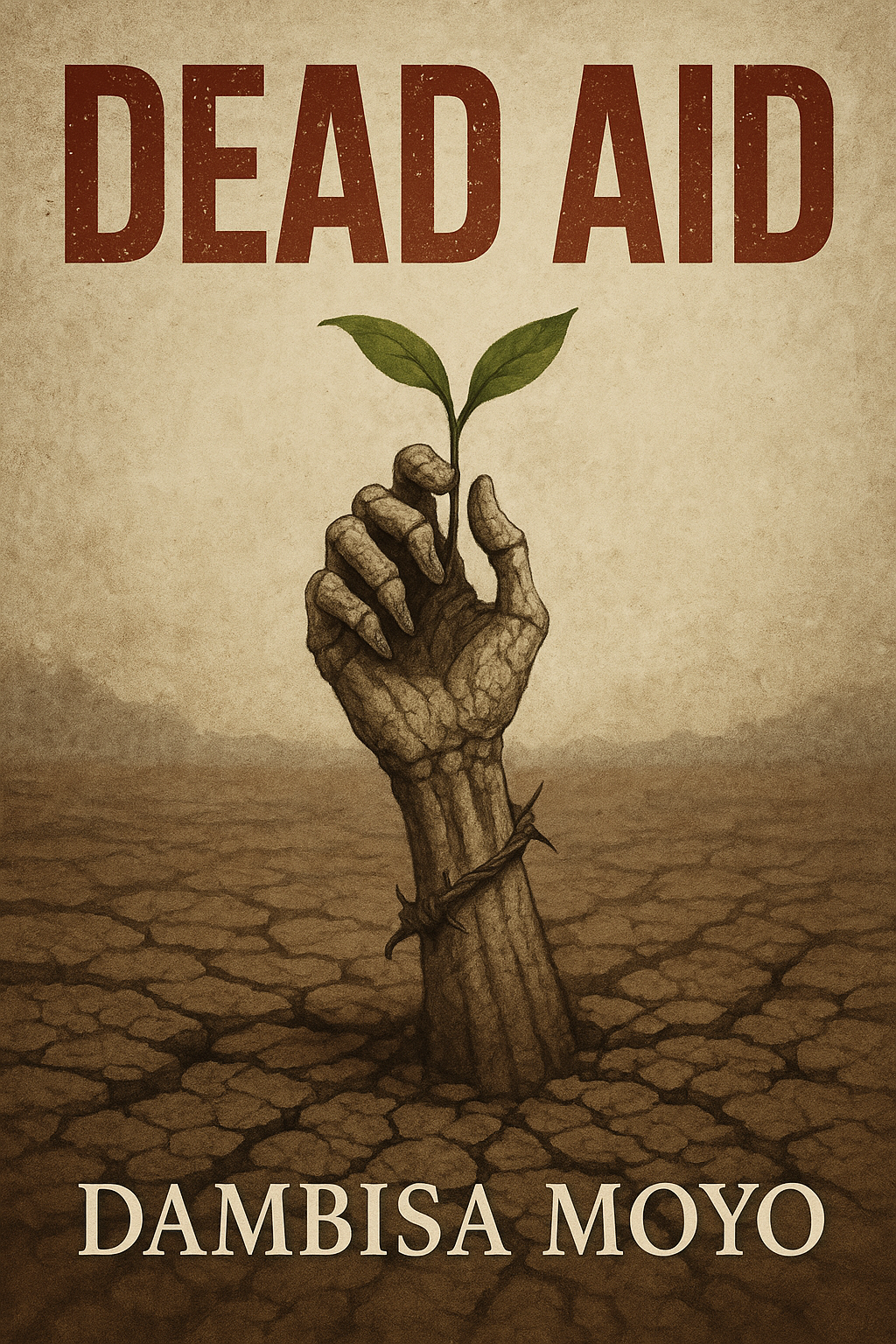
Dead Aid
Chapter Summaries
What's Here for You
Are you ready to challenge conventional wisdom and explore a bold new vision for global development? In 'Dead Aid,' Dambisa Moyo delivers a powerful and provocative argument that will fundamentally alter how you perceive the complexities of poverty and prosperity, particularly in Africa. This isn't just a book; it's a call to arms for a radical rethink of how we approach aid and development. Moyo masterfully dismantles the prevailing narrative surrounding foreign aid, revealing its unintended consequences and the deep-seated issues that have perpetuated a cycle of dependency. You'll gain an unflinching look at the historical and geopolitical forces that have shaped the aid landscape, understanding why, despite decades of well-intentioned efforts, true progress has remained elusive for many. Prepare to confront the uncomfortable truth: 'Aid is Not Working.' Moyo meticulously dissects how aid can become 'The Silent Killer of Growth,' fostering corruption and stifling the very economic engines it aims to ignite. But this book offers more than just critique; it provides a compelling roadmap for a future 'World without Aid.' You will be introduced to innovative and actionable alternatives that empower nations to chart their own course towards sustainable prosperity. Moyo unveils 'A Capital Solution,' exploring the transformative potential of international capital markets and microfinance, demonstrating how to empower the 'Unbankable.' You'll discover the burgeoning opportunities presented by global trade and the significant role players like China are increasingly taking in Africa's economic narrative, challenging the notion that 'The Chinese are Our Friends' in a way that benefits all. This is a journey that will intellectually stimulate and emotionally resonate. Moyo's tone is sharp, incisive, and undeniably optimistic about Africa's potential, provided we embrace 'A Radical Rethink of the Aid-Dependency Model.' You will emerge with a profound understanding of the systemic flaws in current development strategies and a clear vision for 'Making Development Happen' through self-reliance, robust trade, and smart financial innovation. If you believe in empowering nations and fostering genuine, lasting growth, 'Dead Aid' offers you the insights and the inspiration to champion a more effective and equitable future.
The World of Aid
The author, Dambisa Moyo, paints a complex portrait of Africa, a continent often misunderstood through the lens of media soundbites. While acknowledging the grim realities of the past—rampant corruption, weak economies, and crumbling infrastructure—Moyo reveals a nascent optimism, highlighting recent economic growth rates around 5 percent and the spread of democratic elections. This revival, she explains, is fueled by three core factors: a surge in commodity prices bolstering exports, a positive policy dividend from market-based reforms instituted in the late 1980s leading to improved macroeconomic fundamentals like lower inflation and more stable fiscal performance, and significant strides in the political landscape, with over half of sub-Saharan African countries now holding free and fair democratic elections, improving the investment climate. The narrative then shifts to the financial markets, showcasing the growth and surprising returns of African stock exchanges, some ranking among the best investment destinations globally, with companies like Zambeef and the Nigerian banking sector yielding impressive profits, and bond markets showing strong performance with collapsing credit spreads, saving countries millions annually. However, this hopeful picture is shadowed by persistent, deeply entrenched challenges. Moyo starkly contrasts these gains with the stark reality that sub-Saharan Africa remains the world's poorest region, with an average per capita income of just one dollar a day, and a per capita income lower than in the 1970s. The continent holds the highest proportion of the world's poor, with the number of people living in abject poverty nearly doubling between 1981 and 2002, a trend that starkly contrasts with global poverty reduction. Life expectancy has stagnated, hovering around fifty years, and in some nations, like Swaziland, it has plummeted to a mere thirty years, largely due to the HIV/AIDS pandemic, while child mortality remains alarmingly high. Adult literacy has declined, and critical health indicators and income inequality continue to be causes for grave concern, revealing a negative decoupling from global progress. Even with growth rates averaging 5 percent, Moyo notes, it falls short of the 7 percent needed for substantial poverty reduction. Politically, nearly half the continent remains under non-democratic rule, with long-standing autocratic regimes and a disturbing number of countries embroiled in civil wars, contributing to Africa's disproportionate representation among the world's least peaceful and most failed states. This persistent cycle of dysfunction leads Moyo to pose a critical question: what holds Africa back? The answer, she contends, is deeply rooted in the pervasive system of aid. She categorizes aid into humanitarian, charity-based, and systematic aid, defining the latter as direct payments to governments, either bilateral or multilateral. While acknowledging the merits of emergency aid, Moyo scrutinizes charity-based aid for its inefficiencies and donor-driven agendas, citing examples like the US PEPFAR program's restrictions and World Vision's slow disbursement of tsunami relief funds. But her primary focus, and the central tension of the chapter, lies with systematic aid—the billions in concessional loans and grants transferred to African governments. She explores the theoretical distinction that recipient countries might view loans, with their repayment burden, as incentives for wise spending, while grants are seen as free resources that can substitute for domestic revenue. Yet, Moyo argues that in practice, with highly concessional terms and frequent loan forgiveness, this distinction often becomes practically irrelevant, leading policymakers to view both forms of systematic aid as akin to grants. It is these vast, often misapplied, billions, she concludes, that have demonstrably hampered, stifled, and retarded Africa's development, setting the stage for the book's core argument.
A Brief History of Aid
The story of foreign aid, as Dambisa Moyo reveals, is not a simple tale of altruism, but a complex, evolving narrative deeply intertwined with geopolitical shifts and economic ideologies. It began in earnest in 1944 at the Bretton Woods conference, where the architects of the post-World War II era sought to rebuild a fractured Europe, establishing institutions like the World Bank and IMF primarily for reconstruction, not development per se. The Marshall Plan, a monumental success in revitalizing Europe by injecting capital into existing infrastructure, became the template, leading to a widespread belief that external investment was the sole catalyst for growth. This conviction soon turned towards Africa, particularly as former colonies gained independence in the 1950s and 60s. Aid became a tool of geopolitical strategy, a battleground for the Cold War, with Western powers and the Soviet Union channeling funds to secure allies, often regardless of a regime's merit. The 1960s saw a focus on large-scale industrialization projects, like the Kariba Dam, yet by the 1970s, the narrative shifted towards poverty alleviation, partly fueled by the oil crises that crippled developing economies. This pivot, championed by figures like Robert McNamara at the World Bank, saw aid redirected towards social services and rural development, though often in the form of loans that would later contribute to crippling debt. The 1980s ushered in the era of structural adjustment, driven by neoliberal ideologies and the Washington Consensus, where aid was conditioned on market liberalization, privatization, and reduced government spending – policies that often exacerbated poverty and dependency. The collapse of the Soviet Union removed the Cold War imperative, and by the 1990s, the focus turned to 'good governance' and democracy as the supposed panacea for Africa's economic woes, even as debt servicing often dwarfed new aid flows, creating a net reverse flow of capital from poor to rich nations. The chapter highlights a critical insight: the persistent belief that external aid, rather than internal capacity, is the primary driver of development, has led to a cycle of dependency. The 2000s saw the rise of 'glamour aid,' driven by celebrity campaigns and moral imperatives, which, while raising awareness, often bypassed critical dialogue and genuine African leadership, further entrenching the aid model despite decades of limited tangible results. The core tension, Moyo argues, is that aid, despite often well-intentioned beginnings, has been consistently misapplied, serving donor interests and geopolitical agendas more than fostering sustainable, independent growth, leaving Africa trapped in a cycle where over $2 trillion in aid has yielded little demonstrable progress.
Aid is Not Working
The author, Dambisa Moyo, embarks on a critical examination of foreign aid, posing the stark question: does it truly work, especially in the context of sub-Saharan Africa? She opens by contrasting the phenomenal economic growth witnessed in many Asian developing countries, often surpassing industrialized nations, with the stagnation or regression of aid-dependent nations in Africa over the past four decades. While acknowledging the multifaceted explanations for Africa's struggles—geographical, historical, cultural, tribal, and institutional—Moyo posits that a deeper, often overlooked factor is at play: the pervasive and persistent reliance on aid itself. She dissects various explanations for Africa's economic underperformance. Geographical determinism, as proposed by Jared Diamond, suggests environmental factors play a role, yet Moyo counters that resource abundance doesn't guarantee success, citing the "resource curse" where commodity windfalls have led to economic disaster rather than prosperity in many African nations. Paul Collier's nuanced view classifies African countries by resource endowment and access to coastlines, noting that while geography matters, it's not an insurmountable barrier, as demonstrated by nations like Saudi Arabia and Switzerland. Historical factors like colonialism and the arbitrary partitioning of Africa at the Berlin Conference are examined, highlighting how imposed political structures and ethnic divisions created inherent difficulties for nation-building and economic stability. Moyo also addresses the insidious cultural argument, suggesting that some view Africans as inherently incapable of development without foreign guidance, a perspective she likens to treating a continent as perpetual children rather than adults capable of self-determination. The deep tribal divisions and ethnolinguistic makeup of Africa are presented as potential impediments to economic growth due to the risk of civil unrest and the difficulty of achieving policy consensus, though she also points to successful examples of peaceful coexistence like Botswana and Ghana. Furthermore, the absence of strong, transparent public institutions—civil service, judiciary, police—is identified as a critical bottleneck, with scholars like David Landes and Dani Rodrik emphasizing the foundational role of good governance and secure property rights for long-term growth. Botswana, in contrast to countries like Indonesia and Pakistan, serves as an example of success attributed to strong institutions. However, the central tension emerges as Moyo pivots to the efficacy of aid itself. She challenges the proponents' reliance on historical successes like the Marshall Plan, arguing that the context is fundamentally different: European nations were not wholly aid-dependent, their economies were already functioning, and the aid was finite and targeted. In stark contrast, Africa has received massive, continuous aid for decades, creating a culture of dependency without incentive for long-term planning or seeking alternative funding. The author critiques the idea of "IDA graduates" – countries that moved beyond aid – noting that their success was often tied to relatively small aid flows, short durations, and crucially, a deliberate shift towards market-oriented policies and self-reliance, as seen in Botswana. The chapter then delves into the failure of conditionalities, the rules imposed by donors, which proved ineffective in curbing corruption and were often ignored while aid continued to flow. The "good policy environments" argument, suggesting aid works best when a country is already well-governed, is also questioned, with Moyo suggesting that countries with good policies would likely succeed without aid, and that aid's true purpose should be to help nations with poor ones. The promotion of democracy as a prerequisite for economic growth is scrutinized; while democracy offers potential benefits, Moyo argues that economic growth is a prerequisite for stable democracy, not the other way around, citing examples of non-democracies achieving significant economic success. Finally, Moyo introduces the "micro-macro paradox" using the vivid image of a local mosquito net maker being driven out of business by a flood of foreign-donated nets. This illustrates how well-intentioned, short-term interventions, when viewed at a micro-level, can have devastating, unsustainable long-term consequences at the macro-level, undermining local economies and fostering dependency. The author concludes with a powerful indictment: after sixty years and over a trillion dollars, aid has not only failed to deliver development but has become malignant, a part of the problem itself, evidenced by rising poverty rates in the most aid-dependent nations. The overwhelming evidence, even acknowledged by institutions like the IMF, suggests that aid, in its current form, is not working and has, in fact, exacerbated Africa's challenges.
The Silent Killer of Growth
Dambisa Moyo, in 'The Silent Killer of Growth,' meticulously dissects the corrosive relationship between foreign aid and endemic corruption in Africa, painting a stark picture of a continent trapped in a vicious cycle. She begins by illustrating the sheer scale of corruption, citing the British envoy's lament about Kenyan ministers "eating like gluttons and vomiting on the shoes of the foreign donors," a potent metaphor for the vast sums siphoned away by kleptocratic regimes, from Mobutu's Zaire to Abacha's Nigeria. Moyo argues that aid, unlike natural resource windfalls, is an active policy aimed at development, yet it paradoxically becomes one of corruption's greatest aides, propping up inefficient governments and deterring vital domestic and foreign investment. This leads to a downward spiral: less investment means fewer jobs and increased poverty, prompting donors to send more aid, thus perpetuating the cycle. The author reveals how this aid-fueled corruption retards growth by creating uncertainty, misallocating talent towards illicit activities, and leading to shoddy public contracts and infrastructure. She highlights that even well-intentioned aid initiatives, like salary increases for public officials intended to curb graft, are often undermined by the sheer availability of "unfettered money" and the prospect of "sizeable ill-gotten gains." The narrative then shifts to the donor perspective, questioning why aid continues to flow to corrupt nations despite clear evidence of misuse, suggesting a pressure to lend among aid organizations and a lack of consensus on identifying truly corrupt states. Moyo contrasts this with the concept of "positive corruption" observed in some Asian economies, where reinvestment, albeit illicit, can still fuel growth, unlike Africa's "negative corruption" which drains public coffers and leaves countries stagnating. The chapter underscores how aid weakens civil society and erodes social capital by thwarting accountability and trust, and crucially, how it can foment conflict and civil war by increasing the stakes for control of resources and aid wealth. Finally, Moyo details the economic limitations of aid, explaining how it reduces domestic savings and investment, causes inflation through "Dutch disease" effects that choke off exports, and creates bottlenecks due to a lack of absorptive capacity, ultimately leading to aid dependency that breeds laziness and undermines African policymakers' ability to chart their own destiny. The author concludes that a fundamental shift is needed, moving beyond aid to explore more sustainable financing mechanisms for Africa's development.
A World without Aid
Imagine a nation, the Republic of Dongo, a place not far from our own reality, where thirty million souls reside, yet life's expectancy has plummeted to forty years, a stark descent from sixty-five, largely due to the pervasive shadow of HIV/AIDS, a disease afflicting one in three adults in its cities. With an average per capita income of a mere US$300, seventy percent of its people subsist on less than a dollar a day, their lives a testament to the persistent struggle for basic survival. Dongo's story, though fictitious, echoes the journey of many African nations, born from the ashes of colonial rule in the 1960s, navigating through socialist economies, privatization, and the fragile dawn of democracy. It’s a land burdened by a US$3 billion debt in the 1980s, a sum twice its GDP, a debt later relieved, yet it remains a dependent, receiving millions in aid annually, with aid constituting a staggering seventy-five percent of its government revenues. The author, Dambisa Moyo, posits that this very dependency, this 'Dead Aid' as she terms it, acts as a fundamental impediment to true economic prosperity. The central dilemma is stark: how can a nation like Dongo, with its young population skewed towards the under-fifteens, facing few prospects and vulnerable to disaffection, ever break free from this cycle of disappointment if its development agenda is perpetually financed by external aid, rather than by its own intrinsic economic engine? Moyo argues that the choice of development finance is as critical as the policies themselves; even the most brilliant strategies are rendered impotent without the right financial tools. The author’s core proposition is that abandoning aid dependency and embracing free-market financing, much like Sweden or Denmark, can empower nations to fund their chosen agendas—be it socialist or capitalist—with greater autonomy and long-term viability. This isn't about specific policy prescriptions for HIV/AIDS or education, but about unlocking the fundamental financial mechanisms that allow any policy, any vision, to truly take root and flourish, suggesting that a nation’s economic destiny hinges not just on what it chooses to do, but critically, on how it chooses to pay for it.
A Radical Rethink of the Aid-Dependency Model
Dambisa Moyo, in her chapter 'A Radical Rethink of the Aid-Dependency Model,' confronts a stark reality: governments, whether socialist or market-driven, fundamentally require cash to function, a need that is particularly acute in developing nations where the private sector is too nascent to spearhead growth. Traditionally, aid was seen as the vital lifeline, yet Moyo argues this has proven a deeply flawed solution, failing to deliver substantial economic performance. She reveals a growing weariness among donors, evidenced by declining aid flows and public sentiment that views foreign assistance as expendable—a sentiment underscored by a poll showing the US public's desire to reduce aid surpassing fears of nuclear war. This disillusionment, coupled with the financial strains on donor nations—from the costs of global conflicts to demographic shifts burdening Western economies and the shockwaves of the 2008 credit crisis—renders aid an unreliable, even dangerous, palliative, making its permanence a foolish assumption for African policymakers. Moyo then paints a vivid picture of Africa's dependency on aid as an addiction, a sixty-year 'fix' that has made contemplating an 'aidless world' a daunting, almost impossible, prospect. She posits that the West has found its 'perfect client' in this dependency, and thus, she offers a blueprint for Africa to begin the arduous process of weaning itself off this reliance, a journey that, like drug withdrawal, will undoubtedly be painful and requires immense courage from both the 'drugtaker' and the 'drugpusher' to say no. The alternatives she proposes are predicated on transparency and aim to foster growth without encouraging corruption, acting as the lifeblood for social capital and economic expansion. The 'Dead Aid' proposal envisions a gradual, five-to-ten-year reduction, acknowledging that an immediate drop to zero isn't practical or even desirable, especially if aid could be strategically repurposed. She revisits the example of Botswana, a nation that used aid wisely to build essential public goods, laying the groundwork for robust growth and then allowing its aid-to-GDP ratio to fall naturally as development progressed—a model of how aid, when well-managed and focused on critical problems, can deliver genuine economic value, though the ultimate aim remains an aid-free world.
A Capital Solution
In the intricate dance of global finance, Dambisa Moyo, in her chapter 'A Capital Solution,' unveils a compelling alternative to traditional aid: the vibrant, albeit sometimes volatile, world of international capital markets. She begins by highlighting recent instances, like Ghana and Gabon issuing substantial bonds, posing the question: could a nation, particularly an African one, chart its own course through borrowing on the open market? Bonds, she explains, are essentially loans, but critically distinct from aid. Unlike the concessionary terms of aid – lower interest, longer repayment periods, and more lenient default clauses – bonds represent a commitment to market-rate repayment. Moyo traces this practice back to the 19th century, noting that many developing nations have historically accessed these markets to fund crucial development programs, or even day-to-day expenditures. The process, while requiring careful navigation, is not insurmountable. It involves securing a credit rating, engaging potential investors through roadshows, and demonstrating a credible commitment to repayment. This shift from aid dependency to market engagement, she argues, can itself be an attractive proposition to investors, signaling a nation’s resolve to transform its economy. The chapter then illuminates the burgeoning investor interest in emerging markets, fueled by greater globalization and a search for higher returns, with emerging market debt often outperforming developed markets. She illustrates this with a vivid analogy: an investor's portfolio is like a pair of islands, one producing umbrellas, the other sunscreen; investing in both ensures returns regardless of the climate, much like diversifying across developed and emerging markets smooths out risk. Furthermore, inclusion in key indices, like the J.P. Morgan EMBI, acts as a powerful signal, opening doors to a wider pool of capital. However, this path is not without its challenges. The reliance on credit ratings, an 'art not a science' prone to spectacular failures as seen with Enron, presents a hurdle, as does the specter of contagion, where the misfortunes of one nation unfairly penalize others. Yet, Moyo offers a note of optimism, suggesting that investor sophistication has diminished contagion risks, and that markets are often forgiving of nations that demonstrate genuine reform. The true cost of borrowing, she contends, is far more nuanced than the seemingly low rates of aid. The reputational damage, corruption stigma, and hidden costs associated with aid dependency can be far more punitive than the higher financial rates of private debt, which can unlock quality investment and an improved global standing. She contrasts the meager 0.75% cost of World Bank loans with the historically higher, yet declining, 10% cost of emerging market debt, emphasizing that improved macroeconomic environments and increased liquidity are driving down these costs. While many African nations have yet to fully embrace this capital markets solution, Moyo points to promising signs, such as the increasing number of credit ratings being issued to African banks and governments, and the growing investor appetite for African assets. She concludes by exploring innovative risk-mitigation strategies, such as regional pooling of debt and partial guarantees, and the development of domestic bond markets, suggesting that with strategic engagement and genuine commitment to reform, Africa can indeed tap into the vast potential of global capital, moving beyond the alluring but ultimately limiting embrace of aid.
The Chinese are Our Friends
The author, Dambisa Moyo, invites us on a journey across Africa, a continent often perceived through a lens of poverty and despair, yet one increasingly shaped by a new global player: China. We begin with the remarkable expedition of Lukas Lundin, who traversed Africa on his motorcycle, expecting a continent of disrepair, only to find roads built with Chinese assistance, a tangible sign of a burgeoning foreign direct investment (FDI). Moyo highlights a stark reality: in 2006, Africa received a mere $17 billion in FDI, dwarfed by the $37 billion in official aid, and attracting less than 1% of global capital flows. This is a continent ripe for investment, with abundant, low-cost labor, yet it remains largely ignored. The central tension emerges: why does Africa, theoretically an FDI magnet, struggle to attract capital? Moyo points to significant hurdles—infrastructure deficits and, more critically, man-made disincentives like widespread corruption, bureaucratic mazes, and convoluted regulatory environments, illustrated by the staggering number of days it takes to obtain a business license in countries like Cameroon. Contrast this with China's approach, which, as Moyo details, has become a dominant force since the turn of the millennium. Driven by its own rapid economic growth and insatiable need for resources, China has embarked on an aggressive investment strategy across Africa, funding infrastructure projects like railways and roads, and engaging in significant resource extraction, particularly oil. This engagement, exemplified by the Sino-African summit and pledges of training, healthcare, and debt relief, presents a stark alternative to the often-conditional aid from Western nations. While critics raise concerns about China's governance, human rights record, and potential for undercutting Western standards, many Africans view China's pragmatic, 'no-strings-attached' approach as a welcome relief from the perceived paternalism and bureaucratic entanglement of traditional donors. The narrative shifts from the problem of underinvestment to the potential of a new model, one where Africa offers resources and China offers capital and infrastructure, creating a mutually beneficial exchange. The Pew Report findings underscore this sentiment, revealing overwhelmingly positive views of China's influence in Africa compared to that of the US. Ultimately, Moyo suggests that while China's investment, particularly in resource-rich nations, is undeniable, its approach is evolving, diversifying into sectors beyond mining and offering tangible benefits like roads and jobs, contributing to Africa's recent growth. The challenge, she concludes, lies not just in attracting FDI, but in ensuring that this capital is allocated productively, supported by governments committed to creating a sustainable economic environment, moving beyond the superficiality of ribbon-cutting ceremonies to foster genuine, long-term growth.
Let’s Trade
The author, Dambisa Moyo, invites us to consider a fundamental shift in how Africa engages with the global economy, moving beyond the seductive but ultimately debilitating embrace of aid towards the robust, albeit complex, promise of trade. She paints a stark picture: Western nations, driven by political imperatives and powerful agricultural lobbies, erect formidable trade barriers, effectively subsidizing their own farmers to the tune of billions while keeping developing nations' produce out. This isn't mere protectionism; it's an active impediment, costing Africa an estimated $500 billion annually. Moyo illustrates this with the poignant examples of cotton and sugar, where Western subsidies flood markets at prices African farmers simply cannot match, devastating livelihoods and national economies. Imagine, she suggests, a European cow receiving more in daily subsidies than a billion people live on. It's a world where the cards are stacked, a reality that explains why Africa's share of global trade has dwindled to a mere 1%. Yet, a new player emerges: China. With its burgeoning economy and insatiable appetite for raw materials and food, China presents an unprecedented opportunity for Africa. Sino-African trade has surged, offering a potential $100 billion in annual income. This burgeoning relationship, while still dominated by commodities, shows signs of diversification. However, Moyo cautions against putting all eggs in one basket. The narrative then pivots to a crucial insight: the true engine of growth lies not just in international trade, but in robust domestic and regional trade. African nations, she argues, are hampered by a lack of infrastructure and a reluctance to dismantle internal trade barriers, which are often higher than those imposed by developed nations. This self-imposed isolation stunts growth, leaving SMEs—the lifeblood of any economy—lagging far behind their counterparts in more integrated regions. The author makes a powerful case that even if African goods faced open global markets, a lack of technological know-how and infrastructure would still pose significant challenges. The path forward, then, is not a simple embrace of any single trading partner, but a multi-pronged strategy: fostering regional integration, investing in critical infrastructure (where Chinese investment offers a glimmer of hope), and crucially, nurturing the domestic private sector. The author concludes with a resonant thought: while trade can be harsh, economic hardship within a thriving, opportunity-rich trading economy is ultimately more survivable than stagnation in an aid-dependent one. The mosquito net maker, though perhaps forced to pivot, can still live and adapt in a dynamic market, a stark contrast to the sterile landscape of aid dependency.
Banking on the Unbankable
The author, Dambisa Moyo, in her chapter 'Banking on the Unbankable,' invites us to witness a profound shift in how we conceive of financial development, moving away from the traditional paradigm of aid towards the potent force of microfinance and private capital. She begins by illuminating the groundbreaking work of Muhammad Yunus and the Grameen Bank, a Bangladeshi institution that recognized the latent wealth in community trust within impoverished, rural villages where formal banking infrastructure was prohibitively expensive. Yunus's genius lay in transforming this interdependence into collateral, a vital insight that allowed lending to the 'poorest of the poor' who possessed no tangible assets. The Grameen model, with its solidarity lending approach, where group members implicitly hold responsibility for each other's loans, demonstrates a remarkable success, boasting default rates below 2 percent and expanding beyond simple loans to offer insurance, scholarships, and housing programs, all funded not by donor money, but by its own deposits. This success has inspired variations worldwide, from Indonesia's BKI to Kenya's KREP, and offers a compelling counterpoint to the often-ineffective aid model, as seen in the hypothetical case of the mosquito net manufacturer. Moyo then broadens the scope to examine microfinance's development in Africa, particularly Zambia, highlighting how traditional banks overlooked the vast majority of the population. She details the tiered lending structures, from civil servants to the unsalaried poor, and emphasizes how joint liability effectively mitigates risk and information asymmetry for lenders. The chapter then pivots to the burgeoning role of remittances, the billions of dollars sent home by Africans living abroad, which rival and even surpass foreign direct investment, acting as a vital, stable source of external funding. However, Moyo points out a significant inefficiency: high transfer costs, which diminish the amount reaching recipients and encourage informal, unrecorded channels. Innovative solutions like mobile money transfer systems, such as Kenya's MPesa, are presented as promising ways to reduce these costs and increase the flow of funds. Crucially, the author challenges the very notion of capital scarcity in Africa, citing Hernando de Soto's work that suggests vast fortunes lie dormant due to a lack of secure property rights and formal financial systems. The discovery of hidden cash in Nigeria and the untapped potential in India's gold holdings serve as vivid micro-metaphors for this hidden wealth. Moyo argues that, just as historical examples like the Soft Banks of the American Wild West and eighteenth-century Scottish banks innovated to serve the unbankable, Africa needs similar financial ingenuity. This includes developing hybrid banking structures, venture capital, and tailored lending instruments to unlock the continent's latent capital. She concludes by advocating for a radical shift away from aid dependency, proposing a diversified financing portfolio for nations like the hypothetical Dongo, emphasizing trade, FDI, capital markets, remittances, and crucially, harnessed domestic savings, all underpinned by good governance, to foster sustainable growth and truly empower the continent.
Making Development Happen
The author, Dambisa Moyo, posits a radical idea: the current aid-based development model for the world's poorest countries is fundamentally flawed and incapable of generating sustained economic growth. She challenges us to imagine a world where, instead of a slow trickle of aid, African nations receive a definitive five-year notice that foreign aid will cease, with exceptions only for dire emergencies. This isn't about condemning millions to death; Moyo argues that most aid simply doesn't reach the impoverished, and its absence could paradoxically reduce conflict and corruption by removing a key incentive for despots. Instead, she envisions a powerful surge of African self-reliance, where entrepreneurs rise and economies, freed from the dependency trap, begin to chug along. The core of her proposal, "Dead Aid," involves a three-stage process: first, a carefully planned reduction of aid year-on-year, forcing countries to actively seek alternative financing like trade, foreign direct investment (FDI), and capital markets – market-based solutions that have historically proven most effective in lifting large numbers out of poverty. Second, this transition necessitates stringent fiscal prudence, compelling governments to live within their means, cutting frivolous spending and prioritizing essential infrastructure and services, much like a family managing a reduced income. While acknowledging the temptation for corruption, Moyo suggests that private capital, unlike open-ended aid, demands accountability; a government squandering borrowed funds would quickly find lenders unwilling to extend credit again. Third, and crucially, the model emphasizes the strengthening of institutions and accountability, moving away from the aid regime's Achilles' heel – its lack of transparency and responsibility. This shift requires political will, a commodity in short supply, as both Western donors and African leaders often benefit from the status quo. Yet, Moyo points to African leaders like Rwanda's President Kagame and Senegal's President Wade, who question the efficacy of decades of aid, and to the power of citizen activism, citing the AGOA legislation born from ordinary Americans' engagement. She contends that aid, originally intended for sustainable growth, has become a palliative, a way to keep people alive rather than truly prosperous, and that its efficacy should be judged against its original goals, against which it has spectacularly failed. She proposes innovative alternatives, drawing parallels to conditional cash transfer programs in Latin America, where payments are tied to tangible actions like school attendance or healthcare, ensuring money reaches those who need it and incentivizes positive behavior, circumventing corrupt bureaucries. Ultimately, Moyo argues that the West has a vested interest in Africa's economic stability, not just for moral reasons, but to counter global terrorism and the rising influence of China, whose business-driven approach to Africa contrasts sharply with Western aid. The economic well-being of ordinary Africans, she suggests, is the true bedrock of stability, a lesson echoed in the successes of nations like Singapore. While international organizations are slowly shifting towards private capital and public-private partnerships, Moyo stresses that the elimination of aid is paramount for these new models to succeed, calling for a conscious stop to the cycle of dependency and a renewed commitment to honesty about what truly drives development.
Conclusion
Dambisa Moyo's "Dead Aid" delivers a powerful and unflinching critique of the prevailing foreign aid model, arguing that decades of substantial aid flows have not only failed to foster sustainable development in Africa but have actively hindered it. The core takeaway is that systematic, government-to-government aid, often perceived as 'free money,' creates a pervasive culture of dependency. This dependency disincentivizes domestic revenue generation, erodes good governance and accountability, and misallocates talent, trapping nations in a cycle of poverty and stagnation. Moyo compellingly illustrates how aid has historically served donor interests, perpetuated geopolitical agendas, and fostered a flawed paradigm that external capital alone can drive development, ignoring crucial internal factors like sound governance and a robust private sector. The emotional lesson resonates with a call for empowerment and self-reliance. The book evokes a sense of urgency to break free from the infantilizing embrace of aid and to recognize the inherent potential and dignity of African nations to chart their own course. It challenges the paternalistic undertones often associated with aid and advocates for a more mature, self-determined approach to development. Practically, Moyo offers a clear roadmap for a transition away from aid. The wisdom lies in embracing alternative financing mechanisms: engaging with international capital markets through bond issuance, fostering robust domestic bond markets, attracting foreign direct investment (FDI), promoting trade, and leveraging remittances. The book emphasizes that while aid might have a limited role in specific emergency or foundational public good initiatives (as exemplified by Botswana), its large-scale, systematic application is detrimental. Ultimately, "Dead Aid" is a call to action, urging a courageous, phased withdrawal from aid dependency and a determined embrace of market-based solutions, trade, and genuine self-sufficiency as the true engines of lasting prosperity.
Key Takeaways
Despite recent positive economic and political shifts in some African nations, the continent as a whole remains mired in poverty and developmental challenges, showing a negative divergence from global progress.
The current surge in African economic growth is largely driven by external factors like commodity prices and market-based reforms, rather than fundamental internal structural improvements.
The pervasive system of 'systematic aid,' encompassing both concessional loans and grants transferred directly to governments, is identified as a primary impediment to Africa's genuine development.
The distinction between aid loans and grants often dissolves in practice for recipient governments, particularly when loans are highly concessional and frequently forgiven, leading to a perception of aid as 'free money' that can disincentivize domestic revenue generation and responsible fiscal management.
While emergency and charity-based aid have their own criticisms regarding implementation and donor agendas, they represent a fraction of the financial flows compared to systematic aid, which Moyo argues has had a more detrimental, long-term impact on development.
The historical trajectory of foreign aid reveals a consistent pattern of its application being dictated by donor geopolitical and economic interests rather than recipient developmental needs, leading to a perpetuation of dependency.
The success of the Marshall Plan, while significant for European reconstruction, created a flawed paradigm that incorrectly assumed external capital alone could drive development in fundamentally different contexts, particularly in post-colonial Africa.
Shifts in aid focus, from industrialization to poverty alleviation and then to structural adjustment and governance, represent evolving donor priorities and economic theories, often failing to address the root causes of underdevelopment and instead creating new forms of debt and conditionality.
The absence of a robust private sector and the reliance on foreign aid have created a self-reinforcing cycle where countries become dependent on external funding, hindering the development of internal economic capacity and self-sufficiency.
The 'glamour aid' era of the 2000s, driven by moral crusades and celebrity advocacy, often sidelined African voices and critical analysis, further entrenching an ineffective aid model by prioritizing visibility over sustainable solutions.
Despite trillions of dollars disbursed, aid has largely failed to deliver sustainable economic growth and poverty reduction in Africa, with evidence suggesting it has often contributed to slower growth and increased poverty by undermining local economies and governance.
The fundamental flaw in the aid model lies in its persistent assumption that external intervention is the primary solution, neglecting the crucial role of internal factors like sound governance, market liberalization, and endogenous development strategies.
Foreign aid, particularly in its current form and scale, has created a pervasive culture of dependency in many African nations, hindering long-term sustainable development by disincentivizing self-reliance and sound economic planning.
Historical successes attributed to aid, such as the Marshall Plan, are not directly transferable to the African context due to fundamental differences in economic structure, institutional capacity, and the continuous, open-ended nature of aid flows.
Conditionalities attached to aid, intended to enforce reforms, have largely failed to curb corruption or drive meaningful policy change, as aid often continues to flow irrespective of recipient adherence.
The argument that aid is most effective in 'good policy environments' is flawed; countries with sound policies are likely to progress independently, and aid's true, albeit often unmet, purpose should be to assist nations with weaker governance.
Economic growth is a prerequisite for stable democracy, not the other way around; focusing on fostering growth through sound economic policies, rather than prioritizing aid-funded democracy, is crucial for long-term development.
The 'micro-macro paradox' highlights how well-intentioned, short-term aid interventions can disrupt local economies, undermine nascent industries, and ultimately worsen the overall development landscape.
Despite decades of substantial aid and significant expenditure, evidence strongly suggests that aid has not yielded appreciable development impact and, in many cases, has been malignant, contributing to poverty and economic stagnation.
Foreign aid, intended for development, can inadvertently become a primary facilitator of corruption in recipient countries, creating a vicious cycle of dependency and economic stagnation.
The pervasive presence of aid money in underdeveloped economies can misallocate talent away from productive work towards illicit activities, undermining long-term growth prospects.
Aid flows can create 'Dutch disease' effects, strengthening local currencies and making export sectors uncompetitive, thereby hindering a crucial engine for economic growth.
Aid dependency weakens civil society and erodes social capital by reducing the need for accountability between governments and their citizens, paralyzing domestic development efforts.
The prospect of controlling vast aid wealth can act as a significant driver for conflict and civil war in already unstable regions, exacerbating poverty and suffering.
Aid organizations' internal pressures to disburse funds, coupled with a lack of consensus on corruption, can lead to continued funding of even the most corrupt regimes, perpetuating the problem.
Unlike 'negative corruption' that drains resources abroad, 'positive corruption' in some economies, where stolen funds are reinvested domestically, can paradoxically contribute to economic growth.
Aid dependency, termed 'Dead Aid' by the author, acts as a fundamental impediment to a nation's economic prosperity and self-sufficiency, irrespective of its development policies.
The financing strategy for a nation's development agenda is as crucial, if not more so, than the policies themselves, as ineffective financial tools can render even the best policies impotent.
Nations can adopt free-market financing tools to raise capital, enabling them to fund their chosen socio-economic agendas, whether socialist or capitalist, thereby fostering greater autonomy and long-term viability.
True economic development and the breaking of cycles of poverty and instability require a fundamental shift away from reliance on foreign aid towards building robust, self-sustaining financial models.
A nation's future hinges on its ability to cultivate its own intellectual and political capital by ensuring economic prospects for its youth, a goal unattainable under perpetual aid dependency.
The author suggests that even countries with socialist leanings can effectively utilize market-based financing to achieve their economic goals, demonstrating that ideology and financial strategy are not mutually exclusive.
Governments in developing nations require substantial cash flow for essential functions and development, a role the underdeveloped private sector cannot yet fill.
Foreign aid, despite its historical role, has largely failed to deliver meaningful economic growth and is an unreliable, shrinking resource due to donor fatigue and financial pressures.
Africa's long-term reliance on aid has created a dependency akin to addiction, making the transition to self-funding development a challenging but necessary withdrawal.
The 'Dead Aid' proposal advocates for a gradual, phased reduction of systematic aid over 5-10 years, introducing alternative financing mechanisms that promote transparency and sustainable growth.
Well-managed, targeted aid, as exemplified by Botswana, can be instrumental in building foundational public goods that support good governance and robust economic growth, leading to a decreased reliance on aid over time.
The ultimate goal of rethinking aid must be an aid-free world, achieved through courageous decisions to 'say no' to continued dependency and embrace alternative financial strategies.
Accessing international capital markets through bond issuance offers developing nations a viable, and potentially more beneficial, alternative to traditional aid, fostering economic transformation and improving global standing.
The perceived 'cost' of borrowing must be evaluated beyond mere interest rates, factoring in the hidden economic and reputational costs associated with aid dependency versus the qualitative benefits of private capital.
Developing robust domestic bond markets is a crucial precursor and complement to international market participation, enhancing financial stability and reducing currency-related risks.
While credit ratings are essential for market access, their inherent fallibility and the risk of contagion necessitate a focus on a country's underlying economic reforms and credible commitment to repayment.
Risk mitigation strategies, such as regional debt pooling and innovative guarantee structures, can make capital markets more accessible for smaller or perceived riskier nations, fostering collective growth.
Investor interest in emerging markets is on the rise, driven by the search for higher returns and portfolio diversification, creating a significant opportunity for well-governed African nations willing to engage constructively.
Africa's potential for Foreign Direct Investment (FDI) is significantly hampered by man-made disincentives like corruption and bureaucracy, despite its inherent economic advantages.
China's aggressive investment strategy in Africa, driven by its own resource needs and rapid growth, offers a pragmatic, 'no-strings-attached' alternative to traditional Western aid, which is increasingly favored by African nations.
While Western critics focus on China's governance and human rights record, many Africans perceive China's influence as more beneficial and less paternalistic than that of Western powers.
The economic benefits of Chinese investment in Africa extend beyond resource extraction, creating jobs and infrastructure, and contributing to the continent's overall growth rate.
Sustainable economic growth in Africa hinges not only on attracting FDI but also on governments creating an environment that supports productive capital allocation and ensures the longevity of infrastructure.
African nations are increasingly seeking direct, mutually beneficial trade-offs, such as infrastructure for resources, viewing this as a more effective path to development than aid-dependent models.
Western trade protectionism, particularly through agricultural subsidies, actively harms developing economies like Africa's by making their produce uncompetitive, costing billions and hindering growth.
While rising economies like China offer significant trade opportunities for Africa, relying solely on these new partners risks perpetuating a commodity-export dependency.
Africa's internal trade barriers are a major impediment to its economic development, significantly higher than those imposed by developed nations, thus stifling regional integration and SME growth.
Investing in and improving critical infrastructure is paramount for Africa to move beyond commodity exports and compete in higher-value global trade.
Fostering a receptive environment for domestic entrepreneurs and small to medium-sized enterprises (SMEs) is crucial for sustainable economic growth, as they are the engines of private-sector-led development.
Engaging in trade, even with its inherent difficulties and potential for disruption, offers a more viable path to economic survival and progress than continued reliance on aid.
Diversifying trade partnerships beyond traditional Western markets and focusing on regional economic integration are essential strategies for Africa's long-term prosperity.
Transforming community trust into collateral, as exemplified by the Grameen Bank, is a powerful mechanism for extending financial services to the 'unbankable' poor who lack traditional assets.
Microfinance, particularly through joint liability models, effectively mitigates lending risks in information-poor environments, enabling entrepreneurship and economic participation for previously excluded populations.
Remittances represent a substantial and stable source of external funding for developing economies, often surpassing foreign direct investment, but high transfer costs significantly hinder their full potential.
Africa's perceived capital scarcity may be a misdiagnosis; vast wealth lies dormant due to insecure property rights and inefficient financial markets, requiring innovative approaches to unlock it.
Financial innovation, mirroring historical examples like the American Wild West banks and Scottish financial institutions, is essential for tailoring lending instruments to diverse risk profiles and bringing more people into the formal financial system.
A strategic shift away from aid dependency towards a diversified financing model incorporating trade, foreign direct investment, capital markets, remittances, and domestic savings, coupled with robust governance, is crucial for sustainable economic development.
The current aid-based development model for the world's poorest countries is fundamentally unsustainable and hinders genuine economic growth, necessitating a radical shift towards self-reliance.
A phased, intentional withdrawal of foreign aid, coupled with a clear timeline, can act as a powerful catalyst for African nations to develop alternative, market-driven financing mechanisms.
True development hinges on strengthening domestic institutions and fostering accountability, as aid often removes the incentive for good governance and transparency.
Market-based financing alternatives, such as trade, FDI, and capital markets, have a proven track record of lifting larger populations out of poverty more effectively than aid.
Citizen action and political will are crucial drivers for reform, requiring both Western citizens to question aid spending and African leaders to embrace long-term economic strategies over short-term dependency.
Conditional cash transfers, which link payments to demonstrable positive actions, offer a more effective and accountable way to deliver financial assistance than direct government-to-government aid.
Action Plan
Critically evaluate the source and nature of financial flows to developing countries, distinguishing between emergency, charity, and systematic aid.
Investigate the terms and conditions of concessional loans and grants provided to governments to understand their true economic implications.
Seek out data and analysis that highlights both the challenges and the progress within African economies beyond mainstream media narratives.
Consider how the perception of 'free money' might influence fiscal policy and revenue collection in aid-dependent economies.
Explore alternative development models that prioritize sustainable economic growth and domestic resource mobilization over external aid.
Critically examine the historical motivations behind foreign aid initiatives, looking beyond stated altruism to underlying geopolitical and economic interests.
Analyze the impact of major aid paradigms (e.g., reconstruction, poverty alleviation, structural adjustment) on recipient countries, assessing both intended and unintended consequences.
Investigate the role of international financial institutions like the World Bank and IMF in shaping aid policies and their long-term effects on national economies.
Evaluate the influence of donor-driven agendas, such as 'good governance' and democracy promotion, on the actual development outcomes in recipient nations.
Seek out and amplify the voices of African policymakers and citizens to ensure development strategies are locally driven and responsive to regional needs.
Question the assumption that foreign aid is the primary solution to development challenges, and explore alternative models that foster endogenous growth and self-sufficiency.
Understand the economic mechanisms by which debt cycles are created and perpetuated through aid, and advocate for sustainable debt relief and financial reform.
Engage in informed public discourse about the efficacy of aid, moving beyond emotional appeals to a data-driven assessment of its true impact.
Critically evaluate the historical context and underlying assumptions of any proposed aid intervention, questioning direct comparisons like the Marshall Plan.
Analyze the long-term, systemic impacts of aid, moving beyond short-term project evaluations to assess sustainability and potential unintended consequences.
Advocate for aid policies that prioritize local procurement and support domestic industries, mitigating the 'micro-macro paradox'.
Challenge the notion that aid is a panacea, seeking to understand and promote alternative development financing mechanisms and self-reliance strategies.
Recognize that strong institutions and sound economic policies are more critical drivers of growth than aid flows, and support efforts to build these foundations.
Question the effectiveness of aid conditionalities and advocate for accountability mechanisms that genuinely address corruption and mismanagement.
Prioritize economic growth as a foundation for societal progress, including democratic development, rather than assuming democracy is a prerequisite for growth.
Critically evaluate the direct and indirect impacts of aid on governance and economic structures in recipient countries.
Advocate for transparency and accountability mechanisms in all foreign aid distribution and management.
Explore and promote alternative development finance models that foster self-sufficiency and private sector growth.
Investigate the 'Dutch disease' phenomenon and its potential impact on export-oriented economies.
Support initiatives that strengthen civil society and empower local populations to hold their governments accountable.
Differentiate between corruption that drains resources externally and that which may, however problematically, be reinvested domestically.
Challenge the narrative of 'helplessness' in aid-dependent nations and seek strategies for long-term economic independence.
Critically evaluate the proportion of government revenue derived from foreign aid and identify potential areas for fiscal diversification.
Research and understand free-market financing mechanisms and their potential application within a national economic context.
Advocate for policies that prioritize the development of sustainable, domestic revenue streams over continued reliance on external aid.
Investigate successful case studies of nations that have transitioned from aid dependency to self-financed development.
Engage in discussions about the long-term impact of aid on national autonomy and economic growth within your community or professional network.
Acknowledge the fundamental need for government revenue in developing countries, distinct from external aid.
Critically assess the historical impact and current reliability of foreign aid as a development tool.
Begin planning for a phased reduction in aid dependency over a 5-10 year horizon.
Explore and implement alternative financing mechanisms that prioritize transparency and foster organic economic growth.
Study successful case studies, like Botswana's, where aid was strategically used to build foundational infrastructure and governance, leading to reduced long-term reliance.
Foster a national and international dialogue that courageously confronts the 'addiction' to aid and commits to an aid-free future.
Governments should actively pursue credit ratings from reputable agencies to signal creditworthiness to international investors.
Nations should conduct thorough 'roadshows' to actively engage potential investors and gauge market appetite for their debt.
Countries should focus on demonstrating macroeconomic stability and political commitment to repayment to build investor confidence.
Explore regional collaborations and debt pooling initiatives to enhance market access and mitigate risks for smaller economies.
Prioritize the development of sound regulatory frameworks and financial infrastructure to strengthen domestic bond markets.
Consider innovative financing structures, such as partial guarantees or asset-backed securitization, to reduce borrowing costs and attract investment.
Analyze existing bureaucratic and regulatory frameworks to identify and streamline processes that hinder business.
Evaluate the potential benefits and drawbacks of engaging with new international investment partners, considering their approach and conditions.
Research and understand the specific resource needs and development goals of emerging economic powers.
Advocate for transparency and accountability in government dealings with foreign investors.
Seek to foster environments where capital is directed towards productive, long-term investments rather than short-term gains.
Explore opportunities for mutually beneficial trade-offs, such as infrastructure development in exchange for resource access.
Educate oneself on the differing approaches of various global actors in development and investment.
Advocate for the reduction of internal trade barriers within African regions by urging leaders to implement policies that facilitate smoother cross-border trade.
Research and explore emerging trade partnerships with nations like China and India, while maintaining a diversified approach to avoid over-reliance.
Support and invest in local entrepreneurs and small to medium-sized enterprises (SMEs) within your community or nation.
Educate yourself and others about the impact of global trade policies and subsidies on developing economies.
Investigate opportunities for infrastructure development projects that can improve logistical efficiency for trade.
Seek to understand and leverage the growing consumer markets in emerging economies for African products.
Focus on developing domestic demand for locally produced goods and services to strengthen the non-tradable sector.
Explore microfinance institutions in your region or online to understand their lending models and impact.
Research the cost of sending remittances to your country of origin or to a country you wish to support, and investigate cheaper alternatives.
Investigate opportunities to invest in emerging markets through diversified funds or platforms that support private capital flows.
Advocate for policies that strengthen property rights and formalize financial markets in developing countries.
Educate yourself and others on the principles of financial innovation and its role in economic development.
Consider supporting businesses or initiatives that leverage microfinance or diaspora investment to foster local economies.
Advocate for and support policies that prioritize trade, foreign direct investment, and capital markets over traditional aid for developing nations.
Encourage and invest in African-owned businesses and entrepreneurial ventures that foster local economic growth.
Demand greater transparency and accountability from both governments and aid organizations regarding the use and impact of development funds.
Explore and support innovative financing mechanisms like conditional cash transfers and diaspora bonds that link aid to measurable outcomes.
Educate yourself and others about the historical failures of aid and the potential of alternative development strategies.
Engage in political activism to influence government policies on international aid and trade, advocating for reforms that promote self-sufficiency.
Critically assess the true goals and impacts of aid, judging its success not by lives saved, but by sustainable economic growth and poverty reduction.