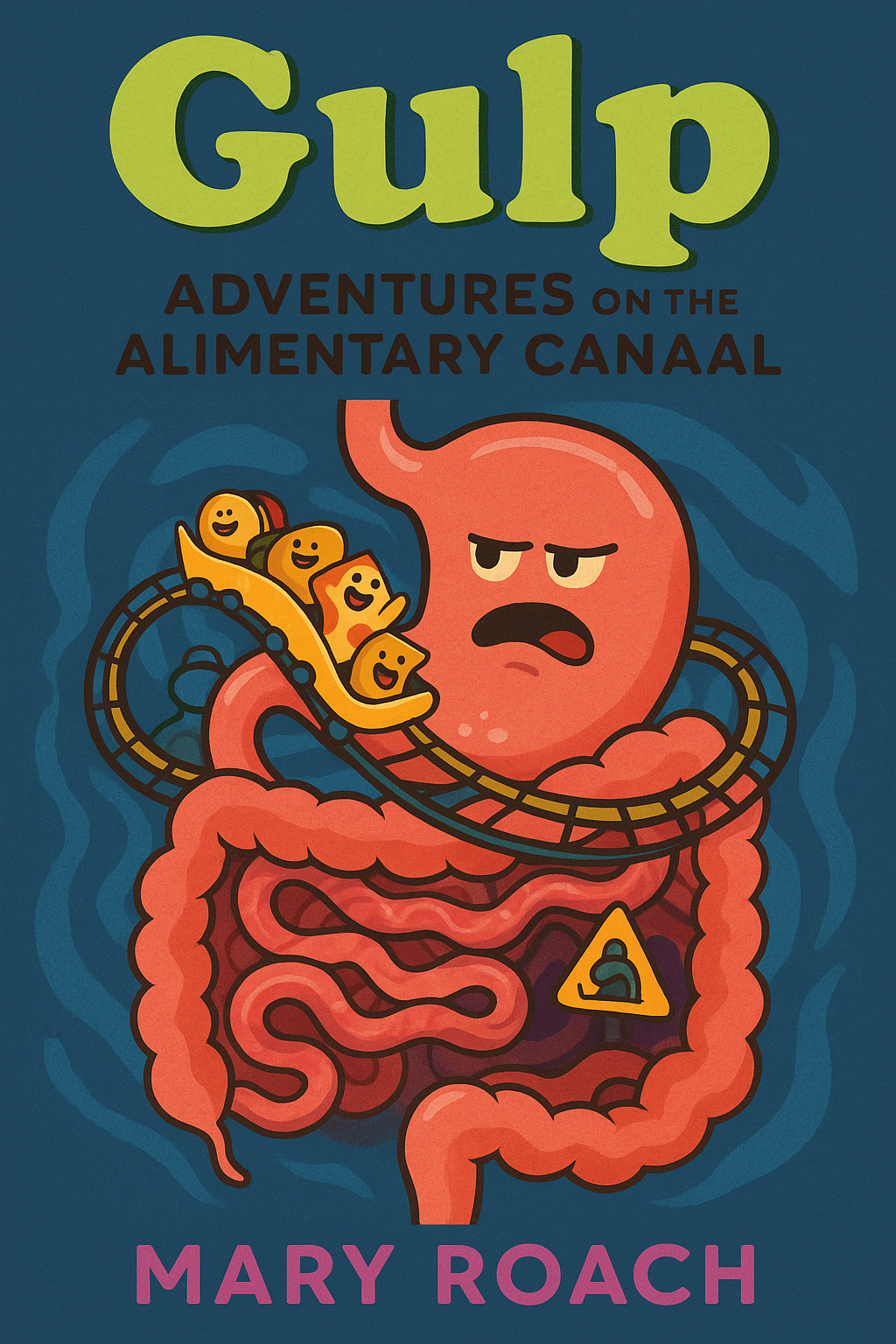
Gulp: Adventures on the Alimentary Canal
Chapter Summaries
What's Here for You
Prepare to embark on a hilariously insightful, and at times delightfully gross, journey through the most underappreciated and essential system in your body: the alimentary canal. Mary Roach, your intrepid guide, doesn't just explain digestion; she dives headfirst into its most peculiar, fascinating, and downright bizarre aspects. You'll discover that taste is far more about smell than you ever imagined, and that your pet's discerning palate is a complex scientific puzzle. Venture into the stark beauty of Inuit food traditions, explore the zealous mastication theories of health gurus past, and witness the groundbreaking, and slightly gruesome, historical partnership that unlocked the secrets of the human stomach. From the surprising science behind saliva and oral processing to the unnerving realities of surviving being swallowed alive and the unsettling possibility of the eaten fighting back, this book offers a front-row seat to the incredible, and often overlooked, workings of your insides. Roach demystifies everything from the science of indigestion and the illicit uses of the rectum to the explosive world of intestinal gas and the surprisingly rigorous study of flatulence. You'll learn about the human digestive tract's remarkable resilience, the radical new frontiers in understanding your gut microbiome, and even confront the morbidly fascinating topic of death by constipation. This is not just a book about your digestive system; it's an exploration of human ingenuity, cultural quirks, and the universal, often comical, experience of eating and being eaten. Get ready to have your assumptions challenged, your curiosity ignited, and your understanding of yourself profoundly expanded, all with a healthy dose of Roach's signature wit and scientific rigor.
Nose Job: TASTING HAS LITTLE TO DO WITH TASTE
The author, Mary Roach, invites us on a sensory journey, revealing that much of what we perceive as taste is, in fact, smell. She introduces us to Sue Langstaff, a sensory analyst whose Harley-riding adventures highlight the profound role of olfaction in experiencing the world, from the complex aromas of a highway to the subtle defects in wine and olive oil. Langstaff, a veritable human gas chromatograph, can dissect an aroma like a detective reading clues, identifying off-flavors that betray production issues—a straw-like note in olive oil, a hospital scent in beer, or the telltale 'Brettanomyces' spoilage in wine. Roach explains that this 'retronasal olfaction,' the internal smelling via the back of the nose, is distinct from 'orthonasal olfaction,' the more common external sniff. Our brains, however, are wired for sight, not smell; we process visual information exponentially faster, a fact dramatically illustrated by a wine-tasting experiment where color dictated descriptors more than actual flavor. Verbalizing smells and flavors doesn't come naturally because, unlike naming objects we see, we rarely assign words to odors from infancy. This linguistic deficit means that while we can easily distinguish a red light from a green, the nuances between bitter, sour, skunky, or tarry often elude us, unless, like Langstaff, one dedicates years to honing this skill through practice and exposure, learning to differentiate aromas as one learns to distinguish instruments in an orchestra. Roach underscores that all flavors are chemicals, from the pineapple's ethyl 3-methylthiopropanoate to the cucumber's 2E,6ZNonadienal, and that sensory analysis, while aided by genetics, is predominantly a learned discipline, accessible through kits and dedicated practice. Langstaff's preference for a simple Budweiser over a complex IPA, and the surprising results of blind wine tastings where inexpensive wines often outperform costly ones, challenge the notion that complexity or price equates to quality. Indeed, even perceived defects can become acquired tastes, demonstrating the plasticity of human preference. Roach's own attempt to join the UC Davis Olive Oil Taste Panel, a rigorous trial involving identifying aromas like olive brine and distinguishing subtle bitterness, reveals the immense difficulty for the untrained palate to discern these nuances, leading to her own humbling failure to make the cut. Ultimately, this chapter argues that sensory analysis, whether for wine, olive oil, or even cat food, relies on dedicated human evaluators—more analytical than emotional—to translate subtle chemical differences into meaningful sensory experiences, a skill that requires consistent practice and a willingness to embrace the less obvious, even the unpleasant, to truly understand and appreciate the world of flavor.
I’ll Have the Putrescine: YOUR PET IS NOT LIKE YOU
Mary Roach, in "I’ll Have the Putrescine: YOUR PET IS NOT LIKE YOU," ventures into the fascinating, and at times peculiar, world of pet food palatability, revealing a core tension between what pets need and what their owners desire. At AFB International, a company dedicated to crafting flavor coatings for pet food, the fundamental challenge, as explained by Vice President Pat Moeller, is bridging this divide. Dry pet food, a wartime innovation for human convenience, became the norm, but its bland base requires enticing flavors to ensure pets consume enough nutrients. This is where palatants, essentially flavor enhancers, come into play, mirroring the sauces that make processed human meals appealing. Roach, alongside experts like Nancy Rawson, delves into the science of taste and smell, highlighting how profoundly different animal senses are from our own. Cats, for instance, are often monogamous eaters, resistant to change, and unable to taste sweetness, a stark contrast to rodents, who are famously drawn to sugar. This exploration extends to the very nature of taste itself, with Rawson demonstrating how molecules dissolve in saliva to interact with taste receptors, and how creatures like catfish taste with their entire skin or even antennae, a far cry from our human experience confined to the tongue. The chapter underscores that taste, for many animals, is less about pleasure and more about survival—a functional doorman for the digestive tract, signaling nutrients or potential toxins. This is vividly illustrated by the limited sense of taste in sperm whales, who have been found to ingest a bizarre array of non-food items. Roach samples a pyrophosphate, a compound described as "cat crack," experiencing its "otherness"—a taste beyond human perception, hinting at the feline preference. The narrative then shifts to the sensory landscape of dogs, whose reliance on smell (estimated at 70%) far outweighs taste (30%), making them susceptible to appealing aromas that may not reflect actual palatability. This leads to the humorous, albeit slightly unsettling, observation that for some dogs, vomiting is a compliment, signaling they ate too much too fast due to an overwhelming aroma. At the Palatability Assessment Resource Center (PARC), the author witnesses firsthand the meticulous preference tests for both cats and dogs, where subtle behaviors—a tentative sniff, a quick lick, or an enthusiastic gobble—reveal food preferences. The chapter confronts the human tendency to project our own food biases onto pets, such as the absurd trend of vegetarian kibble for obligate carnivore cats. Ultimately, Roach reveals that what we perceive as "picky" behavior in pets is often a result of our own misinterpretations, and that the most nutritious elements for animals—organs, viscera, and meals of various animal parts—are precisely what humans often find unappetizing, a disconnect driven by our evolutionary path and a growing squeamishness towards the less palatable, yet vital, components of a natural diet. The central dilemma is clear: how do we create pet food that is both nutritionally sound for the animal and appealing to the human owner, navigating a complex interplay of biology, evolution, and our own cultural biases.
Liver and Opinions: WHY WE EAT WHAT WE EAT AND DESPISE THE REST
Mary Roach, in her exploration of the alimentary canal, ventures into the stark, yet culturally rich, landscape of Inuit food traditions, revealing a profound truth: our palates are not merely biological but deeply cultural constructs. Meeting Gabriel Nirlungayuk and Makabe Nartok in Igloolik, Roach is confronted with a deck of photographs depicting traditional Inuit fare—seal heart, caribou brain—foods far removed from the Western concept of a steak. Nirlungayuk’s mission, to encourage younger Inuit to embrace these nutrient-dense, ancestral foods over modern junk food, highlights a central tension: the erosion of tradition against the tide of convenience and globalized diets. The stark economic realities of the Arctic, where fresh produce is astronomically expensive, underscore the practical wisdom of consuming the whole animal, a practice born of necessity and survival. Roach learns that for Arctic nomads, organs are not just meat but classified as fruits and vegetables due to their vital vitamin content, a stark contrast to the Western aversion to offal. This aversion, she discovers, is not innate but learned, a lesson reinforced by a 1930s orphanage study where babies, given a wide array of whole foods, showed preferences that defied adult expectations, with bone marrow emerging as a surprising favorite. The narrative then shifts to the U.S. military's World War II efforts to boost domestic organ meat consumption to alleviate meat shortages, a campaign led by anthropologists like Margaret Mead, who grappled with changing deeply ingrained food habits through euphemisms like 'variety meats' and targeted children. However, as Nirlungayuk later confirms, the true gatekeepers are parents, a realization mirrored in Mead’s team’s shift in focus. This leads to a core insight: changing eating habits is a complex endeavor, often requiring more than lectures, with strategies like evoking patriotism during wartime or leveraging social influence proving more effective. The chapter further explores how early exposure, even in the womb, shapes food preferences, with babies becoming accustomed to flavors their mothers consume. Yet, deeply ingrained cultural and status-based disgusts, such as the British disdain for Inuit food or the reluctance to eat reproductive organs, present formidable barriers, reminding us that what is considered 'food' is a powerful cultural declaration. Ultimately, Roach suggests that while disgust is a potent force, it is often a learned one, and with persistent exposure and positive reinforcement, even the most unconventional foods, like those championed by celebrity chefs today, can eventually find a place on our plates, demonstrating that people come to like what they eat, rather than eat what they like.
The Longest Meal: CAN THOROUGH CHEWING LOWER THE NATIONAL DEBT?
Mary Roach, in her chapter "The Longest Meal: CAN THOROUGH CHEWING LOWER THE NATIONAL DEBT?" from "Gulp: Adventures on the Alimentary Canal," invites us into the peculiar world of Horace Fletcher, a turn-of-the-century health guru whose zealous advocacy for extreme mastication, dubbed "Fletcherizing," bordered on the absurd. The author discovers Fletcher's legacy tucked away in a modest box at Harvard, a stark contrast to the man's outsized influence. Fletcher, a charming bon vivant with a penchant for cream-colored suits, convinced a remarkable number of influential figures, from generals to writers like Franz Kafka and Sir Arthur Conan Doyle, that chewing each bite of food hundreds, even thousands, of times until it liquefied would unlock profound health and economic benefits. His core tenet was that by fully breaking down food in the mouth, the body could absorb twice the nutrients, thus requiring half the food, leading to less waste and, he optimistically calculated, significant national savings – a concept so compelling that Senator Robert L. Owen even proposed a National Department of Health based on it. This notion of "efficiency" was Fletcher's driving force, a principle he applied not only to eating but to his very correspondence, typing on thin paper with minuscule margins until clarity itself was sacrificed, a potent metaphor for his entire philosophy. The central tension emerges as we see how far this obsession could go: a single bite of onion requiring over 700 chews, mealtimes transformed into agonizingly silent ordeals, and astonishing claims of producing waste so refined it left no stain and minimal odor, exemplified by a literary test subject subsisting on minimal food and producing impressive results. Roach skillfully navigates the historical context, revealing how Fletcher, despite lacking formal scientific training, cultivated a network of sympathetic scientists and medical professionals, like Dr. Ernest van Someren and Yale's Russell Chittenden, who conducted studies, albeit with mixed and often critiqued conclusions. These findings, however, were eagerly seized upon by institutions like workhouses, prisons, and the U.S. Army, eager for ways to economize on feeding large populations, leading to formal instructions for "Economic Assimilation of Nutriment." The narrative pivots to the limitations and eventual debunking of Fletcherism, highlighting the foundational work of William Beaumont and Alexis St. Martin in the early 1800s, whose experiments with a man with a stomach fistula demonstrated that digestion occurred efficiently without extreme chewing, even with raw foods. More recent studies, like one from 1979 using peanuts and peanut butter, offered a glimmer of support for thorough chewing's effect on fat absorption, but the broader scientific consensus, as articulated by experts like Richard Faulks, emphasizes the digestive tract's inherent efficiency and evolutionary design, rendering Fletcher's extreme regimen unnecessary and potentially counterproductive, as it could prolong meals to the point of increasing overall food intake. Ultimately, Roach illustrates a recurring historical pattern: the seductive appeal of "more is better" and the exploitation of such ideas by those seeking to cut costs, a lesson underscored by tales of gelatin from bones and even seabird guano being proposed as nutritional supplements. The chapter resolves by underscoring that while mindful eating and slowing down can have benefits, Fletcher's radical approach represents a point where efficiency devolves into an impractical, almost lunatic, pursuit, a cautionary tale about the dangers of extreme ideology in the pursuit of perceived savings and health.
Hard to Stomach: THE ACID RELATIONSHIP OF WILLIAM BEAUMONT AND ALEXIS ST. MARTIN
Mary Roach, in "Gulp," invites us into the peculiar and intense world of William Beaumont and Alexis St. Martin, a partnership forged not by friendship, but by a gunshot wound that created an unprecedented window into the human stomach. The author explains how the famous engravings, while detailed, focused on the 'famous hole,' reducing Alexis St. Martin, a French Canadian voyageur, to a mere specimen for the ambitious army surgeon, William Beaumont. Their relationship, spanning thirty years and marked by St. Martin's involuntary service, raises profound questions about consent, exploitation, and the blurred lines of scientific inquiry in the 19th century. Beaumont, seeking renown beyond his military post, saw in St. Martin's persistent fistula not just a medical anomaly, but his 'ticket to the spotlight.' Despite Beaumont's claims of charity, historian Alexa Green suggests a master-servant dynamic, where St. Martin, an illiterate 'porkeater,' was expected to endure experiments, even holding vials of gastric juice under his arm for hours in a crude simulation of the body's internal environment. This was not a partnership of equals; St. Martin was referred to as 'the boy,' a 'human test tube,' enduring procedures that caused physical discomfort and a 'sinking' sensation, leading him to abscond twice, earning Beaumont's ire. The author highlights the sheer obsession driving Beaumont, who devoted years and considerable personal funds to studying gastric fluids, even tasting 'chymified chicken from another man's stomach,' a testament to his singular focus that often blinded him to the contributions of other digestive elements like pepsin. Yet, for all his meticulous effort, Beaumont's scientific conclusions were limited, overemphasizing acid while missing the antibacterial role of stomach acid and the chemical nature of digestion, which had already been observed. The narrative arc moves from the initial tension of St. Martin's injury and Beaumont's opportunistic research to the insight that scientific breakthroughs, while often fueled by obsession, can exist in a complex ethical landscape, particularly when societal structures and nascent medical ethics fail to protect the vulnerable. Ultimately, the story is a cinematic portrayal of dedication, perhaps bordering on ruthlessness, where science, ambition, and subsistence created an oddly intimate, yet deeply unequal, bond, leaving us to ponder whether St. Martin, in his simple life, found a different kind of contentment than the misunderstood Beaumont in his lab.
Spit Gets a Polish: SOMEONE OUGHT TO BOTTLE THE STUFF
The author, Mary Roach, invites us into the surprisingly fascinating world of saliva, guided by the passionate Erika Silletti, a scientist who sees beyond the common perception of spit as merely a lubricant. We learn that humans produce two distinct types of saliva: stimulated, which flows abundantly from the parotid glands when we anticipate food or taste something acidic, and unstimulated, a thicker, more viscous background flow. Silletti demonstrates how even the mechanical act of chewing a cotton swab can trigger the parotid glands, highlighting their remarkable responsiveness, acting as faithful servants to our digestive and protective needs. This bodily fluid, often overlooked, performs critical functions; it rapidly neutralizes acids from foods and drinks, thereby protecting tooth enamel from demineralization, a process that can lead to severe dental decay in its absence, as seen in patients with conditions like Sjgrens syndrome. Furthermore, saliva contains enzymes like amylase, which begin the digestive process by breaking down starches into sugars, a transformation we can even taste when chewing bread. The narrative then broadens, revealing that these digestive enzymes—amylase, protease, and lipase—are the very components found in high-end laundry and dish detergents, a concept pioneered by Otto Rhm, demonstrating how nature's solutions are often mimicked by human innovation. Even art conservators, like Andrea Chevalier, utilize saliva's gentle yet effective cleaning properties for fragile surfaces, proving its value where harsher solvents would fail. However, the chapter delves into the peculiar human aversion to saliva once it leaves the body, a phenomenon explored by psychologist Paul Rozin, who found subjects drastically reduced their liking for a favorite soup after imagining spitting into it, illustrating a psychological boundary between self and non-self. This 'double standard' extends to all bodily fluids, yet we readily incorporate the substances of loved ones, as seen in Inuit traditions of nose-rubbing or the recognition of 'breast milk sons' in Islam, showcasing how intimacy redraws these lines. The less-studied unstimulated saliva, rich in mucins, forms a protective film on teeth, traps bacteria, and possesses potent antimicrobial qualities, far surpassing commercial mouthwash and explaining historical folk remedies for wound healing, a fact supported by studies showing faster healing in mouths compared to external skin. Despite its vital roles, saliva carries a lingering stigma, partly from ancient beliefs that associated it with expelling impurities, leading to misguided medical practices like mercury-induced salivation rooms. Yet, in contrast, ancient Taoist traditions lauded stimulated saliva, the 'jade juice,' for its life-boosting properties. Ultimately, the chapter resolves the tension between disgust and utility by revealing saliva as a marvel of biological engineering, a potent protector, a digestive aid, and a cleaning agent, whose true value has been obscured by cultural squeamishness and a misunderstanding of its multifaceted capabilities.
A Bolus of Cherries: LIFE AT THE ORAL PROCESSING LAB
The author, Mary Roach, ventures into the fascinating, often overlooked, world of oral processing, a scientific frontier dedicated to understanding the intricate journey of food from mouth to stomach. In the "Restaurant of the Future" in Food Valley, she encounters Andries van der Bilt, an oral physiologist who uses uncanny Comfort Putty cubes to quantify chewing, revealing that each person possesses a unique, physiological fingerprint in their masticatory habits, ranging from fast to slow, right-chewed to left-chewed, a consistency as individual as a gait or a folding technique. Van der Bilt’s research highlights not the brute force of the jaw, but its sophisticated protective reflex, an automated braking system that prevents teeth from smashing each other, demonstrating that teeth and jaws are prized for their sensitivity, capable of detecting particles as small as a grain of sand. This sensitivity, Roach explains, is crucial for forming a "bolus" – a mass of chewed, saliva-moistened food ready for swallowing – a process that involves the entire oral apparatus working in concert, from teeth and tongue to saliva and cheeks. The chapter then delves into the less savory aspects of this science, exploring the concept of "chewing and spitting" (CHSP), a weight-loss strategy that, while seemingly logical, fails to provide the essential satisfaction of swallowing, a crucial step that crosses an "imaginary line at the esophagus" to signal satiety. This visceral aversion to processed food, even when merely manipulated and not swallowed, underscores a deep-seated human drive to engage with food through its physical properties, a drive Jianhsie Chen studies in formulating foods for consumers with dysphagia, a condition that impairs swallowing and can lead to dangerous missteps like choking or pneumonia. The narrative shifts to the physics of crispness and crunch, as explored by Ton van Vliet, who reveals that the satisfying snap of biting into an apple or a chip is a "brittle fracture," a sudden release of stored energy that signals freshness and nutritional value to our brains, essentially suggesting that "we eat with our ears." This primal preference for crispness, a biological shorthand for healthy food, has been ingeniously exploited by the snack food industry, creating an "avalanche of cracks" that delights our senses but often lacks true nourishment. Ultimately, Roach reveals that the desire to chew and experience texture, even the destructive pleasure of crunching, is a fundamental aspect of our being, a need so profound that individuals with severe swallowing disorders have even opted for surgical removal of their voice boxes to regain the ability to swallow, highlighting the deep connection between our physical engagement with food and our overall well-being.
Big Gulp: HOW TO SURVIVE BEING SWALLOWED ALIVE
Mary Roach, in 'Gulp,' embarks on a fascinating, if somewhat unnerving, exploration into the stomach, beginning with the age-old tale of Jonah and the whale. She artfully debunks the popular image of a human safely ensconced within a leviathan, revealing that while baleen whales, with their straining mouths, are gentle giants, the sperm whale presents a different, more formidable challenge. The infamous story of James Bartley, a sailor supposedly swallowed whole and surviving for 36 hours, is meticulously dismantled by historian Edward B. Davis, who uncovers a web of factual inaccuracies that render the narrative pure fiction. Roach then delves into the physiological realities: the sperm whale's forestomach, while vast, is a muscular grinder, akin to a bird's gizzard, capable of exerting immense force—up to 500 pounds of pressure, comparable to a cockatoo's bite or a 130-pound person's footfall. This mechanical onslaught, coupled with the lack of digestive fluids in the first stomach, paints a grim picture for any involuntary passenger. The narrative then pivots to the question of autodigestion, a concept John Hunter grappled with, proposing a 'living principle' that protected internal tissues from gastric juices. However, experiments by Claude Bernard and Frederick W. Pavy demonstrated that living tissue is indeed susceptible, disproving Hunter's theory and highlighting that the stomach's resilience lies in its rapid cellular regeneration and the strategic separation of digestive components, a process that ceases at death, leading to self-digestion. Roach introduces a moment of surprising respite with the penguin's stomach, a natural 'cooler' for preserving food for chicks, and then tackles the persistent myth of stomach snakes and frogs, tracing its origins to misinterpretations of symptoms and opportunistic medical reporting. Through the work of researchers like Arnold Adolph Berthold and J. C. Dalton, the chapter ultimately reveals that these supposed internal inhabitants are more likely external phenomena or psychosomatic delusions, with experiments showing that even hardy creatures like slugs and salamanders cannot survive prolonged exposure to the digestive tract. Roach leaves us with a profound understanding that while the digestive system is a marvel of biological engineering, its capacity for destruction is immense, and our assumptions about survival within it are often rooted more in myth than in scientific reality, urging us to embrace critical thinking over sensationalism.
Dinner’s Revenge: CAN THE EATEN EAT BACK?
Mary Roach, in her chapter 'Dinner’s Revenge,' delves into a persistent, unsettling rumor within the herpetological community: that mealworms, when fed to reptiles and amphibians, can chew their way out of their predator's stomach. This tale, passed through online forums and secondhand accounts, paints a vivid, almost folkloric picture of the eaten fighting back. Roach, with her characteristic blend of scientific curiosity and narrative flair, embarks on an investigation to separate myth from reality. She interviews breeders who dismiss the idea as an 'old wives tale,' citing the slow metabolism of mealworms, and dealers like Carlos Haslam, who, in forty years, has never witnessed such an event. Yet, the story's tenacity, even prompting advice to crush mealworm heads, suggests a deep-seated unease. John Gray, an animal care technician, offers a seemingly firsthand account of a superworm emerging from a fence lizard, a story his boss, Richard Tracy, a physiological ecologist, views with skepticism, positing the film 'Alien' as a potential source of this phobia. Tracy, however, true to the scientific spirit, decides to test the hypothesis. With borrowed endoscopic equipment, he and a team, including veterinarian Walt Mandeville and grad student Lee Lemenager, embark on experiments. They observe superworms inside sedated frogs and toads, finding that while the worms are largely unfazed by gastric acid, demonstrating a remarkable resilience and a 'blanket effect' akin to swaddling that calms them, they do not actively bore their way out. The experiments reveal that hydrochloric acid, while denaturing proteins, is not an instantaneous killer, especially for creatures with protective exoskeletons. Critically, a superworm left overnight in a dead frog's stomach *does* die, suggesting that prolonged exposure and the absence of digestive secretions are lethal, but escape through chewing is not the mechanism. Roach then pivots to broader digestive biology, exploring the concept of 'compliant' stomachs in predators like pythons, which can ingest prey much larger than themselves. She debunks the viral image of an alligator emerging from a python, explaining it as a consequence of a pre-existing wound, not a digestive escape. The narrative then broadens to the ruminant stomach, exemplified by the cow's rumen, a massive fermentation vat designed not for rapid digestion, but for extracting nutrients from low-value forage, serving as a 'to-go box' for vulnerable grazers. This contrasts sharply with the human stomach, optimized for disinfection and storage of less voluminous, more nutritious meals. Ultimately, Roach concludes that while the fear of the eaten fighting back is potent, the reality is far more nuanced: survival within a predator's gut is about resilience to acid and confinement, not active escape, and the dramatic tales are likely misinterpretations of natural phenomena or the result of pre-existing conditions, underscoring the power of narrative and human anxiety in shaping our understanding of the natural world.
Stuffed: THE SCIENCE OF EATING YOURSELF TO DEATH
The human stomach, a marvel of biological engineering, possesses remarkable protective reflexes designed to prevent catastrophic overfilling. As Mary Roach explores in "Stuffed," the case of Mr. L., a Stockholm carriage driver who fatally overdosed on opium pills, reveals the dire consequences when these safeguards fail. Pumping his stomach, a procedure then termed gastric rinsing, proved tragically ineffective as the opium incapacitated his natural urges to vomit and his stomach's emergency venting system. This event, documented by Professor Algot Keyberg, highlighted that a healthy stomach, when its emptying and venting mechanisms are compromised, can rupture around three to four liters, a stark contrast to the seemingly impossible feat of bursting it through sheer volume alone. Keyberg's subsequent experiments on cadavers, while macabre, scientifically demonstrated this vulnerability. The chapter then pivots to the more common, yet still dangerous, ways individuals push their digestive limits. It delves into the role of substances like bicarbonate of soda, the active ingredient in Alka-Seltzer, which can generate significant gas, potentially leading to dangerous distension or even rupture, as seen in cases involving young beer, sauerkraut, and tragically, a bulimic psychologist whose abdomen ballooned with over two gallons of food, leading to death by asphyxiation rather than rupture. This physiological pressure is so potent that it can be demonstrated with simple Alka-Seltzer rockets, or more scientifically, by rupturing cadaver stomachs with acid and baking soda. Beyond immediate danger, the narrative examines the phenomenon of chronic belching, or aerophagia, where habitually swallowing air can lead to excess gastric acid splashing into the esophagus, causing heartburn and potential damage over time. The chapter then turns to the extreme end of eating capacity, exploring competitive eaters like Takeru Kobayashi and Tim Janus (Eater X), and their astonishing ability to consume vast quantities of food. A study by David Metz on Eater X revealed a surprising counter-intuition: prodigious eaters don't necessarily have faster gastric emptying; rather, their stomachs are incredibly compliant, capable of massive expansion without signaling fullness or discomfort. While genes likely play a foundational role, the narrative suggests that years of practice and deliberately overriding the body's signals, a process akin to incremental stretching, are crucial. This is exemplified by Erik Denmark (Erik the Red), who, despite natural capacity, honed his skills through rigorous waterloading and mental conditioning, pushing past the body's natural 'speed bumps' of nausea and regurgitation. The chapter concludes by noting that despite the extreme feats of competitive eaters, the medical literature shows no documented cases of stomach rupture among them, underscoring that death by overeating often stems not from the sheer volume, but from what is consumed and how the body's systems are compromised, a lesson brought full circle from the tragic case of Mr. L.
Up Theirs: THE ALIMENTARY CANAL AS CRIMINAL ACCOMPLICE
Mary Roach, in her exploration of the alimentary canal, pulls back the curtain on the rectum's surprising, and often illicit, utility, revealing it as an unlikely accomplice in a world of contraband and clandestine operations. We journey into the stark reality of Avenal State Prison, where Lieutenant Gene Parks, with his blend of jadedness and amazement, showcases the ingenuity of inmates using their bodies for storage – 'hooping' tobacco and even cell phones, transforming the rectum into a makeshift 'Radio Shack' or 'prison wallet.' This chapter delves into the physiological marvel of the gastrocolic reflex and the defecation reflex, explaining how eating triggers mass movements that push waste along, and how the body's sophisticated system of stretch receptors and muscle contractions can be voluntarily triggered or suppressed – a skill honed through toilet training, but also exploited by those seeking to conceal. Roach illustrates the power of this reflex with vivid descriptions of experiments, like Ahmed Shafik's saline balloon study, demonstrating the overwhelming urge that can be temporarily overridden, a feat that requires immense control, or in the case of smugglers, a potent, often agonizing, struggle. The narrative then pivots to the high-stakes world of drug mules, where swallowing contraband, though taboo in certain cultures, offers a less conspicuous, albeit perilous, alternative to rectal concealment, leading to intense legal battles over detention rights, as seen in the landmark case of *United States v. Montoya de Hernandez*. We learn that the body, in its remarkable resilience, possesses mechanisms to slow digestion and prevent catastrophic rupture, even when faced with extraordinary distention, a testament to its adaptive power. Yet, this immense capacity comes with profound risks: rectal impaction, overdoses from leaking contraband, and even the grim reality of body cavity searches, all underscored by the psychological toll of anxiety, which tightens the body and amplifies the urge to expel. Roach further uncovers the cultural taboos surrounding rectal use, particularly in Latin American and Islamic communities, which complicate smuggling strategies and highlight the complex interplay of physiology, culture, and desperation. Through the story of an inmate named Rodriguez, we witness the painful reality of 'practicing' for smuggling and the profound, often life-altering, consequences of these choices, including fatal overdoses. Ultimately, Roach reveals the alimentary canal as a surprisingly versatile, yet vulnerable, vessel, capable of both storage and expulsion, a site where human ingenuity clashes with biological limits, and where the most intimate parts of our anatomy become stages for survival, commerce, and even defiance.
Inflammable You: FUN WITH HYDROGEN AND METHANE
Long before the sterile precision of modern medicine, the volatile nature of intestinal gas was a recognized hazard, as any farmer tending to a manure pit could attest. Mary Roach illuminates this primal understanding, revealing how bacteria, in their ceaseless work of decomposition, transform waste into elemental gases like hydrogen and methane—gases that can, under the right conditions, become explosively potent. This biological reality, Roach explains, is a scaled-down echo of the human colon, an anaerobic environment teeming with fermentable material where bacteria produce hydrogen, making up to 80 percent of flatus, and methane, a key component of natural gas. The inherent danger of these flammable gases, particularly in concentrated pockets, was tragically underscored in 1977 in Nancy, France, where a routine colonoscopy, complicated by a laxative-induced hydrogen buildup from mannitol, resulted in a fatal explosion. This harrowing incident, though now a historical footnote due to evolving medical practices like the use of nonflammable gases and better patient preparation, highlights a central tension: the body's internal processes, while essential for life, can harbor unseen dangers. Roach then broadens the scope, exploring the curious case of inflammable eructations, like the 1890 incident where a factory worker's belch ignited, a phenomenon explained by stomach contents being retained for too long, allowing fermentation to occur. This leads us to the animal kingdom, particularly cows, whose rumens are vast fermentation vats producing copious amounts of methane, though they typically reroute this gas to be exhaled quietly, a survival adaptation. The narrative then pivots to a truly astonishing revelation: the myth of the fire-breathing dragon may have its roots in the biology of snakes like pythons. Researcher Stephen Secor discovered that decomposing prey within these snakes can generate such high concentrations of hydrogen that, when expelled, it could theoretically ignite, offering a plausible, albeit ancient, explanation for legendary tales. Ultimately, Roach guides us through these fascinating, sometimes alarming, biological quirks, demonstrating that even the most mundane bodily functions can hold surprising power and historical resonance, resolving the tension between our internal biology and the external world's perception of it.
Dead Man’s Bloat: AND OTHER DIVERTING TALES FROM THE HISTORY OF FLATULENCE RESEARCH
The author, Mary Roach, guides us through the often-unseen, yet universally experienced, world of human flatulence, revealing how scientific inquiry, even into the most undignified bodily functions, can illuminate broader truths about our biology and behavior. She begins by highlighting the surprising role of Mylar balloons in modern flatus research, a testament to scientific ingenuity, and introduces the story of Beano, a product born from the understanding that certain complex carbohydrates, like those in beans, are not fully absorbed by the small intestine and are instead fermented by colon bacteria, producing gas. This fermentation, Roach explains, is the source of discomfort for many, as the expanding colon activates pain receptors, a visceral alarm system warning of potential over-inflation. The chapter then delves into the demographics of digestive distress, noting that as people age, their colons become less elastic, leading many over fifty-five to seek relief, often through products like Beano, especially as dietary recommendations shift towards plant-based proteins. Similarly, the dairy industry faces scrutiny as Roach details lactose intolerance, a widespread deficiency in the lactase enzyme, particularly prevalent in non-Caucasian populations, which prevents the proper breakdown of milk sugars, leading to gas production in the colon, much like indigestible carbohydrates from beans. She contrasts self-diagnosis of intolerance with the scientific understanding of malabsorption, referencing the remarkable case of A. O. Sutalf, who passed gas an astonishing thirty-four times a day, far exceeding the average for a lactose-tolerant adult, and exploring the social dynamics of gas expulsion, from the instinct to suppress it at work to the candid admissions of those who embrace it. Roach then meticulously details the evolution of flatus research methodologies, moving from the crude yet effective practice of collecting gas in balloons, as seen in studies by J. M. Beazell and A. C. Ivy, to more sophisticated techniques like breath hydrogen testing, which measures gas indirectly by analyzing exhaled hydrogen absorbed into the bloodstream, offering a less invasive yet equally revealing window into digestive processes. This quest for measurement, she notes, has even led researchers to consider the subtle yet significant role of hydrogen sulfide in flatus odor, a compound detectable by our incredibly sensitive noses, underscoring how even the faintest trace can define our perception. The narrative culminates in a historical exploration of early, albeit macabre, research, recounting Parisian physician Franois Magendie's 1816 study on the intestinal gas of a recently guillotined man, a stark reminder of science's sometimes grim, yet persistent, pursuit of knowledge, and revealing unexpected findings about gas composition based on the deceased's final meal, suggesting that even prison bread and cheese could be potent gas producers. Ultimately, Roach’s journey through the history of flatulence research reveals a compelling, often humorous, and deeply human story about our bodies' persistent efforts to process the world we consume, and our ongoing, sometimes awkward, quest to understand it.
Smelling a Rat: DOES NOXIOUS FLATUS DO MORE THAN CLEAR A ROOM?
Mary Roach, in her exploration of the alimentary canal, invites us into the surprisingly scientific world of flatus, a topic often relegated to the realm of polite avoidance. We meet Michael Levitt, a scientist whose groundbreaking, if somewhat indelicate, work began with a fellowship advisor’s pragmatic, if backhanded, suggestion to study gas. Levitt’s research, which identified the key sulfur gases responsible for flatus odor—rotten eggs for hydrogen sulfide, decomposing vegetables for methanethiol, and sweet for dimethyl sulfide—reveals the complex olfactory tapestry of human emissions. He even invented the Mylar pantaloon, a garment designed to trap and analyze these gases, demonstrating a commitment to empirical inquiry that extends to reverse-engineering a fart with synthesized ingredients. This scientific rigor extends to debunking dietary fads and understanding intestinal mechanics, yet it’s his flatus work that he feels overshadows his other contributions. The chapter then pivots to the challenges of addressing flatus odor, exploring odor-adsorbing products like activated charcoal underwear, which, while effective, face practical limitations and high costs, highlighting the ongoing tension between scientific solutions and everyday usability. An alternative approach, internal deodorants like Devrom, derived from bismuth subgallate, emerges, offering a pill-based solution that effectively neutralizes sulfur gas odor, though its marketing faces societal taboos stronger than those for condoms or vibrators. This societal discomfort with discussing flatulence underscores a central dilemma: the human body's natural processes often clash with social decorum. The narrative then delves into the historical pseudoscience of autointoxication, a theory popular in the early 1900s that blamed internal "poisons" for myriad ailments, driving a boom in colonic irrigation devices like the J.B.L. Cascade, which, while offering temporary relief through mechanical means, fundamentally misunderstood the body's digestive anatomy and the function of the ileocecal valve. In contrast, contemporary research, particularly concerning hydrogen sulfide, suggests a surprising therapeutic potential, hinting that this molecule, once reviled as a noxious byproduct, may actually possess anti-inflammatory properties beneficial for digestive health, challenging our ingrained aversion to bodily effluvia. This scientific re-evaluation presents a resolution, shifting our perception from the purely repulsive to the potentially beneficial, illustrating that what the mind recoils from, the body may have evolved to utilize, a profound insight into the wisdom of our biological systems that transcends mere odor and points towards a deeper understanding of health and the human condition.
Eating Backward: IS THE DIGESTIVE TRACT A TWO-WAY STREET?
The human digestive tract, a marvel of biological engineering, is typically understood as a one-way street, a conveyor belt designed for the efficient processing of food from ingestion to excretion. Yet, Mary Roach, in her exploration of the alimentary canal, reveals a surprising historical and biological fascination with the concept of 'eating backward.' Ancient Egyptians and even medical professionals as recently as 1926 employed nutrient enemas, a practice born from the desperate need to sustain life when oral intake was impossible. Imagine the scene: President James Garfield, grievously wounded, sustained not by food through his mouth, but by a concoction of beef extract, egg yolk, and whiskey administered rectally, a stark testament to this era's medical ingenuity, or perhaps desperation. The challenges were immediate and visceral—the creation of unbearable odors from decomposing nutrients, turning the rectum into an unintended incubator. This historical detour highlights a fundamental tension: the body's need for sustenance versus the limitations and sensitivities of its internal pathways. It prompts us to question how much nourishment could truly be absorbed through this unconventional route. Experiments, including those by Heschl and Dawson, eventually clarified that while the colon and rectum could retain small molecules like salts and glucose, the vast majority of nutrient absorption, a staggering ninety percent, occurs in the small intestine, rendering rectal feeding a life-postponing measure rather than a life-sustaining one. This understanding of limited rectal absorption, however, echoes in the animal kingdom. Roach delves into the fascinating, albeit unsettling, practice of autocoprophagia, or the consumption of one's own feces, observed in animals like rats, rabbits, and even chimpanzees. This behavior, often dismissed or misunderstood, is revealed not as mere peculiarity but as a sophisticated survival strategy, a 'second course' to reclaim vital nutrients synthesized in the lower intestine, particularly B vitamins and K, as demonstrated by Richard Henry Barnes's meticulous research with rats. The chapter then broadens its scope to explore other 'reverse deliveries,' from the ritualistic use of intoxicating enemas in classic Mayan culture to the pragmatic administration of drugs rectally, bypassing the liver and stomach for faster absorption, and even the bizarre historical practice of holy water enemas for exorcism. These varied applications underscore a consistent theme: the rectum's capacity for absorption and the human drive to exploit any available pathway for benefit, be it for survival, ritual, or medicine. The narrative culminates with the unsettling phenomenon of antiperistalsis, or defecation by mouth, a rare and often debated occurrence that challenges our most basic understanding of the digestive tract's directional flow. Roach explains that while normal peristalsis involves some backward motion for mixing, true antiperistalsis is distinct from vomiting and suggests a profound disruption. She recounts the case of a young woman in 1867 who vomited well-formed feces, a case met with skepticism and suspicion of fakery, highlighting how deeply ingrained our perception of the digestive tract as a one-way system is. Ultimately, the chapter resolves the tension by reaffirming the small intestine's primacy in nutrient absorption and the colon's limited role, while acknowledging the ingenious, sometimes bizarre, ways life adapts and exploits biological pathways, reminding us that the body's story is far more complex and surprising than we might initially assume.
I’m All Stopped Up: ELVIS PRESLEY’S MEGACOLON, AND OTHER RUMINATIONS ON DEATH BY CONSTIPATION
Mary Roach, in her chapter 'I’m All Stopped Up,' invites us into the unsettling yet profoundly human world of the alimentary canal, beginning with a stark comparison between Lenin’s tomb and the Mütter Museum's exhibit of J.W.'s enormous, diseased colon. This colossal organ, twenty-eight inches around, stands as a silent testament to Hirschsprung's disease, a condition where nerve development falters, leaving sections of the colon without the crucial peristaltic wave that moves waste. The result is a perilous backup, a slow-motion disaster where the colon swells, distends, and can even physically impede vital organs, as it did with J.W., whose heart and lungs were pushed upward and outward. The narrative then expands to include Mr. K., another victim of a megacolon, whose life was so consumed by his condition that medical reports focused solely on his autopsy and his family’s brief rejoicing over a rare, successful evacuation. This exploration of extreme constipation naturally leads to the most famous case: Elvis Presley. Roach delves into the theory, championed by his coroner Dan Warlick and doctor George Nichopoulos, that Elvis’s death was not merely an overdose, but a consequence of straining at stool, a potentially fatal act exacerbated by his lifelong struggle with severe constipation, possibly stemming from Hirschsprung's disease, a condition that required manual disimpaction in his childhood. The chapter highlights the historical reluctance to discuss and study the bowel, a taboo that, Roach suggests, has historically hobbled medical progress, leaving conditions like colonic inertia and anal cancer in the shadows, devoid of public awareness and research. She paints a picture of Nichopoulos, Elvis's former doctor, living in a spacious Memphis home, recalling the king's immense struggles, the constant need for laxatives and enemas, and how his distended colon compromised his breathing and performance, even forcing him off stage mid-show. The narrative then pivots to the mechanics of death during defecation, explaining the Valsalva maneuver – holding one’s breath and straining – which can cause a dangerous drop in blood pressure and heart rate, potentially leading to fatal arrhythmia, especially in those with compromised cardiovascular systems, a risk amplified by hospital bedpans that force a counterproductive flat posture. The possibility of pulmonary embolism, where a blood clot dislodges during the relaxation phase after straining, is also presented as a deadly outcome. Roach touches upon the historical, often bizarre, attempts to treat severe constipation, from horseback riding and kittens on the belly to invasive surgeries like colectomies, championed by figures like Sir Arbuthnot Lane, who viewed the colon as a useless, toxic organ. Ultimately, the chapter unravels the complex interplay of genetics, lifestyle, and societal taboos surrounding bowel health, revealing how a deeply personal, often embarrassing, bodily function can become a silent, deadly adversary, and how understanding its intricacies is vital for both individual well-being and medical advancement.
The Ick Factor: WE CAN CURE YOU, BUT THERE’S JUST ONE THING
Mary Roach, in "Gulp: Adventures on the Alimentary Canal," draws us into the unconventional world of Dr. Alexander Khoruts and his colleagues, revealing a radical shift in our understanding of the human body and its microbial inhabitants. What begins with a "Gut Microflora Party," complete with a colon illustration and a "poop smoothie" joke, quickly unpacks the profound influence of our gut microbiome. Khoruts, a gastroenterologist, practices fecal microbiota transplants, a procedure that challenges our deeply ingrained "ick factor." He explains that bacteria aren't invaders but rather a metabolically active organ, integral to our very being, with our bacterial demographics potentially shaping our behavior, much like the parasite *Toxoplasma* manipulates rats. This insight is crucial, as Roach highlights that changing a person's bacteria can be far more effective for disease treatment than altering their diet alone. The chapter navigates the complex journey of a fecal transplant, from the anonymous donor's "not my best work" contribution—a small paper bag of stool—to the meticulous processing by Matt Hamilton, who transforms the material into a coffee-like liquid using a blender and nitrogen purge. This process, performed under a fume hood, underscores the scientific rigor behind an often-misunderstood procedure. The narrative tension mounts as we witness the transplant itself, a procedure remarkably similar to a colonoscopy, where the prepared fecal matter is introduced into the patient's colon, aiming to restore balance after antibiotic treatments have decimated the native flora. This is particularly vital for patients suffering from debilitating *Clostridium difficile* infections, where the "ick factor" for the patient evaporates in the face of debilitating illness. Roach artfully illustrates that bacteria, like *Staph* and *E. coli*, are not inherently good or bad, but their impact is dictated by circumstance and location; what is benign on the skin can be dangerous in the bloodstream. Even *C. difficile*, harmless in many adults and infants, can wreak havoc when the colon's natural defenses are wiped out. The chapter confronts the bureaucratic hurdles, the "toilet hat" delays from Institutional Review Boards, and the financial incentives that slow the mainstream adoption of such a life-saving, inexpensive procedure. Khoruts himself acknowledges the potential risks, joking about ending up "at the bottom of the river" due to industry opposition. Ultimately, the resolution lies in a hopeful vision: as the "bacteria hysteria" subsides, we are left with a profound appreciation for our microbial partners, recognizing that "you are what you eat, but more than that, you are how you eat," and that our bodies are intricate, beautiful ecosystems, a "big pipe with a little bit around it," as one physician noted, a testament to evolution's elegant design.
Conclusion
Mary Roach's "Gulp: Adventures on the Alimentary Canal" masterfully navigates the intricate, often overlooked, landscape of our digestive system, transforming the mundane into the extraordinary. The core takeaway is a profound appreciation for the complex interplay of biology, culture, and psychology that shapes our relationship with food and digestion. Roach illuminates how our sensory experiences, particularly taste, are overwhelmingly dictated by smell, a skill that, like many others related to our internal world, requires conscious cultivation. This journey reveals that our food preferences are less innate dictates and more learned cultural constructs, influenced by everything from early childhood exposure to social status. Emotionally, the book fosters a sense of wonder and, at times, a healthy dose of revulsion, as it confronts us with the visceral realities of bodily functions. Yet, through Roach's characteristic blend of scientific curiosity and witty prose, even the most taboo subjects like flatulence and fecal transplants are approached with a disarming blend of respect and humor, encouraging us to shed our ingrained 'ick factor.' The practical wisdom gleaned from "Gulp" is multi-faceted: it encourages mindful eating, a deeper understanding of animal nutrition (dispelling anthropomorphic myths), and a critical eye towards marketing that preys on our perceptions rather than objective reality. We learn about the remarkable resilience and sophisticated engineering of our digestive tract, from the protective functions of saliva and stomach acid to the complex microbial ecosystems of the gut. Conversely, the book cautions against extreme fads and highlights the dangers of misunderstanding or manipulating these natural processes, whether through dangerous eating challenges or the illicit use of bodily cavities. Ultimately, "Gulp" serves as a powerful reminder that within the often-unpleasant realities of digestion lies a universe of scientific discovery and a testament to the enduring, albeit sometimes messy, ingenuity of life itself, urging us to embrace the full spectrum of our biological existence with greater knowledge and less squeamishness.
Key Takeaways
The majority of perceived flavor originates from olfaction, not gustation, meaning our sense of smell is paramount to our dining experience.
Human language and cognitive processing are heavily biased towards visual information, making the accurate verbalization and analysis of smells a learned skill requiring dedicated practice.
Professional sensory analysis relies on trained objectivity, akin to scientific measurement, distinguishing between subjective preference and the identification of specific sensory attributes, including defects.
The perceived quality and value of food and drink are often influenced by marketing and price rather than objective sensory evaluation, as demonstrated by blind taste tests.
The ability to discern subtle flavors and aromas, even those considered defects, is developed through exposure and focused attention, much like learning a new language or musical instrument.
The fundamental tension in pet food development lies in reconciling the distinct nutritional needs and sensory preferences of pets with the aesthetic and convenience demands of their human owners.
Animal senses of taste and smell operate on vastly different principles and sensitivities than human senses, making direct projection of human food preferences onto pets inaccurate and potentially detrimental to their health.
Palatants, while effective in enticing pets to eat, primarily exploit olfactory cues for dogs and may cater to specific, often non-sweet, taste receptors in cats, highlighting the complex sensory worlds we are trying to satisfy.
The human aversion to organ meats and animal by-products, which are highly nutritious and natural for pets, stems from cultural squeamishness rather than fundamental nutritional necessity, creating a disconnect between ideal pet nutrition and marketability.
Interpreting animal eating behaviors requires careful observation, as actions like rapid consumption or even vomiting can signal a strong preference for a food's aroma, while apparent disinterest might stem from social dynamics rather than food dislike.
Food preferences are primarily learned cultural constructs, not innate biological dictates, meaning deeply ingrained aversions can be overcome with strategic exposure and societal influence.
Economic necessity and nutritional wisdom often align, as seen in traditional diets like the Inuit's, where consuming the entire animal, including organs, is a practical strategy for maximizing nutrient intake in resource-scarce environments.
Changing established food habits is a complex process that requires understanding the 'gatekeepers' of food decisions, often parents, and employing multi-faceted strategies beyond simple education, such as social pressure or early childhood conditioning.
Cultural status and social identity are deeply intertwined with food choices, leading to the rejection of otherwise nutritious foods if they are perceived as 'beneath' one's social standing or group identity.
Early life exposure to flavors, even in utero and through breastfeeding, significantly influences long-term food acceptance, suggesting that shaping dietary habits begins long before conscious choice.
The perception of food as 'disgusting' is often a culturally mediated response, not an inherent quality of the food itself, and can be reframed through positive association and repeated, non-coercive exposure.
The pursuit of extreme efficiency, whether in chewing or resource management, can lead to diminishing returns and impracticality.
Charisma and networking can lend credibility to fringe ideas, especially when they align with economic or institutional incentives.
Scientific validation is crucial, but preliminary or flawed studies can be co-opted to support pre-existing agendas, particularly in cost-saving measures.
The human digestive system is remarkably efficient, evolved to extract nutrients effectively, rendering extreme interventions often unnecessary.
Historical fads, even those with seemingly practical aims like saving money or improving health, often reveal recurring patterns of oversimplification and exploitation.
Mindful practices, like slowing down during meals, can have benefits, but they should be distinguished from radical, potentially counterproductive extremes.
Scientific progress can be driven by profound personal obsession, sometimes to the detriment of ethical considerations for research subjects.
Societal structures and the early stages of medical ethics significantly influenced how human subjects were treated, often prioritizing scientific advancement over individual rights.
The pursuit of knowledge can foster intensely intimate yet fundamentally unequal relationships, particularly across stark social and economic divides.
An individual's dedication to their work, even when groundbreaking, can lead to a narrow focus that overlooks crucial aspects of a phenomenon.
The value placed on a person can shift dramatically based on their perceived utility, transforming them from an individual into a 'specimen' or 'tool' for a larger goal.
What appears as scientific rigor can sometimes be a form of control, masking a desire to manage and manipulate rather than truly collaborate.
Despite the ethical ambiguities, unwavering dedication to a scientific problem, like Beaumont's, is a powerful engine for discovery, even if the findings are ultimately limited.
Saliva performs crucial protective and digestive functions, including neutralizing acids, beginning starch breakdown, and acting as a potent antimicrobial agent, far beyond its commonly perceived role as mere lubrication.
The human aversion to saliva outside the body, a strong psychological boundary between self and non-self, contrasts sharply with its internal necessity and the acceptance of bodily fluids within intimate relationships.
Digestive enzymes found in saliva, such as amylase, protease, and lipase, are directly utilized in modern cleaning products, illustrating the principle of biomimicry and the practical application of biological processes.
Despite its vital antimicrobial and wound-healing properties, saliva has historically been stigmatized due to ancient medical beliefs, leading to a societal and even medical underestimation of its benefits.
The production and composition of saliva, both stimulated and unstimulated, vary significantly between individuals, influencing factors like taste perception and the efficacy of its protective qualities.
Individual chewing habits are as unique and consistent as a physiological fingerprint, revealing a hidden layer of personal identity.
The jaw's strength is less remarkable than its nuanced protective reflex, demonstrating that sensitivity, not power, is key to oral function.
Swallowing is a critical biological signal for satiety and satisfaction, and circumventing this act, even for sensory pleasure, leads to an incomplete experience.
The auditory experience of eating, particularly crispness and crunch, plays a significant role in signaling food freshness and nutritional value to the brain.
The human drive for textural engagement with food is deeply ingrained, influencing our preferences and even our willingness to undergo significant medical procedures to experience it.
The sophisticated physics of food texture, especially crispness, can be engineered to exploit primal human preferences, often for less healthy products.
The popular narrative of surviving inside a whale is a persistent myth, debunked by biological and historical evidence which shows the immense mechanical and chemical dangers of a sperm whale's digestive system.
The stomach's ability to avoid self-digestion is not due to a mystical 'living principle' but to rapid cellular regeneration and the compartmentalized secretion of digestive agents, a process that fails upon death.
Many historical accounts of internal parasites like snakes and frogs are likely misinterpretations of psychosomatic symptoms or external phenomena, rather than genuine occurrences within the digestive tract.
Scientific experimentation, from Claude Bernard's frog legs to J. C. Dalton's slugs, consistently demonstrates the potent digestive capabilities of gastric juices, disproving notions of inherent protection for living tissue.
Critical examination of anecdotal evidence, as seen in the debunking of the James Bartley story and stomach snake cases, is crucial for distinguishing biological reality from enduring myths and sensationalism.
The fear of prey escaping a predator's digestive system, while a potent narrative, is largely unsubstantiated by scientific observation, suggesting that psychological anxieties can manifest as folk wisdom.
Insects like mealworms possess remarkable resilience to gastric acid due to their exoskeletons, surviving for extended periods within a predator's stomach, though not through active attempts to escape.
The 'blanket effect' of a stomach's confined, constant pressure can calm prey animals, akin to swaddling an infant, preventing vigorous escape attempts that might otherwise occur.
Predator anatomy, particularly the 'compliant' stomachs of animals like pythons, is adapted for extreme expansion and slow digestion, not for spontaneous internal breaches by prey.
The physiological adaptations of different digestive systems, such as the ruminant's massive rumen for processing low-nutrient forage versus the human stomach's focus on disinfection, highlight evolutionary trade-offs.
Many dramatic anecdotes of prey escaping predators are likely misinterpretations, often attributable to pre-existing wounds or coincidental circumstances rather than active internal revolt.
The stomach's protective reflexes, including the urge to vomit and transient lower esophageal sphincter relaxation (TLESR), are crucial for preventing overfilling, and their failure can lead to catastrophic rupture.
Substances that generate gas, such as bicarbonate of soda, can create dangerous internal pressure, potentially causing stomach rupture or asphyxiation by displacing organs.
Prodigious eaters often possess stomachs with exceptional receptivity and expansibility, a trait that can be both innate and cultivated through deliberate practice and overriding the body's natural signals of fullness and discomfort.
The ability to consume extreme amounts of food is not solely a matter of physical capacity but also involves a significant psychological component, requiring the conscious suppression of discomfort and the 'swallowing down' of the urge to regurgitate.
While the stomach's holding capacity is a factor, obesity is primarily determined by hormonal balance, metabolism, and the interplay of calories consumed versus calories burned, rather than stomach size alone.
The risk of fatal overeating is often tied to the nature of the ingested substance and the compromised state of the body's physiological defenses, rather than simply the quantity of food consumed.
The human rectum, through its evolved capacity for storage and controlled expulsion, can be ingeniously, and often illicitly, utilized for concealment, demonstrating a remarkable tension between biological function and human intent.
The body's sophisticated defecation reflex, while controllable through conscious effort, can be exploited or overwhelmed by extreme circumstances, leading to significant physiological and psychological strain.
Cultural taboos surrounding the use of the rectum can significantly influence smuggling methods, pushing individuals towards more dangerous alternatives due to societal stigma.
The alimentary canal's resilience in preventing rupture under extreme distention highlights the body's adaptive mechanisms, yet prolonged retention carries severe health risks, including constipation and impaction.
Anxiety significantly impacts the body's ability to manage rectal contents, constricting muscles and intensifying the urge to expel, thereby complicating concealment efforts.
The risks associated with smuggling via the alimentary canal extend beyond physical discomfort to include fatal overdoses and the potential for violence, underscoring the desperation driving such actions.
The human colon, like a manure pit, is an anaerobic environment where bacterial decomposition produces flammable gases like hydrogen and methane, posing potential risks in concentrated forms.
Medical procedures involving the colon require careful preparation and execution to mitigate the risk of igniting accumulated flammable gases, a danger that led to fatal accidents in the past.
While the stomach's acidic environment typically prevents fermentation, prolonged retention of food due to physiological issues can create conditions for flammable gas production, as seen in rare eructation cases.
Animal digestion, particularly in ruminants and certain reptiles, involves significant bacterial fermentation producing flammable gases, with evolutionary adaptations and unique biological mechanisms influencing their expulsion.
The ancient myth of fire-breathing dragons may have a biological basis in the expulsion of highly concentrated hydrogen gas from decomposing prey within certain large snakes, as discovered by researcher Stephen Secor.
Understanding the fermentation of indigestible carbohydrates by colon bacteria is key to explaining common digestive discomfort and gas production, prompting the development of digestive aids.
Lactose intolerance, a widespread deficiency in the lactase enzyme, particularly among non-Caucasian populations, leads to unabsorbed milk sugars fermenting in the colon, similar to the process with beans.
The aging process naturally leads to reduced colon elasticity, increasing susceptibility to gas discomfort and driving demand for digestive solutions in older demographics.
Scientific research into flatulence has evolved from crude gas collection methods to more sophisticated breath analysis, demonstrating human ingenuity in studying even the most taboo bodily functions.
While hydrogen and methane are odorless, trace amounts of hydrogen sulfide are the primary determinants of flatus odor, highlighting the sensitivity of human olfaction.
Early scientific investigations, such as Franois Magendie's study on a deceased subject, underscore the lengths to which researchers have gone to understand intestinal gas, even when faced with ethically challenging circumstances.
The scientific identification of specific sulfur compounds reveals the complex chemical basis of flatus odor, transforming a subject of embarrassment into one of empirical study.
Societal taboos surrounding flatulence create significant barriers to marketing and public acceptance of potentially effective odor-control solutions, highlighting a tension between biological reality and social norms.
The historical concept of autointoxication, though pseudoscientific, reflects a persistent human desire to explain and control internal bodily processes, often leading to ineffective or harmful 'cures'.
The ileocecal valve functions as a robust, unidirectional barrier, refuting the core premise of autointoxication theories that fecal matter naturally re-enters the small intestine.
Emerging research suggests that hydrogen sulfide, once solely associated with foul odors and danger, possesses significant anti-inflammatory and therapeutic potential within the digestive tract, challenging our perception of bodily byproducts.
The body's evolved biological wisdom, often counterintuitive to the mind's immediate reactions, can hold profound health benefits, urging a re-evaluation of our ingrained aversions to natural processes.
The human digestive system, while primarily a one-way path for nutrient absorption in the small intestine, has historically been explored for reverse absorption routes, revealing the body's adaptability under duress.
Rectal administration of nutrients and substances, though historically significant, is largely ineffective for significant nutrient absorption, primarily offering hydration and limited retention of small molecules.
Autocoprophagia in animals is a sophisticated nutritional strategy to reclaim essential synthesized nutrients, particularly vitamins, from the lower digestive tract, effectively creating a 'second pass' for absorption.
The rectum's absorptive capacity has been historically and culturally exploited for various purposes, including drug delivery, ritualistic practices, and even as a last resort for sustenance, demonstrating a persistent human curiosity and ingenuity.
The phenomenon of antiperistalsis, or defecation by mouth, while rare and often met with skepticism, fundamentally challenges the unidirectional model of digestion, prompting a deeper understanding of intestinal mechanics and potential disruptions.
Our ingrained perception of the digestive tract as strictly unidirectional can obscure the complex, sometimes bidirectional, movements within the intestines and the evolutionary strategies animals employ for optimal nutrient recovery.
The historical and societal taboo surrounding bowel health has significantly hindered medical understanding and treatment of critical conditions like megacolon and colonic inertia.
Straining during defecation, particularly the Valsalva maneuver, poses a serious risk of sudden death due to cardiac arrhythmia or pulmonary embolism, especially in individuals with pre-existing health issues.
Conditions like Hirschsprung's disease, a congenital absence of nerve cells in the colon, can lead to lifelong, severe constipation and the development of megacolon, dramatically impacting physical health and potentially leading to premature death.
Medical history reveals a pattern of bizarre and invasive treatments for constipation, underscoring the desperation to address the issue while also highlighting the slow progress due to societal discomfort and lack of research.
The colon's vital role extends beyond waste elimination to include crucial metabolic functions, challenging historical views that dismissed it as a useless or toxic organ requiring drastic surgical removal.
The 'ick factor' surrounding fecal transplants obscures their profound therapeutic potential, demonstrating that a shift in perspective from revulsion to scientific understanding is crucial for medical progress.
The gut microbiome functions as a vital, integrated organ, influencing not only digestion but potentially behavior and overall health, challenging the simplistic view of bacteria as mere invaders.
The efficacy of treatments and even the benefits derived from food are contingent on the specific composition of an individual's gut flora, highlighting the complex interplay between host, diet, and microbes.
Bureaucratic and financial obstacles, rather than scientific limitations, are significant barriers to the widespread adoption of effective and inexpensive medical procedures like fecal microbiota transplantation.
Bacteria are context-dependent, with their perceived 'good' or 'bad' nature determined by their location and the host's physiological state, rather than inherent traits.
Evolutionary history reveals our digestive tract as a foundational element of our being, from which other complex systems emerged, underscoring its fundamental importance to human physiology.
Action Plan
Consciously pay attention to the smells associated with your food and drinks before and during consumption.
When tasting, try to verbalize specific aromas or qualities, even if they seem unfamiliar or difficult to pinpoint.
Seek out opportunities to taste foods and beverages with others and discuss your sensory perceptions.
Experiment with aroma kits or practice identifying common scents in everyday items to build your olfactory vocabulary.
Be skeptical of price and marketing claims; trust your own sensory experience and seek objective information when possible.
Observe your pet's eating habits for cues beyond simple consumption, noting their interest in smell versus taste.
Research the primary ingredients and nutritional profiles of your pet's current food, looking for natural, nutrient-dense components.
Consider that your pet's perceived 'pickiness' might be a reflection of their evolved sensory preferences, not necessarily a dislike for the food itself.
When choosing pet food, prioritize nutritional completeness based on scientific understanding over purely human aesthetic preferences.
Be aware that strong aromas appealing to pets might be overwhelming to human senses, and vice versa, impacting your perception of the food's quality.
Actively seek out and try a traditionally prepared organ meat, approaching it with curiosity rather than preconceived notions.
Observe and reflect on your own food preferences, considering how cultural background and upbringing might have shaped them.
When introducing new foods to children, focus on positive reinforcement and repeated exposure rather than pressure or coercion.
Challenge your own food 'rules' by considering the cultural context behind them and whether they serve your health and well-being.
Research and learn about the traditional foods of different cultures, seeking to understand the reasons behind their consumption.
Practice mindful eating, paying attention to the sensory experience of unfamiliar foods without immediate judgment.
Support chefs and restaurants that are actively working to reintroduce or popularize less common, nutritious ingredients.
Evaluate claims of extreme health or efficiency benefits by scrutinizing the evidence and the motivations behind them.
Practice mindful eating by paying attention to your food and chewing thoughtfully, but avoid obsessive extremes.
Recognize the seductive nature of 'cost-saving' or 'optimization' narratives, especially when they involve radical lifestyle changes.
Seek out diverse scientific perspectives on health and nutrition, rather than relying on single gurus or anecdotal evidence.
Consider the practical implications and time commitment of any proposed regimen before adopting it.
Reflect on the power dynamics in your own professional or personal relationships; are they based on mutual respect or unequal utility?
When pursuing a goal, consciously seek out perspectives that might challenge your assumptions, acting as a counterbalance to your own 'blinders.'
Consider the ethical implications of your actions, especially when they involve others, and strive for transparency and informed consent.
Acknowledge the limitations of your own knowledge and be open to the contributions of others, even when you are deeply engrossed in your work.
Evaluate the balance between ambition and empathy in your life; ensure that your drive for success does not overshadow your consideration for others' well-being.
Recognize that scientific or personal breakthroughs can arise from unexpected circumstances, and maintain an open mind to the potential value in anomalies.
Practice active listening and seek to understand the full humanity of individuals, rather than reducing them to their role or function in your life.
Pay closer attention to the taste transformation of starchy foods like bread when chewing, noticing the subtle sweetening as amylase begins digestion.
Consider the protective role of saliva by gently rinsing your mouth with water after consuming acidic foods or drinks to aid in neutralizing acidity.
Reflect on personal attitudes towards bodily fluids and the 'self' versus 'non-self' boundary, as explored by Paul Rozin.
Appreciate the scientific innovation behind cleaning products by recognizing the digestive enzymes they contain, mirroring saliva's functions.
When encountering historical or folk remedies, critically evaluate their basis in biological principles versus outdated beliefs.
Observe the difference in viscosity and flow between unstimulated saliva (background flow) and stimulated saliva (e.g., when anticipating a meal).
Pay conscious attention to your own chewing habits for a day, noticing variations in speed, pressure, and side preference.
Reflect on the role of texture and sound in your enjoyment of different foods, noting how crispness affects your perception of freshness.
Consider the physical properties of food and how they contribute to your overall eating experience beyond just taste.
Be mindful of the "imaginary line at the esophagus" when eating, recognizing the importance of the full digestive process for satiety.
Explore foods with varied textures and sounds to engage more fully with your oral processing experience.
When choosing snacks, consider if their crispness is designed to appeal to a primal need for freshness and nutrition, rather than actual health benefits.
When encountering extraordinary claims, actively seek out the scientific evidence and historical context before accepting them as fact.
Question traditional narratives and popular myths by researching their origins and validity, much like historian Edward B. Davis did with the James Bartley story.
Consider the physical and chemical processes involved in digestion when evaluating survival scenarios within extreme biological environments.
Recognize the difference between psychosomatic symptoms or external phenomena and actual internal biological occurrences.
Apply the principle of rapid regeneration and compartmentalization as a metaphor for personal resilience and the strategic management of challenges.
Practice skepticism towards explanations that invoke mystical or unprovable 'living principles' when concrete scientific mechanisms are available.
Investigate the origins of common anxieties or folk tales in your own life and community.
When encountering sensational claims, seek out scientific explanations and evidence before accepting them as fact.
Appreciate the remarkable biological adaptations that allow animals to survive and digest their food, even under extreme conditions.
Consider the 'blanket effect' of confinement and pressure in understanding how organisms respond to stressful environments.
Recognize how narrative and visual media, like the film 'Alien,' can shape perceptions of natural phenomena.
Explore the diverse strategies animals employ for survival and nutrient acquisition, from camouflage to specialized digestive systems.
Become aware of your body's natural signals of fullness and discomfort during meals, and respect them.
Be mindful of consuming substances that can produce significant gas within the stomach, such as baking soda in excess.
Practice mindful eating, focusing on the sensory experience of food rather than rushing through meals.
If experiencing discomfort after eating, consider gentle methods of relief like sipping water or taking a short walk, rather than immediately resorting to gas-producing antacids.
Recognize that the ability to push physical limits, whether in eating or other areas, often involves a psychological component of overriding discomfort.
Understand that chronic exposure to gastric acid, even from seemingly minor issues like aerophagia, can lead to long-term health problems and warrants attention.
Appreciate the body's inherent safety mechanisms and avoid deliberately pushing them to their breaking point without understanding the potential consequences.
Consider the inherent biological capabilities of your body and how they might be repurposed or exploited in different contexts.
Reflect on how societal taboos and cultural norms can influence individual choices and behaviors, even in the face of significant risk.
Understand the physiological mechanisms behind bodily urges and the potential consequences of habitually suppressing them.
Recognize the impact of psychological states, such as anxiety, on physical control and bodily functions.
Appreciate the complex interplay between human ingenuity and biological limitations when faced with challenging circumstances.
Follow all pre-procedure instructions for medical examinations, such as colonoscopies, to ensure safety.
Maintain a healthy digestive system through diet and lifestyle to support optimal bacterial balance and waste processing.
Appreciate the complex biological processes occurring within the body, understanding that even seemingly simple functions have intricate mechanisms.
Engage with scientific inquiry by learning about researchers like Stephen Secor who explore unexpected biological phenomena.
Consider the historical and evolutionary context of bodily functions and their potential influence on human culture and mythology.
Identify common gas-producing foods in your diet, such as beans, legumes, and dairy, and observe their effect on your digestion.
Consider the role of enzymes, like those in Beano, or lactase supplements if experiencing discomfort after consuming specific foods.
Practice mindful eating, paying attention to how your body responds to different foods, especially complex carbohydrates.
Research the science behind your own digestive system to gain a deeper understanding of processes like fermentation and absorption.
Appreciate the scientific endeavor that has explored even the most mundane aspects of human biology, fostering a sense of curiosity about overlooked topics.
When experiencing digestive discomfort, remember it is your body's natural alarm system, providing valuable information.
Investigate the chemical compounds responsible for common bodily odors to appreciate their scientific basis.
Critically evaluate marketing claims for health products, particularly those addressing 'internal cleansing' or 'detoxification'.
Consider the societal taboos that influence public discourse and product development in health and wellness.
Seek out scientific research that challenges conventional wisdom about bodily functions and byproducts.
Practice mindful observation of your own body's processes, distinguishing between intuitive aversion and scientific understanding.
Explore the historical context of medical theories to understand how past beliefs shape present-day health practices.
Reflect on the primary functions of different parts of the digestive system and their specialized roles.
Consider the evolutionary advantages of behaviors like autocoprophagia in specific animal species.
Research historical medical practices to understand how knowledge and treatments have evolved.
Appreciate the complexity of biological systems and the potential for unexpected adaptations.
When faced with a digestive issue, consult reliable medical professionals rather than relying on historical or anecdotal remedies.
Maintain an open mind to the surprising ways life adapts to environmental and biological challenges.
Educate yourself on the signs and risks associated with severe constipation and related conditions.
Practice safe defecation techniques, avoiding prolonged straining and breath-holding.
Consult a healthcare professional if you experience persistent or severe bowel issues.
Challenge personal or societal discomfort in discussing digestive health to foster open dialogue and seek timely medical advice.
Appreciate the complex and vital functions of the colon beyond waste elimination for overall health.
Cultivate curiosity about your own body's microbial ecosystem, rather than viewing bacteria solely as threats.
Research the role of the gut microbiome in health and disease to gain a more nuanced understanding.
Challenge personal 'ick factors' when confronted with scientifically validated medical procedures that promote health.
Support or advocate for the streamlined adoption of effective, low-cost medical innovations facing bureaucratic hurdles.
Consider the context-dependent nature of microorganisms, understanding that their impact depends on the environment and host.
Reflect on the evolutionary journey of the digestive system and its foundational role in human development.
Seek professional medical advice for gastrointestinal issues, remaining open to a range of evidence-based treatment options.