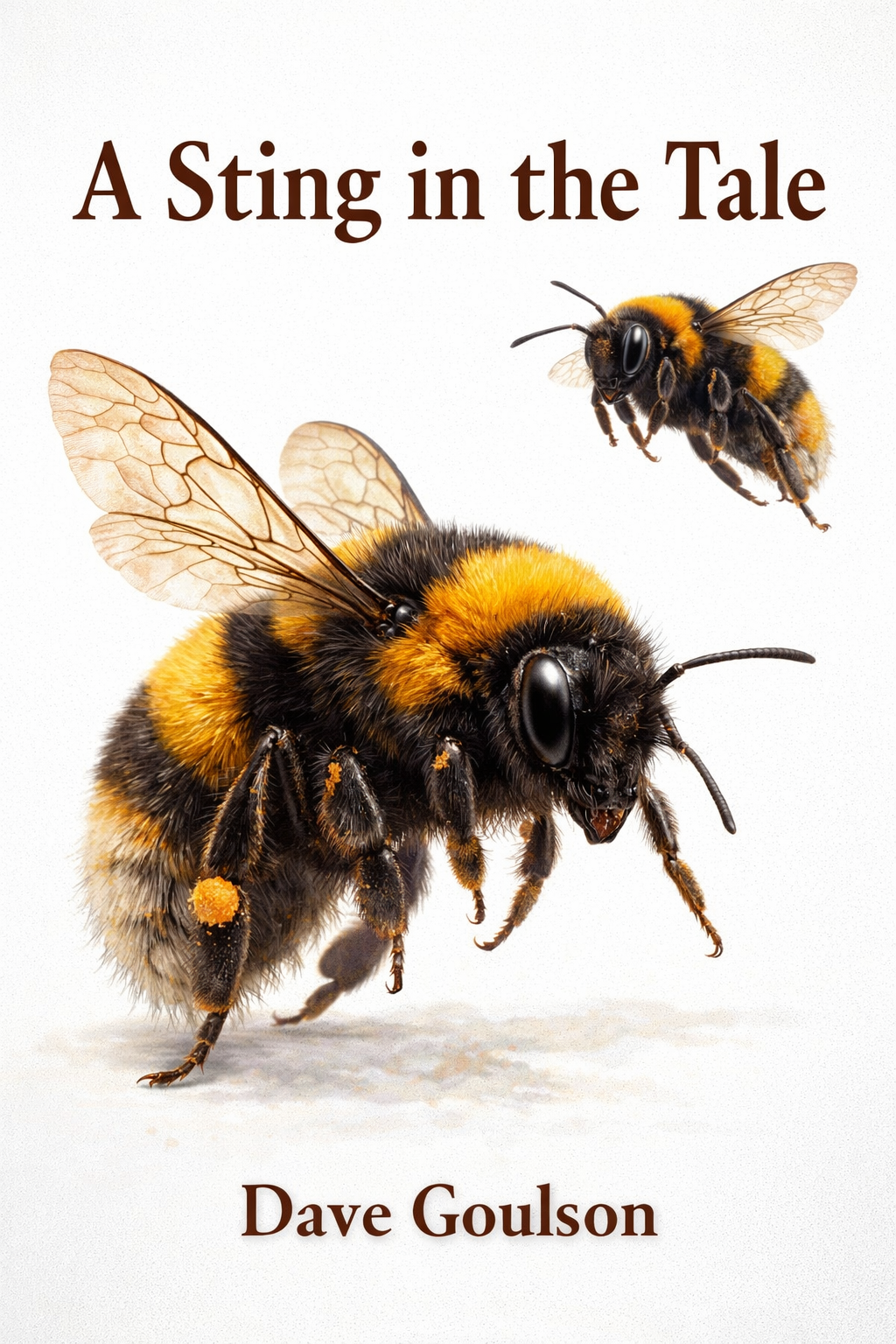
A Sting in the Tale
Chapter Summaries
What's Here for You
Embark on a captivating journey into the often-overlooked world of bumblebees with Dave Goulson's "A Sting in the Tale." This book promises to transform your perception of these fuzzy, bumbling creatures, revealing them not just as pollinators, but as protagonists in a grand ecological drama spanning millions of years. You'll gain a profound appreciation for the intricate lives of bumblebees, from their epic battles for survival after hibernation to their astonishing navigation skills and complex social structures. Goulson, with his characteristic blend of scientific rigor and heartfelt passion, shares his personal odyssey – from a childhood fascination with dissection to his academic struggles and his ultimate quest to establish a bumblebee sanctuary in France. Prepare to be intellectually stimulated as you delve into the evolutionary history of bees, the ecological consequences of introducing non-native species, and the surprising threats these vital insects face. But beyond the facts and figures, "A Sting in the Tale" offers an emotional resonance. You'll connect with the author's dedication, his moments of doubt, and his unwavering hope for the future of these essential pollinators. The tone is one of wonder, curiosity, and urgent advocacy, inviting you to see the world through Goulson's eyes – a world buzzing with life, interconnectedness, and a vital need for our protection. Discover the hidden dramas, the quiet triumphs, and the undeniable importance of the bumblebee, and leave with a renewed sense of connection to the natural world and a desire to safeguard its most industrious inhabitants.
The Short-haired Bumblebee
The story of the short-haired bumblebee, a creature now tragically absent from the British landscape, begins with an ecological puzzle in 1870s New Zealand. Imported red clover, a vital fodder crop, failed to set seed, a mystery that puzzled farmers until entomologist R. W. Fereday identified the culprit: the missing pollinator, the bumblebee. This realization sparked a decades-long effort to reintroduce these crucial insects, a journey fraught with early failures, like the ill-fated 1875 attempt to ship dormant nests, doomed by a lack of understanding of their life cycle and the harsh realities of sea travel. However, by 1884, a more competent approach emerged, utilizing refrigerated steamships to transport hibernating queens, a testament to human ingenuity adapting to natural challenges. Forty-eight queens survived the voyage, a small spark of hope that ignited a thriving bumblebee population across New Zealand, leaving behind many of their native parasites and diseases. Yet, a poignant irony unfolds as we learn that of the four species successfully established, two, the ruderal and the short-haired bumblebee, have since become exceedingly rare, even extinct, in their native Britain. The author, Dave Goulson, reveals a powerful central tension: the devastating impact of modern agricultural practices, accelerated by historical events, on these vital pollinators. The mechanization of farming, the advent of cheap synthetic fertilizers, and the intensification of land use, driven by wartime necessity and post-war policies aimed at maximizing food production, systematically dismantled the flowerrich habitats essential for bumblebee survival. The widespread use of pesticides like DDT, a chemical initially hailed for its insecticidal properties, further compounded the problem. This narrative arc moves from a problem of ecological imbalance to a profound insight into human-driven environmental change, painting a stark picture of how agricultural policies, often well-intentioned, can inadvertently lead to ecological collapse. The author's personal quest in New Zealand, searching for the elusive short-haired bumblebee in 2003, adds a layer of urgency and a glimmer of hope. His journey, filled with the sensory details of the New Zealand landscape – the icy blue of Lake Tekapo, the purple glow of vipers bugloss – underscores the preciousness of what has been lost. The eventual discovery of the short-haired bumblebee, not in pristine wilderness but on a humble town rubbish tip, offers a micro-metaphor for resilience, suggesting that life can persist in unexpected places. This quest, driven by the desire to understand the bee's habitat and dietary needs for a potential reintroduction, culminates in a resolution of knowledge gained, paving the way for conservation efforts. The core insight is that the disappearance of species like the short-haired bumblebee is not an act of nature, but a consequence of human choices, and that understanding these choices is the first step toward ecological restoration. The author’s journey to find the bee highlights the difficulty of reintroduction, emphasizing the need for meticulous research into their specific floral needs and nesting habits, a complex puzzle that requires careful, deliberate solutions to mend the broken ecological tapestry. The narrative concludes with a forward-looking perspective, suggesting that by learning from the past and applying scientific understanding, it might be possible to bring these lost pollinators back to the British countryside, offering a path towards healing and a more sustainable future.
The Bumblebee Year
The intricate drama of a bumblebee's life unfolds with the first brave queens emerging from hibernation, vast zeppelins of the insect world, near starvation after eight months of sleep. Dave Goulson, channeling the spirit of early naturalists like Frederick William Lambart Sladen, who dedicated himself to understanding these creatures when little was known, guides us through the bumblebee year. Sladen, a prodigy who by sixteen had authored a book on bumblebee habits, laid the groundwork for much of our current knowledge, meticulously documenting species now rare or extinct. The nascent queens, fueled by scarce spring nectar and protein-rich pollen, embark on a critical quest for a safe nesting site, often exploring rodent burrows and cavities, assessing depth, dryness, and protection from predators like badgers. They ingeniously weave insulation from feathers, hair, and moss, sometimes repurposing human cast-offs like loft insulation or tumble dryer fluff, transforming these spaces into cozy homes. The queen then constructs a wax cup, fills it with honey, and lays her first clutch of eggs, about sixteen, embedding them in a pollen ball, a miniature larder for her developing brood. She incubates these eggs, a process demanding immense energy, shivering to maintain a vital 30°C, a task that highlights the precarious balance of survival, where foraging for food risks the brood cooling and staying put risks starvation. After about four days, tiny, comma-shaped grubs hatch, voracious eating machines that grow through three molts over two weeks, eventually spinning cocoons to transform into pupae, then adult bees. The first to emerge are female workers, initially white and resembling miniature polar bears, who soon take over the nurturing of subsequent larvae, allowing the queen to focus solely on egg-laying. As the colony swells, with workers ranging further afield, drawn to blues and yellows, the queen shifts strategy in mid-summer, ceasing the production of worker pheromones to lay both male and female eggs. These new females develop into larger, future queens, while males are smaller, their sole purpose to mate before their short lives end. The males, often found in clusters on flowers like thistles, wait for virgin queens, who mate only once, storing sperm for the following spring. The new queens then seek out loose soil or compost heaps for hibernation, a perilous journey where many succumb to the cold, damp, or predators. Back in the original nest, the founding queen, now frail, sees her workforce dwindle as her colony's resources are depleted, leaving behind a pungent pile of pupal cells and corpses for scavengers, thus completing the cycle and setting the stage for a new 'bumblebee year' when the surviving queens emerge once more. The entire process underscores the remarkable resilience and intricate life cycle of these vital pollinators, a testament to nature's enduring design against significant odds, much like Sladen's own dedication against the unknowns of his time.
The Hot-blooded Bumblebee
The author, Dave Goulson, as a young boy, reveals a precocious and macabre fascination with the inner workings of animals, embarking on a journey of dissection and taxidermy with roadkill specimens, a hobby pursued with the aid of a surprisingly well-equipped dissecting kit and a borrowed chiropodist's instruments. This early exploration, though driven by a child's curiosity, laid a foundation for understanding the biological intricacies that would later captivate him, particularly concerning the bumblebee. He recounts his early attempts at taxidermy, often resulting in comically grotesque 'stuffed' animals with startled expressions and emaciated forms, a testament to the challenges of preserving life's fleeting moments. A pivotal shift occurs when Goulson encounters forlorn bumblebees, discovering their vulnerability and developing a method to revive them with honey and water. This leads him to question the prevailing scientific understanding of insects as purely cold-blooded creatures. He delves into the groundbreaking work of scientist Bernd Heinrich, who used a thermocouple to measure the internal temperature of bees, revealing a startling truth: bumblebees are, in fact, remarkably warm-blooded. This insight forms the chapter's central tension: how can such small creatures maintain a body temperature, often around 35°C, even when the ambient air is significantly cooler? Goulson explains the dual mechanisms bumblebees employ: insulation through their furry coats and an internal furnace powered by their flight muscles, which contract at an astonishing 200 times per second. He describes the immense energy expenditure required for flight, noting that a bumblebee's metabolic rate is significantly higher than that of hummingbirds, meaning they are perpetually on the brink of starvation, a mere forty minutes from an empty stomach. This explains why a simple spoonful of honey can be a lifeline. The narrative then explores the challenges of overheating; their dense fur, a boon in cold climes, becomes a liability in warmer temperatures, limiting their geographical range. Goulson details how bumblebees manage this by transferring heat from their thorax to their abdomen, and how established colonies regulate nest temperature with remarkable precision, workers fanning hot air out like miniature air-conditioning units, maintaining a stable 30°C. Even a colony subjected to freezing temperatures, he discovered, could survive by huddling together and shivering, a testament to their profound ability to generate and conserve heat. This intricate biological dance, from the solitary bee revived by a child's kindness to the collective warmth of a thriving colony, underscores the extraordinary resilience and complex thermoregulation of these vital insects.
A Brief History of Bees
Let us journey back, 135 million years, to the age of dinosaurs and drifting continents, a time when the earth's flora was dominated by ferns, cycads, and conifers, and the air buzzed not with the drone of bees, but with oversized dragonflies and early butterflies. In this ancient Cretaceous world, plants faced a profound challenge: reproduction without mobility. Their initial solution, scattering pollen on the wind, was a wasteful gamble, a desperate hope that a minuscule fraction would find its mark. Dave Goulson explains that nature, abhorring such inefficiency, sought a better way, and it arrived in the form of insects. Some winged insects, drawn by the nutritious pollen, began to feed and, in their travels, became accidental couriers, carrying pollen from flower to flower. This marked the dawn of pollination, a symbiotic dance that would transform the planet. To attract these vital pollinators, plants embarked on the longest marketing campaign in history, evolving conspicuous petals – first white, like those of early water lilies and magnolags – to stand out against the green backdrop. As insect-pollinated plants flourished, a fierce competition for attention ensued, leading to an explosion of vibrant colors, intricate patterns, and elaborate shapes. Some plants then introduced an even greater incentive: sugar-rich nectar. This innovation spurred further specialization among insects, with butterflies and flies developing long mouthparts to access this sweet reward. The ultimate masters of this evolving system, however, were the bees. Goulson reveals that the defining characteristic of bees, setting them apart from other flower-feeding insects, is their unique method of provisioning their young. Unlike adult butterflies or flies who might feed on nectar, adult female bees diligently gather both nectar and pollen to nourish their helpless, legless larvae, which cannot move to forage themselves. This remarkable adaptation evolved from wasps, predatory insects that stock their nests with prey for their offspring. At some point, a species of wasp began experimenting, substituting pollen for insects, a rich protein source. This gradual shift, perhaps initially a nutritional supplement, eventually led to the evolution of the first bees, creatures entirely dependent on flowers for sustenance. The fossil record, though sparse, offers glimpses into this deep history; the oldest known bee, an 80-million-year-old stingless bee, suggests a much earlier origin, estimated by DNA analysis to be around 130 million years ago, not long after the emergence of the first flowers. Over millennia, bees adapted further, developing hairy bodies to collect pollen and specialized structures like pollen baskets on their legs. Many also evolved longer tongues to reach nectar hidden deep within flowers, a testament to the co-evolutionary arms race. Initially, these early bees were solitary, a trait still dominant today, with females meticulously constructing nests and provisioning them for their offspring. However, about 80 million years ago, a significant shift occurred: some bees evolved a social lifestyle, leading to the development of complex colonies. This social evolution, Goulson notes, persisted through cataclysmic events like the meteor impact that wiped out the dinosaurs, allowing smaller creatures, including bees and flowering plants, to recover and diversify. It was into this post-dinosaur world, some 30 to 40 million years ago, that the first bumblebees emerged, likely adapting to cooler climates with their larger, furrier bodies and spreading across continents. Today, while we marvel at the estimated millions of species on Earth, Goulson sounds a note of caution, highlighting that human activity is now driving species to extinction at an alarming rate, with insects, the unsung heroes of our ecosystems, particularly vulnerable. Their loss, he emphasizes, would not merely be a tragedy for biodiversity but an existential threat to life on Earth, a stark reminder that our own survival is intricately woven with the fate of these small, industrious creatures.
Finding the Way Home
The author, Dave Goulson, invites us into the profound mystery of navigation, beginning with the humble pigeon, a creature capable of astonishing feats of return. Imagine, he posits, being blindfolded, transported hundreds of miles, and then tasked with finding your way home – a task seemingly impossible for us, yet a routine triumph for a pigeon. We marvel at their innate compasses – the sun, polarized light, and even the Earth's magnetic field – yet the deeper puzzle remains: how do they know *where* home is? This enigma led Goulson to investigate bumblebees, creatures equally adept at finding their way, albeit on a smaller scale. He describes his simple yet ingenious experiments: setting up bumblebee nests and then transporting individual bees to unknown locations, meticulously marking them with tiny discs. The results were striking: bees released nearby often returned almost immediately, while those taken further afield faced greater challenges, with many never making it back. This revealed a crucial insight: unlike the pigeon's apparent 'GPS,' bees rely heavily on learning and memorizing landmarks around their nest. Goulson illustrates this with vivid anecdotes, like a confused bee circling a new garden gnome or bees momentarily disoriented by a cow obstructing their nest entrance, highlighting their remarkable ability to adapt and re-learn their surroundings. The challenge of tracking these tiny navigators led to the development of sophisticated harmonic radar technology, allowing scientists like Juliet Osborne and Joe Riley to map the bees' exploratory flights. These flights, Goulson explains, begin as erratic loops, gradually expanding to map the local landscape, eventually leading to efficient, linear journeys to known food sources. This learned map, built through repeated exploration and landmark recognition, is the bee's true navigational tool. The distance bees can travel, Goulson emphasizes, is critical for their survival and for conservation efforts; understanding their foraging range helps us determine how to best support their habitats. Ultimately, Dave Goulson reveals that while we may not possess the pigeon's innate sense of direction, bumblebees offer a masterclass in learning, adaptation, and the power of a well-mapped environment, urging us to consider how we can cultivate such environments to ensure their survival and, by extension, our own.
Comfrey and Smelly Feet
The author, Dave Goulson, recounts his early days as a university lecturer, a role he secured despite a profound shyness that once led him to feign illnesses to avoid public speaking. He paints a picture of academia where research prowess often overshadowed teaching ability, a stark contrast to his own journey. It was amidst the buzzing comfrey patches of Itchen Valley Country Park, a surprisingly wild haven near Southampton, that Goulson stumbled upon a fascinating puzzle: why did bees often fly past flowers, only to land on others? This observation, born from a desire to understand bumblebee behavior, became the central tension of his research. He discovered that bees possess an extraordinary ability to detect which flowers have already been visited and emptied by other bees. Initially, the prevailing thought was that bees could visually discern nectar levels, but experiments revealed this wasn't the case. Instead, the breakthrough came with the realization that bees leave behind a subtle, oily 'footprint' – a unique chemical signature from their bodies – on the flowers they visit. These olfactory cues, detected by the bees' sensitive antennae, act as a warning signal, alerting subsequent visitors that the flower has been recently exploited and is likely empty. This remarkable adaptation, a testament to the bees' keen senses and efficient foraging strategies, allows them to conserve precious time and energy, ultimately contributing to the growth of their colonies. What’s more, this system isn't species-specific; bees can detect and avoid flowers visited by other bee species, and even hoverflies, demonstrating a sophisticated interspecies communication network. The chapter also touches on the subtle nuances of this system, revealing that the 'scent mark' fades over time, and bees learn to interpret the age of these marks based on the flower type and their own foraging specialization. It’s a humbling reminder, as Goulson notes, that these tiny creatures, with brains smaller than a grain of rice, exhibit powers of perception and learning that often surpass our own, leaving us with the lingering question of how much more remains to be understood about their intricate lives.
Tasmanian Devils
The arrival of the bufftailed bumblebee in Tasmania, a seemingly innocuous event in 1992, unfolds as a compelling narrative of ecological consequence, echoing a broader cautionary tale about introducing nonnative species. Dave Goulson, through his meticulous research and engaging prose, draws us into the remote, stunning landscapes of Tasmania, a place teeming with unique marsupials and endemic flora, much like its more famous neighbor, Australia. The journey of the bumblebee, likely a 1,500-mile flight against prevailing winds from New Zealand, is itself a mystery, hinting at accidental transport via ships or nursery plants, yet it coincided remarkably with the discovery of their immense commercial value for pollinating greenhouse tomatoes. This economic incentive, Goulson suggests, might explain their sudden appearance, a stark contrast to their century-long absence. The author then masterfully pivots to the historical pattern of introduced species in the Antipodes, detailing how well-intentioned Acclimatisation Societies inadvertently decimated native wildlife by introducing familiar European species, transforming vibrant, unique ecosystems into pale imitations of the British countryside. This historical context sets the stage for Goulson's own research, where he and his students, Jane Stout and Andrea Kells, ventured into Tasmania not just to document the bumblebee's spread, but to understand its impact. They discovered that while bumblebees were not significantly outcompeting native bees, their presence dramatically boosted the seed production of invasive tree lupins, potentially transforming them from scattered plants into a pervasive weed problem. This insight is visually striking: imagine a lupin plant, once struggling to set seed, now bursting with four times the output, a vibrant yellow tide threatening to engulf native flora. The narrative then fast-forwards eleven years, revealing that this prediction largely came to pass, with lupins becoming a significant issue, particularly along coastlines. Goulson's exploration extends to the unintended consequences of even beneficial introductions, highlighting how honeybees, also nonnative, were found to have a far more detrimental effect on native bee populations than bumblebees. This leads to a profound realization: the very creatures we value for their economic and ecological contributions can, in the wrong context, become agents of disruption. The chapter culminates in a somber reflection on the 'Frankenstein ecosystems' created by human intervention, urging extreme caution before introducing any species outside its native range, a plea underscored by the recent devastating facial cancer that has decimated the iconic Tasmanian devil population, a poignant reminder of nature's fragility and humanity's often-unforeseen impact.
Quinn and Toby the Bumblebee Sniffer Dogs
The quest to understand and protect bumblebees, as Dave Goulson explains, often hinges on a deceptively simple yet profoundly challenging task: finding their nests. These often-hidden havens, tucked away in rodent burrows, compost heaps, or beneath trampolines, present a significant hurdle, especially for rare species whose habitats remain largely mysterious. Early attempts to enlist public help, like Juliet Osborne's national survey where volunteers sat with deckchairs and gin and tonics for twenty minutes, yielded valuable data showing gardens are surprisingly important nesting sites, but were time-consuming and often yielded no sightings. This highlights a core dilemma: how do we gather crucial ecological data on elusive creatures without immense, often fruitless, human effort? The author recounts various ingenious, and sometimes comical, failed attempts, from tying tinsel to queens to plotting worker bee flight paths, each revealing the difficulty of tracking these small, busy lives. Even the prospect of high-tech infrared imaging remained out of reach due to cost. The narrative then pivots to a more promising avenue: scent. Badgers, it's noted, find bumblebee nests by smell, a keen sense that sparks an idea – could a dog, with its unparalleled olfactory prowess, be trained to do the same? This ambitious notion led to an unlikely collaboration with the Defence Animals Centre, the very place that trains bomb-sniffing dogs. Initial trials with a frozen nest were encouraging, but the path to a reliable bumblebee sniffer dog was fraught with setbacks, with dogs like Chad proving too easily distracted or lacking focus. The breakthrough finally came with Quinn, an English Springer Spaniel, who showed remarkable aptitude, correctly distinguishing nest material from control samples. This led Joe Waters and Quinn to the Hebrides, searching for rare bumblebee nests. While they found success, locating twenty-five moss carder nests and four great yellow nests, the pace was slower than hoped, averaging only one nest every couple of days. Furthermore, the nests they did find were often destroyed by badgers, a frustrating setback that echoed the inherent unpredictability of fieldwork. The project faced another hurdle when Joe Waters departed, leaving Quinn without a handler. However, the idea persisted, and Steph O'Connor, a candidate with an unusually adventurous spirit and a knack for survival, took on the challenge with a new dog, Toby. Toby, like Quinn, excelled at finding buried nest material but struggled with live, wild nests, leading to theories about scent changes or species variation. Ultimately, a striking realization emerged: after extensive training and dedicated fieldwork, Steph herself became a more effective nest-finder than the highly trained sniffer dog. The narrative concludes not with a perfect technological solution, but with a testament to persistence and human intuition, suggesting that sometimes, the most advanced tool is simply a keenly observant and determined individual, much like Steph, who, after years of dedicated searching, has become a finely tuned bumblebee nest-finding machine, uncovering over 100 nests and shedding light on their natural enemies.
Bee Wars
Dave Goulson, in his chapter 'Bee Wars,' invites us into the seemingly idyllic world of bumblebees, revealing a hidden drama of genetics, kinship, and brutal conflict. While outwardly gentle creatures, models of cooperation admired by philosophers from Plato to Marx, the reality within the nest is far more complex. The author explains that the foundation of this social structure lies in a peculiar form of genetics unique to Hymenoptera, the insect order that includes bees, ants, and wasps. Unlike humans, where sex is determined by two chromosomes and relatedness to offspring is a straightforward 50%, bees operate on a haplodiploid system. This means females have two sets of chromosomes and males have one, a difference that dramatically alters familial relationships. A female bee is 50% related to her daughters and sons, but crucially, she is 75% related to her sisters. This higher degree of relatedness to sisters, Goulson reveals, is the evolutionary engine driving altruism and intense cooperation: a worker bee maximizes the propagation of her own genes by helping her mother raise more sisters, rather than attempting to reproduce herself. It's a biological imperative, a finely tuned system where every bee is a tiny, genetic vessel. Yet, this harmony shatters when it's time to produce males. The queen bee, to ensure her lineage survives the winter, begins laying unfertilized eggs that will become sons. This is where the central tension ignites: while the queen is equally related to her sons and daughters (50%), her worker daughters find rearing brothers—who share only 25% of their genes—far less appealing than raising their own sons. This conflict of interest becomes a desperate struggle, a 'bee war' where workers, though physically unable to mate, possess functional ovaries and begin laying their own male eggs. The queen, fiercely protective of her genetic legacy and loath to consume her own grandchildren, retaliates by eating the workers' eggs. But she is outnumbered. The workers then turn on the queen's eggs, devouring their own baby brothers, plunging the nest into a chaotic free-for-all. It's a stark, almost Shakespearean drama played out in miniature, where the delicate balance of social order is broken by the primal drive for genetic survival. Researchers, Goulson notes, can now use genetic markers to confirm that the queen, despite the fierce battles and the toll it takes on her own body—frayed wings, thinning fur—largely prevails, ensuring most males are her own. Yet, even in victory, the nest's days are numbered, as the constant conflict weakens the queen and the workforce, often leading to the queen's death or the workers abandoning the nest. Ultimately, Goulson illustrates that this seemingly tragic end is, from a genetic perspective, a profound success if the queen's genes persist in hibernating new queens or stored sperm, a testament to the relentless, often brutal, logic of evolution.
Cuckoo Bumblebees
The author, Dave Goulson, draws us into a world where deception and survival intertwine, beginning with the familiar, almost villainous, image of the avian cuckoo. This bird's strategy of laying eggs in other birds' nests, leading to the demise of its own siblings, is a harsh lesson in parental parasitism. Yet, Goulson reveals this is not merely a peculiar avian quirk; many other birds, like moorhens and ducks, engage in similar egg-dumping, a strategy that allows them to maximize offspring production by offloading the burden of care. This evolutionary gambit finds a striking parallel in the realm of bumblebees, as illuminated by the remarkable work of Carlos Lopez-Vaamonde. Through intricate DNA analysis, Lopez-Vaamonde discovered that a small but significant percentage of male bumblebees in buff-tailed bumblebee nests were not the offspring of the resident queen or her workers, but rather the sons of workers from entirely different, unrelated nests. These 'intruder' workers, having strayed into the wrong laboratory tubes, were essentially acting like cuckoos, laying eggs in a foreign nest where their reproductive interests aligned with opportunistic gain rather than familial loyalty. The author explains that a worker bee typically prioritizes her sisters over her own sons because she shares more genes with her sisters. However, in an unrelated nest, any offspring she produces is a net gain. This phenomenon isn't confined to laboratory settings; studies on the Japanese bumblebee, Bombus deuteronymus, have confirmed the presence of unrelated workers in wild nests, contributing substantially to male offspring. Goulson then shifts focus to another parasitic strategy: nest usurpation by bumblebee queens. Late-emerging queens, finding prime nesting sites already occupied, may resort to attacking and killing a resident queen to claim her nest and brood. While seemingly counterintuitive to care for another's young, for social insects, these 'intruder' young will become workers, indistinguishable from the usurper's own offspring. This tactic, mirroring that of Australian choughs who kidnap young birds, allows the late queen to bypass the arduous early stages of colony establishment. The author notes that while this involves a dangerous fight against a rival of equal strength, the prize—an established nest—is substantial. Accounts of nests containing multiple dead queens hint at the ferocity and frequency of such usurpations, a struggle that becomes more challenging as a nest grows larger but also more rewarding. This usurpation can extend across closely related species, such as buff-tailed invading whitetailed bumblebee nests, or in the Arctic, where Bombus hyperboreus preys on Bombus polaris. This leads to the emergence of 'cuckoo bumblebees,' a specialized group that has abandoned social living entirely to become dedicated nest assassins. These cuckoo bees, often larger and with thicker exoskeletons—a physical adaptation making them harder to kill—lack pollen baskets, as they do no foraging. They locate nests, likely by scent, barge past defenders, and confront the resident queen. The outcome is often a fight to the death, with the cuckoo bee either killing the resident queen and taking her place or, occasionally, the resident queen submitting. The cuckoo bee then lays her eggs, and the host workers, now enslaved, raise them. The author emphasizes that these cuckoo bees do not produce workers themselves; their eggs develop into males and females that will continue the parasitic cycle, as the host nest's workforce eventually dwindles. The mimicry extends to coloration and, as Steve Martin's research suggests, even scent, providing a subtle but imperfect disguise. While often attacked, cuckoo bees sometimes find refuge within the nest, allowing them to absorb host scents and further their deception. Goulson concludes by urging a broader perspective on these 'nefarious' tactics, framing them not as moral failings but as natural, albeit brutal, adaptations. Condemning a cuckoo bee, he argues, is akin to condemning a lion for hunting a gazelle; it is a vital, albeit harsh, part of the natural tapestry that enriches biodiversity. The loss of these specialized creatures, he warns, would be a significant impoverishment of the natural world, underscoring the interconnectedness of life and the profound consequences of ecosystem collapse. This intricate dance of parasitism and survival, from avian imposters to specialized bumblebee assassins, reveals the complex, often ruthless, beauty of evolution at work.
Bee Enemies
The author, Dave Goulson, invites us into the often-overlooked world of bumblebee adversaries, revealing a complex ecosystem of threats that extend far beyond the obvious sting. He begins by demystifying the bumblebee's iconic coloration, explaining that their bright bands of yellow, red, and white are not mere decoration but a stark warning: they possess a sting, a defense evolved from an egg-laying tube, primarily used to protect the nest. While generally placid when foraging, preferring flight over fight, certain species like the bufftail and tree bumblebee can be more aggressive, even resorting to biting and stinging simultaneously when truly provoked. Goulson clarifies a common misconception: unlike honeybees with their barbed stingers that lead to their own demise, bumblebees and wasps have unbarbed stings, allowing them to sting multiple times, a fact that underscores the evolutionary advantage of their warning coloration. This vibrant signaling, a shared language among many stinging or poisonous insects, serves as a crucial deterrent to visually hunting predators like birds. However, this system of honest signaling is vulnerable to deception, as harmless species like hoverflies have evolved to mimic the warning colors of their dangerous counterparts, creating a 'confusing signal' for predators and highlighting the intricate, sometimes deceptive, dance of natural selection. The author then pivots to the surprising predators of bumblebees, noting that while large birds like bee-eaters and shrikes pose a threat in some regions, and specialized predators like robber flies and beewolves exist, the most significant threats often emerge from unexpected quarters. He recounts the chilling discovery of great tits meticulously dissecting bumblebees, a learned behavior that spreads through families, and the pervasive infiltration of bumblebee nests by smaller creatures. Through the innovative use of camera traps, Goulson and his colleague Steph O'Connor uncovered that common visitors to nests are often mice, voles, and shrews, a dynamic that echoes Darwin's observations on the indirect influence of cats on bumblebee populations through their predation of mice. Yet, the true devastation often comes from within: bumblebee nests are vulnerable to parasites like the wax moth, whose caterpillars tunnel through and consume entire colonies, and microscopic pathogens such as Crithidia bombi, a protozoan that can cripple a nest, especially when food is scarce. Even the seemingly benign act of a cow stepping on a nest entrance can cause significant damage. This exploration culminates in a profound understanding of the bumblebee's precarious existence, where survival is a constant negotiation against a diverse array of enemies, from the grand to the minuscule, and where the success of a few thriving nests must overcome the staggering mortality rate of many others, illustrating the delicate balance of nature and the crucial, often unseen, role bumblebees play in supporting broader biodiversity.
The Birds and the Bees
The author, Dave Goulson, embarks on an exploration of bumblebee mating behaviors, beginning with an intriguing observation atop Dumyat hill near Stirling University. He noticed male whitetail bumblebees congregating in numbers, despite the barren landscape offering no flowers. This led him and his students, Jill Young and Liz Sangster, to investigate, revealing a consistent pattern of male bumblebees gathering on hilltops across various Scottish hills, a phenomenon known as 'hilltopping.' This behavior, as studied by experts like John Alcock, involves males aggregating in strategic locations, often the highest points, to await females. The females, in turn, are drawn to these spots, gaining an opportunity to survey potential mates and select the fittest, a strategy that ensures their offspring inherit desirable traits. However, the narrative quickly pivots to a central tension: despite these elaborate male efforts, actual mating in bumblebees is remarkably rare, and a significant majority of males never reproduce. Goulson delves into other observed male strategies, such as 'patrolling,' where males follow established routes, marking them with pheromones at 'buzzing places' to attract queens, a behavior meticulously studied by Charles Darwin. He recounts his own unsuccessful attempts to lure queens with synthesized pheromones, highlighting the enduring mystery of how these routes are established and maintained. Further complexities arise with nest-seeking males and the surprising lack of incest avoidance in some species, contrasting with the strong female selectivity driven by the high cost of reproduction and the risks of inbreeding. The introduction of the tree bumblebee, an invasive species, adds another layer, with males swarming nests, often causing alarm to humans unaware that males cannot sting. A different mating strategy is observed in North American bumblebees with exceptionally large eyes, which perch and attempt to mate with any large insect, often with chaotic results. Crucially, the author reveals a key insight: virgin queens produce a specific sex pheromone, primarily from their heads, which attracts males. This leads to the resolution that while males are often indiscriminate due to their low chance of mating, females are more discerning, seeking healthy, unrelated partners. The chapter concludes by contrasting bumblebee mating with the more prolific, albeit fatal, mating flights of honeybee queens, emphasizing the profound differences in reproductive strategies and outcomes, ultimately underscoring the enigmatic and often unfulfilled lives of most male bumblebees, whose sole purpose often goes unrealized. The narrative concludes with a look at laboratory observations, revealing details about mating duration, the role of leg length in successful mating, and the formation of mating plugs, solidifying the understanding that for many male bumblebees, their grand efforts might ultimately lead to a solitary existence, a poignant reflection on the often unseen struggles in the natural world.
Does Size Matter?
The author, Dave Goulson, invites us into a fascinating exploration of bumblebee size variation, a trait that sets them apart from many insects. He introduces James Peat, a PhD student whose quirky perspective proved ideal for unraveling this puzzle. While many insects, like peacock butterflies and even their close relatives the honeybees, maintain a uniform size, bumblebee workers exhibit a remarkable range, with the largest being ten times heavier than the smallest, all coexisting within the same nest. This phenomenon is echoed in some ant species, like leafcutters, where size directly correlates with specialized roles: massive soldiers for defense, medium foragers for food gathering, and tiny workers for tending the queen and fungus gardens, a complex symbiotic relationship. The central question then arises: does a similar logic apply to bumblebees? Goulson and Peat embarked on an ambitious experiment, carefully measuring thousands of bees to determine if size dictated their duties. Their findings revealed a clear pattern: the smallest bees remained within the nest, while the largest were predominantly foragers. This immediately posed a new conundrum: why would larger bees be more efficient at foraging? The intuitive answer – that bigger bees carry more – is complicated by the fact that larger bees also require more food to be reared. The author and Peat then designed a meticulous, albeit initially chaotic, experiment involving a specially rigged nest box. They painstakingly weighed each bee, both entering and exiting, to calculate their foraging efficiency. This involved overcoming comical challenges, like a third-floor lab window that confused returning bees, leading to a cascade of office invasions and frantic bee-catching expeditions. Eventually, with the aid of a traffic cone and a large funnel, they managed to gather crucial data, revealing that larger foragers were indeed more efficient, bringing back more food per unit of time. But the 'why' remained elusive. Later research, Goulson explains, points to enhanced vision due to larger eyes, a better sense of smell, and potentially larger brains for improved learning and navigation in larger bees, advantages that are useless within the dark confines of the nest but critical in the wider world. Furthermore, larger size may offer a survival advantage against predators. This contrasts with honeybees, which divide labor by age rather than size, with older, perhaps more expendable, bees undertaking the most dangerous foraging trips. Goulson draws a tentative parallel to human hunter-gatherer societies, where post-reproductive women often take on greater foraging risks. The narrative then pivots back to the nest, questioning why small bees are beneficial. Their nimbleness in confined spaces is suggested as a key factor, leading to an experiment where Goulson and Peat artificially created nests with only large bees, only small bees, and a mix. Surprisingly, the nests with only large bees performed best, a result that Goulson speculates might be due to the harsh experimental weather conditions or the potential for large bees to dominate smaller ones. The chapter culminates in a final, elegant insight: size variation, and thus tongue length, allows bumblebees to exploit a diverse range of flowers. Small, short-tongued bees excel on shallow flowers, while larger, long-tongued bees are more efficient on deeper, sturdier blooms, demonstrating that a spectrum of sizes is crucial for colony success. This brings us back to Charles Darwin's own befuddlement with clover and bees, a historical footnote highlighting how even great minds can be led astray by incomplete observations, underscoring the complex beauty of nature's adaptations.
Ketchup and Turkish Immigrants
The author, Dave Goulson, embarks on a journey to unravel the intricate world of bees, moving beyond the common, simplistic image of the striped, stinging honeybee. He reveals that the reality is far more complex, with perhaps 25,000 bee species globally, and that the familiar honeybee, often tan rather than striped, is surprisingly ineffective at pollinating certain crucial crops like tomatoes and runner beans, a task better suited to their buzzing cousins, the bumblebees. This realization, Goulson explains, spurred a revolution in agriculture, beginning in the 1970s and accelerating in the 1980s with the commercial rearing of bumblebees, initially for tomato pollination. Scientists like Frederick Sladen laid early groundwork, discovering that captive queens could be induced to nest with the help of food, other queens, or even honeybee workers, a peculiar but effective technique still in use. The true turning point, however, came in 1985 when Dr. Roland De Jonghe observed the remarkable efficiency of bufftailed bumblebees in pollinating tomatoes within glasshouses, a process known as buzz pollination, which involves rapid vibration to release pollen, a feat hand-pollination with vibrating wands could not match in terms of cost or yield. This discovery led to the founding of companies like Biobest and Koppert Biological Systems, transforming bumblebee rearing into a global industry, with factories now producing millions of nests annually, primarily of bufftails, many originating from Turkey due to their amenability to mass production. This industrial-scale operation, Goulson notes with a touch of awe, involves vast, climate-controlled facilities akin to football pitches, tended by technicians in a warm, humid environment. Yet, this success story is shadowed by significant environmental and ecological concerns. The sheer scale of production and transportation creates a substantial carbon footprint, with disposable packaging often ending up in landfills. More critically, the mass distribution of bumblebees, particularly non-native species like the bufftail, poses a grave risk of escape into the wild, potentially outcompeting or hybridizing with native bee populations, a scenario Goulson likens to the disastrous escape of mink in the UK. This hybridization, as seen with the Japanese bufftail and native species, can lead to sterility in native queens, threatening their very existence. The risks extend to disease transmission; the concentrated conditions of mass rearing provide fertile ground for pathogens, and these diseases, along with the bees themselves, are shipped globally. Goulson highlights research by Pete Graystock, who found common and serious diseases like Nosema bombi and Deformed Wing Virus in commercial bumblebee nests, suggesting that these diseases, potentially novel to native bee populations, could devastate them, much like European diseases ravaged Native American populations. The specter of disease also looms over honeybees, with the devastating impact of Varroa mites and the mysterious Colony Collapse Disorder (CCD) in North America serving as stark warnings. The chapter draws a direct link between the commercial bumblebee trade and honeybee health, as the vast quantities of pollen required for bumblebee rearing are sourced from honeybee colonies, inevitably carrying honeybee diseases and parasites. This global redistribution of pathogens, Goulson argues, may have played a role in honeybee crises and the decline of native bees in places like Chile and Argentina. While acknowledging the efforts of commercial breeders to mitigate these risks, Goulson stresses the urgent need for stricter regulations and hygiene protocols in the bumblebee trade, advocating for local rearing of native species to minimize transport and ecological disruption. He concludes by urging reflection on the convoluted global food supply chain, exemplified by ketchup made from Spanish tomatoes pollinated by Turkish bees, and posits that while commercial bumblebees may be essential for certain crops, investing in habitat and resources for wild bees could offer a more sustainable and environmentally friendly alternative, serving as a vital insurance policy against the fragility of a single, industrialized pollination source. The chapter leaves us contemplating our profound, yet often unacknowledged, reliance on these tireless pollinators for much of the food we consume, from baked beans to cucumbers.
Chez Les Bourdons
The author, Dave Goulson, embarks on a quest for land, a private nature reserve, a dream too grand for his academic salary in the UK. He turns his gaze to France, a land of affordable, albeit often dilapidated, rural properties. His search leads him to the Charente, a region echoing with childhood memories of butterflies and oak forests. Accompanied by his father, tasked with preventing any 'ridiculous' purchases, Goulson navigates the slow pace of French estate agents and the melancholic beauty of neglected stone houses, each whispering tales of lost livelihoods and forgotten grandeur. Many of these properties, a stark contrast to the inflated UK market, sit unsold, their potential choked by neglect and a lack of local interest. Goulson, however, sees not decay, but possibility; he seeks not a grand chateau, but a sanctuary for flowers and, crucially, for bees. After a series of disheartening viewings, including an abandoned shoe factory and a crumbling chateau, Goulson encounters an estate agent whose unusual approach involves actively deterring clients. This leads him to a derelict farm near the village of Epenède, a property owned by Monsieur Poupard. The farm is a picture of disrepair: a decaying house with fertiliser sacks patching broken windows, a yard littered with rusting machinery, and barns on the verge of collapse. Yet, amidst this desolation, a barn owl takes flight, a moment that, coupled with the astonishingly low price, captivates Goulson. He buys the farm, a decision met with paternal concern, and begins the arduous task of restoration. The initial reality, however, is stark: a cold, damp, and inhospitable dwelling, a fierce dog, and a pregnant wife. Undeterred, Goulson and his father embark on a 'blitz' to make the house habitable, gradually introducing modern comforts while embracing a more rustic approach to basic needs. It is during these early days, while surveying the land, that Goulson hears a familiar, yet rare, buzz – a shrill carder bumblebee, a species scarce in the UK, foraging on willowherbs. This discovery marks a turning point, transforming his restoration project into a mission to cultivate a haven for these vital insects. The farm, 'Chez Nauche', becomes a place of profound peace, alive with wall lizards, dormice, and glowworms. The transformation of the meadow, however, is the true testament to Goulson's vision. Initially a monoculture of coarse grass, fertilized and devoid of flowers, it requires a long-term strategy. Goulson chooses patience over costly topsoil removal or deep ploughing. By annually cutting and removing the hay, a process facilitated by Monsieur Fonteneau and his herd of goats, he gradually reduces soil fertility. This slow decline allows native wildflowers to reclaim the land. This method, he learns, is crucial for fostering the symbiotic relationship between legumes, nitrogen-fixing bacteria, and the bees that depend on them for protein-rich pollen. This ecological interdependence, he notes, is easily disrupted by modern agricultural practices, leading to a catastrophic loss of species-rich grasslands. Goulson introduces hemiparasitic plants like yellow rattle to further suppress grass growth and encourage biodiversity. He orchestrates a large-scale experiment, sowing various hemiparasitic seeds across marked plots, a peculiar sight for the local farmers. The results, though slow to emerge, show promise, with yellow rattle establishing itself. Over a decade, the once-dull field blossoms into a vibrant meadow, supporting over 130 plant species and attracting a myriad of insects, including rare butterflies like swallowtails and scarce swallowtails, and various bumblebee species, some of which are exceedingly rare in Britain. The return of wildlife is profound: kestrels hunt voles, barn owls thrive, and even a mysterious nocturnal predator, possibly a beech marten, leaves its mark. Goulson's motivation, while rooted in scientific curiosity and a desire to create a space for long-term ecological research, is ultimately driven by a profound appreciation for the beauty and complexity of nature. He concludes that such restored meadows, teeming with life, offer a glimpse of paradise, a testament to nature's resilience when given space and time, and a compelling reason to protect these precious havens.
A Charity Just for Bumblebees
The author, Dave Goulson, begins by challenging the oft-repeated, likely apocryphal quote attributed to Albert Einstein about the extinction of honeybees spelling doom for humanity, noting that while a disaster, survival would be possible, though diets would be far poorer without bee-pollinated fruits and vegetables. He emphasizes that it's not just our food, but entire ecosystems that depend on bees, especially in the UK where bumblebees are the predominant pollinators. Goulson's initial fascination with bumblebees, their intriguing behaviors, and their inherent lovability, shifted to a grave concern as he discovered the dire plight of many species. Citing historical texts, he reveals that several UK bumblebee species, once familiar, are now extinct or critically endangered, like the apple bumblebee, Cullems bumblebee, and shorthaired bumblebee, while others, such as the great yellow and shrill carder bumblebees, cling to existence in isolated pockets. This led Goulson and his students to investigate the reasons behind these declines, exploring whether specialization played a role. Their research pointed to a clear pattern: rare species were specialists, favoring protein-rich legumes like red clover and possessing long tongues suited for deep meadow flowers, emerging later in the season to coincide with these plants' bloom. Conversely, common species were generalists, short-tongued, emerging earlier to feed on spring woodland and garden flowers, gaining a crucial head start. The stark reality emerged that the destruction of flowerrich meadows by modern agriculture had decimated the habitat of these specialists. Furthermore, even remaining isolated populations on nature reserves proved vulnerable. Goulson explains the critical concept of population viability, where small, isolated groups are susceptible to extinction through sheer bad luck or the detrimental effects of inbreeding, which reduces genetic diversity and offspring health. He illustrates this with the shorthaired bumblebee's extinction, even in a protected reserve, suggesting its final population was simply too small to survive. This dilemma—how to save these dwindling populations—spurred Goulson to seek practical solutions beyond academic papers, which few outside the scientific community read. He recognized the gap between scientific knowledge and its application, realizing that to make a real difference, a more direct approach was needed. In 2005, the idea for a dedicated bumblebee conservation charity took root, inspired by organizations for birds and butterflies. Despite academic pressures and initial uncertainty, Goulson secured a professorship at Stirling University, which was more receptive to the idea. He founded the Bumblebee Conservation Trust (BBCT), initially funding everything himself and preparing membership goodies like pin badges and seed packets. A serendipitous press release led to an astonishing front-page feature in The Independent, triggering a flood of membership applications and overwhelming the nascent organization. Goulson recounts the initial chaos, aided by a well-meaning but disorganized volunteer, highlighting the immense challenge of managing the influx of support without infrastructure. Despite these early struggles, the trust grew, secured vital funding, and hired its first conservation officers. The chapter culminates with the BBCT's significant achievements: thousands of members, the creation of thousands of hectares of vital flowerrich habitat through collaboration with landowners and farmers, and extensive public outreach, including educational programs and gardening advice. Goulson emphasizes that conserving bumblebees is an accessible endeavor for everyone, from individuals planting a single lavender bush to farmers and policymakers creating large-scale habitats, ultimately contributing to a healthier environment for future generations. The initiative, including the citizen science Beewalks program, aims to gather crucial data to guide future conservation efforts and demonstrates how a single, focused passion can blossom into a powerful force for ecological change.
Return of the Queen
The journey to reintroduce the shorthaired bumblebee to Britain, a species last seen in 1988, began with a hopeful meeting at the RSPB's Lodge in Bedfordshire. The author, Dave Goulson, along with Mick and a cadre of specialists including David Sheppard of Natural England, Jane Sears of the RSPB, and experts from Hymettus and Swift Ecology, convened to strategize. Dungeness, the bee's final stronghold, was identified as the initial release site, a place of peculiar atmosphere where an ugly nuclear power plant looms over a vast expanse of shingle, paradoxically teeming with flowers like viper's bugloss, a favorite of the target bee. The core challenge, however, was clear: the bees had died out due to habitat loss on Romney Marsh, ravaged by intensive farming. The plan hinged on recreating this lost flowery habitat, a task enthusiastically embraced by local farmers and even a windfarm company, culminating in over 500 hectares of new habitat around Dungeness. The next hurdle was the temporal chasm: synchronizing the New Zealand bee population with the UK climate. Initial attempts to bring back queens from New Zealand proved fraught with difficulty; catching them in their December emergence from hibernation would mean certain death in the UK winter, and digging for hibernating queens was deemed a futile endeavor. A more ambitious plan involved captive breeding, with Nikki Gammans, a dedicated project officer, spearheading the effort. She traveled to New Zealand, collected queens, and enlisted the help of a local breeder, Rosemary Reid. However, this venture met with heartbreaking failure as the five resulting queens died in hibernation, dashing hopes for a 2010 reintroduction. Undeterred, Nikki returned to New Zealand, but the prohibitive cost and prior lack of success with captive breeding led to a shift in strategy. The focus moved to using artificial nest boxes, a method that proved equally disappointing as the bees refused to nest in them. Meanwhile, critical genetic research by Gillian Lye revealed a startling truth: the New Zealand population, descended from a mere two queens, suffered from extreme genetic bottlenecks, making them vastly different from the original UK stock and likely ill-equipped for the challenges of Britain. This discovery shifted the focus to a small, genetically healthier population in southern Sweden. Despite initial resistance from Natural England, the advantages of the Swedish source—seasonal synchrony, genetic similarity to native bees, and shared disease profiles—became undeniable. By April 2012, Nikki, armed with her net and hair curlers, was in Sweden, navigating a brief media storm and successfully collecting eighty-nine queens. After a quarantine period where some succumbed to parasites and diseases, fifty-one healthy queens were released in Dungeness on May 28, 2012, marking the first time in twenty-four years a shorthaired bumblebee flew freely in England. Though the initial release was anticlimactic and subsequent sightings were unconfirmed, the project's broader impact was profound. The intensive habitat creation benefited numerous other endangered bumblebee species that reappeared in the area, turning the nondescript shorthaired bee into a flagship for conservation, highlighting the intricate web of life and our interdependence with the natural world.
Conclusion
Dave Goulson's 'A Sting in the Tale' masterfully weaves a narrative that is as scientifically illuminating as it is emotionally resonant, offering a profound reflection on our planet's intricate ecological tapestry and humanity's role within it. The core takeaway is the undeniable interconnectedness of life, vividly illustrated through the life cycle and ecological dependencies of the bumblebee. Goulson reveals how agricultural intensification, driven by human ambition and a disconnect from natural processes, has led to the precipitous decline of these vital pollinators, underscoring our profound responsibility for ecological stewardship. The emotional lessons are potent: a deep sense of loss for disappearing species, a humility in the face of nature's complex adaptations, and a burgeoning hope fueled by the resilience of life and the dedication of those striving for its preservation. We learn that even the smallest creatures engage in 'bee wars' of survival and reproduction, mirroring complex societal struggles, and that deception, like that of the cuckoo bumblebee, is a valid evolutionary strategy, devoid of human morality. The practical wisdom gleaned is multifaceted. Goulson emphasizes the critical importance of habitat restoration, advocating for wildflower meadows and the strategic use of plants like yellow rattle to foster biodiversity. He highlights the limitations of human intervention, particularly the risks associated with introducing non-native species, even those with perceived benefits. The book champions the power of meticulous observation, citizen science, and adaptive conservation strategies, demonstrating that dedicated human effort, coupled with scientific understanding, can indeed make a difference. Ultimately, 'A Sting in the Tale' is a call to action, urging readers to appreciate the marvels of the natural world, understand the delicate balance of ecosystems, and actively participate in safeguarding the future of biodiversity for the well-being of all life on Earth.
Key Takeaways
The unintended ecological consequences of agricultural intensification, driven by mechanization and synthetic inputs, can lead to the extinction of crucial pollinator species.
Conservation efforts require a deep understanding of a species' specific habitat and dietary needs, necessitating meticulous scientific research before attempting reintroduction.
Historical events, such as wartime food production demands, can accelerate environmental degradation by promoting practices that are detrimental to biodiversity.
The loss of species is often a direct result of human-induced habitat destruction, rather than natural decline, underscoring our responsibility for ecological stewardship.
Finding a species in an unexpected or 'unnatural' habitat, like a rubbish tip, can reveal its resilience and provide crucial clues for conservation and reintroduction strategies.
The success of reintroduction programs hinges on recreating suitable environmental conditions, including the availability of specific floral resources and appropriate nesting sites.
The bumblebee's annual cycle is a testament to a queen's solitary resilience, from her near-starved emergence and arduous nest-building to her role as the sole incubator and provider, demonstrating the foundational importance of individual effort in establishing a colony.
Bumblebee nesting behavior reveals an ingenious adaptability, utilizing existing cavities and readily incorporating diverse insulation materials, including man-made ones, highlighting nature's capacity to exploit available resources in complex environments.
The transformation from grub to adult bee, involving multiple molts and a dramatic pupal metamorphosis, illustrates a profound biological principle of growth through radical change, where the old form must be shed entirely to create the new.
The shift in a queen's reproductive strategy from producing sterile workers to fertile males and queens in mid-summer demonstrates a critical life cycle management tactic, prioritizing colony growth and future reproduction over immediate expansion.
The perilous journey of hibernation for new queens, fraught with dangers like starvation, mold, and predation, underscores the significant mortality rates inherent in natural cycles and the sheer luck involved in the continuation of a species.
The cyclical nature of the bumblebee year, from the founding queen's solitary effort to the colony's collective endeavor and the subsequent solitary hibernation of new queens, embodies a fundamental tension between individual struggle and collective achievement in the natural world.
Bumblebees are not cold-blooded; they actively generate and regulate their own body heat, a complex biological feat essential for flight and survival.
The high metabolic rate required for bumblebee flight means they are incredibly energy-dependent, constantly needing to refuel to avoid starvation.
A bumblebee's dense, furry coat, vital for warmth, also presents a challenge in hot weather, influencing their distribution and behavior.
Bumblebee colonies exhibit sophisticated thermoregulation, collectively maintaining a stable nest temperature through coordinated actions.
The ability of small organisms to maintain internal temperature against environmental extremes highlights a remarkable principle of biological adaptation and energy management.
The evolution of flowering plants and bees is a powerful example of co-evolution, driven by the fundamental need for efficient reproduction and mutualistic benefit.
The development of nectar as a plant reward was a pivotal evolutionary innovation, shifting the relationship from accidental pollination to a specialized, mutually beneficial partnership.
Bees possess a unique adaptation in their provisioning of larvae with gathered food, distinguishing them from other nectar-feeding insects and enabling their success.
The transition from solitary to social living in bees, occurring over millions of years and persisting through mass extinction events, highlights the adaptive resilience of life.
The current rapid rate of insect extinction, largely due to human activity, poses a severe threat to ecosystem services and the stability of life on Earth, underscoring the critical importance of these often-overlooked creatures.
Bumblebees, like pigeons, possess remarkable navigational abilities, but their method relies on learned landmarks rather than an innate 'GPS'.
The initial exploratory flights of novice bees are crucial for memorizing local landmarks, forming a mental map of their surroundings.
Environmental changes, such as a new object near the nest, temporarily disorient bees, demonstrating their reliance on learned visual cues and their capacity for adaptation.
The distance bumblebees can forage for food is a critical factor in their survival, directly impacting nest success and the need for strategically placed floral resources.
Advanced technologies like harmonic radar are essential for studying insect navigation, revealing complex flight patterns and foraging behaviors that were previously invisible.
Conservation efforts for bumblebees must consider their foraging range, emphasizing the importance of creating and maintaining sufficient floral resources within their travel distance.
The ability to accurately and swiftly navigate between the nest and rewarding flower patches is key to a bumblebee's survival, especially in challenging agricultural landscapes.
Academic success can be decoupled from traditional teaching skills, highlighting a tension between research output and pedagogical effectiveness.
Bumblebees possess an advanced olfactory detection system, using chemical 'footprints' left on flowers to efficiently identify unvisited, nectar-rich blooms, thereby optimizing foraging time.
The ability of bees to interpret scent marks is context-dependent, with the same chemical signature having different meanings (repellent vs. navigational) depending on the location and learned experience.
Inter-species communication occurs through shared olfactory cues, where bees recognize and avoid flowers visited by other insect species, underscoring a complex ecological interdependence.
The fading of scent marks and the variable nectar refill rates demonstrate a dynamic temporal aspect to bee foraging, where bees learn to gauge the age of a scent to predict nectar availability.
Despite their small brains, bees exhibit sophisticated sensory perception and learning capabilities, challenging human-centric views of intelligence and awareness.
The introduction of nonnative species, even those with perceived benefits like bumblebees for pollination, can have unforeseen and significant negative ecological consequences, such as the proliferation of invasive weeds.
Economic incentives, like the demand for tomato pollination, can drive the introduction of nonnative species, sometimes overshadowing ecological risks and historical lessons about invasive species.
Human intervention in ecosystems, through the introduction of species, has a poor track record, particularly in isolated environments like Australia and New Zealand, often leading to the decline or extinction of native flora and fauna.
While bumblebees may not always directly outcompete native bees, their role in enhancing the reproductive success of invasive plants can lead to widespread ecological disruption and the displacement of native vegetation.
Even beneficial nonnative species, such as honeybees, can exert significant pressure on native populations through resource competition, demonstrating that the impact of introduced species is not always straightforward and can vary based on factors like colony size and resource needs.
The long-term ecological impacts of species introductions require sustained observation and research, as initial assessments may not capture the full scope of changes that unfold over years or decades.
A deep appreciation for native biodiversity necessitates a cautious and critical approach to species translocation, recognizing that 'good' intentions can pave the way for ecological 'badlands'.
The difficulty in locating bumblebee nests, particularly those of rare species, creates a significant knowledge gap, hindering conservation efforts.
Citizen science initiatives, while valuable for gathering data and raising awareness, can be limited by volunteer time commitment and the inherent challenges of spotting subtle ecological signs.
Utilizing animals' natural sensory abilities, such as a dog's sense of smell, offers a promising avenue for scientific discovery, though training and reliability present complex challenges.
The unpredictable nature of wildlife, from badger predation to the subtle scent cues of nests, can derail even the most well-planned research projects, requiring adaptability and resilience.
Persistence and focused human observation, even in the absence of advanced technology, can ultimately prove more effective than complex tools in understanding and locating natural phenomena.
The success of conservation and ecological research often depends not just on innovative tools but on the dedication and adaptability of the researchers themselves.
The apparent harmony of bumblebee societies is a carefully orchestrated consequence of their unique haplodiploid genetics, where higher relatedness to sisters (75%) incentivizes workers to forgo their own reproduction and aid their mother.
A fundamental conflict arises when a bumblebee colony must produce males, as worker daughters are evolutionarily predisposed to favor producing their own sons (50% relatedness) over their brothers (25% relatedness), creating 'bee wars'.
The queen bee's dominance in controlling male offspring production, despite being outnumbered, is a testament to her genetic imperative to maximize her lineage, often at the cost of consuming her own grandchildren.
The 'bee wars' highlight a deep tension between individual reproductive interests and the collective genetic success of the colony, demonstrating that even seemingly altruistic societies harbor intense internal struggles.
The ultimate success of a queen bee is measured not by her longevity or comfort, but by the persistence of her genes in the next generation, even if her reign ends in violence and her nest collapses.
Parasitic reproduction, exemplified by the avian cuckoo, is a widespread evolutionary strategy that allows individuals to increase offspring production by offloading parental care onto unrelated hosts.
Bumblebee workers can engage in reproductive parasitism by laying eggs in the nests of unrelated conspecifics, a behavior driven by the potential for increased gene transmission when individual reproductive interests diverge from colony-level cooperation.
Nest usurpation, where queens attack and kill resident queens to take over established nests and brood, is a high-risk, high-reward strategy for late-emerging bumblebee queens facing limited nesting opportunities.
Cuckoo bumblebees have evolved into highly specialized nest parasites, abandoning social life to physically and behaviorally adapt for the purpose of killing host queens and exploiting their colonies.
The mimicry of host species in coloration and scent by cuckoo bumblebees, though imperfect, represents a sophisticated adaptation to reduce detection and facilitate successful nest invasion and queen replacement.
Viewing natural parasitic behaviors through a moral lens is anthropomorphic and overlooks their fundamental role in ecological dynamics and biodiversity; nature's 'red in tooth and claw' is essential for its richness.
The decline or disappearance of seemingly specialized or 'parasitic' species can have cascading negative effects on the broader ecosystem, highlighting the interconnectedness of biodiversity.
Bumblebee coloration serves as an evolved warning signal to predators, a strategy that is vulnerable to mimicry by harmless species, necessitating a constant, learned vigilance by predators.
While direct predation by birds and specialized insects occurs, the most significant threats to bumblebees often come from less obvious sources, including small mammals that infiltrate nests and microscopic parasites that weaken colonies.
The complex ecological interactions surrounding bumblebee nests, such as the indirect influence of predators like cats on rodent populations and vice-versa, highlight the interconnectedness of species within an ecosystem.
Bumblebee nests face a high mortality rate from a diverse range of enemies, including wax moths, internal parasites, and even environmental factors, underscoring the precarious nature of their reproductive success.
The study of bumblebee nests, particularly through technological advancements like remote cameras, reveals a hidden world of interspecies relationships and parasitic dynamics that are crucial for understanding bumblebee population health.
Despite their formidable defenses and warning signals, bumblebees are subject to a constant barrage of threats, demonstrating that even well-equipped species must navigate a perilous existence in the natural world.
Male bumblebees employ diverse and elaborate strategies like hilltopping and patrolling to maximize their chances of mating, yet the vast majority never succeed, revealing a significant disparity between effort and outcome.
Female bumblebees are highly selective in choosing mates, driven by the high cost of reproduction and the need to ensure offspring quality and genetic diversity, a stark contrast to the often indiscriminate male pursuit.
The production and detection of sex pheromones, particularly from the queen's head, are critical for bumblebee mate location, though scent alone is insufficient for successful mating, requiring other cues and behaviors.
Despite the evolutionary imperative to avoid inbreeding, male bumblebees exhibit a notable lack of discrimination when it comes to mating with relatives, while females show a slight preference for unrelated partners.
The ephemeral nature of male bumblebee life and their low probability of mating highlight a poignant aspect of the natural world where individual reproductive success is not guaranteed, even with dedicated effort.
The unique mating rituals, including the formation of mating plugs by males to prevent further copulation, underscore the singular reproductive event for queen bumblebees and the finality it represents for the male.
Bumblebee worker size variation is not random but directly correlates with specialized tasks, with larger bees being more efficient foragers and smaller bees better suited for in-nest duties.
While larger foragers may carry more, the energetic cost of rearing them and the potential efficiency gains of multiple smaller foragers challenge simple assumptions about size advantage.
Enhanced sensory capabilities, such as more acute vision and a better sense of smell, likely contribute to the foraging efficiency of larger bumblebees, offering advantages in navigation and flower detection.
The division of labor by size in bumblebees, contrasting with honeybees' age-based system, suggests different evolutionary strategies for optimizing colony survival and resource acquisition.
A spectrum of worker sizes, with corresponding variations in tongue length, allows a bumblebee colony to efficiently exploit a wider array of floral resources, from shallow to deep-corolla flowers.
Artificial creation of uniform-sized bee colonies can reveal the benefits of size diversity, though environmental factors and inherent colony dynamics may complicate experimental outcomes.
The commercialization of bumblebee rearing, while revolutionizing crop pollination for certain crops like tomatoes, introduces significant ecological risks through potential escape, hybridization with native species, and the global spread of diseases.
Mass rearing and global transport of bumblebees create a substantial carbon footprint and a high-risk environment for disease amplification and dissemination, potentially devastating native bee populations with novel pathogens.
The sourcing of vast quantities of pollen from honeybee colonies to feed commercially reared bumblebees inadvertently facilitates the global redistribution of honeybee diseases, potentially contributing to honeybee health crises like Colony Collapse Disorder.
Despite the economic benefits, the reliance on a single commercial species (bufftailed bumblebee) and a few global factories for pollination creates a precarious system vulnerable to disease outbreaks or supply disruptions, highlighting the need for diverse and resilient pollination strategies.
Investing in and protecting wild bee populations through habitat restoration and reduced pesticide use offers a more sustainable, environmentally friendly, and potentially cost-effective alternative to commercial bumblebee services for many outdoor crops.
The complex, globalized food supply chain, exemplified by the journey of ingredients like tomatoes and the bees that pollinate them, underscores a disconnect from natural processes and a vulnerability that could be mitigated by prioritizing local, sustainable practices.
Restoring degraded land requires patience and a deep understanding of ecological interdependence, particularly the symbiotic relationships between plants, microbes, and pollinators.
The gradual reduction of soil fertility, achieved through practices like annual hay removal, is essential for re-establishing diverse wildflower meadows, which in turn support critical insect populations.
Hemiparasitic plants, such as yellow rattle, can be powerful tools in ecological restoration by suppressing dominant grasses and creating space for a wider array of flowering species.
The decline of species-rich grasslands is a significant environmental crisis, yet these ecosystems can be remarkably resilient and are capable of recovery with dedicated, long-term effort.
True conservation is often fueled by a deep, personal connection to nature, where scientific observation intertwines with the profound joy derived from witnessing the return of biodiversity.
The health of insect populations, especially pollinators like bumblebees, is intrinsically linked to the availability of diverse floral resources, particularly protein-rich pollen from legumes.
The specialized habitat needs of rare bumblebee species, particularly their reliance on protein-rich legumes and long-tongued adaptations, explain their decline due to agricultural intensification and habitat loss.
Small, isolated populations of bumblebees are critically vulnerable to extinction due to random events and inbreeding depression, underscoring the need for larger, interconnected habitats.
Bridging the gap between scientific research and practical conservation action requires dedicated organizations that can translate findings into tangible efforts and public engagement.
The establishment of a membership-based charity, like the Bumblebee Conservation Trust, can effectively raise awareness, mobilize public support, and secure funding for targeted conservation initiatives.
Engaging diverse stakeholders, including farmers, gardeners, and policymakers, is crucial for creating and managing the extensive flowerrich habitats necessary for bumblebee survival.
Citizen science initiatives, such as Beewalks, are vital for collecting long-term population data, essential for prioritizing conservation efforts and measuring their success.
Reintroduction efforts require meticulous planning that accounts for both ecological needs and the temporal synchronization with alien climates, as evidenced by the challenge of aligning New Zealand bee hibernation cycles with the UK's seasons.
Genetic research is crucial for conservation, revealing that even a seemingly viable population, like the one in New Zealand, can be critically weakened by genetic bottlenecks, rendering it unsuitable for reintroduction without compromising the project's long-term success.
Adaptability in conservation strategies is paramount; when initial plans falter, pivoting to alternative sources, such as the Swedish bee population, based on scientific data can dramatically increase the probability of success.
Habitat restoration, even on a large scale, serves as a powerful catalyst for broader ecological recovery, benefiting not only the target species but also other endangered wildlife and wildflowers, thus acting as a flagship for conservation.
The interconnectedness of all life is a fundamental principle; the story of the shorthaired bumblebee underscores how the survival and well-being of humanity are inextricably linked to the diversity and health of the planet's ecosystems.
Action Plan
Research the specific floral needs of local pollinator species in your region.
Advocate for and support agricultural practices that prioritize biodiversity and habitat preservation.
Educate yourself and others about the impact of pesticides and synthetic fertilizers on insect populations.
Consider planting native wildflowers known to support local bee populations in your garden or community spaces.
Support organizations dedicated to insect conservation and habitat restoration.
When encountering ecological challenges, seek to understand the underlying systemic causes rather than focusing solely on symptoms.
Observe local flowers and identify which ones are frequented by bumblebees, noting their preferred colors.
Research the nesting habits of common bumblebee species in your region and consider creating or maintaining suitable habitats, such as undisturbed grassy areas or log piles.
Learn to identify different bumblebee species by their size, coloration, and behavior, contributing to citizen science projects if possible.
Appreciate the vital role of bumblebees by supporting sustainable gardening practices that avoid harmful pesticides.
Reflect on the concept of adaptation by considering how bumblebees utilize their environment and how other species might do the same.
Consider the energy expenditure and risks involved in crucial life cycle stages, such as hibernation and foraging, and how this might inform your own goal-setting and risk assessment.
Observe local bumblebees to notice their behavior, especially during different weather conditions.
When encountering a seemingly lethargic bumblebee, offer a small, shallow dish with a honey-water solution (use a teaspoon).
Plant pollinator-friendly flowers in your garden or on your balcony to provide food sources for bumblebees.
Learn to identify common bumblebee species in your region.
Educate others about the importance of bumblebees and their unique biological needs.
Consider supporting conservation efforts focused on bumblebees and other pollinators.
Seek out and learn about the native bee species in your local area, recognizing their diversity beyond honeybees.
Support practices that promote pollinator health, such as planting native flowers and avoiding pesticide use in gardens.
Educate yourself and others about the critical role insects play in ecosystem services, particularly pollination.
Consider the long-term evolutionary consequences of human impact on biodiversity and advocate for conservation efforts.
Observe flowers in your environment and consider the specialized adaptations that allow bees to access their resources.
Observe the behavior of bees or other insects in your local environment, noting any patterns in their movement or interaction with landmarks.
When planning your garden or outdoor space, consider planting a variety of flowers that bloom throughout the season to provide a continuous food source for pollinators.
If you notice a change in your surroundings (e.g., a new garden feature), imagine how it might affect local wildlife and their navigation.
Support local conservation initiatives focused on protecting pollinator habitats and biodiversity.
Learn to identify common bumblebee species in your area to better understand their specific foraging needs and behaviors.
Observe the behavior of insects in your local environment, paying attention to their interactions with plants.
Consider how subtle, unseen cues might influence decision-making in your own life or work.
Research the specific adaptations of insects in your region to better understand local biodiversity.
When faced with a puzzling observation, practice systematic experimentation to uncover the underlying mechanisms.
Cultivate an appreciation for the sophisticated intelligence found in creatures vastly different from ourselves.
Plant bee-friendly flowers in your garden or on your balcony to provide foraging opportunities and support local pollinators.
Educate yourself on the ecological history of your local region, paying attention to any introduced species and their impacts.
Support conservation initiatives focused on protecting native biodiversity and preventing the introduction of invasive species.
When considering gardening or landscaping, prioritize native plants that support local pollinators and wildlife.
Be mindful of the provenance of plants and animals, questioning their origin and potential ecological implications before introducing them to new environments.
Advocate for and support policies that prioritize ecological integrity and long-term environmental health over short-term economic gains from species introductions.
Share knowledge about the risks of invasive species with friends, family, and community members to foster broader awareness and responsible practices.
Critically evaluate the stated benefits of introducing any nonnative species, seeking out independent scientific research on potential ecological trade-offs.
Seek out and support citizen science projects that contribute to ecological understanding, even if they require patient observation.
Consider how animal senses or natural behaviors could offer unique perspectives on problems you are trying to solve.
When faced with research or project setbacks, explore alternative methods and be open to unexpected solutions, much like the shift from dogs to human observation.
Cultivate persistence in your own endeavors, recognizing that significant discoveries often require sustained effort and a willingness to learn from failures.
Appreciate the value of keen observation and sensory awareness in understanding the natural world around you.
If engaging with nature, be mindful of the hidden lives of creatures like bumblebees and consider how your actions might impact their habitats.
Reflect on how evolutionary drives might influence behavior in social groups, prompting a deeper understanding of conflict and cooperation.
Consider the concept of 'relatedness' and how it can shape motivations and decisions, both in nature and in human interactions.
Observe instances of apparent altruism in nature or society and question the underlying genetic or social incentives at play.
Recognize that complex systems, like a bee colony or even a family, can contain hidden tensions and power struggles beneath a surface of harmony.
Contemplate the definition of 'success' from a genetic or evolutionary perspective, moving beyond immediate comfort or personal gain.
Appreciate the intricate balance of nature, where even seemingly brutal conflicts serve a larger, albeit often harsh, evolutionary purpose.
Observe local insect behavior with an open mind, looking for unexpected interactions or strategies beyond the obvious.
Research the specific adaptations of parasitic species in different ecosystems to understand their ecological roles.
Consider the broader implications of species loss, recognizing that the disappearance of one species can impact many others.
Reflect on anthropomorphic judgments of animal behavior and strive to understand actions within their evolutionary and ecological context.
Support conservation efforts that aim to preserve natural habitats, thereby safeguarding the rich diversity of life, including specialized species.
Learn to identify common cuckoo bumblebee species in your region and observe their potential interactions with host bumblebees from a distance.
Share knowledge about the complex and often surprising life strategies found in nature with others to foster greater appreciation for biodiversity.
Observe the warning coloration of insects in your environment and consider what defenses they might possess.
Research local predators and parasites that may affect pollinators in your region.
Support conservation efforts that protect pollinator habitats and biodiversity.
Consider the interconnectedness of species by observing how different organisms interact in your garden or local park.
Appreciate the complexity of natural systems and the constant struggle for survival that many species, like bumblebees, endure.
Learn to identify different types of bees and their unique characteristics, moving beyond generalized assumptions about their behavior.
Observe local hilltops or prominent natural features for congregations of insects, considering the possibility of 'hilltopping' behavior.
When encountering male bees near flowers, note their behavior and consider if they are actively feeding or merely present, reflecting on the author's observations.
Research the specific pheromones or scent markers used by local bee species to understand their communication methods.
Appreciate the complexity and rarity of successful mating events in the insect world, fostering patience and detailed observation.
Consider the energy and resources invested by females in reproduction versus males, and how this influences mating selectivity.
When seeing male bees swarming, remember that males cannot sting and pose no direct threat, allowing for observation without alarm.
Reflect on the evolutionary pressures that lead to such varied and sometimes seemingly futile mating strategies in the animal kingdom.
Observe the size variations in insects you encounter and consider what specialized roles those differences might serve.
When faced with a complex problem, consider breaking it down into smaller, specialized components, much like the ant or bee colonies.
Recognize that apparent inefficiencies (like smaller bees foraging) might be part of a larger, more complex strategy for overall colony success.
Appreciate how diverse skills and traits within a group, rather than uniformity, can lead to greater resilience and adaptability.
When designing experiments or solutions, anticipate unexpected challenges and be prepared to adapt your methods, as Dave Goulson and James Peat did with their bee experiments.
Consider how specialization, whether in size, age, or skill, allows for more effective resource utilization in any system.
Investigate and support local initiatives that promote pollinator habitats, such as planting native wildflowers and reducing pesticide use in gardens and farms.
Educate yourself and others about the diversity of bee species beyond the common honeybee and their specific ecological roles.
Consider the environmental impact of your food choices, particularly the sourcing and production methods, and advocate for more sustainable agricultural practices.
Support businesses and policies that prioritize ethical and environmentally responsible practices in agriculture and trade, including stricter regulations for the commercial bee trade.
When purchasing produce, especially items known to be heavily reliant on bee pollination, consider the role of both wild and managed bees in their production.
Advocate for increased research and funding for native bee conservation and the development of sustainable, localized pollination solutions.
Reflect on the globalized nature of food production and seek ways to reduce its environmental footprint, perhaps by supporting local food systems.
Identify and reduce soil fertility in a garden or meadow area by annually removing cut grass and vegetation.
Research and consider introducing native wildflower seeds, particularly legumes and hemiparasitic plants like yellow rattle, to encourage biodiversity.
Observe and document the insect and plant species present in your local environment to better understand local ecology.
Support local farmers and land managers who practice hay-making or other methods that preserve or restore natural grasslands.
Seek out and spend quiet time in natural spaces, such as meadows or wild verges, to appreciate their complexity and beauty.
Educate yourself and others about the importance of pollinators and the threats they face due to habitat loss and agricultural practices.
Plant native, bee-friendly flowers in gardens, window boxes, or on balconies, prioritizing those rich in nectar and pollen, such as lavender, comfrey, or foxgloves.
Support organizations like the Bumblebee Conservation Trust through membership or donations to fund habitat creation and conservation efforts.
Educate oneself and others about the specific needs of local bumblebee species, focusing on habitat requirements and the importance of legumes and deep-flowered plants.
Reduce the use of pesticides and herbicides in gardens and support farmers who employ bee-friendly agricultural practices.
Participate in citizen science initiatives like Beewalks to monitor bumblebee populations and contribute valuable data for conservation research.
Advocate for local policies that protect and enhance green spaces, such as less frequent mowing of verges or the creation of wildflower meadows.
Choose traditional, double-flowered, or F1 hybrid bedding plants less frequently, opting instead for varieties that provide accessible nectar and pollen for pollinators.
Support local conservation initiatives focused on habitat restoration and species protection.
Educate yourself and others about the importance of biodiversity and ecological interconnectedness.
Advocate for policies that protect natural habitats and promote sustainable land management practices.
When faced with a complex problem, meticulously gather data and consider alternative solutions before committing to a single path.
Recognize and address the critical role of genetic diversity in the long-term survival of populations.
Engage with scientific research to understand the underlying principles that govern ecological systems.
Consider contributing to citizen science projects that monitor wildlife populations and habitat health.