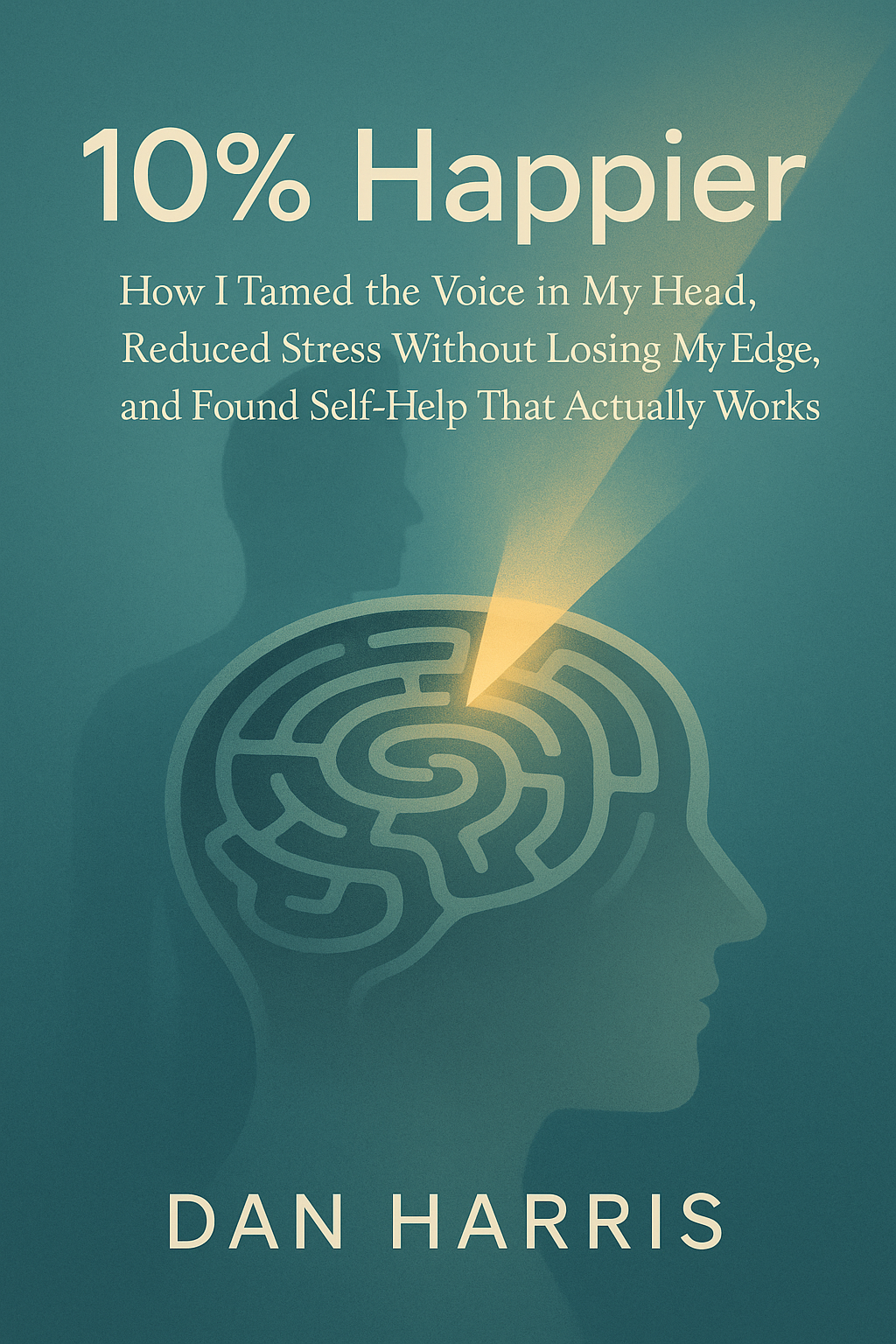
10% Happier: How I Tamed the Voice in My Head, Reduced Stress Without Losing My Edge, and Found Self-Help That Actually Works--A True Story
Chapter Summaries
What's Here for You
Ever felt like your own mind is a relentless, noisy roommate, constantly distracting you from what truly matters? Dan Harris, a seasoned news anchor, knows that feeling all too well. His journey began with a terrifying on-air panic attack, a visceral jolt that shattered his carefully constructed world and launched him on a reluctant quest for answers. '10% Happier' isn't just another self-help book; it's a brutally honest, often hilarious, and profoundly relatable true story of one man's battle with his own inner monologue. Prepare to embark on a wild ride through the often-bewildering landscape of spirituality and self-discovery, from encounters with enigmatic spiritual teachers to a deep dive into the science behind meditation. Harris, initially a staunch skeptic, navigates the worlds of faith reporting, self-help gurus, and even silent retreats, all while wrestling with his own ingrained secularism and childhood traumas. You'll discover how he untangled the 'genius or lunatic' debate surrounding profound insights, found unexpected wisdom in the unlikeliest of places (even a hip Manhattan hotel!), and ultimately learned to harness the 'power of negative thinking' and tame the internal chaos. This book offers you a chance to reduce your own stress without sacrificing your edge, to find practical, evidence-based tools that *actually* work, and to gain a more balanced perspective on life's challenges. It’s about understanding that you don't need to become a blissed-out monk to find peace; you just need to be willing to be '10% Happier.' Harris’s intellectual honesty and disarming humor create an engaging, down-to-earth tone, making this a journey you'll want to take – one that promises not enlightenment, but a tangible, achievable improvement in your daily well-being. You'll gain practical strategies for navigating the noise of modern life and discover the self-interested case for not being a complete jerk. This is your invitation to a more grounded, less anxious existence, guided by a narrator who’s been there, done that, and lived to tell the tale – with a healthy dose of humor.
Air Hunger
The story unfolds with a visceral jolt: Dan Harris, live on Good Morning America, experiences a sudden, paralyzing panic attack, a terrifying descent into 'air hunger' broadcast to millions. This on-air meltdown, he explains, was the catastrophic culmination of a decade spent relentlessly pursuing advancement and validation in the cutthroat world of network news. From his early days in Bangor, Maine, fueled by a burning desire to reach the network, to the intense mentorship and torment under Peter Jennings, Harris details a life driven by a deep-seated insecurity, a need to prove himself at any cost. He navigated the treacherous currents of ABC News, a 'Hobbesian environment' where competition was fierce and the mantra 'You're only as good as your last story' loomed large. This relentless pursuit of 'airtime' and validation led him down a dangerous path, including a stint as a war correspondent in volatile regions like Pakistan and Tora Bora, where the thrill of risk and the proximity to history blurred the lines of his own well-being. The profound psychological toll of this high-stakes career, coupled with the horrors witnessed overseas, began to manifest not as overt trauma, but as a mysterious psychosomatic illness, a precursor to a diagnosis of depression. In his quest to self-medicate and recapture a sense of control, Harris found himself descending into drug use, experimenting with cocaine and ecstasy, chasing a synthetic adrenaline rush that mirrored the very danger he courted in his professional life. The chapter climaxes with a second, equally devastating panic attack on GMA, this time even while medicated, a stark realization that his carefully constructed facade was crumbling. This existential crisis finally propelled him to seek professional help, leading to a diagnosis that connected his panic attacks directly to his drug use and the overwhelming fight-or-flight response gone awry. The narrative then pivots towards the arduous journey of recovery, acknowledging the psychological dependence on drugs and the profound difficulty of relinquishing the very things that once seemed to fuel his success, setting the stage for a deeper exploration of mindlessness and its antidotes.
Unchurched
In the 'Unchurched' chapter of *10% Happier*, Dan Harris chronicles his reluctant immersion into the world of faith reporting, a beat he initially approached with a blend of apathy and disdain, shaped by a secular upbringing in Massachusetts where God was as absent as Santa Claus. His journey begins with a jarring encounter in a 7,500-seat evangelical megachurch, witnessing 'speaking in tongues' and meeting the charismatic Pastor Ted Haggard, a man whose public persona would later spectacularly unravel. Harris admits his personal view was that organized religion was 'bunk' and believers were 'cognitively impaired,' a sentiment reinforced by early assignments covering the culture wars, where he focused on conflict and caricature, often feeling like a tourist in an 'open-air zoo.' His producer, Wonbo Woo, challenged this approach, urging him to explore the daily lives of believers rather than just their most extreme expressions. This shift in perspective was catalyzed by his interactions with Pastor Ted, who, despite his prominent role and seemingly fervent faith, revealed a surprising candor off-record, critiquing other evangelical leaders and demonstrating a disarming frankness that challenged Harris’s preconceived notions. This encounter marked a turning point, prompting Harris to acknowledge his own unthinking judgment and the superficiality of his assumptions about the intelligence and motivations of religious people. He began to see the 'religion beat' not just as a path to airtime, but as an opportunity to 'shed light instead of heat,' demystifying and humanizing worlds previously unknown to him. The narrative then pivots to the personal, detailing Harris’s burgeoning relationship with Bianca, a doctor whose grounded optimism and compassion offered a stark contrast to his own work-induced neuroses and competitive anxieties. This personal fulfillment, however, did not quell his professional anxieties, which intensified with new opportunities and increased competition. The chapter culminates with the dramatic unmasking of Ted Haggard, a public fall from grace that, despite its hypocrisy, revealed to Harris the enduring power of faith as a source of solace and meaning, even amidst profound personal failure. Harris reflects on how Ted’s ability to find comfort in a 'larger plan' during his darkest moments highlighted his own 'atrophied' sense of awe and the value of a perspective that transcends the mundane, marking a profound internal shift as he prepared to cover a story that would finally penetrate his own defenses.
Genius or Lunatic?
Dan Harris recounts his unsettling encounter with spiritual teacher Eckhart Tolle, a man whose profound, life-altering insights were often interspersed with what seemed like utter nonsense, leaving Harris to grapple with whether he was witnessing genius or lunacy. This internal debate intensified as Harris, a seasoned journalist accustomed to skepticism, found himself deeply affected by Tolle’s ideas, particularly the concept of the ego as a ceaseless, often negative, inner narrator that governs human misery by obsessing over the past and future at the expense of the present moment. Harris recognized this voice in his own anxieties—his persistent worry about balding, his career insecurity amidst industry upheaval, and his general inability to savor the present, likening his constant forward momentum to a rat rewarded at random, driving him toward a state of perpetual dissatisfaction. Yet, just as Harris began to feel a breakthrough, sensing Tolle might hold the key to taming this internal critic, the teacher would veer into seemingly pseudoscientific claims about energy fields and aging, baffling his interviewer. The central tension crystallized when Harris faced a real-world crisis—a basal cell carcinoma requiring surgery—where, for a fleeting moment, he could observe his fearful thoughts about scarring not as reality, but as mere mental constructs, a glimpse of Tolle’s wisdom in action. However, this nascent understanding was tested when he was overlooked for major inauguration coverage, a situation where his ego flared, leading to a reprimand and a stark realization: Tolle’s diagnosis of the human condition was brilliant, but his prescription for escaping the ego’s grip—simply being aware—felt insufficient for navigating the complexities of life and career. Harris was left with a profound question: how does one integrate Tolle's insights about presence and the ego's pitfalls without sacrificing the drive for achievement or practical engagement with the world, a dilemma that propelled him to seek a direct, in-person encounter with the enigmatic teacher.
Happiness, Inc.
The author, Dan Harris, embarks on a journey into the often-bewildering world of self-help, a quest sparked by his interview with the globally recognized spiritual figure, Deepak Chopra. Initially encountering Chopra amidst a televised debate on the existence of Satan, Harris is struck by the guru's dazzling persona – rhinestone glasses, a unique fashion sense, and a voice like a "soft, chocolate baritone." Harris probes Chopra about Eckhart Tolle's ideas on the ego and the present moment, finding Chopra dismissive of Tolle's writing but insistent on his own permanent presence. Yet, Harris observes a disconnect: Chopra's fiery debate performance seems at odds with his preached serenity, leaving Harris questioning the guru's sincerity and the practical application of his teachings. This encounter, however, unexpectedly piques the interest of Harris's boss, David Westin, prompting a discussion that reveals Harris's own struggle to articulate these complex ideas, a realization that he doesn't truly grasp them himself. His attempts to discuss these concepts with friends and family prove equally frustrating, met with indifference or gentle mockery, highlighting the difficulty of translating abstract spiritual notions into relatable terms. Even a conversation with his uncle Martin, who is battling Alzheimer's, underscores the elusive nature of presence when faced with cognitive decline. Desperate for answers, Harris revisits Chopra, who sends him a cascade of books and invites him to the Chopra Center. Harris witnesses Chopra's entrepreneurial empire firsthand, a dizzying array of products and projects, and observes the guru's seemingly contradictory behavior – simultaneously espousing presence while glued to his BlackBerry and Kindle. Despite Chopra's claim of decades without stress, Harris remains skeptical, seeing echoes of his own driven, sometimes anxious, behavior in the guru. This leads Harris to launch "Happiness, Inc.," a series exploring the sprawling self-help industry. He delves into the world of Joe Vitale, a proponent of the Law of Attraction, who, despite a Rolls-Royce and a "Phantom Mastermind session," admits that mere thought isn't enough; action is required. Vitale's philosophy, Harris notes, seems to implicitly blame victims for their misfortunes, a notion that strains credulity when applied to tragedies like the earthquake in Haiti. The exploration takes a darker turn with James Arthur Ray, whose "Spiritual Warrior Retreat" resulted in the deaths of three followers during a sweat lodge ceremony. Harris finds the survivors' continued belief in Ray, even amidst their financial hardship, deeply unsettling. The discovery of steroids in Ray's hotel room crystallizes the hypocrisy Harris perceives in the industry. Ultimately, Harris's deep dive into "Happiness, Inc." reveals a landscape populated by the unqualified and the unctuous, leaving him more confused than ever, yet with a growing awareness of the pervasive human desire for meaning and relief, even if the paths offered are sometimes misguided or even dangerous.
The Jew-Bu
Dan Harris, grappling with the relentless chatter of his own mind, found himself in a surprisingly un-guru-like setting, a hip Manhattan hotel, seeking answers. His journey, initially sparked by his wife Bianca's suggestion to explore Dr. Mark Epstein's work, led him to a profound realization: the most potent self-help principles were ancient, originating not from trendy gurus, but from the Buddha himself. Epstein, a Harvard-trained psychiatrist and practicing Buddhist, offered a perspective that stripped away the pseudoscience and grandiosity often found in the self-help world, presenting Buddhism not as a religion to be blindly adopted, but as a practical philosophy for understanding the mind. Harris discovered that core Buddhist concepts—the insatiable wanting, the inability to be present, the ceaseless, self-referential thinking—mirrored his own internal experience with astonishing accuracy. He learned that the Buddha, a figure he'd previously dismissed as a mere lawn ornament, had diagnosed the human condition 2,500 years prior: suffering arises from clinging to impermanence, from resisting the natural ebb and flow of life. This insight offered a compelling alternative to the often fruitless pursuit of external security, suggesting that true happiness lies in embracing the wisdom of insecurity, in letting go of attachments. Harris saw how this philosophy could offer relief without demanding belief in reincarnation or enlightenment, resonating with his skeptical nature. He recounts a pivotal moment at his wedding, where he consciously applied these principles, savoring the fleeting joy of the Junkanoo parade and his family's presence, demonstrating a tangible shift in his ability to be present. However, the tension resurfaced when faced with professional competition, highlighting the ongoing challenge of integrating these insights into daily life. This led him to seek out Dr. Epstein directly, a meeting that demystified the practice, revealing Buddhism not as an esoteric doctrine, but as a relatable philosophy accessible to all, even those with a penchant for anxiety and a spiritual void, like many of the "Jew-Bu" subculture he encountered. Epstein, a "normal human being" and the antithesis of the guru archetype, explained that Buddhism offers a practical, free program to disarm the inner critic, a stark contrast to the often expensive and vague promises of the self-help industry. Yet, even with this clarity, Harris faced a new challenge: the Buddhist prescription itself felt repellent, setting the stage for a deeper exploration of how to truly implement these ancient teachings.
The Power of Negative Thinking
Dan Harris, initially repelled by anything associated with "granola lifestyles" and New Age spirituality, found himself in a profound standoff with the practice of meditation. His childhood traumas, including an embarrassing yoga class incident and years of enduring Grateful Dead music, cemented a deep-seated aversion to what he perceived as "hippie" culture. This resistance was further amplified by his own self-assessment as a person with an extremely limited attention span, convinced his "whirling" mind could never be silenced. The turning point arrived not through a spiritual awakening, but a pragmatic recommendation from his therapist, Dr. Brotman, who suggested a book by a former colleague detailing the health benefits of meditation. This scientific framing, particularly the idea that meditation could counteract the damaging effects of chronic stress triggered by modern life, began to crack Harris's resistance. He discovered that Buddhist meditation wasn't about chanting or robes, but a rigorous mental exercise. His first attempts were a comedic struggle, a chaotic internal monologue punctuated by itches and distractions, yet he recognized a potent truth: taming the "monkey mind" required genuine grit. This realization, coupled with the scientific appeal of stress reduction, spurred him to commit to daily practice. The real revelation, however, lay in the concept of mindfulness – the ability to observe one's thoughts and emotions without getting carried away. This practice, he learned, offered a "fourth option" beyond wanting, rejecting, or zoning out, allowing for a nonjudgmental distance from internal experiences. While initially infernally difficult, especially when confronted with physical discomfort or emotional turmoil like professional uncertainty, Harris found that applying mindfulness, particularly through Tara Brach's RAIN technique (Recognize, Allow, Investigate, Non-identify), created a vital space between stimulus and response. This "respond, don't react" paradigm proved transformative, not by erasing problems, but by changing his relationship to them, offering a "superpower" of calm amidst chaos and a profound shift in his self-perception, akin to seeing the Wizard of Oz behind the curtain, ultimately leading him to consider a demanding silent meditation retreat.
Retreat
Dan Harris embarks on a ten-day silent meditation retreat at Spirit Rock, initially bracing himself for what he anticipates will be a "Zen Death March," plagued by discomfort, boredom, and the sheer difficulty of sustained meditation. His early days are a stark battle against physical pain, a racing mind, and a profound sense of misery, feeling like a "lamb leading itself to slaughter" amidst a sea of "socks-and-sandals" devotees. He grapples with the brutal schedule, the enforced silence, and the unexpected challenges of sitting still, admitting, "Straight torture, son." Yet, amidst this struggle, a subtle shift begins as he experiences moments of "choiceless awareness," a state where the mind, no longer obsessively focused on the breath, opens to the full, unedited stream of consciousness—the aches, the sounds, the fleeting thoughts, a "front-row seat to watch the machinery of consciousness." This newfound clarity, amplified by a profound experience during loving-kindness meditation that brings him to tears, offers a glimpse of a different way of being, a "hyperreal" connection to the present moment that transcends the usual pursuit of pleasure. He learns that the Buddha’s concept of "suffering" is more accurately translated as "unsatisfying" or "stressful," a fundamental impermanence that, once recognized, allows for a deeper appreciation of life and a self-generated happiness independent of external circumstances. Even as the allure of worldly comforts beckons upon his return, the core lesson—that the "slipping away is the whole point" and that useful worry has a limit—provides a potent tool for managing the mind, marking the retreat as a transformative, albeit arduous, journey toward a more mindful existence.
10% Happier
The author, Dan Harris, embarks on a professional journey that unexpectedly becomes a crucible for his burgeoning meditation practice. Initially elated by a coanchor offer for Good Morning America, Harris soon finds his triumph tempered by the realities of contract negotiations and blunt career assessments from his executive producer, Jim Murphy, who suggests Harris lacks the looks and voice for major weekday anchoring, a stark contrast to his previous, more controlled role on World News. This professional tension mirrors his personal challenge of discussing meditation without appearing eccentric. After a retreat, his attempts to share his practice are met with skepticism, eliciting reactions ranging from his father's wary concern about ineffectiveness to friends' unspoken suspicion of cult involvement. Harris struggles to articulate the benefits, oscillating between awkward silence and overly enthusiastic lectures. The turning point arrives during a conversation with his friend Kris, where he distills the essence of his experience into a simple, relatable phrase: "I do it because it makes me 10% happier." This catchy, understated slogan proves to be a powerful tool, deflecting judgment and sparking genuine curiosity, much like an advertising executive's honest, albeit unconventional, taglines in the film *Crazy People*. This "10% happier" mantra becomes his shield, allowing him to navigate the professional setbacks, like Murphy's critique, not with immediate denial or rage, but with a more considered, mindful response, ultimately persuading him to sign the contract. He then faces the chaotic, ad-lib heavy environment of morning television, a stark departure from the scripted predictability of evening news. Here, Harris grapples with loss of control, awkward social cues, and content that pushes his boundaries, like judging Chihuahua contests or dancing on live TV. Yet, even amidst these struggles, his meditation practice, now thirty minutes daily, provides a crucial buffer. He learns to observe his physical tension—the buzzing chest, hot earlobes—as mere thoughts, not solid realities, utilizing techniques like the RAIN routine to regain perspective. He also engages with Joseph Goldstein, his meditation teacher, who, despite his own journey toward stages of enlightenment, acknowledges that suffering, though diminished, persists. Goldstein's insight that true progress lies not in eliminating suffering but in mitigating it—in creating space between stimulus and response—profoundly impacts Harris. This realization helps him accept Murphy's career feedback as potentially helpful, despite its harshness, and frames his morning show anxieties not as failures of his practice, but as natural human experiences that his meditation helps him navigate with greater resilience and less self-recrimination. He discovers that the "10% happier" approach, while seemingly modest, offers a significant return on investment, enabling him to handle life's inevitable challenges, from professional anxieties to personal relationships, with a newfound, albeit imperfect, grace, recognizing that the pursuit of happiness can itself become the source of unhappiness when pursued with unrealistic expectations. The narrative concludes with Harris understanding that the practical, down-to-earth applications of mindfulness are being embraced by people in everyday settings, dispelling any lingering embarrassment he felt about his own practice.
“The New Caffeine”
The narrator, Dan Harris, embarks on a journey to demystify meditation, moving beyond its countercultural image into the realm of hard science, a transformation that begins with a skeptical Marine, Private First Class Jason Lindemann, who initially dismissed the practice as 'retarded.' Harris reveals how a surge of scientific research, far beyond simple stress reduction, began to illuminate meditation's profound effects on the brain. Pioneered by Jon Kabat-Zinn with Mindfulness-Based Stress Reduction (MBSR), the practice became testable, leading to groundbreaking studies from Harvard and Yale. These investigations, using MRI technology, showed that meditation could thicken gray matter in areas associated with self-awareness and compassion while shrinking the regions linked to stress, effectively rewiring the brain according to the principle of neuroplasticity—the idea that our brains are not fixed after adulthood but can be sculpted through experience, much like a muscle. This scientific validation began to chip away at deeply ingrained assumptions, even influencing Harris's own mother and capturing the attention of formidable figures like Diane Sawyer, who, despite her initial teasing about Harris's 'pure' lifestyle, became intrigued by the empirical evidence. The narrative then pivots to the corporate world, highlighting Janice Marturano's work at General Mills, where she introduced mindfulness not as a spiritual pursuit, but as a powerful tool for leadership, focus, and innovation. Marturano challenged Harris's own ingrained habits, particularly multitasking, explaining through neuroscience that this 'computer-derived term' actually leads to productivity loss by fragmenting attention. She advocated for 'purposeful pauses' and single-tasking, concepts that directly confronted Harris's belief in ceaseless activity as the key to effectiveness. This led to a deeper understanding that strategic pauses, far from being signs of weakness, could be catalysts for creativity and problem-solving, allowing the unconscious mind to make novel connections. The trend, dubbed 'McMindfulness' by some traditionalists, infiltrated corporations like Google and even military institutions like the Marines, who saw its potential in managing PTSD and reducing reactivity in combat. Harris himself experienced a profound vision during a road trip: a world where a simple walking meditation in a public plaza wouldn't be met with embarrassment, a world where significant numbers of people were '10% happier' and less reactive. He realized that meditation's greatest hurdle was its PR problem, still burdened by associations with hippies and gurus. With a newfound sense of purpose, Harris embraced the challenge of making mindfulness more accessible, using his journalistic skills to translate complex scientific findings into relatable narratives, showcasing its benefits through stories of individuals like Rivers Cuomo and even influencing Diane Sawyer herself. However, this mainstreaming also raised concerns from old-school Buddhist practitioners who feared that the core element of compassion was being diluted or ignored, a concern that resonated with Harris, who, despite his own resistance to compassion meditation, recognized its potential power, setting the stage for a future exploration driven by both science and personal encounter.
The Self-Interested Case for Not Being a Dick
The narrator, Dan Harris, recounts his initially skeptical encounter with the Dalai Lama, a figure he perceived as embodying the more unscientific aspects of Buddhism, contrasting with his preference for empirical truth. This skepticism, however, begins to dissolve when the Dalai Lama demonstrates a remarkable openness to scientific inquiry, even suggesting he would alter his beliefs if confronted with contradictory evidence, a stance that immediately makes him more approachable than other spiritual figures Harris had encountered. This intellectual flexibility is further underscored when the Dalai Lama, pressed on the idea of self-centeredness, posits that while some degree of self-cherishing is natural, practicing concern for others offers immense benefit to oneself, framing compassion not as altruism, but as a form of 'wise selfishness.' This pivotal insight, that kindness can be a self-interested strategy, sparks a profound shift in Harris's perspective. He begins to integrate compassion meditation, or 'metta,' into his own practice, not out of an innate loving-kindness, but for the tangible benefits it promises: reduced stress, improved health, and enhanced well-being. He discovers that scientific research, such as studies conducted at Emory University and by Richie Davidson, supports this 'self-interested' case for compassion, demonstrating that acts of kindness activate the brain's pleasure centers, lower stress hormones like cortisol, and even increase empathy and prosocial behavior in individuals. Harris then grapples with the practical application of this newfound understanding in his high-stakes career as a news anchor, questioning if professional toughness is compatible with genuine compassion. This tension culminates in a challenging interview with Paris Hilton, where Harris’s intention to provoke a reaction, driven by his journalistic imperative and perhaps a lingering competitive impulse, leads to Hilton walking off-camera. The fallout from this incident forces Harris to confront the ethical complexities of his 'compassion policy,' questioning whether he had acted rudely and if a truly competitive profession could coexist with his developing commitment to kindness, leaving him to ponder the true cost and efficacy of his self-interested pursuit of compassion.
Hide the Zen
The narrative unfolds as Dan Harris grapples with a professional crisis following the appointment of his former boss, Ben Sherwood, a highly energetic and hands-on leader, to a senior position at ABC News. Initially, Harris adopts a passive approach, believing his established relationship and newfound meditative calm would suffice, but this strategy backfires spectacularly as he's sidelined from major breaking news events like the Egyptian protests and the Japan earthquake and tsunami. This professional stagnation prompts a reluctant retreat, where a conversation with Sharon Salzberg offers a crucial insight: the fear of annihilation can lead to great understanding, reminding him of impermanence and the illusion of security he had been chasing. He begins to question the roots of his ambition, wondering if it stemmed from a bourgeois upbringing and a self-imposed sense of lack, yet ultimately realizes the Buddha himself advocated for striving, evidenced by 'Right Livelihood' on the Noble Eightfold Path. This internal debate about balancing security and insecurity intensifies as his professional life continues to stagnate; he feels increasingly like a 'benchwarmer,' a situation his wife, Bianca, perceives as him being 'gelded.' A pivotal meeting with Ben Sherwood reveals the core issue: Harris has become too passive, too 'Zen,' leading Ben to famously declare, 'Stop being so Zen.' This direct feedback, coupled with advice from Mark Epstein to 'Hide the Zen,' becomes a turning point. Epstein explains that while inner peace is valuable, an outward projection of passive meekness can be perceived as weakness in competitive environments, leading to the realization that one can be both ambitious and compassionate, a concept he calls 'nonattachment to results.' Harris internalizes this, understanding that striving is essential, but attachment to outcomes is detrimental. He begins to 'up his game,' embracing assignments with renewed vigor, pitching investigative reports, and even enduring solitary confinement for a story, all while applying his wife's advice to relax and be present during his weekend anchoring duties. He discovers that true leadership, as Ben intended, isn't about being imperious but about being comfortable in one's own skin, and that embracing his ambition without being crushed by potential failure is the path forward. The chapter culminates in Harris creating his own list of precepts, including 'Don't Be a Jerk,' 'Hide the Zen,' and 'Nonattachment to Results,' realizing that the middle path involves a supple relentlessness, a wise ambition tempered by the understanding that ultimate outcomes are beyond one's control. He finds that this approach not only revitalizes his career but also deepens his understanding of himself, finally bridging the gap between striving and serenity.
Conclusion
Dan Harris's journey in "10% Happier" is a profound testament to the human struggle for inner peace amidst the relentless pressures of modern life. Through his own harrowing experience of a panic attack on live television, Harris lays bare the severe consequences of prioritizing external validation and career ambition above all else. His narrative masterfully weaves together the psychological toll of stress, the deceptive allure of substance abuse as a coping mechanism, and the profound impact of witnessing trauma, all of which can manifest as debilitating psychosomatic illnesses and deep-seated depression. The book serves as a powerful corrective to the often superficial and sometimes exploitative self-help industry, revealing how genuine transformation is rooted in ancient wisdom, particularly Buddhist philosophy, rather than fleeting trends or guru-driven pronouncements. Harris compellingly argues that the incessant chatter of the ego, the relentless narrator of our fears and anxieties, is the primary source of our suffering. His exploration of meditation and mindfulness is not about achieving an unattainable state of constant bliss, but about cultivating a practical, accessible toolkit for managing this internal noise. The emotional lessons are deeply resonant: the courage to admit vulnerability, the humility to question ingrained biases (especially concerning faith), and the realization that true fulfillment requires integrating personal well-being with professional drive. The practical wisdom is multifaceted: understanding the 'fight-or-flight' response's maladaptive potential, embracing the 'wisdom of insecurity' by letting go of attachments, and recognizing that compassion, even when motivated by self-interest, is a powerful force for good. Ultimately, Harris demonstrates that happiness isn't a fixed destination but a skill honed through consistent practice, like meditation, which rewires the brain for greater resilience and self-awareness. The book’s enduring message is that by confronting our internal struggles with curiosity and a willingness to "be with whatever comes up," we can achieve a more balanced, authentic, and indeed, "10% happier" existence, bridging the gap between intellectual understanding and lived experience with actionable, secularized wisdom.
Key Takeaways
Despite personal failings and hypocrisy, faith can serve as a powerful source of meaning, comfort, and resilience in the face of life's most profound challenges.
The relentless pursuit of external validation and career advancement can lead to profound psychological distress and physical symptoms.
The 'fight-or-flight' response, essential for survival, can become maladaptive when triggered by psychological stress rather than immediate physical threats, leading to panic attacks.
Substance abuse can be a dangerous coping mechanism, attempting to self-medicate underlying psychological issues like depression or adrenaline withdrawal, often exacerbating the problem.
The drive for professional success, particularly in high-pressure fields like broadcast journalism, can create a blind spot to personal well-being and psychological needs.
Admitting and understanding the root causes of panic attacks, including lifestyle choices and substance use, is crucial for effective treatment and recovery.
The emotional and psychological toll of witnessing traumatic events, even if not consciously processed, can manifest in unexpected ways, such as psychosomatic illness and depression.
True self-awareness requires acknowledging and addressing internal struggles, even when they contradict one's perceived identity or professional persona.
The author learned that preconceived judgments about religious people are often rooted in ignorance and hinder genuine understanding, necessitating a shift from caricature to curiosity.
True journalistic depth requires moving beyond sensationalism to explore the lived realities and daily impact of faith on individuals' lives.
Personal fulfillment in relationships can coexist with, and even amplify, professional anxieties, demanding conscious effort to manage both.
A sense of awe and a broader perspective, cultivated by regularly considering one's place in the universe, are vital for a well-lived life, transcending the mundane.
The author realized that his own 'curiosity' about faith was less about intellectual engagement and more about finding answers to his deepest needs, a realization catalyzed by his reporting.
The author's struggle to reconcile profound spiritual insights with seemingly outlandish claims, highlighting the human tendency to question what challenges our established worldview.
The concept of the ego as a constant inner narrator, relentlessly focused on past grievances and future anxieties, is identified as the root of much personal suffering.
Experiencing moments of detachment from fearful thoughts, even amidst real-world stress like surgery, offers a glimpse into the potential for mental liberation from egoic patterns.
The tension between accepting the present moment ('isness') and the drive for achievement or social change reveals a core dilemma in applying spiritual wisdom to an active life.
The author's frustration with the lack of practical, actionable advice from spiritual teachers for managing the ego in concrete, high-stakes situations.
The realization that persistent worry and comparison, driven by the ego, can be both a source of anxiety and, paradoxically, a catalyst for striving, creating a complex personal orthodoxy.
The author's struggle to articulate abstract spiritual concepts highlights the gap between intellectual understanding and lived experience, revealing that true comprehension requires more than just exposure to ideas.
The self-help industry, while addressing a genuine human need for meaning and stress reduction, often operates in a poorly regulated space, populated by individuals whose qualifications and sincerity are questionable.
Superficial adherence to spiritual or self-help tenets, such as claiming permanent presence or relying solely on positive thinking, can mask underlying anxieties and contradictions, revealing that true transformation is complex.
The allure of self-help philosophies like the Law of Attraction can inadvertently lead to victim-blaming, suggesting that personal misfortune is a direct result of one's own negative thoughts.
The author's encounters with figures like Deepak Chopra and James Arthur Ray underscore the tension between spiritual aspiration and the often-mundane realities of entrepreneurship, ego, and ethical responsibility.
Despite the often absurd or dangerous manifestations within the self-help world, the underlying human desire for happiness, stress reduction, and a greater sense of purpose remains a powerful and persistent motivator.
The core principles of effective self-help, particularly regarding the nature of the mind and suffering, are found in ancient Buddhist philosophy, predating modern gurus and self-help trends.
Buddhism offers a practical framework for understanding and managing the mind's incessant chatter and tendency to cling to impermanent experiences, without requiring adherence to religious dogma.
True happiness and relief from suffering stem not from seeking external security or control, but from embracing impermanence and cultivating the 'wisdom of insecurity' by letting go of attachments.
The Buddhist approach to mental well-being can be beneficial for diverse personality types, offering tools to manage ego and anxiety, regardless of one's background or prior spiritual beliefs.
The effectiveness of Buddhist principles lies in their practical, accessible, and free nature, providing a direct method to disarm the internal critic, contrasting with the often vague and costly promises of mainstream self-help.
Integrating Buddhist insights into daily life is an ongoing process, presenting challenges and a potential aversion to its core practices, even after intellectual understanding is achieved.
Initial aversion to meditation, rooted in personal experience and cultural bias, can be overcome by reframing it as a rigorous mental exercise with scientifically validated benefits.
The core practice of meditation involves repeatedly and gently returning attention to the breath, a process that builds mental grit and requires significant effort, not passive relaxation.
Mindfulness, the ability to observe thoughts and emotions without judgment or reaction, offers a crucial third option beyond wanting, rejecting, or zoning out, creating space for conscious response.
Applying mindfulness techniques, such as the RAIN method, allows individuals to acknowledge, accept, investigate, and non-identify with difficult internal experiences, thereby reducing their emotional charge.
The power of negative thinking, in a Buddhist context, means actively engaging with uncomfortable truths and emotions rather than fleeing from them, which paradoxically leads to liberation and resilience.
Mindfulness does not eliminate real-world problems but transforms one's relationship to them, enabling a shift from reactive behavior to considered responses, which is a form of "superpower."
The practice of meditation, particularly through intensive retreats, is a skill that deepens with consistent effort and can fundamentally alter one's internal landscape and external interactions.
The initial, intense discomfort and resistance experienced during a silent meditation retreat are common hurdles, often stemming from a deep-seated aversion to confronting the mind's internal chatter and physical limitations.
Constructive insecurity, such as vigilance and setting audacious goals, can be a powerful motivator, and the wisdom of insecurity is only useful until it ceases to serve.
True mindfulness transcends mere breath-watching; it evolves into 'choiceless awareness,' an open, non-judgmental observation of all mental and physical phenomena as they arise and pass, revealing the impermanent nature of experience.
The Buddhist concept of 'dukkha,' often translated as 'suffering,' more accurately signifies 'unsatisfactoriness' or 'stress,' pointing to the inherent impermanence of all things, which, when understood, fosters appreciation rather than clinging.
A significant shift in practice occurs when one stops 'trying too hard' and instead allows awareness to simply 'be with whatever comes up,' leading to a more effortless and profound engagement with the present moment.
The practice of 'loving-kindness meditation' (metta) can unlock deep emotional release and foster compassion, even for oneself, by intentionally cultivating positive sentiments towards various individuals.
The core of spiritual or mental practice lies not in seeking ecstatic states, but in recognizing the illusory nature of the self and learning to observe the mind's mechanisms without getting carried away by them.
A crucial skill for navigating life is discerning when worry and planning become 'not useful,' providing a practical framework for managing the mind's tendency towards obsessive rumination.
The pursuit of lasting satisfaction is often illusory; true contentment arises from accepting impermanence and mitigating suffering rather than eradicating it.
Framing personal growth with understated, relatable language, like '10% happier,' can be more effective at engaging others and oneself than grandiose claims.
Mindfulness is a practice of observing thoughts and emotions without identification, creating space between stimulus and response to navigate challenges with less reactivity.
Career setbacks and professional criticism, while painful, can be valuable opportunities for self-reflection and growth when approached with a mindful, non-reactive mindset.
The benefits of meditation are not about achieving an 'enlightened' state free from all struggle, but about developing resilience and a more skillful way of handling life's inevitable difficulties.
Authenticity in sharing one's experiences, even with perceived flaws or modest improvements, fosters genuine connection and understanding, countering the pressure to present a perfect self.
Meditation, once dismissed as fringe, is now scientifically validated as a powerful tool for rewiring the brain, enhancing self-awareness and compassion while reducing stress.
Neuroplasticity demonstrates that the brain is malleable, allowing practices like meditation to sculpt its structure and function, akin to physical exercise for the body.
Effective leadership and innovation are often hindered by the myth of multitasking; neuroscience reveals that single-tasking and strategic pauses, or 'purposeful pauses,' significantly boost focus and productivity.
The accessibility and mainstreaming of mindfulness, while beneficial for wider adoption, risks diluting its core tenets, particularly compassion, leading to a phenomenon known as 'McMindfulness.'
Overcoming the public relations challenges of meditation requires translating its benefits into accessible, secular language, divorced from spiritual dogma, to appeal to a broader audience.
The science of meditation suggests that happiness and resilience are not fixed traits but skills that can be cultivated through consistent practice and intentional brain training.
The practice of compassion, even when motivated by self-interest, yields significant personal benefits, including stress reduction and enhanced well-being, thereby reframing kindness as a strategic advantage rather than a purely selfless act.
Scientific research increasingly validates the 'warm glow effect' of compassion, showing that engaging in acts of kindness positively impacts physiological stress responses and activates pleasure centers in the brain.
Cultivating empathy and prosocial behavior through practices like compassion meditation can lead to improved interpersonal relationships, greater popularity, and increased professional effectiveness, even in competitive environments.
The tension between journalistic demands for provocative questioning and the practice of metta highlights a core dilemma: whether high-stakes, competitive professions are fundamentally incompatible with genuine compassion.
Recognizing the innate human drive for connection, even amidst perceived separation, suggests that acting with kindness is not only beneficial to oneself but also acknowledges our interconnectedness with the world.
The pursuit of inner peace through meditation should not lead to professional passivity; true wisdom lies in balancing inner calm with outward assertiveness ('Hide the Zen').
Ambition is not antithetical to spiritual practice; the Buddha himself advocated for Right Livelihood, suggesting a path that integrates purposeful striving with ethical living.
Professional stagnation can arise from a misinterpretation of spiritual principles, mistaking letting go for going soft, which can hinder effectiveness and career progression.
The concept of 'nonattachment to results' is crucial for ambitious individuals, allowing them to strive intensely while maintaining resilience and avoiding destructive disappointment.
Effective leadership, even in a spiritual context, requires being comfortable in one's own skin and projecting confidence, rather than retreating into a passive, overly accommodating demeanor.
Humility, not ego-driven defensiveness, allows for more agile navigation of complex professional situations, preventing humiliation and fostering collaborative relationships.
Action Plan
Acknowledge and investigate the underlying causes of stress and anxiety, rather than solely focusing on performance.
Be mindful of the potential psychological impact of pursuing external validation and career advancement at all costs.
Seek professional help if experiencing persistent symptoms of anxiety, depression, or unexplained physical ailments.
Critically examine personal coping mechanisms, especially substance use, and understand their potential to exacerbate underlying issues.
Recognize that 'mindlessness' or a lack of self-awareness can lead to significant personal and professional risks.
Prioritize self-care, including adequate sleep, nutrition, and temperance, as foundational elements for psychological stability.
When faced with overwhelming stress or trauma, consider the long-term psychological consequences rather than solely the immediate perceived benefits or necessity.
Actively challenge your own stereotypes and assumptions about groups of people you don't fully understand.
Seek out opportunities to engage with perspectives that differ from your own, aiming for understanding rather than judgment.
Engage in mindful activities, such as eating or walking, by fully attending to each sensation and step.
When covering complex or sensitive topics, strive to explore the lived experiences of individuals beyond the sensational or controversial aspects.
Regularly dedicate time to step back from daily pressures and consider your place in the larger scheme of things.
Acknowledge and manage personal anxieties, recognizing how they might be amplified by professional pressures or personal relationships.
Practice empathy by considering how faith or belief systems might provide comfort and meaning, even in the face of personal struggles or societal judgment.
Be open to the possibility that even those who hold beliefs different from your own possess valuable insights and wisdom.
Practice observing the voice in your head without judgment, recognizing it as separate from your true self.
Consciously bring your attention to the present moment, perhaps through a single, deliberate breath.
Identify one recurring anxious thought related to the past or future and question its immediate reality.
When faced with a stressful situation, acknowledge your fearful thoughts but remind yourself they are not necessarily true.
Explore the concept of 'isness' by accepting a minor inconvenience without personalizing it.
Consider how your own 'inner narrator' might be contributing to your stress or dissatisfaction.
Seek out teachers or texts that offer both profound insights and practical guidance for living in the present.
Approach claims made within the self-help industry with a critical and discerning mindset, questioning both the qualifications of the source and the evidence presented.
Seek practical, actionable advice that is grounded in verifiable principles rather than abstract or unprovable assertions.
Recognize that true personal growth often involves consistent effort, action, and facing uncomfortable realities, rather than relying solely on thought or positive affirmations.
Be wary of philosophies that suggest personal misfortune is solely the fault of the individual, especially in the face of systemic or external adversities.
When exploring spiritual or philosophical ideas, prioritize understanding the underlying concepts and their practical application over the charisma of the messenger.
Engage in open dialogue about personal beliefs and struggles with trusted friends or mentors to gain diverse perspectives and identify blind spots.
Differentiate between dynamic engagement with life and unmanaged stress, recognizing that passion does not always equate to a lack of internal tension.
Explore the writings of Dr. Mark Epstein and other psychiatrists who integrate Buddhist philosophy into their work.
Identify instances of 'insatiable wanting' and 'clinging' in your own daily experiences.
Practice observing your thoughts without judgment, recognizing the 'imperialistic tendency of mind' (prapaca) when worries arise.
Consciously savor moments of joy and connection, acknowledging their impermanence.
Seek out reputable introductory resources on Buddhist philosophy, focusing on its psychological insights rather than religious dogma.
Consider attending secular mindfulness or meditation workshops to practice presence and detachment.
Challenge the pursuit of absolute security and explore the 'wisdom of insecurity' in relation to a current worry.
Reflect on the concept of 'no-self' and how attachment to a fixed identity might be a source of suffering.
Commit to a short, daily meditation practice, focusing on the sensation of the breath as an anchor, and gently return attention whenever the mind wanders.
When experiencing discomfort or strong emotions, practice the RAIN technique: Recognize the feeling, Allow it to be present, Investigate its physical sensations, and Non-identify with it.
Instead of avoiding difficult or uncomfortable thoughts and emotions, consciously choose to lean into them and observe them without judgment.
Actively seek moments of 'in-between' time—waiting in line, at a red light—to practice bringing your attention back to your breath or your surroundings, rather than immediately seeking distraction.
Recognize that the mind's chatter is not an inherent flaw but a normal process, and practice self-compassion when you get lost in thought.
When faced with a challenging situation, consciously pause to create space for a thoughtful response rather than an immediate, habitual reaction.
Consider exploring introductory mindfulness resources or guided meditations to deepen understanding and practice.
If feeling overwhelmed by persistent negative thought patterns, explore the possibility of a structured meditation retreat to build greater mental discipline.
Acknowledge and accept initial discomfort and resistance as a normal part of deep practice.
Practice 'choiceless awareness' by gently observing whatever arises in your mind without judgment.
Reframe 'suffering' as 'unsatisfactoriness' to better understand the impermanence of life's experiences.
Experiment with 'loving-kindness meditation' by directing well wishes towards yourself and others.
When planning or worrying, ask yourself: 'Is this useful?' and cease when the answer is no.
Recognize that the 'self' is not a solid entity but a construct, and observe its arising and passing.
Identify a personal challenge and practice framing the potential improvement with a modest, relatable percentage (e.g., 'I'll be 5% more organized').
When faced with criticism or setbacks, pause before reacting. Observe your physical sensations and thoughts without judgment.
Allocate a consistent, manageable amount of time daily for mindfulness practice, even if it's just 5-10 minutes.
When discussing personal practices or new habits, focus on observable, tangible benefits rather than abstract ideals.
Recognize that difficult emotions are temporary states; practice allowing them to pass through without excessive attachment or drama.
Consider the 'worst-case scenario' in a stressful situation and assess its actual impact on your core well-being and relationships.
Explore secularized meditation programs like Mindfulness-Based Stress Reduction (MBSR) to experience its scientifically backed benefits.
Practice single-tasking by dedicating your full attention to one activity at a time, even for short periods.
Incorporate 'purposeful pauses' into your day: take a few moments to focus on your breath or sensory experiences during transitions or idle moments.
Challenge the assumption that constant busyness equates to effectiveness by scheduling short breaks for reflection or non-task-oriented activities.
Seek out scientific research on neuroplasticity and meditation to deepen your understanding of how the brain can be trained.
Consider how the principle of 'responding, not reacting' can be applied to challenging situations in your personal or professional life.
Engage with mindfulness practices not just for personal stress reduction, but also to cultivate greater awareness and potentially compassion for others.
Consider the 'self-interested' benefits of practicing compassion, such as reduced stress and improved well-being, as a motivator for engaging in kind acts.
Begin incorporating short periods of compassion meditation (metta) into your daily routine, focusing on sending good wishes to yourself, loved ones, neutral people, and then more difficult individuals.
Make a conscious effort to make eye contact and smile at people you encounter throughout the day, observing the positive impact on your own mood and interactions.
Actively work to abstain from gossip and complaint sessions, recognizing them as unproductive and potentially harmful to your mental state.
When faced with irritating behavior from others, try to empathize with their underlying desire for happiness, rather than immediately reacting with anger or judgment.
Reflect on how your actions have immediate consequences on your own mental state and seek to behave in ways that foster a sense of inner peace and well-being.
When navigating tense situations, practice taking the other person's perspective and validating their feelings to build rapport and facilitate more positive outcomes.
Identify areas where you might be projecting excessive passivity ('hiding your Zen') in professional settings and consciously adopt a more assertive stance when necessary.
Re-evaluate your ambition in light of spiritual principles, recognizing that striving for meaningful goals is compatible with ethical conduct and inner peace.
Practice 'nonattachment to results' by focusing on your effort and preparation while accepting that external outcomes are not entirely within your control.
Cultivate humility by consciously reducing ego-driven defensiveness and acknowledging your role in challenging situations.
Embrace 'constructive insecurity' by setting ambitious goals and maintaining vigilance, but know when to let go of unproductive worry.
When facing professional challenges, ask yourself 'What matters most?' to clarify your priorities and determine the acceptable level of struggle.
Apply the principle of 'firm but kind' in your interactions, especially when providing feedback or addressing mistakes, fostering self-compassion and resilience.