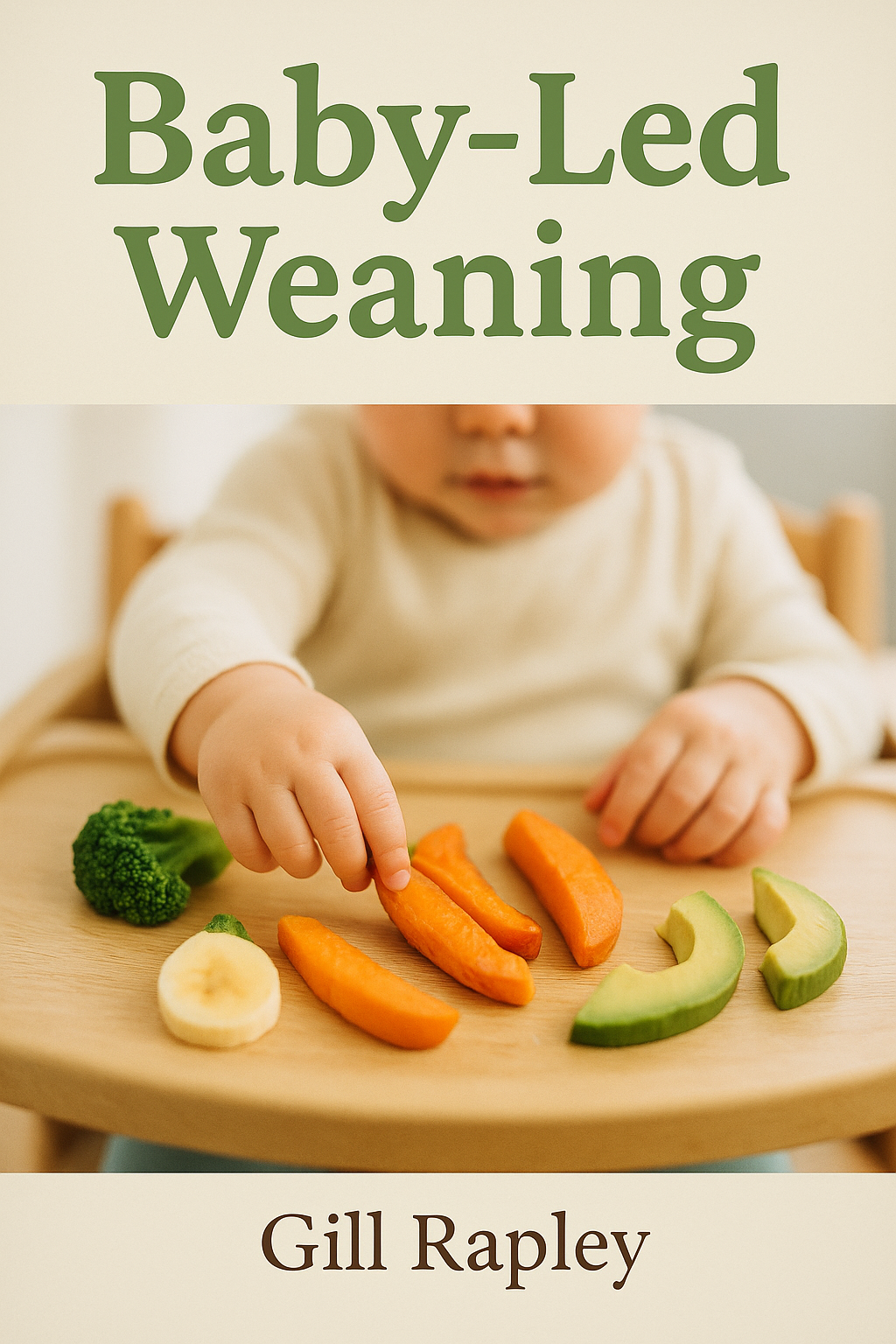
Baby-Led Weaning
Chapter Summaries
What's Here for You
Are you ready to transform mealtimes from a potential battleground into a joyful family adventure? "Baby-Led Weaning" by Gill Rapley offers a refreshing and empowering approach to introducing your baby to solid foods, moving away from the stress of traditional spoon-feeding and embracing a natural, instinctual journey. This book promises to guide you through the entire process, revealing how learning to eat is a developmental milestone as natural as crawling or talking. You'll gain a deep understanding of your baby's innate curiosity and developmental readiness, learning to trust their cues and allow them to explore food at their own pace. Forget rigid schedules and strict rules; instead, you'll discover how to offer a variety of first foods, confident in your baby's robust digestive system. As your baby progresses, the book gently encourages you to release control, fostering a more purposeful engagement with eating and seamlessly integrating this philosophy into your family life. Beyond just feeding your baby, this journey often sparks a powerful opportunity to examine and nourish your entire family's diet, creating healthier habits for everyone. You'll feel equipped to navigate common curiosities and concerns with practical troubleshooting tips, ensuring a confident and positive experience. Prepare to embrace a philosophy that celebrates independence, fosters healthy eating habits, and brings a sense of peace and connection to your family mealtimes. This is more than just a feeding method; it's an invitation to a more relaxed, trusting, and joyful way of nurturing your child and your family.
What is Baby-Led Weaning?
The journey into solid foods for a baby, the authors Gill Rapley explain, is often framed by parents as a potential battleground, a stark contrast to the joyful mealtimes experienced by families embracing Baby-Led Weaning (BLW). This approach, distinct from traditional parent-led spoonfeeding, posits that babies, guided by their innate instincts and developmental readiness, should lead the process of transitioning from milk to solids. The core tension lies in the conventional perception of weaning versus the natural capabilities of infants. While spoonfeeding often involves parental decisions about *when* and *how* solids are introduced, sometimes resorting to persuasive tactics, BLW empowers the baby to explore food at their own pace, starting when they demonstrate readiness. This readiness, the authors clarify, is not signaled by mere curiosity about parents eating or minor changes in sleep patterns, but by tangible developmental milestones such as sitting up unassisted and an ability to accurately grasp and bring food to their mouths, typically around six months. The chapter reveals that historical feeding practices have shifted dramatically, moving from prolonged milk-only periods to early introductions of solids, often driven by outdated beliefs about baby size and a lack of understanding of infant digestive and immune systems. The traditional spoonfed model, with its pureed consistencies, can inadvertently delay the development of crucial chewing skills, impact appetite regulation, and potentially foster a less adventurous relationship with food. In contrast, BLW invites babies to engage with food as a sensory experience, fostering confidence, independence, and a natural appetite control. It’s a method that allows babies to learn about textures, tastes, and safety through hands-on exploration, much like they learn to crawl or walk—when they are ready, provided the opportunity. This approach not only simplifies mealtimes for parents by allowing babies to share family meals but also cultivates a lifelong positive attitude towards food, reduces pickiness, and offers a more natural, cost-effective, and enjoyable path to nutrition, culminating in a resolution of stress-free, shared family dining experiences and a child equipped with vital self-regulation skills.
How Does Baby-Led Weaning Work?
The author, Gill Rapley, explains that learning to eat solid food is a natural developmental milestone for babies, akin to crawling or talking, unfolding through a predictable sequence of skills. From birth, babies possess innate survival reflexes like latching and swallowing, and as they grow, their motor skills refine, allowing them to purposefully reach, grasp, and bring objects to their mouths. Around six months, this natural progression extends to food; babies begin to explore textures and tastes, not out of hunger, but out of intense curiosity and an instinct to copy. This exploration phase, where food is primarily a sensory experience, naturally precedes the development of chewing and swallowing skills, a process Rapley suggests is safeguarded by the food falling out of the mouth until the baby gains sufficient oral motor control. The author highlights that breastfeeding plays a unique role, as breastfed babies are already accustomed to self-regulating their intake and experiencing varied tastes, making the transition to solids smoother. Conversely, bottle-fed babies may require a slightly longer adjustment period. A central tension emerges: the conventional approach often introduces spoon-feeding prematurely, disrupting this natural self-directed learning process. Rapley posits that the motivation to eat shifts from exploration to nutritional need around eight to twelve months, aligning perfectly with a baby’s growing requirement for nutrients beyond milk. The chapter dismantles the myth that breast milk is insufficient at six months, clarifying that while the baby's needs increase, breast milk remains a primary source of nutrition. Crucially, the author emphasizes that babies possess an innate ability to control their appetite, a skill honed by self-feeding, which can be disrupted by parental pressure to eat more. This self-regulation, learned through handling diverse food textures and managing their own pace, is presented as a foundation for healthy eating habits throughout life. The fear of choking, a common parental concern, is addressed by distinguishing gagging from choking, explaining that gagging is a protective reflex that, when managed by the baby’s control over food intake and an upright posture, actually aids in learning safe eating. Ultimately, Rapley advocates for trusting the baby's developmental timeline, asserting that babies instinctively know when they are ready and how much they need, provided they are offered nutritious options, fostering a lifelong positive relationship with food.
Getting Started
The journey into solid foods with baby-led weaning, as presented by Gill Rapley, begins not with strict timetables, but with a profound understanding of a baby's innate curiosity and developmental readiness. It unfolds as a story of observation and trust, moving away from the conventional approach of offering pre-prepared purees on a schedule, towards a more organic, responsive interaction. The core tension lies in the parental urge to 'feed' versus the child's emergent need to explore and self-direct. Rapley emphasizes that at around six months, babies are intensely curious, happiest when included, and will signal their readiness for food. The essential insight here is that preparation involves little more than ensuring a safe, upright eating environment, and offering normal family foods adapted for little hands, a stark contrast to the perceived complexity of traditional weaning. This chapter illuminates that for babies of six months and over, with more mature digestive systems, the focus shifts from mere nourishment to play, sharing, and copying, transforming mealtimes into crucial learning opportunities rather than dictated feeding sessions. A key revelation is that offering solids when a baby is *not* hungry is paramount, allowing for exploration without the frustration of unmet hunger, a lesson many parents learn through trial and error, as seen in the story of Annabel and Stephanie. Milk feeds remain the primary source of nutrition, on demand, allowing solid exploration to be a separate, joyful activity, free from the pressure of immediate caloric intake. The narrative then delves into the practicalities of finger foods, stressing that early attempts require foods of a manageable shape and size, at least two inches long, with enough length to act as a handle for a baby who grasps with their whole hand. This tactile exploration, though initially messy and seemingly unproductive, is the bedrock of developing fine motor skills and hand-eye coordination, much like a sculptor learning to shape clay. As coordination improves, babies transition to using two hands, then pincer grasps, demonstrating a natural progression that parents are encouraged to witness without interference. The wisdom imparted is to offer rather than give, placing food within reach and allowing the baby to decide, a philosophy that fosters control and safety, preventing choking hazards associated with adults inserting food. The overarching message is one of patient observation and a hands-off approach, trusting the baby's innate ability to learn and grow at their own pace, transforming potential mealtime chaos into a rich, sensory learning experience, and ultimately building confidence in both parent and child. This approach champions the idea that mealtimes are not just about sustenance, but about connection, exploration, and the fundamental human act of learning through doing, mirroring the very essence of how children engage with the world around them.
First Foods
The journey into solid foods with your baby, as explored by Gill Rapley in 'Baby-Led Weaning,' is less about rigid rules and more about embracing a natural, shared experience. The core principle, as Rapley explains, is that a six-month-old's digestive and immune systems are robust enough to handle a variety of foods without the strict sequencing often prescribed for younger infants, provided you focus on natural ingredients, fresh foods, and cooking without added salt or sugar. This approach allows your baby to join in with family meals, experiencing diverse tastes and textures from the outset, which is crucial for developing healthy eating habits. However, this freedom comes with a vital responsibility: vigilance against choking hazards like whole nuts, grapes, or cherry tomatoes, and a keen awareness of foods to avoid, such as excessive salt, which can strain immature kidneys and foster a lifelong preference for salty tastes. Sugar, too, offers only empty calories and can damage developing teeth, making naturally sweet fruits a better choice. The author emphasizes that while commercial baby foods often hide high levels of salt and sugar, parents can adapt their own meals by minimizing these additions and using herbs and spices for flavor. Foods like raw honey, raw bran, and whole nuts are best avoided until later ages due to potential health risks, and even tuna requires moderation due to mercury levels. Drinks beyond breast milk or water should be limited, with coffee, tea, cola, and sweetened juices posing particular issues. For families with allergy concerns, introducing foods cautiously, perhaps with a few days between new items, and observing reactions is key, though many childhood sensitivities resolve with age. The narrative highlights how adapting family meals—cutting vegetables into manageable sticks, cooking meat to be tender, and offering whole fruits with skins for grip—empowers babies to explore and learn. The chapter demystifies common worries, such as the necessity of cereal or vitamin supplements, reassuring parents that a varied diet of real foods, guided by the baby's own exploration, is paramount. Ultimately, the author reveals that by trusting your baby's innate cues and offering a wide spectrum of foods, you not only support their immediate nutritional needs but also lay the foundation for a lifelong positive relationship with food, transforming mealtime from a potential source of tension into a shared adventure.
After the Early Days
As the chapter "After the Early Days" unfolds, we witness the natural, often surprising, evolution of a baby's journey with solid foods, moving beyond the initial exploration to a more purposeful engagement with eating. The author gently guides parents to release rigid expectations, emphasizing that a baby's progress is rarely a linear ascent, but rather a series of developmental leaps and plateaus, much like watching a tiny sprout push through the soil, sometimes slow, sometimes surprisingly quick. We learn that it's entirely normal for a baby's interest in food to ebb and flow, with periods of less enthusiasm or slower weight gain between seven and nine months, often followed by a sudden surge in appetite and skill – a phase many parents describe as when their baby "suddenly got it." This chapter champions the wisdom of allowing the baby to set the pace, integrating them into family meals, and trusting their innate ability to regulate their intake, a stark contrast to methods where the parent dictates the feeding schedule. A core insight emerges: the richness of a baby's palate is cultivated not through blandness, but through early exposure to a wide spectrum of flavors, even spices, mirroring the tastes their mother experienced in the womb and through breast milk, suggesting that babies are indeed "programmed to accept flavors that are familiar." This adventurous tasting, where babies learn to spit out what they dislike, fosters a healthy trust in food, unlike purees that are harder to reject. The narrative then delves into the tactile world of textures, from the crunch of roasted vegetables to the smooth slide of mashed potato, revealing how this exploration is crucial not just for eating skills but also for preventing choking and developing speech. The sensory delight of crunchy foods, research suggests, might even trigger pleasure receptors in the brain, a joy potentially missed by those fed only purees. We are encouraged to embrace the inevitable mess, viewing it not as a failure but as a vital part of the learning process, a temporary stage that yields to a broader palate and a more confident eater. The chapter addresses the common parental anxiety around "feast and famine" eating patterns, reassuring that a baby's fluctuating appetite is normal, especially when supplemented by milk feedings, and that their diaper output provides a subtle, yet reliable, indicator of their digestive journey. Ultimately, the central tension—how to navigate a baby's independent feeding without succumbing to parental worry—is resolved through a profound call to trust. This trust extends to recognizing a baby's cues for satiety, such as dropping food or shaking their head, and understanding that food fads, while baffling, are often the baby's instinctual way of seeking specific nutrients for growth or recovery. The narrative concludes by normalizing the gradual reduction of milk feedings as solids become more prominent, and by highlighting the importance of nutritious snacks as an extension of this grazing instinct, reinforcing the idea that a baby's appetite is their own best guide, a quiet, consistent whisper that parents are encouraged to learn to hear.
Baby-Led Weaning and Family Life
The author, Gill Rapley, invites us into the dynamic world of Baby-Led Weaning, revealing not just a method of feeding, but a philosophy that weaves itself into the very fabric of family life. The core tension lies in letting go of ingrained parental control, the ingrained urge to 'manage' a child's eating, and embracing trust. Rapley explains that mealtimes are profound social interactions, and BLW, by its very nature, fosters this connection from the outset, allowing babies to explore and assert their growing independence. As children move beyond infancy, the author emphasizes maintaining this hands-off approach, countering the common narrative that toddlers are inherently picky or ill-behaved at the table. Instead, she posits that this behavior is often a learned response, and BLW can preemptively dissolve these challenges. The journey then naturally leads to the exploration of silverware, a stage where patience becomes paramount. The narrative paints a vivid picture: a toddler, determined, repeatedly trying to spear a pea with a fork, only to watch it tumble on the way to their mouth – a scene illustrating the slow, deliberate process of skill acquisition. Rapley guides parents to view this not as failure, but as crucial learning, akin to a child discovering the physics of a cup, where water inevitably cascades down their chin, a sensory moment of pure experimentation. She highlights that a fork is often easier than a spoon initially, and that role modeling is key, with children naturally mimicking their parents' use of utensils. This philosophy extends beyond the table, into the broader landscape of family meals, including eating out, where BLW offers a liberation from the anxieties of pureed foods and the need for specialized meals. The author reveals a profound insight: babies are remarkably adaptable, and trust in their innate appetite is the bedrock of a healthy relationship with food, preventing the emotional battles that plague so many families. She cautions against using food as a tool for reward, bribe, or punishment, as this distorts a child's natural instincts and creates a power struggle. Ultimately, Rapley shows that by relinquishing control, by trusting the child's inner compass, and by modeling desired behaviors, families can transform mealtimes from potential battlegrounds into relaxed, joyful spaces of connection and growth, a testament to the power of allowing children to lead their own way.
A Healthy Diet for Everyone
The journey into baby-led weaning, as authors Gill Rapley and others reveal, often becomes a powerful catalyst for examining the entire family's diet. It's a profound opportunity, a moment where the desire to nurture the smallest among us compels us to nourish ourselves better. As parents observe their babies mirroring their actions at the table, a stark awareness dawns: what you eat, your baby eats too. This isn't about restrictive diets or obsessive calorie counting; it's about embracing a holistic approach. The core tension lies in navigating the modern food landscape, awash in processed options, and rediscovering the wisdom of traditional, whole foods. The author explains that babies learn by imitation, making the family's mealtime habits a crucial blueprint for a lifetime of healthy choices. For the first year, breast milk or formula remains the primary source of nutrition, but the solids introduced are a vital introduction to tastes, textures, and ultimately, independence. The narrative shifts from potential anxiety – 'why on earth would she eat these awful purees?' – to empowerment, as parents like Jackie find themselves motivated to prepare healthier meals for themselves by extension. A key insight emerges: a balanced diet, rich in fruits, vegetables, grains, and lean proteins, forms the foundation. This isn't about perfection, but proportion, aiming for a daily intake where fruits and vegetables lead, followed by grains, protein, calcium-rich foods, and healthy fats. Variety, another cornerstone, ensures a broad spectrum of nutrients and cultivates a palate open to new experiences. The author emphasizes that a diet too reliant on fast foods, prepackaged meals, and processed snacks can easily tip the scales toward excess saturated fat, salt, and sugar, contributing to long-term health issues. Conversely, a diet grounded in fresh, whole foods offers a vibrant tapestry of nutrients. Consider the subtle art of preparation: steaming vegetables to preserve their essence, using cooking water for sauces, and cutting produce just before serving to retain vital vitamin C. The resolution is a profound understanding that by prioritizing nutritious, varied meals for our babies, we inadvertently cultivate a healthier environment for the entire family, transforming mealtimes from potential battlegrounds into shared experiences of nourishment and connection. The narrative concludes with a gentle reminder: while perfection isn't the goal, consistency in offering balanced, whole foods sets the stage for lifelong well-being, a legacy of health passed down from parent to child.
Troubleshooting
The authors, Gill Rapley, present a guiding hand through the common curiosities and concerns that arise once baby-led weaning is underway. They address a spectrum of questions, from the initial hesitations of starting this journey to the perplexing behavior of a ten-month-old who seems to delight in flinging food. While acknowledging that every baby is a unique universe, Rapley orients these answers around developmental stages, yet emphasizes their broader applicability. A central tension arises from the deeply ingrained societal belief in the necessity of spoon-feeding, often rooted in mistaken notions about a baby's developmental timeline or fears of mess and insufficient intake. However, as Rapley reveals, babies themselves often signal a preference for self-feeding, particularly those who are breastfed and accustomed to autonomy. Insisting on spoon-feeding when a baby resists sends mixed messages, undermining their growing independence. While combining methods isn't inherently harmful, the authors strongly advise against frequent spoon-feeding to ensure babies experience a full range of textures and develop crucial skills. The narrative then pivots to address anxieties about waste, reassuring parents that BLW can be more economical than commercial baby foods, especially when meals are shared. They offer practical strategies to minimize waste, such as using splash mats and offering food in small, manageable quantities, framing waste not as a failure but as an inevitable, and often temporary, part of the learning process. Another key insight emerges when discussing a seven-month-old's intake: solid food at this stage is primarily about exploration and skill-building, not caloric intake, with milk feedings still providing essential nourishment. The authors encourage offering a variety of tastes and textures, even if the baby doesn't consume much, emphasizing that a baby's preferences can be fickle and should be respected without judgment. The prevalent concern about a baby's weight gain, particularly a slowdown around eight months, is demystified. Rapley explains that growth is often spurts, not steady lines, and that a period of slower gain can be a healthy recalibration, especially if excessive gain was occurring. They urge parents to look at the baby holistically—active and well—rather than fixating on the scale. The chapter also tackles the common, albeit often harmless, phenomenon of babies straining during bowel movements, attributing it to newfound control rather than discomfort, unless stools are consistently hard, indicating a need for more fluids. Runny stools, too, are presented as a normal digestive adjustment, though persistent issues or other symptoms warrant medical attention. The authors normalize a baby's temporary disinterest in solids, linking it to teething, minor illnesses, or even significant emotional shifts like a parent returning to work, urging patience and continued offering of food rather than coercion. They caution against the instinct to forage for floor crumbs, while validating the exploratory drive, stressing the importance of food safety. Finally, the core message of trusting the baby's instincts is reinforced: playing with food is not a sign of poor eating but a vital learning mechanism for developing motor skills, understanding textures, and fostering a positive relationship with food. The emotional arc resolves from parental anxiety and uncertainty to a place of trust, understanding, and empowered observation, painting a picture of mealtimes transformed from a battleground into a joyful, shared exploration.
Conclusion
Baby-Led Weaning, as illuminated by Gill Rapley, offers a profound paradigm shift, moving away from the anxieties of traditional feeding to a philosophy rooted in trust, observation, and a deep respect for a baby's innate developmental trajectory. The core takeaway is empowerment: empowering infants to explore, self-regulate, and learn at their own pace, thereby fostering not just healthy eating habits but also crucial cognitive and motor skills. Emotionally, the book champions a release of parental control, encouraging a move from 'managing' consumption to embracing the beautiful chaos of exploration. This shift cultivates patience, reduces mealtime stress, and strengthens the parent-child bond through shared, authentic family experiences. The practical wisdom lies in recognizing true developmental readiness beyond external pressures, understanding gagging as a learning tool, and embracing mess as integral to a child's development. By prioritizing nutrient-dense whole foods, adapting family meals, and trusting a baby's natural instincts for hunger and satiety, BLW lays a foundation for a lifelong positive relationship with food, preventing future struggles with pickiness and disordered eating. Ultimately, Baby-Led Weaning is an invitation to view feeding not as a task to be controlled, but as a joyous, natural process of discovery that benefits the entire family's well-being and eating habits.
Key Takeaways
Baby-led weaning (BLW) empowers infants to initiate and guide their transition to solid foods, respecting their developmental readiness rather than parental timelines.
True readiness for solids is indicated by specific developmental milestones (sitting, grasping, bringing food to mouth), not by external cues like waking at night or watching others eat.
Traditional spoonfeeding can inadvertently hinder the development of essential chewing skills, appetite regulation, and a positive relationship with food.
Allowing babies to self-feed fosters crucial developmental skills, including fine motor control, sensory exploration, and confidence in their own abilities.
BLW integrates babies into family mealtimes from the start, promoting social learning, healthier eating habits, and a more relaxed family dynamic.
Early positive and stress-free experiences with food, facilitated by BLW, are foundational for preventing future food-related issues like pickiness and eating disorders.
Baby-led weaning aligns with a baby's natural developmental progression of motor skills and oral-motor control, suggesting solid food introduction is a skill acquired, not taught.
A baby's initial motivation for handling food is curiosity and exploration, not hunger, with nutritional needs becoming primary later, around 8-12 months.
Breastfeeding naturally prepares babies for self-feeding solids by fostering self-regulation and exposure to varied tastes, while bottle-feeding may require a slightly different approach.
Parental pressure to eat more can disrupt a baby's natural appetite control, a vital skill for lifelong healthy eating habits, which self-feeding inherently supports.
Gagging is a normal protective reflex that aids a baby's learning process in managing food safely, distinct from choking, and is managed effectively when the baby is in control and upright.
The timing of solid food introduction should be guided by a baby's developmental readiness, not arbitrary weight gain milestones, ensuring their digestive system is mature enough.
Shift mealtimes from a focus on consumption to a platform for exploration and learning by offering solids when babies are not hungry, allowing them to engage with food without the pressure of unmet nutritional needs.
Empower babies' self-feeding journey by providing appropriately sized and shaped finger foods that they can grasp with their whole hand, fostering independence and developing crucial motor skills.
Embrace the mess as an integral part of the learning process, understanding that food play is a vital developmental stage that helps babies learn about textures, gravity, and their own capabilities.
Cultivate trust in the baby's innate instincts by allowing them to control the pace and quantity of their food intake, recognizing that their body knows its own needs and will guide their consumption.
Integrate babies into family mealtimes by offering them the same foods as the adults (adapted for safety), promoting social learning, imitation, and a sense of belonging.
Prioritize safety and support by ensuring babies are in an upright, secure position during meals, and by offering foods that are safe to handle, thereby minimizing risks and maximizing learning opportunities.
A six-month-old's mature digestive system allows for a less restrictive introduction of diverse solid foods, shifting focus from rigid order to natural ingredients and family meal sharing.
Vigilance against choking hazards and the avoidance of excessive salt and sugar are paramount, as these can pose immediate risks and shape long-term health preferences.
Parents can safely adapt family meals for their babies by modifying food shapes, textures, and cooking methods, fostering independence and shared dining experiences.
While caution is advised for families with allergy histories, a baby's natural inclination to explore and potentially avoid certain foods can be a valuable indicator, reducing the need for overly restrictive early introductions.
Focusing on nutrient-dense, whole foods and trusting the baby's self-directed exploration is more beneficial than relying on processed baby foods or unnecessary early introductions of bland staples like cereal.
Embrace a baby-led approach to weaning by allowing the infant to dictate the pace of solid food introduction, recognizing that their developmental progress is unique and non-linear.
Cultivate adventurous eating habits by offering a wide variety of flavors and textures from the outset, as babies are naturally inclined to explore and accept tastes familiar from breast milk.
View the mess associated with self-feeding not as a failure, but as an integral part of the learning process, essential for developing fine motor skills, sensory exploration, and a positive relationship with food.
Trust a baby's fluctuating appetite and recognize that 'feast and famine' eating patterns are normal, with milk feedings remaining a crucial nutritional source and diaper output serving as a reliable indicator of well-being.
Understand that food fads are often an instinctive response to a baby's developmental or nutritional needs, and that allowing these choices fosters autonomy and prevents future picky eating.
Recognize a baby's clear signals of satiety and trust their innate ability to self-regulate food intake, understanding that offering food without pressure is key to a positive mealtime experience.
Trusting a child's innate appetite and self-regulation is fundamental to preventing mealtime battles and fostering a healthy relationship with food.
Baby-Led Weaning's emphasis on self-feeding and exploration naturally supports a child's developmental need for independence and mastery, reducing common toddler food-related challenges.
Observing and modeling are more effective than direct instruction or force in teaching children table manners and utensil use, as they learn through imitation and gradual skill development.
Using food as a reward, bribe, or punishment distorts a child's perception of food, links it to external control rather than internal need, and undermines long-term healthy eating habits.
Family mealtimes, including dining out, can be significantly less stressful and more enjoyable when parents embrace BLW principles, allowing children to participate authentically.
Allowing children to serve themselves, within safe parameters, empowers them to gauge their own hunger and fullness, fostering self-awareness and reducing food-related power struggles.
Baby-led weaning naturally encourages parents to improve their own diets by modeling healthy eating habits for their children.
A balanced family diet, rich in fruits, vegetables, grains, and lean proteins, is crucial for establishing lifelong healthy eating patterns, with variety being key to nutrient intake and palate development.
While babies rely on milk for most nutrition in the first year, introducing healthy, varied solid foods teaches them about tastes, textures, and self-regulation, laying a foundation for future healthy choices.
Excessive consumption of processed foods, high in saturated fat, salt, and sugar, poses long-term health risks, underscoring the importance of prioritizing whole, fresh foods for the entire family.
Parents can proactively minimize exposure to chemicals in food by choosing organic options when possible, buying locally, and employing careful preparation methods like steaming vegetables.
Understanding the basic nutrient groups—vitamins, minerals, carbohydrates, proteins, and fats—provides a framework for making informed food choices for all ages.
Recognize that a baby's preference for self-feeding over spoon-feeding is often a natural expression of autonomy and skill development, not defiance.
Understand that food waste during baby-led weaning is a normal part of the learning process, not a sign of failure, and can be mitigated with practical strategies.
Prioritize exploration and skill-building over quantity of intake in the early stages of solid foods, as milk remains the primary source of nourishment.
Trust that a baby's fluctuating appetite and temporary disinterest in solids are normal responses to developmental stages, minor illnesses, or emotional shifts, and avoid pressure.
View a baby's 'play' with food as a crucial learning mechanism for developing motor skills, understanding textures, and fostering a positive long-term relationship with food.
Acknowledge that variations in weight gain are normal and often reflect healthy developmental spurts and recalibrations, rather than a cause for immediate concern if the baby is otherwise well.
Observe for consistent physical indicators like hard stools or lack of thriving, rather than relying on external perceptions of 'how much' a baby should be eating.
Action Plan
Observe your baby for signs of readiness, such as sitting unassisted and an ability to grasp and coordinate bringing food to their mouth.
Offer whole pieces of age-appropriate, soft, manageable foods rather than purees or mashed foods from the beginning.
Include your baby at family mealtimes, allowing them to explore and eat the same food as the rest of the family when they show interest.
Resist the urge to spoonfeed or force-feed; allow your baby to control their intake and pace.
Focus on providing opportunities for exploration and sensory engagement with food, rather than worrying about the quantity consumed initially.
Prepare for potential mess by using bibs, mats, or easy-to-clean surfaces, understanding that mess is part of the learning process.
Educate friends and family about BLW to address their concerns and gain their support.
Observe your baby for signs of readiness, such as sitting up independently and showing interest in food, typically around six months.
Offer a variety of age-appropriate finger foods, allowing your baby to explore textures and tastes at their own pace.
Trust your baby's cues for hunger and fullness, allowing them to determine how much they eat.
Create a safe eating environment by ensuring your baby is seated upright and supervised during mealtimes.
Distinguish between gagging (a normal reflex) and choking, and remain calm if gagging occurs, allowing the baby to manage it.
Focus on offering nutritious, unprocessed foods, trusting that your baby will naturally self-regulate their intake over time.
Resist the urge to persuade or force-feed your baby, allowing them to develop their own appetite control.
Embrace the mess as a natural part of the learning process, viewing it as an opportunity for exploration and skill development.
Ensure your baby is supported in a fully upright and secure position during mealtimes.
Offer foods in thick, stick-like shapes, at least two inches long, suitable for grasping with a whole hand.
Include your baby in family mealtimes whenever possible, offering them similar foods to what you are eating.
Allow your baby to explore and play with food, accepting that mess is a natural part of the learning process.
Continue to offer breast milk or formula on demand, recognizing it as the primary source of nutrition in the early stages.
Observe your baby's cues and allow them to dictate the pace and amount of food they consume.
Prepare foods that are easy for your baby to handle and check that they are not too hot before offering them.
Explain the principles of baby-led weaning to any other caregivers involved in your baby's meals.
Offer your baby natural, fresh foods cooked without added salt or sugar, adapting family meals to include suitable shapes and textures.
Carefully prepare small, round foods like grapes and cherry tomatoes by cutting them in half lengthwise, and remove pits from fruits like cherries.
Minimize salt intake for babies under one year, being mindful of hidden salt in processed foods, and aim for less than 1 gram of salt per day.
Prioritize naturally sweet foods and limit added sugars, avoiding candy and sodas which offer no nutritional value.
When offering meat, consider larger pieces or bones for gnawing, or tenderize it by stewing, ensuring gristle is removed.
Introduce a variety of foods from different food groups throughout the week, allowing your baby to explore tastes and textures.
If concerned about allergies, introduce potential allergens cautiously, spacing them out by a few days and observing for any reactions.
Observe your baby's cues for hunger and fullness, and allow them to lead the pace of solid food introduction, rather than adhering to strict timelines.
Offer a wide variety of flavors and textures, including herbs and spices, from the beginning of solid food introduction to encourage adventurous eating.
Prepare for and embrace the mess that comes with self-feeding, viewing it as a crucial learning opportunity rather than a problem to be avoided.
Trust your baby's appetite, understanding that fluctuations in intake are normal, and continue to offer milk feedings as a primary source of nutrition.
When your baby shows a strong preference for a particular food, allow them to eat it without worry, recognizing it as a potential response to their developmental or nutritional needs.
Offer nutritious snacks between meals, treating them as mini-meals, and allow your baby to decide if they are hungry enough to eat them.
Ensure mealtimes remain enjoyable and pressure-free, focusing on exploration and positive experiences rather than the quantity of food consumed.
Continue to trust your child's appetite and allow them to decide how much to eat, recognizing their innate self-regulation.
Provide opportunities for your child to practice using utensils, offering forks as an easier starting point than spoons.
Model good table manners and utensil use consistently at family mealtimes, allowing your child to learn through imitation.
Incorporate your child into family meals, sharing your food and allowing them to choose from available options, even when dining out.
Avoid using food as a reward, bribe, or punishment, focusing instead on creating a positive and pressure-free mealtime environment.
Offer water in an open cup during mealtimes to help your child learn cup-handling skills, expecting some mess as part of the learning process.
When returning to work, ensure childcare providers understand and respect the BLW philosophy, particularly regarding self-feeding and respecting the child's cues.
Allow your child to serve themselves from serving dishes whenever possible to help them gauge their own appetite and develop fine motor skills.
Prioritize offering a wide variety of colorful fruits and vegetables to your baby and family daily.
Incorporate a mix of whole grains, lean proteins, and calcium-rich foods into family meals.
Make a conscious effort to include healthy fats, such as those found in olive oil, nuts, and seeds, in your cooking.
Minimize the inclusion of commercially prepared foods high in sugar, salt, and saturated fats, aiming for moderation.
When possible, choose organic produce and meats, especially for foods your child consumes most frequently.
Explore cooking methods like steaming vegetables to preserve nutrients and consider using cooking water in sauces.
Serve cut fruits and vegetables as soon as possible after preparation to maximize vitamin content.
If feasible, purchase locally grown, seasonal produce for optimal freshness and nutrient density.
Offer a variety of food textures and tastes consistently, even if your baby doesn't consume much initially, to encourage exploration.
Minimize food waste by using a splash mat and offering only a few pieces of food at a time, allowing your baby to signal when they want more.
Trust your baby's cues for hunger and fullness, avoiding pressure or coaxing, and continue to offer nutritious family meals.
Observe your baby's overall well-being and activity levels as indicators of adequate nutrition, rather than fixating on specific quantities consumed.
Incorporate your baby into family mealtimes by offering them portions of your own healthy meals to foster a sense of inclusion and normalize eating habits.
Allow your baby ample time and freedom to explore food through touch and play, understanding this is crucial for skill development and sensory learning.
If concerned about bowel movements or stool consistency, ensure adequate fluid intake (breast milk or water) and consult a pediatrician if issues persist.
When people inquire about how much your baby is eating, redirect the conversation to the variety of foods offered and the enjoyment of the mealtime experience.