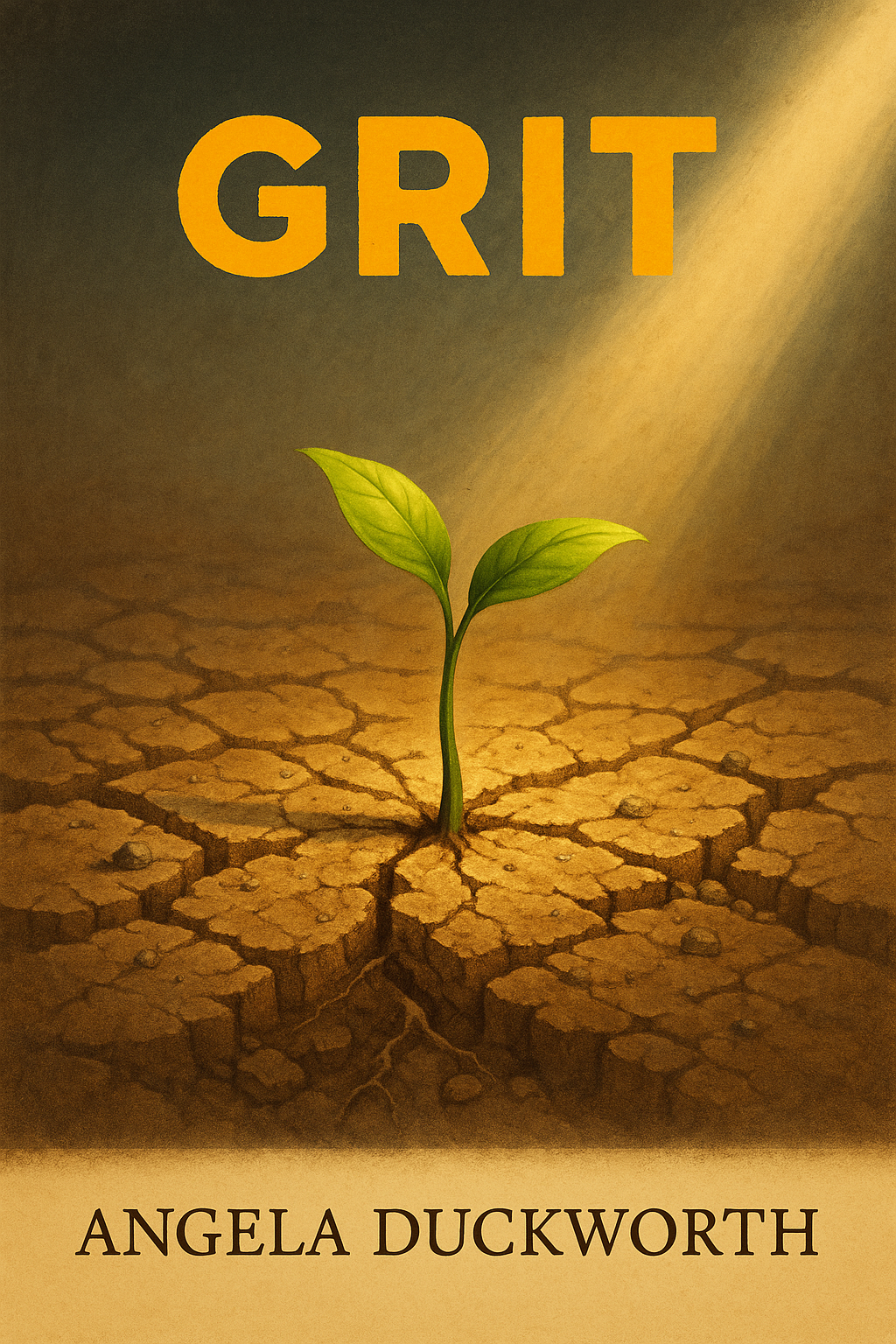
Grit
Chapter Summaries
What's Here for You
Have you ever wondered what truly separates those who achieve extraordinary things from those who fall short? Is it innate talent, sheer luck, or something deeper? Angela Duckworth's seminal work, "Grit," invites you on a transformative journey to discover the most powerful predictor of success: grit. This book dismantles the myth that talent alone is the key, revealing instead the profound impact of a relentless spirit, unwavering passion, and determined perseverance. Within these pages, you will gain a comprehensive understanding of what grit truly is – not a fleeting burst of motivation, but a sustained stamina for long-term goals. You'll learn that grit isn't just about working hard when things are easy; it's about showing up, day after day, especially when faced with unparalleled rigor and daunting challenges. Duckworth compellingly argues that "effort counts twice," meaning that while talent matters, the deliberate practice and consistent effort you apply are far more critical to achieving excellence. You'll explore how grit grows, challenging the notion of nature versus nurture and demonstrating that perseverance is a skill that can be cultivated and strengthened. The book will guide you through the nuanced development of your own grit, starting with finding your interests, which evolve into enduring passions. You'll understand the critical role of purposeful practice and the immense power of having a purpose – the deep-seated intention to contribute to something larger than yourself. Furthermore, you will learn that hope is not passive wishing, but an active resolve to create a better future, a gritty determination to "fall seven, rise eight." Duckworth offers practical insights into parenting for grit and highlights how the "playing fields of grit" are often found in everyday struggles, not just grand arenas. Finally, you'll discover how to foster a "culture of grit," recognizing the powerful influence of shared norms and values on cultivating perseverance in yourself and others. Prepare to embark on an intellectual and emotional exploration that will challenge your assumptions about success. The tone of "Grit" is both rigorously researched and deeply personal, filled with compelling anecdotes and scientific evidence. You'll feel inspired by the stories of "grit paragons" and empowered by the actionable strategies that will equip you to build your own resilience, pursue your long-term ambitions with unwavering dedication, and ultimately, unlock your fullest potential. This is more than just a book; it's a roadmap to a more determined, purposeful, and successful you.
SHOWING UP
The journey to West Point, a place where cadets are forged through unparalleled rigor, reveals a profound truth about enduring challenge. More than just academic prowess or athletic talent, it's a relentless spirit that separates those who stay from those who leave, especially during the crucible of Beast Barracks. Angela Duckworth, delving into this very question, discovered that the meticulously calculated 'Whole Candidate Score' – a blend of SATs, grades, leadership potential, and fitness – was surprisingly ineffective in predicting who would conquer the demanding seven-week training. This was a puzzle that had stumped military psychologists for decades. What emerged, through interviews with leaders across diverse fields and rigorous studies, was a singular, powerful characteristic: grit. Duckworth found that talent, while impressive, often faltered under pressure, a phenomenon mirrored in the experiences of individuals like Mike Matthews, who recalled the intense challenge of Air Force induction. The core insight is that true success, whether navigating the brutal demands of military training, the constant rejection of a sales career, the academic hurdles of high school and college, or even the precise world of the Scripps National Spelling Bee, hinges not just on potential, but on the unwavering commitment to persevere. This resilience, this deep-seated passion coupled with dogged determination, is what Duckworth terms grit. It's the quiet refusal to give up when faced with setbacks, the internal engine that keeps one moving forward, not because it's easy, but because the pursuit itself holds profound meaning. The author's research, crystallizing into the Grit Scale, demonstrated that this quality, measurable and distinct from raw talent, was the most reliable predictor of who would not only begin a challenging path but see it through to its arduous end, illustrating that potential is merely the starting point; it's what we do with it, the sheer tenacity we bring to the chase, that truly defines our capacity for success. The narrative arc moves from the tension of high expectations meeting harsh reality at West Point, through the insight that grit, not talent alone, is the critical differentiator, to the resolution that this tenacious spirit is a learnable, measurable force for navigating life's most demanding trials.
DISTRACTED BY TALENT
The author, Angela Duckworth, recounts her early experiences as a teacher, a role she embraced after leaving a lucrative consulting career, only to discover that raw talent was not the sole predictor of achievement. In her seventh-grade math class on the Lower East Side, she observed that students who grasped concepts quickly didn't always perform best, while those who struggled initially, but showed persistence and a willingness to ask questions and seek help, often surpassed their more naturally gifted peers. This sparked a crucial question: was talent a fixed destiny, or did sustained effort hold more sway? This realization was further solidified when she moved to Lowell High School, a selective institution where students were admitted based on academic merit. Here too, Duckworth found that work ethic, not just innate intelligence, distinguished the highest achievers. She shares the story of David Luong, a quiet student who, despite not initially qualifying for the accelerated math track, consistently produced perfect work and demonstrated an insatiable hunger for learning, eventually excelling in advanced calculus and becoming a rocket scientist. This journey led Duckworth to question the societal overemphasis on talent, a bias she saw reflected in her own experiences and later observed in psychological studies by Chia Jung Tsay. Tsay's research revealed a 'naturalness bias,' where even experts, despite professing to value effort, implicitly favored 'naturals' over 'strivers' when evaluating potential hires or judging the quality of work. This bias, Duckworth argues, can inadvertently overshadow the critical importance of grit, perseverance, and hard work. She draws parallels to historical figures like Francis Galton and Charles Darwin, noting Darwin's own emphasis on zeal and hard work over innate intellect. William James's observation that humans operate far below their potential further underscores this point. The chapter culminates with the story of Scott Barry Kaufman, who, despite being labeled a slow learner and placed in special education due to early cognitive processing issues, discovered his own potential through relentless effort and a teacher's belief in him, eventually earning advanced degrees from prestigious universities. Through these interwoven narratives, Duckworth illustrates a central tension: our cultural fascination with innate ability often blinds us to the profound power of sustained effort, a realization that shifted her own perspective and paved the way for her deeper psychological investigations into grit.
EFFORT COUNTS TWICE
We live in a world that often glorifies talent, rushing to anoint those with dazzling achievements as "naturals," as if greatness were an innate gift bestowed by the gods. Angela Duckworth, in this chapter, challenges this pervasive myth, revealing the "mundanity of excellence" through the lens of sociology and personal reflection. The author explains that superlative performance is not magic, but rather an intricate mosaic of countless small, often ordinary, skills and activities, meticulously drilled into habit and then harmoniously synthesized. This deep dive, inspired by sociologist Dan Chambliss's study of swimmers, posits that when we can't readily trace the arduous path of experience and training, we default to the simpler, more alluring explanation of innate talent. Duckworth herself recounts a moment of intellectual reckoning with her advisor, Marty Seligman, who starkly pointed out her lack of a unifying theory for achievement, pushing her to move beyond mere observation. This spurred her to articulate a powerful equation: talent is the rate at which skills improve with effort, and achievement is the application of those acquired skills. Crucially, effort plays a dual role: it builds skill, and then it makes that skill productive. Consider the celebrated potter Warren MacKenzie, whose mastery wasn't born, but painstakingly built through thousands of imperfect pots, each one a stepping stone. Or the writer John Irving, who, despite a severe struggle with dyslexia, transformed his perceived weakness into a strength through relentless rewriting, demonstrating that what is not natural can become second nature through sheer persistence. Even Will Smith champions a "ridiculous, sickening work ethic," asserting he'll "die on a treadmill" before being outworked. This echoes the Harvard Treadmill Test study, where a young man's ability to endure physical and mental strain, independent of initial fitness, proved a surprisingly strong predictor of adult psychological adjustment, highlighting that the willingness to push through discomfort and, crucially, to get back on the treadmill the next day, is the true measure of grit. The chapter resolves with the understanding that while talent may determine how quickly skills improve, it is sustained, dual-action effort that truly separates accomplishment from unmet potential, allowing strivers to not only build skills but also to deploy them, ultimately producing more over time than those who rely solely on a perceived natural gift.
HOW GRITTY ARE YOU?
Angela Duckworth, in her chapter 'How Gritty Are You?', invites us to ponder the enduring quality of grit, not as a fleeting burst of energy, but as a profound stamina for long-term pursuits. She begins by sharing an anecdote with an aspiring entrepreneur, illustrating that grit is more about sustained effort over years, not just intense effort over weeks. This sets the stage for the central tension: differentiating true grit from mere hard work or passing enthusiasm. Duckworth introduces her Grit Scale, a tool designed to measure one's passion and perseverance, revealing that while many might exhibit high energy, the ability to maintain focus on a singular, deeply cared-for goal over time is what truly defines grit. She uses the compelling stories of Jeffrey Gettleman, the New York Times East Africa bureau chief, and Pete Carroll, the Seahawks coach, to showcase how passion isn't a sudden spark but a carefully constructed compass, built through active engagement and reflection, guiding one through a winding road. This compass, or 'ultimate concern,' as psychologists call it, acts as a top-level goal that organizes all lesser goals, providing direction and meaning. The narrative then explores how a lack of grit often stems from incoherent goal structures—either having a grand dream without concrete steps, or a multitude of disconnected mid-level goals. The wisdom of Warren Buffett is invoked through a three-step prioritization process, emphasizing not just what to pursue, but crucially, what to avoid to maintain focus on what truly matters. Ultimately, Duckworth reveals that grit isn't about stubbornly clinging to every low-level task, but about recognizing that while the highest-level goal is written in ink, lower-level goals are written in pencil, allowing for adaptation, innovation, and perseverance through setbacks, much like the journey of cartoonist Bob Mankoff, who learned to 'improvise, adapt, overcome' in the face of thousands of rejection slips. The chapter concludes by highlighting Catharine Cox's early research, which found that persistence of motive—a blend of passion and perseverance—was a more significant predictor of eminence than raw intelligence, underscoring that grit is a cultivated trait, not an innate gift, and that its development is key to achieving what we deeply care about.
GRIT GROWS
The question of nature versus nurture, a fundamental inquiry into who we are, often arises when discussing grit. Angela Duckworth, in her chapter 'Grit Grows,' navigates this complexity, revealing that while our genes play a role, they are far from the sole determinant of our perseverance and passion. Just as height has dramatically increased over generations due to improved nutrition and healthcare, not genetic shifts, so too can our grit be cultivated. Duckworth illustrates this with the story of Dan Chambliss, a swimmer whose anatomical limitations were less of an obstacle than the quality of his coaching; when he experienced better guidance, his performance improved significantly. This underscores a core insight: talent, while influenced by genetics, is crucially shaped by experience and practice. Scientists, through twin studies, have estimated that roughly 37% of grit's perseverance component and 20% of its passion component can be attributed to genetic factors, leaving the majority to the realm of experience. This is akin to the Flynn effect, the remarkable rise in IQ scores over the past century, which points to environmental and societal shifts, like increased abstract reasoning demands and the 'social multiplier effect' of improved skills, rather than a sudden genetic leap. Duckworth then explores the intriguing correlation between age and grit, observing that older individuals tend to score higher. While this might suggest a cultural shift favoring sustained effort in past generations, she posits a more compelling explanation: the maturity principle. As we navigate life's challenges—starting careers, facing setbacks, caring for loved ones—we adapt and grow. These experiences, much like a child finally learning to use the potty when placed in a new environment or an employee facing the immediate consequence of being late for a job, compel us to develop new ways of thinking and acting. Over time, these adaptations become habitual, evolving our identity and increasing our capacity for long-term passion and perseverance. Duckworth identifies four key psychological assets that contribute to this growth: interest, which begins with intrinsic enjoyment; practice, the deliberate discipline of improvement; purpose, the conviction that one's work matters to others; and hope, the unyielding ability to get back up after being knocked down. These are not fixed traits but malleable qualities that can be cultivated from within, transforming grit from a fixed attribute into a growing capacity.
INTEREST
The popular commencement speech advice to 'follow your passion' often paints a picture of a sudden, life-altering epiphany, a moment like Julia Child's first exquisite bite of sole meunière. Yet, Angela Duckworth, through her research and interviews with 'grit paragons,' reveals a more nuanced and, frankly, more achievable reality. The author explains that while passion is indeed a powerful driver of success and satisfaction, it’s rarely discovered fully formed. Instead, passions are cultivated over time, a process that begins with a spark of discovery, often through playful exploration and interaction with the world, not mere introspection. Think of young Jeff Bezos, dismantling his crib at age three, or Will Shortz, creating puzzles from ruled paper at his mother's suggestion; these weren't moments of grand destiny but early, often unnoticed, triggers of interest. Scientific research, as Duckworth highlights, shows a strong correlation between job satisfaction and performance when work aligns with personal interests, yet the path to finding that alignment is often winding. Many successful individuals, like chef Marc Vetri, explored diverse interests, from music to cooking, before finding their calling. The central tension lies in the gap between the romanticized ideal of passion and the practical, often messy, process of developing it. Duckworth argues that interests are not found but *fostered*, requiring repeated engagement and development. For instance, astronaut Mike Hopkins wasn't just inspired by one space shuttle launch, but by several over years, fueling a deeper dive into NASA. This development phase is crucial and requires patience, seeking out mentors, and embracing the 'nuances' that experts discover, much like an art critic discerning subtle differences in a painting that a novice might miss. The author emphasizes that early encouragement and freedom to experiment, rather than pressure, are vital for nurturing nascent interests, drawing parallels to psychologist Benjamin Bloom's findings on the 'early years' of skill development, which are characterized by playfulness and support. Ultimately, the journey from fleeting interest to enduring passion is one of continuous learning and deepening engagement, a stark contrast to the myth of the overnight sensation, offering a more hopeful and actionable blueprint for finding meaningful work.
PRACTICE
Angela Duckworth, in her profound exploration of 'Grit,' turns her keen eye to the engine of achievement: practice. She begins by observing that grittier children at the National Spelling Bee, unlike their less determined peers, dedicated more hours to preparation, a finding that initially suggested grit was simply about time on task. Yet, Duckworth quickly pivots, acknowledging the paradox of individuals accumulating decades of experience without significant growth, a phenomenon she labels 'one year of experience . . . twenty times in a row.' This leads her to the Japanese concept of Kaizen—continuous improvement—a spirit she finds in all her 'grit paragons.' The narrative then deepens as Duckworth introduces the seminal work of cognitive psychologist Anders Ericsson, the world expert on world experts. Ericsson's research reveals that elite performers don't just practice more; they practice *differently*. This distinction is the heart of the chapter, introducing the concept of 'deliberate practice.' Duckworth illustrates this with her own jogging routine, a clear example of lacking deliberate practice: no specific goals, no focus on weaknesses, just mindless repetition. Deliberate practice, conversely, is a rigorous, four-part process: setting a precise stretch goal, focusing intensely on a specific weakness, seeking immediate and informative feedback—often negative—and repeating the process until mastery is achieved, then immediately setting a new stretch goal. This meticulous, often solitary work, whether by a concert pianist, a surgeon like Atul Gawande, or even Benjamin Franklin refining his writing, is the bedrock of expertise. The chapter navigates the seeming tension between the arduous nature of deliberate practice and the exhilarating experience of 'flow,' as described by Mihaly Csikszentmihalyi. While flow is effortless performance, deliberate practice is the often-unseen, effortful preparation that makes that performance possible. Duckworth’s own research with spelling bee finalists confirms this: grittier individuals not only engage in more deliberate practice but also report experiencing more flow, suggesting that the hard work fuels the effortless moments. The key insight here is that deliberate practice is the behavior, and flow is the experience; they are not mutually exclusive but sequential. The narrative culminates with practical advice: understand the science of deliberate practice, make it a habit through established routines, and, crucially, shift one’s internal experience of it—learning to embrace challenge, view mistakes not as failures but as feedback, and recognize that the 'burn' of hard work, when understood as a path to growth, can become its own form of reward, ultimately leading not just to skill, but to a deeper sense of accomplishment and mastery.
PURPOSE
Angela Duckworth, in her exploration of 'Grit,' reveals that while sustained passion often begins with interest, it is purpose—the intention to contribute to the well-being of others—that truly solidifies mature passions. The author shares the extraordinary story of Alex Scott, who, even as a young child battling neuroblastoma, initiated a lemonade stand to raise funds for cancer research, demonstrating an early, profound sense of purpose. This echoes Benjamin Bloom's model of development, which identifies a progression from initial interest to disciplined practice, culminating in the realization of a larger purpose. Duckworth emphasizes that for gritty individuals, purpose transcends mere goal-orientation; it's about the 'other-centered' impact of their endeavors, whether it's supporting children, clients, or society at large. Jane Golden, an art activist, exemplifies this, transforming a personal health crisis into a mission to bring art to underserved communities, finding meaning even amidst chronic pain. Similarly, wine critic Antonio Galloni finds his passion amplified by the desire to help others discover their own appreciation for wine, illustrating how even seemingly self-focused pursuits can be imbued with altruism. The author delves into the evolutionary roots of happiness, distinguishing between hedonic (pleasure-seeking) and eudaimonic (meaning-driven) pursuits, and presents research suggesting that while gritty individuals value pleasure moderately, they are dramatically more motivated by a meaningful, other-centered life. This doesn't imply all gritty people are saints, as even malevolent figures like Joseph Stalin and Adolf Hitler demonstrated grit, albeit in a perverted sense, highlighting that a genuinely positive purpose isn't a prerequisite for grit itself, but it is for its most inspiring manifestations. The narrative then pivots to the concept of a 'calling,' contrasting it with a mere 'job' or 'career,' using the parable of the bricklayers to illustrate how subjective experience transforms the mundane into the meaningful. Individuals who view their work as a calling, like Roy Schmidt, a garbage collector who saw his role as essential to society, often exhibit greater grit and satisfaction. Amy Wrzesniewski’s research on 'job crafting' suggests that any occupation can become a calling through intentional effort to connect work with core values and a sense of contribution. Joe Leader, a subway engineer, and Michael Baime, a physician who integrated mindfulness into his practice, showcase how passion can evolve, taking years to meld personal interests with an outward-facing purpose. The author's own journey with Summerbridge, a program designed to enrich disadvantaged middle schoolers, illustrates how a deep-seated purpose—helping children thrive—provided the courage and resilience to overcome obstacles and build a lasting organization. This journey underscores Adam Grant's finding that self-oriented and other-oriented motivations are not mutually exclusive; rather, combining intrinsic interest with prosocial goals fuels sustained effort and success. Ultimately, Duckworth presents purpose not as a static discovery, but as a dynamic cultivation, encouraging readers to reflect on how their current work contributes to society, to actively 'craft' their jobs for greater meaning, and to find inspiration in purposeful role models, much like she found in her own mother's selfless example.
HOPE
Angela Duckworth, in her chapter on HOPE, unveils a profound distinction: the passive wish for a better tomorrow versus the gritty resolve to actively create one. This isn't about luck, but about the relentless spirit encapsulated in the Japanese saying, 'Fall seven, rise eight.' Duckworth's own college neurobiology class serves as a visceral microcosm of this struggle. Facing academic ruin, the temptation to quit was immense, a sentiment echoed in the classic experiments of Marty Seligman and Steve Maier with dogs subjected to uncontrollable shocks, demonstrating how perceived helplessness breeds despair. Yet, Duckworth, like a third of Seligman's experimental dogs, chose a different path. She realized that suffering's sting isn't in the event itself, but in the belief that we are powerless to change it. This pivot, from 'I'm going to fail' to 'I can figure this out,' is the heart of learned optimism, a concept Seligman developed. Optimists, Duckworth explains, don't avoid adversity; they simply explain it differently, viewing setbacks as temporary and specific, not permanent and pervasive. This mindset, explored further by Carol Dweck's work on growth versus fixed mindsets, is not innate but cultivated. It’s the belief that intelligence and talent aren't static but can be developed through effort and learning, a stark contrast to the fixed mindset that sees failure as definitive proof of inadequacy. The KIPP schools, for instance, actively foster this by praising effort over innate talent, a strategy that builds resilience. Even in the face of setbacks, like a disappointing grade or a missed promotion, the growth mindset encourages us to ask, 'What can I learn?' rather than succumb to 'I'm not good enough.' Steve Maier's later research with adolescent rats suggests that experiencing controllable adversity in youth can inoculate individuals against learned helplessness later in life, wiring the brain for resilience. Ultimately, Duckworth posits that hope, in its gritty form, is not a passive state but an active practice—a choice to believe in our own agency, to reframe challenges, and to keep rising, even when knocked down, understanding that 'what doesn't kill you, when controllable, makes you stronger.' This journey from despair to determination, from a fixed view of oneself to a growth-oriented perspective, is the essential narrative of cultivating enduring grit.
PARENTING FOR GRIT
Angela Duckworth, in her chapter 'Parenting for Grit,' delves into the crucial question of how to cultivate resilience and perseverance in the people we care for, moving beyond simplistic binaries of strictness versus permissiveness. The author explains that the common query, 'How do I parent for grit?', often elicits two opposing intuitions: one that grit is forged in the crucible of adversity, echoing the harsh advice of John Watson's era, and another that it blossoms with unconditional love and support, akin to permissive parenting. Duckworth, however, eschews these extremes, presenting a nuanced perspective through compelling narratives. We meet Steve Young, the legendary quarterback whose father, 'Grit' Young, instilled unwavering standards and the principle of enduring hardship, famously telling young Steve, 'You can quit. . . . But you can't come home because I'm not going to live with a quitter.' Yet, the Youngs were also deeply supportive, with Steve's mother intervening physically to protect him and his father patiently sitting with him through anxiety-induced school refusal. Contrast this with Francesca Martinez, a comedian with cerebral palsy, whose parents, Tina and Alex, offered immense love and encouragement, allowing her to pursue her dreams with unwavering faith, yet also imparting essential limits and a strong work ethic, exemplified by her father's insistence on finishing projects. These stories reveal a powerful pattern: the most effective approach, termed 'wise parenting' by psychologists, combines high demands with deep emotional support. This authoritative style, as described by Larry Steinberg, fosters children who fare better across nearly every metric. It’s not about a balance on a continuum, but rather the integration of both. Wise parents are accurate judges of psychological needs, providing love, limits, and latitude. They model behavior, encouraging emulation rather than mere imitation; for instance, Steve's father, a former athlete, naturally guided Steve's athletic pursuits, and Francesca's father, a writer, instilled a similar finishing-what-you-start mentality. Crucially, Duckworth emphasizes that this 'wise' approach extends beyond parents to mentors and teachers, citing Tobi Lütke's experience with his programmer mentor, Jürgen, and the impact of educators like Chantel Smith on Cody Coleman, a student who overcame immense adversity. The core insight is that while high expectations can be communicated simply, as demonstrated by David Yeager and Geoff Cohen's experiment with Post-it notes, the foundation of grit is built on consistent, wise mentorship that fosters self-worth. The author concludes that the most profound influence comes not just from what parents *say*, but from the messages children *receive* about their parents' belief in their potential, a belief that can transform a child's trajectory, as seen in Cody's journey from a correctional institution to MIT and Stanford, underscoring that anyone can make a difference by caring and understanding.
THE PLAYING FIELDS OF GRIT
Angela Duckworth, in her chapter 'The Playing Fields of Grit,' invites us to consider where the seeds of grit are sown, revealing that these aren't always found in grand pronouncements but often in the persistent, everyday struggles. She opens with a poignant scene: her young daughter Lucy, defeated by a simple box of raisins, a moment that sparks a parental anxiety about grit. This personal anecdote sets the stage for a deeper exploration of how structured extracurricular activities—ballet, piano, football—act as crucial training grounds. These aren't just pastimes; they are 'playing fields of grit,' offering a unique blend of adult guidance, from non-parental figures, and the cultivation of interest, practice, purpose, and hope. While acknowledging the lack of randomized controlled trials, Duckworth compellingly argues, based on suggestive evidence, that these activities provide a rare combination of challenge and intrinsic motivation, a sweet spot often missed in schoolwork or casual hangouts. Research shows that kids involved in extracurriculars tend to fare better across numerous metrics, from grades to self-esteem, and crucially, long-term studies reveal that sustained participation, more than mere dabbling, predicts greater adult success. This is powerfully illustrated by the story of Steve Young's rigorous training and Margo Gardner's study showing that sticking with activities for over a year significantly boosts college graduation and community involvement. Warren Willingham's seminal 'Personal Qualities Project' further solidifies this, identifying 'follow-through'—defined as purposeful, continuous commitment with advancement—as the single best predictor of success, even outperforming grades and test scores. Duckworth, inspired by this, developed her 'Grit Grid' to quantify this follow-through, finding a strong correlation between high Grit Grid scores and college persistence. This concept is echoed by Bill Fitzsimmons of Harvard Admissions, who emphasizes that while academic prowess is vital, it's the demonstrated commitment, energy, discipline, and hard work in extracurriculars that truly signal a student's potential to navigate life's rigors. The chapter highlights a concerning disparity: affluent students have higher participation rates in these grit-building activities, while those from lower socioeconomic backgrounds are increasingly left behind, creating a less level playing field. Yet, the core principle remains that effort breeds reward; psychologist Robert Eisenberger's 'learned industriousness' experiments with rats and children demonstrate that working hard for a reward, even a small one, cultivates greater perseverance on subsequent difficult tasks. Duckworth concludes that while parents can struggle to create these conditions at home, extracurricular settings, with their dedicated coaches and teachers, provide an ideal environment for children to rehearse interest, practice skills, find purpose, and cultivate hope. Her 'Hard Thing Rule'—do a hard thing, finish what you commit to, and choose your hard thing—offers a practical framework for parents seeking to foster this essential quality, recognizing that grit, like any skill, requires deliberate practice on carefully chosen playing fields.
A CULTURE OF GRIT
Angela Duckworth, in her exploration of 'Grit,' unveils the profound influence of culture on cultivating perseverance and passion, moving beyond individual effort to the power of shared norms and values. She illustrates this through the Seattle Seahawks, where coach Pete Carroll actively sought to build a gritty culture, seeking 'great competitors' who are resilient and undeterred by setbacks, a philosophy that resonated deeply with Duckworth's research. This concept of culture extends beyond sports, encompassing organizations like KIPP charter schools and even historical institutions like West Point, demonstrating how a group's collective identity shapes individual behavior. Duckworth highlights the reciprocal relationship between an individual and their chosen group: the characteristics that lead to selection for a particular team or organization are, in turn, enhanced by that environment. She presents the Finnish concept of 'sisu' – an inner strength and perseverance against overwhelming odds – as a powerful metaphor, suggesting that internalizing a self-conception of overcoming adversity leads to actions that confirm it. This internal shift from a cost-benefit analysis to an identity-driven decision-making process is crucial, as exemplified by Tom Deierlein's recovery after a severe injury, where his identity as a determined individual, not just a calculation of pain and benefit, fueled his relentless pursuit of recovery and a specific goal. Similarly, Jamie Dimon, CEO of JPMorgan Chase, emphasizes 'fortitude' as a core value, fostering a culture where employees internalize the company's resilient spirit through relentless communication and leading by example, much like Anson Dorrance, the highly successful UNC women's soccer coach, who builds his team's grit through continuous experimentation, rigorous challenges like the Beep Test, and the internalization of core values expressed through memorized literary quotes. West Point, under Lieutenant General Robert Caslen, exemplifies a shift from an attrition-based culture to a developmental model, where high standards are maintained through support and leading from the front, demonstrating that culture can be deliberately forged and evolve over time. The Seahawks' 'Competition Wednesdays,' rooted in Anson Dorrance's philosophy, exemplify this, where players compete with intense aggression, not to defeat each other, but to strive together for collective excellence, a concept encapsulated by the mantra 'Always Compete' – meaning 'strive together' and 'be all you can be.' This culture is reinforced through consistent language, such as 'Finish Strong' and 'No Whining, No Complaining, No Excuses,' transforming individual effort into a shared identity of resilience. Even in the face of a devastating Super Bowl loss, Pete Carroll and the Seahawks demonstrated their gritty culture by embracing the failure not as an end, but as a part of their journey, a source of learning and continued growth, embodying the principle that success is never final and failure is never fatal, but courage—the courage to continue—is what truly counts.
Conclusion
Angela Duckworth's "Grit" fundamentally reshapes our understanding of achievement, shifting the spotlight from innate talent to the enduring power of passion and perseverance. The book compellingly argues that true success is not a matter of being "born with it," but rather a cultivated quality forged through sustained effort, a deep-seated commitment to long-term goals, and the resilience to bounce back from inevitable setbacks. Duckworth dismantles the seductive myth of the "natural" genius, revealing that exceptional accomplishment is often the product of "effort counting twice" – first in building skills, and again in making those skills productive. This practical wisdom extends beyond mere hard work; it emphasizes "deliberate practice," a focused, challenging, and feedback-driven approach to improvement that pushes individuals beyond their comfort zones. Emotionally, "Grit" offers a profound sense of agency. It suggests that our capacity for perseverance isn't fixed but can be intentionally grown. This growth is nurtured through the development of interests, which are often discovered through exploration rather than passive waiting. It's further solidified by a sense of purpose, a connection to something larger than oneself, transforming a pursuit into a calling. Crucially, the book highlights the importance of hope, not as passive wishing, but as an active belief in one's ability to influence the future, encapsulated by the mantra "fall seven, rise eight." The emotional journey is one of embracing challenges, learning from failure, and cultivating a resilient mindset. Practically, "Grit" provides actionable insights for individuals, parents, educators, and leaders. It advocates for wise parenting that balances high expectations with unwavering support, and for creating environments – whether in extracurriculars or workplaces – that act as "playing fields of grit." These environments foster a "culture of grit" where challenges are embraced, effort is valued, and continuous improvement is the norm. Ultimately, "Grit" is a call to action: to recognize the profound impact of our sustained efforts, to cultivate our own capacity for perseverance through interest, practice, purpose, and hope, and to foster these qualities in others, thereby unlocking a more robust and fulfilling path to achievement and personal growth.
Key Takeaways
Grit, like most human traits, is a complex interplay of genetics and environment, with experience playing a significant, trainable role.
Talents are not solely predetermined by DNA; the rate of skill development is critically dependent on focused practice and quality mentorship.
Talent, as measured by traditional metrics like academic scores and fitness, is a poor predictor of long-term perseverance through extreme challenges, highlighting a gap between potential and actual achievement.
Grit, defined as the combination of passion and perseverance, is a more accurate predictor of success in demanding environments than raw talent or other personality traits.
The 'Whole Candidate Score' at West Point, despite its comprehensive nature, failed to distinguish between cadets who would complete Beast Barracks and those who would drop out, underscoring the limitations of assessing potential without measuring tenacity.
Many high achievers, despite initial setbacks or a lack of natural ease, succeed not because they are the most talented, but because they possess an enduring determination to improve and persist through difficulties.
Grit is not about avoiding failure, but about the resilience to keep going after failure, demonstrating a deep-seated commitment to long-term goals that transcends immediate obstacles.
The ability to stick with challenging pursuits, even when boring or painful, is a hallmark of highly accomplished individuals, suggesting that passion and perseverance are sustained by the pursuit itself, not just the outcome.
The societal tendency to equate innate talent with guaranteed achievement is a distraction from the more critical role of sustained effort and perseverance.
Despite stated beliefs valuing hard work, an unconscious 'naturalness bias' leads people to favor individuals perceived as naturally gifted over those who achieve through diligent effort.
Early indicators of talent or lack thereof, such as IQ scores or initial academic performance, are often poor predictors of long-term success compared to an individual's commitment to effort and growth.
Focusing exclusively on talent can create a self-fulfilling prophecy that limits potential, while recognizing and nurturing effort can unlock capabilities that initial assessments might miss.
True achievement often arises from a combination of ability and immense zeal, with the latter proving to be a more reliable driver of sustained success and overcoming challenges.
An individual's capacity to learn and grow, fueled by dedication and a refusal to be defined by early limitations, is a more potent force than any perceived intrinsic gift.
The common perception of 'talent' as an innate gift obscures the reality that exceptional achievement is the cumulative result of many ordinary, practiced actions.
Effort functions as a double-edged sword in the pursuit of achievement: it is the engine that builds skills and the catalyst that makes those skills productive.
The tendency to attribute success to 'natural talent' serves as a psychological shortcut, allowing us to admire without the discomfort of comparison or the obligation to strive.
True mastery is often forged through persistent effort applied to overcoming initial struggles, transforming what is unnatural into a deep-seated capability.
Sustained effort, particularly the willingness to return and try again after setbacks, is a more potent predictor of long-term success and psychological adjustment than innate ability alone.
True grit is defined by sustained passion and perseverance toward a deeply cared-for, long-term goal, rather than mere intensity or hard work on disparate pursuits.
A unified goal hierarchy, with a clearly defined 'ultimate concern' or life philosophy, acts as a compass that directs all lower-level goals and actions, providing focus and meaning.
Lack of grit often stems from incoherent goal structures, such as having aspirational dreams without actionable steps or pursuing multiple disconnected mid-level goals.
Effective prioritization involves not only identifying what to pursue but also consciously deciding what to avoid to conserve time and energy for one's most important goals.
Grit requires flexibility at lower levels of the goal hierarchy, allowing for adaptation and change in tasks and strategies while remaining steadfast to the ultimate, overarching aim.
Persistence of motive, encompassing both passion and perseverance, is a more critical determinant of long-term achievement and eminence than raw intellectual talent alone.
The 'maturity principle' suggests that grit and other positive personality traits tend to develop over time as individuals adapt to life's increasing demands and learn from experience.
Grit is not a fixed personality trait but a capacity that can be intentionally cultivated through the development of interest, disciplined practice, a sense of purpose, and resilient hope.
Environmental factors and societal changes, such as increased abstract reasoning demands, can foster greater grit across populations, similar to the Flynn effect observed in IQ scores.
Passions are not typically discovered in a single 'aha!' moment but are cultivated through a long process of discovery, development, and deepening engagement.
Interests are best triggered by interaction with the outside world and experimentation, rather than passive introspection or trying to force an interest.
Developing an interest requires repeated exposure and proactive effort, akin to an artist revisiting a canvas to refine its details, not just enjoying the initial sketch.
Early encouragement, freedom to explore, and supportive mentorship are critical for nurturing nascent interests, especially during the playful, exploratory 'early years' of development.
The novelty that sustains expert interest shifts from broad discovery to appreciating the intricate nuances within a chosen field, a concept analogous to an Olympic commentator spotting microscopic performance differences.
The common narrative of 'following your passion' often overlooks the essential stages of development, leading to unrealistic expectations that can hinder genuine interest cultivation.
While early interests are fragile, consistent engagement and a willingness to delve into complexity are key to transforming them into enduring passions.
True expertise is forged not merely through extended time on task, but through 'deliberate practice,' a structured approach focused on specific weaknesses and continuous improvement.
Deliberate practice involves setting clear, challenging goals, intense concentration, immediate feedback, and relentless repetition, a cycle that pushes beyond current capabilities.
While 'flow' represents the effortless peak of performance, it is the direct result of the often unglamorous, effortful, and sometimes uncomfortable process of deliberate practice.
Grit is not just about perseverance; it's the engine that drives individuals to engage in and sustain the demanding process of deliberate practice, leading to both skill development and a greater capacity for flow.
The subjective experience of deliberate practice can be transformed by reframing challenges as opportunities for growth and mistakes as essential feedback, fostering enjoyment and sustained effort.
Establishing consistent daily rituals for deliberate practice is crucial, as habituation reduces the mental friction of starting difficult tasks, allowing for more effective skill development.
Purpose, defined as the intention to contribute to the well-being of others, is a critical, often later-stage, component that solidifies passion and fuels long-term grit, complementing initial interests.
The development of purpose often follows a progression: initial self-oriented interest, followed by disciplined practice, and finally, integration with an other-centered purpose, transforming work into a calling.
While grit can exist in individuals with selfish or harmful goals, its most inspiring and sustainable form is deeply connected to a sense of contribution beyond the self, enhancing motivation and resilience.
Viewing one's work as a 'calling' rather than a 'job' or 'career'—a perception that can be actively cultivated through 'job crafting'—significantly increases engagement, satisfaction, and perseverance.
The most potent motivation arises from the confluence of intrinsic interest in the work itself and a clear, other-centered purpose; both self-oriented and other-oriented motivations are independent and can powerfully coexist.
Cultivating purpose is an active, ongoing process that involves reflecting on societal contributions, intentionally shaping one's work to align with core values, and finding inspiration in purposeful role models.
Distinguish between passive hope (expecting the universe to improve things) and gritty hope (believing one's own efforts can improve the future).
Learned helplessness stems not from suffering itself, but from the belief that suffering is uncontrollable, underscoring the critical role of perceived agency.
Adopting a growth mindset—believing abilities can be developed through dedication and hard work—is foundational to explaining adversity optimistically and fostering perseverance.
The way we explain setbacks (temporary and specific vs. permanent and pervasive) critically influences our motivation and likelihood of giving up or pushing forward.
Experiencing and overcoming controllable adversity, especially during youth, can build lifelong resilience and inoculate against learned helplessness.
Cultivating hope involves actively updating beliefs about intelligence and talent, practicing optimistic self-talk, and seeking help from others.
Grit is cultivated through a combination of high expectations and deep emotional support, rather than an either/or approach to parenting.
Wise parenting, characterized by warmth, respect, and demanding standards, leads to demonstrably better outcomes in children across various life domains.
Effective mentors and role models, not just parents, can foster grit by providing tailored encouragement and challenging individuals to stretch beyond their comfort zones.
Emulation of a parent's or mentor's work ethic and passion, rather than mere imitation, is a key mechanism for developing one's own grit.
The messages children *receive* about their parents' beliefs in their capabilities are more impactful than the intended messages parents aim to deliver.
Anyone can act as a 'parent' for grit by showing care, understanding an individual's struggles, and encouraging them to try, regardless of formal relationship.
Structured extracurricular activities serve as vital 'playing fields of grit,' offering a unique combination of challenge and intrinsic motivation that is crucial for developing perseverance.
Sustained, long-term commitment to extracurriculars, rather than sporadic participation, is a powerful predictor of adult success, outperforming traditional academic metrics.
The concept of 'follow-through,' characterized by purposeful, continuous commitment and demonstrable advancement in chosen activities, is a critical determinant of success, as identified by Warren Willingham's research.
The principle of 'learned industriousness' suggests that experiencing the connection between hard work and reward, even in small increments, cultivates greater effort and resilience in facing future challenges.
Extracurricular activities are not merely signals of grit but active cultivators; the disciplined environment, non-parental guidance, and inherent challenges within these pursuits build character and transferable skills.
A significant disparity exists in access to these grit-building opportunities, with students from lower socioeconomic backgrounds facing greater obstacles, underscoring the need for equitable access to structured activities.
Joining and immersing oneself in a gritty culture significantly enhances an individual's own grit, as the group's norms and values are internalized over time, shaping identity.
Grit is not solely an individual trait developed in isolation, but is powerfully cultivated through shared identity and a collective commitment to perseverance and excellence within a group.
A culture of grit thrives when leaders actively and consistently communicate core values and translate them into actionable behaviors, fostering an environment where challenges are embraced as opportunities for growth.
The concept of 'competing' in a gritty culture shifts from a win-lose dynamic to a 'strive together' mentality focused on mutual support and relentless self-improvement.
Failure, when framed within a gritty culture, is not a final defeat but a critical learning opportunity that, when faced directly, can fuel future resilience and success.
The deliberate cultivation of a developmental culture, characterized by high standards coupled with supportive leadership, is more effective in fostering long-term grit than an attrition-based model.
Identity-driven decisions, where individuals act based on 'who I am' rather than solely on cost-benefit analysis, are a hallmark of gritty individuals and are deeply influenced by their cultural environment.
Action Plan
Assess your own grit by honestly answering questions about your perseverance and passion for your interests.
Identify areas in your life where you tend to give up easily and reflect on the underlying reasons.
Seek out challenges that push your current abilities, similar to the training at West Point, and commit to seeing them through.
Practice a 'never give up' attitude by reframing setbacks as learning opportunities rather than reasons to quit.
Cultivate a deep understanding of what you truly want by clarifying your long-term goals and passions.
Develop routines that support consistent effort and hard work, even when tasks become boring or frustrating.
Observe and learn from individuals you identify as gritty, noting how they handle adversity and maintain their commitment.
When evaluating others' success, consciously acknowledge and praise the effort and hard work involved, rather than solely attributing it to natural talent.
Reflect on personal challenges and identify instances where sustained effort, rather than innate ability, led to overcoming obstacles.
When facing setbacks, ask: 'What did I do wrong? What do I need to do differently?' rather than dwelling on the failure.
Seek out and embrace opportunities that require sustained effort and practice, even if they are not immediately easy or intuitive.
Challenge the narrative of 'naturals' and 'non-naturals' in your own thinking and in conversations, emphasizing the role of deliberate practice.
Actively look for and encourage the 'striver' qualities in yourself and others, recognizing their foundational importance to long-term achievement.
Identify one small, ordinary skill related to a larger goal and practice it deliberately for a set period each day.
When faced with a challenging task, consciously acknowledge the effort required to build skill and the effort needed to apply that skill.
Reframe perceived limitations or lack of 'natural talent' as opportunities to develop deeper resilience through consistent effort.
Reflect on past endeavors where you stopped prematurely and consider what returning to that task, even for a short time, might reveal.
Break down a complex goal into its smallest constituent parts and focus on mastering each one before attempting to synthesize them.
Commit to showing up for a challenging activity (e.g., exercise, creative work) consistently, even on days when motivation is low, focusing on the act of participation itself.
Take the Grit Scale assessment to gain self-awareness about your current levels of passion and perseverance.
Identify your 'ultimate concern' or life philosophy by asking 'Why?' about your goals until you reach an end in itself.
Map out your goal hierarchy, distinguishing between your ultimate goal, mid-level objectives, and low-level tasks.
Practice the Warren Buffett exercise: list career goals, circle the top five, and consciously avoid the rest.
Treat lower-level goals as written in pencil; be willing to adapt, revise, or replace them if they are not serving your ultimate concern.
Reflect on past setbacks and identify how you responded, looking for opportunities to strengthen your perseverance.
Seek out and connect with individuals who demonstrate sustained passion and perseverance in their chosen fields.
Identify specific aspects of your current pursuits that you genuinely enjoy to build initial interest.
Commit to deliberate practice by focusing on your weaknesses and striving for incremental improvement daily.
Connect your efforts to a larger purpose by considering how your work contributes to the well-being of others.
Cultivate hope by reframing setbacks as opportunities to learn and by practicing getting back up after challenges.
Seek out mentors or environments that provide constructive feedback and encourage growth, much like Dan Chambliss found with better coaching.
Actively seek out new experiences and engage with the world around you to discover potential interests, rather than waiting for inspiration to strike.
Embrace experimentation by trying different activities, even if they seem superficial at first, to see what sparks curiosity.
When an interest is triggered, commit to further exploration by seeking out more information, practice, or related experiences.
Find and connect with mentors, peers, or supportive communities who share your emerging interests to gain encouragement and insights.
Focus on appreciating the nuances and complexities within an area of interest, rather than always seeking entirely new stimuli.
Be patient with the process of interest development; recognize that it takes time, consistent effort, and repeated engagement.
View early career choices as provisional, like working in pencil, and be willing to adjust or 'erase' paths that are not proving to be a good fit.
When exploring interests, start with what feels most promising or least objectionable, and build from that foundation.
Identify one specific, narrow weakness in a skill you wish to improve, setting it as a 'stretch goal.'
Dedicate focused, uninterrupted time each day to practicing that specific weakness, aiming for 1-2 hours of high concentration.
Actively seek immediate and specific feedback on your performance during practice, paying close attention to what went wrong.
Repeat the practice cycle—goal, focus, feedback, refinement—until you achieve noticeable improvement, then set a new stretch goal.
Establish a consistent daily ritual for your practice sessions, choosing a specific time and place to minimize decision fatigue.
Reframe mistakes and frustrations during practice not as failures, but as valuable information for improvement, embracing the 'learn to love the burn' mindset.
Reflect on your practice sessions to understand what you learned and how you can adjust your approach for the next session.
Reflect on your current work and identify specific ways it positively contributes to society or the well-being of others.
Practice 'job crafting' by intentionally adjusting aspects of your role to better align with your core values and interests.
Identify a purposeful role model in your life and analyze what inspires you about their commitment and impact.
When facing obstacles, remind yourself of the 'why' behind your efforts, focusing on the broader impact beyond personal gain.
Seek opportunities to connect your daily tasks to a larger mission, even in small, seemingly insignificant ways.
Consider how your personal interests could be leveraged to serve others or address a need in your community.
Reframe setbacks by identifying temporary and specific causes rather than permanent and pervasive ones.
Practice optimistic self-talk, consciously challenging negative or fixed-mindset thoughts.
Seek out challenges that push your current abilities, viewing them as opportunities to learn and grow.
Actively praise effort and learning in yourself and others, rather than focusing solely on innate talent.
When facing difficulties, consciously ask, 'What can I learn from this?' instead of 'Why is this happening to me?'
Recognize that the brain is adaptable and can change with effort; update your beliefs about intelligence and talent.
Don't hesitate to ask for help from mentors or peers when facing significant challenges; support can be crucial for maintaining hope.
Identify and consistently model your own passions and perseverance for long-term goals.
When setting high expectations, pair them with genuine warmth, respect, and a clear demonstration of belief in the individual's ability to meet them.
Actively listen to and seek to understand the struggles and fears of those you mentor, rather than immediately offering criticism or solutions.
Create opportunities for individuals to stretch beyond their comfort zones, providing support as they navigate challenges through trial and error.
Communicate your high expectations explicitly, letting individuals know you believe in their capacity to achieve them, similar to the 'wise feedback' experiment.
Look for opportunities to act as a mentor or supportive figure in the lives of young people, even if you are not their parent.
Identify and enroll children in at least one structured extracurricular activity that aligns with their interests.
Encourage sustained commitment to chosen activities, emphasizing finishing the commitment (e.g., season, school year) before considering quitting.
When selecting activities, allow children agency in choosing their 'hard thing' to foster genuine interest and motivation.
Seek out non-parental mentors or coaches who can provide supportive yet demanding guidance in these activities.
Reflect on personal experiences with 'follow-through' and identify areas where commitment can be strengthened.
Practice the principle of 'learned industriousness' by deliberately engaging in challenging tasks and recognizing the effort-reward connection.
Advocate for equitable access to extracurricular opportunities, particularly for underserved communities.
Identify and seek out environments or groups that embody the qualities of grit and perseverance you wish to cultivate.
Actively participate in and contribute to the norms and values of your chosen group, allowing its culture to shape your own identity.
When making decisions, ask yourself 'Who am I?' and 'What would someone like me do in this situation?' rather than solely focusing on a cost-benefit analysis.
Practice consistent and clear communication of core values, both to yourself and to others, using precise language without synonyms.
Embrace challenges and setbacks not as reasons to quit, but as opportunities to learn, grow, and demonstrate resilience, embodying the spirit of 'finishing strong.'
If in a leadership position, consciously shift from an attrition-based model to a developmental one, setting high standards while providing support and leading by example.
Engage in 'Competition Wednesdays' in your own life by creating structured opportunities for yourself and others to strive for excellence together, focusing on mutual improvement.