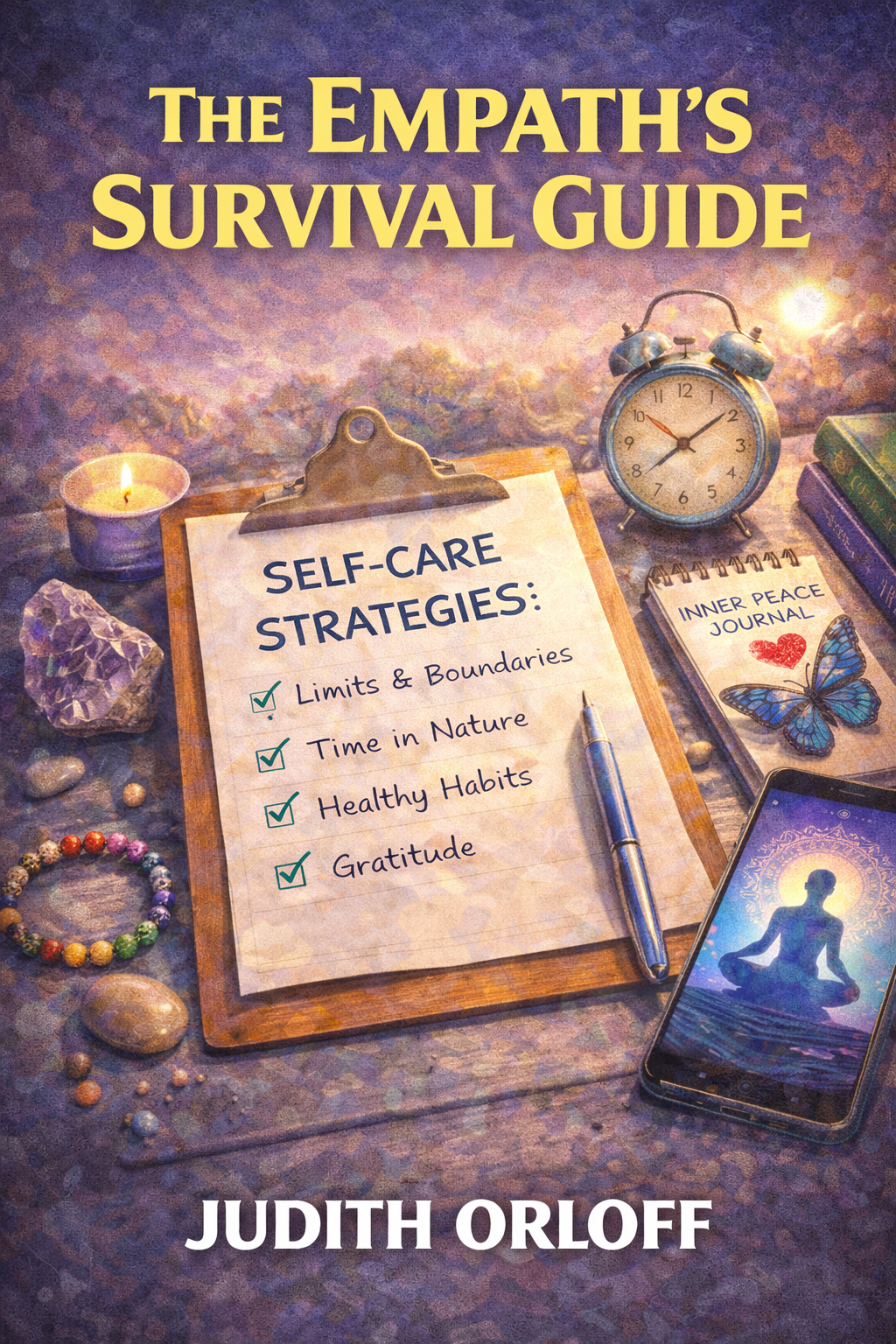
The Empath's Survival Guide
Chapter Summaries
What's Here for You
Are you an empath, deeply affected by the emotions of others? *The Empath's Survival Guide* offers a lifeline. Judith Orloff provides practical strategies to navigate a world that often feels overwhelming. Discover how to protect yourself from energy vampires, cultivate healthy relationships, and harness your intuitive gifts. This book is your compassionate guide to thriving as an empath, transforming sensitivity from a burden into a superpower, and embracing the profound potential within you.
ARE YOU AN EMPATH?
In this chapter of *The Empath's Survival Guide*, Judith Orloff introduces the concept of the empath, distinguishing it from ordinary empathy as a state where one absorbs others' emotions and physical symptoms, lacking the usual filters. She recounts her own struggles growing up as an empath, feeling like an alien and turning to drugs to cope with overwhelming sensitivities, until a psychiatrist helped her embrace her gifts. Orloff highlights that empaths often feel shamed for their sensitivities, experience chronic exhaustion, and long to retreat from the world, yet emphasizes the potential for empaths to flourish and contribute to a better world, as empathy is the medicine the world needs. She details the empath experience, explaining how empaths feel first and think later, and explores the connection between empaths and Highly Sensitive People (HSPs), noting that while empaths share traits with HSPs, they also internalize subtle energy. Orloff identifies general types of empaths—physical, emotional, and intuitive—further categorizing intuitive empaths by their specific abilities, such as telepathy, precognition, and mediumship. She also differentiates between introverted and extroverted empaths, noting their varying tolerances for socializing. Orloff explores the origins of being an empath, citing inborn temperament, genetics, and childhood experiences, particularly trauma, neglect, or abuse, as potential contributing factors. The chapter delves into the science of empathy, referencing the mirror neuron system, electromagnetic fields, emotional contagion, increased dopamine sensitivity, and synesthesia to explain the empath experience. She highlights how empathy affects various life areas, including health, addictions, relationships, parenting, work, and perceptual abilities, and provides a self-assessment to help readers determine if they are empaths. Orloff acknowledges both the advantages and challenges of being an empath, such as intuition and compassion versus overstimulation and absorbing others' stress, and offers initial strategies for thriving, including shielding and grounding techniques. For Orloff, the empath's journey is about managing sensitivities and using them for personal well-being and the greater good; it's about honoring one’s gifts and contributing to a more heart-centered and intuitive world, a vision she encapsulates in an empath affirmation. The world needs their sensitivities, but empaths need tools to cope, like knowing when to retreat to a room without sound or light, a sanctuary for recalibration. Orloff reminds us that empaths are pioneers of a new way of being, modeling sensitivity and power, not weakness.
EMPATHS, EMOTIONS, AND HEALTH
Judith Orloff illuminates the unique challenges empaths face in navigating a world not designed for their heightened sensitivities. She begins by painting a vivid picture: the empath's body as a porous vessel, absorbing both the beauty and the toxicity of the surrounding environment, a double-edged sword that brings immense joy and debilitating distress. The central tension arises from conventional medicine's frequent misdiagnosis of empaths as hypochondriacs, a dismissal of their genuine suffering. Orloff advocates for a paradigm shift, urging healthcare practitioners to recognize the subtle energy system, the 'chi,' that governs an empath's well-being, and to understand high sensitivity is a gift, not a disorder. She distinguishes between physical and emotional empaths, highlighting the importance of self-awareness in managing their respective sensitivities; physical empaths experience others' symptoms in their own bodies, while emotional empaths absorb the feelings of those around them, a mirroring effect that can lead to confusion and overwhelm. Orloff introduces the concept of 'empathic illnesses,' where individuals manifest symptoms that aren't their own, a phenomenon often misunderstood by conventional medicine. She shares practical strategies for self-protection, including breathing exercises, setting boundaries, and visualizing the cutting of energetic cords, tools to navigate a world that can feel like a minefield of emotional and physical distress. Orloff emphasizes the importance of self-compassion, positive self-talk, and lifestyle adjustments, such as diet and exercise, to mitigate adrenal fatigue, a common ailment among empaths, and to cultivate resilience. She offers a suite of techniques, from detoxing in water to practicing the Three-Minute Heart Meditation, empowering empaths to reclaim their energy and well-being. Ultimately, Orloff champions the empath's ability to transform their sensitivity from a source of suffering into a source of strength, love, and vitality, a journey of self-discovery and empowerment.
EMPATHS AND ADDICTION
In "The Empath's Survival Guide," Judith Orloff delves into the complex relationship between empaths and addiction, revealing how heightened sensitivity can lead to self-medicating behaviors as empaths seek to numb the overwhelming influx of emotions from themselves and others; Orloff illuminates how this sensory overload often drives empaths to substances like alcohol, drugs, or even food, offering a temporary escape from the intensity, but warns that this path ultimately exacerbates their distress, creating a vicious cycle of dependency and disconnection. She recounts stories of empaths who found solace in addictive behaviors, only to discover that true healing lies in developing self-awareness and coping mechanisms, noting that many empaths are undiagnosed, unaware that their addictive tendencies stem from overstimulation. Orloff then shifts to solutions, advocating for Twelve-Step Programs as invaluable resources for recovery, drawing from her own experiences to illustrate how these programs foster self-evaluation and spiritual connection. She emphasizes that lasting comfort comes from within, urging empaths to cultivate a relationship with a higher power to soothe anxieties and re-center themselves, rather than seeking external refuge. Orloff introduces practical strategies, like the Protection Strategy, to connect with a higher power, visualize love, and feel satiated by it, to help empaths find solace in spirituality, offering an alternative to addictive cravings. Orloff then addresses the specific challenge of food addiction among empaths, describing how excess weight can serve as a form of armor against absorbing others' stress. She presents guidelines for the empathic eater, emphasizing the importance of conscious food choices, balanced nutrition, and intuitive eating. She advises that empaths should breathe out stress, drink water, limit sugar intake, and eat protein to stabilize their nervous system, reminding them that alive foods provide pure energy, while dead foods lead to depletion and cravings. Finally, Orloff encourages empaths to recognize their sensitivity to food and to nurture their well-being through self-care practices, reinforcing the empowering affirmation: "I will listen to the wisdom of my body. I will eat a healthy diet. I will practice self-care to heal my addictions and stay physically, emotionally, and spiritually balanced."
EMPATHS, LOVE, AND SEX
In "The Empath's Survival Guide," Judith Orloff delves into the intricate dance of love and intimacy for empaths, those individuals finely attuned to the emotions of others. Orloff begins by acknowledging the central tension: the empath's deep yearning for connection shadowed by a fear of being overwhelmed. She illuminates how empaths, acting as emotional sponges, often absorb their partner's stress, blurring the lines between self and other, which can lead to a subconscious attraction to unavailable partners—a shield against intimacy's potential overload. The author underscores the critical distinction between healthy connection, rooted in mutual commitment, and attachment, a clinging fueled by the hope of changing someone, cautioning empaths against the latter's allure. Orloff introduces the concept of the 'relationship empath,' highlighting their tendency to absorb a partner's emotions and stress, and offers a self-assessment to gauge this tendency. She then guides empaths toward choosing emotionally compatible partners, emphasizing that a soul mate relationship isn't about perfection but mutual growth, suggesting that empaths assess a potential partner's 'sensitivity IQ' to ensure respect for their unique needs. Orloff explores three emotional types—the Intellectual, the Empath, and the Rock—providing strategies for communication and understanding within each pairing, she highlights the importance of negotiating boundaries and adjustments in physical space, even suggesting separate beds or bedrooms to preserve an empath's sanity and energy. The chapter culminates with twelve secrets for empaths in love, ranging from valuing alone time to modulating sounds and expressing needs clearly, Orloff gently reminds empaths that casual sex is a misnomer for them, as energies deeply intertwine during intimacy, urging discernment in choosing sexual partners and advocating for a heart-centered approach to sexuality, where spirit, heart, and physical connection converge. Ultimately, Orloff champions self-awareness and authentic communication as the cornerstones of empowered intimate partnerships for empaths, encouraging them to define and express their needs, for in finding their voice, they find their power.
PROTECTING YOURSELF FROM NARCISSISTS AND OTHER ENERGY VAMPIRES
In her insightful chapter, Judith Orloff unveils the subtle yet significant dangers that energy vampires pose to empaths, those highly sensitive individuals prone to absorbing the emotions of others. She begins by highlighting how these emotional predators, driven by their own insecurities, are drawn to the empath's open heart, turning positivity into a wasteland. Orloff emphasizes the importance of recognizing these energy drainers—narcissists, rageaholics, victims, drama queens, control freaks, nonstop talkers, and passive-aggressive personalities—and learning to protect oneself. The author vividly illustrates the narcissist's manipulative charm, a mirage that quickly dissolves into cold indifference, leaving empaths feeling devalued and unseen; this dynamic often traps empaths in cycles of self-doubt. Orloff underscores that empaths must lower expectations of narcissists, understanding their empathy deficit disorder, and sometimes, the only solution is to sever ties completely, visualizing the cutting of energetic cords to regain emotional freedom. For rageaholics, Orloff advises setting firm boundaries, refusing to engage with their anger, and establishing a no-yelling rule to safeguard one's sensitive nature. When dealing with victims, the key is compassionate detachment, setting clear limits on listening time to avoid becoming entangled in their endless cycle of complaints. The author stresses that empaths should remain calm around drama queens and kings, not feeding their need for chaos, and to develop assertive communication skills to deflect the unsolicited opinions of control freaks and critics. She illustrates the need to tactfully interrupt nonstop talkers, reclaiming one's voice and personal space, and to trust one's intuition when navigating the hidden hostility of passive-aggressive individuals. Orloff concludes by offering strategies to combat emotional hangovers—the lingering residue of toxic interactions—such as shower meditations, the use of gemstones, smudging one's space, and seeking solace in nature, ultimately empowering empaths to prioritize their emotional well-being and cultivate self-love. The chapter serves as a potent reminder that protecting one's energy is not selfish, but essential for maintaining inner peace and fostering healthy relationships.
EMPATHS, PARENTING, AND RAISING SENSITIVE CHILDREN
Judith Orloff gently guides us through the intricate dance of parenting as an empath, acknowledging the unique challenges and profound joys that come with raising children while navigating heightened sensitivities. She highlights the inherent tension: the empath's need for solitude clashing with the constant demands of parenthood, a struggle many face as they seek to nurture both their children and themselves. Orloff emphasizes that deciding to become a parent should be a mindful choice, not driven by societal pressures or familial expectations, but rooted in deep intuition and a genuine desire to nurture a child's soul. She offers intuitive techniques, such as meditating on the child's spirit, to help empaths connect with their inner guidance and make informed decisions. The author acknowledges that empathetic parents often experience amplified stress, which can compromise their immunity, yet provides practical strategies to counter overstimulation and cultivate balance. Like a gardener tending fragile seedlings, Orloff advises empath parents to create alone time, set healthy boundaries, and center their own energy to avoid emotional burnout. She cautions against being a helicopter parent, urging them to allow children space to process their feelings and learn their own lessons. Furthermore, Orloff sheds light on the unique challenges faced by sensitive children, particularly Indigo Children and sensitive boys, who often grapple with societal expectations and may require additional support to embrace their gifts. She offers twenty actionable tips for nurturing empathic children, from encouraging their intuition to teaching them shielding techniques against energy vampires, helping them develop into confident and resilient individuals. Orloff envisions a future where sensitivity is celebrated, not shamed, and where enlightened parenting fosters a world filled with compassion and understanding, a world where the unique gifts of empaths are recognized and nurtured from the earliest stages, creating a more harmonious and peaceful society for all.
EMPATHS AND WORK
Judith Orloff explores the intricate relationship between empaths and their work environments, noting that while everyone benefits from a comfortable workplace, empaths are particularly vulnerable to stress and emotional overload. Orloff emphasizes that the right job can be energizing and fulfilling, tapping into an empath's creativity and passion, whereas the wrong job can be utterly draining, triggering emotional and physical symptoms. The author then identifies three critical factors influencing an empath's comfort level at work: meaningful work, the energy of the people around them, and the energy of the physical space itself. Meaningful work aligns with an empath's sensitivities, allowing them to feel they're making a difference, while negative energy from colleagues—energy vampires, as Orloff terms them—can be physically and emotionally taxing. The physical space, too, plays a significant role; empaths are highly attuned to subtle energies, reacting to factors like lighting, noise levels, and personal space. Orloff highlights the phenomenon of emotional contagion, where emotions spread like a virus throughout an office, amplified in empaths, and offers strategies such as setting energetic boundaries, shielding, and creating a serene workspace to combat this. For instance, envisioning a golden egg around one's workstation can repel negativity, creating a personal cocoon. Orloff then discusses ideal and non-ideal jobs for empaths, noting that they often thrive in low-stress environments, smaller companies, or self-employment, where they can manage their time and avoid sensory overload. Careers in the helping professions, the arts, and nature-related fields are often fulfilling, provided empaths practice self-care to avoid burnout. Sales, high-pressure corporate roles, and positions with constant public interaction are generally less suitable. Finally, Orloff addresses the unique challenges faced by empaths in healthcare, where compassion fatigue is a significant risk. She offers practical tips to prevent burnout, such as planning breaks, setting boundaries, detoxifying in water, and engaging in regular play outside of work, emphasizing that self-care is not selfish but essential for sustaining their ability to help others. For the empathic therapist, Orloff recommends adjusting one's attitude to be a guide rather than a martyr, identifying differences between themselves and their patients, and focusing on personal healing to avoid absorbing unwanted energies, ensuring that the therapist remains a clear conduit for healing, not a sponge for suffering.
EMPATHS, INTUITION, AND EXTRAORDINARY PERCEPTIONS
In "The Empath's Survival Guide," Judith Orloff unveils the profound capacity of empaths to perceive the world beyond the ordinary, emphasizing that intuition, when wisely harnessed and grounded, connects us to life's miraculous nature. Orloff introduces the concept of intuitive empaths, individuals who access nonlocal information, enriching their lives with synchronicity, déjà vu, and even contact with spirit guides. She recounts her own childhood struggles with these sensitivities, predicting events like her grandfather's death, leading to feelings of isolation and confusion—a sentiment echoed by Carl Jung's reflection on the loneliness of knowing things others don't want to acknowledge. The author highlights different types of intuitive empaths, each with unique gifts, such as telepathic empaths who read unexpressed thoughts, precognitive empaths who foresee future events, and dream empaths who receive guidance through vivid dreams, like flashes of headlines before they occur. Orloff cautions that telepathic abilities can lead to overload, akin to a psychic hotline worker's burnout, necessitating grounding and shielding techniques. She stresses the ethical considerations for precognitive empaths, urging them to discern when and how to share foreknowledge, always prioritizing the other person's welfare. Mediumship empaths bridge the gap between worlds, communicating with spirits, while plant empaths connect with the needs and spirits of plants, feeling their pain and receiving their guidance. Earth empaths are attuned to the planet's changes, experiencing natural disasters intensely, sometimes feeling the earth's pain as their own. Animal empaths possess a special ability to communicate with animals, understanding their emotions and offering healing support, realizing that animals are also empathic to our emotions. Orloff introduces the concept of animal medicine from Native American culture, where animals impart healing lessons, guiding us to make positive changes, like calling on the spirit of the jaguar for protection, visualizing its fierce and loving presence encircling and guarding our energy field. To manage intuitive overload, Orloff advises dialoguing with one's inner voice, developing a neutral witness state, and visualizing divine white light to circulate positive energy, reminding empaths that they aren't responsible for others' karma. She contrasts Chronos, linear clock-time filled with conflict, with Kairos, sacred time where synchronicities and mystical wisdom reside, a realm accessible through intuition. Orloff concludes with an affirmation for empaths to honor their intuition, listen to their dreams, and seek balance, so they can fully express their sensitivities and live a whole life.
THE GIFT OF BEING AN EMPATH
Judith Orloff illuminates the profound journey of the empath, emphasizing that sensitivity, while challenging, is a gift to be embraced, not a burden to be suppressed. She begins by painting a vivid portrait of the empath's innate connection to nature, their capacity for deep joy and compassion, and their ability to perceive the world's subtle energies—a stark contrast to a callous existence. The author explains that empaths often find themselves as the healers of their family lineage, breaking cycles of negativity passed down through generations. This role, though not always consciously chosen, becomes their destiny as they learn to honor their sensitivities, effectively saying no to patterns of abuse, neglect, and addiction. Orloff reframes the empath's path as one of becoming a 'warrior of light,' urging them to trust in the power of compassion and not be deterred by the world's darkness; like a lighthouse cutting through a storm, the empath's strength lies in their vulnerability. She underscores the importance of community, suggesting that empaths seek out like-minded individuals to amplify their gifts and find solace in shared understanding, because the power of ten sensitive souls is greater than the power of one. Orloff then shifts to the theme of self-acceptance, reminding us that the path to inner peace is not linear but a spiral, with each return to old issues revealing deeper truths and enhancing self-knowledge. She encourages daily reconnection with one's spiritual center, advocating for the techniques in her book to conquer the challenges of sensitivity. Finally, Orloff urges empaths to celebrate their progress, to treat themselves with compassion, and to recognize their role in a countercultural revolution that champions humanity. As she closes, Orloff offers an affirmation, a vow to treasure oneself and to surround oneself with those who do the same, celebrating the adventure of being an empath.
PROTECTION STRATEGIES
In "The Empath's Survival Guide," Judith Orloff unveils a crucial toolkit for empaths navigating an often overwhelming world, emphasizing that proactive self-care is paramount, especially recognizing the early signs of sensory overload or the absorption of others' negativity. Orloff introduces shielding as a primary defense, a visualization technique to block toxic energies while allowing positive ones to flow, picturing a white or pink light enveloping the body, a personal sanctuary that can be erected in moments of discomfort, from crowded train stations to encounters with energy vampires. The author then guides us through grounding and earthing visualizations, picturing oneself as a tree with roots anchoring deep into Mother Earth, providing stability amidst life's storms, a daily practice to reconnect with one's center. Orloff addresses adrenal fatigue, urging a shift towards a whole-food diet, gentle exercise, meditation, and sufficient rest, painting a picture of lifestyle adjustments as essential as shielding from immediate threats. She also advocates for the three-minute heart meditation, a rapid deployment strategy to counter emotional distress by focusing on loving images and directing loving-kindness to vulnerable body parts, a reminder that love can dissolve discomfort. Orloff encourages empaths to cherish their bodies through meditation, recognizing it not as an enemy but as a sacred temple, a friend to be honored, a place where intuition resides. Further, she details practical tips to prevent empathy overload, such as using lavender oil, spending time in nature, managing time effectively, and setting firm boundaries with energy vampires, underscoring that "no" is a complete sentence. Orloff also stresses the importance of connecting with a higher power, shifting from an addicted small self to a larger state of consciousness, where sensitivities don't need numbing, but require understanding. The author even suggests keeping a meditation pillow near the refrigerator to prevent stress-induced overeating, a visual cue to choose mindfulness over impulsive action. Defining and expressing relationship needs is another key to self-protection, Orloff notes, encouraging empaths to voice their sensitivities and preferences to avoid becoming a doormat. Finally, Orloff provides strategies for dealing with specific types of energy-draining individuals, from narcissists and rageaholics to victims and drama queens, offering tactics like setting boundaries, cutting cords, and practicing restraint of speech, as well as methods to cure an emotional hangover—a lingering residue from toxic interactions—through shower meditations, gemstone use, smudging, and seeking emotional support. Orloff extends her guidance to mothers, recommending a daily meditation to embrace the goddess within, and to parents, teaching children a visualization to turn down the dial on stress, equipping them with tools for emotional regulation. Ultimately, Orloff highlights the importance of setting energetic boundaries at work and helping therapists avoid absorbing patients' emotions, concluding with the Jaguar Protection Meditation and tips to protect oneself from intuitive overload, ensuring that the empath's gifts are used for everyone's benefit without sacrificing personal well-being.
Conclusion
Judith Orloff's "The Empath's Survival Guide" serves as both a validation and a practical manual for individuals navigating the world with heightened sensitivity. The book synthesizes the challenges and gifts inherent in being an empath, offering a roadmap for self-understanding, protection, and ultimately, thriving. At its core, the book emphasizes the crucial distinction between ordinary empathy and the empathic experience, where emotions and even physical sensations are absorbed from others, blurring the lines between self and environment. This absorption, while a source of profound compassion and intuition, can lead to overwhelm, exhaustion, and a susceptibility to addictive behaviors as coping mechanisms. The emotional lesson woven throughout the guide centers on self-compassion and acceptance. Empaths are encouraged to recognize that their sensitivities are not weaknesses but rather unique strengths that require careful management. Early childhood experiences often shape an empath's abilities, sometimes heightening them as a result of trauma or neglect. Acknowledging these formative influences is key to healing and building resilience. Scientifically grounding the empathic experience through the mirror neuron system provides further validation and underscores the importance of developing self-protection strategies. Orloff provides a wealth of practical wisdom, equipping empaths with tools to manage their sensitivities in various aspects of life. Shielding and grounding techniques are presented as essential practices for creating energetic boundaries and preventing the absorption of negative energies. The guide addresses specific challenges in relationships, offering advice on identifying and dealing with "energy vampires," particularly narcissists, rageaholics, and drama queens. It highlights the importance of setting clear boundaries, communicating needs effectively, and prioritizing heart-centered connections. The book extends its guidance to parenting, acknowledging the unique considerations for empathic parents and sensitive children. It emphasizes the need for self-care, creating nurturing environments, and teaching children practical techniques for managing sensory overload. In the workplace, empaths are encouraged to seek environments that align with their values, manage exposure to negative energies, and leverage their empathic abilities while setting firm boundaries to avoid burnout. The exploration of intuitive empathy delves into extraordinary perceptions and the ethical considerations that accompany them, emphasizing the importance of grounding, shielding, and pacing. Ultimately, "The Empath's Survival Guide" empowers empaths to embrace their gifts, break negative generational patterns, and contribute to a more compassionate world. It emphasizes the importance of finding community, practicing self-compassion, and recognizing that the journey to self-acceptance is an ongoing spiral. The book champions a countercultural revolution that values humaneness and encourages empaths to embrace their authentic selves as "warriors of light," trusting in compassion to heal fears and raise the world's vibration. The techniques provided, from shielding visualizations to heart meditations, offer immediate relief and long-term strategies for navigating a world that often feels overwhelming. It's a testament to the power of sensitivity and a call to action for empaths to embrace their unique role in fostering connection and healing.
Key Takeaways
Empaths experience the world with heightened sensitivity, absorbing others' emotions and physical sensations, necessitating the development of coping mechanisms to manage overstimulation and prevent exhaustion.
Differentiating between ordinary empathy and being an empath involves recognizing the internalization of others' energies and emotions, which can lead to difficulty distinguishing between one's own feelings and those of others.
Understanding the various types of empaths—physical, emotional, intuitive—allows individuals to identify their specific sensitivities and tailor self-care practices to address their unique needs.
Early childhood experiences, such as trauma or neglect, can heighten empathic abilities by wearing down healthy defenses, emphasizing the importance of self-compassion and healing.
Scientific findings, including the mirror neuron system and emotional contagion, provide a biological basis for empathy, validating the experiences of empaths and highlighting the need for self-protection strategies.
Empaths can thrive by learning to manage their sensitivities through techniques like shielding and grounding, which create a protective barrier against negative energies while still allowing for positive connections.
Honoring one's sensitivities as an empath involves embracing the gifts of intuition and compassion, while also setting boundaries and practicing self-care to prevent overload and maintain well-being.
Recognize and differentiate between being a physical empath (absorbing others' physical symptoms) and an emotional empath (absorbing others' emotions) to better understand your sensitivities.
Actively protect yourself from absorbing negative energy by practicing grounding techniques, setting clear boundaries, and limiting exposure to toxic environments and people.
Challenge the conventional medical model's tendency to misdiagnose empaths and seek out integrative healthcare practitioners who understand subtle energy and can provide appropriate support.
Prioritize self-care practices, such as spending time in nature, getting enough sleep, and practicing meditation, to replenish your energy and build resilience against empathic overload.
Cultivate self-compassion and positive self-talk to counter the negative impact of absorbed emotions and symptoms on your mental and physical well-being.
Use the Three-Minute Heart Meditation to quickly clear emotional or physical distress by focusing on loving-kindness and directing it towards specific areas of your body.
Commit to being fully present in your body through meditation and self-awareness to create a stronger energetic boundary and ward off unwanted energies.
Empaths often turn to addictive behaviors as a way to self-medicate and cope with the overwhelming sensory and emotional input they experience.
Understanding that addiction can be a response to sensory overload is the first step towards healing for empaths.
Twelve-Step Programs and cultivating a relationship with a higher power can provide empaths with the support and spiritual connection needed to overcome addiction.
Excess weight and food addictions may serve as a protective mechanism for empaths, shielding them from absorbing others' stress.
Conscious food choices, balanced nutrition, and intuitive eating can help empaths break free from food-related addictions and find healthier ways to ground and protect themselves.
Regularly practicing protection techniques and self-care can enhance an empath's physical, emotional, and spiritual health, reducing the likelihood of addictive behaviors.
Empaths must recognize their tendency to absorb others' emotions to avoid feeling overwhelmed in intimate relationships.
Distinguish between healthy connection, based on mutual commitment, and attachment, which involves clinging to someone in hopes of changing them.
Assess a potential partner's 'sensitivity IQ' to ensure they respect and understand an empath's unique needs.
Negotiate boundaries and physical space in a relationship to create breathing room and prevent sensory overload.
Prioritize heart-centered sexuality, ensuring that lovemaking combines spirit, heart, and physical connection for a nurturing experience.
Empaths should clearly define and express their relationship needs to avoid exhaustion and resentment.
Authentic communication is essential for empaths to thrive in partnerships, fostering mutual understanding and respect.
Recognize that energy vampires are drawn to empaths' openness, and proactively identify these individuals in your life to mitigate their draining effects.
Understand that narcissists lack genuine empathy and, despite their initial charm, will ultimately prioritize their needs, necessitating firm boundaries or complete separation.
Establish clear boundaries with rageaholics by refusing to engage with their anger, setting a no-yelling rule, and communicating the need for respectful dialogue.
Practice compassionate detachment with victims by setting time limits on listening and redirecting them toward professional help, avoiding codependency.
Maintain emotional distance from drama queens or kings by remaining calm and not enabling their need for chaos, setting firm limits on their behavior.
Assertively protect yourself from control freaks and critics by valuing your own judgment and politely but firmly requesting that they cease their unsolicited advice or nitpicking.
Combat emotional hangovers by employing grounding techniques like shower meditations, using gemstones, smudging your space, or seeking refuge in nature to restore your emotional equilibrium.
Mindfully weigh the benefits and stressors of parenting, acknowledging the impact on your nervous system and sensitivities.
Tune into your intuition through meditation to determine if having children feels right for you and your partner.
Implement self-care strategies to counter tension and overstimulation, prioritizing alone time, deep breathing, and setting boundaries.
Avoid being a helicopter parent; allow children space to process their emotions and learn from their experiences.
Recognize and support the unique needs of sensitive children, including Indigo Children and sensitive boys, who may require additional understanding and validation.
Teach children practical techniques for managing sensory overload, such as breathing exercises, visualization, and shielding against negative energy.
Create a nurturing environment that celebrates sensitivity and encourages children to embrace their gifts, fostering confidence and resilience.
Prioritize work environments that align with your sensitivities to prevent emotional and physical exhaustion.
Actively cultivate meaningful work that resonates with your values and provides a sense of purpose.
Strategically manage your exposure to negative energies from colleagues and the physical workspace.
Implement protective strategies to mitigate emotional contagion and maintain personal well-being in the workplace.
Seek out careers that leverage your empathic abilities while establishing firm boundaries to avoid burnout.
Practice consistent self-care to recharge your energy and sustain your capacity for compassion in helping professions.
Intuitive empaths possess heightened sensitivities that allow them to access nonlocal information and experience extraordinary perceptions beyond the material world.
Different types of intuitive empaths exist, each with unique abilities like telepathy, precognition, mediumship, or connection with plants, animals, and the earth.
Ethical considerations are paramount for intuitive empaths, especially precognitive ones, requiring them to discern when and how to share foreknowledge with others, prioritizing their welfare.
Intuitive abilities can lead to overload, necessitating grounding, shielding, and pacing techniques to manage the influx of information and energy.
Empaths can learn from animal medicine, drawing wisdom and protection from specific animals like the jaguar, which can guard against negativity.
Managing intuitive overload involves actively dialoguing with one's inner voice, developing a neutral witness state, and visualizing positive energy flow.
Empaths can find balance and wholeness by honoring their intuition, listening to their dreams, and integrating their sensitivities into all aspects of life.
Empaths possess a unique capacity for experiencing joy and perceiving the world's subtle energies, enabling them to connect deeply with nature and offer profound compassion to others.
Empaths often play a crucial role in breaking negative generational patterns within their families by healing themselves and embracing their sensitivities.
The path for empaths involves becoming 'warriors of light,' trusting in compassion to raise the world's vibration and heal fears that block their path.
Finding a community of like-minded individuals can amplify an empath's gifts and provide essential support, offering relief from sensory overload and a healthy perspective on managing sensitivity.
The journey to self-acceptance and inner peace is not linear but a spiral, with each return to familiar issues revealing deeper truths and enhancing self-knowledge.
Empaths are part of a countercultural revolution that prioritizes humaneness, urging them to celebrate their progress, practice self-compassion, and embrace their authentic selves.
Employ shielding visualizations to create a protective barrier against negative energies in overwhelming environments.
Practice grounding and earthing techniques to stabilize yourself and reconnect with inner strength when feeling overloaded.
Cultivate self-compassion and set firm boundaries to prevent energy vampires from draining your emotional reserves.
Use brief heart meditations to counteract emotional distress by focusing on love and directing kindness to vulnerable areas of the body.
Express your relationship needs clearly and assertively to safeguard your well-being and prevent exhaustion.
Implement strategies to protect yourself from specific energy-draining personalities, such as narcissists, rageaholics, and drama queens.
Address emotional hangovers with practices like shower meditations, gemstone use, and smudging to clear lingering negative energy.
Action Plan
Take the empath self-assessment to determine the degree of your empathic tendencies and identify your specific needs.
Practice the shielding visualization technique regularly to create a protective barrier against negative energies.
Incorporate grounding and earthing practices into your daily routine to connect with the earth's energy and reduce stress.
Identify your triggers for empathic overload and develop strategies to minimize exposure to those situations.
Set clear boundaries in relationships to prevent overgiving and protect your energy.
Prioritize self-care activities that replenish your energy, such as spending time in nature, meditating, or engaging in creative pursuits.
Seek out supportive communities of fellow empaths to share experiences and receive validation.
Communicate your specific needs to loved ones and partners to foster understanding and support.
Explore your intuitive abilities through practices like dream journaling or animal communication.
Regularly assess your energy levels and adjust your activities to prevent burnout and maintain well-being.
Identify whether you are a physical or emotional empath by taking the self-assessment provided and reflecting on your experiences.
Practice the 'Return to Sender' mantra while focusing on your breath to release absorbed negative energy.
Set clear boundaries with draining individuals by limiting contact, saying no, and communicating your needs assertively.
Visualize cutting the energetic cord between yourself and someone whose energy is negatively impacting you.
Incorporate regular Epsom salt baths into your routine to detox and calm your nervous system.
Spend time in nature, practicing Earthing (walking barefoot on the earth) to ground yourself and clear negativity.
Practice the Three-Minute Heart Meditation to cultivate loving-kindness and clear emotional or physical distress.
Commit to being fully present in your body through meditation and self-awareness exercises.
Eliminate processed foods, sugar, and gluten from your diet and incorporate more whole foods to support adrenal health.
Prioritize getting adequate sleep and taking power naps to replenish your energy and calm your nervous system.
Honestly assess your relationship with substances, food, or other addictive behaviors to identify patterns of self-medication.
Explore Twelve-Step Programs such as AA, NA, or OA to find support and learn positive coping skills.
Cultivate a daily practice of connecting with a higher power through meditation, prayer, or spending time in nature.
When feeling overwhelmed, pause and practice the Protection Strategy to connect with Spirit and soothe anxieties.
Identify energetic stressors that trigger overeating and practice techniques to clear the energy as soon as possible.
Follow the ten guidelines for the empathic eater, focusing on balanced nutrition and intuitive eating.
Keep a meditation pillow in front of the refrigerator as a visual cue to meditate instead of overeating.
Get tested for food allergies or sensitivities and eliminate triggering foods from your diet.
Complete the self-assessment to determine if you are a relationship empath.
Identify your top emotional triggers and create a plan with your partner to manage them.
Negotiate dedicated alone time each day to decompress and recharge.
Assess potential partners for their 'sensitivity IQ' before getting deeply involved.
Practice the 'Sandwich Technique' when requesting changes from your partner, framing requests between positive statements.
Communicate one emotional issue at a time, avoiding repetition and overwhelming your partner.
Define and express your relationship needs, such as needing more alone time or a quieter environment.
Explore Tantra workshops or sessions to address blocks to sexual and spiritual energy.
Create a list of individuals in your life who consistently drain your energy and identify specific strategies for managing interactions with them.
Practice cord-cutting visualization to release energetic ties with toxic individuals, imagining the severing of connections in a calm state.
Establish a no-yelling rule in your relationships, communicating that you will disengage from conversations that involve raised voices.
Set compassionate but firm boundaries with individuals who exhibit victim mentality, limiting listening time and suggesting professional support.
Develop assertive communication skills to politely but firmly decline unsolicited advice or criticism from control freaks.
Interrupt nonstop talkers tactfully, reclaiming your voice and personal space by excusing yourself or stating your need to contribute to the conversation.
Trust your intuition when interacting with passive-aggressive individuals, addressing their behavior directly and seeking clarification when their intentions are unclear.
Practice shower meditation, visualizing negative energy being washed away, to cleanse your mind, body, and spirit after draining interactions.
Incorporate grounding techniques, such as spending time in nature or using gemstones, to restore your emotional equilibrium after experiencing an emotional hangover.
Meditate on the spirit of your future child to connect with your intuition and confirm your desire to become a parent.
Schedule daily alone time, even if it's just for a few minutes, to recharge and reduce sensory overload.
Set clear and consistent boundaries with your children, saying no to unreasonable requests and bad behavior.
Teach your children breathing exercises and visualization techniques to calm down when they feel stressed or overwhelmed.
Create a protective shield of white light around yourself and your children to repel negative energy.
Limit your children's exposure to stimulating environments and electronic devices before bed.
Encourage your children to express their dreams and discuss their feelings openly.
Educate family members and teachers about your child's sensitivities and their need for support.
Assess your current work environment based on the meaning you derive, the energy of your colleagues, and the physical space.
Implement energetic boundaries at your workspace using plants, photos, sacred objects, or visualizations.
Practice shielding techniques, such as visualizing a white light, to protect yourself from absorbing others' emotions.
Schedule regular breaks throughout the workday for meditation, deep breathing, or walking in nature.
Identify and limit your exposure to energy vampires in the workplace by setting clear boundaries and distancing yourself from drama.
Explore alternative work arrangements, such as working from home or part-time, to minimize sensory overload.
If in the helping professions, develop a self-care plan that includes regular play, rest, and detoxification practices.
Adjust your attitude towards patients or clients to be a supportive guide rather than taking on their pain.
Identify and heal your own emotional triggers to prevent absorbing unwanted energies from others.
Fill your office or workspace with heart energy by focusing on your heart chakra and visualizing loving energy flowing through the room.
Identify which type of intuitive empath you resonate with most (telepathic, precognitive, dream, mediumship, plant, earth, animal).
Practice grounding and shielding techniques daily to manage intuitive overload and maintain emotional balance.
Keep a dream journal to record and interpret your dreams, seeking guidance for personal and spiritual growth.
Before sharing intuitive insights with others, ask yourself: Is this information appropriate to share? Would it help this person to know?
Spend time in nature, connecting with plants, animals, or the earth to recharge your energy and deepen your intuitive connection.
Call on the spirit of the jaguar (or another animal you resonate with) for protection during times of stress or negativity.
Dialogue with your inner voice regularly, asking it to slow down or provide clarity when you feel overwhelmed by intuitive information.
Visualize divine white light flowing through your body to release toxic energy and promote positive well-being.
Regularly practice Earthing by walking barefoot on the grass or lying flat on the earth to absorb her strength and positivity.
Reflect on past experiences where your empathy positively impacted yourself or others to reinforce the value of your gift.
Actively seek out and cultivate relationships with supportive, like-minded individuals to create a sense of community and belonging.
Practice self-compassion by treating yourself with the same kindness and understanding you offer others, especially during challenging times.
Identify and challenge any limiting beliefs or fears that prevent you from fully embracing your sensitivity and sharing your gifts with the world.
Establish clear boundaries in relationships to protect your energy and prevent emotional overwhelm.
Dedicate time each day to reconnect with nature, meditate, or engage in activities that nourish your soul and promote inner peace.
Practice active listening and empathetic communication to foster deeper connections and understanding with others.
Use your intuition to guide your decisions and actions, trusting your inner wisdom and insights.
Commit to breaking negative generational patterns by consciously choosing healthier behaviors and beliefs.
Celebrate your progress and acknowledge your strengths, recognizing that every step forward, no matter how small, contributes to your growth as an empath.
Visualize a shield of white or pink light around your body in uncomfortable situations to block negativity.
Practice the grounding visualization daily, picturing roots extending from your feet into the earth to stabilize your energy.
Incorporate the three-minute heart meditation into your routine to counter emotional distress with loving-kindness.
Identify and set clear limits with energy vampires in your life, remembering that 'no' is a complete sentence.
When feeling overwhelmed, pause and connect with a higher power through deep breathing and relaxation.
Keep a meditation pillow visible to remind yourself to meditate instead of overeating when stressed.
Define your relationship needs and communicate them assertively to your partner.
Use the shower meditation to wash away negative energy, affirming cleanliness, freshness, and rejuvenation.
Teach empathic children the dial-down visualization to manage stress by imagining turning a dial from 10 to zero.
Create a sacred space for meditation to build positive energy and provide a balm for emotional hangovers.