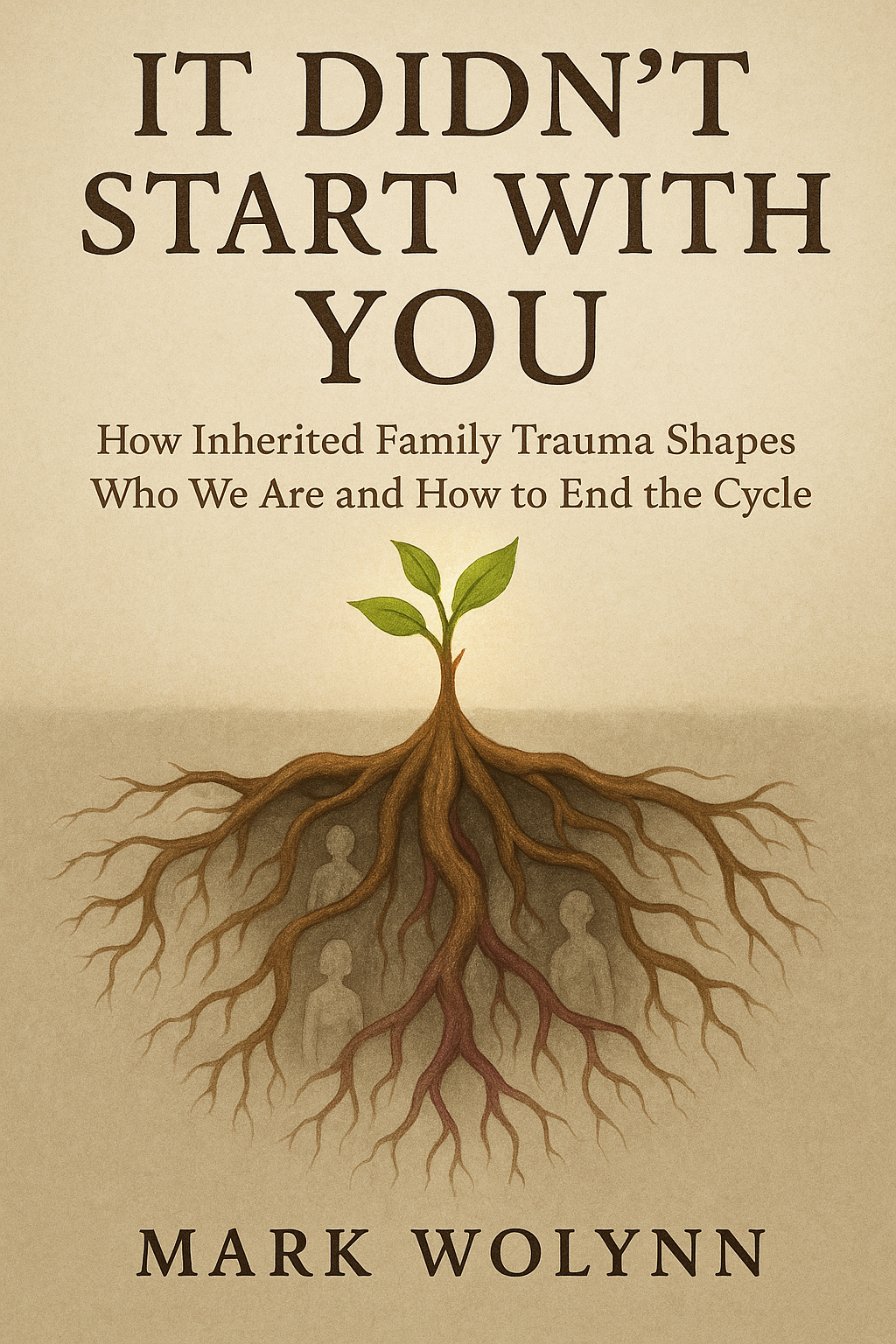
It Didn't Start with You: How Inherited Family Trauma Shapes Who We Are and How to End the Cycle
Chapter Summaries
What's Here for You
Have you ever felt inexplicably drawn to certain fears, patterns, or struggles that seem to have no root in your own life? Mark Wolynn's groundbreaking work, "It Didn't Start with You," offers a profound and hopeful answer: these are not necessarily your burdens to bear alone, but rather, echoes of inherited family trauma that have been passed down through generations. This book is your invitation to unlock the secret language of your deepest fears and understand how the unresolved pain and experiences of your ancestors can subtly shape your present reality, influencing everything from your relationships and success to your very physical well-being. Prepare to embark on a transformative journey of self-discovery and healing. Wolynn guides you beyond the limitations of conscious understanding, revealing how the past, though seemingly buried, lives on within the very fabric of your being. You will learn to identify the 'core language' of your inherited trauma – the unconscious themes, core complaints, descriptors, and sentences that act as intricate maps to your deepest emotional architecture. This isn't just about intellectual understanding; it's about gaining practical tools and profound insights to disentangle yourself from these ancestral narratives. Through a compassionate and empowering approach, "It Didn't Start with You" promises to equip you with the knowledge and methods to not only recognize the origins of your deepest struggles but to actively heal them. You will discover how to differentiate your own experiences from those of your lineage, break free from limiting patterns, and foster healthier relationships. The emotional tone is one of deep empathy, profound insight, and unwavering hope, fostering an intellectual engagement that is both challenging and immensely rewarding. Ultimately, this book offers the powerful promise of liberation – the freedom to live a life unburdened by the past, allowing your true self to emerge and thrive.
The Secret Language of Fear
Theodore Roethke once wrote, 'In a dark time, the eye begins to see,' and it is this profound notion that Mark Wolynn explores in 'The Secret Language of Fear,' revealing how our deepest struggles may not originate solely within our own lived experiences, but rather, can be echoes of inherited family trauma. For over twenty years, Wolynn, drawing from his own harrowing journey of losing vision and his extensive clinical practice, has witnessed firsthand how conditions like depression, anxiety, and chronic illness often elude conventional treatments because their roots lie buried in the unspoken stories of previous generations. He posits that pain, memory, and even physical sensations can transcend time, reaching from the past to impact the present, a phenomenon now increasingly supported by scientific research in epigenetics and neuroscience. Wolynn's own narrative serves as a powerful testament to this idea; after experiencing a sudden, unexplained loss of vision, he embarked on a global quest for healing, immersing himself in various spiritual practices and teachings. Yet, true insight arrived not through external searching, but through an internal reckoning, prompted by spiritual teachers who urged him to return home and confront his relationship with his parents. This pivotal moment underscored a crucial insight: that our unresolved family history significantly influences our present well-being, and that rejecting our origins only deepens our suffering. Wolynn recounts the profound, albeit painful, process of reconnecting with his mother and father, discovering that the deeply ingrained patterns of fear and avoidance he carried—words like 'alone,' 'helpless,' and 'ruined' acting as a 'secret language of fear'—were intricately linked to early childhood separations and birth traumas. By painstakingly embracing the vulnerability of his relationships with his parents, not as he wished them to be, but as they were, Wolynn found a pathway to healing. He learned that true healing is an 'inside job,' and that by excavating the buried language of our fears, often originating from generations past, we can begin to dismantle the inherited patterns that perpetuate suffering. The return of his vision, a seemingly miraculous event that defied medical explanation, became a potent symbol of this internal transformation, demonstrating that adversity can indeed be grace in disguise, and that the greatest resources for healing are often found within ourselves, waiting to be discovered through understanding the language of our lineage.
Traumas Lost and Found
The past, as William Faulkner reminds us, is never truly dead; it lives on, often in ways we don't consciously understand. Mark Wolynn, in 'It Didn't Start with You,' delves into the profound impact of inherited family trauma, revealing how unresolved suffering can echo through generations. He explains that during overwhelming events, our ability to process and articulate experiences fractures. Memories fragment into images, sensations, and words, stored in the unconscious and later triggered by seemingly unrelated stimuli, leading us to unconsciously reenact past traumas. This phenomenon, termed 'traumatic reenactment' or 'repetition compulsion' by Sigmund Freud, is an unconscious attempt to 'get it right.' Carl Jung echoed this, suggesting that what remains unconscious resurfaces as fate. Recent neuroscience supports this, showing how during trauma, speech centers and areas responsible for present-moment awareness shut down, hindering communication and memory recall, as Bessel van der Kolk describes. Yet, nothing is truly lost; these fragments are rerouted, forming a secret language of our suffering. The chapter powerfully illustrates this with the story of Jesse, a young man plagued by insomnia and fear of sleep. His symptoms, which baffled medical professionals, were traced back to the unresolved trauma of his uncle, Colin, who froze to death at nineteen. Jesse unconsciously inherited his uncle's terror of letting go into unconsciousness, a fear that manifested as his nightly ordeal. Similarly, Gretchen, battling severe depression and anxiety with suicidal ideation, discovered her symptoms mirrored the unimaginable trauma of her grandmother, who survived the Holocaust and lost her entire family in Auschwitz. Gretchen's use of words like 'vaporize' and 'incinerate' provided a visceral clue, connecting her suffering to her grandmother's experience of being gassed and incinerated. This highlights a core insight: trauma can be passed down not just through stories, but through biological and emotional pathways, as demonstrated by Rachel Yehuda's research on cortisol levels in Holocaust survivors and their children. These inherited patterns, often submerged and unacknowledged, can manifest as inexplicable emotional and physical distress, creating a cycle of suffering. The chapter posits that understanding these ancestral wounds is not just an intellectual exercise, but a crucial step toward healing, allowing individuals to disentangle themselves from unresolved family pain and reclaim their lives, ultimately forging a legacy of resilience rather than just distress.
Three Generations of Shared Family History: The Family Body
The story of our lives, the author Mark Wolynn reveals, begins not with our own first breath, but long before, woven into the very fabric of our ancestors' experiences. Consider this: before you were even conceived, the biological blueprint for your existence was already present, nestled within your mother, and indeed, within your grandmother. As an unfertilized egg, you shared a cellular environment with your mother, who herself was an egg cell within your grandmother's womb. This profound biological connection, spanning three generations within the same body, forms the foundation of what he terms the 'Family Body.' Science now illuminates how the biological residue of traumas, the echoes of stress and fear, can be passed down through these ancestral cellular lines, impacting us in ways we are only beginning to understand. Pioneering work in cellular biology, notably by Bruce Lipton, demonstrates that our DNA is not a static blueprint but a dynamic canvas, susceptible to environmental signals, including the emotional states of our parents. A mother's emotions during pregnancy, transmitted biochemically through hormones and signals, can literally 'preprogram' a child's stress responses, preparing them for a world that may be fraught with challenges. This is not mere speculation; studies document how prenatal stress, measured by cortisol levels in amniotic fluid, can lead to impaired cognitive development in infants. The emerging field of epigenetics further deepens this understanding, revealing that heritable changes in gene function can occur without altering the DNA sequence itself. These epigenetic tags, like tiny molecular annotations, can switch genes on or off, preparing us to cope with ancestral traumas, providing an 'environmental resilience' that can be both protective and, paradoxically, detrimental if the inherited preparedness mismatches the current environment. Research, such as Rachel Yehuda's work with Holocaust survivors and their descendants, provides compelling evidence that these epigenetic changes, particularly DNA methylation and microRNAs, can be transmitted through sperm and egg cells, escaping the usual reprogramming process. This means the biological imprint of trauma can skip a generation, or manifest in distinct ways depending on whether it's inherited paternally or maternally – paternal trauma potentially leading to dissociation, while maternal trauma might result in difficulty calming down. Animal studies, using mice and rats, offer a stark glimpse into this phenomenon, showing how maternal separation or stress can lead to anxiety, depression-like behaviors, and altered gene expression in offspring and even grandchildren, demonstrating a compounding effect of stress across generations. The implications are vast, suggesting that recurring patterns of illness, anxiety, and relational struggles within families may not solely be products of upbringing, but echoes of unresolved ancestral experiences, resonating through the 'Family Body' and shaping our present realities. This inherited legacy, though powerful, is not immutable, as emerging research hints that our own thoughts, visualizations, and practices might hold the key to altering gene expression and mitigating these transgenerational effects, offering a path toward healing the cycle.
The Family Mind
The author, Mark Wolynn, unveils a profound truth in 'The Family Mind': the echoes of our ancestors' experiences, particularly their traumas, resonate within us, shaping our very being long before we draw our first breath. He explains that this isn't merely learned behavior, but a deeply ingrained blueprint, formed in the womb and solidified in infancy through our earliest interactions with our caregivers, most critically our mothers. When a mother's bond is disrupted by her own inherited trauma or early separation, it can create a devastating ripple effect, a physical and psychological withdrawal for the infant akin to addiction, a primal fear of abandonment that can become a somatic memory. Wolynn illustrates this with his own family's story: his grandmother Ida, orphaned at two, carried the bitterness of her mother's loss, a sorrow that subtly infused her mothering, and subsequently, Wolynn's own mother's experience. His grandfather Harry's childhood, marked by starvation and maternal loss, added another layer to this inherited legacy. This chapter introduces the concept of 'family consciousness,' as described by Bert Hellinger, suggesting that traumatic events like premature death or abandonment create an imprint on the entire family system, leading later generations to unconsciously repeat these sufferings through a phenomenon called 'entanglement.' This entanglement means we might carry the feelings, symptoms, or hardships of an earlier family member as if they were our own. For instance, John, wrongly convicted of embezzlement, discovered his father had been accused of murder years prior, revealing an unconscious reliving of his father's fate. Wolynn emphasizes that this entanglement limits our emotional freedom, but offers a path toward resolution. He highlights the brain's remarkable capacity for healing through images, a concept supported by neuroplasticity research. By consciously creating new neural pathways through visualization and focused attention, we can 'turn our ghosts into ancestors,' transforming haunting traumas into a part of our history. This process, where 'neurons that fire together, wire together,' can reshape our brains and even influence gene expression, offering a powerful means to heal from generational wounds and establish a new inner reference point of peace and wellbeing. Ultimately, even though we cannot change our DNA, we can change how our DNA functions, forging a new internal experience that can compete with and overcome the power of old trauma reactions.
The Core Language Approach
The unconscious, much like a insistent guest, doesn't just knock; it practically breaks down the door to be heard, leaving behind clues in the form of emotionally charged words and sentences that point to unresolved traumas, often inherited. Mark Wolynn introduces the concept of 'core language'—these verbal or nonverbal expressions, like Jesse's 3:30 a.m. awakenings and terror of falling back asleep, or Gretchen's profound depression and urge to 'vaporize' herself, which act as breadcrumbs leading us back to ancestral pain. These aren't random utterances; they are potent signals from the unconscious, a trail we can follow to understand ourselves, much like Hansel and Gretel’s breadcrumbs, though often we get lost in the forest of our fears, resorting to dead-end distractions. Understanding how trauma is stored helps illuminate this process. Traumatic experiences, too overwhelming to be articulated, often bypass language centers and are stored as nondeclarative, or implicit, memory—fragments of sensation, emotion, and imagery that live beneath our conscious awareness. This 'undeclared language' resurfaces, unbidden, in our present lives, carrying the weight of ancestral unfinished business. The author explains that language is our primary tool for organizing and retrieving memories, acting like a book on a shelf for declarative memory. When language fails during overwhelming events, especially before the brain's language centers are mature or during intense trauma, these experiences fragment and become lodged in the unconscious, sometimes carrying echoes of our ancestors' unresolved traumas. The core language, then, is what we hear when the unconscious insists, the emotionally charged words and sensations that are keys to these hidden, nondeclarative memories, waiting to be excavated. By recognizing these idiosyncratic words and phrases, which often feel 'out of context' or 'from outside us,' we begin to decipher a 'core language map,' a unique blueprint that may have been passed down through generations. This map, charted on paper through introspective exercises, helps us trace the origin of our deepest fears and repetitive struggles, not to relive the turmoil, but to understand and integrate these fragmented memories, ultimately freeing ourselves and the ancestral figures tied to them. The journey involves moving beyond habitual thinking, tuning into bodily sensations, and answering probing questions, guided by curiosity, to uncover the significant clues that allow us to declare what has gone undeclared and stop living past traumas as if they are present realities.
The Four Unconscious Themes
The author, Mark Wolynn, guides us through the profound ways inherited family trauma can subtly hijack our lives, often operating beneath the surface of our conscious awareness. He begins by illuminating the fundamental flow of life, a vital current transmitted from our parents, which can feel limited or blocked when our connection to them is impaired, leaving us suffering without understanding why. Wolynn posits that this disruption often stems from four unconscious themes: merging with a parent's feelings or experiences, rejecting or judging a parent, experiencing an interruption in the early bond with one's mother, or unconsciously identifying with another family member. These themes, he explains, are relational, stemming from how we connect—or disconnect—from our family system, and they can hinder our vitality, health, and success, manifesting in our behaviors and relationships. For instance, the "merging" theme is illustrated by Gavin, who unconsciously repeated his father's financial ruin, only breaking the cycle when he consciously reconnected with his estranged father. Similarly, rejecting a parent, as seen with Tricia, can lead to a pattern of relational failures because we project unresolved feelings onto our partners. An interrupted bond with a mother, often rooted in her own past traumas or early life experiences, can manifest as anxiety in intimate relationships, a concept explored through Suzanne's struggle with physical affection stemming from a childhood hospital separation. Even when relationships with parents seem strong, an unconscious identification with a family member's trauma, like Todd's inherited aggression from his violent grandfather, can explain inexplicable struggles. These patterns, Wolynn emphasizes, are not immutable; by understanding these themes and their origins, we can begin to disentangle ourselves, much like Gavin found a missing key to his life, or Tricia felt her feelings for her partner return after reconciling with her mother's past. The core message is that our unresolved family history acts like an invisible current, steering us away from our intended course, but by bringing these unconscious themes into the light, we can reclaim our life force and foster genuine healing.
The Core Complaint
The author, Mark Wolynn, invites us to peer into the hidden currents of our own language, explaining that the words we use to articulate our deepest worries and struggles are not mere expressions, but rather intricate maps leading us to the origins of our fears. He reveals that when an inner situation remains unexamined, it often manifests as what feels like fate, but upon closer inspection, the "core complaint"—the deepest thread of emotion woven into our everyday language—can become a treasure chest of understanding, even holding the seeds of resolution. Consider Joanne, whose pain stemmed from her mother calling her "the abject disappointment in the family"; by exploring this complaint, she discovered the words resonated from her grandmother, who had been shamed for an out-of-wedlock pregnancy, a generational echo of pain that had silently bound three women. Wolynn emphasizes that this exploration extends beyond spoken words to include somatic language and peculiar behaviors, as seen with Carson, a firefighter who, after a near-fatal accident, expressed a profound fear of leaving no legacy, a complaint that, when traced back, belonged to his father, who had lost parental rights to Carson years before. This core complaint, therefore, acts as a compass, guiding us through inherited family trauma, urging us to listen with a "meta ear" to words that possess an urgent, dramatic, or peculiar quality, as if they belong to someone else, someone whose story is waiting to be heard and understood. Sandy, for instance, grappled with an overwhelming fear of dying in enclosed spaces, her complaint, "I can't breathe. I can't get out. I'm going to die," echoing the fate of her grandparents and aunt in the Holocaust, a terror she had unconsciously carried. Similarly, Lorena's anxiety and fear of being a "loser" who would "go crazy" mirrored her grandfather's and aunt's struggles with mental health institutions and suicide, illustrating how unresolved family suffering can repeat across generations until consciously acknowledged and released. Ultimately, Wolynn posits that our complaints and symptoms are not random afflictions but potent clues, creative expressions urging us to complete, heal, or integrate what has been left unfinished, to mend broken relationships, or to finally lay to rest the traumatic echoes of our ancestors, allowing us to emerge, as he suggests, more whole and complete.
Core Descriptors
Mark Wolynn, in 'Core Descriptors,' invites us to peer into the hidden landscapes of our inner selves, revealing how the feelings we hold about our parents act as a profound doorway into understanding our own emotional architecture. He explains that by engaging in simple, yet deeply revealing, writing exercises—describing our mothers and fathers with the first words that come to mind, and even listing what we blame them for—we bypass the rationalized narratives of our past and tap into raw, unconscious themes. These 'core descriptors,' as Wolynn calls them, are not merely judgments but potent indicators of unconscious loyalties, unresolved pain, and deeply ingrained patterns, often mirroring the very complaints we carry into our adult relationships. He illustrates how these descriptors can expose the unspoken pacts we make, sometimes unconsciously aligning ourselves with a parent's suffering as a way of maintaining a perceived loyalty, thereby perpetuating generational cycles. For instance, a son's descriptors of his alcoholic father—'drunk,' 'useless,' 'idiot'—mask a profound hurt and a subconscious repetition of his father's plight, demonstrating how unresolved issues can forge subterranean threads that tie us to ancestral pain. Wolynn emphasizes that the emotional charge within these words is a vital barometer for healing; the stronger the negative charge, the clearer the path toward understanding and resolution. He reveals that even when parents caused pain, often unintentionally, it is our holding onto that pain, rather than the event itself, that dictates our present. The chapter offers a powerful insight: we cannot change our parents, but we can fundamentally transform the way we hold them within us, shifting the inner image that shapes our lives and ultimately freeing ourselves from inherited patterns. This journey back through our core descriptors is not about blame, but about reclaiming our peace and allowing harmony to ripple forward.
The Core Sentence
Mark Wolynn, in 'The Core Sentence,' reveals a profound truth: the very things we fear most are often the keys to our liberation, much like a hidden treasure within a daunting cave. He guides us to identify this 'core sentence,' a deeply ingrained, often unconscious phrase that encapsulates our worst fear, a sentence that has likely shadowed us since childhood. This isn't just a fleeting worry; it's a life sentence of the mind, shrinking our world and draining our vitality. Through a series of introspective exercises, Wolynn encourages us to unearth this sentence, pushing beyond superficial anxieties to the raw, emotional core. For instance, the fear of 'dying' might deepen to 'my family would be without me,' and further still to 'they'll forget me,' each layer revealing a more potent, resonant truth. Wolynn stresses that this core sentence, often just a few potent words beginning with 'I' or 'They,' vibrates within us, creating a physical reaction. He offers alternative paths to discovery, suggesting we examine the tragedies that resonate most from news stories, books, or films, recognizing that another's pain can mirror our own buried fears. He illustrates this with poignant examples like Pam, whose fear of strangers harming her echoed her uncle's violent death, or Prak, a child whose self-inflicted head injuries and cries of 'Kill! Kill!' mirrored his grandfather's brutal murder by the Khmer Rouge, a trauma his parents had tried to shield him from. The narrative beautifully illustrates how silence around family trauma can lead to its resurgence in subsequent generations, manifesting as inherited fears of being kidnapped, murdered, or abandoned, as seen with Steve and Linda, whose panic attacks and fear of unsafety stemmed from ancestors lost in the Holocaust. Wolynn emphasizes that our core sentence acts as a compass, pointing not just to our personal fears but to unresolved tragedies within our family system – a 'traveling sentence' that seeks entry into our psyche. By identifying the potential original owner of this sentence, whether a parent, grandparent, or even a more distant ancestor, and acknowledging their pain, we can begin to disentangle ourselves from their unresolved suffering. The chapter powerfully concludes by positing the core sentence as the most direct path to transforming fear, offering a framework to excavate the origins of our deepest anxieties and, in doing so, to finally break the cycle of inherited family trauma and step into a life of newfound peace and freedom.
The Core Trauma
The author, Mark Wolynn, in 'It Didn't Start with You,' guides us through the final, crucial step of the core language map: unearthing the core trauma, the unresolved pain echoing from our family history. He reveals that our deepest fears, articulated in our 'core sentence,' are not isolated anxieties but often inherited echoes, like ancestral ghosts refusing to rest until their stories are told. Wolynn presents two powerful tools for this excavation: the genogram, a visual map of our family tree charting generations of hardships, and the bridging question, a carefully crafted inquiry designed to summon the family member from whom we've inherited our core sentence. He illustrates this with Zach, whose fear of harming a child led to a bridging question that uncovered his grandfather's unpunished crimes under Mussolini, a secret buried for generations. Similarly, Lisa's overwhelming fear for her children's safety, encapsulated in her core sentence, 'My child will die,' was traced back to her grandparents' harrowing journey from Ukraine, where some of their children may not have survived. The author emphasizes that even when details are lost, the core sentence and bridging questions provide enough clues to illuminate the path, offering peace not only to ourselves but to future generations. The genogram, a detailed diagram mapping traumas like early deaths, abandonment, or significant suffering across three to four generations, becomes a powerful visual narrative. It allows us to see how feelings of 'going crazy,' as in Ellie's case, or the profound sense of being 'smothered and suffocated' and 'betrayed by my body,' as experienced by Carole, were not personal failings but the unconscious expression of deep family wounds. Carole's story is particularly poignant, her excessive weight and isolation a physical manifestation of her grandmother's trauma of losing two sons to suffocation during birth, a tragedy that left the grandmother feeling betrayed by her own body and living a life of profound isolation, a pattern that Carole unconsciously replicated to avoid a similar fate. Wolynn concludes that our core language, often dismissed as personal anxieties, is in fact a messenger, a map leading us toward healing the unspoken, invisible traumas that have been hidden in the shadows of our family's past and our own self-awareness, offering a profound opportunity for release and wholeness.
From Insight to Integration
The author, Mark Wolynn, embarks on a profound journey of integration, guiding us beyond the mere recognition of inherited family trauma to the active healing of its lingering effects. He begins by revisiting Albert Einstein's notion of an 'optical delusion' – the illusion of separateness – and compellingly argues that we are, in fact, deeply connected to the unresolved traumas of our ancestors. When these connections remain unconscious, we can find ourselves imprisoned by feelings and sensations that are not truly our own, living out legacies we never consciously chose. Wolynn emphasizes that bringing our family history into view illuminates the pathways to freedom, and sometimes, simply linking our present experience to a past trauma is enough to initiate a visceral release, much like Carole's trembling awareness. However, for many, this insight requires more; it calls for active exercises that foster release and ease within the body. The chapter introduces a powerful framework for this integration, built upon the 'core language map' one has likely constructed throughout the book – the core complaint, the core descriptors of parents, the core sentence of worst fear, and the core trauma. Wolynn then presents a written exercise, 'Making Peace with Your Family History,' which encourages readers to identify their most emotionally charged language, connect it to specific family traumas, list all affected individuals, and then visualize their feelings and experiences. This is where the narrative shifts from understanding to active intervention. The core insight here is that conscious action, often beginning with an internal conversation, can break the cycle of unconscious reliving. Jesse's story, who suffered from insomnia after reenacting his uncle's death, powerfully illustrates this. By visualizing his uncle and speaking healing sentences like, 'From now on, Uncle Colin, you'll live on in my heart—not in my sleeplessness,' Jesse found profound calm and resolution, demonstrating that even imagined conversations can activate healing pathways in the brain. Wolynn further expands on this, introducing 'healing sentences' and 'healing images' as potent tools. These are not mere affirmations but deeply personal reframings designed to acknowledge past tragedies and dedicate future life to honoring those who suffered. The author stresses that these new experiences and images can overshadow old, limiting imprints, effectively creating new memories and understandings that reshape our internal landscape. This transformation is deepened through ritual and practice, exemplified by vivid micro-scenes: a man placing his grandfather's photo on his desk to release guilt, a woman lighting a candle to connect with her deceased father, or another woman taping her mother's photo above her bed to soften defenses. The chapter also delves into healing our relationship with parents, highlighting how rejecting them is akin to rejecting a part of ourselves. Wolynn advocates for bringing parents into our hearts, transforming rejected qualities into sources of strength and compassion. This reconciliation is primarily an internal movement, as seen with Randy's understanding of his father's wartime trauma, which allowed him to love his father as he was, not as Randy wished him to be. He offers specific healing sentences for estranged, merged, or deceased parents, emphasizing that our inner relationship with them continues to evolve regardless of the outer circumstances. The chapter concludes by underscoring that these practices, while seemingly small, can alter our brains by creating new neural pathways and activating regions associated with wellbeing. Ultimately, the integration of insight into action—through sentences, images, rituals, and mindful body awareness—is presented as the key to breaking inherited cycles and reclaiming a fully lived life, a journey that requires our willingness to hold the relationship differently, not to change the past.
The Core Language of Separation
Mark Wolynn, in 'It Didn't Start with You,' unveils a profound truth: not all inherited trauma originates from past generations; sometimes, the deepest wounds stem from the overwhelming experience of separation from our mothers. This chapter illuminates how a significant break in the maternal bond, whether physical or emotional, can leave an indelible mark, shaping our core language with echoes of longing, anxiety, and distrust. From conception, our mother is our universe, her mirroring presence essential for developing a sense of safety, worth, and belonging. When this connection is disrupted, as in cases of adoption, prolonged absence, or even emotional unavailability, a void can form, a breeding ground for lifelong struggles. These early experiences, often beyond conscious recall, manifest as unconscious urges, cravings, and anxieties that drive our choices in relationships, careers, and even our pursuit of fleeting comforts. The author illustrates this with poignant examples: Wanda, whose lifelong depression and relationship struggles were traced back to her mother's unconscious distancing, a consequence of a previous infant's death, and Jennifer, whose panic attacks were a visceral echo of her mother's profound grief after her father's sudden death. Kelly's trichotillomania, an unconscious act of self-soothing, became a signpost pointing to her ten-day separation from her mother during infancy due to surgery. Myrna's pattern of sabotaging relationships and careers revealed a deep-seated fear of abandonment, rooted in a three-week separation from her mother as a toddler. Wolynn emphasizes that while these early separations create a powerful 'core language' of fear and scarcity—phrases like 'I'll be left,' 'I'm not enough,' or 'It's hopeless'—healing is possible. The crucial insight is that our symptoms, our deepest fears, and our repetitive struggles are not random; they are signposts guiding us back to the original wound, much like Kelly's hair-pulling metaphorically separated her hair from its follicle, mirroring the primal separation from her mother. By understanding that our unmet needs from early childhood often project onto our adult relationships, expecting partners to fulfill the roles our mothers could not, we can begin to untangle these patterns. The author stresses that even when the bond isn't perfectly repaired in childhood, repeated repair attunement in adulthood can build trust and secure attachment. Recognizing these early experiences, even when we don't consciously remember them, allows us to become aware of what was missing and actively support our present-day needs, transforming the symptoms of our suffering into allies on the path to healing.
The Core Language of Relationships
The author, Mark Wolynn, guides us through the often-unseen currents that shape our romantic relationships, revealing how inherited family trauma can create a hidden language of unmet needs and unresolved pain that distances us from our partners. He explains that the distance from our own unresolved wounds is precisely the distance we create from the one we love most, leading us to unconsciously repeat ancestral patterns of neediness, mistrust, or withdrawal, and misattributing the source of our unhappiness to our current partner rather than our family history. Through the story of Dan and Nancy, a couple facing a silent marriage, Wolynn illustrates how their core complaints—Nancy feeling unseen and Dan feeling perpetually insufficient—mapped directly onto unresolved issues with their own parents: Nancy's emotionally distant mother and Dan's need to care for his depressed mother. A key insight emerges: the 'core complaint' about a partner often mirrors what remains unfinished with one's mother, a profound connection between maternal relationships and romantic partnerships. Wolynn introduces four tools—The Core Complaint, The Core Descriptors, The Core Sentence (our worst fear), and The Core Trauma—to excavate these hidden dynamics, showing how seemingly personal struggles like Dan's sexual disinterest or Nancy's dissatisfaction are echoes of ancestral pain, such as a mother's loss or a grandmother's unhappy marriage. He demonstrates that our deepest fears, our 'core sentences,' are not truly our own but inherited mantras of loss and abandonment, like Dan's fear of losing Nancy, echoing his mother's profound losses, or Nancy's fear of a terrible marriage, mirroring her grandmother's plight. These inherited traumas, like a shadow cast across generations, manifest as specific relational dynamics, such as a child taking care of a parent's feelings, leading to an adult who either over-gives or feels overwhelmed by a partner's needs. Ultimately, Wolynn offers a path to resolution: by understanding these ancestral patterns, as Dan and Nancy did by visualizing supportive parental figures and initiating open dialogue, we can begin to untangle ourselves from these invisible loyalties, allowing for genuine connection and love to flourish, transforming relationship struggles into opportunities for profound healing and self-discovery. The narrative emphasizes that our partners often act as mirrors, reflecting what we carry unresolved from our family histories, providing the very light needed to see and heal these deeply ingrained patterns.
The Core Language of Success
The author, Mark Wolynn, invites us to look beyond conventional success strategies, revealing that the roots of our struggles with prosperity often lie buried in inherited family trauma. When our efforts to achieve success feel like hitting invisible walls, Wolynn suggests a deep dive into our family history, for unresolved ancestral events can cast long shadows. He introduces the concept of 'core language'—the recurring phrases that betray our deepest fears and beliefs about success—and demonstrates how these phrases can be linguistic breadcrumbs leading back to the source of inherited patterns. Consider Ben, a lawyer on the brink of financial ruin, whose core language, 'I'm just surviving. I barely have enough,' echoed the plight of the impoverished migrant workers his grandfather had exploited. Ben's unconscious drive to atone for this historical injustice, a debt not his own, manifested as his own financial struggle, a poignant example of reenacting past suffering to balance an unseen ledger. Similarly, Loretta's persistent feeling of not deserving success, her core language, 'I don't deserve to have what I get,' stemmed from her father's unfair inheritance of the family farm, leaving her unconsciously bound to her less fortunate aunts and uncles. Then there's JohnPaul, trapped in a dead-end job, whose core language, 'I could get rejected. I could make the wrong move and lose everything,' was directly linked to an early, traumatic separation from his mother, which eroded his trust and created a deep-seated fear of abandonment and loss. Elizabeth, facing similar social isolation and fear of rejection in her workplace, found her core language, 'They'll reject me. I'll be left out. I won't fit in. I'll be all alone,' mirrored JohnPaul's, both tracing back to disruptions in early maternal bonding. Wolynn also explores how rejecting a parent can mirror that parent's limitations in our own lives, and how an unconscious loyalty to a family member's failure, as seen in Kevin's struggle with alcoholism mirroring his father's downfall, can sabotage our own progress. Even the legacy of unfinished business, like Richard's failure to claim credit for his engineering advancements, mirroring his stillborn brother's lack of recognition, or the lingering effects of ancestral poverty, can dim our present prosperity. Ultimately, Wolynn argues that by identifying our core language and tracing its lineage, we can begin to understand these inherited patterns, release the burden of unacknowledged family debts and traumas, and, like Ben, Loretta, JohnPaul, Elizabeth, Kevin, and Richard, reclaim our freedom to build a truly prosperous life, no longer bound by the silent narratives of the past.
Core Language Medicine
Mark Wolynn, in 'Core Language Medicine,' illuminates a profound truth: our bodies are living archives, holding not just our own experiences, but the echoes of our ancestors. He presents a revolutionary approach to listening, one that decodes the 'core language map' to distinguish our inherited traumas from our own lives. This revelation, he suggests, is the key to releasing old patterns and unlocking new possibilities, offering a sense of ease and belonging that can feel like being held by something greater. The author guides us to consciously nurture these newfound feelings of calm and well-being, much like tending a delicate plant, by focusing on each breath. As we inhale, we invite peace to expand; as we exhale, we release the lingering residue of fear. The core insight here is that what once felt like an inescapable mantra of suffering can transform into a powerful resource for freedom, once its origins are understood. When old feelings resurface, Wolynn offers a clear path: recognize the familiar thoughts and sensations, acknowledge the activation of inherited fear, and then consciously act to unhinge from the spiraling emotions. This might involve simply stating, 'These are not my feelings. I have merely inherited them,' or envisioning the original traumatic event and its source, then reminding yourself that those feelings have been laid to rest and that those family members now offer comfort. Each repetition strengthens the neural pathways of healing, akin to forging a new, resilient road through a dense forest. By placing a hand on the body where sensations arise and breathing deeply, without becoming triggered, one can shift their inner experience, grounding the self in the present. Revisiting potent exercises and healing sentences from earlier in the book further solidifies this transformation, establishing new neural pathways and bodily experiences that stabilize us. The author concludes by framing this journey as arriving at the 'Finish Line of Your Core Language Trail,' a vantage point from which the valley of old fears and heartbreaks can be surveyed with clarity. The ultimate, potent medicine discovered is not fear itself, but a deep, timeless love passed forward, a love that compels us to live fully, free from the burdens of the past.
Conclusion
Mark Wolynn's 'It Didn't Start with You' offers a profound and often startling revelation: the deepest roots of our personal struggles—our fears, anxieties, relationship patterns, and even physical ailments—may not originate solely from our own lived experiences. Instead, they can be potent echoes of inherited family trauma, a biological and emotional legacy passed down through generations. The book masterfully decodes this 'secret language of fear,' revealing how specific words, sensations, and unconscious patterns act as vital clues to ancestral suffering. Wolynn argues that resisting these painful emotions or seeking external solutions can prolong our distress, while embracing vulnerability and accepting the reality of our inherited burdens is the first step toward liberation. The core of his message emphasizes that true healing is an internal process, catalyzed by uncovering and understanding the buried narratives of our ancestors. Our bodies and minds become living archives, with physical symptoms and emotional distress serving as metaphorical signals, prompting us to look deeper into the unresolved issues within our family lineage. The scientific underpinnings, touching upon epigenetics and neurobiology, lend weight to the idea that trauma can leave biological residues, altering gene expression and predisposing us to certain emotional and physiological states. This transmission isn't just metaphorical; it's a tangible inheritance. The book provides a practical framework, the 'core language approach,' guiding us to identify our 'core complaints,' 'core descriptors,' and 'core sentences'—linguistic keys that unlock the 'core traumas' of our family history. By recognizing that our deepest fears and repetitive patterns often belong to our ancestors, not ourselves, we can begin to consciously disentangle from their unresolved suffering. The emotional lessons are deeply humbling, urging us to reconcile with our origins, particularly our parents, not with blame, but with understanding and compassion for their own inherited pain. This reconciliation is primarily an internal act, transforming our internal images of them and, by extension, ourselves. The practical wisdom lies in the actionable steps: deciphering our language, recognizing unconscious themes (merging, rejecting, interrupted bonds, identification), and actively creating new neural pathways through visualization, mindful awareness, and self-compassion. The book empowers us to move beyond simply managing symptoms to addressing the root cause, transforming 'ghosts' of past traumas into understood 'ancestors.' Ultimately, 'It Didn't Start with You' offers not just a pathway to healing inherited trauma, but a profound redefinition of self, revealing a deep, timeless love within our ancestral legacy that encourages us to live a life free from the repetition of past misfortunes, fostering lasting resilience and inner peace.
Key Takeaways
Inherited family trauma, the transmission of emotional and physical patterns across generations, is a primary driver of many persistent personal struggles, often missed by conventional therapies.
The 'secret language of fear'—specific words and sensations tied to ancestral experiences—acts as a powerful, albeit unconscious, guide to the root causes of our suffering.
Resisting painful emotions or attempting to 'search' for answers externally often prolongs suffering, whereas embracing vulnerability and accepting reality can initiate healing.
Reconciling with ancestral relationships, particularly parents, is essential for self-understanding and healing, as our origins are intrinsically woven into our present identity.
True healing is an internal process, often catalyzed by uncovering and understanding the buried language of our fears and ancestral stories, leading to a profound sense of peace and freedom.
Physical symptoms or emotional distress can serve as metaphorical signals, prompting a deeper look into the unresolved issues within our family lineage.
Unresolved family traumas, even those not directly experienced, can manifest as inexplicable emotional and physical symptoms in subsequent generations, driven by unconscious reenactment.
During traumatic events, the brain's capacity for speech and present-moment awareness is impaired, leading to fragmented memories stored unconsciously, which can be triggered later in life.
The unconscious drive to replay unresolved past events, known as repetition compulsion, can explain how families perpetuate cycles of trauma across generations.
Scientific research, particularly in epigenetics and neurobiology, is beginning to identify biological markers that demonstrate how trauma's impact can be transmitted across generations.
Identifying the ancestral source of one's symptoms, even through seemingly obscure verbal clues or sensory experiences, is a critical turning point for initiating the healing process.
Healing inherited trauma often requires more than intellectual understanding; it necessitates a visceral, felt experience of the submerged emotions and sensations from the past.
Inherited family trauma is biologically transmitted through cellular environments shared by ancestors before conception and during gestation, creating a 'Family Body' that links generations.
Epigenetic mechanisms, such as DNA methylation and microRNAs, allow for heritable changes in gene expression without altering DNA sequence, enabling the transmission of stress responses and trauma-related predispositions across generations.
The emotional and physiological states of parents, particularly during pregnancy, can biochemically imprint offspring, preprogramming their stress responses and adaptive behaviors.
While inherited epigenetic adaptations can offer resilience, they can also lead to a mismatch between inherited preparedness and current environment, increasing susceptibility to stress disorders and disease.
Traumatic experiences can leave biological 'residue' in precursor egg and sperm cells, which can be passed to subsequent generations, influencing emotional regulation, behavior, and susceptibility to mental health challenges.
The impact of inherited trauma can compound across generations, with effects potentially growing stronger in grandchildren even if direct parental exposure was minimal, suggesting a cumulative biological legacy.
Our own conscious thoughts, practices, and inner states may possess the capacity to influence gene expression and mitigate the transgenerational effects of inherited trauma, offering a pathway for healing.
Inherited family trauma, stemming from events before conception and early childhood disruptions in the mother-child bond, creates deeply ingrained neural patterns that can be passed down through generations.
The concept of 'family consciousness' explains how unresolved traumas in earlier generations can lead to unconscious 'entanglement,' where later family members repeat historical sufferings as if they were their own.
Emotional and psychological wounds, particularly those related to early separation from caregivers, can manifest as somatic memories stored in the body, influencing our present-day reactions and relationships.
The brain's neuroplasticity offers a powerful mechanism for healing, enabling individuals to create new neural pathways and reshape their internal landscape by consciously focusing on positive images and experiences.
By transforming 'ghosts' (haunting traumas) into 'ancestors' (historical figures) through mindful practices and insight, individuals can reclaim their emotional freedom and break the cycle of inherited suffering.
While we cannot change our genetic code, we can influence its expression through our thoughts, emotions, and visualizations, thereby shaping our brain's anatomy and promoting healing.
Traumatic experiences, especially inherited ones, manifest as 'core language'—emotionally charged words, sensations, or behaviors—that serve as unconscious clues to unresolved ancestral pain.
When overwhelming events occur, language capabilities can be bypassed, leading to experiences being stored as fragmented, nondeclarative memories rather than coherent narratives, residing in the unconscious.
Core language acts as a personal map, revealing the origins of deep-seated fears and repetitive struggles, which may not belong solely to the individual but to a family system's history.
Recognizing and deciphering one's core language allows for the integration of undeclared traumatic memories, shifting their impact from the present to the past and facilitating healing.
The unconscious 'insists' on being heard, and core language provides the 'unsayable' clues through speech, actions, dreams, and physical symptoms, offering a path to understanding inherited trauma.
Our present-day struggles in relationships, health, and success are often rooted in unconscious themes stemming from inherited family trauma, not just personal deficits.
The vital life force transmitted from parents can be significantly diminished by four unconscious themes: merging with, rejecting, experiencing an interrupted bond with, or identifying with a family member, leading to a sense of being blocked or swimming upstream.
Unconsciously repeating a parent's negative experiences, like Gavin's financial ruin mirroring his father's, demonstrates how merging with a parent's pain perpetuates suffering across generations.
Rejecting or judging a parent, often due to their own unresolved traumas, creates a barrier to our own emotional and relational wholeness, as seen in Tricia's projection of her mother's unavailability onto her partners.
An interrupted early bond with a mother, even if not consciously remembered due to developmental stages, can create deep-seated anxiety in adult relationships and a reluctance towards intimacy or commitment.
Unconscious identification with a family member's unaddressed trauma or suffering, as illustrated by Todd's inherited aggressive behaviors from his grandfather, can manifest as inexplicable symptoms and struggles in one's own life.
Bringing these unconscious themes into conscious awareness, by understanding the family history and one's own relational patterns, is the critical first step toward disentangling from inherited trauma and reclaiming one's life force.
The words we use to express our deepest fears and struggles, known as the 'core complaint,' serve as a direct pathway to uncovering the origins of inherited family trauma.
Unexamined inner situations often manifest as external 'fate,' but by consciously exploring our core complaints, we can transform feelings of helplessness into understanding and resolution.
The language of our core complaints can carry the emotional resonance of ancestral suffering, even if those specific words were never spoken by the traumatized individual.
Identifying peculiar or emotionally charged language within our complaints requires a detached, 'meta ear' to discern if these feelings and phrases truly belong to us or to a family member.
Symptoms and complaints are not just personal burdens but can act as signposts, indicating unresolved family traumas or personal developmental stages that require attention and healing.
By consciously acknowledging and releasing inherited emotional burdens, we can break cycles of trauma and create new neural pathways for peace and well-being.
Our spontaneous 'core descriptors' of our parents bypass rationalization to reveal unconscious feelings, loyalties, and unresolved patterns that shape our present.
The complaints we hold against our parents are often projected onto our partners and friends, serving as a template for future relationships if left unaddressed.
Unconscious loyalties can lead us to repeat ancestral patterns of suffering as a way of identifying with or protecting a parent.
The emotional charge in our core descriptors acts as a compass for healing, indicating the depth of unresolved pain and the direction for inner work.
Accepting what we received and did not receive from our parents, rather than clinging to grievances, is crucial for finding inner peace and strength.
We can change the internal image and emotional holding of our parents, thereby shifting the blueprint that guides our lives, even if the external circumstances remain unchanged.
Our deepest fears often originate not from our personal experiences, but from unresolved traumatic events within our family history, manifesting as a 'core sentence' that dictates our emotional landscape.
Identifying the 'core sentence'—a concise, emotionally charged phrase encapsulating our worst fear—is a critical first step in understanding and healing inherited family trauma.
The resonance of external tragedies (news, media) in our lives can serve as a 'back door' to uncovering familial trauma, as these stories often mirror our own deeply embedded fears.
Unacknowledged family pain and silence surrounding past traumas can lead to their repetition in subsequent generations, appearing as inherited anxieties and behavioral patterns.
By recognizing that our core sentence may belong to an ancestor, we can begin to consciously disentangle from their unresolved suffering and reclaim our own emotional autonomy.
The core sentence acts as a powerful diagnostic tool, targeting the root cause of our distress rather than merely managing symptoms, thereby enabling profound healing.
Acknowledging and respectfully connecting with the family members whose experiences may have given rise to our core sentence can facilitate the release of inherited emotional burdens.
Our deepest fears, expressed in our 'core sentence,' are often inherited traumas from our family history, not solely personal anxieties.
Bridging questions, designed to connect present fears to past family experiences, can reveal the 'rightful owner' of an inherited trauma.
A genogram, a visual family tree charting significant life events and traumas, serves as a powerful tool to identify patterns of suffering across generations.
Unspoken family traumas, even when details are lost, manifest unconsciously in the fears, behaviors, and physical symptoms of descendants.
Recognizing that inherited suffering belongs to past generations, rather than oneself, is a critical step toward personal healing and breaking intergenerational cycles.
Our core language, including our complaints and fears, acts as a messenger, providing a map to uncover and resolve unresolved family tragedies.
Unconscious inherited family trauma can manifest as personal struggles, creating an 'optical delusion' of separateness that requires conscious acknowledgment to dismantle.
The act of linking present emotional experiences to specific family traumas, even through visualization and internal dialogue, can initiate profound physical and emotional release.
Crafting personal 'healing sentences' and 'healing images' actively rewrites limiting ancestral imprints by creating new neural pathways associated with wellbeing and positive emotion.
Reconciling with parents, whether living or deceased, is primarily an internal process that involves understanding their pain and transforming rejected qualities within oneself into sources of strength and compassion.
Practices like visualization, ritual, and mindful body awareness, when repeated, integrate new healing experiences, overriding old, detrimental patterns and fostering a sense of wholeness.
Establishing healthy internal boundaries and recognizing the right emotional and physical distance is crucial for healing relationships and reclaiming one's own identity, especially in cases of parental merging or rejection.
Early maternal separation, whether physical or emotional, creates a foundational 'core language' of anxiety, longing, and distrust that significantly shapes adult behavior and relationships.
Unconscious unmet needs from early childhood separations are often projected onto adult partners, leading to unrealistic expectations and subsequent disappointment.
Symptoms of distress, such as anxiety, cravings, or compulsive behaviors, can serve as unconscious signposts pointing to the original trauma of maternal separation, guiding individuals toward healing.
The author reveals that even when conscious memory of early separation is absent, the emotional residue profoundly impacts our sense of safety, worth, and ability to trust life and others.
Healing involves recognizing that current struggles are often echoes of unresolved early experiences and actively offering oneself the care and reassurance that was missing.
The repair of the maternal bond, even if interrupted in childhood, can be achieved through conscious self-attunement and consistent self-compassion in adulthood, fostering secure attachment.
Relationship dissatisfaction often stems from unresolved transgenerational trauma, not the current partner.
The 'core complaint' about a partner frequently mirrors unmet needs or unresolved issues with one's mother.
Our deepest fears, termed 'core sentences,' are often inherited mantras of ancestral pain and loss, not personal anxieties.
Understanding the 'core language' of relationships involves exploring core complaints, descriptors, core sentences, and core traumas to uncover inherited patterns.
Partners often unconsciously reflect and magnify our unresolved family history, providing an opportunity for healing.
By recognizing and addressing inherited relational patterns, individuals can break cycles of unhappiness and foster genuine intimacy.
Unresolved inherited family trauma, often manifesting as specific 'core language' fears and beliefs, can create unconscious obstacles to personal and financial success.
Identifying and understanding one's 'core language' serves as a direct pathway to uncovering the root causes of inherited patterns that hinder success.
Unconscious loyalties and attempts to balance historical injustices within the family system can lead individuals to reenact past suffering and failure.
Early disruptions in the mother-child bond can create a blueprint of fear, distrust, and a reluctance to take risks, impacting adult relationships and career progression.
Rejecting a parent, or holding unconscious loyalty to a family member's struggles, can lead to mirroring their life experiences and limitations, rather than overcoming them.
Acknowledging and making amends for inherited burdens, whether through conscious understanding, symbolic gestures, or acts of compassion, is crucial for breaking negative cycles.
Recognizing the connection between past family experiences and present limitations allows for the release of 'unfinished business' and opens the door to greater freedom and prosperity.
Understanding the 'core language map' allows for the discernment of inherited familial trauma from personal experience, enabling the release of old patterns.
Conscious breathing and mindful attention to bodily sensations can transform lingering fears into a source of calm and well-being.
Recognizing activated inherited fear and consciously choosing to 'unhinge' from its emotional grip is a powerful act of self-liberation.
The ancestral legacy, when understood through the lens of inherited trauma, ultimately reveals a deep, timeless love that encourages a life lived without repeating past misfortunes.
The process of disentangling from inherited fear strengthens new neural pathways, creating lasting resilience and inner stability.
Action Plan
Identify recurring negative thought patterns or emotional responses and explore the specific words associated with them.
Reflect on your family history, noting any significant traumas, losses, or unspoken difficulties experienced by previous generations.
Consider the quality of your relationships with your parents or primary caregivers, and whether there are unresolved feelings or unmet needs.
Practice mindfulness or meditation to become more aware of bodily sensations and emotional states without immediate judgment.
Engage in conversations with family members, if possible, to gently uncover shared stories or past events.
When facing a difficult emotion or symptom, ask yourself: 'Does this feeling truly belong to me, or is it an echo from my family's past?'
Seek out therapeutic support that focuses on intergenerational patterns or somatic experiencing to explore inherited trauma.
Pay close attention to recurring patterns, unexplained emotions, or physical sensations, and consider their potential origin in family history.
Explore your family history, particularly significant traumas or losses, even if they were not openly discussed.
When experiencing intense emotions or phobias, try to identify specific words or sensations that might connect to ancestral experiences.
Engage in practices that help access and process submerged emotions, such as journaling, somatic experiencing, or guided imagery.
Seek professional guidance from therapists trained in intergenerational trauma to help unravel and heal inherited wounds.
Consider the possibility that your current struggles are echoes of unresolved ancestral pain, and use this understanding as a catalyst for healing.
Practice acknowledging and validating the pain of previous generations as a step toward integrating and releasing it.
Reflect on recurring patterns of behavior, emotion, or illness within your family history to identify potential inherited traumas.
Explore your family's history for significant stressful events or traumas experienced by your parents and grandparents.
Engage in practices that promote emotional regulation and stress reduction, such as mindfulness, meditation, or visualization, to influence your own gene expression.
Cultivate awareness of your emotional state during pregnancy (if applicable) or in relation to your children, understanding its potential biochemical impact.
Seek out resources and support groups focused on intergenerational trauma to gain further understanding and coping strategies.
Consider how your own unresolved experiences might be influencing your children and explore ways to process and heal from them.
Begin to observe how your own thoughts and inner images might be shaping your biological responses and consider intentional shifts.
Reflect on your earliest memories of separation from your primary caregiver and notice any lingering physical sensations or emotions.
Explore your family history to identify significant traumas or losses experienced by previous generations.
Begin a practice of visualization, focusing on images of peace, safety, and connection to create new neural pathways.
Practice mindfulness or meditation to foster self-awareness and develop the ability to self-soothe during moments of distress.
Consciously identify and challenge recurring negative thoughts or behaviors by linking them to potential inherited patterns.
Seek out resources or therapeutic support to help 'turn your ghosts into ancestors' by integrating past traumas into your personal history.
Engage in activities that bring you joy and a sense of wellbeing to intentionally shape gene expression towards healing.
Pay close attention to intense or urgent words used to describe deepest fears, complaints, or unusual sensations.
Notice recurring themes, phrases, or strong emotions that feel out of context with your direct experiences.
Keep a notebook to jot down these 'clue' words and associated feelings or physical sensations.
Engage in reflective practices, such as journaling or guided visualization, to explore the potential origins of these core language expressions.
When experiencing overwhelming emotions, pause and try to identify any specific words or images that surface, even if they seem strange.
Consider the possibility that certain persistent struggles or fears may be linked to unresolved family history rather than solely personal experience.
Reflect on your physical sensations and emotional responses when visualizing your parents to assess your current connection to them.
Examine whether you consciously or unconsciously carry a parent's emotional burdens, struggles, or negative experiences.
Consider if you judge, blame, or have rejected a parent for past hurts and explore the possible origins of their actions.
Investigate potential interruptions in your early bonding with your mother, considering her life circumstances and historical family patterns.
Assess if you are exhibiting behaviors, feelings, or symptoms that seem inexplicable in your own life but might align with a family member's history.
Begin to explore your family history, even if specific details are unknown, to identify potential traumas or significant events that could be influencing you.
Practice internal compassion towards your parents by acknowledging their potential struggles and offering understanding, even if only internally at first.
Identify your most pressing current problem or symptom and write down what you fear could happen if it never goes away.
Review your written concern, scanning lightly for unusual or peculiar words and phrases that stand out.
Read your written concern aloud, listening with a 'meta ear' for language with an urgent, dramatic, or strange quality.
Consider if the standout language might belong to a family member, particularly one who experienced trauma.
When exploring a persistent symptom or complaint, ask yourself what age you were when it first appeared and if anything traumatic happened to a family member around that age.
Visualize ancestors or family members connected to your complaint and consciously offer to release the burden of their emotions back to them.
Practice acknowledging that your current distress might be an echo of past family suffering, not solely your own.
Take time to write down the first spontaneous adjectives and phrases that come to mind when describing your mother and father.
List specific things you blame your parents for, without censoring or editing your thoughts.
Note the emotional charge and physical sensations (body tightening, breath stuck) when reading your descriptors aloud.
Identify recurring complaints you have about your parents that also appear in your current relationships.
Reflect on whether your descriptors reveal unconscious loyalties or a desire to repeat or avoid a parent's perceived suffering.
Acknowledge the pain beneath any anger or resentment expressed in your descriptors.
Commit to shifting your internal image of your parents, focusing on acceptance of what was received and what was not.
Identify your worst fear by asking, 'If my life were to fall apart, what is the worst thing that could happen to me?' and write it down as your core sentence.
Deepen your core sentence by asking 'And if that happened, then what? What would be the worst part of that?' until you reach the most resonant fear.
Test the precision of your core sentence by speaking it aloud and noticing the physical reaction and vibration it creates within your body.
If unable to identify your personal core sentence, reflect on external tragedies (news, stories) that deeply affect you and consider what familial pain they might mirror.
When a core sentence is identified, ask yourself, 'Is this fear truly mine, or could it belong to someone in my family system?'
Visualize the family member whose experience might have generated your core sentence, and verbally acknowledge their pain and your respect for them.
Communicate to this visualized family member that their pain will not be forgotten and offer them peace, while feeling your own core sentence emotions dissipate as you exhale.
Recognize that your core sentence is a powerful tool that targets the root cause of inherited trauma, not just its symptoms.
Identify your 'core sentence'—the sentence expressing your greatest fear—and transform it into a series of bridging questions.
Construct a genogram by mapping your family tree for three to four generations, noting significant traumas and difficult fates experienced by each member.
When creating your genogram, actively seek out and record details of unresolved traumas such as early deaths, abandonment, significant loss, or mental health struggles.
Ask yourself, 'Who in my family system might have had a reason to feel the same way I do?' when examining your genogram and core sentence.
If direct information about family history is scarce, trust your intuition, body sensations, and emotional responses to guide your connections.
Reflect on how your core language—your complaints, fears, and descriptors—might mirror unspoken events or feelings from your ancestral past.
Once a potential link to a family trauma is identified, acknowledge that the suffering may belong to previous generations and is not solely your own.
Use the insights gained from your core language map and genogram to begin consciously releasing the weight of inherited suffering.
Identify your core complaint or most emotionally charged language and connect it to a specific family trauma.
Write down the traumatic event and list all individuals impacted, then visualize their feelings and bodily sensations.
Construct and speak personalized healing sentences to acknowledge a family trauma and honor those affected, dedicating your life to living fully.
Engage in a ritual or practice, such as placing a photo, lighting a candle, or writing a letter, to symbolically release inherited burdens.
Place your hand on the area in your body where you feel discomfort or fear, and breathe into that sensation while speaking words of self-comfort like 'I've got you.'
Practice internal reconciliation with a parent by understanding their pain and expressing acceptance, using provided healing sentences if helpful.
Determine and establish your 'right distance' in relationships by recognizing your own feelings and boundaries, using mindful breathing and visualization.
Identify core language phrases that express feelings of abandonment, fear, or not being enough, and consider their potential link to early separations.
Reflect on current relationships and behaviors to see if unmet childhood needs are being projected onto partners or others.
When experiencing intense anxiety or distress, pause and explore if these feelings echo a sense of helplessness or fear from early childhood.
Practice offering yourself the comfort and reassurance you might have needed as a child during times of fear or loneliness.
Recognize that symptoms of distress can be valuable guides, prompting exploration into the root causes of emotional pain rather than just seeking immediate relief.
Engage in practices that foster self-attunement, such as mindful breathing and self-compassionate internal dialogue, to build a sense of internal safety.
Identify your core complaint about your partner and explore if it mirrors a complaint about your mother.
List adjectives and phrases describing your parents and look for parallels to how you describe your partner.
Articulate your worst fear (core sentence) and investigate if it echoes a fear or trauma from your family history.
Trace tragic or significant events in your family history to understand potential transgenerational influences on your relationships.
Visualize a supportive parental figure and communicate unmet needs or seek their blessing for your current relationship.
Engage in open, honest conversations with your partner about inherited patterns and commit to mutual support in addressing them.
When feeling dissatisfied or critical, pause and ask if this feeling originates from your partner or from an older family dynamic.
Identify your own recurring 'core language' phrases related to success, failure, money, or self-worth.
Trace these core language phrases back through your family history, exploring potential ancestral events or patterns that might be connected.
Reflect on any historical injustices, financial hardships, or emotional traumas experienced by your ancestors and consider how they might unconsciously influence your current life.
Examine your relationships with your parents and consider if you are unconsciously rejecting or mirroring their own limitations or struggles.
If you identify a pattern of early separation from a primary caregiver, explore how this might have impacted your trust and willingness to take risks.
Engage in a symbolic act of atonement or acknowledgment for any historical family wrongs that you uncover, such as making a donation to a relevant charity.
Practice self-compassion and recognize that your current struggles may be rooted in inherited burdens, not personal failings.
Consciously choose to challenge your inherited core language beliefs by adopting new, empowering affirmations and taking small, brave steps toward your goals.
Identify and articulate your 'core sentence' and its potential familial source.
Practice conscious breathing, inhaling calm and exhaling fear, to cultivate inner peace.
When old fears arise, recognize them as inherited, acknowledge their activation, and consciously choose to disengage.
Remind yourself that inherited traumatic feelings have been 'laid to rest' and that ancestral figures can now offer comfort.
Place your hand on the area of your body where you feel old sensations and breathe deeply into them without judgment.
Revisit and recite helpful healing sentences or rituals from earlier in the book to reinforce new neural pathways.