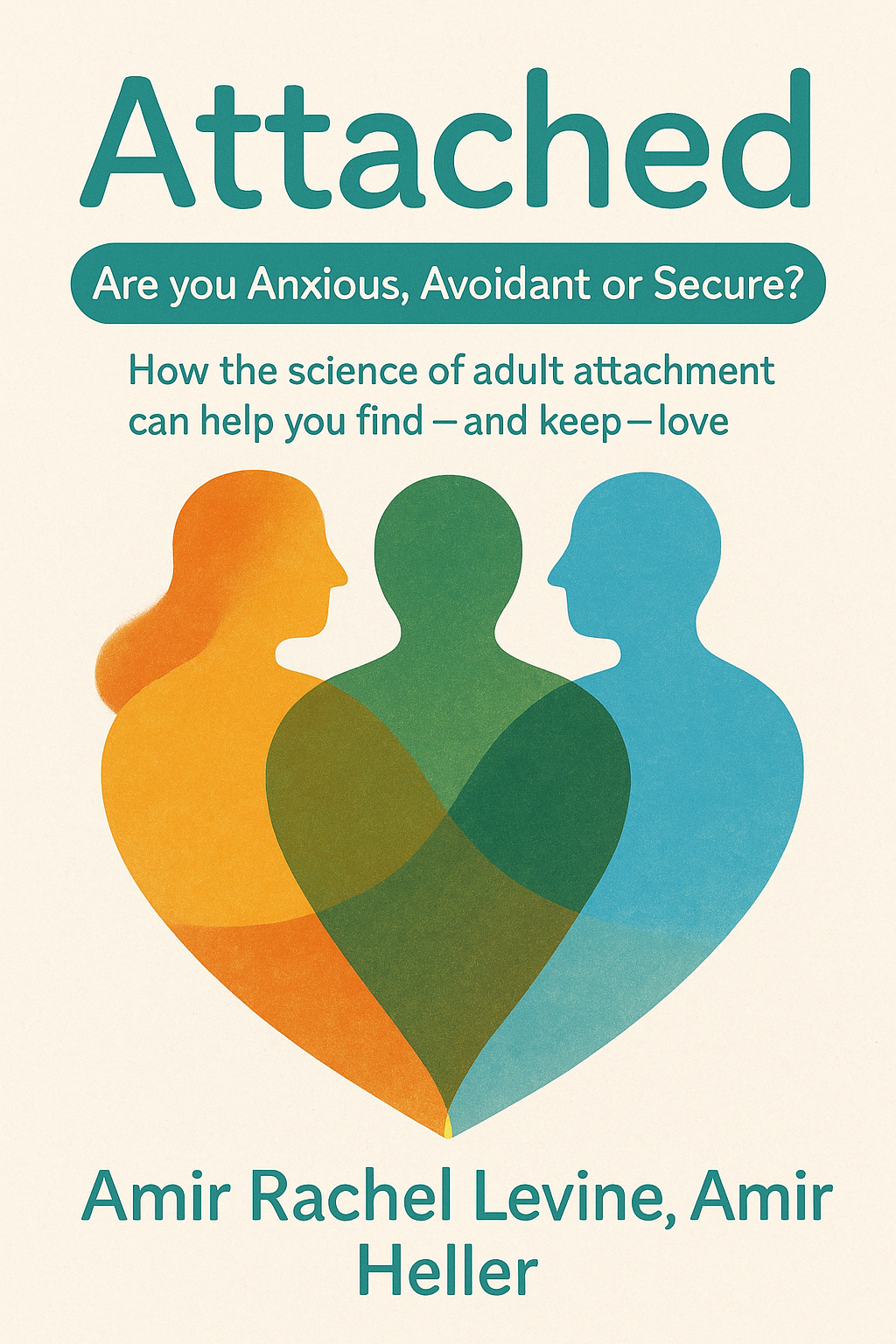
Attached: Are you Anxious, Avoidant or Secure? How the science of adult attachment can help you find – and keep – love
Chapter Summaries
What's Here for You
Are you tired of the same relationship struggles, the inexplicable anxieties, the frustrating distance, or the lingering loneliness? "Attached" offers you a revolutionary path to understanding and transforming your romantic life, grounded in the science of adult attachment. This book is your guide to decoding the hidden patterns that shape your connections, revealing why you and your partner behave the way you do in relationships. You'll embark on a profound journey of self-discovery, identifying your own attachment style – whether anxious, avoidant, or secure – and gain the invaluable skill of deciphering your partner's style as well. Imagine finally understanding the 'why' behind your partner's need for space or your own deep-seated desire for reassurance. "Attached" illuminates the specific challenges of each style, from the 'sixth sense for danger' experienced by those with anxious attachment to the 'lonesome traveler' tendencies of the avoidant. It powerfully exposes the common, yet destabilizing, anxious-avoidant trap and, crucially, provides actionable strategies for escaping it, demonstrating that security in relationships is not just possible, but cultivable. Through compelling stories and research, you'll learn how to move beyond destructive relationship dynamics, foster effective communication, and harness conflict as a tool for deeper intimacy. This book promises not just a better understanding of love, but the practical tools to find, keep, and nurture secure, fulfilling, and lasting love. Prepare to shift from relationship distress to relationship mastery with a tone that is both intellectually stimulating and deeply empathetic, empowering you with the knowledge and confidence to build the secure connections you deserve.
Decoding Relationship Behavior
The authors, Rachel Levine and Amir Heller, begin by presenting a common human dilemma: the seemingly inexplicable struggles in romantic relationships, illustrated by three distinct vignettes—one of anxious obsession, another of a partner feeling trapped and distant, and a third of profound loneliness within a long marriage. These cases, initially appearing unique and complex, hinted at a deeper, unifying explanation that eluded traditional clinical approaches. Their journey, spurred by a friend named Tamara’s tumultuous relationship with Greg, led them to a profound discovery rooted in attachment theory. Tamara, intelligent and resilient, found herself consumed by anxiety, constantly seeking reassurance from Greg, who exhibited a pattern of pushing her away while offering just enough affection to keep her tethered. This cycle left her vital and work suffering, a stark contrast to her usual self. Greg, meanwhile, sent mixed signals, professing affection yet fearing commitment, a behavior that confused Tamara and her friends. The authors reveal that the key to understanding these deeply personal struggles lies not in a multitude of unique causes, but in a scientific framework that explains predictable patterns of behavior in adult romantic relationships. This insight emerged from Amir's work with attachment-guided therapy and research by Cindy Hazan and Phillip Shaver, which demonstrated that adult attachment styles to romantic partners mirror those of children to their parents. They introduce the three primary attachment styles: Secure, comfortable with intimacy and warmth; Anxious, craving closeness but often preoccupied and worried about rejection; and Avoidant, equating intimacy with a loss of independence and minimizing closeness. These styles, influencing views on intimacy, conflict, communication, and expectations, are not fixed personality traits but rather programmed responses, influenced by upbringing and life experiences. By re-examining Tamara and Greg through this lens, their seemingly inexplicable behaviors became remarkably clear: Greg’s distancing was a hallmark of an avoidant style, driven by a fear of engulfment, not a lack of interest, while Tamara’s anxiety and clinginess were classic anxious attachment responses. They spoke different relational languages, exacerbating each other’s tendencies. This understanding offered a powerful, evidence-based explanation, moving beyond vague psychological interpretations. The authors highlight that attachment theory is grounded in an evolutionary imperative: the deeply embedded, biological need for connection, crucial for survival throughout human history. This 'attachment system,' a biological mechanism ensuring safety through proximity to loved ones, explains 'protest behavior'—the frantic search for connection when separated—which still manifests in adults, even in our digital age, such as through incessant calls or attempts to provoke jealousy. This evolutionary perspective also explains the heterogeneity of attachment styles: in a dangerous world, avoidant styles might offer a survival advantage by reducing the pain of loss, while anxious styles promote persistent pursuit of connection, and secure styles thrive in stable environments. Crucially, the authors emphasize that understanding these styles is the first step toward change; while attachment styles can shift, conscious effort can guide individuals toward greater security. They explain how they translated this theory into practical interventions, developing techniques to identify attachment styles and guiding people to leverage their instincts for healthier relationships, moving from the laboratory to everyday life. Tamara, armed with this knowledge, was able to consciously avoid avoidant partners and seek out secure connections, finding a stable relationship with Tom and regaining her former vitality. The book, they explain, aims to equip readers with this same understanding, illuminating past relationship failures, clarifying motives, and providing strategies for building more satisfying connections, ultimately empowering individuals to make better decisions and foster lasting change.
Dependency Is Not a Bad Word
In the high-stakes world of competitive reality television, Karen and Tim’s relationship unfolded under intense pressure, revealing a core tension: Karen’s need for reassurance, symbolized by a simple handhold, clashed with Tim’s desire for independence. Their near-win, followed by a loss, prompted Karen to blame her own perceived "neediness," a sentiment the authors, Levine and Heller, argue is fundamentally misguided. Attachment theory, they explain, posits that seeking a partner’s psychological and physical proximity is a biological imperative, not a flaw. When our needs for connection are met, especially early on, we are actually empowered to venture further, a concept known as the dependency paradox. This cultural narrative, which scorns dependency and exalts independence, has deep historical roots, tracing back to early 20th-century parenting philosophies that advocated for emotional self-sufficiency in children, a view later dismantled by the groundbreaking work of Bowlby and Ainsworth. Their research, and subsequent work by Main, Hazan, and Shaver, demonstrated that attachment needs are not confined to infancy but persist throughout adulthood, shaping our romantic relationships. The prevailing societal view, however, continues to echo outdated notions, framing dependency as a weakness, a notion that even influences popular self-help movements like codependency. But biology tells a different story. Studies, like James Coan's fMRI research, reveal that a partner's presence, even just holding a hand, can physiologically regulate our stress response, making us more resilient. This isn't about being joined at the hip; it's about the profound comfort and strength derived from knowing you have a secure base, a safe haven to return to. Think of the infant Kimmy, distraught at her mother’s departure, rushing to her embrace upon return, her exploration of the world only resuming once her secure base was re-established. Adults, too, function best when they have this reliable anchor. When a partner consistently fails to fulfill this role, it doesn't just impact emotional well-being; it can have tangible physical health consequences, as Brian Baker’s research on blood pressure and marital satisfaction illustrates. Ultimately, the authors reveal that finding and nurturing a partner who can act as this secure base is not a sign of weakness, but the very foundation upon which true independence and a fulfilling life are built.
What Is My Attachment Style?
The journey to understanding our deepest connections begins with a profound act of self-discovery, as Rachel S.F. Levine and Amir Levine, drawing upon the foundational work of Kelly Brennan, Catherine Clark, and Phillip Shaver, guide us through the intricate landscape of adult attachment. This chapter invites us to peer into the mirror, to examine the subtle ways we navigate intimacy and connection, a process illuminated by a modified version of the ECRR questionnaire. It reveals that our attachment styles, while stable, are not immutable stone; they are 'stable but plastic,' capable of shaping and being shaped by our experiences, ultimately guiding us toward greater happiness in our relationships. The core tension lies in recognizing our inherent patterns: the anxious individual who yearns for closeness yet fears abandonment, often becoming a sensitive seismograph to a partner's every mood, experiencing intense emotional highs and lows; the secure individual, for whom warmth and intimacy flow naturally, navigating relationships with a steady hand, able to communicate needs and offer reassurance with ease; and the avoidant individual, who cherishes independence and self-sufficiency, often keeping partners at an emotional arm's length, valuing autonomy even while desiring connection. Levine and Levine illustrate that these styles are not arbitrary labels but emerge from deeply ingrained responses, echoing the behaviors observed in infants during the 'strange situation' test – the anxious child's desperate ambivalence upon reunion, the secure child's swift return to play, and the avoidant child's seemingly indifferent facade that masks underlying stress. Understanding these dynamics, whether through the questionnaire's practical application or by grasping the two fundamental dimensions of intimacy comfort and relationship anxiety, offers a powerful lens through which to view ourselves and others, transforming potential confusion into clarity and paving the way for more fulfilling bonds. It's a call to recognize that within these patterns lies the potential for profound self-awareness and the opportunity to cultivate more secure, loving relationships.
Cracking the Code— What Is My Partner’s Style?
The authors, Rachel S.F. Levine and Amir Levine, and Heller, in their chapter 'Cracking the Code— What Is My Partner’s Style?' from 'Attached: Are you Anxious, Avoidant or Secure?', guide us through the intricate art of deciphering our partners' attachment styles. While identifying our own tendencies is often more straightforward, understanding another person requires keen observation and diligent listening, moving beyond the initial excitement of a new relationship to ask if this is someone truly worth investing in emotionally. The chapter reveals that people naturally offer clues through their day-to-day actions and words, shifting our focus from 'Does he like me?' to 'Can he give me what I need?' and highlighting that our thinking can evolve from 'Why is she pushing me away?' to understanding 'she just doesn't feel comfortable with too much closeness.' To aid this process, a detailed questionnaire is presented, broken into three groups, each probing specific characteristics associated with avoidant, secure, and anxious attachment styles. For instance, Group A, designed to identify avoidant tendencies, looks for signs like mixed signals, a strong emphasis on independence, devaluing partners, and the use of distancing strategies, much like a lighthouse keeper signaling ships away from treacherous shores. Conversely, Group B, illuminating the secure style, focuses on reliability, consistent communication, flexibility, and a comfort with commitment. Group C, pointing towards anxious attachment, highlights a strong desire for closeness coupled with insecurities, a preoccupation with the relationship, and a tendency to play games or act out when feeling threatened. The authors emphasize that a score of 23 or above in any group strongly suggests that attachment style, cautioning that high scores in both avoidant and anxious groups might indicate overlapping behaviors stemming from different core attitudes. Beyond the questionnaire, five 'Golden Rules' offer further clarity: determine if intimacy is sought, assess preoccupation and sensitivity to rejection, avoid relying on single symptoms, evaluate reactions to effective communication, and crucially, listen for what is *not* being said or done, trusting one's gut feeling. This insightful exploration empowers readers to move from confusion to clarity, transforming relationship dynamics by understanding the underlying motivations that shape our connections, ultimately fostering deeper bonds and more fulfilling partnerships.
Living with a Sixth Sense for Danger: The Anxious Attachment Style
The authors, Rachel Levine and Amir Heller, delve into the intricate world of the anxious attachment style, revealing how a supersensitive attachment system can lead individuals like Emily, a promising psychiatric resident, into a cycle of distress and obsession when faced with relationship uncertainty. Emily's descent into obsessively tracking her partner David's online activities, a stark contrast to her initial resilience, illustrates a core principle: for those with anxious attachment, the relationship's perceived safety is paramount, activating a hypervigilant state that can misinterpret cues and lead to significant emotional turmoil. This hypersensitivity, akin to a finely tuned radar detecting the slightest shift in emotional weather, was demonstrated in studies where anxious individuals perceived emotional changes in faces earlier, but crucially, often jumped to conclusions. The chapter emphasizes that this vigilance, while powerful, requires a pause, a moment to gather more information before reacting, to transform from a liability into an asset. When the attachment system is activated, individuals employ 'activating strategies'—thoughts and feelings compelling them to seek closeness—as they did with Emily, who clung to the hope David would change, even amidst clear evidence to the contrary. Ryan's experience, however, offers a glimmer of hope; his anxious attachment, met with Shauna's secure responsiveness, illustrates how minimal reassurance can quickly calm a hyperactivated system, preventing descent into the 'danger zone.' This highlights a critical insight: the earlier and more effectively a partner reassures, the less energy is needed later. The narrative then pivots to the common, yet detrimental, gravitational pull between anxious and avoidant attachment styles, where a familiar script of unmet needs and reinforced beliefs plays out, often leading anxious individuals to equate an activated, anxious state with genuine passion, a misconception the authors urge us to correct. They reveal that avoidants are statistically more prevalent in the dating pool, often due to their tendency to end relationships more frequently, creating a challenging landscape for anxious individuals seeking secure connections. The chapter offers a powerful resolution: embracing authenticity and effective communication, recognizing one's own legitimate needs for intimacy and security, and actively seeking secure partners who can consistently meet those needs, rather than trying to mold oneself to fit the requirements of an avoidant partner. By adopting an 'abundance philosophy' and giving secure individuals a chance, despite the initial lack of dramatic 'bells and whistles' that an activated system craves, anxious individuals can indeed find peace of mind and a truly fulfilling, secure love, moving from a tightrope walk without a net to solid ground.
Keeping Love at Arm’s Length: The Avoidant Attachment Style
The author, Rachel S.F. Levine, explores the world of the avoidant attachment style, likening individuals to 'lonesome travelers' like Chris McCandless, who sought ultimate self-sufficiency, only to learn that happiness is truly real when shared. This chapter reveals how those with an avoidant style, a survival strategy evolved for harsher environments, often maneuver to maintain emotional distance, even in loving relationships. They tend to idealize independence, viewing dependency as a weakness, and employ 'deactivating strategies'—subtle yet powerful behaviors and thoughts designed to quell intimacy. These can range from focusing on a partner's minor flaws, like a quirky eating habit, to maintaining mental distance by keeping secrets or avoiding physical closeness, all to protect their cherished autonomy. Research, like the word recognition experiments, shows that while avoidants may consciously dismiss their attachment needs, their underlying vulnerability to separation remains, surfacing when their defenses are lowered. They often mistake self-reliance for true independence, a burden that diminishes their capacity for deep connection and leads them to overlook their partner's needs. This tendency to 'see the worm instead of the apple' means they often focus on negatives, even when presented with genuine warmth and support, a dismissive attitude toward connectedness that blinds them to the reciprocal beauty of a relationship. Furthermore, their difficulty in accurately reading a partner's emotional cues, a consequence of training themselves not to prioritize their partner's feelings, leaves loved ones feeling unsupported and disconnected. The pervasive beliefs in the 'phantom ex' or the elusive 'one' serve as potent tools to keep potential partners at bay, creating a perpetual cycle of dissatisfaction by convincing themselves that the current person isn't good enough. However, Levine emphasizes that change is possible; it requires a conscious shift inward, an increased self-awareness to identify these ingrained patterns, and a willingness to embrace mutual support over rigid self-reliance, ultimately leading to a more fulfilling and connected life.
Getting Comfortably Close: The Secure Attachment Style
The authors, Rachel S.F. Levine and Amir Levine, and Heller reveal that the secure attachment style, often perceived as mundane, is actually the bedrock of fulfilling relationships, possessing a unique capacity to buffer against the anxieties and avoidances that plague other styles. Research, like Patrick Keelan's study with Kenneth and Karen Dion, consistently shows that secure individuals report higher levels of relationship satisfaction, commitment, and trust, and remarkably, their presence can elevate their insecure partners' relationship quality, creating a vital 'buffering effect.' This magical influence isn't tied to personality or outward charm; secures manifest in all forms, from the introverted engineer Aaron to the social butterfly Brenda. Instead, their power lies in an internal equilibrium, a fundamental expectation of responsiveness and love, as exemplified by Stan, who navigated his wife Janet's anxieties with calm understanding rather than defensiveness. Unlike avoidants who push threats away, or anxious individuals who amplify them, secures seem to possess an unconscious mind less attuned to danger and separation, and more to themes of love and closeness, effortlessly returning to emotional balance even when consciously prompted to consider loss. This internal stability translates into practical relationship skills: they are natural conflict busters, mentally flexible, effective communicators, unafraid of intimacy, quick to forgive, and view sex and emotional connection as intertwined. Their journey to this secure state, the authors explain, is not solely dictated by early childhood experiences with sensitive parents, though that plays a role, nor is it entirely predetermined by genetics, as studies on dopamine and serotonin receptors suggest. Instead, it's a complex mosaic of early connections, genetic predispositions, and crucially, transformative adult romantic experiences that can shift one's attachment style over time. Secures intuitively navigate the dating landscape, avoiding game-playing and recognizing unresponsive partners early, believing firmly in the abundance of potential, responsive partners. While they possess an innate talent for soothing and supporting, even secures can find themselves in detrimental relationships, often due to a sense of responsibility or a reluctance to abandon a partner in distress, as seen in Nathan's prolonged, abusive marriage. The crucial insight here is that while secures can adapt to support others, they too must recognize when a relationship has become irreparably toxic, lest they lose their own secure footing. The authors conclude by urging a deeper appreciation for secures, recognizing their profound ability to foster connection and emotional safety, not as a passive state, but as an active, powerful force in the human experience.
The Anxious-Avoidant Trap
The author, Rachel S.F. Levine, illuminates a common yet deeply destabilizing dynamic within relationships: the anxious-avoidant trap. This chapter reveals how colliding intimacy needs can transform a partnership from a sanctuary into a storm-tossed vessel, as seen in the tales of Janet and Mark, Susan and Paul, and Naomi and Kevin. These couples, grappling with differing desires for closeness, find their everyday disputes—a washing machine, a hotel room, or social media friends—become mere symptoms of a profound underlying tension. Mark, with an anxious attachment style, yearns for closeness, interpreting Janet's desire for independence as distance. Susan, also anxious, feels rejected by Paul's avoidant need for space, especially in the intimacy of a shared vacation bed. Similarly, Naomi's anxiety about Kevin's ex-girlfriends on Facebook and his screened calls stems from a deep-seated need for commitment, a need Kevin, with his avoidant style, instinctively pushes away to maintain distance. The core insight here is that the anxious partner's attempts to gain closeness, by activating their attachment system, paradoxically trigger the avoidant partner's deactivation, creating a vicious cycle. This dynamic, where one partner's activation fuels the other's withdrawal, ensnares them in a 'danger zone' of chronic dissatisfaction and instability, characterized by a 'rollercoaster effect' of fleeting highs followed by painful lows, an 'emotional counterbalancing act' where one partner's neediness can feel like another's strength, and a pervasive sense of 'stable instability.' The author posits that these intimacy differences, far from being trivial, reflect diametrically opposed desires and assumptions that spill into every facet of life, from sleep arrangements to child-rearing. The resolution itself often becomes the problem, as the increased intimacy that comes with problem-solving is precisely what the avoidant partner seeks to avoid, leading to growing hostility and distance. When the anxious partner, overwhelmed by negative emotions during conflict, resorts to protest behavior, they often find themselves in a worse position upon reconciliation, having to plead for a return to the status quo. The chapter emphasizes that without conscious recognition and intervention, this trap deepens, leaving the anxious partner feeling increasingly unheard and the relationship perpetually adrift, longing for a secure harbor that remains just out of reach.
Escaping the Anxious-Avoidant Trap: How the Anxious-Avoidant Couple Can Find Greater Security
The authors, Rachel Levine and Amir Heller, illuminate a path out of the persistent dance between anxiety and avoidance that often defines relationships, revealing that while attachment styles are stable, they are also remarkably plastic – capable of change. They explain that security can be cultivated, even when neither partner begins as secure, by harnessing the power of 'security priming,' a process that involves recalling positive experiences with secure individuals or role models. This act of remembering and internalizing secure behaviors can gradually shift one's internal working model – the deeply ingrained belief system about relationships – leading to more constructive interactions and improved well-being. To facilitate this shift, the authors introduce the concept of an 'integrated secure role model,' encouraging readers to identify and embody the characteristics of secure people in their lives, whether it's a supportive friend like Jon and Laura or even the unconditional love offered to a pet, demonstrating that our connections with animals can teach us profound lessons about secure attachment. They then guide readers through creating a 'Relationship Inventory,' a powerful tool for dissecting past and present romantic experiences through an attachment lens, revealing how specific triggers activate anxious protest behaviors or avoidant deactivating strategies. This deep dive into personal history, akin to editing a living memory, allows for the reshaping of unhelpful beliefs, as seen in the poignant example of Georgia and Henry, whose simple text message solution bridged the gap between her need for connection and his need for space. Similarly, Sam and Grace's toothpaste dispute, a seemingly minor conflict, became a catalyst for Sam to confront his need for sanctuary and Grace to offer a 'buffer zone,' illustrating how understanding each other's working models can lead to remarkable, customized solutions. Ultimately, the authors stress that becoming secure is an ongoing process, a journey of continuous growth and fun, rather than a destination, and that building security benefits both partners, offering the anxious partner closeness and the avoidant partner independence. However, they also offer a crucial insight for those where resolution remains elusive: knowledge itself is power. If genuine change isn't achievable, understanding that the conflict stems from an inherent clash, not personal failing, can prevent self-blame, particularly for the non-avoidant partner who often feels rejected. This understanding can lead to a pragmatic acceptance of limitations, a form of unilateral compromise where one partner adjusts expectations rather than engaging in perpetual, fruitless conflict, much like Doug, Natalie, and Janis, who learned to live with less than ideal togetherness by adjusting their own outlook and actions. This deliberate letting go of a dream of perfect intimacy, while perhaps leading to a less intensely satisfying relationship, offers a more peaceful existence than the Sisyphean struggle of unmet expectations.
When Abnormal Becomes the Norm: An Attachment Guide to Breaking Up
The authors, Rachel Levine and Amir Heller, delve into the heart of destructive relationships, illustrating how the anxious-avoidant attachment dynamic can morph from challenging to truly harmful, where abnormal behavior becomes the accepted norm. They introduce Marsha and Craig, an anxious-avoidant couple whose story serves as a stark counterpoint to assumptions that only masochistic individuals tolerate such treatment. Marsha, from a loving background, found herself entangled with Craig, an avoidant partner whose deactivating strategies—such as creating emotional distance, belittling her, and avoiding intimacy—progressively eroded her self-worth. Craig's behavior, a stark contrast to his outward charm, left Marsha feeling like 'the enemy' within his inner circle, a common fate for anxious individuals partnered with avoidants. This chapter reveals the insidious nature of the 'anxious-avoidant trap,' where the anxious partner's need for closeness clashes with the avoidant partner's need for distance, often manifesting in a dysfunctional approach to sex where intimacy is avoided rather than embraced. The narrative underscores that even emotionally healthy individuals can become ensnared, highlighting the profound power of attachment bonds that make letting go agonizingly difficult. The 'rebound effect,' a powerful psychological phenomenon, explains the intense pain and distorted memories that make severing an attachment bond feel akin to physical injury, often drawing individuals back to the source of their suffering. However, the story offers a beacon of hope: Marsha's eventual escape from this 'Alcatraz' of a relationship, facilitated by conscious deactivation and a strong support system, leading to a fulfilling life. The authors provide crucial strategies for navigating breakups, emphasizing self-compassion and the reality that healing takes time, ultimately showing that a better life beyond a destructive relationship is not only possible but attainable.
Effective Communication: Getting the Message Across
The author, Rachel Levine, and Amir Heller, reveal a powerful truth: effective communication isn't just about talking; it's the most direct path to understanding potential partners and ensuring your needs are met within a relationship. They illustrate this with Lauren, who, paralyzed by her anxious attachment style, was confused by Ethan's mixed signals. Her friend’s counsel to simply ask—a daunting prospect for Lauren—led to clarity: Ethan was struggling with his sexual orientation, not a lack of attraction. This direct, non-accusatory conversation, though initially terrifying, saved Lauren months of wasted hope and potential heartache, demonstrating that a straightforward inquiry can cut through speculation like a sharp knife through fog. Similarly, Tina, facing Serge's reticence, used a playful, direct question, "Can I have a kiss?" which, despite a moment of awkwardness, propelled their relationship forward physically and emotionally, proving that even a flirtatious directness can foster deeper connection. The core insight here is that effective communication serves two vital goals: selecting the right partner by quickly gauging their responsiveness to your needs, and ensuring those needs are met within an existing relationship by making them explicit rather than implicit. For those with secure attachment, this comes naturally; they believe in their worthiness and expect positive responses, acting as co-therapists in communication. However, for anxious individuals, the fear of rejection can lead to explosive, accusatory outbursts or 'protest behavior'—like incessant calling—that pushes partners away, obscuring the original need for reassurance. Conversely, avoidant individuals often misunderstand their need for distance, mistaking it for a loss of attraction, leading to a cycle of pursuit-withdrawal. The authors stress that avoiding protest behavior and instead embracing direct, non-blaming, assertive communication, even when it feels vulnerable, is crucial. They introduce the five principles: wear your heart on your sleeve, focus on your needs (using 'I need,' 'I feel,' 'I want'), be specific, don't blame, and be assertive and non-apologetic. This approach, much like a 'secure Miranda warning,' sets a foundation of honesty and mutual responsibility, transforming perceived weaknesses into strengths and fostering genuine connection. Even when starting off on the wrong foot, as with Larry's initial protest behavior towards Sheila, a willingness to apologize and communicate needs effectively can repair ruptures and deepen intimacy, underscoring that it's never too late to build a more secure bond.
Working Things Out: Five Secure Principles for Dealing with Conflict
The authors, Rachel S.F. Levine and Amir Levine, along with Heller, illuminate a profound truth about relationships in 'Attached': conflict, far from being a harbinger of doom, can actually be a catalyst for deeper connection. They reveal that the quality of disagreements, not their quantity, distinguishes thriving relationships from those that falter. Securely attached individuals, it turns out, don't avoid conflict; they navigate it with a set of learned principles that foster intimacy rather than erode it. At the heart of their exploration are five core tenets that secure partners intuitively employ. First, they demonstrate a fundamental concern for their partner's well-being, understanding that their happiness is intrinsically linked to their mate's, much like two connected vessels whose levels rise and fall together. Second, they maintain a laser focus on the specific problem at hand, resisting the urge to spiral into accusations or dredge up past grievances, a skill exemplified by George's ability to address Kelly's anxiety without letting it derail their date. Third, they refrain from generalizing the conflict, ensuring that a disagreement about pasta brands doesn't morph into a declaration of relationship failure, as seen in the careful management of Terry and Alex's long-standing shopping ritual. Fourth, a willingness to engage, to remain present both physically and emotionally, is paramount, preventing stalemates and fostering understanding, a stark contrast to the withdrawal seen in insecure dynamics. Finally, and perhaps most critically, they effectively communicate their feelings and needs, opting for directness over protest behavior, thereby opening channels for genuine dialogue and connection, a lesson painfully learned by Rebecca in her attempt to reconnect with Tom. The chapter further delves into the biological underpinnings, highlighting oxytocin's role in fostering trust and cooperation, suggesting that prioritizing closeness can buffer against conflict. Insecure attachment styles, conversely, lead anxious individuals to escalate conflict through protest behavior and avoidant individuals to de-escalate through withdrawal, often missing the opportunity for genuine resolution. The narrative weaves through examples like Paul and Jackie's struggle with integrating children into their relationship, illustrating how unresolved issues, when avoided, can fester and erupt. Ultimately, the authors present conflict not as a battle to be won or lost, but as a vital opportunity for growth, a chance to build resilience and deepen the very bonds that make relationships meaningful.
Conclusion
Through the lens of adult attachment theory, 'Attached' by Levine and Heller masterfully demystifies the often-perplexing dynamics of romantic relationships. The core takeaway is that our ingrained attachment styles—anxious, avoidant, and secure—are not inherent flaws but predictable patterns, rooted in evolutionary drives for connection and shaped by early experiences. This scientific framework liberates us from self-blame, reframing perceived weaknesses as understandable responses to unmet attachment needs. Emotionally, the book offers profound validation. It acknowledges the primal pain of perceived abandonment for the anxious, the deep-seated fear of engulfment for the avoidant, and the steady strength of the secure. It highlights that the much-maligned 'neediness' is, in fact, a fundamental human requirement for proximity and reassurance, and that true independence is paradoxically fostered by a secure base. The 'dependency paradox' challenges cultural narratives that exalt isolation, underscoring the evolutionary advantage and psychological necessity of secure bonds. Practically, 'Attached' provides an actionable roadmap. By understanding our own style and deciphering our partner's, we gain a powerful tool for navigating conflicts, which are often merely misaligned 'languages' of intimacy. The book empowers us to move beyond reactive 'protest behaviors' or 'deactivating strategies' towards conscious choices. It offers concrete strategies for cultivating security, such as identifying and emulating secure role models, practicing effective communication, and developing 'security priming' through recalling positive relational experiences. The 'anxious-avoidant trap' is illuminated not as an inescapable fate, but as a cycle that can be consciously disrupted through awareness and effort. Ultimately, 'Attached' is a beacon of hope, demonstrating that while attachment styles are deeply ingrained, they possess a remarkable plasticity. With self-awareness and deliberate effort, individuals can indeed foster more secure, fulfilling, and lasting love, transforming their relationships from sources of distress into anchors of well-being.
Key Takeaways
Adult romantic relationship behaviors, often perceived as unique personality flaws or mysteries, can be systematically understood and predicted through the lens of attachment theory, which categorizes individuals into Secure, Anxious, or Avoidant styles.
Attachment styles, rooted in an evolutionary drive for connection and survival, are not static but are influenced by early life experiences and subsequent life events, creating predictable patterns of seeking and responding to intimacy.
The 'protest behavior' observed in children separated from caregivers is a primal survival mechanism that persists in adults, manifesting as desperate attempts to regain connection when an attachment figure feels distant or threatened, often amplified by an anxious attachment style.
Understanding one's own and a partner's attachment style provides a powerful framework for decoding relational conflicts, revealing that clashes often stem from differing 'languages' of intimacy rather than a lack of love or fundamental incompatibility.
While attachment styles are deeply ingrained, this knowledge empowers individuals to consciously navigate relationships, identify potential pitfalls, and actively cultivate more secure and fulfilling connections, moving beyond reactive patterns to intentional choices.
Attachment theory offers a universal framework applicable across all stages of romantic life, from initial dating to long-term partnerships, providing actionable insights for improving relational satisfaction and personal well-being.
The perceived "neediness" in relationships is often a biological drive for connection, not a personal failing, and attachment theory explains this fundamental human need for proximity and reassurance.
The cultural exaltation of independence over dependency is a modern misconception that neglects the evolutionary advantage and psychological necessity of secure emotional bonds, known as the dependency paradox.
Attachment needs are a lifelong requirement, not just for infants, and adult romantic partners naturally become our secure base, regulating our physiological and emotional responses to stress.
A partner's consistent availability and support as a secure base significantly impacts not only emotional well-being but also physical health, as demonstrated by physiological and medical research.
True independence and the courage to explore the world and pursue goals are paradoxically fostered by the secure knowledge that one has a reliable person to depend on.
Attachment styles are measurable patterns in intimate relationships, rooted in core dimensions of anxiety about a partner's availability and comfort with intimacy, which can be identified through self-assessment questionnaires.
The three primary attachment styles—anxious, secure, and avoidant—are characterized by distinct approaches to closeness, independence, and emotional expression, influencing how individuals perceive and react within relationships.
While attachment styles are generally stable, they possess a degree of 'plasticity,' meaning they can evolve and be positively influenced by self-awareness and deliberate effort, leading to improved relational outcomes.
Understanding one's own attachment style provides crucial self-awareness, acting as a compass to navigate interactions and fostering the potential for greater happiness and security in romantic partnerships.
Attachment patterns observed in adults have their roots in early childhood experiences, as demonstrated by research on infant behavior during reunion with a caregiver after separation, highlighting the long-term impact of early relational dynamics.
Deciphering a partner's attachment style requires keen observation of daily actions and words, shifting focus from romantic attraction to emotional investment potential.
The chapter provides a structured questionnaire with three groups (A for avoidant, B for secure, C for anxious) to systematically identify a partner's attachment patterns through specific behavioral indicators.
A score of 23 or above on any questionnaire group strongly indicates that attachment style, with high scores in both avoidant and anxious groups requiring further nuanced assessment.
The 'Golden Rules' offer a complementary framework for deciphering attachment styles, emphasizing the importance of assessing an individual's fundamental drive for intimacy, their preoccupation with the relationship, their communication style, and their unspoken behaviors.
Understanding a partner's attachment style is not about labeling them, but about gaining insight into their core relationship attitudes to foster better communication and a stronger bond.
The anxious attachment style is characterized by a supersensitive attachment system that hypervigilantly monitors relationship safety, leading to distress and obsessive behaviors when faced with perceived threats or ambiguity.
While individuals with anxious attachment possess a keen ability to detect emotional shifts, this vigilance can lead to premature conclusions; pausing to gather more information before reacting is crucial for accurate perception and self-protection.
An activated attachment system, often mistaken for passion, drives 'activating strategies' to reestablish closeness, but true love, from an evolutionary perspective, is characterized by peace of mind and a secure base.
The common attraction between anxious and avoidant attachment styles often stems from a reenactment of familiar relational scripts, reinforcing each other's beliefs about intimacy and self-worth, rather than fostering healthy connection.
Anxious individuals are statistically more likely to encounter avoidant partners due to avoidants' increased presence in the dating pool, making conscious effort to identify and seek secure partners essential for relationship success.
Authenticity and clear communication of one's genuine needs for intimacy and security are paramount for anxious individuals, allowing them to identify compatible partners and avoid adapting themselves to meet the needs of avoidant prospects.
Embracing an 'abundance philosophy' in dating, by meeting multiple potential partners and giving secure individuals a chance, helps anxious individuals desensitize their attachment system, maintain objective evaluation, and increase the likelihood of finding a secure, fulfilling relationship.
Avoidant attachment, while a survival strategy, paradoxically hinders an individual's ability to find happiness in relationships by fostering a constant suppression of innate attachment needs through deactivating strategies.
Deactivating strategies, such as focusing on a partner's flaws or idealizing past relationships, are unconscious tools used by avoidants to maintain emotional distance and protect autonomy, ultimately leading to loneliness.
The belief in extreme self-reliance, often confused with independence, prevents avoidants from seeking or accepting support, diminishing their capacity for intimacy and cutting them off from vital relational lifelines.
Avoidants often exhibit a skewed perception, termed 'seeing the worm instead of the apple,' where they disproportionately focus on a partner's perceived negatives, dismissing positive behaviors and thus undermining relational satisfaction.
A key challenge for avoidants is the impaired ability to accurately read their partner's emotional signals, stemming from a learned disregard for their partner's feelings, which leads to relational disconnection and unmet needs.
The concepts of the 'phantom ex' and the search for 'the one' serve as powerful deactivating strategies, allowing avoidants to devalue present relationships and avoid true intimacy by maintaining an idealized alternative.
Personal change for avoidants requires a deliberate inward turn, increasing self-awareness to recognize deactivating strategies and thought patterns, and actively choosing to foster mutual support over rigid self-reliance.
The secure attachment style acts as a 'buffering effect,' not only leading to higher personal relationship satisfaction but also elevating the functioning and satisfaction of insecure partners within the relationship.
Secure individuals possess an intrinsic emotional regulation and an unconscious mind less attuned to threats of separation or loss, allowing them to navigate relationship challenges with innate calm and resilience.
Attachment style is a dynamic interplay of early childhood experiences, genetic predispositions, and significantly, powerful adult romantic relationships, meaning it can evolve over time.
Secure individuals intuitively select partners and navigate dating by prioritizing responsiveness and respect, quickly disengaging from game-playing or inconsistent behavior, viewing such issues as indicative of the partner's limitations, not their own worth.
While highly capable of supporting others, secure individuals are not immune to toxic relationships and must actively recognize when to disengage, even if their innate tendency is to forgive and take responsibility for a partner's well-being.
The 'anxious-avoidant trap' describes a relationship dynamic where differing intimacy needs create a cyclical pattern of pursuit and withdrawal, trapping partners in chronic dissatisfaction.
Surface-level arguments in relationships often mask deeper conflicts rooted in attachment styles, with anxious partners seeking closeness and avoidant partners seeking distance.
Anxious partners' attempts to increase closeness trigger avoidant partners' deactivation, a response that reinforces the anxious partner's insecurity, creating a self-perpetuating cycle.
The resolution of conflict can paradoxically heighten intimacy, which is precisely what avoidant partners unconsciously seek to avoid, leading them to grow more distant and hostile during disagreements.
Without conscious intervention and a shift towards security, the anxious-avoidant dynamic tends to worsen over time, with the anxious partner often conceding more ground and compromising their needs.
Intimacy differences are not trivial but reflect fundamental desires and assumptions that can permeate all aspects of a shared life, escalating with major relationship milestones.
Attachment styles, while stable, are malleable, offering hope for change through conscious effort and 'security priming' by recalling secure relationships.
Developing an 'integrated secure role model' by identifying and emulating the behaviors of secure individuals provides a practical blueprint for shifting one's own attachment patterns.
A 'Relationship Inventory' serves as a critical tool for deconstructing personal relationship histories, revealing how specific triggers activate insecure attachment responses and leading to the reshaping of internal working models.
Creative, partner-specific solutions, like Georgia and Henry's text message or Grace's 'buffer zone,' emerge when both partners understand and articulate their attachment needs and triggers.
Recognizing that persistent intimacy clashes may stem from an inherent, irresolvable conflict, rather than personal fault, liberates individuals from self-blame and allows for a shift in perspective.
When complete resolution is unattainable, a unilateral compromise, involving adjusting expectations and accepting limitations, can lead to a more peaceful, albeit less intensely intimate, coexistence.
The 'anxious-avoidant trap' can escalate to a point where abnormal treatment becomes normalized, highlighting the destructive potential of this attachment pairing.
Avoidant partners often employ 'deactivating strategies' to maintain emotional distance, even with those closest to them, leading the anxious partner to feel like an 'enemy'.
The intense pain of severing an attachment bond, coupled with the 'rebound effect,' distorts memories and amplifies the desire to return to the familiar, even if harmful.
Consciously employing deactivating strategies and building a robust support network are crucial for disentangling from a destructive relationship.
Recognizing one's treatment within a relationship as being 'the enemy' is a critical, albeit painful, first step toward seeking escape and a healthier future.
Direct, non-accusatory communication is the most efficient method for discerning a partner's compatibility and meeting one's own relationship needs, bypassing prolonged confusion and potential heartache.
Effective communication serves a dual purpose: it acts as a rapid filter for choosing a suitable partner and as a continuous tool for ensuring needs are met within established relationships.
Anxious attachment styles often manifest as protest behavior, such as accusations or demands, which inadvertently push partners away instead of eliciting the desired reassurance.
Avoidant attachment styles can lead individuals to misinterpret their need for distance as a lack of attraction, hindering open communication about boundaries and space.
The five principles of effective communication—honesty, focusing on needs, specificity, non-blaming, and assertiveness—provide a framework for expressing oneself authentically and respectfully.
Embracing effective communication, even when it feels vulnerable, allows individuals to transform perceived weaknesses into assertive expressions of needs, fostering secure and mutually dependent bonds.
A partner's response to direct communication is a critical indicator of their commitment to the relationship and their willingness to prioritize your well-being.
Conflict is not inherently destructive; the manner in which it is handled by securely attached individuals can deepen intimacy and strengthen the relationship.
Secure attachment fosters a proactive approach to conflict resolution through specific, learnable principles that prioritize mutual well-being and understanding.
Effective conflict resolution requires focusing on the present issue, avoiding generalizations and personal attacks, thereby preserving the relationship's integrity.
Active engagement and willingness to remain emotionally present during disagreements are crucial for preventing withdrawal and fostering connection.
Direct and clear communication of feelings and needs, rather than protest behavior, is essential for addressing underlying concerns and achieving resolution.
Understanding the biological role of hormones like oxytocin can underscore the importance of maintaining relational closeness as a buffer against conflict.
Action Plan
Find ways to enjoy time together as a couple and make time for physical closeness to reinforce secure connection.
Identify your own primary attachment style (Secure, Anxious, or Avoidant) by reflecting on your typical reactions and feelings in romantic relationships.
Observe the behavior of people around you and try to recognize patterns consistent with the Secure, Anxious, and Avoidant attachment styles.
When feeling anxious or insecure in a relationship, recognize this as a potential 'protest behavior' and pause before acting impulsively.
If you tend to withdraw from intimacy, acknowledge this as an Avoidant tendency and consider the underlying fear of losing independence.
When a relationship conflict arises, consider how your attachment style might be clashing with your partner's, and try to communicate your needs more directly.
Seek out partners whose attachment styles are more compatible with yours, or if already in a relationship, explore strategies for bridging differences with your current partner.
Consciously practice behaviors that foster security, such as consistent communication and emotional availability, if you identify with Anxious or Avoidant tendencies.
Recognize that seeking comfort and reassurance from your partner during stressful times is a natural biological drive, not a sign of weakness.
Challenge the cultural narrative that equates dependency with weakness, understanding instead that secure dependence can foster greater independence (the dependency paradox).
Identify if your partner consistently acts as a secure base for you and if you are able to be a secure base for them.
Observe how your partner's presence or absence affects your physiological and emotional state, particularly during challenging situations.
When feeling anxious or stressed, consider reaching out to your partner for support, rather than suppressing the need or self-isolating.
Practice offering reassurance and support to your partner, understanding its profound impact on their well-being and your shared resilience.
Reflect on how societal messages about self-sufficiency may have influenced your own views on dependency in relationships.
Complete the provided questionnaire or a validated version to identify your primary attachment style.
Reflect on specific relationship patterns and behaviors that align with the characteristics of your identified attachment style.
Consider how your attachment style might influence your reactions to conflict, intimacy, and separation.
Seek out further information on your specific attachment style to deepen your understanding of its nuances.
Begin to notice how your attachment style plays out in your current or past relationships, looking for recurring themes or challenges.
Observe your partner's day-to-day actions and words, looking for patterns related to intimacy, independence, and communication.
Utilize the provided questionnaire (Groups A, B, C) to score your partner's behaviors and identify potential attachment styles.
Apply the 'Golden Rules'—especially assessing the fundamental drive for intimacy and evaluating reactions to open communication—to refine your assessment.
Pay attention to unsaid cues and your own 'gut feeling' about your partner's comfort with closeness and emotional vulnerability.
When in doubt about mixed signals, consider if the behavior indicates a desire to minimize intimacy or a genuine need for space.
Assess your 'inner circle' experience: are you treated like royalty or the enemy by your partner?
Practice active listening and open communication about your own needs and feelings as a litmus test for your partner's capacity to connect.
Acknowledge and accept your authentic relationship needs for intimacy, availability, and security, recognizing them as legitimate.
Actively assess potential partners based on their ability to meet your core relationship needs, rather than trying to change yourself to please them.
Learn to recognize 'smoking guns'—signals of ambiguity and disregard for emotional well-being—that indicate an avoidant attachment style, and rule out such prospects early on.
Practice effective communication by clearly expressing your needs and feelings, rather than resorting to protest behaviors or masking your true desires.
Adopt an 'abundance philosophy' in dating, meeting multiple people to increase the probability of finding a secure match and to prevent premature attachment to any single individual.
Give potential secure partners a chance, understanding that the initial calmness they offer may feel like boredom but is actually a sign of a stable, healthy connection.
Resist the common societal advice to play hard to get or act mysterious, as this often attracts avoidant partners and misrepresents your authentic self.
Identify and consciously pause before acting on deactivating strategies, such as focusing on minor partner imperfections or pulling away when things go well.
Actively challenge the belief in absolute self-reliance by focusing on and practicing mutual support within relationships.
Cultivate awareness of the tendency to misinterpret a partner's behavior negatively and actively seek more plausible, positive interpretations.
Create a 'relationship gratitude list' each evening, noting at least one positive contribution from your partner to your well-being.
Disengage from idealizing past partners ('phantom ex') by recalling the reasons the relationship ended and the critical stance taken.
Shift focus from waiting for 'the one' to actively choosing and nurturing a partner, allowing them to become 'the one' through shared intimacy.
Utilize 'distraction strategies' by engaging in shared activities, allowing for natural closeness and reduced defensiveness.
Increase self-awareness by recognizing when attachment machinery is activated and when deactivating strategies are being employed.
Cultivate availability by responding sensitively to your partner's distress and offering comfort when needed.
Practice non-interference by providing behind-the-scenes support for your partner's endeavors, leaving them with initiative and a sense of power.
Offer consistent encouragement and acceptance for your partner's learning and personal growth goals, boosting their self-esteem.
Communicate your needs and feelings directly and honestly, expecting responsiveness rather than playing games.
When a partner acts inconsiderately, attribute it to their limitations rather than personal blame, and expect respectful treatment.
If you identify as secure, monitor for anxious or avoidant traits emerging within yourself, as this signals a potential threat to your secure foundation or the wrong partner.
Recognize when a relationship has become consistently toxic and, despite your capacity for forgiveness, consider disengaging for your own well-being.
Recognize that recurring arguments about seemingly minor issues may be manifestations of differing intimacy needs rooted in attachment styles.
Identify whether your own behavior during conflict tends to activate or deactivate your attachment system (pursue closeness or withdraw).
Observe how your partner's behavior during conflict mirrors or contrasts with your own, looking for patterns of activation and deactivation.
Consider the underlying desire for closeness or distance behind specific disputes, rather than focusing solely on the surface issue.
Seek to understand that the avoidant partner's withdrawal is often a deactivation strategy, not a personal rejection, though it may feel that way.
Consciously work towards finding common ground that allows for both connection and individual space, rather than demanding full compliance from your partner.
If you are the anxious partner, practice self-soothing techniques when triggered to avoid escalating protest behaviors.
Identify 1-3 secure individuals in your life and consciously recall their behaviors in relationships to create your 'integrated secure role model.'
Create a 'Relationship Inventory' by listing past and present partners and analyzing specific scenarios, your reactions, and underlying attachment principles.
For each identified insecure pattern, ask: 'What would my secure role model do in this situation?' and practice applying their approach.
Communicate your specific needs and triggers to your partner, as Georgia and Henry did, and explore customized solutions that honor both partners' styles.
If conflict is persistent, reframe the situation: consider if it stems from an inherent clash rather than personal failure, and adjust self-blame accordingly.
Practice pragmatic acceptance by identifying areas where change is unlikely and adjusting expectations to reduce ongoing frustration.
Build a strong support network of friends and family before considering a breakup.
Identify and consciously use deactivating strategies to begin detaching emotionally while still in the relationship.
Plan a safe and comforting place to stay immediately following a breakup.
Practice self-compassion during the breakup process, acknowledging the reality of the pain involved.
Seek reality checks from trusted friends when positive memories of the ex-partner become overwhelming.
Write down all the negative aspects of the relationship to reference when idealized memories surface.
Identify a specific need or concern in your relationship and practice expressing it using the 'I need,' 'I feel,' or 'I want' framework.
When feeling overwhelmed by emotion, pause and calm down before attempting to communicate, especially if you have an anxious attachment style.
If you feel the need to withdraw or create distance, use effective communication to explain your need for space to your partner in a non-blaming way.
Practice being specific about what action or behavior is bothering you, rather than speaking in general terms.
Review the five principles of effective communication and consciously apply them in your next significant conversation.
Consider asking a trusted friend with a secure attachment style to help you script or rehearse a difficult conversation.
Pay close attention to your partner's response to your direct communication as an indicator of their investment in your well-being.
Consciously practice showing basic concern for your partner's well-being during disagreements, remembering your happiness is linked to theirs.
Make a deliberate effort to stay focused on the specific issue at hand during a conflict, resisting the urge to bring up past grievances or make broad accusations.
Commit to avoiding generalizations and personal attacks, ensuring arguments remain confined to the topic of disagreement.
When conflict arises, consciously choose to remain present and engaged, both physically and emotionally, rather than withdrawing.
Practice articulating your feelings and needs directly and clearly, rather than resorting to protest behaviors or assumptions.
Prioritize quality time and physical closeness with your partner to foster oxytocin release, which can help buffer against conflict.