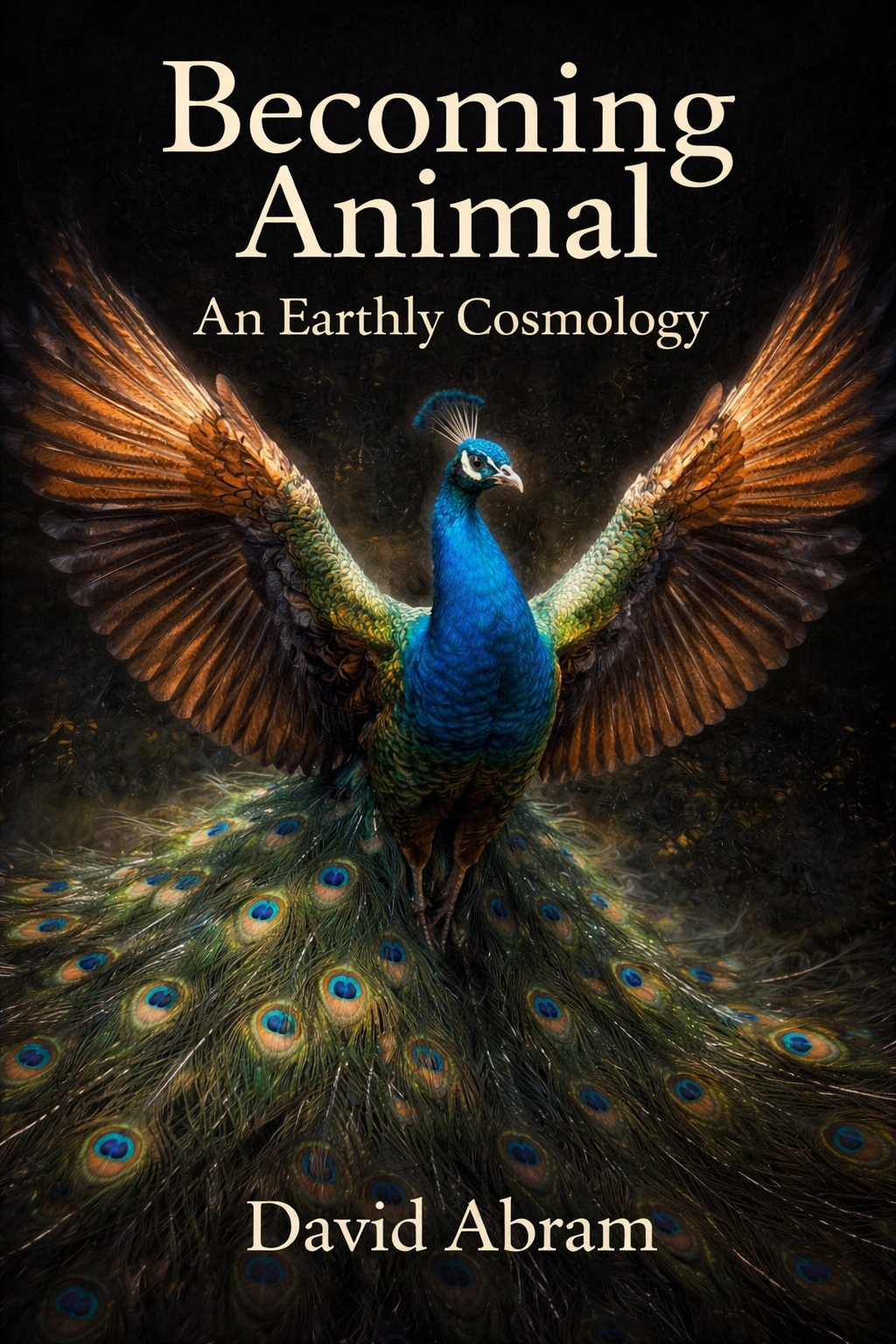
Becoming Animal: An Earthly Cosmology
Chapter Summaries
What's Here for You
Embark on a transformative journey with David Abram's *Becoming Animal: An Earthly Cosmology*, an invitation to shed the constraints of human-centric thinking and rediscover your profound connection to the living world. This book promises not just a reading experience, but a sensory awakening, urging you to move beyond the detached observer and embrace a deeper, more entangled existence. You will gain a radical re-enchantment with reality, learning to perceive the inherent aliveness in the material world, from the silent wisdom of wood and stone to the complex intelligence embedded in the very air you breathe. Abram challenges the illusion of human solitude, revealing how our moods and consciousness are inextricably bound to the earth's own rhythms and intelligences. Prepare to dismantle long-held philosophical divides, particularly the separation of mind from matter, and to understand consciousness not as a uniquely human trait, but as a pervasive quality of the biosphere. Through vivid explorations of depth ecology, materiality, and the myriad languages of the non-human world – the discourse of birds, the speech of things – you will learn to listen to the subtle communications that surround us. The book delves into the realms of magic and shapeshifting, not as fantastical concepts, but as potent metaphors for our own inherent capacities to perceive and interact with reality in more fluid, dynamic ways. Ultimately, *Becoming Animal* offers a profound recalibration of your place in the cosmos, equipping you with a renewed sense of wonder and a visceral understanding of the 'real in its wonder,' inviting you to reside at the very heart of the world's vibrant, interconnected being. The tone is one of deep reverence, intellectual rigor, and poetic sensuousness, designed to stir both your mind and your senses.
SHADOW (Depth Ecology I)
David Abram, in "SHADOW (Depth Ecology I)," invites us into a profound sensory journey, beginning with a walk through a sun-dappled forest that gradually deepens into the embrace of shadow. As the narrative unfolds, we are guided from the dazzling, almost blinding light reflecting off a mountain lake, where vision is diffused and focus is lost, to the sharp, tactile clarity that emerges when the sun dips behind a ridge. This transition isn't merely a shift in light; it's a portal into a different mode of awareness. Abram reveals that our common perception of shadows as flat, two-dimensional projections on the ground is a profound misunderstanding, a symptom of our estrangement from our sensing bodies. He posits that a true shadow is a voluminous, three-dimensional presence, a 'mostly unseen presence that dwells in the air between my body and that ground,' an 'umbral depth' that touches us not just at our feet but at every point of our person. This 'living shadow' is presented not as an absence of light, but as a qualitative attribute of our physical being, a 'personal night, torn from the black cloak every morning.' As the day progresses, Abram illustrates how this shadow is absorbed into our flesh at midday, only to re-emerge as the sun recedes, deepening our connection to the local environment. The chapter masterfully shifts from the personal shadow to the shadow of the mountain, which envelops the landscape, fostering a 'common neighborhood—a zone of alliances and reciprocities.' This mountain shadow, in turn, gives way to the 'mammoth shadow of the earth' as night falls, drawing us out of ourselves into a cosmic awareness, a 'local neighborhood of the infinite.' The narrative culminates in the act of sleep, described not as an escape, but as a surrender to the earth's shadow, a recalibration of our 'neurons, composting the keen encounters of our waking hours,' allowing our individual lives to feed back into the wider life of the ground. Through this immersive, sensory exploration, Abram guides the reader from a shallow, light-dominated perception to a deeper, shadow-informed understanding of reality, urging us to recognize the shadow as an integral, potent aspect of our existence and our connection to the Earth.
HOUSE (Materiality I)
David Abram, in his chapter 'HOUSE,' invites us to reconsider our fundamental relationship with the material world, not as inert substances, but as living presences with whom we share a deep, often forgotten, kinship. He begins with a dreamlike awakening, where the boundary between the self and the book, the desk, and even the floor dissolves into a world teeming with snails, a potent metaphor for the pervasive, slow-moving life that underlies our perceived reality. As Abram navigates his morning routine, from dressing to preparing tea, he observes the subtle ways our modern lives, particularly our reliance on chairs that suspend us from the earth, create a distance from this vital connection. He reveals how gravity, once understood as Eros or a mutual desire between the body and the Earth, has become associated with mere heaviness, obscuring the profound nourishment that physical contact with the ground offers. Abram posits that even the artifacts we use—the wooden beams of a house, the porcelain of a cup, the rubber of tires—are imbued with the earth's vitality, retaining a trace of their origin, a 'dark resonance that sustains and feeds things.' The tension deepens as he recounts his experience of returning home to an empty house after his daughter, Hannah, departs with her mother. Initially, the house seems to mirror his own feelings of desolation, appearing 'accusatory' and 'heavy,' a stark contrast to the vibrant, responsive environment it was when filled with Hannah’s presence. This startling encounter challenges the conventional view of objects as passive, suggesting instead that material things actively influence and respond to the bodies within their ambit. The profound insight emerges during a moonlit night, when Abram, facing the imminent departure from this home, truly perceives the 'sinew-strong' wooden beams not as mere construction, but as individual entities with unique characters, with whom his body has been in silent, ongoing conversation. This realization of an ancient solidarity, a language older than words, rooted his mind back into his breathing body, allowing him to feel the cool bricks and the air currents, fostering a sense of belonging and kinship with the structure itself. The resolution lies in recognizing that our homes and possessions are not inert backdrops but active participants in our lives, carrying the memory of the earth and responding, in their own way, to our presence and absence, ultimately urging us towards a more embodied, reciprocal way of being with the world.
WOOD AND STONE (Materiality II)
David Abram, in "Wood and Stone," invites us to reconsider our deeply ingrained assumption that consciousness is a uniquely human attribute, a notion that, he argues, severs us from a more vital, interconnected existence. He begins with a poignant childhood memory—a night of coyote howls and a child’s immediate, unadulterated sense of the world’s aliveness—contrasting it with the adult lesson that such sentience is confined to humans. Abram posits that a newborn emerges not into a blank slate, but into a pervasive field of feeling, where the nascent sense of self co-arises with the dawning awareness of 'otherness.' This primal connection, where the mother’s body is initially coextensive with the world, slowly differentiates, teaching us about the world through our own sensations—the ground beneath our feet, the caress of the wind. He contends that the child’s spontaneous affinity with nature, where a tree or a stone might be perceived as a counterpart, is not mere projection but a fundamental way of knowing, a precursor to a nuanced respect for the manifold life of the cosmos. This intuitive understanding, however, is systematically eroded by our civilization's embrace of language and technology, which create a rupture, teaching us to see the world as inert objects waiting for human consciousness to animate them. Abram challenges this anthropocentric view, suggesting that the perceived inertness of matter, like stone, is a conceptual overlay, not a sensory reality. He uses the example of a large rock, imploring us to see its 'stubbornness,' its 'obdurate persistence' in simply existing, as an active engagement with the cosmos, a 'wild activity' displayed by its presence. This active being, he explains, is what draws our senses, not a passive object, but an 'enigmatic presence' that reveals itself in an open-ended relationship, always holding something back, always beckoning our curiosity. Van Gogh's art, Abram reveals, becomes a powerful testament to this perspective, his canvases bursting with the vibrant, interconnected life of all things—trees dancing with the sky, pebbles conferring with blades of grass, stars actively secreting space. Van Gogh, unwilling to abstract his intellect from his body's reality, painted a cosmos where nothing is inert, where every element is in passionate dialogue, demonstrating that our animal senses, unlike our conceptual minds, perceive only by interacting, by participating in the rhythms of disclosure and concealment. The profound shift in our collective appreciation of Van Gogh’s work, Abram suggests, stems from our increasing exposure to his canvases, which have begun to loosen the 'lock on our own senses,' allowing us to see the vibrant spontaneity in commonplace objects. Ultimately, Abram guides us to a specific sandstone cliff, a place where the tension between the human subject and the 'inanimate' object is palpable. When one exclaims that the rock 'moves' them, the retort is not that it’s a metaphor, but that the rock *physically* moves the body, revealing a relationship between two dynamisms—two different ways of being animate, two distinct expressions of earthly life. The chapter concludes with the profound insight that this deep, felt connection is not a fanciful projection but a practical, ancient way of being in the world, a way of aligning our human organism with the cosmos that ensures survival and flourishing, a truth our animal bodies have always known, even if our words have forgotten.
RECIPROCITY (Knowledge I: Science and Experience)
David Abram, in "RECIPROCITY," invites us to a profound re-enchantment with the world, urging a shift from perceiving ourselves as detached observers to recognizing our intrinsic entanglement with the living biosphere. He begins by drawing our attention to the simple act of touching, revealing how our hands, the very organs of exploration, are themselves palpable entities within the tactile field they investigate. This sensory reciprocity, Abram explains, extends beyond touch; our eyes, too, are part of the visual landscape, and we feel ourselves seen by the very hillsides we gaze upon. This fundamental interconnectedness, this interweaving of self and terrain, is the very structure of perception. He illustrates this with the sensation of walking barefoot, where the ground ceases to be a passive support and becomes a responsive partner, dictating the rhythm of our steps. This embodied awareness, this felt contact with other lives, is a gift economy where each entity partakes and gives in return, a truth often obscured by our modern discourse that objectifies nature. Abram critiques scientific language that isolates us from our senses, arguing that viewing the world as inert objects or mere mechanical processes severs our connection to the animate earth, leading to a diminishment of our sensory engagement. He recounts his own intellectual journey, from the abstract void of subatomic physics to the more grounded, yet still disembodied, explanations of genetics, each step leading him further from the felt reality of the natural world he loved as a child—the frogs, the wind, the rustling leaves. This detachment, he contends, is not only a perceptual error but a dangerous one, leading to the ecological crises we now face, as we exploit a world we no longer feel ourselves a part of. The core insight is that our abstract scientific understanding, while powerful, is fundamentally rooted in and dependent upon our direct, embodied experience of the earth; the language of pure objectivity, though useful, often obscures this foundational reciprocity. Abram proposes a different way of speaking, one that acknowledges the "enigmatic otherness" and agency of all phenomena, thereby reawakening our senses and fostering a "conviviality" between the human animal and the animate earth. This animistic perspective, he argues, opens the possibility of genuine interaction and exchange, making evident the consanguinity between ourselves and the enfolding terrain, and aligning our language with the provisional nature of sensory experience itself. Ultimately, Abram suggests that true knowledge is carnal knowledge, born of the encounter between our flesh and the landscape, and that our abstract scientific insights, however brilliant, must be translated back into the language of lived experience to be truly meaningful and beneficial for the entire biosphere. The chapter concludes with a call to unplug from our screens and re-engage with the sensuous world, recognizing that beneath the abstractions lies the "animal stirrings" and the "dreaming land" that sustains us all.
DEPTH (Depth Ecology II)
The author, David Abram, invites us into a profound exploration of depth, not merely as a spatial dimension, but as a fundamental way our animal senses engage with the living world. He recounts a hike where a seemingly flat valley floor transforms into a complex maze of hills and ravines, a metamorphosis that sharpens his senses and reveals the dynamic, ever-shifting nature of perception. This initial disorientation, a feeling of being delightfully lost, becomes the catalyst for a deeper awareness, a realization that depth is intrinsically tied to our bodily position and our visceral connection to the environment. Abram illustrates how our perception of depth is not fixed but fluid, altering with every movement, much like the landscape itself seems to dance and reform before our eyes. He draws a compelling parallel between this natural phenomenon and the art of sleight-of-hand, where nearby surfaces cleverly conceal farther ones, and how the very dimension that allows clouds to obscure mountains also enables a magician to make a coin vanish. A central tension emerges: our modern immersion in flat, representational media—screens, books—has impoverished our depth perception, leading us to view the world as a detached spectacle rather than an encompassing embrace. This disembodied gaze, he argues, dispels the 'trickster-like magic' of the world, flattening our experience into a series of objective facts devoid of the ambiguous, metamorphic vitality that characterizes our true dwelling within the earth. The narrative culminates in a powerful shift, moving from the intellectual understanding of depth to a felt, embodied experience, where the author, fully present in his animal body, recognizes his immersion not 'on' but 'in' the earth, understanding the air itself as an extension of the planet, a fluid element that binds us all in a shared, breathing existence. This journey from disorientation to deep immersion offers a resolution, a call to reclaim our sensuous engagement with the world and to remember that we are not mere spectators but participants in its ongoing, mysterious dance.
MIND (Knowledge II: The Ecology of Consciousness)
David Abram, in "MIND (Knowledge II: The Ecology of Consciousness)", embarks on a profound exploration that dismantles the Cartesian dualism, the centuries-old philosophical divide that separated mind from matter, and subsequently, the brain from the rest of the body. He reveals how this persistent split, born from Descartes' notion of extended substance (matter) and thinking substance (mind), has led us to a subtle, yet equally problematic, dualism where the brain is seen as the sole seat of consciousness, detached from the mechanical body. Abram challenges this by presenting evidence from diverse thinkers and scientists who highlight the profound interdependence of the entire organism with mental experience. He draws a powerful parallel to Baruch Spinoza, who, centuries earlier, posited that mind and matter are not separate substances but merely different attributes of one unified substance—God, or Nature. Spinoza’s radical idea, which led to his excommunication, was that all things are ensouled, that the human mind is the sentience of the human body, and by extension, that intelligence is an attribute of nature itself. Abram then guides us through a vivid personal narrative of his own journey into the wilderness of the Rocky Mountains, where the absence of words allowed him to experience a more embodied form of thinking, a consciousness interwoven with the landscape. He illustrates how thoughts can be like wild creatures—deer that appear at the periphery of awareness, shy and elusive, or subterranean streams nourishing the soil beneath conscious thought. This experience leads to a pivotal insight: mind is not solely a human possession, nor is it confined to the brain, but rather it is an attribute of the Earth itself, a vast, enveloping medium in which we are immersed. He suggests that our awareness, our sentience, emerges from the ongoing encounter between our bodies and the living world, a dynamic interplay that blurs the lines between inner and outer experience. Abram argues that clinging to the idea of a purely human, isolated mind perpetuates a profound solitude, a disconnection from the vibrant intelligence of the planet. He urges a return from our 'screendazzled swoon' to recognize that mind is not ours alone, but is the 'steady dreaming of this Earth,' a fluid, interconnected medium that binds all beings, urging us to awaken to this wider intelligence before it is too late.
MOOD (Depth Ecology III)
David Abram, in his chapter 'MOOD,' invites us to shed the illusion of human solitude, revealing a profound truth: we are inextricably bound to the land and air that surrounds us, each terrain possessing its own unique intelligence and 'mood.' He begins by dismantling the notion of humans as sole conscious agents, liberating us from a crippling sense of isolated responsibility and casting us instead as 'accomplices in a vast and steadily unfolding mystery.' This shift in perspective, Abram explains, allows us to recognize that each ecosystem, from the salt-tinged air of the Pacific Northwest to the shimmering heat of the desert Southwest, imparts a distinct awareness, a unique dialect spoken by its inhabitants, from ravens to rivers. He argues that this intimate, sensory connection to place, cultivated through prolonged immersion—allowing the 'scents of the soil steadily seep in through my pores'—is essential for our own mental and emotional metamorphosis, mirroring the land's own rhythms. The author illustrates this with vivid examples: the way the atmosphere shapes the very temperament of cities, or how ancient structures in Prague become conduits for the 'telluric intelligence of the local earth,' preserving a unique psyche resistant to modern economic forces. Abram then masterfully shifts to the profound influence of the elements themselves, describing how weather—the 'moods' of the land—directly impacts our own disposition, whether it's the lethargy induced by a humid, foggy day or the crisp clarity brought by a brilliant, windless morning. He contrasts the isolating speed of automobiles and the disorienting abstraction of air travel with the profound sensory engagement offered by walking or cycling, which allows for a gradual attunement to the earth's shifting states. The chapter builds to a powerful emotional arc, moving from the tension of feeling disconnected and overwhelmed, as seen in the author's personal account of a snowstorm that dissolves his worries into 'white eternity,' to the insightful resolution that our inner moods are not merely projections but are deeply interwoven with and often borrowed from the 'moody, capricious earth itself.' Ultimately, Abram posits that our modern conception of a private, isolated inner mind is a consequence of losing touch with an ancient, shared interiority—the cosmos perceived as a vast, enclosing body—and calls for a reawakening of our animal senses to participate more fully in the 'wild, intercorporeal life of the earth.'
THE SPEECH OF THINGS (Language I)
David Abram invites us into a breathtaking Alaskan seascape, where the rhythmic slicing of his paddle against the water mirrors his own breathing, a prelude to a profound exploration of language beyond human words. As he kayaks toward two small islands, the silence is broken by the beating wings of ducks and the piercing cry of an eagle, each sound a note in nature’s symphony. His journey leads him to a raucous sea lion colony, their guttural roars igniting a primal fear, a tension that echoes a past encounter with a startled mother moose. In that moment of perceived threat, Abram discovers a potent truth: the body itself speaks, not just through words, but through tone, rhythm, and gesture, a visceral language shared across species. He recalls his instinctive, resonant singing to the moose, a non-verbal communication that eased the tension, and applies this wisdom to the bellowing sea lions, countering their barbaric yawp with his own guttural howl, a sound that strangely stills them. This encounter, amplified by the sudden, awe-inspiring appearance of a humpback whale – a colossal, breathing warning from the deep – plunges him into a deeper understanding of the 'language of things.' The whale’s immense presence, a moment of near-catastrophe, serves as a divine intervention, a reminder of nature's power. When the agitated sea lions surge towards him, Abram’s instinct takes over, not with words, but with a dance, his splayed fingers swaying, a gesture that captivates their attention, bringing a momentary, silent truce. This dance, a physical articulation of intent, reveals a core insight: communication transcends human speech, residing in the felt experience of the body and the expressive potency of all animate existence. Abram posits that language is not solely a human attribute but a property of the animate earth itself, a 'telluric power' shared by all beings, from the rustling grass to the harrumphing sea lion. He argues that alphabetic writing, by focusing on human sounds, has led us to forget this primal, wordless language, creating a 'hall of mirrors' where we are trapped by our own reflections, detached from the suffering of the planet and its creatures. The resolution lies not in more words, but in dropping beneath the spell of inner speech to listen to the 'wordless silence,' to embrace the 'spherical eternity' of the tangible world, recognizing that true wholeness and holiness are not elsewhere, but are the very fabric of this animate immensity that enfolds us. This deep listening, this full-bodied attention to the world’s many voices, is the source of word magic, a way to re-enter a profound communion with all things, a return to the sacred One that whispers from every stone and every breath.
THE DISCOURSE OF THE BIRDS (Language II)
David Abram invites us into a world where the very air hums with a language far richer than our own, a symphony of the wild that we, ensnared by our human-centric view, often fail to perceive. He begins by painting a vivid, almost cosmic scene: a celestial sphere, gradually illuminated by a creeping light, then shadowed by an encroaching darkness, each movement accompanied by a subtle, whispering sound that transforms into a complex, layered chorus. This is not mere noise, Abram explains, but the dawn discourse of birds, a dense membrane of speech carrying warmth, its sonic edge ebbing and flowing with the terrain, swelling with the cries of gulls and the gurglings of meadowlarks, the raucous banter of ravens and the mournful yodeling of loons, each utterance finding its unique tonal niche. As this dawn chorus fades, giving way to the day's necessities, Abram draws us into a visceral experience: caught in a coastal estuary's tempest, he hears human-like conversation amidst the gale, only to discover it is the urgent, calm-sounding quacks of ducks battling the wind. This encounter becomes a turning point, a profound realization that these birds are not mere automatons of instinct, but fully awake entities engaged with the present moment, their communication a nuanced sharing of vital information about the wind's capricious nature. This leads Abram to a central tension: our inherited concepts, particularly the belief in a strictly centralized human intelligence, blind us to the distributed sentience of other animals. We mistake our own abstract, disembodied cognition for intelligence itself, failing to recognize that creatures in constant, unmediated relation with their surroundings think with their whole bodies. Flight, he reveals, is a form of thinking, an uninterrupted improvisation with the unseen atmospheric currents, a kinetic conversation where tactile and kinesthetic sensations translate instantly into muscular adjustments. This intelligence, this 'thinking with the limbs,' is particularly keen in birds, whose ability to navigate an omnidimensional plenum of air currents far surpasses our own limited, ground-bound perception. Abram then shifts to a resolution, urging us to tune our ears to the 'discourse of the birds,' a language that indigenous peoples have long understood as sacred, a vital source of news and wisdom about the wider world. He breaks down this avian language into five basic phrases—song, companion call, begging cries, aggression calls, and alarm calls—each carrying specific meanings that can alert us to danger, social states, or even the presence of humans. By learning to distinguish these calls and their source, we can begin to understand the dynamic life of the forest, to track the movements of other creatures, and to re-establish our rapport with the natural world. Ultimately, Abram suggests that the angelic figures of human lore may well be echoes of these feathered emissaries, their songs and flights once representing divine messengers, reminding us that true intelligence is not solely our own, but a vast, interconnected conversation unfolding across the Earth.
SLEIGHT-OF-HAND (Magic I)
The author, David Abram, embarks on a quest into the Himalayas to learn from traditional magic practitioners, or jhankris, a journey that quickly becomes a profound exploration of perception, animal intelligence, and the very nature of reality. Initially seeking to understand the 'magic' of these healers, Abram finds himself drawn into a deeper experience of the world, one where the boundaries between human and animal, self and environment, blur. His initial attempts to connect with a jhankri are met with curiosity and indirectness, mirroring the subtle ways traditional peoples approach their mystics. He recounts an experience with an ancient man in a Sherpa village, whose seemingly senile mutterings and motionless demeanor are revealed to be a masterful, covert act of hunting a raven, demonstrating a profound connection to the animal world and a deep understanding of timing and subtle action. This encounter foreshadows the central revelation: that true magic lies not in illusion, but in a heightened, embodied awareness of the living world. As Abram travels deeper, his own body begins to respond to the presence of potent shamans, his gait becoming more springy, his senses sharpening, as if attuning to the gravitational and olfactory currents of the earth. This physical transformation mirrors a mental one, a shedding of abstract thought in favor of carnal, visceral intelligence. The climax of this chapter arrives when Abram finally meets the powerful jhankri, Sonam, and his wife, Jangmu. Their home becomes a crucible for his transformation, where the mundane act of carrying wood or walking a steep trail dissolves the separation between his conscious thoughts and his aching body, revealing the earth itself as a sentient presence. He learns that magic is not about spectacle, but about being wholly gathered into the present moment, about recognizing the wild, untamed sentience of all things. The chapter culminates in a breathtaking encounter where Sonam, with startling fluidity, transforms into a raven and back again, a moment that shatters Abram's conventional understanding of reality and marks the true beginning of his apprenticeship, revealing that the deepest magic lies in the carnal, embodied participation in the breathing life of the planet.
SHAPESHIFTING (Magic II)
David Abram, in "SHAPESHIFTING (Magic II)", invites us to reconsider the very nature of our bodies, not as static containers of flesh and bone, but as dynamic, porous terrains where the external world constantly converges and transforms. He reveals that our capacity for metamorphosis is not an exotic affair, but an inherent aspect of our being, evident even in the mundane—like the lingering influence of a film that causes one to instinctively flatten against a building, or the way written words can rearrange our neurons, altering our perception of time itself. This profound plasticity is further illuminated by Abram's own experiences with language, where his unconscious mimetic tendencies allowed him to effortlessly adapt accents and shed colloquialisms when speaking with foreigners, demonstrating a deep, somatic intelligence that bypassed intellectual understanding. This sensitivity, initially a source of discomfort, proved to be a crucial gift, particularly when he ventured into traditional indigenous communities where the land and its myriad inhabitants were acknowledged as sentient beings. Here, his porous nature allowed for a felt relation with nonhuman sentience, a stark contrast to the West's tendency to compartmentalize experience. The narrative then pivots to the transformative encounter with Sonam, a man deeply attuned to the natural world, who teaches Abram the art of 'dancing' with other animals, a practice central to shamanic traditions. Through patient observation and embodied mimicry, one can begin to taste the 'flavor of its experience,' entering into the felt intelligence of another creature. Sonam’s own remarkable shapeshifting into a raven becomes a pivotal demonstration, not merely of illusion, but of a profound bodily metamorphosis achieved through deep immersion and a precise orchestration of sensory input—timing, posture, vocalization, and a radical alteration of one's own sensory organization. This leads to a series of perceptual exercises, pushing Abram beyond mere observation to a state of 'synaesthesia,' where senses blur and meld, enabling a deeper communion with the world. By focusing intently, first on rocks, then on ravens, and finally by integrating tactile and visceral sensations with sight, Abram begins to experience the world not as a collection of separate objects, but as a fluid, interconnected field of feeling. The climax arrives as Abram, guided by Sonam, achieves a profound sense of flight, not just visually, but viscerally, feeling the raven's movements as his own, experiencing the exhilarating paradox of falling yet being safe, of being held within the 'cupped hands of the sky.' This journey culminates in the understanding that perception itself is a form of synaesthesia, a constant intermingling of senses that allows us to truly connect with the 'otherness' of the world, revealing our bodies not as closed systems, but as open circuits that complete themselves only in relation to the earth and all its inhabitants.
THE REAL IN ITS WONDER (Language III)
David Abram, in "THE REAL IN ITS WONDER (Language III)" from *Becoming Animal: An Earthly Cosmology*, invites us on a profound journey, beginning with a stark encounter in the Badlands, where the sheer immensity of the landscape initially overwhelms the human observer, rendering them a tiny, insignificant speck. This overwhelming scale, however, shifts dramatically with the mere appearance of a human-made sign – a garbage pail – which deflates the wild grandeur, domesticating it into a merely human-scale terrain. This sharp contrast, Abram reveals, highlights a central tension: the potent, almost magical ability of the written word and technology to shrink the elemental power of the wild, to mute the vibrant agency of the natural world and draw us back into our verbal, often abstract, human consciousness. He posits that our modern world, filtered through countless technologies, has created a profound disconnect from the earth, a disconnect exacerbated by television's curated nature spectacles that make our immediate surroundings seem placid and unreal. Yet, beneath this mediation, Abram insists, our primal animal senses, co-evolved with the animate landscape, still yearn for direct contact with the 'morethanhuman multiplicity and weirdness' of reality. He argues that while all language mediates, abstract and particularly written languages significantly opaque our experience compared to the transparency of nonwritten, oral languages, which allow the world's beings to shine through more directly. The rapid vanishing of these oral languages, Abram notes, is inextricably linked to the fragmentation of local ecosystems, underscoring a deep entanglement between linguistic vitality and the land's coherence. He then articulates nine qualities of oral awareness, emphasizing its local orientation, its perception of an interchange between beings, the dynamism and animacy of all phenomena, the expressive power of each entity, the inherent partiality of our view, the world as story, time as cyclical, the world permeated by imagination, and the participation of each entity from its unique angle. This ancestral, oral mode of consciousness, which shaped human awareness for over 95 percent of our history, has been largely dormant in the modern era but remains accessible beneath our civilized veneer. Abram contends that the written word, while offering portability and cosmopolitanism, divorced wisdom from its place-based origins, effectively silencing the land by transcribing its stories onto paper, making them abstract and detached from the sensory experiences that birthed them. This detachment, he suggests, is a primary reason for our culture's heedless destruction of the natural world, despite our access to vast stores of ethical knowledge. The solution, he proposes, is not to renounce technology or literacy, but to consciously cultivate an 'ecological imperative' by revitalizing oral culture – by making space for unmediated, face-to-face storytelling, by listening to the land's many voices, and by re-establishing a vital reciprocity with the breathing earth. This renewal, he concludes, offers a path toward genuine security and a deeper, more grounded sense of self, rooted in the primordial wellsprings of culture and wonder.
At the Heart of the Heart of the World
David Abram, in "At the Heart of the Heart of the World," invites us on a profound journey, challenging our modern, literalistic understanding of reality by exploring ancient cosmological tales. He begins with the evocative narrative, common among indigenous peoples, of the sun journeying beneath the earth each night, resting at its center before rising again. This story, he explains, isn't about factual accuracy in our scientific sense, but about attuning ourselves to our sensory experience of the cosmos—a world that speaks directly to our bodies. Abram contrasts this with the shift brought by alphabetic literacy, which fostered a distinction between literal and metaphoric truth, detaching language from the animate, expressive landscape. He argues that these oral traditions understood the world as metamorphic, not merely literal or metaphorical, where land and beings are alive and constantly transforming. This is vividly illustrated when Abram recounts an experience in the mountains: a flock of sandhill cranes, visible only as shimmering patterns of reflected sunlight, vanishing into the blue sky, and later, seemingly cerulean blossoms transforming into blue butterflies. These moments reveal a reality that shapeshifts, a breathing cosmos prior to our explanations. The core tension arises from our civilization's detachment from this sensuous, metamorphic world, leading to a disparagement of the physical and a disconnect from nature. Abram posits that our scientific understanding, particularly gravity's pull on Earth's core, mirrors the ancient intuition of a powerful, radiant presence within the earth. He asserts that modern science, by completing the Copernican revolution and re-centering our embodied experience, can help bridge the rift between mind and body, intellect and senses. This reconnection is crucial, as our current scientific and spiritual paradigms often detach from the earth, either reducing nature to inert objects or projecting all creativity into unseen realms. Even debates around intelligent design and evolution, he suggests, can be trapped in this dualistic thinking, viewing the cosmos from a detached, 'view from nowhere' perspective inherited from monotheistic traditions. Abram calls for a renewed humility and empathic attunement, recognizing the inherent creativity and enigma within all sensible things, from granite slabs to woodpeckers. This recognition, he implies, can lead to a profound shift in our relationship with the biosphere, moving away from exploitation towards respect and care. The chapter culminates on the winter solstice, a time of profound darkness, where Abram finds hope not in escaping grief but in embracing it, seeing tears as keys to a locked wonder. He connects the drumming heart within us to the pulse beneath the ground, suggesting that the sun's subdued power sleeps and dreams at the earth's core, its energy radiating outward through rock, magma, and eventually, through living beings, including ourselves. This understanding, he concludes, completes the revolution by bringing cosmic insights back down to earth, acknowledging matter not just as created but as inherently creative, a generative force that animates our world and ourselves, urging us to honor the wildness and wonder of earthly existence.
Conclusion
David Abram's *Becoming Animal: An Earthly Cosmology* serves as a profound call to awaken our dormant sensory intelligence, urging us to shed the dissociative lens of modern, anthropocentric thought and re-immerse ourselves in the vibrant, reciprocal web of life. The book masterfully dismantles the illusion of inert matter and isolated consciousness, revealing instead a world alive with inherent sentience and dynamic dialogue. From the tangible presence of shadows as voluminous entities to the 'erotic nature of gravity' and the 'earth-memory' embedded in objects, Abram demonstrates that our bodies are not passive recipients of external stimuli but active participants in a ceaseless, sensory exchange with the living biosphere. He challenges the primacy of abstract, word-bound knowledge, advocating instead for a 'carnal knowledge' – a deep, felt intimacy with the land and its myriad inhabitants. This involves embracing the 'language of things,' deciphering the sophisticated discourse of birds, and recognizing the metamorphic potential within our own animal bodies. The emotional lessons are equally potent: a reawakening of wonder, a profound sense of belonging, and the understanding that grief, when embraced, can deepen our connection to the Earth's pulsing life force. Practically, Abram guides us towards a more grounded existence by advocating for embodied forms of travel, attentive listening to the non-human world, and a direct, reciprocal way of addressing phenomena. He urges us to complete the Copernican revolution by integrating cosmic insights with our immediate, sensory experience, ultimately fostering humility, empathy, and a genuine kinship with the entirety of the living world. *Becoming Animal* is not merely a book; it is an invitation to a radical reorientation of perception, a reclaiming of our innate animacy, and a vital step towards ecological and personal wholeness.
Key Takeaways
Our modern understanding of shadows as flat, two-dimensional projections is a cognitive distortion stemming from a disconnect between our thinking minds and our sensing bodies, obscuring the shadow's true nature as a voluminous, three-dimensional presence intimately connected to our physical form.
The emergence of shadow, particularly as light recedes, shifts our awareness from a diffused, dazzling perception to a more focused, tactile, and richly textured experience of the environment, revealing the potent intelligence of the non-human world.
Shadows are not mere interruptions of light but qualitative attributes of bodies, creating 'timedependent realms' and 'momentary life zones' that foster unique alliances and reciprocities between entities, as exemplified by the mountain's shadow gathering local life.
The shadow of the earth, or night, serves as a vast, encompassing presence that draws us out of our individual, vertical stance and into a cosmic awareness, connecting us to the immensity of the universe and the deeper rhythms of the planet.
Sleep is presented as a profound biological habit born from the earth's shadow, a process of 'composting' our daily experiences and recalibrating our individual will into the larger, breathing life of the Earth, thereby restoring a sense of wholeness.
Recognizing and embracing the presence and influence of shadow, both personal and cosmic, is essential for a more complete and grounded understanding of ourselves and our place within the larger terrestrial and celestial neighborhood.
Our modern detachment from the earth, often facilitated by objects like chairs that elevate us, severs a vital source of physical and erotic nourishment, fostering a sense of heaviness rather than connection.
Material objects, far from being inert, retain an 'earth-memory' and possess an active presence that influences and is influenced by the bodies around them, engaging in a silent, ongoing conversation.
An infant's unmediated curiosity and delight can reveal the inherent aliveness and responsiveness of inanimate objects, demonstrating a profound, pre-linguistic relationship with the material world that adults often lose.
The feeling of a home's 'mood' or 'accusation' is not merely projection but an indication of the deep, reciprocal relationship between humans and their dwelling, where structures can absorb and reflect emotional states.
True kinship with our surroundings, including our homes, arises from a deep, embodied awareness of the unique character and 'sinew-strong' presence of their material components, fostering a sense of belonging rooted in silent exchange.
Recognizing the 'erotic nature of gravity' and the 'enlivening pleasure of earthly contact' can reawaken our senses to the subtle vitality flowing through all things, reconnecting us to the larger Body of Earth.
Human consciousness is not an isolated interior trait but emerges from a primordial field of feeling that is shared with the wider world, and our sense of self co-arises with our awareness of otherness.
Our modern, anthropocentric worldview, which separates sentient humans from inert objects, is a conceptual construct that severs our innate, sensory connection to the animate earth, learned through language and technology.
The perceived inertness of matter, such as stone, is a conceptual illusion; rather, all beings, including rocks, actively engage with the cosmos through their persistence and presence, offering a dynamic enigma that beckons our senses.
Perception is fundamentally an active, relational process where our bodies engage with the inherent openness and uncertainty of other beings, rather than a passive reception of information from inert objects.
The art of Vincent van Gogh serves as a powerful testament to a world where all things are alive and in constant, passionate dialogue, offering a vision that can reawaken our own senses to the vibrant spontaneity of the natural world.
Our animal bodies retain an innate capacity to perceive the world as animate and interconnected, a practical mode of engagement that historically enabled human survival and flourishing, which modern conceptual frameworks tend to suppress.
The relationship between humans and the non-human world is not one of subject to object, but a dynamic interplay between different forms of animacy and being, where the presence of one entity can physically move and alter another.
Recognize that sensory perception is an act of reciprocity, where we are simultaneously sensing and being sensed by the world around us.
Challenge the objectifying language of modern discourse and science that divorces us from our embodied experience and the animate earth.
Understand that abstract scientific knowledge, while valuable, is ultimately rooted in and dependent upon direct, carnal experience of the natural world.
Embrace an animistic or reciprocal way of speaking about nature that acknowledges the agency and "enigmatic otherness" of all phenomena, thereby reawakening our senses.
Re-establish a "carnal knowledge" by prioritizing lived, felt relationships with the earth and other beings over purely detached, abstract understanding.
Integrate scientific insights back into direct, bodily experience to foster a deeper connection with and respect for the biosphere.
Depth perception is not a static, objective measure but a dynamic, embodied experience intrinsically linked to our physical presence and movement within the environment.
Our modern reliance on flat media has led to an impoverished depth perception, divorcing us from the world's inherent ambiguity and metamorphic magic.
True engagement with the living world requires a dissolution of the perceived distance between mind and body, fostering a felt sense of immersion rather than detached observation.
The air we breathe is not merely empty space but an integral, 'eairthly' element, generated by the planet's life, underscoring our fundamental dwelling 'in' rather than 'on' the earth.
Reclaiming our animal senses and embracing the world's inherent ambiguity is essential to dispelling the illusion of objective detachment and re-establishing our participatory connection to nature.
Challenge the Cartesian dualism that separates mind from matter and the brain from the body by recognizing the interconnectedness of the entire organism with consciousness.
Embrace Spinoza's concept of a unified substance (God/Nature) where mind and matter are attributes, extending the idea of sentience to all of nature, not just humans.
Understand that human consciousness is not an isolated phenomenon but emerges from the dynamic encounter between the embodied self and the surrounding natural world.
Reframe mind not as a private, internal possession but as an expansive, external medium—the Earth's intelligence—in which human and non-human beings are immersed.
Recognize that the human tendency to view the Earth as an inanimate object perpetuates a 'numbing solitude' and disconnects us from the wider intelligence of the planet.
Awaken to the 'Earth's steady dreaming' by re-engaging our senses with the natural world, understanding that our own intelligence is part of a larger, more-than-human consciousness.
Recognize that human consciousness and experience are not isolated but are deeply interwoven with the specific geological and atmospheric 'moods' of the land, fostering a sense of shared sentience.
Cultivate deep sensory attunement to a specific place over time, allowing its unique rhythms and subtle intelligences to shape personal transformation and emotional well-being.
Understand that weather phenomena are not mere external events but are 'moods' of the earth that directly influence human disposition and cognitive states, suggesting a reciprocal relationship.
Embrace slower, more embodied forms of travel, such as walking or cycling, as vital practices for sensory engagement and attunement, contrasting with the dissociative nature of modern transportation.
Reframe the concept of the 'inner world' not as a private, isolated space but as a legacy of an ancient, shared cosmic interiority, suggesting that our feelings and moods are born from interaction with the wider Earth life.
Challenge the modern tendency to view the world as a purely objective, quantifiable exterior, and instead, acknowledge the qualitative, felt experience of the land as a source of our own psychological depth.
True communication transcends human language, existing as a primal, felt 'language of things' expressed through bodily tonality, rhythm, and gesture, shared by all animate beings.
The human tendency to equate language solely with words, amplified by alphabetic writing, has led to a detrimental detachment from the animate earth and its myriad forms of expression.
Re-establishing a connection with the 'wordless silence' and listening deeply to the non-human world is essential for reclaiming a sense of wholeness and understanding our place within the biosphere.
Engaging with the world through direct address—speaking *to* things rather than merely *about* them—fosters a profound rapport and respect for the animate earth, akin to ancient forms of prayer.
The author's encounter with sea lions and a humpback whale illustrates the power of non-verbal, embodied communication to de-escalate tension and foster interspecies understanding.
The 'language of things' is not limited to living beings but extends to all phenomena, suggesting that every element of the natural world possesses an expressive agency that influences and informs us.
Our human-centric definition of intelligence, focused on abstract thought, blinds us to the rich, embodied intelligence of other animals, particularly birds, who think and communicate through their entire physical being and their dynamic interaction with the environment.
The complex vocalizations of birds are not mere instinctual calls but a sophisticated language, a 'discourse' that conveys nuanced information about their surroundings, social states, and potential dangers, serving as a vital news network for the entire ecosystem.
By learning to decipher the basic 'phrases' of bird language—song, companion calls, begging, aggression, and alarm—humans can gain a deeper understanding of the natural world, track animal movements, and re-establish a lost connection with non-human life.
The concept of 'angels' in human mythology likely originates from our ancestral reverence for birds as messengers and intermediaries between the earthly realm and a greater, perhaps divine, intelligence, reflecting their perceived ability to bridge worlds.
True wisdom lies in recognizing that intelligence is distributed throughout nature, and by attuning ourselves to the communication of other species, we can access a broader, more profound understanding of reality that transcends our limited human perspective.
True magic is not about illusion or spectacle, but about a profound, embodied attunement to the living world and its inherent sentience.
The author demonstrates that deep wisdom and connection to nature are often revealed through subtle, covert actions and a keen observation of animal behavior.
Human perception is limited; augmenting our senses by humbly observing and aligning with the ways of other animals can unlock deeper, non-human forms of experience and understanding.
The profound intelligence of the natural world is not confined to human consciousness but is a shared, elemental power accessible through our physical bodies and senses.
The author posits that sleight-of-hand, in its most ancient form, likely originated not as deception, but as a practical method for unlocking and activating the body's natural regenerative and perceptive capacities.
Embracing the 'carnal thickness' of our physical experience, rather than detaching into abstract thought, allows for a more potent and real connection with the animate earth and its mysteries.
Our bodies are not fixed entities but dynamic, permeable 'terrains' where the external world actively shapes and transforms us.
The human capacity for metamorphosis is an inherent trait, revealed in everyday experiences and amplified by deep sensory engagement with the world.
True understanding of other beings, human and nonhuman, arises not from intellectual analysis but from embodied mimicry and the integration of multiple senses.
Shapeshifting, in its deepest sense, requires a radical alteration of one's own sensory organization and a willingness to dissolve personal boundaries.
Synaesthesia, the blending of senses, is not a pathology but the fundamental structure of perception, enabling deeper connection and insight.
Perception is an active, reciprocal process where our senses 'trade' with the world, revealing the interconnectedness of all beings.
The written word and technology possess a powerful capacity to domesticate the wild, diminishing our sensory engagement with nature by abstracting its vitality into human-centric symbols.
Oral languages are deeply intertwined with the health and coherence of their ecosystems, and their decline mirrors the fragmentation of the natural world.
Oral awareness is characterized by a local, participatory, and animistic understanding of the world, where all phenomena possess agency and expressiveness, a mode of consciousness fundamental to human history.
The act of writing down oral traditions, while preserving knowledge, risks detaching wisdom from its place-based origins and sensory roots, thereby silencing the land's inherent eloquence.
Our modern detachment from the earth, exacerbated by technology, stems from a cultural shift away from embodied, oral ways of knowing towards abstract, mediated forms of perception.
Revitalizing oral culture, through unmediated storytelling and attentive listening to the land, is an ecological imperative for restoring our connection to the earth and fostering genuine community and security.
Recognize that ancient oral traditions convey profound truths about our sensory experience of the cosmos, predating the literal/metaphorical divide created by alphabetic literacy.
Embrace the world as metamorphic, where reality is fluid and constantly transforming, rather than fixed and determinate, to better align with our direct bodily awareness.
Reconcile scientific understanding with embodied experience by recognizing that the sun's influence is felt not only from above but also from the Earth's gravitational core, mirroring ancient intuitions.
Challenge dualistic thinking (mind/body, sacred/profane, good/evil) that devalues the physical world, understanding that true creativity and life emanate from the generative matrix of matter itself.
Cultivate humility and empathy by acknowledging the inherent enigma and creativity within all beings and elements, fostering a deeper connection to the living biosphere.
Understand that grief and sorrow, when embraced, can unlock a deeper sense of wonder and connection to the pulsing life force of the Earth.
Complete the Copernican revolution by integrating cosmic insights with our immediate, sensory experience, thereby re-grounding abstract knowledge within our corporeal reality.
Action Plan
Consciously observe your own shadow throughout the day, paying attention not just to its shape on the ground, but to the three-dimensional space it occupies around you.
When transitioning from bright light to shade, or vice versa, deliberately engage your other senses—smell, touch, hearing—to notice the qualitative shift in your perception of the environment.
Spend time in natural settings during twilight hours, allowing the deepening shadows to inform your awareness and attune you to the subtle shifts in the landscape.
During midday, when shadows are shortest, reflect on the concept of the shadow being absorbed into your flesh and consider how this might influence your internal state.
As night falls, observe the vastness of the earth's shadow and contemplate your connection to the cosmos, allowing the immensity to inform your perspective.
During your next sleep, embrace the surrender to gravity and the earth's influence, viewing sleep as a recalibration rather than mere rest.
Actively seek out and notice the 'alliances and reciprocities' fostered within shadowed spaces in nature, observing how different elements interact under the influence of shade.
Spend time consciously touching different surfaces in your home and environment, paying attention to their texture, temperature, and perceived 'presence'.
When sitting, consider consciously placing your feet flat on the floor for a few moments, noticing the sensation of contact and grounding.
Observe how a child (or remember your own childhood interactions) engages with objects, allowing their uninhibited curiosity to guide your own perception.
Take a moment to trace the grain of a wooden object, like a table or a beam, and consider its unique patterns and history.
When walking outdoors, consciously feel the ground beneath your feet, noticing the subtle shifts in terrain and the sensation of connection.
Reflect on a familiar object in your home and try to perceive it not just by its function, but by its material presence and its sensory qualities.
Engage in sensory observation of a natural object (like a stone or tree) for an extended period, noticing its physical presence and how it might be 'active' in its existence.
Pay attention to the immediate, bodily reactions you have to natural phenomena, acknowledging them as physical responses rather than purely mental experiences.
Reflect on the language used to describe non-human entities and consider how it might reinforce a separation between 'animate' humans and 'inert' nature.
Seek out art, particularly Van Gogh's, with the intention of perceiving the world through his eyes, looking for the vibrant dialogue between elements.
Practice 'listening' with your body to the rhythms and gestures of the environment, noticing how the land 'beckons' or 'rebuffs' your presence.
When encountering a natural element, consciously try to move beyond conceptual understanding and engage with its 'enigmatic presence' through direct sensory interaction.
Consider how your own sense of self is interwoven with the sensations and feelings that arise from your interaction with the physical world.
Practice mindful touch: consciously feel the texture of objects and notice how your own body is being touched in return.
Engage in barefoot walking: spend time walking outdoors without shoes to directly feel the earth's textures and responses.
Observe nature with reciprocal awareness: when looking at a tree or mountain, consider how it might also be 'seeing' or sensing you.
Question objectifying language: consciously reframe descriptions of nature from inert objects to animate participants in a dialogue.
Translate abstract knowledge into sensory experience: reflect on scientific concepts and find ways to connect them to your own felt bodily experience.
Spend time unplugged in nature: deliberately step away from screens and engage with the immediate, sensuous environment around you.
Listen actively to the non-human world: pay attention to the sounds and subtle communications of other organisms and natural phenomena.
Intentionally seek out experiences that challenge your sense of spatial perception, such as hiking in unfamiliar terrain or navigating dense forests.
Consciously practice shifting your focus between near and far objects in your environment throughout the day, noticing how your body adjusts.
Engage in activities that require fine motor skills and close sensory attention, such as drawing, crafting, or playing a musical instrument.
When using screens, take regular breaks to look out a window or at objects in your immediate surroundings, consciously re-engaging your depth perception.
Spend time outdoors without digital devices, allowing your senses to attune to the subtle shifts in light, sound, and texture of the natural world.
Reflect on your own experiences of disorientation or surprise in nature, and consider how these moments might offer insights into deeper environmental connections.
Actively challenge the assumption that consciousness is exclusive to human brains by observing and reflecting on the apparent intelligence in non-human life and natural phenomena.
Seek out moments of solitude in nature, free from verbal distractions, to attune to embodied thinking and the subtle shifts in awareness prompted by the environment.
Practice noticing the sensory details of your immediate surroundings—the feel of the air, the scents, the subtle movements—to recognize your physical entanglement with the Earth.
Consider how your own thoughts and moods are influenced by external conditions, such as weather or landscape, as a way to understand mind as an interactive medium.
Engage with nature not as an object to be observed, but as a participant in a shared field of experience, acknowledging the 'intercourse with the Earth'.
Reflect on the limitations of purely human-centric perspectives and actively seek to understand the world through the lens of other species and natural systems.
Embrace the idea that mind is a fluid, ever-changing phenomenon, much like the weather or the wind, rather than a fixed, internal entity.
Spend dedicated time outdoors, consciously engaging all your senses to observe the specific atmosphere, sounds, and scents of your local environment.
Choose walking or cycling for at least one journey per week, paying attention to the gradual shifts in terrain, air, and sensory input.
When experiencing strong emotions, consider their potential connection to the current weather or the surrounding natural environment.
Practice mindful observation of non-human beings—birds, insects, plants—and consider the unique 'intelligence' or 'mood' they might embody.
Seek out local histories or ecological information about your region to understand its unique geological and atmospheric influences.
Reflect on how your own moods might be influenced by the natural world, looking for metaphors of weather or landscape within your emotional experience.
Challenge the notion of a purely private inner world by considering how your feelings and thoughts are informed by your sensory interactions with the external environment.
Practice direct address: consciously speak *to* natural elements (trees, wind, water) rather than just *about* them, observing any felt shift.
Engage in mindful listening: dedicate time to simply being present in nature, paying attention to the subtle sounds and movements without immediate interpretation.
Embrace embodied expression: experiment with non-verbal communication, using gestures, vocal tones, or even dance to convey intent or emotion.
Reflect on personal language use: become aware of the *how*—the tonality, rhythm, and accompanying body language—of your own speech.
Seek moments of 'wordless silence': intentionally step away from constant inner dialogue and verbal consumption to attune to the surrounding world.
Observe animal behavior with an open mind: consider their actions and sounds as potential forms of communication, not merely instinctual responses.
Dedicate time to simply listen to the sounds of birds in your local environment, moving beyond identification to appreciating the texture and rhythm of their calls.
When encountering birds, observe their behavior closely, especially in challenging conditions like wind, and consider what information they might be communicating to each other.
Begin to learn the basic categories of bird vocalizations (song, alarm, etc.) by consulting field guides or online resources, noting the context in which they occur.
Practice intentionally bringing your awareness back to your physical body and its sensations, especially when walking in nature, to counter the tendency for thought to become detached.
Seek out opportunities to spend time in natural environments, consciously trying to perceive the non-human world as a dynamic, communicative system rather than a passive backdrop.
Reflect on how human language and communication differ from, and potentially limit, our understanding of animal communication.
When you hear alarm calls from birds, pause and try to discern the source or direction of the perceived threat, noting the height from which the calls originate.
Pay close attention to your physical sensations and bodily responses, particularly when in new or potent environments, to gauge your attunement to your surroundings.
Practice observing the behavior of local animals with humility and patience, attempting to understand their patterns and styles of interaction with their environment.
Engage in activities that ground you in your physical body, such as walking in nature, consciously feeling your footsteps and breath, to foster a deeper connection with the earth.
Experiment with deliberately slowing down your pace and breathing to notice subtle shifts in sensory input, such as smells, sounds, and textures, that are often missed in haste.
Consider how everyday 'illnesses' or discomforts might be, in part, your body's way of signaling a deeper attunement or response to your environment or spiritual state.
Explore the practice of 'perceptual legerdemain' in your own life by consciously trying to shift your perspective, as if seeing something for the first time, to uncover hidden layers of reality.
Practice focused observation of a single object or creature for an extended period, noticing subtle shifts and details.
Experiment with intentionally blending sensory inputs: notice how a sound might evoke a color, or a texture a taste.
Engage in mindful movement or dance, allowing your body to intuitively mimic the gestures of animals or natural phenomena.
Seek out experiences that challenge your usual sensory habits, like observing nature in varying light conditions or weather.
When interacting with others, consciously try to integrate sight, sound, and touch to gain a more holistic sense of their presence.
Cultivate a practice of 'listening' not just with your ears, but with your entire body to the environment around you.
Actively seek out and engage with the natural landscape immediately surrounding you, paying attention to its sensory details and scale.
Consciously practice unmediated storytelling, perhaps by recounting a personal experience or a traditional tale to a friend or family member without relying on written notes.
Dedicate time to simply listen—to the sounds of nature, to the rhythm of your own breath, and to the nuances of everyday conversation, setting aside technological distractions.
Explore local histories and folklore, connecting them to the specific places and natural features of your region.
When reading, pause to consider the origin of the knowledge and how it might be connected to a specific place or sensory experience.
Make an effort to support local food systems, such as farmers' markets, to foster a more grounded, place-based connection to sustenance.
Engage in activities that encourage embodied expression, such as dancing, singing, or walking mindfully in nature, allowing your body to participate in the environment.
Actively recall and reflect on ancient stories or local myths that speak to the natural world, considering their sensory and metaphorical resonance rather than their literal accuracy.
Engage in mindful observation of the natural world, paying attention to subtle shifts in light, color, and form, noticing how perceived reality changes as you move through it or as conditions change.
Seek out experiences that highlight the 'metamorphic' nature of reality, such as observing the transformation of a caterpillar into a butterfly or the changing seasons.
Practice grounding exercises, such as feeling your feet on the earth or placing your hands on a natural surface, to connect with the physical presence of the planet.
When confronted with complex phenomena, consciously consider both scientific explanations and the direct sensory experience of them, allowing both to inform your understanding.
Cultivate a sense of wonder by acknowledging the 'otherness' and inherent mystery in everyday objects and beings, suspending immediate judgment and definition.
Embrace moments of sadness or grief, recognizing them not as mere negativity but as potential gateways to deeper emotional connection and insight.
Consciously bring abstract knowledge (like scientific principles) back to embodied experience, asking how these concepts are physically felt or perceived in your own life.