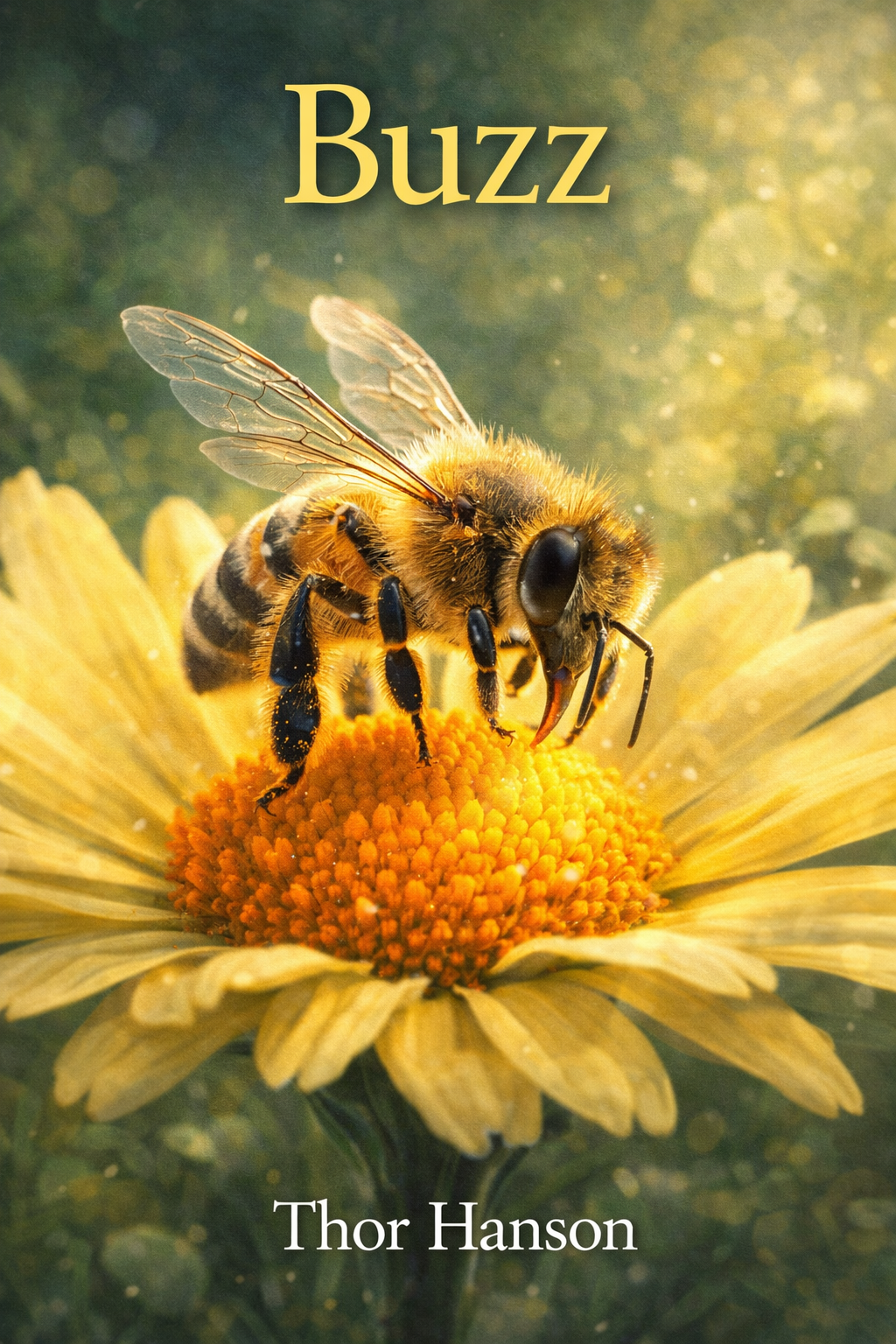
Buzz
Chapter Summaries
What's Here for You
Prepare to be captivated by the intricate and often surprising world of bees and their buzzing relatives. In "Buzz," Thor Hanson doesn't just present facts; he invites you on a journey of discovery, revealing the profound interconnectedness between these vital pollinators and our own existence. You'll be transported from the arid landscapes of Arizona to the vast almond orchards of California, witnessing firsthand the remarkable evolutionary transformations that have shaped the lives of wasps and bees. Hanson's narrative is a tapestry woven with personal anecdotes, scientific exploration, and a deep sense of wonder. He’ll help you understand the quiet diligence of solitary bees, the ancient relationship between honeyguides and humans, and the ecological revelation found in a toddler's unhurried pace. More than just an appreciation for the familiar hum of honeybees, this book delves into the often-overlooked contributions of thousands of sphecid wasps and the astonishing diversity of bees that thrive even in harsh environments. You will gain a newfound respect for the "living vibrato" of these creatures and understand why "every third bite" of our food depends on their tireless work. Beyond the scientific marvels, you'll explore the poignant reality of bee decline and the delicate balance between agricultural needs and ecological preservation. This book promises an intellectually stimulating and emotionally resonant experience, fostering a deeper connection to the natural world and a clearer understanding of our place within it. It’s an invitation to slow down, observe, and appreciate the buzzing symphony that sustains us all.
A Vegetarian Wasp
Thor Hanson, in 'A Vegetarian Wasp,' invites us to witness a remarkable evolutionary transformation, beginning not with the familiar hum of bees, but with the insistent buzzing of thousands of sphecid wasps. The author explains how, drawn by this earthy symphony, he set aside the pursuit of a rare butterfly to investigate these insects, discovering a vast colony of solitary sand wasps diligently digging their nests. This observation becomes the crucial starting point for understanding a profound shift in the natural world: the origin of bees. Hanson reveals that these 'waspy wasps,' as early entomologists aptly named them, were hunters, provisioning their young with paralyzed prey like flies. Yet, he illuminates a pivotal moment in the mid-Cretaceous, when a lineage of these wasps began to diverge, making a dietary switch from animal parts to the abundant sustenance offered by flowers. This was not merely a change in diet, but a fundamental alteration of lifestyle. Where wasps hunted for themselves and then hunted again for their offspring, these proto-bees found 'one-stop shopping' in flowers, gathering both sugary nectar for themselves and protein-rich pollen for their young. This transition, Hanson emphasizes, was a pioneering adaptation in a world where flowers themselves were still developing their distinctive traits, a stark contrast to the vibrant meadows we know today. The author then delves into the challenges of reconstructing this history, quoting expert Michael Engel, who laments the scarcity of fossils from this era, particularly from the arid environments where bees likely evolved, due to preservation bias favoring wetter habitats. Engel's insights highlight a central tension: the difficulty of pinpointing the exact moment of transition because the defining characteristic of a bee – eating pollen – is a behavior, not a physical trait. This makes recognizing the very first bee, which likely resembled its wasp ancestors, an immense challenge, requiring not just the insect but also fossilized pollen within its nest. Hanson beautifully illustrates the power of amber in preserving these ancient creatures in exquisite detail, offering glimpses of early bees that, while lacking modern complexity, already displayed the hallmarks of their new vegetarian path. Ultimately, this chapter resolves with the understanding that bees, born from the predatory lineage of wasps, embraced a peaceful, opportunistic lifestyle centered on flowers, a choice that not only defined their existence but propelled them to incredible diversification and success, a testament to the power of evolutionary innovation born from a single, audacious dietary shift.
The Living Vibrato
The author, Thor Hanson, transports us to the arid landscapes of southern Arizona, a seemingly harsh environment that paradoxically teems with an astonishing diversity of bees, setting the stage for an immersive learning experience at 'The Bee Course.' Here, under the tutelage of esteemed entomologists like Jerry Rozen and Laurence Packer, participants embark on a journey to understand these vital pollinators, moving beyond the familiar honeybee to appreciate the vast, often-overlooked world of solitary native bees. Hanson recounts the initial challenge of distinguishing between the multitude of species, a task made both daunting and exhilarating by the sheer variety present in the desert. He introduces the fundamental anatomy of a bee—head, thorax, and abdomen—revealing the intricate design and specialized functions of each part, from the highly sensitive antennae that act as multi-sensory organs, processing scent, touch, and even magnetic fields, to the compound eyes that perceive motion with hyper-awareness and see a world painted in ultraviolet hues invisible to us. The narrative delves into the mechanics of flight, dispelling the myth of bumblebee impossibility through an understanding of rapid wingbeats and aerodynamic principles, and highlights the remarkable adaptations of bee legs for grooming, pollen collection, and locomotion. A central tension emerges as Hanson reflects on the necessity of collecting specimens for study, acknowledging the melancholic irony of taking lives to understand them, yet finding profound beauty and wonder in the process, particularly in the discovery of a stunning alkali bee, Nomia melanderi, whose opalescent exoskeleton mimics the iridescence of an opal. This personal encounter with a singularly beautiful specimen underscores the chapter's core insight: that true understanding often requires a deeper, more intimate engagement with the subject, moving beyond superficial observation to appreciate the complex, vibrant lives of these creatures. The chapter resolves by shifting focus from the individual bee's anatomy to its broader ecological role and the often-solitary lives of most bee species, posing the question of where these remarkable insects go after their work at the flowers is done, setting the stage for further exploration into their hidden worlds and the profound interconnectedness of life.
Alone Together
The author, Thor Hanson, invites us into the world of solitary bees, beginning with the story of Brian Griffin, a retired insurance salesman whose garden woes led him to discover the industrious orchard mason bee. What started as a simple quest for better fruit set blossomed into a profound appreciation for these remarkable, independent creatures and, unexpectedly, a thriving business. Hanson reveals that the solitary life, where each female bee meticulously builds and provisions her own nest, is an ancient and deeply conservative evolutionary strategy – a testament to the principle of 'if it ain't broke, don't fix it.' Brian's journey from hobbyist to 'bee evangelist' highlights how understanding and repackaging natural behaviors can lead to innovation, demonstrating that even established biological patterns hold untapped potential. We then delve deeper into the complex, often perilous world within these tiny adobe apartments. Hanson paints a vivid picture of the constant threats these bees face: not just environmental challenges, but a relentless barrage of parasitoids, like the jewel-like *Monodontomerus* wasps that hijack nests, and kleptoparasites, known as cuckoo bees, that stealthily lay their eggs in unsuspecting hosts' chambers, stealing their provisions. This intricate web of exploitation, where parasitism is a dominant theme in the Hymenoptera order, underscores the fierce competition for survival. Yet, even within this struggle, a fascinating evolutionary dance unfolds. The chapter explores the surprising gregariousness of these solitary bees, revealing that while they build individual nests, they often aggregate, a behavior Hanson explains as a form of 'safety in numbers' that diffuses risk. This proximity, over generations, can blur the lines between solitude and cooperation, leading some species to experiment with communal living, collective provisioning, and even altruism, hinting at the evolutionary pathways toward eusociality, the complex social organization seen in honeybees and ants. The narrative then pivots to the genetic underpinnings of social behavior, illustrating how relatedness, particularly the close genetic ties between sisters, can favor altruistic traits, where helping a mother or sisters reproduce can be more advantageous than going it alone. This spectrum of sociality, from strict solitude to nascent cooperation, is a dynamic evolutionary story, still unfolding. Hanson concludes by posing a fundamental question about why the pollen-eating habit, so successful in bees, has not evolved more often among their predatory wasp ancestors, leaving us with a sense of the vast, intricate, and often surprising tapestry of life that plays out in the hidden corners of the natural world.
A Special Relationship
Thor Hanson, in his chapter 'A Special Relationship,' invites us to witness a profound evolutionary dance, one that began not with grand pronouncements, but with the quiet, almost accidental, shift of a tiny wasp named Krombeinictus nordenae. We journey with botanist Beth Norden to Sri Lanka, where the discovery of this unusual sphecid wasp, feeding its larvae on pollen rather than the traditional insect prey, sparks a pivotal question: why did this dietary change lead to the explosive success of bees, while this particular wasp remains so elusive? Hanson masterfully weaves this narrative, revealing that the secret lies not merely in a vegetarian diet, but in the intricate adaptations that followed. He draws a compelling parallel to Winston Churchill's "special relationship," a term that here describes the extraordinary coevolutionary bond between bees and flowering plants. This relationship, Hanson explains, is a dynamic interplay, a "coevolutionary vortex" where each partner adapts to the other. The bees, with their fuzzy bodies and branched hairs, evolved to become incredibly efficient pollen collectors, transforming from mere visitors into indispensable partners. This fuzziness, Hanson illustrates with a simple yet vivid flour-dusting experiment, allows pollen to cling like a "fake snow on a shopping mall Christmas tree," a stark contrast to the smooth bodies of wasps that largely fail to transport pollen effectively. This fundamental difference, he posits, is the engine of bee diversification and dominance. The chapter then delves into the observable consequences of this partnership: the very colors and scents of flowers, from the blues and golds that appeal to bees' visual spectrum to the morning fragrances that signal nectar availability, are sculpted by this ancient alliance. Even the intricate shapes of flowers, like the zygomorphic designs of snapdragons and irises, are tailored to specific bee visitors, ensuring precise pollen placement. This deepens our understanding of pollination syndromes, the predictable patterns of plant-pollinator interactions, and highlights how removing bees from an ecosystem, as seen in the flora of the Juan Fernndez Islands, reveals the profound impact of their absence. Hanson explores the causality dilemma, acknowledging that while plants likely initiated insect attraction with nectar, bees' specialized adaptations, particularly their branched hairs, solidified the mutualism. He argues that this relationship is not solely one of benevolent reciprocity, but often involves sophisticated "manipulation and exploitation" by plants, using strategies like programmed nectar delivery and even deceptive floral structures, as seen in the "outright trickery" of orchids that mimic female insects to achieve pseudocopulation. This tension between the bees' practical pursuit of resources and the plants' evolutionary drive for reproduction underscores the unsentimental nature of this "special relationship." Ultimately, Hanson demonstrates how this intricate dance, driven by specialization and adaptation, has sculpted not only the forms of bees and flowers but has also spurred the very speciation events that have so rapidly diversified life on Earth, answering Darwin's "abominable mystery" of flowering plant proliferation.
Where Flowers Bloom
Thor Hanson, in "Where Flowers Bloom," invites us to witness a remarkable ecological revelation, beginning with a simple morning walk that transforms into a profound lesson in observation. He recounts how his toddler son's unhurried pace, a stark contrast to the early-rising bumblebees, forces a slower engagement with the world, leading him to a trail teeming with unexpected life. What initially appears to be an abundance of bumblebees on wild rose bushes, he discovers, is in fact a vast population of digger bees, Anthophora bomboides, mimicking their more formidable cousins. This astonishing swarm, numbering in the hundreds of thousands, originates from a seemingly unremarkable cliff face – a site he comes to call "Papas Bee Cliff." The author's initial "blue mind" focus on the ocean gives way to "blue mindfulness" as he realizes the overlooked, ideal nesting habitat directly landward. He delves into the industrious lives of these solitary bees, excavating intricate nests, constructing peculiar clay chimneys, and provisioning chambers with "bee pudding." This hidden, underground world, teeming with life, contrasts sharply with the surface chaos, prompting a painstaking, yet crucial, act of counting: tens of thousands of nest holes revealing a population far exceeding typical numbers. Hanson then broadens the lens, revealing that this digger bee metropolis is merely the vibrant heart of a complex ecosystem, attracting leafcutters, miners, sweat bees, and a host of parasitic wasps, all exploiting the rich floral resources. The chapter masterfully connects this abundance to a fundamental ecological principle: supply creates demand. The presence of abundant, sequential floral resources—roses, blackberries, cherries—alongside ample nesting habitat, allowed this bee community to flourish on an unprecedented scale. This principle, Hanson illustrates, is not confined to wild populations; it mirrors the strategies of commercial beekeepers who move hives to capitalize on blooming crops, and it underpins the success of specialized farmers like Mark Wagoner in the Touchet Valley. Wagoner cultivates alkali bees, Nomia melanderi, by creating extensive "bee beds" that mimic natural alkali flats, demonstrating a profound human intervention to support a vital native pollinator. These farmers, recognizing the unique ability of alkali bees to pollinate alfalfa blossoms, have adapted their practices, prioritizing bee needs for water and minimizing pesticide use, transforming their valley into the "Eighth Wonder of the World" for pollinators. The narrative culminates in a deep appreciation for these intricate relationships, highlighting how the serendipitous convergence of resources can lead to extraordinary abundance, and how human action, when aligned with ecological understanding, can foster thriving, interconnected communities, revealing that the hum of bees is not just the sound of nature, but the music of livelihoods and enduring partnerships between people and the natural world.
Of Honeyguides and Hominins
Thor Hanson, in his chapter "Of Honeyguides and Hominins," invites us on a journey that begins with a seemingly simple observation at a conservation biology conference in South Africa. Gazing out at the fynbos landscape, he notes the presence of honeybees, a familiar sight that sparks a deeper contemplation of their ancient relationship with humans. He recounts the captivating behavior of the Greater Honeyguide, a bird renowned for its ability to lead humans to beehives, a skill so profound it earned the scientific name *Indicator indicator*. For centuries, this guiding behavior was attributed to a co-evolutionary partnership between the bird and the honey badger, a nocturnal mammal. However, Hanson reveals how a closer look, spearheaded by nutritional anthropologist Alyssa Crittenden, challenged this long-held assumption. Crittenden's research, rooted in understanding human dietary evolution, shifted the focus to the crucial role of honey in the diet of our hominin ancestors. The Hadza people of Tanzania, living a traditional hunter-gatherer lifestyle, became a living laboratory, demonstrating that honey is not just a treat but a vital caloric source, providing up to 15 percent of their diet. This insight led to a paradigm shift: the honeyguide's guiding behavior likely evolved not with badgers, but with our bipedal ancestors, who were actively seeking honey during daylight hours. The chapter masterfully weaves this narrative, highlighting how the insatiable energy demands of our evolving, large brains may have been met, in part, by the readily available glucose in honey. It posits that this nutritional advantage, coupled with the complex behaviors required to acquire it—cooperation, tool use, and fire mastery—played a significant role in shaping *Homo sapiens*. Hanson illustrates how new scientific techniques, like analyzing fossilized dental plaque, are now uncovering this overlooked dietary history, moving beyond the traditional focus on meat and tubers. The story culminates in a resolution that reframes human evolution, suggesting that our sweet tooth and our intelligence are deeply intertwined, a testament to an ancient partnership with bees and the birds that led us to their bounty, reminding us that even the most cherished discoveries can be hidden in plain sight, like a bird's call in the bush.
Keeping Dumbledores
Thor Hanson, in 'Keeping Dumbledores,' invites us into the delicate and often surprising world of bumblebee domestication, beginning with a moment of shared anticipation between himself and his son, Noah, as they await the arrival of a bumblebee in a specially crafted nesting box. This initial hope, tinged with the memory of past failures, mirrors humanity's long and often uncelebrated history of attempting to understand and coexist with nature, a pursuit Thoreau himself likened to 'directing the sunbeams.' Hanson reveals that attracting a bumblebee queen, unlike the more familiar honeybee, is a challenge rooted in their distinct evolutionary paths; bumblebees, adapted to cooler climates and shorter seasons, seek out dark, secluded 'holes' for their nests, a trait that led to the humorous yet painful discovery that an old rubber boot could serve as an irresistible, albeit hazardous, abode. This seemingly simple insight—that nature often finds homes in unexpected human-discarded places—contrasts sharply with the commercial success of honeybee keeping, highlighting the less celebrated, more difficult path of bumblebee domestication. The narrative tension builds as a promising queen, lured by the boot, is ultimately driven out by a house wren, a setback that underscores the inherent wildness and unpredictability of nature, and the often-frustrating reality that even meticulous planning can be undone by unforeseen competitors, like the wrens who later pilfered nesting material from a woolcarder bee. Yet, this resilience in the face of adversity, a core tenet of both bumblebee survival and human endeavor, is not without its lessons. Hanson explores the ingenuity of traditional peoples, like the Mbuti honey hunters who used keen hearing to locate nests, and the historical figures, from Aristotle to Sylvia Plath, who observed these insects, demonstrating a persistent human curiosity about the natural world. The chapter culminates in the discovery of two active bumblebee nests in an old horse shed, a testament to persistent observation and a willingness to adapt, where the author finds a quiet rhythm of writing amidst the comings and goings of these vital pollinators. The ultimate resolution lies not in complete control, but in a deeper understanding and appreciation, recognizing that while our attempts at domestication may often fail, the effort itself fosters a profound connection to the intricate web of life, reminding us that even the loss of a nest, like the Sitka bumblebee colony to a rodent, is a natural part of the cycle, and that our deepest connection to bees lies in their indispensable role as pollinators, influencing the very food we eat.
Every Third Bite
Thor Hanson, in his chapter 'Every Third Bite,' embarks on a fascinating exploration of our profound, yet often overlooked, reliance on bees, demonstrating that our very sustenance is intricately woven with their tireless work. He begins by dissecting the popular notion that every third bite of food depends on bees, revealing that the reality is far more complex and, in many ways, more significant. While some staples like grains and meat might not directly require pollinators, the vibrant tapestry of our diet—fruits, vegetables, nuts, and even the flavor enhancers and condiments we cherish—depends heavily on these industrious insects. Hanson illustrates this dependency with a vivid, almost forensic deconstruction of a Big Mac, meticulously identifying and removing bee-dependent ingredients, from the sesame seeds on the bun to the sweet relish in the special sauce and the alfalfa fed to dairy cows that produce the cheese. This culinary dissection reveals a stark truth: a world without bees would not only offer less variety but would be a significantly blander and less nutritious place. He then pivots to the remarkable human effort involved in date farming, a crop that necessitates hand-pollination, showcasing the immense labor and cost that bees, by contrast, provide freely. Standing amidst the towering date palms of China Ranch, Hanson observes the painstaking process of manually transferring pollen, a stark reminder of the 'toil and strain' that would be required to replace the natural service of bees. This vivid contrast, from the fast-food staple to the ancient fruit, underscores a central tension: the invisible, uncompensated labor of pollinators versus the immense human effort needed to replicate it. Ultimately, Hanson’s narrative builds towards a poignant realization: the widespread decline in pollinator populations, as highlighted by global assessments, transforms this thought experiment into an urgent reality, prompting a deep reflection on our interconnectedness with the natural world and the precariousness of our food systems, setting the stage for a hopeful yet frank examination of bees' future prospects.
Empty Nests
The author, Thor Hanson, embarks on a journey with bumblebee expert Robbin Thorp, initially seeking the elusive Franklins bumblebee in a picturesque mountain basin, only to be met with a stark reality: the very habitat teeming with life also harbors the quiet tragedy of decline. Hanson learns that Thorp, a scientist with decades of experience, has witnessed firsthand the vanishing of species like the Franklins bumblebee, a creature once found readily, now seemingly lost to time, with the last confirmed sighting in 2006. This personal quest for a single species broadens into a larger, more alarming realization: other once-common bumblebees, such as the western bumblebee, are also disappearing, mirroring concerns from entomologists across North America about the yellowbanded and rustypatched bumblebees. Thorp, evolving from student to 'bee detective,' theorizes a pathogen, noting that these dwindling species are closely related and potentially susceptible to the same afflictions, a suspicion that points towards the burgeoning greenhouse industry and its reliance on imported bumblebees. The narrative then pivots to the crucial role of buzz pollination, particularly for tomatoes, highlighting how the need for year-round production led to the domestication and commercialization of bumblebees, a practice that may have inadvertently introduced European pathogens like *Nosema bombi* to North American populations. This pathogen, a single-celled organism that disrupts bee reproduction, particularly affecting male bees' ability to fly and mate, offers a compelling explanation for the rapid population collapses observed by Thorp. The chapter then expands to the plight of honeybees, detailing the rise of Colony Collapse Disorder (CCD) and the subsequent surge in research, which, despite a decade of study, still points to a complex interplay of factors—parasites (like the devastating Varroa mite), poor nutrition due to monocultures and habitat loss, pesticides (especially neonicotinoids, which bees, unlike other insects, lack defenses against), and pathogens. These 'four Ps,' as they are termed, are further complicated by the synergistic effects of multiple chemical exposures and the potential for pathogens to jump between wild and domestic bees, creating a cascade of vulnerabilities. The author illustrates the profound impact of these declines through the cautionary tale of China's Maoxian Valley, where a collapse of wild bees forced expensive, unsustainable hand-pollination, ultimately leading to the abandonment of orchards. Yet, this grim picture is tempered by the resilience shown in the valley's shift to mixed cropping and the ongoing, albeit challenging, scientific efforts to understand and mitigate these threats, reminding us that even without complete knowledge, acting on common sense—providing more flowers and habitat, reducing pesticide use, and managing bee movement—offers a path forward towards ecological balance and bee survival.
A Day in the Sun
Thor Hanson, in his chapter "A Day in the Sun," invites us into the heart of Californias vast almond orchards, revealing a stark tension between agricultural efficiency and ecological necessity. He paints a picture of immense scale – 940,000 acres producing 81 percent of the world's almonds – yet one where the ground beneath the trees is a "powdery brown moonscape," meticulously cleared by vacuum-like harvesters and herbicides to streamline nut collection. This tidiness, while efficient for growers like the fourth-generation farmer Bradley Baugher, eradicates the very habitat essential for native bees, creating a dilemma for a crop that critically depends on pollination. Hanson introduces the work of organizations like the Xerces Society, notably through pollinator specialist Eric LeeMder, who strives to bridge this gap by helping growers integrate pollinator conservation. We witness this effort firsthand at Baugher Ranch, where a cautious optimism meets a pragmatic farming approach, as Eric explains strategies like hedgerows and native cover crops to Bradley, emphasizing that building trust is paramount. The narrative shifts from the sterile efficiency of industrial agriculture to the hopeful emergence of life, as seen in a small ditch filled with gumweed and a berm seeded with wildflowers, a testament to the potential for restoration. Hanson underscores a crucial insight: even in intensely farmed landscapes, small interventions can yield immediate, visible results, transforming "dust into flowers, bursting with life." The chapter highlights the growing dependency on rented honeybee hives, a costly and precarious system increasingly threatened by Colony Collapse Disorder and even "bee rustlers," further emphasizing the urgency for native bee support. As Hanson visits a mature, albeit challenged, hedgerow, he finds a "small, shiny sweat bee" busy at work, a potent symbol of resilience in a seemingly barren environment. This encounter reinforces the idea that ecological restoration, while facing daunting challenges like pesticides and climate change, can offer tangible rewards and immediate gratification, proving that "anyone can do this." Ultimately, Hanson suggests that the most profound hope lies in fostering a connection between people and nature, enabling more individuals to discover the beauty and vital importance of bees, much like handing them a "beautiful painting for their wall" they never knew existed, offering a path toward a more sustainable future.
Conclusion
Thor Hanson's "Buzz" masterfully unravels the profound and intricate narrative of bees, extending far beyond the familiar hum of honeybees to reveal a world of astonishing diversity, evolutionary ingenuity, and ecological significance. The book's core takeaway is the pervasive and indispensable role bees play in our planet's ecosystems and, critically, in our own food systems. We learn that the evolutionary journey from predatory wasps to vegetarian bees was not a sudden leap but a gradual, behavior-driven transition, often obscured by the limitations of the fossil record. This shift underscores the power of behavioral adaptation as a primary driver of evolutionary success, a lesson amplified by the bees' remarkable co-evolutionary dance with flowering plants. The emotional resonance of "Buzz" lies in its ability to foster a deep sense of wonder and appreciation for these often-overlooked creatures. From the solitary mason bee diligently tending its nest to the vibrant, complex social structures of bumblebees, Hanson paints vivid portraits that evoke both admiration and a growing concern for their well-being. The stark reality of pollinator decline, particularly the plight of species like the Franklin's bumblebee, injects a poignant urgency, highlighting the fragility of these vital relationships and the potential consequences of ecological imbalance. The book eloquently captures the beauty of scientific discovery, from deciphering the hidden world of ultraviolet vision to understanding the ancient, yet often underestimated, role of honey in human evolution, suggesting that our very cognitive development may have been fueled by this sweet reward. Practically, "Buzz" offers a compelling call to action and a blueprint for informed engagement. It demystifies the complex web of threats facing bees – pesticides, habitat loss, climate change, and commercial agricultural practices – and emphasizes that these stressors often act synergistically, creating a cascade of vulnerabilities. Yet, the book is not without hope. It champions the power of observation, demonstrating how slowing down and truly seeing the natural world can lead to crucial insights. Furthermore, it provides tangible wisdom: the immense value of habitat restoration, even on a small scale; the potential for native bees to revolutionize agriculture; and the critical importance of building trust and fostering relationships within working landscapes for effective conservation. Ultimately, "Buzz" transforms our perception of bees from simple insects to essential partners, urging us to recognize that their fate is inextricably linked to our own, and that their continued buzzing is fundamental to the richness, diversity, and very sustenance of life on Earth.
Key Takeaways
Tangible and immediate results from conservation work can be a powerful motivator for landowners, transforming skepticism into active participation and advocacy.
The restoration of biodiversity, even in seemingly small pockets, can serve as a powerful symbol of resilience and a catalyst for broader ecological change.
The evolutionary leap from predatory wasps to vegetarian bees was driven by a fundamental shift in resource acquisition, moving from dangerous hunting to convenient floral sustenance.
Understanding evolutionary transitions requires overcoming 'preservation bias,' where fossil records disproportionately represent organisms from environments conducive to fossilization, often obscuring origins in drier climates.
Behavioral changes, such as adopting a new diet, can be more significant evolutionary drivers than physical traits, yet are far more difficult to trace in the fossil record.
The earliest bees likely retained many physical characteristics of their wasp ancestors, making their identification challenging and highlighting the gradual nature of evolutionary change.
The success of bees is intrinsically linked to the co-evolution with flowering plants, where mutualistic relationships developed, benefiting both species.
Even in the face of significant environmental change, like mass extinction events, successful adaptations, like the bee's vegetarianism, can ensure species survival and diversification.
The immense diversity of bee species, far beyond the common honeybee, requires dedicated study to appreciate their ecological significance.
A bee's anatomy, from its complex antennae and compound eyes to its specialized legs and wings, is a marvel of evolutionary engineering perfectly adapted to its environment and tasks.
Understanding bee vision, particularly their perception of ultraviolet light, reveals a hidden layer of communication and attraction in the floral world.
The act of scientific collection, while leading to profound insights into bee biology, presents an ethical tension between the need for study and the preservation of life.
The beauty and wonder of individual bee species, like the alkali bee, can serve as powerful motivators for scientific inquiry and a deeper connection with nature.
Most bees lead solitary lives, a stark contrast to the well-known social structures of honeybees, highlighting a vast, underappreciated aspect of bee behavior and ecology.
The 'if it ain't broke, don't fix it' principle of evolution favors the persistence of successful, ancient traits, as exemplified by the enduring solitary nesting habits of many bee species.
Understanding and adapting natural behaviors, even seemingly simple ones like solitary bee nesting, can unlock significant innovation and entrepreneurial opportunities.
The lives of solitary bees are a microcosm of intense evolutionary competition, demonstrating how parasitism and kleptoparasitism have become dominant strategies, shaping survival.
While fundamentally solitary, bees often exhibit gregarious nesting behavior, a strategy that offers 'safety in numbers' and serves as a potential evolutionary stepping stone towards more complex social structures.
Genetic relatedness, particularly among sisters, can strongly influence the evolution of altruism, making cooperative behaviors a viable and advantageous strategy for passing on genes.
The diverse social behaviors observed in bees, ranging from strict solitude to eusociality, illustrate evolution's capacity for repeated experimentation and adaptation, often arriving at similar solutions through different pathways.
The evolutionary success of bees, unlike that of many pollen-eating wasps, is not solely due to a vegetarian diet but stems from specialized adaptations like branched, fuzzy bodies that efficiently collect and transport pollen.
The relationship between bees and flowering plants is a coevolutionary "vortex" characterized by reciprocal adaptations, where plants develop traits like specific colors, scents, and shapes to attract bees, and bees evolve to exploit these floral resources.
Floral traits such as petal color, scent, and shape are often direct evolutionary responses to attract specific pollinators, with colors like blue and gold and morning fragrances being particularly indicative of bee attraction.
Plants employ sophisticated "manipulation and exploitation" strategies, including programmed nectar delivery and deceptive floral structures, to ensure efficient pollination by bees, often driving speciation in both plant and pollinator lineages.
Specialization in the bee-plant relationship, whether driven by a plant's unique floral design or a bee's specific foraging preference, can lead to reproductive isolation and the formation of new species, as exemplified by the Ophrys orchids and certain mining bees.
While specialization offers advantages, generalist strategies in both bees and plants provide evolutionary resilience, highlighting the tension between dedicated partnerships and broader adaptability in the face of environmental change.
Abundant and consistent floral resources, coupled with suitable nesting habitats, directly drive the expansion and success of bee populations, demonstrating the ecological principle that supply creates its own demand.
Solitary bees, despite their individualistic nature, can form extraordinarily dense and complex communities when environmental conditions are optimal, revealing a hidden world of industrious activity beneath the surface.
Batesian mimicry, where a less dangerous species evolves to resemble a more dangerous one, provides a significant evolutionary advantage by deterring predators without the need for costly defensive mechanisms.
Human intervention, through thoughtful habitat creation and resource management, can dramatically increase native bee populations, turning them into crucial partners in agriculture and demonstrating a powerful model for conservation.
The success of specialized agriculture, such as alfalfa seed production, is intrinsically linked to the pollination services provided by specific native bees, highlighting a symbiotic economic and ecological relationship.
The seemingly simple act of careful observation, often facilitated by slowing down and engaging with the environment, can unveil complex ecological phenomena and crucial scientific insights.
The symbiotic relationship between humans and honeyguides likely predates the assumed partnership with honey badgers, evolving instead with early hominins actively seeking honey.
Honey, as a rich and easily digestible source of glucose, may have been a critical, previously underestimated factor in fueling the metabolic demands of the evolving human brain.
The complex behaviors associated with honey acquisition, such as cooperation, tool use, and fire mastery, could have been driven by the reward of honey, significantly influencing human social and technological development.
Modern scientific techniques, such as analyzing dental plaque, are beginning to reveal the ancient importance of honey in the human diet, correcting for historical biases that favored more tangible food sources like meat.
The innate human craving for sugar, particularly evident in children, may be an evolutionary echo of our ancestors' reliance on honey as a vital, high-energy food source.
The long-standing myth of the honeyguide-honey badger partnership highlights how scientific understanding can be shaped by readily apparent, yet ultimately incorrect, assumptions, underscoring the need for rigorous investigation.
Bumblebee queens, driven by an imperative for dark, enclosed spaces, are uniquely attracted to unconventional human-made shelters, a behavior rooted in their evolutionary adaptation to cooler climates and shorter seasons.
The domestication of bumblebees is a significantly less celebrated and more challenging endeavor than that of honeybees, primarily due to bumblebees' temperate adaptations, seasonal life cycles, and lower honey production.
Nature's unpredictability and competition, exemplified by the wren evicting a bumblebee queen, underscore the inherent difficulties in controlling or domesticating wild species, even with careful planning.
Human attempts to understand and interact with nature, from ancient observation to modern nesting box experiments, reveal a persistent curiosity and a desire for connection, even when complete control is unattainable.
The success of bumblebee colonies, and the survival of new queens, is a testament to nature's inherent resilience and a complex interplay of environmental factors, predator-prey relationships, and resource availability.
Ultimately, our deepest connection to bees lies not in their honey or wax, but in their essential role as pollinators, profoundly influencing the ecosystems and food sources upon which we depend.
The perceived contribution of bees to our diet (e.g., 'every third bite') is an underestimate; their impact extends to food quality, variety, and nutritional density far beyond simple volume.
Many of our most common and flavorful foods, including condiments and specific produce varieties, are critically dependent on bee pollination, revealing a hidden complexity in seemingly simple meals.
The immense labor and cost required for manual pollination, as exemplified by date farming, starkly highlights the invaluable and largely free service that bees provide to global agriculture.
The decline of pollinator populations is not merely an ecological issue but a direct threat to the diversity, nutrition, and palatability of our food supply, necessitating urgent attention.
Understanding our dependence on bees shifts the focus from mere quantity to the quality and richness of our food, revealing the beauty and fragility of our food systems.
The interconnectedness of ecosystems means the decline of seemingly minor species like bumblebees can signal broader environmental distress, necessitating a shift from single-species focus to ecosystem-wide understanding.
Commercial practices, such as the global transport of bees for agricultural pollination, can inadvertently introduce pathogens, creating devastating outbreaks in naive populations.
Unlike many insects that have evolved defenses against plant toxins, bees' reliance on nectar and pollen for nutrition leaves them uniquely vulnerable to pesticides, which act as direct poisons rather than mere temporary setbacks.
The synergistic effects of multiple stressors—parasites, poor nutrition, pesticides, and pathogens—create a complex web of vulnerabilities that can lead to rapid population collapses, often more deadly in combination than individually.
Even in the face of complex and not fully understood environmental challenges, taking practical, common-sense actions to reduce known stressors can be transformative for species survival.
The pursuit of agricultural efficiency through sterile monocultures directly undermines the essential ecological services, like pollination, that these systems rely upon.
Building trust and fostering genuine relationships are critical foundational steps for implementing conservation strategies in working agricultural landscapes.
Even in highly modified environments, small-scale habitat restoration efforts can lead to rapid and visible increases in pollinator diversity and activity.
The economic pressures and vulnerabilities of industrial agriculture, exemplified by the reliance on rented honeybees and the threat of theft, necessitate the exploration and adoption of native pollinator support systems.
Action Plan
Observe the local insect populations around flowers, noting differences in behavior and appearance, and consider their dietary habits.
Seek out resources on insect evolution and paleontology to deepen understanding of how scientists reconstruct past life.
Consider the concept of 'one-stop shopping' in your own life or work, identifying areas where simplification or integration could lead to greater efficiency.
When encountering seemingly small or insignificant details in nature or in research, pause to consider their potential evolutionary or ecological importance.
Reflect on how a single behavioral shift, like adopting a new diet or habit, can lead to profound and lasting changes in one's life or a species' trajectory.
Appreciate the role of flowers not just for their beauty, but as critical evolutionary partners that have shaped life on Earth.
Seek out opportunities to learn the names and basic identification of local bee species, starting with common ones.
Observe flowers in your local environment and try to identify different types of bees visiting them, noting their behaviors.
Research the specific adaptations of bees, such as their vision or antennae, and consider how these might shape their perception of the world.
Reflect on the balance between scientific inquiry and the ethical implications of specimen collection.
Seek out visual resources, like the chapter's images or nature documentaries, that showcase the beauty and diversity of bees.
Consider the lives of solitary creatures in nature and how their existence contributes to the larger ecosystem, even if less visible than social species.
Observe the natural behaviors of local wildlife, looking for patterns that could inspire practical solutions or new interests.
Consider how seemingly simple, ancient strategies in nature might be adapted for modern innovation or personal life.
Explore the concept of 'safety in numbers' by seeking out supportive communities or collaborative opportunities.
Reflect on the genetic and environmental factors that might influence social behavior in both animals and human societies.
Support local pollinators by creating bee-friendly habitats in gardens or balconies, providing nesting sites and diverse floral resources.
Observe the fuzziness of bees in your local environment, noting how pollen clings to their bodies.
Pay attention to the colors and scents of flowers, considering how they might be designed to attract specific pollinators like bees.
Research local flora and the primary pollinators for different flower shapes and colors in your region.
Consider the concept of "special relationships" in your own life, reflecting on how mutual adaptations and dependencies shape these connections.
When encountering orchids, recall the complex and often deceptive pollination strategies they employ.
Appreciate that even seemingly simple interactions, like a bee visiting a flower, are the result of millions of years of coevolution and can lead to profound ecological and evolutionary shifts.
Actively seek out opportunities to slow down during nature walks, observing details that might otherwise be missed.
Identify and appreciate the specific needs of local pollinators, such as nesting sites and floral resources, in your own environment.
Explore how the principle of 'supply creates demand' applies to other natural systems or even human endeavors.
Research and identify native plants that support local bee populations and consider incorporating them into gardens or landscaping.
Support farmers and agricultural practices that prioritize native pollinators and sustainable methods.
Consider the benefits of mimicry in nature and how it can be a strategy for survival and success.
Educate yourself and others about the vital role of native bees in agriculture and ecosystems.
Consider the potential evolutionary reasons behind your own food cravings, especially for sweet or energy-dense foods.
Explore how ancient dietary habits might still influence modern human behavior and health.
Seek out and learn about local flora and fauna, recognizing the potential for complex interspecies relationships.
When encountering long-held beliefs, approach them with curiosity and a willingness to investigate the evidence, as exemplified by Crittenden's work.
Reflect on how seemingly overlooked elements, like honey, can play crucial roles in significant historical narratives, such as human evolution.
Appreciate the role of nutrition in shaping not just individual bodies, but potentially the trajectory of entire species.
Observe your surroundings with heightened awareness for 'suspicious bees' or unusual insect behavior.
Consider providing unconventional, safe shelters like old boots or overturned containers in your garden or yard to attract solitary or nesting insects.
Research the specific needs of local pollinators in your region and explore ways to support their habitats.
Embrace the unpredictability of nature by viewing setbacks, like a failed nesting attempt, as learning opportunities.
Practice patience and persistence when observing natural phenomena, understanding that significant discoveries often arise from repeated effort and keen attention.
Cultivate an appreciation for the ecological roles of all creatures, recognizing their impact on food webs and plant life, even those less commonly studied.
Conduct a personal 'food deconstruction' of a favorite meal to identify bee-dependent ingredients.
Research and support local farmers who employ pollinator-friendly practices.
Plant bee-friendly flowers in gardens or on balconies to provide habitat and food sources.
Educate yourself and others about the importance of pollinators and the threats they face.
Consider reducing or eliminating pesticide use in your own garden or home environment.
Support or create habitats with diverse flowering plants to improve bee nutrition.
Advocate for and adopt integrated pest management strategies that minimize pesticide use, especially neonicotinoids.
Educate yourself and others about the role of pollinators and the threats they face.
Reduce the long-distance transport of domestic bees and their potential pathogen load.
Support scientific research aimed at understanding and mitigating threats to bee populations.
Consider planting native wildflowers in gardens or community spaces to provide essential food and nesting resources for local bee species.
Be mindful of the origin and practices associated with the food you consume, particularly produce that relies heavily on bee pollination.
Identify and remove areas of bare, sterile ground in agricultural settings to allow for native plant growth.
Prioritize building relationships and trust with landowners before proposing conservation interventions.
Implement small-scale habitat restoration projects, such as planting native wildflowers or creating hedgerows, in underutilized areas.
Explore and support pollinator-friendly certification programs that add value to sustainably produced goods.
Seek out and advocate for policies that reduce pesticide use and protect natural habitats adjacent to agricultural lands.
Educate yourself and others about the vital role of native pollinators and the immediate impact of conservation efforts.
Recognize that even seemingly small interventions can have a profound and visible positive impact on local ecosystems.