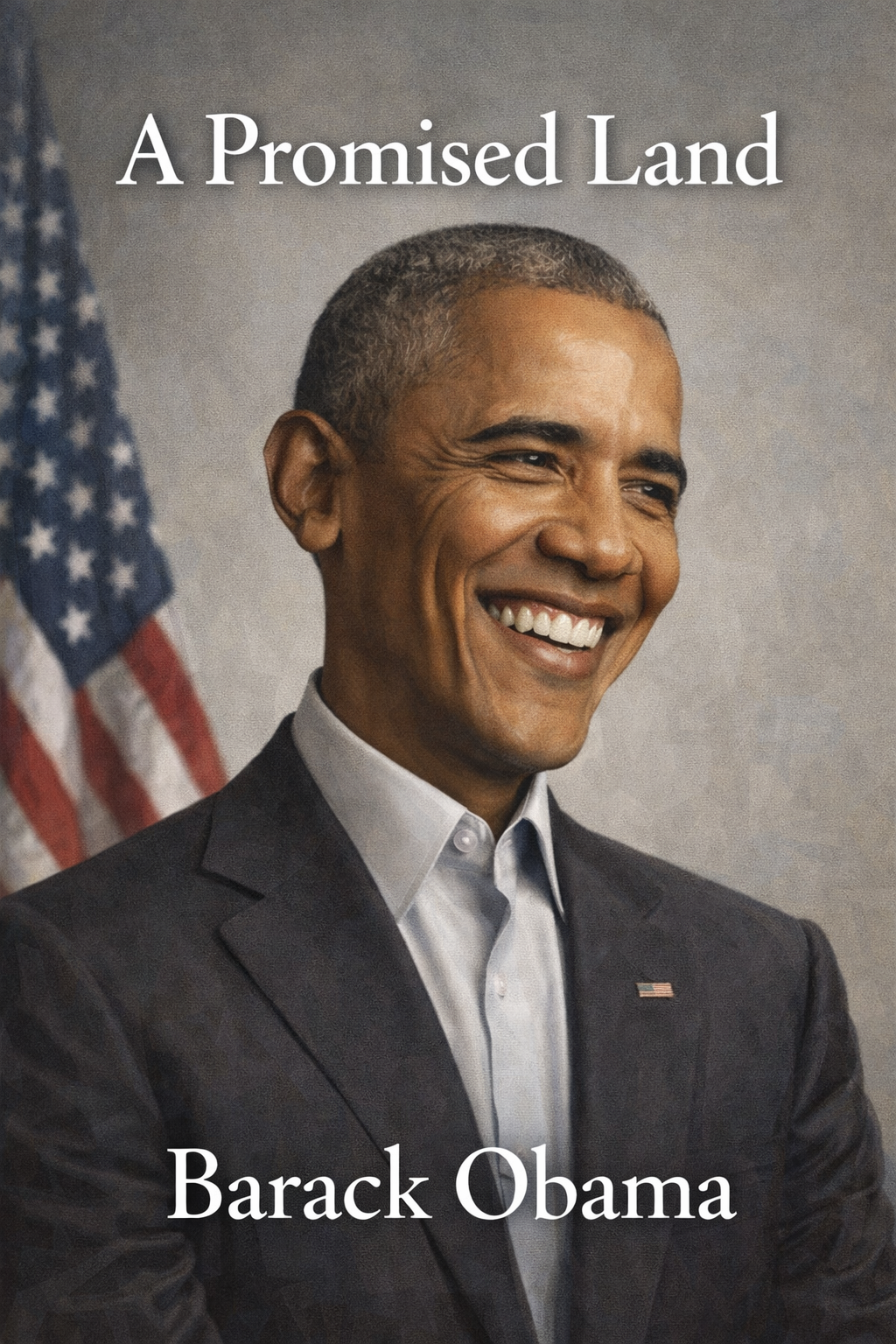
A Promised Land
Chapter Summaries
What's Here for You
Step into the pivotal moments that shaped a presidency and a nation with Barack Obama's 'A Promised Land.' This is more than a memoir; it's an intimate journey into the heart of leadership, offering you a front-row seat to the triumphs, challenges, and profound personal reflections of a historic eight years. You'll witness the quiet contemplation of a leader at the West Colonnade, the burgeoning romance that would change a life, and the unwavering dedication to family amidst unprecedented global responsibility. Feel the electrifying energy of a grassroots campaign that defied expectations, the tense negotiations that forged alliances, and the weight of decisions that impacted millions. Obama shares the raw, unfiltered truths of entering the Oval Office, the relentless pace of governing, and the deeply human moments of connection with the American people through their letters. From navigating the complexities of international summits to confronting domestic crises like healthcare reform and environmental disasters, this book offers an unparalleled insight into the strategic thinking, moral calculus, and personal resilience required at the highest level. The tone is one of profound introspection, intellectual rigor, and a steadfast commitment to progress, all delivered with Obama's characteristic grace and eloquence. You'll gain a deeper understanding of the forces that shape our world, the nature of power, and the enduring hope for a more just and equitable future. Prepare to be intellectually stimulated, emotionally moved, and inspired by the relentless pursuit of 'a promised land' for all.
CHAPTER 1
Barack Obama begins his memoir, 'A Promised Land,' by anchoring himself to a place of quiet reflection: the West Colonnade of the White House. This walkway, a daily commute between home and office, becomes a symbol of his journey, a space where the weight of decisions is processed amidst the changing seasons and the echoes of history. He contrasts his deliberate, 'Hawaiian walk' with the brisker stride he adopts on the colonnade, a conscious acknowledgment of the presidencies that preceded him, and the profound legacy he now carries. He finds a kinship with the groundskeepers, men of quiet dedication like Ed Thomas, whose forty years of service tending the Rose Garden serve as a powerful reminder of diligent, unseen labor, a parallel to his own commitment to care for the nation. This contemplative space also holds personal memories – the laughter of his daughters, the playful antics of his dogs, the quiet comfort offered to aides – moments that punctuate the grand public events and serve as anchors to his humanity. The author then pivots to his origins, revealing a childhood far removed from the political arena, shaped by pragmatic Midwestern grandparents and a mother, Ann Dunham, whose fierce intellect and independent spirit instilled in him a deep sense of moral inquiry and a critical eye towards societal injustices, from corruption to racism. He recounts his mother's poignant question, "Which kind of person do you want to be?" as a formative moment, shaping his nascent awareness of empathy and responsibility. His early years are depicted not as a path to leadership, but as a period of searching, marked by a burgeoning intellectual curiosity fueled by books, a deep questioning of race and class, and a sense of displacement stemming from his mixed heritage. This internal searching, though isolating, leads him to the solace and understanding found within literature, a practice encouraged by his mother, where he collected diverse ideas like a tinkerer gathering parts, unsure of their ultimate purpose but convinced of their future utility. His college years at Occidental and Columbia are portrayed as a period of intellectual awakening, where his engagement with diverse thinkers and the lived experiences of his peers began to shape a worldview, moving him from abstract ideals towards a desire for tangible change, inspired by social movements and the heroes of the civil rights era. He recounts his initial skepticism towards conventional politics, viewing politicians as actors in a rigged game, yet this evolves into an appreciation for the power of collective action and the possibility of effecting change from within institutions. His time as a community organizer in Chicago, working with churches to stabilize neighborhoods impacted by economic decline, becomes a crucible where theory meets reality. Here, he learns the value of listening, of asking strangers to join in collective projects, and of enduring failure and rejection, ultimately helping him to 'grow up' and regain his sense of humor. This period solidifies his understanding of basic human decency and the transformative power of civic engagement, resolving lingering questions about his racial identity and fostering a community of faith. The narrative tension rises as he grapples with the limitations of grassroots organizing and the realization that true systemic change often requires wielding institutional power. Observing the dynamic and ultimately constrained mayoralty of Harold Washington in Chicago, he witnesses firsthand the complexities of political coalition-building, the challenges of racial politics, and the critical need for both structure and skilled governance. This experience plants the seed for a future run for public office, not merely to enact change but to govern with a focus on participation and shared trust. The chapter culminates with his arrival at Harvard Law School, a place brimming with ambition, where his years of solitary reflection and community work converge with a rigorous academic environment. He finds a deep intellectual satisfaction in grappling with the fundamental questions of society and governance, and while the path ahead seems clear, he harbors a quiet unease, sensing that the true challenge lies not in achieving success, but in navigating its potential to become a trap, a sentiment that foreshadows the more profound decisions yet to come.
CHAPTER 2
The author, Barack Obama, recounts the early days of his relationship with Michelle Robinson, painting a portrait of two ambitious individuals whose lives, though different, began to intertwine with a compelling symmetry. We see Michelle, a sharp, accomplished lawyer at Sidley Austin, initially tasked with mentoring Obama, quickly becoming a confidante and lover. Their connection deepened through shared experiences, from discussing work and dreams to supporting each other through family crises, like Michelle's father's illness and Obama's grandfather's advanced prostate cancer. A pivotal moment occurs when Obama takes Michelle to a community organizing workshop, where he grapples with the conflict between working within and against the system, a tension Michelle articulates as the gap between 'the world as it is, and the world as it should be.' This insight, coupled with their distinct backgrounds—Michelle's grounded Chicago upbringing emphasizing family and pragmatism, Obama's more itinerant youth seeking anchors—revealed a complementary dynamic, a team capable of guarding each other's blind spots. As Obama contemplates marriage, he recognizes Michelle's originality and her challenge to him, a quality he cherishes. He then details his early foray into politics, deciding against a traditional clerkship to pursue community work and civil rights law, with a nascent ambition to run for office. Michelle's trust is evident as she supports his aspirations, though she voices a realistic concern about the selfishness and ignorance he might encounter, a foreshadowing of the political realities to come. Their marriage in 1992 marks an official beginning, leading to a life of shared civic engagement, teaching, and the purchase of a condo, with dreams of children and a dog filling their quiet evenings. The narrative tension builds when a political opportunity arises: the possibility of running for state senator after the incumbent, Alice Palmer, seeks a congressional seat. Obama meticulously weighs the pros and cons, a process Michelle supports, albeit with a wry observation about his preference for the 'hard way.' The chapter then pivots to the profound personal loss Obama experiences when his mother, diagnosed with Stage IV cancer, begins to fade. Despite her own illness, she encourages him to live fully, not to put his life on hold. This grief, coupled with the harsh realities of politics, shapes his first campaign. He describes the barebones operation, the reliance on dedicated veterans like Carol Anne Harwell and Ron Davis, and the arduous process of gathering signatures, a task Michelle gamely undertakes, revealing the personal sacrifices required. The betrayal by Alice Palmer, who breaks her promise and files her own petitions, presents a moral dilemma: exploit a technicality or stick to principles. Obama, guided by his team and his own moral compass, chooses to challenge Palmer's invalid petitions, ultimately securing his path to the state senate, but not without a profound sense of disillusionment. The emotional arc culminates with the death of his mother, a moment he misses due to his political commitments, leaving him with deep regret and shame. He reflects on the arduous journey to Springfield, the long drives, the audiobooks, and the reality of legislative work, where compromise often trumps principle, and the cynicism of colleagues becomes a defense mechanism. He learns the importance of understanding the 'nuts and bolts' of politics and his own aversion to losing, but the most poignant lesson is the cost of ambition. The arrival of his daughter, Malia, brings immense joy and a renewed commitment to family, yet the juggling of parenthood and his demanding career strains his marriage, leading to arguments and Michelle's poignant question, 'Is it worth it?' This question hangs heavy as Obama recounts his disastrous congressional run against Bobby Rush, a campaign driven by ego and a need to justify past choices rather than selfless ideals, leading to a humiliating defeat and a strained marriage. The chapter concludes with Obama recognizing he had become the politician he once warned himself against, underscoring the complex human condition within the pursuit of public life and the enduring tension between personal sacrifice and public ambition.
CHAPTER 3
After a significant electoral defeat, Barack Obama recounts a period of recalibration, finding solace and renewed purpose in family life and a deeper connection to his work. He shares the profound joy of his second daughter’s birth, Sasha, and the quiet satisfactions of fatherhood, alongside his dedication to the state senate and law school students. This introspection led him to consider life beyond politics, a shift from the insistence on a grand stage to a gratitude for existing blessings. Yet, two powerful currents pulled him back: the strategic opportunity to reshape Illinois's political landscape through redistricting and a deeply ingrained instinct for bridge-building politics, sparked by his travels across Illinois. He realized that bridging the divides between disparate communities – urban and rural, Black and white – was essential for genuine political change, a vision too expansive for a congressional race. The realization dawned that a statewide office, like the U.S. Senate, was necessary to reach the widest possible audience and enact meaningful change. This ambition, met with initial skepticism from advisors like David Axelrod, was fueled by a clarity of purpose: a chance to make a significant impact, with the understanding that failure would allow for a graceful exit from politics. The campaign for the U.S. Senate began, marked by early challenges in fundraising and public speaking, but gained momentum with unforeseen advantages, such as the incumbent senator's decision not to run and a rival's public missteps. A pivotal moment arrived with Obama's speech at an anti-war rally, where he articulated a nuanced stance, distinguishing between necessary defense and a "dumb war," a principled stand that resonated unexpectedly. This speech, amplified by the burgeoning power of the internet and a national shift in public opinion regarding the Iraq War, transformed his campaign, attracting volunteers and donations. The narrative arc culminates in Obama's U.S. Senate victory, a triumph achieved by connecting with voters across diverse demographics, and his subsequent keynote address at the Democratic National Convention, where he articulated a vision of hope and unity. This speech, amplified globally, brought an unprecedented level of national attention and a profound sense of possibility, yet Obama remained grounded, focusing on diligent work in the Senate and cherishing his family life, even as the demands of his new role began to reshape their lives and his own understanding of public service. The chapter concludes with Obama reflecting on the profound, almost overwhelming, impact of his convention speech and the subsequent realization that the political landscape had irrevocably shifted, setting the stage for future challenges and opportunities, all while grounding himself in the enduring importance of family and connection.
CHAPTER 4
In the spring of 2006, Barack Obama found himself at a peculiar crossroads, the hum of possibility for a presidential run growing louder than the rote denials he offered. The author explains that while many insisted he was destined for the presidency, he himself harbored no such belief, viewing destiny as a concept that could breed complacency. Instead, he understood that life was shaped by a confluence of choices, accidents, and the courage to play the hand dealt. His Senate office buzzed with attention, media requests and invitations to headline events far exceeding those of his peers, making the idea of not running feel increasingly out of step with reality. It was Pete Rouse, his trusted advisor, who nudged him, suggesting a memo outlining how to keep presidential options open, a subtle shift from their original plan to stay out of the limelight. This strategic pivot involved an expanded travel schedule to support Democratic candidates, cultivating relationships with party leaders and donors, and refining his stump speech, all while Obama continued to publicly demur, focusing on the immediate electoral needs. He was probing, testing the waters, trying to reconcile the burgeoning public interest with the sheer audacity of a national campaign, acutely aware that a viable run required immense resources, a deep well of goodwill, and years of careful groundwork, a foundation many of his fellow senators, like Joe Biden, Chris Dodd, Evan Bayh, and Hillary Clinton, already possessed. Obama recognized that while he might possess a unique ability to excite voters and build a broader coalition, this perceived advantage was partly an illusion, amplified by a media eager for novelty. He wrestled with the temptation to seize the moment versus the wisdom of 'paying dues,' a dilemma brought into sharp relief by a conversation with the venerable Ted Kennedy. Kennedy, a living legend of progressive causes, shared his own reflections on ambition and the unpredictable nature of political timing, ultimately advising Obama that "You don't choose the time. The time chooses you." This pivotal advice, coupled with similar encouragement from Chuck Schumer and Dick Durbin, who saw a country desperate for a new voice and Obama's unique ability to connect with younger voters, minorities, and independents, began to shift his perspective. Yet, the most profound challenge lay not in political strategy, but in the heart of his family. Michelle, initially resistant to the political glare and the disruption it brought, voiced her deep concerns, her voice choked with emotion, asking, "Did you say we? You mean you, Barack. Not we." She reminded him of the sacrifices already made and her desire for stability, making it clear that his ambition could not be a unilateral decision. Obama grappled with his own motivations, questioning if a 'raw hunger' or a need to prove himself drove him, reflecting on Martin Luther King Jr.'s 'Drum Major Instinct' and the reconciliation of personal ambition with selfless aims. He confronted the stark reality that the sacrifices were never his alone, acknowledging that the immense toll on his family might not be justifiable, and he couldn't find refuge in a divine calling. The door to a presidential race had opened, and his failure to close it spoke volumes. This internal reckoning intensified during a seventeen-day tour of Africa, where visits to Robben Island, an HIV clinic, and encounters with Bishop Desmond Tutu, alongside a deeply moving reception in Kenya with his paternal family, underscored the potential impact of his candidacy and the weight of expectation. The overwhelming public adulation, particularly in his father's homeland, where crowds chanted his name and a mobile health clinic visit nearly overwhelmed security, was both exhilarating and humbling, with Anita Blanchard joking, "these folks think you're already president." Returning to the U.S., the publication of his second book and his continued barnstorming for Democratic candidates further fueled speculation, culminating in a candid interview on Meet the Press where he admitted his thinking had evolved, a statement that ignited a media firestorm. Despite the growing momentum, symbolized by a "Draft Obama" petition and a Time magazine cover story, a vendor's blunt "Fuuuuck that" served as a grounding reminder of the challenges ahead. The chapter culminates with Obama's team meticulously charting a path to the White House, acknowledging the long odds against Hillary Clinton but recognizing the power of his message of change. Yet, a profound ambivalence permeated their discussions; the grueling, often miserable nature of presidential campaigns, described by David Plouffe as "mostly misery" and by David Axelrod as a "stress test, an EKG on the soul," led them to question if Obama, perhaps too "normal" and "well-adjusted," possessed the necessary "hunger" to win. Even as Michelle's resistance softened, replaced by a pragmatic understanding of the campaign's demands, the ultimate question remained: "Why you, Barack? Why do you need to be president?" His answer, a powerful articulation of hope that his presidency could change how the world and, crucially, children of all backgrounds viewed America and themselves, resonated deeply, transforming the impending decision from a personal ambition into a shared mission. He understood that winning would not only validate his journey but also affirm the possibility of his vision for America—a nation where democracy was within reach and the world wasn't defined by fear and division. It was a bet placed long ago, a point of reckoning, and with a clear understanding of the life-altering path ahead, he resolved to see it through.
CHAPTER 5
On a crisp February morning in Springfield, Illinois, Barack Obama stepped onto a stage at the Old State Capitol, the same hallowed ground where Abraham Lincoln once stood, to declare his candidacy for president. Despite the biting cold, over fifteen thousand people gathered, their collective breath a visible testament to the hope and anticipation for fundamental change, a desire to move beyond partisan divides and tackle long-term problems like healthcare and climate change. From this electrifying launch, the campaign catapulted towards Iowa, the nation's first contest, where the candidate and his team faced an unexpected challenge: the intense public scrutiny that came with early buzz. Unlike typical nascent campaigns that begin in small, intimate settings, Obama's felt like being under a constant spotlight from day one, his inexperience a vulnerability that his staff feared could lead to a "gaffe" – any misstep that could derail the entire endeavor. This pressure meant that every word was amplified, scrutinized, and dissected, a stark contrast to the private conversations of everyday life. Obama recounts the moment his advisor, Axe, corrected his pronunciation of "Waterloo," a seemingly minor incident that underscored the new reality of constant observation. He soon learned that words carried a different weight, regretting a careless phrase about troops' lives being "wasted" that could wound grieving families. His natural inclination towards deliberate, detailed explanations, while keeping "gaffe quotient" low, often led to wordiness, with Axe humorously noting, "You got an A on the quiz. No votes, though." Beyond the speechifying, the sheer grind of the campaign began to take its toll, manifesting as grumpiness. Sixteen-hour days, six and a half days a week, filled with fundraising calls, town hall meetings, interviews, and meet-and-greets, sleeping in nondescript motels, and snatched phone calls with his family, painted a picture not of glamour but of monotonous struggle. It was in this demanding landscape that Obama found unexpected anchors in his team: David Plouffe, the strategic mastermind focused relentlessly on winning Iowa; David Axelrod, the sharp-witted strategist; and Marvin Nicholson and Reggie Love, his unflappable body men and confidants who provided comic relief and a connection to normalcy through games of basketball and shared music. These relationships, forged in the crucible of the campaign trail, offered respite and a sphere where he was simply "one of the guys." A profound realization emerged: his challenge wasn't a lack of policy knowledge, but an inability to distill complex issues into resonant narratives that could connect with the American people. At a healthcare forum in Las Vegas, his detailed, fact-laden answers contrasted sharply with the crisp, compelling presentations of rivals like John Edwards and Hillary Clinton, leading to the painful headline, "IS OBAMA ALL STYLE AND LITTLE SUBSTANCE?" He observed Hillary Clinton's impressive command of policy and her relatable journey, acknowledging that her ability to connect with audiences, even if seemingly scripted, highlighted a crucial aspect of political communication he needed to master. Debates became a proving ground, where his tendency for longwinded answers was exploited by seasoned opponents, teaching him that the goal was not just to answer questions but to convey values and priorities, to "get your message across" rather than simply illuminate. This led to a shift in his approach, learning to craft answers that evoked emotion and signaled solidarity, a performance that still spoke truth. Meanwhile, Plouffe's disciplined, data-driven strategy for Iowa, focusing on grassroots organizing and empowering young staffers across all ninety-nine counties, built a formidable operation from scratch, a testament to meticulous planning and a deep understanding of the political landscape. Simultaneously, a surge in small online donations, fueled by a nationwide hunger for change, provided the financial backbone, transforming the campaign into a collective endeavor where millions felt a sense of ownership. The tireless work of the Iowa team, led by the passionate and unconventional Paul Tewes, became the third pillar of their early success. Tewes's grassroots, "respect, empower, include" ethos, fostering a sense of family and shared purpose among young organizers from diverse backgrounds, created a powerful engine for engaging first-time caucus-goers. As summer turned to fall, Obama began to find his voice, shifting from abstract policy discussions to heartfelt stories drawn from his interactions with military spouses, farmers, laid-off workers, and small-business owners. This more human-scale campaigning, exemplified by a chance encounter with Edith Childs in South Carolina, who ignited the rallying cry "Fired up! Ready to go!" transformed his stump speech and infused the campaign with a palpable energy. He learned to challenge conventional wisdom, even at the risk of alienating traditional power bases, and found confidence in engaging adversaries diplomatically, a stance that, while controversial with pundits, resonated with primary voters. The rivalry with Hillary Clinton intensified, marked by sharp exchanges and differing campaign tactics, yet Obama's core message of change, rooted in principle rather than polls, began to gain traction. The campaign evolved into a family affair, with loved ones joining on the road, and the Iowa team's dedication, fueled by Tewes's unique leadership and a shared sense of purpose, culminated in a decisive victory that signaled a profound shift. The chapter concludes with Obama witnessing firsthand the manifestation of the community he envisioned, a moment of profound peace and connection that honored his mother's memory and solidified his belief in the power of collective action, even amidst the tears of a cold winter night.
CHAPTER 6
The narrative unfolds as Barack Obama recounts the pivotal period following his stunning Iowa caucus victory, a win that catapulted him from underdog to frontrunner, a role that felt both exhilarating and disorienting. He reveals how the media's portrayal of him as an icon, a "Goliath," created an uncomfortable dissonance with his campaign's hard-won discipline of avoiding emotional extremes. This tension between perception and reality was soon tested in New Hampshire, where a seemingly innocuous comment about Hillary Clinton's likability, intended as an overture, was spun into an act of condescension, highlighting the treacherous currents of gender and perception in politics. Shortly thereafter, Clinton's own rare moment of emotional vulnerability, while seeking connection, was also dissected by the media, underscoring the double standards faced by female candidates. Obama’s team, confident in their polling lead, was blindsided by an unexpected loss in New Hampshire, a setback that, while initially devastating, forged a deeper resolve within the campaign. This loss, Obama explains, was a crucial lesson, proving that "running for president is supposed to be hard, because being president is hard." He then delves into the profound influence of his grandmother, Toot, a woman of quiet resilience and practicality, whose life embodied the virtues of hard work, responsibility, and a pragmatic approach to challenges, a perspective that anchored him amidst the campaign's turmoil and taught him about the complex tapestry of race in America. The narrative pivots to explore the intricate dynamics of race in the campaign, detailing the cautious optimism and underlying fear within the Black community, the strategic necessity of building broad coalitions, and the subtle, and sometimes overt, racial animosities encountered. Obama recounts his complex relationship with Reverend Jeremiah Wright Jr., whose fiery sermons, while deeply rooted in Black liberation theology and the historical struggle against racism, also presented a significant political challenge. The author reveals how this tension between his personal connections and the realities of a national campaign forced difficult decisions, illustrating the immense difficulty of translating deeply personal truths about race into a national message. A pivotal moment of insight arrives with the words of Dr. Otis Moss Jr., who frames Obama as part of the "Joshua generation," tasked with leading the nation out of the wilderness, a message that fortified him and validated his quest. This spiritual and historical framing, supported by elders of the Civil Rights Movement, helped navigate the treacherous waters of Black political support. The chapter culminates in the intense South Carolina primary, a "brawl" marked by sharp attacks, including those from Bill Clinton, and the palpable weight of historical racial attitudes. Despite facing deep-seated white resistance and the complexities of Black community anxieties, Obama's campaign achieved a decisive victory, fueled by massive Black turnout and a surprising, albeit nascent, shift among younger white voters. This hard-won success, Obama reflects, was a testament not only to strategic campaigning but to the enduring power of hope and the relentless pursuit of a "good crazy," a willingness to embrace the seemingly impossible, a lesson learned from the generations who paved the way and a testament to the idea that, while race still mattered, the possibility of transcending its divisions was becoming a tangible reality, a realization that solidified his confidence not just in winning, but in being up to the immense challenge of the presidency itself.
CHAPTER 7
In the wake of South Carolina's victory, Barack Obama's campaign received a significant boost with the endorsement of Caroline and Ted Kennedy, a moment that evoked the "old Camelot magic" and a spirit of optimism Obama felt resonated with his own mother's sensibilities and his campaign's burgeoning energy. This surge propelled them towards Super Tuesday, a critical juncture where Obama's team, recognizing the challenge of competing against Hillary Clinton's name recognition in large states, strategically focused on smaller, caucus-heavy regions where grassroots enthusiasm and technology could yield disproportionately large delegate gains. The success in states like Idaho, where volunteers leveraged social media to build community and mobilize support, became a pattern, demonstrating the power of "bottom-up participation" and the growing role of technology in political organizing, a trend Obama foresaw as a "glimpse of the future" but couldn't yet fully grasp its complex implications. Simultaneously, Obama confronted the insidious undercurrent of racial prejudice and xenophobia, as persistent rumors questioned his citizenship and more lurid falsehoods circulated, while the controversy over his decision to forgo a flag pin became a focal point for critics to question his patriotism, a tactic he found infuriating. This, coupled with the unfair scrutiny of Michelle Obama, who was characterized as "angry" and "not First Lady material," revealed a deeper, uglier agenda fueled by stereotypes and fear of a Black family in the White House, a burden Michelle navigated with grace despite the personal toll. As the campaign's scale mushroomed, Obama experienced a paradoxical sense of loneliness amidst growing crowds and a more formalized, hierarchical structure that distanced him from his staff, a feeling amplified by the constant presence of Secret Service protection that, while necessary, began to obscure his view of the world and shrink his personal freedoms, transforming him into a "dancing bear" in a "circus cage." The campaign's momentum continued, with Obama nearing the Democratic nomination, yet Hillary Clinton's tenacious refusal to concede, even as her campaign faltered, forced Obama's team into tactical errors, such as overspending in Ohio and Texas, which briefly cast doubt on his ability to connect with working-class voters and amplified criticisms. A pivotal moment arrived with the release of controversial sermons by Reverend Jeremiah Wright, a situation Obama described as a "torpedo" through their campaign's hull, forcing him to confront America's complex racial legacy head-on in a powerful speech that aimed to provide context and foster mutual understanding, a speech that ultimately "stanch[ed] the bleeding" but took a significant toll, particularly in Pennsylvania. Further challenges arose from Obama's "bitter and cling" remarks about working-class voters in Pennsylvania, a gaffe he regretted for its enduring afterlife and the misunderstanding it fostered, and later, Reverend Wright's explosive public appearances, which compelled Obama to "permanently sever" his relationship with his former pastor, a painful necessity to protect the campaign. Despite these trials, the campaign refocused on policy, taking a principled stand against a gas tax holiday, which, combined with a strategic resurgence, led to decisive victories in North Carolina and a near-tie in Indiana, effectively securing the Democratic nomination. This arduous journey, marked by profound personal and political challenges, culminated in a moment of quiet reflection, where Obama acknowledged the collective effort, the sacrifices of his family and team, and the profound trust placed in him by the American people, vowing not to let them down as he prepared to pivot to the general election.
CHAPTER 8
As the summer of 2008 bloomed, Barack Obama faced the monumental task of unifying a Democratic Party still bruised by a contentious primary, a process that began with a crucial, albeit tense, meeting with Hillary Clinton. Despite lingering hard feelings, a spirit of cooperation emerged, a testament to Obama's sincere admiration and Clinton's commitment to the party and country, laying the groundwork for her eventual role in his administration. This unity paved the way for a strategic re-evaluation of the general election map, moving beyond traditional battleground states to compete in historically Republican-leaning territories by leveraging battle-tested volunteers and increased turnout from minority and younger voters, a bold move designed to create multiple paths to victory and force John McCain to expend resources defensively. Obama then turned his attention to his opponent, John McCain, a figure he respected for his courage and willingness to challenge party orthodoxy, yet recognized as a man increasingly tethered to an unpopular president and war, perhaps a different, more vulnerable candidate than the one he’d faced in 2000. The central question of the election, Obama understood, would be whether voters could embrace a young, inexperienced African American senator as commander-in-chief, a concern he sought to address through a grueling nine-day foreign trip to Kuwait, Afghanistan, Iraq, Israel, Jordan, the United Kingdom, and France, culminating in a major foreign policy address in Berlin. This ambitious journey, a high-wire act without a net, aimed to demonstrate his readiness on the world stage and preview a new era of American leadership, though fraught with the risk of a single misstep derailing the campaign. In Afghanistan, he witnessed firsthand the strain on resources and the dedication of soldiers working against the tide of resurgent Taliban, a stark contrast to the perceived disconnect with President Karzai’s government, leaving him to ponder the deep-seated challenges of nation-building against a landscape resistant to change. His visit to Iraq revealed a complex situation: a fragile stabilization following the troop surge and Maliki's election, but one deeply intertwined with Iran's growing influence, a consequence of the U.S. invasion that complicated American strategic interests. His conversations with Prime Minister Maliki and General David Petraeus offered diverging perspectives on troop withdrawal—Maliki’s unexpected support for a timetable clashing with Petraeus's belief in sustained investment to prevent backsliding—highlighting the fundamental debate over resource allocation and national security versus nation-building. The trip culminated in Jerusalem, where, at the Western Wall, Obama offered a prayer for wisdom and protection, a deeply personal moment that, upon its public revelation, underscored the dissolving line between his private and public lives. Returning to the campaign trail, Obama sought a brief respite with his family in Hawaii, a precious pocket of normalcy amidst the relentless campaign, valuing stolen moments with his daughters and grandmother even as the weight of missed time pressed upon him. This period also demanded the consequential decision of a running mate, narrowing the field to Tim Kaine and Joe Biden. While Kaine offered a comfortable, shared sensibility, Biden, with his decades of Senate experience, warmth, and resilience forged through personal tragedy, presented a compelling, if riskier, contrast. Obama ultimately chose Biden, trusting his heart, decency, and loyalty, believing he could be a true partner and reassuring voters about his own readiness. The Democratic National Convention in Denver, held at Mile High Stadium, served as a powerful display of unity and anticipation, culminating in Obama’s acceptance speech on the forty-fifth anniversary of the March on Washington, a moment that moved him deeply as he reflected on the sacrifices of past generations and the transformative potential of their collective journey. He declared, 'We cannot walk alone,' a tribute to the shared struggle and the pledge to march ahead. The convention's success was soon overshadowed by John McCain's dramatic selection of Sarah Palin as his running mate, a potent disrupter whose folksy populism and outsider narrative revitalized McCain's campaign, injecting a jolt of energy and financial support, and effectively shifting the media focus away from Obama. While Palin’s charisma captivated the Republican base, Obama recognized her fundamental lack of preparedness for the presidency, a stark contrast to Biden's seasoned readiness, and foresaw a troubling trend of partisan expediency overriding fundamental knowledge and principles, a harbinger of deeper political divisions.
CHAPTER 9
Barack Obama's journey from a modest Hyde Park condominium, filled with the joyful chaos of a young family and the ever-present stacks of books in his 'Hole,' to the precipice of the 2008 financial crisis is depicted with vivid personal detail and prescient economic insight. He recounts the early days of homeownership, a time of tight finances where even a mouse infestation felt like a major crisis, juxtaposed with the burgeoning real estate boom of the early 2000s, a period where easy money and inflated home prices masked deeper systemic risks. This chapter reveals a critical tension: the author's personal financial prudence, influenced by his grandmother Toot, clashed with the prevailing societal narrative of homeownership as an infallible investment, a narrative that mirrored the broader economic conditions. A pivotal moment arrives with a conversation with his friend George Haywood, a former blackjack player turned Wall Street trader, who lays bare the impending danger of the subprime mortgage market, likening the entire financial system to a 'house of cards waiting to topple.' Obama, initially skeptical, is slowly convinced by the logic of leveraged bets and securitized mortgages, a system where risk was offloaded and standards loosened, all while credit agencies offered misleading AAA ratings. This insight into the architecture of the impending crisis serves as a core revelation, highlighting how a confluence of factors – low interest rates, lax lending, and the pursuit of higher returns by global investors – fueled a classic bubble. As the crisis unfolds, Obama navigates the political landscape, grappling with the urgent need for a bailout package (TARP) while campaigning for president, a delicate dance between national responsibility and political expediency. His interactions with John McCain during this tumultuous period, particularly the fraught Cabinet Room meeting, underscore the immense pressure and the stark choices faced by leaders. The author reveals a profound understanding of how individual actions, like his own decision to support TARP despite political risks, and systemic failures, like the lack of regulatory oversight, converge to shape national destinies. The narrative shifts from the personal to the political, detailing his campaign's strategy, the unexpected rise of 'Joe the Plumber' as a political symbol, and the increasingly divisive rhetoric employed by opponents, particularly Sarah Palin, which exposed underlying xenophobia and anti-intellectualism within the modern Republican Party. This period reveals a second core insight: the profound impact of rhetoric and symbolism in politics, especially when amplified by media and tribal loyalties, can obscure substantive policy debates and exploit deep-seated fears. The emotional arc culminates in the stark reality of Election Day, a day of profound stillness and uncertainty, where the author surrenders control, finding solace in rituals and the quiet strength of his family, particularly his grandmother Toot, whose passing frames his reflections on legacy and the meaning of a life lived. The chapter resolves with Obama's victory, not as a personal triumph, but as the culmination of collective effort and the beginning of a long, arduous journey to address the nation's deepening crises, emphasizing that true change requires 'we' not 'me,' a critical insight for understanding the challenges ahead and the nature of leadership in times of profound societal upheaval.
CHAPTER 10
Barack Obama's entry into the Oval Office, a space radiating a profound sense of democracy and light, marked not just a physical transition but a profound shift in his life and the nation's trajectory. He recounts the initial, almost surreal tour with President George W. Bush, who, despite political differences, offered a gracious handover, emphasizing the importance of appreciating the unique journey ahead and providing invaluable guidance through detailed manuals and staff availability. This gesture of decency, Obama notes, would inform his own commitment to a smooth transition for his successor. Back in Chicago, the newfound fame cast a long shadow, transforming everyday life into a guarded existence within a 'portable, perpetual ghost town,' a stark contrast to the nascent government-building that consumed his afternoons. The critical task of assembling his administration, Obama explains, hinges on selecting a core group of trusted individuals, chief among them a Chief of Staff. The initial reluctance of his top recruit, Rahm Emanuel, underscores the immense pressure and sacrifice inherent in such roles, yet Obama’s conviction in Rahm’s unique blend of policy, political, and financial acumen, coupled with a pragmatic need for his 'piledriver style' amidst an economic crisis, ultimately secured his acceptance. This decision, like others, began to reveal the inherent tensions within Obama's broad coalition, as each appointment became a signpost interpreted differently by various factions, signaling his political intentions and raising the specter of future disillusionment. Faced with a global economic free fall, Obama prioritized experience over fresh talent for his economic team, selecting figures like Larry Summers and Tim Geithner, whose past crises management skills were deemed essential, even if their histories carried the 'sins of the past.' The narrative captures the delicate dance of balancing ideological purity with pragmatic necessity, illustrating how Obama, a realist at heart, sought counsel from seasoned, albeit sometimes controversial, figures like Robert Gates for Secretary of Defense, recognizing that navigating the complex machinery of national security required not just vision, but deep institutional knowledge and earned respect. He understood that keeping Gates, a Republican Cold War hawk, was crucial for a smooth transition in military strategy and for building trust within the Pentagon, while simultaneously pushing against his own inherent biases and ensuring a diversity of perspectives at the highest levels. The eventual appointment of Hillary Clinton as Secretary of State, a former political rival, further exemplified this strategy of assembling a 'team of rivals,' a deliberate choice driven by her formidable intelligence, work ethic, and global standing, despite lingering campaign scars and initial hesitations. The chapter culminates with the quiet solemnity of Inauguration Day, a day underscored by both immense public hope and the private weight of immense responsibility, including the chilling awareness of a potential terrorist threat and the ultimate power of nuclear codes, a stark reminder of the precarious balance between the outward spectacle of democracy and the unseen forces of chaos. Obama reflects on the collective need for a moment of respite from cynicism, a shared 'high' to fuel the arduous journey ahead, all while his mother-in-law, Marian Robinson, provided an essential anchor of normalcy and grounded values for his family amidst the whirlwind of power and public life.
CHAPTER 11
Barack Obama, in his memoir 'A Promised Land,' recounts the overwhelming intensity of his first weeks as President, a period akin to moving day on a college campus, but with the gravitas of leading the world's most powerful nation. The author explains that despite extensive preparation, nothing truly prepares one for the sheer newness and import of the White House, as senior appointees navigate unfamiliar processes and secure basic necessities. Rahm Emanuel, intent on capitalizing on the post-election honeymoon, urged swift action, leading Obama to sign executive orders banning torture, initiate the closure of Guantanamo Bay, and enact stringent ethics rules. A pivotal early success was the Lilly Ledbetter Fair Pay Act, signed on Obama's ninth day, a moment that resonated deeply, connecting him to the struggles of working women and serving as a tangible example of the office's power to effect change. Yet, this sense of accomplishment was quickly overshadowed by the dawning realization of the economic crisis, a 'holyshit moment' as described by Christy Romer, revealing a financial system on the brink of collapse and an economy spiraling toward the deepest recession since the 1930s. The author details the stark projections: millions in job losses, a potential one-in-three chance of a second Great Depression, and the urgent need for fiscal stimulus, as monetary policy had been largely exhausted. Drawing on Keynesian principles, the team grappled with the scale of the necessary government intervention, debating figures nearing a trillion dollars, a concept met with resistance from figures like Rahm Emanuel. Obama pushed for high-impact, long-term projects, but the immediate reality dictated a focus on getting money into people's pockets quickly through measures like extended unemployment benefits and aid to states. The chapter vividly portrays the political landscape: a deeply polarized Washington where bipartisan cooperation had eroded, replaced by strategic obstruction, particularly from Republican leaders like Mitch McConnell and John Boehner, who saw fighting the administration as a path back to power. This partisan divide became a formidable obstacle, even as Obama attempted genuine outreach, underscoring a core tension between the urgent need for economic action and the brutal reality of entrenched political division. Ultimately, the American Recovery and Reinvestment Act, though compromised and passed with only Democratic votes, represented a significant, albeit politically fraught, first step in confronting the unprecedented economic challenges, a testament to the author's resolve to govern even amidst fierce opposition and the gnawing foreboding of battles yet to come.
CHAPTER 12
In the hushed, late hours of the presidency, Barack Obama found himself immersed in the raw, unfiltered voices of the American people, a nightly ritual of reading constituent letters that served as an anchor to the real world amidst the swirling vortex of governance. He explains how these letters, ranging from desperate pleas for help to quiet expressions of hardship, illuminated the profound human impact of his decisions, especially during the nascent stages of the economic crisis. The chapter vividly portrays the collapsing housing market, a landscape of ghost towns and foreclosed homes, where the American Dream felt increasingly out of reach for families like the one he encountered in Nevada, a man questioning what had happened to the promise of hard work leading to prosperity. Obama details the administration's efforts to address this crisis, culminating in the Home Affordable Modification Program (HAMP) and the Home Affordable Refinance Program (HARP), modest yet crucial interventions designed to offer a lifeline to millions teetering on the edge, revealing the complex, often ethically fraught, calculus of deciding who deserves government assistance. He then confronts the unexpected firestorm ignited by a CNBC commentator's on-air rant against the housing plan, a moment that foreshadowed the deep partisan divides and the weaponization of populist resentment that would define much of his presidency, highlighting how narratives of victimhood could be twisted to obscure systemic failures. The author reveals the immense pressure of leading a nation through economic turmoil, detailing the painstaking process of stabilizing the financial system through measures like the bank stress tests, a delicate balancing act between reassuring markets and addressing public anger over bailouts, all while juggling the automotive industry's near collapse, a crisis demanding difficult decisions about intervention versus letting iconic companies falter. He reflects on the personal toll of the presidency, the constant stress, the struggle to maintain family life amidst global crises, and his own battle with smoking, all underscored by the profound realization that even the best-laid plans could face unforeseen obstacles, as exemplified by the AIG bonus controversy, a stark illustration of how morality and public perception could clash with contractual obligations and political realities. Ultimately, Obama underscores the importance of process and listening, even amidst overwhelming complexity and partisan division, finding solace not in perfect solutions, but in the quiet affirmation of individual letters, a testament to the enduring power of connection and the quiet victories that sustained him through the storm, reminding us that the absence of catastrophe, while often unseen, is itself a profound achievement.
CHAPTER 13
Barack Obama, in "A Promised Land," delves into the immense weight of the presidency, beginning with the seemingly small, yet symbolically potent, ritual of learning to salute properly, a task undertaken by his dedicated aide, Denis McDonough. This meticulous preparation, Obama reveals, underscores the fundamental, ever-present tension of the office: the absolute imperative to keep the American people safe. He recounts how the definition of threats evolved from the Cold War's clear dangers to the multifaceted anxieties of the 21st century – terrorism, cyber warfare, climate change, pandemics – each demanding a president's vigilance. This chapter illuminates a unique duality in Obama's perspective, shaped by his upbringing and experiences, which allowed him to see America not just as a beacon of freedom, but also through the eyes of those around the world, recognizing the profound impact of American actions, both positive and negative. He contrasts the seasoned national security establishment, steeped in Cold War thinking and favoring continuity, with a younger generation of staffers eager to challenge the 'Washington playbook' and embrace diplomacy alongside hard power. This internal tension, Obama explains, was a reflection of his own struggle to chart a new course, like a captain navigating a powerful aircraft carrier. The narrative then shifts to the daily rhythm of presidential decision-making, epitomized by the President's Daily Brief (PDB), a stark reminder of the constant stream of global crises, from ongoing wars in Iraq and Afghanistan to the machinations of terrorist networks. The immense burden of these conflicts becomes palpable as he describes his visits to wounded warriors, the raw courage and sacrifice of young service members starkly contrasting with the abstract nature of geopolitical strategy, forcing a clear-eyed reckoning with the true costs of war. Obama navigates the complex withdrawal from Iraq, a decision guided by both strategic necessity and humanitarian concern, aiming to avoid future re-engagement. The more intricate challenge, however, lies in Afghanistan, a war of necessity complicated by a lack of coherent strategy and deep-seated corruption, forcing a difficult decision on troop deployment amidst competing advice from seasoned generals and his own Vice President, Joe Biden. He articulates the strategic dilemma: balancing the immediate need to counter al-Qaeda with the long-term implications of nation-building and the complex relationship with Pakistan. Finally, the chapter broadens to encompass the global financial crisis, highlighting Obama's early efforts on the international stage, particularly at the G20 summit in London, to forge a unified response. He reflects on America's dominant, yet shaken, position in the world, a position built on a complex legacy of both establishing international order and, at times, contradicting its own ideals, leading to a profound moment of reckoning for global economic stability.
CHAPTER 14
Barack Obama recounts his initiation into the world of international summits, beginning with the G20 in London, a meticulously orchestrated affair of protocol and carefully scripted remarks, where he, as the new kid on the global stage, consciously adopted a posture of humility. He paints vivid portraits of key European leaders: Gordon Brown, the thoughtful but beleaguered British Prime Minister grappling with economic collapse; Angela Merkel, the methodical, analytical German Chancellor, forged in the discipline of East Germany and suspicious of overt emotion; and Nicolas Sarkozy, the charismatic, high-energy French President, a whirlwind of ambition and unpredictable pronouncements. Obama reveals the delicate dance between Merkel and Sarkozy, their contrasting styles ultimately complementing each other and reinforcing a pro-American stance often at odds with their domestic publics. The chapter then delves into the burgeoning influence of the BRICS nations – Brazil, Russia, India, China, and South Africa – emergent powers chafing at the West's long-held dominance in global economic governance, a sentiment Obama, despite his strategic imperatives, finds understandable given their historical marginalization and current economic realities. He offers a nuanced, often critical, assessment of the BRICS leaders: Lula da Silva, a pragmatic reformer shadowed by corruption allegations; Dmitry Medvedev, a seemingly affable figurehead whose true power lay with Vladimir Putin; Jacob Zuma, inheriting a legacy of struggle but facing challenges of corruption and incompetence; Manmohan Singh, a wise economist leading a nation of immense progress and persistent chaos; and China, a rapidly developing powerhouse whose future challenge to U.S. preeminence, Obama suggests, hinges more on American strategic missteps than on inherent Chinese ambition. A pivotal moment arises in Obama's private meeting with Medvedev, where a carefully prepared 'reset' strategy aims to recalibrate U.S.-Russia relations, navigating past Russian assertiveness, exemplified by the invasion of Georgia, towards cooperation on issues like nuclear nonproliferation, a conversation marked by both candor and underlying tension, particularly regarding missile defense. The G20 concludes with a hard-won agreement, a testament to collaborative diplomacy that, while hailed as historic, also sparks domestic political headwinds for Obama, who finds his measured approach to American exceptionalism misconstrued as weakness. The narrative then broadens to encompass a whirlwind tour of Europe, including a landmark speech in Prague on nuclear disarmament, a personal moment of reflection on the enduring power of democratic aspirations ignited by the Velvet Revolution, and a sobering encounter with Václav Havel, who warns of resurgent illiberalism and the sophisticated subversion of democratic institutions. The author concludes with a pragmatic realization: much of his presidency will be defined by navigating inherited crises, a sobering perspective underscored by the unexpected emergence of Somali piracy as a new, unfolding challenge, a stark reminder that the world stage is perpetually dynamic and demanding.
CHAPTER 15
Barack Obama’s journey through the early days of his presidency reveals the profound weight of command, particularly in matters of national security and foreign policy. The chapter opens with the tense four-day standoff involving the Maersk Alabama off the coast of Somalia, a stark illustration of the razor's edge between disaster and success. When Navy SEALs ultimately rescued Captain Richard Phillips by neutralizing the pirates, the relief in the White House was palpable, yet Obama reflects not on victory, but on the complex forces of desperation and ignorance that drive young men to such acts, a poignant moment highlighting the inherent dilemma of wielding lethal force against those shaped by dire circumstances. This personal reflection segues into a broader examination of the evolving landscape of counterterrorism, detailing how the administration navigated the intricate web of lethal drones, advanced intelligence gathering, and targeted operations, a necessary but somber aspect of the job. Obama emphasizes his commitment to reforming counterterrorism practices, striving for greater transparency and accountability, and crucially, to closing Guantanamo Bay and ending torture, seeking to align national security with American values, a task he entrusted to trusted advisors like John Brennan. The narrative then shifts to the critical diplomatic mission of delivering a speech in Cairo, aimed at bridging the divide between the West and the Muslim world, a speech that acknowledged historical grievances and championed mutual understanding. This endeavor is juxtaposed with Obama’s visit to Saudi Arabia, where the stark realities of a deeply conservative and segregated society, governed by a monarchy deeply intertwined with a rigid interpretation of Islam, are laid bare, contrasting sharply with his childhood memories of a more pluralistic Indonesia. The king's opulent hospitality, symbolized by extravagant gifts, underscores the vast economic disparities and the complex relationship between wealth, power, and religious influence. The journey continues to Cairo, where Obama engages with President Hosni Mubarak, an aging autocrat clinging to power through repression, a stark counterpoint to the vibrant energy of the students and citizens at Cairo University, who represent the hope for a more open future. The chapter culminates with Obama’s reflections at the Pyramids, contemplating the ephemeral nature of human endeavors and the ultimate insignificance of even presidential actions against the vast sweep of history, a humbling perspective gained from ancient monuments. Finally, a pilgrimage to Dresden, Buchenwald, and Normandy offers a profound emotional arc, moving from the somber remembrance of war’s devastation and the Holocaust’s horrors, exemplified by conversations with Elie Wiesel and Angela Merkel, to the quiet pride and enduring legacy of the World War II veterans. The chapter concludes with Obama’s affirmation that history is shaped by individual choices, finding solace and resolve in the sacrifices of the past as he faces the daunting challenges of the present, underscoring a hard-won wisdom forged in the crucible of leadership and a deep contemplation of the human condition.
CHAPTER 16
The author, Barack Obama, recounts the early days of his presidency in the White House, a period marked by both the simple joys of family life and the monumental task of reforming healthcare. As spring bloomed, the South Lawn transformed into a personal sanctuary, a place for his daughters, Malia and Sasha, to play, for him to share quick games of HORSE, and for Michelle to cultivate a garden that became a national phenomenon, inspiring community initiatives and yielding produce for food banks. The arrival of Bo, a Portuguese water dog gifted by the Kennedys, brought immeasurable happiness, becoming a beloved family member and offering Obama a cherished excuse for evening walks, moments where he felt "normal and whole and as lucky as any man has a right to expect." Yet, beneath these domestic pleasures lay the shadow of political battles, most notably the arduous quest for universal healthcare. Obama details the historical resistance to government involvement in healthcare, tracing its roots from Theodore Roosevelt's progressive ideals to the employer-based system that emerged post-WWII, and the subsequent struggles of presidents like Harry Truman. He highlights the critical role of Senator Ted Kennedy, whose personal fight for affordable healthcare, fueled by his son's battle with cancer, underscored the deeply personal nature of the policy. Kennedy's frail but determined presence at a White House conference, urging Obama to seize the moment, became a poignant symbol of the long, arduous struggle. The narrative then delves into the complexities of healthcare reform, illustrating how entrenched interests, public skepticism, and the sheer magnitude of rejiggering one-sixth of the American economy presented formidable obstacles. Obama reflects on his initial overconfidence, the daunting political hazards, and the deeply personal motivations, like his mother's struggles with insurance and his friend Bobby Titcomb's reliance on emergency care, that drove his commitment. The chapter also navigates unexpected crises and opportunities: the emergence of the H1N1 pandemic, which demanded a swift and science-based response, and the chance to nominate Sonia Sotomayor to the Supreme Court, a choice that balanced legal qualifications with empathy and offered a historic opportunity. The author recounts the intense behind-the-scenes negotiations, the compromises made with industry lobbyists, and the resulting public perception of "backroom deals," all while wrestling with the inherent messiness of crafting transformative legislation. The chapter culminates in the profound impact of the Henry Louis Gates Jr. arrest, a moment that exposed the deep racial fissures in America and underscored the president's delicate position, leading to the now-famous "Beer Summit"—a symbol of the slow, often difficult, yet necessary work of bridging divides and pursuing progress, even when the path is fraught with challenges and the victories are often unseen.
CHAPTER 17
As the summer of 2009 wore on, President Barack Obama and his team faced a monumental challenge in passing healthcare reform, a legislative battle fraught with political maneuvering and deeply entrenched opposition. The author explains that despite significant progress in the House, progress in the Senate stalled as Senator Max Baucus grappled with securing bipartisan support, an increasingly elusive goal amidst the rising tide of conservative opposition, epitomized by Republican strategists like Frank Luntz who advised invoking the 'government takeover' narrative, and Senator Jim DeMint who declared the effort would be Obama's 'Waterloo.' Even efforts to court moderate Republicans like Olympia Snowe and Chuck Grassley yielded little, with Snowe caught in her party's rightward shift and Grassley proving indecisive, leading Obama to confront Baucus directly, though Baucus remained optimistic about securing Grassley's vote, a delay that extended into September. During this legislative pause, Obama embarked on a family road trip, a poignant attempt to recapture a sense of normalcy and provide his daughters, Malia and Sasha, with experiences he cherished from his own childhood, a stark contrast to the heavily secured reality of presidential travel, yet even amidst the grandeur of national parks, the healthcare debate loomed, with Obama holding town halls that were met with the escalating anger of the 'Tea Party summer' protests, a movement fueled by genuine economic anxieties but also carefully nurtured by conservative organizations and amplified by media personalities, creating a potent force characterized by intense opposition and often vitriolic rhetoric, including comparisons to animals and Hitler, and the resurrection of birther conspiracy theories. This period underscored a profound disconnect: even as Obama sought to address the needs of working-class Americans through healthcare reform, many of those same individuals, swayed by the Tea Party's message, viewed him with suspicion and contempt, a sentiment Obama found difficult to overcome from behind the protective bubble of the presidency. The death of Senator Ted Kennedy in August cast a somber shadow, his life and legacy a powerful reminder of the moral imperative behind the healthcare cause, yet the legislative path forward grew steeper. The Congressional Budget Office's initial $1 trillion price tag for the House bill provided ammunition for opponents, causing Democrats in swing districts to fear for their reelections, while Republicans abandoned any pretense of negotiation, echoing the 'put Grandma to sleep' rhetoric. This mounting pressure finally broke Senator Grassley's indecision, revealing his unwillingness to support the bill, prompting a somber assessment within the White House, with Chief of Staff Rahm Emanuel advocating for a scaled-back approach, a compromise Obama ultimately rejected, driven by a conviction that leaving millions of Americans without coverage was unacceptable and that Republican leaders offered no genuine path to bipartisan compromise. Recognizing the need to reset the debate, Obama agreed to a high-stakes primetime address before a joint session of Congress, a moment that, despite the shadow of Bill Clinton's failed healthcare initiative, allowed him to directly articulate the bill's benefits and debunk misinformation, a speech that seemed to rally congressional Democrats but failed to sway a single Republican, underscored by the infamous outburst of 'You lie' from Congressman Joe Wilson, an incident that, while downplayed by Obama, signaled a new era of unrestrained opposition. Despite the setback, a glimmer of hope emerged as Senator Baucus's Finance Committee finally passed a bill, albeit with concessions, and Speaker Nancy Pelosi secured House passage, setting the stage for the Senate to finalize its version, a process dominated by Senator Harry Reid's intricate negotiations with wavering Democrats, resulting in concessions like the 'Louisiana Purchase' and 'Cornhusker Kickback,' and ultimately the removal of the public option, a decision that alienated progressive allies but was deemed necessary to secure the sixty votes required to overcome a filibuster. The subsequent election of Republican Scott Brown in Massachusetts, a stunning upset that cost Democrats their Senate filibuster-proof majority, seemed to deliver a fatal blow to the reform effort, causing widespread despair and calls for Obama to change his team. However, Obama, unwilling to abandon the cause, and with Nancy Pelosi's masterful leadership, pivoted to a strategy of passing the Senate bill through the House and then using budget reconciliation to make necessary improvements, a plan that required House Democrats to accept a compromised Senate bill. The author reveals that through a combination of strategic public appearances, such as a town hall with House Republicans that exposed their lack of substantive policy proposals, and relentless one-on-one persuasion of wavering members, appealing to their sense of purpose and the greater good, Obama and his team managed to secure the votes. The narrative culminates in the historic passage of the Affordable Care Act on March 21, 2010, a moment of profound relief and fulfillment, a testament to perseverance against overwhelming odds, and a promise kept to millions of Americans, a victory that, while imperfect, represented a significant step in bending the arc of history toward a more just society, fulfilling the moral imperative that had driven the lifelong work of figures like Ted Kennedy.
CHAPTER 18
Barack Obama, in 'A Promised Land,' recounts his evolving mastery of the presidency, a role he approached not with casual familiarity but with the focused intensity of a bomb-disposal expert, constantly aware of the razor-thin line between precision and catastrophic error. He reveals the profound emotional weight of his duty, particularly the solemn task of signing condolence letters for fallen service members, a ritual of reading names aloud, summoning images of lives cut short, and grappling with the inadequacy of any gesture against such loss. This deeply personal ritual underscored the human cost of the wars in Iraq and Afghanistan, two theaters that demanded starkly different strategic considerations. While Iraq showed signs of progress, with a fragile stability emerging from parliamentary struggle rather than open conflict, Afghanistan presented a deepening quagmire. The author details the contentious debate surrounding General Stanley McChrystal’s request for a significant troop surge and a full-blown counterinsurgency (COIN) campaign, a proposal that ignited deep divisions within his team. He articulates his skepticism, grappling with the immense costs, the lack of a clear exit strategy, and the potential for mission creep, contrasting it with the more focused counterterrorism (CT) approach favored by Vice President Biden and NSC staff. This tension, between the military's desire for broader engagement and the president's imperative to weigh all national costs, became a central theme, highlighting the fundamental challenge of civilian control over national security policy. The narrative captures the raw pressure of these deliberations, the leaks to the press, and the author's firm stance against the Pentagon’s perceived attempts to dictate policy, a moment that underscored his determination to assert presidential authority. Ultimately, a compromise emerged: a surge of thirty thousand troops with an eighteen-month timetable for withdrawal, a decision framed not just as a military necessity but as a strategic maneuver to compel Afghan reforms and pivot toward a more focused CT strategy. The chapter culminates with the author’s Nobel Peace Prize announcement, a moment of profound irony juxtaposed against the grim reality of escalating conflict and the somber ritual of receiving fallen soldiers’ remains at Dover Air Force Base. This juxtaposition forces a reflection on the complex nature of war and peace, leading to the author's assertion that resolve alone is insufficient; it must be guided by foresight and a comprehensive understanding of national interests, a principle he would later articulate in his Nobel acceptance speech, acknowledging the global yearning for peace amidst the persistent realities of conflict and suffering, and the quiet courage of individuals striving for a better world.
CHAPTER 19
Barack Obama, in 'A Promised Land,' navigates the intricate landscape of foreign policy, shifting from a post-9/11 mindset of unilateral action and pervasive threat to one prioritizing diplomacy, alliances, and mutual respect. He recounts how this new approach began with a subtle but significant change in tone, emphasizing international cooperation and engaging nations based on shared interests. Symbolic acts, like boosting the State Department's budget and settling UN dues, signaled this shift, as did visits to neglected regions of the world, with Hillary Clinton's tireless diplomacy proving a powerful tool, demonstrating to global leaders and their publics that their perspectives mattered. Obama recognized this universal human desire for recognition, a sentiment perhaps amplified by his own childhood abroad and his experience as an African American; he understood that acknowledging a nation's history and culture, even through simple gestures like poorly pronounced greetings or high-profile sightseeing, could forge deeper connections than dry bilateral meetings. A particularly effective tactic, borrowed from his campaign playbook, was hosting town hall meetings with young people globally, transforming a head of state's accessibility into a compelling argument for democracy, and these encounters, filled with idealism and earnest questions, served as a powerful source of personal inspiration, reminding him of the enduring power of hope. Yet, Obama acknowledges the limits of this diplomatic charm offensive; national policies are fundamentally driven by self-interest, geography, and historical grievances, making purely moral suasion insufficient for confronting hard-line leaders. This led him to explore a second form of diplomacy, one of concrete rewards and punishments, a challenge starkly illustrated by interactions with Iran, Russia, and China. The chapter delves deeply into the complex history with Iran, tracing the roots of animosity back to the 1951 oil nationalization and the subsequent CIA-backed coup, a pattern of U.S. miscalculation that persisted through the Cold War. This historical context illuminates the 1979 revolution and the rise of Ayatollah Khomeini, setting the stage for decades of hostility, sectarian conflict, and Iran's relentless pursuit of nuclear capabilities, a threat that loomed large over Obama's presidency, forcing difficult strategic calculations. The narrative then pivots to Russia, detailing Obama's early efforts to 'reset' relations with Vladimir Putin, a leader who, despite modernizing some aspects of the economy, consolidated power through a blend of nationalism, authoritarianism, and suppression of dissent, reminiscent of older autocratic traditions. Obama's first meeting with Putin, a lengthy monologue of perceived American injustices, revealed the deep-seated Russian grievances and the complex dance required to manage this fraught relationship, highlighting the tension between the desire for global cooperation and the realities of national interest and historical animosity. The chapter concludes with Obama reflecting on the inherent challenges of dealing with leaders like Putin, the stark contrast between the aspirations of grassroots activists and the entrenched power structures, and the difficult compromises leaders must make, often feeling their hands are tied by strategic necessities, a poignant reminder of the heavy weight of presidential decision-making.
CHAPTER 20
Barack Obama recounts his experiences during UNGA Week, a period of intense diplomatic activity, revealing the enduring hope he places in the United Nations, a vision inspired by his mother's belief in reason and understanding overcoming fear, even as he acknowledges the organization's persistent struggles with member state consensus and the veto power of permanent Security Council members that often hobble its effectiveness. He navigates complex negotiations with Russia and China regarding Iran's nuclear program, a central tension of the chapter, proposing a creative arms control initiative that would involve shipping Iran's enriched uranium to Russia for processing and then to France for fuel conversion, a plan designed to delay Iran's breakout capacity and crucially, to draw Russia into the P5+1 process as a key partner. This diplomatic dance intensifies when Obama shares intelligence about a secret Iranian enrichment facility near Qom, a revelation that rattles the Russians and signals a potential shift in their stance, demonstrating how the careful presentation of information and the cultivation of relationships, like his with Dmitry Medvedev, can subtly alter the geopolitical landscape. The narrative then pivots to the U.S.-China relationship, highlighting the inherent duality of engagement and mistrust, where beneath diplomatic niceties lie deep-seated tensions over trade, espionage, and China's growing global influence, and Obama grapples with China's systematic evasion of international trade rules, a practice that, while mirroring historical mercantilist strategies of developed nations, had accelerated the decline of American manufacturing jobs. He embarks on a pivotal trip to Asia, visiting Japan and Singapore, and then China, aiming to reaffirm U.S. ties to the region and build a coalition to counter China's assertive actions, while simultaneously seeking cooperation on global economic stability and diplomatic solutions to Iran's nuclear ambitions. In China, Obama confronts the stark contrast between the country's authoritarian grip and its burgeoning economic success, observing the carefully curated interactions with students and leaders like President Hu Jintao and Premier Wen Jiabao, and he articulates a clear strategy: to pressure China on trade imbalances and unfair practices without triggering a global depression, a delicate balancing act that underscores the immense challenge of managing the relationship between the world's two largest economies. The chapter culminates with the passage of unprecedented sanctions against Iran, the signing of the New START treaty with Russia, and initial signs of Chinese currency appreciation, marking hard-won, incremental steps forward in a complex foreign policy landscape, a testament to the author's belief that progress, though often slow and unnoticed, is achieved through persistent effort and strategic engagement, a quiet building of blocks toward a more stable global future.
CHAPTER 21
Barack Obama, reflecting on a poignant question from his daughter Malia about saving tigers, delves into the complex intersection of environmental stewardship and global politics. He recounts how Malia's concern, sparked by a beloved stuffed tiger, revealed a child's clear understanding of responsibility towards the planet, a sentiment echoed by Sasha. This personal moment serves as a gateway to Obama's lifelong appreciation for the natural world, shaped by his Hawaiian upbringing and time in Indonesia, and profoundly influenced by his mother's reverence for nature and her understanding that basic needs must be met before environmental concerns can take precedence for many struggling populations. Obama grapples with the challenge of prioritizing environmental issues, acknowledging that for his working-class constituents, issues like jobs and healthcare often overshadowed concerns about air quality or industrial runoff. Yet, the escalating realities of climate change—record temperatures, melting ice caps, rising oceans, and the specter of displacement and conflict—forced a critical shift in his perspective, compelling him to make climate change a central theme of his presidential campaign and administration. He details the immense political hurdles: the inherent difficulty governments face in addressing slow-moving crises with disruptive policies, the skepticism of industries and Republican voters, and the partisan divide that had turned environmental protection into a culture war battleground. Despite these obstacles, Obama and his team, including Carol Browner and Lisa Jackson, forged ahead, initiating comprehensive policy agendas like setting carbon emission caps and investing heavily in clean energy through the Recovery Act, aiming to transform the energy sector and foster innovation. The narrative captures the tension between ambitious goals and political realities, highlighted by the Solyndra loan default, a public relations nightmare that overshadowed the broader successes of the clean energy initiatives. Furthermore, Obama explores the power of regulatory action, leveraging the Clean Air Act to implement stricter fuel efficiency standards for vehicles, a move met with considerable political static but ultimately demonstrating that effective regulation can spur innovation and yield significant environmental benefits, even if it means confronting powerful interests and ideological opposition. The chapter culminates in the arduous legislative battle for comprehensive climate action, detailing the near-impossible task of passing a cap-and-trade bill through a divided Congress, the diplomatic tightrope walk at the Copenhagen summit, and the ultimate, albeit imperfect, agreement forged through sheer perseverance and a willingness to confront global leaders, particularly China, on the shared responsibility for the planet's future, underscoring the enduring gap between aspirational goals and tangible accomplishment in the face of complex human and political systems.
CHAPTER 22
Barack Obama, in "A Promised Land," navigates the treacherous currents of his second year in office, a period marked by compounding crises and a public perception that threatened to engulf his presidency. He describes the chilling feeling of being trapped in a barrel, tumbling through the unforgiving waters of public opinion, a sensation amplified by the "Underwear Bomber" incident and the lingering economic malaise. The author explains that while the economy was technically recovering, the human cost of foreclosures, depleted savings, and persistent unemployment meant that for millions, things felt worse, not better. This disconnect fueled public anger, particularly over the bank bailouts, which were perceived as a scam benefiting the wealthy while ordinary citizens suffered. Obama reveals a crucial insight: effective governance requires more than just sound policy; it demands the art of communication and storytelling. His initial instinct to explain the bombing incident was overridden by a cautious approach, leading to an appearance of detachment and fueling negative narratives. He learns that projecting confidence and offering a coherent narrative, much like FDR did during the Depression, is vital to managing public perception, a lesson underscored by the frustration of allies like Nancy Pelosi. The chapter then pivots to the burgeoning European debt crisis, a complex geopolitical and financial entanglement that threatened to derail the fragile global recovery. Obama and his team urged European leaders toward decisive action, but encountered resistance rooted in differing economic philosophies, particularly from Germany, highlighting the inherent tension between national interests and continental unity. The author details the painstaking process of negotiating financial reforms, a legislative battle akin to the healthcare debate, fraught with compromise and the need to balance competing interests. He explains that the Dodd-Frank Act, while a significant overhaul, was a product of pragmatic politics, not ideological purity, a testament to the difficulty of enacting sweeping change. A poignant reflection emerges on the personal toll of the presidency, the constant pressure, and the quiet resilience required. Obama shares his own coping mechanisms, from quitting smoking to late-night pool games, and candidly explores the subtle dynamics of race and gender within the White House staff, acknowledging his own blind spots and the importance of fostering an inclusive environment. He grapples with Michelle’s unspoken anxieties, sensing her need for control in a life now subject to the unpredictable whims of politics and global events, a stark contrast to his own outward calm, which he questions whether it masked a deeper avoidance. Ultimately, the chapter underscores that leadership is a delicate dance between policy substance and political narrative, between personal resilience and the emotional realities of those closest to us, a constant striving to navigate crises while holding onto a coherent vision.
CHAPTER 23
Barack Obama recounts the profound impact of the Deepwater Horizon disaster in April 2010, an event that cast a long shadow over his administration and its policy agenda. As the nation grappled with the aftermath of a deadly coal mine explosion, the catastrophic failure of the offshore drilling rig, owned by Transocean and leased by BP, underscored the perilous human cost of America's reliance on fossil fuels, even as it generated billions in profit. The sheer scale of the Deepwater Horizon, a mobile platform costing half a billion dollars, capable of drilling miles into the ocean floor, highlighted the immense technological ambition and inherent risks involved in extracting oil from previously unreachable depths, with the Macondo prospect alone estimated to hold three billion barrels. The narrative then pivots to the unfolding crisis: a series of safety tests, a critical malfunction of the blowout preventer, and the explosive eruption of gas and oil, tragically claiming eleven lives and igniting a towering inferno visible for miles, a stark image against the night sky. Obama reflects on the collision of this environmental catastrophe with his administration's energy and climate agenda; a few weeks prior, he had authorized limited offshore lease sales as part of a pragmatic 'all-of-the-above' energy strategy, a decision partly motivated by a desperate attempt to salvage stalled climate change legislation, which had relied on securing bipartisan support, including concessions like expanded offshore drilling. However, the Deepwater Horizon explosion effectively extinguished any hope of such a compromise, forcing environmental groups to withdraw support and providing Senator Lindsey Graham the political cover to abandon the effort, leaving Obama to confront the immediate, overwhelming challenge of the spill. The chapter details the frantic government response, from mobilizing the Coast Guard and EPA to assess damage and support BP's cleanup efforts, to establishing a national incident command under Admiral Thad Allen, imposing a moratorium on new drilling, and declaring the spill a matter of national significance. Obama’s visits to the Gulf Coast, his conversations with affected fishermen and Republican Governor Bobby Jindal, and the stark realization that the spill was far worse than initially reported, escalating from thousands to tens of thousands of barrels per day, painted a grim picture of the worst environmental disaster in U.S. history. The narrative then explores the complex political and emotional toll: the public's outrage amplified by real-time video feeds of the underwater leaks, the criticism of the administration's response, including the 'Obamas Katrina' label, and Obama's own frustration and sense of helplessness as the crisis seemed to defy easy solutions, leading to moments of bitterness and self-doubt. He grapples with the systemic issues, including the Minerals Management Service's cozy relationship with industry and his own administration's failure to fully grasp the scale of the leaks, all while navigating a political landscape where Republicans seized on the disaster to paint his administration as weak. The chapter concludes with a reflection on the midterm elections of 2010, where the Deepwater Horizon spill, coupled with economic anxieties and lingering concerns about national security, contributed to a significant Republican victory, a stark reminder of the complex interplay between policy, public perception, and the unpredictable forces of nature and politics.
CHAPTER 24
Barack Obama, en route to Asia, finds himself reflecting on the recent midterm election losses and the complex landscape of his presidency, a moment captured amidst a game of Spades on Air Force One. The author explains that the election results, which left Democrats shell-shocked and Republicans jubilant, led to a narrative suggesting his administration had attempted too much, failed to focus on the economy, and pursued an outdated liberalism, a critique he found partly justified by his inability to effectively sell his policies and, crucially, his lack of foresight in eliminating the Senate filibuster early on. He confesses he didn't regret his signature achievements like expanding health insurance or the Recovery Act, but the failure to pass climate change and immigration reform gnawed at him, revealing a deeper challenge: not necessarily that the agenda was wrong, but that he had failed to rally the nation as Franklin D. Roosevelt once had. This introspection is amplified by significant personnel turnover, including the departures of key advisors like Jim Jones, Peter Orszag, Christy Romer, Larry Summers, and most notably, his closest political confidants, Rahm Emanuel, David Axelrod, and Jay Carney, each leaving a void that unsettled him deeply, underscoring the personal cost of leadership. Meanwhile, the journey to India, a country that had long held his imagination, offers a profound moment of connection as Obama visits Mahatma Gandhi’s Mumbai residence, reflecting on Gandhi’s philosophy of nonviolent resistance and his own desire to understand how such immense strength could be drawn from such humble means, especially in the face of Gandhi's own struggles with India's deep divisions and ultimate assassination. This personal reflection then transitions to the political realities faced in India with Prime Minister Manmohan Singh, where discussions reveal anxieties about economic growth, the persistent tensions with Pakistan, and the intoxicating pull of religious and ethnic solidarity that politicians can exploit, a sentiment Obama recognizes mirrored in the rising illiberalism he sees globally. Returning to Washington, the focus shifts to a critical lameduck legislative session, where Obama navigates the challenge of passing key initiatives like the New START treaty, the repeal of 'Don't Ask, Don't Tell,' and the DREAM Act, all before a Republican-controlled House takes power. The negotiation over extending the Bush tax cuts becomes a high-stakes poker game, where Obama leverages Republican desires against his own commitment to fairness, ultimately securing a two-year extension that provides economic stimulus but leaves the contentious issue of tax cuts for the wealthy unresolved, a gamble on his own political future. The chapter also highlights the emotional toll of these political battles, particularly the fight for LGBTQ rights through the repeal of 'Don't Ask, Don't Tell,' a policy Obama found personally offensive and corrosive to military ideals, and the heartbreaking failure to pass the DREAM Act, a testament to the deep divisions within the nation and the difficult compromises required in the pursuit of progress. The narrative concludes with a sense of melancholy over the changing White House staff and the lonely nature of the presidency, yet finds solace in the significant legislative achievements of the lameduck session, a reminder that even amidst personal loss and political setbacks, progress, however incremental, is possible.
CHAPTER 25
Barack Obama, in 'A Promised Land,' delves into the complex tapestry of Middle East policy and the burgeoning Arab Spring, revealing the intricate dance of diplomacy and the persistent pursuit of peace. The author explains that as 2010 drew to a close, the Middle East presented a precarious landscape, fraught with potential crises in Iraq, Iran, Yemen, and critically, the Israeli-Palestinian conflict. Obama traces the deep historical roots of this enduring dispute, from the Balfour Declaration to the UN's partition plan, the subsequent wars, and the profound Palestinian 'Nakba' or Catastrophe, highlighting how generations of conflict have shaped regional politics and American foreign policy. He notes how the United States, as Israel's primary patron, inherited the complexities of its neighbors' disputes, with presidents from Truman to Clinton attempting resolutions, achieving milestones like the Camp David Accords but leaving the Palestinian issue unresolved. The narrative then shifts to the challenges Obama faced upon entering the presidency, confronting a hardened Israeli stance, the rise of Hamas, and a Palestinian Authority weakened by internal divisions and corruption. He recounts the difficult process of trying to restart peace talks, detailing his interactions with Israeli Prime Minister Benjamin Netanyahu, a shrewd leader deeply rooted in Zionist ideology and prioritizing Israeli security, and Palestinian President Mahmoud Abbas, a cautious figure struggling with political weakness. A core insight emerges: the author reveals that true progress in peace negotiations often hinges on the willingness of leaders to take risks, a quality tested by the persistent construction of Israeli settlements in the West Bank, which Obama viewed as a significant impediment. The administration's push for a settlement freeze, though met with considerable domestic political pressure and accusations of undermining the U.S.-Israel alliance, underscores a critical tension: balancing the unwavering commitment to Israel's security with the imperative of addressing Palestinian grievances and international law. The author then pivots to the seismic shifts of the Arab Spring, beginning with the self-immolation of Mohamed Bouazizi in Tunisia, an act born of desperation that ignited nationwide protests and led to the ousting of President Ben Ali. This spark, like a wildfire catching dry brush, spread across the region, galvanizing populations yearning for change. Obama recounts the administration's internal debates regarding the unfolding crisis in Egypt, a key U.S. ally, where protests in Tahrir Square challenged President Mubarak's decades-long authoritarian rule. He highlights a generational divide within his national security team, with senior advisors counseling caution due to Mubarak's role in regional stability, while younger members urged alignment with the pro-democracy movement. This dilemma becomes a central tension: how to support democratic aspirations without destabilizing a region already teetering on the brink. The author explains that the United States, having long supported autocratic regimes for the sake of stability and counterterrorism, found itself caught between its stated values and its strategic interests. A profound insight is offered: the author reveals that the United States must recalibrate its foreign policy to encourage meaningful reforms, even if it means challenging long-standing allies, recognizing that supporting repression ultimately undermines American credibility and security. The narrative then moves to Libya, where Muammar Gaddafi's brutal crackdown on protesters presented another agonizing choice. Faced with the prospect of a massacre in Benghazi, Obama grappled with the decision to intervene militarily, weighing the moral imperative to protect civilians against the risks of a new war and the potential for unintended consequences. He articulates a crucial resolution: the United States cannot abdicate its responsibility to act when faced with mass atrocities, especially when it possesses the means and international support to do so, but such actions must be carefully considered and executed with clear objectives and shared burdens. The author concludes by reflecting on the complex realities of foreign policy, where competing interests, historical contingencies, and the personal characteristics of leaders intertwine, and where the pursuit of peace and democracy is an arduous, often uncertain, but ultimately essential endeavor, suggesting that the greatest illusion is believing the old order can indefinitely hold against the persistent tide of popular will.
CHAPTER 26
Barack Obama recounts the intricate deliberations and swift actions surrounding the intervention in Libya, a decision fraught with peril and weighed against ongoing global commitments. The author explains the careful, multilateral strategy devised in the Situation Room: a phased approach where the U.S. would initially disable Libyan air defenses and halt Gaddafi's advance on Benghazi, then hand off the primary operational role to European allies, supported by Arab states, a division of labor aimed at minimizing American military burden and cost. This chapter illustrates the delicate dance of international diplomacy, particularly the crucial effort to secure a UN Security Council resolution, navigating the reservations of nations like Russia, culminating in a vote that, while abstaining, allowed for intervention. Obama artfully weaves in the personal toll of such decisions, juxtaposing the high-stakes military planning with a family trip to Brazil, where a critical moment arrives: a communication breakdown threatens to delay the authorization of airstrikes, highlighting the stark contrast between the immense power of the presidency and the humbling fallibility of technology. The narrative then shifts to the broader political landscape, revealing how the Libya operation, despite its swift success in preventing a massacre, became entangled in partisan warfare back home, with Republicans criticizing the intervention they had previously advocated, and abroad, with Vladimir Putin publicly undermining Dmitry Medvedev's diplomatic stance. This chapter is a profound exploration of leadership under pressure, emphasizing that the most significant challenges are often not the military actions themselves, but the constant navigation of political currents, public opinion, and the personal sacrifices demanded of a leader, all while grappling with the unsettling rise of baseless conspiracy theories that challenged his very legitimacy, a stark reminder that the fight for truth and reason is a perpetual one, even as the immediate objective of protecting civilians was achieved, leaving a lingering uncertainty about Libya's future stability.
CHAPTER 27
In the heart of 'A Promised Land,' Barack Obama navigates the long, arduous hunt for Osama bin Laden, a quest that began in the rugged Tora Bora mountains and stretched across years, becoming a personal and strategic imperative. Obama recounts how, even as his trail went cold, he maintained an unwavering focus, pushing his advisors to make finding bin Laden a top priority, a directive etched into presidential orders. This wasn't just about retribution for 9/11; it was a critical reorientation of America's counterterrorism strategy, a move away from the nebulous 'War on Terror' towards a more precise approach: dismantling the narrative that elevated al-Qaeda and focusing on the criminals responsible. The breakthrough came with the identification of a trusted courier, leading intelligence to an affluent compound in Abbottabad, Pakistan, a place that felt both too conspicuous and too secure to be mere coincidence. The 'Pacer,' a tall man glimpsed within its walls, became the focal point of intense scrutiny, a puzzle pieced together through meticulous detective work and aerial surveillance, yet lacking definitive proof, much like the intelligence leading up to the Iraq War, casting a long shadow of caution. Two primary options emerged for confronting this lead: a high-risk air strike, fraught with the danger of collateral damage and the inability to confirm bin Laden's presence, or a covert special operations raid, a complex ballet of stealth and precision led by the formidable Vice Admiral William McRaven and his Navy SEALs. The decision weighed heavily, complicated by the precarious U.S.-Pakistan relationship and the specter of past failures like 'Desert One,' a stark reminder of the potential for catastrophic outcomes. Amidst this high-stakes planning, Obama also recounts the bizarre distraction of the 'birther' controversy, a testament to the power of misinformation and the media's role in amplifying it, a situation he resolved with a direct public confrontation, asserting the primacy of facts over fabrications. The tension culminated in a tense Situation Room meeting, where, despite varying degrees of certainty from intelligence analysts, Obama made the call for the raid, a fifty-fifty gamble fueled by a decade of waiting and the belief that time was running out. The operation, codenamed 'Neptune's Spear,' unfolded with heart-stopping drama, a helicopter clipping a compound wall, a tense twenty minutes of silence, and then the whispered confirmation: 'Geronimo E.K.I.A.' The successful execution brought a profound sense of relief and a cathartic moment for a nation weary of war, yet it also sparked reflection on the nature of national unity, questioning whether such singular focus and determination could be channeled towards domestic challenges as effectively as towards defeating an external enemy. The chapter concludes with Obama's deep pride in the seamless execution by the SEALs and intelligence teams, a testament to their skill and sacrifice, while simultaneously acknowledging the vast work still needed to embody the 'American idea' of unity and progress beyond the battlefield.
Conclusion
Barack Obama's 'A Promised Land' offers a profound reflection on the arduous yet ultimately hopeful journey of public service. The memoir underscores that true progress is rarely a solitary achievement but a collective endeavor, built on the quiet dedication of many and the courage to bridge divides. Obama’s narrative consistently highlights the tension between the 'world as it is' and the 'world as it should be,' illustrating that systemic change necessitates not only grand ambitions but also meticulous, often unseen, labor and a deep engagement with the lived experiences of ordinary people. Emotional lessons abound, particularly the profound personal sacrifices demanded by public life—the strain on family, the moments missed, and the weight of responsibility—which are balanced by the resilience found in connection and shared purpose. The book emphasizes that moral integrity is forged in the crucible of difficult choices, where principled action often trumps expediency. Practical wisdom is woven throughout, from the strategic navigation of complex policy debates like healthcare reform and foreign policy crises to the vital importance of authentic communication and the power of narrative in shaping public perception. Ultimately, 'A Promised Land' serves as a testament to the enduring power of hope, the necessity of humility and humor in leadership, and the continuous, often imperfect, pursuit of a more just and equitable society, reminding us that the arc of democracy, though long, can bend toward progress through persistent effort and unwavering conviction.
Key Takeaways
The quiet, consistent dedication to one's craft, like that of the White House groundskeepers, serves as a profound metaphor for the diligence required in any significant endeavor, reminding us that unseen labor underpins visible success.
Formative moral questions, particularly those posed by influential figures like a parent, can profoundly shape an individual's ethical compass and their understanding of personal responsibility towards others.
A sense of displacement or 'being from everywhere and nowhere' can be a powerful catalyst for introspection and a deep search for belonging, pushing individuals to actively construct their identity and purpose.
True understanding of complex societal issues emerges not just from theoretical study but from direct engagement with the lived experiences and struggles of ordinary people.
The transition from grassroots activism to seeking institutional power is often driven by the realization that systemic problems require systemic solutions, necessitating a deeper engagement with policy and governance.
Navigating the complexities of race, class, and identity requires a willingness to question one's own assumptions and resist simplistic narratives, embracing a nuanced understanding of both individual experience and societal structures.
The pursuit of a meaningful life involves not only grand ambitions but also the cultivation of humility, humor, and a continuous process of self-improvement, even when faced with uncertainty and self-doubt.
The tension between personal sacrifice and the pursuit of public ambition is a defining characteristic of a political life, often demanding difficult choices that strain relationships and personal well-being.
Authentic connection and partnership are built on mutual support through life's challenges and a shared understanding of differing perspectives, as exemplified by the complementary natures of Barack Obama and Michelle Robinson.
Navigating the 'world as it is' versus 'the world as it should be' requires a delicate balance between systemic change and individual empowerment, a core dilemma for those committed to public service.
Moral integrity in politics is tested by opportunities to exploit procedural loopholes; choosing principled action over expedient victory, even at personal cost, defines character and long-term credibility.
The profound grief of personal loss, particularly missing pivotal family moments due to professional commitments, can serve as a stark and transformative lesson on the true cost of ambition.
The journey of public service is often paved with unexpected setbacks and personal failures, which, while painful, offer crucial lessons in resilience, humility, and self-awareness.
True political change requires bridging societal divides by fostering understanding between disparate communities, rather than focusing on narrow constituencies.
A profound personal loss or setback can become a catalyst for recalibrating priorities and finding deeper meaning in family and purpose.
Authentic leadership emerges not from the desire for a grand stage, but from a clear-eyed assessment of opportunities to make a tangible difference, even if it requires a significant personal gamble.
Courageous conviction, even when expressed in nuanced opposition to prevailing sentiment, can resonate deeply and unexpectedly, especially when grounded in honest belief.
The power of connection and shared human experience, when effectively communicated, can transcend political divisions and inspire collective action.
Sustained impact in public service requires not just ambition, but diligent, 'workhorse' dedication to constituents and policy, grounded in humility and strong ethical guidance.
Personal ambition, when aligned with a larger vision of service and societal progress, can be a powerful catalyst for change.
The timing for significant life endeavors is often dictated by external circumstances rather than personal readiness, requiring courage to seize opportune moments.
Authenticity in communication, even when unconventional, can cut through political noise and redefine expectations.
The profound impact of leadership extends beyond policy to inspiring hope and reshaping perceptions, particularly for marginalized groups.
The decision to pursue ambitious goals must be a shared one, acknowledging and respecting the sacrifices and emotional toll on loved ones.
True leadership requires a deep self-awareness of one's motivations, distinguishing between personal hunger and a genuine calling to serve.
The immense pressure of early public attention can amplify a candidate's inexperience, demanding a constant vigilance against missteps and a rapid adaptation to scrutiny.
Effective political communication requires not just factual accuracy but the ability to distill complex issues into resonant narratives that connect emotionally with the electorate.
Building a successful grassroots campaign hinges on empowering dedicated individuals, fostering a sense of ownership, and cultivating a team culture that prioritizes shared values over individual ambition.
Authentic connection with voters, born from listening to their stories and engaging with them on a human scale, can transform abstract policy into heartfelt conviction and inspire unprecedented participation.
Navigating intense political rivalries requires holding firm to core principles and strategic vision, even when faced with criticism or conventional wisdom, as these principled stands can ultimately define a candidate and resonate with voters seeking genuine change.
The most impactful political movements are often built on a foundation of community and connection, where shared effort, mutual loyalty, and collective purpose drive progress independent of the candidate.
True leadership involves challenging established norms and conventional wisdom, even when it leads to controversy, by prioritizing diplomatic engagement and truthful communication over political expediency.
The perception of frontrunner status can be a strategic liability, demanding a return to disciplined execution and the tempering of expectations to avoid alienating a contrarian electorate.
Navigating political discourse requires a keen awareness of how personal moments and statements can be amplified and distorted by media and opposing campaigns, particularly concerning gender dynamics and racial undertones.
Setbacks, such as an unexpected primary loss, can serve as crucial catalysts for deeper resolve, strategic recalibration, and a more profound understanding of the resilience required for challenging leadership roles.
Personal anchoring, drawing strength from the practical wisdom and quiet resilience of elders, is vital for maintaining composure and perspective amidst the intense pressures and emotional volatility of high-stakes endeavors.
The pursuit of broad political progress necessitates building coalitions across racial and ethnic lines, which involves strategically addressing, rather than avoiding, the complexities of race while avoiding reductionist narratives.
True leadership often involves embracing a "good crazy" – a visionary, forward-thinking approach that builds upon historical struggles and inspires collective action towards seemingly unattainable goals.
The legacy of historical injustices creates a "wearying filter" through which communities absorb political messages, requiring leaders to demonstrate genuine understanding and a commitment to tangible change beyond rhetoric.
Strategic focus on leveraging grassroots enthusiasm and technology in smaller states can yield significant delegate advantages, even against better-known opponents.
The digital age amplifies both the power of grassroots connection and the potential for division and manipulation, demanding careful navigation by political actors.
Underlying racial biases and stereotypes can be weaponized to question a candidate's patriotism and fitness for office, requiring direct confrontation and contextualization.
Navigating public life under intense scrutiny can lead to feelings of isolation and a loss of personal freedom, necessitating strong support systems and self-awareness.
Tenacity in political campaigns, while admirable, can sometimes lead to strategic missteps when faced with opponents who refuse to concede.
Addressing complex societal issues like race requires courageous and authentic communication that acknowledges multiple perspectives and fosters mutual understanding.
Taking principled stands on policy, even when unpopular, can ultimately build trust with voters and differentiate a candidate.
The journey to leadership is often a testament to the collective effort of a dedicated team and the faith of supporters, demanding a deep sense of responsibility and gratitude.
Unifying a fractured party requires acknowledging past grievances while focusing on a shared future vision, demonstrating that cooperation can bridge deep divides.
Strategic electoral expansion into traditionally opposing territories, by leveraging unique campaign assets like volunteer networks and diverse voter turnout, can create decisive advantages.
A candidate's perceived readiness for the highest office, particularly concerning national security and global affairs, can be addressed through deliberate, high-stakes international engagement, balancing risk with potential reward.
The complexities of foreign policy and nation-building are rarely simple, often involving entrenched local dynamics, corruption, and external influences that challenge idealistic objectives.
The ultimate decision for a running mate involves weighing personal compatibility and shared vision against the need for experienced depth, perceived readiness for the presidency, and the ability to reassure a broad electorate.
Moments of profound personal significance, like a prayer at a sacred site or a child's simple joy, can offer clarity and grounding amidst the immense pressures of public life, even as they become subject to public scrutiny.
The power of a narrative, particularly one that resonates with a sense of authenticity and challenges established norms, can dramatically reshape a political landscape and energize a base, even when lacking substantive qualifications.
The prevailing narrative of homeownership as an infallible investment masked systemic risks, creating an unsustainable economic bubble fueled by easy credit and lax regulation.
The securitization of mortgages, while appearing to spread risk, ultimately led to loosened lending standards and a dangerous overreliance on inflated asset values.
Political rhetoric and symbolic figures can be manipulated to exploit societal fears and obscure substantive policy debates, particularly during times of economic crisis.
Navigating national crises requires leaders to balance immediate political pressures with the long-term responsibility of sound governance, even when unpopular decisions are necessary.
The realization of profound societal change is a collective endeavor ('we') rather than the product of a single individual ('me'), demanding informed and mobilized citizenry.
Personal rituals and familial connections provide grounding and perspective amidst the high-stakes pressures of leadership and public life, reminding leaders of their humanity.
The arc of democracy is a continuous, often uncertain journey, shaped by the quiet contributions of ordinary citizens and the deliberate choices of those in power.
The transition of power requires a delicate balance between personal conviction and pragmatic compromise, particularly when assembling a diverse team capable of navigating complex crises.
Effective leadership demands the courage to appoint individuals with proven experience, even if their past actions or associations carry inherent political risks, prioritizing national stability over ideological purity.
The outward performance of leadership must often mask internal anxieties and external threats, maintaining a façade of order and normalcy to inspire confidence during turbulent times.
Building a unified administration necessitates bridging ideological divides and incorporating diverse perspectives, even from former rivals, to foster a 'team of rivals' approach essential for tackling monumental challenges.
The personal and familial toll of public service is significant, requiring deliberate efforts to maintain grounding, normalcy, and a connection to core values amidst the isolating pressures of immense responsibility.
The symbolic power of inaugurations can serve as a crucial psychological buffer, offering a collective moment of hope and shared purpose that can provide the necessary momentum to confront daunting national challenges.
The profound gap between preparation and the reality of high-stakes leadership, emphasizing that true understanding often dawns only in the crucible of experience.
The critical importance of establishing early momentum in a new administration, leveraging periods of political capital to enact significant policy changes before challenges mount.
The stark realization that systemic economic crises demand bold, large-scale government intervention, often necessitating difficult compromises and navigating intense political opposition.
The corrosive effect of extreme political polarization on effective governance, demonstrating how partisan obstruction can impede even universally beneficial policy responses.
The strategic imperative to balance immediate crisis management with long-term vision, even when faced with competing demands and limited resources.
The challenge of maintaining public trust and support amidst economic turmoil, particularly when political narratives overshadow the complexities of policy implementation and negotiation.
The profound responsibility of leadership demands a constant, grounding connection to the lived experiences of citizens, as exemplified by Obama's nightly review of constituent letters.
Navigating national crises requires difficult ethical trade-offs, where policy decisions about who receives aid involve complex moral calculus and often satisfy no one completely.
Political discourse can be easily manipulated through populist narratives that assign blame and redefine victimhood, obscuring systemic issues and hindering constructive problem-solving.
Stabilizing a complex system, like the financial markets during a crisis, often necessitates a methodical, iterative process (like stress tests) rather than immediate, drastic interventions, balancing risk with the need for reassurance.
The immense personal toll of leadership requires deliberate strategies for maintaining well-being and family connection, even amidst overwhelming national challenges.
Effective leadership involves not only making tough decisions but also fostering a robust process that allows for diverse input and thorough consideration, even when facing political pressure for immediate action.
The absence of catastrophe, while often unacknowledged, represents a significant success in crisis management and a quiet testament to the impact of thoughtful policy.
The presidency demands meticulous attention to both symbolic rituals and substantive threats, recognizing that effective leadership requires mastering both.
A leader's dual vision, understanding both national interests and the global perception of their nation's actions, is crucial for navigating complex foreign policy.
Internal debates within a national security team, reflecting generational divides and differing approaches to power, are essential for challenging assumptions and forging a new course.
The stark reality of human cost in war, experienced through direct encounters with wounded soldiers, provides critical clarity for strategic decision-making.
Ending complex conflicts requires a nuanced approach that balances strategic goals, humanitarian concerns, and the practical realities of ongoing operations.
Effective international cooperation in times of crisis hinges on acknowledging shared responsibility and overcoming national resentments through decisive, coordinated action.
Navigating international summits requires a strategic blend of humility and assertiveness, especially when introducing new policies to established global players.
Effective international partnerships, even with ideologically diverse leaders, depend on recognizing and leveraging complementary strengths and patiently managing contrasting temperaments.
Emerging global powers seek a greater voice in international governance, necessitating a recalibration of the existing world order to acknowledge their influence while demanding shared responsibility.
Building trust and cooperation with nations like Russia requires a delicate balance of direct engagement, clear communication of interests, and a willingness to address their concerns, even amidst deep-seated mistrust.
Democratic progress is fragile and requires constant vigilance, as economic hardship and resurgent nationalism can undermine hard-won freedoms and institutions.
Foreign policy successes on the international stage can be politically vulnerable domestically, demanding careful communication to counter partisan narratives that misinterpret diplomatic engagement.
The nature of global leadership involves confronting inherited crises and unforeseen challenges, demanding discipline and purpose to effectively shape the future rather than just react to the past.
The immense moral and practical complexity of wielding state power, particularly lethal force, requires a constant balancing of security needs with a deep understanding of the human factors driving conflict.
Effective counterterrorism necessitates not only robust intelligence and military action but also systemic reforms that uphold democratic values, transparency, and accountability.
Bridging cultural and ideological divides requires courageous dialogue that acknowledges historical injustices and champions mutual understanding and shared humanity.
The influence of deeply entrenched religious and political traditions can shape national identity and foreign policy in ways that both preserve power and perpetuate societal inequalities.
True leadership involves confronting the ephemeral nature of power and policy against the backdrop of history, finding resolve in the sacrifices of the past to shape a better future.
Individual choices and actions, however seemingly small, collectively shape the course of history and can foster reconciliation and progress even after profound suffering.
The pursuit of significant policy change, like universal healthcare, is a deeply personal endeavor, often driven by individual experiences with suffering and injustice, which provides the necessary resilience against formidable opposition.
Transformative legislation requires navigating a complex landscape of entrenched interests, public skepticism, and political maneuvering, demanding a pragmatic approach that balances idealistic goals with the art of the possible.
Effective leadership often involves managing simultaneous crises and opportunities, requiring swift, science-based decision-making during emergencies while strategically seizing moments for long-term institutional change.
The challenges of racial dynamics in America, particularly concerning law enforcement, are deeply ingrained and polarizing, requiring careful navigation and open dialogue to foster understanding and bridge divides, even when it leads to personal political cost.
True progress is often measured not by grand pronouncements but by the quiet, diligent work of teams and the ability to foster trust and communication, laying the groundwork for future societal advancements.
The personal motivations behind policy decisions, such as a leader's own experiences with healthcare insecurity or prejudice, are crucial for understanding their commitment and for connecting with the public on a deeper, more empathetic level.
Achieving significant legislative change often requires navigating deeply entrenched opposition by strategically employing public persuasion and private negotiation, even when faced with ideological intransigence.
The tension between genuine grassroots movements and orchestrated political campaigns highlights the need to understand the diverse motivations and influences shaping public opinion.
Moral imperatives, like the promise of healthcare for millions, can provide the necessary resilience to persevere through immense political pressure and personal doubt.
Political victories are rarely perfect; accepting imperfect but impactful legislation is often a pragmatic necessity to advance a cause, with the understanding that future progress can build upon initial gains.
The ability to connect with and persuade individuals, even those with pre-existing skepticism, is crucial for political success, though this becomes increasingly challenging when insulated by the demands of high office.
True leadership involves owning mistakes, fostering a culture that avoids scapegoating, and maintaining focus on the ultimate goal despite setbacks and criticism.
The power of narrative and storytelling in politics is as crucial as policy substance, as it shapes public perception and sustains the motivation of both allies and opponents.
The true measure of leadership lies not in becoming comfortable with difficult tasks, but in maintaining focused intensity and acknowledging the inherent limitations of one's actions, especially when confronting profound loss.
Navigating complex foreign policy requires distinguishing between genuine progress and superficial stability, recognizing that democratic institutions are built on compromise, not just electoral victories.
The tension between military strategy and presidential authority is a critical battleground for civilian control, demanding clear communication and a firm stance against institutional freelancing.
Effective decision-making in times of war requires a nuanced approach that balances military recommendations with a holistic assessment of national resources, human costs, and long-term strategic objectives.
The pursuit of peace is a continuous struggle that must be actively pursued through diplomacy and justice, even when faced with the immediate and stark realities of ongoing conflict.
True resolve in leadership is not about unwavering commitment to a single course, but about the wisdom to adapt, to weigh costs, and to acknowledge that sometimes, the most courageous act is to limit engagement rather than escalate.
Shifting foreign policy from a default to military action and suspicion to one prioritizing diplomacy, alliances, and mutual respect requires a deliberate change in tone and symbolic actions that demonstrate genuine engagement.
True international engagement requires acknowledging and validating the perspectives and identities of other nations and peoples, recognizing this as a fundamental human desire that underpins global cooperation.
Public diplomacy, particularly engaging with youth through accessible formats like town halls, can serve as a powerful tool for promoting democratic values and fostering hope by showcasing citizen voices.
Effective diplomacy often necessitates a dual approach: employing both the 'soft power' of engagement and respect alongside the 'hard power' of concrete rewards and punishments to influence the calculations of leaders.
Historical grievances and deeply ingrained national interests, rather than purely ideological or moral arguments, are often the primary drivers of foreign policy, complicating efforts to achieve diplomatic breakthroughs.
Navigating complex international relations involves managing inherent tensions between national interests, historical animosities, and the pursuit of global stability, often requiring difficult compromises.
The exercise of power, even in democratic contexts, can constrain personal freedoms and the ability to speak one's mind, as leaders must balance conviction with strategic necessity.
The United Nations, despite its structural limitations and susceptibility to political obstruction, remains a vital platform for fostering dialogue, shaming recalcitrant states, and advancing international norms, embodying an enduring hope for peaceful conflict resolution.
Strategic diplomatic engagement, even with adversaries, requires a nuanced approach that combines pressure with opportunities for cooperation, as demonstrated by the effort to involve Russia in resolving the Iran nuclear crisis through a creative arms control proposal and intelligence sharing.
Navigating complex geopolitical relationships, such as those with China, demands a delicate balance between confronting unfair practices and maintaining essential cooperation, particularly during global economic crises, to avoid exacerbating instability.
The rise of new global powers like China presents not just economic competition but also an ideological challenge, requiring the United States to continuously demonstrate the enduring relevance and efficacy of its democratic, rights-based system.
Foreign policy success is often measured in incremental steps and hard-won diplomatic victories that may not garner immediate public attention but are crucial building blocks for long-term global stability and security.
Personal relationships and direct communication between leaders, even amidst profound disagreements, can be pivotal in breaking diplomatic logjams and fostering a shared understanding of mutual interests and challenges.
Environmental action often requires balancing immediate human needs with long-term planetary health, recognizing that genuine progress is only possible when basic necessities are addressed.
Addressing systemic issues like climate change demands bold leadership that can navigate deeply entrenched political opposition and partisan divides, even when facing public skepticism.
Government regulation, when thoughtfully applied and based on scientific consensus, can be a powerful catalyst for innovation and positive change, driving industries toward more sustainable practices.
International climate agreements are fraught with complexity, requiring pragmatic negotiation and a willingness to adapt strategies to overcome national interests and differing capacities, even if it means settling for incremental progress.
The pursuit of significant policy change is an iterative process, often involving setbacks and imperfect outcomes, yet persistence and a commitment to the underlying principles are crucial for long-term success.
True leadership involves acknowledging the limitations of power and the vast chasm between what one knows *should* be done and what can be *accomplished* within a given timeframe and political landscape.
Effective leadership requires mastering both policy execution and the art of public narrative, as a failure to communicate effectively can undermine even sound decisions.
Economic recovery, while measurable by data, is perceived by the public through the lens of personal hardship, necessitating empathy and clear communication to bridge the gap between policy and lived experience.
Navigating complex crises demands a pragmatic approach to reform, often involving difficult compromises that may not satisfy all ideological factions but are essential for achieving tangible progress.
The personal toll of high-stakes leadership requires conscious effort in self-care and an awareness of how external pressures can impact personal relationships and team dynamics, necessitating a commitment to inclusivity.
Political momentum is not solely driven by policy wins but by the ability to shape and control the public narrative, requiring proactive communication to counter negative perceptions and highlight achievements.
The inherent risks and devastating human and environmental costs of deepwater oil drilling often outweigh the economic benefits, necessitating rigorous oversight and a proactive shift towards sustainable energy.
Political compromises, particularly those involving environmental concessions, can be rendered obsolete by unforeseen crises, highlighting the unpredictable nature of legislative processes and the importance of adaptable strategies.
Effective leadership during a crisis requires not only swift response and resource mobilization but also the ability to manage public perception, communicate transparently, and maintain resolve amidst intense political scrutiny and self-doubt.
Systemic failures in regulatory agencies, often exacerbated by industry influence and political ideologies that favor deregulation, can create vulnerabilities that lead to catastrophic events, underscoring the need for robust government capacity and accountability.
Public reaction to disasters is often amplified by visual media, forcing leaders to confront immediate outrage and political fallout, even as the long-term environmental and economic consequences continue to unfold.
The pursuit of energy independence through fossil fuels, while seemingly pragmatic, carries inherent risks that can undermine broader national goals, such as climate change mitigation and long-term economic stability.
Midterm elections are significantly influenced by the public's perception of a president's handling of major crises, often overshadowing legislative achievements and reflecting a desire for change or a return to perceived stability.
The author learns that political failure is not solely about policy but also about the leader's ability to effectively communicate and rally public support, a lesson underscored by his struggle to connect with the nation's narrative.
Navigating major policy shifts and personnel changes requires a leader to balance personal relationships with strategic decision-making, acknowledging the emotional cost of leadership while remaining focused on long-term goals.
True progress often involves confronting deeply ingrained societal prejudices, as seen in the fight to repeal 'Don't Ask, Don't Tell,' emphasizing that moral conviction must be coupled with pragmatic strategy to achieve legislative victories.
The tension between immediate political expediency and long-term moral imperatives is a constant dilemma for leaders, particularly when attempting to reform complex systems like immigration, where incremental steps are often the only viable path.
The author recognizes that even in the face of setbacks, like the failure of the DREAM Act, persistent effort and the quiet courage of individuals can lay the groundwork for future progress, highlighting the importance of resilience.
Leadership is often a solitary journey, marked by the departure of trusted colleagues, yet the author finds a form of resolution in the shared pursuit of difficult goals and the resilience of those fighting for a better future.
The Israeli-Palestinian conflict's enduring nature stems from deep historical grievances, unresolved issues, and the complex interplay of security needs and Palestinian aspirations, demanding a delicate balance to achieve lasting peace.
U.S. foreign policy in the Middle East must evolve beyond a narrow focus on stability and counterterrorism to actively encourage democratic reforms and human rights, even when it challenges long-standing alliances, to foster genuine long-term security and credibility.
The Arab Spring demonstrated that popular uprisings for dignity and freedom can emerge unexpectedly, challenging autocratic regimes and forcing the U.S. to confront the tension between supporting allies and upholding democratic values.
Decisions regarding military intervention require a rigorous assessment of potential consequences, shared international responsibility, and clear objectives, moving beyond symbolic actions to address genuine humanitarian crises effectively.
Domestic political pressures and lobbying efforts, particularly concerning the Israeli-Palestinian conflict, can significantly complicate foreign policy decisions, necessitating a careful navigation of competing interests and public opinion.
The author reveals that leaders must acknowledge the limits of their influence while still striving to shape events, understanding that history is shaped by both relentless currents and the choices of individuals in moments of crisis.
Supporting democratic transitions involves acknowledging the potential for instability and the rise of unintended actors, requiring a nuanced strategy that balances immediate needs with long-term goals for open governance.
Effective multilateral action requires a clear division of labor and shared responsibility among allies to minimize the burden on any single nation.
Navigating international diplomacy involves carefully managing the concerns and abstentions of key global players to achieve critical objectives.
Technological reliability is a critical, often underestimated, factor in presidential decision-making, capable of creating significant tension during high-stakes moments.
Political leadership often involves enduring partisan attacks and baseless accusations, demanding resilience and a focus on core objectives despite distractions.
The true measure of leadership extends beyond immediate crisis management to fostering long-term stability and democratic transition, acknowledging the complexities of nation-building.
The erosion of truth in public discourse, fueled by partisan agendas and media amplification, presents a profound challenge to democratic governance.
Sustained focus on a critical objective, even when leads grow cold, is essential for achieving strategic goals, as demonstrated by the prolonged hunt for Osama bin Laden.
Reorienting national strategy requires moving beyond broad, fear-based narratives ('War on Terror') to precise, actionable intelligence and targeting, thereby diminishing the prestige of adversaries.
Difficult decisions involving high stakes and inherent uncertainty demand careful deliberation, reliance on expert counsel, and the courage to accept calculated risks, acknowledging that absolute certainty is often unattainable.
The pursuit of justice and national security can be complicated by complex geopolitical relationships, requiring delicate diplomatic maneuvering alongside decisive military action.
The power of misinformation and conspiracy theories can serve as significant distractions, necessitating direct, fact-based communication to assert reality and maintain focus on substantive issues.
National unity and peak performance can be achieved through a shared, clear objective, prompting reflection on whether such collective will can be harnessed for domestic challenges as effectively as for external threats.
Action Plan
Identify a daily routine or physical space that can serve as a personal 'colonnade' for reflection and mental preparation.
Seek out and acknowledge the 'groundskeeper' figures in your own life – those whose quiet dedication makes important work possible.
Reflect on formative questions from your past that have shaped your values and personal code of conduct.
Engage actively with diverse perspectives and lived experiences, moving beyond theoretical understanding to empathetic listening.
Identify areas where systemic change is needed and consider how to engage with institutions to address them, rather than solely relying on grassroots efforts.
Practice questioning your own assumptions and biases, especially regarding complex social issues like race and class.
Develop a habit of deliberate self-improvement and skill-building, even in the face of uncertainty, to prepare for future challenges.
Find a balance between solitary reflection and meaningful engagement with others, embracing both intellectual pursuits and practical action.
Identify and articulate the core tension between your personal values and the demands of your professional or public life.
Practice open and honest communication with your partner about your aspirations and the sacrifices involved, actively seeking their perspective.
When faced with a moral or ethical quandary in your professional life, pause to consider the long-term implications of expedient versus principled actions.
Reflect on significant personal losses or missed moments and consider how they can inform your current priorities and commitments.
Actively seek opportunities to connect with loved ones, even amidst demanding schedules, to nurture relationships and avoid future regret.
Analyze professional setbacks not just as failures, but as opportunities to learn about your motivations, resilience, and true goals.
When making significant life decisions, deliberately weigh the 'hard way' against the 'easy way,' considering the long-term growth and integrity each path offers.
Reflect on personal setbacks and identify opportunities to recalibrate life priorities.
Actively seek to understand and connect with individuals from communities different from your own.
Articulate your core beliefs and values clearly, even when they diverge from popular opinion.
Focus on diligent, consistent effort in your chosen field, prioritizing substance over showmanship.
Practice gratitude for existing blessings while continuing to strive for meaningful contribution.
Communicate your vision and connect with others by sharing stories that highlight shared human experiences and aspirations.
Reflect on your own definition of 'destiny' and how it influences your decisions, considering the balance between fate and personal agency.
Identify moments when external circumstances have nudged you toward a path you hadn't initially considered, and assess your response.
Practice authentic communication by clearly articulating your evolving thoughts and intentions, especially when facing pressure or ambiguity.
Consider the broader impact of your aspirations, not just on yourself, but on your loved ones, and engage them in open dialogue about shared sacrifices.
Examine the underlying motivations for your goals, distinguishing between a desire for personal achievement and a commitment to a larger cause.
When faced with a significant opportunity, evaluate the 'timing' not just from your perspective, but from how external factors might be aligning.
Practice distilling complex ideas into clear, concise messages, focusing on the core values and priorities you wish to convey.
Actively seek out opportunities to connect with people on a human level, listening to their stories and allowing those narratives to shape your perspective and communication.
Cultivate a team environment that fosters ownership, accountability, and a shared sense of purpose, empowering individuals to contribute meaningfully.
Embrace the role of a learner, recognizing that early scrutiny can be a valuable teacher for refining communication and managing public perception.
Develop a strategy for engaging with diverse stakeholders, even those with opposing views, by prioritizing dialogue and principled stands over political expediency.
Find ways to build community and foster connection within your own endeavors, recognizing that collective effort often leads to greater impact and personal fulfillment.
Identify and articulate your core principles, and be prepared to stand by them, even when facing criticism or pressure to conform to conventional wisdom.
Cultivate a practice of maintaining emotional equilibrium, consciously avoiding both excessive elation during victories and debilitating despair during setbacks.
Analyze public reactions to your statements and actions, recognizing how context can be lost and messages can be unintendedly distorted.
Seek out mentors and historical figures whose wisdom and resilience can serve as anchors during challenging times.
Actively engage with diverse perspectives, striving to understand and bridge divides rather than reinforcing them, especially on complex issues like race.
When facing adversity, recall the foundational principles and long-term goals that initially inspired your pursuit.
Recognize the historical context and systemic challenges that may influence how communities perceive messages of change and hope.
Embrace the "good crazy" by pursuing ambitious goals that require courage and a belief in a better future, even when facing skepticism.
Identify and leverage technology platforms to build and engage communities around shared goals.
Develop strategies to counter negative narratives by providing context and emphasizing shared values.
Cultivate strong support systems and self-care practices to navigate demanding public or professional roles.
Practice direct and courageous communication, especially when addressing sensitive or controversial topics.
Take principled stands on issues, even when they are politically challenging, to build long-term trust.
Recognize and appreciate the contributions of your team and supporters, fostering a sense of collective purpose.
Reflect on moments of misunderstanding or miscommunication and learn from them to refine future interactions.
Identify and address lingering tensions within your own team or community by initiating open and honest communication, focusing on shared goals.
Analyze your own strategic map—whether in business, personal projects, or community organizing—to identify underutilized resources or untapped territories for potential growth.
Seek out challenging experiences, even those with inherent risks, to test your capabilities and demonstrate your readiness for greater responsibilities.
Cultivate a deep understanding of complex issues by engaging with diverse perspectives, even those that challenge your own assumptions.
When making critical decisions about partnerships or team composition, weigh not only immediate compatibility but also long-term depth, resilience, and the ability to complement your own strengths and weaknesses.
Carve out dedicated time for personal reflection and connection with loved ones, recognizing these moments as vital for grounding and perspective, even amidst demanding schedules.
When evaluating candidates or potential leaders, look beyond superficial charisma or popular appeal to assess fundamental knowledge, preparedness, and the integrity of their principles.
Practice articulating your vision and values, drawing inspiration from historical struggles and the sacrifices of those who paved the way, to connect with a broader audience.
Cultivate a critical perspective on economic narratives, especially those promising guaranteed returns or risk-free investments.
Actively seek diverse sources of information to understand the complexities of financial systems and policy decisions.
Analyze political rhetoric for underlying fears or biases, and seek out substantive policy discussions.
Reflect on personal values and how they inform decisions, especially when facing difficult choices with broad implications.
Identify and engage in personal rituals or practices that provide grounding and self-awareness during challenging times.
Recognize that significant change is a collective effort and explore ways to contribute to community and civic action.
Study historical precedents of economic crises and policy responses to inform present-day understanding.
When faced with a significant transition, actively seek out mentors or predecessors who can offer practical guidance and share institutional knowledge.
Cultivate a practice of reflection, perhaps in a quiet space, to process the weight of responsibility and connect with core values amidst demanding circumstances.
Prioritize assembling a diverse team of advisors, valuing experience and competence even when it involves navigating complex personalities or past controversies.
Recognize the importance of maintaining personal and familial anchors, ensuring that core relationships and routines provide grounding during periods of intense public pressure.
Practice transparency and honesty in communication about challenges, even when the immediate response might be to soften difficult realities.
Embrace the 'team of rivals' approach by being open to counsel from those with different perspectives, including former political opponents, to broaden decision-making.
Develop strategies to compartmentalize personal anxieties from public-facing duties, projecting an outward sense of calm and control even when facing internal uncertainty.
Identify and prioritize immediate actions that can establish momentum in challenging situations.
Seek diverse perspectives when assessing the scope of a crisis, recognizing that initial understanding may be incomplete.
Develop strategies to communicate complex policy decisions clearly and effectively to a skeptical public.
Anticipate and plan for political opposition, understanding that collaboration may require strategic concessions.
Focus on tangible outcomes and measurable impact when implementing initiatives, even under pressure.
Cultivate resilience and a long-term perspective when facing setbacks and criticism.
Recognize the importance of a trusted team and supportive relationships during periods of intense pressure.
Actively seek out diverse perspectives and direct feedback from those affected by your decisions to maintain a connection to reality.
When faced with complex ethical dilemmas, prioritize a thorough, deliberative process over immediate, politically expedient solutions.
Be vigilant against simplistic narratives that assign blame; instead, focus on understanding the systemic factors contributing to problems.
Develop and implement structured processes, like stress tests, to assess and manage complex systems, allowing for iteration and data-driven adjustments.
Prioritize self-care and family connection, recognizing that personal well-being is crucial for sustained effective leadership.
When implementing solutions, pay close attention to both the substantive details and the strategic communication and presentation.
Acknowledge that not all problems have perfect solutions, and sometimes the best outcome is the prevention of catastrophe and the preservation of normalcy.
Practice meticulous preparation for important tasks, even those that seem symbolic.
Cultivate a dual perspective by considering how your actions are perceived by diverse groups, both domestic and international.
Seek out and listen to dissenting voices within your team to challenge assumptions and refine strategies.
Make time to connect with those most directly impacted by difficult decisions to gain a clearer understanding of the human cost.
Approach the resolution of complex problems with a balanced strategy, considering both immediate needs and long-term consequences.
Actively work to build consensus and coordinated responses when facing shared global challenges.
When entering a new professional or social environment, observe and listen intently before asserting your agenda, much like Obama did at his first G20 summit.
Identify and understand the distinct personalities and motivations of key stakeholders in any negotiation, recognizing that complementary differences can be leveraged.
Seek to understand the historical context and aspirations of emerging powers to foster more effective dialogue and collaboration.
When engaging with adversaries or partners with whom relations are strained, prepare thoroughly, focusing on areas of potential mutual interest while clearly stating your own.
Remain vigilant against the erosion of democratic norms, recognizing that economic instability can embolden nationalist and populist sentiments.
Communicate your foreign policy actions and their rationale clearly to domestic audiences to preempt misinterpretations and partisan attacks.
Acknowledge that a significant part of leadership involves managing inherited problems and responding to unforeseen crises with discipline and a clear vision for the future.
Engage in critical self-reflection to understand the complex motivations behind challenging behaviors, rather than resorting to simple condemnation.
Seek to reform systems and policies that uphold core values, even when dealing with difficult or controversial issues.
Commit to open dialogue and understanding across cultural and ideological divides, acknowledging past wrongs and seeking common ground.
Analyze the influence of historical traditions and power structures on current societal norms and policies.
Contemplate the long arc of history to gain perspective on current challenges and find the resolve to act ethically.
Recognize that individual actions, when aligned with core principles, can contribute to meaningful change and reconciliation.
Identify a personal experience that fuels your commitment to a long-term goal and use it as a source of resilience.
Seek to understand the historical context and competing interests behind a complex issue before forming an opinion.
When facing a crisis, prioritize science-based decision-making and clear communication with all stakeholders.
Engage in difficult conversations about sensitive topics, like race or policy, with a willingness to listen and acknowledge different perspectives, even when it is uncomfortable.
Recognize that significant achievements often involve compromise and negotiation, and evaluate their effectiveness based on achievable outcomes.
Cultivate empathy by actively seeking to understand the experiences of those with different backgrounds and perspectives.
Appreciate the value of quiet, diligent work that may not garner headlines but is essential for progress and preparedness.
Identify the core 'Waterloo' narratives used by opponents and develop counter-strategies that focus on policy substance and public benefit.
Practice patience and persistence in negotiation, understanding that even seemingly intractable individuals may eventually be swayed by persistent, reasoned engagement.
Analyze how public sentiment is shaped by both genuine concerns and organized messaging, and adapt communication strategies accordingly.
When facing moral dilemmas in pursuit of a greater good, be prepared to make pragmatic compromises without losing sight of the ultimate objective.
Cultivate a team culture that embraces accountability and avoids scapegoating, fostering resilience in the face of setbacks.
Seek opportunities to engage directly with constituents and the public, even when the political climate is hostile, to bridge divides and foster understanding.
Recognize that legislative victories are often incremental; celebrate progress while remaining committed to future refinements and improvements.
When faced with significant opposition, leverage moments of public scrutiny to clarify your position and expose the weaknesses of opposing arguments.
Cultivate a practice of mindful reflection on the emotional weight of your responsibilities, particularly when facing difficult decisions.
When evaluating complex problems, actively seek out diverse perspectives and challenge assumptions, recognizing that progress requires compromise.
Clearly define the objectives of any endeavor and establish clear lines of authority to prevent institutional overreach.
Before committing resources, conduct a thorough assessment of all potential costs—financial, human, and strategic—against desired outcomes.
Actively pursue diplomatic solutions and justice, even while acknowledging the necessity of difficult actions.
When faced with entrenched challenges, practice patience and strategic foresight, understanding that not all problems can be solved with immediate, overwhelming force.
Embrace the idea that even imperfect actions taken with good intentions are valuable, especially when striving for a greater good.
Actively seek to understand and acknowledge the perspectives of those with whom you disagree, even in small daily interactions.
Make an effort to engage with and listen to younger generations, valuing their idealism and insights.
When dealing with complex challenges, consider both collaborative approaches and the strategic use of incentives or disincentives.
Research the historical context of current international or interpersonal conflicts to better understand underlying motivations.
Prioritize building relationships based on mutual respect rather than relying solely on dominance or coercion.
Practice empathy by trying to see situations from the viewpoint of different nations, cultures, or individuals.
Recognize the difference between personal conviction and the strategic necessities that may govern leadership decisions.
Seek to understand the foundational principles of international organizations like the UN, recognizing both their potential and their limitations.
Practice patient and persistent diplomacy, even when dealing with difficult or adversarial partners, by exploring creative solutions and maintaining open lines of communication.
Analyze the complex interplay of economic, political, and security interests in international relations, particularly in managing the rise of new global powers.
Develop a balanced perspective on international trade, acknowledging both its benefits and its potential downsides, and advocating for fair practices.
Cultivate strategic foresight by considering the long-term implications of current diplomatic actions and economic policies.
Recognize that significant geopolitical shifts often occur through a series of small, unheralded steps rather than dramatic, single events.
Engage in informed skepticism regarding official narratives, seeking multiple sources of information to understand the full context of international events.
Practice empathy by attempting to understand the perspectives and constraints of leaders from different national and cultural backgrounds.
Assess your own environmental concerns in the context of immediate personal and community needs, seeking a balance between long-term goals and present realities.
Educate yourself on the political and economic barriers to addressing complex issues like climate change in your own community or nation.
Support or advocate for policies that integrate environmental sustainability with economic development and social equity.
Engage in constructive dialogue about environmental challenges, recognizing the need for compromise and pragmatic solutions rather than absolute ideals.
Seek to understand the perspectives of those who may not prioritize environmental issues due to more pressing concerns, and explore common ground.
Reflect on the gap between your personal aspirations for positive change and the practical steps you can realistically take, focusing on achievable progress.
Actively seek opportunities to explain complex decisions to the public, using clear and relatable language.
Prioritize clear communication and narrative-building, even when dealing with challenging or technical issues.
Regularly assess the gap between policy outcomes and public perception, adjusting communication strategies accordingly.
Cultivate self-awareness regarding personal coping mechanisms and their impact on relationships during stressful periods.
Make a conscious effort to foster an inclusive environment by listening to and valuing diverse perspectives, especially from underrepresented groups.
Seek balance by engaging in activities that provide personal respite and a connection to one's pre-leadership self.
Evaluate the environmental and safety regulations governing critical infrastructure in your industry or community.
Consider the long-term consequences of energy policies, balancing immediate needs with future sustainability.
Practice maintaining composure and strategic thinking when faced with unexpected crises that disrupt plans.
Seek diverse perspectives and expert advice when making decisions that involve complex technical or environmental risks.
Communicate transparently and empathetically with affected parties during challenging times, acknowledging their concerns.
Analyze how visual media and public perception can influence political outcomes and policy decisions.
Reflect on the balance between economic development and environmental preservation in decision-making processes.
Reflect on personal political or professional setbacks and identify lessons learned about communication and public engagement.
Assess current leadership roles and identify key advisors or team members whose departure might impact future effectiveness, and plan for succession or continuity.
Identify a personal conviction or moral principle that conflicts with existing policy or societal norms, and explore pragmatic strategies for advocating for change.
When facing complex issues with no easy solutions, commit to incremental progress and celebrate small victories that move towards a larger goal.
Seek out diverse perspectives, even from those with opposing views, to gain a fuller understanding of the human dimensions of policy decisions.
Practice resilience by acknowledging moments of disappointment or failure, while maintaining a commitment to ongoing effort and advocacy for important causes.
Consider the balance between personal relationships and professional responsibilities, and how to manage the emotional toll of demanding roles.
Study the historical roots of complex conflicts to understand their enduring impact on present-day diplomacy.
Critically evaluate the balance between national security interests and the promotion of democratic values in foreign policy.
Recognize that societal change often begins with acts of individual courage and desperation, as seen in the Arab Spring.
Analyze the internal debates within leadership during times of crisis to understand the different perspectives and pressures at play.
Consider the long-term consequences of supporting authoritarian regimes versus fostering democratic transitions.
When faced with humanitarian crises, advocate for international cooperation and well-defined, responsible interventions.
Understand that political progress is rarely linear, often involving setbacks and requiring persistent effort over time.
Prioritize clarity in strategic planning, defining roles and responsibilities for all involved parties.
Actively seek diverse perspectives and anticipate potential diplomatic hurdles before critical decisions.
Develop contingency plans for technological failures, especially in communication systems, during crucial operations.
Maintain focus on core objectives and long-term goals, even when confronted with political distractions and personal attacks.
Critically evaluate information and resist the amplification of baseless claims, especially those that sow division.
Recognize the interconnectedness of domestic and international policy, understanding how global events can influence national discourse and vice versa.
Identify a critical long-term objective in your personal or professional life and recommit to sustained focus, even when immediate progress is unclear.
Challenge overarching narratives or assumptions in your own thinking and seek to define problems with greater precision and actionable steps.
When faced with a high-stakes decision, gather diverse perspectives, assess probabilities, and cultivate the courage to act despite inherent uncertainties.
Analyze the dynamics of your relationships and communication strategies, particularly when navigating complex or sensitive situations.
Actively seek out factual information and be prepared to address misinformation directly, prioritizing substance over distraction.
Reflect on moments of collective achievement and consider how that spirit of unity and determination can be applied to pressing domestic or community challenges.