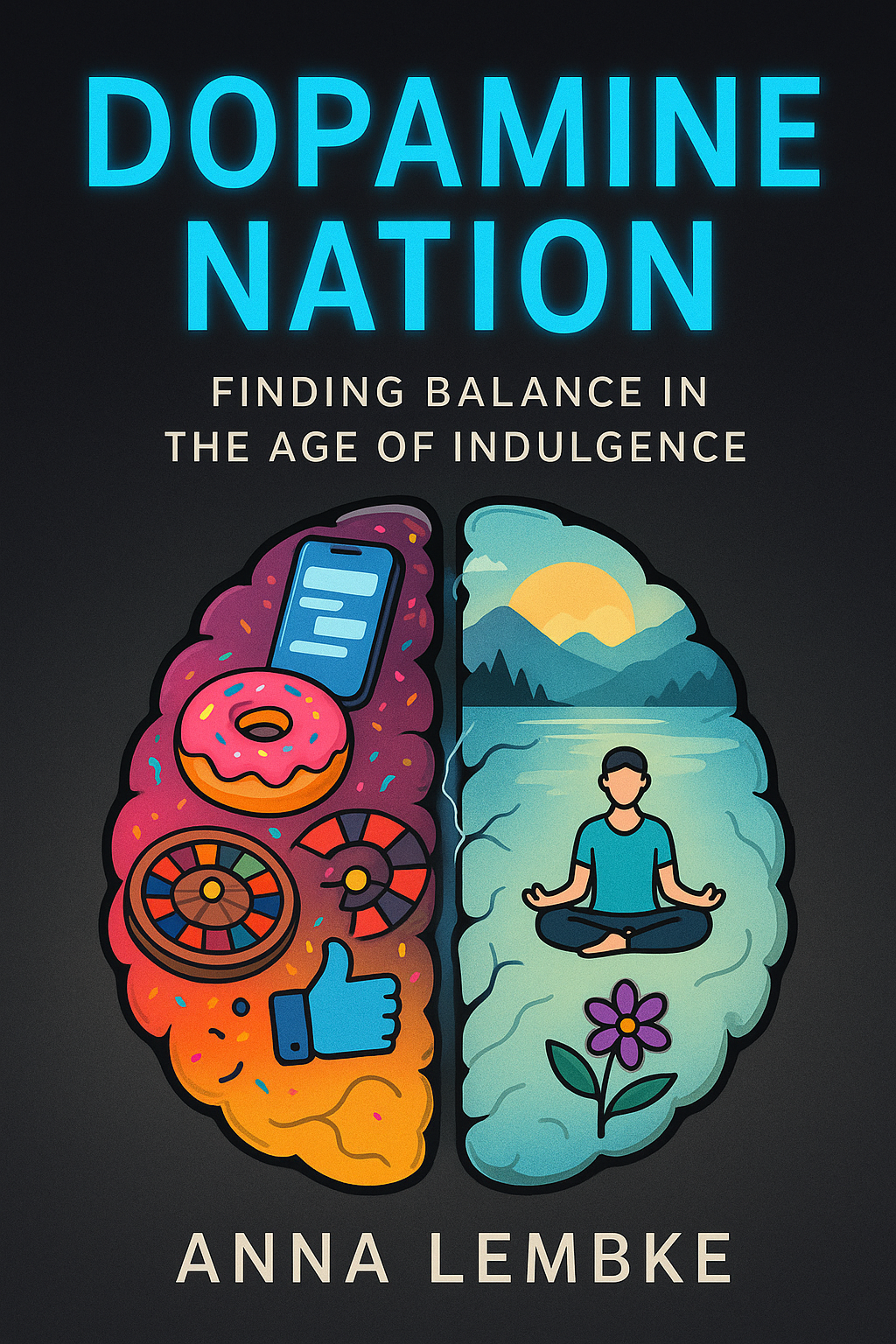
Dopamine Nation: Finding Balance in the Age of Indulgence
Chapter Summaries
What's Here for You
In an era defined by unprecedented access to pleasure and constant digital stimulation, have you found yourself struggling to find balance? Are you caught in a cycle of seeking more, only to feel less satisfied? *Dopamine Nation* by Dr. Anna Lembke offers a profound and deeply human exploration into the science of pleasure and pain, and how our modern world has hijacked our brain's reward system. Lembke, a psychiatrist at the forefront of addiction research, reveals through compelling patient stories and accessible neuroscience that our relentless pursuit of dopamine-fueled highs is leading us down a path of increasing anxiety, depression, and dissatisfaction. This book promises to be your guide to understanding the intricate pleasure-pain balance, showing you how overindulgence in everything from food and drugs to our smartphones can fundamentally alter our neurological equilibrium. You will gain practical insights into the power of 'dopamine fasting,' the strategic importance of 'self-binding,' and the counterintuitive wisdom of embracing discomfort. Discover how radical honesty and prosocial shame can become powerful tools for recovery, and learn to navigate the complex landscape of addiction with compassion and clarity. This is not just a book about addiction; it's a roadmap for anyone seeking to reclaim their agency, find genuine contentment, and cultivate a more meaningful life in the face of overwhelming temptation. Prepare for an intellectually stimulating and emotionally resonant journey that will challenge your assumptions about happiness and provide you with the tools to achieve lasting well-being.
Our Masturbation Machines
Anna Lembke, in "Our Masturbation Machines," invites us into the intimate space of her therapy office, a ten-by-fourteen-foot sanctuary tinged with both secrets and sadness. She opens the narrative with Jacob, a seemingly unremarkable man from Silicon Valley, whose palpable anxiety signals a deep-seated struggle. As Lembke navigates the delicate dance of beginning a therapy session, Jacob’s request for a "man" to hear his story immediately signals a conversation about sex, a topic he confesses with a trembling "I have the sex addiction." Jacob’s story unfolds with a startling childhood memory of masturbation at age two or three, a vivid experience he likens to being on the moon, a place both nowhere and everywhere. This early exploration, later framed by Catholic dogma as a mortal sin, initiated a "double life," a clandestine engagement with pleasure that would persist through adolescence. In his late teens, seeking greater control, Jacob engineered a "masturbation machine" from a record player and metal coil, a contraption designed to prolong pleasure by hovering at the precipice of orgasm, a technique he found "very addictive." Lembke uses Jacob's elaborate device as a springboard to explore a broader societal phenomenon: our own modern "masturbation machines." She confesses her own descent into a compulsive reading habit, devouring increasingly graphic romance novels via an e-reader, a digital portal that offered instant, endless gratification, leading her to abandon social connection, household chores, and even sleep. This personal anecdote illuminates a core insight: the pervasive nature of compulsive overconsumption in an age of unprecedented access and technological advancement. The chapter delves into the "dark side of capitalism," or "limbic capitalism," where transformational technology amplifies not just access but also the potency and variety of addictive substances and behaviors. From potent opioids and hyper-palatable foods to the digital allure of online pornography, gambling, and gaming, the narrative paints a stark picture of a world where supply has demonstrably created demand. Jacob’s story continues, detailing his move to Germany, his discovery of pornography, and the internet's devastating impact, leading to a near-job loss and suicidal ideation. His subsequent marriage and relocation to Seattle didn't halt his compulsions; the Silicon Valley environment and his wife’s absence reawakened his addiction, leading him to experiment with electrical stimulation, a dangerous pursuit that culminated in creating a programmable machine synchronized with music and online communities. This descent into a virtual reality of sensation, shared and controlled remotely, illustrates the profound reach of digital drugs and social contagion, where online interactions foster and escalate compulsive behaviors, as seen in the tragic case of a child reenacting online sexual content. Lembke concludes by emphasizing that these "masturbation machines," whether physical devices or digital escapes, are not mere curiosities but potent metaphors for our collective struggle for balance in an era of hyper-indulgence, a struggle that carries profound implications for individual well-being and the planet's future, as we risk "titillating ourselves to death."
Running from Pain
In the age of indulgence, as Anna Lembke observes, we find ourselves increasingly adept at fleeing from discomfort, a tendency starkly illustrated by the story of David, a young man whose journey began with college anxiety and evolved into a profound reliance on prescription drugs. Diagnosed with ADD and GAD, David was prescribed Paxil and Adderall, a path that, while initially offering some relief, ultimately led him to rely on stimulants to cram for exams and then to seek them constantly, a cycle that spiraled into taking up to thirty milligrams of Adderall daily, alongside Ambien for sleep and Ativan for anxiety. This pattern, where medication becomes a crutch to avoid the inherent difficulties of life—the fear of failure, the need to ask for help, the simple act of studying—echoes a broader societal shift, as evidenced by the proliferation of self-help brochures promising happiness and the modern inclination to shield children from any adverse experience, inadvertently making them more fragile. Lembke posits that this cultural obsession with pleasure and avoidance of pain, a phenomenon traced back to the "triumph of the therapeutic," has ironically led to increased rates of anxiety, depression, and physical pain, even in affluent nations. We see this in patients like Kevin, who lives by the philosophy of "I do whatever I want, whenever I want," leading to a life of dysfunction, and in the medical field's transformation, where pain, once seen as a natural part of healing, is now aggressively eliminated, fueling the massive prescription of mood-altering drugs. David’s story culminates in a moment of crisis, a suicidal ideation prompted by exhaustion from his dependency, but ultimately averted by his wife’s support and his subsequent admission to inpatient care for addiction. The chapter argues that this relentless pursuit of comfort, whether through pills, binge-watching, or endless distraction, doesn't alleviate suffering but amplifies it, leaving us disconnected from ourselves and the world, caught in a paradox where our efforts to avoid pain only deepen it, much like an open wound that festers when left uncovered by the healing balm of experience. Even simple acts of self-awareness, like Sophie’s experiment in walking to class without distractions, reveal the terrifying yet ultimately fertile ground of boredom, a space that our constant pursuit of stimulation denies us, preventing true self-discovery and connection.
The Pleasure-Pain Balance
The author, Anna Lembke, guides us through the intricate neuroscience of pleasure and pain, revealing how our modern world of abundance has fundamentally altered our brain's delicate equilibrium. She explains that dopamine, a key neurotransmitter, is not just about the joy of reward, but crucially, the *motivation* to seek it, as demonstrated by mice engineered to lack dopamine, who would starve even with food before them, yet readily eat if it's placed directly in their mouths. Lembke introduces the elegant metaphor of the brain as a balance scale: for every dip into pleasure, the brain activates self-regulating mechanisms, like tiny gremlins hopping onto the pain side, to restore homeostasis. However, this is where the tension arises: repeated or prolonged pleasure, whether from a novel or a drug, leads to neuroadaptation. The gremlins on the pain side grow stronger, larger, and more numerous, requiring more of the stimulus to achieve the same pleasure, a phenomenon known as tolerance. This is the insidious paradox of hedonism: the relentless pursuit of pleasure can lead to anhedonia, the inability to feel pleasure at all. Lembke vividly illustrates this with her own experience of reading the Twilight saga, where each subsequent reading diminished the pleasure and deepened the post-reading dissatisfaction, forcing her to seek more potent stimuli. She powerfully connects this to clinical observations of patients on long-term opioid therapy, whose pain paradoxically worsens due to opioid-induced hyperalgesia, a recalibration of the pleasure-pain balance towards pain. The brain's reward pathways, visualized in striking fMRI scans showing diminished dopamine activity in addiction, become desensitized to natural rewards. Even cues associated with pleasure, like Pavlov's dogs salivating at a buzzer, can trigger dopamine release and subsequent deficit, fueling craving and compulsive behavior, as seen in pathological gambling where dopamine surges not just on wins, but critically, on losses due to the uncertainty. This learned association, a form of experiencedependent plasticity, can create lifelong neural changes, a 'hippocampal tattoo.' Yet, there is hope: the brain possesses remarkable resilience, capable of forging new neural pathways to bypass damaged areas. While some changes may be irreversible, recovery is possible through creating new, healthy behaviors and finding joy in simple, natural rewards once more. The author concludes by suggesting that those struggling with addiction, often ostracized, hold a profound wisdom for navigating our current age of overwhelming abundance, offering lessons for a world drowning in dopamine, urging us to recognize that our ancient brains are ill-equipped for this modern bounty, and that true thriving may lie in embracing the lessons of recovery.
Dopamine Fasting
In the bustling landscape of modern indulgence, Anna Lembke, through her own clinical practice and personal journey, introduces a powerful framework for understanding and recalibrating our relationship with high-dopamine rewards. She guides us through the story of Delilah, a teenager grappling with anxiety and using cannabis as a crutch, to illustrate the principles of her DOPAMINE acronym, a tool designed not just for conventional drugs but for any substance or behavior we overconsume. The journey begins with 'D' for Data, gathering the granular details of consumption – what, how much, and how often. This is followed by 'O' for Objectives, understanding the perceived benefits, the underlying logic that drives the behavior, like Delilah’s use of cannabis to manage anxiety. Then comes 'P' for Problems, the often-unseen consequences that high-dopamine pursuits inevitably bring, from health and relationship issues to a clouded perception of cause and effect, a phenomenon Lembke likens to knowing a doughnut tastes good but ignoring the five pounds it adds over a month. The crucial turning point is 'A' for Abstinence, a period of at least four weeks, Lembke argues, necessary to reset the brain's reward pathway and restore homeostasis, allowing us to experience pleasure from simpler rewards and truly understand the impact of our habits. This abstinence, however, is not passive; it requires 'M' for Mindfulness, the capacity to observe our thoughts, emotions, and sensations, including the discomfort of withdrawal, without judgment, transforming pain into an opportunity for self-awareness, much like Lembke’s own experience with intrusive thoughts after childbirth. This period of intentional discomfort and observation leads to 'I' for Insight, a clarifying understanding of how our consumption has been shaping our lives, an insight often impossible to grasp while still engaged in the behavior. Finally, the process culminates in 'N' for Next Steps, where individuals, armed with this newfound clarity, decide on their future relationship with the substance or behavior, whether it's continued abstinence or a more controlled, moderate use, a path that leads to the final 'E' for Experiment, a strategic, trial-and-error process of reintroducing rewards while maintaining a new, healthier dopamine set point. This entire framework, from data collection to mindful experimentation, is presented not as a rigid prescription, but as a guided exploration toward a more balanced and fulfilling life, acknowledging that for some, moderation is the goal, while for others, complete abstinence offers the most profound liberation.
Space, Time, and Meaning
The author, Anna Lembke, delves into the intricate challenge of managing compulsive overconsumption in our modern age, illustrating that willpower alone is often insufficient. She introduces the concept of 'self-binding' as a crucial strategy, a deliberate act of creating barriers between oneself and the drug of choice, a method born from observing her patients' struggles and successes. We see this vividly with Jacob, who, after a relapse triggered by the simple act of watching TV in a hotel room, is advised by Lembke to physically discard the components of his compulsive behavior, a powerful act of self-binding that merges the mundane with the metaphysical. Lembke categorizes these binding strategies into three essential types: physical, chronological, and categorical. Physical self-binding, akin to Odysseus tying himself to the mast to resist the Sirens, involves creating tangible barriers, like removing temptation from the home, using lockboxes, or even engaging with medications like naltrexone that block pleasure receptors. Yet, as the story of Oscar and his wine cabinet reveals, even these barriers can be circumvented, highlighting the cunning nature of addiction. Chronological self-binding, on the other hand, uses time as a boundary, restricting consumption to specific windows, a strategy supported by studies showing that limited access to rewards, like cocaine for rats, prevents escalating use and exhaustion. This temporal restriction combats the brain's tendency towards 'delay discounting,' where immediate rewards are overvalued, a phenomenon exacerbated by modern life's instant gratification. Finally, categorical self-binding involves creating mental or behavioral categories to limit consumption, not just of the drug itself but of its triggers, as seen with Mitch abstaining from all sports-related activities to avoid sports betting, or Jacob avoiding any sexually provocative imagery. These methods, while not foolproof, represent a vital, proactive stance against the siren call of endless dopamine, offering a path toward freedom and dignity by intentionally limiting our choices to reclaim agency.
A Broken Balance?
Anna Lembke, in "A Broken Balance?" from *Dopamine Nation*, opens a window into the profound struggles of Chris, a Stanford student whose promising academic start dissolved into a cycle of addiction and despair. Chris's story, a poignant illustration of the chapter's central tension, begins with his arrival at Stanford in 2003, a bright young man from Arkansas, meticulously organizing his life and dreaming of artistic pursuits. Yet, beneath the surface of academic success, a deep loneliness and a yearning for connection festered, culminating in a desperate suicide attempt after a painful rejection. This event led to a medical leave and a descent into drug use back home, a pattern that would repeat over several attempts to return to Stanford. Lembke meticulously details Chris's journey through drug-induced euphoria and the subsequent return to pain, his discovery of opioids offering a fleeting sense of connection that vanished with the high, and his eventual diagnosis as a "confirmed drug addict." The narrative captures the raw desperation, selling possessions for heroin, the chilling cold on city streets, and the profound isolation, even as he achieved academic success in the classroom. The turning point arrived in rehab in 2011, where buprenorphine, a medication designed to restore the pleasure-pain balance, became a lifeline. Chris credits it with saving his life, enabling him to return to Stanford, graduate with honors, and build a stable life. However, his declaration that he never wants to get off buprenorphine raises a critical question: had his brain's pleasure-pain balance been so fundamentally broken by prolonged drug use that he would need opioids indefinitely to feel normal? This leads Lembke to explore the broader implications of using medications to "press on the pleasure side of the balance," highlighting the inherent risk of addiction, even with prescription drugs, and questioning their long-term efficacy. She points to studies showing no decrease in mood and anxiety symptoms despite increased medication use, and the concerning phenomenon of opioid-induced hyperalgesia, where opioids can worsen pain. More profoundly, Lembke probes whether these medications, while offering relief, might be "rendering large segments of the population biochemically indifferent to intolerable circumstance," potentially dulling essential aspects of our humanity and serving as a form of social control, disproportionately affecting the poor. The chapter concludes with a stark warning, likening a world medicated into indifference to a sci-fi scenario where a population dies from lack of desire, urging a consideration of embracing pain as an alternative path to true healing and connection, rather than solely seeking to medicate it away.
Pressing on the Pain Side
The author, Anna Lembke, delves into the counterintuitive notion that embracing discomfort, rather than solely pursuing pleasure, can lead to a more balanced and enduring sense of well-being. She introduces Michael, a former Silicon Valley success story whose life unraveled due to substance abuse, finding solace and recovery not in more pleasure, but in the deliberate discomfort of cold-water immersion. This practice, echoing ancient traditions from the Greeks to Vincenz Priessnitz, triggers a potent release of dopamine and norepinephrine, yielding a euphoric feeling akin to drugs but with potentially longer-lasting effects. Lembke explains this phenomenon through the lens of homeostasis, where the body's natural regulatory mechanisms respond to pain by producing pleasure. This principle, explored through historical practices like fasting and selfflagellation, and even modern scientific studies on animals and humans subjected to stress or cold, suggests that intermittent exposure to pain can recalibrate our hedonic set point towards pleasure. The chapter then expands into the science of hormesis, detailing how moderate doses of noxious or painful stimuli—like exercise, caloric restriction, or even low-dose radiation—can strengthen biological systems and enhance functionality. Exercise, in particular, is highlighted as a powerful hormetic agent that boosts mood-regulating neurotransmitters, promotes neurogenesis, and reduces addiction vulnerability. However, Lembke cautions that this pursuit of pain is not without its risks; excessive or too potent an exposure can lead to addiction to pain itself, as seen in cases of extreme athletes or those who self-harm. The narrative circles back to Michael, whose ice baths, while initially a recovery tool, became more intense, bordering on addiction, yet he ultimately found a sustainable balance, transforming it into a shared family and social activity. Ultimately, Lembke posits that by intentionally 'pressing on the pain side'—whether through cold plunges, challenging exercise, or confronting fears—we can unlock a more profound and sustainable sense of vitality, a 'fit of joy,' rather than relying on fleeting, often destructive, pleasure-seeking behaviors. This deliberate embrace of discomfort, she reveals, is a path to building resilience and a richer experience of being alive.
Radical Honesty
The author, Anna Lembke, embarks on a profound exploration of radical honesty, revealing it not merely as a virtue, but as a critical cornerstone for sustained recovery and a life well-lived, even as our innate wiring often steers us toward deception. She illuminates how lying, a capacity honed by human language and social complexity, can paradoxically lead to isolation and craving in a world of plenty, a tension exemplified by her patient Maria, whose childhood of pretense and later addiction was rooted in a complex web of lies. Maria's pivotal moment came not from hiding her actions, but from confessing to opening her brother's package, a small act of truth that unlocked a profound sense of freedom and began to mend her relationships, demonstrating that admitting our foibles, especially when it entails consequences, is essential. Lembke posits that practicing honesty strengthens the prefrontal cortex, the brain's command center for planning and narration, much like learning a new skill, thereby enhancing our awareness of pleasure-pain balances and curbing compulsive behaviors, a concept supported by studies where stimulating this brain region reduced lying. She recounts her own subtle awakening to her romance novel habit during a residency exercise, where articulating her behavior aloud brought it into conscious relief and initiated her journey toward change. Furthermore, the narrative powerfully illustrates how radical honesty fosters intimate human connections, as seen in Jacob's story where admitting to a minor transgression with a shower curtain ring led not to rejection, but to a warm embrace and deeper intimacy with his wife, suggesting that vulnerability shared creates bonds stronger than isolation. This truth-telling, Lembke explains, is contagious, creating a 'plenty mindset' of trust and reliability, contrasting sharply with the scarcity mindset bred by deception, a phenomenon observed in the Rochester University marshmallow experiment where children's ability to delay gratification was significantly impacted by broken promises. Finally, the story of Drake, a medical student who chose to plead guilty to a DUI despite legal advice to lie, underscores how embracing difficult truths and their consequences can reroute life's trajectory, ultimately leading to a more authentic and free existence, free from the exhausting burden of maintaining a false self. The chapter concludes with the potent idea that even in a world saturated with indulgence and the temptation of lies, the simple, daily choice to tell the truth can lead to profound personal transformation and potentially, a more honest world.
Prosocial Shame
The author, Anna Lembke, navigates the complex terrain of shame, revealing its dual nature as both a perpetuator and a potential catalyst for change in the face of compulsive overconsumption. She begins by dissecting the common distinction between shame, which makes us feel bad about ourselves as people, and guilt, which focuses on our actions while preserving self-worth. Yet, Lembke posits that experientially, these emotions often feel identical—a gut-punch of regret, fear, and terror of abandonment. The critical divergence, she explains, lies not in the feeling itself, but in how others respond. When transgressions are met with rejection, we fall into destructive shame, deepening the emotional pain and fueling further compulsive behavior. Conversely, when met with acceptance and guidance, we enter the realm of prosocial shame, a force that can mitigate pain and foster recovery. Lembke illustrates destructive shame through the case of Lori, a patient who, despite her outward presentation of perfection, grappled with profound depression and substance misuse, finding only confusion and subtle rejection when she tentatively shared her struggles with her church community. This lack of genuine support led to further isolation and a deepening cycle of self-destructive behavior, highlighting how even well-intentioned groups can inadvertently foster destructive shame when they shun or encourage secrecy. In contrast, Lembke presents Alcoholics Anonymous as a powerful model of prosocial shame. Here, the shared vulnerability of admitting struggles, coupled with radical honesty and a clear path for amends, creates a powerful sense of belonging. This acceptance, rather than rejection, allows individuals to confront their actions without being defined by them, fostering genuine recovery. She shares the story of her mentor and a patient named Todd, who found solace and the courage to change within AA’s framework, where honesty about mistakes led not to ostracization but to empathy and support. This model, she argues, is built on the understanding that flawed humanity is universal and that the path to thriving communities involves not the casting out of those who stray, but the provision of specific steps for redemption. The concept of 'club goods,' where the collective experience and adherence to norms strengthen a group, is central to AA’s success, as is the willingness of members to engage in 'sacrifice and stigma'—seemingly irrational rules that nonetheless deter 'free riders' and bolster communal bonds. Lembke extends these principles to parenting, advocating for radical honesty within families, sharing her own humorous but instructive tale of confessing to stealing her children's chocolate bunnies. By modeling vulnerability and accountability, she creates a space for her children to do the same, demonstrating that true intimacy arises not from perfection, but from the shared effort to remedy mistakes, fostering a dopamine release that is rejuvenating and health-promoting, unlike the fleeting highs of addictive pleasures. Ultimately, the chapter compellingly argues that while shame can be a destructive force, prosocial shame, nurtured within supportive communities that embrace imperfection and offer clear paths to amends, is an essential tool for healing, connection, and sustained well-being.
Conclusion
Anna Lembke's "Dopamine Nation" offers a profound and timely exploration of humanity's struggle for balance in an era of unprecedented indulgence and readily available pleasures. The book masterfully synthesizes neuroscientific insights with compelling human narratives, revealing how our ancient brains, designed for scarcity, are ill-equipped to navigate the constant barrage of high-dopamine stimuli presented by modern technology and consumer culture. Lembke highlights the insidious nature of 'limbic capitalism,' which actively engineers demand for addictive substances and behaviors, blurring the lines between pleasure and compulsion. A core takeaway is the fundamental neurobiological principle of the pleasure-pain balance: every pleasurable experience is inherently followed by a pain response, and relentless pursuit of the former only amplifies the latter, leading to tolerance, anhedonia, and a vicious cycle of addiction. The book eloquently argues that our societal obsession with avoiding all forms of discomfort, fueled by a medical paradigm focused solely on eliminating pain and a culture that prioritizes immediate gratification, has paradoxically led to increased anxiety, depression, and a diminished capacity to cope with life's inevitable challenges. Emotional lessons emerge from the stark realities of individuals like Jacob, David, and Chris, whose journeys illustrate the devastating consequences of unchecked compulsive behaviors and the often-unseen struggles hidden beneath seemingly normal lives. The emotional arc of these stories underscores a profound human need for genuine connection, meaning, and resilience, often found not in endless pursuit of pleasure, but in confronting adversity. Lembke's practical wisdom centers on the power of self-binding and radical honesty. She dismantles the myth of willpower alone, advocating for proactive strategies like creating physical, temporal, or categorical barriers to temptation. The concept of a 'dopamine fast'—a period of intentional abstinence—is presented as crucial for recalibrating the brain's reward pathways and regaining the capacity for natural pleasures. Furthermore, the book champions radical honesty as a potent antidote to the isolation and secrecy inherent in addiction. By embracing vulnerability, practicing truthful self-narratives, and fostering prosocial shame within supportive communities, individuals can move from destructive shame to healing, accountability, and profound connection. Ultimately, "Dopamine Nation" is a vital call to re-examine our relationship with pleasure, pain, and ourselves, urging us to cultivate a more balanced, resilient, and authentically human existence by embracing discomfort, practicing honesty, and finding meaning beyond the fleeting highs of overconsumption.
Key Takeaways
The proliferation of readily accessible and increasingly potent 'masturbation machines,' both digital and physical, fuels compulsive overconsumption by providing constant, escalating stimulation.
Modern technology, driven by 'limbic capitalism,' actively creates and amplifies demand for addictive substances and behaviors, making it easier than ever to fall prey to compulsive overuse.
The line between pleasure and addiction is blurred by the ease of access and the novelty of digital platforms, which can normalize and even encourage behaviors that might otherwise seem unthinkable.
Compulsive overconsumption, even in lives seemingly devoid of traditional risk factors, represents a profound human struggle for balance in an age of overwhelming indulgence.
The interconnectedness facilitated by the internet can lead to 'social contagion,' where shared compulsive behaviors online create a sense of normalcy and further entrench addiction.
Our collective pursuit of immediate gratification through these 'machines' poses a significant threat not only to individual well-being but also to the sustainability of our planet.
The modern pursuit of happiness and avoidance of all discomfort, fueled by medication and constant distraction, paradoxically leads to increased anxiety, depression, and physical pain.
Reliance on prescription drugs to manage symptoms of anxiety and ADHD can become a cycle of dependency, where medication is used to compensate for a lack of basic self-care and coping mechanisms.
Shielding individuals, particularly children, from all forms of adversity and pain, rather than teaching them to navigate it, can create a profound fear of discomfort and hinder resilience.
The cultural shift towards prioritizing pleasure and self-gratification over enduring hardship has diminished our capacity to tolerate even minor discomfort, leading to a pervasive sense of unhappiness.
True self-discovery and connection are often found not in constant stimulation and distraction, but in embracing boredom and allowing oneself to confront difficult emotions and existential questions.
The medical paradigm's focus on eliminating all pain, rather than understanding its potential role in healing and growth, has contributed to widespread over-prescription of drugs and a societal inability to cope with suffering.
Dopamine primarily drives the motivation to seek rewards, not the pleasure of the reward itself, explaining why even when pleasure is absent, the drive to pursue it remains.
The brain operates on an opponent-process mechanism, where pleasure is inherently balanced by a subsequent pain response, and repeated indulgence amplifies this pain after-reaction.
Tolerance, a core component of addiction, develops through neuroadaptation, where the brain's 'pain gremlins' become stronger and more numerous, necessitating increased stimulus for diminished pleasure.
The relentless pursuit of pleasure paradoxically leads to anhedonia, the inability to experience pleasure, as the brain's reward pathways become desensitized to both natural and artificial stimuli.
Cuedependent learning, or classical conditioning, can trigger craving and drug-seeking behavior even in the absence of the substance, by associating neutral cues with reward.
While addiction can cause lasting brain changes, the brain's plasticity allows for the creation of new neural pathways, offering a pathway to recovery by detouring around damaged areas.
In an era of unprecedented abundance, our ancient brains, evolved for scarcity, are ill-suited, leading to a recalibration where more reward is needed for pleasure and less injury is needed for pain.
Understanding consumption requires gathering specific data on what, how much, and how often a substance or behavior is used, as the complexity of modern options can obscure addiction.
Even seemingly irrational behaviors are driven by personal objectives; recognizing these underlying needs is crucial for addressing compulsive overconsumption.
High-dopamine pursuits inevitably lead to problems, but the consequences are often obscured by the pleasure of use and the brain's limited capacity to perceive long-term cause and effect.
A minimum of four weeks of abstinence is essential to reset the brain's reward pathways, allowing for the restoration of pleasure from less potent rewards and genuine insight into consumption's impact.
Mindfulness is a critical component of dopamine fasting, enabling individuals to tolerate withdrawal-induced discomfort and observe their internal experiences without judgment, transforming pain into self-awareness.
The process of abstaining from compulsive behaviors can lead to profound insight, revealing how the substance or behavior was actually contributing to the problems it was meant to solve.
After abstinence, individuals must strategize 'next steps,' experimenting with either continued moderation or complete abstinence to maintain a healthier dopamine balance.
Willpower is a finite resource, necessitating proactive self-binding strategies to mitigate compulsive overconsumption.
Self-binding involves intentionally creating barriers—physical, temporal, or categorical—between oneself and the substance or behavior of choice.
Physical self-binding, such as removing temptations or using blocking medications, is effective but can be circumvented by determined compulsion.
Chronological self-binding, by limiting consumption windows, combats the brain's tendency to overvalue immediate rewards and fosters delayed gratification.
Categorical self-binding extends beyond avoiding the drug of choice to include eliminating triggers and associated behaviors, creating a broader protective net.
The modern market's adaptation of previously restricted substances into acceptable commodities challenges categorical self-binding, requiring constant vigilance and adaptation.
True freedom from compulsion is found not in unlimited access but in the deliberate, often challenging, act of self-binding.
Prolonged drug use can fundamentally disrupt the brain's pleasure-pain balance, potentially requiring medication for homeostasis and raising questions about the necessity of lifelong opioid dependence for some individuals.
Medications that primarily target pleasure pathways carry an inherent risk of addiction and may not provide long-term solutions for psychiatric symptoms, with some evidence suggesting they can even exacerbate conditions over time.
The widespread use of psychotropic medications may lead to a blunting of essential human emotions and experiences, potentially diminishing our capacity for profound feelings like grief and awe, and thus affecting our overall humanity.
The disproportionate prescription of psychiatric medications and opioids to socioeconomically disadvantaged populations suggests these drugs may function as a means of social control, masking the impact of adverse circumstances rather than addressing root causes.
True healing and connection may require confronting and embracing pain, rather than solely medicating it away, suggesting an alternative path that prioritizes resilience and emotional depth over biochemical indifference.
Deliberately embracing moderate pain or discomfort can trigger the body's natural pleasure-producing mechanisms, leading to more enduring well-being than direct pleasure-seeking.
The principle of hormesis demonstrates that small to moderate doses of noxious or challenging stimuli can strengthen biological systems and enhance resilience.
Modern sedentary lifestyles and constant pursuit of ease may be contributing to addiction and a diminished capacity for experiencing genuine pleasure.
While pain can be a powerful tool for healing and balance, excessive or extreme exposure to it carries the risk of addiction to pain itself.
Building tolerance to discomfort, whether physical or emotional, through gradual exposure can expand one's capacity to experience positive emotions and navigate life's challenges.
Intentional engagement with challenging activities, rather than avoidance, can recalibrate the brain's reward system and foster a deeper sense of vitality.
Embracing radical honesty, especially when difficult, is fundamental to overcoming compulsive behaviors and cultivating a more fulfilling life.
Lying, though a natural human tendency, paradoxically breeds isolation and craving in abundance, while truthfulness fosters connection and self-awareness.
Practicing honesty can strengthen neural pathways associated with decision-making and future planning, enhancing our ability to regulate impulses.
Vulnerability shared through honest disclosure creates deeper human intimacy and connection, acting as a powerful antidote to addictive isolation.
Adopting a truthful autobiographical narrative fosters accountability and self-awareness, shifting focus from victimhood to personal responsibility for healing.
A 'plenty mindset,' cultivated through consistent truth-telling and reliable relationships, enhances our capacity for delayed gratification and resilience, contrasting with the scarcity mindset induced by deception.
Shame's experience is often identical to guilt, but its impact—destructive or prosocial—is determined by the community's response to transgression: rejection fuels destructive shame, while acceptance and guidance foster prosocial shame.
Destructive shame perpetuates compulsive overconsumption through isolation, secrecy, and fear of abandonment, often exacerbated by groups that shun or discourage vulnerability.
Prosocial shame, exemplified by models like Alcoholics Anonymous, leverages radical honesty and a clear path for amends to foster acceptance, empathy, and belonging, thereby reducing addictive behaviors.
The effectiveness of prosocial shame relies on the concept of 'club goods,' where shared vulnerability, adherence to norms, and mutual accountability strengthen community bonds and promote recovery.
Radical honesty, even about personal mistakes, within families and relationships creates a safe space for vulnerability, fosters genuine intimacy, and models healthy coping mechanisms.
True intimacy, built on acceptance of flaws and collective efforts to amend mistakes, provides a sustainable, health-promoting dopamine release, distinct from addictive highs.
Action Plan
Identify and critically examine your own 'masturbation machines' – the digital or physical habits that provide easy, escalating pleasure.
Consciously create intentional friction or barriers to accessing highly stimulating digital content or compulsive behaviors.
Schedule dedicated periods of disconnection from technology and digital stimuli to foster presence and re-engage with the physical world.
Seek out and engage in real-world social interactions that offer genuine connection rather than virtual validation.
Practice mindful consumption of media and information, questioning the algorithms and devices designed to keep you engaged.
When tempted by compulsive urges, pause and consider the long-term consequences, much like Jacob's self-imposed sticky note reminders.
Explore analog or less potent forms of pleasure and engagement to recalibrate your reward pathways.
Identify one area in your life where you consistently use distraction or medication to avoid discomfort, and consider how you might approach it directly.
Practice intentionally embracing boredom for a short period each day, such as a walk without headphones, to allow your thoughts to surface.
Reflect on the societal messages around happiness and pleasure, and consider whether they align with your own values and well-being.
Challenge the impulse to shield yourself or others from all forms of discomfort, and instead, look for opportunities to build resilience through navigating challenges.
Examine your own self-care practices and consider whether they are genuinely restorative or primarily a form of avoidance.
Engage in activities that require focus and effort, even if they are initially challenging, to build tolerance for sustained attention and delayed gratification.
Recognize that the desire for pleasure is driven by motivation, not just enjoyment, and understand this can fuel compulsive behavior.
Be mindful of the brain's natural tendency to rebalance after pleasure, anticipating a subsequent dip into less desirable states.
Resist the urge for immediate gratification and prolonged exposure to highly pleasurable stimuli to prevent tolerance from developing.
Identify and reduce exposure to cues associated with addictive behaviors, understanding they can trigger craving independently.
Seek out simple, natural rewards and experiences to gradually re-sensitize the brain's pleasure pathways.
Embrace the possibility of recovery by focusing on creating new, healthy neural pathways and behaviors, even if past changes are permanent.
Acknowledge the wisdom of individuals in recovery, recognizing their unique insights into navigating a world of overwhelming abundance.
Begin by gathering data on your own consumption patterns: identify the substance or behavior, quantify its use (how much and how often), and note the specific delivery method or context.
Reflect on the objectives for your use: what needs or desires does this behavior fulfill, and what positive outcomes do you perceive from it?
Honestly assess the problems associated with your use, looking beyond immediate discomfort to consider long-term health, relationship, and moral consequences.
Commit to a period of abstinence, ideally four weeks, to allow your brain's reward pathways to reset and to gain clarity on the true impact of your consumption.
Practice mindfulness during the abstinence period by observing your thoughts, emotions, and physical sensations without judgment, especially during moments of discomfort or craving.
Seek to gain insight by reflecting on how your life has changed during the abstinence period and how the behavior may have been contributing to, rather than solving, your problems.
After the abstinence period, define your 'next steps' by deciding whether to continue abstinence or to reintroduce the substance or behavior in a more controlled, moderate way.
Engage in 'experimentation' by carefully reintroducing rewards, strategizing with a plan to maintain a healthier dopamine set point and prevent a relapse into compulsive use.
Identify your primary substance or behavior of compulsive overconsumption and list its most common triggers.
Implement a physical barrier: remove the substance/device from your immediate environment or make it difficult to access.
Set strict time limits for engaging with potential triggers or consumption activities, adhering to them rigorously.
Define clear categories of what you will and will not consume, extending this to related activities and media.
When faced with a craving, pause and engage in a physical or mindful activity, such as dropping to your knees to pray or taking a mindful walk.
Seek accountability by informing a trusted friend, sponsor, or therapist about your self-binding strategies and progress.
Practice self-compassion by forgiving yourself for past relapses and reaffirming your capacity for change.
Explore the concept of the pleasure-pain balance and how it might be affected by personal experiences and substance use.
Reflect on the potential trade-offs between emotional numbing for relief and the full spectrum of human feeling.
Consider the societal impact of medication use, particularly its disproportionate application to marginalized communities.
Investigate alternative strategies for managing pain and distress that do not solely rely on pharmaceutical interventions.
Engage in conversations about the role of medication in mental health treatment, weighing benefits against potential long-term consequences.
Seek to understand and potentially embrace discomfort as a catalyst for growth and resilience, rather than an enemy to be eradicated.
Incorporate short, intentional periods of cold exposure, such as a cold shower or brief ice bath, into your daily routine.
Engage in regular physical exercise, pushing your boundaries moderately to stimulate the body's hormetic response.
Identify a personal fear or discomfort and gradually expose yourself to it in controlled increments.
Practice mindfulness during challenging experiences to observe and process the sensations without immediate avoidance.
Experiment with intermittent fasting or caloric restriction within safe guidelines to challenge your body's systems.
Share challenging experiences, like cold-water immersion, with friends or family to foster connection and mutual support.
Identify one small lie or exaggeration you've told recently and confess it to yourself or a trusted person.
Practice articulating your feelings and experiences aloud, even to yourself, to bring hidden behaviors into conscious awareness.
When faced with a difficult truth, pause and consider the potential for deeper connection that honesty might foster.
Begin to reframe your personal narrative, focusing on your agency and responsibility, even in challenging circumstances.
Commit to a 'truth-telling day' where you consciously avoid all forms of deception, no matter how small.
Reflect on a past situation where lying seemed easier, and consider how honesty might have yielded a better long-term outcome.
Practice radical honesty by openly sharing personal struggles and mistakes with trusted individuals or support groups.
When faced with others' mistakes, respond with empathy and guidance rather than judgment or shunning, fostering a prosocial shame environment.
Seek out or create communities that prioritize acceptance and provide clear pathways for amends, such as 12-step programs or supportive family structures.
Engage in regular self-inventory to identify personal shortcomings and promptly admit when you are wrong, as exemplified by AA's Step 10.
Model vulnerability and accountability in your parenting or relationships by admitting your own mistakes and making amends.
Distinguish between the temporary gratification of addictive pleasures and the deeper, rejuvenating 'dopamine rush' derived from genuine intimacy and connection.
When observing community norms, consider if they serve to strengthen bonds through shared sacrifice and accountability, rather than merely imposing restrictions.