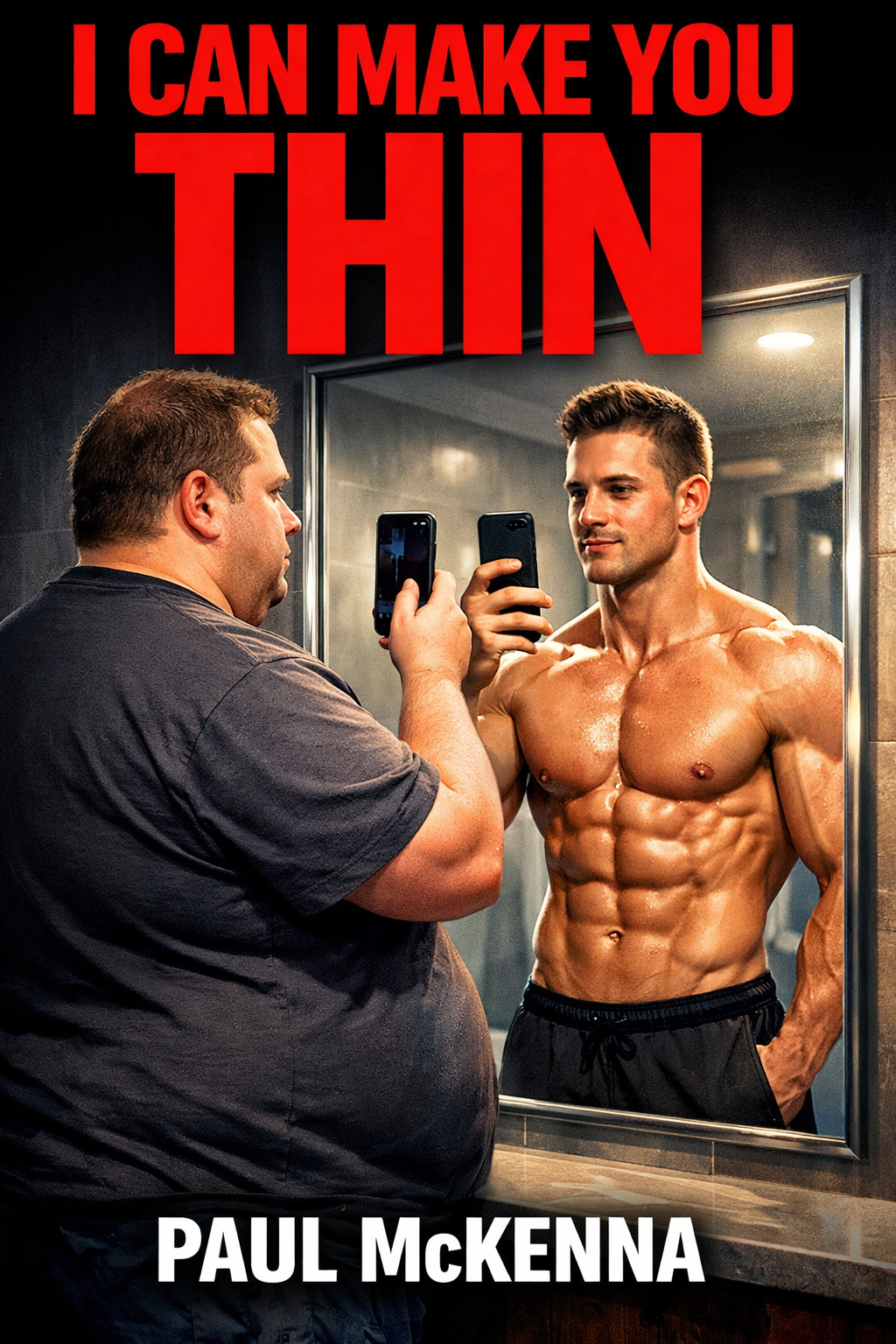
I Can Make You Thin
Chapter Summaries
What's Here for You
Tired of diets that fail? Paul McKenna's *I Can Make You Thin* offers a radically different approach: a journey to reprogram your mind for effortless, lasting weight loss. This isn't about deprivation or grueling exercise; it's about rediscovering your body's natural wisdom and breaking free from emotional eating and self-sabotage. Prepare to dismantle cravings, supercharge your metabolism, and finally achieve the slim, healthy body you deserve, all while feeling empowered and in control. Get ready to say goodbye to willpower struggles and hello to a sustainable, joyful relationship with food.
Are You Ready for Something Truly Different?
Paul McKenna opens the chapter by promising a concise yet transformative guide to weight loss, distinguishing it from typical diet books; it's not just about shedding pounds, but about adopting a new, sustainable lifestyle. McKenna emphasizes that this system has aided individuals who felt they had repeatedly failed at dieting, offering hope where previous attempts have faltered. The core of his approach involves learning from naturally thin people, individuals who seem to eat freely without gaining weight, and the author challenges the reader to confront the reasons they haven't achieved their desired weight yet. McKenna identifies three primary patterns that hinder weight loss: obsessive dieting, emotional eating, and faulty programming. Obsessive dieting, he argues, is counterproductive, often leading to failure and an increased obsession with food, likening it to Ancel Keys' starvation study where deprivation led to adverse psychological effects and subsequent overeating. Emotional eating, McKenna asserts, is another major contributor to obesity, where food becomes a means to cope with feelings rather than satisfy genuine hunger, urging readers to question their motivations before reaching for a snack—*Am I really hungry, or do I just want to change the way I feel?* Finally, McKenna addresses faulty mental programming, suggesting that ingrained habits, not personal failings, are often to blame for being overweight. He employs a thought experiment, envisioning the long-term consequences of both continuing unproductive habits and embracing the program's principles, urging a decisive choice, and offers reassurance that change is possible through reprogramming the unconscious mind, and answers common questions, reinforcing that his system defies traditional diets and encourages listening to one's body, not comparing oneself to unrealistic ideals. McKenna underscores the importance of progress over perfection, encouraging readers to focus on getting better, not being 'perfect'.
The Simplest Weight-Loss System in the World™
Paul McKenna unveils a revolutionary approach to weight loss, challenging the conventional wisdom of diets and external control. He begins by dismantling the myth of naturally thin people, suggesting instead that some individuals simply haven't been conditioned to ignore their body's innate wisdom. McKenna introduces four golden rules, cornerstones of his system, designed to realign one's eating habits with natural hunger cues. He emphasizes the importance of eating when truly hungry, cautioning against starvation, which ironically triggers the body's fat-storage mode, a survival mechanism harking back to famine responses. Visualize the camel, its hump a testament to stored reserves, a parallel to our bodies hoarding fat when deprived. Next, McKenna advocates for eating what one truly desires, not what societal norms dictate, liberating individuals from the exhausting inner battles of restriction. He recalls an experiment where toddlers, given unlimited access to various foods, instinctively chose a balanced diet over time, highlighting the body's innate intelligence. McKenna urges conscious eating, transforming each meal into a mindful meditation, savoring every flavor and texture. Imagine slowing down time, each bite a deliberate act, free from distractions like television or phones that dull our senses and inflate our portions. Finally, McKenna champions stopping when one feels full, reconnecting with the body's inner thermostat. This requires tuning into subtle signals of satisfaction, often overshadowed by conditioned habits of finishing everything on the plate. McKenna introduces the hunger scale, a tool to gauge levels of hunger and fullness, advocating for mindful awareness to override ingrained patterns. He encourages readers to abandon the Clean Plate Club, challenging the guilt-driven mentality of overeating, a relic of childhood admonishments. McKenna also highlights the role of water intake, suggesting that thirst often masquerades as hunger, urging readers to hydrate before indulging. The path may have occasional slips, moments of unconscious eating or succumbing to cravings, but McKenna insists on gentle self-correction, guiding readers back to the four golden rules. He advises against frequent weighing, as fluctuations can be misleading, advocating instead for trusting the process and focusing on feeling good. Ultimately, McKenna simplifies the entire system to one core principle: consciously enjoy every mouthful, a gateway to aligning with the body's natural rhythms and achieving sustainable weight loss.
Program Your Mind to Slim Your Body
Paul McKenna, in "I Can Make You Thin," tackles the frustrating reality that willpower alone often fails in the quest for lasting weight loss, revealing that the key lies in reprogramming the mind. He argues that deeply ingrained habits require more than just conscious effort to break; they need a shift in the underlying mental programs. McKenna illustrates this with a vivid example: imagining a chocolate cake covered in maggots, demonstrating how imagination can overpower even the strongest cravings. The author emphasizes the pivotal role of focus, cautioning against fixating on what one *doesn't* want (like 'losing weight') and instead directing attention toward the desired outcome—a slim, fit, and healthy body. This redirection sends a powerful message to the unconscious mind, priming it to seek opportunities aligned with those goals. McKenna then delves into the concept of self-image, drawing on the work of Maxwell Maltz to highlight how our internal perception of ourselves dictates our external reality. Those with an 'impoverished self-image' may find that even physical changes fail to improve their overall well-being, as they are still 'scarred on the inside.' McKenna proposes visualization as a powerful tool to reshape this self-image, citing scientific research that demonstrates how vividly imagining oneself slim can affect energy levels, motivation, and metabolism. He guides the reader through an exercise to visualize their 'perfect body,' encouraging them to step into that image and experience daily life from that new perspective. Just as a sculptor shapes clay, consistent mental rehearsal molds the mind, reinforcing new neural pathways and transforming how one feels, behaves, and eats. McKenna addresses common concerns, assuring listeners that even passive engagement with mind-programming audio can be effective, as the unconscious mind remains receptive during sleep. Ultimately, McKenna's approach is not just about losing weight; it's about cultivating a positive self-image and aligning one's thoughts, feelings, and behaviors to achieve lasting transformation.
Overcoming Emotional Eating
In this chapter of *I Can Make You Thin*, Paul McKenna addresses the common pitfall of confusing emotional hunger with physical hunger, a primary reason individuals overeat. He illuminates how emotional hunger arises suddenly, fueled by negative emotions attempting to fill an internal void, unlike physical hunger which develops gradually. McKenna points out, echoing Michael Neill, that "There arent enough cookies in the world to make you feel loved and whole," setting the stage for understanding inescapable stress as the core driver of emotional eating. Drawing from Dr. Ronald Ruden's research, McKenna explains how inescapable stress alters the brain, creating cravings for temporary relief through substances like food, a mere Band-Aid on deeper issues. Thus, controlling one's response to stress becomes paramount. McKenna introduces the "Calm Anchor" exercise, a technique to associate a physical action with feelings of calm, providing an immediate resource in stressful moments. He then confronts the debilitating effect of self-loathing, urging listeners to treat themselves with the same kindness they would offer others, a "platinum rule" for effective living. Through the "Somebody Who Loves You" exercise, McKenna guides listeners to experience themselves through the eyes of someone who cherishes them, fostering self-acceptance. He challenges the unrealistic body images perpetuated by media, reminding us of the body's natural blueprint for health and the importance of making peace with one's current form to achieve desired changes. McKenna distinguishes between utilizing his techniques for general well-being versus seeking professional help for diagnosed eating disorders like anorexia or bulimia, where distorted self-image or body dysmorphia prevail. He introduces the "Friendly Mirror" exercises, a three-part process designed to recalibrate self-perception, acknowledge compliments, and cultivate self-love, emphasizing that even moving from self-hate to neutrality can be transformative, like clearing storm clouds to reveal a sunlit landscape. Ultimately, McKenna reframes the question from "What should I eat?" to "What's eating me?", advocating for inner exploration and self-compassion as the true path to overcoming emotional eating, leading to increased confidence and a more charismatic presence.
Make Exercise Easy and Supercharge Your Metabolism
In this chapter, Paul McKenna dismantles the pervasive myth of a fixed metabolism, revealing it's a dynamic force influenced by our lifestyle choices, not a genetic sentence. He explains how restrictive dieting, often seen as a quick fix, ironically slows down metabolism as the body conserves energy, leading to muscle loss and future weight gain. McKenna stresses that consistent, mindful eating, responding to hunger cues, signals to the body that fuel is abundant, thus boosting metabolic rate. He reframes exercise not as a grueling chore but as any activity that elevates breathing and heart rate, emphasizing that "no effort, no gain; a little bit of effort, tremendous gain." McKenna highlights the often-overlooked benefits of exercise beyond weight loss, detailing how it releases endorphins, nature's stress relievers, and triggers the parasympathetic response, inducing relaxation and mental clarity; imagine stress melting away with each step, replaced by a sense of calm and well-being. The author then addresses common barriers to exercise, such as negative associations and unrealistic expectations, and introduces a powerful visualization technique to link positive emotions with physical activity, creating a self-reinforcing cycle of motivation. McKenna also emphasizes the importance of incremental increases in daily movement, suggesting simple changes like taking the stairs or walking during breaks, underscoring that even small steps can lead to significant transformations. Finally, McKenna tackles frequently asked questions, reinforcing that weight loss is achievable even without strenuous exercise but that incorporating movement accelerates the process and enhances overall well-being, urging readers to find joy in movement, turning exercise into a celebration of the body's capabilities rather than a punishment.
Craving Buster
In "I Can Make You Thin," Paul McKenna confronts the pervasive challenge of food cravings, assuring readers that his system isn't about deprivation but about regaining control. He introduces two powerful techniques to dismantle these learned behaviors. First, McKenna unveils the Tapping Technique, a method championed by Dr. Roger Callahan, which involves tapping on specific acupuncture points while focusing on the craving, effectively resetting the brain's software to bypass unwanted desires; he illustrates its potency with the story of Lizzie, who overcame a crippling cola addiction through this method. The essence lies in concentrating intently on the craving as one taps, disrupting the neurological pathways that fuel it. McKenna then presents the Compulsion Destroyer, a technique designed to eradicate specific food compulsions permanently. This involves vividly imagining a repulsive food while associating it with the craved food, creating a powerful aversion that diminishes the allure of the once-desired item. The emotional core of this method is facing the craving head-on and overwriting its appeal with disgust. McKenna underscores that cravings are not innate but learned, offering hope that they can be unlearned, and emphasizes that managing cravings enhances overall self-control, rippling positively into other life areas. He directly addresses common concerns, such as the impact of alcohol consumption on weight loss, advocating for mindful consumption rather than strict abstinence, and reassures readers that occasional binges are not failures but opportunities to apply the learned techniques. McKenna paints a vivid picture: cravings as insistent whispers that can be silenced, compulsions as heavy anchors that can be lifted, replaced with the lightness of conscious choice. Ultimately, the chapter empowers readers to transform their relationship with food, shifting from a state of constant battle to one of active enjoyment, liberating their minds and bodies in the process.
The Final Piece of the Weight-Loss Puzzle
In this chapter of *I Can Make You Thin*, Paul McKenna addresses the core reason why diets fail: self-sabotage. He begins with Sheila, a woman who initially found success with his system, only to falter when life's inevitable crises arose, highlighting a crucial insight: the system doesn't fail; we fail to follow it. McKenna emphasizes that even with the best intentions, unconscious beliefs can undermine progress. He introduces the concept of internal conflict, portraying it as different aspects of consciousness pulling in opposite directions, like driving with one foot on the accelerator and the other on the brake. The author explains that these conflicting parts often stem from a positive intention, even if misguided, such as the fear of past failures or a distorted sense of safety linked to being overweight. McKenna then introduces a technique to integrate these conflicting beliefs. This involves identifying the conflicting positions, acknowledging each part's positive intention, and then merging them into a new, unified "super part" that embodies the combined resources of both. The process is vividly illustrated by physically moving one's hands together, symbolizing the integration of these internal aspects. He tackles frequently asked questions, such as the frustration of not seeing immediate results, cautioning against premature evaluation, comparing it to a farmer digging up seeds before they can sprout. He also addresses the inevitability of slipping up, urging readers to simply return to the rules rather than succumbing to self-blame and bingeing. Finally, McKenna offers advice for when weight loss plateaus, advising readers to slow down their eating even further to reconnect with their body's satiation signals, a reminder that awareness is key to long-term success. The story of Sue Sibley, who rediscovered a smaller dress size, serves as a testament to the transformative power of the program when followed with mindful intention.
Conclusion
Paul McKenna's 'I Can Make You Thin' offers a transformative approach to weight loss, moving beyond restrictive diets to address the underlying psychological and emotional factors that drive overeating. The core takeaway is that lasting change requires reprogramming the mind, fostering a positive self-image, and cultivating a mindful relationship with food. It's about honoring the body's natural signals, addressing emotional needs, and breaking free from self-sabotaging behaviors to achieve sustainable well-being.
Key Takeaways
Diets often fail because they create a deprivation mindset, leading to obsession and eventual overeating; sustainable weight loss requires a different approach.
Emotional eating stems from using food to cope with feelings rather than addressing the underlying emotions; recognizing this pattern is the first step to breaking it.
Faulty mental programming, not personal weakness, is often the root cause of being overweight; reprogramming the mind can lead to lasting change.
Learning from naturally thin people involves adopting their eating habits, which include eating what you want, when you are hungry.
The key to changing habits is to respond differently to triggers; breaking old patterns creates space for healthier choices.
Comparing oneself to unrealistic ideals, such as digitally altered images, leads to dissatisfaction; focus instead on personal progress and well-being.
Listening to your body's signals, rather than following external rules, is essential for sustainable weight management.
Starving or restricting food intake can paradoxically lead to weight gain by triggering the body's fat-storage mechanisms.
Allowing oneself to eat desired foods, without restriction, can reduce cravings and promote a balanced diet based on the body's intuitive needs.
Eating consciously, savoring each mouthful, and eliminating distractions can enhance the enjoyment of food and promote feelings of fullness.
Learning to recognize and respond to the body's natural fullness signals is crucial for preventing overeating and maintaining a healthy weight.
Guilt and societal pressures to finish all food on one's plate can override natural hunger cues, leading to overconsumption and weight gain.
Thirst can often be mistaken for hunger; drinking water before eating can help differentiate between the two and prevent unnecessary snacking.
Minor setbacks are inevitable; the key is to gently redirect oneself back to the core principles without self-criticism.
Willpower alone is insufficient for breaking deeply ingrained eating habits; reprogramming the mind is essential for lasting change.
Focusing on what you *don't* want reinforces negative images; redirect your attention to vividly imagining the desired outcome.
Self-image profoundly influences behavior; cultivating a positive self-perception is crucial for achieving and maintaining a healthy weight.
Visualization techniques can dramatically enhance weight loss by affecting energy levels, motivation, and metabolism.
Consistent mental rehearsal reinforces new neural pathways, transforming thoughts, feelings, and behaviors related to food and body image.
Even passive engagement with mind-programming audio can be effective, as the unconscious mind remains receptive during sleep.
Differentiate between emotional and physical hunger by recognizing the sudden, urgent nature of emotional cravings versus the gradual onset of physical hunger.
Address the root cause of emotional hunger, which is often inescapable stress, rather than simply trying to suppress the urge to eat.
Cultivate an 'inner sense of calm' through associational techniques to counteract the neurochemical impact of stress on the brain.
Practice self-compassion and challenge self-loathing by treating yourself with the same kindness and understanding you would offer others.
Make peace with your natural body and its inherent design, resisting the urge to compare yourself to unrealistic or airbrushed images.
Recalibrate your self-perception by acknowledging and internalizing sincere, positive perceptions from others.
Actively meet your own emotional needs to diminish emotional hunger, fostering a more confident and charismatic presence.
Metabolism isn't fixed; it adapts to your eating and exercise habits, meaning you have the power to change it.
Restrictive dieting slows metabolism by signaling famine, causing the body to conserve energy and burn muscle.
Eating when hungry boosts metabolism, signaling abundance and preventing fat storage.
Exercise is any activity that increases heart rate and breathing, not just intense workouts.
Exercise releases endorphins, reducing stress and promoting relaxation and mental clarity.
Linking positive emotions to exercise through visualization can create lasting motivation.
Small, consistent increases in daily movement can lead to significant weight loss and health benefits.
Cravings are learned behaviors that can be unlearned, often rapidly, by disrupting associated neurological pathways.
The Tapping Technique reduces cravings by tapping on acupuncture points while concentrating on the desired food, resetting the brain's response.
The Compulsion Destroyer eliminates food compulsions by associating the craved food with something repulsive, creating an aversion.
Regaining control over eating habits positively impacts other areas of life, fostering greater self-control and well-being.
Mindful consumption, rather than strict abstinence, is key to managing cravings and maintaining a healthy relationship with food.
Occasional binges are opportunities to apply learned techniques and reinforce control over eating habits.
The primary reason diets fail isn't the diet itself, but the dieter's self-sabotage, often driven by unconscious beliefs.
Conflicting internal 'parts' with opposing desires (e.g., wanting to lose weight vs. fearing the consequences of weight loss) can undermine conscious efforts.
Every part of you, even those that seem to hinder your progress, has a positive intention rooted in protecting your well-being.
Integrating conflicting beliefs by acknowledging each part's positive intention and merging them into a unified perspective can resolve internal conflicts and promote aligned action.
Prematurely evaluating progress, such as constantly weighing oneself, can hinder the process by disrupting the necessary time for unconscious adaptation.
Slipping up is a normal part of the process; the key is to return to following the rules without self-condemnation.
When weight loss plateaus, slowing down eating speed even further can help reconnect with the body's satiation signals.
Action Plan
Eat when you're hungry and stop when you're full, paying attention to your body's cues.
Identify enjoyable activities that elevate your heart rate and breathing.
Use the visualization technique to link positive emotions with moving your body.
Increase your daily step count by 2,000 each week until you reach a comfortable target.
Take the stairs instead of the elevator whenever possible.
Park farther away from your destination and walk the extra distance.
Practice the motivation anchor exercise regularly to boost your desire to move.
Identify your emotional eating triggers and develop alternative coping strategies.
Before eating, ask yourself: 'Am I truly hungry, or am I seeking to change how I feel?'
Challenge and reframe negative thoughts and beliefs about your body and food.
Practice mindful eating, paying attention to your body's hunger and fullness cues.
Engage in activities that bring you joy and fulfillment, reducing the reliance on food for comfort.
Visualize your future self at your target weight, focusing on the positive emotions and experiences.
Instead of comparing yourself to others, focus on your own progress and celebrate small victories.
Make a conscious decision to abandon restrictive diets and embrace a more intuitive approach to eating.
Tune into your body once an hour and rate your hunger on a scale of 1 to 10 to increase awareness of hunger signals.
Identify foods in your refrigerator that do not inspire you and remove them to create an environment of desirable choices.
For the next two weeks, slow your eating speed to a quarter of what it used to be, putting your knife and fork down between each mouthful.
Eliminate distractions such as television, phones, and reading while eating to focus on the taste and texture of your food.
As soon as you notice discomfort or decreased enjoyment with each bite, stop eating, regardless of how much food is left on your plate.
When feeling hungry, drink a glass of water first to determine if you are truly hungry or simply thirsty.
Deliberately leave a small amount of food on your plate to break the habit of the Clean Plate Club.
If you experience a slip-up, gently remind yourself that it is normal and return to following the four golden rules without self-judgment.
Identify a specific, positive image of your desired body and health goals.
Practice visualizing yourself achieving these goals daily, focusing on the feelings and sensations associated with success.
Redirect your focus from what you want to avoid (e.g., 'being fat') to what you want to achieve (e.g., 'feeling comfortable in a size 8 dress').
Listen to mind-programming audio sessions regularly, even while sleeping, to reinforce positive messages to your unconscious mind.
Challenge and reframe any negative self-talk related to your body image.
Actively cultivate a more positive and confident self-image through affirmations and self-compassion.
Before eating, take a moment to consciously imagine the food nourishing your body and contributing to your health goals.
Identify situations that trigger emotional eating and track the emotions associated with them.
Practice the 'Calm Anchor' exercise daily to create an immediate sense of calm when feeling stressed or overwhelmed.
Challenge negative self-talk by writing down positive affirmations about yourself each morning.
Perform the 'Somebody Who Loves You' exercise to experience yourself through the eyes of someone who appreciates you.
Spend time each day looking at yourself in the mirror with kindness and acceptance.
Recall and internalize compliments you have received from others.
Ask yourself, 'What's eating me?' when you feel the urge to emotionally eat.
Practice mindful eating by paying attention to your body's hunger and fullness cues.
Engage in stress-reducing activities such as exercise, meditation, or spending time in nature.
Listen to the mind-programming audio download provided with the book to reinforce positive associations with exercise.
Identify your most intense food craving and rate it on a scale of 1 to 10.
Practice the Tapping Technique by tapping on the specified acupuncture points while focusing on your craving.
Repeat the Tapping Technique until your craving is reduced to a manageable level or disappears completely.
Choose a food you want to eliminate from your diet and practice the Compulsion Destroyer technique.
Imagine a repulsive food and associate it with the food you want to stop eating to create an aversion.
Apply the techniques learned to manage cravings that arise after occasional binges.
Be mindful of your alcohol consumption and avoid eating while drinking to better manage cravings.
Practice the four golden rules of eating to reinforce control over your eating habits.
Identify two conflicting beliefs you have about weight loss (e.g., wanting to be thin vs. fearing attention).
For each conflicting belief, ask yourself: What is the positive intention behind this belief?
Imagine a "super part" that integrates both positive intentions into a unified goal.
Practice mindful eating by slowing down your eating speed and paying attention to your body's fullness signals.
If you slip up and overeat, forgive yourself and immediately return to following the four golden rules.
Avoid weighing yourself too frequently, especially in the first few weeks, to allow the process to unfold naturally.
Visualize your conflicting parts merging into a unified whole, reinforcing the integration of your intentions.