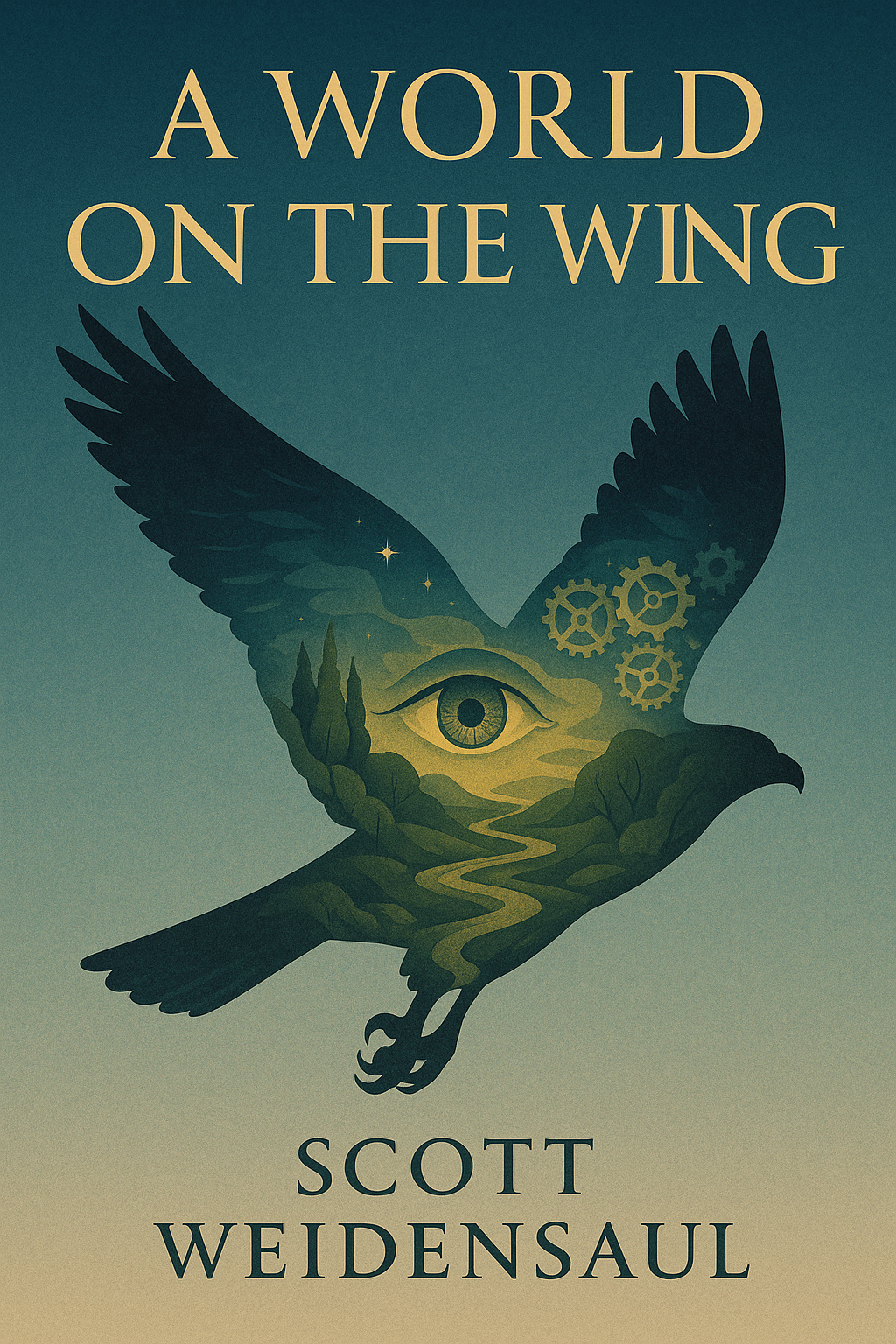
A World on the Wing
Chapter Summaries
What's Here for You
Prepare to be captivated by the extraordinary lives of migratory birds and the astonishing journeys they undertake. In 'A World on the Wing,' Scott Weidensaul invites you on a breathtaking expedition across continents and through the very fabric of avian existence. You will be transported to the stark, life-teeming mudflats of the Yellow Sea, witness the mind-boggling physiological transformations that enable birds to fly thousands of miles, and discover how groundbreaking technology is revolutionizing our understanding of these ancient routes. This book shatters old assumptions, revealing a migration far more complex and perilous than ever imagined, where "carryover effects" shape destinies and "big data" illuminates the immense challenges faced. From the "fallout" mornings on the Alabama coast to the rugged hills of California and the dramatic shores of the Outer Banks, Weidensaul plunges you into the heart of these epic migrations. You'll grapple with the brutal realities of habitat loss and human conflict that threaten these incredible journeys, from the Mediterranean to the remote Naga Hills. This is more than a nature book; it's an exploration of resilience, adaptation, and the profound interconnectedness of life on our planet. You will gain a deep appreciation for the intricate, often unseen, world of birds, a newfound wonder for their endurance, and a clear understanding of the urgent need for conservation. The tone is one of awe, urgency, and intellectual curiosity, blending meticulous scientific observation with deeply personal narrative, leaving you with a sense of profound connection to the winged world and a call to action to protect it.
SPOONIES
Scott Weidensaul transports us to the stark, seemingly lifeless mudflats of China's Yellow Sea, a place that, against all odds, teems with an astonishing concentration of life. Here, amidst the vast, exposed sediment revealed by an immense tidal range, millions of migratory shorebirds converge, transforming the barren landscape into a crucial refuelling station on their epic journeys. Weidensaul explains that these critical stopover sites, known to scientists as places where tired birds recoup their strength, are as vital as any five-star hotel for these avian athletes, offering a biological smorgasbord of invertebrates beneath the surface. The author reveals the Yellow Sea's unique role as a global bottleneck in the East Asian-Australasian Flyway, an hourglass-shaped system connecting breeding grounds in the Arctic with non-breeding seasons as far south as Australia and New Zealand. This immense migratory network, spanning millions of square miles, funnels through the extraordinarily shallow Yellow Sea, a region historically nourished by sediment-rich rivers. Yet, this vital artery is under siege. Weidensaul highlights the catastrophic loss of over two-thirds of these coastal wetlands in recent decades, primarily through reclamation for industrial and agricultural purposes, a process that chokes off the natural flow of sediment and seals away the tide. The narrative tension mounts as the author describes the existential crisis facing not only shorebirds but also the millions of humans who depend on these ecosystems. However, a glimmer of hope emerges: a recent Chinese government edict banning rampant coastal development. This potential turning point, Weidensaul suggests, is significantly tied to the plight of the spoon-billed sandpiper, a dumpy, critically endangered bird with a bizarre, spatulate beak, whose extreme rarity has become a potent symbol for conservation efforts. This peculiar bird, once thought to be on an irreversible nosedive towards extinction, has galvanized an international effort to protect its habitat. The author explains how the bird's life history, once an enigma, is slowly taking shape, revealing that the threats lie not in its Arctic breeding grounds but in the critical stopover and wintering sites along the Asian coast, particularly the Yellow Sea. We witness the researchers, like Jing Li and Zhang Lin, working tirelessly, their efforts amplified by organizations like the Paulson Institute, advocating for the preservation of these vanishing wetlands. The narrative captures the sheer physical extremity of shorebird migration, with birds burning through fat reserves and cannibalizing their own tissues to sustain flights of thousands of miles, a feat that dwarfs human athletic endurance. The author underscores the fragility of these creatures, whose survival hinges on the availability of these stopover sites. The story shifts from a grim depiction of habitat destruction to a more hopeful, albeit cautious, outlook. Weidensaul describes the UNESCO World Heritage designations beginning to offer protection to critical sites like Tiaozini and Nanpu, and the innovative conservation strategies, including captive breeding and head-starting programs for spoon-billed sandpipers. The narrative concludes on a note of tentative optimism, acknowledging that while the Yellow Sea remains a battleground between development and conservation, the growing global awareness, spurred by the magnetic charm of the spoon-billed sandpiper, may yet tip the scales towards recovery, reminding us that even in the face of immense loss, hope can take flight.
QUANTUM LEAP
Scott Weidensaul, in 'QUANTUM LEAP,' invites us into the astonishing inner lives of migratory birds, revealing physiological marvels that defy our understanding of biology. He begins by illuminating the dramatic internal transformations of red knots, whose testes swell to a thousand times their winter size, a testament to the hormonal drive that propels them north. This transformation is not merely about reproduction; it's a window into how extreme long-distance migrants have evolved extraordinary abilities, touching speed, endurance, memory, and even brain function. Weidensaul unveils how birds can grow and shrink internal organs on demand, utilize natural performance enhancers, and maintain perfect health despite exhibiting signs of morbid obesity and diabetes. The chapter delves into the mind-boggling feat of birds sleeping with half their brain at a time, flying for days, weeks, or months without true rest, and even sharpening their mental acuity under conditions that would debilitate humans. The true mind-bender, however, is revealed in their navigation, a process that relies on a form of quantum mechanics so strange it made Einstein uneasy. Weidensaul then turns to the bartailed godwit, a bird that undertakes a seemingly inconceivable 7,200-mile nonstop flight from Alaska to New Zealand, a journey requiring them to more than double their weight in fat, shrink their digestive organs, and double their heart and lung muscles. This physiological reorganization is so profound that the author likens it to something from a mad genius's lab, a testament to the sheer tenacity of life. The narrative shifts to the stark beauty of the Yukon Delta, where newly hatched godwits, abandoned by their parents, embark on their own perilous journeys, guided only by instinct across a vast and deadly ocean. The author masterfully weaves in the concept of metabolic water, explaining how birds can generate crucial hydration by cannibalizing their own tissues, a vital adaptation for long flights. He highlights the incredible efficiency of their respiratory system, comparing it to a sophisticated unidirectional flow, far superior to mammalian lungs, allowing them to thrive in the oxygen-scarce altitudes of the Himalayas, a feat achieved by barheaded geese that ascend at astonishing rates. Weidensaul also explores the surprising paradox of avian immunity, suggesting that migrants may have less diverse immune systems, perhaps as a strategy to escape tropical pathogens and reduce the risk of autoimmune diseases. The journey then leads to the Galapagos, where great frigatebirds, masters of the air, demonstrate unihemispheric sleep, allowing them to rest one half of their brain while the other remains alert, a crucial adaptation for their extended foraging trips. This phenomenon is mirrored in humans experiencing the 'first-night effect,' hinting at deeper connections between avian and human physiology. The chapter concludes by unraveling the mystery of avian navigation, moving beyond the long-held theory of magnetite in the beak to the mind-bending concept of quantum entanglement. Researchers now believe that a molecule called cryptochrome, activated by light, creates a radical pair in the bird's eye, forming a light-dependent magnetic compass. This quantum compass, a 'spooky action at a distance' that even Einstein struggled with, allows birds to perceive the Earth's magnetic field, a testament to the universe's astonishing complexity and the incredible adaptations of life on Earth.
WE USED TO THINK
We once believed migration was a simple journey, a predictable path etched in instinct. But Scott Weidensaul, through the lens of groundbreaking technology and persistent observation, reveals a far more intricate and surprising reality. He guides us from the early suspicions of naturalists like Ronald Lockley, who posited that common swifts might fly nonstop for months, to the modern marvels of miniaturized electronics—tiny transmitters that allow us to follow even the smallest migrants. This technological leap, exemplified by the Motus Wildlife Tracking System, has shattered old assumptions, exposing previously unknown threats and the delicate, far-flung connections that bind ecosystems. We learn that conservation efforts, once focused solely on breeding grounds or distant wintering sites, were often incomplete, even counterproductive, because we lacked a full-life-cycle perspective. The narrative unfolds through vivid scenes: the meticulous erection of an old-fashioned-looking antenna array that is, in fact, a gateway to understanding global bird movements, and the chilly dawn on the Delmarva Peninsula, where scientists track whimbrels, revealing their astonishing reliance on specific, tiny stopover sites and their perilous journeys through hurricane-laden skies. We discover that habitat needs are more complex than imagined; young forest, once dismissed, is now understood as crucial for fledglings, a revelation that challenges decades of conservation dogma. The author masterfully illustrates how science progresses, not through absolute knowing, but through a continuous process of "we used to think, but now we think," as new evidence recalibrates our understanding of everything from forest fragmentation's impact on nesting success to the intricate migratory connectivity that dictates where different populations winter and how they navigate. The journey of a few Swainsons thrushes, their flights mapped from Alaska to the border of Bolivia and Argentina, becomes a powerful metaphor for these hidden global webs, reminding us that the more we look, the more we find—and the more we realize how much more there is to understand.
BIG DATA, BIG TROUBLE
The dawn on the Alabama coast, a place of profound migration, reveals a world transformed by data. Scott Weidensaul paints a vivid picture of a "fallout" morning at Fort Morgan, where a cold front has pushed exhausted, hungry birds into the available shelter, a testament to the perilous journey across the Gulf of Mexico. This scene, once a mystery understood through painstaking observation, is now illuminated by the astonishing power of "Big Data." Weidensaul explains how ornithologists are now employing continental Doppler radar systems, processing incomprehensible volumes of information to create a near real-time, moment-by-moment map of bird migration, distinguishing species, direction, and even individual birds in the vastness of the night sky. This technological leap, akin to a "Golden Age of Ornithology," allows for the identification of critical stopover sites, guiding conservation efforts with unprecedented precision. Yet, this breathtaking clarity arrives with a terrifying revelation: the same technologies that unveil the scale of migration also expose the precipice of catastrophe. Billions of birds have vanished in recent decades, a stark reality underscored by the data, a consequence of habitat destruction, pesticides, and myriad other threats. The chapter then delves into the historical context of this data revolution, from George Lowery Jr.'s freighter voyages to Sidney Gauthreaux's pioneering use of radar, and the subsequent explosion of information with NEXRAD Doppler systems. Advances like dual-polarization radar and machine learning, exemplified by systems like MistNet, are now capable of distinguishing not just bird density but even individual bird orientation, though the raw computing power required remains immense. The narrative highlights the crucial role of citizen science, particularly eBird, which has harnessed millions of birders' observations into a staggering database, revealing migration routes and stopover sites with remarkable detail. This data has driven real-world conservation, such as the "pop-up wetlands" program in California's Central Valley, demonstrating how intelligent data application can achieve conservation goals at a fraction of the traditional cost. However, the chapter also confronts the limitations of radar, its "taxonomic agnosticism," necessitating complementary data sources like acoustic monitoring and eBird observations to identify species. The burgeoning field of nocturnal flight call analysis, powered by machine learning and collaborations with tech giants, promises to add species-level detail to the radar picture. The sobering truth emerges: despite the technological marvels, the overall trend is one of alarming decline, with a landmark study revealing the disappearance of 3.2 billion birds in North America since 1970. The chapter concludes not with despair, but with a call to action, emphasizing that while the "hour is late," the knowledge gained from Big Data offers targeted solutions. The awe-inspiring spectacle of a megamigration at Tadoussac, Quebec, witnessed by Ian Davies and his colleagues, serves as a poignant reminder of what was, and what could be again, if we harness this newfound understanding to protect the billions of birds still undertaking their epic journeys, even as new threats like SpaceX's Starlink constellation loom on the horizon, a stark illustration of the ongoing tension between progress and preservation.
HANGOVER
The author, Scott Weidensaul, invites us into the intricate world of migratory birds, using the Kirtland's warbler as a poignant case study to explore the profound and often overlooked concept of 'carryover effects.' We begin with the warbler's urgent song on a Michigan morning, a song that belies a perilous journey and a precarious start to the breeding season, all stemming from a dry winter in the Bahamas. This sets the stage for the central tension: how conditions during migration and on wintering grounds cast a long, influential shadow over reproductive success, a phenomenon scientists are only beginning to fully grasp. Weidensaul immerses us in the challenging Bahamian scrubland with researcher Nathan Cooper, witnessing firsthand the meticulous work of tagging these rare birds with nanotags, a technological leap allowing for unprecedented tracking from wintering grounds to breeding territories. This journey reveals the warbler's specialized habitat needs, its historical vulnerability tied to fire-dependent jack pine forests, and the conservation successes that brought it back from the brink, yet also highlights its potential future fragility. The narrative then shifts to the critical role of wintering grounds, illustrating how scarce rain and limited food in the Bahamas create a caloric deficit, delaying migration and potentially sabotaging breeding. This is not merely an avian issue; Weidensaul broadens the scope, referencing the groundbreaking work on American redstarts by Pete Marra, which illuminated how winter habitat quality directly impacts migration timing, territory selection, and ultimately, reproductive output. We see the scientific struggle to connect individual birds across vast distances, a challenge that the Kirtland's warbler's restricted range uniquely addresses. The story unfolds with vivid scenes: the dense, almost impenetrable Bahamian scrub, the relentless pursuit of food by a palm warbler, and the frustrating yet vital process of mist-netting and tagging. As the research moves to Michigan, we witness the ongoing conservation efforts, the creation of artificial jack pine habitats, and the team's diligent monitoring of tagged birds. The emotional arc builds as the data begins to reveal surprising insights, such as the initial leg of the migration from the Bahamas to the US coast being the most dangerous, suggesting that the wintering grounds' influence is paramount. The resolution emerges not as a simple answer, but as a complex understanding: the future of species like the Kirtland's warbler, and indeed millions of other migratory birds, hinges on addressing the ecological hangover caused by warming and drying wintering grounds, particularly in the face of rising sea levels threatening low-lying islands like the Bahamas. The author concludes by emphasizing that what happens on wintering grounds does not stay there, urging a global perspective on conservation that extends beyond breeding territories to these critical, yet often neglected, havens.
TEARING UP THE CALENDAR
Scott Weidensaul, in 'Tearing Up the Calendar,' draws us into the stark reality of a changing world, beginning with the poignant image of whimbrels taking flight from the receding marshes of Virginia's Eastern Shore. As the tide surges in, a dramatic visual unfolds: a once-expansive tidal marsh, teeming with life, is swallowed by the rising Atlantic, a visceral manifestation of accelerating sea-level rise. This dramatic inundation, intensified by a spring tide, forces even the resilient clapper rails into the water, swimming for survival, a stark tableau observed by Bryan Watts and his team. The author explains that this isn't just a local phenomenon; it's a confluence of geological subsidence and the undeniable force of climate change, with Greenland's ice melt and the thermal expansion of oceans contributing to a relentless rise that outpaces global averages. Weidensaul then broadens the lens, revealing how this 'planetary fever' is not merely an abstract threat but a fundamental reshaping of migratory bird life. He illustrates how climate change is tearing up the calendar for these creatures, disrupting the delicate timing of their journeys and their reliance on predictable seasonal resources. The narrative shifts to the Great Basin, where drying wetlands, exacerbated by climate change and water diversion, are devastating populations of waterbirds, highlighting the precariousness of critical stopover points. The Sahel in Africa, a vital migratory link, faces uncertain futures with shifting rainfall patterns, underscoring the global scale of the crisis. A central tension emerges: while scientists have long monitored bird populations, providing early evidence of climate change's impact, the sheer pace of disruption is overwhelming. Weidensaul presents the sobering projection that over half of North American bird species could lose significant portions of their ranges by the century's end, with some, like Baird's sparrow, facing potential oblivion. Even seemingly advantageous shifts, like longer growing seasons, create a dangerous 'phenological mismatch,' as seen with the European pied flycatcher, whose arrival is dictated by ancient genetic triggers, while its insect prey booms much earlier due to warming temperatures. This temporal disconnect, where spring outruns migration, leaves chicks unfed and populations in sharp decline. Yet, amidst this tension, Weidensaul introduces glimmers of hope and remarkable adaptability. He explores the evolving migration routes of hummingbirds, drawn eastward by warmer winters and human-altered landscapes, and the Eurasian blackcap, splitting into distinct populations with differing wintering grounds and breeding times, suggesting that evolution and phenotypic plasticity are offering some species a chance to adapt. The author even takes us to Philadelphia International Airport, not for fishing, but to tag a snowy owl as part of Project SNOWstorm, revealing that while irruptions are natural, the underlying lemming cycles, crucial for snowy owl breeding, are being disrupted by Arctic warming. These owls, once thought to be numerous, are now understood to be far fewer, placing them squarely in the crosshairs of climate change. The narrative concludes with the profound insight that while adaptation is occurring, it is not universally successful; even highly adaptable species like the black-tailed godwit face insurmountable challenges on breeding grounds altered by intensive agriculture, demonstrating that flexibility has its limits. Ultimately, Weidensaul leaves us with a complex, evolving picture of migration, where the ancient rhythms of nature are being rewritten by a warming planet, forcing life to either adapt with unprecedented speed or face profound loss.
AGUILUCHOS REDUX
The author, Scott Weidensaul, transports us to the Butte Valley of northern California, a landscape of rugged hills and agricultural fields, where a PhD student, Chris Vennum, is diligently studying Swainsons hawks. This scene, seemingly peaceful, ignites potent memories for Weidensaul of a terrifying crisis two decades prior: a devastating pesticide-induced die-off of these same hawks on their wintering grounds in Argentina. He recounts how, in the 1990s, the advent of small satellite transmitters finally allowed researchers like Brian Woodbridge to trace the arduous 18,000-mile migration of Swainsons hawks. Woodbridge, deeply invested in the Butte Valley population, noticed alarming declines in returning adults, a mystery that led him and his team to Argentina. There, they discovered thousands of dead hawks, victims of the organophosphate monocrotophos, sprayed by farmers to combat grasshoppers. This discovery marked a turning point, a stark illustration of the fragility of migratory species and the unforeseen consequences of human actions. It was a near-extinction event, a species plunged toward oblivion. Yet, the narrative shifts, revealing a powerful conservation success story. Through swift international cooperation, led by groups like the American Bird Conservancy, the pesticide was banned, and the Argentine government intervened, halting the carnage. Weidensaul immerses us in the dusty, eucalyptus-scented plains of La Pampa, describing the magical yet exhausting work of banding hawks, collecting samples, and witnessing the awe-inspiring spectacle of thousands of hawks roosting at dusk. This period also highlighted the profound dedication of individuals like Agustn Lanusset, the ranch owner, and the intricate web of scientific lineage, tracing back through Pete Bloom, Brian Woodbridge, Chris Briggs, and now Chris Vennum, each building upon the work of the last. This multi-generational research has yielded remarkable insights: the intense loyalty of these hawks to their breeding territories, the concept of 'supermoms' driving population success, and intriguing questions about mate selection potentially linked to immune system diversity, symbolized by the distinct dark morphs prevalent in California. However, the story is not one of simple triumph. As Weidensaul revisits the Butte Valley, he finds the hawks recovering, a testament to their adaptability and the success of conservation efforts. Yet, new, diffuse threats loom – climate change and a drying landscape. More pressingly, the rise of strawberry farming, a chemically intensive and water-dependent industry, poses a new challenge, rendering vast tracts of land sterile for ground squirrels, the hawks' primary prey. The narrative concludes with a poignant reflection on the enduring mysteries of migration, particularly the fate of juvenile hawks, and a sobering realization that even a species pulled back from the brink faces an uncertain future, its destiny intertwined with the ever-changing landscape and the availability of water. The tale of the Swainsons hawk, from its brush with extinction in Argentina to its complex present in the Butte Valley, serves as a profound reminder of the interconnectedness of ecosystems and the continuous, evolving nature of conservation.
OFF THE SHELF
Scott Weidensaul invites us to the dramatic edge of the Outer Banks, a place where the land surrenders to the sea, a slender necklace of barrier islands battered by hurricanes, yet also a vital gateway to the profound mysteries of pelagic migration. Here, where the continental shelf plunges into deep water, the seemingly inaccessible world of seabirds—shearwaters, albatrosses, storm petrels—becomes tantalizingly close. The journey begins before dawn, a palpable humidity clinging to the air, a prelude to the raw power of the Atlantic as Brian Patteson navigates the treacherous waters aboard the Stormy Petrel II. The initial hours are a test of endurance, a violent dance with the waves that underscores the vast difference between the familiar shore and the untamed ocean, a stark reminder of the 'Graveyard of the Atlantic' where countless ships have met their end. Yet, as the boat crosses the shelf break and enters the Gulf Stream, the scene transforms, a breathtaking shift from the monochrome struggle to a vibrant, technicolor world of cerulean blue and golden sargassum. This is where the true exploration begins, a realm where birds like the blackcapped petrel, a species once thought extinct, employ dynamic soaring, a masterful energy-saving flight technique that allows them to traverse immense distances, embodying the very essence of life lived on the wing. Weidensaul reveals that the greatest threats to these creatures often lie not in the vast ocean, but on the very islands they call home; introduced predators like rats and mice have turned remote sanctuaries into death traps, decimating island populations and pushing species like the Tristan albatross to the brink. However, a counter-narrative of hope emerges through dedicated conservation efforts, showcasing successful eradication campaigns on islands like South Georgia and the Antipodes, demonstrating that even the most daunting challenges can be overcome with persistence and ingenuity, offering a profound insight into humanity's capacity for both destruction and restoration. The chapter concludes by highlighting the ongoing taxonomic puzzles, the 'Whiskey Tango Foxtrot' petrels and the complex species complexes that challenge our understanding, reminding us that even as we strive to protect these birds, their ultimate secrets remain veiled, a testament to the enduring wildness of the planet.
TO HIDE FROM GOD
We journey with Scott Weidensaul to the Mediterranean island of Cyprus, a place of breathtaking beauty and profound conflict, both political and ecological. Here, the author reveals a stark reality: millions of migratory birds, on their ancient journeys between Europe and Africa, face a brutal gauntlet of illegal slaughter. The narrative unfolds through the eyes of conservationists like Andreas, who risk their safety to combat this crisis. We witness the clandestine methods of trappers – mist nets and lime sticks, their gruesome efficiency transforming olive groves into death traps, all for the illicit delicacy known as ambelopoulia. This practice, deeply rooted in tradition, exacts a staggering toll, with estimates of millions of birds killed annually, making Cyprus one of the worst hotspots in the Mediterranean. The problem, however, extends far beyond this island, with Italy, Syria, Lebanon, Egypt, and France also cited as significant killing grounds, highlighting a continent-wide failure to protect migratory species. The author masterfully weaves together the political complexities of Cyprus, a divided island marked by a visible symbol of conflict, with the silent devastation unfolding in its natural landscapes. Yet, amidst the despair, a flicker of hope emerges. Dedicated conservationists, employing tactics from meticulous surveillance to daring direct action, are beginning to push back. We see the impact of organized advocacy, like letter-writing campaigns that spurred British base authorities to increase patrols with advanced technology. The narrative shifts from the grim reality of the killing fields to the determined efforts of individuals and organizations like BirdLife Cyprus and CABS, who are slowly turning the tide. The author introduces the concept of 'whack-a-mole' conservation, where poachers shift tactics and locations, demanding constant vigilance and innovative strategies. The emotional arc builds tension as we encounter the stark realities of illegal bird trapping, delving into the traditions, the economics, and the sheer scale of the devastation. This leads to a profound insight: the collision of deeply ingrained cultural practices with urgent ecological needs, revealing how tradition, when unchecked, can become a destructive force. The narrative resolves not with a complete victory, but with a cautious optimism, underscoring the power of sustained effort, international cooperation, and, crucially, the engagement of younger generations in conservation. The author emphasizes that while eradicating the practice entirely may be unrealistic, reducing its impact to a level where it no longer threatens species is an achievable, albeit challenging, goal, hinting that the long-term solution lies not just in enforcement, but in shifting cultural perspectives.
ENINUM
The author, Scott Weidensaul, embarks on a journey into the remote Naga Hills of northeast India, a region fraught with peril and beauty, in search of a legendary gathering of Amur falcons, a spectacle reputed to be the largest of its kind on Earth. What begins as a quest for avian wonder quickly reveals a profound conservation dilemma: an astonishing natural phenomenon threatened by unsustainable local hunting. The narrative plunges us into the heart of this tension, describing the arduous travel through treacherous, unmapped roads, a stark contrast to the vibrant, yet unfamiliar, culture of the Naga people, who, despite a history of headhunting, are now predominantly Baptist. Weidensaul recounts the initial disappointment and worry when the expected "highway of falcons" is reduced to mere sightings, a consequence of unseasonable monsoons. This sets the stage for the central revelation: the discovery by conservationists like Bano Haralu of hundreds of thousands, perhaps a million, Amur falcons roosting by the Doyang Reservoir, only to witness an estimated 140,000 being killed in a matter of weeks by local fishermen using nets. The chapter masterfully navigates the complex transition from this shocking conservation tragedy to a stunning success story. It details the swift, almost miraculous, decision by the Pangti community to abandon the hunt, driven by a mix of ethical realization, increasing law enforcement, and the promise of ecotourism. We experience the awe of witnessing the falcons' majestic morning liftoff, a swirling, hypnotic spectacle of tens of thousands of birds rising as one, a sight that dwarfs even the famed Veracruz raptor migration. The narrative then delves into the cultural and economic shifts, highlighting the sacrifices made by villagers like Nchumo Odyuo, who traded the lucrative falcon trade for the uncertain prospect of tourism, and the subsequent challenges of equitable benefit distribution. Further complexities arise with encounters with local authorities and the stark reality of the region's infrastructure, as exemplified by the harrowing journey out of the reservoir area and a tense encounter with an intelligence officer. Yet, amidst these challenges, the chapter concludes with a sense of hope, showcasing the resilience of both the falcons and the community, with other villages in the region beginning to emulate Pangti's protective efforts and tourism slowly growing, suggesting that even in the face of immense challenges, conservation can triumph, transforming a place once known for its violence into a sanctuary for one of nature's most breathtaking migrations, a testament to the extraordinary resilience of both wildlife and human spirit. The sheer scale of the falcons' flight, an "encompassing spectacle" that envelops observers, underscores the profound beauty that can be saved when communities choose a path of preservation over exploitation, ultimately offering a much-needed glimmer of good news in the often-dire landscape of global conservation.
Conclusion
Scott Weidensaul's 'A World on the Wing' masterfully weaves together the awe-inspiring biological wonders of avian migration with the urgent realities of its conservation. The core takeaway is the profound interconnectedness of our planet; migratory birds, undertaking journeys of unfathomable scale, act as vital ecological linchpins, their survival inextricably linked to critical stopover sites like the Yellow Sea's mudflats and the health of distant wintering grounds. We are shown that these epic flights are not merely instinctual wanderings but feats of extreme physiology, demanding incredible energy conservation, organ regeneration, and sophisticated navigation, potentially even quantum-based. Emotionally, the book evokes a deep sense of wonder at these natural marvels, juxtaposed with profound sorrow and urgency as we confront the catastrophic declines these species are experiencing. The emotional arc moves from awe at their resilience and adaptability to a sobering realization of their vulnerability in the face of human-induced environmental crises. Practically, Weidensaul underscores that effective conservation demands a multi-layered, global approach. It requires dedicated scientific research, often aided by technological advancements like miniaturized tracking devices and citizen science platforms like eBird, which reveal the complexity of migration patterns and the full annual cycle of these birds. Crucially, conservation efforts must address the entire migratory pathway, from breeding to wintering grounds and all essential refueling stops, acknowledging the devastating impact of 'carryover effects' and 'phenological mismatches' caused by climate change and habitat degradation. The book highlights the necessity of integrating local economic realities and national policies with international collaboration, demonstrating that protecting these species also safeguards human livelihoods and coastal resilience. Ultimately, 'A World on the Wing' is a powerful call to action, urging us to recognize our shared fate with these feathered travelers and to act decisively to preserve the vital ecosystems upon which they, and we, depend. It offers a cautious optimism, suggesting that with sustained effort, scientific insight, and a shift in cultural perspectives, even species on the brink can be brought back from the edge.
Key Takeaways
Critical stopover sites, like the Yellow Sea's mudflats, are indispensable ecological linchpins for migratory birds, providing essential refueling and rest necessary to complete epic journeys, and their degradation poses a global conservation crisis.
The extreme physical demands of long-distance bird migration, characterized by metabolic rates far exceeding human capabilities and physiological self-cannibalization, highlight the delicate balance upon which these species depend for survival.
Iconic and critically endangered species, such as the spoon-billed sandpiper, can serve as powerful catalysts for broader conservation efforts, uniting diverse stakeholders and driving policy changes to protect vital habitats for numerous species.
The interplay between local economic pressures, national policy, and international conservation efforts determines the fate of crucial migratory flyways, demonstrating that effective protection requires a multi-layered approach addressing both habitat loss and human livelihoods.
Despite overwhelming environmental challenges and the threat of extinction, dedicated scientific research, public awareness campaigns, and international collaboration offer a pathway towards habitat restoration and species recovery, fostering cautious optimism for the future of migratory bird populations.
The conservation of coastal wetlands provides a dual benefit, supporting not only migratory bird populations but also millions of humans who rely on these ecosystems for livelihoods and coastal protection, underscoring the interconnectedness of ecological and human well-being.
Migratory birds possess extraordinary physiological adaptations, including organ regeneration and quantum-based navigation, that allow them to undertake extreme journeys.
The ability to conserve energy and water through metabolic processes and specialized sleep patterns, like unihemispheric sleep, is critical for long-distance flight survival.
Avian navigation is a complex interplay of magnetic senses, potentially rooted in quantum mechanics, and sophisticated internal mapping systems, challenging our understanding of sensory perception.
The extreme physiological demands of migration may have driven evolutionary trade-offs, such as a potentially less diverse immune system, to optimize for survival and energy efficiency.
Birds exhibit remarkable resilience to sleep deprivation and physiological stress, suggesting biological mechanisms that could offer insights into human health and performance.
The concept of 'many wrongs making a right,' as seen in flock navigation, highlights the power of collective intelligence and emergent behavior in complex systems.
Technological advancements, particularly miniaturization in tracking devices, have revolutionized our understanding of bird migration, revealing previously unknown patterns and challenges.
Conservation strategies must encompass the full annual cycle of migratory birds, from breeding to wintering grounds and all critical stopover sites, to be effective.
Habitat requirements for migratory birds are more complex than previously understood, necessitating a reassessment of conservation priorities, such as the importance of early successional habitats.
The scientific understanding of migration is a dynamic process, characterized by paradigm shifts ('we used to think, but now we think') driven by new data and observational capabilities.
Migratory connectivity, the precise links between specific breeding and wintering populations, highlights the vulnerability of species to localized threats and the need for geographically targeted conservation.
Many conservation assumptions, particularly regarding habitat importance and primary threats, have been incomplete, underscoring the need for continuous, evidence-based re-evaluation.
The integration of 'Big Data' and advanced technologies like Doppler radar and citizen science platforms like eBird has revolutionized ornithology, enabling unprecedented insights into bird migration patterns, crucial stopover sites, and population dynamics.
Despite technological advancements providing a clearer picture of bird migration, the data overwhelmingly reveals a catastrophic decline in bird populations, highlighting the urgent need for targeted conservation efforts.
Citizen science initiatives, particularly eBird, are invaluable resources, democratizing data collection and empowering conservationists by pooling millions of observations to understand species distribution, habitat use, and migration patterns at a continental scale.
Tradition, when it leads to mass ecological destruction, must be critically re-evaluated rather than blindly preserved.
The application of Big Data in conservation allows for more efficient and effective allocation of scarce resources, by identifying critical habitats and prioritizing protection efforts in areas with the greatest impact.
Technological advancements, while providing solutions, also introduce new challenges; for instance, urban light pollution disorients migratory birds, and the proliferation of satellite constellations poses unknown threats to nocturnal navigation.
Understanding the full scope of migratory bird challenges requires integrating multiple data streams, from radar and acoustics to citizen science observations, to account for species-specific needs and threats.
Even in the face of overwhelming population declines, targeted conservation actions, informed by data and focused on critical habitats or species groups, can yield significant positive results, offering a path toward reversing negative trends.
Wintering ground conditions, not just breeding grounds, critically determine migratory bird success, creating an 'ecological hangover' that impacts survival and reproduction.
Technological advancements like nanotags and the Motus system enable direct, individual tracking of migratory birds, bridging the gap between wintering and breeding grounds to understand carryover effects.
The Kirtland's warbler's highly specialized and restricted range, while a conservation challenge, paradoxically makes it an ideal model species for studying the subtle yet significant impacts of carryover effects.
Climate change, manifesting as drier winters and rising sea levels in crucial wintering areas like the Bahamas, poses an existential threat to migratory bird populations, potentially reversing conservation gains.
Conservation efforts must expand beyond breeding habitats to encompass the health and stability of wintering grounds, acknowledging their profound influence on the entire annual cycle of migratory species.
Climate change is fundamentally altering the timing and predictability of migratory bird cycles, creating dangerous 'phenological mismatches' where birds arrive too late for peak food availability.
The accelerating pace of environmental change is pushing the limits of avian adaptation, with some species facing extinction while others exhibit remarkable, albeit not always sufficient, flexibility through evolving migration routes and behaviors.
Critical stopover and breeding habitats for migratory birds are under severe threat from sea-level rise, drying wetlands, and habitat degradation, creating bottlenecks that can lead to disproportionate population declines.
While natural phenomena like snowy owl irruptions are not directly caused by climate change, the underlying ecological cycles that drive them, such as lemming populations, are being disrupted by Arctic warming, imperiling species.
The study of bird migration provides crucial, early evidence of climate change's impact on global ecosystems, serving as a sensitive indicator of broader environmental shifts.
Phenotypic plasticity and evolutionary changes, though offering some species a path to adaptation, may not occur quickly enough to counteract the rapid rate of climate change, leading to potential population collapses.
The interconnectedness of global ecosystems means threats in one region (pesticides in Argentina) can have devastating impacts on migratory species in distant breeding grounds (California).
Dedicated, multi-generational scientific research, particularly long-term population tracking and banding, is crucial for understanding and addressing ecological crises.
Conservation successes, while vital, are often temporary victories that require ongoing vigilance as new, often diffuse, threats like climate change and altered agricultural practices emerge.
Migratory birds' reliance on specific habitats, whether natural or human-altered (like agricultural fields), makes them particularly vulnerable to landscape-level changes.
The study of animal populations reveals complex dynamics, such as the disproportionate contribution of a few 'supermoms' to reproductive success, highlighting unique drivers within species.
Mate selection in some species may be influenced by subtle biological cues, like immune system compatibility, offering a deeper understanding of evolutionary pressures.
The vast majority of a migratory bird's life, particularly the juvenile stage, remains a significant unknown, underscoring the vastness of what we still need to learn about wildlife.
The apparent vulnerability of coastal landscapes like the Outer Banks often masks their crucial role as gateways to understanding the most profound and remote natural phenomena, such as pelagic bird migration.
The seemingly boundless ocean, while posing its own challenges, is a more predictable habitat for seabirds than their terrestrial breeding grounds, which are increasingly threatened by invasive species introduced by humans.
Human intervention, whether through the introduction of predators or dedicated conservation efforts, dramatically shapes the survival and evolutionary trajectory of seabird populations.
The study of seabird migration and taxonomy is an ongoing frontier, constantly challenging our existing knowledge and revealing the existence of cryptic species and complex evolutionary histories.
Despite the immense distances covered by pelagic birds, their greatest existential threats often stem from localized impacts on their breeding islands, underscoring the critical importance of island conservation.
Successful eradication of invasive species from islands, though challenging and resource-intensive, offers a powerful model for conservation and the restoration of biodiversity.
The illegal killing of migratory birds is a complex issue intertwined with economic incentives, cultural practices, and political inaction, demanding multifaceted solutions.
Conservation efforts require sustained, adaptive strategies that counter the 'whack-a-mole' tactics of poachers and adapt to changing landscapes and enforcement challenges.
Engaging younger generations and raising public awareness are crucial for shifting cultural norms and fostering long-term commitment to protecting wildlife.
Even in the face of significant challenges and organized crime, dedicated individuals and organizations can achieve notable successes in wildlife protection through persistent advocacy and action.
Astonishing natural spectacles can be both a source of wonder and a catalyst for conservation crises when local communities face economic hardship.
Community-driven conservation initiatives, even when economically challenging, can lead to significant shifts in behavior and protection of wildlife.
The promise of ecotourism, while offering a potential economic alternative to unsustainable practices, requires careful management to ensure equitable benefits and long-term success.
Cultural and historical legacies, such as headhunting traditions, can be reoriented towards positive community action and pride in conservation efforts.
The success of conservation often hinges on a complex interplay of global awareness, local commitment, governmental support, and innovative strategies like community-based protection unions and educational programs.
Even in remote and challenging environments, human ingenuity and a sense of responsibility can transform a site of exploitation into a celebrated sanctuary for migratory species.
Action Plan
Educate yourself about the critical role of stopover sites for migratory birds in your region or along major flyways.
Support organizations actively involved in wetland conservation and the protection of migratory bird habitats.
Advocate for policies that prioritize environmental protection and sustainable land use over unchecked industrial development.
Reduce your personal environmental footprint, recognizing that individual actions collectively impact global ecosystems.
Learn about the specific threats facing endangered species like the spoon-billed sandpiper and share this knowledge with others.
Consider supporting sustainable tourism or ecotourism initiatives that contribute to local conservation efforts.
Engage with local conservation groups to understand and participate in habitat restoration projects.
Observe local bird behavior for subtle signs of adaptation, such as feeding patterns or flight styles, and consider the underlying physiological needs.
Explore popular science literature and documentaries that delve into extreme biological adaptations to expand your understanding of life's resilience.
Research the concept of unihemispheric sleep and its implications for multitasking and continuous operation in other contexts.
Consider the principles of quantum mechanics as applied to biological systems, fostering an appreciation for the hidden complexities in nature.
Reflect on the concept of 'navigational aids,' both biological and human-made, and how they contribute to successful journeys.
Contemplate the trade-offs between specialization and generalism in biological systems, as exemplified by the immune systems of migratory versus resident birds.
Support or learn more about the Motus Wildlife Tracking System and similar research initiatives.
Educate yourself on the full annual cycle of migratory birds, considering all stages of their journey, not just breeding or wintering grounds.
Advocate for habitat conservation that considers diverse needs, including early successional habitats for young birds.
Stay informed about evolving scientific understanding by reading updated research and engaging with conservation organizations.
Recognize that scientific knowledge is provisional; approach new findings with an open mind, ready to revise previous assumptions.
Consider the implications of migratory connectivity for conservation efforts in specific regions where birds concentrate during migration or wintering.
Contribute bird observations to citizen science platforms like eBird to help build comprehensive migration datasets.
Support local conservation initiatives that protect or restore critical stopover habitats, especially in urban and coastal areas.
Educate yourself and others about the impact of artificial light at night on migratory birds and advocate for 'lights out' programs.
Reduce personal use of pesticides and herbicides, which can harm insects, a primary food source for many migratory birds.
Explore and engage with local bird monitoring programs or banding stations to gain hands-on experience with data collection.
Advocate for policies that support habitat protection and sustainable land-use practices, recognizing the interconnectedness of ecosystems.
Consider installing a rooftop microphone to record nocturnal flight calls and contribute to acoustic monitoring efforts, if feasible.
Educate yourself on the concept of 'carryover effects' and its implications for migratory species.
Support conservation organizations working to protect critical wintering habitats for migratory birds.
Advocate for policies that address climate change, recognizing its direct impact on these fragile ecosystems.
Consider the interconnectedness of ecosystems and how events in one region can profoundly affect wildlife in another.
Learn about species with specialized habitat needs, like the Kirtland's warbler, to understand their unique vulnerabilities.
Educate yourself about local climate change impacts on bird populations and habitats in your region.
Support conservation organizations working to protect critical migratory bird habitats, such as wetlands and coastal areas.
Reduce your carbon footprint by adopting more sustainable practices in your daily life.
Advocate for policies that address climate change and promote conservation efforts.
Create bird-friendly habitats in your own backyard or community, providing food and shelter.
Share knowledge about the challenges facing migratory birds with friends, family, and your community.
Educate yourself about the specific agricultural practices in your region and their potential impact on local wildlife.
Support organizations dedicated to the conservation of migratory birds and their habitats through donations or volunteering.
Advocate for policies that promote sustainable agriculture and the protection of natural landscapes.
When possible, choose sustainably produced food items that minimize pesticide use and water consumption.
Learn to identify local bird species and observe their behaviors, contributing to citizen science data if opportunities exist.
Share the stories of conservation successes and challenges with others to raise awareness.
Consider the broader implications of your consumption choices on global ecosystems and wildlife.
Seek out opportunities to observe local bird populations, paying attention to their migratory patterns and behaviors.
Educate yourself on the challenges faced by island ecosystems and the importance of invasive species eradication.
Support conservation organizations working to protect critical seabird habitats and implement pest-removal programs.
Engage with scientific literature or documentaries that delve into the complexities of avian taxonomy and migration.
Consider the broader implications of human impact on even the most remote corners of the planet.
Practice mindful observation in natural settings, appreciating the intricate adaptations of wildlife to their environments.
Research and support conservation organizations working to combat illegal bird trapping in regions like the Mediterranean.
Educate yourself and others about the migratory routes of birds and the threats they face.
Advocate for stronger legal protections and enforcement against the illegal killing of wildlife in your region and internationally.
Be mindful of the origins of food and traditional products, questioning practices that may have unsustainable or unethical impacts on ecosystems.
Engage with younger generations to foster an appreciation for nature and the importance of conservation.
Consider the long-term consequences of cultural traditions that may harm biodiversity.
Research and understand the unique cultural and environmental contexts of regions facing conservation challenges.
Seek out and support communities that are actively working to protect local biodiversity, even if their methods differ from conventional approaches.
Explore the potential of responsible ecotourism to provide sustainable economic alternatives for local populations reliant on natural resources.
Recognize that conservation successes often arise from complex collaborations between local communities, NGOs, and government bodies.
Be open to the possibility of profound transformation, where past conflicts or unsustainable practices can be overcome by collective will and new opportunities.
Advocate for improved infrastructure and accessibility in remote regions to support both conservation efforts and sustainable development.
Share and celebrate stories of conservation victories, however small, to inspire broader action and foster a sense of hope.