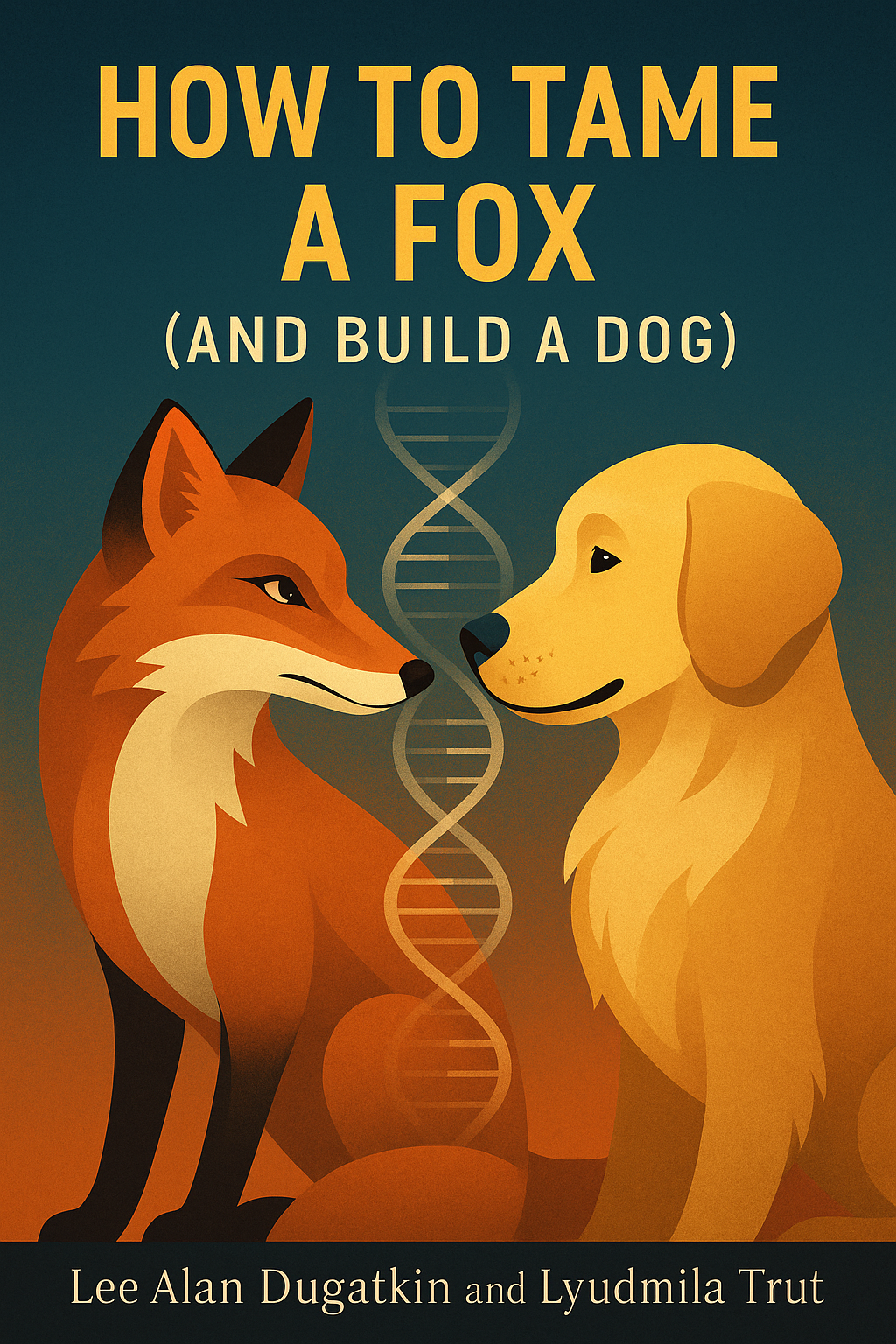
How to Tame a Fox (and Build a Dog)
Chapter Summaries
What's Here for You
Embark on a captivating journey that rewrites our understanding of domestication and the very essence of companionship. "How to Tame a Fox (and Build a Dog)" invites you to witness a groundbreaking scientific experiment, born from a bold idea in post-war Soviet science, that dared to ask: can we accelerate the evolutionary dance that turned wolves into our beloved canine friends? This book promises to unlock one of evolution's most beguiling mysteries, revealing the intricate path of domestication through the remarkable story of the silver fox. You will gain an intimate look into the dedication and perseverance of scientists like Dmitri Belyaev and Lyudmila Trut, who, against all odds, nurtured a wild creature into a creature of profound connection. Prepare to be amazed by the subtle shifts in behavior, from a wagging tail of unbridled joy to a fox responding to its name, mirroring the very qualities that make dogs such cherished members of our families. Discover the scientific elegance behind this transformation, exploring the deep dive into animal cognition and the genetic underpinnings that differentiate the wild from the tame. This narrative is more than just a scientific account; it's an exploration of the delicate interactions that forge bonds, a testament to the power of observation, and a profound reflection on our ancient relationship with canids. The tone is one of intellectual curiosity, wonder, and heartfelt connection, blending the rigor of scientific inquiry with the warmth of discovering a new kind of family. You'll leave with a deeper appreciation for the natural world, the science that unravels its secrets, and the enduring capacity for friendship across species.
A Bold Idea
In the stark landscape of post-war Soviet science, where genetics was a dangerous pursuit, Dmitri Belyaev harbored a bold idea, a whisper of a theory that could unlock one of evolution's most beguiling mysteries: the domestication of animals. Driven by a deep respect for Russian literature and a profound understanding of the hardships his countrymen endured, Belyaev, a respected geneticist and a man of quiet intensity, embarked on a clandestine journey to meet Nina Sorokina, a trusted colleague at a remote fox farm. His mission: to propose an unprecedented experiment – to mimic the evolutionary journey of the wolf into the dog, using the silver fox as his proxy. This was no small undertaking; it was a gamble against the oppressive shadow of Trofim Lysenko, a scientific charlatan who had purged genetics from Soviet institutions, even claiming the life of Belyaev's own brother. Belyaev, a man forged in the crucible of war and tempered by a sharp intellect and commanding presence, understood the risks. He saw in the fur farms, where foxes were bred for luxury, a unique opportunity. His work had revealed a crucial clue: while most foxes were aggressive, a few exhibited a remarkable calmness around humans. This innate tameness, he theorized, was the lynchpin of domestication, the initial spark that allowed early humans to select and breed animals, triggering a cascade of other changes – from floppy ears to altered coat colors, even reproductive cycles. He believed that domestication wasn't solely about artificial selection for desirable traits, but a fundamental shift driven by natural selection favoring tameness, offering animals better access to resources and protection. He envisioned a process where generations of breeding, selecting only the calmest individuals, could gradually transform the wild fox into a more docile creature, mirroring the ancient evolution of the dog. This audacious plan, conceived amidst political turmoil and scientific repression, was not just about understanding the past; it was a defiant act of preserving the spirit of scientific inquiry, honoring the legacy of giants like Nikolai Vavilov, who had also faced persecution for his groundbreaking work. With Nina Sorokina's agreement, a quiet 'yes' over tea and cakes in her humble office, the experiment began, a beacon of hope in a dark era, a testament to the power of a bold idea and the courage to pursue it against all odds, even if it meant a decades-long commitment with uncertain outcomes. Belyaev's theory suggested that domestication might unfold far more rapidly than Darwin's incremental model, hinting at the activation of dormant genes, a concept that, if proven, would revolutionize evolutionary biology. The experiment, a meticulous dance of observation and selection, was set in motion, a quiet revolution unfolding in the remote Estonian countryside, a stark contrast to the intellectual purges happening elsewhere.
Fire-Breathing Dragons No More
In the vast landscape of scientific endeavor, the path to domestication is rarely a straight line, and the story of the silver fox is a testament to this intricate truth. The authors, Lee Alan Dugatkin and Lyudmila Trut, illuminate how Dmitri Belyaev's audacious idea to domesticate the silver fox, a close relative of wolves, was met with the perplexing reality that genetic closeness does not guarantee tameness, as evidenced by the failed attempts to domesticate zebras, so similar to horses yet retaining a wild spirit, and deer, despite their proximity to humans. These historical puzzles underscored the profound challenge: domestication isn't merely about training animals to submit, but about fostering intrinsic genetic change towards tameness. Belyaev understood this, even as he faced the immediate, visceral reality of the silver foxes on fur farms – creatures bred for their pelts, often displaying a ferocity that required thick protective gloves, a far cry from docile companions. Yet, within this aggression, a subtle glimmer of hope emerged: a small fraction of foxes, out of hundreds tested annually, showed less agitation, even accepting food from human hands. These few, the 'least agitated,' became the foundation of Belyaev's pilot program, a cautious first step in a world still shadowed by the restrictive Lysenkoist ideology. The chapter masterfully depicts the shifting political winds in the Soviet Union, with Stalin's death and the subsequent rehabilitation of genetics offering a fragile opening. The groundbreaking discovery of DNA's double helix structure by Watson and Crick further exposed the scientific bankruptcy of Lysenko's doctrines, rallying the Soviet genetics community. Amidst this scientific and political upheaval, Dmitri Belyaev's rising stature, bolstered by his research on fur quality and his charismatic public presence, culminated in a defiant stand against Lysenko's cronies, a moment where he used his beautiful fox and mink furs not as a shield, but as a powerful visual testament to his expertise, commanding attention in a packed lecture hall and signaling a bold defiance. This led to Belyaev's appointment at the newly established Institute of Cytology and Genetics in Akademgorodok, a 'city of science' in Siberia, where he was poised to launch his grand experiment. The narrative then introduces Lyudmila Trut, a passionate young student of animal behavior, whose profound love for animals and rigorous training at Moscow State University made her an ideal candidate to lead the daily operations of this ambitious project. Belyaev, recognizing Trut's potential and sharing his vision of transforming a fox into a dog, entrusted her with the monumental task, emphasizing the need for scientific rigor, invention, and an understanding of the risks involved, including the need to cloak the genetic research under the guise of physiology to circumvent political opposition. Trut's journey to Lesnoi, a vast commercial fox farm in remote Siberia, was arduous, a stark contrast to her Moscow life and the challenges of leaving her young family. The initial encounters with the foxes, described as 'fire-breathing dragons,' were daunting, yet Trut persevered, meticulously observing and scoring dozens of foxes daily, selecting the calmest for breeding. The selection process, fraught with physical and emotional tolls—long absences from her daughter, harsh Siberian conditions, and the constant risk of aggression—gradually yielded subtle but significant results. By the second generation, a noticeable shift occurred: some pups were remarkably comfortable with humans, allowing themselves to be held, a stark deviation from their wild-eyed ancestors. This burgeoning tameness, coupled with observations of farm workers forming affectionate bonds with the foxes, provided Lyudmila with growing confidence that the experiment was not just breeding tamer foxes, but initiating a true domestication process. The analysis of reproductive data revealed an even more profound insight: the tamest foxes began to exhibit earlier estrus and slightly higher fertility, a cornerstone of Belyaev's theory that selecting for innate tameness was the critical first step in unlocking the cascade of changes that define domestication. The chapter closes with the dawning realization that this painstaking, generation-by-generation selection, against a backdrop of political intrigue and personal sacrifice, was indeed igniting the ancient spark of domestication, transforming 'fire-breathing dragons' into creatures capable of forming deep bonds, mirroring the ancient journey from wolf to dog.
Ember’s Tail
In the spring of 1963, a pivotal moment unfolded at the Lesnoi research station as Lyudmila Trut observed the fourth generation of fox pups. Among them, a male pup named Ember, displaying a behavior previously unseen in foxes towards humans, began to wag his tail with unbridled joy upon Lyudmila's approach. This spontaneous act, unlike conditioning-based behaviors, sparked a profound question: was this an anomaly, or the first glimmer of innate, dog-like traits emerging, just as Dmitri Belyaev had predicted? While other pups remained timid, Ember's persistent tail-wagging, and later, the emergence of other distinctly dog-like behaviors in subsequent generations—such as nuzzling, licking, and whining for attention—provided compelling evidence. These weren't learned responses but innate shifts, suggesting a deep genetic undercurrent was being tapped. Belyaev, a visionary leader navigating the complex political landscape of Soviet genetics, recognized the experiment's burgeoning significance. He presented these early findings at the 1963 International Congress of Genetics, garnering attention and fostering crucial international connections, notably with Michael Lerner. The experiment, however, was not just about observing; it was about understanding the very mechanisms of domestication. Belyaev theorized 'destabilizing selection,' proposing that by selecting for tameness, they were disrupting the ancient hormonal and genetic 'recipes' that nature had stabilized for wild survival, thereby unleashing a cascade of developmental changes. This radical idea suggested that domestication wasn't merely about taming but about fundamentally altering an animal's developmental timeline, retaining juvenile traits and altering hormonal balances. The establishment of a dedicated experimental fox farm in 1967 provided the necessary scale and control to rigorously test this hypothesis, allowing for meticulous observation, hormone level analysis, and the crucial establishment of control groups. The growing emotional connection between the foxes and their human caretakers, marked by reciprocal gazing and affectionate interactions, offered a powerful, almost tangible, demonstration of this profound transformation. This wasn't just about creating dog-like foxes; it was about uncovering the deep biological underpinnings of domestication itself, echoing evolutionary processes that might have shaped the very first dogs from their wolf ancestors and offering a new lens through which to view animal emotions and expressions, moving beyond simple reflexes to a richer understanding of innate behavioral drives.
Dream
As Lyudmila Trut and her colleagues transitioned the foxes to a new farm, a world of playful observation opened up, revealing that social play among pups, much like in the wild, was exuberant and vital, a mirror to the object play they engaged in with balls and twigs. This merging of social and object play, seen also in adult foxes, was a profound deviation from their wild counterparts, who are typically consumed by survival. The tame adults, surprisingly, continued to engage in object play, acting more like pups and, crucially, more like dogs, a behavior that hinted at deeper, cascading changes. When some of these pups, driven by curiosity, began to initiate playful interactions with the researchers, nudging shoes and hiding behind legs, it wasn't just a charming display; it was a signal. This chapter illuminates how play, far from being mere frivolity, is a critical developmental tool, shaping social bonds, honing survival skills, and even providing simple, unadulterated joy, as seen in ravens sliding down snow-covered roofs or chimps somersaulting through leaves. The tension here is the scientific quest to understand the genetic underpinnings of domestication versus the raw, emotional experience of witnessing these changes unfold. A pivotal moment arrives with the birth of Mechta, a female pup whose ears, unlike those of her wild kin, remained floppy, giving her a distinctly dog-like appearance and earning her a celebrity status that even confounded colleagues. This, along with a new white star marking on a male pup's forehead, provided striking physical evidence for the radical genetic reorganization Belyaev theorized was occurring. The narrative then pivots to the rigorous scientific process of validating these observations, detailing pedigree analysis to confirm the genetic inheritance of these new traits and the ambitious replication of the experiment with rats, creating both tame and aggressive lines. The introduction of an aggressive fox line, a daunting endeavor met with courage by caretakers like Svetlana Velker and Natasha, provided essential comparative data, highlighting the stark contrast between the populations. Furthermore, the analysis of stress hormone levels in tame versus control foxes revealed a significant reduction in stress responses in the elite group, offering powerful biological confirmation of Belyaev's theory. The story then broadens, as Belyaev presents these findings internationally, sparking global scientific interest and leading to invitations to prestigious conferences, including the International Ethological Conference in Edinburgh, where the fox experiment was presented as a groundbreaking link between genes and behavior, challenging prevailing psychological theories of pure conditioning. This international recognition, marked by Belyaev’s dignified presentation and the introduction of Mechta, began to bridge the gap between Soviet and Western science, fostering collaboration and dispelling the shadows of past ideological constraints. The ultimate resolution emerges as Lyudmila Trut, deeply affected by the foxes' increasing charm and emotional expressiveness, proposes an unprecedented experiment: to live with an elite fox, Kukla, and her offspring in a domestic setting, aiming to cultivate the signature loyalty and deep emotional bonds characteristic of dogs. The story culminates with the move of Kukla and her pup Pushinka into a small house on the farm, marking the dawn of a new era of understanding, where the lines between wild instinct and domesticated companionship blur, and the very essence of what it means to be bonded, to be loyal, and to be loved, is explored not just through data, but through lived experience.
Happy Family
The journey of Lyudmila Trut and her team with Pushinka, the tame fox, unfolds not just as a scientific endeavor, but as a profound exploration of connection, revealing the intricate dance between innate traits and learned behaviors. Initially, Pushinka's transition into Lyudmila's home was fraught with anxiety, a palpable tension mirroring a creature grappling with an unfamiliar world, refusing food, and displaying erratic moods that worried Lyudmila deeply. Yet, through patient presence, Lyudmila offered a steady anchor, and slowly, tentatively, Pushinka began to seek comfort, eventually curling up beside Lyudmila, a moment that signaled a fragile sense of belonging. This burgeoning bond, however, was not without its complexities; Pushinka's reaction to her mate, Julsbar, and her later defense of her pups against perceived threats, demonstrated a fierce, protective instinct that blurred the lines between wildness and domestication. The birth of Pushinka's pups introduced a new dynamic, with each pup exhibiting distinct personalities – the dominant Prelest, the stoic Pesna, the playful Palma, the solitary Penka, and the attention-craving Pushok – all of whom, to varying degrees, formed deep attachments to Lyudmila and her daughter Marina. Penka, in particular, emerged as a focal point, her initial wariness transforming into a profound reliance on Lyudmila, seeking her protection and comfort, even mimicking dog-like behaviors of playfully nipping and cooing. This close observation led to a pivotal insight: while genetic predispositions for tameness or aggression existed, as evidenced by Lyudmila and Dmitri's groundbreaking cross-fostering experiments, living with humans profoundly shaped these foxes, accentuating their 'dog-like' behaviors. The foxes learned to identify individuals, defend their human companions, and exhibit a loyalty that mirrored that of dogs, challenging the rigid dichotomy of nature versus nurture. A vivid moment illustrating this was Pushinka's unexpected 'barking' at a perceived intruder, a sound Lyudmila recognized as a distinctly canine protective behavior, solidifying the notion that learned experiences could elicit such profound, species-atypical responses. The experiment also highlighted the ethical weight of responsibility; as Lyudmila stated, 'You are forever responsible for what you tame,' a sentiment that fueled their love and dedication, a love tragically underscored by the brutal murder of Pushinka and most of her family for their furs, a stark reminder of the vulnerability of these creatures who had learned to trust. Yet, even in the face of such devastating loss, the experiment continued, with survivors like Proshka carrying forward the legacy, underscoring that the journey of domestication is not merely about genetics, but about the deeply reciprocal relationships forged through shared lives, a testament to the profound capacity for connection that transcends species.
Delicate Interactions
The remarkable journey from wild fox to domesticated companion, as explored by Lee Alan Dugatkin and Lyudmila Trut, unfolds like a sped-up echo of our ancient relationship with dogs. The chapter draws us into the profound realization that the bond between humans and canids is not merely one of utility, but a deeply ingrained co-evolutionary dance, etched into our very DNA. Evidence, like ancient dog burials found alongside their human counterparts dating back over 14,000 years, paints a vivid picture of this profound connection, suggesting dogs were viewed not just as companions, but perhaps as spiritual beings. This deep history challenges our modern perception, revealing that for millennia, dogs were the sole wild animal to be tamed, hinting at a unique destiny with humanity. The narrative then pivots to the astonishing biochemical shifts observed in the tame foxes, mirroring those seen in dogs compared to wolves. Researchers like Dmitri Belyaev and Lyudmila Trut meticulously investigated changes in neurochemicals such as serotonin, finding higher levels in tame foxes, correlating with their apparent happiness and reduced anxiety. Even more intricate were the discoveries surrounding melatonin and its impact on reproductive cycles, a delicate dance influenced by light and internal regulation, revealing how selection for tameness could cascade into complex endocrine system changes. The story of Larissa Kolesnikova's determined quest to measure melatonin, braving Siberian nights, exemplifies the scientific rigor and personal sacrifice involved. The chapter masterfully illustrates how subtle environmental cues, like extended light exposure, could trigger significant hormonal responses, yet also highlighted the intricate biological puzzles that remained, such as the crystallized melatonin in the pineal gland. This intricate biological tapestry, woven from genetics, environment, and behavior, underscores a pivotal insight: evolution, especially through domestication, is not a linear march but a complex interplay of gene expression and environmental pressures. The International Genetics Congress in Moscow, a grand stage for Soviet genetics, further amplified these themes, showcasing Belyaev's theory of destabilizing selection and its potential parallels with human evolution, a provocative idea that suggests our own journey might share common threads with the domestication of animals. The chapter culminates in the bittersweet realization that while tameness can be rapidly selected for, the full spectrum of nurturing behaviors, so crucial for perpetuating life, takes far longer to evolve, a testament to the delicate and often unpredictable nature of biological change. The narrative concludes with a poignant reflection on the persistent tensions of the Cold War, which threatened scientific collaboration, yet celebrates the enduring power of human connection, exemplified by the deep friendship between Aubrey Manning and Dmitri Belyaev, a bond forged in mutual respect and shared scientific curiosity, much like the very interspecies relationships the book explores.
The Word and Its Meaning
The narrative unfolds with the remarkable transformation of foxes into dog-like companions by the mid-1980s, exhibiting behaviors like responding to names and following caretakers, a stark contrast to their wild counterparts. This domestication, driven by selecting for tameness, began to manifest even in physical changes, such as rounded snouts, creating a more approachable appearance. The story of Coco, an elite fox rescued from near death and adopted by a devoted couple, Galya and Venya, vividly illustrates the deep bonds that can form, though her subsequent odyssey, marked by escapes and near misses, highlights the challenges of integrating these animals into human lives. This personal drama serves as a powerful prelude to Dmitri Belyaev's grander hypothesis: that humans, too, have undergone a form of self-domestication, a process initiated by the selection for tameness and sociality. The chapter delves into the evolution of wolves and their inherent social structures, suggesting their readiness for domestication was key to the dog's early integration with humans. Belyaev extended this to *Homo sapiens*, proposing that our own evolutionary trajectory was similarly shaped by an increasing emphasis on social skills and cooperation, a process he termed 'destabilizing selection.' This theory posits that the stresses of living in larger, more complex social groups favored individuals who could exercise self-control and maintain calm, much like the tamed foxes. The narrative then broadens to explore the fossil evidence and scientific debates surrounding human evolution, from *Australopithecus* to *Homo sapiens*, highlighting key milestones like bipedalism and brain development, and underscoring the idea that the social environment itself became a powerful selective force. The chapter draws parallels between human self-domestication and the ongoing 'self-domestication' observed in bonobos, suggesting that selection against aggression and for prosocial behaviors drives evolutionary change. Belyaev's final years, marked by illness but also by a profound vision for humanity's future and a deep regret for not completing his book on domestication, bring the narrative to a poignant close, emphasizing the enduring legacy of his research and his hope for a future where humans live in harmony with nature and all living creatures. The profound impact of his work is underscored by the story of a bank teller whose life was changed by his quiet, unseen intervention, a testament to his character and his belief in kindness and responsibility, even as his scientific theories pushed the boundaries of understanding our own origins.
An SOS
The year 1985 marked not only the passing of Dmitri Belyaev but also the seismic tremors of change within the Soviet Union, as Mikhail Gorbachev’s policies of glasnost and perestroika, intended to invigorate a faltering system, instead plunged it into a chaotic freefall. Amidst this national upheaval, Lyudmila Trut found herself shouldering the immense responsibility of continuing Belyaev’s groundbreaking fox domestication experiment, her resolve fueled by profound grief and an unwavering dedication to his scientific vision. Despite the growing economic crisis that led to widespread shortages and rationing, the Institute of Cytology and Genetics, under the stewardship of Vladimir Shumny, managed to shield the fox farm, allowing Lyudmila and her team to press forward. The elite foxes, now numbering between 70 to 80 out of 700, displayed an accelerating evolution of tameness, manifesting in curlier, bushier tails and a distinctive, high-pitched vocalization Lyudmila affectionately dubbed the 'ha ha' sound. More significantly, their anatomy began to mirror that of dogs: snouts grew shorter and rounder, heads appeared smaller, and skull measurements confirmed these juvenile-like features were becoming a hallmark of the domesticated line, a profound vindication of Belyaev’s destabilizing selection theory. Lyudmila, driven by the need for empirical proof, pushed the boundaries of their research, launching studies that experimentally manipulated hormone levels. By administering chloditane to aggressive fox pups, effectively blocking the surge of stress hormones, she observed behavior that mirrored that of their tame counterparts, demonstrating a direct causal link between hormonal profiles and behavioral traits. Similarly, increasing serotonin levels in aggressive pups yielded tame-like behavior, solidifying the understanding that these neurochemical shifts were not mere byproducts but central drivers of domestication. As the Soviet Union crumbled and funding evaporated, the experiment faced its gravest threat. By 1989, with the Union on the brink of dissolution, the fox farm teetered on the edge of collapse, facing a stark reality of insufficient funds for food and staff. Lyudmila, compelled to let go of dedicated workers, fought with every fiber of her being, securing meager grants that allowed for feeding but halted research. The economic crash of 1998, marked by the ruble’s devaluation and Russia's default on debt, pushed the farm to the precipice; starvation loomed, and the desperate act of selling pelts, a heartbreaking sacrifice of aggressive and control foxes, became a grim necessity to preserve the tame lineage. Lyudmila’s impassioned plea, an SOS published in American Scientist, painting the foxes as 'beauty' born from 'beast' and highlighting their dog-like affection, ignited a global response. Letters poured in from ordinary citizens and scientists alike, their generosity a lifeline that saved the foxes and the experiment. This outpouring of support ushered in a new era, attracting international researchers like Anna Kukekova, a geneticist at Cornell, who saw in the elite foxes a unique opportunity to map their genome and unlock the secrets of domestication, leveraging cutting-edge molecular genetics. The swift mobilization to collect blood samples, a testament to Lyudmila’s urgency and the team’s extraordinary dedication, set the stage for a new chapter of scientific discovery, a testament to resilience born from crisis and the enduring power of a shared vision.
Clever as a Fox
The narrative unfolds into the fascinating realm of animal cognition, where researchers like Lyudmila Trut and Dmitri Belyaev, alongside a new generation of ethologists, explore the profound differences between domesticated animals and their wild counterparts. The central tension lies in understanding the animal mind: what exactly goes on inside when a dog 'buries' a bone, or a cat stalks from behind a door? Charles Darwin conjectured that animal cognition and emotion were on a continuum with humans, yet the scientific community, wary of anthropomorphism after the controversies surrounding Jane Goodall's work, set a high bar for proof. This chapter highlights how the fox experiment became a golden opportunity to probe these questions, particularly regarding social cognition. We witness the emergence of sophisticated tool use in New Caledonian crows, who fashion and reuse tools for foraging, their development aided by low competition and long developmental periods—a testament to evolved ingenuity. Similarly, jays exhibit astonishing memory feats, recalling the locations of thousands of stored seeds and even remembering who watched them cache their food, demonstrating a complex understanding of their social environment. The narrative then pivots to a pivotal debate between Brian Hare and Richard Wrangham: is the remarkable social intelligence of dogs an intentional adaptation for life with humans, or an accidental byproduct of domestication? The crucial experiment, conducted at the fox farm, provided a resounding answer. Domesticated foxes, not selected for social intelligence but rather tameness, performed on par with dogs on social cognition tests, while control foxes faltered. This revelation, as Brian Hare admits, 'totally rocked my world,' suggesting that tameness itself might be the primary driver that set wolves on the path to domestication, with social intelligence following as an emergent trait. This insight reshaped the understanding of domestication, hinting that profound behavioral shifts can arise from seemingly simple selective pressures. Further research by Irena Muchamedshina revealed that these tame foxes could also be trained to perform tasks like 'sit' and 'lie down' with the discipline of show dogs, suggesting a remarkable capacity for learning and human interaction. The chapter also touches upon animal communication, referencing the famous case of Clever Hans, whose abilities were revealed to be cue-reading rather than true intelligence. However, new research on vervet monkeys demonstrates sophisticated, specific alarm calls for different predators, and the tame foxes themselves developed unique vocalizations, including a 'laughter-like' sound, as documented by Svetlana Gogoleva, which eerily mimicked human laughter and seemed to serve the purpose of attracting human attention and prolonging interaction. This profound mimicry, a beautiful example of interspecies bonding, underscores how domestication can unlock unexpected and deeply resonant forms of connection.
The Commotion in the Genes
In the heart of Siberia, Lyudmila Trut and her colleagues embarked on a profound journey, not just to tame foxes, but to unravel the very genetic tapestry of domestication. With the invaluable assistance of Anna Kukekova, they began the painstaking process of mapping the fox genome, a task made more achievable by leveraging genetic markers developed for their distant canine cousins. Imagine the quiet hum of laboratories, the meticulous alignment of DNA sequences, a digital echo of evolution itself. This quest, born from a desire to understand how wildness could yield to a gentle disposition, saw Lyudmila, a woman who had weathered decades of scientific suppression, finally able to pursue truth openly. The initial genomic map, though incomplete, covered crucial segments of the fox's DNA, providing the first real clues to the genetic underpinnings of tameness. This breakthrough, a testament to perseverance, secured vital funding from the National Institutes of Health, recognizing the potential medical implications of understanding the genetics of both calm and aggressive behaviors. Simultaneously, the research extended to anatomical studies, where Gordon Lark's team discovered striking parallels between the bone structures of tame foxes and certain dog breeds, suggesting a shared evolutionary trajectory influenced by a small number of genes controlling skeletal growth. Lark and Lyudmila proposed a compelling hypothesis: that selection for tameness might favor juvenile-like traits, leading to the retention of rounder faces and stockier bodies into adulthood, a stark contrast to their wild counterparts who require the sharp adaptations of mature predators. As the genetic and anatomical pieces began to align, the researchers meticulously analyzed the behaviors of hundreds of foxes, correlating specific actions—a gentle nudge, an invitation to play—with genetic markers. In 2011, a monumental discovery emerged: a specific region on fox chromosome 12 held genes strongly associated with the behavioral and morphological changes seen in tame foxes, echoing findings from dog domestication studies. This realization, a culmination of decades of dedicated work, solidified Dmitri Belyaev's initial theories about the fundamental processes of domestication. The true complexity, however, lay not just in identifying these genes, but in understanding how they were expressed. Focusing on brain tissue, the seat of behavior, they identified thousands of genes, finding significant differences in protein production in 335 of them between tame and aggressive foxes. This revealed that the path to tameness was not a simple switch, but a complex interplay of genes, some upregulating and others downregulating, affecting everything from hormone production to immune response. While the exact mechanisms remain a subject of ongoing investigation, the research has illuminated the profound, intricate dance of genetics that transforms a wild creature into a companion. The legacy of Belyaev's vision is slowly unfolding, revealing that while specific genes may vary across species like dogs, pigs, and rabbits, the underlying process of selection for tameness, possibly mediated by neural crest cells, offers a unifying principle. And in a beautiful resolution, the foxes themselves, once subjects of intense scientific scrutiny, have transitioned into loving companions, with Lyudmila Trut, now in her eighties, cherishing letters from families who have welcomed these 'dainty, fluffy, charming rogues' into their homes, embodying the profound responsibility and joy of what we tame.
Conclusion
The journey chronicled in "How to Tame a Fox (and Build a Dog)" offers a profound synthesis of evolutionary biology, scientific perseverance, and the deeply emotional nature of interspecies connection. At its core, the book reveals that domestication is not a superficial training exercise, but a fundamental genetic metamorphosis, primarily driven by the selection for tameness. This singular focus, as exemplified by Dmitri Belyaev's audacious silver fox experiment, triggers a remarkable cascade of physiological, morphological, and behavioral changes, mirroring the ancient domestication of dogs and suggesting a potential pathway for human 'self-domestication.' The emotional lessons are equally compelling. We witness the emergence of unwavering loyalty and affectionate bonds in the foxes, transforming wild creatures into companions capable of deep reciprocal relationships, underscoring the profound impact of trust and consistent care. The experiment's narrative is also steeped in personal sacrifice and unwavering dedication, highlighting the courage required to pursue scientific truth amidst political repression and ideological opposition. Lyudmila Trut's decades-long commitment, enduring immense personal risk and hardship, serves as a testament to the enduring power of scientific integrity and the human capacity to forge deep emotional connections, even with the most unexpected of partners. The practical wisdom lies in understanding evolution as a dynamic, potentially rapid process, influenced by 'destabilizing selection' and gene expression, rather than solely incremental change. It teaches us that by carefully manipulating selection pressures, even seemingly immutable traits can be reshaped, offering insights not only into animal behavior but also into the very foundations of sociality and cognition. Ultimately, the book is a powerful reminder that groundbreaking discovery often emerges from the intersection of bold ideas, rigorous experimentation, unwavering resilience, and the profound, often surprising, emotional bonds that can bridge the gap between species.
Key Takeaways
The human-dog bond is a product of deep co-evolution, profoundly influencing the genetic makeup of both species.
Artificial selection for tameness can trigger cascading changes in an animal's neurochemistry and endocrine system, affecting behavior and physiology.
Gene expression, rather than solely new mutations, plays a critical role in the dramatic evolutionary shifts observed during domestication.
Domestication may be fundamentally driven by selection for behavioral traits, specifically tameness towards humans, which then triggers a cascade of other physiological and morphological changes.
Evolutionary change, particularly in domesticated species, might occur more rapidly than traditional incremental models suggest, possibly through the activation of previously dormant genes.
Scientific progress can persist and even thrive in environments of severe political repression, driven by individual courage, trusted collaboration, and a commitment to fundamental inquiry.
Understanding the origins of domestication requires an experimental approach that mimics evolutionary processes, rather than relying solely on fossil or historical records.
The selection for a single key trait, like tameness, can act as a powerful evolutionary pressure, leading to a suite of seemingly unrelated adaptations.
Scientific integrity and perseverance are vital in the face of ideological opposition, even when such stances carry immense personal risk.
True domestication is a process of genetic change towards inherent tameness, not merely behavioral training.
The selection for tameness, even in small increments, can trigger a cascade of other physiological and behavioral changes associated with domestication.
Scientific progress often requires navigating complex political landscapes and employing strategic communication to protect research.
Perseverance through significant personal sacrifice and challenging environments is crucial for groundbreaking scientific discovery.
The human capacity for forming emotional bonds, even with seemingly wild animals, can be a powerful, observable engine of domestication.
Understanding and leveraging subtle genetic variations within a population is key to initiating evolutionary shifts.
Spontaneous, innate behaviors like Ember's tail-wagging can emerge in animals through targeted selection for tameness, suggesting a genetic basis for domestication beyond learned responses.
The domestication process can be understood as 'destabilizing selection,' where artificial selection for a specific trait (tameness) disrupts the hormonally and genetically stabilized developmental pathways shaped by natural selection for wild environments.
Changes in hormonal regulation, particularly those affecting developmental timing and stress responses, are central to domestication, leading to retained juvenile traits and altered physiological and behavioral patterns.
The development of a dedicated research facility and control groups is crucial for rigorous scientific investigation, enabling detailed comparison and the validation of theoretical hypotheses about evolutionary and domestication processes.
The emergence of strong emotional bonds and reciprocal affectionate behaviors between domesticated animals and humans can be a significant indicator and potential driver of the domestication process, influencing interspecies relationships.
Understanding animal behavior and emotions requires moving beyond reflex-based explanations to consider the complex interplay of genetics, hormones, and environmental pressures, as exemplified by the silver fox experiment.
Radical shifts in selection pressure, even for tameness, can trigger a cascade of genetic and behavioral changes, fundamentally altering an animal's nature.
Play, far beyond mere amusement, is a crucial evolutionary mechanism for developing social skills, honing survival instincts, and fostering emotional intelligence in young animals.
Domestication is not a singular event but a complex process involving profound genetic reorganization that manifests in both physical traits and deeply ingrained behavioral patterns, such as altered stress responses and increased social play.
Scientific validation requires multiple lines of evidence, including behavioral observation, pedigree analysis, and physiological measurements, to firmly establish genetic links to observed traits.
The capacity for deep emotional bonds and loyalty, a hallmark of domesticated animals like dogs, can be nurtured and amplified by immersing animals in rich social environments with humans as primary companions.
Tameness in foxes is a complex interplay of genetic predisposition and learned behavior, demonstrating that nurture can significantly shape innate traits.
Domesticated foxes can develop profound individual bonds with humans, exhibiting loyalty and protective behaviors previously thought exclusive to dogs.
The ethical responsibility for taming animals extends beyond care to a deep emotional investment, highlighting the reciprocal nature of human-animal relationships.
Cross-fostering experiments reveal that while genetic factors are foundational, environmental influences and social interactions play a critical role in shaping an animal's behavioral repertoire.
The capacity for learned behaviors, such as identifying individuals and defending them, suggests a sophisticated level of cognitive and emotional processing in domesticated foxes.
The tragedy of the foxes' murder underscores the vulnerability created by trust and the ethical imperative to protect creatures who have learned to depend on humans.
The domestication process is not always linear; while behavioral traits like tameness can emerge rapidly, complex physiological and nurturing behaviors may require much longer evolutionary timescales.
Environmental factors, even subtle ones like light exposure, can significantly influence the regulation of hormones and reproductive cycles, demonstrating the sensitivity of biological systems.
The study of animal domestication offers compelling parallels to understanding human evolution and the complex interplay of genetics and environment in shaping species.
The selective breeding for tameness in foxes leads to profound behavioral and physical changes, mirroring the process of domestication, which suggests that specific traits can be reliably cultivated through focused selection.
Human evolution may have been significantly influenced by a process of 'self-domestication,' driven by selection for increased sociality, cooperation, and self-control in response to complex social environments, similar to artificial selection in animals.
The inherent social structure and cooperative behaviors of ancestral wolves provided a crucial foundation for their domestication into dogs, highlighting how pre-existing social traits can predispose a species to integration with humans.
The development of complex social environments and communication, particularly the power of 'the word and its meaning,' acted as significant stressors that favored individuals with greater emotional regulation and prosocial behaviors in human evolution.
Understanding domestication, whether in animals or self-domestication in humans, offers a framework for comprehending evolutionary pathways driven by social pressures and the selection of specific behavioral traits.
The narrative of Coco's journey emphasizes the deep emotional bonds that can form between humans and domesticated animals, and the complex ethical and practical considerations involved in their integration into human lives.
Dmitri Belyaev's theory of destabilizing selection posits that dramatic, rapid evolutionary changes can occur through selection on gene expression patterns, particularly in response to novel environmental or social pressures, rather than solely through gradual accumulation of single-gene mutations.
True domestication is a cascade of interconnected changes, not just behavioral, but also anatomical and hormonal, demonstrating that evolution can be guided and accelerated through selective pressure.
Scientific endeavors, even those with profound implications, are vulnerable to external socio-economic and political forces, requiring extraordinary resilience and adaptability to survive.
The inherent value of scientific research can transcend political and economic boundaries, inspiring global support and collaboration when its significance is effectively communicated to a broader audience.
Experimental manipulation of neurochemical levels, such as stress hormones and serotonin, can directly influence and alter ingrained behaviors, providing critical insights into the biological underpinnings of personality and social interaction.
The 'destabilizing selection' principle, by allowing for a broader range of traits to emerge and persist, can lead to more profound and rapid evolutionary transformations than traditional selection methods.
The emotional toll of leadership in crisis situations can be immense, demanding extreme personal sacrifice and fortitude, yet also revealing the deep bonds of loyalty and shared purpose that can sustain a mission against all odds.
Social intelligence in domesticated animals may emerge as a byproduct of selection for tameness, rather than being directly selected for.
The capacity for complex cognitive abilities, such as tool use and advanced memory, can evolve in species under specific environmental pressures like low competition and ample learning opportunities.
Domestication can unlock latent cognitive and communicative potentials, leading to behaviors that facilitate bonding and interaction with humans, such as sophisticated vocal mimicry.
Understanding animal minds requires rigorous scientific methods that avoid anthropomorphism, focusing on observable behaviors and carefully designed experiments to test hypotheses.
The process of domestication can fundamentally alter a species' behavioral repertoire, creating emergent traits that were not the primary targets of selection.
Domestication is driven by selection for tameness, which can trigger a cascade of complex genetic and morphological changes beyond the targeted behavior.
Genetic markers, initially developed for closely related species like dogs, can be powerful tools for unlocking the genomic secrets of other animals, accelerating research.
Anatomical and behavioral traits in domesticated animals can be linked to specific gene regions and their expression levels, revealing the intricate biological basis of domestication.
The process of domestication involves not just the presence or absence of genes, but crucially, how those genes are expressed differently across various cell types and tissues, like the brain.
The concept of 'destabilizing selection,' where selection for tameness may favor juvenile-like traits, offers a unifying explanation for shared characteristics across domesticated species.
Understanding the genetic basis of tameness has potential medical implications, offering insights into prosocial and antisocial behaviors in humans.
Action Plan
Identify a fundamental assumption in your field or personal life and consider how testing an alternative perspective could yield new insights.
Seek out trusted collaborators who share your vision and can provide critical support, especially when tackling ambitious projects.
When faced with resistance or opposition, articulate your core idea with clarity and conviction, focusing on its underlying principles.
Embrace long-term commitment and patience, understanding that groundbreaking discoveries often require years or decades of dedicated effort.
Reflect on historical figures who persevered in the face of adversity and draw inspiration from their resilience.
Look for subtle variations within populations or systems, as these may hold the keys to understanding larger evolutionary or adaptive processes.
Identify and nurture the 'least agitated' individuals within a population exhibiting challenging traits for future development.
When initiating a challenging project, clearly define the core genetic or behavioral trait to be selected for.
Develop a strategy for communicating research goals that may need to be adapted to political or social sensitivities.
Seek out mentors or collaborators who possess both scientific vision and emotional intelligence.
Commit to meticulous, long-term observation and data recording, even when facing isolation or difficult conditions.
Recognize and embrace the subtle, incremental shifts that signal progress in complex, long-duration endeavors.
Cultivate personal resilience by finding moments of connection and joy amidst demanding work and sacrifice.
Observe and document the spontaneous behaviors of animals in your environment, noting any deviations from typical patterns.
Consider how environmental pressures and selective breeding might influence the development and expression of behaviors in organisms.
Reflect on the concept of 'destabilizing selection' and how it might apply to other areas of life, such as personal development or organizational change.
Explore the scientific literature on animal behavior and domestication to deepen understanding of evolutionary processes.
Practice mindful observation of animal interactions, looking for signs of emotional connection and communication.
Engage with the idea that complex behaviors may have deep biological roots rather than being solely the result of learned responses.
Observe the play behaviors of young animals, noting how social interaction and object manipulation contribute to their development.
Consider how environmental pressures and selective breeding can lead to unexpected and cascading changes in behavior and physical traits.
Seek out diverse lines of evidence—behavioral, genetic, and physiological—when evaluating complex phenomena like domestication or behavioral adaptation.
Explore the concept of 'play' not just as a leisure activity, but as a vital learning and social development tool across species.
Reflect on the deep emotional bonds humans form with domesticated animals and consider the scientific underpinnings that might allow for such connections.
Recognize that scientific progress often involves rigorous replication and comparison, such as creating both tame and aggressive lines to understand behavioral extremes.
Reflect on the ethical responsibilities inherent in any relationship you form with another living being.
Observe the behaviors of pets or animals in your environment, considering both innate tendencies and learned responses.
Consider how your own environment and interactions might be shaping the behaviors of those around you.
Investigate the science behind animal behavior and domestication to deepen your understanding of interspecies relationships.
Recognize the profound impact that consistent, patient presence can have in building trust and connection with wary individuals.
Reflect on the historical depth of human-animal relationships, considering the evidence of ancient companion burials.
Observe the behavioral differences between wild animals and their domesticated counterparts, considering potential underlying biological changes.
Explore the concept of gene expression and how environmental factors might influence biological outcomes.
Consider how long-term selection pressures can lead to both rapid and gradual evolutionary changes.
Investigate the role of neurochemicals like serotonin in mood and behavior.
Contemplate the idea of co-evolution and how species might mutually shape each other's development over millennia.
Appreciate the dedication and resilience of scientists conducting long-term, complex research projects.
Observe the social behaviors of domesticated animals around you and consider how tameness and cooperation might have been selected for over generations.
Reflect on the concept of 'self-domestication' and consider how social norms and personal choices influence human behavior and societal development.
Explore the scientific literature on animal domestication and human evolution to deepen understanding of the evolutionary processes discussed.
Practice and encourage self-control and prosocial behaviors in your own interactions, recognizing their importance in building cohesive communities.
Consider the ethical implications of scientific research and its potential impact on both animals and our understanding of ourselves.
Seek out opportunities to foster deeper connections and understanding with other living creatures, acknowledging our interconnectedness with nature.
Engage with complex scientific theories by reading further on Dmitri Belyaev's work and the concept of destabilizing selection.
When faced with overwhelming responsibility after a loss, focus on upholding the vision and spirit of your predecessor to maintain momentum.
Seek to understand the biological mechanisms behind observed behaviors by exploring experimental manipulation of key neurochemicals, if applicable to your field.
When confronting severe resource limitations, creatively and persistently explore all avenues for funding, even unconventional ones, to sustain critical work.
Communicate the profound significance and broader appeal of your work through compelling narratives and visuals to garner public and scientific support.
Embrace new technologies and collaborations, such as genome sequencing, to deepen understanding and unlock future research potential.
Recognize and deeply appreciate the dedication of your team, especially during crises, understanding that their commitment is often as vital as funding.
When faced with a dire situation, be willing to make incredibly difficult sacrifices to preserve the core mission, even if it means letting go of some elements.
Observe your own pets for instances of behavior that might suggest problem-solving or social understanding, and consider the underlying causes.
Seek out scientific literature or documentaries that explore animal cognition and behavior to deepen your understanding.
When interpreting animal behavior, consciously guard against anthropomorphism by focusing on observable actions and avoiding assumptions about human-like thoughts.
Consider how selection pressures, even those not directly related to a specific trait, can lead to unexpected adaptations in populations.
Engage with new research in animal behavior, recognizing that our understanding of animal minds is constantly evolving.
Appreciate the complexity of animal communication, understanding that specific vocalizations or actions can carry nuanced meanings within their species.
Explore the scientific literature on genetic markers and their application in comparative genomics.
Consider how a single trait, like tameness, might influence a wide array of other biological characteristics.
Reflect on the long-term commitment required for significant scientific breakthroughs, drawing parallels to personal goals.
Investigate the concept of gene expression and its role in determining an organism's traits.
Seek out opportunities for interdisciplinary collaboration, recognizing that diverse skill sets can accelerate discovery.
Contemplate the ethical responsibilities that accompany scientific advancement and the creation of new life forms.