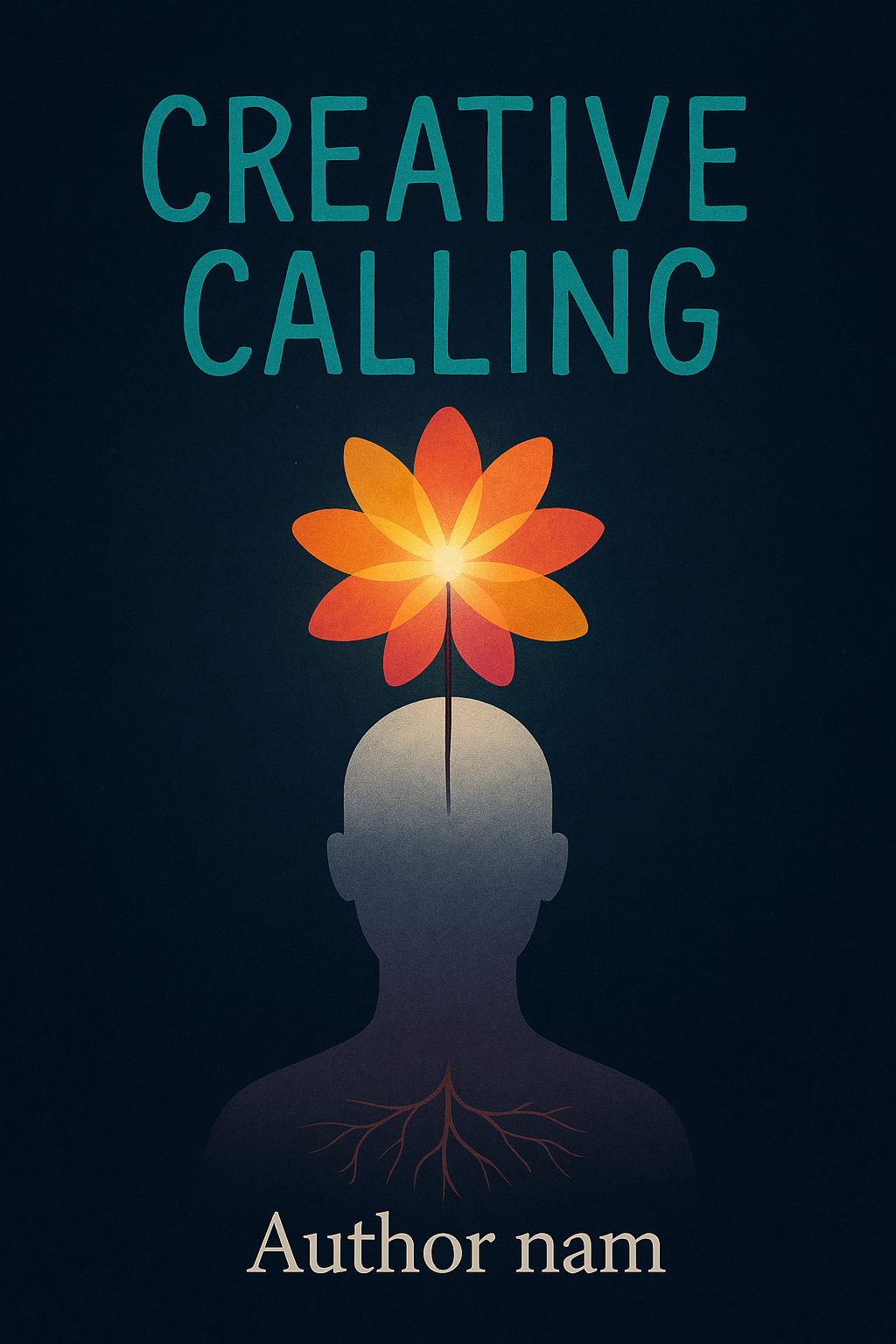
Creative Calling
Chapter Summaries
What's Here for You
Are you feeling that persistent, quiet hum of a creative idea that you've long ignored? Chase Jarvis's 'Creative Calling' isn't just a book; it's an invitation to reclaim your inherent birthright. We've all been conditioned to believe creativity is a luxury, a talent reserved for a chosen few. Jarvis shatters this myth, revealing it as a fundamental part of your being, stifled by self-doubt and societal norms. This guide promises to help you tune into your unique 'call' – that inner voice guiding you toward a path less traveled, a path that honors your authentic self. Forget the well-trodden road of mediocrity; Jarvis champions the brave, heart-led journey where your perceived 'weirdness' becomes your superpower. You'll discover that true creation isn't about waiting for lightning strikes of inspiration but about cultivating deliberate systems and dedicated spaces for your work. The book demystifies the creative process, urging you to embrace the power of showing up consistently and 'doing the work,' rather than relying on fleeting muse. It's a pragmatic approach, emphasizing that 'making it till you make it' is less about luck and more about adopting a creator's mindset that transforms your world. Prepare to unlock a universe of lifelong learning, where your potential far exceeds your current perceptions. Jarvis confronts the inevitability of failure, reframing it not as an endpoint but as a crucial stepping stone on the path to success, drawing from personal experiences of missed opportunities. Furthermore, you'll learn that the myth of the solitary genius is just that – a myth. Discover the profound importance of finding your tribe, your collaborators, and your audience. The journey culminates in the exhilarating, albeit terrifying, act of launching your work into the world, transforming fulfillment from the act of making to the courage of sharing. 'Creative Calling' offers a blend of empowering philosophy and actionable strategy, fostering an intellectual curiosity alongside an emotional resonance that will ignite your passion and equip you to finally answer your creative call.
Hear Your Call
Chase Jarvis, in the chapter 'Hear Your Call,' implores us to recognize that creativity is not an indulgence but our fundamental birthright, a wellspring of potential that too often lies dormant, stifled by societal conditioning and self-imposed limitations. He posits that the conventional system, particularly traditional schooling, often irons out our innate creative impulses, leading us down paths dictated by others, a trap that is ultimately an illusion. James Cameron's decades-long journey from teenage ideas to blockbuster films serves as a potent example of this deep well of potential that resides within us all, a capacity children naturally possess but which often fades with age. The author reveals that the gap between our current reality and our desired life can be bridged by reawakening this dormant creative capacity, urging us to stop living by someone else's script and begin writing our own. The key to this awakening lies in listening to our intuition, that quiet inner voice, which is presented not as a weakness but as the most powerful and vital tool we possess, capable of discerning truth far beyond rational thought, a revelation supported by emerging scientific understanding of cognition. Stifled creativity, Jarvis explains, becomes an enormous energy drain, a lead weight on the soul, but embracing it, even in small ways daily, ignites a chain reaction, leading to profound life changes and a sense of lightness. He dismantles the myth that creativity requires abandoning practicalities, asserting that it's a life amplifier, as fundamental to well-being as physical health, and that the act of creating, the 'doing of the verb,' is what solidifies our identity as creators, making it until we make it. Fear, often perceived as a barrier, is reframed as a gift, a protective instinct that learns through action, teaching us that the more we act despite fear, the quieter its negative voices become. Jarvis then delves into common creative obstacles, re-framing them as misdirected strengths: the 'Starter' who leaps between ideas, the 'Noodler' who tinkers endlessly, the 'Prioritizer' who lets life's demands eclipse creative needs, the 'Resister' who refuses the call to adventure, and the 'Striver' caught in a cycle of comparison and dissatisfaction. Each persona, he suggests, holds a hidden strength waiting to be harnessed. Ultimately, Jarvis advocates for the intentional design of creative lives and careers, emphasizing that perceived luck is often the result of deliberate strategy and vision, urging readers to begin where they are, to ask what creative activities would excite them, and to embrace the process of learning as a joy, understanding that the habit of creating is paramount, and that intuition, not a career ladder, provides the true direction for our unique paths.
Walk Your Path
The author, Chase Jarvis, invites us to consider two fundamental paths in life: the well-trodden, average road of reason and certainty, and the unique, heart-led path that is entirely our own. He argues that while the first path offers a predictable blend of experiences, it traps us in mediocrity, whereas the second, though seemingly riskier, leads to a richer, wider spectrum of possibilities, where nothing is wasted because everything contributes to the journey. Jarvis reveals that this personal path isn't a destination to be found, but rather a creation that unfolds as we walk it, guided by intuition, instinct, and heart, not solely by logic. He shares his own winding journey, from a childhood dream of filmmaking with a Super 8 camera to exploring soccer scholarships and then, after a profound loss, rediscovering his grandfather's cameras and Europe's beauty, a period that ignited his creative growth. Jarvis emphasizes that starting is paramount; the perfect moment never arrives, and fear is an inherent companion on any authentic creative endeavor. He illustrates this through his own relentless pursuit of action sports photography, even resorting to unconventional methods to hone his craft and secure early sales, demonstrating that dedication and a willingness to 'do whatever it takes' can overcome perceived limitations. The author cautions against the illusion of safety on the conventional path, asserting that true resilience is forged on the path of creative expression, where one learns to navigate uncertainty and mitigate risk. He introduces 'The Big 3' universal challenges creators face: money, creative control, and the company one keeps, urging readers to examine their unexamined beliefs, particularly the toxic myth of the starving artist, and to stand firm in advocating for their vision. Ultimately, Jarvis implores us to be the hero of our own lives, to embrace our unique calling, and to bravely cross the threshold of fear and doubt, recognizing that the guardian of that threshold can become a trusted ally, guiding us toward a life that is not just lived, but gloriously created.
You Stand Out
The author, Chase Jarvis, guides us through the profound idea that the very things making us feel 'weird' as children are often the seeds of our greatest strengths today, urging us to embrace our authentic selves rather than conforming or rebelling. He posits that we often dismiss our wildest aspirations, fearing failure and rejection, thereby extinguishing our passion and settling for less than we truly desire; Jarvis challenges this by suggesting we aim higher, acknowledging that failure is inevitable, so it's better to fail while pursuing what we genuinely want. Standing out, he explains, isn't about seeking attention but about radical authenticity, a quality that naturally sets us apart and is the highest value we can offer, though it requires immense courage and vulnerability. He draws a parallel between rebellion and conformity, noting both are forms of control, and instead advocates for choosing oneself, a path that demands continuous effort and comfort with discomfort. Jarvis reveals that the industrial-age educational system trained us for efficiency, often at the expense of creativity and individuality, leaving many of us needing to 'excavate' our buried originality by following our fears and confronting what makes us feel 'ugly, distasteful, scary, or unacceptable.' This excavation, he illustrates with Steven Spielberg's journey from blockbusters to the deeply personal 'Schindler's List,' is where true creative power lies, connecting the particular to the universal. Furthermore, the chapter emphasizes the power of focus, asserting that narrowing our creative scope accelerates learning and amplifies impact, much like William Wegman's career built on photographing a single breed. Jarvis shares a dramatic personal anecdote of surviving an avalanche, a near-death experience that shattered his complacency and catalyzed a shift from mere commercial success to a desire for greater impact and a commitment to helping others realize their creative dreams. This turning point underscored that true growth often arises not from comfort but from embracing risk, a lesson reinforced by the author’s own career pivots that involved abandoning security for the pursuit of his calling. He critiques the 'in it to win it' mentality, advocating instead for playing one's own game, being different rather than just better, a principle embodied by Steve Jobs and Apple's revolutionary approach. The narrative then delves into the insidious nature of labels, both self-imposed and external, illustrating with his own experience of labyrinthitis that accepting a limiting label can be more damaging than the condition itself, urging readers to aggressively root out negative self-perceptions. Jarvis confronts the paradox of seeking connection by hiding parts of ourselves, arguing that vulnerability and authenticity are the true pathways to intimacy and that hiding our uniqueness 'neutered' our work. He encourages embracing mistakes as essential learning opportunities, stressing that growth occurs at the edge of our comfort zone and that the fear of failure often paralyzes us more than failure itself. The author advocates for managing risk like an entrepreneur, making many small bets rather than one giant gamble, and highlights how technology has democratized creative tools, making time, not money, the primary constraint for pursuing impactful work. He champions developing a signature style, not by imitation or chasing trends, but by relentlessly focusing on what makes you uniquely 'you,' allowing your authentic 'weirdness' to guide the process organically. Ultimately, Jarvis calls us to fight uphill battles, to assert our unique visions even when met with resistance, recognizing that such friction signals the vital importance of our work and that true standing out requires an 'Ace' mindset, playing our own card rather than blending into the deck.
Develop Your Systems
The author, Chase Jarvis, embarks on a journey to demystify the creative process, challenging the romanticized myth of the solitary artist waiting for divine inspiration. He posits that true creative success is not born from spontaneous bursts alone, but from the deliberate cultivation of systems and consistent practice. Jarvis recounts his childhood aversion to structure, viewing rules as oppressive, a mindset that initially hindered his creative career until he recognized the power of frameworks. He illustrates this with the story of Brandon Stanton, who, after being fired from a bond trading job, found liberation and purpose by committing to a daily street photography project in New York City, eventually discovering the crucial element of storytelling through consistent, intuitive action. This narrative arc highlights a core insight: that embracing structure doesn't stifle creativity; it liberates it by providing a reliable vehicle for output. Jarvis emphasizes that our mindset is the bedrock of our creative endeavors, asserting that believing in our capacity for change and the inherent possibility in the world is paramount. He reveals the profound benefit of quitting endeavors that drain our vital energy, likening it to shedding a heavy coat to feel the sun, a crucial step in aligning with our authentic selves. The chapter then delves into the practicalities, distinguishing between 'Creativity Boosters' and 'Creativity Zappers' – habits that either fuel or drain our creative capacity. Zappers like excessive news consumption, constant social media checking, and overwork are identified as energy leeches, while Boosters such as mastering one's craft, creative cross-training, meditation, gratitude, visualization, movement, good nutrition, hydration, creating before consuming, organization, adventure, art consumption, quiet reflection, and sufficient sleep are presented as essential components for sustained creative output. Jarvis stresses that creativity, though natural, requires consistent action and practice, likening it to building creative muscles through repetition rather than waiting for innate talent to strike. He introduces the Creative Pyramid – a model where clear goals, supported by the right mindset and necessary habits, form the foundation for any creative achievement. Ultimately, Jarvis encourages readers to move beyond the pursuit of hacks and tricks, advocating instead for the development of a regular, ideally daily, creative practice, emphasizing that the process itself, through small, imperfect, playful habits, becomes the true success, much like Brandon Stanton's journey from a failed bond trader to a celebrated storyteller through sheer, consistent action.
Make Your Space
The author, Chase Jarvis, invites us into a thought experiment: what if we had a time machine and could visit our creative heroes at the moment of their greatest works? He posits that we’d fiercely protect their time and attention, shielding them from distractions. Yet, when it comes to our own creative pursuits, we often fall prey to a distorted sense of urgency, allowing mundane tasks to eclipse our calling. This is the central tension: the willingness to value our own as-yet-unmade work. Jarvis reveals that structure, beginning with a schedule, is not the enemy of creativity but its greatest ally. He shares his own evolution from viewing schedules as tools of conformity to recognizing them as essential for safeguarding creative time, investing in rest, and sharpening skills, much like Maya Angelou’s disciplined practice of booking hotel rooms to write. The narrative then pivots to a crucial distinction: busy versus effective. Jarvis recounts his own journey from a seductive embrace of 'busyness' – a performance of importance – to a profound realization that it yielded little result. He urges us to stop glamorizing busyness and instead focus on effectiveness, defining it as using every minute thoughtfully to make steady progress. This shift, he explains, is not about relentless pushing but about disciplined creation, understanding that 'pain in life isn't optional, but suffering is.' By auditing our time, we can identify the disconnect between how we spend our hours and our core values, cutting out the 'noise' that masquerades as productivity. Jarvis advocates for proactive time management, setting a cadence for creation, and establishing durations that suit our personal rhythm and medium, emphasizing that 'what is important is rarely urgent and what is urgent is rarely important.' He further delves into optimizing our workspace, starting with the mental space—clearing psychological clutter by having honest conversations about our creative needs. Then, finding a 'good enough' physical space, reducing friction to start, and setting the scene with sensory elements like music or noise-canceling headphones are key. Efficient storage for supplies and archives is also crucial. Ultimately, Jarvis underscores that the lack of ideal conditions should not be a barrier; the most critical step is to simply start. He addresses creative obstacles, suggesting that 'you're not waiting to feel like creating, you're waiting to feel like creating,' and that creative blocks don't respond well to finesse but to action. Blocking time, working in microbursts, and even considering quitting a day job or restructuring work-life balance are presented as pathways to guard our dreams, reinforcing the idea that our behavior must match our goals, and that pursuing our true calling is, in fact, fun.
Do Your Best Work
The author, Chase Jarvis, makes a compelling case that inspiration is the domain of amateurs, while true creation stems from the simple, consistent act of showing up and doing the work. He confronts the reader with the uncomfortable truth that many harbor a deep-seated creative calling, a dream project waiting to be made, yet defer it indefinitely, often citing a lack of clarity, time, or space, when in reality, the true barrier is a refusal to begin. Jarvis illustrates this with the analogy of a child being denied a crayon, a metaphor for how we stifle our own creative impulses with excuses that creativity is for others—those with talent, degrees, or privilege—but not for us. He highlights the resilience of creators like Carmen Herrera, who, despite a late breakthrough at eighty-nine, consistently showed up. The core message echoes the principle of fitness: sustained effort and adherence to a plan, not shortcuts, yield results. Jarvis emphasizes that the quantity of output is paramount; quality emerges from consistent practice, minimizing self-criticism, and avoiding the trap of optimizing workflows instead of making work. He advocates for a 'Master Plan,' which involves self-assigning projects and deadlines, akin to an actor preparing for a role, to build the portfolio needed for future opportunities. Even when the path is unclear, starting small, like creating a minimum viable product, is crucial. Jarvis advises planning work sessions with a clear direction, even if flexible, and crucially, keeping these sessions focused purely on creative output, warning against 'insecurity work' like endless research or social media scrolling. He cautions that sudden inspirations often serve as a distraction, a brain's attempt to escape the focused effort of the task at hand; the discipline lies in capturing these ideas and returning to the original work. Establishing starting rituals—visualization, consistent music, taming distractions, and logging progress—are presented as vital for entering a flow state and overcoming resistance. The Pomodoro Technique and accountability partners are offered as practical tools to maintain focus and momentum. Ultimately, Jarvis underscores that the journey through the 'creative gap,' the space between vision and current skill, is bridged by sheer volume of work, accepting the necessity of 'shitty first drafts' and embracing the vulnerability that comes with putting imperfect creations into the world, understanding that style and mastery emerge from this persistent, unjudging practice.
Make It Till You Make It
The author, Chase Jarvis, reveals that the grand secret to achieving any goal is not some hidden mystery, but simply the willingness to do the work. He explains that by adopting a creator's mindset, one fundamentally shifts their perception of the world, transforming their brain into a highly efficient pattern-finding machine that actively seeks opportunities and meaning relevant to its mission. This is illustrated by the simple exercise of counting red objects, which makes green ones virtually invisible, demonstrating how intention acts as a powerful filter for our awareness. When engaged in a creative project, this filter is recalibrated, allowing us to perceive connections and details we'd otherwise miss—whether it's the musicality of everyday conversation for a screenwriter or the sensory richness of a walk for a writer. Jarvis emphasizes that this 'creative mindset' is activated not by thinking, but by doing; action must precede contemplation for foundational creative work. He cautions against the trap of over-planning, advocating instead for embracing imperfection, like producing several 'shitty drafts' to discover the path forward, a crucial lesson for those hesitant to take their first bold, imperfect steps. The author draws parallels to Tim Ferriss, who, as an unknown author, strategically engaged with industry figures at conferences, demonstrating the power of committed, persistent action. Similarly, Andy Warhol’s prolific output, irrespective of immediate reception, underscores the value of continuous creation. Jarvis introduces the concept of intuition, a 'gut feeling' or physical intelligence that processes vast amounts of unconscious input, often guiding us toward opportunities our rational minds might overlook. This intuitive power is unlocked by starting a creative project, tuning our filters to relevant ideas and inspiration. He shares his personal experiences with launching Best Camera and CreativeLive, ventures initially driven by a deep intuition that defied naysayers and conscious strategy. However, Jarvis warns that overthinking can stifle intuition, stressing the importance of balancing intellect with listening to one's inner guidance. The narrative then confronts the unavoidable 'hump' or 'slog' in any creative journey, a period of struggle where planning ceases to be effective and only action can propel one forward. Jarvis recounts his own early career challenges as a photographer, facing the gap between his aspirations and his reality, a point where many plateau or quit. He chose action over despair, investing his own resources, sleeping in rental cars, and submitting work relentlessly, even if initially in minor capacities, to embed himself in the industry. This consistent, imperfect action, he explains, was the engine that moved him from potential to experience. The chapter also addresses creative ruts, likening them to a finger trap that tightens when we struggle intellectually. The solution, Jarvis posits, is to stop pulling and instead embrace action, acknowledging that the path reveals itself as we walk it. He shares his own experimentation with oil painting and acrylics, not as a definitive shift, but as a way to learn and pivot, ultimately reaffirming his commitment to photography through direct experience, not just contemplation. The core message is that you cannot think your way out of a rut; you must make more, do more. He references the ceramics class experiment where the group graded on quantity produced more and better work than the group graded on quality, reinforcing that action, not perfection, drives progress and skill development. The 'Art of Done' involves a simple, repeatable process: create one piece of work without judgment, iterate on it, and declare it 'good enough' to move forward, focusing on controllable actions like finishing a draft or posting a photo, rather than external validation. Ultimately, Jarvis urges readers to trust their plan, choose action over intellect, and keep moving forward, because 'making it till you make it' is the true path to creative fulfillment.
YOUniversity
The author, Chase Jarvis, unveils a profound truth: our potential for learning and growth often lies dormant, far exceeding our perceived limits. He posits that lifelong learning isn't just beneficial; it's the very lifeblood of creative endeavors, essential for relevance, community building, and sustained engagement. Traditional schooling, Jarvis observes, can often feel like a constraint, a system designed for compliance rather than genuine exploration, leaving many eager to trade credentials for a 'job' rather than embracing a continuous learning mindset. He recounts his own journey into photography, a path that demanded self-directed learning, revealing the power of having a clear goal. Without a defined learning path, the process can feel daunting, a labyrinth of unknowns. Yet, this self-taught approach, though challenging, proved more liberating and effective than formal education, allowing him to chase his vision directly. The key, he emphasizes, is developing the 'metaskill' of learning how to learn. This involves embracing 'Me University,' where one becomes their own professor, charting a course through curiosity, trial, and error. Jarvis breaks down this process into three phases: the Personal phase, where one tunes into their own curiosities and dives into trial and play; the Public phase, leveraging scaled instruction, visual content, and community to answer emergent questions; and the Practice phase, solidifying skills through repetition and emulation, like a musician practicing scales or an artist deconstructing masters. He illustrates this with examples like Lady Gaga mastering music, then fashion, then acting, demonstrating how mastery begets mastery. The core tension is the gap between our inherent capacity for learning and the often-stifling structures of traditional education, leading to a resolution where individuals must take the reins of their own 'YOUniversity,' recognizing that true mastery is not an endpoint but a continuous, intertwined process with creativity itself. In this new era, access to knowledge is unprecedented, but the challenge shifts to identifying one's true calling amidst limitless distractions, making the cultivation of focused, self-directed learning the ultimate superpower for navigating a world of infinite possibility.
You Must Fail to Succeed
The author, Chase Jarvis, takes us on a reflective journey, beginning with the jarring news of Facebook's billion-dollar acquisition of Instagram, a moment that stirred a deep sense of regret over his own missed opportunity with 'Best Camera,' an app that predated Instagram and achieved significant early success. He explains that this chapter isn't about avoiding mistakes, for that attitude is a crippler of creativity; rather, it's about recovery, resilience, and grit. Jarvis emphasizes that adversity is intrinsic to creative work, and trying to avoid problems only pushes your goal further away, likening it to fighting gravity itself—a feat requiring humility, guts, and fuel. He reveals that genuinely new ideas encounter resistance proportional to the change they represent, a phenomenon Arthur Schopenhauer described as the three stages of truth: ridicule, violent opposition, and acceptance as self-evident. Jarvis shares his own experience launching 'Best Camera' in 2009, an integrated photo-sharing app born from a personal pain point of cumbersome mobile photo sharing, only to face systemic resistance and, crucially, a failure of imagination in his contract with developers, which left him locked out of his own creation's evolution. This pivotal failure, though painful—a billion-dollar lesson—became invaluable, teaching him about aligned incentives, the dynamics of Silicon Valley, and the critical importance of owning one's code and intellectual property. He stresses that while failure hurts, it's a necessary steppingstone, and our misguided attempts to avoid it are often the source of our problems. Jarvis advocates for 'rejection therapy,' actively seeking low-stakes failures like rejection letters to build resilience, and taking on scary, low-stakes creative challenges with zest and zeal to build courage and confidence, framing each setback not as an endpoint, but as a vital part of the learning process, essential for developing the capacity to manage future success. Ultimately, the narrative resolves with the profound insight that embracing the struggle, learning from mistakes, and understanding that 'perfect is the enemy of good' allows us to become the best version of ourselves, not a pale imitation of someone else, transforming creative failures into the fuel for future victories.
Find Your People
The author, Chase Jarvis, reveals that the myth of the solitary creator, toiling away in isolation, is just that—a myth. Even titans like Metallica, with their earthshattering performances, rely on a vast battalion of skilled collaborators, a principle that extends to every creator. Jarvis argues that we are fundamentally social animals, thriving on connection, and that even introverts need a community to navigate the challenges of their creative path. When you find yourself stuck, the call to action is clear: seek out kindred spirits passionate about the same things and dive in. This isn't about transactional exchanges, but about embracing reciprocity, a form of karma where giving and serving authentically creates a ripple effect. Be the fan you wish you had; comment on others' work, share their creations, and actively participate in the ecosystem you wish to be a part of. The chapter emphasizes the critical importance of choosing collaborators wisely, not just for skill, but for creative alignment and shared joy, likening the right partnership to being part of a wolf pack rather than a solitary dog walker. Jarvis demystifies the fear of sharing ideas, asserting that execution is paramount and that vulnerability, like sharing your work before it’s perfect, is a strength, not a weakness. He paints a vivid picture of the solo creator myth as quicksand, contrasting it with the reality of great artists eager to share their nascent ideas with trusted peers. The narrative then pivots to the concept of a 'base camp'—a welcoming community that serves as a foundation for growth, much like Jarvis found in the action sports scene, a place of purity, encouragement, and shared passion where mentorship flowed freely. This contrasts sharply with his later experience in the professional photography industry, which he found fragmented and resistant to change, a stark reminder that not all creative communities are created equal. Jarvis posits that we can participate in at least two communities: our Craft Community and our Focus Community, leading to a Core Community at their intersection, such as action sports photographers. The advice is to choose the friendlier, more welcoming community as your initial base camp. He encourages readers to become 'joiners,' to be vulnerable and contribute value consistently, noting that authority is earned through sustained participation. The chapter underscores that building community is an act of creation itself, essential for long-term success and navigating obstacles. Collaboration, Jarvis stresses, is not an option but a fundamental driver of creativity, enabling the realization of visions that would otherwise remain unrealized. He shares personal anecdotes, like co-directing a music video with Will Hyde, illustrating how collaborating outside one's expertise, even when daunting, leads to profound learning and expanded capabilities. The key takeaway is to surround yourself with 'A-gamers'—those doing their best work—as this is the surest way to elevate your own game. Finally, Jarvis addresses the 'Friends and Family Discount,' urging readers to shed toxic relationships and cynicism, which act as anchors, and to 'show, don't tell' loved ones about their creative pursuits, demonstrating commitment through consistent action. Ultimately, finding and nurturing your community, and collaborating authentically, is not a sign of weakness but a profound human strength, the vital fuel for a creative life.
Build Your Audience
Chase Jarvis, in his chapter 'Build Your Audience,' addresses a common creative's lament: the silence after releasing work into the world. Many creators, after meticulously Imagining, Designing, and Executing, find themselves met with indifference, wondering how others achieve traction. Jarvis posits that the missing ingredient isn't better promotion or more resources, but the cultivation of a dedicated audience – a tribe uniquely aligned with one's values and creative output. He explains that true impact stems from building this core group, emphasizing that creation and promotion, while vital, should only constitute half of a creator's energy, with the other 50 percent dedicated to nurturing this community. This audience isn't found; it's built over years, often evolving from existing communities. The narrative unfolds through Jarvis's own journey, illustrating how sharing his point of view, even imperfectly through an early blog, attracted like-minded individuals, transforming a personal laboratory into a gathering place for fellow creators and eventually fueling major ventures. He stresses the crucial role of trust, likening it to a battery that must be consistently charged through honesty, reliability, integrity, and generosity, warning against draining it through inauthentic partnerships or quick monetization. The author reveals that true success lies not in chasing fleeting influence, but in remaining authentic to one's path, understanding that a smaller, devoted tribe can be more powerful than a vast, disengaged following. He introduces the concept of the 'Smallest Viable Tribe,' urging creators to focus intently on a narrow, dedicated group first, fostering authority and authenticity before expanding. Jarvis also expands the notion of mentorship, moving beyond the romantic ideal of a single guide to embracing a 'web of advisers' built through consistent value-add and genuine connection, whether through books, online engagement, or real-world interactions. Ultimately, he asserts that this vibrant community is the bedrock upon which a creator's work can truly launch and stand out, providing the necessary support to take the stage with confidence.
Launch!
The author, Chase Jarvis, guides us toward the crucial, often terrifying, act of sharing our creative work with the world in his chapter 'Launch!'. He emphasizes that true creative fulfillment lies not just in the act of making, but in the courageous step of releasing that creation, a 'big swing' that represents significant effort and personal investment. Jarvis acknowledges the natural jitters that accompany this process, reframing them not as a sign of inadequacy, but as evidence of care and commitment, much like Kelly McGonigal's insights on stress. He then delves into the insidious nature of shame, the inner voice that whispers 'not good enough,' which can cripple creators and stifle ambition. Jarvis shares a poignant childhood memory of a public misstep at a wedding, illustrating how a supportive parental response—acknowledging the mistake without shaming the person—can foster resilience, transforming potential shame into guilt and a lesson learned. This ability to 'nurture and parent ourselves,' he explains, is vital for navigating the vulnerability inherent in sharing. The core dilemma is clear: we have something valuable to offer, yet shame urges us to hide. The resolution lies in cultivating a 'sharing mindset,' which is built through practice, starting small, and focusing on authenticity and vulnerability, much like Brené Brown consults a trusted inner circle when facing external judgment. Jarvis stresses that success is not the immediate goal; rather, it's about building momentum through a consistent cycle of Create, Share, Promote, Cultivate Community, and Create Again. He uses the analogy of climbing a mountain, noting that reaching the summit is only halfway; the descent and integration are equally critical. The author advocates for fierce boldness in sharing, even when creating feels soft and vulnerable, and encourages creators to focus on their 'true fans' rather than trying to please everyone. He illustrates this with the example of Brandon Stanton's Humans of New York, which began with minimal engagement but grew into a massive community. Jarvis also highlights the importance of energy—physical and emotional—derived from practices like mindfulness and nutrition, to sustain the demanding process of launching. He posits that enthusiasm, more than confidence, inspires others and fuels collective energy. Ultimately, Jarvis reassures readers that failure is not permanent; like Michael Jordan's missed shots, it's a stepping stone, a source of lessons that build resilience and a deeper understanding of our work and ourselves, leading to a virtuous cycle of growth and impact.
Conclusion
Chase Jarvis's 'Creative Calling' is a profound and actionable manifesto for anyone yearning to reclaim their innate creative power and live a life of purpose and fulfillment. At its core, the book dismantles the pervasive myth that creativity is a rare gift reserved for a select few. Instead, Jarvis asserts that creativity is our birthright, a fundamental aspect of our being that has likely been suppressed by societal conditioning and educational systems. The emotional journey begins with recognizing this inherent potential and then courageously embracing our unique 'weirdness' – those perceived flaws or eccentricities that are, in fact, the bedrock of our distinct creative voice. This reclamation demands a shift in identity, moving from passive consumer to active creator, a transformation solidified by the mantra 'make it till you make it.' Practically, Jarvis offers a robust framework for cultivating a sustainable creative life. He emphasizes the critical role of intuition as a guiding force, urging us to trust this inner compass even when it deviates from the predictable, average path. This leads to the understanding that our 'personal path' isn't found but actively created through consistent action, deliberate systems, and a willingness to experiment. The book provides concrete strategies for developing these systems, from optimizing our physical and mental workspace to implementing rigorous time audits and prioritizing creation over consumption, especially at the start of the day. Jarvis debunks the 'starving artist' trope, advocating for a healthy relationship with finances and the necessity of establishing creative control and boundaries. Emotionally, 'Creative Calling' champions resilience and vulnerability. It reframes obstacles and failures not as endpoints, but as essential learning opportunities and universal tests that forge character and growth. The book encourages us to move from a mindset of 'pushing' through effort to one of being 'pulled' by passion and purpose, recognizing that authentic calling is the ultimate accelerant. Building a supportive community, or 'the company you keep,' is highlighted as vital for navigating the inevitable challenges, emphasizing genuine encouragement over detractors. Ultimately, Jarvis's wisdom lies in empowering individuals to take ownership of their creative journey, understanding that consistent, imperfect action, coupled with lifelong learning and a courageous willingness to share one's work, is the most potent path to unlocking a life of profound meaning and impact.
Key Takeaways
Focusing on a 'Smallest Viable Tribe' allows for deep engagement and establishes authority and authenticity before scaling.
Creativity is an inherent birthright, not an indulgence, and reclaiming it is essential for personal fulfillment and life transformation.
Societal conditioning and traditional education often suppress innate creative impulses, creating an illusion of limitations that can be overcome by intentional action.
Intuition is a powerful, often undervalued tool that guides us toward our authentic path, and learning to trust it is crucial for creative expression.
Embracing a creative identity through consistent action ('make it till you make it') solidifies that identity and breaks down perceived barriers.
Creative obstacles are often misdirected strengths that can be harnessed with awareness and specific strategies, leading to greater output and fulfillment.
Designing a creative life is an intentional process that requires prioritizing creative needs alongside other life responsibilities, viewing it as a fundamental aspect of well-being.
Distinguish between the predictable, average path of societal expectation and the unique, evolving path of personal calling, recognizing that true growth lies in embracing the latter.
Understand that the 'personal path' is not discovered but actively created through consistent action, intuition, and a willingness to experiment, even in the face of fear and uncertainty.
Challenge the pervasive 'starving artist' myth, acknowledging that financial viability is not antithetical to creativity and that a healthy relationship with money is crucial for sustaining creative work.
Recognize that advocating for one's creative vision and establishing personal boundaries (creative control) is essential, especially when collaborating with others.
Cultivate a supportive community ('the company you keep') by focusing on genuine encouragement and ignoring detractors, as true allies are vital for navigating the creative journey.
Embrace challenges like financial hurdles and the need for creative control not as insurmountable obstacles, but as universal tests that, when navigated with clarity of values, lead to resilience and growth.
Shift from a mindset of 'pushing' through effort to one of being 'pulled' by passion and purpose, understanding that authentic calling acts as a powerful accelerant for progress.
Embrace your perceived 'weirdness' as the source of your unique creative strength and value.
Pursue aspirations that genuinely matter to you, accepting failure as a byproduct of bold action rather than settling for uninspired success.
Authenticity is the highest form of standing out; cultivate the courage to be vulnerable and reveal your true self, as this fosters genuine connection and impact.
Identify and excavate deeply buried aspects of yourself, often associated with fear or perceived flaws, as these are the raw materials for your most profound creative work.
Develop a signature style by relentlessly focusing on your unique perspective and process, allowing your authentic self to emerge organically rather than chasing external trends or definitions of 'better'.
Manage creative risks strategically by making multiple small bets and learning from each, rather than avoiding challenges due to fear of failure or the desire for immediate approval.
Creative success is built upon consistent systems and deliberate practice, not solely on spontaneous inspiration, liberating rather than stifling the creative process.
A foundational belief in one's ability to change and the world's abundance is critical for developing a robust creative mindset.
Quitting activities or paths that drain vital energy is a powerful tool for aligning with authenticity and fostering creative momentum.
Identifying and minimizing 'Creativity Zappers' (e.g., excessive news, social media checking) while cultivating 'Creativity Boosters' (e.g., meditation, practice, rest) is essential for sustained creative output.
Creativity is a muscle that strengthens through consistent, deliberate practice and habit formation, rather than a fixed talent that appears without effort.
The Creative Pyramid—composed of clear goals, the right mindset, and supportive habits—provides a necessary structure for achieving any creative aspiration.
Prioritizing creation over consumption, especially at the start of the day, shifts focus from passive observation to active engagement, profoundly impacting creative capacity and outlook.
Prioritize your creative calling by recognizing that true productivity stems from valuing your own work as much as you would another's, breaking the trap of distorted urgency.
Embrace structure, particularly scheduling, not as a constraint but as a powerful ally that safeguards creative time, fosters discipline, and enables rest and skill development.
Distinguish between 'busy' and 'effective' by focusing on progress-driven actions rather than the appearance of productivity, understanding that busyness is a disease that destroys time.
Conduct a rigorous time audit to uncover the disconnect between how you spend your time and your core values, enabling you to eliminate 'noise' and focus on impactful activities.
Optimize your workspace, both mental and physical, by reducing friction, creating conducive environments, and establishing efficient systems for supplies and archives, ensuring you can access your creative flow.
Overcome creative obstacles by taking action even when motivation is absent, recognizing that the feeling of creativity often emerges during the process, not before it.
Guard your creative dreams through clear values and intentional action, understanding that flexibility and deliberate planning, rather than spontaneous bursts, lead to sustained progress.
The primary obstacle to creative work is not external constraints but internal resistance and the fear of imperfection, which must be overcome by consistently showing up and producing output.
Prioritize the quantity of creative output over immediate perfection; quality and mastery are emergent properties of sustained practice and embracing 'shitty first drafts'.
Develop a 'Master Plan' by self-assigning projects and deadlines to build a portfolio and demonstrate capability, as external opportunities often require prior self-initiated work.
Guard creative sessions fiercely against 'insecurity work' and distractions, focusing solely on the act of creation to foster flow and prevent avoidance.
Embrace starting rituals and accountability mechanisms to build discipline, manage resistance, and ensure consistent progress towards creative goals, even when inspiration wanes.
The 'creative gap' between vision and execution is closed through sheer volume of work, accepting that early attempts will be imperfect and that vulnerability is a necessary precursor to growth.
Activating the creator mindset fundamentally alters perception by re-tuning the brain's filters to seek relevant opportunities and meaning.
Consistent, imperfect action is the primary catalyst for creative progress, often preceding and informing the thinking process.
Intuition, a form of physical intelligence processing unconscious input, serves as a vital guide in the creative journey, but must be balanced with intellect.
Creative ruts are best escaped not by thinking, but by embracing action, allowing the path and one's true calling to emerge through doing.
Focusing on the controllable act of 'finishing'—producing work and iterating—rather than external validation, is key to sustained creative momentum.
The willingness to show up and do the work, even without approval or guaranteed success, is the hallmark of those who achieve their creative goals.
Lifelong learning is the foundational 'metaskill' for creative success, enabling continuous adaptation and growth beyond formal education.
Traditional schooling can inadvertently stifle curiosity and individuality, necessitating a shift to self-directed 'YOUniversity' for genuine creative development.
The most effective learning path is goal-oriented and iterative, discovered through personal curiosity, public exploration, and dedicated practice, rather than prescribed curricula.
Mastery is not a destination but a byproduct of deep, focused learning and practice, achieved by understanding one's own learning preferences and embracing a beginner's mind.
Taking ownership of one's education is paramount; experts and institutions are valuable resources, but ultimate agency for realizing a creative dream rests with the individual.
Embracing failure is not about celebrating it, but about developing the resilience and grit to recover and learn from setbacks, as they are inherent to the creative process.
Genuine creative ideas face systemic resistance proportional to their disruptive potential, a phenomenon that requires understanding and perseverance to overcome.
Mistakes made out of ignorance or naivete in early stages, particularly regarding collaboration and intellectual property, can derail even promising projects, highlighting the need for foresight and clear agreements.
Actively seeking low-stakes failures, such as through 'rejection therapy,' builds crucial emotional calluses and resilience, making one better equipped to handle larger challenges and manage success.
Success often requires navigating the space between blind faith and relentless doubt, acknowledging that high performers operate at the edge of their capabilities and often feel like impostors.
The tendency to over-prepare and avoid all risks can stifle creativity and lead to inaction, whereas taking action and learning from experience is the true path to growth and opportunity.
Transforming creative failures into learning experiences is essential, as these lessons often provide the foundation for future, greater successes, sometimes in ways not immediately apparent.
The myth of the isolated creator is false; true creative endeavors thrive on collaboration and community support, necessitating active participation rather than passive observation.
Authentic reciprocity, driven by a spirit of giving and service rather than expectation, forms the bedrock of productive creative communities and fosters mutual growth.
Choosing a welcoming and supportive community as a 'base camp' is crucial for developing confidence and skills before expanding into more challenging creative ecosystems.
Vulnerability in sharing nascent ideas and work is a strength, as execution and unique vision are more valuable than the ideas themselves, mitigating the fear of intellectual theft.
Sustained, authentic participation and value contribution within a community, both online and in-person, are the keys to earning authority and building meaningful connections.
Collaborating outside one's immediate expertise, even with its inherent risks and learning curves, is a powerful catalyst for personal growth and expanding creative capabilities.
Surrounding oneself with high-caliber individuals ('A-gamers') who are committed to their craft is essential for elevating one's own performance and fostering a culture of excellence.
A dedicated audience is the most critical asset for a creator's impact, requiring equal energy to creation and promotion.
Building an audience is a long-term endeavor, achieved through consistent contribution and service, not quick schemes.
Trust is a finite resource, like a battery, that must be actively cultivated through honesty, reliability, integrity, and generosity.
Authenticity to one's creative path is paramount; a creator leads by example, attracting the right followers, rather than shapeshifting to chase influence.
Mentorship can be scaled and personalized by building a 'web of advisers' through consistent value exchange and genuine connection, rather than relying on a single, elusive figure.
The act of launching and sharing creative work is intrinsically valuable and a necessary culmination of the creative process, not merely a marketing step.
Shame, the fear of not being good enough, is a primary obstacle to sharing, and overcoming it requires self-compassion and reframing mistakes as learning opportunities.
A 'sharing mindset' is cultivated through consistent practice, starting small, and embracing vulnerability and authenticity, rather than seeking universal approval.
The creative journey involves a cyclical process of creating, sharing, promoting, and community building, each phase fueling the next.
Sustaining the energy for launching requires attention to physical and emotional well-being, and genuine enthusiasm is more potent than confidence in inspiring others.
Failure is an inevitable and essential part of the creative process, providing crucial lessons that build resilience and pave the way for future success.
Action Plan
Declare yourself a creator by adopting the identity and taking the first consistent action (e.g., write one sentence, sketch one object, play one chord).
Listen actively for your intuition by paying attention to gut feelings and bodily sensations, and reflect on past instances where your intuition proved correct.
Identify your personal creative obstacle (Starter, Noodler, Prioritizer, Resister, Striver) and begin to explore how its underlying strength can be harnessed.
Schedule dedicated time for creative practice, even if it's brief, treating it as a non-negotiable priority akin to health or family.
Engage in a creative activity purely for the joy of doing it, without judgment on the outcome or its commercial potential.
Start small and consistently, focusing on the habit of creation rather than the end product or destination.
Reframe fear as a signal of growth and take small actions despite it to teach your brain that you can survive and thrive.
Identify moments in your past when you felt most alive, productive, and fulfilled to trace the intersections with your own path.
Choose one or two creative interests to focus on initially, rather than feeling overwhelmed by a multitude of ideas.
Commit to starting a creative project, even with fear and uncertainty, by taking the very first small step without waiting for perfect readiness.
Examine your beliefs about money and creativity, particularly the 'starving artist' myth, and determine if these beliefs are hindering your progress.
Define what truly matters to you regarding your creative work and begin to establish boundaries and advocate for your vision.
Seek out and nurture supportive relationships with individuals who encourage your creative pursuits, while learning to manage or disregard discouraging voices.
Practice redirecting your attention back to your creative calling whenever you find yourself straying, much like in meditation, to reinforce your commitment.
Identify three qualities or interests from your childhood that you now consider 'weird' and explore how they could be assets in your creative pursuits.
List your deepest aspirations, then ask yourself if you are actively pursuing them or settling for less, and commit to taking one small step toward a true desire.
Practice vulnerability by sharing a personal insight or a less-than-perfect piece of work with a trusted friend or a small online community.
Journal about a fear or perceived flaw, then brainstorm ways to channel that raw emotion or aspect into a creative project.
Choose one specific creative skill or project and dedicate focused time to it for a set period, aiming for depth rather than breadth.
Review your self-talk and identify any negative labels you've accepted; consciously reframe them with positive affirmations about your creative potential.
Identify one small creative risk you can take this week—perhaps trying a new technique, sharing an unpolished idea, or experimenting with a different medium—and commit to it.
Assess a potential creative project by listing the worst-case scenarios and then brainstorming concrete steps to mitigate those risks and potential losses.
Identify and consciously reduce or eliminate one 'Creativity Zapper' (e.g., limit news consumption, set specific times for social media).
Select and commit to practicing one 'Creativity Booster' daily for at least 10 minutes (e.g., meditation, gratitude practice, creative cross-training).
Write down 3–4 core creative goals and review them daily, assigning specific time windows for action.
Begin each day by creating something, however small, before engaging with any external content or media.
Dedicate time to learning and practicing the fundamental skills of your chosen craft until they become automatic.
Schedule regular periods of quiet reflection or light, non-demanding activity to allow creative percolation.
Ensure adequate sleep (aim for at least seven hours) and proper hydration as foundational elements for cognitive function and creativity.
Experiment with incorporating adventure and play into your routine to gather fresh input and foster new connections.
Use the 'time machine' thought experiment: when facing a choice between a mundane task and your creative work, ask yourself what you'd advise if it were your hero's work on the line.
Schedule dedicated blocks of time for your creative work, treating them with the same importance as any other critical appointment.
Conduct a personal time audit for two weeks, tracking how you spend every hour to identify time-wasting activities and areas of misalignment with your values.
Identify and clear psychological clutter by having honest conversations with loved ones about the importance of your creative pursuits.
Designate or optimize a physical workspace, however small, by reducing friction and ensuring tools are accessible to make starting easier.
Practice batching similar tasks, such as responding to emails or making calls, into dedicated time slots to protect focus for creative work.
Experiment with working during your personal peak effectiveness times (morning or night) and schedule demanding tasks accordingly.
Commit to creating in microbursts—short, focused sessions—even when ideal conditions or large blocks of time are unavailable.
Commit to showing up for a dedicated creative session each day or week, regardless of how you feel.
Set a clear, achievable goal for each creative session (e.g., write 500 words, sketch one concept).
Schedule your creative time in advance and protect it fiercely from other demands.
Practice creating 'shitty first drafts' without self-judgment, focusing on completion over perfection.
Establish a simple starting ritual (e.g., a specific playlist, a five-minute visualization) to signal the start of creative work.
Identify an accountability partner or group and establish check-ins to share progress and maintain commitment.
Log the time spent on creative work and what was accomplished to track progress and improve time estimation.
Declare yourself a creator and commit to starting a new project, no matter how small.
Engage in focused observation of your environment with a specific intention (e.g., noticing all the blue objects) to understand how your brain filters information.
Commit to taking the smallest possible action toward your creative goal each day, even if it feels imperfect.
Embrace the concept of 'shitty drafts' by allowing yourself to create imperfect initial versions of your work.
Listen to your gut feelings about creative opportunities and trust them, even if they conflict with initial logic.
When feeling stuck in a rut, choose immediate action over prolonged contemplation.
Practice the 'Art of Done' by completing one piece of creative work daily and then iterating on it the next day.
Focus on the act of finishing controllable tasks (e.g., writing a page, posting a photo) rather than seeking external validation.
Identify a specific creative goal or skill you wish to develop, even a small one.
Embrace the 'Personal Phase' by exploring what genuinely sparks your curiosity related to that goal, and begin simple, playful experimentation.
Engage with the 'Public Phase' by seeking out resources like online tutorials, books, or communities related to your chosen skill, armed with specific questions born from your experimentation.
Commit to the 'Practice Phase' by incorporating regular, deliberate repetition and emulation of admired work into your routine.
Actively observe and note your preferred learning methods during this process—visual, auditory, kinesthetic, solitary, collaborative—to refine your 'YOUniversity' approach.
Once a basic level of proficiency is achieved, define the next necessary step for your goal, rather than trying to learn everything at once.
Reframe any perceived failures or mistakes as puzzles to be solved, providing opportunities to deepen your understanding and refine your learning path.
Actively seek out low-stakes rejections, such as sending out multiple proposals or outreach emails with the goal of receiving a certain number of rejections.
Identify and take on small, slightly uncomfortable creative challenges outside your comfort zone to build courage and practice resilience.
Analyze past creative failures to identify specific lessons learned about collaboration, contracts, or personal blind spots.
Reframe the perception of failure from an endpoint to a necessary part of the learning and iteration process.
Practice mindfulness or quiet reflection after experiencing setbacks to process the emotional impact without letting it derail future efforts.
When facing a decision between further research and taking action, commit to taking the action if you've already done sufficient preparation.
Cultivate a mindset where mistakes are viewed as opportunities for growth, and embrace the 'suck' of the difficult parts of the creative journey.
Identify and actively participate in at least two communities: one related to your craft and one related to your focus area.
Embrace reciprocity by offering support, feedback, and promotion to others in your community without expecting immediate returns.
Seek out collaborators whose skills and creative vision excite you, and be willing to be vulnerable by sharing your work in progress.
Attend local meetups, online forums, or industry events to connect with peers and potential collaborators face-to-face or virtually.
Practice active listening and asking thoughtful questions when engaging with others in your creative circles to foster genuine connection.
If you encounter resistance or negativity, reevaluate toxic relationships and choose to surround yourself with supportive 'cheerleaders' for your creative journey.
Commit to consistent, authentic contribution within your chosen community, whether through comments, sharing, or volunteering your skills, to build authority and rapport.
When introducing your creative pursuits to skeptical friends or family, focus on demonstrating your passion and progress through action rather than just words.
Dedicate 50 percent of your creative energy to building and nurturing your audience, not just creating and promoting.
Identify your 'Smallest Viable Tribe' and consistently engage with them by providing value.
Be transparent and honest in all interactions to charge your community's trust 'battery.'
Prioritize authenticity to your creative path over chasing fleeting trends or influence.
Seek out and connect with potential mentors or advisers by offering value first, whether through thoughtful engagement or sharing your own work.
Engage in real-world community events and meetups to supplement online connections.
Commit to creating personal work that showcases your unique point of view, even if it's not immediately monetizable.
Identify and acknowledge the voice of shame, recognizing it as a signal of investment rather than a definitive judgment of worth.
Start sharing your creative work in small, manageable ways, gradually increasing the stakes to build confidence and resilience.
Focus on cultivating genuine enthusiasm for your work and sharing it with your 'true fans' rather than attempting to please everyone.
Prioritize physical and emotional well-being (fitness, nutrition, mindfulness) to ensure you have the energy needed for the demanding launch process.
Reframe any perceived failures as learning opportunities, analyzing what went wrong to inform future creative endeavors.
Actively engage in the 'Create, Share, Promote, Cultivate Community' cycle, understanding that promotion and community building are integral parts of the creative process.
Remind yourself that your work, once shared, becomes a stepping stone, and even 'failures' reveal possibilities and pathways for growth.