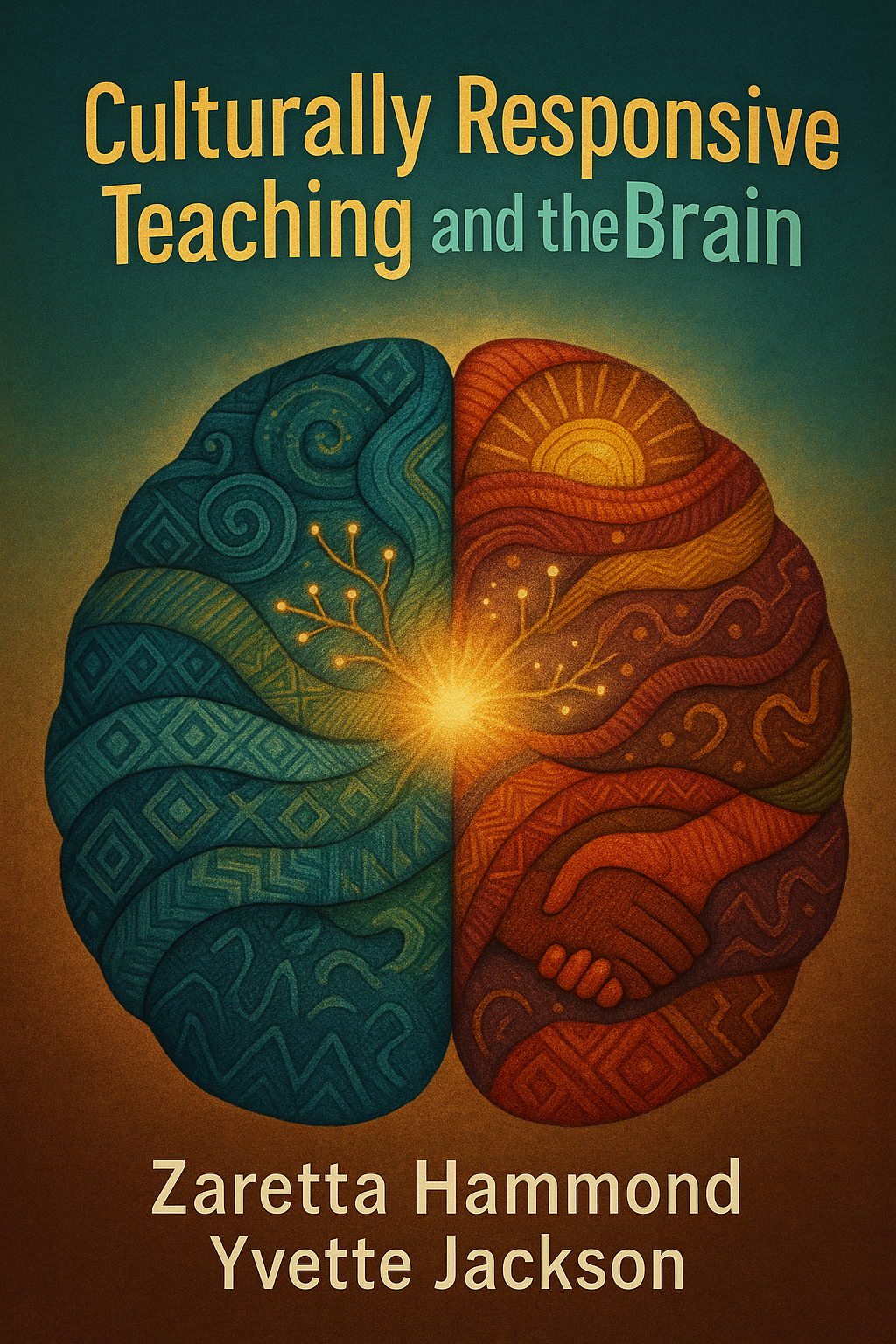
Culturally Responsive Teaching and the Brain
Chapter Summaries
What's Here for You
Are you ready to unlock the full potential of every student in your classroom, moving beyond the limitations of traditional teaching to foster genuine, independent learners? "Culturally Responsive Teaching and the Brain" by Zaretta Hammond and Yvette Jackson offers a transformative vision for educators seeking to bridge the persistent achievement gap and cultivate higher-order thinking skills in all students. This book promises a profound intellectual and emotional journey. You'll gain a deep understanding of how culture fundamentally shapes a student's brain and learning process, moving beyond superficial "add-on" strategies to embrace a truly integrated approach. Discover how to shift from a model of conformity to one of empowerment, recognizing that teaching is inherently political and requires a conscious, internal transformation. You will learn to build authentic learning partnerships based on trust and mutual respect, shifting academic mindsets and fostering a student's innate belief in their own capabilities. Prepare to explore the intricate neuroscience behind learning, understanding how to cultivate intellective capacity by mastering information processing, rather than simply decorating content. The authors will guide you in creating a classroom environment that acts as a 'second teacher,' fostering social, emotional, and intellectual safety. This book is for educators who are ready to move beyond dependent learners and cultivate independent thinkers, equipped for the demands of the modern world. It's an invitation to embrace a more equitable, effective, and deeply human approach to education, one that honors the richness of every student's background and empowers them to thrive.
Climbing Out of the Gap
The persistent achievement gap in American schools, Zaretta Hammond and Yvette Jackson reveal, has fostered an epidemic of dependent learners, ill-equipped for the higher-order thinking demanded by modern standards. Education, as Paulo Freire once posited, can either be a tool for conformity or a practice of freedom, a means to critically engage with reality and transform one's world. Hammond and Jackson argue that underserved students—particularly English learners, students of color, and those from low-income backgrounds—routinely receive less instruction in crucial higher-order skills, their curriculum often more repetitive and focused on lower levels of Bloom's taxonomy. This deficit denies them the essential 'productive struggle' that neuroscientists understand as vital for brain growth, leaving a disproportionate number of culturally and linguistically diverse students as dependent learners, unable to synthesize and analyze complex information without constant scaffolding. This dependency, the authors contend, is not an inherent deficit but a consequence of educational inequity, a systemic issue where opportunities to develop cognitive capacities are limited or nonexistent. Michelle Alexander's work on the 'school-to-prison pipeline' is invoked, suggesting that this academic dependency is a foundational element for many students of color, exacerbated by policies and instructional decisions that lead to less literacy instruction and disproportionate discipline, ultimately pushing them out of school. The narrative then shifts, highlighting that the struggle of these students is not due to their race, language, or poverty, but rather a lack of sufficient opportunities to develop the cognitive skills and habits of mind necessary for advanced academic tasks. This is the achievement gap in action, rooted in a legacy of separate and unequal education, often manifesting as a 'pedagogy of poverty' that emphasizes rote memorization over critical application. Simply raising standards or demanding grit is insufficient; dependent learners require explicit instruction in new cognitive skills and habits of mind to increase their 'brainpower'—their ability to accelerate their own learning. Culturally responsive teaching (CRT) emerges as a powerful intervention, a systematic approach that leverages neuroscience and cultural understanding to stimulate neuroplasticity, helping students build intellective capacity, or fluid intelligence. Hammond and Jackson introduce the 'Ready for Rigor' framework, a pedagogical approach designed to operationalize CRT, moving teachers from seeing it as a 'bag of tricks' to understanding its foundation in learning theory and cognitive science. This framework is built upon four interdependent practice areas: Awareness, focusing on a teacher's sociopolitical consciousness and cultural lens; Learning Partnerships, emphasizing authentic connection and trust across differences to foster deeper learning; Information Processing, aimed at strengthening intellective capacity through culturally congruent strategies; and Community Building, creating safe, supportive environments that encourage risk-taking and academic identity. By blending these practices, educators can create the social, emotional, and cognitive conditions necessary for dependent learners to engage actively and take ownership of their learning, ultimately guiding them toward becoming self-directed, independent thinkers.
What’s Culture Got to Do with It?
Zaretta Hammond and Yvette Jackson, in their chapter 'What’s Culture Got to Do with It?', illuminate a profound truth: the key to unlocking students' learning potential lies not in overlooking differences, but in embracing and understanding culture. They propose that culture acts as the brain's essential software, shaping how we perceive and make sense of the world, and that for educators, building awareness of culture is paramount. This awareness begins with understanding its three interconnected levels: the observable, surface elements like food and holidays; the unspoken social rules and norms of the shallow level, where rapport is built and trust is forged; and the deep, often unconscious assumptions and worldviews that form our core mental models, akin to the deep roots of a tree anchoring it to the earth. The authors tackle the daunting question of managing diverse classrooms by introducing the concept of cultural archetypes, particularly collectivism and individualism, as universal patterns that simplify the complexity of 19 different cultures into manageable understandings of group orientation and interdependence versus individual achievement. This focus on deep culture, the authors argue, is far more impactful than merely acknowledging surface-level cultural displays. Furthermore, they stress the critical need to acknowledge the sociopolitical context, recognizing how systemic inequities, implicit bias, and structural racialization create disparate opportunities and outcomes for students of color, a reality that is often confused with the myth of a "culture of poverty." This myth, they explain, promotes deficit thinking, erroneously attributing students' challenges to their own deficiencies rather than to the deeply entrenched societal structures that limit their access to resources and quality education. The chapter's central tension is the perceived disconnect between students' cultural backgrounds and academic success, which Hammond and Jackson resolve by framing culturally responsive teaching as a pathway to building intellective capacity, moving dependent learners toward rigor by acknowledging their strengths and the systemic factors that shape their experiences. It's a call to shift from a colorblind approach to one that is culture-aware, recognizing that understanding the deep roots of culture and the soil of the sociopolitical context is essential for nurturing every student's growth.
This Is Your Brain on Culture
The author, Zaretta Hammond, invites us to explore the intricate connection between our brains and culture, framing it as the software that programs our biological hardware. She begins by positing that all brains, regardless of background, share a fundamental directive: to avoid threats and seek well-being. This core survival instinct, she explains, is deeply influenced by our cultural programming, dictating how we perceive threats and safety. Hammond then guides us through the physical architecture of the brain, starting with the ancient reptilian region, responsible for basic survival functions and alertness via the Reticular Activating System (RAS), a crucial gateway for attention. Layered upon this is the limbic region, the emotional core where experiences are processed, memories are formed, and our internal schemas, or background knowledge, are built. Within this layer, the thalamus acts as a relay station, the hippocampus stores memories, and the amygdala, the brain's 'guard dog,' is ever-vigilant for threats, capable of triggering an 'amygdala hijack' that halts higher cognitive functions. Finally, we arrive at the neocortex, the seat of executive function, planning, and imagination, a region with a remarkable capacity for learning and rewiring through neuroplasticity. This growth, Hammond reveals, occurs at the cellular level through neurons, the brain's building blocks, which communicate via electrical and chemical signals, forming neural pathways that strengthen with repeated use—a process likened to a runner passing a baton, where 'neurons that fire together, wire together.' The nervous system, an extension of the brain, constantly scans our environment through neuroception, our unconscious safety-threat detection system, managed by the sympathetic, parasympathetic, and polyvagal nerves, with oxytocin acting as the brain's 'stand down' signal to the amygdala. Hammond then distills this understanding into six core brain rules, emphasizing that the brain's primary drive is to minimize social threats and maximize connection within a community, and that positive relationships are key to keeping our threat detection system in check. She underscores that culture fundamentally guides how we process information, with learning being most effective when aligned with cultural learning aids like stories and music, and that attention, driven by novelty, relevance, and emotion filtered through our cultural lens, is the engine of learning. Furthermore, she stresses that all new information must be integrated with existing funds of knowledge, built upon cultural experiences, and that the brain physically grows through challenge and stretch, expanding its intellective capacity. The ultimate implication for supporting dependent learners is clear: creating environments that signal safety and belonging, allowing the brain to shift from a threat-response mode to one of relaxed alertness and engagement, thereby unlocking its full potential for learning and growth.
Preparing to Be a Culturally Responsive Practitioner
The journey to becoming a truly culturally responsive educator, as Zaretta Hammond and Yvette Jackson illuminate, is not about acquiring new strategies, but about a profound internal shift—a transformation from the inside out. It begins with acknowledging that teaching is never neutral; we are always participants, bringing our own cultural frames and implicit biases into the classroom. Hammond and Jackson guide us through this crucial preparatory phase, urging practitioners to "show up differently" by cultivating emotional intelligence and mindful presence. This requires a deep dive into self-reflection, a willingness to "make the familiar strange," as anthropologist George Spindler suggests, by examining our own cultural upbringing, values, and assumptions that shape our expectations of students. The authors introduce the concept of the "lizard brain"—our amygdala's primal drive to protect us by keeping us in our comfort zones—and how it can trigger fight-or-flight responses when confronted with sensitive topics like race and culture. To navigate these internal "lizards," they advocate for practices like mindfulness and spending time in nature to calm the nervous system. A pivotal insight is the need to "widen our interpretation aperture," moving beyond our default cultural programming to consider alternative explanations for student behavior, much like a camera's aperture adjusts to capture clearer light. This involves a mindful reflection protocol: describe, interpret, and evaluate, allowing space for diverse cultural expressions of learning and interaction. Consider the vivid example of James, a student who, in one cultural context, might be seen as defiant for sharpening his pencil when asked to sit, but in another, was simply responding to a directive framed as a question. This highlights the critical need to understand that "a student's different way of being or doing can be perceived as a deviation from the norm and therefore problematic if we don't recognize that it is just different." Furthermore, identifying personal "triggers"—those elements of social interaction like status, certainty, connection, control, and equity that activate our amygdala—is paramount. Hammond and Jackson offer the S.O.D.A. strategy (Stop, Observe, Detach, Awaken) as a powerful tool to manage emotional responses and prevent an "amygdala hijack," ensuring we respond as culturally responsive practitioners rather than reactive ones. The ultimate resolution lies in embracing this journey of self-discovery, recognizing that "practice makes permanent" new neural pathways, shifting our default cultural programming towards greater awareness and skillful engagement with all learners.
Building the Foundation of Learning Partnerships
The author, Zaretta Hammond, reveals that at the heart of effective teaching, particularly for culturally and linguistically diverse learners, lies not just curriculum mastery but the profound art of building meaningful relationships. She posits that the dominant 'factory model' of schooling, focused on coverage and testing, often sidelines the crucial element of human connection, a stark contrast to the foundational role relationships play in collectivist cultures and indeed, in our very wiring as social beings. The brain, hardwired for connection, releases oxytocin, the bonding hormone, in response to simple gestures of care, a neuroscientific underpinning for the affective glue that Stephen Brookfield describes as essential to teaching and learning. Hammond emphasizes that trust, generated through genuine caring, is the bedrock upon which these vital connections are built, especially across racial, ethnic, and socioeconomic divides where implicit bias can erect barriers. She introduces the concept of a 'learning partnership,' a three-part equation of rapport, alliance, and cognitive insight, where initial emotional connection through rapport allows for a collaborative alliance to tackle learning challenges, ultimately leading to deeper cognitive insight. Rapport, she clarifies, is not about boosting self-esteem but about affirmation—acknowledging a student's personhood and validating their lived experiences, thereby deactivating the amygdala's threat response and freeing the brain for learning. This requires a shift from a deficit view to an asset-based approach, recognizing that mistrust often stems from students feeling unacknowledged or uncared for, as illustrated by the example of a teacher insensitive to cultural hair practices. Hammond advocates for a 'pedagogy of listening,' where teachers actively seek to understand students' perspectives through attentive, nonverbal communication and genuine inquiry, even if it feels initially awkward or unfamiliar. She further introduces 'trust generators' like selective vulnerability and storytelling, which, through neural coupling, synchronize brains and foster empathy, making teachers more human and approachable. The author stresses the importance of assessing the current state of rapport through deliberate 'kidwatching' and data collection, moving beyond assumptions to understand the true nature of student-teacher interactions. This inquiry-driven approach allows for identifying small, actionable changes, like increasing positive interactions or being more mindful of nonverbal cues, to foster a culture of care and trust. Ultimately, building this foundation of trust and rapport is not merely a 'nice-to-have' but a critical prerequisite for enabling dependent learners to take intellectual risks and reach their fullest potential, positioning them to eventually own their learning journey.
Establishing Alliance in the Learning Partnership
Zaretta Hammond and Yvette Jackson, in "Culturally Responsive Teaching and the Brain," illuminate the profound importance of forging an alliance with students, moving beyond mere connection to actively empowering them as independent learners. They reveal that for marginalized students, often grappling with underdeveloped 'learn-how-to-learn' skills and a fragile academic mindset, this alliance is not a luxury but a necessity. The chapter introduces Tyree, a tenth-grader reading at a third-grade level, as a poignant example of a dependent learner whose frustration masks a deep-seated learned helplessness, a belief that effort is futile. This learned helplessness, the authors explain, is often inadvertently reinforced by well-meaning educators who express sympathy or offer unsolicited help, sending unintended messages of low expectations that can trigger anxiety and stereotype threat. The core of building this alliance lies in validation—acknowledging the reality of systemic inequities and affirming the student's personhood and unique ways of being, thereby restoring hope. Drawing from Edward Bordin's concept of therapeutic alliance, Hammond and Jackson propose a three-part model: a formal pact for a shared learning goal, the teacher acting as a 'warm demander' offering both care and challenge, and the student embracing the role of driver of their own learning. The 'pact' is more than a contract; it's a relational covenant, often initiated by discussing a student's perceived obstacles and collaboratively setting small, significant learning targets, shifting the dynamic from 'power over' to 'power with.' The 'warm demander' stance, a crucial element, involves a delicate balance of personal warmth and active demandingness—insisting on excellence while providing unwavering support, much like the fictionalized heroes of education like Jaime Escalante. This approach earns the teacher the right to push students into their zone of proximal development, helping them manage the emotional responses that can shut down learning. Crucially, dependent learners need tangible tools to navigate this journey toward independence: kid-friendly language for discussing learning, checklists and rubrics for decision-making, progress trackers like graphs, accessible data storage, and dedicated time for reflection and metacognitive conversations. Feedback, the authors emphasize, is a powerful neurobiological catalyst; when actionable and constructive, it fuels the brain's reward centers, fostering confidence and a 'progress principle' that motivates sustained effort. Instead of cushioned or evaluative feedback, 'wise feedback' is advocated—explicitly holding high standards while personally assuring the student of their capability and offering specific, actionable steps for improvement, much like an athlete receiving precise coaching rather than a simple 'good job.' This deliberate approach, exemplified by an 'asset-based feedback protocol,' rebuilds intellective capacity by reframing challenges as opportunities for growth, ultimately empowering students to become active, resilient, and independent learners.
Shifting Academic Mindset in the Learning Partnership
In the intricate dance of education, Zaretta Hammond and Yvette Jackson illuminate a crucial truth: true learning blossoms not just from instruction, but from a student's innate belief in their own capacity. They posit that before students can internalize feedback and embrace challenges, they must first cultivate a robust academic mindset—a deep-seated belief in their ability to learn and grow. This chapter unravels the complex neuroscience behind this mindset, revealing how our older limbic brain, influenced by past experiences and societal messages, crafts internal scripts that dictate our response to learning. These scripts, woven from threads of mastery, control, self-belief, and explanatory stories, are profoundly shaped by the sociopolitical landscape. Hammond and Jackson reveal how structural inequities and the insidious sting of microaggressions—those subtle indignities that chip away at a student's sense of self—can forge negative academic mindsets, often misinterpreted as a lack of motivation. They draw a vivid parallel: just as a hiker might falter on a treacherous path, a student's spirit can be broken by a cascade of dismissive looks or invalidated experiences, leading the brain, with its inherent negativity bias, to code school as a threat. The authors then pivot to resolution, guiding educators toward becoming allies in a learning partnership. They advocate for validation, acknowledging students' lived experiences within larger societal contexts, and for strengthening self-efficacy by fostering incremental successes and reframing mistakes not as failures, but as invaluable information. The journey involves helping students rewrite their internal narratives, crafting powerful counternarratives that challenge dominant, often damaging, beliefs. This is achieved through storytelling, poetry, and culturally congruent imagery, bypassing the brain's word-processing limitations to connect directly with the emotional centers. By consciously acknowledging progress and interrupting negative self-talk, educators can help students rewire their brains, transforming learned helplessness into intellectual agency, and nurturing the critical hope that fuels independent learning. It is a profound call to action: to see beyond surface behaviors and address the foundational beliefs that shape a student's academic destiny.
Information Processing to Build Intellective Capacity
The author, Zaretta Hammond, reveals that the true engine of learning, especially for dependent learners, lies not in simply dressing up content with cultural flair, but in mastering the art of information processing. Hammond explains that our brains are wired for meaning-making, constantly seeking to understand and connect new information to existing knowledge. The chapter unveils the three stages of this cognitive journey: input, where the brain filters what to pay attention to, often aided by culturally resonant cues like music or call-and-response; elaboration, the crucial phase where information is actively kneaded, massaged, and braided with existing knowledge, transforming inert facts into usable understanding through cognitive routines; and application, where deliberate practice solidifies new neural pathways, preventing knowledge from fading like a forgotten whisper. A central tension arises from the fact that many students, particularly those from culturally and linguistically diverse backgrounds, arrive with neural pathways primed for active, oral processing, yet school environments often fail to leverage this. Hammond emphasizes that true intellective capacity, the ability to size up tasks and strategize independently, is built when we explicitly teach these processing skills, moving beyond superficial engagement to deep understanding. She illustrates this with the example of a community college instructor who, by providing cognitive tools and strategies, helped students overcome the tears and meltdowns associated with tasks they previously lacked the mental architecture to handle, transforming them from passive recipients to active learners. This deep dive into the neuroscience of information processing, from the hippocampus to the working memory's workbench, underscores that the 'Matthew Effect'—where the cognitively rich get richer—can be countered by focusing on these fundamental processing skills, especially for students often left behind. The resolution lies in empowering educators to become architects of this cognitive growth, using culturally responsive techniques that honor diverse learning traditions not as mere decorations, but as foundational strategies for building robust intellective capacity, turning the 'achievement gap' into an 'opportunity gap' bridged by understanding.
Creating a Culturally Responsive Community for Learning
The authors, Zaretta Hammond and Yvette Jackson, illuminate the profound role of the classroom environment as a 'second teacher,' a vital space for nurturing the social, emotional, and intellectual safety of all students, especially dependent learners and English language learners. They guide us beyond mere decoration, emphasizing the creation of a powerful ethos—a spirit of trust, partnership, and academic mindset—over the superficiality of cultural artifacts. This distinction is crucial, for as the narrative unfolds, we see how a classroom devoid of emotional attunement, exemplified by the poignant image of a crying child ignored, can become a barrier to learning. The brain, Hammond and Jackson explain, constantly scans its surroundings, and when environmental cues signal threat or cultural mismatch, it triggers stress responses, hindering learning. Conversely, a safe, predictable, and affirming environment primes the brain for 'relaxed alertness.' This chapter unpacks the essential elements for building such a space, beginning with classroom aesthetics and symbols. It's not about pre-packaged posters, but about thoughtfully integrating authentic cultural elements, artwork, textiles, and naturalistic features that communicate value and belonging, reflecting the collectivist values of beauty and harmony important in many cultures. Routines and rituals, often relegated to classroom management, are reframed here as powerful tools for building social bonds and reinforcing positive academic mindsets. They become the invisible mortar of classroom culture, creating a predictable rhythm that frees up cognitive space for deeper engagement. Rituals, in particular, tap into the brain's capacity to associate sensory experiences with emotional states, fostering inspiration and affirmation, much like contemplative practices. The chapter then pivots to the critical element of student agency and voice, underscoring that true independence blossoms through language and talk. Traditional classroom discourse, often teacher-dominated and passively receptive, is contrasted with more dynamic, participatory structures that mirror how culturally and linguistically diverse students engage outside of school. Cooperative overlapping, or 'rapporttalk,' and dyadic structures are presented not as chaos, but as vital forms of communication that build community and allow students to narrate their lives, process their thinking, and begin to 'notice and name their own competence.' Instructional conversations, supported by collaborative protocols like Helping Trios, Chalk Talk, and World Caf, are highlighted as essential for scaffolding academic dialogue, moving students from basic understanding to higher-order thinking. Ultimately, Hammond and Jackson reveal that by intentionally designing the classroom environment—its look, its feel, its routines, and its talk structures—educators can cultivate a powerful 'third space' that empowers marginalized students, fosters intellectual capacity, and transforms learning into an act of authentic engagement and self-discovery.
Conclusion
Culturally Responsive Teaching and the Brain offers a profound synthesis of neuroscience and educational theory, revealing that the persistent achievement gap is not an indictment of students, but a consequence of inequitable educational practices that foster dependent learners. The core takeaway is that true intellectual capacity is built, not inherent, and it requires educators to move beyond superficial strategies to a deep, internal shift. The book emphasizes that culture is not merely an add-on but the very operating system of the brain, shaping how individuals perceive threats, seek well-being, and process information. Understanding the deep, often unconscious, aspects of culture is therefore paramount for effective teaching. Emotionally, the work calls for a courageous self-examination. Teachers are urged to confront their own sociopolitical consciousness, implicit biases, and the 'lizard brain' reactions that can hinder genuine connection. The emotional lesson is that vulnerability, empathy, and the conscious effort to 'make the familiar strange' are not soft skills, but essential neurological prerequisites for fostering trust. The creation of a safe, supportive environment, where students' personhood is affirmed and their lived experiences validated, deactivates threat responses and opens the brain to learning. This emotional attunement is the bedrock upon which learning partnerships are built. The practical wisdom lies in the 'Ready for Rigor' framework and its emphasis on building 'learning partnerships.' This involves moving through stages of rapport, alliance, and cognitive insight, utilizing neuroscience-backed tools like the 'pedagogy of listening' and 'trust generators.' The book provides concrete strategies for shifting academic mindsets, moving from learned helplessness to empowering students with 'counternarratives.' Crucially, it stresses the importance of explicit instruction in information processing stages—input, elaboration, and application—equipping students with cognitive routines for independent learning. Ultimately, Culturally Responsive Teaching and the Brain provides a comprehensive roadmap for educators to dismantle inequity, foster intellective capacity, and cultivate independent, thriving learners by understanding and leveraging the power of culture and the brain.
Key Takeaways
The achievement gap is a consequence of educational inequity that limits opportunities for culturally and linguistically diverse students to develop higher-order thinking skills, resulting in dependent learners.
Dependent learners are not inherently deficit but are created by instructional practices that fail to provide sufficient opportunities for 'productive struggle' and the development of cognitive skills and habits of mind.
Culturally responsive teaching, grounded in neuroscience and learning theory, is a powerful framework for stimulating neuroplasticity and building students' intellective capacity, enabling them to become independent learners.
The 'Ready for Rigor' framework provides a practical, four-part approach (Awareness, Learning Partnerships, Information Processing, Community Building) to operationalize culturally responsive teaching effectively.
Moving beyond mere grit or mindset, supporting dependent learners requires explicit instruction in cognitive skills and habits of mind that enhance their ability to learn independently and accelerate their own learning.
Teachers must develop sociopolitical consciousness to understand how systemic inequities impact students and to challenge low expectations, fostering learning partnerships built on trust and high expectations.
Culture functions as the brain's operating software, shaping worldview and sense-making, making deep cultural understanding essential for effective teaching.
Understanding culture requires examining its three levels—surface, shallow, and deep—with deep culture, comprising unconscious assumptions and worldviews, being the most influential for cognitive processing.
Cultural archetypes, such as collectivism and individualism, provide a framework for managing classroom diversity by identifying universal patterns in group orientation and values, simplifying the approach to culturally responsive teaching.
Acknowledging the sociopolitical context, including implicit bias and structural racialization, is crucial for culturally responsive teaching, as systemic factors significantly impact students' opportunities and outcomes.
The 'culture of poverty' is a myth that promotes deficit thinking; true understanding requires recognizing that poverty is a symptom of structural inequities and that marginalized communities develop coping mechanisms, not cultural norms, to navigate systemic challenges.
Building intellective capacity in 'dependent learners' involves shifting from deficit-based thinking to strength-based approaches, acknowledging systemic barriers, and providing appropriate scaffolding to address learning gaps.
The brain operates on two fundamental directives: minimize threats and maximize well-being, with culture deeply influencing how these directives are enacted.
The brain's layered structure—reptilian, limbic, and neocortex—each plays a distinct role in threat detection, emotional processing, and higher-order thinking, all of which are mediated by cultural programming.
Neural pathways are strengthened through repeated firing and connection, a process vital for learning and memory formation, often enhanced by culturally relevant learning modalities.
Attention is a critical prerequisite for learning, and its activation is modulated by novelty, relevance, and emotion as interpreted through an individual's cultural lens.
Effective learning requires connecting new information to existing 'funds of knowledge,' which are organized and understood through cultural experiences and values.
Intellective capacity grows through cognitive challenge and stretch, but this growth is contingent on a brain that perceives the environment as safe and supportive, free from social and psychological threats.
Positive relationships are essential for regulating the brain's threat detection system, allowing for higher cognitive functions by signaling safety and triggering the release of oxytocin.
Culturally responsive teaching requires a fundamental internal mindset shift, moving beyond external strategies to self-awareness and emotional intelligence.
Teachers must actively "make the familiar strange" by examining their own cultural frames of reference and implicit biases, which unconsciously shape classroom interactions and expectations.
The 'lizard brain' (amygdala) triggers fear and resistance to discussing sensitive cultural topics; understanding social neuroscience and employing calming techniques like mindfulness are essential for navigating this.
Widening one's "interpretation aperture" involves consciously seeking alternative explanations for student behaviors, moving from judgment to understanding diverse cultural communication and learning styles.
Identifying personal emotional triggers related to social interaction elements (status, certainty, connection, control, equity) is crucial for preventing "amygdala hijacks" and maintaining responsive practice.
The S.O.D.A. strategy (Stop, Observe, Detach, Awaken) provides a practical neuroscience-based framework for managing emotional reactions in cross-cultural interactions, fostering responsiveness over reactivity.
Becoming a culturally responsive practitioner is an ongoing process of "deliberate practice" that creates new neural pathways, permanently shifting ingrained cultural programming.
Meaningful teacher-student relationships, rooted in genuine care and trust, are as critical to learning as the curriculum itself, especially for diverse learners.
Trust is actively generated through consistent affirmation of a student's personhood and validation of their lived experiences, which deactivates the brain's threat response and opens it to learning.
A 'learning partnership' is built in phases: rapport (emotional connection), alliance (collaborative learning), and cognitive insight (student self-awareness), each building upon the last.
The 'pedagogy of listening' and 'trust generators' like selective vulnerability and storytelling are powerful, neuroscience-backed tools for building authentic rapport and synchronizing with students.
Teachers must move beyond assumptions by deliberately assessing the quality of their interactions with students, particularly 'focal students,' to identify areas for improvement and build trust intentionally.
Culturally responsive teaching requires teachers to intentionally create a safe and trusting environment, acknowledging cultural nuances and actively demonstrating care through both verbal and nonverbal cues.
Building an 'alliance' with students, characterized by mutual trust and shared goals, is essential for empowering marginalized learners beyond mere academic connection.
Learned helplessness in dependent learners stems from a belief in the futility of effort, often exacerbated by unintentional low expectations from educators, necessitating a shift toward validation and hope.
The 'warm demander' pedagogy, a blend of personal warmth and active demandingness, earns the teacher the right to push students into their zone of proximal development while managing their emotional responses.
Establishing a 'pact' through collaborative goal-setting and open dialogue transforms the teacher-student dynamic from hierarchical to a partnership of 'power with.'
Equipping dependent learners with concrete tools for self-monitoring, data analysis, and reflection is critical for fostering their transition to independent learning.
Actionable, 'wise feedback' that balances high expectations with personal assurance and specific improvement steps is a powerful catalyst for neuroplasticity and academic growth, unlike vague or cushioned feedback.
Restoring hope through validation of students' experiences and affirmation of their communities' resilience is a fundamental aspect of empowering learners to overcome systemic inequities.
Cultivating a positive academic mindset, defined by beliefs and attitudes towards learning, is the prerequisite for students to act on feedback and engage in independent learning.
The brain's limbic system, influenced by past experiences and societal messages, creates automatic 'scripts' or schemas that shape a student's academic mindset, often triggered by perceived threats.
Sociopolitical factors, including structural inequities and microaggressions, significantly contribute to negative academic mindsets by reinforcing a student's internal narrative of inadequacy.
Educators must validate students' experiences and reframe mistakes as opportunities for growth to help rebuild self-efficacy and counter negative self-talk.
Shifting a dependent learner's mindset requires actively helping them create 'counternarratives' that challenge dominant negative beliefs about their academic identity.
Consciously acknowledging and reinforcing progress, even small steps, is crucial to counteract the brain's negativity bias and rewire the safety-threat system towards embracing academic challenges.
Intellective capacity is built through explicit instruction in information processing stages (input, elaboration, application), not just through superficial cultural add-ons to lessons.
Culturally responsive teaching leverages the brain's natural processing stages by integrating culturally congruent methods, such as oral traditions and active engagement, to foster deeper understanding and retention.
Elaboration, the active processing of new information by connecting it to existing knowledge using cognitive routines, is the critical stage where learning for understanding occurs and intellective capacity is expanded.
The 'Matthew Effect' can be mitigated by focusing on developing information processing skills for all students, thereby closing opportunity gaps and fostering independent learning.
Cognitive routines, such as identifying similarities/differences, whole-to-part relationships, perspectives, and connections, serve as essential mental tools that students must internalize for automatic, independent learning.
Application through deliberate practice within 24-48 hours of learning is essential for consolidating new neural pathways and moving information to long-term memory, transforming fragile connections into well-worn paths.
The classroom environment is a dynamic 'second teacher' that shapes student learning through its ethos and aesthetics, not just its physical contents.
Culturally responsive classrooms prioritize creating a supportive emotional and social climate (ethos) over mere decoration with cultural artifacts, as genuine safety primes the brain for learning.
Routines and rituals, when intentionally designed, serve as powerful cultural anchors that build community, reinforce collectivist values, and automate desirable behaviors, freeing cognitive resources for deeper learning.
Student agency and voice are cultivated through diverse talk structures that move beyond passive reception to embrace interactive, cooperative, and reflective discourse, allowing students to process learning and articulate their competence.
Instructional conversations, supported by collaborative protocols, are essential for scaffolding academic dialogue, enabling students to develop the language and skills needed for deeper conceptual understanding and intellectual growth.
Action Plan
Develop sociopolitical consciousness by reflecting on your own cultural lens and its impact on student interactions and expectations.
Build authentic learning partnerships with students by establishing trust and mutual respect, leveraging these connections to encourage higher expectations.
Integrate culturally congruent information processing strategies into lessons to strengthen students' intellective capacity and higher-order thinking skills.
Create a classroom environment that feels socially and intellectually safe, using universal cultural elements and practices to foster a sense of belonging and encourage risk-taking.
Explicitly teach cognitive skills and habits of mind that empower students to become independent learners, rather than relying solely on grit or mindset.
Operationalize culturally responsive teaching principles by blending the four practice areas of the Ready for Rigor framework: Awareness, Learning Partnerships, Information Processing, and Community Building.
Identify the dominant cultural archetypes (collectivism or individualism) present among your students by observing their interactions and group dynamics.
Reflect on your own implicit biases and how they might influence your perceptions and interactions with students from different backgrounds.
Examine how structural racialization might be manifesting in your school or classroom, considering policies, resource allocation, and disciplinary practices.
Challenge the myth of the 'culture of poverty' by reframing perceived 'deficits' as coping mechanisms developed in response to systemic challenges.
Seek out and incorporate resources that represent the deep cultural values and worldviews of your students, moving beyond surface-level cultural celebrations.
Engage in ongoing professional development focused on understanding the neuroscience of culture and its impact on learning and behavior.
Actively look for opportunities to build students' intellective capacity by providing scaffolded support that addresses underlying skill gaps, rather than solely focusing on test performance.
Identify and reflect on your own cultural programming and how it influences your perceptions of threat and safety.
Familiarize yourself with the three layers of the brain (reptilian, limbic, neocortex) and their functions in learning and threat detection.
Consider how cultural learning modalities (e.g., stories, music, social interaction) can be integrated into teaching or personal learning strategies.
Actively work to build positive relationships that signal safety and belonging, recognizing their role in regulating the brain's threat response.
Seek to understand and connect new information to your existing knowledge base, framing it through your own cultural experiences and values.
Design or seek out learning opportunities that provide appropriate cognitive challenge and stretch, moving beyond comfort zones to foster brain growth.
Pay attention to environmental cues that might signal threat or safety, both for yourself and for others, understanding this as a fundamental brain process.
Dedicate protected time for journaling and inquiry into your own surface, shallow, and deep cultural values and beliefs.
Practice mindfulness techniques such as meditation or yoga to calm your nervous system and reduce stress hormones.
When observing student behavior, consciously move through the Description, Interpretation, and Evaluation steps before forming judgments.
Identify your personal triggers related to the five elements of social interaction (status, certainty, connection, control, equity) and anticipate challenging situations.
When feeling triggered, consciously apply the S.O.D.A. strategy: Stop, Observe, Detach, and Awaken.
Seek out mentors or colleagues to share your self-reflection process and gain diverse perspectives on cultural interactions.
Engage with diverse cultural experiences through media like movies or books, focusing on observing communication styles and core values without judgment.
Practice labeling your emotions as they arise (e.g., "I am feeling defensive right now") to reduce their intensity and regain cognitive control.
Practice the 'pedagogy of listening' by dedicating time in daily interactions (e.g., student conferences) to ask open-ended questions about students' lives outside of school and listen attentively.
Identify 1-2 'focal students' from diverse backgrounds and track the quality of your interactions with them for two weeks using a tally sheet, noting positive, negative, and neutral exchanges.
Intentionally incorporate 'trust generators' like selective vulnerability through storytelling, sharing age-appropriate personal anecdotes or challenges, into lessons.
Make a conscious effort to affirm each student's personhood by acknowledging culturally specific traits or contributions, moving beyond praise for performance alone.
Observe your nonverbal communication and ensure it conveys warmth, openness, and attention, such as making eye contact, nodding, or getting down to a student's level.
Seek out opportunities for playful interaction or lighthearted 'hang out' time in the classroom to foster social connection and release endorphins.
When assessing student understanding, move beyond test scores to observe their learning process directly through 'kidwatching' and reflective note-taking.
Translate cultural affirmations into tangible classroom actions, such as providing scarves for activities involving water if hair is culturally significant for students.
Shift from a 'power over' to a 'power with' dynamic by collaboratively setting small, significant learning targets with students.
Adopt a 'warm demander' stance by intentionally blending genuine care and personal warmth with clear, high academic expectations.
Practice validation by acknowledging the realities of inequity impacting students and affirming their individual personhood and cultural ways of being.
Develop and utilize 'kid-friendly' language and simple data tracking tools to help students understand and monitor their own learning progress.
Provide specific, actionable, and timely 'wise feedback' that holds high standards while assuring students of their capability and offering concrete steps for improvement.
Integrate dedicated time for student reflection on their learning data and feedback received, fostering metacognitive skills.
Create a classroom culture that reframes errors as valuable information for learning and celebrates opportunities to receive and act on feedback.
Actively validate students' lived experiences and acknowledge the sociopolitical context that may influence their academic mindset.
Reframe errors and mistakes as valuable information for learning and improvement, rather than as indicators of fixed ability.
Implement strategies to help students develop 'counternarratives' that challenge dominant negative beliefs about their academic identity, using stories, poetry, or collaborative writing.
Create opportunities for students to experience small, incremental successes on meaningful tasks to build self-efficacy.
Consciously notice and verbally acknowledge students' efforts and progress, especially when they exhibit behaviors aligned with a growth mindset.
Teach students specific techniques, like 'Back Talk,' to interrupt and refute negative self-talk with evidence.
Use culturally congruent imagery and storytelling to connect with students' emotional centers and bypass negative self-talk.
Incorporate reflection activities, such as the Success Analysis Protocol, to help students identify and articulate their strengths and learning strategies.
Integrate culturally congruent attention-getting cues (e.g., music, call-and-response, provocations) at the beginning of lessons to activate students' Reticular Activating System (RAS).
Chunk new information into small, digestible 'right-sized' pieces (e.g., 7±1) to align with working memory's capacity.
Provide explicit 'chew time' (unstructured think time) after instruction, allowing students 5-10 minutes to process information through drawing, writing, or discussion.
Explicitly teach and model cognitive routines (similarities/differences, whole-to-part, relationships, perspectives) and provide opportunities for students to practice and internalize them.
Incorporate 'Talk to Learn' strategies, such as instructional conversations or discussion protocols (e.g., World Café, Four on a Pencil), to help students articulate and organize their thinking.
Utilize rhythmic mnemonics (songs, spoken word poetry) and storytelling to create multiple neural pathways and make abstract concepts more memorable.
Design lessons that require students to apply new knowledge through games, mystery-solving, or long-term projects within 24-48 hours to strengthen neural pathways.
Assess your classroom's current ethos and physical aesthetics to identify how they communicate values and safety to students.
Design or adapt classroom routines and rituals to intentionally foster social connection and affirm academic mindsets, reflecting collectivist values.
Incorporate authentic cultural elements and student-generated artwork into the classroom decor to create a sense of belonging.
Introduce varied talk structures, such as cooperative overlapping or dyadic sharing, to encourage more participatory and interactive student discourse.
Implement collaborative protocols like Helping Trios or Chalk Talk to scaffold instructional conversations and deepen student engagement with academic content.
Explicitly discuss with students the purpose and value of classroom routines and talk structures, inviting their input in their creation.
Seek out and display visual representations of inventors, artists, and thinkers from diverse cultural backgrounds relevant to your students.