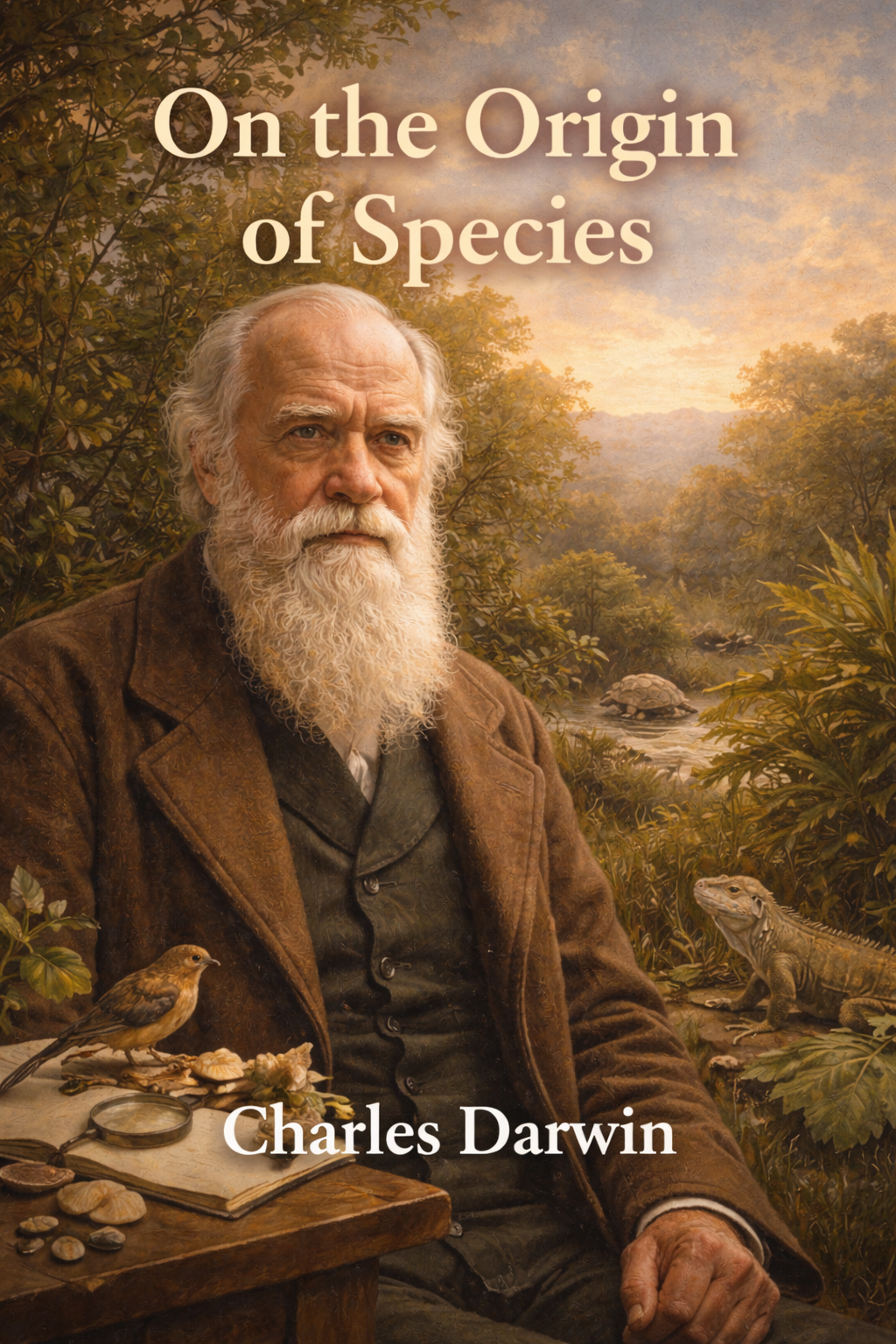
On the Origin of Species, 6th Edition
Chapter Summaries
What's Here for You
Embark on a journey to unravel the very essence of life with Charles Darwin's monumental work, 'On the Origin of Species.' This isn't just a book; it's an invitation to fundamentally re-examine your understanding of the natural world and humanity's place within it. Prepare to be intellectually invigorated as Darwin meticulously lays bare the profound insights into how life has transformed over eons. What awaits you? A deep dive into the observable variations in domesticated and wild species, revealing the subtle yet powerful forces that shape them. You'll witness the 'Struggle for Existence,' a concept that underpins all life, and understand the elegant, relentless engine of 'Natural Selection' – nature's own mechanism for preserving advantageous traits. Darwin will guide you through the 'Laws of Variation,' demystifying the seemingly random occurrences that give rise to new forms, and address the 'Difficulties of the Theory' and 'Miscellaneous Objections,' arming you with profound answers to potential doubts. Explore the mysteries of 'Instinct' and 'Hybridism,' challenging long-held beliefs about inherited behaviors and reproductive barriers. Traverse the Earth's history through the 'Geological Record,' uncovering the slow, inexorable march of evolution, and marvel at the 'Geographical Distribution' of life, a puzzle whose solution lies in the grand narrative of descent. Finally, discover the 'Mutual Affinities of Organic Beings,' revealing the hidden genealogical tree that connects all life through morphology, embryology, and rudimentary organs. This book promises an intellectual awakening, a profound sense of wonder, and a robust framework for understanding the diversity of life. The tone is one of rigorous scientific inquiry, thoughtful observation, and ultimately, awe-inspiring revelation. Prepare to gain a new perspective, a deeper appreciation for the interconnectedness of all living things, and the intellectual tools to comprehend the grandest story ever told – the story of evolution.
Variation Under Domestication
Charles Darwin, in 'On the Origin of Species,' embarks on a profound exploration of 'Variation Under Domestication,' revealing how the conditions of life, both direct and indirect, sculpt the very fabric of living organisms. He posits that the variability observed in domesticated species far exceeds that in their wild counterparts, a divergence stemming from lives lived not under nature's uniform hand, but under the varied whims of human cultivation and modified environments. This variability, Darwin explains, is not a fleeting anomaly but a persistent force, with organisms continuing to change over generations once the process has begun. He meticulously details two primary modes through which these changes occur: the direct action of external conditions on the organism's whole structure or specific parts, and the indirect action, subtly influencing the reproductive system. While external conditions can induce definite changes, such as size or color shifts, it is the indefinite variability—the endless slight peculiarities distinguishing individuals—that has likely played a more significant role in shaping domestic races. This indefinite variability, often appearing spontaneously and in disparate individuals, underscores the intricate dance between organism and environment. Furthermore, Darwin delves into the profound impact of habit and the use or disuse of parts, illustrating how the domestic duck's lighter wing bones and heavier leg bones are testaments to reduced flight and increased locomotion. He introduces the concept of 'correlated variation,' where changes in one part of the body necessitate or influence changes in others, sometimes in surprising ways, like the deafness in white, blue-eyed cats. The enduring mystery of inheritance, the rule that like begets like, is examined, alongside the perplexing laws that govern its transmission across generations, noting that peculiarities appearing at a certain age in parents often reappear at a corresponding age in offspring. The author then turns his keen eye to the origin of these domestic varieties, questioning whether they arose from one or several ancestral species, drawing heavily on the astonishing diversity within breeds of pigeons and dogs as case studies. He meticulously dissects the pigeon breeds, from the carrier's unique carunculated skin to the fantail's extraordinary number of tailfeathers, arguing that such extreme divergence, if they were distinct species, would imply a host of extinct wild progenitors—a less parsimonious explanation than descent from a single wild ancestor, the rock pigeon. This leads to the pivotal insight: the immense power of *selection*, both methodical and unconscious, wielded by humans. Much like a sculptor patiently chipping away at stone, man accumulates slight variations over generations, not by sudden leaps, but by a slow, often imperceptible, accumulation, guiding the form and function of organisms towards his own use or fancy. This power, Darwin contends, is the predominant force shaping domestic races, far outweighing the direct effects of external conditions or habit alone. He concludes by highlighting the circumstances that amplify this power: high variability, a large number of individuals, and most crucially, a high valuation of the organism by humans, which drives meticulous attention to even the slightest deviations. Thus, what appears as a miraculous transformation is, in reality, the cumulative effect of sustained, deliberate, or even unintentional human influence acting upon the natural variability of life.
Variation Under Nature
The author, Charles Darwin, embarks on a profound exploration of variation within nature, setting the stage for his revolutionary theory of evolution. He begins by acknowledging the inherent difficulty in defining 'species' and 'variety,' noting that while a species often carries the implicit notion of a distinct creation, a variety almost universally implies community of descent, though proof is elusive. Darwin grapples with the concept of 'monstrosities,' deviations from the norm, and how they might graduate into varieties, observing that sudden, significant deviations rarely seem to propagate in the wild, unlike in domestic settings. He posits that such dramatic changes are improbable, much like a complex machine appearing fully formed. The author then pivots to the crucial concept of 'individual differences' – the subtle variations among offspring from the same parents, particularly noticeable in confined localities. These differences, Darwin emphasizes, are of paramount importance because they are often inherited, providing the raw material upon which natural selection can act, much like a breeder carefully selects traits in domestic animals. He reveals that even seemingly minor individual differences can affect parts considered physiologically or classificatory important, a fact he believes would surprise even experienced naturalists. The narrative then delves into the perplexing phenomenon of 'polymorphic' or 'protean' genera, where species exhibit an extraordinary range of variation, often leading to disagreements among naturalists about their classification. Darwin suspects that in some of these cases, variations may be of no immediate service or disservice, thus escaping the immediate hand of natural selection. He also discusses instances of dimorphism and trimorphism, where distinct forms within a species exist, sometimes without apparent intermediate links, yet he suggests these might be exaggerations of the common sexual dimorphism seen across nature. The chapter's central tension emerges in the discussion of 'doubtful species' – those forms so closely allied to others or linked by intermediate gradations that their classification as distinct species is contentious. Darwin argues these are, in fact, the most important for understanding evolution, as they suggest a continuum rather than discrete, immutable creations. He highlights how the line between species and variety is often blurred, relying heavily on the subjective judgment and experience of naturalists, and how geographical separation can lead to forms being classified as species when they might be mere races. The author reveals a striking pattern: wide-ranging, widely diffused, and common species, particularly those in larger genera, tend to vary more frequently, producing more varieties or 'incipient species.' This observation, he argues, strongly supports the idea that species are not fixed entities but rather well-marked varieties that have accumulated differences over time. He concludes by suggesting that the terms 'species' and 'variety' are largely arbitrary conveniences, representing points along an insensible series of differences, with varieties acting as the nascent stages of new species, driven by the cumulative action of natural selection and the use or disuse of parts. The chapter closes with a powerful synthesis: the larger the genus, the more closely allied its species, and the more numerous its varieties, mirroring the very definition of varieties themselves, thus reinforcing the idea that species are simply more permanent and distinct varieties.
Struggle For Existence
Charles Darwin, in the chapter 'Struggle For Existence' from *On the Origin of Species*, unveils the relentless, often unseen, competition that underpins the natural world, a concept so pervasive it can be difficult to truly internalize. He begins by noting the undeniable existence of individual variability within species, a crucial foundation for his theory, but emphasizes that understanding the exquisite adaptations and the very origin of species requires a deeper dive into the forces shaping life. This, Darwin explains, is the 'struggle for life,' a principle that follows inevitably from the geometrical ratio of increase inherent in all organic beings. Every creature, from the smallest seed to the largest animal, produces far more offspring than can possibly survive, leading to a constant battle for existence. This struggle, he clarifies, is used in a large and metaphorical sense, encompassing not just direct combat but also dependence on others and, critically, success in leaving progeny. Darwin posits that any variation, however slight, if it offers even a small advantage in this infinitely complex web of relationships and environmental pressures, will tend to be preserved and inherited, a process he terms 'Natural Selection,' or as Herbert Spencer aptly put it, 'Survival of the Fittest.' He illustrates this with the astonishing proliferation of introduced species in new environments, where favorable conditions allow their inherent geometrical increase to flourish, often at the expense of native life. The checks to this increase are myriad and often obscure—climate, food scarcity, predation, and competition—but Darwin highlights that the struggle is most severe between individuals and varieties of the same species, as they share identical needs and face the same threats. He paints a vivid picture of this intricate dance, where the existence of a single species can be determined by a chain of dependencies, such as the role of cats in controlling mice, which in turn affects humblebee populations, ultimately influencing the fertilization of certain flowers. This complex interplay, a 'battle within battle,' demonstrates that the structure of every organism is inextricably linked to its competitors and environment, a profound ignorance of which often leads us to invoke grand catastrophes for extinction rather than acknowledging the subtle, constant pressure of natural selection. Yet, Darwin offers a measure of solace: this 'war of nature' is not one of constant terror; death is often prompt, and it is the vigorous, healthy, and happy that survive and multiply, ensuring the continuous, albeit sometimes slow, march of progress in the grand tapestry of life.
Natural Selection; Or The Survival Of The Fittest
Charles Darwin, in his profound exploration, invites us to witness the quiet, relentless engine of nature: Natural Selection. He begins by drawing a parallel to human selection in domestication, where we merely preserve and accumulate variations that arise. Nature, he explains, does the same, but on a grander, more indifferent scale. Imagine, if you will, the countless slight variations that occur in every living thing, each a potential whisper of advantage or disadvantage in the immense, complex battle for existence. Darwin posits that those individuals, however slightly, better equipped for their environment—whether through a sharper claw, a quicker wit, or a more vibrant hue—will possess the best chance of survival and reproduction. Conversely, any trait that proves injurious is swiftly, inexorably, eliminated. This is the essence of Natural Selection, the 'Survival of the Fittest,' not a brutal contest of brute strength alone, but a subtle, ongoing refinement. He clarifies that 'selection' here is not conscious choice, but the aggregate result of natural laws, akin to chemists speaking of 'elective affinities.' Consider a country undergoing a slight climatic shift; the delicate balance of life is immediately disrupted, favoring those forms that can adapt. Or picture an island, a closed system where new, better-adapted forms can't easily enter, forcing the original inhabitants to evolve or perish. Darwin then introduces the concept of Sexual Selection, a distinct but related force, where competition is not for survival against the environment, but for the favor of a mate, often leading to elaborate displays or formidable weaponry. He illustrates this with vivid examples: the stag's antlers, the peacock's plumage, the male bird's song, all products of this particular struggle. The chapter moves through a series of compelling illustrations, from the wolf pack adapting to changing prey, to the intricate dance between flowers and insects, where nectar-seeking becomes pollination, a testament to co-evolution. He emphasizes that these changes are not sudden leaps but the accumulation of minute, inherited differences over vast geological timescales. The principle of divergence is crucial here: as descendants spread and occupy varied niches, they become increasingly distinct, much like a single ancestral breed of pigeon, through human selection, splitting into myriad forms. This diversification, Darwin argues, allows more life to be supported, creating more opportunities. He cautions against the idea of progress being inevitable; low and simple forms can persist if they are perfectly suited to their niche, like ancient organisms in a quiet pond. Ultimately, Darwin frames the entirety of life as a great tree, its branches representing lineages, constantly branching, growing, and sometimes, dying off, with extinction being an inevitable consequence of this continuous, slow, and powerful process of selection and divergence. He concludes that while natural selection acts slowly, its cumulative effect over eons is immense, shaping the beauty and complexity of the living world far beyond human capacity.
Laws Of Variation
The author, Charles Darwin, embarks on a profound exploration into the very essence of variation, acknowledging our deep ignorance of its ultimate causes while meticulously laying bare the intricate mechanisms that shape life. He begins by dispelling the notion of 'chance' variation, revealing instead how conditions of life—be it climate, food, or even the subtle pressures of domestication—act upon an organism's inherent nature, sometimes directly, sometimes indirectly, leading to either a plastic, fluctuating variability or a more definite, uniform modification. Darwin illustrates this with observations of seashell colors near the sea or thicker fur in northern climes, yet cautions that attributing such changes solely to external conditions is fraught with uncertainty; the interplay between the organism and its environment is complex, and the role of natural selection in preserving beneficial variations, much like a human breeder selecting traits, becomes paramount. He then delves into the profound impact of use and disuse, presenting the flightless bird as a poignant example of wings rendered vestigial through generations of disuse, or the rudimentary eyes of burrowing creatures, suggesting that natural selection often works in concert with these physical changes. The narrative shifts to the concept of correlated variation, where modifications in one part of an organism, perhaps due to its inherent developmental ties, can lead to unexpected changes in another, even if seemingly unrelated to survival—like the relationship between certain coat colors and deafness in cats, or the development of ray petals in flowers affecting reproductive organs. This leads to the principle of compensation and economy of growth, where nature, in a sense, balances resource allocation, and superfluous structures are pared down to conserve energy, a principle akin to a parasitic cirripede shedding its shell when protected. Darwin then posits that multiple, rudimentary, or lowly organized structures tend to be more variable, perhaps because they lack the specialized function that natural selection rigorously polishes. More strikingly, he observes that parts developed to an extraordinary degree in one species compared to its close relatives are often the most variable, suggesting a recent, intense modification that natural selection has not yet fully stabilized. This principle extends to the distinction between specific and generic characters, with the former, representing more recent divergences, exhibiting greater variability. Secondary sexual characters, too, are highlighted as highly variable, subject to the less rigid pressures of sexual selection, and remarkably, these often manifest in the same anatomical regions where species themselves diverge. Finally, Darwin unifies these observations by noting that distinct species often exhibit analogous variations, mirroring traits of related species or reverting to ancestral forms, much like distinct breeds of pigeons showing common patterns inherited from a shared ancestor. This interconnected web of variation, influenced by conditions, use, disuse, correlation, and the selective pressures of both survival and reproduction, paints a picture not of random chance, but of a deeply ordered, though often mysterious, process shaping the grand tapestry of life, leaving us with the humbling realization of how much remains to be understood about the very engine of evolution.
Difficulties Of The Theory
Charles Darwin, in his seminal work 'On the Origin of Species,' delves into the 'Difficulties Of The Theory,' acknowledging that even he, after deep reflection, finds certain objections staggering, though he ultimately posits that most are merely apparent, and the real ones are not fatal to his grand idea. He confronts the immediate query: if species evolve through minute gradations, why don't we see a chaotic jumble of transitional forms everywhere? The author explains that natural selection, by its very nature, is a ruthless process of extermination; as a new, improved form arises, it tends to supplant and eliminate its less-adapted parent forms and intermediate varieties. Thus, the fossil record, though vast, is an imperfect museum, where the very success of evolution leads to the disappearance of its stepping stones. Darwin then tackles the profound question of how complex organs, like the eye, could possibly arise. He concedes that the idea seems absurd at first glance, comparing it to the initial disbelief in the Earth revolving around the sun, yet he argues that if we can demonstrate a continuous series of useful gradations, from the simplest light-sensitive spot to the most complex eye, each step offering an advantage, then natural selection can indeed account for such marvels. Imagine, he suggests, a layer of transparent tissue, slowly changing in density and form, with a light-sensitive nerve beneath, and a relentless natural selection preserving each minute improvement over millions of years—a living optical instrument far superior to any human creation. He further explores how organs with peculiar habits or structures, like the transition from terrestrial to aquatic life, or the development of gliding membranes in squirrels into true wings, are explainable through gradual, advantageous modifications, even if the intermediate steps are not always evident. Darwin also addresses organs of seemingly little importance, like the giraffe's tail, suggesting that even these trifles can be significant in the struggle for existence, perhaps aiding in resisting insect harassment, which could mean survival in new pastures. He wisely cautions against overestimating our understanding of an organ's utility and reminds us that structures might be retained through inheritance from ancestors for whom they *were* vital, even if their current use is diminished. The author’s narrative arc moves from acknowledging the formidable challenges to evolution, through detailed explanations of how these challenges can be met by the principles of natural selection, ultimately building a case for the theory's robustness, even in the face of seemingly insurmountable complexities like the eye or the electric organs of fish, which appear analogous rather than homologous across different species. He concludes by reinforcing that nature, though prodigal in variety, is niggard in innovation, advancing not by sudden leaps but by slow, successive steps, a principle elegantly summarized by the ancient canon, 'Natura non facit saltum'—nature does not make a leap.
Miscellaneous Objections To The Theory Of Natural Selection
Charles Darwin, in his seminal work 'On the Origin of Species,' dedicates a crucial chapter to confronting a spectrum of objections raised against his theory of natural selection. He begins by addressing critiques that organic beings are 'imperfect,' clarifying that this means they are not as perfectly adapted as they *could* be, a point evidenced by the displacement of native species by more successful invaders. Darwin then tackles the notion that longevity is an unassailable advantage, illustrating with the example of biennial plants surviving through seeds, and noting that longevity is itself likely a product of natural selection, influenced by organizational complexity and reproductive expenditure. He deftly refutes arguments based on perceived stasis, such as the unchanging nature of Egyptian fauna over millennia, by contrasting it with the uniform conditions in Egypt versus the drastic environmental shifts and migrations experienced elsewhere, particularly since the glacial period. The author patiently unravels the question of how varieties can coexist with parent species, explaining that it's possible when they occupy distinct ecological niches or 'stations,' and that simultaneous modification of all bodily parts is not a prerequisite for evolution. Darwin offers a compelling analogy with domestic breeds, like the racehorse and mastiff, showing how gradual, step-by-step changes, rather than sudden leaps, shape organisms. A significant challenge arises from characters that appear to serve no purpose, such as the length of hare ears or complex tooth enamel folds. Darwin counters this not by dismissing the observations, but by urging caution in judging utility and by highlighting the principle of correlated growth – how changes in one part can influence others through subtle developmental mechanisms, or 'laws of growth,' and the direct effects of changing conditions. He also acknowledges spontaneous variations, like bud mutations, while maintaining that the vast majority of adaptations are too intricate to be explained by chance alone. He uses the example of orchid flowers, initially perplexing in their intricate structures, now understood as vital for insect pollination, and the dimorphic flowers of certain plants, where differing stamen and pistil lengths are crucial for reproduction. The narrative then delves into the complex world of flatfish, explaining the gradual migration of an eye to one side of the head not as a sudden, inexplicable event, but as a consequence of habit and adaptation – the young fish resting on its side, twisting its lower eye upwards to see, and over time, this habit, reinforced by inheritance and the laws of growth, shapes the skull and eye position. Similarly, the prehensile tail of certain monkeys is presented as a product of habit and use, gradually evolving into a functional 'fifth hand.' Even the mammary glands of mammals, a seemingly profound mystery, are traced back to the plausible development from cutaneous glands in a marsupial pouch, where a nutrient-rich secretion, improved by selection, gradually specialized into the mammalian breast. Darwin addresses Mr. St. George Mivart's objections regarding the 'incipient stages' of useful structures, arguing that even rudimentary beginnings, like fixed spines on echinoderms that gradually become mobile prehensile pedicellariae, offer a defense. He also explores the seemingly disparate yet homologous organs like the avicularia and vibracula in Polyzoa, suggesting their development from a common zooid origin. The chapter concludes by reaffirming that evolution is a gradual process, emphasizing that apparent gaps in the fossil record or the sudden appearance of species are often artifacts of incomplete preservation, and that embryology itself protests against the notion of abrupt, miraculous transformations, supporting instead a slow, continuous unfolding of life's forms. Darwin's overarching message is a testament to the power of incremental change, the interconnectedness of biological systems, and the enduring strength of natural selection, even when confronted with the most perplexing questions.
Instinct
Charles Darwin, in his seminal work 'On the Origin of Species,' delves into the intricate world of instinct, posing a profound question: how do these seemingly innate behaviors arise and evolve? He begins by acknowledging that the complexity of instincts, such as a cuckoo laying eggs in another bird's nest, might appear to challenge his entire theory of natural selection. However, Darwin swiftly moves to clarify his focus: not on the origin of mental powers themselves, but on the *diversities* of instinct within a species. He navigates the fuzzy definition of instinct, suggesting it's often an action performed without experience, yet notes that even a 'little dose of judgment or reason' can play a role. Darwin draws a compelling parallel between instinct and habit, observing how habitual actions, once acquired, can become deeply ingrained and even modified by will, much like an instinct. Yet, he emphasizes that not all instincts are acquired through habit and inherited; the complex behaviors of bees and ants, for instance, defy this simple explanation. The core tension, Darwin reveals, lies in how these vital adaptations, as crucial as physical structures for survival, can be preserved and refined. His resolution emerges through the principle of natural selection: if instincts can vary, even minutely, then those variations that prove profitable under changing conditions of life can be preserved and accumulated over generations. He illustrates this with striking examples, like the slave-making ants (Formica sanguinea) and the astonishing cell-building prowess of the hivebee. The latter, he explains, is not a product of a single, miraculous instinct, but the cumulative result of many simple instincts, refined over time. Consider the hivebee's hexagonal cells, a marvel of engineering saving wax and labor; Darwin theorizes this arose from bees approximating spherical hollows that naturally intersect, with subsequent refinements leading to the perfect hexagonal form. He confronts a significant objection: how can sterile insects, like worker ants, evolve complex instincts if they cannot reproduce? Darwin's insight here is profound: selection operates not just on the individual, but on the *family* or community. If a sterile caste, through slight, inherited modifications, benefits the reproductive members of the colony, then the fertile individuals will be selected, propagating the tendency to produce such specialized, sterile offspring. This elegant explanation addresses the paradox of sterile workers, from the driver ant with its vast difference in worker castes to the seemingly miraculous architectural feats of the bee, demonstrating that even the most complex instincts can be traced to the gradual accumulation of small, advantageous variations, ultimately serving the survival and success of the species.
Hybridism
Charles Darwin, in his profound exploration of 'Hybridism,' invites us to peer into the intricate dance of reproduction, challenging the long-held notion that species are divinely endowed with sterility to maintain their distinctness. He meticulously unpacks the often-confused realms of species sterility when first crossed versus the sterility of their hybrid offspring, revealing that the former stems from perfect reproductive organs producing imperfect results, while the latter involves functionally impotent organs, a subtle yet crucial distinction. The author presents a compelling case, drawing on the painstaking work of observers like Kölreuter and Gärtner, that the supposed universal sterility of species is far from absolute; instead, it exists in a bewildering spectrum, often influenced by experimental conditions, making it difficult to draw a definitive line between fertility and infertility, and even between varieties and species. Darwin highlights that the fertility of varieties when crossed, and their mongrel offspring, serves as a critical counterpoint, suggesting a fluid boundary between these categories. He posits that the sterility observed is not a special endowment but an incidental consequence of differences in reproductive systems, akin to the unpredictable success of grafting, which also follows complex, often unknown rules. Consider the striking observation that reciprocal crosses—where species A fertilizes species B, and then species B fertilizes species A—can yield vastly different results, sometimes one direction succeeding while the other utterly fails, a phenomenon inexplicable if sterility were a deliberate design for separation. Furthermore, Darwin reveals that even within supposedly distinct species, certain individuals or forms exhibit peculiar fertility patterns, sometimes crossing more readily with another species than with their own kind, a paradox that unravels the simple narrative of inherent, fixed sterility. The chapter culminates by suggesting that the sterility of hybrids, particularly when their reproductive organs are imperfectly developed, might be analogous to the widespread infertility observed when organisms are removed from their natural conditions and subjected to new environments—a disturbance of the reproductive system rather than a specific prohibition. This complex interplay of factors, from the subtle variations in sexual elements to the profound impact of external conditions, leads Darwin to conclude that the sterility observed is not a divine decree to prevent confusion, but rather an emergent property, a consequence of underlying biological differences, harmonizing with the idea that species themselves may have originated from varieties, with no essential, unbridgeable chasm between them.
On The Imperfection Of The Geological Record
The author, Charles Darwin, confronts a significant hurdle for his theory of natural selection: the seemingly sparse and discontinuous nature of the geological record. He begins by acknowledging the profound difficulty—the absence of the countless, finely graduated transitional links that his theory predicts should bridge the vast gaps between species. Darwin explains that while direct intermediate forms between, say, a fantail and pouter pigeon are rare, the true intermediates we should seek are those connecting each to a common, unknown ancestor. The very process of natural selection, which favors advantageous variations, leads to the extermination of intermediate forms, meaning that while the number of such links must have been enormous, their preservation is exceedingly unlikely. This leads to the central tension: how can we reconcile the theory of gradual change with a fossil record that appears so abrupt, as if entire groups of species simply materialized? Darwin then turns to the immense scale of geological time, drawing upon the work of Sir Charles Lyell to impress upon the reader the sheer vastness of past epochs, evidenced by the slow, relentless work of denudation and sediment deposition—processes that, though imperceptible day-to-day, have reshaped landscapes over eons. Imagine mountains worn down to dust, cliffs eroded by the tireless sea; these silent agents of change carve monuments to time. Yet, even with this vast timescale, the fossil collections in our museums are paltry. Darwin meticulously details the reasons: sediments don't accumulate everywhere at rates sufficient for preservation, soft-bodied organisms rarely fossilize, and even when they do, remains can dissolve or be destroyed. Furthermore, geological formations are not continuous records but are separated by immense, often unrecorded, intervals of time—gaps where life continued, evolved, and disappeared, leaving no trace in a particular locale. This leads to another critical insight: the appearance of new species in formations might simply reflect their migration into an area, not their origin there. The sudden appearance of entire groups, such as teleostean fishes or mammals, is thus explained not by spontaneous creation, but by our limited perspective; these groups may have developed elsewhere over vast periods before appearing in the fossil record accessible to us. The author posits that the world may have looked very different in the deep past, with continents and oceans perhaps swapped, and that metamorphic rocks themselves are evidence of immense, ancient denudation. Ultimately, Darwin frames the geological record not as a complete history, but as a fragmented manuscript, its last volume written in a changing dialect, with only scattered chapters and lines preserved. This imperfect record, he concludes, is not a refutation of his theory, but a testament to the immense processes of life and time, and our own limited ability to fully capture them. The tension between the expected gradualism of evolution and the apparent abruptness of the fossil record is resolved through an understanding of the profound incompleteness of geological evidence, urging a shift from expecting a perfect chain to searching for the few, precious links that *do* survive.
On The Geological Succession Of Organic Beings
Charles Darwin, in his profound exploration of life's history, invites us to peer into the vast, silent archives of the Earth's strata. He guides us through the geological record, revealing a story not of sudden, cataclysmic replacements, but of slow, inexorable change. The author explains that new species emerge gradually, one after another, over immense spans of time, much like a grand, unfolding drama where each formation offers but a fleeting glimpse of a scene. He illuminates how extinction is not a mystery, but an intrinsic part of this grand process, intimately linked to the production of new, better-adapted forms; indeed, the struggle for existence ensures that less-favored forms inevitably yield their place, a process often preceded by rarity, much like a subtle fading before a final disappearance. Darwin emphasizes that this grand march of life is not erratic; rather, striking parallels emerge across the globe, particularly in marine life, suggesting that dominant, widely-spreading species are the wellspring of new varieties, which in turn become the progenitors of future forms, a continuous branching and replacement, akin to a great tree growing from a single stem. He challenges the notion of fixed progress, noting that while life generally becomes more complex and specialized, some forms, perfectly adapted to their niche, persist with little change, a testament to nature’s varied and often surprising resilience. Ultimately, Darwin posits that the affinities between extinct and living forms, and the tendency for ancient types to reappear in the same geographical areas, are not mere curiosities, but powerful evidence for descent with modification, a continuous thread of inheritance weaving through the eons, explaining the grand patterns of life's succession and the interconnectedness of all beings, past and present. The geological record, though imperfect, whispers these truths, urging us to see the profound, slow-motion revolution that has shaped our world.
Geographical Distribution
As Charles Darwin embarks on an exploration of the world's living tapestry in 'On the Origin of Species,' he unveils a profound mystery: the geographical distribution of life. The author reveals that climate and physical conditions alone fail to explain why vastly different life forms inhabit regions with remarkably similar environments, citing the stark dissimilarity between Australia, South Africa, and South America, despite their parallel climates. Conversely, regions separated by formidable barriers—be it vast oceans, impassable mountain ranges, or expansive deserts—exhibit distinct inhabitants, a testament to the power of isolation in shaping life's trajectory. Darwin then introduces a third crucial observation: the inherent affinity of organisms within the same continent or sea, even when specific species differ across locations, suggesting a deep, inherited bond that transcends mere proximity. This bond, he posits, is inheritance itself, the unseen thread connecting generations and explaining why related species replace one another across landscapes, much like the American Rhea replacing ostriches in Africa and Australia under similar skies. The narrative then pivots to the compelling idea of single centers of creation, a concept challenged by the very patterns Darwin has meticulously laid out. He argues that the simplicity of a single origin for each species, followed by migration and modification, offers a more elegant explanation than independent creations scattered across the globe, especially when considering the vastness of geological time and the myriad means of dispersal—from floating seeds enduring saltwater for months to seeds carried within birds' crops or even embedded in earth clinging to their feet. Darwin then delves into the transformative influence of the Glacial period, a time when vast ice sheets pushed life southward, only to retreat and leave behind isolated populations on mountain summits and in polar regions, explaining the presence of identical species across seemingly insurmountable distances. He further explores the counter-intuitive phenomenon of alternating glacial and warm periods between hemispheres, suggesting that as one hemisphere cooled, the other warmed, facilitating migrations across equatorial regions and leading to the development of closely allied species in distant temperate zones. This intricate dance of climate, migration, and isolation, Darwin concludes, paints a picture not of independent creations, but of a world shaped by descent with modification, a continuous, unfolding story written across continents and oceans.
Geographical Distribution--continued
The vast tapestry of life, as Charles Darwin unveils in this chapter, presents a profound puzzle: how do species, both familiar and strange, come to inhabit the places they do, often across seemingly insurmountable barriers? It might seem intuitive to assume that freshwater creatures, confined to lakes and rivers, would have limited ranges, and that the ocean would be an impenetrable wall separating distant lands. Yet, Darwin reveals a startling truth: the opposite is often the case. Freshwater species, he explains, display an astonishing ability to disperse, not only within continents but across oceans, with allied forms appearing remarkably widespread. This capacity, he posits, is often rooted in their inherent suitability for short, frequent migrations – a trait that, as an almost necessary consequence, grants them the power of wide dispersal. Consider the humble fish: Dr. Gunther's discovery of the Galaxias attenuatus in Tasmania, New Zealand, the Falklands, and South America suggests dispersal from an ancient Antarctic center, a testament to the enduring power of these aquatic travelers. Darwin then turns his keen eye to the shells, noting their wide ranges and the presence of allied species across the globe, a distribution that initially perplexed him. But through careful observation, he uncovers the subtle, yet powerful, mechanisms at play: duckweed clinging to a duck's back, or the minute, newly hatched shells of freshwater mollusks clinging tenaciously to a wading bird's feet for hours, a remarkable feat of passive transport. Imagine a heron, its stomach a living seed bank, carrying the potential for new life across vast distances, a vivid micro-metaphor for nature's intricate dispersal networks. This same agency, he suggests, extends to plants, with pond mud, when dry, revealing a hidden world of hundreds of seeds, ready to be carried by the very birds that frequent their watery homes. The narrative then shifts to the enigma of oceanic islands, where the scarcity of species, yet the high proportion of endemic forms, poses a significant challenge to the theory of independent creation. Darwin contrasts the fewness of species with their remarkable distinctness, explaining that isolated arrivals, facing less competition, are more prone to modification, giving rise to unique island lineages. He points to the Galapagos, where land birds, so clearly American in origin, are yet distinct, a living testament to their journey and subsequent divergence. The absence of certain groups, like amphibians and terrestrial mammals, on true oceanic islands, while aerial bats readily colonize them, further underscores the critical role of dispersal capabilities. Bats, with their effortless flight, can traverse oceans, a stark contrast to the terrestrial creatures effectively confined by the sea's barrier. The depth of the sea itself becomes a silent narrator, separating distinct mammalian faunas, a geographical clue to evolutionary history. The chapter culminates in a powerful synthesis, weaving together the threads of freshwater dispersal, island colonization, and the overarching patterns of life's distribution. Darwin concludes that the grand facts of geographical distribution are not inexplicable mysteries, but rather elegant consequences of migration and subsequent modification, a resolution that transforms the tension of the unknown into the profound insight of a connected, evolving world, where every species, however isolated, tells a story of journey and adaptation.
Mutual Affinities Of Organic Beings: Morphology -- Embryology -- Rudimentary Organs
Charles Darwin, in this profound chapter, unveils the intricate tapestry of life, revealing that the seemingly arbitrary classifications of naturalists are, in fact, echoes of a grand, genealogical tree. He begins by dismantling the notion that superficial resemblances dictate true kinship, explaining that adaptive traits, though vital for survival—like the streamlined bodies of whales and fishes for aquatic life—are merely analogous, a superficial mimicry of form serving function. Instead, Darwin guides us to the deeper currents of inheritance, where seemingly insignificant or even useless features, like rudimentary organs, become powerful signposts pointing towards shared ancestry. Imagine, he suggests, the vestigial teeth in a young ruminant, a silent whisper of its Pachyderm ancestors, or the bones in a bat's wing mirroring the structure of a human hand, a testament to a common blueprint stretched and adapted across eons. This is the essence of morphology: the underlying unity of plan that speaks not of a Creator’s arbitrary design, but of descent with modification. The true naturalist, Darwin reveals, is not merely cataloging likenesses but deciphering a family history, where the most telling clues are often found not in the bustling, adaptive present, but in the quiet vestiges of the past. He then turns our gaze to the miracle of development, the embryonic stages of life, where the grand narrative of evolution is most clearly etched. For in the shared, embryonic forms of vastly different creatures—the near-identical embryos of lizards, birds, and mammals—Darwin finds the most compelling evidence of a shared origin, a common starting point from which diverse forms have diverled. These embryonic echoes, he posits, are far more revealing than adult adaptations, for they represent an earlier, less modified state, a glimpse into the ancestral condition. Even rudimentary organs, like the useless wings of an ostrich or the vestigial teeth of a whale calf, are not errors but deliberate inscriptions of history, retained through inheritance, whispering tales of former utility and ancestral forms. Thus, the grand system of classification, the very framework of our understanding of life, is not an artificial construct but a reflection of this deep, genealogical interconnectedness, a profound and evolving story written in the very bones, embryos, and forgotten parts of all living beings.
Recapitulation And Conclusion
As Charles Darwin brings his monumental work, *On the Origin of Species*, to a close, he offers a final, compelling summation of his theory of descent with modification through natural selection. He begins by acknowledging the formidable objections that naturally arise, the seeming impossibility that complex organs and instincts could arise from countless minute variations, yet he insists that the core propositions—individual differences, a struggle for existence, and the existence of gradations—are undeniable. Darwin grapples with specific challenges, like the sterile castes of ants or the sterility of hybrid species, explaining them not as special endowments but as incidental outcomes of reproductive system differences, illuminated by analogies with domesticated varieties and dimorphic plants. He then turns to the profound implications of geographical distribution, recognizing that while migration and extinction complicate the picture, the vast distances and isolation of species are ultimately explainable by slow, gradual travel and adaptation over immense timescales. The question of why we don't see an inextricable chaos of intermediate forms is addressed by Darwin's insight that the geological record is profoundly imperfect, with countless transitional links lost to time and extinction. He argues that only a small portion of the world has been geologically explored, and only certain organisms fossilize, making the discovery of every single gradation unlikely, and that dominant, widely-ranging species are more prone to variation, leading to local forms that appear suddenly when discovered. Darwin then brilliantly pivots to the power of domestication as a microcosm of natural selection, demonstrating how human selection, even unconscious, can produce significant change by accumulating slight variations, suggesting that nature, over eons, does so with far greater effect. He posits that the high rate of reproduction in all species inevitably leads to a struggle for existence, where even the slightest advantage can determine survival and the preservation of beneficial variations. This relentless, eons-long process, Darwin concludes, is the grand agency shaping life, beautifully and slowly adapting every form to the most complex relationships, explaining the diversity of life not as independent creations but as an unfolding, interconnected genealogy. He observes that the very laws governing variation under domestication mirror those at play in nature, leading to innovations that, while sometimes imperfect, are profoundly effective. The intricate beauty of nature, from the colors of flowers to the songs of birds, is seen as a product of sexual selection and adaptation for pollination and seed dispersal. Darwin reassures his readers that his theory does not diminish the grandeur of the universe or the concept of a Creator, but rather suggests a more profound, elegant design where a few original forms possess the capacity for self-development, a view that accords better with the known laws of nature. He acknowledges the difficulty in grasping the immense timescales and the gradual accumulation of minute changes, but he expresses confidence that future generations of naturalists will embrace the evidence. Ultimately, Darwin presents a universe not of static, independently created beings, but of a dynamic, evolving web of life, a grand and awe-inspiring spectacle of endless forms, most beautiful and most wonderful, having been, and still being, evolved from simple beginnings through the inexorable laws of nature.
Conclusion
Charles Darwin's 'On the Origin of Species,' particularly in its comprehensive 6th edition, offers a profound and enduring testament to the power of incremental change and the interconnectedness of life. The core takeaway is that the immense diversity we observe, from the subtle variations within domesticated breeds to the grand sweep of geological succession, is not the product of sudden creation but of a slow, relentless process of natural selection acting upon inherited variability. Darwin meticulously dismantles the notion of static, divinely ordained species, revealing instead a dynamic, branching tree of life where distinctions between species and varieties are often blurred, representing stages in a continuum. The emotional lesson lies in a humbling realization of our place within this grand, ancient lineage, a shift from anthropocentric exceptionalism to a deep appreciation for the shared ancestry that binds all living things. We learn that the struggle for existence, a concept often perceived as brutal conflict, is more accurately understood as a complex interplay of competition, dependency, and reproductive success, where even the slightest advantageous variation can be preserved. This process, devoid of conscious direction, underscores a universe governed by natural laws rather than design. The practical wisdom is multifaceted: it encourages a rigorous, evidence-based approach to understanding the natural world, urging us to look beyond superficial appearances to the underlying historical relationships revealed by morphology, embryology, and rudimentary organs. It teaches patience, recognizing that significant change requires vast timescales and the accumulation of countless minute steps. Furthermore, Darwin's work instills a profound respect for the intricate web of life, highlighting how seemingly insignificant factors can have far-reaching ecological consequences. Ultimately, 'On the Origin of Species' is not just a scientific treatise; it is a philosophical awakening, inviting us to perceive the world not as a collection of independent creations, but as a unified, evolving tapestry woven from the threads of inheritance, variation, and the enduring pressure of existence.
Key Takeaways
Variability in domesticated organisms is significantly amplified compared to wild species due to altered conditions of life and human influence.
Conditions of life act both directly on an organism's structure and indirectly by affecting the reproductive system, leading to both definite and indefinite variations.
Indefinite variability, characterized by endless slight peculiarities, has been more instrumental in forming domestic races than definite, uniform changes.
The use or disuse of body parts, coupled with the phenomenon of correlated variation, significantly shapes inherited traits, demonstrating an interconnectedness within an organism's structure.
Human selection, both methodical and unconscious, is the predominant force driving the divergence and modification of domestic races, accumulating slight variations over generations.
The value placed on an organism by humans, coupled with a large population size and high variability, are crucial factors enabling significant modification through selection.
The extreme diversity seen in domestic breeds, such as pigeons, is more plausibly explained by cumulative selection acting on a single wild ancestor than by assuming numerous extinct wild species.
The distinction between species and varieties is often a matter of arbitrary definition and subjective judgment rather than a clear, inherent biological boundary, suggesting a continuum of forms.
Individual differences, even those appearing trivial, are the fundamental building blocks for evolutionary change, providing the essential variations upon which natural selection can act.
Polymorphic genera and 'doubtful species,' characterized by extensive variation and blurred classification lines, are not anomalies but crucial evidence for the gradual transformation of life forms over time.
Species that are most widespread, abundant, and dominant within their environments are also the most likely to produce new varieties, indicating that success and stability foster further diversification.
Larger genera, containing more species, tend to exhibit more varieties and more closely related species, mirroring the characteristics of varieties themselves, which supports the view of species as accumulated, distinct varieties.
The terms 'species' and 'variety' are convenient labels for points on an insensible series of differences, with varieties representing incipient species shaped by natural selection and environmental pressures.
The inherent reproductive capacity of all species, far exceeding available resources, creates an inevitable 'struggle for existence' that drives evolutionary change.
Natural Selection, or 'Survival of the Fittest,' operates by preserving advantageous variations, however slight, leading to the gradual adaptation and diversification of species.
The struggle for existence is not limited to direct conflict but includes dependencies, competition for resources, and the success in reproduction, often occurring most intensely between closely related species or varieties.
Complex, often hidden interdependencies between species, where the fate of one can be determined by the population dynamics of seemingly unrelated organisms, shape the ecological landscape.
Our profound ignorance of the intricate web of natural relationships means that understanding extinction and adaptation requires appreciating subtle, continuous pressures rather than solely catastrophic events.
Despite the severity of the struggle, nature's balance ensures that death is often swift, and survival favors the vigorous, healthy, and well-adapted, leading to a dynamic equilibrium.
Recognize that 'survival of the fittest' is not about brute strength but about the preservation of advantageous variations, however slight, that enhance an organism's ability to survive and reproduce within its specific environmental context.
Understand that natural selection is a passive, cumulative process driven by environmental pressures and inherited variations, not a conscious force or guiding intelligence, akin to natural laws rather than deliberate choice.
Appreciate that sexual selection, distinct from natural selection, drives evolutionary change through competition for mates, leading to the development of traits that enhance reproductive success, even if they don't directly aid survival.
Grasp that the principle of divergence, where descendants occupy increasingly varied ecological niches, is a powerful engine for the multiplication of species, allowing more life to be supported and driving evolutionary innovation.
Accept that extinction is an inevitable consequence of natural selection and divergence, as improved forms naturally supplant and outcompete less adapted or ancestral ones, shaping the history of life through loss as much as through creation.
Acknowledge that evolutionary progress is not a predetermined march towards complexity; simple life forms can persist indefinitely if perfectly adapted to their environments, as natural selection favors utility over inherent advancement.
Comprehend that the branching, hierarchical structure of life, from varieties to species to genera, is best explained not by independent creation but by descent with modification, driven by natural selection and extinction over vast geological time.
Variability is not random chance but is influenced by environmental conditions acting on an organism's inherent nature, with natural selection ultimately determining which variations persist.
The use and disuse of bodily parts over generations can lead to significant structural modifications, which are then subject to natural selection's refining hand.
Correlated variation demonstrates that an organism's interconnectedness means changes in one part can trigger modifications in seemingly unrelated parts, revealing the complex architecture of development.
Structures that are multiple, rudimentary, or highly specialized for a specific, extraordinary function tend to be more variable, suggesting that less constrained or recently modified parts are more prone to change.
Analogous variations and reversions to ancestral traits highlight that related species and breeds share underlying developmental tendencies inherited from common ancestors, leading to predictable patterns of similarity and recurrence.
The variability of specific characters, secondary sexual traits, and extraordinarily developed parts reflects recent evolutionary divergence and the ongoing, less rigid processes of natural and sexual selection.
Transitional forms are rare because natural selection actively exterminates less-adapted parent and intermediate varieties, making the fossil record an incomplete testament to evolution's path.
Complex organs, like the eye, can evolve through numerous, successive, slight, and advantageous modifications, a process understandable when viewed as an accumulation of small improvements over vast timescales.
Organs of seemingly little importance or those retained from ancestral forms can be explained by their historical utility or indirect benefits within the broader ecosystem, rather than immediate, obvious advantage.
The apparent diversity of solutions for the same biological problem (e.g., flight, vision) arises not from arbitrary creation but from natural selection working with different materials and conditions, leading to analogous structures through independent evolutionary paths.
Nature's progression is characterized by slow, incremental steps ('Natura non facit saltum') rather than sudden leaps, reflecting natural selection's reliance on accumulating slight, successive variations.
Our ignorance of an organ's precise function or the full history of an organism should not lead us to dismiss evolutionary explanations, as many seemingly inexplicable structures can be understood through comparative anatomy and the principle of inheritance.
Apparent imperfections in organisms are not flaws but indicators of potential for further adaptation, as species are perpetually shaped by their environment and competition.
Characters that seem purposeless often serve crucial, albeit subtle, functions or arise as byproducts of correlated growth, urging a cautious approach to judging biological utility.
Evolutionary change is overwhelmingly a gradual, incremental process, with transitional stages offering advantages that natural selection can preserve, rather than requiring sudden, miraculous leaps.
The fossil record's 'gaps' and the perceived sudden appearance of species are often products of incomplete preservation, not evidence of abrupt evolutionary events.
Embryological development provides a powerful counter-argument to sudden transformations, revealing gradual differentiation that reflects ancestral states.
Even complex structures can be understood as the cumulative result of small, beneficial variations, where each step, however minute, offered a survival or reproductive advantage.
Instincts, like physical structures, are subject to variation and can be shaped by natural selection if advantageous to the species' survival.
Complex instincts, such as those seen in social insects, are not typically acquired through individual habit and inheritance but through the gradual accumulation of numerous small, profitable variations over generations.
The principle of natural selection can apply to entire families or communities, explaining the evolution of sterile castes in social insects, as their specialized traits benefit the reproductive members.
The apparent perfection of instincts, like the hivebee's cell construction, can be deconstructed into simpler, underlying instincts that, through cumulative selection, lead to sophisticated outcomes.
Instincts are not necessarily perfect or solely for the benefit of the individual or species, but rather serve the overarching goal of survival and reproduction, often with animals exploiting the instincts of others.
The 'Natura non facit saltum' principle (Nature does not make leaps) applies to instincts, suggesting a gradual, continuous development rather than sudden, miraculous appearances.
The sterility observed between distinct species when crossed is not an absolute, divinely ordained barrier, but rather a spectrum of infertility that is often incidental to fundamental differences in their reproductive systems.
The distinction between species and varieties is blurred by the observation that fertile crosses and fertile offspring can occur between forms often classified as species, while some varieties exhibit degrees of infertility.
Sterility in crosses and hybrids is not a special endowment for maintaining species purity but an incidental outcome of complex, often unknown, differences in reproductive mechanisms, analogous to the unpredictable success of grafting.
Reciprocal crosses between species can yield dramatically different results in fertility, suggesting that the interaction of sexual elements, rather than a general disinclination to cross, is the key factor in infertility.
The infertility of hybrids is often a consequence of the disruption of their compounded organization and reproductive systems, mirroring the sterility induced in pure species when subjected to unnatural environmental conditions.
The apparent 'laws' governing hybrid sterility are complex and not strictly correlated with systematic affinity, indicating that reproductive compatibility is governed by intricate, specific interactions rather than broad resemblance.
The geological record is fundamentally incomplete, meaning apparent abrupt appearances of species are often due to preservation bias and vast temporal gaps, not instantaneous creation.
The true evolutionary links between species are often not direct intermediates but connect to common, unknown ancestors, making direct fossil evidence between closely related forms rare.
Geological time is immense, measured by the slow, cumulative power of natural forces like erosion and sedimentation, far exceeding human perception of duration.
Fossilization is a rare event, dependent on specific conditions of sedimentation, organism type, and geological stability, explaining the scarcity of transitional forms.
Apparent sudden appearances of entire groups of species in formations are explained by migration into the area and the long, unrecorded periods between sedimentary deposits, rather than spontaneous origin.
Metamorphic rocks and vast denuded areas serve as profound evidence of the deep geological past and the immense scale of time and transformation the Earth has undergone.
Species evolve through gradual modification and natural selection, not sudden creation, evidenced by the slow appearance and disappearance of forms in geological strata.
Extinction is an inevitable consequence of the emergence of new, better-adapted species, driven by the relentless struggle for existence.
The global, parallel succession of life forms, particularly marine ones, suggests that dominant species act as progenitors for new varieties and species, leading to a continuous evolutionary lineage.
Ancient life forms often exhibit characteristics that bridge gaps between modern groups, providing crucial intermediate links that support the theory of descent with modification.
While overall progress in complexity and specialization is observed, some organisms persist unchanged due to perfect adaptation to their environment, demonstrating nature's diverse evolutionary strategies.
The succession of similar types within the same geographical areas over geological time is explained by inheritance, where descendants naturally occupy similar niches to their ancestors.
The geological record's imperfection, marked by long intervals and missing data, does not invalidate the theory of natural selection but rather explains why transitional links are not always found.
Geographical distribution of species cannot be explained solely by climate and physical conditions, pointing to a deeper, historical factor.
Barriers to migration are intrinsically linked to the divergence of life forms, highlighting isolation as a driver of distinctiveness.
The affinity of organisms within a region, despite specific species differences, reveals an underlying bond of inheritance connecting them over space and time.
The concept of single centers of creation, followed by migration and modification, provides a more parsimonious explanation for species distribution than independent creations.
The Glacial period acted as a powerful, global engine for species distribution, forcing migrations and isolating populations, thereby explaining disjunct distributions.
Alternating glacial and warm periods between hemispheres facilitated intercontinental migration and the subsequent development of closely allied species in temperate zones.
Life's distribution is a dynamic story of migration, adaptation, and isolation, shaped over vast timescales by inheritance and environmental shifts, not by static, independent origins.
The seemingly insurmountable barriers of land and sea are, in reality, permeable pathways for life's dispersal, driven by often overlooked natural mechanisms.
Oceanic islands, characterized by their isolation and unique species, provide compelling evidence for evolution through natural selection and adaptation to new environments.
The distribution of organisms, whether freshwater, terrestrial, or insular, is not random but follows predictable patterns dictated by migration capabilities and the history of geographical changes.
The absence of certain animal groups on oceanic islands, while others are present, strongly suggests that transportability across significant distances is a primary determinant of colonization.
Closely allied species found in geographically separated regions indicate a shared ancestry and a history of migration from a common source, rather than independent creation.
The natural world demonstrates a profound interconnectedness, where the smallest seed or the most minute organism can undertake vast journeys, shaping the biodiversity we observe.
Understanding the 'why' behind species distribution requires acknowledging both the physical environment and the critical role of competition and interaction with other species.
True biological affinity lies not in superficial adaptive resemblances but in inherited structures, often revealed by seemingly insignificant or rudimentary features, indicating a shared ancestry.
Morphology, the study of form, unveils a fundamental 'unity of type' across diverse species, demonstrating that homologous structures, regardless of function, are products of common descent and modification, not independent creation.
Embryonic development offers the most profound insights into evolutionary relationships, as the shared, early stages of embryos across vastly different species reveal a common ancestral form more clearly than adult adaptations.
Rudimentary organs, though functionally useless in the present, are invaluable to classification as they serve as direct historical markers, preserving evidence of ancestral structures and functions through inheritance.
The natural system of classification is inherently genealogical, mapping the branching pathways of descent with modification, with 'grades of difference' (species, genera, families) reflecting the varying degrees of divergence from common ancestors.
The apparent difficulty of complex organs arising from minute variations is overcome by recognizing that countless slight, profitable deviations, accumulated over vast periods through a struggle for existence, are the mechanism of evolution.
The imperfection of the geological record, coupled with the extinction of transitional forms and the localized nature of variation, explains the perceived gaps in the fossil evidence for evolution.
Domestication serves as a powerful analogy for natural selection, demonstrating how human-driven selection of slight variations can produce dramatic changes, implying nature's even greater power over immense timescales.
The struggle for existence, driven by the high reproductive rate of all organisms, is the engine of natural selection, favoring even the slightest beneficial variations and leading to the gradual adaptation and diversification of species.
The vast diversity of life and its intricate adaptations, including beauty and instinct, are not evidence of special creation but are the cumulative results of natural selection acting on successive, favorable modifications.
The theory of evolution by natural selection offers a more coherent and less miraculous explanation of life's origins and diversity than the concept of independent creation, aligning with the known laws of matter and development.
The continuity of life is unbroken, with all living organisms tracing back to a few, or even a single, primordial form, a grand, unfolding process rather than a series of discrete acts of creation.
Action Plan
Observe and document the subtle variations within a group of similar organisms (e.g., plants in a garden, pets, or even people in a community) to appreciate indefinite variability.
Consider how the 'use or disuse' of certain skills or tools in your own life might be shaping your capabilities over time.
Identify an area where you can apply 'accumulative selection'—making small, consistent improvements over time toward a specific goal.
Practice 'unconscious selection' by consistently choosing the best available options in your daily life, even without a grand plan for improvement.
Reflect on how the 'conditions of life' in your environment might be directly or indirectly influencing your own habits and capabilities.
Consider the 'value' you place on different aspects of your life or possessions, and how that value might drive your choices and, consequently, modifications.
When faced with a complex problem, break it down into smaller, manageable variations and then select the most promising ones for further development.
Observe and document subtle variations in common plants or animals in your local environment, noting their similarities and differences.
Reflect on the arbitrary nature of labels and categories in everyday life, considering where blurred lines might exist.
Seek out examples of 'doubtful species' or highly variable organisms in nature or scientific literature to better understand classification challenges.
Consider how dominant or successful individuals or groups within a community might foster change or innovation.
When encountering new information, ask yourself how it relates to existing knowledge and whether it represents a slight variation or a fundamental shift.
Recognize that 'individual differences' are not flaws but potential starting points for significant development or adaptation.
Observe the natural world around you, looking for instances of competition or interdependence, however small.
Consider how even minor variations in your own activities or skills might offer an advantage in your personal or professional life.
Reflect on the complex web of relationships that support your daily life, from food production to infrastructure.
Recognize that apparent 'failures' or 'extinctions' in nature are often the result of subtle, ongoing competition, not just dramatic events.
When facing challenges, consider if there are overlooked environmental factors or competitive pressures at play.
Appreciate that the success of any species, including humans, relies on a delicate balance and adaptation to changing conditions.
Cultivate an attitude of humility regarding our understanding of complex natural systems.
Observe the subtle variations in common organisms around you and consider how each might confer a slight advantage or disadvantage in their specific environment.
Reflect on the concept of 'fitness' not as absolute superiority, but as a dynamic adaptation to a particular set of conditions, and apply this to challenges in your own life.
Consider how competition, not just for resources but for recognition or mating opportunities, shapes behavior and outcomes in human social structures.
Analyze how diversification of skills, interests, or approaches can lead to occupying more 'niches' in your career or personal life, increasing resilience and opportunity.
Recognize that not all change is progress; evaluate situations where simplicity or a specific, limited adaptation is more effective than complexity.
When faced with a complex problem, break it down into smaller, manageable variations and consider how each might be selected for or against over time.
Contemplate the interconnectedness of life and how the success or failure of one form can impact others, fostering a broader perspective on competition and cooperation.
Observe variations in common plants or animals, noting how environmental factors might influence their form or behavior.
Consider the 'use and disuse' principle in your own habits: which skills are you strengthening through practice, and which are atrophying from neglect?
Reflect on 'correlated variation' in your own life: how might a change in one area (e.g., a new job) unexpectedly affect other areas (e.g., relationships, hobbies)?
Identify parts of your routine or skillset that are 'rudimentary' or 'highly variable' and consider if they could benefit from more focused attention or specialization.
Look for patterns of similarity or recurrence in your family history or personal experiences, considering them as potential 'analogous variations' or 'reversions' to ancestral tendencies.
When encountering a new trait or behavior in yourself or others, question whether it's a recent adaptation or a deeper, inherited characteristic.
When encountering complex phenomena, actively seek out the 'transitional forms' or intermediate steps that bridge apparent gaps, recognizing their potential rarity due to historical processes.
Challenge initial 'absurdity' or disbelief by systematically exploring the possibility of gradual, incremental development, even for seemingly miraculous structures.
Consider the historical utility of traits, not just their current function, when evaluating their evolutionary significance.
Recognize that apparent similarities in function across different species may mask fundamental differences in development, reflecting independent evolutionary solutions.
Embrace the principle of slow, continuous change ('Natura non facit saltum') when analyzing natural processes, resisting the urge to find sudden, inexplicable leaps.
Acknowledge the limits of current knowledge and maintain intellectual humility, understanding that future discoveries can illuminate previously obscure evolutionary pathways.
When encountering a seemingly 'imperfect' or 'useless' biological trait, pause to consider potential hidden functions or indirect benefits through correlated growth.
Challenge assumptions about biological design by seeking evidence of gradual transitions rather than sudden, perfect adaptations.
Recognize that perceived gaps in knowledge, whether in science or personal understanding, may be due to incomplete information rather than fundamental flaws in a theory.
When critiquing a concept, first ensure a thorough understanding of the subject matter, as Darwin urges against uninformed objections.
Appreciate that complex phenomena are often the result of numerous small, cumulative steps, rather than single, dramatic events.
Observe a common behavior in an animal and consider potential evolutionary advantages or simpler underlying instincts.
Reflect on a personal habit and consider how it might have developed through gradual changes rather than sudden acquisition.
Examine complex systems in human society (like division of labor) and draw parallels to the evolution of specialized roles in animal communities.
Consider how small, consistent efforts over time can lead to significant achievements, mirroring Darwin's concept of accumulated variations.
Approach seemingly inexplicable phenomena with a mindset of seeking gradual, naturalistic explanations rather than miraculous interventions.
When encountering apparent distinctions in nature, question whether they are fundamental or incidental consequences of underlying processes.
Recognize that the line between categories (like species and varieties) can be fluid and is often a matter of degree rather than absolute difference.
Consider the experimental conditions under which observations are made, as they can significantly influence outcomes, particularly in biological studies.
When evaluating complex phenomena, investigate reciprocal relationships and look for asymmetry, as these can reveal crucial underlying mechanisms.
Seek to understand phenomena not as specially designed features, but as incidental byproducts of more general biological laws and interactions.
Acknowledge the limits of our current knowledge, especially concerning intricate systems like reproduction, and remain open to emergent explanations.
When encountering apparent anomalies in data, first consider the limitations and imperfections of the recording or observation method.
Seek to understand the processes of preservation and loss in any historical record, whether geological, historical, or personal.
When comparing species or phenomena, look for connections to common ancestors or origins rather than direct, linear links.
Cultivate an appreciation for deep time by reflecting on slow, cumulative natural processes like erosion or sedimentation.
Recognize that the absence of evidence is not always evidence of absence, especially in incomplete historical records.
When presented with abrupt appearances in a sequence, investigate potential migration or unrecorded prior periods rather than assuming spontaneous generation.
Consider the immense timescale of evolution by reflecting on the gradual changes observed in geological formations.
Recognize that rarity often precedes disappearance, both in nature and in personal endeavors, prompting an examination of current challenges.
Observe how dominant species or ideas tend to spread and diversify, and contemplate their role in shaping new realities.
Seek out examples in nature or history where ancient forms exhibit traits that bridge distinct modern categories.
Appreciate the imperfect nature of records (geological or personal) and focus on the overarching patterns rather than missing details.
Understand that competition, even for organisms, leads to change and adaptation, a principle applicable to human endeavors and societal progress.
Contemplate how geographical areas can retain distinct biological lineages over long periods due to inheritance and isolation.
Observe the local flora and fauna and consider how geographical features or historical events might have influenced their presence.
Research the geological history of your region to understand past climates and land formations that could have impacted species distribution.
When encountering organisms in new or isolated environments (like islands or mountain tops), consider their potential origins and migratory paths.
Reflect on how isolation, whether physical or social, might influence the development and distinctiveness of groups or individuals.
Seek out examples of species with disjunct distributions and investigate the potential historical or geological explanations for their separation.
Consider how past climatic events, like ice ages, might have shaped the biodiversity you see today in your own environment.
Observe the natural world around you for instances of unexpected dispersal or adaptation, however small.
Consider the 'barriers' in your own life or work and brainstorm less obvious ways they might be overcome.
Research the endemic species of a local or distant island to understand their unique evolutionary paths.
When encountering unfamiliar flora or fauna, consider its potential origins and how it might have arrived in its current location.
Reflect on how small, frequent efforts in your own life might lead to significant long-term progress or 'wide dispersal' of your own endeavors.
Seek out examples of how isolation, whether physical or social, can foster unique developments and adaptations.
When observing diverse organisms, look beyond immediate function to identify underlying structural similarities that might indicate shared ancestry.
Consider the evolutionary history of seemingly useless or vestigial features (e.g., wisdom teeth, tailbones) as clues to your own ancestral lineage.
When learning about new species or groups, prioritize understanding their embryonic development to grasp their deeper evolutionary connections.
Practice distinguishing between analogous (convergent, adaptive) and homologous (inherited) traits in everyday observations, from tool design to animal forms.
Reflect on how your own 'rudimentary' habits or forgotten skills might connect you to past ways of being or learning.
When classifying or organizing information, seek the underlying, fundamental principles that link disparate elements, rather than focusing solely on superficial similarities.
When encountering complex phenomena, break them down into smaller, observable variations and consider their gradual accumulation over time.
Recognize the limitations of observable data and the potential for a vast, unrecorded history, particularly in fields like geology and paleontology.
Observe the power of selection, both conscious and unconscious, in everyday life and consider how similar processes might operate on a grander scale in nature.
Acknowledge the inherent competition and struggle for resources in natural systems and reflect on how even minor advantages can lead to significant long-term outcomes.
Seek to understand natural phenomena not as isolated events but as interconnected outcomes of historical processes and ongoing interactions.
Embrace the idea that complex systems, like life itself, can arise from simple beginnings through gradual, continuous development, rather than requiring constant, discrete acts of intervention.
When faced with scientific explanations that challenge deeply held beliefs, approach them with an open mind, seeking to understand the evidence and the explanatory power of the new theory.