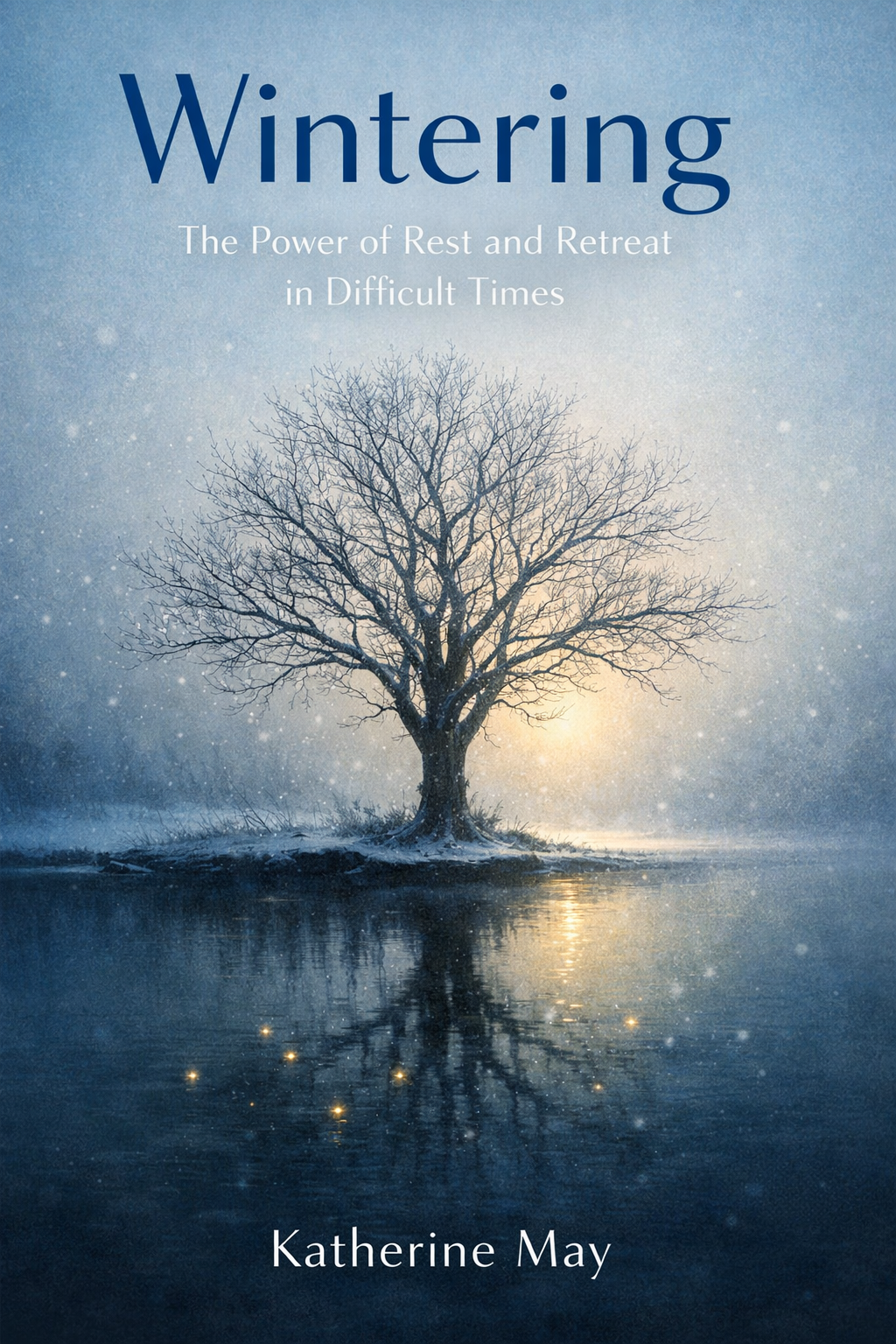
Wintering: The Power of Rest and Retreat in Difficult Times
Chapter Summaries
What's Here for You
Life rarely moves in a straight line. We all experience periods of difficulty, exhaustion, and forced retreat – moments that feel like a personal winter. In 'Wintering: The Power of Rest and Retreat in Difficult Times,' Katherine May offers a profound and deeply relatable exploration of these inevitable seasons of life. This book is not about conquering hardship with relentless effort, but about understanding and embracing the quiet power of rest, introspection, and stillness when the world feels overwhelming. May invites you to step away from the pressure to always be productive and instead, to lean into the restorative potential of slowing down. Through evocative personal narratives and keen observations of the natural world, she guides you through the landscapes of "wintering." You'll discover how to navigate the "Indian Summer" of deceptive calm before a storm, the "Making Ready" that follows a breakdown, and the "Hot Water" of restorative journeys. You'll explore the "Ghost Stories" of our anxieties, the "Metamorphosis" that occurs in quietude, and the deep "Slumber" that heals. This book promises to equip you with a new perspective on your own challenging periods. You will gain an appreciation for the "Light" found even in darkness, the wisdom of "Midwinter" rituals, and the "Epiphany" that life is cyclical. You'll learn to find grace in the "Darkness," understand the "Hunger" for renewal, and see the transformative power of "Snow." May reveals how "Cold Water" can shock us back to life, the true meaning of "Survival" beyond mere persistence, and the quiet "Song" of hope that emerges from stillness. Finally, you'll be prepared for the "Thaw," understanding that every ending is also a beginning. The tone of 'Wintering' is one of gentle wisdom, profound empathy, and quiet resilience. It's an intellectual journey that feels deeply personal, offering solace and practical wisdom for anyone who has ever felt adrift or overwhelmed. May's prose is lyrical and insightful, creating a safe space for readers to reflect on their own experiences and emerge with a renewed sense of peace and strength. This is a book for anyone seeking to find meaning, rest, and a path forward through life's inevitable challenges.
Indian Summer
Katherine May begins this chapter not with the chill of winter, but with the deceptive warmth of an Indian summer, a stark contrast to the profound shift that is about to occur. On her fortieth birthday, amidst seaside celebrations, a subtle unease begins to surface as her husband, H, complains of feeling unwell. What initially seems like a common childhood ailment, a passing stomach bug, soon escalates with alarming speed. The narrative draws us into the sterile, chaotic environment of an emergency room on a Saturday night, a world away from the idyllic beach photos, and then into the stark reality of a hospital ward where H's appendix bursts, a crisis compounded by delayed care and a sister's harsh reprimand. This visceral experience of helplessness and fear, as May describes her husband's suffering and her own terror of losing him, marks the true beginning of her wintering. She recounts her fierce, protective vigil, a quiet battle against rigid schedules and indifferent systems, a primal urge to defend her loved one. During this intense period, a peculiar space opens up amidst the tension and redundancy of hospital waiting rooms and bedside vigils. It is in this spaciousness, this unexpected pause, that May recognizes the inevitable arrival of winter. This personal crisis converges with other significant life changes—leaving a stressful university job, facing a looming book deadline, and the everyday maternal anxieties about her son, Bert. The chapter then broadens to explore the concept of 'wintering' itself, describing it not as a failure, but as an involuntary, often painful, yet inevitable season in life. May posits that we are not meant for perpetual summer, but for a cycle of light and shade, of growth and fallow periods. She draws parallels to nature's preparation for winter—the hibernation, the migration, the shedding of leaves—as acts of profound adaptation and resilience, not defeat. The author reveals that wintering is a crucible for transformation, a time for withdrawing, conserving resources, and undergoing metamorphosis. She shares her own early experiences with wintering, beginning with undiagnosed autism in childhood and a severe bout of depression at seventeen, where she discovered a tenacious will to live and the possibility of remaking herself. May argues that these periods of 'wintering,' though often hidden and considered taboo, hold profound wisdom and are essential for growth. She urges readers to stop fighting or ignoring these difficult times, but instead to learn to invite the winter in, recognizing that while we may not choose the season, we can choose how we navigate it. By slowing down, resting, and allowing spare time to expand, we engage in a radical act of self-care, shedding old skins and exposing our raw vulnerability, which is a crucial choice for transformation and eventual renewal.
Making Ready
Katherine May, in the chapter 'Making Ready,' recounts a pivotal moment of breakdown, not through dramatic external events, but through the quiet, insidious creep of exhaustion that finally manifests as physical illness. Her attempt to bake bagels, a simple act of domesticity, becomes a potent metaphor for her struggle, the expired yeast a symbol of her own depleted reserves, leading to inedible results that mirror her own sense of failure. This bodily refusal to continue, a pain that began as sympathetic to her husband's appendicitis but worsened as he recovered, forces her to confront a year of ignoring serious health signals, a direct consequence of letting stress spiral out of control until it began to 'eat away at me.' May reveals a core insight: stress is often perceived as shameful, a mark of inadequacy, and the physical pain offers a concrete, albeit unwelcome, shield against the more nebulous feeling of overwhelm. She finds solace, initially, in the small, manageable parcel of cooking, rediscovering the joy of shopping for ingredients and preparing meals, activities that had been squeezed out by the relentless demands of work and family. This period of enforced rest becomes a stark contrast to the 'long haze of frantic activity' that had characterized her preceding years, a blur devoid of meaning except for survival. Drawing a parallel to Tove Jansson's Moomintroll waking too early from hibernation, May recognizes her own 'winter' as a time of isolation, where others seem to be 'drowsing while I am wide awake and hounded by sharp fears.' She learns to embrace the necessity of movement, even slow, painful walks to the shops, buying only what is needed, a profound shift from past wastefulness, and begins to 'cook autumn into my house' with seasonal ingredients, finding a quiet pleasure in these rhythmic, hand-focused activities. This deliberate re-engagement with simple pleasures, like using high-quality art supplies with her son, becomes an act of 'tenderly laying to rest a set of values for which I no longer have any use,' a conscious effort to remake her story away from the 'work addiction' that made her sick. The chapter explores the deep-seated shame of work addiction, how the admiration for busyness can mask a profound emptiness, leaving one 'hollowed out' and the home itself in a state of entropy. May's winter, however, is framed not as a defeat but as an 'open invitation to transition into a more sustainable life,' a call to solitude and contemplation, even if it means letting go of some 'old alliances.' She recognizes the need to prepare, to 'lay down a bed of straw beneath me to cushion the blow when it comes,' inspired by the Finnish concept of 'talvitelat'—being stowed away for winter—which necessitates a complete wardrobe change, not just an extra layer. This preparation, as her friend Hanne Mllinen-Scott explains, involves practical repairs, insulation, chopping firewood, and baking, all done before the cold truly sets in, emphasizing the need for readiness against sudden, harsh change. Yet, even with meticulous preparation, May acknowledges the ever-present darkness, the proximity to despair that even robust routines cannot entirely banish, a truth underscored by the stark reality of Finland's suicide rates peaking in winter. Her own retreat to rest, filled with candles, tea, and quiet reading, is punctuated by a return of physical pain and a surge of paranoia, the fear of being 'found out' and the guilt of falling behind, a 'grinding mix of grief, exhaustion, lost will, lost hope.' The sight of a murmuration of starlings, a 'loud whisper, the amplified wingbeat of so many birds finding a common purpose,' offers a fleeting moment of profound connection and worth, a stark contrast to the 'noisy demands of the workplace,' suggesting that true value might be found not in outward productivity but in the quiet observation of life's inherent patterns and resilience.
Hot Water
Katherine May, in her chapter 'Hot Water,' invites us into the stark, yet profoundly restorative, landscape of Iceland, a place where the harsh realities of winter serve as a potent metaphor for life's inevitable difficulties. Arriving in Reykjavík, May describes an immediate, penetrating cold that seeps into the bones, a stark contrast to the familiar damp chill of England. This initial discomfort, coupled with anxieties about cost and fatigue, sets the stage for a transformative experience at the Blue Lagoon. Here, the milky, mineral-rich waters, a byproduct of geothermal energy, offer not just physical warmth but a profound sense of calm and relaxation, a sanctuary from the biting air. May observes how this engineered oasis, born from industrial runoff, becomes a place where faces instantly soften, a shared experience of surrendering to the heat. She reflects on the artificiality of the lagoon, yet acknowledges its genuine power to soothe, noting that even the sulphurous tap water, once chilled, becomes palatable, much like how we adapt to life’s less pleasant aspects. The chapter delves into the unexpected vulnerability and authenticity found in the changing rooms, where unashamedly 'northern bodies' – imperfect, scarred, and real – offer a glimpse of resilience and survival passed through generations, a stark contrast to the curated perfection often presented in her home country. This observation leads to a core insight: true wintering involves acknowledging the past, present, and future, and understanding that there is a time after the aftermath. May’s personal journey is further illuminated by her decision to embrace the trip to Iceland, a journey initially fraught with anxiety and self-doubt, particularly after a health scare and the lingering question of whether one is 'allowed' a holiday when unwell. It is a doctor’s gentle, yet firm, permission – a 'YOLO from a doctor' – that grants her the grace to proceed, a reminder that even in illness, seeking restorative experiences is vital. Upon arriving, however, May is struck down by a violent fever, a physical manifestation of her inner turmoil, which she eventually identifies as tonsillitis. Confined to her Airbnb, she finds solace not in the books she brought, but in rereading Philip Pullman’s 'The Golden Compass,' where she discovers a profound mirror to her own fragmented state in the image of Tony, cleaved from his daemon, lost and unable to survive. This literary discovery becomes a powerful moment of self-recognition, a confirmation that she is indeed 'hunting down a mirror for myself.' By the end of the holiday, recovering and venturing out to sea in search of whales, May experiences a profound connection to the wild, the 'deepest cold' teeming with life and survival. She begins to understand that migrating away from winter is merely delaying the inevitable; true acclimatization comes from embracing the cold, not fleeing it. This leads to a pivotal shift in her perspective on rest and self-care, particularly through the lens of the Finnish sauna tradition. Initially resistant to heat, May grapples with the idea of surrendering to intense warmth, a practice that mirrors her broader struggle to accept vulnerability and discomfort. Her attempt to embrace the sauna at her local gym culminates in a dizzying episode of heatstroke, a dramatic illustration that adopting 'practices of the north wholesale' requires time and gradual acclimatization, not an immediate, forceful imposition. The experience, though frightening, ultimately reinforces the lesson that resistance to discomfort, whether physical or emotional, hinders true healing and integration. The narrative arc moves from the initial chill and anxiety to a deep, reflective understanding of wintering as a necessary, albeit challenging, phase of life, emphasizing that embracing the elemental forces of heat and cold can be a 'stern, solid maintenance mode' for navigating existence.
Ghost Stories
The author, Katherine May, guides us through the psychological border crossing into winter, marked by Halloween, a night that has evolved from a simple eve of All Saints Day into a complex cultural phenomenon. She observes how the festive, even chaotic, energy of Halloween, with its ghoulish imagery and costumed revelry, offers a poignant counterpoint to the encroaching darkness and the introspection that winter demands. This chapter explores the deep-seated human need to acknowledge and engage with the liminal spaces in life—those ambiguous moments between worlds, phases, or states of being. May draws parallels between contemporary Halloween traditions and ancient pagan festivals like Samhain, where the veil between the living and the dead was believed to be thinnest, a time for divination, appeasement of old gods, and a recognition of the unknown future. She posits that our modern celebrations, while often stripped of their solemn roots, still betray a profound desire to connect with what lies beyond our immediate perception, a yearning for continuity and remembrance in the face of mortality. This is particularly evident in our fascination with ghost stories, which, for May, are not just about fear but about our quiet hope that the departed do not forget us, and that the meanings we found in their lives will not evaporate with their passing. She reflects on her own first profound encounter with death, the unexpected loss of her grandmother, and the lingering grief that manifests as a yearning for one last moment of contact. Ultimately, May suggests that while we may have sanitized death from our modern lives, winter, and particularly a re-imagined Halloween, offers an opportunity to consciously engage with these liminal moments, to acknowledge our fears, and to find comfort in the enduring presence of those we have loved, allowing the season of ghosts to reveal not just terror, but also a fragile desire for connection and the hope that we, too, will not fade so easily from this life.
Metamorphosis
As the air turns crisp and the world outside begins to transform, Katherine May invites us into the quiet power of wintering. She observes the subtle yet profound changes in nature – her cats donning their winter coats, her own skin drying and freckles fading – mirroring a deeper, internal shift. This is not a season of display, she notes, but one of separation and quietude, a time when the stark beauty of a frost-covered landscape or a windswept beach can be truly appreciated, often in solitude. May draws a parallel between this natural cycle and human experience, referencing the Gaelic myth of the Cailleach, the hag deity who rules winter, representing wisdom and the necessary retreat before renewal. This stands in contrast to our modern, linear view of life, which often ignores the cyclical nature of flourishing and falling away. The author shares the story of her friend Shelly, who, after a near-fatal illness, experienced a profound metamorphosis, no longer fearing death and gaining a renewed sense of purpose from her brush with mortality—a powerful example of shedding an old skin to grow a new one. May then delves into the biological process of abscission, the way trees shed their leaves, revealing not death, but a preparedness for new growth, with buds already in place, protected and waiting. This starkness, she reveals, highlights hidden life: the vibrant reds of a fox's coat against a frosty field, the lingering berries on honeysuckle, the evergreens that persist. Even in the sterile, transformative environment of a hospital, a place of forced passivity and surrender, May finds echoes of this necessary shedding, drawing from her own recent, undignified medical ordeal. After enduring painful tests for abdominal pain, she receives a life-altering diagnosis, not of a terminal illness, but a chronic condition requiring constant management. This experience, much like the dietary changes she must now adopt—a seemingly counterintuitive but surprisingly effective low-fiber diet—forces a significant shift. It is a process of accepting limitations, embracing a necessary 'wintering' of her former robust self, and finding a surprising luxury and renewed energy in this careful, more mindful way of living. The author concludes that wintering, whether in nature, in our bodies, or in our lives, is not an end, but a crucial period of quiet work, transformation, and preparation for future glories.
Slumber
Katherine May, in her chapter 'Slumber,' invites us into the quiet intimacy of winter, revealing how the season's natural inclination toward rest can be a powerful balm for difficult times. She opens by describing her personal retreat from the encroaching darkness of November evenings, preferring the sanctuary of a lamplit home, the warmth of a woodburning stove, and the deep, restorative sleep that winter affords. This deep sleep, averaging nine hours in winter compared to six or seven in summer, is not merely a physical necessity but a profound luxury and a cornerstone of her sanity, even influencing life decisions like choosing not to have a second child due to a deep reverence for sleep. However, May's personal winter hibernation is disrupted by the 'terrible threes' – those dark, insomniac hours that arrive around 3 a.m., when the mind, unburdened by daylight's distractions, conjures anxieties about money, death, failure, and the precariousness of life, a state she likens to a "dyspeptic bout of conservatism." It is during one such sleepless night, grappling with anxieties about financial insecurity and the potential loss of loved ones, that she encounters a hibernating dormouse, a creature perfectly embodying the season's wisdom. May delves into the biology of true hibernation, explaining how dormice, like hedgehogs and bats, enter a state of profound torpor, lowering their body temperature and conserving energy for extended periods, a stark contrast to the superficial sleep many humans endure. The dormouse's meticulous preparation—building a damp nest, gorging on autumn fruits to double its body weight, and entering a state of deep sleep just above freezing—becomes a metaphor for embracing winter's natural rhythms. She learns that dormice even wake periodically, a process thought to be for flushing toxins and checking their nests, suggesting that even deep rest involves subtle activity and awareness. This encounter sparks a shift in May's perspective: instead of fighting her sleeplessness, she begins to reframe the middle-of-the-night wakefulness as a 'watch,' a reclaimed sacred space for contemplation, akin to the historical practice of a "first sleep" and "second sleep." Drawing on historian A. Roger Ekirch's work, she posits that before the Industrial Revolution, humans naturally divided their nights into periods of sleep and wakefulness, a 'watch' that allowed for reflection, prayer, and deep conversation, a state now lost to the constant intrusion of artificial light and the relentless demands of modern life. The pervasive artificial light, from digital devices to streetlamps, is presented as an intruder, actively pushing back the darkness that once invited introspection and connection with our inner selves. May concludes that our modern insomnia, particularly in winter, might be an unconscious yearning for this lost liminal space, a 'doorway to a different kind of consciousness' that is reflective, restorative, and full of unexpected insights. By embracing this 'watch' not as anxiety but as a deliberate space for contemplation, akin to the dormouse's periodic awakenings, we can begin to repair the fragmented narratives of our days and find solace and wisdom in the quiet, dark hours of winter, learning to welcome the liminal spaces the cold season offers.
Light
Katherine May, in her chapter 'Light' from 'Wintering: The Power of Rest and Retreat in Difficult Times,' delves into the profound connection between darkness, rest, and the enduring human capacity for hope, using the poignant figure of Saint Lucy as a central metaphor. The chapter opens with the stark desolation of John Donne’s poem, 'A Nocturnal upon St. Lucy's Day,' a lament for lost love that resonates with the midwinter melancholy of the season, mirroring feelings of utter spentness and the inability to recover from profound loss. Donne’s words, 'I am none nor will my sun renew,' capture a moment of deep intimacy born from shared grief, a powerful reminder that even in the bleakest of times, love’s transformative power can create something from nothingness, and its absence, too, possesses a strange, reverse alchemy. The choice of St. Lucy’s Day, historically the winter solstice, underscores the heightened sense of isolation that can accompany grief during festive periods. Saint Lucy, whose name evokes 'light,' emerges as a potent symbol: in one narrative, she was a martyr who guided those in hiding through darkness by wearing a crown of candles, a practice echoed in Nordic traditions with the Sankta Lucia service. Another, darker tale depicts her as a woman from third-century Sicily who refused to renounce her faith and suffered a brutal martyrdom, yet her voice, and her light, could not be extinguished. May observes how Lucy embodies absolute faith and purity, yet also shoulders the weight of male scrutiny, dwelling in darkness while bringing the light of a martyr’s pyre or a candle crown. This duality is vividly illustrated when May recounts her experience attending a Sankta Lucia service in London, a bustling, multigenerational affair filled with the sensory details of cardamom, cinnamon, and the hopeful energy of children. Amidst the families and the comforting rituals, May, feeling like an interloper after leaving her university job, finds an unexpected solace. The simple act of sitting in the church, observing, and listening, becomes a liberation from the obligation to 'do,' a welcome sense of insignificance that offers a gentle truce with herself. While Saint Lucy did not miraculously cure her despair, the service provided a flicker of light, 'just enough to see by.' This experience reveals a core insight: that in periods of wintering, when one feels depleted and adrift, actively seeking moments of quiet observation and communal ritual, even as an outsider, can offer a profound sense of grounding. May suggests that embracing the stillness and allowing oneself to simply 'be' amidst the external world’s demands can be a powerful act of self-compassion, a necessary step in navigating difficult times. The narrative arc moves from the profound darkness of loss and personal transition to the gentle illumination found in shared tradition and quiet contemplation, demonstrating that even the smallest light can guide us through the longest night.
Midwinter
Katherine May, in her chapter 'Midwinter,' guides us through a personal pilgrimage to Stonehenge on the winter solstice, a journey that begins in the pre-dawn chill and ends with a profound reflection on ritual, community, and the cyclical nature of life. The author recounts the early morning ritual of dressing her children for the cold, the quiet worry about traffic, and the drive into the darkness, anticipating a more anarchic gathering than what she finds. She notes the surprisingly tame atmosphere at Stonehenge, likening it to a village fete, before being whisked away by shuttle bus to the stones themselves. There, the scene transforms, revealing a vibrant, albeit chaotic, mix of people – dreadlocked travellers, individuals in capes and cloaks, and even a man in a silver space suit – all drawn together by a shared desire to mark the turning of the year. May describes the sensory experience of being close to the ancient stones, their rough, lichen-covered surfaces a stark contrast to their distant, uniform appearance. She observes the diverse ways people seek connection and meaning, whether through movement, sound, or quiet contemplation. The central tension emerges as she grapples with her own discomfort and perceived awkwardness in this setting, a feeling rooted in a cultural suspicion of public ritual and emotional expression. This discomfort, she realizes, is shared by others, including Philip Carr-Gomm, leader of the Order of Bards, Ovates and Druids, who acknowledges the English fear of embarrassment. May learns about the Druidic Wheel of the Year, a system of eight festivals that provides a rhythm and pattern, making life more manageable and offering a way to navigate even the darkest periods. She then shares her own practice of 'earthwise prayer' – a silent, nonverbal moment of connection and peace, distinct from traditional religious prayer, yet deeply meaningful. This personal ritual, though initially a source of shame, becomes a bridge to understanding the broader human need for marking transitions. The chapter resolves with May recognizing the profound comfort and uplift found in shared moments of observation and celebration, like the solstice gathering. She concludes that while society may have drifted from noticing the natural rhythms of the year, the human craving for meaning persists, and the creation of rituals, whether ancient or invented, offers a vital doorway to connect with something larger than ourselves. The act of paying attention to the year’s transitions, she suggests, allows us to get the measure of our lives, bolstering us with shared human spirit against the encroaching darkness.
Epiphany
Katherine May, in her chapter 'Epiphany,' guides us through the profound realization that life is punctuated by numerous 'winters'—periods of difficulty and rest, often unnoticed until they've deeply settled in. She recounts a personal epiphany triggered by her son's overwhelming anxiety about school, a situation she initially underestimated, offering platitudes instead of truly hearing his distress. This realization marked the beginning of a significant winter for their family, leading May to pull her son from school, resisting societal pressures to medicate or force his return. She posits that happiness itself is the ultimate skill, not a mere byproduct of achievement, and that children often endure conditions as intolerable as adults would find them, facing scrutiny and threats that erode their well-being. May introduces the concept of 'wintering' not as passive suffering, but as the active acceptance of sadness, the courage to face difficult experiences, and the intuition to recognize our true needs. This led her to guide her son through his own winter, engaging in shared activities, acknowledging their shared rage, grief, and fear, and slowly rebuilding their lives together. She discovered that in these broken moments, everything is 'up for grabs,' creating an irresistible space for transformation. Crucially, May found solace and wisdom in a community of other parents who had navigated similar challenges, realizing the power of shared experience and the importance of listening to those who have 'wintered' before. This chapter highlights that disasters happen, life is often unfair, and understanding others' crises can prepare us for our own. May illustrates this through the metaphor of a story's curve, explaining to her son that even at the nadir, the fightback begins, acknowledging that real life is a series of ups and downs, not a simple linear progression. The narrative culminates in her ritualistic turning of the year, marked by a bonfire on the beach at sunset, a symbolic act of acknowledging the passage of seasons and seizing control of one's response to them. This period of intentional rest, moving beyond the arbitrary calendar of December and January, allows for a gentle shift in focus, acknowledging continuities and embracing the promise of spring, demonstrating that the year begins again through small, deliberate gestures that honor the turning of the light.
Darkness
Katherine May, embarking on an unexpected pregnancy, finds herself drawn to the stark beauty and profound stillness of the Arctic Circle, a journey that mirrors her internal state of transition and vulnerability. Initially, her trip to Tromsø was a desperate attempt to reclaim a sense of control and independence before motherhood, a notion shattered by the revelation of her dwindling fertility and the subsequent whirlwind of IVF treatments. Arriving in the perpetual twilight of the polar night, May is physically challenged by the extreme cold and the bodily demands of pregnancy, yet this period of enforced rest and darkness becomes a crucible for self-discovery. She observes the subtle, almost hesitant dance of the aurora borealis, learning that true wonder isn't always a grand spectacle but often a quiet, patient unveiling, a lesson that contrasts sharply with the flashy, sped-up images often presented. This experience of the aurora, described as an "object in three dimensions, drifting slowly," teaches her about the nature of perception and the necessity of "getting your eye in," suggesting that profound truths require a willingness to look beyond the obvious and to trust in what is not immediately apparent. Her encounter with the Smi people and their deep connection to the land and animals, particularly the reindeer, offers a powerful metaphor for resilience and survival. The Smi's animistic faith and their intimate understanding of the natural world highlight a way of being that embraces interdependence and acknowledges the cyclical nature of life, a stark contrast to May's initial feelings of isolation and lack of defense. She notes the female reindeer retaining their antlers to protect their young, a quiet strength that resonates deeply with her own burgeoning maternal instincts and her feelings of vulnerability. The Smi elder's gentle words to her, "You do not have your antlers, Mama Reindeer, so we must fill you up with soup instead," crystallize her realization: pregnancy has stripped her of her usual defenses, leaving her open and exposed, much like the landscape around her. In this profound darkness, May moves from a desperate fight against change to a quiet acceptance of her limitations, learning the power of surrender and the restorative nature of rest. The Arctic, with its long nights and ethereal lights, becomes not an escape, but a space where she can confront her fears and begin to build a new, more grounded understanding of herself and her place in the world, recognizing that even in the deepest winter, life persists and beauty can be found in the quietest of moments.
Hunger
Katherine May, in her chapter 'Hunger,' draws us into the raw, visceral landscape of deep winter and the unsettling feelings it can stir within us. She begins by embodying the primal unrest of a wolf, a potent metaphor for the gnawing uncertainty and unfulfilled desires that can surface when life's usual structures recede. This 'hunger,' she explains, is not merely physical but a profound yearning for meaning and creative expression, a feeling akin to the early days of motherhood when one's own needs feel eclipsed by the demands of care. May illustrates this with the image of a spindly ladder reaching for the moon, a symbol of her lifelong pursuit of 'impossible things,' a pursuit that feels particularly arduous when faced with creative blocks and the fear that such obstacles might be permanent. The author reveals that in these moments of intense yearning and frustration, her learned coping mechanism is simply to walk, to move until the internal heat of distress begins to dissipate. This practice leads her to recount a captivating encounter with a wolf tracker, a man who, through his deep immersion in the wild, had absorbed the essence of the creatures he studied. He shares profound observations about wolves, challenging the human-centric narrative of their cruelty and highlighting instead the cruelty of human fear and persecution towards them. He notes their capacity for intense parental devotion and their tendency to kill only out of extreme desperation, a stark contrast to the often irrational human drive to eradicate them. This encounter leads May to a crucial insight: that wolves, despite their fearsome reputation and systematic persecution, endure as a symbol of the wild potential and resilience that exists beyond our civilized confines. They represent a primal hunger, a need to absorb and survive, mirroring our own deep-seated 'wants' during lean times—our own winters. May connects this to the historical and cultural presence of wolves in literature and lore, always symbolizing the raw, untamed forces of winter and our deepest fears. The chapter posits that in our own winters, we too become 'wolfish,' driven by a longing for elemental things like love and beauty, and that this craving, far from being a weakness, can be a vital rallying cry for survival. Ultimately, May suggests that by learning to respect and understand these 'inner wolves,' much like the tracker learned to respect the wild animals, we can navigate our own periods of hunger and wintering with a deeper understanding of our own resilience and the enduring wildness within.
Snow
The author, Katherine May, embarks on a reflective journey through the often-romanticized notion of snow, revealing its profound capacity to disrupt and transform our lives, particularly during difficult times. May begins by contrasting the nostalgic childhood memory of snow with the reality of its scarcity in her son Bert's early years, highlighting a shared longing for its arrival. She recalls vivid personal experiences of snowbound winters from her own childhood—village isolation, dwindling supplies, and the sheer, almost magical, severity of the weather that captivated her. This early enchantment with snow's power to halt the mundane and foster a sense of shared community persists into adulthood. May posits that snow, like a welcome illness, offers an irresistible disruption, a forced pause that compels us to step outside our usual routines and appreciate a world recolored in white, where social rules soften and a rare sense of awe descends. She notes how, after having a child, her direct experiences with snow became less frequent, with Bert serving as a sort of mascot against its arrival, their warm coastal climate in Whitstable rendering snow gear a 'white elephant.' Yet, when snow finally does descend in significant quantities for Bert, it transforms a bleak winter day into a 'wild day,' a spontaneous holiday filled with the spirit of Halloween and Christmas, a liminal space between the mundane and the magical. May then delves into the literary landscape, exploring how children's literature, particularly C.S. Lewis's 'The Lion, the Witch and the Wardrobe' and Susan Cooper's 'The Dark Is Rising,' uses snowfall as a potent symbol for transition, marking the onset of adult knowingness and forcing young protagonists into roles of responsibility. This literary lens reveals snow as a trigger for the tables to turn, where the ordinary adult protectors are incapacitated, allowing children to step into their own power. However, May contrasts this idealized view with a more grounded perspective from her friend Pivi Seppl in Finland, where snow is not a romantic disruption but a persistent, demanding reality. Pivi describes the immense practical challenges of living with prolonged winter, from the constant effort to navigate icy roads and frozen waterways to the soaring energy costs and the risk of succumbing to a culture of heavy drinking. This stark reality shifts May's understanding, revealing her own tendency to view snow as light relief as a privilege born of British 'incompetence' in the face of brief cold snaps, lacking the deep-seated need to truly cope. Yet, even in this harsh context, Pivi finds moments of beauty—the sound of snow underfoot, the smell of frozen laundry, and the invigorating ritual of rolling naked in the snow after a sauna. May concludes by acknowledging that while snow can be a demanding force, it also draws families together, fostering collective leisure and a shared language of comfort, a stark contrast to the dispersing nature of summer. The chapter ultimately illustrates that while snow can be an inconvenient nuisance, it also holds the potential for profound transformation, offering moments of awe, community, and a vital, if sometimes harsh, reminder of our place within the natural world's power.
Cold Water
Katherine May, in her chapter 'Cold Water,' invites us into the bracing, transformative experience of winter swimming, a practice that began as a personal challenge and evolved into a profound source of resilience. Initially, May recounts her hesitant participation in a Whitstable New Year's sea swim, a brief, almost ritualistic dash into the icy water, more for the bragging rights than genuine immersion. Her dream of year-round coastal swimming, inspired by Iris Murdoch, faltered against the practicalities of tides, mud, and the sheer effort of adaptation. This reluctance to truly engage with the cold persisted until a friend, Emma, prompted another New Year's swim, forcing May to confront her bodily resistance to entering the sea without the comforting anonymity of a crowd. The raw, visceral shock of the 6°C water, a 'vast bitter wall that kicked the breath out of my lungs,' was overwhelming, yet paradoxically, in its aftermath, a strange craving emerged—a desire to re-enter those crystalline seconds of intense cold, a feeling of blood sparkling in her veins. This experience pivoted May's perspective, leading her to connect with Dorte Lyager, an experienced cold-water swimmer from Denmark, who embraced the sea year-round not as a dare, but as a lifeline. Dorte revealed how cold water immersion became her unexpected remedy for recurrent bipolar disorder, a stark contrast to a decade of ineffective medication. Her psychiatrist's gentle reframing—'This isn't about you getting fixed... It is about you living the best life you can with the parameters that you have'—was a profound turning point, shifting her focus from cure to adaptation. Dorte discovered that the cold water acted like an anti-inflammatory for her 'porridge brain,' switching off ruminative thoughts and bringing a profound sense of calm, transforming her illness from a debilitating condition into manageable 'mental influenza.' Inspired by Dorte's story and her own growing intuition, May, alongside a new acquaintance named Margo Selby, began a deliberate, daily practice of winter swimming, pushing past the initial fear and discomfort. They discovered that by deliberately embracing the extreme cold, their bodies were forced to find a new equilibrium, generating an invigorating warmth and a tingling sensation that lasted for hours—a physical manifestation of resilience. This immersion became an act of defiance against their personal 'winters,' creating a protective barrier against the stresses of everyday life, a shared space of vulnerability and joy. The practice fostered an unexpected intimacy, as the cold stripped away social niceties, allowing for candid conversations about anxieties and troubles, a shared 'coldwater high' that brought a unique sense of connection and catharsis. The chapter culminates in the realization that embracing the cold, much like embracing personal limitations, is not about conquering them, but about adapting, surrendering, and finding a profound sense of well-being and resilience in the very act of enduring. This journey, for both May and Lyager, illustrates how confronting the 'wintering' aspects of life, rather than fleeing them, can lead to a powerful renewal and a more robust sense of self.
Survival
Katherine May, in her chapter 'Survival,' invites us to reconsider the age-old fable of the Ant and the Grasshopper, moving beyond its simplistic moral of industriousness to explore deeper truths about human resilience and the nature of difficult times. May begins by recounting her childhood outrage at the ants' apparent cruelty, questioning the binary of the diligent saver and the feckless idler, and later, as an adult, realizing the darker implications of the ants' actions, which deny the final moments of a dying creature. This initial tension between perceived moral rightness and biological reality sets the stage for a profound exploration of how society often casts the 'grasshopper'—the vulnerable, the struggling, the migrant—as a folk devil, while the 'ants' represent an idealized, often unattainable, standard of self-sufficiency. May then pivots to the remarkable world of bees, not to reinforce the ant's work ethic, but to reveal the intricate, collective intelligence of a superorganism designed for survival. She reveals how a bee colony functions as a unified entity, with every action, from nectar collection to internal heating, geared towards navigating the winter. This observation leads to a crucial insight: while humans may be drawn to the metaphor of the 'human beehive' for order and efficiency, we are fundamentally different; our complexity lies in our capacity for choice, mistake, and, critically, recovery. Unlike the expendable members of a bee colony, humans possess an innate ability to endure and rebound from their 'winters.' May draws a parallel between the bees' preparation for winter and the human need for 'wintering'—periods of rest and retreat, not as idleness, but as a time for quiet arts, restoration, and introspection, akin to knitting or reading deeply. She uses Sylvia Plath's poem 'Wintering' to illustrate the profound darkness and potential despair of these times, yet also the enduring human spirit that can, as Plath's original arrangement of 'Ariel' suggested, find a way to 'taste the spring.' Ultimately, May concludes that our 'winters' are not solitary battles but are often mitigated by social bonds and the act of caring for one another, suggesting that human connection, rather than mere individual preparation, is the true 'social glue' that enables us to survive and emerge stronger, emphasizing that usefulness is a flawed metric for human worth, and our capacity to care is how we truly thrive.
Song
In the heart of winter, Katherine May reveals, a small robin begins to sing, a poignant symbol of resilience against the quietude of the season. This unlikely songster, often seen as a friendly visitor, becomes a powerful metaphor for finding one's voice, even when it feels lost. May draws a parallel between the robin's seemingly fearless song and her own struggle after childbirth, when her voice, her primary tool for navigating life and work, became fragile and unreliable. She describes this voicelessness not just as a physical ailment, but as a profound silencing, a feeling of invisibility that accompanied the intense, often isolating, experience of early motherhood. The author recounts her journey to reclaim her voice, seeking help from a singing teacher who taught her not merely to produce sound, but to breathe, to stabilize, and to approach her vocalization like a song, sliding into notes rather than attacking them head-on. This process, she explains, was akin to finding a lost middle C, a fundamental note that required a sideways approach, a gentle run-up, rather than a direct assault. Through these lessons, May learned that her voice, much like the robin's winter song, was a costly signal of vitality, a way to assert her presence and strength when she felt most diminished. She discovered that the constant pressure to perform, to inspire, and to manage the demands of her professional and personal life had turned her voice into a bludgeon, a tool used to force herself and others to listen, rather than a resonant instrument for connection. The narrative emphasizes that reclaiming her voice involved not just technical retraining, but a fundamental shift in how she perceived its purpose and power, learning to let it flow like water, to roll along with meaning like the undulating rhythms of Dylan Thomas's 'Under Milk Wood.' May concludes that the right to sing, and by extension, to speak with authenticity, is an absolute, a vital act of self-expression that nourishes the soul, allowing us to rehearse our emotions, connect with loved ones, and find moments of ecstasy in the mundane. Ultimately, the chapter resolves with the author finding her voice again, not as a tool for dominance, but as a source of joy and connection, a melodic river capable of carrying meaning and emotion, much like the persistent song of the winter robin.
Thaw
Katherine May, in her chapter 'Thaw,' invites us to observe the subtle shifts of approaching spring, mirroring the internal recalibration required after periods of difficulty. She begins by watching a solitary buzzard, a symbol of resilience and lived experience, finding a quiet anchor for her day amidst lingering anxieties about her son Bert's schooling and their precarious financial situation. May reminds us that life rarely resolves into neat narratives, and the desire for absolute certainty is often a source of suffering. She then turns to the natural world for wisdom, describing a walk along Pegwell Bay where the frost-kissed fields give way to the vibrant energy of early spring: snowdrops emerge, catkins dangle, and the marshes, once frozen, now teem with life. This transition echoes the philosophy of Alan Watts, who teaches that life is fundamentally uncontrollable and that true peace comes from radical acceptance of its unpredictable nature, rather than fighting against it. Watts's insight that 'our suffering comes from the fight we put up against this fundamental truth' is a profound call to embrace the present moment, the only truly knowable reality. May acknowledges the discomfort of this idea, the rebellious voice that points to inequalities in security, yet affirms its essential truth: change is constant, and our only agency lies in our response. She illustrates this with the breathtaking sight of rooks and lapwings taking flight, a collective dance of silent, fluid decision-making that absorbs her entirely, demonstrating a moment of pure, unadulterated presence. In contrast to the often hollow platitudes of social media advice – 'Hang on in there,' 'You are stronger than you know' – May argues for the honesty of acknowledging unhappiness as a vital signal that something needs attention, rather than a state to be immediately erased. She posits that misery is not an option' is a damaging societal message that forces us to perform positivity, even when we are not strong enough. True connection, she suggests, comes from friends who 'wince along with our pain' and allow us to be weak. May then reflects on her own journey in writing the book, how life delivered multiple 'winters' simultaneously, shrinking her world and challenging her ability to be the cheerful, energetic person she imagined. She found strength not in escaping these winters, but in recognizing them, 'looked it in the eye,' and 'greeted it and let it in.' Her 'trick' was to treat herself with the kindness and care one would offer a favoured child, tending to her needs for food, sleep, and soothing activities, and asking, 'What is this winter all about?' This mirrors nature's cyclical pattern of flourishing and paring back, a process of wintering that is not a one-time event but an ongoing, essential practice. May reframes our perception of time from linear to cyclical, recognizing that phases of ease and difficulty are natural parts of life, and each time we endure a cycle, we learn and develop new coping mechanisms. She uses the metaphor of an 'abscission zone' to describe how she shed her old, toxic identity after leaving her job, unmourned and gradually released, much like dead leaves falling from a tree. This process of decluttering, both physical and metaphorical, is akin to the spring cleaning impulse, symbolized by the Gaelic festival of Imbolc and the goddess Brghde, who emerges well-rested and ready for change. May concludes by urging a slow, deliberate emergence from our own wintering, testing the air, and unfurling new leaves gradually, acknowledging the debris of the past season and finding grace in atonement and honesty, naming the personal winters of grief, rejection, or despair. She asserts that those who have wintered have a 'gospel to tell,' a duty to share what they have learned, singing their songs like birds into the waiting world.
Conclusion
Katherine May's 'Wintering' offers a profound and deeply resonant exploration of life's inevitable periods of difficulty, rest, and transformation. The core takeaway is that these 'winters' are not failures or aberrations, but natural, cyclical seasons essential for growth, wisdom, and self-discovery, much like the dormancy observed in nature. May masterfully reframes these challenging times, moving away from societal pressures of constant productivity and perpetual summer, and instead champions the radical act of slowing down, resting, and conserving energy. The emotional lessons are rooted in radical self-acceptance, acknowledging our vulnerabilities, imperfections, and the 'scarred aspects' of ourselves and our bodies. It's an invitation to surrender to discomfort, to embrace the stillness, and to find solace not in escaping hardship, but in learning to navigate it with kindness and awareness. The book's practical wisdom lies in its encouragement of intentional rest and retreat, the cultivation of simple, rhythmic activities, and the profound reconnection with nature and ancient rituals as anchors. May highlights the importance of reclaiming our 'watch'—periods of quiet contemplation—and countering the disruptive influence of artificial light and constant doing. The narrative weaves together personal experience, natural observation, and cultural insights, from Halloween's engagement with the unknown to the enduring symbolism of the wolf, to illuminate how these 'winters' are fertile ground for metamorphosis. Ultimately, 'Wintering' teaches us that resilience is not about avoiding storms, but about learning to sail through them, finding strength in vulnerability, and recognizing that even in the deepest darkness, there is always a nascent promise of 'thaw' and renewal. The book serves as a vital reminder that our worth is not solely defined by productivity, but by our capacity for care, connection, and the enduring human spirit that can find song even in the quietest of seasons.
Key Takeaways
Wintering, while often involuntary and painful, is an inevitable and transformative season in life, akin to nature's preparation for dormancy, rather than a personal failure.
The experience of profound disruption, like a medical emergency or significant life change, can create a 'space' that allows for the recognition and acceptance of wintering.
Human beings, like nature, are designed for cycles of growth and rest, and attempting to live in perpetual 'summer' denies the necessity and wisdom found in 'wintering' periods.
Learning to navigate wintering, rather than resisting it, involves radical acts of slowing down, resting, and conserving resources, which are essential for profound personal transformation.
Periods of wintering, though often hidden and stigmatized, are fertile ground for wisdom and self-discovery, offering a chance to remake oneself after being 'blanked' or 'blasted wide open'.
Physical illness can be a bodily refusal to continue, forcing a confrontation with the unsustainable pace of life and the shame associated with stress and inadequacy.
The relentless pursuit of productivity, often driven by external validation and a fear of falling behind, can lead to work addiction, emotional emptiness, and physical breakdown.
Intentional rest and retreat are not luxuries but essential practices for recovery and transition, requiring conscious preparation and a willingness to let go of old patterns.
Re-engaging with simple, rhythmic activities and sensory pleasures can be a form of 'making ready,' a way to tend to oneself and gently transition away from unsustainable values.
True readiness for difficult times involves a holistic approach, encompassing practical preparations alongside emotional and psychological fortitude, acknowledging that darkness is never far away.
Moments of profound connection with nature, like observing a murmuration, can offer a recalibration of priorities, highlighting the value of quiet observation over noisy demands.
Embracing life’s 'winters'—periods of difficulty and rest—is essential for growth and resilience, rather than attempting to constantly escape them.
Authentic self-acceptance emerges when we acknowledge and integrate the imperfect, scarred aspects of ourselves and our bodies, mirroring the resilience found in nature and older generations.
True restoration often requires surrendering to discomfort and vulnerability, allowing difficult experiences and environments (like intense heat or cold) to reveal deeper truths and facilitate healing.
Permission to rest and seek restorative experiences, even when feeling unwell or inadequate, is crucial for navigating life's transitions and preventing burnout.
Finding mirrors for our internal states in literature or nature can offer profound self-recognition and validation during times of confusion or emotional fragmentation.
Acclimatizing to challenging practices or environments, rather than forcing immediate immersion, is key to sustainable well-being and integrating lessons from difficult times.
Halloween, as a marker of winter's arrival, reflects a primal human need to engage with liminal spaces and the ambiguity of transition.
Contemporary Halloween, despite its commercialization, echoes ancient traditions like Samhain, revealing a persistent desire to connect with the unknown and the spiritual realm.
Our fascination with ghost stories signifies a deeper, often unacknowledged, hope that the dead remember us and that the meaning of their lives endures.
Winter, as a season of perceived closeness to death, provides a necessary context for acknowledging loss and the presence of those no longer with us.
Engaging with the 'ghosts' of the past, whether through stories or ritual, offers a way to process grief and affirm our own continuity in the face of mortality.
Wintering is a necessary period of retreat and transformation, mirroring natural cycles of dormancy and renewal, which contrasts with our modern, linear perception of life.
Shedding an old self, like trees abscising leaves or individuals undergoing profound personal change after hardship, is a vital part of growth and subsequent flourishing.
Even in states of vulnerability and forced passivity, such as in a hospital, there is an opportunity for a profound internal metamorphosis and acceptance of new realities.
Embracing limitations and making necessary sacrifices, even when counterintuitive, can lead to unexpected well-being, renewed energy, and a wiser understanding of one's own capabilities.
The starkness of winter reveals hidden forms of life and beauty, encouraging a deeper appreciation for the quiet persistence and abundance that exist even in difficult times.
Winter's natural inclination towards rest and retreat is a powerful, often overlooked, resource for navigating difficult times and fostering personal restoration.
Reclaiming the 'watch' – periods of wakefulness during the night, historically common before artificial light – offers a sacred space for contemplation, insight, and self-awareness, countering modern anxiety.
The pervasive intrusion of artificial light disrupts our natural circadian rhythms and our innate capacity for deep, restorative sleep and introspection, pushing back the darkness essential for psychological repair.
Embracing the slow, ambulatory nature of winter sleep, where waking thoughts merge with dreams, allows for the repair of fragmented daily experiences and the processing of difficult emotions.
Observing the biological wisdom of hibernating creatures, like the dormouse, provides a powerful metaphor for how to intentionally conserve energy, prepare for challenges, and find deep rest.
Insomnia, when reframed from a source of anxiety into a deliberate period of wakeful contemplation, can become a gateway to a different, more reflective state of consciousness.
In times of deep personal wintering, embracing quiet observation and communal rituals, even as an outsider, can provide essential grounding and solace.
The act of simply 'being' and allowing stillness, rather than constant 'doing,' offers a powerful form of self-compassion and a truce with oneself during difficult transitions.
Symbols of light, like Saint Lucy, can offer not a complete cure for despair, but a crucial 'just enough to see by' illumination, enabling navigation through darkness.
Grief and loss, particularly when amplified by societal expectations of festivity, can lead to profound isolation, highlighting the need for connection and shared experience.
The transformative power of love and its absence can be profound, creating meaning even in emptiness, and reminding us of the cyclical nature of life and renewal.
The human need for ritual and marking life's transitions, even if perceived as 'embarrassing' or 'wacky' by societal norms, provides essential structure and meaning, particularly during difficult periods like winter.
Cultural discomfort with public displays of emotion and ritual can lead to a suppression of genuine human needs for connection and cyclical acknowledgment.
The creation and adoption of personal or communal rituals, whether ancient or invented, serve as vital 'doorways of the psyche' that help individuals navigate the passage of time and find solace.
Observing and celebrating the natural rhythms of the year, such as the winter solstice, offers a powerful antidote to the monotony of modern life and a way to foster a sense of shared human spirit.
True spiritual or meaningful practice can exist beyond traditional religious dogma, manifesting as personal, nonverbal 'earthwise prayer' that fosters self-compassion and connection to common humanity.
The diversity of belief and practice found in communal gatherings, even if seemingly chaotic, reflects a profound tolerance and a shared desire for meaning, rather than a need for conformity.
Life is punctuated by numerous 'winters,' gradual periods of difficulty and rest that require active acceptance rather than passive suffering.
Happiness is a fundamental skill, not a secondary outcome, and its cultivation is paramount for well-being, especially in children.
True understanding and resolution in times of crisis often emerge not from forcing a return to normalcy, but from embracing the 'wintering' process and allowing transformation.
Community and shared experience are vital during difficult times, offering wisdom and validation by connecting with those who have navigated similar 'winters.'
Learning to 'winter' involves recognizing that life's challenges are often disproportionate to their causes and that adapting to unfairness is a crucial life skill.
The turning of the year, symbolized by rituals and acknowledging the return of light, offers a powerful, albeit fleeting, sense of agency over our responses to life's inevitable cycles.
Embracing periods of rest and retreat, even in challenging circumstances, is essential for navigating profound life changes and fostering self-acceptance.
True understanding and appreciation often require patience and a willingness to perceive beyond superficial appearances, much like observing the subtle aurora borealis.
Resilience can be found in acknowledging vulnerability and surrendering to the natural cycles of life, rather than fighting against them.
Connecting with ancient traditions and the natural world can provide profound metaphors and wisdom for navigating personal challenges.
Periods of intense darkness and stillness can paradoxically illuminate our deepest desires and lead to a more profound sense of peace and acceptance.
The process of transformation, like pregnancy or the Arctic winter, demands a letting go of control and an embrace of the unknown.
The feeling of intense, unfulfilled desire during difficult times, often perceived as 'hunger,' is a primal and understandable response to scarcity and uncertainty, mirroring the 'wants' of survival.
Our deep-seated 'wants' during periods of wintering can be misdirected, leading us to seek solace in unhealthy distractions rather than addressing the underlying longing for elemental needs like love and connection.
The wolf, a symbol of winter's raw hunger and resilience, serves as a powerful metaphor for our own capacity to endure and adapt through periods of hardship and creative drought.
Understanding and respecting our 'inner wolves'—our primal needs and instincts—is crucial for navigating personal winters, transforming perceived weaknesses into a source of strength and survival.
Despite societal narratives and historical persecution, the wolf's enduring presence symbolizes the persistent wild potential and resilience that exists both in nature and within the human psyche.
Snow, often romanticized, serves as a powerful metaphor for the disruptive yet transformative nature of difficult times, forcing a pause from the mundane and offering a unique lens through which to re-evaluate life.
The perception of snow's inconvenience is a privilege; for those accustomed to harsh winters, it is a demanding reality requiring constant effort and adaptation, underscoring the varied human responses to adversity.
Literary narratives frequently employ snowfall as a catalyst for transition, symbolizing a shift from childhood innocence to adult responsibility and the emergence of inner strength when external structures falter.
Even amidst hardship, snow can create liminal spaces for connection and awe, fostering a sense of community and shared experience that can be a source of comfort and resilience.
Embracing the 'inconvenience' of disruption, whether from snow or life's challenges, can lead to moments of unexpected clarity, creativity, and a deeper appreciation for life's rhythms.
The stark contrast between idealized snow experiences and the practical realities of prolonged winter highlights the importance of acknowledging and adapting to the diverse challenges life presents.
Embracing adversity, particularly the discomfort of 'wintering' periods, can be a powerful catalyst for adaptation and resilience, rather than something to be avoided.
Shifting one's perspective from seeking a 'cure' to accepting and adapting to personal limitations can unlock profound personal growth and well-being.
The physical shock of extreme cold can act as a powerful reset for the mind, quieting rumination and fostering mental clarity and calm.
Deliberately testing physical limits in a controlled, challenging environment can force the body and mind to find new equilibrium and a heightened sense of vitality.
Shared vulnerable experiences, particularly those involving confronting fear, can forge deep connections and provide a powerful form of catharsis.
The practice of immersing oneself in challenging conditions, like cold water, can create a sense of agency and resilience, fostering a belief in one's ability to navigate personal difficulties.
The simplistic moral of the Ant and the Grasshopper overlooks the complex realities of survival and societal judgment, often demonizing those in need while idealizing unattainable self-sufficiency.
Human societies, unlike eusocial insect colonies, are characterized by infinite complexity, choice, mistakes, and an inherent capacity for recovery, making direct modeling on insect behavior both inaccurate and limiting.
Periods of 'wintering' or retreat are not unproductive idleness but essential times for quiet labor, introspection, and restoration, allowing individuals to process the detritus of busier seasons and replenish their inner resources.
Human worth is not defined by utility or constant productivity; our capacity for caring, for nurturing even the most helpless, is fundamental to our thriving and forms the crucial 'social glue' that binds communities.
The ability to recover and return from periods of difficulty, bringing greater wisdom and compassion, is a uniquely human strength, distinct from the expendability seen in insect superorganisms.
The silencing experienced during difficult life transitions, like early motherhood, can manifest as a loss of voice, symbolizing a broader loss of self and presence.
Reclaiming one's voice requires more than technical skill; it involves relearning fundamental aspects of breath, stability, and approaching expression with a song-like, flowing quality.
Vocalizing, whether through speaking or singing, is a powerful act of self-assertion that signals vitality and a claim to one's place in the world, even during periods of perceived diminishment.
The author's journey illustrates that transforming a voice used as a 'bludgeon' to assert dominance into a resonant instrument for connection and expression is a profound act of healing.
The innate human need to sing and speak is not tied to talent but is an absolute right, essential for emotional processing, connection, and finding joy in everyday life.
Adapting one's voice to suit external expectations, a common experience for women, can lead to a loss of authenticity that requires conscious effort to unlearn and reclaim.
Life's inherent uncontrollability requires a radical acceptance of change, rather than a fight against it, to find peace.
Acknowledging and honoring unhappiness is a crucial signal for adaptation, not a weakness to be suppressed.
True resilience is developed by recognizing, accepting, and learning from periods of difficulty, treating oneself with kindness during these 'winters.'
Our lives are cyclical, not linear, and navigating phases of hardship and ease is a natural, recurring process that builds wisdom over time.
The act of releasing old identities and attachments, much like nature sheds dead matter, is essential for growth and moving forward.
Action Plan
Acknowledge and accept that difficult periods, or 'wintering,' are a natural and inevitable part of life.
When faced with disruption, look for the 'space' it creates and consider what insights it might offer.
Resist the societal pressure to constantly be productive and instead embrace slowing down, resting, and conserving energy.
Observe nature's preparations for winter and draw inspiration from its cycles of adaptation and renewal.
When wintering, focus on essential self-care practices like sleep and gentle replenishment rather than forcing a return to 'summer' activities.
Share experiences of wintering with trusted individuals to reduce the sense of isolation and stigma.
Identify one simple, manual activity (like baking, cooking, or crafting) that can provide a sense of control and push back darker thoughts.
Acknowledge and validate physical symptoms of stress, recognizing them as a signal for necessary rest, rather than a personal failing.
Reintroduce small, sensory pleasures into your routine, such as savoring a cup of tea, enjoying a walk, or engaging with quality art supplies.
Begin to retell your own story, consciously shifting from a narrative of relentless productivity to one that accommodates rest and personal needs.
When facing a period of difficulty, consider the concept of 'making ready' by addressing practical needs and creating a supportive environment, as exemplified by the Finnish 'talvitelat.'
Practice mindful observation of the natural world, allowing moments of quiet contemplation to recalibrate priorities and find meaning beyond external demands.
Reflect on personal 'work addiction' patterns and explore ways to consciously disconnect and embrace periods of unsociable, restorative living.
Seek out experiences that offer both physical warmth and mental solace, whether a hot bath, a sauna, or a warm drink, to create moments of calm.
Practice self-compassion by acknowledging and accepting your body's imperfections and the stories they tell, rather than striving for an idealized image.
When facing difficult times, grant yourself permission to rest and seek restorative breaks, understanding their vital role in recovery and well-being.
Engage with art, literature, or nature that resonates with your current emotional state, using these as mirrors to gain self-understanding.
Instead of avoiding discomfort, gradually expose yourself to challenging sensations or environments to build resilience and tolerance.
Recognize that 'wintering'—periods of withdrawal and difficulty—is a natural and necessary phase, and look for the lessons it offers for future growth.
When feeling overwhelmed, identify one small, practical action that can provide immediate comfort or grounding, such as drinking water or resting.
Reflect on personal experiences of loss and consider how to honor the memory of those who have passed.
Explore the historical roots of Halloween or other seasonal traditions to understand their deeper meanings.
Seek out ghost stories that offer introspection and emotional resonance rather than mere fright.
Consciously acknowledge the arrival of winter, perhaps by creating a personal ritual or moment of quiet reflection.
Consider how to engage with 'liminal' moments in your own life, those transitions or ambiguous periods, with more awareness.
Share memories or stories of loved ones, especially during darker or transitional times of the year.
Observe and appreciate the subtle transformations occurring in nature during colder months, noticing details you might otherwise overlook.
Reflect on personal experiences of shedding an 'old skin' or letting go of previous ways of being, and consider the lessons learned.
Identify and accept personal limitations or necessary sacrifices that can lead to greater well-being and renewed energy, even if they seem counterintuitive.
Seek out quiet periods of rest and retreat, recognizing them not as an end, but as a crucial phase for internal work and preparation.
Find beauty and abundance in less vibrant or challenging periods, looking for the hidden life and quiet persistence that exists.
Consider how experiences of vulnerability or enforced passivity might offer opportunities for profound internal shifts and acceptance.
Reframe sleepless nights not as a problem to be solved, but as an opportunity for quiet contemplation, a 'watch' to be claimed.
Observe the natural world, particularly during winter, for lessons on rest, conservation, and preparation, much like the dormouse.
Create intentional pockets of darkness in your living space, especially in the bedroom, by minimizing artificial light sources before sleep.
When experiencing night-time anxiety, instead of fighting it, gently explore the worries as if observing them from a distance, much like watching snow fall.
Embrace the slower pace of winter by allowing for longer periods of sleep and more time for quiet, solitary activities.
Explore journaling or free-writing during periods of wakefulness to capture thoughts and dreams that emerge outside of the busy daytime mind.
Consider adopting a habit of reading or gentle reflection during the early morning hours, before the demands of the day begin.
Seek out moments of quiet observation in public spaces, allowing yourself to simply witness without the need to engage or perform.
Engage with traditions or rituals, even if unfamiliar, with an open heart and mind, observing their power to ground and connect.
Practice the art of 'being' by dedicating short periods to stillness, free from the obligation to be productive or achieve.
Acknowledge and validate feelings of isolation during festive or busy times, recognizing them as part of the human experience.
Identify personal symbols of light or hope, however small, that can serve as a guide during darker periods.
Identify a personal 'earthwise prayer' or moment of quiet reflection that can be practiced regularly, even for brief periods.
Seek out opportunities to mark significant transitions in the year, whether through personal reflection or participation in community events.
Challenge your own ingrained discomfort with public ritual by observing or gently engaging with traditions that feel unfamiliar.
Pay closer attention to the subtle changes in the natural world around you, such as the shifting patterns of light and temperature.
Consider how the cyclical nature of the year, marked by solstices and equinoxes, might offer a framework for navigating personal challenges.
Practice mindful breathing exercises to stabilize your core and support your vocalization.
Explore the historical and cultural significance of ancient sites or natural landmarks in your region as a way to connect with the past and present.
Actively listen to the unspoken needs and distress signals of loved ones, especially children.
Reframe periods of difficulty not as failures, but as opportunities for 'wintering'—active acceptance and necessary rest.
Seek out and connect with a community or individuals who have experienced similar life challenges.
Acknowledge and honor personal 'nadir' moments by understanding that the fightback and healing process begins from the lowest point.
Create personal rituals, however small, to mark transitions and acknowledge the passage of time and seasons.
Shift focus from external pressures of achievement to internal cultivation of happiness and well-being.
Practice kindness and empathy towards others' crises, recognizing they can be portents of one's own future experiences.
Identify a personal 'wintering' period in your life and reflect on the feelings of vulnerability or lack of control it brings.
Seek out moments of quiet observation in nature, paying attention to subtle details rather than grand spectacles, to practice 'getting your eye in'.
Explore traditions or cultural practices that emphasize a deep connection with the natural world to find new perspectives on resilience.
Practice actively surrendering control in small, everyday situations to build comfort with uncertainty.
Intentionally schedule periods of rest and non-doing, allowing yourself to simply be without the pressure to produce or 'fight'.
Consider how you might 'fill yourself up' with nourishment, whether physical, emotional, or spiritual, when you feel stripped of your usual defenses.
When feeling a gnawing sense of unrest or 'hunger,' acknowledge it as a natural signal of internal need rather than a personal failing.
Instead of immediately seeking distractions, try to identify the elemental needs (love, beauty, comfort) that your 'wants' might be masking.
Embrace periods of 'wintering' as opportunities for reflection and internal observation, much like watching the natural world.
When faced with creative or personal blocks, engage in simple, grounding activities like walking to help process intense emotions.
Consider the symbolic meaning of 'hunger' and 'winter' in your own life, looking for where these themes manifest and how they might be guiding you toward resilience.
Identify and embrace one 'inconvenient' disruption in your life, reframing it as an opportunity for pause and reflection.
Recall a childhood memory associated with a powerful natural phenomenon and explore the emotions it evokes today.
Seek out literature or art that depicts winter or challenging seasons, and consider how these portrayals influence your perception.
When faced with a significant challenge, consciously look for small moments of beauty, connection, or awe amidst the difficulty.
If applicable, explore simple rituals of comfort (like warm drinks, soft lighting) that can create a sense of sanctuary during difficult periods.
Consider how your own environment shapes your experience of challenging weather or life phases, and whether adjustments could foster greater resilience or appreciation.
Identify and acknowledge the 'wintering' periods or challenges in your life, rather than trying to ignore them.
Explore reframing your mindset from seeking a 'fix' to focusing on adapting and living well within your current circumstances.
Consider engaging in a practice that challenges your comfort zone, even in small ways, to foster mental clarity and resilience.
Seek out shared experiences with others who are also navigating difficulties, as vulnerability can lead to connection and catharsis.
Pay attention to the physical sensations of your body when encountering cold or discomfort, as these can be signals for adaptation.
Deliberately create moments of intense focus on the present, such as observing nature or engaging in a demanding activity, to quiet ruminative thoughts.
Reflect on how you can build a broader 'buffer' in your life through self-care, setting boundaries, and prioritizing rest.
Re-examine personal narratives about success and failure, challenging the simplistic Ant and Grasshopper dichotomy.
Identify and embrace periods of 'wintering' as necessary for personal restoration, not as signs of weakness.
Engage in quiet, restorative activities during downtime, such as knitting, reading, or other 'making' practices.
Recognize and value the human capacity for recovery and resilience beyond mere utility or productivity.
Cultivate and lean into social connections, understanding that 'caring' and shared experience are vital for navigating difficult times.
Challenge societal judgments that label individuals struggling as 'grasshoppers' and instead seek to understand their circumstances.
Find solace and inspiration in the intricate systems of nature, like beehives, without imposing their rigid structures onto human lives.
Identify moments in your life when your voice felt silenced or diminished and reflect on the underlying causes.
Experiment with approaching difficult conversations or presentations with a more fluid, song-like rhythm rather than a forceful delivery.
Engage in singing, even if privately, as a means of emotional release and self-expression, regardless of perceived skill.
Pay attention to how you modify your voice in different social contexts and consider if these modifications serve your authenticity.
Seek out activities or practices that help you reconnect with your sense of presence and agency when you feel invisible.
Consider the 'costly signalling' aspect of your own expressions – what do they reveal about your vitality and resilience?
Practice radical acceptance by acknowledging the uncontrollable aspects of your current situation.
Allow yourself to feel and express unhappiness without judgment, recognizing it as a signal for change.
When facing a 'winter,' treat yourself with the kindness and care you would offer a beloved child, prioritizing rest, nourishment, and soothing activities.
Reframe your life perspective to recognize the cyclical nature of challenges and growth, understanding that difficult phases are temporary.
Engage in a metaphorical 'spring cleaning' by identifying and releasing old identities, attachments, or habits that no longer serve you.
Seek out supportive relationships with people who can tolerate your vulnerability and offer genuine empathy, rather than platitudes.
Observe nature's cycles of rest and renewal for inspiration on how to navigate your own periods of 'wintering.'
When confronting difficult emotions, practice naming them honestly, such as grief, rejection, or despair, to begin the process of integration.