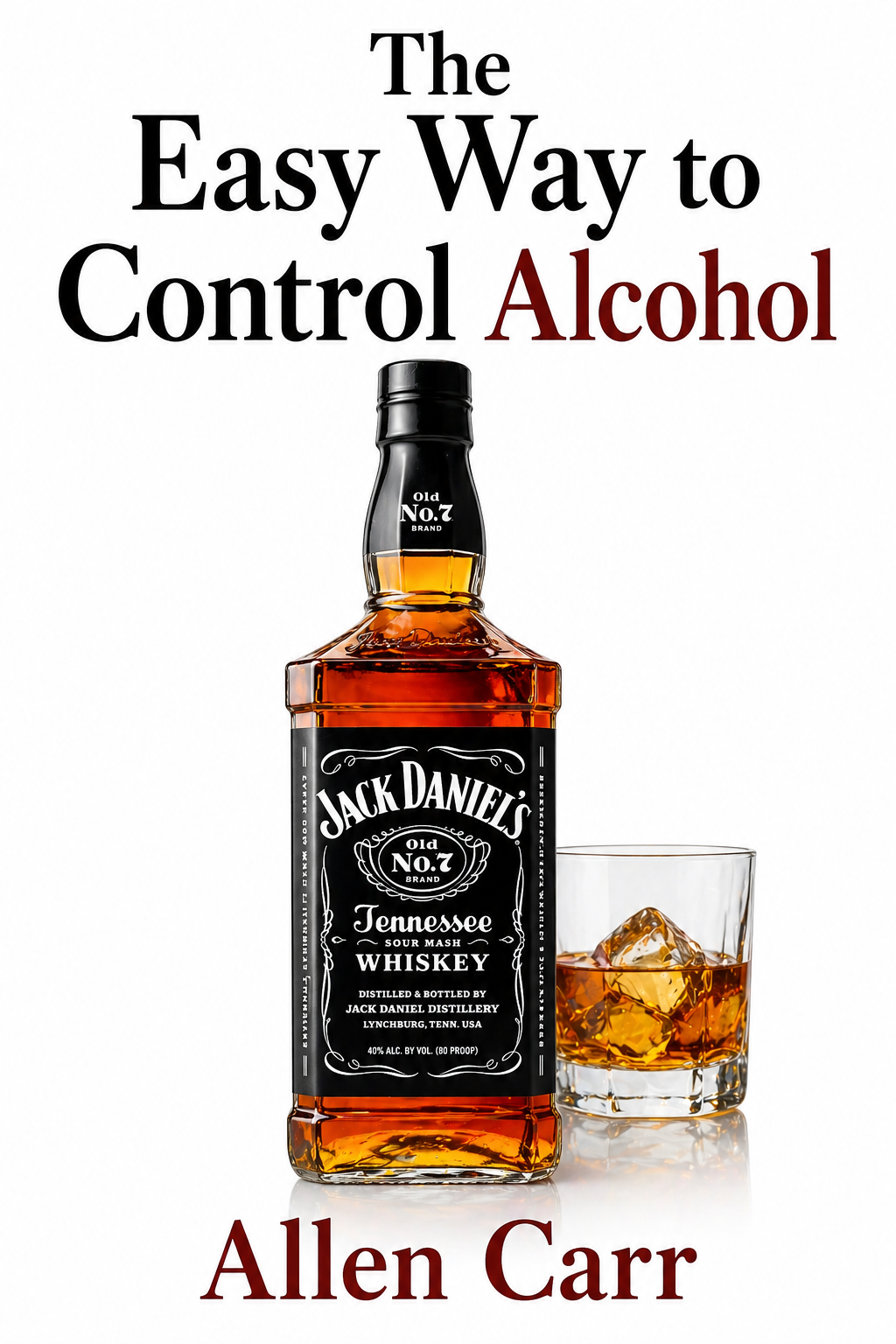
The Easy Way to Control Alcohol
Chapter Summaries
What's Here for You
Are you ready to finally break free from the alcohol trap? Allen Carr's *The Easy Way to Control Alcohol* offers a revolutionary, judgment-free approach to understanding and changing your drinking habits. Forget the guilt, shame, and willpower struggles. This book promises a surprisingly simple path to freedom, not through deprivation, but through understanding the illusions that keep you hooked. Prepare to have your beliefs challenged, your excuses dismantled, and your eyes opened to the truth about alcohol. You'll gain the tools to question societal brainwashing, understand the true nature of addiction, and discover the exhilaration of a life where you're in control, not alcohol. Get ready for a thought-provoking, myth-busting journey that will leave you feeling empowered, optimistic, and ready to embrace a life of clarity and freedom.
The Easy Way to Control Alcohol
Allen Carr opens by acknowledging the initial skepticism he faced when introducing his method for quitting smoking, drawing a parallel to the challenge of convincing people that controlling alcohol consumption can be easy and immediate. He confronts the widely accepted view, perpetuated by organizations like Alcoholics Anonymous, that alcoholism is an incurable disease, a belief so ingrained that many might dismiss his book outright. Carr, however, urges the reader to remain open-minded, emphasizing his deep respect for AA's support system while challenging its core philosophy. He envisions a world where a complete, easy, and inexpensive cure for alcoholism exists, one that doesn't require willpower or involve withdrawal symptoms, painting a picture of liberation that seems almost fantastical. The author implores the reader to question every belief about alcohol and alcoholism, much like he encouraged smokers to challenge their perceptions. He addresses the skepticism surrounding his method, questioning why it hasn't been universally adopted, pointing to the power and influence of established organizations and the media's perpetuation of conventional wisdom. Carr clarifies that his book offers the same cure as his clinics and emphasizes that the cure is immediate upon completion, likening it to the relief felt after a long-awaited dentist visit where the problem is solved instantly, even if recovery takes time. He uses the metaphor of a prison cell with a combination lock to illustrate how Easyway provides the key to freedom from alcoholism. He counters the idea that the book is just an advertisement, stating that it provides a complete cure and encourages readers to approach it with a positive mindset. Carr lays out seven instructions, emphasizing the importance of following them all, like the numbers of a combination lock, to unlock the solution to their drinking problem, setting the stage for a transformative journey.
Keep An Open Mind
In this chapter, Allen Carr confronts the universal human challenge of maintaining an open mind, particularly when entrenched beliefs are questioned. He starts by humorously acknowledging our own perceived fairness versus the stubbornness of others, setting the stage for a deeper exploration of counter-brainwashing – the unlearning of long-held convictions. Carr uses the historical example of the flat earth theory to illustrate how deeply ingrained yet false ideas can be, posing a thought experiment: could he convince us the world is flat? He emphasizes that while some distortions don't affect daily life, like visualizing Australians upside down, our perceptions about alcohol have tangible consequences. The author urges skepticism, assuring that his method isn't brainwashing but rather an unveiling of truths. Carr dismantles the complexity surrounding alcoholism, suggesting it’s made intricate by so-called experts’ misconceptions, promising to unravel fallacies using common sense. The metaphor of a bottle half-full or half-empty is introduced, not as mere optimism, but as a choice between happiness and misery, contrasting it with the distortion of seeing a bottle as full when empty. He shares a poignant anecdote of a recovering alcoholic still feeling vulnerable after 20 years, highlighting the promise of complete control and security his method offers. Carr extends his argument to the fallibility of the majority, recalling a debate with a stubborn individual named Bloggs, who, despite initial appearances, proved the maxim that the majority is often wrong. This serves as a bridge to the core idea: accepting that established experts on alcohol might be mistaken is crucial for progress. He cautions against discussing these ideas with closed-minded individuals, comparing it to the futility of convincing wine enthusiasts that no one enjoys the taste of wine. While acknowledging the potential help from AA members, he points out the inherent contradiction in their belief that alcoholism is incurable. Carr insists on explaining the rationale behind his instructions, empowering the reader to be the judge. He asks us to separate the message from the messenger, even if he appears as single-minded as Bloggs, and apologizes in advance for any perceived biases in his language, prioritizing the alcohol problem above all else. Ultimately, Carr prepares the reader to question everything, setting the stage to unravel illusions and confront the fundamental question: are you a social drinker with a problem, or are you an alcoholic?
Are You An Alcoholic?
In this chapter, Allen Carr dissects the murky question of whether one is an alcoholic, challenging conventional definitions and sparking a crucial debate. Carr begins by highlighting the societal perception of normal drinkers versus alcoholics, noting the chasm between a 'sociable pastime' and a 'serious disease.' He scrutinizes Dr. Christiaan Barnard's questionnaire, finding its broad questions unhelpful in truly identifying alcoholism, suggesting any normal drinker could answer affirmatively to most. Carr then turns to Alcoholics Anonymous (AA), whose definition centers on the loss of control, a concept Carr finds more sensible, yet still vague. He recounts a dinner party discussion, revealing how easily people recognize alcoholism in others but deny it in themselves, painting a scene where denial is as thick as smoke. Carr challenges AA's assertion of alcoholism as an incurable, congenital defect, questioning how it can be both progressive and predetermined, a contradiction that exposes the core confusion surrounding the label. He argues that seeking a diagnosis is futile if the 'experts' ultimately defer the decision back to the drinker, a frustrating cop-out. The central tension, Carr suggests, isn't about fitting a label but acknowledging a loss of control, a realization often obscured by stigma and misconception. He reframes the question: not 'Am I an alcoholic?' but 'Have I lost control of my drinking?', a subtle yet profound shift that places the onus of recognition on the individual's honest self-assessment. Carr urges readers to pinpoint the moment they lost control, distinguishing it from isolated incidents or periods of increased intake, a quest to find the elusive turning point. Ultimately, Carr posits that the difference between 'normal' drinkers and those who have lost control is merely one of degree, suggesting everyone exists on a spectrum, all vulnerable to the insidious trap of alcohol, much like a pitcher plant lures its prey.
The Pitcher Plant
In this chapter, Allen Carr masterfully employs the analogy of the pitcher plant to illuminate the insidious nature of alcohol addiction, drawing a parallel between the unsuspecting fly lured by the plant's nectar and the individual drawn into the alcohol trap. Carr begins by describing the pitcher plant, a carnivorous botanical marvel, whose sweet nectar attracts flies, leading them inexorably towards their demise; this sets the stage for understanding how alcohol, deceptively presented as a harmless indulgence, similarly lures individuals into addiction. The author highlights how the fly, much like a casual drinker, initially believes it is in control, savoring the 'free meal' without recognizing the gradual, treacherous slope that leads to its downfall—a potent metaphor for the denial and rationalization prevalent in early stages of addiction. He emphasizes the crucial point that the fly, from the moment it sensed the nectar, was never truly in control, mirroring Carr's assertion that drinkers are often unaware of the subtle yet powerful forces at play. Carr then addresses the common argument that moderate drinking offers advantages, countering that alcohol is not a nectar but a poison, cheating the individual rather than offering genuine benefit. He challenges the illusion of control, suggesting that even 'normal' drinkers are simply flies at different stages of descent, subtly manipulated by the alcohol trap. The author reframes the definition of an alcoholic, not as one who has lost control, but as one who *realizes* they were never in control to begin with, thereby empowering the reader by suggesting that awareness is the first step towards freedom. He encourages readers to release self-recrimination, understanding that alcohol, not the individual, is the true perpetrator, and introduces his definitions of a 'recovering alcoholic' and an 'ex-alcoholic' to provide clarity and hope. Carr resolves the tension by assuring the reader that unlike the fly's physical entrapment, the solution to alcohol addiction is mental, offering the empowering message that escape is always possible, and easier than one might think, once the true nature of the trap is understood. Like the fly gorging itself, oblivious to the digestive juices below, many ignore the obvious dangers, yet Carr urges the reader to recognize that, with the right understanding, one can 'fly away' from the trap at any moment.
The Prison
In this chapter of "The Easy Way to Control Alcohol," Allen Carr draws a potent analogy, casting the heavy drinker as a Count of Monte Cristo, imprisoned not by stone walls but by a subtle, insidious trap. Carr challenges the conventional wisdom that alcoholism is a matter of choice or willpower, suggesting instead that it’s a carefully constructed prison, a blend of societal misconceptions and the inherent nature of addiction. He deconstructs the well-meaning but ultimately futile advice of doctors and self-help gurus, who often prescribe abstinence or moderation without addressing the underlying reasons for drinking. Like a fly ensnared in a pitcher plant, willpower alone is insufficient; knowledge of the trap is the true key to escape. Carr argues that focusing on the disadvantages of drinking, a common tactic, ironically reinforces the allure of alcohol, creating a 'forbidden fruit' effect. The author emphasizes that the real solution lies not in dwelling on the problem, but in understanding and dismantling the reasons that drive the behavior. Carr elucidates that the illusion of being both prisoner and jailer—the part of the brain that wants to quit versus the part that prevents it—obscures the path to freedom. He urges readers to discard negative self-perceptions and recognize that they are not to blame, no more than any other individual caught in the same trap. Ultimately, Carr offers hope, asserting that the key to unlocking this prison already exists within the reader, and the Easyway method is the map to find it. The central insight here is that true liberation comes not from fighting the symptoms, but from understanding and dismantling the root causes of dependency.
Exhilaration
In this chapter of *The Easy Way to Control Alcohol*, Allen Carr unveils a provocative analogy, recasting alcohol as a deceptive drug called "exhilaration" to expose its true nature. He begins by dismantling the common perceptions of alcohol, highlighting its poisonous effects, addictive properties, and the illusion of benefits it provides, like a mirage in the desert. Carr argues that alcohol offers absolutely no advantages, a stark claim designed to challenge the reader's reliance on it. He warns that initially, this revelation might cause panic, as it strips away the justifications for drinking before offering a means of escape. The author emphasizes that alcohol systematically erodes courage and confidence, not enhances them, comparing its insidious effects to the gradual process of aging or weight gain, where daily changes are imperceptible until a significant difference is noticed. Carr urges readers to use their imagination to envision a life free from alcohol's grip, drawing a parallel with heroin addiction to illustrate how alcoholics, much like other addicts, often fail to recognize the true cause of their suffering. He explains that ignorance is not bliss when it comes to alcohol, as it allows the drug to steal health and confidence, and the key is to recognize the excuses used to justify drinking as lies, both to oneself and others. Carr points out that alcohol dehydrates rather than quenches thirst and inebriates rather than relaxes, thereby creating an illusion of benefit. He describes the internal conflict drinkers face, a constant tug-of-war between the desire for a drink and the awareness of its harmful effects, like a little monster with an insatiable thirst. Ultimately, Carr asserts that the real problem is the brainwashing that perpetuates the belief in alcohol's benefits, urging readers to confront these illusions and recognize the trap for what it is.
The Brainwashing
Allen Carr, in examining the insidious nature of alcohol addiction, begins by dissecting the pervasive 'brainwashing' that starts from birth. He observes how society bombards us with messages associating alcohol with positive experiences—happiness, confidence, and social success—while downplaying its toxic effects. Carr points out the contradiction inherent in the word 'intoxicate,' derived from 'toxic,' yet often associated with exhilaration. He uses the metaphor of a bottle, not half-full or half-empty, but full of either exhilaration or devastation, depending on the brainwashing. Carr laments how films and advertising perpetuate the myth of alcohol as a harmless, even glamorous, social lubricant. He recalls films that showed the dark side of drinking, like 'The Geek,' but notes how rare such portrayals are. The author highlights the hypocrisy of demonizing heroin while glorifying alcohol, despite the latter's far greater death toll. The only difference, he argues, is that alcohol is legal, because 90 percent of us drink, and we've been conditioned to see it as normal. Carr suggests that society hides the ugly truth of alcoholism, much like the submerged part of an iceberg. He shares personal anecdotes, like the story of his 'Uncle Ted,' the life of the party who was also a miserable tyrant when sober, to illustrate how we normalize and even enable alcoholism. He notes the author's own youthful confusion, struggling to keep up with peers' drinking habits, and the 'Uncle Teds' who would surreptitiously finish his drinks. Carr emphasizes that we don't choose to drink any more than we choose our native tongue; it's a part of our culture. He concludes by urging readers to analyze the past and make a clear, informed decision about their drinking habits, based on facts rather than brainwashing. The central tension lies in recognizing alcohol not as the promised exhilaration, but as a form of devastation, a realization crucial for breaking free from its grip. Ultimately, Carr challenges the reader to confront the societal lies and begin to see alcohol for what it truly is: a poison disguised as pleasure.
The Incredible Machine
In "The Incredible Machine," Allen Carr challenges our deeply ingrained beliefs about the human body and its dependence on external substances like alcohol. He begins by contrasting the vitality he experiences in sobriety with the perpetual fatigue he felt as a drinker, setting the stage for a radical re-evaluation of our perceived limitations. Carr argues that from birth, we are subtly brainwashed to believe in our inherent fragility, a notion reinforced by medical practices and societal norms. This perception leads us to seek external solutions, like alcohol, to compensate for our imagined deficiencies. The core tension lies in the illusion that alcohol enhances our lives, when in reality, it undermines our natural strength and resilience. Carr dismantles this illusion by highlighting the body's inherent capabilities, comparing it to an "incredibly powerful and sophisticated machine," far surpassing any human invention. He emphasizes that our bodies are equipped with everything we need to thrive, including natural stress-coping mechanisms. The key is to trust our instincts and listen to "Mother Nature," rather than blindly following societal conditioning. Carr suggests that modern society, with its emphasis on external solutions and disregard for natural instincts, has created a self-perpetuating cycle of dependence. He urges us to recognize the inherent strength within us, arguing that true freedom comes from understanding and trusting our own "incredible machine." This understanding shifts our perspective from viewing ourselves as weak and deficient to recognizing our innate power and self-sufficiency. Carr contends that the belief in our weakness fuels the desire for alcohol, while the illusion that alcohol provides a solution perpetuates the cycle of addiction. Like a pilot altering the calibration of his instruments, we distort our senses and instincts with alcohol, leading us further from our natural state of well-being. Ultimately, Carr advocates for a return to our natural instincts, urging us to recognize that we already possess everything we need to live healthy, happy, and fulfilling lives. By dismantling the illusion of weakness and embracing the inherent power of our bodies, we can escape the trap of alcohol dependence and experience life to the fullest, like emerging from a "drugged, nightmare, black and white world of fear and depression into a world of sunshine, colour, confidence, health and freedom."
How Did We Fall Into The Trap?
Allen Carr, in this chapter, dissects the insidious nature of how individuals become ensnared by alcohol, noting it's rarely a conscious decision, but rather a gradual descent, often beginning in adolescence, a period ripe with the pressures of transitioning into adulthood. He observes how modern society, despite its technological advancements, seems to have fostered a sense of lack, pushing youngsters to seek external crutches, a stark contrast to the innate joy and exuberance children naturally possess. Carr argues that we've become victims of our own intelligence, creating a world fraught with problems that ironically drive us further into seeking solace in substances like alcohol. The author paints a vivid picture of modern life: exercise bikes invented to burn off energy from desk jobs, remote controls turning us into sedentary sloths, a world obsessed with the dangers lurking in our food and environment. He suggests that we have inherited a magnificent planet only to be hell-bent on destroying it, and this legacy of drug addiction and violence is passed down to our children. The initial taste of alcohol, Carr emphasizes, is a crucial element of the trap; it's so unpleasant that it removes the fear of addiction, lulling us into a false sense of security. He illustrates this with the image of a teenager grimacing at their first pint, secretly preferring lemonade, but driven by the desire to appear adult. The progression is subtle, from sweeter drinks to stronger concoctions, until drinking becomes normalized, intertwined with social life, and even mundane routines. Carr shares his own story, tracing his path from a casual golfer to someone whose life revolved around alcohol, highlighting how easily one can transform into the very 'old fogey' they once despised. The critical point, as Carr defines it, arrives when one recognizes they're drinking too much but feels unable to stop, creating a miserable paradox of guilt when drinking and deprivation when abstaining. It’s akin to a fly trapped in a pitcher plant, struggling harder only to become more ensnared. The author underscores that once the drinker recognizes that his drinking is causing him a problem, he has not one new problem but two, and any attempts to cut down only amplify the perceived pleasure and need, leading to a deeper sense of dependence. Thus, the stage is set for the alcoholic's inevitable attempt to quit through sheer willpower, a method Carr suggests is inherently flawed.
The Willpower Method
In "The Willpower Method," Allen Carr dissects the futility of relying solely on willpower to break free from alcohol's grip, revealing how this approach inadvertently reinforces the belief that one can never truly be cured. Carr highlights the initial brainwashing that convinces individuals drinking is a pleasure and a crutch, a delusion that persists even as alcohol's destructive consequences mount. The author argues that the language we use, like "giving up," frames abstinence as a sacrifice, deepening the sense of deprivation. He points out the paradox: the worse the problem becomes, the more challenging it is to contemplate a life without alcohol, setting the stage for a cycle of misery and dependence. Carr vividly illustrates how the initial attempt to quit is often overshadowed by a feeling of doom, akin to scaling Everest without ropes, leading individuals to seek solace in the very substance they're trying to escape. He emphasizes that the fleeting relief experienced during periods of abstinence can mask the underlying reasons for quitting, creating a dangerous illusion that weakens resolve. Like forgetting the horror of a car accident when running late, the memory of alcohol's misery fades, making "just one drink" seem justifiable. The author underscores that the trap of alcohol lies not in some chemical defect, but in the persistence of the belief that it offers genuine pleasure or support. Carr urges readers to recognize the absence of any real advantages to drinking, encouraging them to question the excuses they make, rather than blindly accepting them as reasons. Only by dismantling this illusion can one truly escape the cycle of dependence.
Excuses Not Reasons
Allen Carr, in his straightforward manner, dismantles the flimsy walls of justification that prop up alcohol consumption. He argues that the reasons people drink are often cloaked in deception, both self-inflicted and societal. Carr challenges the listener to recognize that the perceived difficulty in quitting isn't due to unbearable physical withdrawal, which he asserts are surprisingly mild, but rather the psychological dependence, the illusion of sacrifice. Like a master illusionist, alcohol makes us believe we need it for social lubrication or stress management, painting a false picture of a life devoid of joy without it. Carr exposes the lies drinkers tell themselves and others, dissecting the common refrain of 'enjoying the taste.' He argues that this is often a convenient excuse, a veneer over the reality that alcohol, in its pure form, is a poison, a product of fermentation that Mother Nature never intended for human consumption. The author confronts the common defense of doctors recommending a glass of wine for health, exposing this as a desperate clinging to justification. He likens this to undiscovered tribes brewing their own concoctions, questioning whether this truly indicates a benefit or simply an available means. Carr emphasizes that drinkers often present excuses, not genuine reasons, for their habit. He urges readers to use their common sense and question the logic behind these justifications. He vividly paints a scene of recovering addicts envying those who still drink, locked in a silent poker game of bluff and deception. Carr offers a powerful reminder: the reader is seeking a solution, and this book offers a path, irrespective of external opinions. He tackles the argument that alcohol tastes good when mixed with other substances, admitting the truth in the statement, but questioning the logic of deliberately combining a foul-tasting poison with otherwise pleasant flavors. Ultimately, Carr sets the stage to confront the most pervasive illusion of all: the acquired taste, the final bastion of defense for the alcohol addict.
The Acquired Taste
Allen Carr, in "The Easy Way to Control Alcohol," delves into the illusion of the 'acquired taste,' dismantling the notion that humans genuinely enjoy the flavor of alcohol. Carr begins by painting a picture: a first encounter with alcohol, often masked by sugary mixers or celebratory occasions, creating a false impression of enjoyment. He argues that the body's initial reaction—the foul taste, the alarm bells, even vomiting—is a clear warning against poisoning, a warning we often ignore due to societal norms and role models. This leads to the first core insight: the 'acquired taste' is not a genuine appreciation but rather the body building immunity to a poison, a defense mechanism misinterpreted as pleasure. Carr draws a parallel to Rasputin's arsenic tolerance, highlighting the absurdity of deliberately building resistance to something harmful. He emphasizes that alcohol remains a poison, regardless of our altered perception, and that mixers and sweeteners only serve to mask its inherently unpleasant taste. The author challenges the common claim of 'loving the taste of beer,' calling it a self-deception, a contradiction akin to enjoying a foul odor. He points out that no one consciously decides to acquire a taste for something initially repulsive; the perseverance comes from other underlying reasons, often linked to addiction and societal pressures. Carr contrasts this with the example of sugar in tea, illustrating how easily taste preferences can change when the desire is present, highlighting that our taste buds are flexible and not our masters. He then addresses the question of why people drink if not for the taste, setting the stage for exploring the false courage and other deceptive justifications associated with alcohol consumption, and providing a potent reminder that the journey to sobriety begins with recognizing the true nature of the 'acquired taste'—a dangerous illusion.
Does Alcohol Give You Courage?
In Allen Carr's exploration of alcohol's deceptive allure, he begins by dismantling the widely held belief that alcohol imbues courage, a notion perpetuated through cultural traditions like the British navy's rum rations. Carr challenges readers to question deeply ingrained assumptions, much as his Easyway method prompted him to re-evaluate his own life. He illuminates how fear, often seen as an enemy, is actually an essential survival mechanism, akin to a fire alarm signaling danger. He draws a distinction between instinct and learned behavior, illustrating that animals act on survival instincts rather than concepts of bravery or cowardice. The author uses the example of his cat stalking a mouse, and the mouse, when cornered, standing its ground, not out of bravery, but out of instinct. Carr then turns the lens inward, revealing his own past insecurities masked by boxing and rugby, driven not by fearlessness but by a terror of being exposed as a coward. He argues that societal brainwashing creates false ideals that contradict our natural instincts, leading to confusion and unnecessary suffering. He suggests that true courage lies not in eliminating fear, but in acting according to one's conscience despite it. Alcohol, Carr asserts, doesn't provide courage; it merely diminishes fear by reducing one's faculties, likening it to an ostrich burying its head in the sand, a futile attempt to escape danger that only increases vulnerability. Carr emphasizes that by dulling our senses and reactions, alcohol actually destroys our capacity for genuine courage and replaces it with a false sense of security. The author paints a vivid picture: imagine a pilot, mid-flight through dense fog, knowingly taking swigs from a flask, impairing every instrument and sense needed to navigate safely. He resolves by stating that recognizing alcohol's deceptive nature is the first step towards reclaiming one's innate courage and confidence, and that the illusion of courage it provides only serves to mask our true potential.
Alcohol Removes Inhibitions
In this chapter, Allen Carr dismantles the illusion that alcohol-induced courage is beneficial, arguing instead that it merely removes inhibitions, which are, in fact, vital protective mechanisms. Carr recounts his own misguided belief in using alcohol to loosen up party guests, a strategy he later recognized as counterproductive. He illuminates how shyness and inhibitions, often viewed negatively, serve as natural safeguards, akin to a wild animal's wariness of potential threats. The author emphasizes that societal brainwashing leads individuals to believe aggression is normal, when in reality, it's often fear and apprehension masked by alcohol-induced bravado. Carr vividly recalls his past arrogance, boasting about being a better driver after a few drinks, a delusion stemming from alcohol's ability to diminish fear and inflate a false sense of security. He challenges the notion that loosening inhibitions through alcohol enhances social interactions, pointing out that it often leads to offensive behavior and regrettable actions. Carr urges readers to question the perception that drunks are impressive or that being 'out of it' is genuinely pleasurable, suggesting instead that such experiences are often marked by shame and a lack of true enjoyment. He paints a picture of the drunk who believes he is charming, while others simply dismiss his behavior with a knowing, 'it's the drink talking!' Carr underscores that alcohol doesn't bestow courage; it merely erases fear and inhibitions, leaving individuals vulnerable and often misguided, like an unaccompanied girl, stripped of her natural fear, walking home from a night club. Ultimately, Carr compels us to recognize that true confidence and genuine connection arise not from artificial courage, but from embracing our natural inhibitions and fostering authentic interactions.
Alcohol Steadies My Nerves
Allen Carr, in "The Easy Way to Control Alcohol", tackles the pervasive belief that alcohol calms nerves, revealing it as a dangerous illusion. He begins with a vivid scene: a woman, nerves frayed, startled by a slamming door, epitomizing the belief that alcohol is her 'crutch'. Carr masterfully uses this to illustrate how society brainwashes us into thinking natural fear responses are weaknesses, not vital survival mechanisms. Like birds startled by a potential threat, our nerves are designed to protect us. Carr argues that stress, like a blinking oil-warning light in a car, signals an underlying problem, not something to be masked with temporary fixes like Valium or alcohol. These only remove the warning sign, exacerbating the core issue. He challenges the notion of alcohol as a relaxant, questioning how something can relax you if you're already relaxed. True relaxation, he posits, comes from removing the source of aggravation, not merely deadening the senses. Alcohol, Carr asserts, doesn't solve problems; it intensifies them, trapping individuals in a cycle of dependency. The tragic irony, Carr emphasizes, is that those who repeatedly seek oblivion through alcohol are fundamentally unhappy, and alcohol only deepens this unhappiness. It is a fool's errand akin to chopping off a foot to cure a corn, when true relief lies in addressing the root cause of the distress.
Drug Addiction
Allen Carr delves into the core of addiction, challenging our fundamental understanding of what it truly means to be dependent on a substance. He begins by dissecting the common perception of addiction, revealing how easily one can fall into the trap of habitual behavior without recognizing the loss of control. Carr illuminates that the essence of addiction lies not merely in repetitive action, but in the agonizing conflict between the desire to stop and the inability to do so, a schism in the mind where half yearns for freedom while the other remains enslaved. He draws a stark contrast between genuine pleasure, like a fulfilling game of golf, and the insidious grip of addiction, where the joy is merely the absence of withdrawal, a mirage in the desert. The author challenges the notion of drug-taking as a mere habit, urging readers to confront the underlying reasons for their behavior, to understand the void they are trying to fill. Carr dismantles the illusion that drugs provide pleasure or a crutch, exposing the brainwashing that perpetuates the cycle of dependence. He paints a vivid picture of the heroin addict's desperation, not as a quest for euphoria, but as a desperate attempt to escape the self-inflicted torment of withdrawal, the monster the drug itself created. The trap, Carr reveals, consists of a perceived inherent void, a false promise of fulfillment from the substance, and the insidious nature of withdrawal, all masked by societal brainwashing. He emphasizes that the true reason addicts continue is to quell the insecurity caused *by* the drug, a futile attempt to return to their pre-addicted state. The author urges a re-evaluation of drinking experiences, stripping away the illusions of pleasure and recognizing the misery both during and between drinking episodes are caused by alcohol itself. He draws a parallel between wearing tight shoes and the fleeting relief of removing them, revealing how alcohol creates the very craving it purports to satisfy. Ultimately, Carr asserts that addiction is not a congenital flaw, but a delusion, a false belief in the necessity of the substance, and that freedom lies in dismantling this illusion, like dispelling cobwebs from the mind. He highlights the insidious trap of alcohol, where the illusion of inebriation masks the reality of its control. The author underscores the similarity between alcohol and food, further blurring the lines of what our body actually needs versus what it craves due to addiction.
The Similarity Between Alcohol And Food
Allen Carr draws a compelling parallel between our innate need for food and the acquired craving for alcohol, setting the stage for dismantling the illusions surrounding alcohol consumption. He begins by highlighting the ingenious nature of hunger, a gentle nudge from Mother Nature, devoid of actual pain, designed to ensure our survival and well-being. This feeling, often subtle, contrasts sharply with the perception of needing a drink. Carr points out that the initial sensation of wanting alcohol mirrors hunger – a seemingly harmless desire. He masterfully contrasts the true nourishment and pleasure derived from food with the destructive nature of alcohol, emphasizing that while food satisfies a genuine need, alcohol creates one. The author argues that alcohol, unlike food, offers no inherent benefit and actively harms the body and mind, creating a cycle of dependence where the very substance meant to provide relief is the source of the craving. Carr challenges the notion of drinking as a mere habit, asserting it's a full-blown drug addiction, and dismisses the categorization of drinkers as a distraction from the core issue: the addictive nature of the substance itself. He then explodes the myth of the addictive personality, suggesting that anyone can fall prey to alcohol's deceptive trap, regardless of their inherent disposition. The crux of Carr's argument lies in revealing alcohol for what it is—a poison masquerading as a pleasure, turning the simple act of quenching thirst into a lifelong battle against addiction, a battle that begins with the first, seemingly innocuous sip. He illuminates the crucial difference: food sustains, alcohol enslaves.
The Myth Of The Addictive Personality
Allen Carr, drawing from his own experiences with smoking and later alcohol, dismantles the pervasive myth of the addictive personality. He recounts how he once believed he possessed such a personality, attributing his chain-smoking to a congenital flaw or a unique chemical dependency. However, Carr challenges this notion, pointing out the illogical leap that a physical flaw could prevent one from *not* doing something, like resisting a drink. He observes that the concept of an addictive personality is a meaningless term, a red herring that only confuses the already murky waters of addiction. Carr illustrates that if such a personality existed, wouldn't those afflicted be addicted to everything, all the time? He argues that nature wouldn't equip some with a self-destructive desire. Instead, Carr suggests that the real issue lies not within the individual, but within the drug itself, painting a vivid image of individuals sinking slowly in quicksand, each drink or cigarette pulling them further down. The weight represents the degree of realization that they are trapped and the resulting panic. He challenges the distinctions made between normal drinkers and alcoholics, suggesting that the difference is merely one of degree, a stage in a downward slide, and sees alcohol for what it is: a poison that does nothing whatsoever for anyone. Carr emphasizes that relying on flimsy excuses and societal brainwashing prevents individuals from seeing the true nature of addiction, further noting that the insidious nature of alcohol is to make one believe the fault lies inherently within themselves rather than the drug. Ultimately, Carr asserts that the belief in an addictive personality serves as a distraction from the simple truth: addiction is a result of taking a highly addictive drug, and freedom comes from recognizing this reality and dispelling the illusion of pleasure or crutch.
Why Willpower Is Just Another Red Herring
In this chapter, Allen Carr challenges the conventional wisdom surrounding alcohol control, dismantling the myth that willpower is the key to overcoming addiction. He begins by reversing the pervasive brainwashing that equates alcoholism with a stereotypical image of down-and-out individuals, emphasizing that addiction transcends class, intelligence, and background. Carr points out that many who fall into alcoholism are, in fact, strong-willed, successful individuals, a fact often observed in AA meetings and among those struggling with other forms of addiction. He highlights the stories of celebrities and professionals whose lives were marred by substance abuse, not due to a lack of willpower, but often because of it. The author argues that the very act of trying to control drinking through willpower creates an internal conflict, a kind of 'schizophrenia' where one part of the brain desires the drink while another resists. Like a relentless tide, this internal battle erodes resolve over time. Carr suggests that the illusion of choice—to resist or to indulge—perpetuates the cycle of addiction. He recounts his own experience of white-knuckling sobriety for six months, only to relapse, illustrating that willpower alone is insufficient. He shifts the focus from the act of quitting to understanding the desire itself, suggesting that removing the desire eliminates the need for willpower altogether. The author uses the analogy of not wanting to board a bus to illustrate that if the desire is absent, resistance becomes effortless. Carr underscores that the problem is mental, not merely physical, and thus, the solution lies in addressing the underlying thought patterns that fuel the addiction. He champions the idea that individuals can return to a state of blissful indifference to alcohol, a state they enjoyed before falling into the trap. Finally, Carr shares a frustrating encounter with the Advertising Standards Authority to highlight the prevailing belief in willpower's necessity, even when methods exist that bypass it entirely, reinforcing his argument that ending the internal conflict is the true path to freedom.
I Only Drink To Be Sociable
In this chapter of *The Easy Way to Control Alcohol*, Allen Carr dismantles the pervasive myth that people drink to be sociable, revealing it instead as a convenient excuse masking a deeper addiction. Carr begins by acknowledging the surface-level association of alcohol with social gatherings, but quickly challenges the notion that sociability is the true motive. He contrasts genuine social activities, like joining a bowls club for companionship, with the reliance on alcohol, pointing out that people engage in activities they enjoy, irrespective of their social aspect, suggesting that the enjoyment of the activity should be the primary driver, not the perceived sociability. Carr shares a personal anecdote about playing golf solely for social reasons, highlighting the fear of a void in one's social life as a significant barrier to quitting drinking, which mirrors the alcoholic's fear of losing social connections. The core insight emerges: people don't start drinking to be sociable; they are brainwashed into believing it's essential for social events, a belief that Carr equates to an excuse rather than a reason. He vividly illustrates this with the image of drug addicts grouping together, not out of sociability, but out of a shared sense of being trapped by something evil, a problem halved in company. Carr underscores the anti-social nature of drinking, as it creates barriers between drinkers and non-drinkers, and how the discomfort arises from the awareness of the stupidity of the action. Carr challenges the reader to recognize that claiming to drink only to be sociable is akin to admitting one doesn't actually enjoy drinking, exposing the lack of a valid reason behind the habit and ultimately, addiction. He emphasizes the pressure exerted on non-drinkers to conform, which he equates to pushing, and the discomfort addicts feel in the presence of those who aren't addicted, because they are reminded of their own stupidity. Carr concludes by noting the shift in societal attitudes, comparing the past acceptance of smoking as sociable to its current pariah status, suggesting a similar change is possible with alcohol, and by urging readers to confront the illusion that drinking brings happiness, setting the stage for further dismantling of such beliefs.
Drinking Makes Me Happy
In this chapter, Allen Carr challenges the widely held belief that alcohol brings happiness, suggesting instead that it's a primary cause of societal unhappiness. Carr dismantles the illusion, pointing out that alcohol, a depressant, cannot logically create joy. He vividly paints the picture of a drunk, not as someone happy and carefree, but as someone impaired, potentially violent, and far from a state of genuine happiness, reminding us of the fear and embarrassment such encounters often provoke. Carr urges a critical examination: does alcohol truly enhance celebrations, or does it merely remove inhibitions, sometimes leading to aggression and ruined occasions? He argues that violence associated with drinking isn't happiness, it's a mask slipping, revealing underlying issues. The author asks us to consider if alcohol actually made people happy, there would be no unhappy drinkers. Carr highlights that people often drink during happy occasions and mistakenly attribute the joy to alcohol, rather than the event itself. He proposes an experiment: isolate yourself with alcohol, free from distractions, to truly assess its effect, suggesting that this will reveal alcohol's primary effect is to deaden your senses and impair judgment, not to create happiness. Carr underscores that the illusion persists because drinkers feel they cannot enjoy social occasions without alcohol, closing their minds to the reality that alcohol offers nothing beneficial. He challenges readers to observe drinkers versus non-drinkers at social events, to dismantle the illusion that alcohol is necessary for a good time. Carr reminds us that true happiness stems from the absence of worries and fears, from feeling mentally and physically healthy, something alcohol actively undermines. Ultimately, Carr posits that if one feels the need to drink to enjoy life, they are already hooked, trapped in the illusion that a poisonous chemical depressant is the key to their happiness, and that recognizing this dependence is the first step to breaking free.
Quit Forever Or Cut Down?
In this crucial chapter, Allen Carr confronts the central dilemma: complete abstinence versus controlled drinking. He begins by recounting a common conversation, highlighting the initial fear many have about never drinking again. Carr suggests that this fear stems from a brainwashed perception of alcohol as a pleasure or crutch, rather than recognizing it as devastation. He illustrates this point with a potent analogy to Hitchcock's 'Notorious,' where a character is slowly poisoned, mirroring the alcoholic's self-administration of poison. The author then deconstructs the illusion of control, arguing that even 'normal' drinkers are subtly influenced by the drug's addictive nature. Carr dismantles the notion of controlled drinking, explaining that it keeps the 'little monster' of addiction alive, leading to constant cravings and feelings of deprivation. He contrasts this with the joy of liberation from alcohol, akin to the sun breaking through dark clouds. He emphasizes that cutting down is not a stepping stone but a trap, intensifying the desire for alcohol and ultimately leading to increased consumption. The author argues that the attempt to cut down reinforces the belief that life without alcohol cannot be enjoyed, a belief that was not so strong before the attempt. Carr underscores that addiction, not habit, is the core issue. He highlights the futility of willpower in the face of drug addiction, comparing the struggle to a fly trapped in a pitcher plant. Ultimately, Carr challenges the reader to question the very premise of controlled drinking, suggesting that true freedom lies in recognizing alcohol for what it is: a destructive and unnecessary poison, asking, why would anyone choose to slowly poison themselves?.
Those Lucky Normal Drinkers
Allen Carr, in this chapter, tackles the pervasive myth of the 'lucky normal drinker,' a figure that often complicates our understanding of alcohol addiction. He begins by dismantling the illusion that these individuals are somehow immune to the drug's insidious effects, reminding us that they are consuming the same "DEVASTATION" as anyone else, merely at an earlier stage. The central tension lies in our conflicting perceptions: the alcoholic sees ruin, while the normal drinker perceives benefits. Carr challenges the conventional wisdom that alcoholism stems from a physical flaw, suggesting instead that it's a progressive disease, much like other addictions, where early symptoms are subtle. He paints a vivid picture of society's brainwashing, where we're conned into believing there's something natural about regularly poisoning ourselves, an idea we'd find absurd with other toxins. The key insight here is to recognize that the perceived benefits of alcohol are illusions, masking the early stages of addiction. Carr uses the analogy of a skin ointment that initially seems to cure a spot but ultimately causes a larger, more painful rash, illustrating how alcohol masks problems while exacerbating them. He urges us to dismantle the brainwashing that equates alcohol with pleasure or a crutch, encouraging a return to the state of blissful ignorance we possessed before falling into the trap. Ultimately, Carr asserts that alcoholism is a mental disease, not a physical one, and that the cure lies in removing the desire to consume alcohol by seeing it for the poison it truly is. He cautions against clinging to the idea of occasional drinking, as it implies a lingering belief in alcohol's benefits, and encourages us to observe other drinkers with clear eyes, recognizing that they, too, are caught in the pitcher plant, oblivious to their fate. Carr emphasizes that those 'lucky normal drinkers' are not in control, they are simply at a different point in the addiction cycle, and understanding this is the first step to freedom.
The King Who Was In The Altogether
In this chapter of *The Easy Way to Control Alcohol*, Allen Carr cleverly draws a parallel between Hans Christian Andersen's tale of the emperor's new clothes and society's perception of alcohol. He observes that many people, much like the courtiers afraid to appear foolish, participate in the elaborate rituals surrounding alcohol consumption, particularly wine, despite the drink itself being a "foul-tasting, highly addictive, poisonous drug." Carr challenges the notion that expensive wines are inherently superior, suggesting that the perceived value is often a product of marketing and social pressure rather than genuine taste. He recounts his own experiences of feigning appreciation for overpriced wines, highlighting the absurdity of the wine selection process, which he likens to a "complete farce." The author exposes the confidence trick behind the wine industry, where experts use vague descriptors to justify high prices for what is essentially an acquired taste, if that. Carr questions the logic of aging wines, pointing out the contradiction with Beaujolais Nouveau, which is meant to be consumed immediately. He notes the gullibility of consumers who fall for marketing gimmicks like organic lager or cream liqueurs, emphasizing that the enjoyment often comes from additives like sugar, not the alcohol itself. He touches on the irrationality of obliterating the taste of expensive liquors with mixers, further questioning the perceived value and pleasure derived from alcohol. Ultimately, Carr underscores that the supposed benefits of alcohol are illusions created by societal brainwashing, setting the stage to explain how to easily quit drinking by dismantling these false beliefs. The chapter serves as a deconstruction of the myths surrounding alcohol, urging readers to see it for what it truly is: an unnecessary and harmful substance masked by elaborate rituals and clever marketing.
How To Make It Easy To Quit
Allen Carr, in this pivotal chapter, dismantles the illusion of difficulty surrounding alcohol cessation, suggesting that the primary obstacle isn't physical withdrawal, but the mental anguish of feeling deprived. He recounts his personal journey escaping drug addiction, highlighting unexpected benefits like restored self-respect, freedom from domination, and regained courage. Carr challenges the perceived agony of withdrawal, arguing that the real pain is the craving—a mental construct fueled by the belief in alcohol's necessity, and he boldly equates this to a confidence trick, where the illusion of pleasure masks a destructive reality. He shares anecdotes from a quit-smoking session, revealing that even heroin addicts found physical withdrawal less daunting than the mental battle with nicotine, illustrating that environment and association trigger perceived physical symptoms. Carr suggests the fear of life without alcohol is often greater than the fear of its long-term consequences, leading to procrastination and rationalization. He paints a vivid picture of the alcoholic’s tug-of-war: fear of health decline versus the perceived crutch of alcohol, a battle where both fears are, in fact, caused by the alcohol itself, a maze with wrong turns at every junction. He emphasizes that Easyway isn't just a set of tips, but the correct map to escape this maze, provided one follows the instructions without question, acknowledging that even seemingly obvious instructions are crucial, and that questioning one's decision to quit only reinforces the addiction. Carr urges readers to confront the absence of advantages in alcohol, the impossibility of moderation, and the understanding that alcoholism isn't an inherent flaw, but a trap, and he warns against delaying the decision to quit, as life under alcohol's influence will never be free of stress. He concludes by dispelling the notion of a difficult transition, promising immediate enjoyment of social occasions and stress management without alcohol, provided the reader adopts the correct frame of mind—understanding there's nothing to give up, but everything to gain, and that the key is to remove the brainwashing before the last drink, transforming apprehension into exhilaration, solidifying the path to freedom.
The Instructions That Make It Easy To Quit
In Allen Carr's "The Easy Way to Control Alcohol," the narrator unveils a series of instructions designed to liberate individuals from alcohol's grip, emphasizing a shift in mindset over mere willpower. Carr cautions against attempting these instructions in isolation, likening it to a perfect dive into an empty pool, stressing sobriety during the reading. The initial instruction is revolutionary: rather than dwelling on deprivation, embrace the newfound freedom from alcohol's devastation. A crucial distinction from traditional methods is highlighted: never question the decision to quit, attacking the mental cravings, not just the physical withdrawal. Carr illustrates the futility of suppressing thoughts about alcohol, comparing it to the impossibility of not thinking about a pink elephant. Instead, the focus should be on celebrating freedom. He introduces the concept of a "little monster" within, a metaphor for alcohol dependence, whose death throes one should revel in, understanding it's the monster, not the self, that craves alcohol. The narrator urges immediate adoption of a non-drinker identity, rather than perpetually waiting for freedom, which is a common pitfall of willpower-based approaches. Carr emphasizes accepting both good and bad days without attributing every misfortune to quitting, which can undermine resolve. He stresses that one is in control of cravings, not the other way around, even if the "little monster" or simple forgetfulness triggers the thought of a drink. The chapter challenges the notion of mourning the loss of alcohol, reframing it as rejoicing in the death of an enemy. Carr advises against drastically altering one's life to avoid triggers, suggesting facing familiar environments, like pubs, to prove one's newfound freedom and resilience. Finally, he discourages forceful attempts to convert friends, instead advocating for leading by example and altering aspects of one's lifestyle not genuinely enjoyed, while cautioning against substituting alcohol with other crutches, whether activities or food, to avoid reinforcing the idea of sacrifice. He encourages breaking false associations with alcohol and never envying drinkers, who are, in reality, the ones deprived of true freedom. The ultimate message: embrace the final drink as the gateway to a life of genuine enjoyment.
Your Final Drink
Allen Carr, in "The Easy Way to Control Alcohol," approaches the final drink not as an ending, but as a momentous beginning—a ritualized farewell to a life of dependency. He understands the inherent doubt in quitting, that lingering question of when one truly becomes free. Thus, the final drink marks the precise moment of achieving that freedom, a day worthy of celebration, much like birthdays or weddings, though the celebration will transform. Carr addresses the common dilemma of social drinking, noting how easily casual drinkers, preferring soft drinks, can be swayed into alcohol's grasp, a subtle acceleration down the path of addiction. He illuminates the 'Moment of Revelation,' that powerful instant when clarity dawns, and the desire for alcohol simply vanishes, a moment that can arrive unexpectedly, even before the last drink is taken, but cautions against forcing this realization, lest it become a self-defeating obsession. Carr warns against two primary dangers post-quitting: succumbing to societal pressure during times of tragedy, where well-meaning individuals might push alcohol as a coping mechanism, which he equates to adding another tragedy to the initial loss. The second, and perhaps more insidious, danger lies in the Easyway's very effectiveness; the temptation to think 'just one drink' can't hurt, a thought he likens to opening Pandora's Box. To guard against relapse, Carr advocates for regular reminders of the misery of addiction and the euphoria of newfound freedom. He urges readers to make that final drink a deliberate experience, a potent reminder of alcohol's foul taste and the absurdity of paying for poison. The final drink becomes a sensory anchor, a visceral memory to protect against future temptations, allowing one to stride forward and embrace a life unburdened and truly enjoyed, free from the shackles of alcohol.
Conclusion
Allen Carr's 'The Easy Way to Control Alcohol' dismantles the societal brainwashing that equates alcohol with pleasure and necessity. The core takeaway is recognizing alcohol as a manipulative poison, not a harmless indulgence. This shift in perspective, achieved through counter-brainwashing, empowers individuals to break free from the illusion of control. The book challenges the notion that willpower alone is sufficient, emphasizing mental liberation over physical deprivation. It reframes addiction as a trap, not a choice, and promotes self-compassion over self-blame. The emotional lesson is that true freedom comes from dismantling the underlying reasons for dependency, not just fighting the symptoms. The practical wisdom lies in questioning accepted wisdom, trusting one's instincts, and celebrating the newfound freedom from alcohol's grip.
Key Takeaways
Challenging entrenched beliefs is essential for progress, even when facing widespread skepticism.
A strong support system, like that of AA, can be invaluable, even if one disagrees with its core tenets.
True and lasting change is possible, and need not involve willpower, suffering, or deprivation.
Questioning accepted wisdom and personal beliefs is crucial for overcoming addiction.
The moment of realizing a solution can bring immediate relief, even if full recovery takes time.
Following instructions precisely is key to unlocking the potential for change.
Maintaining a positive mindset significantly increases the likelihood of success in overcoming challenges.
Maintaining an open mind is crucial for overcoming deeply ingrained beliefs about alcohol, even when those beliefs are widely accepted.
True understanding of alcoholism involves counter-brainwashing: actively dismantling societal and personal misconceptions rather than passively accepting them.
Distorted perceptions about alcohol, unlike harmless mental distortions, have real-world consequences that affect one's well-being and control.
The complexity surrounding alcoholism is often artificially created by experts who don't fully understand it; simplifying the subject is key to recovery.
Relying on personal judgment and common sense, rather than blindly following expert opinions, is essential for making informed decisions about alcohol consumption.
Accepting the possibility that established experts may be wrong is a necessary step in challenging conventional wisdom and achieving a breakthrough in understanding alcoholism.
Separating the message from the messenger, and focusing on the content rather than the presenter's style, is crucial for absorbing important information and achieving personal growth.
The distinction between 'normal' drinking and alcoholism is often blurred by societal perceptions and personal denial.
Traditional methods of self-assessment, like questionnaires, are often too vague to provide a definitive answer about one's drinking problem.
The core issue is not the label of 'alcoholic' but the recognition of a loss of control over alcohol intake.
Acknowledging a loss of control is the first step towards addressing a drinking problem, even if it's a difficult and stigmatized admission.
The difference between 'normal' drinkers and those with a problem is a matter of degree, placing everyone on a spectrum of vulnerability.
The moment of losing control is often subtle and difficult to pinpoint, separate from isolated heavy drinking incidents.
The societal stigma surrounding alcoholism exacerbates denial and makes it harder for individuals to seek help.
The illusion of control is a central mechanism of addiction; individuals often believe they are in control of their drinking habits long after the addiction has taken hold.
Alcohol is not a harmless indulgence but a powerful poison that actively deceives and manipulates individuals, contrary to the perception of it being a 'nectar'.
The critical turning point in overcoming addiction is the realization that one was never truly in control, rather than the moment control is 'lost'.
Releasing self-recrimination and guilt is essential for recovery, as the individual is a victim of alcohol's manipulative nature, not the perpetrator.
Awareness of the alcohol trap is the crucial first step towards freedom, empowering individuals to recognize the subtle forces at play and seek escape.
The solution to alcohol addiction is primarily mental, offering hope and the possibility of escape at any stage, contrary to the physical entrapment of the fly in the pitcher plant.
Addiction is a trap, not a choice, and understanding its mechanisms is crucial for escape.
Relying on willpower alone is insufficient to overcome addiction; knowledge and strategy are essential.
Focusing on the negative consequences of drinking can paradoxically strengthen its appeal through the 'forbidden fruit' effect.
The illusion of being both prisoner and jailer obscures the path to freedom from addiction.
Self-blame and negative self-perception hinder recovery; self-compassion and understanding are more effective.
True liberation from addiction comes from dismantling the underlying reasons for dependency, not just fighting the symptoms.
Alcohol provides no actual advantages; any perceived benefits are illusions created by its effects on the body and mind.
The fear of losing the perceived benefits of alcohol can be a major obstacle to quitting, requiring a shift in perspective to overcome.
Alcohol systematically diminishes confidence and courage over time, contrary to the common belief that it enhances these qualities.
Recognizing the excuses used to justify drinking as lies is crucial for breaking free from alcohol's grip.
Alcohol's dehydrating and inebriating effects create the illusion of quenching thirst and providing relaxation, respectively.
The internal conflict experienced by drinkers stems from the opposing desires for alcohol and awareness of its harmful consequences.
The belief in alcohol's benefits is perpetuated by brainwashing, which must be confronted to achieve lasting freedom from addiction.
Societal brainwashing from birth equates alcohol with positive experiences, masking its toxic reality.
The perceived 'exhilaration' of alcohol is a dangerous illusion, obscuring its true nature as 'devastation'.
Glamorization of alcohol in media normalizes its consumption, distorting its harmful effects.
Society enables alcoholism by hiding its ugly truths, making excuses, and even glorifying the 'drunk' persona.
The difference between alcohol and heroin is legality, not inherent harm; both are driven by addiction and supply.
Breaking free requires recognizing alcohol as a poison, not a pleasure, and challenging societal conditioning.
Personal anecdotes and self-reflection are vital tools for dismantling the brainwashing and confronting one's own drinking habits.
Challenge the societal brainwashing that promotes a belief in inherent human fragility and dependence on external substances.
Recognize that the human body is an incredibly sophisticated and self-sufficient "machine" equipped with all necessary resources for survival and well-being.
Understand that the perception of weakness and deficiency creates the desire for external "solutions" like alcohol, perpetuating a cycle of dependence.
Trust your natural instincts and innate senses as reliable guides, rather than distorting them with addictive substances.
Shift your focus from treating symptoms to addressing the root causes of imbalance by aligning with natural principles.
Embrace the concept that true strength and resilience come from within, not from external sources or artificial enhancements.
The allure of alcohol often begins in adolescence as a misguided attempt to cope with the pressures of adulthood, masking a deeper societal unease and perceived lack.
Modern society, despite its advancements, has created a paradoxical environment where technology and progress contribute to stress, isolation, and a reliance on external solutions like alcohol.
The initial unpleasant taste of alcohol is a deceptive element of the trap, removing the fear of addiction and paving the way for gradual dependence.
The normalization of alcohol consumption in social settings and daily routines subtly reinforces the habit, making it difficult to recognize and break free from.
Reaching the 'critical point' involves a painful realization of excessive drinking coupled with an inability to stop, creating a cycle of guilt and deprivation.
Attempts to control drinking through willpower alone often backfire, intensifying the perceived pleasure and need, leading to increased dependence.
Relying on willpower alone to quit drinking reinforces the perception of sacrifice and deprivation, making the process more difficult.
The initial belief that alcohol provides pleasure and support is a form of brainwashing that needs to be dismantled to break free from dependence.
The temporary relief experienced during abstinence can mask the underlying reasons for quitting, leading to relapse.
The excuses people give for drinking are not valid reasons and should be questioned to reveal the absence of genuine advantages.
Escaping the trap of alcohol requires a fundamental shift in mindset, recognizing that it offers no real benefits.
The primary difficulty in quitting alcohol stems from psychological dependence and the illusion of sacrifice, not severe physical withdrawal symptoms.
Many reasons for drinking are excuses masking a deeper addiction, driven by social pressures and perceived benefits.
Alcohol, in its pure form, is a poison with an inherently unpleasant taste, contrary to the 'acquired taste' justification.
Defenses of alcohol consumption, such as health benefits or cultural traditions, are often rationalizations that ignore the disadvantages.
Recovering addicts often fall into the trap of envying those who still drink, reinforcing the illusion of pleasure and the perceived loss.
One must question the logic of mixing a foul-tasting poison with otherwise pleasant flavors, challenging the notion that the combination creates a desirable experience.
Rely on your own common sense and recognize that you are reading the book to solve a problem, regardless of what others may think.
The 'acquired taste' for alcohol is not genuine enjoyment but the body's defense against a poison.
Initial negative reactions to alcohol, like foul taste and vomiting, are natural warnings that should be heeded.
Societal norms and role models often override the body's natural aversion to alcohol.
Taste preferences are flexible and can be altered when the desire to change is present.
People do not drink alcohol for the taste, but for other underlying reasons, often related to addiction or perceived benefits.
Fear is a vital protective mechanism, not an inherently negative emotion to be avoided or suppressed.
Societal expectations can distort natural instincts, leading to self-doubt and the pursuit of false ideals.
True courage involves acting according to one's conscience despite fear, not the absence of fear itself.
Alcohol reduces the ability to feel fear, which creates the illusion of courage, but it does not create true courage.
Using alcohol to diminish fear is a self-defeating strategy that increases vulnerability and prevents addressing the root cause of the fear.
The belief that alcohol provides courage is a form of brainwashing that masks its destructive effects on confidence and well-being.
Inhibitions, often seen negatively, serve as vital protection mechanisms, safeguarding us from physical and emotional harm.
Alcohol doesn't provide courage; it removes inhibitions, leading to a false sense of security and potentially dangerous situations.
Societal expectations and 'brainwashing' can distort our perception of normal behavior, especially regarding aggression and social interactions.
Alcohol-induced behavior often leads to regrettable actions and does not genuinely impress or fool others.
True confidence and connection stem from embracing natural inhibitions and fostering authentic interactions, rather than relying on artificial courage from alcohol.
The belief that alcohol enhances social experiences is an illusion; it often leads to over-emotional, repetitive, and ultimately unfulfilling interactions.
Nervousness is a natural protective response, not a personal defect to be medicated away.
Stress is a warning sign of an underlying problem, not an evil to be suppressed.
Quick fixes like alcohol or drugs mask stress without addressing its root cause, leading to dependency and worsening problems.
True relaxation comes from removing the sources of aggravation, not merely numbing the senses.
Alcohol doesn't solve problems; it exacerbates them, creating a cycle of dependency and unhappiness.
Relying on alcohol to relieve stress is akin to using your head as a hammer, a misuse with damaging consequences.
Addiction is defined not by the act itself, but by the conflict between wanting to stop and being unable to, revealing a loss of control.
True pleasure is inherently fulfilling and problem-free, unlike addiction, which offers only temporary relief from self-inflicted distress.
Addicts are not chasing a 'high,' but rather attempting to alleviate the withdrawal symptoms that the drug itself created.
The cycle of addiction is perpetuated by brainwashing that convinces individuals they are incomplete and that the substance fills an inherent void.
The 'pleasure' derived from drug use is often merely the relief from the misery of craving, a misery caused by the drug itself.
Question the genuine pleasure derived from drinking alcohol by separating the occasion from the drink itself, revealing the illusion of enjoyment.
Addiction stems from a false belief in the necessity of a substance, and freedom is achieved by dismantling this delusion.
Craving alcohol initially mimics hunger, making it deceptively easy to fall into addiction.
Unlike food, which provides genuine nourishment and satisfaction, alcohol offers no inherent benefit and actively harms the body and mind.
Alcohol creates the very craving it purports to satisfy, trapping individuals in a cycle of dependence.
Drinking is not a habit but a form of drug addiction, regardless of individual drinking patterns.
The concept of an 'addictive personality' is a myth; anyone can become addicted to alcohol.
The pleasure associated with alcohol is a confidence trick, masking its harmful effects and addictive nature.
The idea of an 'addictive personality' is a misleading concept that shifts blame from the addictive substance to an inherent flaw in the individual.
Addiction is not a binary state but a spectrum, with 'normal' users simply being at an earlier stage of dependence on an addictive substance.
The perception of pleasure or benefit derived from addictive substances is often an illusion that strengthens the addiction's hold.
Societal brainwashing and flimsy excuses perpetuate the cycle of addiction by obscuring the true nature of addictive substances.
True freedom from addiction comes from recognizing the addictive substance as a poison and rejecting the illusion of dependence.
Addiction does not discriminate and often ensnares strong-willed, successful individuals, challenging the stereotype of the 'typical' addict.
The attempt to control drinking through willpower alone creates an internal conflict, leading to a sense of 'schizophrenia' that ultimately undermines resolve.
True freedom from alcohol lies not in resisting the urge but in eliminating the desire altogether, rendering willpower unnecessary.
The problem of addiction is fundamentally mental, residing in thought patterns and desires, and thus requires a mental solution.
It is possible to return to a state of indifference towards alcohol, mirroring the mindset before addiction took hold.
The conventional insistence on willpower as the sole means of overcoming addiction can be a self-fulfilling prophecy that blinds individuals to more effective methods.
People engage in activities primarily for enjoyment, not just for sociability; alcohol use is often a mask for addiction.
The fear of social isolation is a major obstacle in quitting alcohol, mirroring the anxiety of losing connections.
The belief that alcohol is essential for social gatherings is a form of brainwashing, serving as an excuse rather than a genuine reason.
Addicts often group together not out of sociability, but from a shared sense of being trapped.
Pressuring non-drinkers to drink is an anti-social behavior akin to pushing illegal drugs.
Claiming to drink 'only to be sociable' often reveals a lack of genuine enjoyment in drinking itself.
Addicts feel uncomfortable around non-addicts because they are reminded of the irrationality of their addiction.
Alcohol is a depressant and cannot logically create happiness, despite its common association with joyful events.
The violence and negativity often linked to alcohol consumption are not signs of happiness but rather suppressed issues surfacing due to lowered inhibitions.
The perceived happiness from drinking is often a misattribution, where the joy of the occasion is mistakenly credited to the alcohol itself.
Isolating oneself with alcohol and mindfully observing its effects can reveal its true nature as a numbing agent rather than a source of genuine happiness.
Feeling dependent on alcohol to enjoy social situations is a sign of being hooked, trapped in the illusion that it's essential for happiness.
True happiness comes from mental and physical well-being, not from masking problems or anxieties with alcohol.
Recognizing that alcohol doesn't bring happiness is the crucial first step toward breaking free from its grip and finding genuine joy.
The fear of never drinking again stems from a misconstrued perception of alcohol as a pleasure rather than recognizing its destructive nature.
The idea of 'normal' drinking is an illusion; even casual drinkers are subtly influenced by alcohol's addictive properties.
Attempting to cut down on drinking intensifies cravings and reinforces the perceived pleasure of alcohol, making quitting harder.
Addiction, not habit, drives the desire for alcohol, rendering willpower-based moderation strategies ineffective in the long run.
True freedom from alcohol lies in recognizing it as a destructive poison and embracing the joy of liberation from its control.
Recognize that 'normal drinkers' are not immune; they are simply at an earlier stage of the same addiction.
Challenge the belief that alcoholism is a physical flaw; view it as a progressive mental addiction.
Dismantle the societal brainwashing that equates alcohol with pleasure or a necessary crutch.
Understand that the perceived benefits of alcohol are illusions masking the early stages of addiction.
See alcohol for what it is—a poison—to eliminate the desire and temptation to consume it.
Observe other drinkers objectively to recognize the subtle signs of addiction and reinforce your resolve.
Acknowledge that the desire for occasional drinking indicates a lingering belief in alcohol's false benefits.
The perceived value and enjoyment of alcohol, especially wine, are often products of social conditioning and marketing rather than genuine pleasure.
Many rituals surrounding alcohol consumption are performative, designed to create an illusion of sophistication and discernment.
The alcohol industry relies on clever marketing and the exploitation of human gullibility to maintain its profitability.
The 'benefits' of alcohol are illusory, often masking the substance's negative effects and addictive nature.
Questioning the established norms and beliefs surrounding alcohol is the first step towards breaking free from its control.
The perceived difficulty of quitting alcohol stems primarily from mental craving and the illusion of deprivation, not severe physical withdrawal.
Addiction is a confidence trick perpetuated by societal brainwashing and commercial interests, masking the absence of genuine benefits from the substance.
The fear of life without alcohol is often a greater obstacle than the fear of its consequences, leading to procrastination and rationalization.
Complete abstinence, rather than moderation, is essential to escape the alcohol trap, as any perceived need for alcohol indicates continued dependence.
Adopting the 'correct frame of mind'—understanding the absence of benefits and the nature of the trap—is crucial for successful and easy cessation.
Questioning the decision to quit, even through seemingly harmless cravings, reinforces the addiction and undermines the path to freedom.
The solution to alcohol addiction is entirely mental; by removing the brainwashing, addicts can escape the misery of craving.
Embrace freedom from alcohol's control rather than focusing on deprivation to foster a positive mindset.
Challenge the mental cravings by never questioning the decision to quit, addressing the root of the problem.
Refocus thoughts from longing for alcohol to celebrating newfound freedom to reinforce positive associations.
Recognize and revel in the death throes of the 'little monster' (alcohol dependence) to reverse its power.
Adopt the identity of a non-drinker immediately, rather than waiting for an elusive future freedom, to solidify resolve.
Reframe the absence of alcohol as the death of an enemy rather than the loss of a friend to maintain a positive perspective.
Break false associations with alcohol by facing familiar environments to prove freedom and resilience without relying on substitutes.
The final drink should be a conscious ritual, marking the definitive start of freedom from alcohol.
Social pressures often lead people, even those preferring non-alcoholic drinks, towards alcohol consumption, accelerating potential addiction.
The 'Moment of Revelation,' when the desire for alcohol disappears, is a powerful experience that shouldn't be forced but embraced when it naturally occurs.
Tragic events can trigger relapse through societal pressure; remembering the futility of alcohol in easing loss is crucial.
The ease of quitting via Easyway can create a false sense of security, leading to the dangerous 'just one drink' mentality.
Regularly remind yourself of the misery of addiction and the joy of freedom to prevent relapse.
Make the final drink a deliberate and unpleasant experience to reinforce the negative association with alcohol.
Action Plan
Approach this book with an open mind, ready to question your beliefs about alcohol.
Commit to reading the entire book, even if you feel skeptical.
Follow all the instructions provided in the book, without skipping ahead.
Maintain a positive mindset throughout the reading process.
Continue drinking as you normally would until you finish the book (unless you have been abstinent for a full day or longer).
Read the book only when you are sober.
Reflect on each statement made by Allen Carr, and relate it to your own experiences with alcohol.
Actively question your own beliefs about alcohol and its effects on your life.
Seek out information about alcohol addiction from diverse sources, not just mainstream experts.
Challenge the notion that alcoholism is an incurable disease; explore alternative perspectives.
Use your own common sense and judgment to evaluate the information you encounter.
Be willing to consider that established experts may be wrong about certain aspects of alcohol addiction.
Separate the message from the messenger; focus on the content rather than the presenter's style or personality.
Discuss your thoughts and concerns about alcohol with open-minded individuals who are willing to listen.
Identify and challenge any societal or personal misconceptions you hold about alcohol.
Honestly assess whether you consistently drink more than intended.
Reflect on specific instances where alcohol has led to negative consequences.
Identify the point in your life when you feel you lost control over your drinking habits.
Consider seeking support from a trusted friend, family member, or professional.
Challenge your own denial and be open to the possibility of a drinking problem.
Educate yourself about the spectrum of alcohol use and its potential risks.
Experiment with periods of abstinence to gauge your dependence on alcohol.
Reframe your thinking from 'Am I an alcoholic?' to 'Do I control my drinking, or does it control me?'.
Reflect on your own drinking habits and honestly assess whether you are truly in control or if alcohol is subtly influencing your choices.
Challenge the belief that alcohol provides genuine benefits or enhances enjoyment; consider whether these are merely justifications for continued use.
Release any feelings of guilt or shame associated with your drinking; recognize that you are a victim of alcohol's deceptive nature.
Focus on understanding the psychological mechanisms of addiction, rather than solely relying on willpower or restrictive measures.
Reframe your understanding of 'alcoholic' to recognize that awareness of the problem is a strength, not a weakness.
Commit to exploring mental strategies for overcoming addiction, recognizing that the solution lies within your mindset.
Identify specific situations or triggers that lead to increased alcohol consumption and develop alternative coping mechanisms.
Seek support from others who understand the challenges of addiction, whether through support groups, therapy, or trusted friends and family.
Acknowledge that addiction is a trap, not a personal failing, and shift your mindset from self-blame to understanding.
Identify and challenge the underlying reasons why you drink, rather than solely focusing on the negative consequences.
Disregard the conventional wisdom that willpower is the primary solution, and seek alternative strategies.
Practice self-compassion and avoid negative self-talk, recognizing that you are not to blame for being caught in the addiction trap.
Keep an open mind and explore new approaches to overcoming addiction, such as the Easyway method.
Focus on dismantling the root causes of your dependency, rather than just fighting the symptoms.
Recognize and challenge the illusion of being both prisoner and jailer, and seek external support to break free.
List all the perceived advantages of drinking alcohol and then systematically challenge each one to reveal the opposite effect.
Imagine yourself three weeks into the future, completely free from alcohol, and visualize the positive changes in your physical and mental well-being.
Observe other drinkers closely, noting when they are sweetening the pill or making excuses for their drinking habits.
Consult a doctor to understand the specific ways alcohol is negatively impacting your health.
Actively use your imagination to vividly picture the negative consequences of alcohol addiction.
Replace alcoholic drinks with water or other thirst-quenching beverages to address dehydration.
Recognize and challenge the brainwashing that perpetuates the belief in alcohol's benefits.
Confront the lies you tell yourself about alcohol, acknowledging the true reasons behind your drinking habits.
Make a conscious effort to identify and address the underlying issues that you use alcohol to cope with.
Identify and challenge the positive associations you have with alcohol.
Reflect on personal experiences where alcohol led to negative consequences.
Analyze media portrayals of alcohol and recognize the underlying brainwashing.
Examine your social circle and identify any 'enablers' who normalize your drinking.
Seek out and connect with people who have successfully broken free from alcohol addiction.
Question the societal pressure to drink and choose to prioritize your well-being.
Track your alcohol consumption and honestly assess its impact on your life.
Replace alcohol with healthy alternatives that provide genuine pleasure and relaxation.
Share your concerns about alcohol with trusted friends or family members.
Make a conscious decision to approach alcohol with skepticism and awareness.
Actively challenge and question beliefs about inherent human weakness and dependence on external substances.
Spend time in nature to reconnect with your natural instincts and appreciate the inherent intelligence of the body.
Pay attention to your body's signals and symptoms as valuable feedback, rather than suppressing them with medication.
Make conscious choices to nourish your body with whole, natural foods that align with its design.
Practice mindfulness and self-awareness to identify and address the root causes of imbalances in your life.
Cultivate self-compassion and trust in your body's ability to heal and thrive.
Seek out alternative perspectives and approaches to health and well-being that prioritize natural healing and self-sufficiency.
Reflect on the circumstances surrounding your initial alcohol consumption and identify any underlying pressures or insecurities.
Examine the role of alcohol in your social life and consider alternative ways to connect with others without relying on drinking.
Pay attention to the taste and smell of your alcoholic beverages and consciously acknowledge any unpleasant aspects.
Track your alcohol consumption and identify patterns or triggers that lead to increased drinking.
Acknowledge the 'critical point' if you recognize that you're drinking too much but struggle to stop, and seek support.
Challenge the belief that willpower alone is sufficient to control your drinking and explore alternative methods.
Identify healthier coping mechanisms for stress and anxiety, such as exercise, meditation, or spending time in nature.
Identify and challenge the specific excuses you use to justify drinking.
Reflect on the negative consequences of alcohol in your life to reinforce your motivation to quit.
Recognize that the belief in alcohol's benefits is a form of brainwashing and actively work to dismantle it.
Focus on the long-term gains of sobriety rather than the perceived short-term sacrifices.
Question the idea that alcohol provides genuine pleasure or support.
Acknowledge that relying on willpower alone is not a sustainable solution.
Explore alternative methods for quitting that address the underlying psychological factors of addiction.
Identify and list all the reasons you believe you drink alcohol.
Question each reason and determine if it is a true reason or merely an excuse.
Recognize that the perceived benefits of alcohol are often illusions created by psychological dependence.
Challenge the belief that you need alcohol to enjoy social occasions or handle stress.
Remind yourself that alcohol is a poison and that your body does not naturally crave it.
Reflect on the times you have envied those who still drink and consider the reasons behind that envy.
Re-read the opening paragraphs of Chapters 6 and 8 to reinforce your commitment to quitting.
When faced with social pressure to drink, confidently state that you don't drink without offering excuses.
Focus on the positive aspects of sobriety and the freedom from alcohol dependence.
Reflect on your first experience with alcohol and honestly assess your initial reaction to the taste.
Challenge the belief that you enjoy the taste of alcohol by consciously focusing on its actual flavor.
Identify the societal pressures and role models that influence your alcohol consumption.
Experiment with non-alcoholic beverages and consciously focus on their taste and enjoyment.
Question the reasons you drink alcohol and identify any underlying needs or desires it may be fulfilling.
Consider the long-term health consequences of building immunity to a poison like alcohol.
Share your insights about the 'acquired taste' with others to challenge the normalization of alcohol consumption.
Identify and challenge any societal expectations that contradict your natural instincts.
Reflect on past experiences where fear motivated you to take necessary precautions.
When facing a difficult situation, assess the risk rationally rather than relying on alcohol to numb your fear.
Practice acting in accordance with your conscience, even when it feels uncomfortable or scary.
Recognize and reject the illusion that alcohol provides courage or confidence.
When feeling anxious or afraid, explore the underlying cause of the fear instead of reaching for a drink.
Confront the fear, rather than trying to numb it with alcohol.
List your values, and identify one small way to act more in accordance with them this week.
Reflect on situations where you've relied on alcohol to overcome shyness or inhibitions.
Identify the specific fears or insecurities that alcohol is masking in social situations.
Practice engaging in social interactions without alcohol, focusing on genuine connection.
Challenge societal expectations that promote alcohol consumption as a social lubricant.
Observe the behavior of intoxicated individuals and assess whether it genuinely impresses you.
Develop alternative strategies for managing shyness and building confidence, such as practicing self-compassion and focusing on your strengths.
Prioritize self-awareness and make conscious choices about alcohol consumption based on a clear understanding of its effects on your behavior and judgment.
Identify the root causes of your stress instead of immediately reaching for alcohol.
Recognize that feelings of nervousness are natural and explore healthy coping mechanisms.
Challenge the societal belief that alcohol is necessary for relaxation and socialization.
Track your alcohol consumption and its impact on your stress levels and overall well-being.
Seek professional help to address underlying issues contributing to stress, anxiety, or depression.
Practice mindfulness and relaxation techniques to manage stress without relying on alcohol.
Replace alcohol with activities that genuinely address the source of your discomfort, such as exercise, hobbies, or social connection.
Reflect on the situations where you feel the need to drink and explore alternative ways to handle those moments.
Consider the long-term consequences of alcohol dependence on your physical and mental health.
Identify a behavior you wish you could stop or reduce but struggle to control, and acknowledge the internal conflict it creates.
Reflect on a genuine pleasure in your life that is not linked to any form of substance or dependency.
Analyze your drinking experiences, separating the social context from the actual enjoyment derived from the alcohol itself.
Challenge the belief that alcohol provides a genuine crutch or pleasure by consciously observing its effects on your mood and well-being.
Recognize the withdrawal symptoms caused by alcohol and understand they are a direct result of its consumption, not an inherent need.
Question societal brainwashing surrounding alcohol consumption and its perceived benefits.
List the reasons you drink and honestly assess whether these reasons are based on genuine needs or perceived benefits.
Practice mindful awareness during social events where alcohol is present, observing your thoughts and feelings without judgment.
Imagine yourself without alcohol in social situations and challenge any feelings of deprivation or anxiety that arise.
Seek support from others who have overcome addiction or are on a similar path.
Recognize the initial craving for alcohol as distinct from genuine hunger or thirst.
Acknowledge that alcohol provides no actual benefit to your health or well-being.
Understand that the satisfaction derived from alcohol is a deceptive illusion.
Challenge the belief that you need alcohol to relax or socialize.
Identify the specific triggers that lead to alcohol cravings.
Replace alcohol consumption with healthier alternatives that genuinely satisfy your needs.
Seek support from friends, family, or support groups to overcome alcohol dependence.
Question the belief that you have an 'addictive personality' and consider that your struggles may stem from the addictive nature of the substance itself.
Reflect on the 'benefits' you believe you receive from alcohol or other substances and challenge whether they are genuine or illusory.
Observe your own drinking or drug use patterns and identify how they have changed over time.
Consider alcohol as a poison with only negative effects, rather than a pleasure or a crutch.
Avoid engaging in debates with people who don't recognize they have a drinking problem, and instead focus on your own journey.
Challenge the 'flimsy excuses' you use to justify drinking or using drugs.
Openly accept the idea that even moderate drinkers may be on the path to addiction.
Focus on the facts about addiction and challenge the brainwashing that normalizes drug use.
Recognize and acknowledge the internal conflict you experience when trying to control your drinking.
Question the belief that willpower is the only or primary means of overcoming addiction.
Explore the underlying desires and thought patterns that drive your alcohol consumption.
Challenge the societal brainwashing that equates alcoholism with a lack of willpower.
Consider the possibility of returning to a state of indifference towards alcohol.
Seek out alternative methods for overcoming addiction that do not solely rely on willpower.
Reflect on the times you've successfully used willpower in other areas of your life and whether the same approach is effective with alcohol.
Experiment with consciously testing the taste of your favorite alcoholic beverage to diminish its allure.
Identify the specific triggers and situations that intensify your desire to drink and develop strategies to manage them.
Reflect on your own drinking habits and identify if 'sociability' is a genuine reason or an excuse.
Challenge the belief that alcohol is essential for social gatherings; attend a social event without drinking to test this belief.
Observe the behavior of drinkers and non-drinkers in social settings to identify the barriers created by alcohol.
If you feel pressured to drink, assert your choice not to drink and recognize the pressure as anti-social behavior.
Identify activities you genuinely enjoy that don't involve alcohol and prioritize them in your social life.
Examine your fear of social isolation if you were to quit drinking and explore alternative ways to connect with people.
If you are a heavy drinker, reflect on whether you feel uncomfortable around non-drinkers and why.
When someone offers the excuse of 'drinking to be sociable' recognize that they are likely addicted to a drug.
Reflect on instances where you attributed happiness to alcohol and consider the other factors that contributed to the positive experience.
Conduct Allen Carr's experiment: isolate yourself with alcohol and mindfully observe its effects on your mood and perception.
Observe social gatherings, noting the differences in behavior and happiness between drinkers and non-drinkers.
Identify specific situations where you feel the need to drink and explore alternative ways to cope with those feelings.
Challenge the belief that alcohol is necessary for social enjoyment by attending events sober and focusing on genuine connection.
List the negative consequences you've experienced due to alcohol consumption to reinforce its lack of contribution to your happiness.
Practice mindfulness techniques to become more aware of your emotions and reduce reliance on alcohol for mood regulation.
Seek support from friends, family, or support groups to help you break free from alcohol dependence.
Replace alcohol with healthier activities that genuinely contribute to your well-being, such as exercise, hobbies, or spending time in nature.
Identify and challenge your brainwashed beliefs about alcohol's benefits.
Reflect on past attempts to control drinking and recognize the patterns of increased cravings and consumption.
Visualize the long-term consequences of alcohol addiction, focusing on the negative impacts on health, relationships, and finances.
Embrace the idea of complete abstinence as a path to freedom and liberation, rather than a restriction.
Seek support from others who have successfully quit drinking, such as through AA or other recovery programs.
Focus on the positive aspects of a life without alcohol, such as improved health, energy, and mental clarity.
Challenge your own beliefs about 'normal' drinking and question whether it truly enhances experiences.
Identify and dismantle the societal brainwashing that portrays alcohol as a positive or necessary part of life.
Recognize and acknowledge any lingering desires for occasional drinking as a sign of continued addiction.
Observe other drinkers objectively, noticing the subtle signs of dependence and unhappiness.
Reframe your perception of alcohol from a pleasure or crutch to a harmful poison.
Focus on the benefits of sobriety and the freedom from the trap of addiction.
When socializing, be mindful of the reasons people offer for drinking and challenge their validity.
Replace alcohol with healthier alternatives that genuinely enhance your well-being and enjoyment of life.
Reflect on your own experiences with alcohol rituals and identify any social pressures influencing your consumption.
Challenge the belief that expensive alcohol is inherently superior by conducting a blind taste test.
Analyze alcohol advertisements and marketing strategies to identify manipulative tactics.
Question the perceived benefits of alcohol in social situations and consider alternative ways to connect with others.
Practice ordering non-alcoholic drinks in social settings to challenge your own and others' assumptions about drinking.
Educate yourself on the health risks associated with alcohol consumption to make informed decisions.
Identify and address any underlying emotional or psychological needs that alcohol may be fulfilling.
Seek support from friends, family, or support groups when embarking on a journey to reduce or eliminate alcohol consumption.
Identify and challenge the brainwashing and societal beliefs that make you think you need alcohol.
Recognize that the craving for alcohol is a mental construct and not a physical necessity.
Make a firm decision to quit drinking completely, understanding that moderation is not an option.
Focus on the benefits of quitting alcohol, such as increased self-respect, freedom, and happiness.
Avoid questioning your decision to quit, even when you experience cravings or triggers.
Prepare for social situations and stress by developing alternative coping mechanisms that don't involve alcohol.
Reframe your perspective on alcohol, seeing it as a destructive force rather than a crutch or pleasure.
Remind yourself that alcoholism is a trap and that you are capable of escaping it.
Read the book again if you have any doubts about the method.
Actively replace thoughts of deprivation with affirmations of freedom from alcohol's control.
Commit to never questioning the decision to quit, reinforcing the new mindset.
Visualize the 'little monster' as a separate entity losing its power as you abstain from alcohol.
Immediately embrace the identity of a non-drinker, rather than waiting for a future state.
Reframe cravings as the death throes of the 'little monster' to transform them into moments of pleasure.
Attend social events without alcohol to prove to yourself that you can enjoy life without it.
Avoid substituting alcohol with other crutches to prevent reinforcing the idea of sacrifice.
Break false associations by engaging in activities previously linked to alcohol without drinking.
When seeing others drink, remind yourself that they are trapped in addiction, not enjoying a choice.
Identify and alter aspects of your lifestyle that you don't genuinely enjoy to create a more fulfilling life.
Ritualize your final drink as a celebration of your newfound freedom, acknowledging it as a significant turning point.
Reflect on social situations where you felt pressured to drink and plan alternative, non-alcoholic beverages to enjoy.
If you experience the 'Moment of Revelation,' journal about the clarity and conviction you feel to reinforce it.
Identify your triggers for relapse, particularly during times of stress or grief, and develop coping strategies that don't involve alcohol.
Regularly visualize the negative consequences of alcohol dependence and the positive aspects of your alcohol-free life.
Choose a particularly unpleasant alcoholic beverage for your final drink to solidify the negative association.
Make a conscious decision to avoid even 'just one drink' scenarios, recognizing the potential for relapse.
Create a list of enjoyable activities and hobbies that don't involve alcohol to fill the time and address potential boredom.