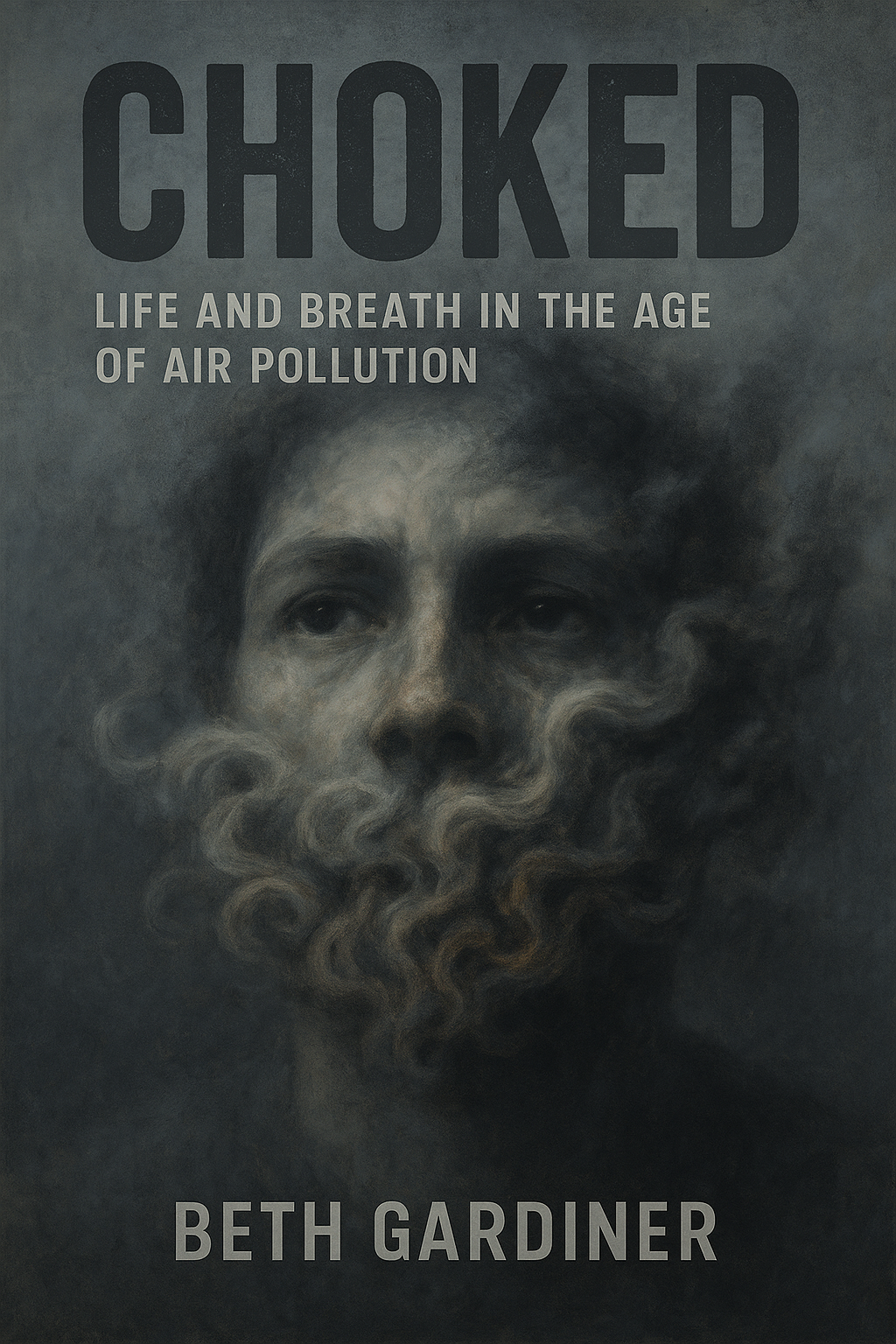
Choked: Life and Breath in the Age of Air Pollution: Life and Breath in the Age of Air Pollution
Chapter Summaries
What's Here for You
Prepare to have your breath taken away – and then, to understand how to reclaim it. Beth Gardiner's "Choked: Life and Breath in the Age of Air Pollution" isn't just a book; it's a vital awakening to one of the most pervasive yet invisible threats of our time. From the primal, life-sustaining gasp of a newborn to the insidious infiltration of microscopic particles deep within our lungs, Gardiner masterfully illustrates the profound and often devastating power of the air we breathe. You'll be transported to the front lines of global health emergencies, from the choking smog of Delhi and Krakow to the hidden dangers lurking within our own homes and the unexpected consequences of agricultural practices in California's San Joaquin Valley. But "Choked" is far from a tale of despair. It's a journey that illuminates the ingenuity of human innovation, celebrating the quiet triumphs of technologies like the catalytic converter and the hard-won victories of movements that led to landmark legislation like America's Clean Air Act. You'll witness how dedicated individuals and communities, facing down powerful industries and entrenched challenges, have paved the way for cleaner skies and healthier lives. Gardiner’s writing is both urgent and deeply empathetic, weaving together scientific rigor with compelling human stories. You'll gain a visceral understanding of how air pollution impacts everything from our personal health to the very fabric of our cities, and crucially, you'll discover the inspiring examples and actionable insights that offer hope and a roadmap for change. This book will empower you with knowledge, ignite your concern, and ultimately, equip you to advocate for the fundamental right to breathe clean air.
The Measure of a Lung Charting Pollution’s Power
The author, Beth Gardiner, begins by transporting us to the profound, primal moment of a newborn's first breath, a desperate, life-sustaining gasp that establishes the lungs' lifelong, essential role. This powerful imagery sets the stage for a deep dive into the hidden damage wrought by air pollution, a threat often imperceptible until its consequences manifest years later. Gardiner then introduces the Children's Health Study, a groundbreaking, longitudinal project initiated in Southern California, spearheaded by dedicated scientists like Ed Avol and Jim Gauderman. Their meticulous work, spanning decades and involving thousands of children, sought to answer a critical question: what is the long-term impact of breathing polluted air? Through annual lung function tests, a seemingly simple measurement, they began to chart the invisible boundaries being drawn around these children's futures, realizing that weaker lungs correlate with shorter, less vibrant lives. The initial shock for researchers was not that pollution had lasting effects, but the sheer, accumulating scale of the damage. Gardiner reveals a core insight: even seemingly small annual decrements in lung development, amounting to just a percent or two, compounded over years, led to significantly weaker lungs in children exposed to the dirtiest air, nearly five times more likely to experience a 20 percent loss in lung function. This was a stark departure from the assumption that only severe pollution events caused harm, demonstrating that the slow, steady accumulation of damage from pollutants like PM2.5 and nitrogen dioxide, often at levels previously considered safe, was the true culprit. The narrative then shifts to the broader implications, painting a global picture where only a fraction of humanity breathes truly healthy air, and pollution is a leading cause of death, impacting not just the lungs but also cardiovascular and neurological health, even affecting fetal development as explored through the work of epidemiologist Beate Ritz. The chapter weaves in personal stories, like that of Erika Fields, who participated in the study as a high school student and later saw her own children affected by respiratory issues, underscoring the human cost behind the statistics. Gardiner emphasizes that our instinctual fear response is wired for immediate threats, making the slow, insidious danger of pollution difficult to grasp and act upon, a phenomenon reinforced by Dr. John Miller's experience saving a child from a severe asthma attack triggered by poor air quality, a stark reminder of the man-made hazards we face. Ultimately, the chapter resolves with the understanding that while progress has been made in cleaning the air, thanks in part to the very research discussed, the fight is far from over, with new frontiers like roadway exposure and cumulative effects in aging bodies demanding continued vigilance and action, reminding us that the air we breathe, from the very beginning of life, shapes our destiny.
Ground Zero Delhi’s Health Emergency
Beth Gardiner, in her chapter 'Ground Zero Delhi’s Health Emergency,' plunges us into the heart of India's air pollution crisis, beginning with the invisible menace of PM2.5, particles so small they can infiltrate the deepest reaches of the human lung, carrying with them the detritus of all that humanity burns. As a unique kind of tourist, Gardiner seeks not art or religion, but the stark reality of life in a place where breathing itself is a public health emergency, finding Delhi not just enchanting and overwhelming, but a place where the air is a palpable, ever-present threat, a gauzy curtain by day and a shimmering haze by night, making South Asia the epicenter of a crisis affecting hundreds of millions. She reveals that Delhi’s average PM2.5 levels are nearly double Beijing’s, a dozen times the recommended maximum, leading to dire consequences: Delhis schoolchildren suffer twice as many lower respiratory problems, and nationally, pollution ranks second only to malnutrition as a cause of death and illness, with Indians exhibiting the worst lung function globally and the highest death rate from respiratory ailments, a stark contrast to wealthy Western nations where such health woes often vanish upon departure. Yet, amidst this pervasive crisis, Gardiner introduces Kamal Meattle, an entrepreneur who, facing a grim prognosis from doctors, built his office building, the Paharpur Business Center, into a 'bubble' – a meticulously purified environment using plants and advanced filtration, a testament to individual ingenuity in the face of systemic failure, though Meattle himself acknowledges this is a bandage on a gaping wound, a sentiment echoed by his son-in-law Barun Aggarwal, who, despite selling air purifiers, stresses the urgent need for government action. Aggarwal’s personal story, including coughing black sputum after a run in Delhi and his friend’s shock upon visiting, underscores the immediate, visceral impact of the city's air, further illustrated by stark PM2.5 readings that dwarf even Rishikesh’s, especially during Diwali, when the air becomes like 'lighting a fire and putting your face in the smoke.' The narrative then shifts to the daily grind of those most exposed, like autorickshaw drivers such as Nand Lal Kumar, who endure suffocating conditions, pounding headaches, and constant coughing, feeling forgotten by a system that offers no alternatives, their plight a sharp reminder that while pollution affects everyone, its burden is borne most heavily by those spending their lives on the streets. Gardiner revisits Delhi's past, a time when it was considered an air pollution success story thanks to a Supreme Court-mandated shift to compressed natural gas (CNG) for vehicles, a victory that unraveled as rapid growth in car ownership and a lack of sustained political will reversed the gains, leading to a steady increase in pollution levels since 2008-09. The chapter exposes the systemic issues: the hidden subsidies for car users, inadequate public transportation despite the Delhi Metro's expansion, and a reliance on older, polluting vehicles, compounded by a myriad of sources from roadside industrial activity and diesel generators to construction dust and agricultural stubble burning, which NASA photographs from space. The human cost is further illuminated by the plight of brick kiln workers enduring horrific conditions and the pervasive practice of burning garbage, both contributing significantly to the toxic air that people breathe daily, especially in densely populated areas. The narrative highlights the complex interplay of development and environmental regulation, where economic pressures, particularly poverty and the need for growth, often subjugate ecological concerns, leading to lax enforcement of environmental laws and a reliance on judicial intervention, which, while sometimes effective, lacks the technical expertise for comprehensive solutions. The chapter concludes with a somber reflection on the difficulty of enacting change, the ministerial promises of action contrasting with the on-the-fly implementation and the reluctance to target powerful industries, all against the backdrop of a nation grappling with poverty and development, where air pollution is sometimes dismissed as a temporary phase, a notion challenged by experts who warn that without genuine action, the problem will persist and worsen, leaving millions, like the Yunus family living on a concrete island by the highway, vulnerable to the invisible havoc wreaking havoc on their health.
9,416 Living London’s Diesel Disaster
Beth Gardiner, in her chapter '9,416 Living London’s Diesel Disaster,' pulls back the curtain on a pervasive, yet often invisible, threat: air pollution, specifically from diesel engines, that has silently impacted London and much of Europe. She begins by detailing the powerful, yet dirty, mechanics of the diesel engine, a workhorse of industry that became a symbol of urban life. Moving to her personal experience of London, Gardiner describes a subtle, persistent feeling of the city being 'dirty,' a sensation she initially dismissed as personal sensitivity until her research for the 2012 Olympics revealed the stark reality of a public health crisis. This crisis is quantified by the chilling number 9,416, representing the estimated annual premature deaths in London due to air pollution, a figure that, while imprecise, serves as a stark wake-up call. Gardiner introduces Simon Birkett, an obsessive advocate who, through meticulous Freedom of Information requests and his own calculations, challenged official, often understated, pollution death tolls. Birkett’s persistence, aided by toxicologists like Heather Walton and scientists like Frank Kelly, gradually exposed the inadequacy of previous estimates, particularly by highlighting the overlooked impact of nitrogen dioxide (NOx) alongside particulate matter. Walton’s later work, which incorporated NOx, arrived at the alarming 9,416 figure, revealing that nearly 20 percent of London’s annual deaths could be linked to dirty air, a statistic that often struggles for comprehension amidst scientific nuance. The narrative then delves into the historical roots of this problem, tracing Rudolf Diesel’s invention and the subsequent, perhaps unintended, embrace of diesel technology by European automakers, particularly in the UK, for passenger cars. This shift, driven by perceived climate benefits and governmental incentives like tax breaks, tragically overlooked the severe health consequences. Former government advisor Sir David King recounts his role in promoting diesel for its carbon-saving potential, believing technological advancements had mitigated its health risks, a belief later shattered by the discovery of widespread manufacturer deception, where vehicles were engineered to perform clean only during emissions tests. Damian McBride offers a contrasting perspective from within the Treasury, detailing how fuel duty and car tax policies, while ostensibly aimed at climate goals, inadvertently but significantly incentivized diesel adoption, with health risks acknowledged but ultimately downplayed in favor of political expediency. The chapter underscores that the promised climate benefits of diesel largely failed to materialize, as heavier diesel cars often negated efficiency gains and their particulate matter contributed to warming. Ultimately, Gardiner illustrates the immense difficulty in translating complex scientific data into public understanding and action, highlighting how precise numbers can be both powerful motivators and sources of confusion, leading to personal rationalizations or distrust in science. The chapter concludes with a call for systemic change, emphasizing that while individual choices matter, the true solution lies in governmental and continental policy shifts, greater investment in public transport, and a fundamental reevaluation of how we move, a vision exemplified by temporary pedestrianized streets that offer a tantalizing glimpse of cleaner, fresher air.
Air You Can Chew Poland and the Price of Coal
Beth Gardiner's "Choked" takes us to Krakow, Poland, a city literally struggling for breath, where the invisible trio of carbon and oxygen atoms, once locked away for eons in the form of coal, are resurrected to poison the air. We meet Bogdan Achimescu and Monika Bielak, whose young sons, Julek and Jasiek, are confined indoors, their lives punctuated by coughing fits and nebulizer treatments, a stark reality hidden behind superhero stickers and Harry Potter books. This is not an isolated incident; Krakow is home to some of Europe's most polluted air, a consequence of Poland's deep reliance on coal, fueling not only homes with low-tech furnaces but also its power plants. The narrative then shifts to the human cost, as Dr. Krzysztof Czarnobilski witnesses the surge in pneumonia, heart attacks, and respiratory distress among his elderly patients, forced into a lonely, sedentary existence by the foul air. Gardiner masterfully weaves in the historical and cultural weight of coal in Poland, a fuel seen by many as a symbol of security and national identity – "Polish gold" – especially in the shadow of historical dependence on Russian gas. Yet, this perceived security comes at a devastating price: over 45,000 premature deaths annually in Poland alone, a hidden cost far exceeding economic savings. The chapter highlights a burgeoning resistance, embodied by the Krakow Smog Alarm activists, who spearheaded a ban on home coal and wood burning, a groundbreaking, albeit challenging, step. We see the resistance firsthand through the eyes of Grzegorz Rumin, a coal seller facing closure, and Adam Kukla and Zbigniew Jdrygas, who find a sense of security in stockpiled coal, illustrating the deep-seated arguments of cost and perceived self-sufficiency. Gardiner also explores the industrial scale of the problem, visiting power plants and mines in Silesia, the country's coal heartland, where the landscape itself is a testament to coal's pervasive influence. Here, amid the towering piles of waste and the constant haze, we meet miners like Andrzej, whose family has worked the mines for generations, proud of their heritage but increasingly aware of the industry's decline and the health toll it takes. The chapter concludes with a poignant reflection on Poland's complex relationship with coal, a fuel intertwined with its history, identity, and economy, and the potential for a transformative shift toward cleaner energy, a revolution that could echo the hopeful spirit of Solidarity and redefine not just Poland's future, but our shared global destiny.
Cows, Almonds, Asthma Crisis in the San Joaquin Valley
Beth Gardiner transports us to the San Joaquin Valley, a region of stark contrasts, where breathtaking agricultural bounty collides with America's worst air quality. The chapter opens with a visceral description of the body's inflammatory response to unseen invaders, a process that mirrors the insidious nature of pollution itself, a cascade of consequences far beyond the initial threat. As Gardiner drives down Highway 99, the landscape unfolds not just as fertile farmland, but as an industrial complex dedicated to 'Ag,' dominated by colossal structures processing feed, dehydrating milk, and preparing crops for a global market. Yet, this productivity comes at a devastating cost: the air is thick with a perpetual haze, a tangible presence that shrouds the majestic Sierra Nevada and Diablo ranges. Gardiner masterfully reveals that the crisis here shatters the myth of dirty air being solely an urban problem, illustrating how this story mirrors broader American narratives of environmental injustice. The author highlights a disturbing parallel: while pollution indiscriminately harms, its steepest price is exacted from the poor, disproportionately people of color and immigrants, who live closest to the sources of contamination. This inequality, a deep historical thread woven through the Valley's past, from the Dust Bowl migrants to Cesar Chavez's fight for farmworker rights, now manifests in the very air they breathe. We meet Tom Frantz, a former math teacher and relentless activist, head of the Association of Irritated Residents, who litigates against polluting mega-dairies and the regulators he believes enable them. Frantz's ranch, surrounded by almond groves—the source of 99% of America's supply—becomes a focal point for understanding the immense scale of 'Ag,' where thousands of cows are concentrated, their manure creating lagoons that release ammonia and contribute to the deadly PM2.5 particles. He explains the baffling sight of silage mounds, covered in white tarps, revealing how their fermentation releases volatile organic compounds that form ozone, a potent irritant. The human cost is profound: premature birth rates are high, and Frantz himself, along with his father and brother-in-law, developed asthma, a condition he fears his own daughter may face. The narrative then expands to encompass the sheer industrialization of farming, the 'Ag-business' that has transformed the relationship with land and food, leading to antibiotic resistance, dwindling insect populations, and severe groundwater depletion. Gardiner reveals the shocking statistic that agriculture accounts for nearly half of man-made air pollution in America and Europe, linking it to premature deaths. We witness the intense pressure on nature's rhythms, from the millions of stressed honeybees trucked in for pollination to the diesel fumes from tractors and the omnipresent pumpjacks of the oil and gas industry, all trapped by the Valley's topography. The chapter draws parallels to John Steinbeck's 'The Grapes of Wrath' and Cesar Chavez's activism, underscoring the enduring inequality that separates those who work the land from those who profit from it. This has led to the San Joaquin Valley hosting seven of the ten most polluted neighborhoods in California. We hear from Jos Chavez and Javier Cruz, residents of Arvin and Delano, who speak of the pervasive health issues—asthma, respiratory problems, even cancer—linked to the constant presence of dairies, composting plants, pesticides, and oil operations. Their frustration is palpable, a quiet resignation tinged with a fierce determination to demand change. The struggle for clean air is embodied in the tense standoff between regulators like Seyed Sadredin, who argues that businesses have done all they can, and advocates like Lupe Martinez and Caroline Farrell of the Center on Race, Poverty, the Environment, who believe the air district prioritizes polluters. Even John Capitman, a public health professor on the air agency's board, acknowledges the polarization, noting the elite's resistance to regulation, yet sees slow progress in reducing agricultural waste burning. Ultimately, Gardiner concludes that until there's an incentive for the region's largest companies to change, the suffering will continue to fall on the same people who have always borne its brunt, a stark reminder of the enduring inequality etched into the Valley's story.
Home Fires Burning A Paradigm Shifts
Beth Gardiner, in 'Home Fires Burning: A Paradigm Shift,' unveils a profound, often invisible, global crisis: the devastating impact of household air pollution. She explains that while we focus on tailpipes and smokestacks, millions of homes worldwide are filled with toxic smoke from cooking fires fueled by wood, dung, and charcoal. This isn't just an environmental issue; it's a health catastrophe, disproportionately affecting women and children who spend more time indoors. Gardiner draws us into the lives of families like the Kushwahas in India and the Masekos in Malawi, painting a vivid picture of the daily struggle against choking fumes. We witness the burning eyes, the persistent coughs, the physical toll – a stark contrast to the aspirations of young girls like Khushboo, who dreams of being a teacher but is burdened by domestic chores and the ever-present smoke. The narrative shifts as Gardiner explores the evolution of solutions, moving beyond 'improved biomass stoves,' which proved insufficient, to the urgent need for clean fuels like LPG and electricity. She highlights the systemic infrastructure failures that keep these cleaner options out of reach for billions, illustrating this with Priti Kushwaha's struggle to access affordable gas. This journey reveals a critical insight: the problem of household air pollution is deeply intertwined with poverty and a lack of access to basic modern amenities, a reality that demands a paradigm shift in how we address global health and environmental justice. The chapter concludes by drawing parallels to the underappreciated dangers of wood smoke in developed nations, revealing how even seemingly benign home fires contribute to significant particulate pollution, and urging a universal commitment to cleaner air, emphasizing that this is not merely an environmental concern, but a matter of fundamental human justice, much like Kirk Smith's realization that 'It's not lifesaving fuels for impoverished households that threaten the climate. It's you and me.'
To Change a Nation The Story of America’s Clean Air Act
The story of America's Clean Air Act is a powerful testament to how dedicated individuals, driven by a shared vision, can fundamentally alter the nation's trajectory, transforming polluted skies into breathable air. Beth Gardiner, in "Choked," illuminates the journey from a time when industrial smokestacks choked the landscape, their toxic plumes turning into acidic rain that poisoned forests, suffocated aquatic life, and eroded structures, to the eventual, hard-won victories of cleaner air. At the heart of this transformation were unlikely friendships, like that of Senate aides Tom Jorling and Leon Billings, who, despite opposing party affiliations, forged a deep bond that became the bedrock for groundbreaking legislation. Billings, the son of radical newspaper publishers, honed his sharp wit and combative spirit in Montana, while Jorling, a former football star and Notre Dame attendee, found his path in Senate staff work. Their collaboration, fueled by mutual respect and a shared commitment, navigated the turbulent 1960s and 70s, a period when environmental consciousness was nascent, yet the visible signs of pollution—burning rivers and coal-stained shirts—galvanized public will. Senator Edmund Muskie, recognizing the urgency, championed the creation of an Air and Water Pollution subcommittee, a backwater assignment that became the crucible for change. The hearings convened by Muskie and his colleagues, including figures like Bob Dole and Howard Baker, revealed the failures of previous environmental laws, which had too often been dictated by industry costs and technical feasibility. A pivotal insight emerged: public health, not corporate profit, must be the paramount consideration in setting air quality standards. This fundamental reordering of priorities, placing human well-being above economic expediency, became the beating heart of the new Clean Air Act. The law's strength lay in its innovative design: setting national standards while allowing states to devise their own implementation plans, incorporating citizen suit provisions for accountability, and crucially, mandating the use of the word 'shall' to ensure federal action. Senator Howard Baker's "technology-forcing" regulation pushed automakers toward ambitious goals, leading to innovations like the catalytic converter that would save lives globally. The legislative language, meticulously crafted by Jorling and Billings during their commutes, reflected a deep understanding of the stakes and a belief in government's capacity to effect positive change. Despite fierce industry opposition, predicting financial ruin, the Clean Air Act of 1970 passed with overwhelming bipartisan support, signed into law by President Richard Nixon, who, despite personal reservations, recognized the political imperative. The law's impact was profound: within two decades, carbon monoxide levels halved, particle pollution dropped significantly, and the economic benefits far outweighed the costs, saving countless lives and averting widespread illness. Yet, the fight was far from over. Henry Waxman, a tenacious congressman, became a fierce defender, battling against efforts to weaken the act, particularly during the Reagan administration. Waxman's strategic brilliance, his ability to leverage public opinion, and his unwavering commitment to health protections, even when facing powerful opposition like Congressman John Dingell, proved instrumental in preserving and updating the law. The 1990 amendments addressed emerging crises like acid rain and the ozone hole, introducing market-based solutions and expanding the list of regulated toxins. Later, under President George W. Bush, Christine Todd Whitman, an EPA administrator caught between conflicting administration priorities and industry pressure, faced the challenge of upholding the act's principles, ultimately resigning when faced with a choice that compromised her conscience. The Obama administration, leveraging the Clean Air Act's inherent flexibility, employed it to address climate change, setting new standards for power plants and vehicles, a move that helped pave the way for the Paris Agreement. Even today, as Congressman Pete Olson advocates for loosening requirements and conservative think tanks like the Heritage Foundation, represented by Diane Katz, argue against federal overreach, the core principles of the Clean Air Act endure. Tom Jorling, reflecting on the shift from collaborative governance to a "scorched-earth battleground," laments the erosion of environmental protections under the Trump administration, where scientific integrity was sidelined and the agency tasked with safeguarding public health was led by those beholden to polluting industries. Yet, the Clean Air Act remains a powerful force, a testament to the foresight of its creators and the enduring need for vigilance. Paul Billings, son of Leon, continues the fight, embodying the principle that clean air is a fundamental right, a right worth defending against those who would prioritize profit over health, reminding us that while progress is hard-won, vigilance is perpetual, and the work of safeguarding our shared atmosphere is never truly finished.
Reluctant Innovators Air and the Automakers
Beth Gardiner, in her chapter 'Reluctant Innovators: Air and the Automakers' from 'Choked,' unveils a technological marvel often hidden beneath our cars: the catalytic converter. This unassuming device, a honeycomb of precious metals like platinum, palladium, and rhodium, works tirelessly to transmute toxic exhaust fumes into harmless substances. Its story, however, is far from simple, interwoven with the complex dance between innovation, industry resistance, and regulatory pressure. We learn of Eugene Houdry, a visionary who, after revolutionizing oil refining, turned his attention to air pollution, developing an early catalytic converter. Yet, his invention was hobbled by the prevalent use of leaded gasoline, a potent neurotoxin whose widespread adoption was championed by giants like General Motors and DuPont, despite dire warnings from scientists about its devastating public health impacts. The chapter paints a stark picture of corporate priorities, where profit, exemplified by the lucrative patent on tetraethyl lead, often overshadowed human well-being. It was only with the passage of the Clean Air Act in 1970, a landmark piece of legislation demanding drastic emission reductions, that Houdry's idea transformed from a pipe dream into a necessity. Carmakers, initially furious and resistant, decrying the law's demands as impossible and economically ruinous, were nonetheless spurred by the regulatory stick and the promises of catalyst manufacturers. A pivotal moment arrived with Ed Cole, then president of GM, who, defying industry inertia and the status quo, not only embraced the catalytic converter but also used his considerable influence to force the oil industry's hand in phasing out leaded gasoline. This wasn't a philanthropic act, but a strategic one, recognizing the inevitable shift and positioning GM to lead. The narrative then delves into the persistent challenge of reducing nitrogen oxides, a pollutant requiring a different chemical approach, a problem eventually solved by engineers like John Mooney and Carl Keith with the development of the three-way catalytic converter, a technology now globally adopted. The story takes a darker turn with the Dieselgate scandal, where Volkswagen, and indeed much of the global auto industry, was caught using 'defeat devices' to cheat emissions tests, revealing a systemic pattern of evasion and a profound failure of regulatory oversight, particularly in Europe, where enforcement mechanisms were weak and industry lobbying powerful. This stark contrast highlights how strong regulatory frameworks, like the US EPA, though often fought by industry, are crucial for driving genuine progress, as demonstrated by California's persistent role in pushing national standards. Ultimately, Gardiner reveals that true innovation in cleaner air wasn't a spontaneous act of corporate goodwill, but a hard-won battle, dragged out of an industry often more invested in fighting the future than embracing it, underscoring that technological progress, while vital, is often a byproduct of societal demand and forceful regulation.
Inch by Inch L.A.’s Long Road
Beth Gardiner's chapter, 'Inch by Inch L.A.'s Long Road,' unfurls the story of Los Angeles's arduous journey from a city choked by smog to one with significantly improved air quality, a narrative woven with scientific discovery, persistent activism, and the slow, often contentious, march of regulation. It begins with a visceral depiction of an asthma attack, a stark reminder of the immediate, life-threatening consequences of polluted air, and then transports us back to that startling July morning in 1943 when a yellow-brown cloud descended upon Los Angeles, an unprecedented haze that burned eyes and instilled fear, initially mistaken for a chemical attack. This event marked the beginning of a recurring nightmare, a 'daylight dimout' that obscured sunshine, grounded airplanes, and withered crops, earning the city the moniker 'airborne dump.' The mystery of this pervasive smog persisted until the 1950s, when Arie Haagen-Smit, a biochemist at Caltech, identified the culprit: not a single factory, but the ubiquitous automobiles and refineries, whose emissions, when combined with abundant sunshine, created photochemical smog. This revelation, though scientifically sound, was met with resistance from powerful industries, forcing Haagen-Smit to demonstrate his findings publicly, a crucial step in acknowledging that cleaner cars were essential for the cherished Los Angeles lifestyle. The chapter then introduces Mary Nichols, a figure who would become instrumental in this fight, her initial disgust at the city's orange-tinged, foul-smelling air in 1969 fueling a lifelong dedication to environmental advocacy. Driven by a background steeped in social consciousness, Nichols, as a young lawyer, took on the city of Riverside's plea for help, not by suing Los Angeles, but by leveraging the nascent Clean Air Act, a landmark victory that mandated authorities to address the region's pollution. This legal triumph set the stage for decades of regulatory battles, highlighting the contentious nature of environmental policy, where each step forward was hard-fought, often met with protests from affected industries and communities. Gardiner illustrates the complexity of this process, detailing how California, empowered by its unique role under the Clean Air Act, pushed for stringent vehicle emission standards, changes that ultimately benefited the entire nation. Despite significant progress, evidenced by the return of visible mountains and a reduction in ozone levels, Los Angeles still grapples with a profound pollution problem, especially in its 'hotspots' like Wilmington, a predominantly Latino and low-income neighborhood burdened by the immense activity of the ports of Los Angeles and Long Beach. Here, activists like Jesse Marquez tirelessly campaign against the relentless fumes from cargo ships, trucks, and refineries, documenting the human cost of this disparity in environmental justice. The narrative underscores that while L.A.'s smog has become less visible, it continues to exact a toll, particularly on vulnerable communities. Yet, the chapter concludes with a sense of cautious optimism: the persistent efforts of individuals like Nichols and Marquez, supported by scientific understanding and regulatory action, have yielded tangible improvements, setting a precedent for aggressive environmental action. The push towards zero-emission technology, particularly electric vehicles, signifies a forward-looking approach, demonstrating that even in the face of immense challenges and powerful opposition, progress is possible, and the fight for breathable air, though ongoing, is a battle that can be won, inch by inch.
Live from the “Airpocalypse” China’s Next Revolution
Beth Gardiner’s chapter, "Live from the ‘Airpocalypse’ China’s Next Revolution," invites us into the heart of China’s struggle with air pollution, a crisis that once shrouded its cities in an almost impenetrable veil, but is now, slowly, beginning to lift. We learn how journalist Chai Jing, in her powerful documentary "Under the Dome," dared to confront this issue, weaving her personal fear for her pregnant daughter with stark data on PM2.5 particles and the government's complicity. Chai’s work, initially embraced, was eventually censored, highlighting the delicate and often dangerous terrain of free expression in China, where even a journalist’s courage can become a sensitive subject. Yet, her film ignited a public awakening, a crucial precursor to the government’s shift towards transparency, exemplified by the U.S. Embassy’s early pollution readings and the subsequent widespread adoption of PM2.5 monitoring. This newfound openness, as environmentalist Ma Jun explains, has empowered citizens and watchdog groups, transforming public pressure into a potent tool for change in a system that lacks robust legal recourse against polluters. The narrative then pivots to the immense challenge of coal, the primary culprit, and the government’s declaration of war on pollution, a move that, while perhaps not solely driven by public outcry, has provided political cover for necessary economic reforms. We see the tangible, albeit uneven, progress: reductions in particulate levels, the ambitious rollout of renewable energy, and the global impact of China’s dominance in solar panel manufacturing, a quiet revolution happening even as political winds shift elsewhere. The chapter masterfully balances the grim reality of persistent pollution, particularly in industrial heartlands like Tangshan, with the hopeful trajectory of change, illustrating that even in a nation of contradictions, the pursuit of cleaner air is undeniably underway, driven by a complex interplay of public awareness, political will, and economic necessity, offering a compelling glimpse into a nation grappling with its past and forging a new, more breathable future.
“To Whom Belongs the City?” Berlin Looks Beyond Cars
Beth Gardiner invites us into Berlin, a city grappling with the question of who truly owns its streets, revealing a compelling narrative of transformation beyond the automobile. As the chapter opens with the primal, visceral struggle for breath, it sets a tone of urgency that mirrors the silent crisis of air pollution. We then meet Katharina Uppenbrink, a Berliner who, like many others, has embraced a life less dominated by cars, opting for a vibrant mix of cycling, car-sharing, and exceptional public transport. This is not mere happenstance; Berlin, once defined by division and now by its 'poor but sexy' bohemian spirit, is actively reorienting itself around human needs, nudging citizens away from private vehicles with convenience and pushing out the most polluting cars with bans. The author paints a vivid picture of a city where streets hum with life on a human scale, a stark contrast to the car-choked landscapes of other metropolises. The ease of navigating Berlin, often within 20 minutes by public transport or even faster by bike, fosters a sense of freedom and connection, a far cry from the stressful, time-sapping journeys in cities like London. Gardiner highlights how cycling in Berlin is not an extreme sport for the Lycra-clad elite but an integrated part of daily life, with residents commuting in business attire on practical, accessible bikes. This cultural shift, she suggests, is possible because Berlin's wider streets and less congested traffic make cycling feel safer and more accessible. Even as Berlin faces its own challenges—traffic incidents, lingering pollution from external sources, and the shadow of the Dieselgate scandal which exposed the betrayal of car manufacturers—the city's progress is a beacon. Axel Friedrich, a seasoned air quality expert, emphasizes that Berlin serves as a vital 'showcase,' demonstrating that a high quality of life, a thriving economy, and clean air can coexist. He points to a deliberate, long-term vision formulated in 2000, aiming to reclaim urban space for humans from the dominance of cars, a core principle encapsulated by the question: 'To whom belongs the city?' Martin Lutz, a former city air expert, underscores the city's remarkable success in maintaining low car ownership rates, a legacy of its divided past now preserved through significant investment in public transportation and stringent environmental regulations for public fleets. However, Lutz and others express fury over the car industry's deception, which undermined efforts like the Low Emissions Zone. Peter Feldkamp, a cycling advocate, voices frustration that despite Berliners' enthusiasm, infrastructure often lags, with bike lanes frequently reduced to mere painted lines, underscoring that the fight for space is a matter of 'life and death.' The grassroots movement for safer cycling, evidenced by an overwhelming number of petition signatures, pushed for tangible improvements, revealing a powerful public will for change. Jrg Welke, from an agency promoting electromobility, views Berlin as a 'laboratory,' fostering innovation in transportation-as-a-service models, electric bikes, and shared mobility solutions, recognizing that the future lies in flexible, needs-based transportation. Theresa Theune, returning to Berlin after her children fell ill from its poor air, now embraces electric mobility, lamenting the inefficiency of single-occupant cars and the 'e-bike smile' of pure joy, envisioning a future where noisy, polluting cars are relics of the past. Ultimately, Gardiner concludes that while Berlin is not a utopia, its tangible achievements offer a reachable model for other cities, proving that a conscious, collective effort to prioritize human well-being over automotive dominance can indeed reshape the urban landscape and our very ability to breathe.
Conclusion
Beth Gardiner's "Choked" offers a sobering yet ultimately empowering examination of air pollution, revealing it not as a distant environmental issue, but as an intimate, pervasive threat to our very existence. The book masterfully synthesizes scientific evidence with compelling human narratives, demonstrating that the cumulative damage from even seemingly low-level, long-term exposure to pollutants like PM2.5 and nitrogen dioxide inflicts profound and often irreversible harm on lung development, cardiovascular health, and neurological function. This insidious, invisible danger exploits our evolutionary blind spots, leaving us ill-equipped to react to a threat that doesn't trigger our ingrained fight-or-flight responses. Gardiner powerfully illustrates that the consequences extend far beyond individual health, impacting fetal development, exacerbating existing inequalities, and creating public health emergencies in densely populated areas like Delhi. The emotional weight of the book lies in its stark portrayal of suffering, particularly among vulnerable populations – children in Poland struggling to breathe due to coal smoke, communities in the San Joaquin Valley bearing the brunt of agricultural and vehicular emissions, and women and children globally exposed to toxic indoor cooking fires. The narrative transcends mere problem identification, however, by highlighting the immense power of collective action and policy. From the success of America's Clean Air Act, spurred by dedicated individuals and scientific revelation, to China's ambitious shift towards renewable energy driven by its 'Airpocalypse,' the book underscores that progress, though often incremental and hard-won, is achievable. Gardiner meticulously details the historical battles against corporate malfeasance, flawed technological promises (like the diesel 'disaster'), and political inertia, emphasizing that effective regulation and vigilant enforcement, even when met with fierce industry resistance and claims of impossibility, are indispensable. The practical wisdom embedded within "Choked" is multifaceted: it calls for a fundamental re-evaluation of our societal priorities, urging us to place public health above short-term economic gains and corporate profits. It champions 'technology-forcing' regulations, citizen empowerment through mechanisms like 'citizen suits,' and the crucial need for governmental accountability and sustained political will. Furthermore, the book advocates for a paradigm shift in urban planning, moving away from car-centric designs towards human-centered cities that prioritize public transit, cycling, and green spaces, thereby enhancing livability and addressing pollution simultaneously. Ultimately, "Choked" serves as a vital call to action, a testament to human resilience, and a profound reminder that the fight for clean air is a fight for our fundamental right to a healthy and vibrant future, demanding continuous adaptation, robust solutions, and unwavering commitment from individuals, communities, and governments alike.
Key Takeaways
Long-term, cumulative damage from air pollution, even at seemingly low levels, significantly impairs lung development and overall health, challenging the assumption that only acute exposure causes lasting harm.
The Children's Health Study demonstrated that consistent, low-level exposure to pollutants like PM2.5 and nitrogen dioxide can lead to substantial, irreversible deficits in lung function, impacting future vitality and longevity.
Air pollution's detrimental effects extend beyond the respiratory system, significantly contributing to cardiovascular disease, neurological decline, and adverse fetal development, highlighting the interconnectedness of bodily systems.
Our ingrained threat response is ill-equipped to handle the slow, invisible danger of air pollution, leading to a collective underestimation of its risks and a reluctance to enact necessary behavioral and societal changes.
Even small improvements in air quality, driven by scientific evidence and policy changes, can yield immediate and significant public health benefits, offering a hopeful counterpoint to the pervasive threat.
Understanding the precise impact of localized pollution, such as near busy roadways, is crucial, as these 'double whammies' can compound health risks even in areas with generally good air quality.
The pervasive threat of PM2.5 particles, invisible to the naked eye, demands a deeper understanding of their ability to penetrate the human body and cause significant harm, highlighting the critical need for advanced detection and mitigation strategies.
Air pollution in densely populated areas like Delhi represents a profound public health emergency, disproportionately affecting vulnerable populations and necessitating systemic governmental intervention beyond individual coping mechanisms.
Past successes in air quality improvement, such as Delhi's shift to CNG, underscore the potential for policy change but also reveal the fragility of progress when confronted by rapid economic growth, increased consumption, and a waning of political will.
The complex web of pollution sources in India, ranging from industrial activities and transportation to agricultural practices and domestic fuel burning, requires a multi-faceted approach to source apportionment and cleanup efforts.
Economic development and environmental protection are often in tension, with poverty and the drive for growth sometimes leading to lax regulation and a prioritization of immediate needs over long-term ecological health, necessitating a delicate balance.
The judiciary's role in environmental policy, while sometimes effective in forcing action, is a sign of governmental inadequacy, as judges lack the technical expertise for comprehensive solutions and elected leaders may use court intervention to avoid difficult policy decisions.
Addressing air pollution requires not only technological solutions and regulatory action but also a fundamental shift in governance, prioritizing long-term planning and political will over reactive measures and appeasing powerful industries.
The statistical quantification of air pollution's death toll, such as London's '9,416,' while imprecise, serves as a crucial, albeit unsettling, catalyst for public and political awareness by making an invisible threat tangible.
Governmental policies, driven by a complex mix of climate goals, economic incentives, and political maneuvering, can inadvertently create or exacerbate public health crises by prioritizing short-term benefits over long-term health consequences, as seen in the promotion of diesel cars.
Technological advancements, while promising solutions, can be undermined by corporate malfeasance and regulatory failures, leading to outcomes far worse than initially anticipated, demonstrating the critical need for robust enforcement.
The public's perception and understanding of scientific data, particularly concerning complex risks like air pollution, are shaped by the way information is communicated, leading to a spectrum of responses from denial and rationalization to demands for action.
Addressing widespread environmental and health issues like air pollution requires systemic, top-down solutions, including significant policy changes and infrastructure investment, as individual actions, while important, are insufficient to overcome deeply entrenched problems.
The historical embrace of diesel technology, fueled by a flawed promise of climate benefits and economic advantages, has created a 'diesel disaster' in Europe, underscoring the importance of a holistic assessment of technologies that considers both environmental and human health impacts.
The deep cultural and historical ties to coal in nations like Poland create a powerful resistance to cleaner energy, framing it as a threat to national security and identity, even when the health and economic costs are demonstrably higher.
The invisible threat of air pollution from domestic coal burning, though less visible than industrial emissions, exacts a devastating and often underestimated toll on public health, particularly on vulnerable populations like children and the elderly.
Economic arguments for continuing coal use often fail to account for the significant hidden costs, such as healthcare expenditures and lost productivity due to pollution-related illnesses and premature deaths.
Citizen activism and grassroots movements can be potent catalysts for policy change, compelling governments to address environmental and health crises that have long been ignored.
A nation's energy choices are deeply intertwined with its geopolitical considerations and historical experiences, influencing its willingness to embrace new energy sources that might create different forms of dependence.
The transition to cleaner energy requires not only technological solutions and financial incentives but also a fundamental shift in societal mindset and political will to overcome ingrained dependencies and vested interests.
Industrial-scale agriculture, while highly productive, generates significant air pollution through concentrated animal feeding operations (CAFOs) and associated waste management, disproportionately impacting the health of nearby low-income communities.
The San Joaquin Valley's air pollution crisis is a complex interplay of agricultural emissions, vehicle exhaust, and unique topography, exacerbating environmental injustices faced by marginalized populations.
Historical patterns of economic inequality and exploitation in the San Joaquin Valley have created a system where the burden of environmental degradation, including severe air pollution, falls heavily on the working poor, primarily immigrant and minority communities.
The regulatory response to the San Joaquin Valley's air pollution is characterized by deep polarization between environmental advocates demanding stricter controls and industry-aligned regulators who argue that businesses have already met their obligations.
The intensive, modern agricultural practices, driven by profit and efficiency, warp natural rhythms and place immense pressure on both the environment and living creatures, from livestock to migratory pollinators.
Addressing the San Joaquin Valley's air pollution requires not only regulatory action but also a fundamental shift in incentives for large agricultural corporations to adopt more sustainable and equitable practices.
Household air pollution from cooking fires is a global health crisis as deadly as, if not more so than, outdoor pollution, disproportionately affecting women and children.
The limitations of 'improved biomass stoves' highlight that incremental technological fixes are insufficient; a paradigm shift towards clean energy access is necessary.
Systemic infrastructure failures and economic barriers prevent the widespread adoption of cleaner cooking fuels, underscoring the deep connection between poverty and health.
Addressing household air pollution requires a global commitment to equity, recognizing that denying clean energy access to the poor while developed nations use fossil fuels is a matter of justice, not just environmentalism.
Even in developed nations, wood smoke from fireplaces and stoves contributes significantly to particulate pollution, revealing that the problem of indoor air quality transcends economic status.
Prioritize public health over corporate profit when setting environmental standards to ensure effective regulation.
Cultivate bipartisan collaboration and mutual respect among individuals with differing political affiliations to achieve significant legislative progress.
Embrace 'technology-forcing' regulation to drive innovation and achieve ambitious environmental goals.
Empower citizens through mechanisms like 'citizen suits' to ensure government accountability in enforcing environmental laws.
Recognize that environmental protection requires continuous adaptation and future-proofing to address evolving scientific understanding and new pollutants.
Sustained public engagement and political will are crucial for maintaining and strengthening environmental protections against determined opposition.
The strength of environmental legislation lies not only in its design but also in its consistent and principled enforcement by dedicated individuals.
Technological breakthroughs like the catalytic converter, essential for public health, often arise from visionary individuals but require significant regulatory pressure and industry shifts to become widespread realities.
Corporate profit motives can create powerful inertia against necessary public health and environmental regulations, leading to the suppression of scientific findings and the prioritization of lucrative, harmful products like leaded gasoline.
Strong, well-resourced regulatory bodies, even when fiercely opposed by industry, are indispensable drivers of innovation that benefits society, compelling reluctant companies to adopt cleaner technologies and practices.
Industry resistance to environmental regulations, characterized by claims of impossibility and economic catastrophe, often masks a strategic unwillingness to invest in change, a pattern that requires persistent oversight and enforcement to overcome.
The development and adoption of critical environmental technologies, like the catalytic converter and later electric vehicles, are not solely driven by market demand but are significantly shaped by political will, regulatory mandates, and the strategic decisions of influential industry leaders.
Systemic failures in regulatory enforcement, particularly when national governments are beholden to powerful industries, can allow widespread non-compliance and harm, as seen in the Dieselgate scandal, underscoring the need for robust, independent oversight.
The transition to cleaner transportation is a complex evolution, demanding not only technological innovation but also a fundamental reevaluation of societal reliance on personal vehicles and a commitment to sustainable urban planning.
The creation of photochemical smog is a complex interplay of industrial emissions (like unburned fuel and nitrogen oxides) and natural elements (like sunshine), requiring multifaceted solutions beyond simply targeting one source.
Scientific revelation, even when met with industry resistance, can be a powerful catalyst for change when coupled with public demonstration and regulatory action.
Environmental justice demands that the disproportionate burden of pollution borne by low-income and minority communities be addressed through targeted activism and policy.
Incremental progress, achieved through persistent regulation and advocacy over decades, is essential for tackling pervasive environmental challenges like air pollution.
The fight for cleaner air is inextricably linked to broader climate goals, as solutions like zero-emission technology address both health and environmental concerns.
Despite significant improvements, the sheer scale of human activity and technological reliance in urban basins can sustain pollution levels that still pose serious health risks, especially to vulnerable populations.
The power of personal narrative, like Chai Jing's, can catalyze societal change by humanizing complex issues such as air pollution, even in restrictive environments.
Transparency, particularly through accessible data and public monitoring, is a critical catalyst for environmental action and citizen empowerment in China.
Governmental action on pollution, while influenced by public pressure and economic necessity, can also serve as a strategic tool for implementing broader economic reforms.
China's massive investment in renewable energy, driven by its anti-pollution efforts, positions it as a global leader in clean technology and climate change mitigation.
Navigating environmental progress in China involves acknowledging deep-seated economic dependencies and the uneven enforcement of regulations, requiring persistent public engagement.
Cities can strategically reorient themselves around human needs rather than car dominance by integrating convenient public transit, car-sharing, and cycling infrastructure, fostering a higher quality of life.
A clear, long-term vision, such as Berlin's 'To whom belongs the city?' initiative, is crucial for driving systemic change in urban mobility, integrating economic, social, and environmental goals.
The cultural perception of cycling can shift from a niche activity to an everyday mode of transport when cities offer accessible infrastructure and normalize its use across all demographics.
Overcoming the inertia of car-centric design requires confronting not only physical infrastructure but also the 'soft items' of livability—green spaces, reduced noise, and cleaner air—which attract talent and foster thriving economies.
Addressing air pollution and traffic congestion is an ongoing battle, often complicated by external factors and industry deception, necessitating persistent advocacy and robust policy enforcement.
The future of urban transportation lies in a 'mobility-as-a-service' model, leveraging technology to offer flexible, shared, and electric options that reduce individual car ownership and its associated environmental and spatial costs.
Action Plan
Advocate for and support policies aimed at improving local and regional air quality, recognizing that even small reductions in pollution can have significant health benefits.
Educate yourself and others about the specific pollutants in your area (e.g., PM2.5, NOx) and their known health effects.
When possible, choose routes and locations for daily activities that minimize exposure to high-traffic areas.
Support and participate in long-term environmental health studies, understanding that such research is vital for uncovering and addressing hidden health threats.
Consider your home's location and proximity to major roadways, and explore ways to reduce indoor air pollution.
Stay informed about air quality advisories and take precautions on days with poor air quality, especially for vulnerable populations like children and the elderly.
Engage in community discussions and initiatives focused on environmental health and sustainable practices.
Educate yourself on the specific components of air pollution, like PM2.5, and their health impacts.
Advocate for stronger environmental regulations and enforcement at local and national levels.
Support organizations working on air quality improvement and environmental justice.
Consider personal choices that reduce your carbon footprint and contribute to cleaner air.
Investigate and understand the various sources of air pollution in your own community.
Engage in conversations about air quality, raising awareness among friends, family, and colleagues.
Support policies that promote sustainable development and prioritize public health alongside economic growth.
Educate yourself about the specific air quality in your local area, noting sources of pollution.
Advocate for stricter emissions standards and policies that prioritize public health over short-term economic gains.
Support and utilize public transportation, cycling, and walking initiatives to reduce reliance on personal vehicles.
Engage with local and national representatives to demand comprehensive strategies for improving air quality.
Be critical of technological promises, understanding that efficiency gains must be weighed against potential health and environmental costs.
Question and investigate official statistics and reports related to environmental and health issues, seeking out independent research and advocacy groups.
Consider the broader implications of your consumption choices, including transportation and energy use, and their impact on collective well-being.
Educate yourself on the specific sources and impacts of air pollution in your local community.
Support and engage with local or national organizations advocating for cleaner air policies.
Consider the hidden costs of energy choices, factoring in health and environmental impacts beyond immediate price.
Advocate for policies that incentivize the transition to renewable energy sources and provide support for affected industries and workers.
Engage in conversations within your community about the importance of clean air and sustainable energy solutions.
When making purchasing decisions, consider the environmental footprint of the products and services you use.
Explore how historical narratives and cultural identities can either hinder or facilitate necessary societal change.
Investigate the sources of air pollution in your own community and their disproportionate impact on vulnerable populations.
Support organizations advocating for stricter environmental regulations and corporate accountability in agriculture and industry.
Educate yourself on the lifecycle of your food, from production methods to transportation, and consider the environmental footprint of your choices.
Engage in local governance by attending public meetings or contacting representatives to voice concerns about environmental quality and public health.
Seek out and amplify the voices of communities most affected by pollution to ensure their experiences inform policy decisions.
Consider how industrial-scale practices in any sector can create externalities that harm both the environment and marginalized groups.
Educate yourself and others about the severity and scope of household air pollution.
Support organizations working to provide clean cooking solutions in developing nations.
Advocate for policies that prioritize infrastructure development for clean energy access globally.
Re-evaluate personal choices regarding wood-burning for heat or ambiance, considering their impact on local air quality.
Recognize the intersectionality of poverty, health, and environmental issues in addressing global challenges.
Identify and understand the core principles of existing environmental regulations that prioritize public health.
Seek opportunities to foster collaboration and dialogue across political divides on issues of shared concern.
Advocate for regulatory frameworks that incentivize innovation and technological advancement in pollution control.
Support mechanisms that ensure government accountability and public participation in environmental policy enforcement.
Stay informed about evolving scientific understanding of environmental issues and advocate for policies that adapt accordingly.
Engage in sustained advocacy for environmental protections, recognizing that progress requires ongoing effort and vigilance.
Educate yourself and others on the historical context and hard-won nature of current environmental protections to foster appreciation and prevent regression.
Research the history and impact of environmental regulations in your own country or region.
Investigate the technologies behind common products you use daily to understand their environmental and health implications.
Consider how corporate incentives might influence product development and marketing, and seek out companies with transparent and ethical practices.
Engage with public policy debates surrounding environmental protection and hold elected officials accountable for robust enforcement of regulations.
Support and advocate for sustainable transportation options, whether through personal choices or community initiatives.
Educate yourself on the 'Dieselgate' scandal and its implications for corporate accountability and regulatory effectiveness.
Explore the potential of emerging technologies, like electric vehicles, and their role in addressing both climate change and air pollution.
Educate yourself on the sources of air pollution in your local community, paying attention to industrial sites, major roadways, and ports.
Support or engage with local environmental organizations advocating for cleaner air and environmental justice.
Advocate for stricter emissions standards and the transition to zero-emission technologies for vehicles and freight.
Consider the environmental footprint of your consumption, particularly the shipping and transportation of goods.
Be mindful of air quality advisories and take protective measures on days with poor air quality, especially if you belong to a vulnerable population.
Research and support policies that incentivize the adoption of electric vehicles and renewable energy sources.
Engage in local governance by attending public hearings or contacting representatives regarding environmental regulations and land use decisions that impact air quality.
Seek out and engage with personal stories and documentaries that shed light on critical social and environmental issues.
Advocate for transparency and data accessibility in environmental and public health matters within your own community or sphere of influence.
Support and invest in renewable energy technologies and companies, recognizing their dual benefit for health and climate.
Understand that significant societal change often requires a combination of public pressure, political will, and strategic economic reforms.
Educate yourself on the global impact of national policies, particularly in areas like energy and manufacturing, and their role in addressing planetary challenges.
Explore and utilize local public transportation, car-sharing services, or bike-sharing programs as alternatives to private car use.
Advocate for improved cycling infrastructure and pedestrian-friendly urban design in your own community.
Educate yourself on the environmental and health impacts of transportation choices and share this knowledge.
Support policies that prioritize clean air, reduce vehicle emissions, and reclaim public space for human activity.
Consider embracing 'mobility-as-a-service' by opting for flexible transportation solutions tailored to specific needs rather than sole reliance on private car ownership.
Engage in conversations about urban planning and transportation, sharing personal experiences and visions for a healthier, more livable city.