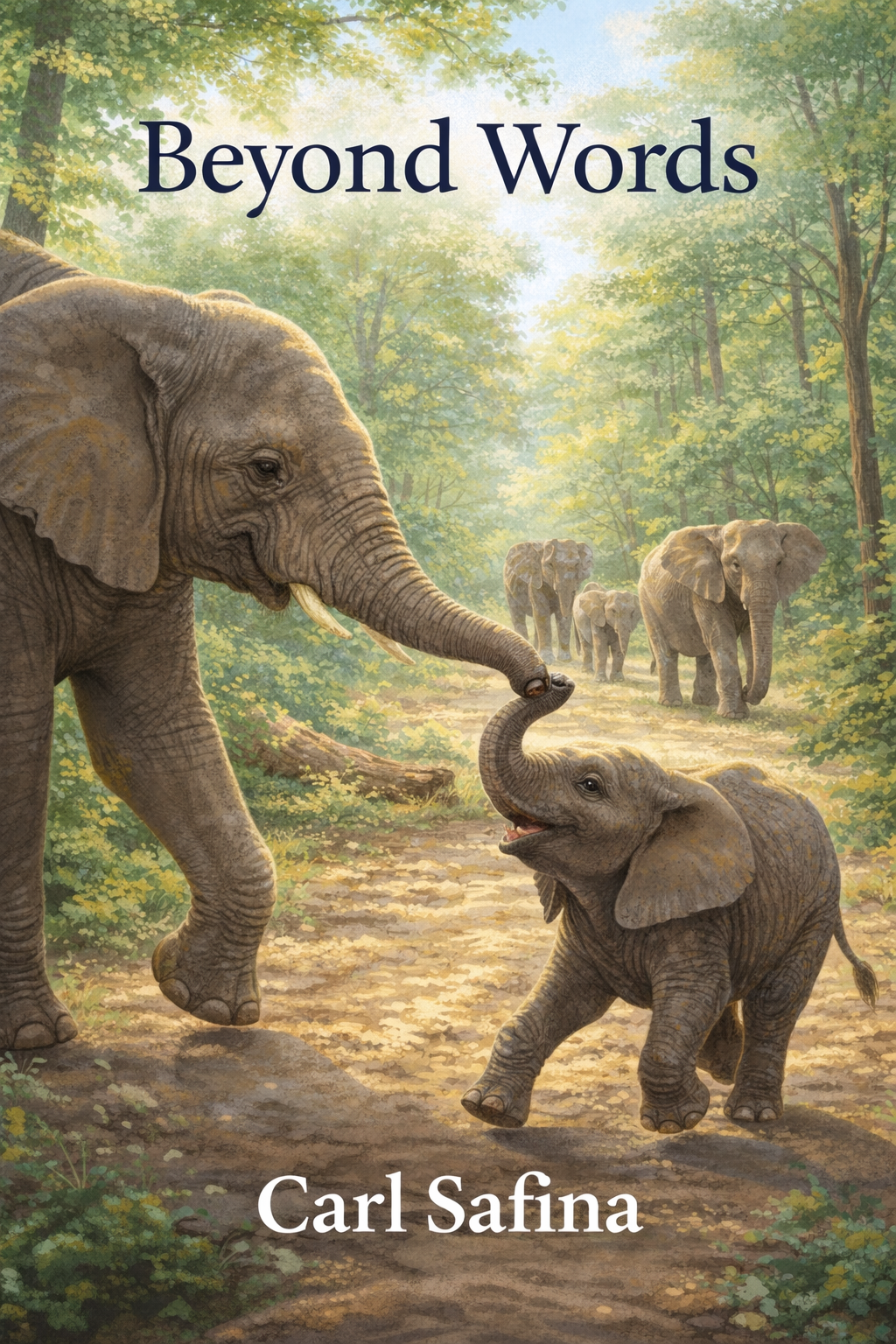
Beyond Words
Chapter Summaries
What's Here for You
Prepare to have your world expanded and your assumptions challenged. In *Beyond Words*, Carl Safina invites you on an unforgettable journey into the minds and lives of elephants, wolves, and orcas, revealing the profound connections we share with these magnificent creatures. Through immersive storytelling and cutting-edge science, you'll witness their complex societies, experience their capacity for love, grief, and empathy, and confront the devastating impact of human actions on their world. This isn't just a book about animals; it's a mirror reflecting our own humanity, forcing us to reconsider our place in the grand tapestry of life. Prepare to be moved, enlightened, and inspired to forge a more compassionate future for all beings.
The Big Question
Carl Safina joins Cynthia Moss in Amboseli National Park, Kenya, a place where Kilimanjaro's springs create a haven for wildlife, especially elephants, and Maasai herders, all vulnerable to the whims of drought. Moss, having dedicated forty years to observing elephants, introduces Safina to Alison, Agatha, and Amelia, survivors of a devastating drought that claimed a quarter of Amboseli's elephant population and brought profound loss to the Maasai people. Safina, initially driven by the desire to understand how elephants mirror human qualities, poses what he considers the Big Question to Moss: what has a lifetime of watching elephants taught her about humanity? Moss gently redirects him, emphasizing the importance of understanding animals as themselves, not in relation to humans. This redirection becomes a pivotal moment for Safina, a course correction that challenges his anthropocentric perspective. He begins to grasp that true understanding lies not in projecting human traits onto animals, but in appreciating their intrinsic nature. Observing the elephants, Safina notes their complex social dynamics, individual personalities, and acute awareness of their surroundings, illustrated by their immediate detection of changes in familiar environments, like a cameraman under a vehicle. He marvels at the elephant's trunk, a versatile tool that is both powerful and sensitive, capable of both destruction and delicate touch, a sensory organ connecting them intimately to their world. Safina reflects on the overlap in sensory experiences between humans and elephants—sight, sound, scent—yet acknowledges the elephants' superior olfactory senses, their deep history with the land, and the limitations of his own perception. The landscape, once a two-dimensional backdrop, gains depth as Safina begins to see the elephants as individuals with histories, relationships, and unique perspectives, guided by Moss's profound understanding and patient observation. The question shifts: not how are they like us, but who are they, in their own right?
The Same Basic Brain
Carl Safina, guided by Katito Sayialel and Vicki Fishlock, immerses us in the world of elephants, revealing profound connections between their behavior and our own. The initial tension arises from the human tendency to see ourselves as separate from and superior to other species, a perspective Safina challenges by illustrating the intricate social lives and emotional intelligence of elephants. Safina observes how elephants recognize hundreds of individuals, understand third-party relationships, and even display expectations of politeness from humans, shattering the illusion of human uniqueness. Vicki emphasizes that we can understand each other, highlighting the shared experience rooted in having the same basic brain. The author then confronts the philosophical question of consciousness, defining it as "the thing that feels like something," and explores how sentience, cognition, and thinking exist on a sliding scale across species. Safina critiques the anthropocentric view, where "Man is the measure of all things," arguing that it blinds us to the remarkable abilities of other animals. He notes that abilities once thought to be uniquely human—empathy, communication, grief, toolmaking—are present in varying degrees in other species, further blurring the lines. Like different models of cars, we share the same basic components. He challenges the insistence that animals are fundamentally different from us, even as we exploit their cognitive and emotional capacities for our benefit. The narrative tension peaks with the anecdote of the scientist who doubted an elephant's consciousness, a stance Safina rebukes as unscientific, urging us to look at evidence and resist pre-conceived notions. Safina broadens the scope, discussing how even creatures without a cerebral cortex, like honeybees, exhibit complex behaviors and emotional responses, and even plants communicate chemically. Ultimately, Safina resolves the initial tension by emphasizing the deep relation between all living things, symbolized by the image of an elephant nursing her baby, an act so familiar it feels like witnessing a sister. The journey is a call to recognize our shared consciousness and interconnectedness with the natural world, urging us to move beyond anthropocentric biases and embrace a more inclusive understanding of life.
Distinctly Human?
In this chapter from *Beyond Words*, Carl Safina navigates the complex terrain of animal consciousness, a landscape once shrouded in scientific taboo. He begins with a gentle observation of elephants, their behaviors hinting at a depth of feeling and social connection that challenges human-centric views. Safina explains how early behaviorists, in their quest for scientific rigor, erected a barrier against anthropomorphism, inadvertently stifling inquiry into animal emotions and motivations, creating a kind of radio blackout around the inner lives of animals. The author illuminates how this caution, initially intended to cleanse the field of folklore, ossified into a rigid dogma, where even logical inferences about animal feelings became career-threatening acts of heresy. Like a pendulum swinging too far, the scientific community risked denying animals any semblance of inner experience. Safina underscores a crucial insight: inherited sensations and nervous systems suggest a shared foundation of emotions between humans and other animals, a radical notion that challenges the deeply ingrained anthropocentrism. It's as if scientists, wary of projecting human emotions onto animals, inadvertently created a world where only humans could feel, a lonely peak atop the mountain of sentience. He champions the idea that while we must avoid imposing uniquely human constructs like romantic love onto elephants, dismissing their capacity for joy, grief, or friendship is equally misguided. The author advocates for embracing the simplest interpretation of evidence: when an animal seems happy in a joyful context, it is reasonable to infer happiness. Safina resolves that understanding animal emotions requires acknowledging our shared biological heritage and the continuity of mental experience across species, urging a more open, empathetic approach to the study of animal behavior, suggesting that their minds, like their skeletons, exist on a sliding scale, inviting us to see ourselves not as utterly separate, but deeply interconnected within the grand tapestry of life.
Deep and Ancient Circuits
In "Beyond Words," Carl Safina explores the intricate connections between human and animal emotions, guided by neuroscience and evolutionary biology. He begins by highlighting Jaak Panksepp's research, revealing that core emotions originate in the deep, ancient brain circuits shared across species, demonstrated by similar responses in cats and humans when rage is triggered. The same chemical pathways that lead to anxiety in humans are present in crayfish, and the same medications can alleviate it, suggesting a common evolutionary root. Like trails becoming highways, biological systems retain essential features from their origins. The genes directing mood-making hormones like oxytocin and vasopressin date back hundreds of millions of years, underscoring the deep history of social and sexual behaviors. Safina then presents Darwin's observations of earthworms, noting their learning abilities and intelligent behavior, echoed in S.W. Emmons's work on C. elegans, a tiny worm with a surprisingly similar genetic foundation to human nervous systems. Just as oxytocin drives bonding in humans, nematocin, a similar chemical, motivates worms to seek sex, showing that even seemingly simple creatures possess complex drives. Safina cautions against dismissing small invertebrates as primitive, because this hormone has the power to unlock our deepest sexual feelings, setting loose behaviors we can't resist. Reflecting on the work of Romanes, Freud, and Sacks, Safina emphasizes the fundamental similarity of nerve tissues across species, from jellyfish to humans, differing mainly in number and organization, and he introduces Vicki's insight that "we all have the same basic brain." While self-loathing may be uniquely human, Safina argues against denying emotions to other animals, especially in light of evidence that fear, aggression, wellbeing, anxiety, and pleasure are shared experiences rooted in shared ancestry, and he contrasts the fearlessness of island species lacking predators with the learned fear of continental animals hunted by humans. The author wants us to abandon the distinctly human misunderstanding that we are alone in our emotional lives, embracing instead the understanding that all life is interconnected, sharing the same cells, bodies, and fundamental experiences; like notes on a fretless violin, each species represents a unique distinction on a continuous spectrum, creating a vast and beautiful symphony.
We Are Family
In 'Beyond Words,' Carl Safina guides us into the intricate world of elephant society, revealing profound parallels with our own social structures. He begins by highlighting Iain Douglas-Hamilton's groundbreaking realization that elephant society revolves around females and their offspring, challenging prior assumptions of male dominance. This matriarchal structure, as Dhruba Das observes, showcases an undaunted female intelligence, a kind of innate wisdom that guides the herd. The matriarch, the keystone of the family, dictates movement, timing, and serves as the emotional barometer, her personality shaping the family's overall tone, a role so vital that daughters rarely stray during her lifetime. Safina illuminates how elephant lives are interwoven into layered social networks, where families form 'bond groups' based on affinity, kinship, or simple friendship, a fluid dynamic of fission-fusion, mirroring human societies. As Vicki explains, this splitting and merging isn't arbitrary; it's driven by personality, by the simple desire to be together, highlighting that, for elephants, 'Were all together' is paramount. We learn that elephants possess an extraordinary ability to recognize and remember individuals, surpassing even primates, forming complex social maps where each elephant likely knows every other adult in their population; they react strongly to known members and defensively to strangers. Safina then confronts a critical tension: even when resources dwindle, elephants display exceptional tolerance and maintain family ties, eschewing status-seeking behaviors common in other species. Status, instead, is conferred by age and experience, a testament to the wisdom elders accumulate—they are the living libraries of survival knowledge. The narrative shifts to the vulnerability of this system; the premature loss of a matriarch through poaching disrupts the family, leaving psychological scars and jeopardizing the survival of the young. Safina poignantly illustrates the ripple effects of disrupting this ancient social order, emphasizing how the elephants' deep stores of knowledge are critical for survival, knowledge gained over decades. Yet, amidst the serious observations, Safina also shares moments of levity, depicting elephants as playful, even silly beings, their joy infectious, especially as new babies bring a sense of well-being. Like humans, elephants are not just intelligent, they are emotional, personable, and deeply connected, finding profound satisfaction in simply being together, a truth that demands our respect and recognition of their complex social lives. Safina leaves us with a powerful understanding that to protect elephants is to protect not just individuals, but entire libraries of knowledge, experience, and social wisdom, now threatened by a rapidly changing world.
Motherhood Happens
In Carl Safina's *Beyond Words*, the chapter “Motherhood Happens” unveils the intricate tapestry of elephant motherhood, revealing a world where experience, learning, and familial bonds shape the very essence of survival. Safina, guided by Vicki, observes elephant families, highlighting how older, experienced mothers like Deborah exhibit a 'super chill' competence in contrast to younger, less adept mothers like Tallulah. This mirrors human timelines, Vicki notes, where confidence in one's role grows with age. The narrative emphasizes that elephants, much like humans, undergo significant brain development after birth, relying heavily on learned behaviors and social structures; a newborn elinfant knows only to suckle and follow its mother, its trunk a source of constant discovery and occasional frustration. The author illustrates a poignant scene: a baby elephant struggling with a blade of grass, a micro-metaphor for the challenges of mastering essential life skills, while its mother patiently demonstrates. This learning extends beyond mere survival, shaping family traditions and behaviors, from preferred drinking spots to daily routines. The chapter introduces the concept of 'musth' in male elephants—a period of heightened aggression and sexual appetite—and its role in maintaining social order, older males suppressing younger ones, preventing chaos. Safina underscores that elephants, like humans, communicate through subtle cues, as seen in a young male’s awkward display of confidence. Vicki also shares that losing family can lead to trauma, as evidenced by orphaned male elephants killing rhinos, which stopped after older males were introduced. The chapter concludes with a vivid description of estrus and mating rituals, a sensory explosion of smells, tastes, and tactile exploration, revealing the rareness and urgency of these moments in an elephant's life and how integral to survival and the species' continued existence.
Do Elephants Love Their Babies?
In 'Beyond Words,' Carl Safina guides us into the intricate world of elephant families, particularly focusing on Felicity, a matriarch whose leadership profoundly shapes her family's well-being. Safina, alongside Vicki, an elephant researcher, illustrates how Felicity's calm demeanor creates a secure environment, contrasting this with high-stress matriarchs whose anxiety elevates cortisol levels in the entire group—a vivid reminder that leadership's emotional tone cascades down. The author reveals that elephants maintain constant awareness of each other's locations, demonstrated by Lucy Bates's urine experiment, showing a cognitive map of their social world. Safina observes the elephant calves at play, learning vital survival skills through mock charges and games, highlighting the delicate balance between exploration and the looming dangers of their environment. He notes that sometimes they put bushes on their heads and just look at you like that, ridiculous, adding a touch of levity to their serious existence. The narrative tension rises when a hyena appears, testing Felicity’s protective instincts, which she meets with unwavering resolve. Shifting focus, Safina introduces Ella, an older elephant who shirks leadership, reinforcing that not all individuals are suited for or desire such roles. The author draws parallels between human and animal experiences, suggesting that our shared capacity for love, while perhaps rooted in instinct, is a profound emotion that motivates care and protection. He underscores that love is a feeling and it motivates behaviors such as feeding and protection. Safina delves into the question of aesthetics, pondering whether animals share our sense of beauty, citing examples from bowerbirds to chimpanzees watching sunsets, suggesting a convergence of sensory appreciation across species. As Felicity prepares to lead her family into the marsh, allowing her baby a final nursing session, Safina reflects on the premeditated nature of her actions—a poignant illustration of maternal care that transcends mere instinct, hinting at a deeper, more complex emotional landscape, a testament to the interconnectedness of life, reminding us that we are kin, bee and bird of paradiseand great elephantstardust, all.
Elephant Empathy
In Carl Safina's "Beyond Words," the chapter “Elephant Empathy” unveils the intricate emotional landscape of elephants, challenging our assumptions about their sentience and their capacity for empathy. Safina, acting as a seasoned wildlife narrator, recounts observations of elephant behavior, revealing instances of cooperation, problem-solving, and emotional support within elephant families. Vicki's anecdote of rescuing a baby elephant from a well highlights the mother's nuanced understanding and lack of malice, a testament to their cognitive complexity. The chapter explores the tension between instinct and learned behavior, illustrating how elephants aid injured companions, retrieve lost babies, and even support each other when threatened. We learn of Echo, whose family’s unwavering support saved her disabled calf, embodying a form of faith and persistence mirrored in human compassion. Elephants, like humans, experience anxiety when separated, their frantic calls and worried faces painting a vivid picture of their emotional depth, a mirror reflecting our own primal fears of isolation. Safina then shifts our focus to empathy itself, defining it as a mood-matching sense of shared feeling, distinct from sympathy and compassion, and illustrating how it’s rooted in contagious fear, a survival mechanism evolved into a social bond. Instances of elephants helping humans, such as the matriarch who guarded an injured herder, blur the lines between species, suggesting a universal capacity for compassion. The author suggests that empathy is not unique to humans; it's a spectrum of feeling, where even rats display altruistic behavior, freeing cagemates before indulging in treats, and the bonobo in an English zoo releases a captured starling into the sky. Safina concludes by pondering the mysteries of elephant feelings, suggesting that their capacity for wonder and their search for deeper comprehension mirror our own, ultimately weaving a narrative that bridges the gap between species and invites us to contemplate our shared existence.
Good Grief
In Carl Safina's poignant chapter, “Good Grief,” we are invited to witness the profound emotional lives of animals, particularly elephants, challenging our assumptions about grief and consciousness. Safina begins with the story of Teresia, an elephant matriarch whose life, though untouched by human historical events, was deeply affected by human encroachment and violence, illustrating the tragic loss of ancient knowledge and migration routes as elephants struggle to survive. The central tension emerges: while we acknowledge human grief, do we truly recognize and respect the capacity for grief in other species? Safina guides us through observations of elephants' reactions to death—the gentle touching of remains, the carrying of bones, even burial rituals—painting a vivid scene of mourning. One can almost feel the stillness, 'as if even the birds have stopped singing.' He recounts the story of Eleanor, an ailing matriarch, and Grace, who desperately tried to lift her, highlighting the deep bonds and emotional distress experienced by elephants. Safina introduces Barbara J. King's definition of grief, which involves alterations in behavior among survivors who knew the deceased, providing a scientific framework for understanding animal grief. The author then broadens the scope, sharing anecdotes of grief in chimpanzees, lemurs, and even birds, suggesting that grief transcends species. The key insight here is that grief isn't solely about death, but about the loss of companionship and presence, and that love, in its many forms, underlies this grief. He notes that while science seeks measurable data, emotions like sadness and mourning exist on a spectrum in both humans and nonhumans. Safina emphasizes that stories of grief in animals are often anecdotal due to the infrequency of witnessing natural death, yet these stories collectively point to a shared capacity for deep emotional connection and loss. The chapter culminates with the assertion from Dame Daphne Sheldrick that 'an elephant can die of grief,' underscoring the emotional equivalence between elephants and humans, challenging us to reconsider our anthropocentric view of emotions and recognize the depth of love and loss experienced by other beings. Ultimately, Safina urges us to acknowledge that grief, like love, is many-splendored, existing in various forms and intensities across the animal kingdom, expanding our understanding of what it means to be alive and connected.
I Don’t Know How You Say Good-bye
In Carl Safina's "Beyond Words", we journey into the intricate social lives of elephants, guided by Vicki's keen observations in the field. The chapter opens with a vivid scene: elephants deciding where to go, a process of subtle cues and patient negotiation, a 'Lets go stance' hinting at desires. This illustrates the initial tension: how do beings so different from us orchestrate their communal decisions? Vicki introduces us to families like the AAs, YAs, and JAs, each with their own dynamics and histories, and the complex greetings that bind them. These aren't mere "hellos"; they're bonding ceremonies, reaffirming relationships and signaling unity, a pooling of feelings. The intensity of these greetings, Safina suggests, reflects the importance of the relationships, a vital insight. The chapter then subtly shifts to the emotional weight of loss, particularly for the JAs, diminished by the deaths of their matriarchs, highlighting that death matters most to survivors. We learn of Jolene, an unrelated matriarch, stepping in to guide the family, showcasing the power of chosen bonds over blood. Safina then delves into the elephants' complex communication, far beyond human hearing, a vertical wall of sound with subsonic rumbles creating waves through the air and ground. It’s a world of subtle postures, forehead wrinkles, and feelings in the solar plexus, challenging our anthropocentric view of communication. The author then confronts Descartes' outdated and harmful assertions that animals lack thought, paving the way for a deeper understanding of animal sentience. Safina underscores that communication isn't always conscious or verbal; it's a spectrum of electronic impulses, chemicals, visual cues, and motions conveying information. He champions observing behavior and asking sensible questions, just as Einstein did with the universe, rather than dismissing what we can't directly translate. The chapter resolves with a call for translation over mere description in animal communication, urging us to move beyond categorizing sounds to understanding the intent behind them. Safina uses Joyce Poole's detailed observations of elephant rumbles, comparing it to describing human greetings with clinical detachment, emphasizing the need for insightful interpretation. The elephant’s world, like a Beethoven sonata, resists simple transcription, yet it pulses with meaning, if only we learn to listen beyond our human limitations. Ultimately, the chapter gently insists that while words are a slippery grip for measuring thoughts, actions, gestures, and shared presence speak volumes, reminding us that for some huge things, words are optional.
I Say Hello
In 'I Say Hello,' Carl Safina delves into the intricate communication methods of various animals, challenging our anthropocentric view of language. He begins with the revelation that elephants possess a specific alarm call for bees, a sound that triggers an immediate, head-shaking retreat, a behavior even young elephants learn by observing their elders, demonstrating a cultural transmission of knowledge. Safina extends this exploration to impalas, who seem to understand elephants' warnings about predators, suggesting interspecies communication. The author highlights the complexity of animal vocalizations, revealing how vervet monkeys have distinct calls for different threats—leopards, eagles, snakes—each eliciting a tailored response, showcasing that these are not merely random noises, but words with specific meanings. Safina then broadens the scope, examining how Campbells monkeys use syntax-like structures to convey the distance of a threat, and how Diana monkeys understand and respond to these calls, transcending species barriers, illustrating that effective communication is paramount when survival is at stake. He introduces us to Tiko, the Amazon parrot, who names the creatures she sees in the yard, and the greeting rumbles of elephants, which translate to ‘Hello, it's good to be near you again,’ a sentiment that underscores the emotional depth of their connections. Safina confronts the human tendency to underestimate animal vocabularies, reducing their complex communications to simple barks or howls, a disservice that obscures our understanding of their rich social lives. He then pivots to the concept of syntax, noting how dolphins can understand the difference between ‘Get the ring from John and give it to Susan’ and ‘Get the ring from Susan and give it to John,’ demonstrating that they grasp the order of words matters. Despite the complexity, Safina acknowledges that while animals may not possess complex syntax like humans, their ability to evaluate social dynamics—assessing dominance hierarchies and potential outcomes—suggests a ‘syntax of survival,’ a mental agility that allows them to navigate their environments effectively. The author suggests that the elephants' capacity to convey excitement and importance through their trumpeting and rumbles, combined with their ability to detect distress calls over vast distances, hints at communication methods we are only beginning to grasp. Safina concludes by recounting anecdotal evidence of elephants' uncanny ability to sense danger and grieve for both their own kind and humans, pushing the boundaries of our understanding and reminding us that what elephants are saying and understanding is far more sophisticated than our current ability to decipher it, urging us to listen more closely, challenging our assumptions, and recognizing the silent power of intent that transcends the need for complex sentences, revealing our human language is not the only measure of intelligence or connection.
Holding Back, Letting Go
Carl Safina, in this poignant chapter, invites us into the intricate world of elephants, revealing profound lessons about family, communication, and restraint. Vicki, observing an elephant family, notes how they gather closely, adults facing out, children safely in the middle, a perfect picture of cohesion and safety, communicating through subtle ear flapping—a language humans can't hear. Safina then recounts Lyall Watson's extraordinary experience witnessing a lone elephant matriarch seeking solace in the infrasound of the ocean, perhaps communicating with a whale, bridging the gap between land and sea, matriarch to matriarch, nearly the last of their kind, sharing an understanding of long lives and precious offspring. This sets the stage for understanding the elephants' deep social bonds. The author explains how elephants, even when provoked, often exhibit remarkable restraint, as seen when Tuskless and Tania avoided harming humans who threatened them, expending great effort to prevent injury, leaving skid marks as a testament to their control. Cynthia Moss, who studied Tuskless, described her as smart, brave, inventive, gutsy, and sweet-natured, highlighting the deep connection and understanding possible between humans and wild animals. However, this understanding is often tragically one-sided. The chapter culminates in the heartbreaking account of Tuskless's death, shot by wildlife services after a conflict with humans, illustrating the devastating consequences of human fear and misunderstanding. The death of Tuskless, the most photographed elephant in Amboseli, serves as a stark reminder of the cost of our failure to recognize the value and complexity of other beings. Safina underscores that elephants aren't merely like us, but, like us, they are deeply aware of their relationships and use their minds and bodies to uphold their social values. The elephants' ability to plan revenge suggests they also possess the capacity to understand consequences, a crucial element in their interactions with humans. The chapter serves as a mirror, reflecting both the beauty of connection and the tragedy of misunderstanding.
Troubled Minds
In "Troubled Minds," Carl Safina grapples with the brutal reality of elephant poaching and its psychological toll on these sentient beings, setting the stage for a profound exploration of human-animal conflict. The report of one hundred thousand elephants lost in a decade casts a pall over Amboseli, a sanctuary now threatened by escalating violence. Vicki, a researcher, voices the dilemma: fencing elephants is not conservation, yet the current reality is unsustainable. Safina highlights the terrorized state of elephants, evidenced by elevated stress hormones and reduced birth rates after losing leaders, painting a grim picture of a species facing genocide. Richard Ruggiero's observation that elephants are aware of this genocide underscores their sentience. The narrative tension rises as Safina introduces the Maasai, whose traditional stewardship ironically now clashes with conservation efforts. Once protectors of wildlife, the Maasai now face dwindling lands and economic pressures, leading to conflicts with elephants. The British colonial legacy, which dispossessed the Maasai, adds a layer of historical injustice to the present crisis. Vicki emphasizes the Maasai's crucial role in elephant survival, as elephants spend most of their time on Maasai land, creating a fearful symmetry of shared existence. The Maasai both revere and revile elephants, a duality rooted in their cultural beliefs. Safina reveals the tragic story of Ezra, an elephant speared in protest, symbolizing the breakdown of respect and community. This act highlights the elephants' increasing fear of the Maasai, a fear so potent they can distinguish Maasai voices and scents. Despite their large brains and complex social structures, elephants are learning a harsh lesson: certain humans are dangerous. Vicki recounts the pervasive violence experienced by elephants, where every family has suffered loss at the hands of humans, leaving them traumatized and vengeful. The chapter culminates with the understanding that elephants, like impoverished and tribal people, demand less from the world and live in better harmony with it, their way of life a stark contrast to human greed. The image of a mother elephant patiently guiding her hesitant baby into a pool encapsulates the tenderness and vulnerability of these creatures, urging us to bridge the gap between human needs and elephant survival, seeking harmony over conflict.
Ebony and Ivory
In "Ebony and Ivory," Carl Safina unveils the heartbreaking intersection of human greed and elephant survival, painting a vivid picture of the Sheldrick Trust, where orphaned elephants, victims of the ivory trade, find refuge, their innocence a stark contrast to humanity's failings. Safina traces the ancient elephant roads, once lifelines across Africa, now fragmented by human expansion and relentless poaching, a poignant reminder of a lost harmony. He illustrates how the demand for ivory, from Roman elites to the modern consumer, has driven elephants to the brink, their numbers plummeting from millions to a mere fraction, a chilling testament to our destructive appetite. The narrative then shifts to Samburu National Reserve, a last stand for elephants where researchers like Shifra Goldenberg and David Daballen grapple with the emotional toll of poaching on elephant families, each loss echoing through their intricate social structures. Safina poignantly captures the moral tightrope that conservationists walk, as they try to mitigate human-elephant conflict. He reveals the complex layers of the ivory trade: poverty, ethnic rivalries, and even terrorism, all fueled by a demand for carvings and trinkets. Safina exposes the failures of international regulations, particularly the disastrous "one-time sales" of stockpiled ivory, which only served to legitimize the black market and drive poaching to unprecedented levels. He contrasts the senseless brutality of ivory poaching with the inherent intelligence, sensitivity, and social complexity of elephants, each death a profound loss. Safina closes with a plea for valuing elephants, a mirror reflecting our own humanity, reminding us that their fate is intertwined with our own, and that a world without them is a world diminished, devoid of awe, wonder, and reverence, a landscape where even humanity might find itself without a place.
Where Baby Elephants Come From
In Carl Safina's *Beyond Words*, the chapter "Where Baby Elephants Come From" opens a window into the intricate lives of Amboseli's elephant families, guided by the insightful Katito. The narrative tension arises from witnessing both the beauty of their existence and the looming threats they face, painting a vivid picture of a species on the brink. Katito's deep connection with the elephants allows her to recognize individuals, revealing the distinct personalities and histories within each family, like Ottoline's beauty or Oprah's rounded figure. The author underscores the elephants' emotional depth by recounting tragic events such as the murder of matriarch Qumquat and the subsequent reappearance of her orphaned son, Qores, highlighting the elephants' profound capacity for grief and resilience. Safina emphasizes that a matriarch's role is crucial for a family's survival, as seen in Echo's exceptional leadership and Enid's promising succession amidst familial discord, revealing the complex dynamics of power and inheritance within elephant society. The elephants' daily rituals—splashing in the marsh, the social hierarchy displays, and the tender interactions between mothers and calves—underscore the richness of their communal lives, a stark contrast to the ever-present threat of poaching and habitat loss. The author notes that the elephants' wisdom is deeply rooted in the land, suggesting that their existence is intrinsically tied to the health and preservation of their environment, like Kilimanjaro's silent wisdom etched in its snowy peaks. The arrival of Tim, a magnificent bull elephant with enormous tusks, inspires both awe and anxiety, embodying the precarious balance between survival and extinction. Safina reveals that understanding elephant behavior provides insights into their complex social structures and emotional lives, urging readers to recognize their individuality and the depth of their bonds. Ultimately, the author conveys a powerful message: that elephants don't need to be conserved, they simply need to be left alone, advocating for a world where future generations can witness their majestic presence, a world where their stories continue to unfold undisturbed, like the slow, deliberate dance of time itself.
Into the Pleistocene
Carl Safina, in *Beyond Words*, transports us to a Pleistocene morning, a world witnessed through the eyes of a dedicated wolf observer, Rick McIntyre. McIntyre, a ranger in Yellowstone's Lamar Valley, has spent fifteen years meticulously tracking wolves, a commitment that reveals a deeper understanding of their individual lives and social dynamics. The author highlights the tension between scientific objectivity and emotional connection, questioning whether naming or numbering animals helps us truly see them. Jane Goodall's defiance in naming chimpanzees underscores the importance of recognizing animals as individuals, a perspective that challenges the detached view often favored by science. Safina observes a wolf pack, focusing on Eighttwenty, a precocious young wolf whose life is dramatically altered by the death of her mother, Ohsix. This event triggers a power struggle within the pack, leading to Eighttwenty's banishment, a turning point shaped by loss and competition. The author draws a parallel between wolves and humans, noting their shared struggles with belonging and identity, yet emphasizing a crucial difference: wolves mature and take charge of their lives, while domestic dogs remain perpetually dependent, forever wolf pups. McIntyre's detailed observations reveal the intricate social rituals of wolves, such as submission displays akin to human bowing, which maintain order and prevent aggression. However, the brutal expulsion of Eighttwenty demonstrates that these rituals can break down, exposing the raw, competitive forces at play. The scene unfolds with cinematic intensity—a flurry of fur and snarls against the backdrop of snowy sagebrush, a stark reminder of the harsh realities of survival in the wild. Ultimately, Safina suggests that understanding animals requires a delicate balance: neither romanticizing them nor distancing ourselves, but recognizing their individuality and the complex web of relationships that define their lives. The legacy of wolves like Twentyone, Ohsix and Eighttwenty serves as a poignant reminder of the profound impact individual animals have on their packs and their environment.
A Perfect Wolf
Carl Safina, in his chapter "A Perfect Wolf," tells the story of Twentyone, a remarkable wolf in Yellowstone, to explore themes of leadership, morality, and the surprising parallels between animal and human behavior. Rick, a wolf researcher, considered Twentyone the epitome of a wolf, a fictional character come to life, utterly fearless in defending his family. Twentyone's rise to alpha status was swift, stepping into the role after the previous leader was illegally shot, illustrating how opportunity and circumstance can shape leadership. He was gentle with his pack, allowing others to eat first after a kill, and playfully wrestling with pups, even pretending to lose, which Rick saw as a sign of high intelligence, revealing that true strength lies not just in dominance but in understanding the perceptions of others. Safina highlights a critical tension: the balance between dominance and mercy. Twentyone never killed a defeated opponent, prompting the question: Can a wolf be magnanimous? This restraint mirrors human ideals of leadership, where the most esteemed leaders, like Gandhi and King, are not ruthless strongmen but peaceful warriors. The chapter subtly argues that status, for both wolves and humans, is a proxy for survival and reproduction, driven by hormones that compel us to strive for dominance, even without fully understanding why. The concept of the handicap principle emerges as Safina describes how animals, including humans, display excess to signal their superiority; like a shrike displaying dead mice, or humans flaunting wealth, Twentyone's restraint was a display of power. When Twentyone spared a rival, Casanova, he indirectly ensured his genetic legacy, as Casanova later formed his own pack, carrying Twentyone's lineage forward, suggesting that sometimes, an enemy today can become a vehicle for one's legacy. The story culminates with Twentyone's peaceful death atop a mountain, a fitting end for a wolf who lived a violent life with unusual grace, reminding us that while strength impresses, kindness is what we remember. Rick’s emotional response to finding Twentyone underscores the profound connection humans can have with animals and the lessons they can teach us about ourselves. In the end, Safina leaves the reader pondering whether traits like mercy and magnanimity, often considered uniquely human, might also exist in the wild, challenging our understanding of animal behavior and our place in the natural world.
Packing and Unpacking
Carl Safina, in *Beyond Words*, invites us into the intricate social lives of wolves, revealing that what we often perceive as a ‘pack’ is, at its heart, a family—a breeding pair and their offspring, challenging the outdated notion of rigid alpha structures. He explains how wolf packs exhibit fission-fusion dynamics, much like elephants and humans, where individual personalities and chance encounters shape their social bonds; loyalty runs deep, seen in their defense and assistance of one another, echoing in the best friend characteristic we cherish in domestic dogs. The author highlights the extended child care within wolf society, where pups remain with their parents for years, creating multigenerational groups and illustrating the importance of socialness in their lives, as Doug Smith, a wolf research leader, emphasizes, noting their constant travel, hunting, and complex social interactions. Safina then turns to the resilience of wolves, recounting tales of wolves surviving severe injuries, such as broken legs and worn-down teeth, showcasing their incredible toughness and the absence of self-pity, embodying a forward-looking mentality. This toughness extends to their hunting strategies, where wolf packs develop distinctive characters and cooperate to take down prey much larger than themselves, sometimes engaging in nine-hour sieges against massive bison. The author draws parallels between wolf hunting strategies and those of lions, dolphins, and humpback whales, illustrating how predators who hunt animals larger than themselves often rely on organized groups and division of labor. Safina contrasts the outdated alpha male caricature with the reality of wolf pack dynamics, where alpha males exhibit quiet confidence and restraint, fostering cooperation and cohesion within the pack, suggesting minimal violence promotes group survival. He introduces us to contrasting leadership styles through the stories of Wolf Seven, who led by example, and Wolf Forty, a tyrannical leader whose aggression ultimately led to her demise, illustrating how personality shapes the entire pack. The tale of Cinderella, who rose from brutal oppression to become a benevolent matriarch, raising an unprecedented twenty-one pups, demonstrates the potential for individuals to either wither or flower depending on their circumstances, highlighting the importance of acceptance and cohesion. Ultimately, Safina paints a vivid picture of wolf society as a complex web of relationships, resilience, and cooperation, challenging our preconceptions and offering profound insights into the nature of leadership and social bonds.
The Wolf Named Six
In the Lamar Valley, Carl Safina introduces us to the legendary wolf Ohsix, a figure whose life and choices challenge our understanding of animal behavior and social structures. The observers, Laurie Lyman and Doug McLaughlin, recount Ohsix's extraordinary ability to sense danger, recalling a dramatic scene where she cleverly evaded an attack by a rival pack, saving her pups. Safina highlights Ohsix's unparalleled hunting prowess, illustrating her unique strategies with vivid descriptions of her solo elk hunts, showcasing a mind that could quickly assess and adapt to any situation, a testament to her deep understanding of her prey. Rick's story of Ohsix's confrontation with coyotes reveals a darker side, a brutal display of dominance, challenging our romanticized views of nature. Safina underscores the tension between instinct and intelligence, observing how Ohsix defied typical wolf behavior, choosing less capable mates and maintaining control within her pack, illustrating that social dynamics are far more nuanced than dominance hierarchies. We learn that Ohsix mated with five different males, ultimately choosing both brothers Seven Fiftyfour and Seven Fiftyfive, creating a new family structure. Seven Fiftyfive evolved into the 'Deerslayer', learning to leverage his stamina, while Seven Fiftyfour, though larger, preferred guarding the pups, demonstrating the importance of diverse roles within the pack. The story of Ohsix serves as a lens through which we glimpse the wolves' capacity for insight, planning, and a deep understanding of their place in the world, a stark contrast to humanity's often disruptive presence. Ultimately, Ohsix’s life, though observed and interpreted through a human lens, reveals the profound interconnectedness and the complex, often inexplicable choices that shape the lives of creatures within their ancestral homelands, a reminder that belonging is perhaps the deepest form of wisdom.
A Shattering of Promises
In Carl Safina's *Beyond Words*, the chapter "A Shattering of Promises" unfolds as a stark narrative of wolves in Yellowstone National Park, revealing a tragic collision between the wild's inherent needs and humanity's shifting boundaries. The story centers on the Lamar wolves, particularly Ohsix and Seven Fiftyfour, whose lives are abruptly cut short when they venture just outside the park's protective borders, illustrating how arbitrary lines on a map can dictate life and death. Safina elucidates that Yellowstone, though seemingly vast, is but a postage stamp compared to the Greater Yellowstone Ecosystem, a crucial territory for the animals' survival, especially during harsh winters when they must seek food beyond its confines; this highlights the first insight: protected areas are often ecologically incomplete. The author underscores the naiveté of these wolves, conditioned to the relative safety within the park, making them easy targets once they crossed into hunting zones, a place of bullets where human promises of protection dissolve. The death of Seven Fiftyfour sends ripples through the pack, a poignant illustration of their social bonds, yet they cannot fully grasp his absence, drawn back to the same area by instinct or perhaps a search for their lost companion. Then comes the seismic blow: the killing of Ohsix, a beloved matriarch, which underscores the second insight: the emotional impact of losing keystone individuals within a social species. Safina broadens the lens to examine the historical context of wolf extermination in the United States, revealing that wolves once roamed nearly the entire continent, a range decimated by human expansion and fear. The narrative tension escalates as the government weakens wolf protections, declaring a mere 300 wolves a recovered population, a fraction of their former numbers, which showcases a third insight: the definition of 'recovered' is often a political, not ecological, determination. The author delves into the deep-seated human animosity toward wolves, fueled by metaphor and fear, casting them as villains and competitors, a reflection of our own anxieties about the wild within ourselves. It's as if the wolf becomes a mirror reflecting back humanity’s darkest fears, amplified through centuries of cultural projection. He notes the stark contrast between this contempt and the ecological reality: the absence of wolves leads to elk overpopulation, which in turn decimates vegetation, impacting entire ecosystems—a cascade effect that ripples from trees to songbirds, demonstrating a fourth insight: predators play a vital role in maintaining ecosystem health and balance. Safina recounts the reintroduction of wolves to Yellowstone in 1995, a hard-won victory that restored a missing piece of the puzzle, leading to ecological recovery and a surge in tourism, but also reigniting old conflicts. The chapter crescendos with the political battles over wolf management, as Congress intervenes to remove them from the endangered species list, opening them up to hunting and trapping. The final scenes paint a grim picture: collared wolves, once subjects of research, become targets, and the economic benefits of wolf tourism clash with the desires of those who view them as vermin, which underscores a fifth insight: conservation is often a battle between economic interests and ecological values. Safina concludes with a glimmer of hope as a federal judge temporarily restores protections, yet the war rages on, a testament to the enduring struggle between humans and the wild, a struggle where promises are easily shattered and the fate of a species hangs in the balance.
In a Time of Truce
Carl Safina, in *Beyond Words*, explores the complex relationship between humans and other apex predators, revealing a disturbing paradox: our capacity for respect diminishes as our power increases. He begins by contrasting the Western view of domination with the Native American perspective of accommodation, noting how tribes like the Ojibwe consider the wolf, or *maiingan*, a sacred brother, while Western settlers viewed them as competition. Safina underscores that this isn't about scientific accuracy but about a deeper sense of interconnectedness, a 'truth catcher' woven into belief systems. He paints a vivid picture of a 'long, dreamfilled period of truce,' where humans, weaker and less crafty, entreated stronger creatures with respect. However, as human ingenuity grew, so did our arrogance, leading us to devalue and dehumanize other species—a dangerous game of might makes right. The author then presents unexpected evidence of animal forbearance, recounting instances where wolves and tigers showed restraint, even understanding human intent. Vaillant's account of Amur tigers exacting vengeance on those who violated a long-standing 'mutual courtesy' with local hunters highlights a chilling intelligence and capacity for abstract thought. Safina juxtaposes this with the tragic story of the San people and lions in the Kalahari, a 'solid truce' shattered by the arrival of Europeans, whose actions transformed a 'lion nation' into fragmented, vulnerable populations. Elizabeth Marshall Thomas's observation that 'lions are excellent observers, and observation is important to them—hence their empathy,' serves as a poignant reminder of what we've lost: a world where respect, not dominance, dictated our interactions with the animal kingdom. Ultimately, Safina challenges us to reconsider our self-imposed exile from the natural world and to recognize the minds, the intelligence, and the inherent worth of the creatures with whom we share this planet, urging a return to a time of truce, not driven by weakness, but by wisdom.
Magnificent Outcasts
In "Beyond Words," Carl Safina masterfully narrates the intricate saga of Yellowstone's Lamar wolf pack, revealing a drama as complex and poignant as any human tale. The chapter opens with the death of Ohsix, a pivotal event that throws the pack into disarray, particularly impacting the alpha male, Seven Fiftyfive. Safina unveils the brutal realities of wolf society, where the loss of leadership creates a power vacuum, leading to internal strife and external threats. We see Seven Fiftyfive's world crumble as his daughters, driven by instinct and opportunity, welcome rival Hoodoo males, effectively dethroning him. Safina paints a vivid picture of the unforgiving landscape, the biting cold mirroring the emotional chill of betrayal and loss. A temporary respite arrives when Seven Fiftyfive lures a Mollies pack female, only to see her brutally attacked by his own daughters, highlighting the theme that grief and loss can fracture even the strongest bonds, leading to unexpected cruelty. The author underscores the constant negotiation between instinct and learned behavior, a dance as delicate as the wolves' footprints in the fresh snow. As Seven Fiftyfive is ultimately driven out, accompanied by his banished daughter Eighttwenty, Safina poignantly illustrates how disrupting a social structure can lead to the marginalization of even its most competent members. He notes that taking out an alpha creates a classroom with no teacher. The image of Old Blue’s mate, Fourteen, leaving her pack after his death, a haunting walkabout across inhospitable terrain, leaves us contemplating the depth of animal grief. Safina invites us to consider the limits of human understanding, questioning if we can truly grasp a wolf's concept of death when most humans struggle to imagine their own non-existence. The narrative resolves with Seven Fiftyfive and Eighttwenty finding each other, two outcasts united by circumstance, their future uncertain, reminding us that resilience can emerge from the ashes of despair, even when a new beginning is far from simple. The chapter closes with the Lamar pack howling, a sound Safina interprets as both a rallying cry and a mournful lament, a sacred chant echoing the ancient story of survival and loss, leaving the reader to ponder the intricate web of loyalty, betrayal, and the enduring will to live in a world both beautiful and brutal.
Where the Wolf Birds Lead Us
In Carl Safina's exploration of interconnectedness, he highlights the intricate relationships within the natural world, starting with the poignant observation of how the deaths of wolves ripple through their packs, altering the very calculus of survival and underscoring that individuals matter. Laurie, a keen observer, demonstrates how to truly see, guiding others to perceive what's initially invisible, like finding 'black pepper on snow' through the wisdom of ravens, or 'wolf birds', leading us to a distant kill. Safina illuminates the ancient partnership between wolves and ravens, a synergy once revered in Norse mythology, suggesting a lost understanding from our hunting past, now overshadowed by our roles as herders and ranchers. The author unveils the surprising intelligence of birds, especially corvids, challenging our anthropocentric views; ravens demonstrate reasoning, planning, and problem-solving skills rivaling apes, illustrated by their ability to unzip hikers' packs or solve complex puzzles involving hanging meat and strings. Betty, the New Caledonian crow, exemplifies tool use, bending wire into hooks with insightful precision, proving that intelligence isn't confined to mammalian brains. The narrative broadens to examine tool use across species, from chimpanzees cracking nuts with stones, a rediscovery of a forgotten truth, to gorillas using sticks to test water depth, revealing that tool use is not a human monopoly, but a widespread adaptation. Safina compels us to redefine intelligence and our place in the natural order, with parrots softening bread in water as a cultural transmission, elephants crafting back scratchers, and even insects employing sophisticated strategies, like ants luring bees with soil or assassin bugs camouflaging themselves to hunt termites. Ultimately, Safina confronts our human paradox: as the most adept tool-makers, we are also the most dependent and often disconnected from the skills of basic survival, urging us to reconsider our self-congratulatory stance on collective achievements, especially when contrasted with our individual helplessness and destructive tendencies, driving us to consider that perhaps dogs know slightly less than most of us about what it actually takes to put together a car.
Wolf Music
Carl Safina, in this chapter, invites us into the Lamar Valley, where the lives of wolves, elk, and humans intertwine, revealing profound insights about communication, emotion, and our place in the natural world. The author paints a vivid picture of wolves feasting on an elk, a scene that prompts reflection on the cycle of life and death, predator and prey. He then recounts the tale of Triangle, a sickly yearling wolf who bravely defended his sister from attackers, raising questions about heroism and the capacity for selfless acts in non-human animals. Safina then shifts our attention to the haunting howls of the Lamar pack, exploring the idea of music as a cross-species emotional bridge, noting that while humans are moved by music, other animals may find it uninteresting or even annoying. This leads to an exploration of prosody, the sound qualities of speech that convey emotion, and how it transcends language barriers, perhaps the most pure form of music. The chapter then delves into how music affects brain chemistry and triggers emotional contagion, relying on empathy, the ability to form an emotional match. Safina illustrates how researchers have created music tailored to monkeys, demonstrating that animals respond to sounds that align with their own vocalizations and heart rates. As the chapter draws to a close, the author recounts a day spent tracking the Lamar wolves, observing their interactions and movements, and pondering the mysteries of their communication. The wolves' comfort in the face of the harsh winter landscape highlights human frailty and dependence, while their howls linger in the air, a reminder of the wildness that connects us all. Ultimately, Safina suggests that understanding animal communication and emotion requires empathy and a willingness to look beyond our human-centric perspective, to hear the music of other species.
The Hunter Is a Lonely Heart
In Carl Safina's "Beyond Words," we observe Rick, Laurie, and the author tracking wolves in Yellowstone, specifically focusing on the lone wolf, Seven Fiftyfive, and the Junction Butte pack, and what unfolds is a profound lesson in animal behavior and the limits of human understanding. The author explains how the human observers become deeply invested in the wolves' stories, their interactions, and their individual dramas, almost as if watching a complex family saga unfold, which highlights our innate desire to find narrative and meaning even in the lives of other species. The initial tension arises from Seven Fiftyfive's isolation and his attempts to connect with the Junction Butte pack, particularly the female, Jet Black, and this pursuit reveals the universal drives of companionship and survival, underscored by the ever-present threat of rejection or conflict. Safina illustrates how wolves, like humans, possess recognition, motivation, emotion, mental maps, and a complex language of scents, challenging the human tendency to see ourselves as uniquely complex, which is a potent reminder that sophisticated communication doesn't always require words. The Junction Butte pack's alpha male, Puff, adds another layer of complexity, as his cautious behavior suggests a calculated approach to maintaining pack stability, and this challenges the simplistic view of wolves as purely instinctual creatures. Rick's comparison of wolf behavior to human social dynamics drives home the point that wolves can employ long-term social strategies, adapting their behavior based on individual personalities and potential outcomes, a revelation that blurs the lines between human and animal intelligence. The author captures a vivid scene of Seven Fiftyfive perched on a boulder, a 'fluffy dog' in a patch of sunlight, looking across the valley, and this image encapsulates the wolf's vulnerability and resilience, alone but undeterred, and highlights the emotional weight of his quest for connection. Ultimately, Seven Fiftyfive's interactions with the Junction Butte pack, though tense and uncertain, reveal the powerful forces of attraction, fear, and the constant negotiation of social dynamics that shape their lives, leaving the observers to ponder the unseen depths of these creatures' experiences.
A Will to Live
In Carl Safina's "Beyond Words," we witness the Lamar wolf pack navigating a landscape as unforgiving emotionally as it is geographically. The chapter, "A Will to Live," opens with the pack in disarray, a mosaic of shifting alliances and fractured loyalties, particularly highlighting Eighttwenty's struggle for acceptance after the pack's earlier traumas. The narrative follows Eighttwenty's repeated attempts to reintegrate, her rejection mirroring the broader theme of resilience in the face of loss. Safina illustrates how even in the animal kingdom, reconciliation isn't guaranteed, and old wounds can fester, driving individuals to seek new paths, however risky. We see Eighttwenty venturing into unfamiliar territory, a stark metaphor for the desperate search for belonging. The author observes Seven Fiftyfive, revitalized by a new companion, showcasing the cyclical nature of life and the persistent search for connection, even after profound loss. The Lamar pack's fragmentation reveals that external threats can shatter even the most cohesive social structures, leaving individuals vulnerable and families divided. Then the surprising emergence of Middle Gray, pregnant and welcomed back, underscores the unpredictable nature of wolf society, where forgiveness and acceptance can unexpectedly bloom. Safina masterfully juxtaposes the wolves' struggles with the harsh realities of Yellowstone's winter, where even grizzly moms with new cubs brave the elements, reinforcing the universal will to survive. The author shifts to Puff, renamed Hunter, whose relentless hunting prowess defies his small stature, embodying the idea that tenacity can overcome physical limitations. His transformation from a mange-ridden outcast to a formidable hunter suggests that adversity can forge strength. The chapter crescendos with the tragic news of Eighttwenty's death, a stark reminder of the human threat to these magnificent creatures, highlighting the ethical dilemma of hunting wolves that roam in and out of protected areas. Safina poignantly notes that Eighttwenty never learned that humans can be murder, a tragic commentary on the naiveté of youth and the devastating consequences of human actions. Yet, amidst this tragedy, there's a flicker of hope as Seven Fiftyfive finds companionship with Jet Black, a testament to the enduring power of connection and the possibility of renewal. Safina concludes with Seven Fiftyfive's survival, a powerful symbol of resilience against all odds, reminding us that even after catastrophe, life persists, driven by an unyielding will to live. It’s a story of family, loss, and the enduring strength found even in the face of relentless hardship, a reminder of the interconnectedness of life and death in the wild.
Domestic Servants
Carl Safina, in *Beyond Words*, unveils the intertwined history of humans and dogs, challenging our assumptions about domestication and companionship. He begins by painting a picture of wolves as self-governing beings, highlighting their complex social lives and inherent freedoms, noting that dogs are essentially domesticated wolves, retaining many ancestral behaviors. Safina dispels the myth of early humans simply adopting wolf pups, instead proposing a gradual process where wolves, drawn to human settlements for food, unintentionally domesticated themselves. Those less fearful wolves thrived, passing on their genes, eventually leading to a mutually beneficial relationship. This bond, he argues, isn't just about utility; it’s a coevolution, with humans becoming 'dog-reliant,' experiencing a unique emotional contagion evident in our response to a wagging tail—a signal unseen in our interactions with other domestic animals. Safina illuminates how dogs' loyalty even led them to become 'enemy combatants,' defending their human families. The narrative tension peaks as Safina explores the genetic dance between humans and dogs, revealing that domestication isn't a one-way street. The genes that changed in dogs, particularly those affecting digestion and brain chemistry, mirror changes in humans, particularly in the serotonin system, which reduces aggression. He introduces the fascinating Russian fox experiment, a decades-long study demonstrating that selecting for friendliness in foxes led to unexpected physical changes: floppy ears, curly tails, and blotchy markings—a 'domestication syndrome.' Safina concludes that dogs, in their journey from wild wolves to our closest companions, have not only domesticated themselves but have also, in profound and subtle ways, domesticated us, blurring the lines between species and revealing the shared evolutionary path of two highly social creatures. This shared journey, marked by mutual dependence and affection, underscores the deep, often invisible, connections that bind us to the animal world.
Two Ends of the Same Leash
In "Beyond Words", Carl Safina guides us from canine cooperation to the complex social lives of apes, revealing a profound tension: why is cooperation so natural for some species, yet a struggle for others? He begins with chimpanzees, who, despite their intelligence, often fail at cooperation due to aggression and dominance hierarchies, painting a picture of missed opportunities where selfishness trumps shared benefit. Then, the narrative shifts to bonobos, those seemingly ever-juvenile apes who resolved this tension, through what appears to be self-domestication. Safina illuminates how bonobos, isolated south of the Congo River, evolved a culture of playfulness, sexual openness, and female dominance, creating a society where tension dissipates into grooming and frolicking. Bonobos, he notes, are like chimpanzees who never quite grow up, their brains having more gray matter in regions involved in perceiving distress in others, and a larger nerve pathway for controlling aggressive impulses, which facilitates peaceful interpersonal relationships. This comparison sets the stage for a deeper inquiry: could humans, like bonobos, have undergone a form of self-domestication? Safina then presents the idea that humans, by ostracizing or eliminating the overly aggressive, may have selected for tameness, echoing the famous Russian fox experiment. He suggests that civilization itself is a process of taming, a search for peace amidst unspeakable horrors, but it may also be an infantilizing direction. The narrative then casts a wide net, drawing parallels between domesticated animals and humans, noting the shared traits: smaller brains, flatter faces, increased fat storage, and extended juvenile behaviors, all suggesting a domestication syndrome. Safina underscores how agriculture and settled living further reshaped human evolution, reducing the need for constant environmental awareness, and creating a dependence on others, which dulls our senses. He also points out that humans have smaller brains than Neanderthals. This is followed by an exploration of wolves and dogs, and how their cooperation with humans is so successful. Finally, Safina offers a hopeful resolution: recognizing our ongoing evolution, we can strive to be better to one another, more playful, and more cooperative, like our bonobo cousins, or the dogs in our homes, reminding us that the journey toward civilization is also a journey inward, towards taming the wolves within.
Never Mind Theory
Carl Safina, in this chapter, casts a critical eye on the human tendency to overcomplicate animal behavior with academic theories, particularly the concept of 'theory of mind.' He begins by highlighting the pitfalls of contrived experiments, recalling how initial wolf studies, flawed in their design, obscured the animals' true capabilities; Safina suggests that the artificiality of such setups often blinds researchers to the nuanced intelligence animals display in their natural environments. He then dissects the ambiguous definitions of 'theory of mind,' noting the chasm between understanding that others have different thoughts and the grandiose claim of 'mind-reading,' a notion he dismisses as nonsense, emphasizing that even humans rely on informed guessing rather than telepathy. The author recounts the infamous chimpanzee experiment involving videotapes and problem-solving photos, critiquing its lack of ecological validity and the researchers' apparent disconnect from a chimpanzee's lived experience. Safina subtly shifts the focus from proving whether animals possess theory of mind to appreciating the richness of their actual behaviors and motivations, illustrating this with anecdotes of his free-ranging raccoon, Maddox, who seemed to anticipate his intentions, and his dogs, Chula and Jude, whose interactions reveal complex social understanding. He paints a vivid scene of a swan expertly using the water as a barrier against the dogs, showcasing an intuitive grasp of physics and the dogs' limitations. The author contrasts this with the ducks' learned fear of humans at a distance, suggesting an understanding of potential threats far beyond immediate perception. Safina resolves by advocating for direct observation of animals in their natural habitats, suggesting that true understanding comes not from contrived tests but from opening our eyes to the constant, subtle demonstrations of animal intelligence happening all around us, urging lab psychologists and philosophers to step outside, observe, and appreciate the real-world brilliance of the creatures with whom we share the planet. It's not about fitting animals into our intellectual boxes, but about witnessing them as they truly are, each with their own unique way of navigating and understanding the world.
Sex, Lies, and Humiliated Seabirds
In “Beyond Words,” Carl Safina delves into the intricate world of animal communication and cognition, challenging the human tendency to underestimate the minds of other species. He begins by recounting anecdotes of his own dogs, Chula and Jude, illustrating their capacity for understanding and communication beyond simple commands. The dogs' ability to adapt their behavior—barking to be let out when a closed door disrupts their routine, or Jude's persistence in leading Safina to a missing Chula—reveals a level of awareness often overlooked. Safina critiques a Science magazine article that questions dogs' “theory of mind,” arguing that the researchers missed the point: dogs demonstrate an understanding of human intentionality, even recognizing deception. He extends this argument by examining how various animals, from tigers using masks to avoid detection to lions orchestrating elaborate ambushes, display sophisticated cognitive abilities related to understanding others' perspectives. Safina introduces Richard Wagner's work on razorbills, highlighting how these seabirds recognize individuals, understand social dynamics, and even exhibit behaviors akin to jealousy and humiliation; the colony is a school bus of social awareness. The author then shifts to examples of interspecies communication, such as ducks knocking on a door for food and capuchin monkeys seeking help from humans, illustrating a mutual understanding that transcends species barriers. Ultimately, Safina urges us to reconsider our anthropocentric biases and recognize the diverse forms of intelligence and communication present in the animal kingdom, understanding that animals’ lives hinge on correctly interpreting intentions—a skill we often fail to appreciate. Like Shackleton's dogs, who trusted their human companions even unto death, many animals possess a depth of understanding and loyalty that challenges our assumptions about their cognitive abilities; their trust is a mirror reflecting our own limitations in perceiving their rich inner lives.
Conceit and Deceit
In "Beyond Words," Carl Safina navigates the intricate landscape of animal cognition, revealing that the capacity for imagination, communication, and even deception is far more widespread than we often assume. He begins by illustrating how animals, from dogs seeking their owners to the collaborative hunting strategies of groupers, demonstrate an ability to envision desired outcomes and communicate those desires to others. The case of groupers, who intentionally direct moray eels to hidden prey, challenges our human-centric view of intelligence, suggesting that flexible interspecies cooperation isn't unique to humans. Safina then explores the fascinating world of animal deception, where fork-tailed drongos mimic alarm calls to steal food, and vervet monkeys cry 'Leopard!' to disrupt rivals. These examples highlight that deception requires a 'theory of mind,' the understanding that others have their own thoughts and beliefs, further blurring the lines between human and animal cognition. This brings us to the central tension: why do we, as humans, resist acknowledging the cognitive abilities of other species, often judging them by standards we ourselves couldn't meet? Safina argues that this resistance stems from a deep-seated conceit, a desire to maintain our position at the top of the intellectual hierarchy. He recounts instances of chimpanzees strategically manipulating social situations, such as a low-ranking chimp staging a dominance challenge to sneak a sexual encounter, revealing political cunning that mirrors human behavior. Safina paints a vivid scene of apes disabling poacher's snares, underscoring their capacity for problem-solving and empathy. He concludes by challenging us to confront our own complex nature, acknowledging that humans are capable of both immense cruelty and profound compassion. The question, Safina poses, is which way our balance is trending, urging us to see ourselves reflected in the mirror of the animal kingdom, with all its beauty and its flaws.
Chuckles and Wacky Ideas
In this exploration of animal and human minds, Carl Safina navigates the sometimes absurd landscape of scientific inquiry into animal cognition, contrasting it with the often more grounded understanding found in poetry and everyday observation. He critiques researchers who overcomplicate simple animal behaviors with jargon, suggesting that some studies miss the obvious—like a dog distinguishing a face from a butt—in their quest for academic rigor. Safina then pivots to the concept of 'theory of mind,' questioning whether humans overestimate its complexity in themselves while underestimating it in other species. He highlights the human tendency to project consciousness onto inanimate objects, from volcanoes to imaginary friends, a 'theory of mind gone wild' that contrasts sharply with the evidence-based beliefs of other animals, who never ask sofas for help. The author underscores a central tension: while humans pride themselves on rationality, they often cling to irrational beliefs, a paradox that may be linked to human creativity and innovation. Safina muses that perhaps this very irrationality, this ability to envision what is not, is the wellspring of human inventiveness, allowing us to imagine and strive for a better world. He paints a vivid scene of humanity's unique ability to imagine the impossible, like human flight or capturing music, while acknowledging the fine line between brilliance and madness. Ultimately, Safina suggests that perhaps the capacity to generate 'wacky ideas' is what truly defines us, a double-edged sword that sets us apart in the animal kingdom, but also binds us to it through the shared experience of consciousness.
Mirror, Mirror
Carl Safina, in "Beyond Words," challenges the conventional understanding of self-awareness, particularly as it relates to the mirror test. He illuminates the inherent flaws in using mirror recognition as the sole determinant of self-awareness, suggesting it’s a skewed measure. Safina dismantles the notion that failing the mirror test equates to a lack of self-concept, offering a vivid counter-example: a sanderling evading a falcon, a life-or-death ballet where precise self/other distinction is paramount. This scene becomes a metaphor for the constant, often unseen, calculations of survival. Safina points out that even humans initially struggle with mirrors, and many animals might simply not care about their reflections. He shares an anecdote about his dog, Jude, whose behavior near a mirror suggests a level of recognition beyond simple visual identification, hinting at the limitations of human-centric testing. The core tension, Safina argues, lies in mistaking a lack of understanding of reflection for a lack of self-awareness; it's like judging human intelligence by canine standards of scent. He emphasizes that the ability to distinguish oneself from the environment is fundamental to survival and interaction, a concept far broader than mirror recognition. Recognizing oneself in a mirror, Safina contends, primarily demonstrates an understanding of representation and symbolic thought, a sophisticated cognitive skill. Ultimately, Safina reframes self-awareness not as a binary pass/fail determined by a mirror, but as a spectrum of understanding self in relation to the world, a spectrum where even creatures attacking their reflections demonstrate a clear distinction between self and other, even if they fail to grasp the concept of reflection itself. He concludes by suggesting that perhaps the mirror test is less about self-awareness and more a measure of narcissism.
And Speaking of Neurons
In this chapter from *Beyond Words*, Carl Safina navigates the complex and often hyped world of mirror neurons, those nerve cells that supposedly help us understand each other. He starts by painting a picture: animals, like us, need to distinguish self from not-self, building a mental fortress with a drawbridge—mirror neurons—to connect with potential allies or rivals. The author cautions against the overblown claims surrounding these neurons, particularly those made by V. S. Ramachandran, or Rama, who attributes everything from empathy to language to their sudden emergence. Safina gently pokes fun at the human obsession with defining what makes us unique, suggesting it stems from a deep-seated insecurity, a desperate need to feel special, even divinely so. Yet, he doesn't dismiss the importance of these cells entirely; instead, he reveals the core tension: while mirror neurons are intriguing, their actual function remains largely unknown. Safina likens the current understanding of mirror neurons to a vast crevasse between what's known and what's claimed. He critiques the media's rush to embrace mirror neurons as the key to human empathy, reminding us that brains are not monolithic organs but complex, layered systems, each species with its own unique evolutionary flourishes. The narrative tension peaks with the author's discussion of intelligence across species, challenging the human-centric view that judges other animals by our standards. Instead, Safina advocates for respectful appreciation of diverse abilities, from an albatross navigating the open ocean to a bat creating a sonic world in the dark. He closes by questioning the supposed unknowability of other animals' experiences, highlighting the common ground we share—the search for food, water, safety, and mates—while acknowledging the profound differences that shape our individual realities, a sentiment echoing through crowded supermarkets and across cultural divides.
People of an Ancient Nation
In "Beyond Words," Carl Safina invites us into a world where the boundaries of communication blur, challenging the human-centric view of consciousness. He begins with an intimate scene, observing his dogs, Chula and Jude, basking in the winter sun, sharing a moment of simple, sensory experience, highlighting that the capacity for comfort and joy isn't uniquely human. Safina extends this observation to other animals, like terns expertly hunting fish, revealing a shared world of skill and purpose. He describes his hand-reared squirrel, Velcro, whose playful interactions suggest a capacity for humor, a trait often considered exclusive to humans. Safina then delves into the science of language, explaining how humans possess a unique brain wiring that enables complex speech, a feature that sets us apart, yet he cautions against equating this difference with superiority. He introduces us to apes like Kanzi, who, despite lacking the physical ability for speech, demonstrates a remarkable understanding of language, even mastering syntax and tool use. Dawn Prince-Hughes's connection with gorillas further challenges our assumptions, illustrating that cross-species understanding is possible, even profound. Safina recounts the poignant story of Washoe, a chimpanzee who, upon learning of a human's miscarriage, signed "CRY," touching her cheek, revealing empathy that transcends species. The central tension emerges: while humans possess a unique capacity for complex language, this doesn't negate the rich inner lives and communication abilities of other animals. Safina suggests that perhaps our inability to fully grasp animal communication stems from our own limitations, a humbling thought. He concludes by emphasizing that animals often understand us, and it is our responsibility to bridge the gap, seeking shared meaning and understanding, reminding us that the quest for connection is a universal one.
Sea Rex
Carl Safina's chapter, "Sea Rex," introduces us to Ken Balcomb, a man whose life is deeply intertwined with the killer whales of the Haro Strait. From Balcomb's vantage point, the narrative unfolds, revealing the complex lives of these apex predators, creatures Safina aptly dubs "Sea rex." The chapter contrasts the killer whales' fearsome reputation with their surprisingly subtle and sensitive nature, highlighting their intelligence, strong family bonds, and cooperative hunting strategies. The tension arises from our ingrained perception of these animals as purely violent, a perception challenged by Safina's exploration of their social complexity. Safina observes a transient pod hunting a seal, illustrating their stealth and efficiency, painting a vivid picture of natural selection in action—a stark reminder of the constant struggle for survival in the marine world. Yet, even in this brutal act, there's a display of food sharing, a behavior that underscores the whales' social intelligence. The author explains how killer whales expertly use sound, navigating and hunting in their world through a self-created aural landscape, their skulls literally sculpted for the production and reception of sound, a testament to their evolutionary adaptation. Safina further distinguishes between the mammal-eating transients and the fish-eating residents, noting their different communication styles and social structures; the transients, often silent hunters, contrast sharply with the chatty, playful residents, revealing that even within a single species, diverse cultures and behaviors can emerge, each adapted to their specific ecological niche. The chapter resolves by emphasizing the depth of our ignorance, despite decades of research, and how much remains unknown about these magnificent creatures, reminding us that nature's secrets are often more profound and intricate than we initially assume, and invites the reader to consider the killer whale not just as a predator, but as a complex, intelligent being with a rich social life, challenging us to reconsider our relationship with the natural world.
A More Complex Killer
In "Beyond Words," Carl Safina dismantles the simplistic image of the killer whale, revealing a world of astonishing diversity hidden beneath the waves. He begins by contrasting the outdated perception of a single, universally ferocious species with the reality uncovered by decades of research. Safina explains that pioneering studies revealed multiple types of killer whales, each with distinct diets, behaviors, and even genetic makeups. The tension arises from the realization that what was once considered a single entity is, in fact, a collection of cryptic species, each finely tuned to its environment. He highlights the differences between transients, residents, and offshores in the North Pacific, emphasizing their specialized hunting strategies and social structures. Safina uses the metaphor of Russian dolls to illustrate the nested complexity within killer whale populations, where each layer reveals new surprises. The author underscores the groundbreaking discovery that North Pacific transient and resident killer whales have avoided interbreeding for approximately half a million years, suggesting they are, in essence, separate species. This revelation challenges existing classifications and hints at the vast undiscovered biodiversity within our oceans. He paints a sensory scene of researchers listening to the ocean's static hum, punctuated by the sudden irruption of killer whale vocalizations, transforming the sterile soundscape into one pregnant with life and possibility. The author then delves into the whales' sophisticated communication and sonar capabilities, emphasizing their acute hearing and the potential for shifting frequencies to avoid noise interference. Ultimately, Safina conveys a sense of wonder and respect for these complex creatures, leaving the reader with a profound awareness of how much remains to be discovered about the natural world, and the poignant recognition of what we stand to lose if these magnificent beings disappear. The chapter closes with the author confessing, he is now hooked, captivated by the whales' existence.
Just Very Sexual
In Carl Safina's "Beyond Words," the chapter "Just Very Sexual" opens with a vivid scene: Ken, tuned into hydrophones, announces the arrival of a superpod of killer whales. Safina observes their seemingly joyful behavior, emphasizing the surprisingly uninhibited sexuality among them, even from a young age, a stark contrast to human norms. This observation sets the stage for a deeper exploration of killer whale society, challenging our assumptions about animal behavior and social structures. The author explains that these whales live in matriarchal families, where offspring remain with their mothers for life, an unparalleled bond in the animal kingdom. These matriarchs hold crucial knowledge for the family's survival, guiding them through vast territories. Vocal calls further organize their society into pods, clans, and communities, each with unique dialects, yet adjacent communities avoid mixing, a cultural segregation mirroring human behavior. It's as if they've drawn lines in the water, creating their own peculiar societies, a phenomenon so unique it has no parallel outside of humanity. The tension arises: are we witnessing the early stages of speciation driven by cultural choices? Safina highlights that despite their complex communication and social bonds, cracking their code remains elusive; we can't quite grasp what they're thinking or saying. Like stepping into an unknown world, we observe their interactions, recognizing familiar patterns yet remaining fundamentally separate. It becomes clear that dolphins have the potential for lifelong memory for each other, like elephants who recognize each other after separations of many years. The chapter concludes with a sense of wonder and humility, acknowledging the vastness of what we don't know about these intelligent creatures and hinting at the possibility that they, like humans, have created stable, tiered, culturally self-defined groups.
Inner Visions
Carl Safina, in “Inner Visions,” explores the profound and often unseen connections between humans and marine life, particularly whales and dolphins, inviting us to reconsider our assumptions about animal communication and intelligence. He begins by addressing the human tendency to project idealized qualities onto dolphins, driven perhaps by our own self-perceived shortcomings, yet Safina quickly pivots to the real mystery: what *are* these creatures saying? The chapter highlights the complexity of humpback whale songs, ever-evolving across vast distances, hinting at an aesthetic sensibility we share, a shared aesthetic. Safina introduces Ken, a researcher who has spent years listening to killer whale vocalizations, suggesting that while their calls might lack complex syntax, they convey vital information about identity, mood, and location. The ocean, once famously called a silent world, is anything but, and Safina illuminates the acoustic arms race between predators and prey, revealing how Dalls porpoises use sonar beyond the hearing range of killer whales, a literally high-pitched game of survival. A sensory scene emerges: the ocean teeming with a constant aural static, little pops and crackles of calling shrimp, like something frying, masking the single, softer clicks of transient killer whales. He recounts the history of understanding sonar in animals, from Spallanzani's bats to the eventual development of human sonar technology, emphasizing how recently we've grasped this world of living sonar. Safina then pivots to a fascinating question: Do whales and bats *see* with their sonar, transforming sound into a form of vision? He introduces Daniel Kish, blind since infancy, who uses echolocation to navigate the world, riding a bicycle in traffic, summoning his inner dolphin. Safina suggests that vision itself is a construct of the brain, and that perhaps whales and bats create images from sonar echoes, just as our brains create images from light. The chapter resolves with a reflection on the shared biology between humans and whales, stripping away the outer differences to reveal the underlying kinship, the same bones and organs doing the same jobs, highlighting that whales are nearly identical to us in every way except their outer contours, a powerful reminder of our interconnectedness in the grand tapestry of life. It's as if we are all branches on the same tree, reaching for different skies, yet sharing the same roots.
Diverse Minds
In 'Beyond Words,' Carl Safina turns our gaze to the diverse hunting strategies and social structures of killer whales, revealing a complex tapestry of intelligence and cooperation that mirrors, and sometimes challenges, our own understanding of society. He begins by illustrating how different killer whale populations specialize in specific prey, from herring to sperm whales, showcasing strategic foraging techniques like the carousel herding of herring in Norway, or the brutal, coordinated attacks on sea lions in Kwatsi Bay. The author highlights the relentless persistence of these whales when hunting larger prey, such as minkes and gray whales, illustrating a chilling determination. Safina then pivots to the intricate social dynamics within killer whale pods, emphasizing the crucial roles of matriarchs and even 'aunts' in raising young and ensuring the pod's survival, noting how the death of a mother, especially, dramatically impacts the lifespan of her offspring, particularly males. It’s a world where grandmothers boost their grandkids' survival, and adult children remain surprisingly dependent on their mothers, creating a safety net woven from shared meals and lifelong bonds. Safina draws parallels to human societies, especially regarding the importance of elders and the division of labor, but he also underscores the unique aspects of killer whale society, such as post-menopausal females playing vital supportive roles. The narrative then shifts to playful interactions observed in dolphins and killer whales, from bubble-blowing artistry to games of keep-away with researchers, painting a picture of creatures who not only hunt and survive but also revel in the joy of play. Safina suggests that this capacity for play is a hallmark of intelligence, and that these marine mammals might find humans as entertaining as we find them. Ultimately, Safina invites us to ponder the minds of these creatures, their capacity for understanding, empathy, and even a sense of humor, reminding us that across the species bridge, there exists a shared capacity for connection and curiosity.
Intelligent in What Way?
Carl Safina's "Beyond Words" delves into the complex question of intelligence, particularly as it relates to dolphins and other cetaceans, revealing that our understanding of intelligence is far from complete. The author dismantles the outdated notion, popularized by John Lilly, that brain size directly correlates with superior intelligence, illustrating how different species' brains are optimized for different tasks, like a sperm whale's brain being adapted for deep-sea hunting and communication across vast distances. Safina highlights the groundbreaking work of Louis Herman, whose research demonstrated dolphins' capacity for abstract thought and symbol recognition, forever changing how we perceive their cognitive abilities. He paints vivid scenes of dolphins outsmarting trainers, like Kelly, the dolphin who gamed the litter-for-fish system, creating a trash inflation, or Delphi, who tricked his trainer by feigning swallowing fish, showcasing their problem-solving skills and mischievous nature. These anecdotes serve as a counterpoint to the limitations of standardized intelligence metrics, suggesting that intelligence is multifaceted, encompassing insight, reasoning, flexibility, and imagination, and as varied as human talents like math, music, or social acuity. Diana Reiss's work with Circe and Pan further emphasizes this point, revealing dolphins' capacity to not only learn human signals but also to use them to communicate with each other and even give humans timeouts, blurring the lines between species. Safina then broadens the scope, questioning the human tendency to place ourselves at the pinnacle of intelligence, reminding us that even honeybees possess a complex communication system, the dance language, that rivals anything seen in marine mammals. The chapter confronts the tension between our desire to define intelligence and the limitations of our current methods, suggesting that brain size and encephalization quotients are insufficient measures, much like judging a house solely by its fuse box. Instead, Safina argues that the key lies in the density and organization of neurons, the wiring of the brain, and the speed of signal transmission, urging us to appreciate the diverse forms of intelligence that exist in the animal kingdom, each a unique adaptation to its environment and social structure, ultimately suggesting that intelligence is not a ladder to be climbed but a spectrum to be explored.
The Social Brain
In "Beyond Words," Carl Safina delves into the evolutionary puzzle of large brains, particularly the human brain, which, despite comprising only 2% of body weight, consumes nearly 20% of the body's energy. This raises a central question: why undertake such an energetically costly investment? Safina challenges the assumption that intelligence is solely driven by the need to secure food, pointing out that species like tuna thrive with far less brainpower than their dolphin counterparts, who hunt the same prey. The true differentiator, Safina argues, lies in social complexity. Wildebeest, with their simple, leaderless societies, require minimal cognitive resources, whereas species that navigate intricate social landscapes—tracking relationships, balancing cooperation and competition, and understanding social dynamics—develop what Safina terms a "social brain." These brains function like a Swiss Army knife, equipped for reasoning, planning, bonding, and understanding others. Consider dolphin alliances that last for decades or chimpanzees navigating political careers, seeking status to increase reproductive access. These behaviors highlight the adaptive advantage of social intelligence. Safina introduces the concept of spindle neurons, specialized brain cells that facilitate rapid signal transmission and intuitive decision-making in complex social situations. These cells, once believed unique to humans, are found in great apes, elephants, whales, hippos, manatees, and walruses, suggesting a shared capacity for social awareness and emotional understanding. This leads to the idea that creating problems seems to be a uniquely human trait. Safina then explores teaching and imitation as indicators of high intelligence, highlighting killer whales that teach their young to hunt seals through carefully staged lessons, as well as bottlenose dolphins who learn to use sponges to protect their snouts while foraging and even a dolphin named Dolly who used milk to represent smoke, showing creativity. These examples challenge the notion of human intellectual exceptionalism and underscore the profound cognitive abilities of social animals, revealing that the most intelligent brain is, indeed, the social brain.
Woo-Woo
In Carl Safina's "Beyond Words," the chapter "Woo-Woo" dives into the perplexing realm of interspecies connection, particularly between humans and killer whales, challenging our understanding of consciousness and communication. The chapter opens with anecdotes of killer whales seemingly guiding lost boats through dense fog, acts of kindness that defy scientific explanation, setting the stage for a exploration of the inexplicable. Ken, a researcher, shares experiences suggesting whales possess an awareness of human intent, recalling instances where whales appeared to appreciate acts of goodwill, hinting at a consciousness that extends beyond basic survival. Alexandra Morton's encounter in Queen Charlotte Strait, enveloped by fog and guided home by a pod of whales, serves as a powerful example of this mysterious connection, pushing her to question the limits of scientific quantification and consider possibilities beyond our current understanding. The author highlights Maria Bowling's snorkeling experience in Hawaii, where she felt a wave of energy, a "portal opened," suggesting another possibility of communication, a somatic experience that transcends intellect. Safina explores the limitations of these connections, recounting the tragic death of Alexandra Morton's husband, a stark reminder that whales, like humans, are mortal and not capable of cosmic interventions. The narrative tension crescendos with stories of whales seemingly rescuing lost dogs, pushing them ashore, acts that defy logical explanation and fuel speculation about their capacity for empathy and compassion. The story of Luna, a lost killer whale who sought human interaction, becomes a poignant example of interspecies longing and the tragic consequences of human interference, illustrating the potential for connection and the devastating impact of ignorance. Safina acknowledges the skepticism surrounding these accounts, recognizing the human tendency to anthropomorphize and project our desires onto other species, but insists that these stories present questions so puzzling they are disturbing. The author concludes by pondering why killer whales exhibit such forbearance towards humans, despite the harm we inflict, a question that demands further exploration and a deeper understanding of their world, highlighting our shared home and the interconnectedness of all living beings, which calls for a humbler approach to understanding the complex tapestry of life on Earth, urging us to remain open to the mysteries that lie beyond our current comprehension, like stars winking in the night sky.
Helping in Mind
Carl Safina opens a window into the minds of animals, particularly marine mammals, challenging our assumptions about their capacity for empathy and understanding. He recounts stories of killer whales aiding injured companions, even seemingly assessing and adapting their strategies in real-time, a stark contrast to the notion of mere instinct. Safina then introduces humpback whales disrupting killer whale attacks on seals, a surprising intervention that blurs the lines between predator and protector. He presents the case of Zigzag, a dolphin comforted by its peers after showing distress during rough play, an echo of social dynamics we often consider uniquely human. Safina shares accounts of whales seeking help from humans, like the humpback entangled in fishing gear who seemed to patiently wait for rescue, its eye, as one diver recalls, almost winking in gratitude. The narrative tension rises with the story of a dolphin covered in oil, desperately seeking aid during the Deepwater Horizon disaster, a poignant reminder of our potential to both help and harm. Safina then introduces us to diverse tales of animals seeking human assistance, from a wolf offering its trapped paw to a raven seeking quill removal, painting a picture of interspecies trust that defies simple explanation. Pachico Mayoral's transformative encounter with gray whales, once feared as "Devils fish," reveals a capacity for forgiveness and connection that reshapes human perceptions. Safina explores the numerous accounts of dolphins guiding lost humans to safety, sometimes in ways they don't interact with each other, raising the question: are these acts of misdirected instinct, or something more profound? He presents the gripping story of Maddalena Bearzi's discovery of a suicidal woman saved by a ring of dolphins, a moment that challenges our understanding of animal awareness. Safina acknowledges the difficulty in interpreting these interspecies interactions, recognizing the potential for misinterpretation, and the importance of remaining open to wonder, even when faced with the inexplicable. In the end, Safina asks us to consider what it means that all the world’s free-living killer whales have seemingly settled upon a one-way relationship of peacefulness with us, a unilateral peace that shakes us out of certainty and forces open doors to the possibility of being changed. Like an unexpected truce on a battlefield, these interactions suggest a level of understanding that demands a deeper reflection on our place in the interconnected web of life.
Do Not Disturb
In "Beyond Words," Carl Safina guides us through a complex ethical landscape concerning human interaction with wildlife, particularly killer whales, or orcas. He begins by contrasting past and present approaches: where once researchers like Ken Balcomb could freely interact with whales, even whistling signature calls, current regulations strictly limit any actions that might alter the animals' behavior. This shift, intended to protect the whales, creates a tension—a firewall, as Safina puts it—potentially alienating researchers and hindering deeper understanding. Safina illustrates this with the story of Paul Winter's saxophone serenade to a whale named Top Notch, an interaction now deemed illegal. Safina then pivots to Baja, Mexico, where a different model exists: whales actively seek interaction with humans, even nudging their young towards boats. This contrast highlights a central insight: sometimes, carefully managed interaction can foster understanding and protection, as the ecotourism in Baja safeguards the whales' birthing lagoons. The narrative then turns darker, recounting humanity's historical antagonism toward killer whales—demonizing them as ruthless killers. Safina shares chilling anecdotes, from U.S. Navy planes machine-gunning whales to the capture of young orcas for aquariums, often resulting in death or severe distress. The story of Moby Doll, a young whale captured and traumatized, marks a turning point, shifting public perception from fear to empathy. This leads to another insight: changed public sentiment, fueled by glimpses of whales' true nature, can drive conservation efforts. Safina concludes by reflecting on the ethical quandary: were the sacrifices of captive whales worth the shift in public opinion? While acknowledging the complexities, he suggests that those initial encounters, however tragic, sparked a crucial transformation in how we perceive and treat these magnificent creatures, moving them from feared "killers" to respected "orcas," a name that carries a newfound dignity and understanding, a poignant reminder of the long journey from animosity to awe.
To Have and to Hold
In "Beyond Words," Carl Safina unveils the complex and often tragic relationship between humans and cetaceans, particularly killer whales, through the lens of captivity. He begins by recounting how aquariums, like Marineland, initially sparked public fascination with dolphins, revealing their social and cognitive capacities, yet these early glimpses came at a steep price. The chapter then pivots to the harrowing captures of orcas in the wild, vividly depicted through Howard Garrett's recollections of chases involving explosives and the heart-wrenching separation of mothers from their young, a scene John Crowe likens to kidnapping. Safina introduces Tilikum, an Icelandic whale whose life in captivity at Sealand and later SeaWorld was marked by violence, sensory deprivation, and ultimately, tragedy, his existence a stark metaphor for the psychological toll of confinement. The narrative tension escalates as Safina explores the unnatural social dynamics imposed on these intelligent creatures, comparing the penning of an Icelandic whale with Pacific Northwest residents to “putting a Neanderthal mammoth hunter in a cell with three Japanese waitresses,” highlighting the cultural and genetic incompatibilities ignored by the industry. Safina illustrates the grief and distress experienced by whales like Katina when their offspring are forcibly removed, revealing the profound emotional bonds within these families. He contrasts the false image of killer whales as vicious killers with the reality of their gentle nature in the wild, pointing out that captivity breeds violence never seen in their natural society, a violence stemming from the frustrations of an unnatural existence. The death of trainer Dawn Brancheau serves as a tragic climax, underscoring the inherent risks of forcing such powerful, intelligent beings into unnatural roles for entertainment. Safina urges us to consider the ethical implications of commodifying these animals, asking us to imagine a human child raised by whales to fully grasp the deprivation and distortion of such a life. Ultimately, Safina champions a shift in perspective, advocating for an end to killer whale captivity, a transition from exploitation to understanding, from concrete pools to respect for their vast ocean realm, and he leaves us with a transcendent moment when Haida, a trained whale, shares food with newly captured transients, an act of inter-species mercy that redefines our understanding of compassion and connection.
Expect Personality
In "Beyond Words," Carl Safina illuminates the pervasive individuality within the animal kingdom, challenging our human-centric perception that often overlooks the rich inner lives of other species. Safina begins with John Ford's experiences with killer whales, revealing how each whale possesses a distinct personality, capable of recognizing individuals and even subtly modifying human behavior. This sets the stage for a broader exploration of personality as an underrecognized aspect of freeliving creatures, extending to dolphins, elephants, wolves, and beyond, urging us to move past stereotypes and appreciate individual differences. Safina recounts Joanna Burger's pond, where turtles and frogs display surprising responsiveness and anticipation, a scene that serves as a poignant reminder of how profoundly we underestimate the capabilities of other living beings. We've been blind, imposing a self-isolation that deprives us of experiencing the world's persona. Darrel Frost's story of his pet tortoises, Mud and Hermes, further underscores this point, painting a vivid picture of their jealousy, sneakiness, and excitement—behaviors we readily associate with human toddlers. Mud's penchant for Mexican music and his comical attempts to steal lettuce become a window into their complex emotional lives. This narrative arc serves to highlight the central insight: recognizing personality in animals isn't merely about anthropomorphism; it's about acknowledging their inherent individuality and the depth of their experiences. Safina then broadens the scope, citing research on diverse species, from hawks to octopuses, revealing that individual differences are the rule, not the exception. The tale of the two octopuses presented with a crab in a jar—one bold and resourceful, the other shy and fearful—encapsulates this variability. Alexandra Morton's work with captive killer whales, Orky and Corky, unveils their complex social rituals, sexual dynamics, and profound grief over lost offspring, culminating in Corky's desperate attempt to break through the glass of her tank, driven by maternal longing. The chapter crescendos with reflections on killer whales' self-awareness and capacity for abstraction, as demonstrated by Hyak's fascination with drawings and photographs of his kin. Safina, through Paul Spong’s words, suggests that these are creatures who have transcended mere survival, possessing a zest for life and a remarkable interest in humans. The ultimate insight is a call to shed our anthropocentric biases and embrace a more expansive understanding of the animal kingdom, recognizing that personality is not a uniquely human trait but a fundamental aspect of life itself, woven into the fabric of existence.
A Vision True and Mighty
In "Beyond Words," Carl Safina, through the lens of Ken Balcomb's decades-long study of the Southern Resident killer whales, unveils a stark reality of ecological imbalance and its profound consequences. The narrative opens with a poignant reflection from Black Elk, setting a tone of lost visions and spiritual disconnection, mirroring the whales' dwindling fortunes. Balcomb's data reveals a catastrophic decline in the whale population, initially triggered by captures in the 60s and 70s, which removed a generation of potential breeders, creating a ripple effect still felt today; a stark reminder that immediate actions can cast long shadows on future generations. The central tension emerges: the whales' struggle for survival against the backdrop of human actions, a struggle intensified by the scarcity of their primary food source, Chinook salmon. Safina illustrates how the recovery of mammal-eating transients contrasts sharply with the plight of the fish-eating residents, highlighting the absence of salmon protection acts. We see a community teetering on the brink, with entire families facing extinction, their stories etched in Balcomb's identification catalog like tombstones in a watery graveyard. The narrative gains momentum as the author recounts the past abundance, a 'party atmosphere' fueled by millions of salmon—a stark contrast to the present 'businesslike,' serious existence of the whales, now spread thin, searching for sustenance. A key turning point arrives with the exposure of toxic chemicals accumulating in the whales' bodies, a grim inheritance passed from mother to calf, weakening immune and reproductive systems. Even Ken, a man devoted to these creatures, harbors a deep-seated worry, a chronic twinge of longing, that the whales he loves may be doomed. The chapter crescendos with the revelation of the devastating impact of navy sonar and live bomb detonations on the whales, events that cause hemorrhaging, deafness, and even death, painting a picture of a world where military exercises trump the survival of an endangered species. Safina exposes the Navy's denial and lack of accountability, underscoring a profound lack of trust. Despite the grim outlook, Safina finds a glimmer of hope in Ken's unwavering dedication, capturing the essence of a 'holy quest for deeper intimacy'—not just with the whales, but with the world. He watches Ken among the whales, a young man again, yearning to know them well, as the rain falls, the black fins continue scribbling their stories on the slate of the sea, stories we must learn to read before they are erased forever.
Conclusion
Safina's 'Beyond Words' compels a profound shift in perspective, urging us to transcend anthropocentric biases and recognize the inherent worth and complex emotional, social, and cognitive lives of other species. The book masterfully weaves together scientific research and compelling narratives, revealing that elephants, wolves, and whales, among others, experience grief, joy, empathy, and possess sophisticated communication skills. Ultimately, 'Beyond Words' fosters a deeper understanding of the interconnectedness of all life and inspires a more compassionate and responsible relationship with the natural world. By illuminating the intricate lives of animals, Safina challenges us to reconsider our place in the web of life, moving from a position of dominance to one of respect and coexistence.
Key Takeaways
True understanding of other species requires appreciating them on their own terms, rather than solely through a human-centric lens.
Long-term observation reveals the complex social structures, individual personalities, and nuanced behaviors within animal families.
Animals possess a heightened awareness of their environment and changes within it, often exceeding human perception.
Focusing on the unique sensory experiences and histories of animals deepens our appreciation of their place in the world.
Anthropomorphism can limit our understanding of animals; a more profound approach involves recognizing their intrinsic value and distinct characteristics.
Recognize that complex social structures and emotional intelligence are not exclusive to humans; observe and appreciate these qualities in other species to foster a deeper connection with the natural world.
Challenge anthropocentric biases by acknowledging that abilities once considered uniquely human exist in varying degrees among other animals, promoting a more inclusive worldview.
Define consciousness as 'the thing that feels like something,' and consider how sentience, cognition, and thinking exist on a sliding scale across different species.
Resist the urge to impose human standards on other species; instead, appreciate their unique ways of being and interacting with the world.
Understand that even without a complex cerebral cortex, creatures can exhibit complex behaviors and emotional responses, broadening your understanding of consciousness.
Acknowledge the deep interconnectedness of all living things, recognizing that humans are part of a larger web of life rather than separate from it.
Early behaviorism, while aiming for objectivity, inadvertently stifled inquiry into animal emotions by rigidly banning anthropomorphism.
Denying animals emotions reinforces the anthropocentric belief in human uniqueness, hindering a deeper understanding of their behavior.
Human and animal emotions share a biological foundation through inherited sensations and nervous systems, suggesting a continuum of experience.
Evidence-based interpretations, such as inferring joy from joyful contexts, offer a more accurate understanding of animal emotions than blanket denial.
Acknowledging the continuity of mental experience across species fosters a more empathetic and scientifically sound approach to animal behavior studies.
Core emotions like sadness, happiness, rage, and fear originate in deep, ancient brain circuits shared across various species, indicating a fundamental continuity of emotional experience.
The genes directing mood-making hormones such as oxytocin and vasopressin date back hundreds of millions of years, suggesting that the biological basis for social and sexual behaviors is deeply rooted in evolutionary history.
Even seemingly simple organisms like worms exhibit complex behaviors and genetic similarities to humans, challenging the notion of human emotional uniqueness.
Dismissing the emotional lives of other animals is a significant error, as evidence suggests that many species experience emotions like fear, aggression, wellbeing, anxiety, and pleasure in ways comparable to humans.
Understanding the interconnectedness of all life—sharing cells, bodies, and fundamental experiences—is crucial for truly seeing and appreciating each species within the vast living venture.
Elephant societies are structured around matriarchal families, where the oldest female serves as the prime decision-maker and knowledge holder, highlighting the importance of female leadership and intergenerational knowledge transfer.
Elephants form fluid social networks through fission-fusion dynamics based on affinity and friendship, demonstrating that social bonds and individual personalities are key determinants in their community structures.
Elephants possess remarkable recognition abilities and maintain extensive social maps, suggesting a high level of social intelligence and the capacity for complex relationships.
Status in elephant society is primarily determined by age and experience rather than aggression or dominance, emphasizing the value of wisdom and accumulated knowledge for survival.
The premature loss of matriarchs due to poaching has devastating psychological and social consequences for elephant families, underscoring the critical role of elders in their society.
Elephants exhibit playful and joyful behaviors, revealing their emotional depth and capacity for positive social interactions, similar to humans.
Elephants find satisfaction in being together, highlighting the importance of community and social connection for their well-being and survival.
Elephant motherhood is a learned behavior, with older, experienced mothers exhibiting greater competence and calmness compared to younger ones.
Elephant brain development, similar to humans, occurs significantly after birth, emphasizing the importance of learning and social interaction.
Family traditions and learned behaviors shape elephant social structures, influencing everything from daily routines to preferred habitats.
The phenomenon of 'musth' in male elephants regulates social order, preventing excessive aggression and ensuring a more balanced reproductive environment.
Loss of family can inflict deep trauma on elephants, leading to abnormal behaviors, highlighting the critical role of social bonds in their well-being.
Elephants communicate through subtle cues and displays, expressing intentions and emotions, fostering understanding within their social groups.
The rareness and urgency of estrus in female elephants creates high excitement and complex mating rituals, crucial for the species' survival.
A leader's emotional state profoundly impacts the well-being of their group, influencing stress levels and overall security.
Elephants possess sophisticated cognitive maps of their social world, enabling them to track and anticipate the movements of family members.
Play serves as a crucial learning mechanism for young elephants, allowing them to develop essential survival skills in a safe environment.
Not all individuals are naturally inclined to leadership roles, and differing motivations influence social dynamics within a group.
Love, while potentially rooted in instinct, is a powerful emotion that motivates care, protection, and commitment to offspring.
Animals may share a sense of aesthetics with humans, finding beauty in patterns, colors, and displays that serve both utilitarian and emotional purposes.
Recognize that instinct and intention often intertwine, especially in parenting; prioritize cherishing over intellectualizing.
Elephants exhibit sophisticated problem-solving skills and cooperation, demonstrating their cognitive complexity and capacity for coordinated action.
Elephant families display remarkable emotional support, slowing their pace for the disabled and offering reassurance, reflecting a form of faith and persistence.
Separation anxiety in elephants mirrors human experiences, highlighting shared vulnerabilities and the importance of social bonds for emotional well-being.
Empathy is a fundamental emotion rooted in contagious fear, serving as a survival mechanism that evolved into a complex social bond.
Compassion extends beyond species boundaries, as evidenced by elephants and other animals aiding humans and each other in distress.
Altruistic behavior, driven by empathy, is often rewarded biologically through the release of oxytocin, reinforcing prosocial actions.
Wonder and curiosity are precursors to spirituality and science, suggesting a shared quest for deeper understanding among humans and animals.
Acknowledge that grief extends beyond humans, recognizing that animals, particularly those with strong social bonds, experience profound loss.
Understand that grief is not solely a response to death, but also to the loss of companionship and presence, highlighting the importance of relationships.
Recognize that love, in its various forms and intensities, underlies the capacity for grief across species, challenging anthropocentric views of emotion.
Observe and interpret behavioral changes in animals following a loss, such as altered eating or sleeping patterns, as potential indicators of grief.
Consider the ethical implications of human actions on animal populations, particularly regarding habitat loss and hunting, which disrupt social structures and inflict grief.
Appreciate the value of anecdotal evidence in understanding animal emotions, while also seeking scientific frameworks to validate and deepen our insights.
Embrace the idea that understanding animal emotions requires a degree of anthropomorphism, acknowledging that emotional experiences may be shared across species.
Elephant families negotiate decisions through subtle cues and patient negotiation, revealing a sophisticated form of communal agreement.
The intensity of elephant greetings reflects the importance of their relationships, acting as bonding ceremonies to signal unity and support.
Loss and grief deeply affect elephant families, with death having a significant impact on the emotional well-being of the survivors.
Elephants communicate through a wide range of vocalizations, including subsonic rumbles and postures, many of which are beyond human perception.
Communication extends beyond verbal language, encompassing gestures, scents, and touch, all conveying critical information.
Understanding animal communication requires translation and interpretation of behavior, rather than just description of sounds.
Actions and gestures often communicate more effectively than words, highlighting the importance of nonverbal cues in understanding others.
Animals, like elephants and vervet monkeys, possess specific vocalizations that function as words, conveying distinct meanings and prompting tailored responses.
Effective communication transcends species barriers, as demonstrated by impalas understanding elephant alarms and Diana monkeys responding to Campbell's monkey calls.
While animals may not have human-like complex syntax, they exhibit a ‘syntax of survival,’ using mental evaluations of social dynamics to navigate their environments.
Humans often underestimate the complexity of animal communication, reducing it to simplistic terms that obscure the depth of their social interactions and understanding.
The ability of elephants to detect distress calls over long distances and grieve for both their kind and humans suggests communication methods beyond our current comprehension.
By veiling animals' vocal repertoire with our one-size-fits-all words, we hobble our understanding of their understanding of what they mean.
Cohesive families prioritize safety and communication, often in ways that are subtle and easily missed by outsiders.
Elephants demonstrate that communication can transcend species, suggesting a shared awareness and understanding among different forms of life.
Exhibiting restraint, even when provoked, is a sign of advanced social intelligence and a strategy for avoiding harmful conflict.
Deep understanding and connection between humans and wild animals are possible, but require mutual respect and recognition of inherent value.
Human fear and misunderstanding can lead to tragic consequences, highlighting the importance of empathy and responsible action towards other species.
Awareness of relationships and the active maintenance of social values are not unique to humans, but are shared by other intelligent species.
The capacity for planning and understanding consequences plays a crucial role in shaping behavior and interactions, both within and between species.
Elephant populations are being decimated by poaching, inducing trauma and long-term stress within elephant communities, affecting their ability to thrive.
Traditional conservation methods, like fencing, are insufficient and can be detrimental, highlighting the need for holistic approaches that consider the natural behaviors and ranges of elephants.
The Maasai people, once stewards of the land and protectors of wildlife, now face economic and land pressures that lead to conflict with elephants, revealing the complex interplay between human needs and conservation.
Elephants possess a sophisticated understanding of their environment and can distinguish between different human groups based on scent and language, indicating a high level of cognitive ability and social awareness.
Historical injustices, such as colonial land dispossession, have created lasting tensions between conservation efforts and indigenous communities, necessitating a reconciliation of past wrongs to achieve sustainable solutions.
Elephants' retaliatory behaviors, such as killing livestock, are often a response to human aggression and harassment, emphasizing the importance of mitigating human-elephant conflict through compensation and community involvement.
The elephants' way of life, characterized by minimal demands and harmonious coexistence, serves as a model for more sustainable living, urging humans to reconsider their relationship with the natural world.
Acknowledge the historical depth of human-elephant conflict, recognizing that ancient migratory routes have been disrupted by human expansion, leading to increased competition for resources and heightened poaching risks.
Understand that the ivory trade is not solely an environmental issue, but a complex web of poverty, ethnic conflict, and international crime, requiring multifaceted solutions that address the root causes of poaching.
Recognize that international ivory trade regulations, particularly "one-time sales" of stockpiled ivory, have inadvertently fueled the black market, leading to a surge in poaching and undermining conservation efforts.
Appreciate the intelligence, sensitivity, and social complexity of elephants, understanding that their loss is not only an ecological tragedy but also a profound diminishment of our planet's cultural and emotional richness.
Advocate for valuing both elephants and people, recognizing that their fates are intertwined and that sustainable solutions must address the needs of local communities while protecting wildlife.
Realize that true conservation requires a shift in consumer behavior, discouraging the demand for ivory and other wildlife products that drive poaching and environmental destruction.
Recognizing individual elephants reveals their distinct personalities and histories, deepening our understanding of their complex social structures.
Elephant families exhibit profound emotional depth, experiencing grief, loss, and resilience in ways that mirror human experiences.
A matriarch's leadership is crucial for a family's survival, shaping their ability to navigate life-or-death challenges and maintain social cohesion.
The elephants' existence is intrinsically tied to the health and preservation of their environment, emphasizing the importance of protecting their habitat.
The looming threat of poaching and habitat loss casts a shadow over the elephants' future, highlighting the urgent need for conservation efforts.
Understanding elephant behavior provides insights into their complex social structures and emotional lives, urging us to recognize their individuality and depth of their bonds.
Elephants simply need to be left alone to thrive, advocating for a hands-off approach to conservation that respects their autonomy.
Recognizing animals as individuals, rather than mere subjects of study, fosters a deeper understanding of their complex social lives and behaviors.
The death of a key individual within a social structure can trigger significant power shifts and instability, impacting the entire group.
Social rituals, such as submission displays, serve to maintain order and reduce conflict, but they are not always effective in preventing aggression or banishment.
Wolves, unlike domesticated dogs, mature and take charge of their lives, highlighting the impact of human intervention on animal development and behavior.
Balancing objectivity and empathy is crucial for truly understanding animals, avoiding both romanticization and detached observation.
The stories of individual animals, like Ohsix and Eighttwenty, reveal the profound impact they have on their families and ecosystems.
True leadership is not just about dominance but also about understanding and influencing the perceptions of others.
Displays of restraint and mercy can be a sign of strength and confidence, elevating one's status in the eyes of others.
Status-seeking behavior, driven by hormonal impulses, is a fundamental aspect of survival and reproduction for both humans and animals.
The handicap principle suggests that displaying excess resources or abilities can signal superiority and attract followers.
Sometimes, sparing a rival can indirectly contribute to one's long-term genetic success.
While strength impresses, acts of kindness and compassion are what truly leave a lasting impact and define one's legacy.
Wolf packs are fundamentally family units, challenging outdated alpha hierarchies and emphasizing the importance of breeding pairs and their offspring.
Individual personalities and chance encounters significantly shape wolf pack dynamics, influencing social bonds and behaviors within the group.
Wolves exhibit remarkable resilience and toughness, overcoming severe injuries and hardships without self-pity, demonstrating a forward-looking mentality.
Effective wolf pack leadership involves quiet confidence and restraint, fostering cooperation and cohesion among pack members, contrasting with aggressive dominance.
A supportive environment allows individuals to thrive, highlighting the potential for growth and transformation when freed from oppressive conditions.
Cooperation and division of labor are essential for predators who hunt prey larger than themselves, mirroring strategies seen in lions, dolphins, and whales.
Personality significantly shapes wolf pack dynamics, illustrating how leadership styles can vary from subtle influence to aggressive control, impacting the entire pack's behavior.
Animals possess complex decision-making abilities that defy simple categorization, showcasing adaptability and problem-solving skills.
Social structures in animal communities are more fluid and nuanced than strict dominance hierarchies, allowing for individual agency and diverse roles within a group.
Observing animal behavior provides insights into fundamental aspects of life, such as survival, adaptation, and the importance of belonging.
Individual choices, even those that seem unconventional, can have significant impacts on the formation and dynamics of social groups.
True understanding comes from recognizing the interconnectedness of living beings and respecting their unique contexts and ways of life.
The tension between instinct and intelligence shapes behavior, allowing for both predictable patterns and surprising adaptations in the face of challenges.
Protected areas are often ecologically incomplete, requiring animals to venture beyond safe zones.
The emotional and social bonds within wolf packs are profound, and the loss of key members has far-reaching consequences.
The definition of 'recovered' for endangered species is often a political determination, not solely based on ecological criteria.
Predators like wolves play a vital role in maintaining ecosystem health and balance, preventing overpopulation and promoting biodiversity.
Conservation is often a battle between competing economic interests and deeply held ecological values.
Human fear and cultural narratives can drive persecution of species, often disconnected from ecological realities.
Arbitrary political boundaries can have devastating consequences for wildlife populations that depend on larger, interconnected ecosystems.
Increased power often diminishes respect, leading to the exploitation of other species based on the false premise of superiority.
Indigenous perspectives emphasize deep relationships and long-term accommodation with animals, acting as a 'truth catcher' that contrasts with Western goals of domination.
Other animals, such as wolves and tigers, exhibit a calculated shyness or forbearance towards humans, suggesting an awareness of human intent and vulnerability.
Violating established 'truces' or understandings with animals can have direct consequences, indicating a two-way relationship built on mutual respect and non-violence.
The destruction of animal habitats and economies by human expansion leads to the breakdown of historical truces and increased conflict.
Empathy and observation are crucial components of interspecies understanding, highlighting the potential for humans to reconnect with the natural world.
Disrupting a social structure, whether in wolf packs or human societies, can lead to unexpected power vacuums and internal conflicts.
Grief and loss can fracture even the strongest bonds, leading to behaviors that seem out of character or even cruel.
Even in the animal kingdom, competence and strength do not guarantee social stability or acceptance; outcasts can emerge from the most capable individuals.
Understanding the concept of death, both for humans and animals, remains a profound mystery, challenging our assumptions about consciousness and emotion.
Resilience can emerge from despair, as seen in the alliance of outcasts, suggesting that new beginnings are possible even after profound loss.
The loss of individual members profoundly reshapes the dynamics and survival prospects of social animal groups.
Observing nature requires patience, attention to detail, and learning to interpret subtle cues from other species.
Cross-species collaboration, like that between wolves and ravens, reveals deeper ecological interdependencies and forgotten connections.
Intelligence manifests diversely across species, with birds exhibiting complex problem-solving skills comparable to primates.
Tool use is a widespread behavior across the animal kingdom, challenging human-centric views of intelligence and innovation.
Cultural transmission of learned behaviors, such as tool use, occurs not only within species but also between different species.
Humans, despite their advanced technology, are often disconnected from basic survival skills and overly reliant on collective achievements.
Heroism can be defined by actions, not necessarily conscious thought, suggesting that selfless behavior exists across species.
Music and prosody serve as emotional bridges between species, indicating shared capacities for emotional understanding rooted in pre-human origins.
Emotional contagion, driven by empathy, is a fundamental aspect of music, allowing us to connect with and understand the emotions conveyed through sound.
Animals respond most favorably to music tailored to their species-specific vocalizations and physiological rhythms, highlighting the importance of understanding diverse communication styles.
The cycle of life and death is essential for maintaining balance in the ecosystem, with each creature playing a role in the continuous flow of energy and resources.
Observing animals in their natural habitat provides insights into their behavior, communication, and emotional lives, challenging anthropocentric views and fostering empathy.
Humans are drawn to narratives and seek to understand the lives and behaviors of other species, projecting their own emotions and experiences onto them.
Wolves possess complex communication skills and social intelligence, including recognition, motivation, emotion, and mental mapping, challenging the notion of human uniqueness.
Animal behavior, like human behavior, can involve long-term social strategies, with individual personalities and potential outcomes influencing choices and actions.
The pursuit of connection and companionship is a fundamental drive shared by both humans and animals, often fraught with tension, risk, and the potential for rejection.
Observing animal interactions can provide insights into the universal dynamics of attraction, fear, and social negotiation that shape relationships.
Even without words, animals convey individual stories and emotions that can be deeply felt and understood by observers.
Social dynamics within a pack can be complex, involving displays of submission, strategic alliances, and calculated risk-taking to maintain stability and avoid conflict.
Even in close-knit social structures like wolf packs, external threats and internal strife can lead to fragmentation and individual struggle for survival.
The cyclical nature of life allows for renewal and connection even after profound loss, as seen in Seven Fiftyfive's new companionship.
Tenacity and resilience can overcome physical limitations and past adversities, exemplified by Puff's transformation into a successful hunter.
Human actions have far-reaching consequences on wildlife populations, highlighting the ethical responsibility of coexisting with nature.
The will to live persists even in the face of harsh environmental conditions and social challenges, driving individuals to adapt and endure.
Domestication can be a mutual process; dogs domesticated themselves to humans just as humans, in turn, became reliant on dogs.
The emotional bond between humans and dogs is unique, characterized by a level of empathy and understanding not typically seen with other domestic animals.
Genes associated with friendliness in animals often come bundled with unexpected physical traits, such as floppy ears and curly tails, influencing human perceptions and preferences.
Living in close proximity to others, whether human or canine, exerts pressure on the serotonin system, leading to a reduction in aggression and a greater tolerance for the presence of others.
Studying dogs can provide valuable insights into human evolution and disease, particularly in understanding the genetic basis of behavior and psychological disorders.
Cooperation is not solely a matter of intelligence; temperament and social dynamics play crucial roles, as seen in the contrasting behaviors of chimpanzees and bonobos.
Self-domestication, as potentially seen in bonobos and humans, involves selecting for reduced aggression and increased social tolerance, leading to more cooperative societies.
Human civilization can be viewed as a form of self-domestication, with agriculture and settled living altering selective pressures and leading to physical and behavioral changes.
Domestication, whether self-imposed or externally driven, can lead to a reduction in environmental awareness and sensory acuity, highlighting a trade-off between security and alertness.
Wolves and humans share a unique capacity for cooperation and understanding, stemming from similar social structures and the ability to distinguish between ingroup and outgroup members.
Contrived experimental setups can obscure rather than reveal animals' true cognitive abilities; prioritize observing animals in natural settings to gain genuine insights.
The concept of 'theory of mind' is often poorly defined and misused, leading to flawed assumptions about animal intelligence; focus on understanding animals' actual behaviors and motivations instead.
Animals demonstrate complex social understanding and awareness of others' intentions through their interactions, even without meeting rigid academic definitions of 'theory of mind'.
Learned behaviors, such as the ducks' fear of humans, reveal an understanding of potential threats and the capacity to adapt to changing environments.
Direct observation of animals in their natural habitats provides a wealth of information about their cognitive abilities and problem-solving skills.
True understanding of animal intelligence requires open-mindedness and a willingness to move beyond anthropocentric biases and academic preconceptions.
Animals communicate and understand human intentions far more than we typically acknowledge, demonstrating cognitive abilities that challenge anthropocentric views.
The ability to recognize deception and adjust behavior accordingly is a key indicator of cognitive complexity and social awareness in animals.
Many animals possess a 'theory of mind,' understanding that others have perspectives, intentions, and knowledge that may differ from their own.
Social dynamics, such as jealousy and status-seeking, are not exclusive to humans and can be observed in animal behavior, revealing shared emotional drives.
Interspecies communication highlights a mutual understanding and cooperation, blurring the lines between human and animal cognition.
Ethological research often overlooks the intuitive intelligence of animals, leading to flawed conclusions about their cognitive abilities; we must avoid holding them to higher standards than we hold ourselves.
Observing animal behavior in natural settings reveals the intricate ways they navigate social complexities and environmental challenges, demonstrating sophisticated cognitive skills.
Animals possess a theory of mind, understanding that others have distinct thoughts and intentions, evidenced by deceptive behaviors.
Interspecies cooperation, once thought unique to humans, is observed in animals like groupers and dolphins, challenging anthropocentric views.
The ability to categorize and plan based on time-sensitive information, as seen in jays storing perishable foods, indicates complex cognitive processing.
Deception in animals, such as false alarm calls, reveals an understanding of how to manipulate others' beliefs for personal gain.
Fairness is recognized by some animals, like capuchin monkeys rejecting unequal rewards, suggesting a sense of justice.
Humans often resist acknowledging animal intelligence due to a desire to maintain intellectual superiority, a form of conceit.
Animal behavior, including strategic manipulation and political maneuvering in chimpanzees, mirrors human actions, prompting reflection on our own nature.
Question the over-intellectualization of animal behavior, recognizing that simple observation can often reveal more than complex jargon-laden studies.
Reconsider the human-centric view of 'theory of mind,' acknowledging that other animals may possess a more pragmatic and accurate understanding of minds than humans.
Recognize the human tendency to project consciousness onto inanimate objects, distinguishing this from the evidence-based understanding of other animals.
Acknowledge the potential link between human irrationality and creativity, understanding that the ability to imagine what is not may be the foundation of innovation.
Appreciate that the ability to generate 'wacky ideas' might be a defining characteristic of humanity, a double-edged sword leading to both brilliance and madness.
The mirror test is a flawed and limited measure of self-awareness, often misinterpreted to suggest a lack of self-concept in animals that simply don't understand reflection.
Self-awareness is better understood as the ability to distinguish oneself from the environment and others, a crucial skill for survival and interaction, rather than the ability to recognize oneself in a mirror.
Failing the mirror test doesn't necessarily indicate a lack of self-concept; it may simply mean an animal doesn't understand the concept of reflection or doesn't prioritize visual self-examination.
Recognizing oneself in a mirror primarily demonstrates an understanding of representation and symbolic thought, a higher-level cognitive ability.
The ability to distinguish self from not-self is a fundamental aspect of animal behavior, essential for navigation, escaping predators, and mating.
Judging animal self-awareness based solely on mirror recognition is anthropocentric and fails to account for the diverse ways animals perceive and interact with their environment.
Emotional synchronization relies on complex nerve networks, like mirror neurons, that help us connect with others, but the full extent of this mechanism is still being researched.
The human desire to define what makes us unique often stems from insecurity, leading to exaggerated claims and a need to distance ourselves from other life forms.
Brains are diverse and specialized, with each species possessing unique abilities shaped by their environment and evolutionary history.
Judging other species' intelligence based solely on human standards (Protagoras's error) limits our understanding and appreciation of their unique capabilities.
While understanding another being's experience fully may be impossible, recognizing shared basic needs and emotions provides a foundation for connection.
Effective communication is challenging even within our own species, highlighting the complexity of understanding and empathy.
Shared sensory experiences and emotions like joy and comfort are not exclusive to humans, suggesting a deeper connection with other species.
While humans have a unique capacity for complex language due to specific brain wiring, this doesn't negate the intelligence and communication abilities of other animals.
Animals can demonstrate empathy and understanding of human emotions, challenging the assumption of human emotional uniqueness.
The limitations in understanding animal communication may lie in human perception rather than animal capacity.
Cross-species communication and understanding are possible through observation, empathy, and recognizing shared meanings.
Complex language enables complex storytelling and multigenerational memories, but it shouldn't overshadow the present-tense awareness and skills of other animals.
Challenge preconceived notions about apex predators by recognizing the complexity of their social structures and behaviors, moving beyond simplistic labels of 'killer' to appreciate their intelligence and family bonds.
Understand the power of sound in the marine world, particularly how killer whales use sophisticated sonar to navigate, communicate, and hunt, highlighting the importance of sensory perception in different environments.
Appreciate the diversity within species by recognizing the distinct cultures and behaviors of transient (mammal-eating) and resident (fish-eating) killer whales, adapting to their specific ecological niches.
Acknowledge the limits of human understanding and embrace the ongoing quest to learn more about the natural world, recognizing that many mysteries remain despite decades of research.
Consider the ethical implications of human interactions with wildlife, especially in light of historical exploitation and the ongoing need for conservation and respect.
The perceived simplicity of a species can mask a far greater underlying diversity and complexity.
Specialized diets and hunting strategies are key differentiators between killer whale types, suggesting distinct ecological roles.
Genetic divergence and reproductive isolation can lead to the evolution of cryptic species within a seemingly uniform population.
Killer whales possess sophisticated communication and sensory capabilities, enabling them to navigate and interact effectively in their environment.
The recognition of multiple killer whale species highlights the need for updated classifications and conservation efforts.
Human understanding of the natural world is constantly evolving, and there remains much to be discovered about even well-studied species.
Killer whale societies exhibit complex social structures, including lifelong family bonds and cultural segregation, challenging anthropocentric views of animal behavior.
The matriarch's role in killer whale families highlights the importance of intergenerational knowledge transfer for survival, similar to human societies.
Vocal dialects in killer whale pods and clans demonstrate cultural variation and social cohesion, suggesting the potential for cultural evolution.
The avoidance of intermixing between killer whale communities raises questions about the role of culture in speciation and the definition of species.
Dolphins possess long-term social memory and recognize each other's signature whistles, indicating a high level of social intelligence and individual recognition.
The uninhibited sexuality observed in killer whales challenges human norms and underscores the diversity of social behaviors in the animal kingdom.
Humans often project their own desires and shortcomings onto animals, coloring our understanding of their true capabilities and complexities.
Animal communication, while potentially lacking human-like syntax, can convey essential information about identity, emotion, and context within their social structures.
Evolution drives an acoustic arms race in the ocean, where predators and prey develop sophisticated strategies to detect or evade sound, influencing survival.
Our understanding of animal senses is limited by our own sensory biases; other species may experience the world in ways we can barely imagine, such as 'seeing' with sound.
The brain actively constructs our perception of reality, suggesting that senses like sight and sound are interpretations of energy rather than direct representations of the external world.
Despite vast differences in appearance and environment, humans and whales share a fundamental biological kinship, highlighting the interconnectedness of all life.
Specialization and strategic cooperation are key to the hunting success of killer whale populations, demonstrating adaptive intelligence.
Killer whale societies rely heavily on matriarchal structures and intergenerational support, where grandmothers and mothers play vital roles in offspring survival.
The extended lifespan of post-reproductive female killer whales suggests their crucial contribution to the pod's well-being through knowledge transfer and caregiving.
Playfulness in cetaceans, from bubble-blowing to interactive games with humans, indicates a high level of cognitive function and social intelligence.
The diverse hunting strategies and social behaviors of killer whales challenge anthropocentric views, prompting a deeper understanding of non-human intelligence and social structures.
Brain size does not directly equate to intelligence; different species' brains are optimized for different tasks and environments.
Intelligence is multifaceted, encompassing problem-solving, reasoning, social intelligence, and creativity.
Dolphins possess cognitive abilities, including abstract thought, symbol recognition, and innovative problem-solving skills, challenging anthropocentric views of intelligence.
Traditional intelligence metrics, such as brain size and encephalization quotients, are insufficient for capturing the full spectrum of cognitive abilities across species.
The density and organization of neurons, the wiring of the brain, and the speed of signal transmission are critical factors in determining intellectual capacity.
Humans and animals share fundamental neurological components, suggesting that the differences in intelligence are primarily matters of degree rather than unique properties.
Appreciating diverse forms of intelligence requires moving beyond linear scales and recognizing the unique adaptations of each species.
The high energy cost of large brains suggests a significant evolutionary advantage, primarily driven by social complexity rather than just food acquisition.
Species with intricate social structures, requiring constant negotiation of relationships and social dynamics, develop "social brains" capable of complex reasoning and emotional intelligence.
Spindle neurons, found in humans and other social mammals, facilitate rapid social assessment and emotional processing, suggesting a shared capacity for social awareness.
Teaching and imitation are rare but significant indicators of high intelligence in social animals, challenging the idea of human intellectual exceptionalism.
Social intelligence, as demonstrated by dolphins, apes, and other species, involves strategic alliances, political maneuvering, and the pursuit of status to enhance reproductive success.
Killer whales may possess a heightened awareness of human intent and emotions, suggesting a capacity for interspecies understanding that challenges conventional scientific boundaries.
Unexplained acts of kindness by killer whales, such as guiding lost humans or rescuing dogs, hint at a level of compassion and empathy that defies simple biological explanations.
The tragic story of Luna underscores the potential for interspecies connection and the devastating consequences of human interference, highlighting the need for a more compassionate and understanding approach to wildlife.
While skepticism is warranted, dismissing anecdotal evidence of interspecies communication outright may limit our understanding of the complex relationships between humans and other animals.
The striking forbearance of killer whales towards humans, despite the harm we inflict, raises profound questions about their intelligence, social structure, and relationship with our species.
Experiences with killer whales challenge the limits of human perception and scientific understanding, urging us to remain open to the mysteries that lie beyond our current comprehension and fixed parameters on reality.
Animals, particularly marine mammals, demonstrate behaviors suggesting empathy, protection, and a desire to avert harm, challenging the assumption that such actions are solely human traits.
Animals can assess situations and adapt their responses, indicating a level of cognitive flexibility that goes beyond mere instinct, as seen in pilot whales altering their rescue strategy.
Interspecies interactions, like those between humpback whales and seals, reveal complex dynamics that blur the lines between predator and protector, suggesting a broader sense of compassion in the animal kingdom.
Animals sometimes seek help from humans, demonstrating an understanding that humans possess minds capable of providing assistance, even though we often underestimate their cognitive abilities.
Human actions can deeply affect animals' trust and well-being, highlighting our responsibility to act compassionately and consider the impact of our choices on other species.
Stories of animals aiding humans challenge our anthropocentric worldview, urging us to remain open to the possibility of deeper connections and understandings with other species.
Even when faced with stories that seem improbable, dismissing them outright can close us off to new understandings, emphasizing the importance of maintaining a sense of wonder and openness to the unknown.
Strict regulations, while intending to protect whales, can inadvertently hinder deeper understanding and alienate researchers.
Carefully managed interaction, as seen in Baja, can foster understanding and directly contribute to the protection of whale habitats.
Historical demonization and active persecution of killer whales reveal a deep-seated human fear and misunderstanding of these creatures.
Public sentiment, when shifted from fear to empathy through exposure and education, can drive significant conservation efforts.
The ethical dilemma of sacrificing individual animals for the greater good of species conservation remains a complex and ongoing debate.
Recognizing animals as individuals with complex social structures challenges traditional human-centric views and necessitates a reevaluation of our interactions with them.
Captivity, while initially sparking curiosity about cetaceans, fundamentally distorts their social structures and well-being, leading to unnatural behaviors and tragic outcomes.
The emotional bonds within killer whale families are profound, and the forced separation of mothers and offspring inflicts deep and lasting trauma.
The violence observed in captive killer whales is a direct consequence of the frustration and deprivation inherent in their unnatural confinement, contrasting sharply with their behavior in the wild.
Exploiting intelligent, social animals for entertainment raises serious ethical questions about our responsibility to respect their complex needs and natural lives.
Understanding killer whales as individuals with unique personalities and social needs is crucial for fostering a more compassionate and ethical relationship with them.
The act of sharing and showing mercy, even across species, reveals a capacity for empathy that transcends human-centric perspectives.
True understanding of killer whales requires acknowledging their inherent worth and advocating for their freedom from captivity.
Individuality is a pervasive trait among animals, challenging human-centric views.
Stereotypes obscure the diverse personalities within animal species.
Acknowledging animal personality requires moving beyond anthropocentric biases.
Observing individual behaviors reveals complex emotional and social lives in animals.
Recognizing animal personality enriches our understanding of life itself.
Personality in animals extends beyond basic survival instincts.
Removing key individuals from a population, especially during their reproductive years, can have cascading and long-lasting effects on the entire community's ability to recover.
The health and survival of top predators, like killer whales, are intrinsically linked to the abundance and health of their primary food sources; protecting these food sources is paramount.
Toxic chemicals accumulating in the food chain pose a significant threat to marine mammals, with mothers passing on a toxic burden to their offspring, weakening future generations.
Military activities, such as sonar and live bomb detonations, can have devastating and often overlooked consequences on marine life, causing physical trauma and disrupting their behavior.
A lack of transparency and accountability from powerful institutions, like the Navy, hinders conservation efforts and perpetuates harm to vulnerable species.
True understanding and protection of the natural world require a deep, intimate connection and a willingness to prioritize the well-being of other species alongside human interests.
Action Plan
Seek out opportunities to learn about specific animal species from experts and researchers.
Cultivate resilience by focusing on moving forward rather than dwelling on setbacks.
Consider how your own personality influences your interactions with others.
Seek to understand the roles and responsibilities within your family or team.
Practice quiet confidence and restraint in your own leadership approach.
Reflect on the ways in which human emotions and experiences are projected onto animals.
Consider the complexities of animal communication and the limits of human understanding.
Identify parallels between animal social dynamics and human relationship patterns.
Engage in citizen science projects that contribute to our understanding of animal behavior.
Support organizations dedicated to the conservation of killer whales and their habitats.
Challenge your assumptions about animal behavior by observing them without projecting human emotions or intentions.
Practice active listening and observation when interacting with animals, paying attention to their body language and cues.
Support conservation efforts that prioritize the well-being and natural habitats of animals.
Reflect on how your own perspective might be influenced by anthropocentric biases and actively work to overcome them.
Observe animals closely, paying attention to their social interactions, emotional expressions, and problem-solving abilities.
Challenge your own anthropocentric biases by actively seeking out information about the cognitive and emotional lives of other species.
Reflect on the interconnectedness of all living things and consider how your actions impact the natural world.
Support conservation efforts that protect animal habitats and promote the well-being of all species.
Engage in activities that foster empathy for other species, such as volunteering at an animal shelter or learning about different cultures' relationships with animals.
When interacting with animals, be mindful of their boundaries and expectations, treating them with respect and consideration.
Educate yourself about the scientific evidence supporting animal consciousness and intelligence.
Consider the ethical implications of using animals for human purposes and explore alternative solutions whenever possible.
Practice mindfulness by observing the natural world with curiosity and appreciation, noticing the unique qualities of each living thing.
Question anthropocentric assumptions about human uniqueness and consider the possibility of shared emotions with animals.
Observe animals in their natural environments and interpret their behaviors based on the simplest, most logical explanations.
Advocate for a more open-minded approach to animal behavior studies that acknowledges the potential for animal emotions.
Challenge the outdated hypercaution against anthropomorphism in scientific discussions about animal behavior.
Recognize and appreciate the biological connections between human and animal nervous systems and emotional responses.
Reflect on your own emotional experiences and consider how they might be similar to those of animals around you.
Research the role of oxytocin and vasopressin in social bonding and consider how these hormones might influence your relationships.
Challenge your assumptions about the emotional capacities of different species.
Observe the behavior of animals in your environment and try to interpret their actions through an emotional lens.
Advocate for the ethical treatment of animals, recognizing their capacity for suffering and joy.
Seek out opportunities to connect with nature and appreciate the interconnectedness of all living beings.
Consider the evolutionary roots of human behaviors and emotions, recognizing the deep history that connects us to other species.
Reflect on the matriarchal figures in your own life and acknowledge their influence and wisdom.
Identify and nurture the social bonds in your community, recognizing the importance of friendship and affinity.
Practice observing and recognizing the subtle social cues in your environment to improve your own social intelligence.
Seek out opportunities to learn from elders and value their experience and knowledge.
Support organizations that work to protect elephants and combat poaching to preserve their social structures and knowledge.
Cultivate a sense of playfulness and joy in your daily life to enhance your emotional well-being.
Advocate for policies that prioritize the well-being of families and communities, recognizing the importance of social connection.
Consider how you can contribute to intergenerational knowledge transfer within your own family or community.
Reflect on the impact of trauma on social structures and consider ways to support healing and resilience.
Look for ways to foster greater empathy and understanding between different groups of people, just as elephants show tolerance to their own kind.
Observe and reflect on the dynamics of your own family, noting how roles and responsibilities evolve with age and experience.
Consider the importance of mentorship and guidance in skill development, both for yourself and others.
Recognize the potential for trauma in separation and loss, and seek ways to support those affected.
Pay attention to nonverbal cues in communication, both in human and animal interactions, to enhance understanding.
Reflect on the role of social structures in maintaining order and preventing conflict in your community.
Acknowledge the importance of learning from elders and experienced individuals in your field.
Support conservation efforts to protect elephant families and their habitats, recognizing the impact of human actions on their well-being.
Reflect on how your emotional state influences those around you, especially in leadership roles.
Observe the play behavior of children or animals to understand how they learn and develop essential skills.
Consider the different forms of love in your life and how they motivate your actions and relationships.
Seek out moments of beauty in nature and reflect on the shared aesthetic sense we may have with other species.
Identify individuals in your life who naturally embody leadership qualities and learn from their example.
Practice mindfulness to become more aware of the emotional climate you create in your social interactions.
Support conservation efforts to protect elephants and their habitats, recognizing their complex social lives and intelligence.
When facing challenges in relationships, try to understand the underlying emotions and motivations driving the behavior.
Observe animal behavior with a focus on emotional cues and expressions, challenging preconceived notions about their sentience.
Reflect on personal experiences of empathy and consider how they influence interactions with others, both human and animal.
Practice active listening and emotional mirroring to enhance empathy and build stronger connections with others.
Engage in acts of kindness and compassion, recognizing the biological rewards and the potential for positive impact.
Support conservation efforts that protect endangered species and their habitats, fostering a sense of interconnectedness with the natural world.
Consider adopting a pet or volunteering at an animal shelter to deepen understanding of animal emotions and needs.
Explore scientific literature and documentaries that explore the emotional lives of animals, expanding knowledge and challenging assumptions.
Observe the behavior of your pets or other animals closely, paying attention to any changes in their routine or demeanor after a loss.
Support organizations dedicated to animal conservation and welfare, particularly those focused on protecting endangered species and their habitats.
Reflect on your own experiences of grief and loss, and consider how these experiences connect you to other living beings.
Advocate for policies that protect animals from unnecessary harm and exploitation, recognizing their capacity for suffering and grief.
Educate yourself and others about the emotional lives of animals, challenging anthropocentric biases and promoting empathy and respect.
When encountering stories of animal grief, approach them with an open mind and a willingness to consider the possibility of shared emotional experiences.
Spend time in nature, observing animals in their natural habitats, and reflecting on the interconnectedness of all living things.
Observe animal interactions closely, paying attention to nonverbal cues and behaviors.
Challenge anthropocentric assumptions about animal intelligence and communication.
Practice active listening and observation in human interactions, focusing on body language and unspoken emotions.
Support research and conservation efforts aimed at understanding and protecting animal communication.
Reflect on personal experiences of loss and grief, considering how these emotions may be shared by other species.
Advocate for ethical treatment of animals, recognizing their capacity for thought, feeling, and suffering.
Seek out opportunities to connect with nature and observe animal behavior in natural settings.
Translate observations into insightful interpretations.
Pay closer attention to the vocalizations and body language of animals around you, noting the context and potential meanings.
Challenge assumptions about the simplicity of animal communication and seek out research on specific species.
Support organizations dedicated to studying and protecting animal habitats and communication networks.
Reflect on how human language can both connect and divide, and consider the value of nonverbal communication.
Consider how our understanding of animal communication can inform our relationships with other species and the environment.
When interacting with animals, be mindful of your tone and body language, recognizing that they are interpreting your signals.
Advocate for policies that protect animal welfare and recognize their cognitive and emotional capabilities.
Observe animals in your environment with a focus on their social interactions and communication methods.
Reflect on instances where you exercised restraint in a potentially volatile situation, and consider the reasons behind your actions.
Seek opportunities to learn about and support conservation efforts for endangered species.
Practice empathy by considering the perspectives and needs of other living beings.
Educate yourself and others about the importance of responsible human-animal interactions.
Support organizations dedicated to protecting wildlife and their habitats.
Consider your own impact on the environment and take steps to minimize your footprint.
Reflect on the ways you communicate with others, both verbally and nonverbally, and consider how you can improve your understanding.
Cultivate a greater sense of respect and appreciation for the natural world and its inhabitants.
Support organizations that work to compensate Maasai communities for livestock losses due to elephants, reducing retaliatory killings.
Advocate for policies that recognize and respect the land rights and traditional practices of indigenous communities in conservation efforts.
Educate others about the cognitive abilities and emotional lives of elephants to foster empathy and understanding.
Reduce your consumption and environmental footprint to lessen the pressure on elephant habitats and resources.
Donate to conservation organizations that focus on protecting elephants and addressing human-wildlife conflict.
Promote ethical tourism that benefits both local communities and elephant conservation.
Support research into non-lethal methods of mitigating human-elephant conflict.
Engage in conversations about the historical injustices that contribute to present-day conservation challenges.
Consider the interconnectedness of human and animal welfare in your daily choices and actions.
Educate yourself and others about the devastating impact of the ivory trade on elephant populations and the communities affected by poaching.
Support organizations dedicated to elephant conservation and anti-poaching efforts through donations, volunteering, or advocacy.
Make conscious consumer choices by avoiding the purchase of ivory products and other items that contribute to wildlife exploitation.
Advocate for stronger international regulations and enforcement measures to combat the illegal ivory trade and protect endangered species.
Promote sustainable tourism practices that benefit local communities and support the conservation of elephants and their habitats.
Raise awareness about the interconnectedness of environmental issues, social justice, and international crime, and advocate for holistic solutions.
Engage in conversations with friends, family, and colleagues to challenge misconceptions about ivory and promote responsible consumption.
Write letters to elected officials expressing concern about the ivory trade and urging them to take action to protect elephants and other endangered species.
Educate yourself about the threats facing elephants, such as poaching and habitat loss.
Support organizations working to protect elephants and their habitats.
Advocate for stronger anti-poaching laws and stricter enforcement.
Reduce your consumption of products that contribute to habitat destruction.
Visit elephant sanctuaries or reserves that prioritize ethical tourism and conservation.
Share information about elephant conservation with your friends and family.
Consider making a donation to elephant conservation efforts.
Reflect on the emotional lives of animals and the importance of respecting their autonomy.
Cultivate empathy by observing animals in their natural habitats, focusing on individual behaviors and social interactions.
Challenge your own biases by considering the perspectives of different species and recognizing their inherent worth.
Support conservation efforts aimed at protecting wildlife and preserving their natural environments.
Reflect on the parallels between animal and human social structures, considering how concepts like leadership and family dynamics play out in different contexts.
Seek out opportunities to learn from experts in animal behavior and ecology, expanding your understanding of the natural world.
Consider the ethical implications of human interactions with animals, advocating for responsible and compassionate practices.
Reflect on your own leadership style and identify opportunities to show restraint and mercy.
Consider how you can display confidence and strength without resorting to aggression or dominance.
Identify individuals in your life who may be rivals or adversaries and explore ways to cooperate or support them.
Practice acts of kindness and compassion, even towards those you perceive as weaker or less fortunate.
Seek opportunities to mentor or guide others, sharing your knowledge and experience to help them succeed.
Evaluate your own motivations for seeking status and dominance, and consider whether these goals align with your values.
Reflect on the legacy you want to leave behind and how your actions today will contribute to it.
Observe your own social groups for examples of family dynamics and leadership styles.
Reflect on how individual personalities shape the dynamics within your community.
Identify opportunities to foster cooperation and cohesion in your own social circles.
Challenge your preconceptions about leadership and dominance.
Observe animal behavior in your surroundings, noting any surprising or unconventional actions.
Reflect on your own social dynamics, identifying the diverse roles individuals play within your groups.
Consider how your choices impact the formation and dynamics of your social circles.
Challenge your assumptions about animal intelligence and the complexity of their decision-making processes.
Seek to understand the context and interconnectedness of living beings in your environment.
Identify ways you can foster a greater sense of belonging within your community.
Examine the balance between instinct and intelligent decision-making in your own life, and how it shapes your behavior.
Support organizations working to protect and restore wolf populations and their habitats.
Advocate for science-based wildlife management policies that prioritize ecosystem health over narrow economic interests.
Educate yourself and others about the ecological role of predators and the importance of biodiversity.
Challenge cultural narratives that demonize wolves and other wildlife.
Engage in respectful dialogue with people who hold different views on wolf management.
Visit national parks and other protected areas to experience the beauty and complexity of natural ecosystems.
Reduce your consumption of meat and other products that contribute to habitat loss and wildlife conflict.
Support local economies that benefit from wildlife tourism and conservation.
Contact your elected officials to express your support for policies that protect endangered species and their habitats.
Reflect on instances where your actions might be driven by a sense of superiority rather than respect for other beings.
Seek out and learn from indigenous perspectives on environmental stewardship and animal relationships.
Observe the behavior of animals in your environment, paying attention to their cues and potential understanding of human intentions.
Support organizations that advocate for animal rights and habitat preservation.
Challenge the notion that might makes right in your own life and in broader societal contexts.
Practice empathy towards all living beings, recognizing their inherent worth and right to exist.
Educate yourself and others about the historical and cultural factors that have shaped human-animal interactions.
Consider how your consumption patterns impact animal populations and ecosystems, and make choices that align with respect and sustainability.
Reflect on how power dynamics influence relationships within your own family or community.
Consider how grief or loss may be affecting your own behavior or the behavior of those around you.
Identify individuals in your social circles who may be experiencing marginalization or isolation, and consider ways to offer support.
Challenge your assumptions about animal intelligence and emotions by observing animal behavior with greater awareness.
Practice empathy by trying to understand the perspectives of others, even when their actions seem difficult to comprehend.
Acknowledge and validate your own feelings of grief or loss, allowing yourself time to heal and adapt.
When facing social upheaval, identify opportunities to build new alliances and find strength in shared experiences.
Practice observing your local environment with greater attention to detail, noticing interactions between different species.
Question your assumptions about intelligence and consider the diverse cognitive abilities of animals.
Reflect on your own dependence on tools and technology, and identify areas where you could develop more self-sufficiency.
Support conservation efforts that protect habitats and promote understanding of ecological relationships.
Share stories and insights about animal intelligence and behavior to challenge anthropocentric perspectives.
Seek out opportunities to learn from nature and connect with the natural world through observation and exploration.
Observe animals in their natural environment, paying attention to their communication signals and social interactions.
Listen to music from different cultures and genres, focusing on the emotional impact of the sounds and rhythms.
Reflect on personal experiences of emotional contagion, noticing how emotions are transferred through music, speech, or other forms of communication.
Consider the perspective of other species when making decisions that impact the environment and animal welfare.
Practice empathy by actively listening to and validating the emotions of others, both human and non-human.
Support conservation efforts that protect animal habitats and promote biodiversity.
Practice observing animals in their natural habitats, paying attention to their behaviors and interactions.
Challenge assumptions about human uniqueness and explore the shared drives and motivations of different species.
Cultivate empathy for animals and recognize their individual stories and experiences.
Support conservation efforts to protect wildlife and their habitats.
Reflect on personal relationships and identify areas where reconciliation may be needed, understanding that it may not always be possible.
Consider how external factors impact social structures and relationships, and identify ways to mitigate negative effects.
Cultivate tenacity and resilience in the face of personal challenges, drawing inspiration from stories of overcoming adversity.
Examine personal ethical responsibilities regarding wildlife conservation and advocate for responsible hunting practices.
Appreciate the interconnectedness of life and death in the natural world and reflect on the value of each individual life.
Reflect on the ways your pet influences your behavior and emotional state.
Consider the evolutionary history of your relationship with companion animals.
Observe and appreciate the subtle cues and communication signals exchanged with your dog.
Research the Russian fox experiment to understand the genetic basis of friendliness and domestication syndrome.
Advocate for ethical breeding practices that prioritize the well-being and temperament of animals.
Explore the role of serotonin in regulating mood and behavior in both humans and animals.
Reflect on your own tendencies towards cooperation and competition, and identify areas where you can foster more collaborative relationships.
Consider the ways in which your environment may be shaping your behavior, and make conscious choices to cultivate traits you value.
Practice empathy and compassion towards others, recognizing that our shared evolutionary history has shaped both our capacity for kindness and our potential for aggression.
Cultivate a greater awareness of your surroundings and engage with the natural world to counteract the dulling effects of domestication.
Seek opportunities to interact with animals, particularly dogs and wolves, to gain insights into the dynamics of cooperation and social bonding.
Engage in activities that promote playfulness and reduce stress, such as spending time in nature, pursuing hobbies, or practicing mindfulness.
Spend time observing animals in their natural environment, paying attention to their interactions and problem-solving strategies.
Question the assumptions and limitations of lab-based studies of animal cognition.
Consider alternative explanations for animal behavior beyond the concept of 'theory of mind'.
Pay attention to the subtle cues and body language of animals in your everyday life.
Challenge anthropocentric biases in your thinking about animal intelligence.
Advocate for more ethical and ecologically valid approaches to animal research.
Share your observations and insights about animal behavior with others.
Reflect on how our understanding of animal intelligence can inform our relationships with animals and the environment.
Observe your pets or other animals closely, paying attention to their non-verbal cues and behaviors to better understand their intentions.
Challenge your assumptions about animal intelligence and consider the possibility that they understand more than you think.
When reading research about animal cognition, critically evaluate the methodology and consider potential biases in the interpretation of results.
Practice empathy by trying to see the world from an animal's perspective, considering their needs and motivations.
Engage in citizen science by contributing to animal behavior research projects.
Support organizations that promote animal welfare and conservation, recognizing the importance of protecting their habitats and cognitive well-being.
Reflect on your own communication style and how it might be interpreted by animals, adjusting your behavior to foster better understanding and trust.
Observe animal behavior with an open mind, looking for signs of intelligence and emotional complexity.
Question anthropocentric assumptions and consider the cognitive abilities of other species.
Reflect on your own capacity for deception and manipulation, and its impact on relationships.
Consider the ethical implications of human interactions with animals, especially in research and conservation.
Seek out diverse perspectives on animal cognition from scientists, ethologists, and philosophers.
Support efforts to protect animal habitats and promote animal welfare.
Practice empathy towards animals by recognizing their individual needs and preferences.
Share your knowledge and insights about animal intelligence with others to challenge misconceptions.
Examine your own motivations for truth and deception in daily interactions.
Observe animal behavior in natural settings without immediately resorting to complex explanations.
Challenge assumptions about human superiority in cognitive abilities, considering that other animals may have different but equally valid forms of intelligence.
Reflect on personal beliefs and consider whether they are based on evidence or projection.
Embrace irrationality as a potential source of creativity and innovation.
Cultivate empathy and compassion toward animals, recognizing their capacity for conscious experiences.
Question the tendency to project human-like qualities onto inanimate objects or abstract concepts.
Seek a balance between rational thinking and imaginative thinking, recognizing the value of both.
Question the validity of using mirror recognition as the sole measure of self-awareness in animals.
Consider alternative ways animals might demonstrate self-awareness, such as their ability to navigate, escape predators, and interact socially.
Observe animals in their natural environment and look for evidence of self/other distinction in their behavior.
Reflect on the limitations of human-centric testing methods when assessing animal cognition.
Challenge anthropocentric views of intelligence and self-awareness.
Explore the diverse ways different species perceive themselves and their environment.
Recognize that the ability to distinguish oneself from the environment is fundamental to survival.
Actively question claims that oversimplify complex human traits, especially those that emphasize human uniqueness.
Observe and appreciate the unique skills and adaptations of different animals without imposing human standards.
Reflect on the shared basic needs and emotions that connect all living beings, fostering empathy and understanding.
Recognize the limitations of human communication and strive to bridge gaps through active listening and open-mindedness.
Seek out opportunities to learn about different cultures and perspectives to broaden your understanding of the human experience.
Practice empathy by considering the perspective and experiences of others, even when they are different from your own.
Acknowledge that brains are not identical and that individuals have unique strengths and weaknesses.
When interacting with others, try to consider their motivations and goals by observing their actions.
Observe your pets or other animals closely, paying attention to their behaviors and emotional cues.
Reflect on the ways you share sensory experiences and emotions with animals.
Challenge your assumptions about animal intelligence and consciousness.
Seek out opportunities to learn more about animal communication and behavior.
Consider how human language and communication may differ from, but not necessarily surpass, other forms of communication.
Practice empathy towards animals and try to understand their perspectives.
Support ethical treatment of animals and conservation efforts.
Engage in activities that promote cross-species understanding, such as volunteering at an animal shelter or sanctuary.
Research local marine life and conservation efforts in your area to better understand and support the protection of marine ecosystems.
Challenge your own assumptions about predators by seeking out information about their complex behaviors and social structures.
Listen actively to the sounds of nature around you, paying attention to the ways different animals communicate and interact with their environment.
Support organizations dedicated to the study and conservation of killer whales and other marine mammals.
Reflect on your own relationship with the natural world and consider ways to reduce your impact on marine ecosystems.
Seek out documentaries or research articles on killer whale behavior and conservation to deepen your understanding.
Support organizations dedicated to marine research and conservation efforts.
Reflect on how the discovery of killer whale diversity challenges assumptions about other species.
Consider the role of sensory perception in animal communication and behavior.
Advocate for updated classifications and conservation strategies based on the latest scientific findings.
Explore opportunities to participate in citizen science projects related to marine life.
Research and learn about the social structures of other animal species to broaden your understanding of social behavior.
Reflect on the role of culture in shaping human societies and compare it to the cultural behaviors observed in killer whales.
Consider the implications of lifelong family bonds in killer whales and how they differ from human family structures.
Explore the concept of signature whistles in dolphins and consider how humans use names and identifiers in their own communication.
Observe and appreciate the diversity of behaviors in the natural world, challenging anthropocentric biases.
Engage in discussions about the definition of species and the role of culture in the speciation process.
Reflect on your own assumptions about animal intelligence and communication.
Practice active listening in your interactions with both humans and animals.
Explore the sensory world from a different perspective; try closing your eyes and relying on sound to navigate a familiar space.
Consider how your own sensory biases might limit your understanding of the world.
Seek out opportunities to learn more about animal behavior and cognition.
Support research efforts aimed at understanding animal communication and sensory biology.
Cultivate a sense of kinship and connection with all living beings.
Challenge your own anthropocentric views and consider the unique perspectives of other species.
Research different killer whale populations and their unique hunting strategies to appreciate their adaptive intelligence.
Reflect on the importance of intergenerational support in your own family and community, and identify ways to strengthen those bonds.
Observe and appreciate playful behaviors in animals, recognizing them as potential indicators of intelligence and social complexity.
Challenge anthropocentric biases by learning about the diverse cognitive abilities and social structures of non-human species.
Support conservation efforts aimed at protecting killer whale populations and their habitats, recognizing their ecological and social importance.
Reflect on your own definition of intelligence and consider how it might be broadened to include diverse cognitive abilities.
Research a specific animal species and explore examples of their unique problem-solving skills and social behaviors.
Challenge your own anthropocentric biases by considering the perspectives and needs of non-human animals.
Support organizations dedicated to the study and conservation of marine mammals and their habitats.
Engage in citizen science projects related to animal behavior or cognition.
Observe and appreciate the intelligence displayed by animals in your everyday environment, such as pets or wildlife.
Consider the ethical implications of using animals in research and advocate for humane treatment.
Reflect on the complexity of your own social interactions and the cognitive resources they demand.
Consider how your social environment shapes your intelligence and decision-making.
Seek opportunities to observe and learn from the social behaviors of animals.
Cultivate your social awareness by paying attention to nonverbal cues and emotional expressions.
Practice empathy and perspective-taking to better understand the motivations and feelings of others.
Support conservation efforts to protect the habitats of social animals and their cognitive development.
Reflect on your own encounters with animals and consider whether you've experienced moments of unexpected connection or understanding.
Challenge your assumptions about animal intelligence and consider the possibility of communication beyond human language.
Support research and conservation efforts aimed at protecting killer whales and their habitats.
Seek out opportunities to learn more about killer whale behavior and social structures.
Practice mindful observation of animals in your environment, paying attention to their behavior and potential cues.
Cultivate a sense of empathy and respect for all living beings, recognizing our interconnectedness within the natural world.
Actively question your assumptions about animal intelligence and emotional capacity.
Seek out opportunities to observe and learn about animal behavior in natural settings.
Support conservation efforts that protect animal habitats and promote responsible human-animal interactions.
Reflect on your own interactions with animals, considering how your actions might impact their well-being.
Share stories of animal compassion and intelligence to challenge anthropocentric viewpoints.
Practice empathy by considering the perspectives and needs of animals.
Be mindful of the language you use when referring to animals, avoiding terms that perpetuate bias.
Support research into animal cognition and behavior to deepen our understanding of their capabilities.
Support ecotourism initiatives that prioritize respectful and non-intrusive interactions with marine life.
Advocate for policies that balance wildlife protection with opportunities for responsible research and observation.
Educate yourself and others about the complex social structures and behaviors of marine mammals.
Question historical narratives that demonize certain species and promote a more nuanced understanding of their role in the ecosystem.
Support organizations dedicated to whale conservation and habitat protection.
Consider the ethical implications of supporting aquariums and marine parks that keep whales in captivity.
Promote responsible whale watching practices that minimize disturbance to whale populations.
Engage in citizen science projects that contribute to whale research and monitoring efforts.
Educate yourself further on the living conditions and treatment of captive cetaceans in marine parks and aquariums.
Support organizations dedicated to the rescue, rehabilitation, and conservation of wild cetacean populations.
Refrain from attending marine park shows that feature captive cetaceans, thereby reducing demand for this form of entertainment.
Advocate for stronger regulations and legislation to protect cetaceans from capture and exploitation.
Consider the ethical implications of supporting industries that profit from the confinement of intelligent animals.
Share information about the plight of captive cetaceans with friends, family, and colleagues to raise awareness.
Seek out opportunities to observe cetaceans in their natural habitats through responsible and ethical ecotourism.
Support research efforts aimed at understanding and mitigating the negative impacts of human activities on cetacean populations.
Reflect on your own relationship with the natural world and identify ways to promote greater respect and compassion for all living beings.
Observe individual animals closely, noting unique behaviors and reactions.
Challenge personal stereotypes about animal species by focusing on individual differences.
Advocate for animal welfare policies that recognize and respect individual needs.
Share stories and observations of animal personalities to raise awareness.
Support research that explores animal cognition and emotional lives.
Engage in citizen science projects that contribute to understanding animal behavior.
Reflect on how recognizing animal personality can enrich human-animal relationships.
Support organizations working to protect Chinook salmon populations and restore their habitats.
Advocate for stronger regulations on the use of sonar and explosives in marine environments.
Reduce your consumption of products containing toxic chemicals that can accumulate in the food chain.
Educate yourself and others about the threats facing marine mammals and the importance of conservation efforts.
Contact your elected officials to express your concerns about marine conservation and advocate for policies that protect endangered species.
Participate in citizen science projects that monitor whale populations and their habitats.
Support sustainable fishing practices that help maintain healthy fish stocks.
Reduce your carbon footprint to mitigate the effects of climate change on marine ecosystems.
Donate to organizations that are actively working to protect whales and other marine life.
Spread awareness about the plight of the Southern Resident killer whales and the need for urgent action.