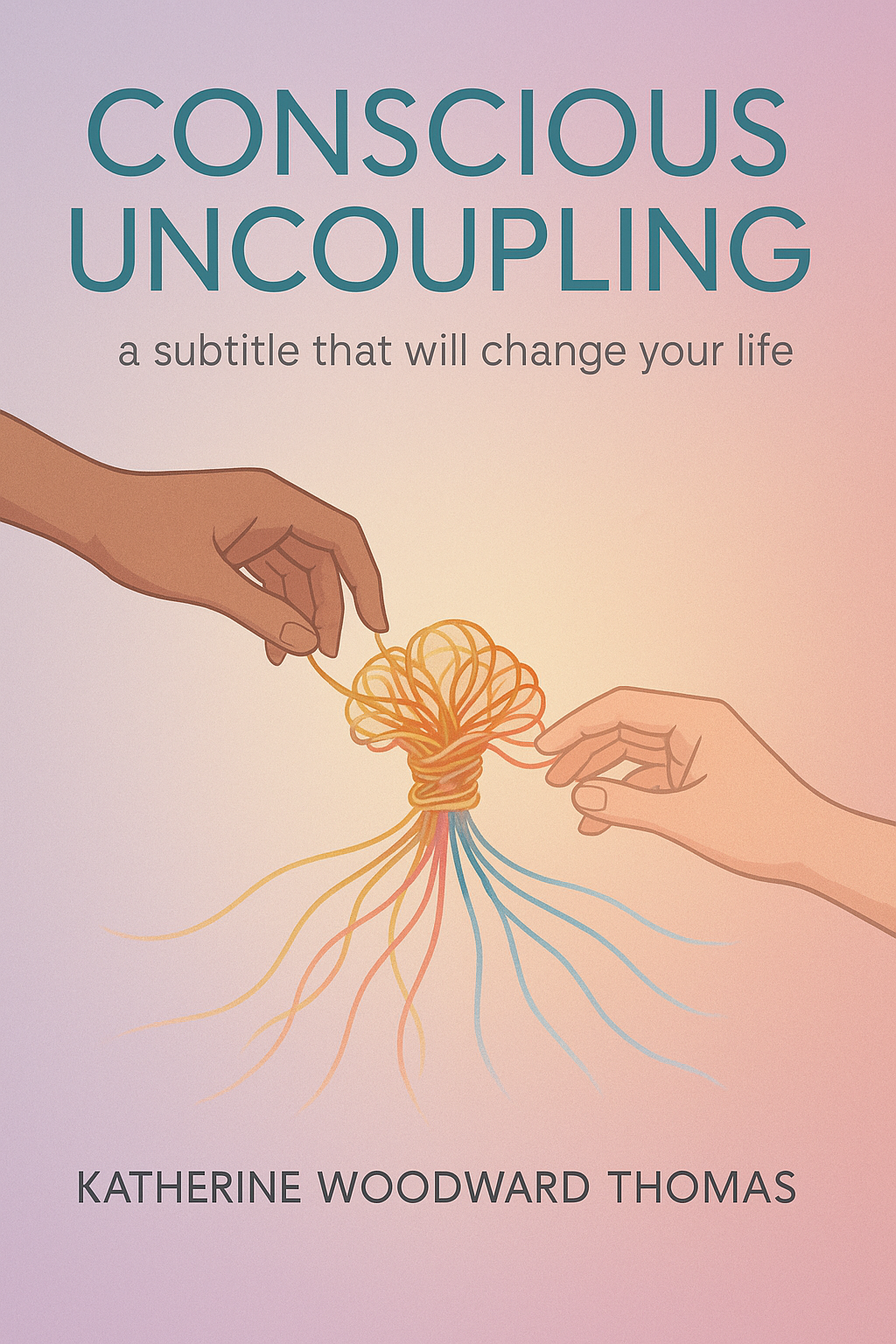
Conscious Uncoupling
Chapter Summaries
What's Here for You
Are you navigating the painful terrain of a relationship's end, feeling lost in the wreckage of what was once a profound connection? You're not alone. In 'Conscious Uncoupling,' Katherine Woodward Thomas offers a revolutionary path through the heartbreak, transforming what feels like a catastrophic failure into a powerful catalyst for personal evolution. This book acknowledges the deep pain, the shame, and the blame that often accompany breakups, recognizing that our primal wiring can fuel rage and bitterness. But it doesn't stop there. Thomas introduces a groundbreaking paradigm – Conscious Uncoupling – that moves beyond antagonism and contention, offering a deliberate, courageous approach to ending relationships with integrity. You'll discover how to reclaim your power, shed the mantle of the victim, and break destructive patterns rooted in past wounds. This isn't about dwelling in the darkness; it's about harnessing those potent energies to find profound emotional freedom and become a 'love alchemist,' transforming heartbreak into a fertile void ripe for reinvention. Prepare to heal your heart, understand the unconscious forces shaping your relationships, and ultimately, create your own vibrant, thriving 'happily-even-after' life. This book promises not just survival, but a profound rebirth, equipping you with the tools to build a future filled with deeper self-awareness, resilience, and the wisdom to love again, consciously and powerfully.
landing on the wrong side of love
The author, Katherine Woodward Thomas, opens with a stark acknowledgment: every deep intimacy harbors the potential for catastrophic unraveling, a truth often obscured by the hopeful vows exchanged at the start of a union. She confesses that writing this book, a sequel to her previous work on attracting love, was an unwanted consequence of her own marriage ending after nearly a decade. This realization, she shares, struck her with profound irritation, a feeling amplified by a childhood marked by an unconscious and brutal uncoupling that led to her alienation from her father. However, as her own separation unfolded, Thomas discovered a different path, one characterized by civility, respect, and a spirit of generosity, a stark contrast to her previous painful breakups, including a decades-long haunting grief from a high school romance. This experience of a remarkably graceful divorce prompted her to investigate the process that allowed her and her former husband, Mark, to transition out of their marriage with such dignity and care, especially for their daughter, who was their primary concern. She posits that this successful separation wasn't accidental but the result of a five-step process that left them, and those impacted, whole rather than broken. Thomas reveals that the core reason for her marriage's end was not infidelity or abuse, but a fundamental divergence in values: her inherent drive for growth and transformation clashed with Mark's ideal of acceptance and appreciation of things as they are. While acknowledging that such differences can often complement a couple, in their case, it led to conversations that fell flat, leaving them with little room for shared growth. She then challenges the societal assumption that staying together solely for children is the only or best option, noting the evolution of relationships and the desire for deeper fulfillment in partnerships. This personal journey, she explains, ignited her curiosity to explore how relationships can end better, leading to the development of the Conscious Uncoupling process. She clarifies that this book is not about encouraging divorce but about providing a humane and healthy framework for ending a union when it is no longer serving, emphasizing that breakups, while painful, are critical crossroads for spiritual awakening and profound personal growth. Thomas offers a promise: while pain is inevitable when bonds are severed, engaging in Conscious Uncoupling offers a safe passage to wholeness, leading to a life that is not just tolerable but even more beautiful, with the capacity to love again with an open, trusting heart, ultimately transforming a difficult moment into a profound gift of gratitude.
shame, blame, and the failure of love
The author Katherine Woodward Thomas, in her chapter 'shame, blame, and the failure of love,' invites us to confront the deeply ingrained societal narrative that equates the end of a romantic relationship with profound personal failure. She explains that much of the anguish surrounding a breakup stems not just from the loss of love, but from the jarring collision between our cherished 'happily ever after' expectations and the stark reality of separation. This narrative, Thomas reveals, often leads to a covert devaluation of the relationship itself, or of one or both partners, leaving individuals feeling mortified and socially diminished. The pervasive cultural story, rooted in ancient vows like 'till death do us part,' has conditioned us to measure a union's worth by its longevity, a metric that fails to account for the true quality or impact of the love shared. Thomas delves into the origins of this pervasive myth, tracing the 'happily ever after' trope back to 16th-century Venice, a time marked by short life expectancies and rigid social hierarchies. In that era, fairy tales offered a potent form of escapism, a fantasy of upward mobility and enduring love that was largely unattainable in reality. This wish fulfillment, while understandable, has shaped our modern ideals of romance into an often unrealistic standard. The chapter powerfully distinguishes between guilt, which arises from violating personal values, and shame, which stems from failing to meet external societal expectations, highlighting how shame compels us to hide and isolate ourselves precisely when we need connection most. Thomas uses the compelling example of her former client, Leslie, who, after a seven-month marriage ended abruptly, retreated into isolation, consumed by the shame of perceived rejection and the fear of societal judgment. This isolation, she argues, is a direct consequence of our cultural tendency to associate breakups with a fundamental flaw in character or the relationship's authenticity. The author then pivots to a more hopeful perspective, suggesting that the myth of happily ever after may have outlived its usefulness in our contemporary world, where serial monogamy is increasingly the norm and relationships are more fluid. She posits that the high rate of divorce, rather than being solely a mark of failure, could signal an evolution in our understanding of love and commitment, reflecting a greater pursuit of personal growth and individual freedom. Thomas advocates for a paradigm shift, urging us to move beyond the simplistic measure of duration and instead ask what wisdom we’ve gained and how we’ve learned to love more effectively. She proposes that consciously evolving our understanding of love, embracing the possibility of amicable uncoupling, and forgiving past hurts might be the true essence of loving well in the modern age. It’s a call to recognize that even the end of a relationship can be a form of love’s fulfillment, a testament to our enduring belief in love itself, even as we navigate its complexities with greater honesty and self-compassion.
bitter breakups, nasty endings, and the art of living unhappily ever after
Katherine Woodward Thomas, in her chapter 'bitter breakups, nasty endings, and the art of living unhappily ever after,' delves into the visceral, often destructive, aftermath of romantic rejection, revealing how the primal wiring of our brains can transform love into a potent, consuming rage. She begins by recounting the infamous tale of Burt Pugach and Linda Riss, a story that, while extreme, serves as a stark illustration of how passion can curdle into obsession and revenge, reminding us that while our character may forbid such acts, our biology might actually predispose us to them. Dr. Helen Fisher's research, as explained by Thomas, highlights a critical irony: the same brain regions activated by love also flare up with even greater intensity when we are rejected, creating a torturous entanglement, a frantic craving akin to drug withdrawal, as we desperately try to reclaim what is lost. This primal protest stage, where we might feel driven to extremes to win back affection, is then contrasted with the 'soul mate to soul hate' phase, where the intertwined circuits of reward and rage can lead to explosive consequences, as seen in the disturbing case of Christina Reber, whose violent revenge against her ex-boyfriend underscores the raw, unbridled fury that can erupt when love's promise shatters. Thomas emphasizes that these extreme reactions, while shocking, tap into a universal human experience, evidenced by the enduring popularity of songs like Alanis Morissette's 'You Oughta Know,' which gives voice to that closeted 'crazy girl' in all of us who has fantasized about lashing out. The author posits that nature may have designed this intense reaction as an evolutionary tool for separation, a fight-or-flight response that floods our system with hormones, slowing our thinking brain just as our impulse to act speeds up, a dangerous combination that can even affect the kindest among us, like Rita, the elementary school teacher who keyed her ex-boyfriend's car in a moment of blinding rage. Thomas then introduces a crucial insight: the opposite of love is not hatred, but indifference, and that hate itself becomes a powerful, negative bond, keeping us just as tethered to a former lover as love once did, a perpetual energy exchange that prevents true disconnection. This negative bond, she explains, is the brain's attempt to avoid the existential void of no bond at all, a survival mechanism that prioritizes connection, even a painful one, over isolation. The author further explores how a contentious separation, fueled by hostility and obsession with revenge, can perpetuate this negative bond for a lifetime, citing the example of a former wife consumed by efforts to extract money from her ex-husband seventeen years after their divorce. Conversely, cutting off a connection too quickly, in a brutal, purging impulse, can induce 'Broken Heart Syndrome,' a profound shock that can mimic a heart attack, leaving the abandoned individual feeling like an empty shell, trapped in the agonizing replaying of the moment of severing, as exemplified by Janet, who was falsely accused by her married lover. Thomas critically examines the common adage that 'time heals all wounds,' challenging the notion that passive waiting is sufficient for recovery, arguing instead that true healing requires proactive engagement, likening a broken heart to a broken leg that needs diligent tending to avoid permanent damage, such as a permanently closed, defensive, or easily bruised heart, which is the emotional equivalent of walking with a limp. She asserts that poorly navigated loss and inadequately healed heartbreak can lead to a diminished capacity for love and a lifelong victimhood, a state akin to the 'living dead' if one shuts down and walls themselves off from future hurt. However, Thomas offers a powerful counterpoint: a breakup, however excruciating, holds immense promise for a wholehearted awakening, a 'breakthrough' or 'triumph' that forces us to confront every lie, fear, and power-given-away aspect of our lives, compelling us to evolve and grow, as Leonard Cohen wisely noted, 'There is a crack in everything. That's how the light gets in.' This chapter, therefore, serves as a guide not to simply endure the pain, but to use the fierce energy of heartbreak as a catalyst for profound personal evolution, guiding readers toward a new, beautiful life on the other side of loss, whether they were the one leaving or the one left behind.
a new possibility between us: introducing conscious uncoupling
The author introduces the concept of Conscious Uncoupling, a paradigm shift in how we approach the end of romantic unions, born from the public announcement by Gwyneth Paltrow and Chris Martin. This approach, developed by Katherine Woodward Thomas, moves beyond the typical antagonism and contention of breakups, aiming instead for a process characterized by goodwill, generosity, and respect, minimizing damage to all parties involved, especially children. The chapter delves into the neuroscience behind our deep attachments, explaining via Dr. Louis Cozolino how our brains are wired for connection, creating a state of 'sociostasis' where our partners become crucial for emotional regulation. This explains why breakups trigger such intense fear and emotional turmoil, as the very person who once calmed us can become the source of our deepest terror, hijacking our rational brain and leading to destructive impulses. To navigate this, Thomas presents a five-step process, illustrated through the story of Dianna, who, facing her husband's affair, initially harbored vengeful fantasies but chose to engage in Conscious Uncoupling. This journey involved finding emotional freedom from rage, reclaiming her power by examining her own role in the relationship's demise, and breaking old patterns rooted in childhood abandonment. By learning to become a 'Love Alchemist,' Dianna took responsibility for her neglect of Brian, inspiring him to do the same, and ultimately chose generosity over revenge, even gifting him money to complete a film. This act of kindness, akin to planting seeds of goodwill, not only benefited their daughter Stephanie but also allowed Brian to reciprocate, creating a more cohesive family structure. The core idea is that while biology pulls us toward primitive reactions during a breakup, conscious choices, fueled by generosity and grace, can redirect this energy, transforming 'ugly' endings into 'beautiful' new beginnings. This new narrative for endings, emphasizing 'wevorce' and 'expanded families' over 'breaking up' and 'exes,' offers a model for healthier completions not just in romantic relationships, but in all areas of life where we constantly let go to create new possibilities. The author posits that by choosing to become the light in the darkness of loss, we can navigate these transitions, not just survive them, but emerge from the depths with greater appreciation, compassion, and a richer understanding of life.
how and when to do this program
Katherine Woodward Thomas, in her chapter 'how and when to do this program,' guides us through the often-treacherous terrain of ending a relationship, framing it not as a surrender to chance but as a deliberate act of courage. She posits that a bad ending lingers, a ghost haunting future connections, while a conscious uncoupling, though challenging, is a noble climb worth undertaking. This program, she explains, is not a magic wand to erase pain, for grief is an appropriate and necessary teacher, but a path to integrate deeper kindness, compassion, wisdom, and courage. It is for anyone seeking to move through a relationship's end with integrity, regardless of the duration, the circumstances of the separation, or one's orientation. Even in euphoria after leaving a long-term toxic situation, this program helps prevent repeating patterns. The narrative introduces the case of Claudia and Andrew, a couple whose marriage teetered on the brink, illustrating that before deconstructing a family, one final, honest attempt at understanding and repair is crucial. Thomas offers three powerful recommendations drawn from this story: first, seek professional help to gain clarity before making irreversible decisions, much like Claudia consulting a therapist before telling her husband about divorce. Second, share feelings without blame or shame, allowing the partner a chance to respond and address concerns, a stark contrast to destructive nagging and nonverbal hostility that often precedes an announcement of departure. Third, if a partner shows genuine effort to improve the situation, match that commitment, creating a sustainable dynamic rather than a painful push-pull. Thomas identifies three common reasons for union termination: egregious behavior like infidelity or addiction, persistent communication breakdown leading to emotional shutdown or constant conflict, and growing in different directions as core values shift in a complex world. She emphasizes that while staying through hardship shows integrity, consistent disregard for one's needs and feelings signals a time to move on, with a critical warning to flee domestic violence immediately. The program itself, she reveals, is designed to stir the pot, to get one unstuck, and to foster individuation, even if it leads to the realization that separation is the right path. For those clinging to hope of reconciliation, Thomas advises releasing the covert agenda of reclaiming the beloved, focusing instead on doing the right thing for the right reasons, understanding that the relationship that wasn't working must die to make way for new possibilities. Whether undertaken alone or in parallel with a partner, Conscious Uncoupling is a process of individuation, a return to self, and while breakups are messy, doing the program together offers a shared language and a clear vision for the future, particularly vital when children are involved. Ultimately, Thomas asserts, only one person is needed to consciously uncouple; one's ability to transform does not rest on the former partner's actions but on an internal commitment to kindness and self-awareness, using the breakup as a springboard for a new life. The duration of the program is flexible, from a long weekend to a year, with a suggested pace of one step per week for those with dedicated time, always honoring one's own deeper knowing. She encourages seeking support from coaches, therapists, or spiritual advisors, and utilizing supplies like a dedicated journal, music, and art supplies to process challenging emotions, reminding us that grief, when given voice, can prevent the heart from breaking.
find emotional freedom
The author Katherine Woodward Thomas invites us into the profound, often dark, terrain of emotional freedom, explaining that new life, whether a seed, a baby, or a spiritual rebirth, often begins in the depths of darkness. This chapter is a guide to harnessing the potent energies of overwhelming emotions like rage, fear, and despair, transforming them from destructive impulses into constructive drivers of change. Thomas reveals that a breakup, a shattering of what was known, is not merely an end but a profound, life-altering opportunity to radically evolve how we live and love. She emphasizes the creation of an 'Inner Sanctuary of Safety,' a wise inner core that can hold the intensity of these emotions, offering strength and stability. The shock of separation, akin to trauma, can trigger intense physical and psychological responses, as the brain registers rejection similarly to physical pain. Neuroscience shows we are deeply relational, making the rending of a bond as impactful as a serious injury, leading to symptoms like acute anxiety, hypervigilance, and even physical distress. Thomas categorizes breakups on a 'Bad Breakup Scale,' from a mild 'Fender Bender' to a devastating 'Hit-and-Run,' acknowledging that each delivers a traumatic blow requiring tender care for recovery. A core insight is that when our sense of safety is violated by the end of love, our normal sources of comfort, even faith, can crumble, creating a 'schema fracture' where our worldview is insufficient. To navigate this, Thomas introduces 'affect labeling,' the simple act of naming feelings, which dampens the brain's reactive centers and activates impulse control, helping us regain our footing. This leads to the practice of creating an Inner Sanctuary of Safety using Tonglen, a method of stilling oneself, stepping back from emotions, connecting to a deeper inner center, extending compassion to the suffering part of oneself, naming and mirroring feelings and needs, and breathing out blessings for oneself and others experiencing similar pain. The chapter also explores the 'up side of feeling down,' explaining that depression following loss is not a pathology but nature's way of slowing us down for reflection, a tribute to the value of the lost connection. It encourages embracing sorrow not as a weakness but as a pathway to wisdom and self-compassion, a testament to our shared humanity. Thomas highlights the transformative power of rage, not as a destructive force, but as a potent energy source that, when harnessed, can fuel crucial life changes and help reclaim one's rights to be valued and respected. Finally, she guides readers to challenge their 'source fracture wounds'—original hurts that color current interpretations of loss—by creating a 'Mentoring Mantra' to offer wise, compassionate self-guidance, transforming pain into a catalyst for post-traumatic growth, ultimately choosing to make something beautiful of the parting.
reclaim your power and your life
Katherine Woodward Thomas, in Step 2 of her Conscious Uncoupling program, guides us to shed the mantle of the wounded victim and step into our own power by embracing personal responsibility. The core tension here is the pervasive human tendency to craft narratives of blame and victimization after a breakup, a narrative that, while seemingly protective, actually traps us in a cycle of suffering. Thomas explains that whether we were the one who left or the one left behind, our initial stories often center on how we were wronged, misunderstood, or how our partner failed us. This fixation, she reveals, keeps us from seeing our own three percent—or perhaps more—of the responsibility, the subtle ways we may have given our power away, engaged in people-pleasing, or tolerated less than we deserve. Imagine, for a moment, standing in a room where every mirror reflects not your true self, but a distorted image of past hurts and perceived betrayals; this is the trap of the victim narrative. The crucial insight is that true liberation comes not from proving the other person wrong, but from looking honestly inward, asking, 'Where is my attention?' This shift allows us to understand ourselves as the source of our experience, not in a shaming way, but as an empowered acknowledgment of our agency. Thomas emphasizes that self-blame is as unhelpful as external blame; instead, we must ask growth-oriented questions, such as 'How did I give my power away?' or 'What disappointing story from my past is being repeated here?' The narrative then moves towards resolution through making amends to oneself, a process of acknowledging our own role and committing to self-care and new skills. This is not about seeking amends from the former partner, but about offering them to ourselves, recognizing the cost of our choices and committing to a more authentic way of being. By transforming heartbreak into a catalyst for growth, as exemplified by the stories of Monique and Kate, we can reclaim our lives and build a future founded on self-trust and genuine connection, moving from the lingering ache of loss to the quiet strength of self-awareness.
break the pattern, heal your heart
Katherine Woodward Thomas, in 'break the pattern, heal your heart,' guides us through the intricate process of understanding how our past wounds, termed 'sourcefracture stories,' unconsciously shape our present relationships, leading to recurring patterns of disappointment. She reveals that these painful dynamics are not merely happening *to* us, but rather *through* us, a crucial distinction that unlocks the power to transcend them. The author emphasizes that the true liberation comes not just from the sorrow of loss, but from the profound insult a breakup can deliver to our core sense of self, often validating our deepest fears of never being loved or always being alone. Thomas introduces the concept of 'repetition compulsion,' a Freudian idea that suggests we unconsciously recreate past hurts in an attempt to heal them, but she posits that this often fails. Instead, she urges readers to identify their 'sourcefracture story'—the meaning derived from original hurts that forms an underlying narrative about oneself and one's capacity for love. Through vivid examples like Veronica Shoffstall's poem 'After a While' and client stories, Thomas illustrates how deeply ingrained beliefs, formed in childhood, act as a distorted inner compass, guiding us back to familiar misery. She explains that we see life not as it is, but as we are, colored by these ancient, skewed perspectives. The critical insight here is that by becoming conscious of these underlying beliefs, we gain the power to write a new narrative, one of happy, healthy love. This involves a deep dive into self-reflection, asking how former partners disappointed us in ways mirroring our youth, and crucially, how we may have set up our partners to validate these very patterns through our own self-abandonment, fear of conflict, or subjugation of needs. Thomas stresses that this is not about blaming the victim but about recognizing our agency in perpetuating these cycles. The chapter offers a powerful exercise to identify one's sourcefracture story by becoming still, aware of feelings, and noticing the meaning made of the breakup, weaving these beliefs into a cohesive narrative of the self. We are encouraged to confront the age and energy of the part of us stuck in this story, and then to consciously choose the strengths of our adult self to move forward. The narrative arc moves from the tension of repeated heartbreak to the insight of our own role in these patterns, culminating in the resolution of self-empowerment and the potential for healing. This journey is not about finding the 'right person' but about developing the inner and outer capacities to sustain healthy intimacy, learning new skills like emotional literacy and boundary setting, and approaching life with a 'beginner's mind,' embracing vulnerability over the protection of appearing perfect. Ultimately, Thomas invites readers to be the hero of their own journey, to wake themselves up from the trance of their sourcefracture story and claim their inherent worthiness and power to create fulfilling love.
become a love alchemist
In Step 4 of Katherine Woodward Thomas's Conscious Uncoupling program, titled 'Become a Love Alchemist,' the narrative unfolds as a profound exploration of transforming the end of a relationship from a destructive force into a catalyst for growth and future creation. Thomas posits that freedom is not merely the absence of what has been done to us, but what we actively do with it, urging readers to see themselves as 'indomitable forces of nature' capable of forging a positive future. The core tension lies in the inherent distress of dismantling a shared life, akin to deconstructing a home, which can easily descend into hostility and power struggles. Thomas cautions against the 'wrecking-ball breakup' that obliterates goodwill, emphasizing instead the alchemical process of protecting the love that once existed and honoring all that was co-created. This requires a conscious choice to value both the past connection and the emerging future, a discipline that transcends the simple black-and-white thinking many adopt during heartbreak. A vivid scene emerges through the story of Ralph and Richard, whose thirty-year union dissolved unkindly, leaving Ralph's home a 'tomb' of memories, a stark contrast to the vibrant future the author advocates for. This cautionary tale underscores the danger of dwelling in the past, a hypnotic pull that prevents new life from emerging. The central insight here is the power of setting a 'conscious intention'—a North Star—for a positive future, a concept illustrated by the inspiring example of authors Janet Bray Attwood and Chris Attwood, whose amicable divorce led to an even stronger business partnership and enduring friendship, even extending to Chris's new wife. This intention, Thomas explains, must be future-oriented, affirmative, and infused with noble purpose, acting as a bridge over the minefield of separation. The chapter delves into the practice of forgiveness, not as a feeling, but as a decision—a 'spiritual master's' choice to rise above reactivity and victimization. Drawing parallels to the ancient art of alchemy, where lead is transformed into gold not by adding, but by taking away, Thomas suggests that personal transformation often begins with what we are willing to subtract: grudges, unhealed injuries, and the residue of unkind words. The process involves a profound self-examination, urging readers to release victimized narratives and take responsibility for their role in co-creating the relationship's end. The author introduces powerful practices like the 'Hooponopono prayer' and a forgiveness visualization, designed to neutralize negative momentum and return destiny to one's own hands. The narrative culminates in the art of 'conscious completion,' which involves acknowledging the past, appreciating the gifts received, and making amends to restore wholeness. This is exemplified by the story of Robin and Gary, whose mindful approach to divorce created a healthier dynamic for their children, transforming potential family failure into an 'expanded family adventure.' The chapter concludes by redefining communication post-breakup, advocating for speaking from a 'wise, strong, and resourceful adult self' to create the intended future, emphasizing response over reaction, and ultimately, the transformative power of choosing to be an agent of love and goodness, turning the lead of heartbreak into the gold of a brighter tomorrow.
create your happily-even-after life
Katherine Woodward Thomas, in the concluding chapter of Conscious Uncoupling, guides us toward building a thriving future beyond the dissolution of a significant relationship, emphasizing that this ending is not a failure but a fertile void ripe for reinvention. The author explains that true liberation comes not from clinging to the past or seeking to replicate what was lost, but from embracing the 'emptiness' as a pregnant space for new horizons, fresh perspectives, and forgotten possibilities. A core insight emerges: consciously completing old agreements and generating new ones, tailored to the evolving relationship dynamics, is paramount. Thomas illustrates this with the story of Emily, who, after years of subconscious fidelity to past vows, found freedom by directly releasing them. This leads to another crucial understanding: managing expectations is key; unmet expectations trigger a threat response, while adjusted ones, aligned with current realities, foster well-being. The narrative then pivots to the vital importance of community cohesion, cautioning against alienating social circles by demanding loyalty to one side. Instead, Thomas advocates for training friends and family to support both individuals, drawing parallels to the brain's response to social rejection, akin to physical pain. This fosters a supportive environment where the focus remains on collective well-being, not blame. A third insight highlights that true friendship, unlike the often-self-serving desire to remain 'friends' post-breakup, is built on consistent, selfless gestures and genuine care for the other's happiness, even separate from one's own. The chapter underscores that for the sake of children, maintaining a unified family structure, albeit recalibrated, is essential, moving beyond the 'broken home' paradigm to a 'binuclear family' where parents mature to meet the children's needs for stability and love, rather than projecting their own pain onto them. This necessitates a conscious effort to co-parent with grace, as demonstrated by the author's own evolving relationship with her ex-husband and his former wife. Finally, Thomas addresses the practicalities of dividing assets, urging fairness over fear and vindictiveness, noting that the legal system often exacerbates conflict, while conscious negotiation prioritizes long-term well-being and integrity. The author reveals that the true measure of success in this final stage lies not in the absence of struggle, but in the courageous choice to create a future that honors the past while embracing new, expansive possibilities, transforming the end of a love story into the dawn of a more authentic life.
Conclusion
Katherine Woodward Thomas's 'Conscious Uncoupling' fundamentally redefines the narrative surrounding relationship endings, transforming them from perceived failures into profound opportunities for personal growth and spiritual awakening. The book powerfully dismantles the pervasive societal myth of 'happily ever after,' which fuels shame and hinders authentic healing. Instead, Thomas offers a compassionate framework for navigating the inevitable breakdown of intimacy with dignity, respect, and a deep commitment to the well-being of all involved, especially children. Core to this approach is the recognition that relationships can diverge due to fundamental shifts in values and life paths, rather than solely fault. The emotional lessons are profound: breakups, though intensely painful due to our primal brain wiring for connection, are not mere endings but critical crossroads. Hatred, a potent negative bond, must be consciously released. Passive waiting is insufficient; proactive engagement with grief, shame, and victim narratives is essential for emotional freedom. By embracing vulnerability and a 'beginner's mind,' individuals can challenge ingrained 'source fracture stories' and reclaim their power. The practical wisdom lies in shifting from blame to responsibility, particularly by examining one's 'three percent' contribution to the dynamic. Transforming destructive impulses into constructive energy, practicing forgiveness as a conscious choice, and making amends to oneself are vital steps. Ultimately, 'Conscious Uncoupling' empowers readers to become 'love alchemists,' transforming heartbreak into a fertile void for reinvention, establishing a clear future intention, and cultivating a 'happily-even-after' life built on self-awareness, integrity, and enduring love in its evolved forms. The emphasis is on conscious completion, generosity, and fostering a supportive community, ensuring that endings become powerful beginnings.
Key Takeaways
Intimacy inherently carries the potential for breakdown, a reality often ignored during hopeful beginnings.
A marriage can end not due to fault, but due to a fundamental divergence in core values and life paths.
Conscious Uncoupling offers a framework for ending relationships with dignity, respect, and well-being for all involved, particularly children.
Breakups, while painful, represent critical crossroads for profound personal growth and spiritual awakening, not merely failure.
The goal of relationship endings should be to leave individuals whole and capable of future love, rather than broken and walled off.
Societal expectations around marriage and divorce are evolving, demanding new approaches to maintaining family well-being during separation.
The societal narrative equating relationship endings with personal failure, fueled by the 'happily ever after' myth, creates shame and diminishes individuals precisely when they need support.
Shame, driven by the fear of violating external societal expectations, leads to isolation, whereas guilt, stemming from internal value violations, is a more personal reckoning.
The 'happily ever after' trope, originating from 16th-century Venice's harsh realities, served as an escapist fantasy of social mobility and enduring love, but has become an unrealistic modern standard.
Modern relationship norms, including serial monogamy and higher divorce rates, suggest that the traditional 'till death do us part' model may be outdated, necessitating a reevaluation of love's definition and success metrics.
Measuring a relationship's value solely by its duration is a flawed metric; instead, individuals should focus on the wisdom gained and lessons learned about love for future application.
Consciously evolving our understanding of love to embrace amicable uncoupling and forgiveness is essential for navigating modern relationships and can be seen as a fulfillment of love itself.
The primal brain wiring that fuels love also intensifies the pain and craving of rejection, making it difficult to disengage.
Hatred, while seemingly an opposite of love, functions as a powerful negative bond, keeping individuals tethered to a past relationship and hindering true emotional detachment.
Passive waiting for 'time to heal' is insufficient for recovery; proactive engagement and conscious effort are necessary to mend a broken heart and prevent lasting emotional damage.
A painful breakup, though excruciating, offers a profound opportunity for self-awakening and personal evolution by forcing a confrontation with deeply held fears and self-limiting beliefs.
The brain prioritizes connection over isolation, even if that connection is negative, making it challenging to let go of relationships that no longer serve us.
Conscious Uncoupling reframes relationship endings from adversarial battles to opportunities for growth through goodwill and respect.
Our deeply ingrained biological attachment circuitry makes breakups intensely frightening, hijacking rational thought and driving primitive reactions.
Transforming destructive impulses into constructive energy requires conscious effort to examine one's own role and break ingrained relational patterns.
Generosity and taking responsibility, even when wronged, can create a positive feedback loop, fostering healing and new beginnings for all involved.
Language shapes reality; adopting new narratives and terms for relationship endings can foster healthier, more life-affirming transitions.
A consciously chosen ending to a relationship, though difficult, is essential for future happiness and prevents 'bad endings' from tainting future connections.
Grief is an appropriate and transformative teacher; surrendering to its process can lead to deeper kindness, compassion, wisdom, and courage.
Before initiating a formal uncoupling process, seeking professional guidance and attempting open, blame-free communication is a critical step to explore potential reconciliation or a more dignified separation.
Relationship termination often stems from fundamental issues like betrayal, communication breakdown, or diverging core values, necessitating different approaches for resolution or departure.
The decision to consciously uncouple is an internal one; one's ability to navigate the process with integrity and grace is independent of the former partner's participation or behavior.
Releasing the hope of reconciliation is a vital, albeit painful, step that allows for genuine healing and opens the possibility for future love, emphasizing clear closure over prolonged ambivalence.
The duration and method of conscious uncoupling (alone or with a partner) are flexible and should be guided by individual needs and inner knowing, supported by self-reflection and external resources.
A breakup is a profound trauma that disrupts our fundamental sense of safety and can be understood and navigated through a spectrum of severity, requiring dedicated healing.
Emotional freedom begins with creating an 'Inner Sanctuary of Safety' by learning to name, contain, and compassionately witness overwhelming emotions, rather than being consumed by them.
The intense pain of loss, including feelings of depression and sorrow, is a natural and necessary part of grieving that offers an opportunity for reflection, wisdom, and deeper self-compassion.
Transforming destructive emotional energy, such as rage, into a catalyst for positive change is possible by harnessing its power to assert one's rights and make essential life adjustments.
Challenging ingrained negative assumptions, or 'source fracture wounds,' formed from past hurts is crucial for making empowered meaning of current experiences and fostering post-traumatic growth.
Effective grieving involves turning love inward, practicing self-care, and making conscious commitments to oneself, transforming sorrow into a deeper capacity for self-love and connection to all life.
Victim narratives, while common after breakups, serve to protect us from further pain but ultimately perpetuate suffering by preventing us from recognizing our own agency and responsibility.
Shifting focus from blaming the ex-partner to examining one's own 'three percent' of responsibility is crucial for breaking destructive relationship patterns and reclaiming personal power.
Asking growth-oriented questions like 'How did I give my power away?' is essential for understanding one's role in relationship dynamics, rather than falling into shame-based self-recrimination.
Making amends to oneself, rather than seeking them from a former partner, is a powerful act of self-love that involves acknowledging past choices and committing to new, healthier behaviors.
Transforming heartbreak into a catalyst for personal growth and developing new skills for authentic relating can lead to a more fulfilling future, even if direct amends to the ex-partner are not possible.
Recurring painful relationship patterns stem from 'sourcefracture stories'—deep-seated beliefs formed in childhood—which unconsciously guide our choices and perceptions.
Recognizing that relationship dynamics happen *through* us, not just *to* us, is the key to unlocking personal power and evolving beyond destructive cycles.
Identifying and consciously challenging one's 'sourcefracture story' is the essential first step toward healing and creating fulfilling, healthy relationships.
We often inadvertently set up our partners to validate our sourcefracture stories by how we relate to ourselves and by failing to communicate our needs and boundaries.
Authentic healing and relationship growth require developing new emotional and relational skills, such as emotional literacy and boundary setting, which may have been underdeveloped in youth.
Embracing a 'beginner's mind' and vulnerability, rather than seeking certainty and protection, is crucial for learning new relational capacities and breaking free from old patterns.
Transform heartbreak into growth by actively choosing what to do with past hurts, rather than being defined by them, thereby becoming a 'love alchemist'.
Establish a clear, affirmative, and purpose-driven intention for the future to serve as a guiding 'North Star' through the complexities of separation.
Practice forgiveness as a conscious decision to release the past and reclaim personal power, rather than an emotional state, to neutralize negative momentum.
Take responsibility for one's role in the relationship's dissolution and release victimized narratives to foster genuine self-awareness and healing.
Engage in conscious completion by acknowledging the past, appreciating gifts received, and making amends to restore wholeness and dignity to the ending.
Communicate post-breakup from a mature, adult self, focusing on creating the desired future and understanding impact rather than seeking to be understood or right.
Embrace generosity and thoughtful action as investments in a new, evolving family dynamic, even amidst financial or emotional challenges.
Reframe the 'emptiness' of loss as a fertile void for reinvention by consciously letting go of past agreements and creating new ones that align with a future vision.
Effectively manage expectations by understanding their impact on brain chemistry and adjusting them to current realities, thereby fostering well-being and reducing threat responses.
Cultivate community cohesion by guiding friends and family to support both individuals impartially, recognizing that social rejection activates pain pathways and hinders healthy transitions.
Distinguish true friendship, built on selfless care and mutual well-being, from the impulse to remain 'friends' solely for self-preservation or to avoid existential loss.
Prioritize the enduring family unit for children by fostering parental maturity and emotional resilience to create a stable 'binuclear family' structure, rather than projecting conflict onto them.
Approach the division of assets with an ethic of fairness and integrity over fear and vindictiveness, understanding that conscious negotiation and prioritizing people over profits leads to healthier long-term outcomes.
Action Plan
Acknowledge the inherent potential for breakdown within any intimate relationship, rather than assuming it will last forever.
Identify if core value differences are creating irreconcilable divides in your partnership.
Commit to a process that prioritizes the well-being of all individuals involved, especially children, during a separation.
Reframe breakups not as failures, but as opportunities for profound personal growth and spiritual awakening.
Seek to understand and implement the principles of Conscious Uncoupling to facilitate a healthy and humane ending to a union.
Challenge societal assumptions about divorce and explore new possibilities for maintaining stable and loving family life after separation.
Use the pain of loss as a catalyst to cultivate greater wisdom, depth, and an expanded capacity for love.
Challenge the internal narrative that equates relationship endings with personal failure; reframe it as a learning experience.
Identify and question societal expectations about love and relationships that may be causing you shame.
When a relationship ends, resist the urge to isolate; instead, seek support from trusted friends or family.
Reflect on the specific wisdom and insights you've gained from past relationships, focusing on lessons learned about yourself and love.
Practice self-compassion by acknowledging the pain of the ending without attaching blame or judgment to yourself or your former partner.
Begin to articulate a new definition of a 'successful' relationship ending that prioritizes growth, learning, and grace.
Consider how the 'happily ever after' myth might be influencing your current expectations and adjust them to align with reality.
Recognize that the intense craving and anger experienced after rejection are biologically driven, and do not necessarily reflect the true nature of your character.
Challenge the notion that hating your ex-partner will lead to freedom; instead, understand that hate creates a new, albeit negative, bond.
Actively engage in the process of healing your heartbreak, rather than passively waiting for time to pass, treating it with the same care as a physical injury.
Identify and confront the 'lies' and fears that your breakup has brought to the surface, using the pain as a catalyst for self-examination and growth.
Seek to cultivate indifference rather than hatred towards a former partner, as indifference signifies true emotional detachment.
View the breakup not as an ending, but as an opportunity for a 'wholehearted awakening' and a chance to become the person you were meant to be.
Acknowledge and explore the biological and emotional impulses that arise during a breakup, recognizing they are natural but not necessarily guiding.
Commit to examining your own role in the relationship's dissolution, rather than solely focusing on the other person's actions.
Practice acts of generosity and goodwill towards your former partner, even in small gestures, to foster a more positive transition.
Challenge old narratives and self-limiting beliefs about love and relationships that may have contributed to the ending.
Intentionally choose language that supports a new, more constructive narrative for the end of the relationship.
Develop new strategies for emotional self-regulation, as your primary attachment figure is no longer available for this purpose.
Focus on creating a 'happily-even-after' life by building new structures and agreements that support well-being for yourself and others.
Seek professional guidance from a therapist or counselor before making a final decision about ending a relationship.
Practice sharing your feelings and concerns with your partner using 'I' statements, without blame or shame, before reaching a conclusion about the relationship's future.
If your partner takes concrete steps to address your concerns, commit to matching their efforts to improve the situation.
When facing relationship termination, identify the core reason for the breakup (behavioral issues, communication breakdown, or diverging values) and seek appropriate resources for resolution.
Commit to releasing the hope of reconciliation if the relationship is fundamentally not working, focusing on clear closure to allow for future healing.
Dedicate private journaling time to express raw emotions, truths, and confessions without reservation.
If possible and beneficial, engage in the Conscious Uncoupling program in parallel with your partner to foster shared understanding and a unified vision for the future.
If undertaking the program alone, focus on your own growth and well-being, recognizing your power to influence the breakup's trajectory through kindness and self-awareness.
Create an 'Inner Sanctuary of Safety' by practicing stillness, stepping back from emotions, connecting to a deeper inner center, and extending compassion to your suffering self.
Engage in 'affect labeling' by naming your overwhelming feelings and needs, mirroring them back to yourself with kindness to calm your reactive brain.
Practice Tonglen by breathing in difficult emotions, welcoming them fully, and breathing out blessings for yourself and others experiencing similar feelings.
Challenge your negative assumptions about yourself and love by creating a 'Mentoring Mantra' that offers wise, compassionate self-guidance.
Commit to significant self-care by journaling freely, moving your body, listening to music that mirrors your emotions, and seeking inspiration from art.
Identify and make conscious to yourself the commitments you wished your former partner had made to you, thereby offering yourself the love and support you need.
Ask yourself 'Where is my attention?' and consciously redirect it from blaming others to examining your own role and choices in the relationship.
Engage in self-reflection by asking growth-oriented questions such as 'How did I give my power away?' or 'What choices did I make that contributed to how things went down?'
Identify and write down specific instances where you may have given your power away, minimized your feelings, or avoided speaking your truth.
Acknowledge the cost of past self-abandoning or people-pleasing behaviors and commit to making amends to yourself by prioritizing your own needs and feelings.
Identify new skills and capacities needed to live more authentically, such as setting boundaries, asserting needs, or tolerating disapproval, and commit to developing them.
Practice mindfulness by paying attention to your feelings and sensations with kindness and self-awareness throughout your day.
Gather reminders of the relationship and store them out of sight to create physical distance and support emotional healing.
Identify your 'sourcefracture story' by reflecting on the core beliefs formed about yourself and love from childhood experiences.
Ask yourself how your former partner disappointed you in ways that mirror past hurts from your youth.
Examine how you may have unconsciously set up your former partner to validate your sourcefracture story through your own actions or inactions.
Practice stillness and self-compassion to become aware of your feelings about a breakup and the meaning you are making of it.
Challenge the validity of your sourcefracture beliefs by consciously professing a more truthful narrative about your worthiness and capacity for love.
Commit to learning new relational skills and capacities, such as emotional literacy and boundary setting, that you may have missed developing earlier in life.
Adopt a 'beginner's mind' to embrace uncertainty and vulnerability as you explore new ways of relating to yourself and others.
Practice self-care rituals like drinking water, eating nurturing foods, and moving your body to symbolically cleanse toxic habits and honor your worth.
Craft a conscious intention for a positive future that is future-oriented, affirmative, and infused with noble purpose.
Practice forgiveness by consciously deciding to release past hurts and asking for forgiveness, using a guided visualization or prayer.
Identify and release victim narratives by taking responsibility for your role in the relationship's end and focusing on what you can learn.
Engage in a 'conscious completion' process: acknowledge the past, appreciate the gifts, and make amends where possible.
Communicate with your former partner from your mature adult self, focusing on understanding impact and generating future goodwill, not on being right.
Extend generous gestures to your former partner that build peace and goodwill, such as offering financial relief during unemployment or supporting shared family events.
Recreate your living environment by decluttering and rearranging to symbolically clear space for new beginnings.
Practice Hooponopono by repeating 'I love you. I'm sorry. Please forgive me. Thank you.' to yourself or others to clear emotional residue.
Identify and consciously release old relationship agreements that no longer serve your future.
Adjust expectations of yourself and your former partner to align with your new reality.
Communicate with friends and family to guide them in supporting both individuals without taking sides.
Practice consistent, small, and considerate gestures of thoughtfulness to build authentic friendship, if appropriate.
Focus on co-parenting with grace and maturity, ensuring children feel secure and loved within an enduring family structure.
Approach asset division with fairness and integrity, prioritizing long-term well-being over immediate gain or retribution.
Consider creating a personal ritual or ceremony to mark the end of the relationship and honor the shared past.