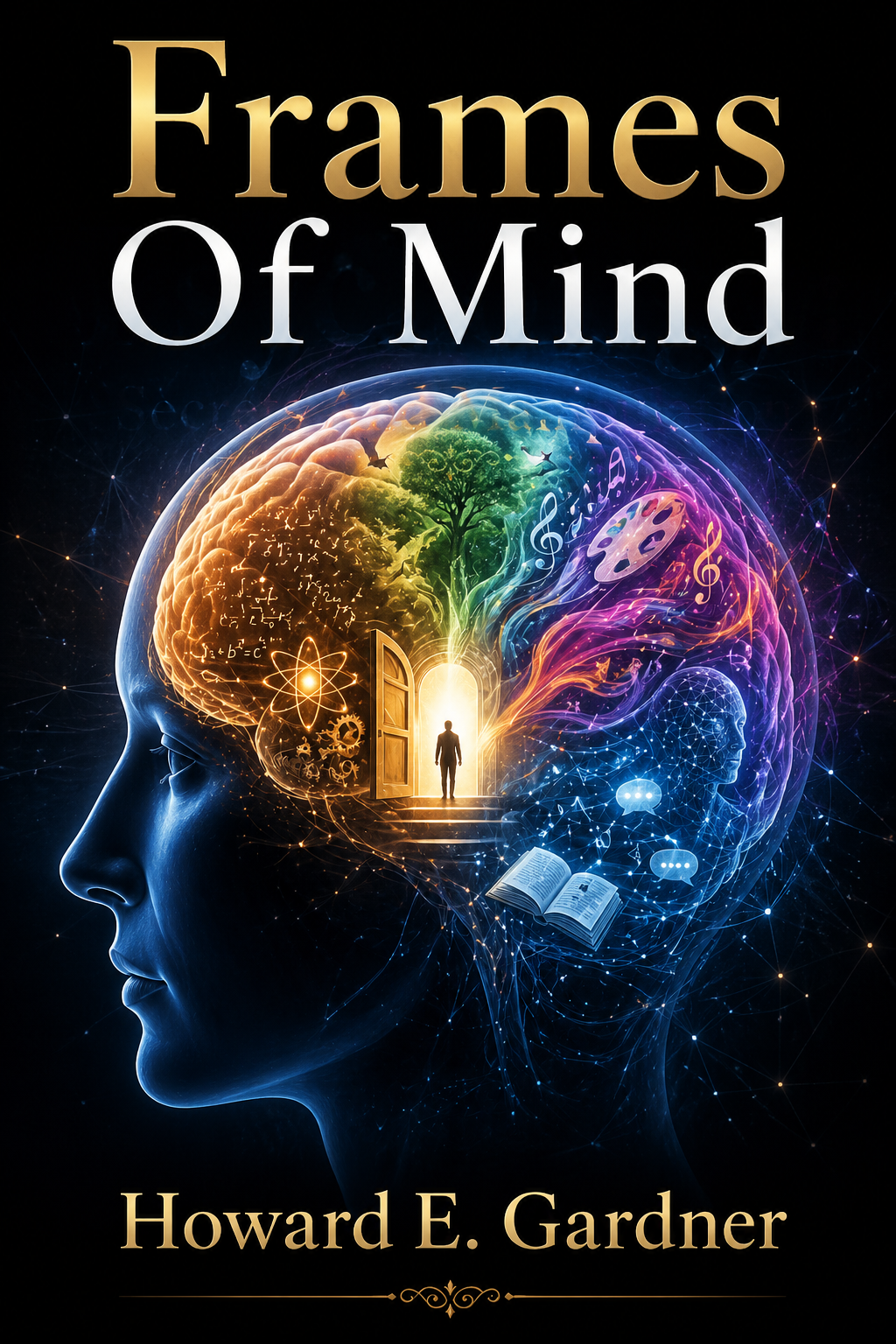
Frames Of Mind
Chapter Summaries
What's Here for You
Prepare to have your understanding of intelligence fundamentally challenged. "Frames of Mind" dismantles the limiting notion of a single IQ score, inviting you on an intellectual odyssey to explore the multifaceted nature of human potential. Through vivid portraits and historical analyses, Howard Gardner unveils his groundbreaking theory of multiple intelligences. You'll embark on a journey of self-discovery, identifying your own unique cognitive strengths – be they linguistic, musical, logical-mathematical, spatial, bodily-kinesthetic, interpersonal, or intrapersonal. This book promises not just a theoretical understanding but a practical framework for cultivating these intelligences in yourself and others. Prepare for an intellectually stimulating and emotionally resonant experience, prompting you to rethink education, talent, and the very definition of what it means to be intelligent.
The Idea of Multiple Intelligences
Howard Gardner opens our eyes to the limitations of the traditional IQ test, a scenario replayed globally, reducing a child's potential to a single number. He challenges this narrow view, painting vivid portraits of a Puluwat navigator, an Iranian Koran scholar, and a Parisian computer musician—each demonstrating intelligence far beyond standardized assessments. Gardner asks, what if we considered the wider range of valued performances around the world? He then introduces the central tension: the clash between the 'hedgehogs,' who see intelligence as a singular, rank-able trait, and the 'foxes,' who recognize its fragmentation into multiple components. Like cartographers charting unknown territories, Gardner seeks to map these diverse intellectual competences, these 'frames of mind.' He argues that esteem for knowledge has long dominated Western thought, sometimes overshadowing feeling, faith, and courage. He underscores that by expanding our view of intellect, we can devise more effective ways of assessing and cultivating it. Gardner reviews evidence from prodigies, brain-damaged patients, and diverse cultures, searching for converging validation of his candidate intelligences. He envisions a future where education identifies and nurtures individual intellectual profiles, offering tailored programs and prosthetics for atypical learners. In essence, Gardner invites us to move beyond the single score, to recognize the multiplicity of human potential, and to foster environments where diverse intelligences can flourish. The book, therefore, is a call to broaden cognitive psychology, embrace biological and cross-cultural perspectives, and ultimately, empower individuals through a more nuanced understanding of their own minds.
Intelligence: Earlier Views
In this chapter, Howard Gardner embarks on a historical exploration of intelligence, beginning with Franz Joseph Gall's phrenology, a nineteenth-century attempt to link skull configurations to mental faculties, which, despite its flaws, pioneered the idea of localized brain function, a concept that ebbs and flows through history like a persistent current. Gardner navigates the pendulum swings between localization and skepticism, highlighting Pierre Flourens' early doubts and Pierre-Paul Broca's compelling evidence linking brain lesions to specific linguistic impairments. The narrative then broadens, revealing how ancient civilizations and philosophers grappled with the physical roots of mental functions, setting the stage for the emergence of psychology as a science, where Wilhelm Wundt and William James sought universal laws of human knowing, often disconnected from the brain's physical realities. The chapter contrasts this broad-stroke approach with the focus on individual differences championed by Sir Francis Galton, leading to Alfred Binet's development of intelligence tests, initially designed to aid children, but quickly becoming a societal obsession, its predictive power limited and its biases exposed over time. Gardner then introduces Jean Piaget, who shifted the focus from correct answers to the reasoning processes behind them, revealing the inadequacies of intelligence testing's empirical, microscopic, and culturally biased approach. Piaget's stage-based theory of cognitive development, from sensori-motor to formal operations, is presented as a compelling alternative, though not without its own weaknesses, including its Western-centric view and lack of attention to diverse forms of competence. The narrative transitions to the information-processing approach, a microgenetic analysis of problem-solving, striving for computer-simulated precision, yet often lacking a unifying theory and neglecting biological underpinnings and open-ended creativity. Finally, Gardner introduces the symbol systems approach, a perspective closest to his own work, emphasizing the role of symbolic vehicles in human cognition and creativity, advocating for a pluralistic view of intelligence, where different symbol systems, like music, language, and spatial reasoning, may involve distinct abilities and developmental paths, ultimately urging a catholic approach, informed by diverse sources, including neuropsychology, to arrive at a more comprehensive understanding of human intelligence, viewing the brain as the ultimate arbiter among competing accounts of cognition.
Biological Foundations of Intelligence
In "Frames of Mind," Howard Gardner embarks on a quest to ground our understanding of intelligence in the rich soil of biology, acknowledging the advances since Franz Joseph Gall's time while lamenting the divide between psychologists and biologists. He frames the central tension around the flexibility of human development, questioning whether our intellectual fates are locked-in or malleable, a debate that shadows the effectiveness of educational interventions. Gardner then navigates the genetic landscape, admitting that while genetics holds the blueprints, the translation to complex abilities remains murky, a realm where speculation often overshadows established fact. He introduces the concept of 'at promise' individuals, those with a genetic proclivity for certain talents, a potential that requires the right environment to blossom, like a seed needing fertile ground. Shifting to neurobiology, Gardner highlights the dance between canalization and plasticity, the nervous system's tendency to follow pre-set paths versus its capacity to adapt, painting a vivid picture of neural growth as an exquisitely timed performance. He introduces the concept of critical periods, sensitive windows where interventions can have profound effects, a reminder that timing is everything in development. Gardner notes that the brain isn't a blank slate; species are pre-tuned to acquire certain information, like birdsong dialects, revealing a preparedness that shapes our learning potential. Early experiences sculpt the brain, with enriched environments fostering more elaborate behavior and palpable changes in brain size, a testament to the power of nurture. Yet, he cautions that more isn't always better, highlighting the brain's pruning process, where excessive connections are shed, a biological sculpting that refines our abilities. The molecular architecture of the nervous system reveals a highly organized structure, where specialized columns perform quasi-independent functions, suggesting a modular view of cognition. Ultimately, Gardner champions a modularity position, arguing that the mind consists of specific, independent computational mechanisms, a view supported by both psychology and neuroscience. He concludes that while genetics provides the initial plan, the nervous system's interplay of canalization and plasticity, shaped by early experiences, determines how we negotiate intellectual challenges, a perspective that integrates biological insights with cultural influences to illuminate the diverse landscape of human intelligence.
What Is an Intelligence?
In "What Is an Intelligence?" Howard Gardner embarks on a quest to define and classify human intellectual competences, acknowledging that a single, universally accepted list may forever remain elusive, like chasing a mirage in the desert. He sets the stage by reviewing studies in intelligence, cognition, and neurobiology, suggesting a readiness for identifying diverse intellectual strengths, and emphasizes that a definitive theory of human intelligence may never be fully realized, yet the pursuit itself holds immense value. Gardner then presents the prerequisites for an intelligence, emphasizing problem-solving skills and the potential for creating new knowledge, ensuring cultural relevance and practical importance. He illustrates this by contrasting face recognition—a neurologically distinct ability—with skills more culturally valued, like those of a scientist or religious leader, which, while important, are composites of specific intelligences. The core tension arises: How do we identify genuine intelligences amidst a sea of skills and abilities? To navigate this, Gardner introduces eight signs of an intelligence, including potential isolation by brain damage, the existence of prodigies or savants showcasing uneven skill profiles, and identifiable core operations. He stresses the importance of a distinctive developmental history and evolutionary plausibility, cautioning against pure speculation. Experimental psychological tasks and psychometric findings offer further support, alongside susceptibility to encoding in a symbol system—a cultural tool amplifying human capabilities. Gardner clarifies what intelligences are not: mere sensory systems or general capacities like self-awareness, but rather entities at a level of generality, each with its own operational procedures and biological bases. He cautions against evaluative comparisons between intelligences, noting they can be used for both good and nefarious purposes, existing as potentials rather than fixed programs of action. The chapter concludes with Gardner acknowledging the risk of reifying these constructs, reminding us that intelligences are, at best, useful fictions for understanding the fluid continuum of human abilities, defined to illuminate scientific issues and address practical problems, recognizing that nature itself resists the sharp discontinuities we impose through language.
Linguistic Intelligence
In "Linguistic Intelligence," Howard Gardner embarks on an exploration of language as a core human capacity, a faculty so democratically shared that it serves as a touchstone for understanding other intelligences. He begins with the poet, dissecting the meticulous word choices of figures like T.S. Eliot and Robert Graves, revealing how linguistic intelligence operates at the nexus of semantics, phonology, syntax, and pragmatics. The poet’s struggle to capture the perfect shade of meaning becomes a metaphor for the broader human endeavor to communicate effectively. Gardner then broadens the scope, examining rhetoric as a tool for persuasion, mnemonics as an aid to memory, and explanation as a vehicle for teaching, highlighting language's multifaceted role in society. He introduces Noam Chomsky's theory of innate linguistic knowledge, suggesting that children possess an inherent understanding of language structure, a controversial yet compelling perspective on language acquisition. The narrative tension arises from the question of whether linguistic abilities are domain-specific or simply a product of general cognitive processes. Gardner navigates this complexity, proposing that while syntax and phonology may be unique to language, semantics and pragmatics draw upon other intelligences. He illustrates the development of the writer, emphasizing practice, memory, and the imitation of masters as crucial elements, while also cautioning against the pitfalls of immaturity, like technical sloppiness or artificiality. The chapter further investigates how brain damage selectively impairs linguistic functions, providing neurological evidence for the modularity of language. Gardner elucidates that damage to Broca's area results in telegraphic speech, while lesions in Wernicke's area produce fluent but nonsensical language, underscoring the distinct neural substrates for different linguistic processes. He also touches on the evolution of language, suggesting that while certain components may be shared with other species, the unique human capacity for rapid articulation and speech has enabled complex communication. Cross-cultural variations in language use further highlight its adaptability, from the oral epics of bards to the rhetorical skills of political leaders. Ultimately, Gardner acknowledges the tool-like function of language, particularly in fields like science and history, where it serves as a means to convey ideas, even as he reaffirms its intrinsic value as a form of expression, especially within the realm of literature. The chapter resolves by emphasizing the centrality of the auditory-oral connection in language, while recognizing the flexibility and adaptability that allow humans to exploit their linguistic heritage in myriad ways. He concludes by distinguishing linguistic intelligence from musical intelligence, setting the stage for an exploration of another autonomous human capacity.
Musical Intelligence
In "Musical Intelligence," Howard Gardner embarks on a journey to dissect the elusive nature of musical talent, particularly its early emergence and multifaceted expressions. He presents the image of a preschool audition, showcasing prodigies who arrive at their skill through diverse paths—structured programs, isolated genius amidst autism, or a nurturing musical home. Gardner then transitions to accomplished adult composers like Roger Sessions, Aaron Copland, and Arnold Schoenberg, who describe composing as a natural, almost involuntary act, akin to a cow producing milk or an apple tree bearing fruit, emphasizing that language plays no role in composition; it is doing, not thinking. This sets the stage to consider core musical abilities, like pitch, rhythm, and timbre, and the affective aspects of music, acknowledging the challenge of objectively defining music's emotional power, yet recognizing its profound impact. He navigates the divide between bottom-up and top-down approaches to musical perception, advocating for a middle ground that respects both the building blocks and the holistic experience of music. He then considers normal development, charting the musical milestones from infancy to school age, noting striking individual differences and the influence of culture, exemplified by the Anang of Nigeria, where music is deeply ingrained. Gardner introduces Jeanne Bamberger's work, highlighting the tension between figural (intuitive) and formal (analytical) modes of musical processing, and the potential crisis when young prodigies confront the need for systematic knowledge. He touches upon the evolutionary and neurological facets of music, drawing parallels to bird song and exploring the brain's lateralization of musical abilities, particularly in the right hemisphere, while also acknowledging the surprising variety of neural representations. Gardner explores unusual musical talents, such as those found in autistic individuals and prodigies, and their relation to other intellectual competences, suggesting that music, like language, is a separate intellectual competence, yet deeply intertwined with emotions, spatial intelligence, and even mathematics. The resolution lies in recognizing music's autonomy, not as an isolated faculty, but as a uniquely human expression that enriches and interacts with the full spectrum of our intellectual and emotional lives, a sensory symphony of the soul.
Logical-Mathematical Intelligence
Howard Gardner, in his exploration of logical-mathematical intelligence, begins by framing it not as an innate gift from the auditory-oral realm, but as a competence rooted in our interactions with the physical world, much like a child discovering the consistent nature of the number ten, regardless of counting order. He emphasizes the pivotal role of Jean Piaget's work, illustrating how knowledge stems from actions upon objects, evolving from simple manipulation to complex, internalized operations. The narrative tension arises from the question of how concrete experiences transform into abstract thought, with Gardner guiding us through Piagets stages: from sensori-motor actions to concrete operations, culminating in formal operations where symbols replace objects. The author reveals that while Piaget's developmental sequence provides a valuable framework, it is not without its critics, who point out that development is less rigid and stagelike than initially proposed, and is significantly impacted by cultural and environmental contexts. Gardner underscores Piagets enduring insights into the origins of logical-mathematical intelligence, stressing the importance of number discovery and the transition from physical manipulation to internalized actions. He introduces us to the mathematician's world, a realm where abstraction reigns, and the ability to handle long chains of reasoning is paramount, a world where, as Alfred Adler notes, almost no one is capable of doing significant mathematics. The narrative shifts to the practice of science, closely allied with mathematics, but driven by a desire to explain physical reality, as the scientist uses mathematics as a tool, building models that describe the world. Gardner then contrasts the motives of scientists and mathematicians, where scientists seek to solve the principal philosophical puzzles of existence, while mathematicians may turn their backs on reality. He speaks of Einstein's childhood fascination with a compass, an early spark of scientific curiosity. The chapter then examines mathematical talent in isolation, such as those of idiots savants, and how these individuals display a portion of logical-mathematical ability operating in relatively autonomous form, highlighting the fragility of this intelligence in the face of general breakdowns of the nervous system. Gardner broadens the scope to consider logic and mathematics across cultures, noting the universality of logical-mathematical thought while acknowledging the impact of schooling and literacy on abstract thinking. He concludes by addressing the relation of logical-mathematical intelligence to other intelligences, arguing that while it holds a place of singular importance, it is but one among a set of skills, powerfully equipped to handle certain kinds of problems, but in no sense superior to the others. Gardner leaves us contemplating the idea that even the strongest dosage of mathematical logic will not change the ways in which endogenous logics of language or music work, suggesting that each intelligence has its own ordering mechanisms, reflecting its own principles and preferred media. Like a cartographer charting unknown territories, Gardner maps the landscape of logical-mathematical intelligence, revealing its peaks, valleys, and intricate connections to the broader intellectual world.
Spatial Intelligence
In this exploration of spatial intelligence, Howard Gardner illuminates a cognitive faculty often overshadowed by linguistic and logical prowess. He begins by dissecting the core components through spatial tasks, revealing how we perceive, transform, and recreate the visual world, even in the absence of stimuli, like conjuring a horse or mentally navigating a familiar campus. Gardner explains that spatial intelligence isn't merely visual; it's the ability to manipulate forms and objects in space, a skill dissociable yet interconnected, much like rhythm and pitch in music. This intelligence finds expression in orientation, object recognition, and graphic depictions, extending even to the elusive realms of artistic composition and metaphorical thinking, where similarities across disparate forms are discerned. Spatial intelligence, Gardner argues, is a distinct form of intellect, supported by evidence from psychometric studies and neuropsychology, particularly the right hemisphere's role, serving as a counterpoint to linguistic intelligence. He traces its development from infant's sensori-motor understanding to adolescent's grasp of abstract spaces, noting the role of landmarks and the challenges children face in representing spatial knowledge. The author shares that spatial intelligence is not solely visual, as seen in blind individuals who develop spatial understanding through tactile experiences, straightness, curvature, and motion. Unusual spatial abilities, like those of inventor Nikola Tesla, who could mentally construct and test inventions, or the remarkable drawings of the autistic child Nadia, further underscore its dissociability and potential. This intelligence proves invaluable in diverse fields, from science, where Einstein's visual thought experiments revolutionized physics, to the arts, where Van Gogh's mastery of color and perspective continues to inspire. Gardner emphasizes that spatial intelligence is not uniform, with topology and physical sciences relying more heavily on it than other disciplines. Chess, with its intricate anticipation of moves, serves as a prime example of spatial and logical-mathematical interplay. The chapter culminates by highlighting the cultural universality of spatial competence, showcased by the Gikwe bushmen's keen observation skills and the Puluwat navigators' celestial wayfinding, revealing that spatial intelligence, while potentially declining with age on routine tests, remains robust in those who actively engage it, offering a unique wisdom rooted in patterns, forms, and the appreciation of the whole, tied to the concrete world, setting the stage for the exploration of bodily-kinesthetic intelligence.
Bodily-Kinesthetic Intelligence
In "Bodily-Kinesthetic Intelligence," Howard Gardner illuminates the often-underestimated intelligence of the body, opening with Marcel Marceau's mime as a prime example. Gardner highlights the ability to use one’s body in differentiated, skilled ways and to manipulate objects with finesse as core components of this intelligence. He confronts the cultural disjunction between reasoning and physical activities, advocating for a view where the body's intelligence is as valid as abstract thought, a perspective echoed in cultures that don't draw such sharp distinctions. The author points to Bartlett's analysis, suggesting that skilled performance relies on a honed sense of timing and receptor control, blurring the lines between physical skill and cognition. Gardner delves into the brain's intricate role in movement, revealing the complex coordination required and feedback mechanisms involved, emphasizing that even pre-programmed movements are essential for expertise. He notes the human capacity for bodily dominance, where one side of the body and brain takes precedence, possibly linked to language, and explores apraxias as selective impairments of bodily intelligence. Gardner also touches upon the evolution of bodily skill, illustrating how primates use tools, while hominids refined tool use over millennia, leading to increasingly sophisticated technologies. He then shifts to the development of bodily intelligence in individuals, from Piaget's sensori-motor stages to the impact of symbolic competence on physical skills, exemplified by Kaplan's apraxia test. The author further explores dance as a cultural expression of bodily intelligence, reflecting social organization, aesthetic values, and psychological release, contrasting Hopi and Samoan dance traditions. He extends the discussion to acting, where observation, emotion, and mimetic ability are crucial, and to athletics, where control, craft, poise, and physical endowment converge. Finally, Gardner considers the inventor, whose work involves a fusion of bodily and spatial intelligences, and examines how bodily intelligence is valued differently across cultures, citing examples from Nigeria, New Guinea, and Bali, where bodily skills are integral to daily life and cultural expression. Like a perfectly executed dance, where every movement tells a story, Gardner reveals that bodily intelligence is not merely about physical prowess but a deeply intertwined aspect of human cognition, culture, and expression.
The Personal Intelligences
In "Frames of Mind," Howard Gardner explores the landscape of personal intelligences, navigating the delicate balance between understanding oneself (intrapersonal) and understanding others (interpersonal). He begins by contrasting Freud's focus on the individual psyche with William James's emphasis on relationships, setting the stage for a deep dive into how we come to know ourselves and others. Gardner illuminates the core capacity of intrapersonal intelligence as access to one's feeling life, the ability to discriminate among emotions, label them, and use them to guide behavior. At its most primitive, it's pleasure versus pain; at its most advanced, it's the introspective depth of a novelist like Proust. Interpersonal intelligence, on the other hand, turns outward, focusing on the ability to notice and make distinctions among other individuals, their moods, motivations, and intentions, much like a politician such as Mahatma Gandhi or a therapist. Gardner cautions that the symbolization and enculturation of personal intelligences take many forms, varying across cultures. He poses a crucial question: Are these personal intelligences comparable to musical, linguistic, or spatial intelligence? While acknowledging differences, Gardner insists on their importance, arguing that they've been ignored for too long, leading to a partial view of intellect. He emphasizes that personal intelligences meet the criteria for intelligences: a core, a developmental pattern, end-states, neurological representation, and patterns of breakdown. The author suggests that a sense of self emerges from the fusion of intrapersonal and interpersonal knowledge, a balance between inner feelings and external pressures. The development of personal intelligence begins with the infant-caretaker bond, a crucial foundation for understanding others and oneself. As children grow, they use symbols to explore roles and understand their own experiences in relation to others. Gardner presents contrasting views: the individual-centered approach, where children strive for autonomy, and the socially oriented approach, where knowledge of self comes from understanding others. The author then reveals that adolescence marks a crucial period where individuals integrate these two forms of personal knowledge into a sense of identity. Finally, Gardner touches upon the pathologies of personhood, noting the frontal lobes' critical role and how damage can disrupt personal intelligence, creating a disconnect from one's former self. He concludes by emphasizing that while personal intelligences have biological roots, their expression varies greatly across cultures, each striking a unique balance between the individual and the community, thereby shaping the very essence of the self.
A Critique of the Theory of Multiple Intelligences
In this chapter, Howard Gardner embarks on a critical self-assessment of his groundbreaking theory of multiple intelligences, a concept he initially presented as a positive model highlighting diverse intellectual strengths. Gardner sets the stage by acknowledging the need to scrutinize the theory's alignment with competing cognitive frameworks, questioning its potential extremes or eclecticism. He frames the chapter as a bridge-building exercise, connecting theoretical underpinnings to practical applications in education and policy. The core of M.I. theory, as Gardner reiterates, posits a finite set of intellectual potentials inherent in all humans, shaped by heredity and environment, interacting synergistically from life's onset. He envisions each intelligence possessing a unique computational core, a raw, unmediated processing device akin to a 'dumb mechanism' that, through repeated use, blossoms into intelligent behavior. Drawing on Robert Nozick's philosophy, Gardner addresses the apparent paradox of intelligence arising from seemingly unintelligent components, emphasizing that complex cognition emerges from the concatenation of simpler operations. Gardner then transitions to related theories, noting the resurgence of modular views of the mind, a historical echo of faculty psychology. He contrasts this with psychology's traditional quest for universal laws, a search that, despite its noble intentions, has yielded limited success. Gardner highlights the emergence of theorists questioning the dominance of general-purpose mental mechanisms, citing D. Alan Allport's model of independent, parallel production systems keyed to specific information types. Allport's perspective, which aligns with Gardner's modular view, underscores the content-dependent nature of cognitive activities, dismissing the need for a central processor. Jerry Fodor's defense of modularity further bolsters this perspective, advocating for encapsulated modules operating according to their own rules, challenging horizontal processes like general memory in favor of vertical modules like language. Yet, Fodor posits a central, unencapsulated region of mind for belief fixation, a point of divergence from pure modularity. Gardner navigates the complexities of whether a central processing mechanism is needed, a debate that remains unresolved, yet, ultimately, Gardner advocates for a research approach that explores how human activities involve the interplay of individual intelligences. The chapter then shifts to psychological constructs not directly addressed by M.I. theory, such as social psychology, personality, and affect, clarifying that the theory does not seek to supplant these areas. Instead, M.I. theory aims to underscore the pervasiveness of intellectual activities across all facets of human existence. Higher-level cognitive operations like common sense, originality, and metaphoric capacity are examined, with Gardner acknowledging the challenges they pose to his framework. Common sense, he suggests, is often linked to interpersonal or mechanical skills, while originality tends to manifest within specific domains, often sparked by a childlike ability to transgress boundaries. Gardner sees metaphoric capacity as potentially challenging the notion of separate intelligences, yet offers explanations rooted in logical-mathematical intelligence and domain-specific expertise. He revisits the sense of self, a cognitive capacity that strains the theory, viewing it as an emergent capacity shaped by intrapersonal and interpersonal intelligences within a cultural context. Gardner concludes by delineating the conditions under which M.I. theory could be disproved, emphasizing the importance of falsifiability in scientific inquiry. He acknowledges potential revisions, such as the inclusion of horizontal components or the rejection of certain intelligences. Ultimately, Gardner concedes that intelligences are not merely raw computational capacities but are enmeshed in meanings and implemented within a cultural context. The journey from raw intellectual potential to functioning, symbol-using members of society is the next crucial chapter in the story of human development.
The Socialization of Human Intelligences through Symbols
In "The Socialization of Human Intelligences through Symbols," Howard Gardner navigates the chasm between biology and anthropology to reveal the pivotal role of symbols in human cognition, arguing that while biology defines our potential and anthropology showcases cultural diversity, symbols form the essential bridge. Gardner illuminates how the nervous system, though oblivious to culture, is wired to process symbolic entities like language, while culture, personified as a collective entity, evaluates the symbolic products of its members, dances, dramas, and designs. Symbols, therefore, aren't merely representations but a vital third element that links biological constraints to cultural expressions, paving the way for intelligences to shape cultures. Gardner broadens the definition of symbols to include anything denoting or representing another entity, encompassing words, pictures, and even moods, all interpreted by a community. He then introduces a four-phase model of symbolic development: infancy, early childhood with its 'waves' and 'streams,' school age focusing on culturally valued domains, and adolescence/adulthood where individuals transmit knowledge and create original works. A key tension emerges in early childhood, where 'streams' represent unique progressions within each symbolic system, like language syntax, while 'waves' are psychological processes spilling across domains, such as event structuring or analogical mapping. Gardner highlights how children initially use symbols to express actions or roles, then to capture relational aspects, and finally to quantify elements precisely, each wave influencing various symbolic domains, showcasing human intelligence's flexibility versus the encapsulated competences of other species. This culminates in notational symbolization during school age, where culture overtly shapes learning through channels like written language, often leading to literal-mindedness as children master prescribed systems. Gardner acknowledges debates around developmental rigidity versus flexibility, stage-linked learning, and the impact of environment versus heredity on individual abilities, ultimately advocating for a balance that recognizes innate proclivities shaped by cultural practices. He underscores that societies value amalgams of intellectual and symbolic competences, not pure isolated skills, and stresses the need for a productive match between individual profiles and cultural roles, especially during periods of rapid change. Finally, Gardner contrasts his approach with alternative views, from those championing a general intelligence to cultural determinists, advocating for a middle ground that acknowledges innate abilities, heterogeneous development, and cultural influence, recognizing that while cultures mobilize core intelligences, individual differences persist, shaping unique contributions to society. The journey through symbolic development, therefore, is a dance between our biological selves and the cultural narratives we inherit and transform. Like saplings grafted onto ancient rootstocks, our intelligences grow intertwined with the symbols of our culture, striving to reach the light of understanding and expression.
The Education of Intelligences
In "The Education of Intelligences," Howard Gardner embarks on a journey to understand how various societies cultivate different forms of intelligence, setting the stage by revisiting the Puluwat navigator, the Islamic scholar, and the Parisian music programmer, each embodying distinct intellectual skills. Gardner underscores that education is central to all societies, a vital process for socializing individuals according to cultural norms; it is through education that intelligences are honed and directed, a shift from viewing culture as a backdrop to seeing it as an active force in shaping minds. He introduces a framework for analyzing educational encounters, considering intelligences, learning methods, media, settings, and agents involved, Gardner highlights how intelligences serve as both the means and the message, shaping both the content and the way it's delivered. The author contrasts direct learning, like a Puluwat child observing canoe construction, with formal schooling, emphasizing the role of imitation, models, and rituals in transmitting knowledge. As societies evolve, learning increasingly occurs in specialized contexts like schools, utilizing diverse media from language to computers, each favoring specific intelligences. Gardner explains how traditional nonliterate societies prioritize interpersonal, spatial, and bodily knowledge, while societies with religious schools value linguistic and logical-mathematical skills, and modern secular settings prize logical-mathematical competence. He then examines three transitional forms of education: initiation rites, bush schools, and apprenticeship systems, noting how initiation rites mark a shift in status and foster intrapersonal intelligence, bush schools offer specialized skills training, and apprenticeship systems provide hands-on mastery of crafts, revealing how these systems bridge tacit and explicit knowledge. Gardner delves into Koranic education, where rote memorization of the Koran is central, and draws parallels with other traditional schools, highlighting their religious foundations, emphasis on rote learning, and cultivation of linguistic intelligence, with the teacher serving as a moral exemplar. Moving to modern secular schools, Gardner notes the shift away from religious texts, the rise of civil servant teachers, and the focus on productive labor and citizenship, with a de-emphasis on interpersonal intelligence in favor of logical-mathematical and intrapersonal skills. He uses the Parisian student programming music as a symbol of this shift, where individual autonomy and logical-mathematical abilities take center stage, and the micro-metaphor is a lone figure bathed in the screen's glow, composing in digital silence. Gardner also addresses critiques of modern schooling, acknowledging concerns about neglecting spatial, bodily, and musical intelligences, yet he emphasizes the importance of schooling, literacy, and scientific thinking in shaping individuals and societies, explaining how schooling cultivates abstract thinking and specialized information-processing strategies, while literacy enhances language awareness and communication skills, and the scientific method encourages empirical observation and theoretical reasoning. Ultimately, Gardner urges a balanced approach to education, cautioning against uncritically applying Western models to other cultures and advocating for systems that honor diverse intelligences and traditions, reminding us that the journey from sailor to scholar to programmer is not necessarily linear progress, but a complex interplay of gains and losses, a dance of intellectual evolution.
The Application of Intelligences
In this exploration of applied intelligence, Gardner takes us from a Suzuki Talent Education Center in Japan to the ambitious, if somewhat grandiose, plans of Venezuela's Minister for the Development of Human Intelligence, Luis Alberto Machado, setting the stage for a pragmatic look at how the theory of multiple intelligences can inform educational practices. Gardner reveals a central tension: the lofty, often abstract goals of international organizations and governments clash with the concrete realities of individual cognitive potentials and cultural contexts. The author explains that while invocations of limitless learning are appealing, they lack the necessary constraints and guidelines for effective educational interventions; he advocates for a framework that acknowledges both genetic predispositions and environmental influences, like a finely tuned instrument responding to the musician's touch. The Suzuki method, with its early immersion in music, exploitation of the mother-child relationship, and carefully structured curriculum, exemplifies how focusing on a single intelligence can yield impressive results. But Gardner cautions against the method's limitations, such as its narrow repertoire and discouragement of improvisation, like a river constrained to a single course, missing the broader landscape. The author then pivots to the Japanese educational system, highlighting its balance between group solidarity and individual skill development, a delicate dance between competition and collaboration. He suggests that policy makers should begin by articulating specific, measurable goals, rather than broad, rhetorical statements, which allows for a more sober assessment of available means, traditional methods, and the mobilization of intelligences. Gardner proposes assessing intellectual profiles early in life through pattern recognition and problem-solving activities, tailored to an individual's cognitive strengths. He contrasts this with traditional intelligence testing, which often favors linguistic and logical-mathematical abilities, potentially obscuring other forms of intelligence. The chapter resolves with a call for educators to match instructional methods to individual intellectual profiles, acknowledging that intelligences can function both as subject matters and as means for inculcating diverse subject matter. He closes by reminding us that educational plans must be orchestrated across various interest groups of society, so that they can, taken together, help society to achieve its larger goals, and the synthetic ability to see the big picture is crucial.
Conclusion
Gardner's "Frames of Mind" delivers a profound challenge to traditional notions of intelligence. The core takeaway is the assertion that intelligence is not a singular, monolithic entity measured by IQ tests, but rather a collection of multiple, relatively independent intelligences ranging from linguistic and logical-mathematical to musical, spatial, bodily-kinesthetic, interpersonal, and intrapersonal. Emotionally, the book evokes a sense of liberation, freeing individuals from the constraints of a narrow definition of intelligence and validating diverse talents. Practically, it advocates for educational reform, urging educators to recognize and nurture individual intellectual profiles by tailoring instruction to match a student's strengths. The book emphasizes the need to acknowledge the complex interplay of genetic predispositions and environmental influences in shaping intellectual development. It highlights the importance of considering the unique forms of plasticity and critical periods associated with each intelligence, tailoring interventions to maximize individual potential. Ultimately, "Frames of Mind" offers a hopeful vision of education, one that celebrates human diversity and empowers individuals to reach their full potential by recognizing and cultivating their unique intellectual strengths. The book also underscores the importance of cultural context in shaping the expression and valuation of different intelligences, advocating for educational practices that are sensitive to cultural diversity.
Key Takeaways
Traditional IQ tests offer a limited view of intelligence, failing to capture the diverse range of human intellectual capabilities.
Intelligence should be redefined to encompass a broader spectrum of skills and competencies valued across different cultures and contexts.
The debate between singular (hedgehog) and fragmented (fox) views of intelligence has persisted throughout history, influencing how we understand the mind.
Progress in understanding intelligence requires integrating evidence from various sources, including studies of prodigies, brain-damaged patients, and cross-cultural research.
Recognizing multiple intelligences can lead to more effective educational practices that cater to individual intellectual profiles and learning styles.
Cultural variations in cognitive competence highlight the need for educationally oriented anthropologists to develop models that foster intellectual development in diverse settings.
Adopting a framework based on multiple intelligences can guide policymakers and practitioners in developing interventions that are more likely to succeed in training and heightening intellect.
Early attempts to localize brain function, though flawed, laid groundwork for understanding the brain's role in cognition.
The tension between general cognitive abilities and domain-specific skills has historically shaped intelligence research.
Intelligence testing, while socially influential, suffers from cultural biases and limited predictive power outside academic settings.
Piaget's focus on developmental stages offers valuable insights into cognitive growth, but overemphasizes logical-mathematical thinking.
The information-processing approach provides detailed analyses of problem-solving, yet lacks a cohesive theoretical framework.
A symbol systems approach highlights the importance of diverse symbolic domains and their role in shaping human intelligence.
Human intellectual development is a dynamic interplay between genetic predispositions and environmental influences, demanding a nuanced approach to education that recognizes both.
While genetics lays the foundation, the expression of complex intellectual abilities is significantly shaped by environmental factors and experiences.
The brain exhibits both canalization (predetermined development) and plasticity (adaptability), with critical periods offering unique opportunities for intervention.
Species-specific preparedness influences learning, suggesting that educational strategies should align with innate cognitive strengths.
Early experiences profoundly impact brain development, emphasizing the importance of enriched environments in fostering intellectual growth.
The brain's architecture is modular, consisting of specialized units that support distinct cognitive functions, advocating for a differentiated approach to understanding intelligence.
Effective education must consider the unique forms of plasticity and critical periods associated with each intelligence, tailoring interventions to maximize individual potential.
A comprehensive theory of intelligence demands acknowledging multiple, distinct intellectual strengths rather than a singular, monolithic entity.
True intelligences must demonstrate problem-solving capabilities and the capacity to generate new knowledge within a cultural context.
The identification of intelligences relies on a convergence of evidence, including neurological studies, developmental patterns, and evolutionary history, rather than any single criterion.
Intelligences are best understood as potentials, capable of being applied across various domains and not inherently tied to specific actions or moral outcomes.
The value of defining intelligences lies in their utility as scientific constructs for understanding human abilities and addressing practical challenges, even if they do not represent discrete, verifiable entities.
Recognizing the distinct nature of each intelligence—with its unique operations and biological bases—is crucial to avoid unproductive comparisons and foster a more nuanced understanding of human potential.
Linguistic intelligence operates on multiple levels—semantics, phonology, syntax, and pragmatics—each contributing to effective communication.
Mastery of language is not solely about expressing ideas but also about technical skill and a deep understanding of its structure.
Brain damage can selectively impair specific linguistic functions, providing evidence for the modularity of language and its distinct neural substrates.
The evolution of language involves a combination of shared traits with other species and uniquely human adaptations, such as the capacity for rapid articulation.
Cross-cultural variations in language use highlight its adaptability and the diverse ways in which societies value linguistic skills.
While language serves as a tool for communication in many domains, it also possesses intrinsic value as a form of expression, particularly in literature.
Musical talent manifests through various pathways, influenced by structured training, innate ability, or even neurological conditions, highlighting the complex interplay of nature and nurture.
Composing is often described as an intuitive process where musical ideas emerge naturally, independent of language, underscoring the distinct cognitive processes involved in musical creation.
Core musical abilities encompass pitch, rhythm, and timbre, with the affective aspects of music presenting a challenge to objective definition, yet remaining integral to the musical experience.
Musical perception involves both bottom-up processing of individual elements and top-down integration into larger musical structures, suggesting a need for balanced analytical and holistic approaches.
Musical development follows a trajectory from early childhood exploration to cultural integration, with individual differences and cultural influences shaping musical competence.
Musical training can create a tension between intuitive (figural) and analytical (formal) understanding, leading to a potential crisis for young musicians needing to integrate systematic knowledge.
Music, like language, is an autonomous intellectual competence with distinct neurological representations, yet it intricately connects to emotions, spatial intelligence, and other cognitive domains.
Logical-mathematical intelligence originates in physical interactions with objects, progressing to abstract symbol manipulation.
Piaget's stages of cognitive development (sensori-motor, concrete, formal operations) provide a framework for understanding the growth of logical-mathematical thought, but are not universally applicable.
Mathematical ability involves more than just calculation; it requires abstract reasoning, pattern recognition, and the ability to handle long chains of deduction.
While science and mathematics are closely linked, scientists are driven by a desire to explain physical reality, while mathematicians explore abstract systems for their own sake.
Mathematical talent often manifests early in life, and productivity tends to peak before the age of forty.
Logical-mathematical abilities are not as localized in the brain as other intelligences, and can be affected by general neurological decline.
While cultural context influences the expression of logical-mathematical intelligence, the underlying capacity for logical thought is universal.
Cultivate spatial intelligence by actively engaging in visual-spatial tasks, enhancing perception, transformation, and recreation of the visual world.
Recognize that spatial intelligence extends beyond visual perception, encompassing tactile and kinesthetic experiences, and develop these alternative sensory pathways.
Value the role of spatial intelligence in diverse fields, from science and mathematics to arts and navigation, and seek opportunities to apply it in unexpected areas.
Understand that spatial intelligence is a distinct cognitive faculty, supported by neurological evidence, and appreciate its unique contributions to problem-solving and creativity.
Acknowledge the cultural universality of spatial intelligence, learn from diverse spatial practices, and adapt them to enhance your own spatial abilities.
Appreciate that spatial intelligence can remain robust throughout life, especially with continuous engagement, and leverage this wisdom to discern patterns and understand the whole.
Cultivate bodily intelligence by recognizing its equal importance to abstract reasoning, challenging the traditional Western bias.
Enhance skilled performance by honing timing, receptor control, and feedback mechanisms, integrating physical and cognitive processes.
Understand the brain's complex role in motor activity, recognizing the intricate coordination and pre-programmed sequences essential for expertise.
Explore cultural variations in valuing bodily intelligence, appreciating how different societies integrate physical skills into daily life and cultural expression.
Integrate bodily and spatial intelligences to enhance object manipulation and problem-solving, essential for inventors and practical applications.
Recognize the impact of symbolic competence on bodily skill, using language and representation to refine and communicate physical actions.
Intrapersonal intelligence involves understanding one's own feelings and using them to guide behavior, while interpersonal intelligence focuses on understanding the moods, motivations, and intentions of others.
The development of personal intelligences is heavily influenced by cultural context, with different cultures emphasizing different aspects of self and relationships.
A sense of self emerges from the integration of intrapersonal and interpersonal knowledge, creating a balance between inner feelings and external pressures.
The bond between infant and caretaker is crucial for launching personal intelligences, shaping the ability to understand both oneself and others.
Adolescence is a critical period for integrating personal knowledge into a sense of identity, which involves aligning one's feelings and aspirations with community expectations.
The theory of multiple intelligences posits distinct intellectual potentials, shaped by both heredity and environment, that interact from the beginning of life.
Each intelligence possesses a unique computational core, transforming raw processing into complex, intelligent behavior through repeated use and interaction.
The modular view of the mind, supported by theorists like Allport and Fodor, aligns with M.I. theory by emphasizing specialized cognitive systems over general-purpose mechanisms.
Higher-level cognitive functions like common sense and originality often manifest within specific domains, challenging but not invalidating the concept of separate intelligences.
Metaphoric capacity, the ability to connect diverse domains, may stem from logical-mathematical intelligence or domain-specific expertise, rather than a separate intelligence.
The sense of self, a complex cognitive capacity, emerges from the interplay of intrapersonal and interpersonal intelligences within a cultural context.
M.I. theory, while comprehensive, is not all-encompassing and acknowledges the importance of other psychological constructs and the possibility of future revisions.
Symbols act as a crucial intermediary between biological potential and cultural expression, facilitating the socialization of human intelligences.
Symbolic development unfolds in distinct phases, with early childhood marked by 'streams' of domain-specific progress and 'waves' of cross-domain influence.
Human intelligence is characterized by its flexibility to deploy abilities across diverse symbolic domains, unlike the encapsulated competences observed in other species.
Cultural channels, such as notational systems, significantly shape symbolic development during school age, often prioritizing prescribed skills over experimentation.
Symbolic processes are integral to the human condition, reflecting an innate predisposition to engage with and interpret the world through shared meanings.
A balanced perspective acknowledges the interplay of innate abilities, heterogeneous development, and cultural influences in shaping individual competence.
Societies value the integration of intellectual and symbolic skills, highlighting the importance of aligning individual profiles with culturally valued roles.
Societies prioritize specific intelligences through education, reflecting their cultural values and needs.
Educational methods range from direct observation to formal schooling, each with unique strengths and weaknesses.
Modern secular education emphasizes logical-mathematical and intrapersonal skills, often at the expense of other intelligences.
Literacy enhances language awareness and abstract thinking, but its impact depends on the context of schooling.
The scientific method fosters empirical observation and theoretical reasoning, leading to innovation and societal change.
A balanced approach to education is essential to honor diverse intelligences and avoid imposing Western models uncritically.
Educational interventions should be grounded in specific, measurable goals rather than broad, abstract ideals to facilitate effective assessment and planning.
Effective educational programs leverage existing cultural values and practices, adapting them to meet new needs, rather than imposing foreign models.
Early assessment of intellectual potentials, tailored to an individual's cognitive strengths, allows for personalized learning paths that maximize development.
The Suzuki method demonstrates the power of focusing on a single intelligence through early immersion and structured learning, but its limitations highlight the need for a balanced approach.
Matching instructional methods to individual intellectual profiles can enhance learning outcomes by capitalizing on preferred modes of learning.
Societal goals should inform educational plans, guiding individuals toward paths that serve both personal development and cultural needs.
Balancing individual skill development with group solidarity, as seen in the Japanese educational system, fosters a supportive and collaborative learning environment.
Action Plan
Reflect on your own strengths and weaknesses across different domains to identify your unique intellectual profile.
Observe and appreciate the diverse intelligences exhibited by individuals in your environment.
Challenge traditional notions of intelligence and advocate for more inclusive assessment methods.
Seek out learning opportunities that cater to your preferred learning styles and intelligences.
Support educational programs that promote the development of multiple intelligences.
Explore different cultural contexts to understand how intelligence is valued and fostered in various settings.
Consider how you can apply your unique combination of intelligences to solve problems and contribute to society.
Advocate for educational policies that recognize and support the development of diverse intelligences in all students.
Identify individuals with unusual talents and create opportunities for them to develop their skills.
Design learning experiences that engage multiple intelligences to enhance understanding and retention.
Reflect on your own cognitive strengths and weaknesses across different domains, such as language, music, or spatial reasoning.
Critically evaluate the limitations of intelligence tests and consider alternative ways to assess cognitive abilities.
Observe children's reasoning processes, focusing on the assumptions and strategies they use to solve problems.
Explore the role of different symbol systems, such as language, art, and mathematics, in shaping your understanding of the world.
Consider how cultural factors influence the development and expression of intelligence.
Stay informed about the latest research in neuroscience and cognitive science to gain a deeper understanding of the brain's role in cognition.
Reflect on your own learning experiences and identify the environmental factors that fostered your intellectual growth.
Seek out opportunities to engage in enriched environments that stimulate your cognitive abilities.
Identify your innate cognitive strengths and weaknesses, and tailor your learning strategies accordingly.
Explore different educational approaches that align with your preferred learning styles.
Advocate for educational policies that recognize the importance of early experiences in shaping intellectual development.
Engage in activities that challenge your brain and promote neural plasticity.
Support research that investigates the biological foundations of intelligence.
Consider how cultural influences have shaped your intellectual development and potential.
Reflect on your own problem-solving skills and identify areas where you excel or struggle.
Consider how different intelligences might be expressed in your daily life and work, beyond traditional academic measures.
Explore activities or hobbies that engage different intelligences, such as music, art, or physical activities.
Observe and appreciate the diverse strengths and talents of others, recognizing that intelligence manifests in various forms.
Challenge your own assumptions about intelligence and embrace a more inclusive and multifaceted understanding of human potential.
Seek out learning opportunities that cater to different intelligences, such as visual aids, hands-on activities, or collaborative projects.
Identify individuals who excel in specific intelligences and learn from their approaches and strategies.
Advocate for educational practices that recognize and nurture a wider range of intelligences, fostering a more equitable and enriching learning environment.
Practice writing regularly, focusing on the precise choice of words and their connotations.
Engage in exercises that enhance sensitivity to phonology, such as reading poetry aloud or listening to music.
Study the works of master poets and writers, paying attention to their use of language and style.
Reflect on your own language use, identifying areas where you can improve your clarity and expressiveness.
Explore the etymology of words to deepen your understanding of their meanings and nuances.
Practice using language to persuade and convince others, focusing on rhetoric and argumentation.
Engage in activities that challenge your memory for words and phrases, such as memorizing poems or learning a new language.
If facing language difficulties, seek professional help to identify and address any underlying impairments.
Explore cross-cultural variations in language use to broaden your perspective on communication.
Pay attention to the auditory-oral connection in language, focusing on pronunciation, articulation, and listening skills.
Reflect on your own musical experiences and identify whether you approach music more intuitively or analytically.
If you are a musician, consider how you can integrate both figural and formal modes of processing to deepen your understanding and performance.
Explore the music of different cultures to broaden your understanding of musical expression and its cultural context.
Engage in active listening by consciously focusing on the different elements of music, such as pitch, rhythm, and timbre.
If you have children, expose them to a variety of musical experiences and encourage their exploration of musical instruments and sounds.
Consider how music can be used to express and communicate emotions, both in your own life and in your interactions with others.
If you are a composer, reflect on the source of your musical ideas and how they relate to your emotional experiences.
Explore the potential of music as a therapeutic tool for individuals with autism or other neurological conditions.
Engage in hands-on activities involving objects and patterns to develop concrete understanding.
Practice mental exercises that involve abstract reasoning and symbol manipulation.
Explore mathematical concepts through real-world applications and problem-solving scenarios.
Challenge assumptions and look for logical inconsistencies in arguments.
Seek out opportunities to collaborate with others on mathematical or scientific problems.
Reflect on one's own cognitive processes and identify areas for improvement.
Cultivate a curiosity about the world and a desire to understand its underlying principles.
Practice mental rotation exercises to improve your ability to visualize objects from different angles.
Engage in activities that require spatial reasoning, such as solving puzzles, playing strategy games, or navigating with a map.
Explore tactile methods of spatial learning, like creating and manipulating raised-line drawings.
Pay attention to the composition and spatial relationships in art and design to develop sensitivity to visual harmony.
Cultivate your visual memory by actively recalling and recreating scenes from memory.
Seek opportunities to apply spatial intelligence in your daily life, such as organizing your workspace or planning a route.
Practice drawing, sculpting, or other visual arts to enhance your spatial skills.
Study the spatial practices of different cultures, such as Eskimo navigation, to broaden your spatial understanding.
Engage in activities that require precise body control and coordination, such as dance, martial arts, or yoga, to enhance bodily intelligence.
Practice object manipulation skills, like playing a musical instrument or crafting, to improve fine motor control and spatial reasoning.
Observe and mimic skilled performers in various fields to develop kinesthetic awareness and understanding.
Incorporate physical movement into learning and problem-solving processes to integrate cognitive and bodily functions.
Reflect on how cultural values influence the development and expression of bodily intelligence in your own life.
Pay attention to feedback signals from your body during activities to refine movements and improve performance.
Explore activities that integrate physical expression with symbolic representation, such as acting or storytelling through movement.
Reflect on your own balance between intrapersonal and interpersonal intelligence: identify areas where you excel and areas where you could improve.
Observe and analyze the cultural influences on your sense of self: how do societal norms shape your beliefs and behaviors?
Practice active listening to better understand the emotions and motivations of others: pay attention to nonverbal cues and ask clarifying questions.
Engage in introspective activities such as journaling or meditation to deepen your self-awareness and emotional regulation skills.
Seek out diverse perspectives and cultural experiences to broaden your understanding of different ways of relating to oneself and others.
Reflect on your own intellectual strengths and weaknesses, identifying areas where you excel and areas where you struggle.
Explore different domains of intelligence, such as musical, spatial, or interpersonal, to discover hidden talents or untapped potential.
Seek out opportunities to engage in activities that stimulate different intelligences, broadening your cognitive horizons.
Consider how your cultural background and personal experiences have shaped the development of your intelligences.
Challenge yourself to make connections between seemingly disparate domains, fostering metaphoric thinking and creative problem-solving.
Critically evaluate your own sense of self, examining the influences that have shaped your identity and beliefs.
Stay open to new perspectives and alternative theories of intelligence, recognizing the limitations of any single framework.
Observe children's symbolic play to identify their preferred 'streams' and 'waves' of symbolic expression.
Introduce diverse symbolic systems to children to foster cross-domain connections and creativity.
Encourage experimentation with symbols and notations to promote deeper understanding and innovation.
Reflect on the cultural values embedded in educational practices and their impact on symbolic development.
Seek opportunities to integrate intellectual and symbolic skills in personal and professional pursuits.
Assess individual intellectual profiles to identify strengths and tailor learning experiences accordingly.
Engage in activities that bridge biological understanding with cultural awareness to enhance cognitive development.
Explore new symbol systems to enhance cognitive flexibility.
Reflect on the intelligences that are most valued in your own culture and educational system.
Identify ways to incorporate diverse intelligences into your teaching or learning practices.
Explore traditional forms of education and consider their relevance to modern challenges.
Critically evaluate the impact of schooling, literacy, and science on your own worldview.
Advocate for educational systems that honor diverse intelligences and cultural traditions.
Seek opportunities to cultivate your own neglected intelligences, such as spatial, bodily-kinesthetic, or musical intelligence.
Examine your own assumptions about progress and consider the potential losses associated with modernization.
Articulate specific, measurable goals for any educational intervention you are planning or participating in.
Assess the existing cultural values and practices in the target environment before implementing a new educational program.
Explore methods for early assessment of intellectual potentials, focusing on pattern recognition and problem-solving activities.
Consider the limitations of focusing solely on one intelligence and strive for a balanced approach in education.
Match instructional methods to individual intellectual profiles to enhance learning outcomes.
Incorporate societal goals into educational plans to guide individuals toward paths that benefit both personal development and cultural needs.
Foster a collaborative learning environment that balances individual skill development with group solidarity.
Critically evaluate existing educational programs, considering both their successes and failures, to inform future planning.