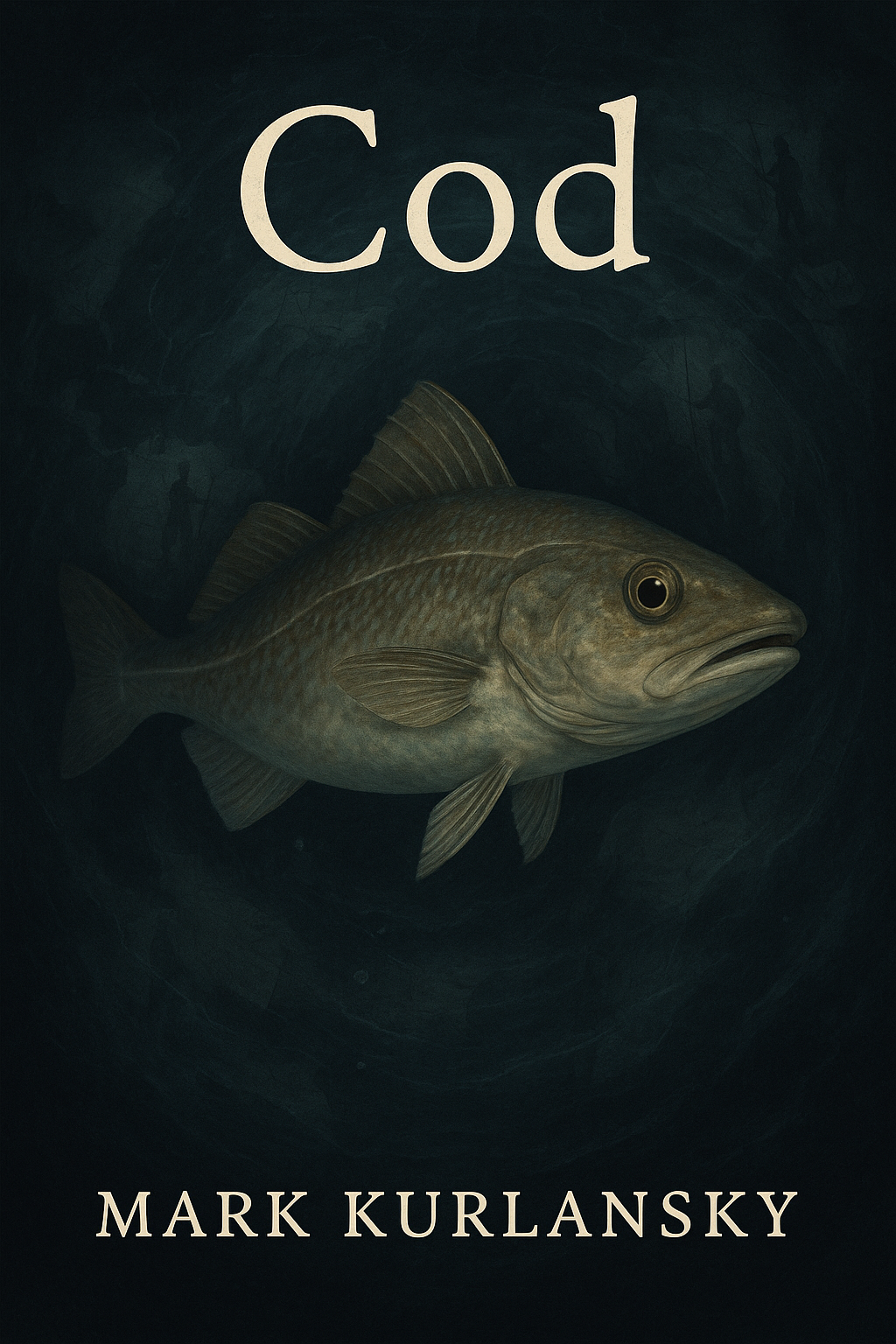
Cod
Chapter Summaries
What's Here for You
Embark on an extraordinary journey with Mark Kurlansky's 'Cod' and discover how a single, unassuming fish has profoundly shaped human history, culture, and civilization. This book promises to reveal the astonishing story of the Atlantic cod, a creature so vital that it fueled exploration, ignited economic revolutions, and even played a pivotal role in shaping nations. You'll gain a deep understanding of how this humble fish became a linchpin of trade, a symbol of national identity, and a catalyst for conflict and innovation. Kurlansky's narrative is an intellectual adventure, weaving together tales of ancient mariners, ambitious explorers, and resilient fishermen, all set against the backdrop of the vast and often brutal North Atlantic. Prepare to be captivated by the sheer scale of the cod's influence, from its seemingly endless abundance to its dramatic decline, and understand its enduring legacy in our modern world. The tone is one of intellectual curiosity, historical depth, and a touch of awe at the intricate connections between humanity and the natural world. You'll emerge with a newfound appreciation for the hidden forces that have driven our past and continue to influence our future.
The Race to Codlandia
The author, Mark Kurlansky, invites us on a journey tracing the profound, often hidden, influence of the Atlantic cod, Gadus morhua, a humble fish that became a linchpin of human history, trade, and culture. We begin with the enigmatic Basques, a people whose ancient, indecipherable language, Euskera, mirrors their mysterious origins and their enduring independence. These resourceful people, driven from their mountainous homeland, found not only sustenance but also the key to their economic survival in the great cod schools of the North Atlantic. Their mastery of salting and drying cod, a technique honed through centuries of whale hunting, allowed for long voyages and robust trade, making them unparalleled seafarers. This practice, however, was not entirely novel; the Vikings, centuries earlier, had developed methods of preserving cod by air-drying it in the frosty northern winters, enabling their own remarkable expeditions to Greenland and Vineland, lands that, despite their harshness, yielded this vital resource. The author reveals that the Vikings' ability to sustain these long journeys, pushing into uncharted territories like Labrador and Newfoundland, was directly tied to their success in preserving cod, transforming it into a durable, wood-like plank that served as sustenance. The Basques, with their addition of salt, elevated this preservation to an even greater level, creating a product that could endure even longer voyages and fostering a truly international trade by the year 1000. This salted cod was not merely food; it was a miracle of preservation, a testament to human ingenuity in the face of spoilage, a chronic curse that had long limited commerce, especially for perishable goods like fish. The cod's low fat content made it ideal for salting and drying, outlasting even whale meat and fatty herring, and when rehydrated, it offered a superior taste and texture, a cheap, high-quality nutrition for the masses. The Catholic Church, with its numerous fast days forbidding meat, provided a massive religious and economic boon, transforming Fridays and other lean days into prime salt cod consumption periods, turning the Basques into formidable merchants. This lucrative secret, however, couldn't be kept forever. As cod became a recognized commodity, European powers began to seek new fishing grounds, leading to conflicts and discoveries. The Hanseatic League, a powerful medieval trade organization, sought to monopolize the dried cod market, cutting off English merchants like those in Bristol from Icelandic cod. This spurred figures like Thomas Croft and John Jay to seek new sources, leading to a covert operation that hinted at discoveries across the Atlantic, a secret kept so well that their ships' success was attributed to finding cod far out at sea, a claim that allowed Croft to evade prosecution. The author masterfully weaves in the tale of Christopher Columbus, suggesting that Bristol merchants may have already been aware of lands across the Atlantic, even sending a letter to Columbus alleging prior knowledge of these fishing grounds. Ultimately, it was John Cabot, sailing for England in 1497, who officially reported the vast cod-rich coastlines of Newfoundland, or 'New Found Land,' claiming it for England, a land that Jacques Cartier would later find teeming with Basque fishing vessels, a testament to their long-held, yet never claimed, dominion over these waters. The chapter concludes by highlighting how this fish, so central to their survival and prosperity, was kept a secret by the Basques, a symbol of their enduring independence and their unique place in history.
With Mouth Wide Open
Mark Kurlansky, in 'Cod,' invites us into the astonishingly resilient world of Gadus morhua, the Atlantic cod, a creature so fecund and adaptable it once seemed destined to fill the oceans forever. The author reveals that this fish, built for survival with an insatiable appetite and an imperviousness to cold and disease, was the perfect commodity, its abundance leading to a widespread assumption of its eternal presence. As late as 1885, Canadian officials believed fisheries would remain fertile for centuries, a testament to the cod's seemingly limitless nature. Yet, Kurlansky unveils a central tension: the very voraciousness that makes cod easy to catch—swimming with its mouth open, consuming almost anything, including its own young—also points to a biological imperative that, while ensuring survival, doesn't necessarily guarantee an easy life for the individual fish, which offers little fight to sportsmen. The cod's true prize, however, lies not in its sporting challenge but in its stark white, virtually fat-free flesh, a testament to its sluggish, bottom-dwelling existence, and its high protein content, which, when dried, becomes a concentrated powerhouse. Kurlansky then expands our view, showcasing how nearly every part of the cod, from its flavorful head and 'tongues' to its air bladder rendered into isinglass, its roe, liver, stomach, and even skin, has been utilized by cultures for centuries, a profound lesson in resourcefulness and minimizing waste. The origin of the word 'cod' itself is shrouded in mystery, with intriguing linguistic links to concepts of pouches and sacks, perhaps echoing the female's immense egg-carrying capacity, a point Thoreau speculated on, or even the 'cod end' of a fishing net, a place of capture. This linguistic exploration reveals how 'cod' in England came to mean a joke or prank, and 'morue,' the French word for cod, evolved to signify something degraded by commerce, a stark contrast to the fish's historical value and the Basques' reverence for salt cod. The author masterfully traces the evolutionary journey of cod and its gadiform relatives, from ancient tropical seas to the cold North Atlantic and Pacific, highlighting adaptations in their fins that mark their progression. Despite its warm-water origins, only one tropical cod species remains, with the burbot representing a rare freshwater adaptation. Kurlansky underscores that while many gadiforms exist, the Atlantic cod, Gadus morhua, has historically held the highest status and market value, recognized by its elegant form, distinctive chin appendage, and often mistaken for the haddock, which folklore attributes its dark markings to Satan's touch. This distinction, however, is often lost on those who, like Icelanders, prefer eating haddock, famously stating, 'We don't eat money,' preferring taste over market price. The narrative builds to the core dilemma: the cod's remarkable reproductive capacity, producing millions of eggs, is a biological necessity precisely because so few survive the harsh realities of ocean life—predation, starvation, and environmental chaos. This biological reality serves as a powerful metaphor for the precariousness of abundance and the harsh toll of human consumption, as man, an 'open-mouthed species greedier than cod,' has become its ultimate predator, threatening the very species that once seemed inexhaustible. The chapter concludes by emphasizing the cod's preferred habitat in nutrient-rich 'banks' where currents collide, a testament to its dependence on specific ecological conditions, and the poignant irony that despite its biological resilience, it is human overfishing that has pushed this once-ubiquitous fish to the brink.
The Cod Rush
The author, Mark Kurlansky, unveils a dramatic chapter in history, the "Cod Rush," where the seemingly humble codfish ignited European exploration, ambition, and vast economic shifts. It began with whispers of extraordinary abundance across the Atlantic, as recounted by Raimondo di Soncino in 1497, detailing John Cabot's return and tales of seas teeming with fish, so plentiful that simple baskets could be used for capture. While the exact method is debated, the sheer scale of cod in North American waters was undeniable, a stark contrast to Europe's depleted stocks. This bounty lured explorers like Cabot, driven by a desire for glory akin to Columbus's triumphs, sparking a race across the ocean. The Portuguese quickly followed, charting Newfoundland and leaving behind names that echo on modern maps, though their early voyages were also marked by tragedy, with explorers like Gaspar and Miguel Corte Real vanishing at sea. Yet, these risks did not deter fishermen; Newfoundland became a virtual El Dorado for cod, transforming markets and building ports. By 1510, salt cod was a staple in Rouen, and by mid-century, a staggering 60 percent of all fish consumed in Europe was cod, a dominance that would hold for two centuries. This demand reshaped coastal economies, with La Rochelle emerging as a premier fishing port, largely fueled by French ambition. The British, initially focused on Iceland, found themselves drawn into a conflict with the Hanseatic League, a struggle that eventually ceded dominance of Icelandic waters. The opening of Newfoundland, however, offered a westward advantage for British ports, reducing voyage times. The true engine of this burgeoning trade was salt, a commodity North European nations like England lacked, forcing them to rely on dried, unsalted "stockfish." To meet market demand for year-round supply, the British innovated, developing lightly salted and dried cod, known by names like "Habardine" or "Poor John," a product that would find favor in warmer climes. This pursuit of salt led to complex trade relationships, particularly with Portugal, whose saltworks at Aveiro produced what was considered Europe's finest. Joint ventures between Bristol merchants and the Portuguese, often involving British protection against French raids, highlighted the strategic importance of this trade. However, Portugal's merger with Spain in 1581 severed this alliance, leading to British conflict with Spain and a subsequent decline in Portuguese dominance. By the late 16th century, the British Navy's need for dried cod to provision its ships fighting France propelled Britain to the forefront of the fishery, though their commercial strategies lagged behind the Spanish Basques, who dominated Mediterranean markets. British law, viewing cod as a strategic commodity akin to a weapon, initially hindered direct trade, limiting the growth of their home market. Despite these constraints, ports like Plymouth thrived, their fleets a vital artery for England. The chapter concludes by noting that as French, Spanish, and Portuguese fleets waned, the British finally began to grasp the full commercial potential, opening direct trade routes. This shift, though significant, would soon be overshadowed by an even greater transformation seeded by a small group of religious dissidents contemplating a map in their Dutch refuge, their eyes drawn to a curious hook of land labeled "Cape Cod."
1620: The Rock and the Cod
The author, Mark Kurlansky, invites us to journey back to a pivotal moment in the 16th and early 17th centuries, when the European worldview dramatically expanded, fueled by a relentless pursuit of new worlds and riches, with the humble codfish playing an unexpectedly central role. This era, marked by tales of El Dorado and desperate searches for westward passages to Asia, saw explorers like Giovanni da Verrazzano charting vast coastlines, mistaking indigenous peoples for Chinese, and Bartholomew Gosnold, while ostensibly seeking sassafras for its rumored medicinal properties, inadvertently renaming a peninsula Cape Cod after being harassed by the very fish that would later sustain a continent. Kurlansky reveals how this seemingly minor renaming unlocked New England for European exploration, transforming it from an overlooked territory into a land of immense potential, particularly for those seeking not gold, but cod. The narrative tension builds as we witness the Pilgrims' arrival in this promised land, not as seasoned fishermen, but as individuals driven by religious fervor, ill-equipped and ignorant of the rich fishing grounds surrounding them, a stark contrast to the ten British ships already profiting handsomely in 1621. This highlights a core insight: true success often hinges not just on ambition, but on practical knowledge and adaptation, a lesson the Pilgrims learned through hardship, eventually turning to cod fishing and even using fish waste to fertilize their land. The chapter underscores the fundamental difference in development between Newfoundland, a summer fishing outpost primarily serving European markets, and New England, which, with its milder climate, year-round fishing opportunities, and arable land, fostered permanent communities and a burgeoning economy. Kurlansky illustrates this with the sensory detail of tidal pools filled with seawater to make salt for the fishery, a testament to the ingenuity born from necessity, and the eventual establishment of fishing stations that propelled New England toward prosperity and independence. This led to the emergence of a distinct colonial identity, one built on free-trade capitalism and individual enterprise, where even fishermen operated as independent entrepreneurs, a model so successful it would later be lauded by Adam Smith himself, laying the groundwork for the economic divergence between the northern fishing colonies and the developing United States.
Certain Inalienable Rights
The author, Mark Kurlansky, unfurls a narrative that reveals how the humble codfish, far from being mere sustenance, became an unlikely architect of New England's rise to international commercial power, so deeply embedded in the region's identity that it was elevated to a symbol adorning official seals, currency, and the very mansions of its wealthiest citizens, a testament to its profound economic impact. This chapter illuminates a crucial, often overlooked, aspect of this prosperity: the codfish trade's inextricable link to the brutal engine of slavery. As New England's cod fisheries expanded into the frigid waters of the Arctic and Antarctic, they simultaneously forged a vital, albeit dark, connection with the Caribbean sugar plantations. The author explains that the insatiable demand for cheap labor in the sugar industry created a market for salt cod, a low-cost, protein-rich food source essential for keeping enslaved Africans alive under grueling conditions, a stark irony given New England's burgeoning spirit of liberty. Kurlansky highlights how this created a complex, triangular trade: cod from New England to the West Indies, where it sustained enslaved populations; molasses, sugar, and other plantation goods returned to New England, fueling its rum industry and further enriching merchants; and in a chilling evolution, enslaved Africans themselves were traded for cod or rum. This dynamic, the author argues, reveals a profound moral contradiction, a 'great social enigma' observed by Alexis de Tocqueville, where a society championing individual freedom simultaneously profited from and facilitated the enslavement of others. The development of the schooner, a revolutionary vessel, further amplified New England's fishing capacity, allowing for increased production of the 'West India cure' – the lower-quality cod destined for the Caribbean market – thereby deepening its entanglement with the slave economy. Ultimately, Kurlansky demonstrates how the pursuit of economic independence led New Englanders to circumvent British trade laws, creating a marketplace so powerful that it compelled even the Crown to adapt, inadvertently paving the way for future challenges to imperial control, all while the scent of salt cod mingled with the bitter aroma of human bondage.
A Cod War Heard‘Round the World
The author, Mark Kurlansky, reveals that the American Revolution, often romanticized, was fundamentally a pragmatic struggle for economic freedom, deeply intertwined with the cod fishery and its associated trade. He explains how the Massachusetts radicals, driven by commercial interests, viewed the right to self-determination primarily through the lens of economic control, seeing cod and molasses as far more than mere commodities; they were potent symbols of liberty. This chapter illustrates how Britain's attempts to assert control through acts like the Molasses Act of 1733 and the Sugar Act of 1760, designed to curb colonial trade, were met with ingenious contraband and boycotts, demonstrating a de facto independence that predated the armed conflict. Kurlansky highlights the central role of cod, not just as a trade good, but as a source of sustenance and a nursery of seamen, crucial for naval power. He details how John Adams, a figure often overshadowed, tenaciously fought for fishing rights in the peace negotiations, recognizing their indispensability to the new nation's survival and prosperity, even forging a critical alliance between Massachusetts and Virginia to achieve this. This struggle over fishing grounds and trade routes, particularly with the British West Indies, led to significant North-South divisions within the nascent United States, underscoring the complex economic realities that fueled the revolution and its aftermath. The narrative then traces the diminishing quality of North American salt cod, as seen through Thoreau's observations and later trade complaints, contrasting it with the superior curing methods perfected in Scandinavia for the demanding Mediterranean market. Ultimately, Kurlansky shows how the 'codfish aristocracy,' once revolutionary leaders, faded into a memory of haughty merchants, their legacy tied to the very fish that had once fueled a nation's fight for independence and economic self-rule, a testament to how deeply interwoven commerce and ideology can become.
A Few New Ideas Versus Nine Million Eggs
The North Atlantic, a realm of immense beauty and brutal challenge, has long been the unforgiving stage for the cod fishery, a testament to human resilience against nature's raw power. The author, Mark Kurlansky, paints a vivid picture of the treacherous conditions faced by fishermen: the bone-chilling cold that freezes spray into ice, threatening to capsize ships; the disorienting, all-encompassing fog that swallows vessels whole; and the ever-present danger of the sea itself, capable of claiming lives with a single rogue wave or a moment of inattention. We learn of the dorymen, solitary figures in small boats who ventured out from larger vessels, their lives a constant gamble against the elements and the vastness of the ocean, their deaths often silent and unwitnessed, swallowed by the 'cottony fog that stifles all sound.' This shared struggle forged a profound camaraderie, an 'esprit de corps' akin to combat veterans, yet it was underscored by a fierce economic competition, where the injured or aged were 'harassed out of the fishery,' a stark reminder that survival, not sentiment, dictated the sea's unforgiving economy. As technology advanced, the nature of the danger shifted, from frostbitten fingers and lost dories to the crushing power of modern machinery like electric winches and trawl doors, yet the fundamental risk of drowning remained. This persistent peril is starkly quantified: Canadian fishermen, for instance, face a fatal accident rate more than fifteen times higher than construction workers, a chilling statistic born from the relentless demands of the trade, often pushing fishermen to work with minimal sleep, their bodies and minds pushed to the brink. The narrative then pivots to innovation, tracing the first significant shifts in cod fishing techniques, notably the French adoption of longlines, or 'bultows,' in the early 19th century. This represented a departure from traditional handlining, requiring vast quantities of bait but promising significantly larger catches, and sparking debates that blended economics, nationalism, and early conservation concerns. The author highlights the prevailing 19th-century belief in nature's inexhaustible bounty, a perspective championed by figures like Thomas Henry Huxley, who, despite the fishermen's own observations, dismissed fears of overfishing as 'unscientific,' a viewpoint that would profoundly influence government policy for decades, prioritizing industrial growth over ecological caution. This era saw a growing divide between the practical wisdom of fishermen and the theoretical pronouncements of scientists and policymakers. The chapter concludes by introducing the next wave of transformation: the steam engine and frozen food technology. These 'new ideas' promised to revolutionize the industry, moving beyond the age-old struggle against nature to a new era of industrial-scale production, fundamentally altering the nature of commercial fishing forever, setting the stage for the modern era of cod harvesting.
The Last Two Ideas
The author, Mark Kurlansky, reveals that for centuries, the very essence of cod fishing remained remarkably consistent, a testament to tradition clashing with the relentless march of progress. Even as advancements like the chronometer and the schooner emerged, the fisherman's life at sea, for nearly four hundred years after John Cabot's voyages, was characterized by familiar grounds, similar gear, and the ever-present dangers of sail-powered vessels. Consider the iconic schooners of Lunenburg, Nova Scotia, their distinctive brick-red houses a silent chronicle of a maritime past, their sails a symbol of a proud, if perilous, heritage. The spirited schooner races between Gloucester and Lunenburg, culminating in the legendary Bluenose, underscore this deep-seated attachment to sail, a stark contrast to the burgeoning engine power transforming European fisheries. While British ports like Hull and Grimsby embraced steam-powered trawlers and the more efficient otter trawl by the late 19th century, leading to unprecedented catches but also signs of depletion, American fishermen, particularly in Gloucester, stubbornly clung to their schooners, enduring staggering losses in the process. This attachment, as Kurlansky explains, wasn't just about tradition; it was a deeply ingrained way of life, a 'stubborn attachment' that delayed the inevitable shift. The true turning point, however, arrived not with a new fishing technique but with a radical rethinking of preservation. For centuries, the challenge of getting fish to market in good condition drove innovation, from tidal ponds to wet wells, but mortality remained high. The critical insight came from Clarence Birdseye, an entrepreneur who, inspired by the brutal Labrador winter, discovered the power of rapid freezing. His work, initially met with skepticism, would ultimately revolutionize the industry, transforming the very nature of fish consumption. Birdseye's invention, combined with filleting machinery and the rise of diesel-powered trawlers, meant fish could be preserved and transported inland, leading to the widespread popularity of products like scrod and fish sticks. This technological convergence, particularly the development of factory ships during World War II, enabled an almost limitless scale of fishing, leaving the ocean floor a 'desert' and turning the hunt for cod into a 'hit or miss' proposition that was becoming frighteningly precise. The author highlights how this relentless pursuit of more, fueled by powerful engines and vast trawls, has fundamentally altered the relationship between humanity and the sea, moving from a dance of observation and instinct to one of technological dominance, where the only remaining control is the mesh size of the net, a poignant symbol of our diminishing influence.
Iceland Discovers the Finite Universe
The rugged lava fields of Iceland, dotted with drying fish and scattered shacks, tell a story of a nation deeply intertwined with the sea, a relationship that evolved dramatically as the world grappled with the concept of finite resources. As the British, initially dismissive of overfishing, turned their advanced steel-hulled trawlers towards Iceland's rich cod grounds, the island faced a profound shift. For centuries, Icelanders, maintaining Viking traditions like patronymic naming and a deep connection to their unique language, relied on small, oar-powered boats launched from harborless shores, a testament to their adaptation to a harsh, treeless landscape where stockfish became a staple, a daily ration for schoolchildren. This isolation, exacerbated by centuries of indifferent Danish rule and a devastating volcanic eruption in 1389, meant that new ideas arrived slowly, yet the cod remained the lifeblood of their export economy, though in meager quantities compared to burgeoning New England. The late nineteenth century marked a turning point: the lifting of Danish trade bans allowed Icelanders to learn the art of salting cod, opening doors to lucrative Spanish and Portuguese markets. The arrival of British trawlers, however, brought conflict. These behemoths, capable of depleting North Sea stocks in a decade, crowded the narrow Icelandic shelf, disrupting the livelihoods of local fishermen. This tension sparked a pivotal decision: Iceland would acquire its own trawlers, a move that birthed an entrepreneurial class and transformed pre-industrial society into a nascent capitalist one, mirroring New England's earlier transformation. Reykjavik began to swell, a working class emerged from former farmers, and intellectual life, long dormant, reawakened. Yet, the very technology that spurred this growth also highlighted the finite nature of the cod stocks, as Icelandic biologists began to understand their limited reproductive capacity. The outbreak of World War I saw British trawlers requisitioned, offering a temporary respite for the fish and a unique opportunity for Iceland. Suddenly, the island became a crucial supplier to the British market, especially for cod-liver oil, a highly sought-after remedy for everything from rheumatism to malnutrition, a trade that would continue to prosper. This period of economic boom, fueled by wartime demand and later by American GIs, facilitated Iceland's transition from a colony to an independent nation by 1944. The transformation was so profound that W.H. Auden, returning in 1964, found a nation unrecognizable from its 1930s self, a testament to how the humble cod, and the global forces it attracted, had propelled Iceland into the modern age, demonstrating that even in the vastness of the ocean, resources are not limitless and adaptation is key to survival and prosperity.
Three Wars to Close the Open Sea
The post-World War II era saw a dramatic shift in maritime law and national ambition, pivoting on the seemingly simple cod. As the author Mark Kurlansky reveals, the abundant fish stocks in the North Atlantic, replenished by the war's lull, became the focal point of a fierce struggle for sovereignty, particularly for Iceland. The old Anglo-Danish Convention's three-mile limit, a relic of a bygone era, was challenged by a newly independent Iceland determined to leverage its sole natural resource for national development. This ambition, however, clashed with the prevailing international principle of the open sea. The narrative unfolds through a series of escalating confrontations, dubbed the 'Cod Wars,' not as declarations of war, but as tenacious assertions of national will against established powers, primarily Great Britain. The first war, initiated by Iceland's extension to a four-mile limit in 1950, and later to twelve miles in 1958, saw Iceland's modest Coast Guard, manned by experienced seamen but outgunned by the Royal Navy, employ tactics of attrition. The core tension here was the stark contrast between a nation's desperate need to control its resources for survival and the international order's inertia. A pivotal insight emerges: a nation's perceived necessity can redraw the boundaries of international law, as demonstrated by Iceland's unwavering resolve. This conflict wasn't just about fishing grounds; it was about dignity and self-determination, a quiet but potent force that even the mighty British Navy couldn't entirely suppress. The author vividly paints the scene of tense maneuvering, where warships patrolled to protect trawlers, but the very act of policing disrupted fishing, creating an unintended consequence. The first war concluded with Britain recognizing Iceland's twelve-mile limit, a testament to the power of sustained pressure. But the story was far from over. The second Cod War, sparked by Iceland's claim to a fifty-mile limit in 1972, introduced a new element: a secret Icelandic weapon – a trawl wire cutter. This ingenious device, born of necessity and applied with precision, effectively neutralized the trawlers' ability to fish, transforming the conflict into a costly game of cat and mouse. Here, Kurlansky highlights another crucial insight: innovation, even in its simplest form, can be a powerful equalizer against overwhelming force. The emotional arc sharpens as ramming incidents and collisions become commonplace, a dangerous dance on the high seas, yet miraculously, no lives were lost. Iceland's unwavering stance, supported by NATO's internal pressures on Britain, ultimately led to the recognition of the fifty-mile zone. The narrative then accelerates to the third and shortest Cod War, initiated by Iceland's declaration of a 200-mile zone in 1975, a move that mirrored a global trend towards extended maritime jurisdiction. This time, the confrontation was even more intense, with both sides displaying a practiced, almost ritualistic, engagement in 'friendly naval battles.' The ultimate resolution arrived not through military victory, but through diplomatic exhaustion and the undeniable global shift towards 200-mile zones, a concept championed by developing nations and eventually adopted by the European Economic Community itself. The chapter concludes by reflecting on the profound transformation of Icelandic society, from a subsistence culture to a modern nation, intrinsically linked to the management of its cod stocks. A final, resonant insight is that effective resource management requires not just asserting control, but also adapting to changing realities and fostering cooperation, even amidst conflict, as seen in the grudging respect that developed between scientists and negotiators on both sides. The economic and social landscape of Iceland, once defined by hardship, was now characterized by prosperity, albeit with new challenges of regulation and quota systems, a far cry from the days when a fisherman’s primary task was simply to catch as much as possible, rather than navigate a complex web of man-made laws.
Requiem for the Grand Banks
The author, Mark Kurlansky, paints a somber picture of the decline of the Grand Banks cod fishery, a saga marked by human ambition, governmental indifference, and a profound misunderstanding of nature's limits. In the face of dwindling catches, fishermen like Sam Lee and Cabot Martin formed the Newfoundland Inshore Fisheries Association, not just for inshore fishers but for anyone concerned, attempting to salvage their livelihoods. They even took over a local plant, transforming it into a cooperative and implementing innovative solutions, such as keeping cod alive in pens and feeding them capelin and herring to improve their weight and value, a strategy that initially made the fish resemble the robust stock of Georges Bank. Yet, this resilience was an illusion. Even the bait fish grew scarce, and by 1989, facing government apathy, Martin and the association took a bold step, suing the government for not adhering to environmental assessments, a move that ultimately failed as the court prioritized the economy over ecological concerns, fearing the closure of plants like National Sea. Martin later reflected on this, suggesting a campaign against major buyers like McDonalds might have been more effective than a legal battle against a deaf government, a government that, astonishingly, was euphoric about rising catches and even offered supplemental cod quotas to those struggling to meet redfish targets. A government task force, led by Senator Michael Kirby, focused on finding new markets for an anticipated surge in Canadian groundfish, seemingly oblivious to the fact that Canadians and Americans were not substantial fish consumers, with Americans eating vastly more red meat than groundfish. The report optimistically projected a 50 percent increase in catches, believing a minuscule rise in U.S. per capita consumption could absorb the surplus. In reality, catches were increasing not from abundance, but from the efficiency of modern trawlers systematically depleting remaining cod populations. This was a dangerous misinterpretation of historical patterns; while cod had periodically shifted locations in Newfoundland waters, they had never truly vanished, and past failures were attributed to migratory shifts, not depletion. The author highlights a critical "perception problem," as described by marine biologist Ralph Mayo, where seeing a few cod was mistaken for an iceberg, rather than the potential tip of a depleted whole. This echoes the persistent, almost mythical belief in nature's indestructible resilience, a notion that, like the sixteenth-century search for a westward passage, proved impervious to experience. Despite reassurances from Fisheries Minister John Crosbie, the inevitable arrived in July 1992: a moratorium on northern cod, plunging 30,000 fishermen into unemployment. The fishermen who had long called for such measures, like Sam Lee, waited outside the hotel where the announcement was made, their protests unheard. The moratorium was later extended, effectively closing all Atlantic cod fisheries except one in Nova Scotia, rendering Canadian cod commercially, though not biologically, extinct. The irony was bitter: the very fish-processing plants used to argue against injunctions were now themselves shuttered. Giants like FPI and National Sea Products shifted to processing imported cod from Iceland and Norway, leaving communities like Arnolds Cove, once dependent on local catches, to process Russian fish. Sam Lee's cooperative in Petty Harbour, unable to afford imported cod, kept its plant open as a school, burdened by significant debt. The government also banned the blackback fishery due to the suspicious amount of cod caught as bycatch, and some fishermen turned to crabbing or lobstering, considered lesser pursuits. St. John's, a city built on fishing, had transformed its waterfront from a hub for European fleets to a tourist destination, where the ghost of cod lingered in kitschy souvenirs and a ritualistic "screech-in" ceremony involving kissing a stuffed cod. Amidst this cultural shift, oil was discovered on the Grand Banks, raising concerns among fishermen about seismic testing's impact on fish, concerns now lacking the economic clout to be heard. Yet, amidst the desolation, a flicker of hope persists. Fishermen like Lee and Tom Osbourne, and even Cabot Martin, hold onto the belief that the cod will return, that the fight to protect them will need to be waged again, though the ultimate outcome rests with nature's inscrutable plans.
The Dangerous Waters of Nature’s Resilience
The author, Mark Kurlansky, navigates the complex and often perilous waters surrounding the resilience of nature, particularly focusing on the cod fishery. He opens with the stark reality of declining fish stocks, evidenced by headlines questioning the return of cod off Newfoundland, and the fervent, yet scientifically uncertain, hope that they will rebound. Kurlansky illustrates that nature's cycles can bring both miraculous abundance, as seen in Iceland's cod stocks in 1922, and devastating loss, with the chillingly simple scientific axiom: 'When you get to zero, it will produce zero.' The narrative then shifts to Norway's experience, where a courageous, albeit painful, decision to severely restrict fishing while stocks were still commercially viable led to their recovery. This contrasts sharply with the political pressures in Canada, where maintaining moratoriums long enough for true recovery—estimated at fifteen years—proves almost impossible, as George Rose observes. The chapter delves into the 'perception problem,' where localized, temporary good news, like improved catches in warmer southern waters, can mask the dire state of the larger, northern stock, a situation exacerbated by politicians eager to reopen fisheries. Kurlansky explores technological attempts to 'give nature a hand' through fish farming, highlighting its technical successes but also its inherent risks. The core dilemma emerges: while pen-raised cod exhibit phenomenal growth, releasing them could dilute the genetic diversity of wild populations, introducing traits ill-suited for natural survival, much like purebred dogs carrying genetic defects. This raises profound questions about our interventions and the unintended consequences of selecting for traits that benefit farming over wild resilience. The author then broadens the scope to the global crisis of overfishing, where 60 percent of tracked fish stocks are fully exploited, overexploited, or depleted, pushing humanity into deeper, less understood waters for new resources. The collapse of ecosystems is further demonstrated through the intricate web of marine life, where the overfishing of small baitfish impacts not only cod but seabirds and seals, leading to cascading effects like seals moving into new territories and consuming coastal fish. This ecological interdependence is starkly revealed in the contentious seal hunt debate, where a ban intended to protect seals inadvertently led to population booms that, in turn, put pressure on cod stocks, forcing a difficult reevaluation. The chapter concludes with a profound reflection on nature's ultimate pragmatism: if species cannot survive human predation, more adaptable ones will inevitably take their place, a process that, while natural, may not always align with human desires or aesthetic sensibilities. The central tension lies in humanity's struggle to balance immediate economic needs and ingrained habits with the long-term, complex realities of ecological balance and natural resilience, a struggle often hampered by collective denial and a failure to recognize our integral role within the natural world.
Bracing for the Spanish Armada
Mark Kurlansky, in his exploration of the humble cod, turns our gaze to the dramatic shifts threatening a cornerstone of British working-class life: fish and chips. He paints a vivid picture of the existential crisis facing traditional chip shops, where the very essence of the dish—chunky, quality cod—is becoming a luxury, forcing owners like Maureen Whitehead in Exeter and David Jewell in Newlyn to substitute with lesser fish like pollock or whiting, a compromise that strikes at the heart of a cultural staple. The narrative then pivots, revealing the complex web of overfishing, international policy, and deeply ingrained xenophobia that fuels the conflict. The author explains that while many in Britain, particularly fishermen in Cornwall and Devon, blame the Spanish for depleting their cod stocks, the reality is a tangled history of their own overfishing practices and a European Union fishing policy that, despite its intentions, has largely failed to halt the decline. We see how the once-abundant North Sea cod stocks plummeted, shifting the pressure to the Irish Sea, while bureaucratic quotas, often dictated by political maneuvering rather than scientific conservation, exacerbate the problem. The tension mounts as the European Community allows Spanish boats into the Irish box, a move that ignites resentment and provides a convenient scapegoat for the dwindling catches, even as historical accounts reveal the long Spanish tradition of cod fishing and processing, a legacy now largely diminished. Kurlansky illuminates the human cost, detailing the decline of Basque fishing companies like PYSBE and Trueba y Pardo, once employing hundreds in the arduous task of cleaning and drying cod, now replaced by modern economies that cannot sustain such labor-intensive practices. He weaves in the dramatic Canadian confrontation with the Spanish trawler Estai, a moment of international outcry that, while offering a fleeting sense of vindication to Cornish fishermen like William Hooper, ultimately underscores the global nature of the crisis. The author reveals a profound dilemma: fishermen are caught between the necessity of catching enough to survive and the ecological imperative to conserve, a paradox leading to the heartbreaking decommissioning of boats and the loss of a way of life. Ultimately, Kurlansky suggests that the true culprit is not a foreign fleet, but a collective failure to manage resources sustainably, a hard truth that echoes across the windswept docks of Cornwall and the bustling markets of Bilbao, leaving us to ponder the future of this iconic dish and the communities it sustains.
Bracing for the Canadian Armada
The author, Mark Kurlansky, paints a stark portrait of Gloucester, Massachusetts, a town once defined by its cod fishery, now grappling with its decline and the uncertain future of its fishing heritage. He contrasts the quaint, tourist-oriented harbor of Rockport with Gloucester's gritty, working-class reality, where the docks, though still busy, tell a story of dwindling catches and changing times. The grand old fishing companies have moved on, and even Gorton's, a long-standing fixture, no longer buys cod from local fishermen, a potent symbol of the industry's transformation. Kurlansky reveals how the invention of the filleting machine in 1933 turned previously discarded fish like redfish into major catches, only for even those to disappear from Gloucester's landings by 1966, foreshadowing the larger crisis. By the mid-1990s, the fishing fleet had shrunk dramatically, its old wooden and steel trawlers deemed too picturesque and too costly to insure, a stark indicator of its inability to adapt to modern demands. The narrative then shifts to the regulatory response: the Magnuson Fisheries Conservation and Management Act of 1976, intended to protect dwindling stocks, ironically fueled fleet expansion through financial incentives. By 1994, it was clear the fleet was twice the size the fish stocks could sustain, with cod on Georges Bank plummeting by 40% in just four years, a crisis that finally spurred stricter measures. These regulations, like limiting fishing days to 139 annually and then to 88, disproportionately favored smaller boats, forcing larger trawlers with high overheads towards idleness, a subtle, perhaps unintended, method of fleet reduction. The chapter highlights the persistent lure of cod, even as fishermen like Russell Sherman adapt by targeting other species like flatfish and monkfish, or dogfish, rebranded as 'cape shark,' a testament to their resourcefulness in the face of scarcity. Yet, the deep-seated cultural identity tied to cod fishing remains, evident in the wistful conversations of ex-fishermen like Dave Molloy, who lament, 'Theres no more.' This cultural tie is further complicated by a historical animosity towards Canadian fishermen, a legacy of past disputes and competition, fueling fears that Canadians will eventually claim the dwindling cod stocks. The author introduces Angela Sanfilippo and her efforts to retrain fishermen for new careers, a necessary but often resisted transition, as seen with her husband, John Sanfilippo, who declares, 'No one is ever going to stop me from fishing.' This deep-seated passion, passed down through generations, as exemplified by the Sanfilippo family's Sicilian roots and their son Dominic's return to fishing, underscores the profound human cost of these ecological and economic shifts. Vito Calomo articulates the loss of a way of life, where a fisherman is not just a laborer but a skilled artisan, a captain, navigator, and market speculator, whose knowledge is being erased with every buy-out program. The narrative questions the long-term sustainability of a world where nature is reduced to 'precious demonstrations for entertainment and education,' like whale watching, and whether the very essence of our connection to the wild, embodied by the fisherman, is fading into an 'obscure delicacy.' Ultimately, Kurlansky leaves the reader contemplating Gloucester's potential transformation into a village of boutiques, a stark contrast to its historical identity, and ponders who will be left to care for the sea if the fishermen, its most intimate stewards, are gone.
Conclusion
Mark Kurlansky's "Cod" offers a profound and sweeping historical narrative, revealing the Atlantic cod not merely as a fish, but as a cornerstone of human civilization, exploration, and economic development. The book masterfully synthesizes complex historical, economic, and ecological threads, demonstrating how the cod's abundance fueled the Age of Discovery, enabled the rise of seafaring empires like the Basques and Vikings, and shaped the very identity of nations like those in New England. The emotional resonance of the book lies in its depiction of humanity's evolving relationship with nature – from a perception of boundless bounty to the stark realization of ecological limits and the devastating consequences of overexploitation. We witness the resilience and camaraderie of fishermen facing life-threatening conditions, juxtaposed with the often-indifferent pursuit of economic gain by distant powers. Practically, "Cod" provides invaluable lessons on the intricate interplay between resource management, technological innovation, and geopolitical strategy. It underscores the dangers of assuming inexhaustible resources, highlighting how cultural practices, religious observances, and economic imperatives can create powerful, albeit sometimes destructive, demand. The book vividly illustrates the concept of 'cod wars' and the assertion of national sovereignty over maritime resources as crucial acts of self-determination. Ultimately, "Cod" serves as a powerful cautionary tale, urging a reevaluation of our relationship with the natural world, emphasizing the necessity of ecological understanding, sustainable practices, and the courage to enact difficult conservation measures before the echoes of a once-abundant past fade into an irreversible silence. The story of cod is, in essence, the story of humanity's ambition, ingenuity, and its often-painful reckoning with the finite nature of the world it inhabits.
Key Takeaways
The ability to preserve food, particularly cod through salting and drying, was a foundational technology that enabled long-distance exploration, trade, and the economic prosperity of seafaring cultures like the Basques and Vikings.
Cultural and religious practices, such as Catholic fast days, can create significant economic opportunities by shaping demand for specific commodities, in this case, making salt cod a vital and profitable trade good.
The pursuit of economic advantage often drives innovation and exploration, as seen with the Bristol merchants seeking new cod grounds when cut off by the Hanseatic League, indirectly leading to the 'discovery' of new lands.
Secrecy and the protection of proprietary knowledge, as exemplified by the Basques' long-held cod fishing secrets, can be a powerful strategic tool for maintaining economic dominance and cultural independence.
The 'discovery' of new lands was often preceded by practical, resource-driven expeditions by fishermen who kept their findings secret, with official explorations later claiming credit for lands already known and exploited.
The enduring independence and unique identity of a people, like the Basques, can be deeply intertwined with their linguistic heritage and their mastery of specific natural resources and trade practices.
The cod's incredible fecundity is a biological strategy for survival in a perilous environment, where immense egg production is necessary because the vast majority of offspring do not reach maturity.
Humanity's perception and exploitation of the cod have shifted dramatically, from viewing it as an inexhaustible resource to a symbol of commercial degradation and, ultimately, an endangered species.
The cod's near-total edibility and utilitarian value across its anatomy highlight a historical model of complete resource utilization, contrasting sharply with modern waste.
Linguistic and cultural associations with the word 'cod' reveal fascinating shifts in societal perception, linking the fish to everything from fertility and genitalia to jokes and commercialized degradation.
The ecological niche of the cod, thriving in specific 'banks' where ocean currents meet, underscores the delicate interconnectedness of marine ecosystems and the vulnerability of species to environmental change.
Despite the cod's biological resilience and adaptability, human overfishing has become its most significant predator, posing the greatest threat to its long-term survival.
The pursuit of seemingly inexhaustible natural resources, like North American cod, can act as a powerful catalyst for exploration, economic development, and geopolitical shifts.
Technological limitations and resource scarcity, such as the lack of salt in Northern Europe, drive innovation and the creation of new products and trade strategies.
The strategic importance of a commodity can lead to its tight regulation and control, potentially hindering commercial growth even as it secures national interests.
Geopolitical alliances and rivalries, exemplified by the shifting relationships between Britain, Portugal, France, and Spain, profoundly influence the success and dominance of trade ventures.
The development of preservation and curing techniques, like salting and drying cod, is crucial for expanding markets and making perishable goods viable for long-distance trade.
Economic opportunity can transform secondary locations into primary hubs, as seen with La Rochelle's rise as a major fishing port due to its access to the burgeoning cod trade.
The historical perception of resources as inexhaustible can lead to overexploitation, setting the stage for future ecological and economic challenges.
The renaming of geographical locations, like Cape Cod by Bartholomew Gosnold, can serve as a catalyst, transforming overlooked territories into centers of opportunity and economic development.
Practical skills and knowledge, rather than solely religious zeal or ambition, are crucial for survival and prosperity in new environments, as demonstrated by the Pilgrims' initial struggles and eventual success through cod fishing.
Geographical and climatic advantages, such as New England's milder winters and year-round fishing seasons, significantly influence the development trajectory of settlements, fostering community growth and economic independence over mere resource extraction.
The economic success of a region can be profoundly shaped by its ability to develop a skilled workforce and diverse trades, moving beyond primary resource exploitation to build self-sustaining communities and foster trade.
Free-trade capitalism and individual entrepreneurial spirit, exemplified by the New England fishery, can lead to significant economic prosperity and foster a sense of independence, potentially creating tension with centralized imperial control.
The codfish was not merely a commodity but a foundational symbol and economic engine that propelled New England's rise as a commercial power.
New England's prosperity was deeply entwined with the institution of slavery, as salt cod served as a critical, low-cost sustenance for enslaved laborers in the Caribbean.
The triangular trade, fueled by cod, molasses, and rum, created a complex economic interdependence that directly supported and profited from the slave trade.
A significant moral contradiction existed in New England, where a society championing liberty simultaneously benefited from and facilitated the brutal exploitation of enslaved people.
The economic imperative of the cod trade, particularly the demand for 'West India cure,' led New England merchants to circumvent imperial trade regulations, fostering a spirit of economic independence that foreshadowed future political challenges.
The development of innovative technologies, such as the schooner, amplified the capacity to produce goods like salt cod, thereby intensifying the region's involvement in the slave-dependent economy.
The American Revolution was primarily an economic struggle for self-determination, with cod and its associated trade being central to the radicals' vision of freedom.
Colonial resistance to British trade restrictions, particularly through contraband and boycotts, demonstrated a de facto independence that predated the armed conflict.
John Adams's relentless advocacy for fishing rights was crucial for securing a fundamental economic pillar of the new nation, highlighting the importance of strategic negotiation.
The quality and market success of salt cod were significantly influenced by trade dependencies and the abolition of slavery in the Caribbean, altering traditional markets.
The legacy of the 'codfish aristocracy' illustrates how economic success, even when foundational to revolutionary ideals, can be reinterpreted and diminished over time.
The inherent dangers and economic precarity of the fishing industry foster a unique, resilient camaraderie born from shared, life-threatening experiences.
Technological advancements in fishing, while increasing efficiency and catch size, often shift the nature of danger rather than eliminate it, demanding constant adaptation from fishermen.
Societal and governmental attitudes towards resource management have historically been influenced by scientific theories that sometimes overlook or dismiss the practical observations of those working directly with the resource.
The pursuit of economic progress and national strength has often led to policies that favor industrial expansion in fisheries, sometimes at the expense of long-term ecological considerations.
Innovation in fishing, from longlines to steam power and refrigeration, has fundamentally reshaped the industry, transforming it from a high-risk, localized endeavor to a globalized, technologically driven enterprise.
Technological adoption in fishing was often slow and driven by necessity, with tradition and cost acting as significant barriers to change, as seen in the prolonged use of sail power in North American cod fisheries.
The core challenge in the fish trade has historically been preservation and market access, driving innovations from wet wells to artificial ponds, each with its limitations.
Clarence Birdseye's discovery of rapid freezing, inspired by natural conditions, represented a paradigm shift, enabling fish to be transported and consumed far from their source, fundamentally altering consumer demand and the fishing industry.
The convergence of high-powered ships, advanced dragging nets, and freezing technology, particularly in factory ships, led to an unprecedented scale of fishing, transforming the industry from a localized pursuit to a global, industrial operation.
The relentless drive for efficiency and increased catch sizes has led to severe environmental consequences, including the depletion of fish stocks and the devastation of ocean floor ecosystems, with regulatory measures like mesh size offering only partial solutions.
Modern fishing practices have shifted from relying on traditional observational skills to employing advanced technology like sonar and aircraft, leading to a more systematic, and often destructive, extraction of marine life, including significant bycatch.
Nations can transition from traditional subsistence economies to modern industrial powers by recognizing and capitalizing on finite natural resources, as demonstrated by Iceland's cod industry.
Technological advancement in resource extraction, while initially disruptive, can ultimately spur economic diversification and the rise of new social classes, such as entrepreneurship.
Periods of global conflict, while devastating, can create unforeseen economic opportunities for neutral nations, especially in supplying essential goods like food and medicine.
The historical indifference of ruling powers (like Denmark towards Iceland) can inadvertently foster self-reliance and a stronger national identity, accelerating independence.
The pursuit of economic gain from a vital resource can lead to inevitable conflicts over its control and sustainability, forcing societies to confront the limits of exploitation.
Adapting traditional practices to new technologies and market demands is crucial for survival and growth, as seen in Iceland's shift from oar-powered boats to trawlers and modern fishing techniques.
The perceived 'inexhaustibility' of natural resources is a dangerous myth that eventually leads to depletion, necessitating a scientific understanding of ecological limits.
A nation's desperate need for resource control can become a powerful catalyst for redrawing international law, challenging established norms through persistent assertion.
Technological innovation, even in its simplest form like a trawl wire cutter, can serve as a potent equalizer, enabling smaller entities to contend with larger powers.
The assertion of national sovereignty over maritime resources is not solely an economic or political act, but a profound expression of national identity and self-determination.
Effective resource management, particularly in the face of dwindling stocks, demands a complex interplay of national will, international cooperation, and adaptive regulation.
The evolution of fishing practices from unbridled exploitation to regulated activity reflects a broader shift in human interaction with natural resources, driven by scarcity and conservation imperatives.
Even in protracted international disputes, underlying human connections and a degree of mutual respect can persist, particularly between scientific communities and pragmatic negotiators.
Economic priorities can blind authorities to ecological realities, leading to the overexploitation of natural resources despite clear warning signs.
The persistent belief in nature's inherent resilience can lead to a dangerous underestimation of depletion, mistaking temporary shifts for sustainable abundance.
Effective advocacy requires strategic targeting of economic leverage points (e.g., major buyers) rather than solely relying on legal or governmental channels that may be compromised by economic interests.
The commercial extinction of a species, driven by unsustainable practices, can devastate communities and lead to a cultural amnesia where the resource's past value is replaced by superficial tourism.
The cyclical nature of resource depletion and potential recovery necessitates ongoing vigilance and a willingness to re-engage in protective struggles, even when past efforts seem futile.
Nature's resilience is not guaranteed; it operates on a fragile balance where reaching zero biomass leads to irreversible collapse, underscoring the critical need for proactive conservation before stocks are commercially extinct.
Political will and courage are essential for effective conservation, as demonstrated by Norway's successful fishery recovery achieved through difficult but timely restrictions, contrasting with the pressures that hinder similar actions elsewhere.
Human intervention, such as fish farming, while offering potential solutions, carries significant risks of unintended genetic consequences that could undermine the long-term health and adaptability of wild populations.
The interconnectedness of marine ecosystems means that overfishing of one species can trigger cascading effects throughout the food web, impacting diverse species and altering ecological dynamics in unpredictable ways.
Collective denial and a failure to acknowledge humanity's role as a predator within the natural world are significant obstacles to restoring depleted ecosystems, hindering the implementation of necessary, long-term solutions.
Nature's adaptive capacity, while powerful, operates pragmatically; if current species cannot thrive due to human impact, more adaptable species will emerge, potentially leading to outcomes that are ecologically functional but not necessarily desirable for humans.
The cultural significance of staple foods like fish and chips is threatened by the ecological and economic realities of resource depletion.
International fishing policies, while attempting to regulate, can be undermined by nationalistic interests and historical grievances, leading to unsustainable practices.
Blaming external forces, such as foreign fleets, often masks a deeper, internal failure in resource management and conservation.
The economic pressures on fishing communities force a difficult choice between immediate survival and long-term ecological sustainability.
The history of fishing is not just about catching fish, but also about the evolving labor, technology, and economic structures that shape coastal communities.
The decline of a traditional industry like cod fishing fundamentally alters a community's identity and economic structure, forcing a painful redefinition of its future.
Well-intentioned regulations, while aiming to conserve natural resources, can inadvertently accelerate the demise of traditional livelihoods if not coupled with comprehensive support for affected communities.
The deep cultural and generational ties to a specific vocation, like fishing, create immense resistance to change, even when the economic and ecological realities necessitate it.
The commodification of nature, shifting from resource extraction to observation (e.g., whale watching), signifies a broader societal detachment from the wild and its traditional stewards.
The loss of artisanal knowledge and skills, embodied by the multifaceted role of a fisherman, represents a significant cultural and practical deficit for society.
Government subsidies, while sometimes necessary to support industries, can create market distortions and dependency, potentially leading to a scenario where the infrastructure remains but the skilled workforce disappears.
Action Plan
Research the history of a staple food in your own culture and explore its impact on trade and societal development.
Consider how a specific skill or resource has historically provided an advantage to individuals or groups.
Analyze a historical event or economic trend through the lens of resource scarcity and preservation techniques.
Reflect on the strategic value of keeping certain business or personal knowledge proprietary.
Investigate how cultural or religious practices have influenced economic behavior and market demand throughout history.
Explore the concept of 'discovery' by considering who truly benefits and who holds the knowledge in historical narratives.
Consider the ways in which unique cultural identities are maintained through language, tradition, and economic practices.
Investigate and learn about the specific fishing regulations and sustainability practices for cod in your local or preferred seafood markets.
Explore recipes that utilize less common parts of fish (e.g., collars, cheeks, roe) to appreciate the historical 'no waste' philosophy of cod consumption.
Research the etymology of words related to food or nature to uncover surprising cultural connections and historical shifts in meaning.
Consider the ecological impact of your food choices, particularly concerning commercially fished species that have faced overexploitation.
Support restaurants and markets that prioritize sustainably sourced seafood and can provide information about the origin of their fish.
Reflect on the difference between a species' biological resilience and its vulnerability to external pressures, such as human activity.
Research the historical significance of a key natural resource in your region or an industry you are interested in.
Analyze how resource scarcity has historically driven innovation and market changes, and consider its modern parallels.
Identify how geopolitical factors and international relations have shaped or hindered trade in specific commodities.
Explore the evolution of food preservation techniques and their impact on global trade and consumption patterns.
Consider the long-term strategic value of resources beyond their immediate economic benefit.
Examine how historical trade regulations, like those on cod, affected market dynamics and national development.
Reflect on how seemingly simple discoveries or resources can have profound and lasting impacts on civilization.
Research the history of a local landmark or geographical feature to understand how its naming or discovery influenced its development.
Identify a skill or knowledge gap in a personal or professional endeavor and seek out resources to acquire that missing expertise.
Evaluate the environmental and climatic factors that might influence a long-term project or business venture.
Consider how to foster a culture of innovation and entrepreneurship within a team or organization by encouraging independent problem-solving.
Reflect on how the pursuit of fundamental resources, like cod for early New England, can drive economic growth and community building.
Analyze the balance between centralized control and individual freedom in economic or personal decision-making.
Research the historical symbols of wealth and power in your own community or region to understand their origins.
Examine how seemingly unrelated economic activities in your life or society might be indirectly supporting ethically questionable practices.
Reflect on historical instances where societal values appear to contradict economic realities, and consider the underlying causes.
Investigate the history of technological innovations in your field of interest and their broader societal consequences, both positive and negative.
Consider how the demand for cheap goods might create ethical dilemmas and explore ways to support more equitable production.
Analyze the complex trade networks of the past to understand how they shaped global economies and social structures.
Analyze a current political or economic debate through the lens of underlying commercial interests.
Research the historical significance of a specific commodity in a major historical event.
Identify and articulate the economic freedoms you believe are essential for personal or professional success.
Examine how attempts to restrict trade or commerce have been circumvented throughout history.
Recognize the importance of persistent advocacy for fundamental rights, even when they seem secondary to broader ideals.
Consider the long-term impact of resource management and quality control on market sustainability.
Reflect on the balance between technological advancement and the human cost in your own field of work.
Seek out the perspectives of experienced professionals in any domain, valuing their practical insights alongside theoretical knowledge.
Consider the long-term ecological implications when evaluating economic progress or industrial innovation.
Appreciate the historical struggles and sacrifices of those in demanding professions, recognizing their contribution to modern conveniences.
Investigate the historical context of current debates surrounding resource management and sustainability.
Investigate the history of a staple food in your diet to understand its technological and economic evolution.
Consider how traditional knowledge and modern technology intersect in fields you are familiar with.
Research the sustainability practices of seafood companies you patronize.
Reflect on how a single, simple innovation can have far-reaching, transformative effects on an entire industry and global markets.
Evaluate the environmental impact of technologies you use daily, considering their long-term consequences.
Seek out information on conservation efforts related to marine ecosystems and support organizations working to protect them.
Research the primary natural resources of your own region or nation and consider their historical economic impact.
Analyze how technological advancements have transformed traditional industries and created new economic opportunities.
Explore case studies of nations or communities that have achieved significant economic or political independence through resource management.
Consider the long-term sustainability of current economic practices and whether they acknowledge finite resource limits.
Reflect on how external global events, even those far away, can create unexpected opportunities or challenges for local economies.
Examine the role of entrepreneurial spirit in driving societal change, particularly during periods of economic transition.
Investigate how cultural traditions have either adapted to or resisted modernization and technological change.
Analyze a critical resource in your own life or community and consider its long-term sustainability.
Research the history of international agreements related to a resource you depend on.
Identify instances where necessity has driven innovation in your field or personal life.
Reflect on how national or collective identity is tied to specific resources or industries.
Consider the balance between individual freedom and collective regulation in managing shared resources.
Seek to understand the perspectives of those on opposing sides of a resource-based conflict.
Explore how historical practices of resource use contrast with modern management strategies.
Investigate the economic drivers behind resource depletion in your community or industry.
Critically assess the assumption of nature's endless resilience in the face of observed environmental changes.
Identify and consider engaging with the key economic stakeholders in environmental issues, not just regulatory bodies.
Support or create initiatives that preserve the cultural heritage tied to natural resources, even after their depletion.
Prepare for the possibility of future resource recovery by maintaining infrastructure or knowledge, even under financial strain.
Advocate for policies that integrate ecological impact assessments into economic development plans.
Advocate for and support policies that implement science-based fishing quotas and moratoriums, even when politically difficult.
Educate yourself and others about the concept of ecosystem interconnectedness and the cascading effects of overfishing.
Critically evaluate technological 'solutions' like fish farming, considering their potential long-term ecological and genetic impacts.
Challenge collective denial by acknowledging humanity's role in ecological decline and supporting evidence-based conservation strategies.
Support sustainable seafood choices by understanding which species are overfished and which fisheries are managed responsibly.
Recognize that nature's adaptations may not align with human desires, and be prepared for ecological shifts that prioritize survival over human preference.
Investigate the origins of your own favorite traditional dishes to understand their cultural and historical context.
Research the sustainability practices of seafood providers you frequent and support those with responsible sourcing.
Consider how nationalistic sentiments might obscure the real causes of resource depletion in your own community or industry.
Reflect on the difficult trade-offs between economic necessity and environmental preservation in your own life or profession.
Seek out diverse perspectives on complex issues, looking beyond immediate scapegoats to understand systemic causes.
Reflect on how tradition and identity are intertwined with your own work or community, and consider what might happen if that core element were to disappear.
Research the regulatory frameworks impacting industries you care about and consider their unintended consequences.
Explore opportunities to support local industries and artisans whose skills and knowledge are at risk of being lost.
Consider the long-term implications of resource depletion and how societal shifts might alter our relationship with the natural world.
Engage in conversations within your community about preserving cultural heritage while adapting to economic and environmental changes.
Investigate how historical rivalries or competitive pressures can shape present-day challenges and perceptions.