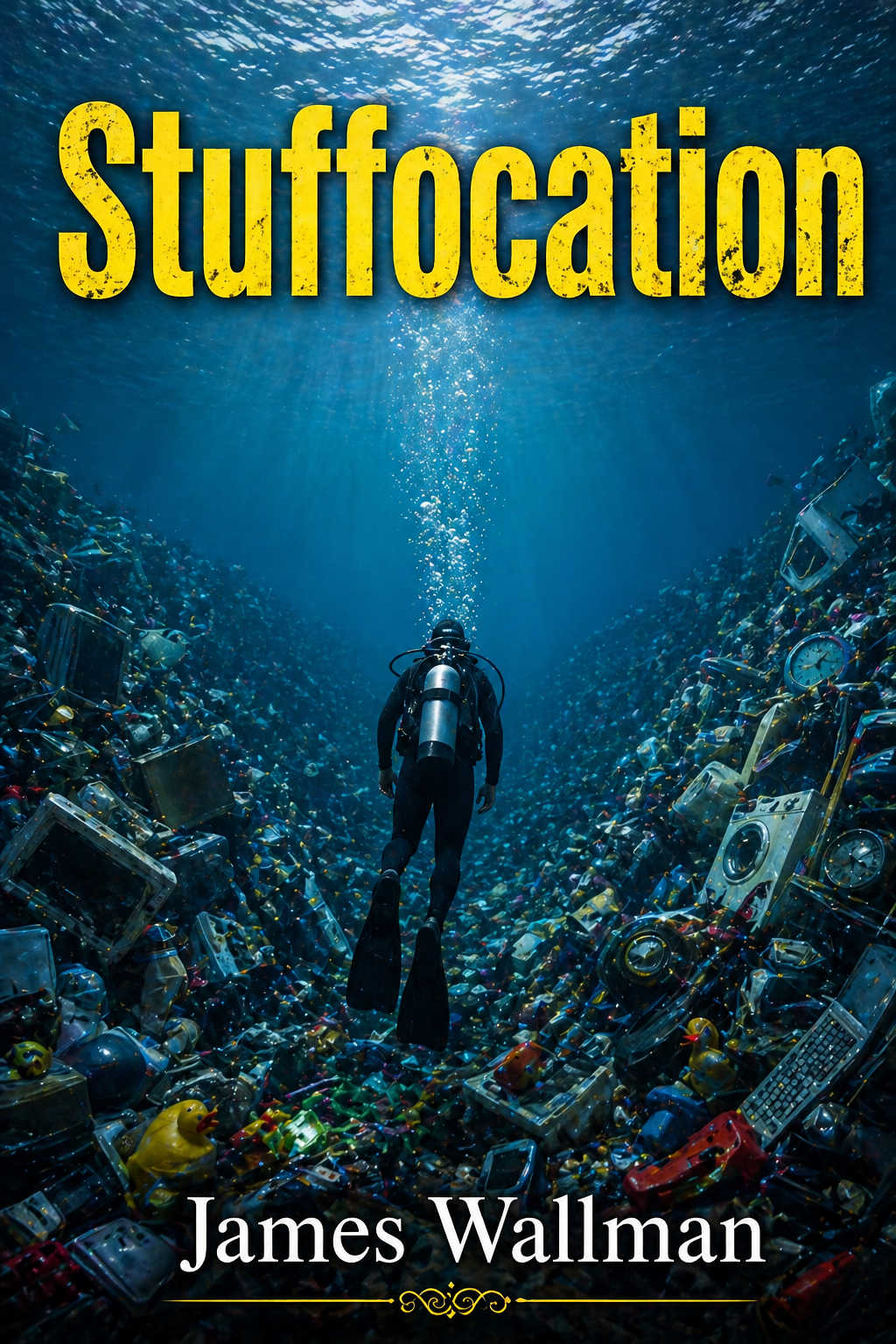
Stuffocation
Chapter Summaries
What's Here for You
Are you feeling overwhelmed by *stuff*? "Stuffocation" isn't just about decluttering your home; it's a journey to understand why we're drowning in possessions and how to escape. Wallman blends insightful analysis with compelling stories—from archaeologists uncovering clutter crises to Mad Men's unsettling materialism—to reveal the dark side of our consumer culture. You'll explore the surprising history of manufactured desire, the law of unintended consequences, and the rise of minimalism. Discover the power of experiences over possessions and how this shift can lead to a richer, more fulfilling life. Prepare to question societal norms, challenge your own values, and embrace a new way of measuring progress. This book offers a thought-provoking and ultimately hopeful path toward a life less cluttered and more meaningful, inviting you to become an 'Experientialist' in a world desperately seeking something more.
The Anthropologist and the Clutter Crisis
In this chapter of *Stuffocation*, James Wallman introduces us to Jeanne Arnold, an archaeologist whose work took an unexpected turn when she joined a UCLA study on everyday family life, revealing a hidden epidemic of clutter in middle-class homes; like an archaeologist unearthing the past, Arnold's team meticulously documented the present, counting and cataloging the sheer volume of possessions. The study revealed a stark reality: families were drowning in stuff, leading to a crisis of material saturation. Wallman highlights how Arnold's rules for counting, focusing only on visible items, underscored the pervasiveness of clutter, a mess of things out of place, not merely the quantity of possessions. Then the narrative shifts to Darby Saxbe's research, exploring the psychological impact of clutter, revealing a link between cluttered homes and increased stress levels in women, a correlation that suggests clutter isn't just a matter of tidiness, but a potential threat to well-being. The emotional crescendo arrives with the story of a Toronto apartment fire, ignited by a carelessly dropped cigarette amidst a hoarder's collection of belongings; the blaze, fueled by excessive stuff, escalated into a life-threatening inferno, underscoring a chilling truth: clutter can kill. Wallman then pivots to the psychology of hoarding, revealing how the tendencies of a hoarder lurk within many of us, a spectrum where extreme cases highlight our own struggles with attachment and letting go. He explains that the essence of hoarding lies in the difficulty of organizing, an inability to discern what is truly important, and what isn't. Ultimately, Wallman leaves us contemplating our place on the hoarding continuum, urging us to recognize that our relationship with stuff has real and potentially dire consequences, emphasizing that too much stuff accelerates flashover in fires, turning homes into death traps; the chapter serves as a potent reminder that confronting our clutter is not just about tidiness, but about safeguarding our health and well-being.
The Dark Side of Materialism
James Wallman, in this chapter, unveils the disquieting shadows cast by materialism, starting with a poignant scene from Mad Men where a family picnic is marred by a casual disregard for nature, symbolizing a broader societal apathy. Wallman reflects on Rachel Carson's Silent Spring, a book that served as an early warning against environmental destruction, noting how initial attempts to suppress Carson's message only amplified it, revealing materialism's destructive impact on the planet. Despite some victories, environmental damage persists, threatening irreversible climate change and mass extinction. Wallman then shifts focus to the detrimental effects of materialism on individual well-being, referencing Richard Easterlin's research, which demonstrated that beyond meeting basic needs, increased wealth doesn't correlate with increased happiness; in fact, it may do the opposite. Drawing on Jeremy Bentham's observation about diminishing marginal utility—the first cup of coffee brings more joy than the second—Wallman encapsulates the paradox of Stuffocation: too much of a good thing becomes a burden. He introduces Tibor Scitovsky's concept of the 'joyless economy,' suggesting that the unintended consequences of material progress, like harm to health and the environment, undermine our satisfaction. Material goods, initially useful for self-expression, have become inadequate substitutes for deeper human desires, creating a pseudo-religion of consumerism. The pursuit of status through possessions leads to a relentless, anxiety-inducing game of 'Snakes and Ladders,' fostering status anxiety and depression. Wallman highlights Oliver James's observation that societies resembling the materialistic United States exhibit higher rates of emotional distress, concluding that mass production and consumption contribute to mass depression. Wallman acknowledges the obvious solution—buying and keeping less—but recognizes its impracticality given human nature and the complexities of our relationship with stuff. Instead, he proposes investigating the underlying causes of Stuffocation and exploring post-materialistic ways of living, drawing on insights from various experts and individuals experimenting with alternative lifestyles. Wallman uses William Gibson's idea that 'the future is already here—it's just not very evenly distributed' and Everett Rogers' diffusion of innovations model to forecast the future, emphasizing the importance of understanding long-term trends and how the world works. By identifying innovations and assessing their potential for adoption, Wallman aims to map a path toward a post-materialistic future, one that addresses the core problem of Stuffocation and its far-reaching consequences.
The Original Mad Men and the Job of Creating Desire
In this insightful exploration of early consumerism, James Wallman unveils a pivotal moment in American history, casting Herbert Hoover not just as a future president, but as an advocate for advertising, tasked with 'creating desire' to solve the burgeoning problem of overproduction in the 1920s. Wallman paints a vivid picture: factories churning out goods faster than people could consume, a nation reaching 'need saturation,' and a looming fork in the road—produce less or consume more. The author illuminates the counterintuitive argument, championed by figures like Alfred Sloan, that underconsumption, not overproduction, was the real issue, echoing Bernard Mandeville's satirical 'Fable of the Bees,' where private vices fueled public benefits. The tension rises as Wallman highlights the challenge faced by the 'captains of consciousness': how to transform a thrifty populace into eager consumers, altering deeply ingrained habits of valuing and preserving possessions. Earnest Elmo Calkins emerges as a key figure, advocating for products designed for obsolescence and the engineering of consumer desire through aesthetics and credit. Wallman connects this shift to Darwin's theory of natural selection, framing the 'throwaway culture' as a form of industrial evolution, where discarding the old becomes a sign of progress. The narrative crescendos with the iconic Kitchen Debate between Nixon and Khrushchev, a symbolic showdown where American consumerism was showcased as evidence of capitalism's superiority. Ultimately, Wallman reveals the paradox: the very materialism that fueled the 20th century's prosperity now poses a significant challenge in the 21st, leaving us to reflect on the unintended consequences of engineered desire.
Barbra Streisand and the Law of Unintended Consequences
In this chapter, James Wallman explores the pervasive influence of the law of unintended consequences, a concept first codified by sociologist Robert Merton. He begins with the story of Barbra Streisand, whose attempt to suppress a photograph of her home ironically amplified its reach, creating the now-famous 'Streisand effect.' Wallman then shifts to Thomas Austin, an Australian landowner who introduced rabbits for sport, unaware that they would decimate the landscape. These anecdotes serve as a springboard to a deeper understanding: even well-intentioned actions can trigger unforeseen and often detrimental outcomes. Wallman emphasizes that cultural evolution is often driven by people seeking easier, more profitable, or safer ways of doing things, rarely grasping the full impact of their actions. Consider the Industrial Revolution, a cascade of inventions that transformed society, yet whose creators could scarcely have envisioned the resulting abundance and its attendant challenges. The author highlights how the shift from scarcity to overproduction led to a culture of materialistic consumption, solving one problem while creating another, a pattern that continues to shape our world. Now, standing at a new crossroads, Wallman suggests that the rise of the Internet has democratized influence, shifting power away from traditional elites. The old pyramid, where a few controlled the many, is giving way to a flatter, more interconnected structure, resembling a pancake. While governments and corporations may still wield considerable influence, individuals now have a greater voice in shaping the future. This shift presents a challenge to the status quo, particularly to economic models based on materialism. Movements like minimalism, fueled by online communities, offer an alternative path, and any attempt to suppress them risks triggering another Streisand effect, further amplifying their message. The chapter serves as a potent reminder that our actions ripple outward in ways we cannot fully predict, urging us to consider the broader consequences of our choices in an increasingly interconnected world.
I Love to Count: The 33, 47, 69, and 100 Things of Minimalism
In this chapter of *Stuffocation*, James Wallman explores the minimalist movement through the story of Tammy Strobel, who, initially caught in a cycle of consumerism, found herself perpetually dissatisfied despite outward appearances of success. Wallman introduces us to Tammy’s turning point, sparked by her husband Logan’s suggestion to downsize, a proposal initially met with resistance but eventually embraced as a path to a more fulfilling life. The author highlights the minimalist obsession with quantifying possessions, exemplified by challenges like the 100 Thing Challenge, where individuals strive to live with a minimal number of items. Wallman gently pokes fun at this conspicuous anti-consumption, where minimalists almost brag about how little they own. The instructor then turns introspective, recounting his own attempt to count his belongings, starting with his sock drawer, revealing a surprising number of pairs and underscoring how easily possessions accumulate. Wallman then pauses to ask: can minimalism truly solve the problem of Stuffocation, or is it merely a reaction against materialism? He argues that while decluttering is beneficial, minimalism, with its inherent constraints, may not be the ultimate answer, as it overlooks the positive aspects of owning things—tools that enhance our capabilities, expressions of identity, and connections to our past. The author suggests that stuff is deeply intertwined with the human experience, providing not only security but also a source of joy and stimulus. As Wallman puts it, stuff is good, because it is human, and useful, and social, and fun. Ultimately, Wallman concludes that the solution to Stuffocation lies not in extreme reduction but in finding a more balanced and aspirational approach to consumption, one that acknowledges the value of possessions while avoiding the pitfalls of excess. The minimalist path, while appealing to some, may be too restrictive, like driving a car with the brakes on, lacking the appeal to spark widespread change.
The Simple Life and the Cage-Free Family
James Wallman introduces us to Aime LeVally, a woman whose battle with fibromyalgia led her to question the foundations of modern life, prompting a radical shift for her family. LeVally's journey began with dietary changes, a rebellion against processed foods that she saw as poisoning her body, and quickly escalated into a full-scale rejection of consumer culture. Wallman observes that, like Thoreau before her, LeVally sought a simpler existence, trading their suburban Texas home for a mountainside cabin in Taos, New Mexico. The author illuminates the central tension: the allure of simplicity versus the complicated realities of self-sufficiency. Wallman notes that while many express a desire for a simpler life, few are willing to relinquish the comforts and conveniences of modernity, revealing a fundamental contradiction in our aspirations. He unpacks how the modern system, while providing undeniable benefits, also perpetuates a cycle of dissatisfaction, constantly dangling the next new thing before us, making us question what we already have. Wallman points out that simple living is not without its challenges; the LeVallys faced harsh winters and the constant demands of survival, trading one set of stresses for another. Yet, their story isn't one of pure rejection but of negotiation, seeking a middle ground between the extremes of materialism and asceticism. Ultimately, Wallman suggests that a more realistic approach might be 'simpler living,' integrating the values of simplicity into a modern context, as seen in the LeVallys' return to Texas for remote work to sustain their mountainside existence. The author leaves us to consider how we might co-opt simple living values into our complex lives.
The Medium Chill
In this chapter of *Stuffocation*, James Wallman introduces the concept of the "medium chill" through the story of Dave Roberts, a seemingly ordinary man living a content life in Seattle. Wallman paints a picture of Dave's life: a simple home, a stable job, quality time with family, and a conscious rejection of the relentless pursuit of more. The author contrasts this with Dave's friend Teyo, who embodies the "big chill" – sacrificing everything for rapid success and early retirement. Wallman uses this juxtaposition to highlight a central tension: the societal pressure to constantly strive for more versus the possibility of finding contentment in enough. The medium chill, Wallman explains, isn't laziness but a radical act of choosing a different metric for success, one measured in quality of life rather than quantity of possessions. It's about consciously opting out of the competitive arms race of consumerism, like choosing a leisurely train ride over the stressful express. Wallman emphasizes that the medium chill allows individuals to prioritize experiences, relationships, and personal well-being over material accumulation, shifting the focus from future aspirations to present-day contentment. This concept challenges the ingrained belief that saying "yes" to every opportunity for material advancement is the only acceptable path. Wallman argues that the medium chill, while seemingly simple, offers a powerful form of resistance against the relentless pressure to consume and achieve, allowing individuals to redefine success on their own terms. The author positions it as a viable alternative to both minimalism and voluntary simplicity, suggesting it’s less about drastic change and more about a gentle recalibration of priorities. Wallman concludes by noting that while the medium chill may not become the dominant lifestyle, it shares a crucial element with minimalism and simple living: a rejection of materialism in favor of prioritizing experiences and genuine human connection. Ultimately, it’s about recognizing that true wealth lies not in what we own, but in how we live and who we share our lives with, suggesting that the pursuit of enough is a pathway to a more fulfilling existence.
To Do or to Have? That Is No Longer a Question
In 'Stuffocation,' James Wallman navigates the age-old debate of experiences versus possessions, revealing a significant shift in understanding what truly brings happiness. Initially, the path seemed unclear, with arguments on both sides, yet Richard Easterlin's work hinted that increased income doesn't guarantee increased happiness beyond a certain point. Wallman highlights a pivotal study by Tom Gilovich and Leaf Van Boven, who distinguished between experiential and material purchases based on intention: experiences are sought for the event, possessions for tangible ownership. The study decisively showed experiences yield greater happiness, resolving the materialism-unhappiness riddle by demonstrating that materialism itself fosters unhappiness. Wallman then illuminates the 'rose-tinted glasses' effect, where even negative experiences gain positive spins in memory, unlike material goods which suffer from hedonic adaptation, losing their luster over time. Experiences, Wallman notes, resist comparison more effectively than material items, reducing regret and status anxiety; imagine trying to compare the thrill of skydiving with the quiet satisfaction of gardening—apples and oranges. Furthermore, experiences shape our identities more profoundly than possessions; they're woven into the fabric of who we become. Finally, Wallman underscores that experiences foster connection, turning strangers into shared-storytellers around a campfire, unlike the isolating effect of material pursuits. Ultimately, Wallman suggests that shifting societal values toward experiences can alleviate the stress and unhappiness of 'Stuffocation,' creating a happier, less cluttered world, where doing triumphs over having.
The Experientialists
In this chapter of *Stuffocation*, James Wallman introduces the 'Experientialists,' individuals who prioritize experiences over material possessions, a shift away from the consumer culture that took root in the mid-20th century. Wallman begins with Dirk Jan De Pree's invention of the office cubicle, intended to boost productivity but seen by some as a way to confine 'corporate zombies.' The narrative then pivots to Cliff Hodges, a young professional who, after witnessing his father's stroke, reevaluated his life and left his unfulfilling tech job to start an outdoor adventure company; Hodges' story exemplifies the experientialist's realization that life is short and should be measured by experiences, not money. This transition isn't about rejecting society, but rather evolving beyond materialistic values, as Hodges still runs a business and contributes to his community. Similarly, Marianne Cantwell, trapped in a soul-crushing commute, abandoned her 'dream job' to create a 'free-range life' as a career coach, prioritizing freedom and meaningful work over status symbols. Wallman highlights that the tension lies in recognizing the emptiness of material success and the courage required to pursue a different path. The author then introduces Sue and Bertrand Lenet, a family who sold their possessions and businesses to travel the world, demonstrating that experientialism is possible even with commitments and children; their journey, filled with unexpected challenges like being stranded in a snowstorm in Peru, underscored the value of shared family experiences over material wealth. Wallman acknowledges the similarities between experientialists and hippies but emphasizes that experientialists remain engaged in mainstream culture, running businesses and earning money while prioritizing experiences. Jim Whyte, a retail analyst, embodies this 'hippie with a calculator' archetype, valuing travel and unique experiences over accumulating possessions, showing that experientialist values can be integrated into a conventional life. Wallman concludes by noting the rise of organizations like 'Escape the City' and the shift in social values, particularly in Silicon Valley, where experiences are increasingly valued over material goods, fueled by social media platforms like Facebook. This shift suggests a broader cultural move towards prioritizing meaningful experiences and a rejection of the traditional markers of success.
Facebook Changed How We Keep Up with the Joneses
In this chapter of *Stuffocation*, James Wallman explores how the age-old human tendency to 'keep up with the Joneses' has been reshaped by social media, particularly Facebook. Wallman starts by tracing the history of conspicuous consumption back to Thorstein Veblen's observations of the Gilded Age, noting how the desire to display status through possessions evolved into a cultural phenomenon, exemplified by the comic strip *Keeping Up with the Joneses*. The author then pivots to the modern era, arguing that while experientialists may shun traditional materialism, they engage in a different form of conspicuous consumption, fueled by the constant stream of updates on social media. He paints a vivid picture: a digital peacock’s parade, where users flaunt their exotic travels and exclusive events, creating a sense of 'fear of missing out,' or FOMO. Wallman explains that before cities, status was signaled both by possessions and experiences, but urbanization shifted the focus to material goods due to anonymity. Social media, however, has reversed this, making experiences visible and tangible again. The rarity principle further amplifies this effect, as experiences, unlike material goods, are unique to those who were present, bestowing social capital. Despite the potential for anxiety and stress induced by FOMO, Wallman contends that experientialism is still an upgrade from materialism. He reminds us of the research highlighting that experiences are more likely to bring happiness because they are less prone to boredom, viewed through rose-tinted glasses, integrated into our sense of self, foster connections, and resist easy comparison. He underscores that experiences are more likely to induce a state of flow and intrinsic motivation, contrasting this with the extrinsic motivation often driving material purchases. Ultimately, Wallman suggests that experientialism, despite its digital trappings, offers a path towards a more sustainable and fulfilling existence, benefiting both individuals and society by reducing environmental impact and fostering a sense of well-being beyond material possessions. The chapter concludes by highlighting evidence of this shift, from declining consumption of material goods to the rise of experiential luxury and the values of the millennial generation, suggesting that while challenges remain, the trend towards experientialism is gaining momentum, potentially solving the problem of Stuffocation.
We Love to Count Too: The New Way to Measure Progress
In this chapter of *Stuffocation*, James Wallman invites us to question our societal obsession with GDP as the ultimate measure of progress. He begins by recounting how, in the wake of 9/11, world leaders urged citizens to shop, underscoring the deep-seated reliance on economic activity as a sign of national strength. Wallman reveals that GDP, initially created to assess economic health during the Great Depression, has become an unintended benchmark for overall societal advancement. The author draws a parallel to Monty Python's *Life of Brian*, asking, “What has GDP ever done for us?” to highlight our over-reliance on this metric. Wallman explains that while GDP was initially useful in solving scarcity, its continued use as a primary measure is like a drunkard searching for keys under a streetlight—we look where it’s easy, not necessarily where it’s accurate. This leads to the concept of substitution, where we replace the complex question of societal progress with the simpler, but inadequate, question of GDP growth. The author vividly contrasts the cold, hard numbers of GDP with the warmth of a snow day, asking if we should really prioritize economic gains over the simple joy of sledding. He then introduces various alternative measures of progress, such as the Environmental Sustainability Index and the Genuine Progress Indicator, but notes their fragmentation. Wallman emphasizes that true progress isn't a straight line, but a dance—a series of steps forward, backward, and sideways, much like the evolution of social media or the car industry. Nicolas Sarkozy's initiative to measure well-being in France signals a shift towards valuing quality of life over mere quantity of stuff, and Wallman sees this as a move towards experientialism, mirroring how the creation of national income accounts once reflected the age of materialism. He envisions a future where psychologists play a crucial role in government, akin to economists today, and predicts that by 2040, we will have an internationally agreed-upon standard for measuring well-being. The chapter closes with the idea that governments can use existing well-being surveys to identify and assist groups with lower levels of mood happiness, ultimately steering society towards genuine human progress.
What About the Chinese?
James Wallman, in his exploration of Stuffocation, turns his gaze eastward, posing a vital question: what happens when conspicuous consumption goes global? He introduces us to trendsetters like Liu Dandan and Richard Lu in Beijing, exemplars of a burgeoning middle class now indulging in designer goods, a lifestyle previously confined to the West. Wallman paints a picture of a billion new consumers emerging in countries like India and Brazil, eager to taste the materialism that has defined Western society. Yet, this march towards affluence isn't without its shadows. As these new consumers climb the ladder of materialism, they will inevitably encounter the status anxiety, the constant comparison with their neighbors—the Silvas, the Kapoors, the Wangs—a universal phenomenon regardless of culture. The author challenges the notion that Stuffocation is merely a Western malaise, suggesting that the rise of a global middle class will exacerbate resource scarcity and environmental concerns. Wallman forecasts that emerging nations will follow a similar development curve to the West, but at an accelerated pace. He highlights China's rapid industrialization and the emergence of overproduction and underconsumption, reminiscent of America in the early 20th century. Just as the U.S. deliberately engineered a consumer culture, China is now fostering spending through advertising, wage increases, and easier credit. However, the author suggests that this materialistic phase is not the end. The initial thrill of luxury goods will eventually give way to a desire for experiences, a shift already emerging among China's wealthy. Environmental concerns and a yearning for quality of life will also temper the relentless pursuit of stuff. Wallman envisions a future where these new materialists make their own ‘Great Leap Forward,’ transitioning from consumers to experientialists, a shift driven by the very forces that once propelled materialism.
The Gypsy, the Wasp, and the Experience Economy
James Wallman, in this chapter, explores the shift from valuing material possessions to prioritizing experiences, a phenomenon he terms 'Stuffocation.' He recounts attending two unusual events: one, an immersive theater piece by Punchdrunk for Louis Vuitton, where he encountered a 'Gypsy' with a disturbing tale of a wasp, its intensity a stark contrast to traditional advertising; the other, an experiential dinner by Bompas & Parr featuring pigs ear soup and a surreal film. Wallman poses the central question: why do brands invest in these elaborate experiences instead of relying on conventional advertising? He then introduces Sam Bompas and Harry Parr, the creative minds behind Bompas & Parr, portraying their workspace as a 'Bat Cave of half-baked ideas,' a testament to their innovative approach. The author explains that in our cluttered world, traditional marketing loses its effectiveness, especially with discerning consumers who seek status not in more possessions, but in unique, shareable experiences. As Bompas notes, 'Everyone is an autobiographer nowadays,' highlighting the importance of stories in shaping identity. Wallman emphasizes that brands are inadvertently teaching consumers to value the experience itself, potentially overshadowing the products they are meant to promote, thus accelerating the transition to an experience economy. A key insight is that experiential marketing aims to cut through the noise of a saturated market by offering consumers memorable stories rather than just products. Another is that consumers, especially influencers, now seek status through experiences that enhance their sense of self and provide compelling narratives. The author also suggests that businesses, while intending to sell tangible goods, are unintentionally driving the experience economy by prioritizing immersive and engaging events. The chapter resolves by pointing out that this shift, driven by the need to capture attention in a world of 'Stuffocation,' has profound implications for how brands interact with consumers and how individuals define value.
Can You Be an Experientialist and Still Love Stuff?
In 'Stuffocation,' James Wallman grapples with a central tension: can one embrace experientialism without forsaking the material world that props up our economy? He begins by painting a stark picture: a society obsessed with growth fueled by relentless consumerism, a system that could crash if people suddenly decided to buy less. Wallman introduces experientialism as a potential threat to this system, asking if it's akin to ‘sleeping with the enemy.’ Yet, he cautions against knee-jerk reactions, reminding us that clinging to the status quo is what the Luddites did when faced with technological change. The core question then becomes: can experientialism offer stability and growth? Wallman explores the experience economy through examples like Secret Cinema, where audiences don't just watch a movie, they live it, becoming immersed in meticulously crafted worlds. This immersive engagement highlights that experiences, unlike mere services, are designed to be memorable, engaging individuals emotionally, physically, and even spiritually. Wallman introduces figures like Graham Hill, a millionaire minimalist who embodies the idea that one can be a consumer and a minimalist simultaneously, valuing quality over quantity. Hill's 'Swiss Army apartment' exemplifies this, showcasing how design can maximize experience while minimizing clutter. Then the author shifts to the Howells, a family that prioritizes experiences but still accumulates gear for surfing, kiteboarding, and dirt biking, revealing a counterintuitive truth: experientialism often requires stuff. Wallman resolves this tension by suggesting that experientialism doesn't necessitate a vow of 'stuff-less-ness.' Instead, it's about evolving our tastes, favoring experiential products like musical instruments and computer games, and embracing services that offer access over ownership, like car-sharing and clothing rental. He paints a vision of a future where businesses prioritize experience, creating conversation and community. Wallman envisions a shift towards smaller, more flexible homes, more leisure time, and stronger communities, ultimately creating a world where ‘meaning is the new money.’ It’s a world where we work to express ourselves, not just to accumulate things, and where happiness stems from experiences, not possessions.
Why You Need Experience More Than Ever
James Wallman uses his family's history to illustrate a profound shift in societal values, a movement from materialism to experientialism. He begins with his grandfather, Jack, whose life was defined by scarcity, and then transitions to his father, Alan, a baby boomer who equated success with material possessions—a new car became a symbol of achievement, a collective family experience. Wallman himself, however, represents a generation questioning this materialistic drive, feeling the weight of 'Stuffocation.' A poignant moment arrives when his grandfather, just before his death, shares a note emphasizing that 'memories live longer than dreams,' hinting at the enduring value of experiences over material pursuits. Wallman then broadens the scope, exploring how the Church once promoted a life of moderation and thriftiness, a message that aligned with a static, resource-scarce society. As prosperity grew, this ethos clashed with the rise of mass production and consumerism, where happiness was redefined as the acquisition of goods. This shift, while driving material progress, inadvertently led to the current state of 'Stuffocation,' a feeling of being overwhelmed by possessions. Wallman proposes experientialism as a solution, a new value system that prioritizes experiences over things, promising greater happiness, health, and meaning. He argues that businesses and governments must also adapt, focusing on creating enriching experiences and measuring well-being, not just GDP. The author envisions a future where experientialism leads to less stress, more fulfilling work, and deeper connections. Wallman points to early signs of this revolution: changing consumer behaviors, governments measuring well-being, and the rise of the experience economy. Ultimately, he suggests that embracing experientialism is not just a personal choice but a cultural evolution, a path towards a more meaningful and sustainable way of life, trading the mirage of material happiness for the solid ground of lived experience.
Conclusion
Wallman's 'Stuffocation' reveals how our relentless pursuit of possessions leads to clutter, stress, and environmental damage. The book urges a shift towards 'experientialism,' prioritizing experiences over material goods. This transition involves redefining success, questioning consumer culture, and embracing a 'medium chill' approach to life. Ultimately, 'Stuffocation' advocates for mindful consumption and a focus on well-being over endless accumulation, promoting a more fulfilling and sustainable future.
Key Takeaways
Recognize that clutter is defined not just by the quantity of possessions, but by mess and items being out of place.
Understand that clutter can have a measurable negative impact on mental health, particularly increasing stress levels in women.
Acknowledge that excessive clutter can create serious safety hazards, significantly increasing the risk and severity of house fires.
Realize that hoarding tendencies exist on a spectrum, and many people exhibit some of these behaviors to varying degrees.
Assess your own position on the hoarding continuum to understand your relationship with possessions and its potential impact.
Take concrete steps to declutter your living space to reduce stress and improve overall well-being.
Materialism's environmental impact extends beyond surface-level concerns, threatening irreversible climate change and unprecedented species extinction, demanding a re-evaluation of our consumption habits.
Beyond a certain threshold, material wealth ceases to enhance happiness, potentially diminishing it by fostering anxiety, depression, and a sense of unfulfillment.
Consumer culture has evolved into a pseudo-religion, offering superficial solutions to deep existential questions and trapping individuals in a cycle of perpetual dissatisfaction.
The pursuit of status through material possessions fuels a relentless and anxiety-inducing competition, leading to widespread status anxiety and emotional distress.
A shift towards post-materialistic values is crucial for addressing Stuffocation, requiring an understanding of its root causes and exploration of alternative ways of living.
Cultural forecasting, using models like the diffusion of innovations, can help identify and promote emerging trends that prioritize well-being over material accumulation.
Recognize how the deliberate creation of consumer desire was used as a strategy to address overproduction in the early 20th century.
Understand that the concept of 'underconsumption' reframes economic problems, suggesting increased spending as a solution to stimulate growth.
Acknowledge how advertising and marketing strategies can be intentionally designed to shift cultural values from thrift to consumerism.
Consider how the planned obsolescence of products can drive economic growth but also contribute to a 'throwaway culture' with environmental consequences.
Realize that materialism and consumerism, while driving economic progress, can also create new challenges and unintended consequences for society.
Recognize that the desire to keep up with societal standards can be a powerful motivator for both individuals and nations, influencing economic and political systems.
Attempting to suppress information online can paradoxically increase its visibility, a phenomenon known as the Streisand effect.
Introducing non-native species into new environments can lead to ecological disasters due to the absence of natural predators and unforeseen consequences.
Human actions, even when well-intentioned, often have unintended and far-reaching consequences that reshape society and the environment.
Cultural change is frequently driven by individuals seeking convenience, profit, or security, without fully understanding the long-term implications of their actions.
The Industrial Revolution, while solving scarcity, inadvertently created a culture of overproduction and materialistic consumption, highlighting the cyclical nature of problem-solving.
The Internet has democratized influence, shifting power from traditional elites to a more interconnected and participatory system.
Suppressing anti-materialistic movements in the age of the Internet may backfire, amplifying their message and accelerating their growth.
Material possessions often fail to provide lasting satisfaction, leading to a cycle of wanting more.
Quantifying possessions can be a starting point for mindful consumption, but it should not become the sole focus.
Downsizing can lead to reduced stress, improved relationships, and a greater sense of purpose.
Minimalism is not about deprivation but about intentionally choosing what to keep and what to let go.
Physical possessions can enhance our lives by providing functionality, identity expression, and connection to others.
The solution to Stuffocation involves finding a balanced approach to consumption that values experiences and relationships over material accumulation.
Question the system: Identify aspects of modern life that may be detrimental to your well-being and consider making changes.
Define 'enough': Determine what possessions and experiences truly contribute to your happiness and contentment, and let go of the rest.
Embrace discomfort: Be willing to step outside your comfort zone and face challenges in pursuit of a more fulfilling life.
Seek balance: Find a middle ground between simplicity and modernity that aligns with your values and circumstances.
Re-evaluate success: Redefine what success means to you, focusing on experiences, relationships, and personal growth rather than material possessions.
Recognize the trade-offs: Acknowledge that every choice has its consequences, and be prepared to accept the challenges that come with a simpler lifestyle.
Environmental concerns and quality-of-life considerations will eventually challenge the dominance of materialism in emerging economies.
The 'medium chill' is a conscious decision to prioritize quality of life and experiences over the relentless pursuit of material success, challenging societal norms.
Choosing 'enough' is not laziness but a radical act of resistance against the pressure to constantly consume and achieve.
The medium chill allows for a shift in focus from future aspirations to present-day contentment, emphasizing the importance of relationships and well-being.
Redefining success on one's own terms involves rejecting the ingrained belief that material advancement is the only acceptable path.
Prioritizing experiences over possessions leads to a more fulfilling existence, emphasizing genuine human connection.
Prioritize experiences over material possessions to increase overall happiness and well-being.
Understand the intention behind purchases: experiential (for the event) versus material (for ownership).
Recognize the 'rose-tinted glasses' effect, where negative experiences gain positive spins in memory over time.
Experiences are harder to compare than material goods, reducing regret and status anxiety.
Experiences contribute more significantly to personal identity than material possessions.
Shared experiences foster deeper connections with others, promoting social well-being.
Shifting societal values towards experiences can reduce stress, clutter, and unhappiness associated with materialism.
Recognize that true fulfillment comes from experiences, not material possessions, and be willing to redefine success on your own terms.
Evaluate whether your current lifestyle aligns with your values, and be prepared to make significant changes to prioritize experiences.
Understand that experientialism doesn't require complete withdrawal from society; it can be integrated into a conventional life through mindful choices.
Embrace challenges and unexpected events as opportunities for growth and memorable experiences.
Seek out communities and networks that support experientialist values and provide inspiration for alternative lifestyles.
Acknowledge that social media has amplified the human tendency to 'keep up with the Joneses,' shifting the focus from material possessions to curated experiences.
Recognize that the 'fear of missing out' (FOMO) can undermine the potential benefits of experientialism, creating anxiety and stress.
Prioritize experiences over material goods to foster happiness, as experiences are less likely to lead to boredom and foster stronger social connections.
Seek activities that induce a state of 'flow' and intrinsic motivation, as these are more likely to bring lasting happiness than extrinsically motivated pursuits.
Understand that experientialism can reduce environmental impact and foster a sense of well-being beyond material possessions.
Be mindful of how social media influences your perception of others' lives and focus on your own authentic experiences rather than comparisons.
Embrace experientialism as a way to address the challenges of overconsumption and create a more sustainable and fulfilling lifestyle.
Question the automatic assumption that GDP growth equates to societal progress, recognizing its limitations in reflecting overall well-being and experiential quality of life.
Recognize how focusing solely on easily quantifiable metrics (like GDP) can lead to neglecting other important aspects of societal health, like environmental sustainability and community well-being.
Understand that progress is not linear; it's a complex interplay of advancements and setbacks, requiring a more nuanced approach to measurement and evaluation.
Advocate for governments and organizations to incorporate well-being measures alongside economic indicators to create a more holistic and human-centered approach to policy-making.
Actively participate in the evolving debate around measuring progress by offering your input and perspectives, contributing to a more inclusive and representative definition of societal advancement.
Acknowledge the importance of experiential progress, realizing that quality of life and personal fulfillment are essential components of overall societal well-being.
The rise of a global middle class will lead to a surge in conspicuous consumption, extending the reach of materialism beyond the West.
Status anxiety and social comparison are inherent aspects of consumer culture, transcending geographical and cultural boundaries.
Resource scarcity and environmental degradation will be amplified by the increasing demand for material goods from emerging economies.
Emerging nations are likely to follow an accelerated path of development, experiencing the cycle of industrialization, overproduction, and overconsumption more rapidly than the West.
Government and business strategies aimed at fostering consumerism in emerging markets echo historical efforts in the West to address overproduction.
The pursuit of material possessions tends to give way to a desire for experiences as basic needs are met and individuals seek deeper fulfillment.
Experiential marketing offers a way for brands to stand out in a saturated market by creating memorable stories that resonate with consumers beyond mere product promotion.
Modern consumers, especially those with influence, increasingly seek status and self-definition through unique experiences rather than accumulating more material possessions.
Businesses, in their pursuit of effective marketing, are unintentionally accelerating the transition to an experience economy by prioritizing immersive events, which leads to consumers valuing the experience itself.
The rise of the 'autobiographer' consumer highlights the importance of storytelling in marketing, as people actively seek experiences that contribute to their personal narrative.
Traditional marketing strategies are losing effectiveness with discerning consumers who are overwhelmed by 'Stuffocation' and are actively seeking enriching experiences instead.
Experientialism challenges the consumer-driven economy by shifting value from material goods to memorable experiences.
The experience economy thrives on creating engaging events that emotionally, physically, intellectually, or spiritually resonate with individuals.
Consumer minimalism offers a path to stability and growth by prioritizing fewer, higher-quality goods that enhance experiences.
Experientialism isn't about eliminating possessions but rather about evolving preferences towards products and services that facilitate meaningful experiences.
The sharing economy allows individuals to enjoy modern life's benefits without the burdens of ownership, fostering community and reducing clutter.
Businesses are increasingly integrating experiential elements into their models, driving a shift from materialism to a focus on enriching experiences.
The future envisions work as self-expression, homes designed for experiences, and communities strengthened through shared services, promoting a happier and sustainable lifestyle.
Materialism, while historically driving progress, now contributes to 'Stuffocation' and a diminished sense of well-being.
Experientialism offers a viable alternative, prioritizing experiences to foster happiness, health, and deeper meaning in life.
Societal values have shifted from scarcity-driven thriftiness to consumption-based materialism, and are now poised for another shift towards experientialism.
Businesses and governments should adapt by focusing on creating and measuring well-being and experiential progress, rather than solely pursuing material gains.
Memories and experiences provide more lasting fulfillment than material possessions, shaping a richer and more meaningful life narrative.
The rise of the experience economy and changing consumer behaviors signal a growing cultural shift towards valuing experiences over material goods.
Action Plan
Conduct a room-by-room assessment of your home, identifying areas with excessive clutter.
Focus on decluttering visible surfaces first, as these have the greatest impact on mental well-being.
Implement the 'one in, one out' rule: for every new item you acquire, discard or donate an old one.
Challenge sentimental attachments to items by asking yourself if they truly bring joy or serve a purpose.
Create a system for organizing and categorizing your belongings to prevent future clutter.
Seek professional help from a therapist or organizer if you struggle with hoarding tendencies.
Educate yourself and your family about the fire hazards associated with excessive clutter.
Consider donating unwanted items to local charities to give them a new life and reduce waste.
Reflect on your relationship with material possessions and identify areas where you rely on them to fulfill emotional needs.
Practice mindful consumption by questioning each purchase and considering its long-term impact on your well-being and the environment.
Seek out experiences and activities that provide genuine joy and connection, rather than relying on material goods for satisfaction.
Cultivate gratitude for what you already have, shifting your focus from what you lack to what you appreciate.
Engage in conversations about the downsides of materialism with friends and family, fostering a shared awareness and commitment to change.
Support businesses and organizations that prioritize sustainability and ethical practices.
Reduce your exposure to consumerist messages by limiting time spent on social media and avoiding excessive advertising.
Reflect on your own consumption habits and identify areas where you may be influenced by engineered desire.
Research the history of a product you use regularly and consider how its design and marketing have evolved over time.
Evaluate the environmental impact of your purchasing decisions and explore more sustainable alternatives.
Discuss the concept of 'need saturation' with friends and family to raise awareness of overconsumption.
Support businesses that prioritize durability and sustainability over planned obsolescence.
Consider how advertising influences your perceptions of value and happiness.
Identify ways to resist the pressure to 'keep up with the Joneses' and cultivate contentment with what you have.
Advocate for policies that promote responsible consumption and reduce waste.
Before taking action, pause and consider potential unintended consequences, both positive and negative.
When facing a crisis, evaluate whether attempting to suppress information might inadvertently amplify it.
Support ecological initiatives that prevent the introduction of non-native species into vulnerable environments.
Engage in open dialogue and collaboration to address complex problems, recognizing that solutions may require diverse perspectives.
Question the dominant narratives of consumer culture and explore alternative lifestyles that prioritize sustainability and well-being.
Use the Internet to amplify marginalized voices and promote positive social change.
Reflect on the historical consequences of technological advancements and strive to create innovations that benefit society as a whole.
Cultivate awareness of personal motivations and biases to make more ethical and responsible choices.
Identify one area in your home that feels cluttered and commit to decluttering it within the next week.
Track your spending for one month to become more aware of your consumption habits.
Choose one possession you own that you no longer need or use and donate it to a local charity.
Practice gratitude for the possessions you already have by writing down three things you appreciate about them.
Engage in a conversation with your partner or family about your shared values and how they relate to your consumption habits.
Set a goal to reduce your clothing purchases by a certain percentage over the next year.
Explore alternative ways to fulfill your needs, such as borrowing or renting items instead of buying them new.
Identify one area of your life where you can reduce consumption, such as clothing, entertainment, or dining out.
Unsubscribe from marketing emails and social media accounts that promote excessive consumerism.
Declutter your home by donating or selling items you no longer need or use.
Spend more time in nature, engaging in activities that don't require spending money.
Practice mindful consumption by asking yourself if you truly need something before buying it.
Cultivate gratitude for what you already have, rather than focusing on what you lack.
Seek out experiences and relationships that bring you joy and fulfillment, rather than material possessions.
Identify one area in your life where you feel pressured to achieve or acquire more, and consciously choose to prioritize something else, like spending time with loved ones or pursuing a hobby.
Reflect on your values and redefine what success means to you, focusing on experiences, relationships, and personal well-being rather than material possessions.
Say 'no' to an opportunity that would require you to work harder or sacrifice your personal time, and instead, dedicate that time to something you truly enjoy.
Practice being present in the moment and appreciate the simple things in life, like spending time with family, enjoying nature, or pursuing a creative outlet.
Evaluate your spending habits and identify areas where you can cut back on unnecessary purchases, redirecting that money towards experiences or investments that align with your values.
Make a conscious effort to disconnect from social media and other sources of external validation, focusing instead on cultivating genuine connections and finding contentment within yourself.
Schedule regular 'chill time' into your week, dedicating that time to relaxation, reflection, and activities that bring you joy.
Have an open conversation with your partner, family, or friends about your desire to embrace a more 'medium chill' lifestyle, and work together to create a shared vision for a more balanced and fulfilling life.
Reflect on recent purchases and categorize them as either experiential or material, noting the impact each had on your happiness.
Plan an experience, such as a weekend trip or a class, and prioritize it over buying a new material item.
When faced with a purchase decision, ask yourself if the primary intention is to acquire an experience or a possession.
Share a positive memory of a past experience with someone to strengthen social bonds.
Identify a material possession you no longer use or value and consider donating or selling it.
Make a conscious effort to engage in activities that contribute to your personal identity, such as hobbies or volunteering.
Practice gratitude for past experiences and the positive memories they created.
Identify one material possession you can declutter or donate to create space for more experiences.
Plan a small, meaningful experience for yourself or with loved ones this week, focusing on connection and presence.
Reflect on your current values and identify one area where you can shift your focus from material gain to experiential fulfillment.
Research local events, workshops, or activities that align with your interests and passions.
Connect with like-minded individuals or groups who share your interest in experiential living.
Re-evaluate your career goals and explore opportunities to integrate more meaningful experiences into your work life.
Create a 'bucket list' of experiences you want to have and start taking steps to make them a reality.
Track your social media usage for a week, noting how often you compare yourself to others and experience FOMO.
Actively seek out experiences that align with your values and interests, rather than those that are simply Instagrammable.
Engage in activities that promote 'flow,' such as hobbies, creative pursuits, or challenging tasks.
Prioritize spending on experiences over material possessions, even if it means making small changes to your budget.
Practice gratitude for the experiences you have had, focusing on the positive memories and connections they created.
Set boundaries on social media use to protect your mental health and reduce exposure to social comparison.
Connect with people in real life through shared experiences, fostering deeper relationships and a sense of community.
De-clutter your physical space, making room for experiences and reducing the stress associated with excess possessions.
Reflect on your motivations for pursuing certain experiences, ensuring that they are driven by intrinsic enjoyment rather than external validation.
Reflect on your personal definition of progress: What truly matters to you beyond material wealth?
Research and familiarize yourself with alternative measures of progress, such as the Genuine Progress Indicator or the Human Development Index.
Engage in conversations with friends, family, and colleagues about the limitations of GDP and the importance of well-being.
Support policies and initiatives that prioritize well-being and quality of life, such as investments in education, healthcare, and environmental protection.
Participate in surveys and public forums that seek to measure and understand societal well-being.
Advocate for the inclusion of well-being measures in government and organizational decision-making processes.
Identify groups that have lower levels of mood happiness than they should have, and provide resources to help them.
Question the notion that more stuff equals greater happiness.
Reflect on your own consumption habits and identify areas where you can reduce your material footprint.
Consider prioritizing experiences over material possessions, focusing on activities that bring joy and create lasting memories.
Support businesses and initiatives that promote sustainable practices and responsible consumption.
Engage in conversations with friends and family about the impact of consumerism on the environment and society.
Explore alternative ways to define success and happiness beyond material wealth.
Become more aware of advertising and marketing techniques that encourage unnecessary consumption.
Seek out opportunities to connect with nature and appreciate the simple things in life.
Analyze your current spending habits and identify areas where you prioritize experiences over material possessions.
Consider how you can incorporate storytelling into your personal or professional brand to create a more engaging narrative.
Seek out unique and immersive experiences that resonate with your values and contribute to your personal growth.
Evaluate the effectiveness of traditional marketing strategies and explore opportunities to integrate experiential elements.
Identify ways to create or participate in experiences that offer opportunities for personal storytelling and connection with others.
Evaluate your spending habits and identify areas where you can shift from purchasing material goods to investing in experiences.
Explore the sharing economy by utilizing services like car-sharing, clothing rental, or tool-borrowing to reduce clutter and costs.
Prioritize quality over quantity when making purchases, opting for fewer, higher-end items that enhance your experiences.
Seek out experiential products, such as musical instruments or computer games, that provide ongoing engagement and enjoyment.
Design your living space to be more flexible and adaptable to various activities, maximizing its functionality and experience potential.
Engage in community-based sharing projects, such as tool libraries or community gardens, to foster connections and reduce reliance on individual ownership.
Reframe your approach to work by focusing on self-expression and purpose, rather than solely on financial gain.
Incorporate more leisure time into your schedule, prioritizing activities that bring joy and create lasting memories.
Support businesses that prioritize experience, community, and sustainability in their products and services.
Reflect on your own values and identify areas where you can shift from material purchases to experiential investments.
Plan a meaningful experience with loved ones, focusing on creating lasting memories rather than acquiring possessions.
Support businesses that prioritize experiences and sustainability over mass-produced goods.
Advocate for policies that measure societal well-being beyond GDP, emphasizing factors like happiness and environmental sustainability.
Practice mindful consumption, questioning whether a purchase will truly enhance your life or simply add to clutter.
Share your experiences with others, fostering a culture that values shared moments and personal growth over material wealth.
Dedicate time to activities that bring you joy and flow, prioritizing intrinsic enjoyment over external validation.
Track your 'experiential progress' alongside traditional metrics like income, focusing on personal growth and meaningful connections.