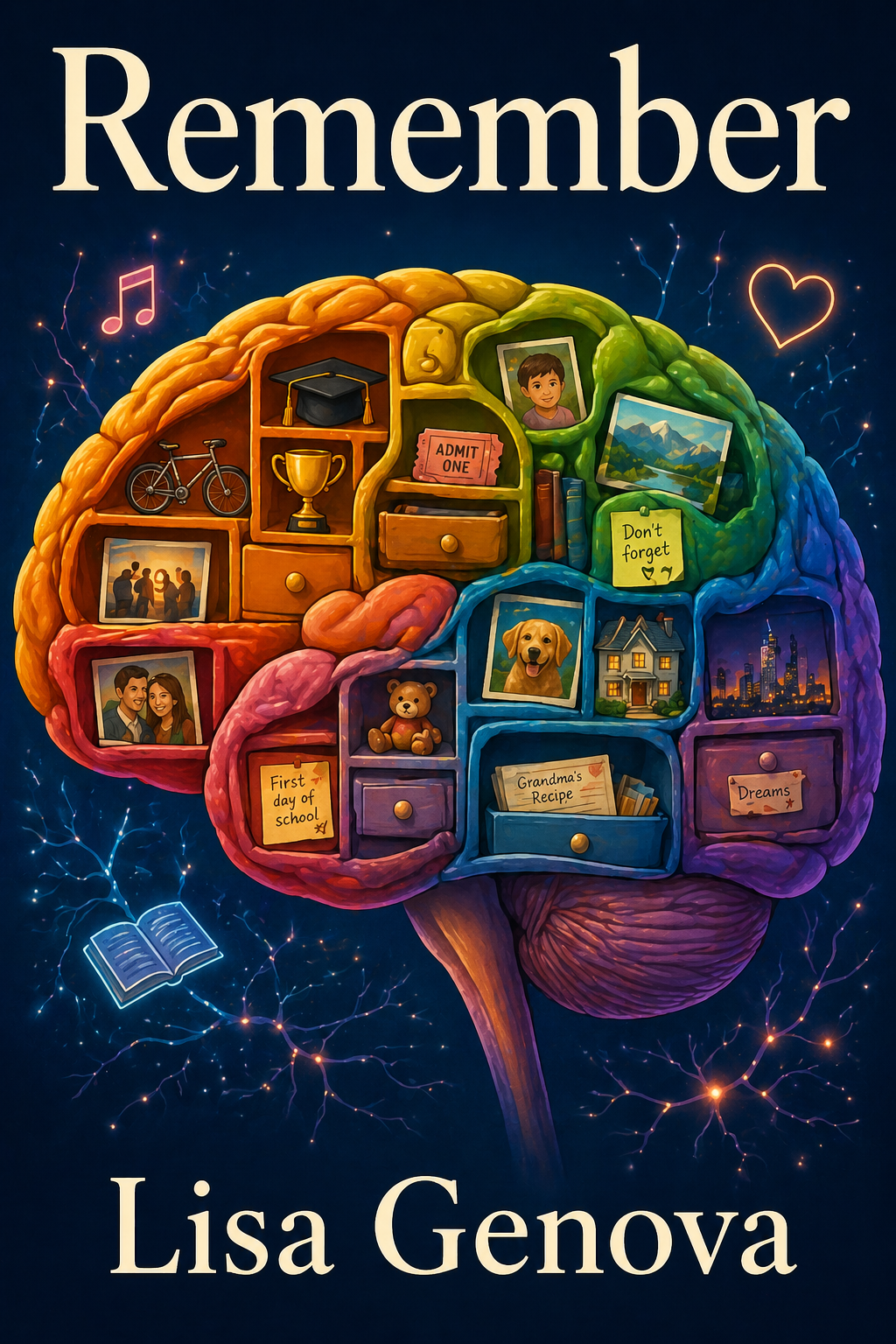
Remember
Chapter Summaries
What's Here for You
Ever walk into a room and forget why? Or struggle to recall a name on the tip of your tongue? In *Remember*, neuroscientist and bestselling author Lisa Genova offers a fascinating and reassuring exploration of how our memories work, why they sometimes fail us, and what we can do to sharpen them. More than just a guide to memory improvement, this book is a journey into the inner workings of your mind. You'll discover that memory isn't a flawless recording device, but a dynamic, ever-changing process shaped by attention, context, and even your own imagination. Genova demystifies the science behind everything from 'muscle memory' to semantic knowledge, and explores the crucial role of sleep and stress in memory function. Prepare to be surprised by the fallibility of your most cherished recollections and empowered by practical strategies to enhance your memory in everyday life. This book will leave you with a deeper understanding of your brain, a renewed appreciation for the power of memory, and actionable steps to protect it, especially as you age. While confronting the realities of Alzheimer's, Genova offers hope and practical advice on prevention, reminding us that our lifestyle choices can significantly impact our cognitive future. Get ready to unlock the secrets of your mind and embrace the beautiful, sometimes messy, miracle of memory.
Making Memories 101
Lisa Genova opens the door to the intricate world of memory, revealing that even the most seemingly ordinary brains possess an extraordinary capacity for recall, as demonstrated by Akira Haraguchi's feat of memorizing over 100,000 digits of pi. The author explains that memory isn't merely a passive storage system but an active, transformative process that physically alters the brain. Genova illustrates this with a vivid beach scene, where sensory experiences—sights, sounds, smells, tastes, emotions—converge to form a cohesive memory. She details the four critical stages of memory creation: encoding, consolidation, storage, and retrieval. The hippocampus, a seahorse-shaped structure, emerges as the linchpin, weaving together disparate pieces of information into a retrievable unit. The central tension arises: How do we transform fleeting experiences into lasting memories? Genova clarifies that the hippocampus links sensory perceptions, language, and emotions, knitting them into a neural network. Damage to the hippocampus, as seen in Alzheimer's disease or traumatic brain injuries, impairs the ability to form new memories, underscoring its vital role. Consider the case of Henry Molaison, whose life dramatically changed after the removal of his hippocampus, rendering him unable to create new conscious long-term memories. Genova emphasizes that memories are not stored in one specific location but are distributed throughout the brain, reactivating the neural pathways formed during the initial experience; recalling a memory is like embarking on an associative scavenger hunt, reconstructing the past through interconnected brain regions. The author underscores that remembering isn't replaying; it's a reconstruction. To illustrate, Genova describes how remembering her grandmother activates various sensory cortices, recreating the sights, sounds, and smells associated with her. Functional MRI studies confirm this, showing that recalling a memory mirrors the brain activity present during the initial experience. Genova resolves the initial tension by revealing that activating the right cues can unlock these complex neural networks, allowing us to revisit past experiences, from a summer evening at the beach to the seemingly impossible task of memorizing endless digits. Ultimately, Genova champions the power of the human brain, capable of holding and retrieving a vast tapestry of experiences, provided the right conditions and cues are in place.
Pay Attention
Lisa Genova, in her insightful exploration of memory, begins with a relatable predicament: losing her car in a parking garage, not due to memory failure, but a failure to pay attention in the first place. She explains that memory isn't a passive recording, but an active process requiring both perception and focused attention; sensory input alone isn't enough. The author illustrates this with the Sagamore Bridge example, highlighting how frequently traveled routes can fade from conscious recall if we're not truly present, like a ghost driving. Genova underscores that the primary cause of forgetting—names, misplaced items, recent events—stems from this initial lack of attention. She reveals that our brains tend to prioritize what we deem interesting, meaningful, or novel, filtering out the routine. The story of her father, who couldn't recall his own house color after years of living there, vividly demonstrates this selective attention. Genova then uses the penny and Apple logo examples to reveal how familiarity doesn't equal memorability; without focused attention, even ubiquitous images remain vague in our minds. This extends to social interactions, such as forgetting a new acquaintance's name because we didn't actively listen and encode it. The author stresses that paying attention demands conscious effort, a turning on of the brain amidst the constant distractions of modern life. Finally, Genova emphasizes the power of mindful focus, suggesting that by consciously directing our attention towards positive experiences, we cultivate a life narrative rich with joyful memories, a shield against the shadows of the mundane. By minimizing distractions—smartphones, racing thoughts—and prioritizing sleep and mindfulness, we reclaim our capacity to truly see and remember, transforming fleeting moments into lasting mental landmarks.
In the Moment
Lisa Genova unveils the inner workings of working memory, that fleeting stage where present experiences reside. She begins with the poignant case of Henry Molaison, whose damaged hippocampus robbed him of long-term memory, yet he retained the ability to remember things for mere seconds, illustrating the crucial role of the prefrontal cortex in holding the present. The author paints a picture of working memory as a visuospatial scratchpad and a phonological loop, a temporary holding space lasting only fifteen to thirty seconds, where information is constantly overwritten, like words hastily written in disappearing ink. Genova highlights how this limited capacity—seven plus or minus two items—can be expanded through chunking, bundling information into meaningful groups, transforming a string of numbers into a memorable date. She cautions that longer, more complex sentences strain this system, demanding mental backtracking to comprehend fully. The author resolves the tension of working memory's transience by revealing its vital role as the gateway to long-term memory; significant details, imbued with emotion, are plucked from this fleeting stage and ferried to the hippocampus for consolidation. Genova uses her own present moment—typing in her kitchen, the hum of the refrigerator—to illustrate how only the momentous, the emotionally charged, or the oft-repeated will escape the inevitable erasure, solidifying into lasting memories, transforming an ordinary moment into a story retold for decades. Thus, working memory, though ephemeral, serves as the crucial filter, selecting what matters most from the river of experience, ensuring that not everything is forgotten.
Muscle Memory
Lisa Genova, in her exploration of memory, illuminates the often misunderstood concept of muscle memory, clarifying that it's not the muscles themselves, but the brain that holds the key to our ability to perform learned skills. She dispels the myth, emphasizing that while we might feel our bodies remember a dance, the choreography resides in the brain, a revelation that shifts our understanding of how we learn and retain motor skills. Genova highlights the distinction between declarative memories – the conscious recall of facts and events – and muscle memories, which are unconscious and procedural, likening the former to a labored scratching of an itch and the latter to the effortless act of riding a bike. She uses the example of skiing after a long hiatus to illustrate how these memories resurface, seemingly without conscious effort, and Simone Biles's gymnastic feats as examples of skills executed without conscious thought. The basal ganglia and cerebellum are identified as critical brain regions in consolidating muscle memories, contrasting with the hippocampus's role in declarative memory, a division poignantly demonstrated through the case of Henry Molaison, who retained the ability to learn new motor skills despite losing the capacity to form new conscious memories. Genova underscores the importance of repetition and focused practice in strengthening neural connections, citing Malcolm Gladwell's 10,000-hour rule to illustrate the path from novice to expert, while acknowledging that innate predispositions also play a role. She paints a vivid picture of learning a new skill, like golf, where initial conscious effort gradually transforms into an automated, unconscious process, emphasizing that with practice, the brain physically changes, devoting more neural real estate to mastered skills. Ultimately, Genova resolves the tension between conscious effort and unconscious execution, revealing that by delegating muscle memory to subconscious circuitry, the brain frees itself for higher-level functions, allowing us to walk, chew gum, and contemplate complex ideas simultaneously, a testament to the brain's remarkable capacity for adaptation and learning, offering a profound insight: whatever you do over and over changes your brain, then your brain changes how you move your body.
Your Brain’s Wikipedia
In Lisa Genova’s "Remember," the exploration of memory takes center stage, specifically the realm of semantic memory, that vast internal Wikipedia housing facts and knowledge. The author elucidates the critical distinction between semantic and episodic memories, highlighting how semantic memories are timeless facts, like "Paris is the capital of France," divorced from the personal context of learning, whereas episodic memories are rich with the sensory details of when and where. Genova underscores that mastering semantic memory is crucial for acquiring knowledge, a skill honed through repetition and effort, though not all methods are created equal. She introduces the spacing effect, championing distributed practice over cramming, allowing the hippocampus ample time to consolidate learning, like a sculptor carefully shaping clay. The narrative tension rises as Genova questions the efficacy of rote memorization versus active recall, revealing that self-testing dramatically strengthens memory by reactivating neural pathways, a far cry from passively rereading material. Like a seasoned guide, Genova emphasizes the importance of meaning in memory creation, sharing examples of taxi drivers recalling routes and chess masters remembering game positions, showcasing how meaning transforms ordinary memory into a superpower. The chapter culminates with practical techniques, such as mnemonics and the method of loci, or memory palace, leveraging visual and spatial imagery to anchor information, transforming mundane lists into vivid mental landscapes. Genova resolves the tension by arguing that while remembering facts is valuable, it is the integration of knowledge with lived experience that cultivates wisdom, a synthesis of both semantic and episodic memory, painting a portrait of a life not just informed, but deeply understood. The brain, Genova suggests, isn't merely a repository; it's a dynamic, meaning-seeking organ, hungry for connection and context.
What Happened
In this exploration of episodic memory, Lisa Genova unveils why some moments become vivid, lasting recollections while others vanish into the fog of routine. She highlights that our brains are wired to remember the meaningful, emotional, and surprising, not the mundane. Routine experiences, like daily commutes or ordinary dinners, often fade because episodic memory isn't interested in the same old, same old. Genova illustrates this with a Thanksgiving dinner example, rich with retrievable details due to its special significance, contrasting it with an unremarkable dinner two nights later, lost in the mists of time. She introduces the concept of habituation, where familiarity breeds forgetfulness; imagine a husband's predictable arrival versus a sudden appearance in a red Ferrari with George Clooney—the shock etches the latter into memory. Emotion acts as a powerful amplifier, activating the amygdala and hippocampus to consolidate memories, binding them with contextual details, and experiences devoid of emotional resonance are easily ignored. The author then delves into flashbulb memories, those vividly detailed recollections of shocking, significant events like the Boston Marathon bombing, emphasizing that these memories feel personal and resistant to fading. Genova explains that autobiographical memory, our life story, is woven from meaningful episodic memories, shaped by our identity and outlook. The author cautions that we remember little before age three due to the development of language needed to consolidate and retrieve those early experiences, and the reminiscence bump highlights that most of life's episodic memories cluster between fifteen and thirty, years packed with meaningful firsts. Genova introduces Highly Superior Autobiographical Memory (HSAM), a rare condition where individuals recall almost every day of their lives in vivid detail, a superpower that can feel like a curse for some, and she provides strategies to enhance episodic memory: break routines, pay attention, embrace emotions, reflect, journal, and leverage social media. Ultimately, Genova reminds us that our memories for what happened are not perfect recordings but are shaped by emotion, surprise, and meaning, creating a unique personal history.
Your Memories (For What Happened) Are Wrong
Lisa Genova unveils the surprising fallibility of episodic memories, those personal narratives we hold as truth. She illuminates how, from encoding to retrieval, memories are continuously reshaped. Like a sticky-fingered chef, the brain stirs in imagination, assumptions, and even external influences, altering the original recipe of an event. Genova underscores that what we notice initially is already a selective slice, colored by biases, leading to incomplete recollections from the start. She cautions against the illusion of accuracy, revealing how leading questions and even the language we use can contaminate memories, leading us to believe in events we never experienced. The author illustrates how easily language manipulates memory, as demonstrated by studies where the verb used to describe a car accident significantly altered the perceived speed of the vehicles. This unreliability has profound implications, particularly in legal settings where eyewitness testimony is often treated as gospel. Genova highlights that even writing down a memory can distort it, narrowing the focus to the recorded details while obscuring others. She introduces the concept of confabulation, where external information subtly infiltrates and alters our personal recollections, creating false memories we genuinely believe. The author then turns her attention to flashbulb memories—those vividly recalled moments of emotionally charged events—exploding the myth of their superior accuracy. She recounts her own flashbulb memory of the Challenger explosion, questioning its veracity despite its vividness. Genova references studies demonstrating that even strong flashbulb memories are riddled with inaccuracies and that confidence in a memory does not equate to its truthfulness. She emphasizes that each retrieval of a memory is an act of rewriting, overwriting the original with the updated version, potentially drifting further from reality. The author shares an anecdote about a Jimmy Buffett concert to illustrate how forgotten details can resurface with external cues, or be lost entirely through repeated omissions. In closing, Genova urges acceptance of the imperfect nature of memory, suggesting that disagreements in shared memories should be met with understanding rather than conflict, acknowledging that the true reality of what happened may forever remain elusive. Ultimately, she reveals that accepting the flawed nature of our recollections can lead to a more empathetic understanding of ourselves and others, allowing for grace in the face of differing narratives.
Tip of the Tongue
Lisa Genova illuminates the frustrating yet common experience of "tip of the tongue" moments, or TOTs, where a word feels just out of reach, like a half-remembered dream. She begins with a personal anecdote, struggling to recall James Gandolfini's name, painting a vivid picture of the mental scavenger hunt. The author explains that TOTs occur due to weak or partial neural activation, hindering access to the word's visual, conceptual, or phonological information; it's not that the information is gone, just temporarily inaccessible, like a book hidden on a library shelf. Genova introduces the concept of "ugly sisters"—related but incorrect words that divert our mental search, creating neural rabbit holes. She clarifies that TOTs are normal, even frequent, and not necessarily indicative of cognitive decline, especially in younger individuals who readily outsource recall to technology. The Baker-baker paradox reveals why names are harder to remember: names often lack the rich associations that common nouns possess. Genova then offers a practical strategy: transform abstract names into concrete images, linking them to vivid, memorable details, turning "Bakers" into bakers with flour-dusted faces. She underscores that using tools like Google isn't a sign of memory failure but a pragmatic solution, likening it to wearing glasses for vision correction. Finally, Genova demonstrates the universality of TOTs, inviting the reader to experience one firsthand through a series of questions, reminding us that recognition is neurologically easier than recall, and that the feeling of knowing remains even when the word eludes us.
Don’t Forget to Remember
In this exploration of prospective memory, Lisa Genova casts a spotlight on our brain's unreliable to-do list, revealing how easily intentions slip through the cracks. She begins by illustrating the common frustration of forgetting future tasks, a universal experience that plagues even the most organized minds, as she shares examples of everyday prospective memory failures, from forgetting to buy milk to missing important appointments, setting a relatable stage for the science to follow. Genova then dissects prospective memory into its two crucial steps: encoding the intention and, more critically, remembering to remember it, a process she likens to a flaky friend who often doesn't show up. The author highlights a study on aging and prospective memory, revealing a surprising dip in recall among younger adults, underscoring that this isn't just an age-related issue, but a fundamental flaw in how our brains are wired. Genova then shares the curious case of Yo-Yo Ma, who forgot his priceless cello in a taxi, illustrating that even high-priority tasks are vulnerable to forgetting when cues are absent. Like a surgeon forgetting instruments inside a patient, these lapses aren't signs of carelessness, but rather, symptoms of our inherent cognitive limitations. The narrative then shifts towards solutions, as Genova advocates for external aids like to-do lists, calendars, and pillboxes, framing them as glasses for our prospective memory, correcting for its natural shortcomings. She emphasizes the importance of specific plans, implementation intentions, and placing cues in obvious locations, turning our environment into a supportive memory landscape. Finally, Genova urges us to be mindful of disrupted routines, recognizing that these shifts can derail our carefully laid memory plans, she encourages a proactive approach to recapture lost intentions, offering a path to navigate the complexities of prospective memory with greater awareness and intention, reminding us that to err is human, but to plan is wise.
This Too Shall Pass
Lisa Genova, in her exploration of memory, unveils the relentless battle against time, the archenemy of our stored experiences. She recounts Hermann Ebbinghaus's pioneering work with nonsense syllables, revealing the 'forgetting curve,' a stark reminder that without reinforcement, memories rapidly decay. It's as if memories, once vibrant, are left untended, slowly fading like old photographs in the sun. Yet, Genova illuminates a glimmer of hope: memories aren't entirely erased; 'trace memories' linger, allowing for quicker relearning, a phenomenon Ebbinghaus termed 'memory savings.' But Genova cautions that some memories can be physiologically pruned away if their synaptic connections remain dormant for too long, the brain literally retracting connections, leading to complete erasure. The key to resisting this erosion, Genova asserts, lies in repetition and meaning. She illustrates how overlearning, like endlessly practicing a song until it becomes ingrained, can make memories impervious to time. Conversely, deliberately avoiding the rehearsal of painful memories can allow them to fade, time acting as a balm. Furthermore, Genova emphasizes the power of meaning; memories wrapped in stories, associations, and emotional significance are far more likely to endure. She contrasts the fleeting impression of a meaningless movie with the vivid recollection of a cherished one, underscoring that meaningful experiences are revisited, shared, and thus, strengthened. Genova urges us to be mindful of the present, to imbue our experiences with meaning, lest they dissolve into the vast sea of forgotten days.
Fuggedaboutit
In "Remember," Lisa Genova illuminates the often-underestimated power of forgetting, challenging our default reverence for memory. She begins with the cautionary tale of Solomon Shereshevsky, the man who could not forget, revealing that such a seemingly superhuman ability came with the heavy burden of being unable to filter the relevant from the irrelevant. Genova dismantles the notion that forgetting is merely a regrettable failure, positioning it instead as an active, deliberate process crucial for daily functioning. Like wiping a whiteboard clean, forgetting inconsequential details creates space for new, important memories. The author delves into the art of intentional forgetting, explaining how we can control what we remember by first controlling what we pay attention to and encode. Genova highlights our inherent positivity bias, noting how we unconsciously discard negative information about ourselves to protect our self-image. She emphasizes the importance of avoiding cues that trigger unwanted memories, comparing it to resisting the urge to sing an annoying jingle to prevent it from taking root. Yet, for those with traumatic memories, such avoidance is not always possible. Genova then introduces the idea of actively revising painful memories under therapeutic guidance, reconsolidating them into emotionally neutral versions, like reformatting a corrupted file. In a vivid scene, she recounts Shereshevsky's struggle to forget, his initial failed attempts to burn away unwanted memories, and his eventual success in visualizing them as chalk on a blackboard, wiped clean. She contrasts this with muscle memories, which require repeated practice to overwrite old patterns. Genova concludes by noting that understanding the neuroscience of forgetting could unlock new treatments for neurological disorders, and ultimately, a healthy memory system is about balance: retaining what is meaningful and discarding what is not, separating signal from noise.
Normal Aging
Lisa Genova, in *Remember*, explores the frustrating phenomenon of forgetting as we age, acknowledging that while forgetting is a normal part of the human experience at any age, it takes on a different character as we grow older. She paints a vivid picture of the aging mind, comparing it to an employee who's regularly late, unprepared, and caught sleeping at their desk, which highlights the tension between our expectations and the reality of our memory's performance. Genova clarifies that not all memory functions decline equally; muscle memory and semantic memory remain relatively stable, allowing us to retain skills and accumulate knowledge. The author introduces Akira Haraguchi, who recited pi to an astonishing 111,700 digits at age sixty-nine, which serves as a powerful reminder that healthy aging brains are still capable of remarkable feats. However, Genova acknowledges that free recall, episodic memory, working memory, and processing speed do diminish with age, leading to increased tip-of-the-tongue moments, difficulty remembering past events, and challenges in retaining new information. She uses the metaphor of retrieval donning rose-colored glasses, illustrating our tendency to recall positive memories more easily than negative ones as we age. Genova addresses the question of whether we can combat these age-related declines, conceding that while lifestyle choices like a healthy diet, regular exercise, and sufficient sleep can improve memory performance and potentially delay dementia, they cannot ultimately halt the aging process. She dispels the myth that staying mentally active can prevent memory decline, citing studies that show even experts in cognitively demanding fields experience age-related memory changes. Genova emphasizes that while aging is inevitable and affects memory, employing strategies like paying attention, minimizing distractions, rehearsing, and creating meaning can still improve memory at any age. The author offers a resolution: that even with the unavoidable effects of time, proactive engagement with memory-enhancing techniques allows us to navigate the aging process with greater cognitive resilience, and that these tools are available at any age, so long as we use them.
Alzheimer’s
Lisa Genova, through the poignant story of her friend Greg O'Brien, illuminates the stark realities of Alzheimer's, distinguishing it sharply from normal age-related forgetfulness. She paints a vivid picture: Greg, a once-accomplished journalist, now grappling with daily memory failures, a stark contrast to the fleeting 'Where did I put my keys?' moments we all experience. Genova explains that Alzheimer's, in its early stages, isn't merely slower processing, but a molecular battle at the synapses, akin to a lit match igniting a forest fire within the brain, setting off a cascade of tangles and cell death. The author reveals a critical tension: amyloid plaques silently accumulate for years, often before age forty, reaching a tipping point that unleashes devastating memory loss. She underscores that while older memories may remain intact, the ability to form new ones diminishes as the hippocampus, the brain's memory center, becomes compromised. Genova highlights that the frustrating tip-of-the-tongue moments we all face differ profoundly from the word-finding struggles of someone with Alzheimer's, where common words vanish without a trace, turning conversations into painful charades, and forcing reliance on external aids like Google to navigate daily life. As the disease progresses beyond the hippocampus, Genova notes, it invades other brain regions, disrupting spatial awareness, logical thinking, and emotional regulation, leading to disorientation, impaired judgment, and unpredictable mood swings. The author poignantly describes how Alzheimer's eventually erodes even the most deeply ingrained memories and abilities, stealing one's identity and connections to loved ones. Genova emphasizes that while there is no cure, understanding the distinct nature of Alzheimer's-related forgetting is crucial, as it is pervasive, catastrophic, and ultimately, not a normal part of aging.
Put It in Context
Lisa Genova explores the profound influence of context on memory, painting a vivid scene of her own momentary memory lapse in her kitchen—a blank slate where intention once resided. She reveals how memory retrieval isn't a straightforward process but rather a delicate dance influenced by surrounding cues. Genova elucidates that our ability to recall information is significantly enhanced when the context of recall mirrors the context in which the memory was initially formed, like deep-sea divers recalling words better underwater if they learned them there. She extends this concept beyond physical location, emphasizing the role of internal states, emotions, and even language as integral components of context; a wave of nostalgia washes over us when revisiting childhood haunts, unlocking forgotten memories consolidated there. The author highlights that these contextual elements become interwoven with the memory itself, acting as triggers for retrieval. Imagine the spreadsheet one studies isn't the only thing remembered, but also the smell of lavender, the taste of gummy bears, and the sound of Eminem, all consolidated into the memory. Genova suggests that by recreating the learning environment—be it a mocha Frappuccino during an exam or revisiting a childhood home—we can unlock dormant memories. Thus, the next time one faces a mental blank, Genova advises retracing one's steps, either physically or mentally, to reignite the contextual cues and bring the forgotten intention back to light, proving that memory isn't just about what we learn, but where and how we learn it.
Stressed Out
Lisa Genova, in her exploration of memory, turns our attention to stress, a ubiquitous force in modern life, noting that most Americans grapple with it daily. She illuminates that while stress itself isn't inherently deadly, unchecked, it lays the groundwork for various ailments, turning the body into a battleground. She explains that stress, in its essence, is the perception of danger, threat, or challenge. The acute stress response, a relic from our survival-driven past, triggers a cascade of hormonal events, with adrenaline and cortisol taking center stage. Adrenaline, the swift messenger, heightens senses and focuses attention, while cortisol mobilizes energy and ideally shuts off the stress response, thus creating a temporary state to deal with immediate threats. Genova highlights a crucial distinction: acute stress can actually sharpen memory formation related to the stressful event, acting like a spotlight that enhances focus on the central details, but it simultaneously dims the recall of unrelated information. She uses the micro-metaphor of a bank robbery to illustrate this point, where the gun becomes the focal point, overshadowing peripheral details. However, Genova warns that this beneficial effect has its limits. She emphasizes that chronic stress, unlike its acute counterpart, becomes a destructive force, constantly hammering the fight-or-flight response and desensitizing the body's shutoff valve. The amygdala remains hyper-alert, inhibiting the prefrontal cortex and impairing clear thinking. Moreover, chronic stress shrinks the hippocampus, the brain's memory center, hindering neurogenesis, the creation of new neurons. Genova cites studies linking chronic stress to an increased risk of Alzheimer's, painting a stark picture of its long-term consequences. In a moment of resolution, Genova offers a beacon of hope: while external stressors may be unavoidable, our response to them is not predetermined. Practices such as yoga, meditation, a healthy diet, and mindfulness can help us regain control, putting the brakes on the runaway stress response and fostering a healthier brain, offering a path to resilience in the face of life's inevitable storms. The author underscores the self-fulfilling prophecy of stressing about forgetting, urging us to relax and accept that forgetting is a normal part of life, a collective deep breath against the tide of anxiety.
Go to Sleep
Lisa Genova, in her illuminating exploration of memory, urges us to reconsider sleep, not as a passive void, but as an active superpower vital for our brains and overall health. She confronts the pervasive modern dismissal of sleep, painting a picture of a society sleepwalking through life, proud of their deprivation. Genova reveals that sufficient sleep isn't merely a luxury; it's the bedrock upon which our cognitive abilities are built. She highlights how sleep deprivation impairs attention, the very gateway to memory encoding, likening a sleep-deprived frontal cortex to an employee dragging itself to a desk job. Sleep, she explains, actively consolidates memories, replaying neural patterns to cement learning, and even a short nap can clear space in the hippocampus, aiding retention. The author emphasizes the profound impact of sleep on muscle memory, where skills learned are not just practiced but woven into our being during slumber. Sleep isn't just about remembering the golf swing; it's about embodying it. Genova then escalates the stakes, presenting sleep as a critical defense against Alzheimer's disease. During deep sleep, glial cells act as the brain's sanitation department, flushing away amyloid plaques, a process disrupted by insufficient sleep, leading to an amyloid hangover. This sets off a dangerous feedback loop, accelerating plaque formation and increasing the risk of the disease. She cautions against the braggadocio of short sleep, citing data that clearly links seven to nine hours of nightly sleep to improved cardiovascular, immune, and cognitive function. In essence, Genova reframes sleep from a dispensable activity to an indispensable pillar of health, a potent, double-edged sword impacting our daily lives and long-term well-being, urging us to prioritize rest as an investment in our minds and futures.
Alzheimer’s Prevention
In this chapter, Lisa Genova addresses the looming fear of Alzheimer's, gently reminding us that while age is a primary risk factor, it isn't necessarily our destiny. She illuminates a crucial distinction: most Alzheimer's cases stem not from pure genetics but from the interplay of genes and lifestyle. Genova methodically dismantles popular myths, regretfully dispelling the red wine and chocolate fantasies, while cautiously nodding to coffee's potential benefits. She underscores the power of lifestyle choices, advocating for the Mediterranean and MIND diets as potent shields, potentially reducing risk by a staggering 30 to 50 percent. The chapter emphasizes that what's good for the heart is good for the brain, connecting cardiovascular health to cognitive well-being. Genova casts a spotlight on sleep, framing chronic deprivation as a significant risk, while also offering hope: tonight’s sleep can still make a difference. She champions exercise, both physical and mental, as a means to stimulate new neuron growth in the hippocampus, the brain's memory center, painting a vivid picture of sedentary habits leading to brain shrinkage. Finally, Genova highlights the concept of cognitive reserve, illustrating how learning new things builds neural pathways, acting as a buffer against the disease's progression, suggesting we pave new neural roads instead of cruising familiar ones. Even in the face of diagnosis, Genova imparts three lessons of resilience: diagnosis isn't a death sentence, emotional memory persists, and one is always more than what they can remember. Ultimately, this chapter serves as both a warning and a beacon of hope, empowering us to take proactive steps toward a future where our memories, and ourselves, remain intact.
The Memory Paradox
Lisa Genova, in *Remember*, navigates the complex landscape of memory, revealing its paradoxical nature: both essential and fallible. She begins by acknowledging memory's crucial role in everyday functions, from walking to recognizing loved ones, portraying it as a superpower. Yet, Genova quickly tempers this reverence, likening memory to a flaky friend or a gullible child, emphasizing its incompleteness and inaccuracies, especially concerning past events or future plans. The central tension emerges: how do we reconcile memory's importance with its inherent flaws? Genova suggests a middle ground, urging us to hold memory both seriously and lightly, a delicate balance. She argues that valuing memory encourages us to nurture it, unlocking its potential through deliberate effort. Simultaneously, acknowledging its imperfections fosters forgiveness and reduces stress when memory inevitably fails. Genova illustrates this with everyday examples: forgetting a third-grade teacher's name or the details of a past vacation shouldn't be a source of anxiety. She shares anecdotes of individuals with exceptional memories, like Akira Haraguchi and Yo-Yo Ma, to demonstrate that even remarkable memory doesn't guarantee overall success or happiness. The author then shifts focus, questioning whether remembering everything is even desirable, suggesting that perhaps memory's true purpose is to retain only what is meaningful, shaping our sense of self and connection with others. Genova poignantly recounts her friend Greg O'Brien's experience with Alzheimer's, highlighting that even profound memory loss doesn't diminish one's humanity, humor, or capacity for love. In a sensory scene, she recalls her grandmother's final years, devoid of recognition yet still radiating love. Ultimately, Genova resolves the paradox by asserting that memory, while significant, isn't everything; it doesn't define our worth or limit our ability to experience life fully. Like holding a fragile bird, we must take memory seriously, yet hold it lightly.
Conclusion
Lisa Genova's 'Remember' is a comprehensive exploration of memory, revealing its intricate mechanisms, surprising frailties, and profound significance. The book underscores that memory isn't a passive recording device but an active, reconstructive process shaped by attention, emotion, and context. We learn that memory formation relies on focused attention, mindful presence, and minimizing distractions. While our brains prioritize meaningful and emotional experiences, routine events often fade. The book highlights the importance of repetition, rehearsal, and mnemonic techniques in strengthening memory traces, transforming rote learning into an engaging process. 'Remember' unveils the fallibility of episodic memories, demonstrating how they are continuously reshaped by imagination, assumptions, and external influences. The book also addresses the challenges of forgetting, especially as we age, and distinguishes normal age-related memory changes from the more severe effects of Alzheimer's. Ultimately, 'Remember' advocates for a balanced perspective, valuing memory's crucial role in shaping our identities and connecting us with others, while accepting its imperfections and limitations. The book reminds us that humanity and love persist even in the face of memory loss, urging us to hold memory 'seriously but lightly,' appreciating its power without being defined by its frailties.
Key Takeaways
Memory formation requires the encoding, consolidation, storage, and retrieval of information; any disruption to these processes can impair memory.
The hippocampus is essential for binding disparate sensory and emotional elements into a cohesive memory; damage to it impairs the ability to form new long-term memories.
Memories are not stored in a single location but are distributed throughout the brain, reactivating the neural pathways formed during the initial experience.
Recalling a memory is an associative reconstruction process, not a perfect replay, involving the activation of interconnected brain regions.
Activating the right cues can trigger the retrieval of complex memories, unlocking vast neural networks of past experiences.
Memory formation fundamentally requires focused attention; perception alone is insufficient for creating lasting memories.
The brain selectively remembers what it deems interesting, meaningful, or emotionally significant, filtering out routine or inconsequential details.
Familiarity does not guarantee memorability; repeated exposure without active attention leads to weak or nonexistent memory traces.
Paying attention is a conscious, effortful process that combats the brain's natural tendency towards distraction and autopilot thinking.
Mindful focus on positive experiences cultivates a memory-rich narrative filled with joy and awe, shaping a more optimistic life story.
Modern distractions—smartphones, social media, racing thoughts—are significant 'memory thieves' that diminish attention and impair memory formation.
Improving memory involves minimizing distractions, prioritizing sleep and mindfulness, and consciously directing attention to the present moment.
Working memory, housed in the prefrontal cortex, is a short-lived holding space for present experiences, distinct from long-term memory.
The capacity of working memory is limited to approximately seven plus or minus two items, but this can be increased by chunking information into meaningful groups.
Information in working memory decays rapidly, typically within fifteen to thirty seconds, unless actively rehearsed or repeated.
Longer, more complex information, such as multi-syllabic words or lengthy sentences, strains working memory's capacity, hindering comprehension.
Working memory acts as a gateway to long-term memory; only information that captures attention, holds meaning, or evokes emotion is transferred for consolidation.
Repetition and rehearsal are key to moving information from short-term working memory into long-term storage within the hippocampus.
Muscle memory is primarily a function of the brain, not the muscles themselves, involving the unconscious recall of motor skills and procedures.
Declarative memories require conscious recall, while muscle memories are retrieved unconsciously, allowing for effortless execution of learned tasks.
The basal ganglia and cerebellum are key brain regions for consolidating muscle memories, distinct from the hippocampus's role in declarative memory.
Repetition and focused practice strengthen neural connections in the motor cortex, leading to improved skill performance and brain adaptation.
Becoming an expert in a physical skill involves dedicating more neural resources in the brain to that specific muscle memory.
The brain's capacity to delegate muscle memory to subconscious circuitry frees up cognitive resources for higher-level functions.
Consistent practice and repetition can alter the neural connectivity in the motor cortex, transforming initially challenging tasks into automated skills.
Semantic memory stores factual knowledge, distinct from episodic memories tied to specific experiences.
Effective memorization requires spaced repetition rather than cramming, optimizing hippocampal consolidation.
Active recall through self-testing significantly enhances memory retention by reinforcing neural pathways.
Meaningful information is more easily remembered, leveraging existing knowledge and associations.
Mnemonics and visual imagery techniques, like the method of loci, can dramatically improve memory by creating strong associations.
The integration of semantic knowledge with personal experiences fosters wisdom and deeper understanding.
Memory techniques tap into the brain’s innate abilities for visual and spatial recall, transforming rote learning into an engaging process.
Episodic memory prioritizes meaningful, emotional, and surprising experiences over routine events, determining what is remembered and what is forgotten.
Habituation leads to the forgetting of familiar experiences, underscoring the importance of novelty and surprise in creating memorable moments.
Emotion acts as an amplifier for memory, activating brain regions like the amygdala and hippocampus to consolidate contextual details of experiences.
Flashbulb memories, vividly detailed recollections of shocking events, feel personal and resistant to fading due to their emotional impact and significance.
Autobiographical memory, our life story, is constructed from meaningful episodic memories, shaped by our identity, outlook, and the narratives we create.
Strategies such as breaking routines, paying attention, embracing emotions, reflecting, journaling, and using social media can enhance episodic memory and create lasting recollections.
Early childhood memories are sparse due to the development of language, and the 'reminiscence bump' highlights the clustering of memories during formative years.
Episodic memories are inherently incomplete and susceptible to distortions from the moment of encoding, shaped by biases and limited attention.
Memory consolidation is a reconstructive process where imagination, external influences, and suggestions can significantly alter the original details of an event.
Retrieval of a memory is not a replay but a reconstruction, where new information, context, and emotions can reshape the memory, leading to reconsolidation of a modified version.
Language, especially leading questions and specific word choices, can easily manipulate and contaminate episodic memories, influencing what we believe we remember.
Eyewitness testimony is unreliable due to the malleability of memory, with studies showing high rates of false identification and conviction based on inaccurate recollections.
Flashbulb memories, despite their vividness and confidence, are just as prone to errors and distortions as ordinary episodic memories, challenging the assumption of their accuracy.
Repeated retelling of a memory can both reinforce certain details and inadvertently erase others, leading to a simplified or altered version of the original event.
Tip-of-the-tongue (TOT) moments arise from weak neural connections, not necessarily memory loss, and are a normal glitch in memory retrieval.
Related but incorrect words, or 'ugly sisters,' can hijack the brain's search, diverting attention from the target word.
TOT frequency increases with age, but this is often due to increased awareness and worry rather than a drastic decline in memory function.
Proper names are harder to recall than common nouns due to the Baker-baker paradox: names often lack rich, pre-existing associations.
Transform abstract names into concrete, visual images to strengthen neural connections and improve recall.
Using external aids like Google to resolve TOTs does not weaken memory; it's a practical tool, not a crutch.
Recognition is neurologically easier than recall, so even in a TOT state, one can often identify the correct answer when presented.
Prospective memory, our ability to remember future tasks, is inherently unreliable, affecting people of all ages and professions.
Forgetting to remember is a two-step process: first, encoding the intention, and second, retrieving it at the appropriate time, with the latter being the primary point of failure.
External cues are crucial for triggering prospective memories; without them, even high-priority tasks can be forgotten.
Relying solely on internal memory is insufficient; external aids like to-do lists, calendars, and pillboxes act as 'glasses' for our prospective memory, compensating for its weaknesses.
Specificity in planning and implementation intentions significantly improves recall; vague intentions are easily overlooked.
Disrupted routines can lead to prospective memory failures, requiring proactive awareness and adaptation to maintain intended actions.
Time is the primary adversary of memory; without active recall and reinforcement, memories degrade rapidly.
Even seemingly forgotten memories leave traces that facilitate quicker relearning, demonstrating that information is not entirely erased.
Memories can be physiologically erased if the synaptic connections representing them remain inactive for extended periods.
Repetition, especially overlearning, significantly strengthens memories and protects them from the effects of time.
Deliberately avoiding the rehearsal of painful or unwanted memories can help them fade over time, aiding in emotional healing.
Attaching meaning to experiences and information makes them more memorable and resistant to forgetting.
Meaningful memories are more likely to be revisited and shared, further reinforcing their permanence.
Forgetting is not a failure of memory but an active process essential for filtering irrelevant information and focusing on what's important.
Intentional forgetting begins with controlling attention; by not encoding information in the first place, we can prevent unwanted memories from forming.
We exhibit a positivity bias, unconsciously discarding negative information about ourselves to protect our self-image.
Avoiding cues that trigger unwanted memories can weaken them over time, but this strategy is especially difficult for those with trauma.
Painful memories can potentially be revised by reconsolidating them into emotionally neutral versions under therapeutic guidance.
Overcoming clingy muscle memories requires consistent practice to overwrite old patterns with new ones.
An optimally functioning memory system balances data storage and disposal, retaining what is meaningful and discarding what isn't.
Memory capability doesn't uniformly decrease with age; muscle and semantic memories remain relatively stable, offering a foundation of retained skills and knowledge.
Normal age-related forgetting primarily affects free recall, episodic memory, working memory, and processing speed, leading to increased 'tip-of-the-tongue' moments and difficulty with new information.
Positive lifestyle choices, while beneficial for memory performance and potentially delaying dementia, cannot ultimately prevent the natural aging process of the brain.
Staying mentally active doesn't prevent or slow normal age-related memory changes, even among experts in cognitively demanding fields.
Employing memory-enhancing strategies like focused attention, rehearsal, and creating meaning can improve memory at any age, even if the effect is less pronounced than in youth.
Alzheimer's-related forgetting is distinct from normal aging, involving molecular changes that block memory formation and retrieval, not just slower processing.
Amyloid plaques can accumulate in the brain for years before symptoms appear, suggesting a prolonged preclinical phase.
Early symptoms of Alzheimer's include rapid forgetting of recent events and difficulty forming new memories, while older memories may initially remain intact.
Word-finding difficulties in Alzheimer's differ from normal tip-of-the-tongue moments, involving frequent blocking of common words without clues.
Alzheimer's progression affects various brain regions, leading to spatial disorientation, impaired judgment, and emotional dysregulation.
The disease eventually erodes even deeply ingrained memories and abilities, impacting one's sense of self and connection to others.
Understanding the distinction between normal forgetting and Alzheimer's is crucial for early detection and support.
Memory retrieval is significantly easier and more accurate when the context of recall matches the context in which the memory was initially encoded.
Context extends beyond physical location to include emotional state, physiological condition, and even sensory details present during memory formation.
Internal and external cues become interwoven with the memory itself, acting as triggers for retrieval.
Recreating the learning environment, including sensory details and emotional states, can enhance memory recall.
When experiencing a memory lapse, revisiting the original context—either physically or mentally—can help unlock the forgotten information.
Acute stress can enhance memory formation related to the stressful event, but it impairs the recall of unrelated information.
Chronic stress impairs cognitive function by inhibiting the prefrontal cortex and shrinking the hippocampus.
Mindfulness practices can help regulate the stress response, promoting healthier brain function and memory.
Stressing about forgetting can create a self-fulfilling prophecy, exacerbating memory lapses.
The body's stress response, when chronically activated, can lead to desensitization and a sustained state of fight or flight.
Prioritize sufficient sleep (7-9 hours) to enhance attention and encoding of new memories, combating the sluggishness of a sleep-deprived frontal cortex.
Recognize sleep as an active memory consolidator, where neural replay cements learning, improving recall by 20-40% compared to wakefulness.
Leverage sleep to optimize muscle memory, turning consciously deliberate steps into automated skills, improving speed and accuracy.
Utilize naps to boost memory retention and create cognitive space for new learning, avoiding the hippocampus maxing out.
Understand sleep as a critical defense against Alzheimer's, where deep sleep facilitates the clearance of amyloid plaques by glial cells.
Combat the modern dismissive attitude toward sleep by recognizing it as a vital component of health, not a dispensable luxury.
Recognize that consistent sleep deprivation creates a dangerous feedback loop accelerating plaque formation, disrupting sleep and increasing risk of Alzheimer's.
Adopting a Mediterranean or MIND diet can significantly reduce Alzheimer's risk, comparable to a powerful medication.
Prioritizing sleep is crucial, as chronic sleep deprivation is a major risk factor for Alzheimer's, but improving sleep habits can still mitigate future risk.
Engaging in regular physical and mental exercise stimulates neuron growth in the hippocampus, combating brain shrinkage associated with sedentary lifestyles.
Building cognitive reserve by learning new things creates a buffer against Alzheimer's symptoms, even in the presence of the disease's pathology.
Cardiovascular health is directly linked to brain health, making heart-healthy habits essential for Alzheimer's prevention.
While certain substances like red wine and chocolate are often touted for brain health, scientific evidence supporting their benefit in Alzheimer's prevention is currently lacking.
Maintaining adequate vitamin D and B12 levels are important, as deficiencies can mimic or exacerbate dementia symptoms.
Memory is both essential for daily functioning and inherently fallible, requiring a balanced perspective.
Valuing memory encourages its cultivation, while accepting its imperfections reduces stress and promotes well-being.
Exceptional memory doesn't guarantee overall success, happiness, or immunity to life's challenges.
Memory's primary function may be to retain meaningful experiences that shape our sense of self and connect us with others.
Humanity and the capacity for love persist even in the face of significant memory loss, as seen in Alzheimer's patients.
Holding memory 'seriously but lightly' allows us to appreciate its power without being defined by its limitations.
Action Plan
Actively engage your senses (sight, sound, smell, taste, touch) when trying to create a new memory to enhance encoding.
Use associative techniques, such as linking new information to existing memories or creating mental images, to aid consolidation.
Review and revisit important information regularly to strengthen storage and make retrieval easier.
Create specific cues or triggers, such as associating a memory with a particular song or place, to facilitate recall.
Practice mindfulness and reduce distractions to improve attention and encoding during new experiences.
Engage in activities that stimulate the hippocampus, such as learning new skills or exploring new environments, to support memory function.
Before accusing your memory of failing, ask yourself: Did I pay attention to this in the first place?
Minimize distractions—turn off notifications, put away your phone—when trying to learn or remember something important.
Practice mindfulness techniques, such as meditation, to improve your ability to focus and be present in the moment.
Actively engage your senses when experiencing something new; consciously notice details and features.
When meeting someone new, repeat their name aloud and associate it with a visual image or characteristic.
Prioritize sleep to enhance cognitive function and improve your ability to pay attention and form memories.
Make a conscious effort to notice and appreciate positive experiences throughout the day, savoring the moments of joy and awe.
When parking your car, take a moment to consciously register its location—snap a photo or create a mental image.
Limit multitasking to allow your brain to focus on one task at a time, improving memory consolidation.
Engage in activities that stimulate your brain and challenge your attention, such as puzzles or learning a new skill.
Practice chunking information into smaller, meaningful units to enhance retention in working memory.
Actively rehearse or repeat information you need to remember to extend its duration in working memory.
Minimize distractions and focus attention on the task at hand to ensure information is processed effectively in working memory.
Use visual aids and associations to make information more memorable and facilitate transfer to long-term memory.
When reading complex texts, pause frequently to summarize and consolidate information in working memory before proceeding.
Prioritize information based on its importance to ensure that the most relevant details are transferred to long-term memory.
Engage multiple senses (e.g., writing, speaking) when learning new information to strengthen memory consolidation.
Create emotional connections to information to increase its salience and likelihood of being remembered.
Identify a skill you want to master and commit to focused, repetitive practice.
Break down complex motor skills into smaller, manageable steps to facilitate learning and memory consolidation.
Focus on the process of skill acquisition rather than solely on the outcome to enhance neural pathway development.
Be mindful of the brain regions involved in muscle memory, such as the basal ganglia and cerebellum, when practicing.
Reflect on the difference between declarative and muscle memories to better understand how different skills are learned and retained.
Incorporate regular practice sessions to strengthen neural connections and improve skill performance.
Recognize that innate predispositions may influence skill acquisition, but consistent practice is essential for improvement.
Delegate familiar tasks to unconscious muscle memory to free up cognitive resources for higher-level thinking and decision-making.
Implement spaced repetition: Review material at increasing intervals rather than cramming.
Practice self-testing: Quiz yourself regularly on the information you need to remember.
Attach meaning to new information: Relate new concepts to existing knowledge or personal experiences.
Use mnemonics: Create rhymes, acronyms, or visual associations to aid recall.
Build a memory palace: Associate items with locations in a familiar space to enhance memory.
Actively retrieve information: Don't just passively reread, try to recall information from memory.
Focus on understanding, not just memorizing: Aim to grasp the underlying concepts rather than just the facts.
Incorporate visual imagery: Create vivid mental images to make information more memorable.
Break your daily routine by introducing novelty, such as visiting a new place or trying a new activity.
Practice mindful awareness by putting away distractions and fully engaging with your surroundings to notice details.
Reflect on emotional experiences by journaling or discussing them with others to reinforce memory consolidation.
Keep a diary or journal to record daily events, serving as cues for future recollection.
Use social media or photo albums to revisit past experiences, triggering recall through visual cues and chronological context.
Actively reminisce about meaningful moments with friends and family to strengthen and share memories.
Pay attention to your emotional reactions during significant events, allowing for deeper encoding and retention.
Engage in activities that evoke strong emotions, creating more memorable experiences.
Minimize screen time to increase engagement with the three-dimensional world and enhance memory formation.
Recognize that your memories are not perfect recordings of the past and be open to alternative perspectives.
When recalling past events, be mindful of the potential influence of current emotions and biases on your memory.
Avoid leading questions when discussing past events with others to minimize the risk of implanting false memories.
Consider the source and reliability of information when forming memories of events you did not directly experience.
Be skeptical of eyewitness testimony and consider corroborating evidence before drawing conclusions.
Practice active listening and empathy when discussing shared memories with others, acknowledging that their recollections may differ from yours.
Keep a journal or record of significant events to create a more reliable reference point for future recollections.
Engage in activities that promote cognitive health, such as memory exercises and lifelong learning, to support memory function.
When faced with conflicting memories, focus on understanding each other's perspectives rather than insisting on being right.
When struggling to remember a name, try to recall associated details like occupation, location, or shared experiences.
If stuck on a 'tip of the tongue' moment, consciously redirect your thoughts to avoid fixating on 'ugly sisters'.
Transform abstract names into vivid mental images, linking the name to memorable characteristics or scenarios.
Recognize that occasional memory lapses are normal and not necessarily indicative of cognitive decline.
Embrace technology like search engines to quickly resolve 'tip of the tongue' moments without guilt.
Practice associating names with unique features or details when meeting new people.
Actively engage in activities that promote cognitive stimulation and brain health.
Reduce stress and anxiety related to memory lapses by understanding their common causes.
Create and consistently use to-do lists for daily and weekly tasks.
Enter all appointments, deadlines, and important tasks into a calendar with reminders.
Use pillboxes to organize medications and set alarms to ensure timely intake.
Place cues for important tasks in impossible-to-miss locations, such as in front of the door.
When making plans, be specific about the 'what, where, and when' to create implementation intentions.
If your routine is disrupted, take a moment to review any tasks that may have been coupled to the disrupted activity.
Before leaving any location (e.g., a taxi, a meeting), pause and actively recall what you need to take with you.
Actively revisit and rehearse important information to reinforce memory and combat the effects of time.
Transform information into meaningful stories or associations to enhance retention.
Deliberately avoid dwelling on painful memories to facilitate emotional healing.
Practice overlearning key concepts or skills to ensure long-term recall.
Reflect on daily experiences to identify and strengthen meaningful memories.
Use spaced repetition techniques to optimize learning and memory retention.
Engage in regular mental exercises to stimulate brain activity and maintain synaptic connections.
Practice mindful attention: consciously choose what you focus on to control what gets encoded into memory.
Actively redirect your thoughts when unwanted memories arise to weaken their hold.
Visualize unwanted memories fading away, using imagery like wiping a chalkboard clean.
Seek professional guidance to explore memory reconsolidation techniques for processing traumatic experiences.
Identify and avoid cues that trigger unwanted memories to minimize their activation.
Practice new skills repeatedly to overwrite old muscle memories.
Reflect on the balance between remembering and forgetting in your daily life, and intentionally let go of what no longer serves you.
Actively engage in activities that utilize muscle memory, such as playing a musical instrument or participating in a sport.
Prioritize a healthy lifestyle, including a Mediterranean or MIND diet, regular exercise, sufficient sleep, and stress reduction techniques.
Practice focused attention and minimize distractions when learning new information or trying to remember something important.
Use rehearsal and self-testing techniques to reinforce memories and improve recall.
Create meaningful associations and visual imagery to enhance memory encoding and retrieval.
Maintain a diary or journal to record daily events and improve episodic memory.
Implement strategies for managing prospective memory, such as writing down tasks and setting reminders.
Engage in activities that challenge cognitive skills, such as puzzles, reading, or learning a new language, without expecting to prevent age-related memory changes.
Consult a healthcare professional if you experience persistent or worsening memory problems.
Pay attention to the context when you put down important items such as keys.
Actively engage in mentally stimulating activities to promote brain health.
Practice mindfulness and attention exercises to improve focus and memory encoding.
Educate yourself and others about the differences between normal aging and Alzheimer's disease.
Support organizations dedicated to Alzheimer's research and care.
Develop strategies for managing emotional reactions and frustrations related to memory lapses.
Create a memory notebook
When studying, pay close attention to your surroundings, emotional state, and sensory details to create a strong contextual link.
Recreate the original study environment when attempting to recall information, including location, music, and even snacks.
If you forget why you entered a room, return to the previous room and mentally retrace your steps.
Use emotional and sensory cues to trigger memories by associating information with specific feelings or smells.
When recalling past events, try to remember the specific details of the environment and your emotional state at the time.
Practice mindfulness or meditation daily to reduce reactivity to stressors.
Incorporate regular exercise into your routine to promote neurogenesis in the hippocampus.
Adopt a healthy diet to support brain health and regulate cortisol levels.
Identify and challenge negative thought patterns that contribute to psychological stress.
Prioritize sleep to allow the brain to recover and consolidate memories effectively.
Cultivate social connections and seek support from others to buffer against stress.
Engage in activities that bring joy and relaxation to counteract the effects of chronic stress.
When feeling stressed about forgetting, consciously remind yourself that it's normal and try to relax.
Prioritize 7-9 hours of sleep each night to support optimal cognitive function and memory consolidation.
Incorporate short naps (20 minutes) to boost memory retention and create space for new learning.
Practice new skills before sleep to leverage the memory-enhancing effects of sleep on muscle memory.
Establish a consistent sleep schedule to regulate the body's natural sleep-wake cycle.
Create a relaxing bedtime routine to promote deep, restorative sleep.
Limit screen time before bed to avoid disrupting sleep patterns.
Consult with a healthcare professional if you suspect you have a sleep disorder.
Track your sleep patterns to identify areas for improvement.
Consider a 'nappuccino' (coffee before a short nap) to enhance alertness and memory consolidation.
Educate friends and family on the importance of sleep to combat the 'braggadocio' of sleep deprivation.
Adopt a Mediterranean or MIND diet, focusing on green leafy vegetables, berries, nuts, olive oil, whole grains, beans, and fish.
Prioritize getting 7-8 hours of quality sleep each night to allow for amyloid plaque clearance.
Engage in at least 30 minutes of aerobic exercise most days of the week, such as brisk walking, swimming, or cycling.
Learn a new skill or hobby that challenges your brain, such as playing a musical instrument, learning a new language, or taking a class.
Maintain a healthy blood pressure, cholesterol, and blood sugar levels through diet and exercise.
Get your vitamin D and B12 levels checked and supplement if necessary.
Limit alcohol consumption to improve sleep quality and reduce Alzheimer's risk.
Reduce sedentary behavior by taking breaks to stand up and move around throughout the day.
Practice gratitude for your memories, appreciating their role in your life.
Use external tools like calendars and notes to support your memory and reduce cognitive load.
Cultivate self-compassion when you experience memory lapses, avoiding blame or self-criticism.
Focus on creating meaningful experiences that are more likely to be retained in memory.
Engage in activities that promote brain health, such as exercise, mental stimulation, and social interaction.
Prioritize presence and connection in relationships, recognizing that love transcends memory.
Challenge the belief that memory defines your worth or potential.
Reflect on the memories that have shaped your identity and life narrative.
Practice mindfulness to enhance attention and improve memory encoding.