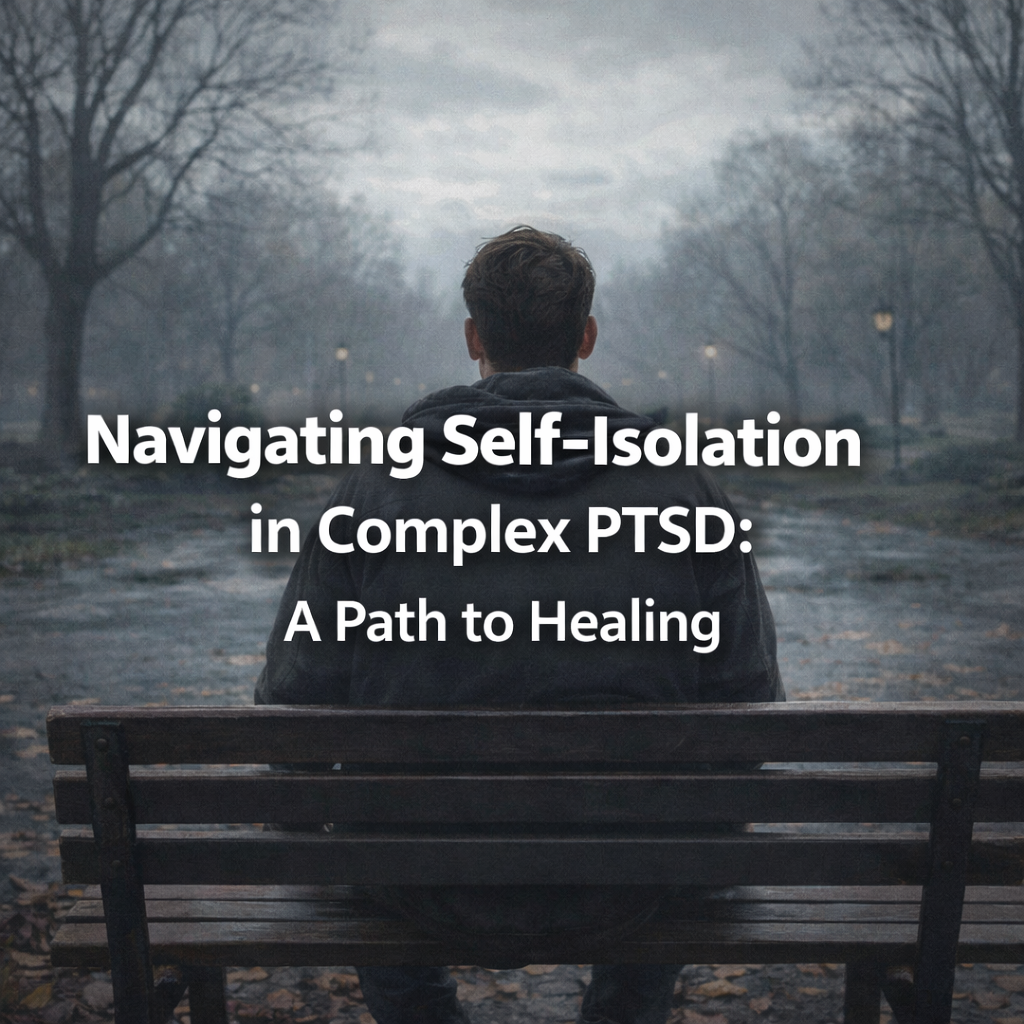
Navigating Self-Isolation in Complex PTSD: A Path to Healing
Mental HealthPsychologySelf-IsolationHealingTraumacPTSDAttachment StylesRelationships
Living with Complex PTSD (cPTSD) often means carrying the weight of past traumas, which manifest as persistent emotional and physical discomfort. This can lead to a sense of being trapped in the past, struggling to heal and feeling profoundly alone. Self-isolation, while seemingly counterintuitive, becomes a common coping mechanism. It's not always a conscious choice; sometimes, everyday interactions and environments trigger past traumas, making the safety of one's home a refuge. Avoiding social situations, like a simple knock at the door, becomes a way to prevent re-traumatization. This isolation can manifest in various ways, from avoiding social gatherings to modifying daily routines to minimize contact with others.
However, self-isolation can also be a deliberate act of self-preservation. Building walls and armor becomes necessary to protect oneself from further harm. Nature, animals, and solitary activities like journaling offer solace and a sense of peace. The focus shifts from quantity to quality in relationships, prioritizing deep, meaningful connections over superficial interactions. This introspection allows for healing and self-discovery. The chronic nature of cPTSD often leads to mental fog, emotional exhaustion, and physical pain, making it difficult to manage multiple responsibilities. Taking life at a slower pace becomes a form of therapy, allowing for rest and recovery.
One of the significant challenges for individuals with cPTSD is distinguishing between what is safe and secure versus what is familiar and comfortable. Early childhood trauma can distort one's perception of safety, leading to attraction towards toxic relationships and situations. This can result in repeated re-traumatization, making self-isolation a means of survival. According to Dr. Judith Lewis-Herman, healing from complex trauma involves establishing safety, mourning and grieving, and re-establishing connections. These stages are crucial but can take years to navigate, especially when building a sense of safety. Research indicates that individuals with cPTSD often exhibit avoidant attachment styles, further contributing to self-isolation.
Several factors contribute to this self-imposed isolation. The cyclic nature of trauma, where unresolved past experiences are triggered by similar events, can lead to a desire to avoid relationships altogether. Isolation provides a sense of safety, creating a circular pattern of disconnection. Connecting with others can be exhausting, requiring energy to mask emotions and engage in small talk. As priorities shift, superficial connections lose their appeal, leading to further withdrawal. However, prolonged self-isolation can exacerbate depressive symptoms and even lead to suicidal thoughts. Recovery from complex trauma requires connection, both with oneself and with others. Re-engaging with the world involves peeling back layers of disconnection and understanding the reasons behind them. This process is neither easy nor quick, and rushing it can lead to re-traumatization. True healing requires addressing the core issues and learning to reconnect with oneself and one's life. Ultimately, individuals with complex trauma need empathy, compassion, and a secure base—someone they can rely on through thick and thin. Through healing, they learn to provide that secure base for themselves.
0:000:00