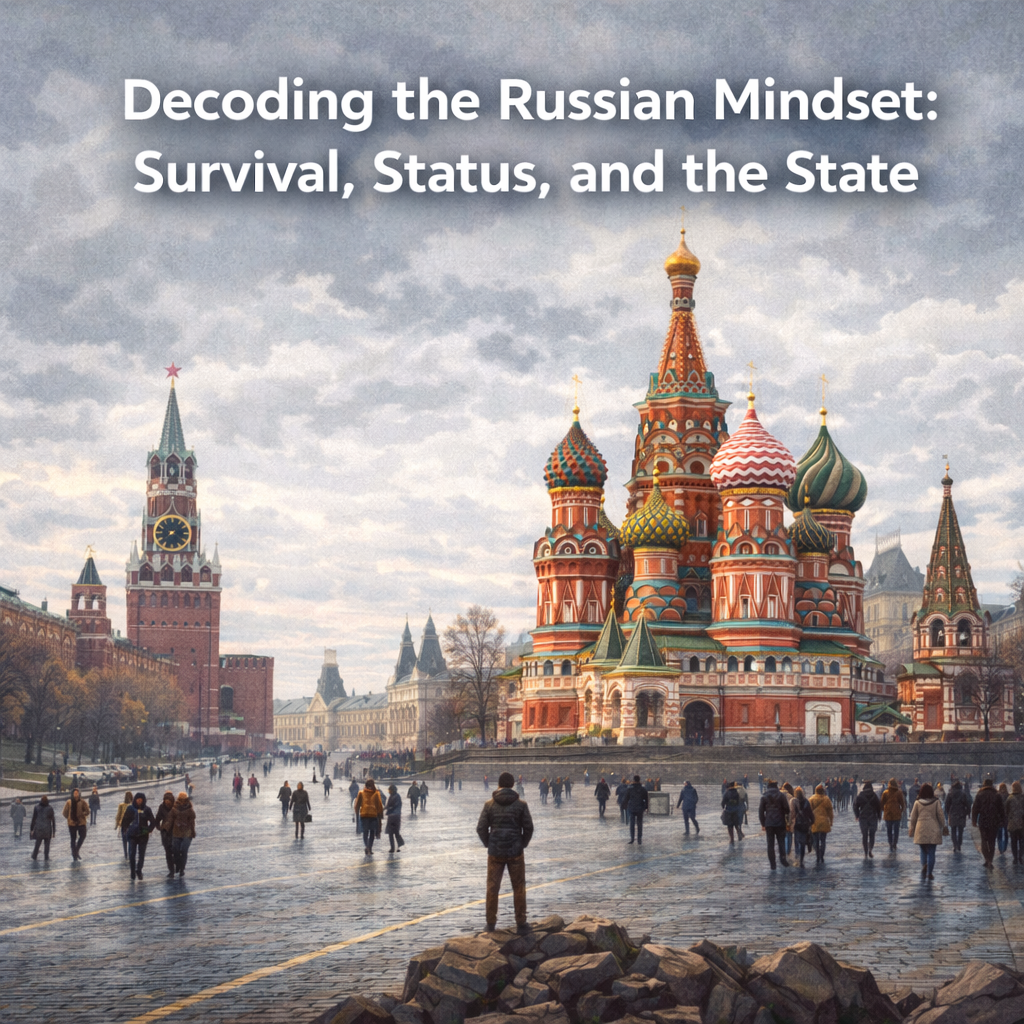
Decoding the Russian Mindset: Survival, Status, and the State
RussiaRussianPutinVladimir PutinMindsetSurvivalStatusPolitical ApathyLoyaltyAdaptation
To understand the Russian mindset, one must recognize that many behaviors are survival habits honed through generations of pressure. What appears as contradictory or illogical to Westerners is often a set of adaptations to a unique historical and political landscape. The emphasis on appearance over substance is a key element. In Russia, prestige acts as a form of protection, opening doors and influencing treatment. This is why status symbols, like expensive clothing or cars, are so important. When financial means are lacking, people resort to borrowing, faking, or clinging to titles to maintain their position. This obsession with appearances extends to the state level, where displays of strength and grandeur often mask underlying weaknesses.
Scheming, or 'skhematoz,' is another critical survival skill. It involves finding workarounds and loopholes to navigate the numerous restrictions imposed by institutions. Those who insist on playing fair are often seen as helpless, while those who can navigate the system are respected. This logic extends to the state level, where practices like parallel imports are used to circumvent international sanctions. The state itself is viewed ambivalently: it is seen as both brutal and dangerous, yet also as a protector against external threats. This perception stems from a history of invasions and border changes, leading to a desire for a strong state that inspires awe and fear.
Political apathy is a common trait, rooted in the belief that individual actions have little impact and that the truth is often obscured. This stems from a history of rulers operating as a separate caste, making decisions at the expense of the population. As a result, politics is seen as something out of reach and morally tainted. The Soviet system further reinforced this apathy, turning political participation into a ritual of voting as directed. Over time, the state discouraged horizontal cooperation, leading to a lack of experience in defending rights through political means.
Patriotism in Russia often serves as a public signal of loyalty, rather than a genuine love of country. It is a way to demonstrate agreement and avoid suspicion, as neutrality can be interpreted as betrayal. This leads to a culture of everyday theater, where people perform loyalty through slogans and attendance at events. However, this often masks a deeper hypocrisy, with elites seeking exit routes while demanding patriotic sacrifices from the lower classes. The state reinforces this dynamic through propaganda and the instilling of fear, creating an emotional trap akin to Stockholm syndrome.
Self-worth in Russia is often unstable, oscillating between feelings of superiority and inferiority. This is linked to a desire for admiration and recognition, with a tendency to react with spite and revenge when love is not returned. This dynamic is evident in Russia's interactions with the outside world, such as the reaction to doping scandals. Finally, the constant pulling away of the floor, through wars, purges, and economic collapses, has led to a focus on short-term survival. This results in cynicism and a tendency to keep a low profile, making Russians appear strange to Westerners who operate within a more stable environment. Ultimately, understanding the Russian mindset requires recognizing that many behaviors are adaptations to a harsh and unpredictable environment.
0:000:00