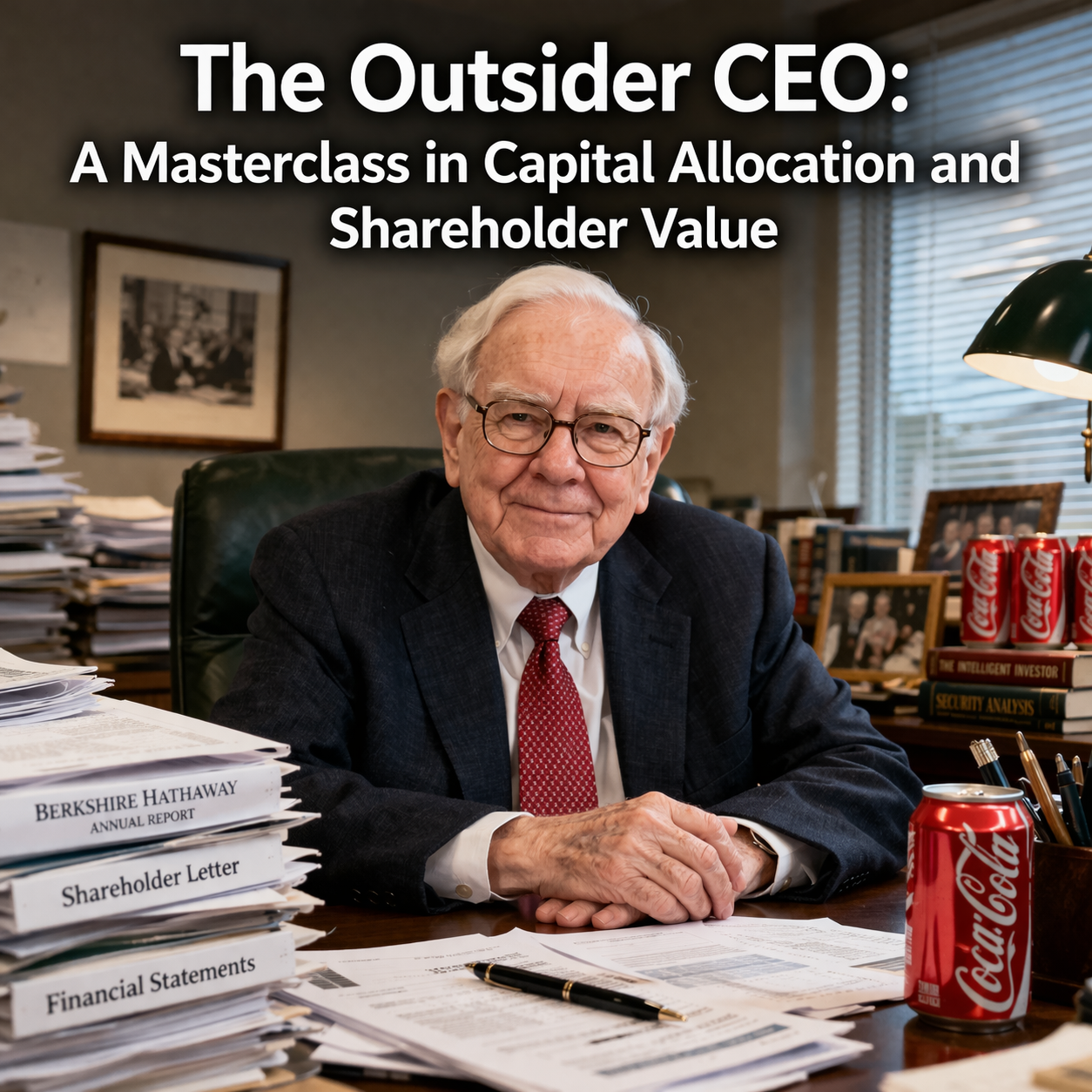
The Outsider CEO: A Masterclass in Capital Allocation and Shareholder Value
CEOCapital AllocationShareholder ValueInvestmentLeadershipManagementFrugalityDecentralizationCash FlowWarren BuffettHenry Singleton
Exceptional CEOs, the 'Outsiders,' defy conventional expectations. They aren't necessarily charismatic, Manhattan-based empire builders. Instead, they excel at capital allocation, prioritizing shareholder returns above all else. Their success is quantifiable: they outperform the S&P 500 by a significant margin, proving the value of their unique approach. The most critical skill for a CEO is not just running the business, but deploying the capital it generates effectively. This requires an investor mindset, a skill often distinct from those that initially propelled them to the CEO position. They have five primary options: investing in existing operations, acquiring other businesses, issuing dividends, paying down debt, or repurchasing stock. The best CEOs strategically blend the first three, recognizing that dividends, while popular, can be tax-inefficient and signal limited growth potential. They view their company's stock price as a benchmark for capital allocation, buying back shares when undervalued and issuing them when overvalued, aligning their interests with shareholders. These CEOs prioritize shareholder value, understanding they are hired to benefit the owners, not build personal empires. They demonstrate this through personal investment in the company, organization-wide share ownership incentives, and a willingness to divest or close unprofitable units. They favor decentralized operations, empowering individual business units and minimizing middle management. This fosters entrepreneurial energy and autonomy, but they centralize capital allocation, ensuring every investment meets rigorous return-on-capital standards. They focus on long-term cash flows, not short-term earnings, understanding that accounting metrics can be misleading. They prioritize pre-tax cash and develop their own metrics to measure business performance, such as EBITDA. Finally, they are frugal, prioritizing efficiency and cost-consciousness. They understand that the goal is not to have the biggest operation, but to achieve the greatest results with the least resources. This frugality extends to all aspects of the business, from travel expenses to office decor. By embracing these principles, CEOs can create lasting value for shareholders and build truly exceptional companies. The outsider approach emphasizes substance over style, results over appearances, and long-term value creation over short-term gains. It's a philosophy that can benefit not only CEOs, but also investors and anyone seeking to make the most of their resources.
0:000:00