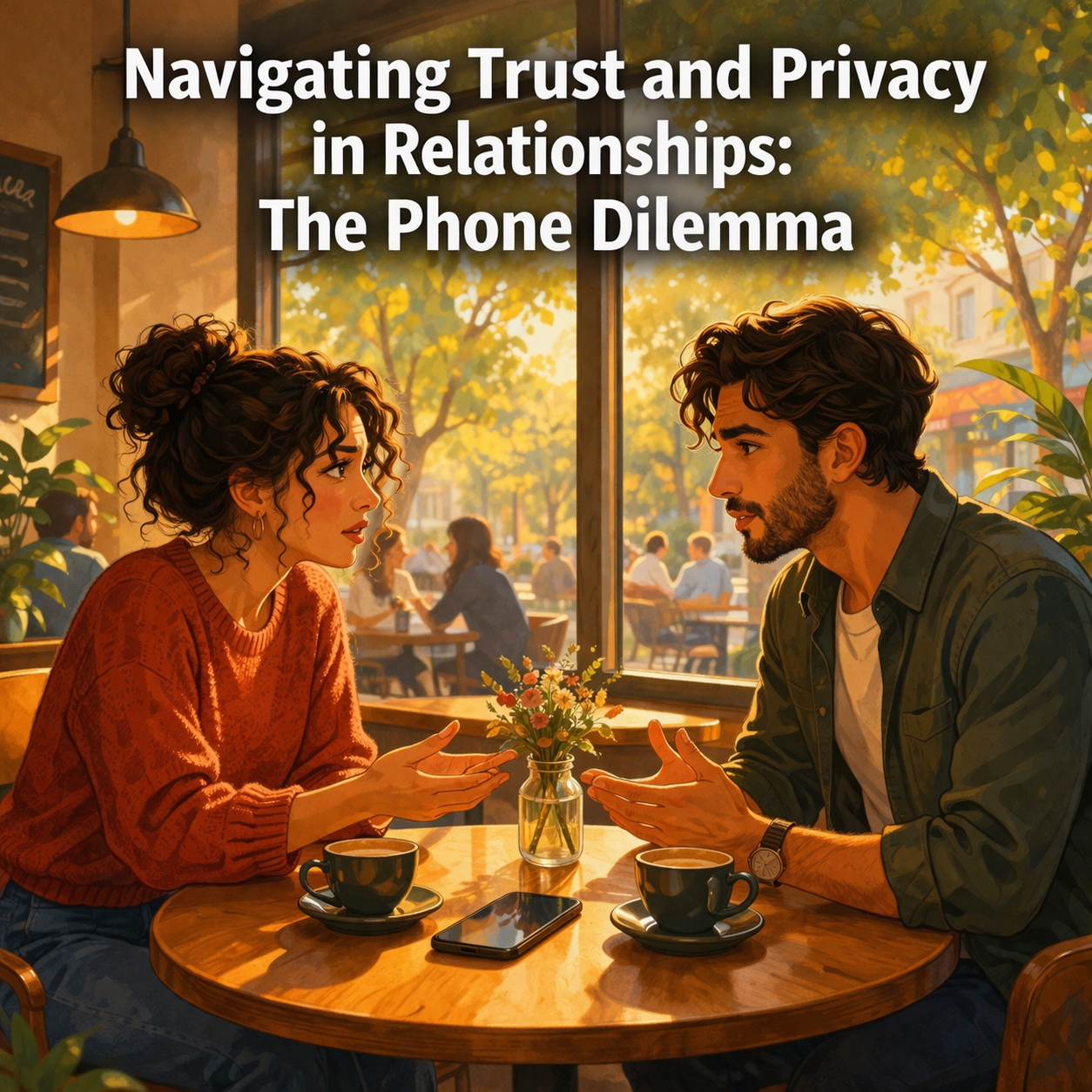
Navigating Trust and Privacy in Relationships: The Phone Dilemma
trustprivacyrelationshipscommunicationcontrolhonestyrespectboundariestransparencypersonal space
The debate over whether a partner should have access to one's phone highlights the delicate balance between trust, privacy, and control within a relationship. The core issue revolves around the perceived need for transparency versus the right to personal space. When one partner requests access to the other's phone, it often stems from a desire for reassurance and a fear of hidden information. However, the refusal to grant access can be interpreted as a sign of distrust or concealment, leading to conflict and suspicion.
Trust is the bedrock of any healthy relationship, and it is built on consistent honesty and open communication. When trust is present, the need to monitor or control a partner's behavior diminishes. However, past experiences, insecurities, or societal norms can erode trust, leading to a desire for greater transparency. The act of sharing a phone can be seen as a gesture of vulnerability and openness, signaling a willingness to be transparent and accountable. Conversely, maintaining privacy can be viewed as a sign of respect for individual autonomy and the recognition that each partner is entitled to their own personal space.
Control dynamics also play a significant role in this debate. The demand for unrestricted access to a partner's phone can be perceived as an attempt to exert control and dominance. This can create an imbalance of power within the relationship, where one partner feels pressured to comply with the other's demands. Such dynamics can undermine the sense of equality and mutual respect that is essential for a healthy partnership. It's important to distinguish between genuine concerns about trust and underlying issues of control or insecurity. Open and honest communication is crucial for addressing these issues and finding a resolution that respects both partners' needs and boundaries.
Ultimately, the decision of whether to share a phone is a personal one that should be made jointly, based on mutual understanding and respect. There is no one-size-fits-all answer, as each relationship has its own unique dynamics and expectations. The key is to engage in open and honest dialogue about the underlying concerns and motivations driving the request for access. By addressing these issues directly, couples can work together to establish boundaries that promote both trust and individual autonomy. If one partner feels the need to check the other's phone, it may be a sign of deeper issues within the relationship that need to be addressed. These issues could include past betrayals, unresolved conflicts, or underlying insecurities. Seeking professional counseling or therapy can provide a safe and supportive space for couples to explore these issues and develop healthier communication patterns.
In conclusion, the phone dilemma serves as a microcosm of the broader challenges of navigating trust, privacy, and control in relationships. By approaching this issue with empathy, understanding, and a willingness to compromise, couples can strengthen their bond and create a more fulfilling and sustainable partnership. The focus should be on building a foundation of trust and open communication, rather than resorting to surveillance or control tactics. Remember, a healthy relationship is one where both partners feel respected, valued, and secure in their individuality.
0:000:00