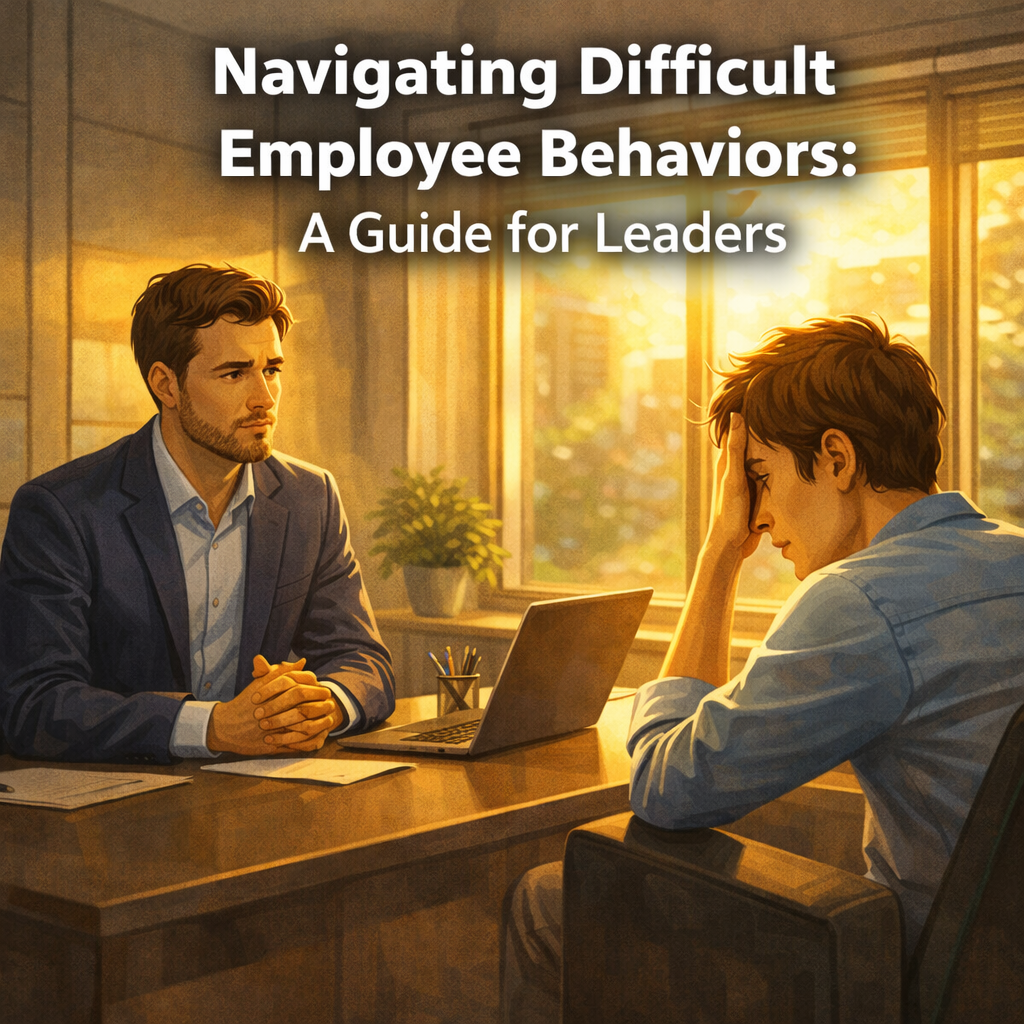
Navigating Difficult Employee Behaviors: A Guide for Leaders
employee managementleadershipconflict resolutionworkplace culturecommunicationperformance managementHRcoachingmotivation
Managing difficult employees is a common yet challenging aspect of leadership. Disruptive behaviors can negatively impact team morale, productivity, and overall company culture. As a leader, addressing these issues promptly and professionally is crucial. Start by understanding the root causes of the behavior, which may stem from frustration, lack of motivation, feeling disconnected, or even personal issues. It's essential to differentiate between intentional undermining and unintentional behavior arising from different perspectives or communication styles. Focus on improving specific behaviors rather than judging the individual. Provide clear expectations, resources, and growth opportunities. Encourage open communication to build trust and address conflicts early. Be receptive to feedback about management styles and organizational dynamics. Document expectations, behavioral changes, and consequences of failing to improve. Monitor progress through feedback, work quality evaluations, and regular meetings. Use behavioral interviews during hiring to identify candidates who align with company culture. Stay calm, show respect, and consider coaching to foster growth. Address issues directly, focusing on the impact on the team and organization. Develop collaborative action plans with measurable goals and timelines. Consider your role in the problem, addressing any lack of motivation by adjusting job descriptions, workload, or providing training. Involve HR when necessary and know when termination is the only option. By following these steps, leaders can effectively manage difficult employees, improve workplace dynamics, and maintain a positive company culture. Remember, the goal is to support employees in correcting their behavior and finding solutions that benefit both the individual and the organization. Effective management of difficult employees requires a blend of empathy, clear communication, and a commitment to fostering a positive and productive work environment. It's about creating a space where employees feel valued, heard, and supported in their professional growth.
0:000:00