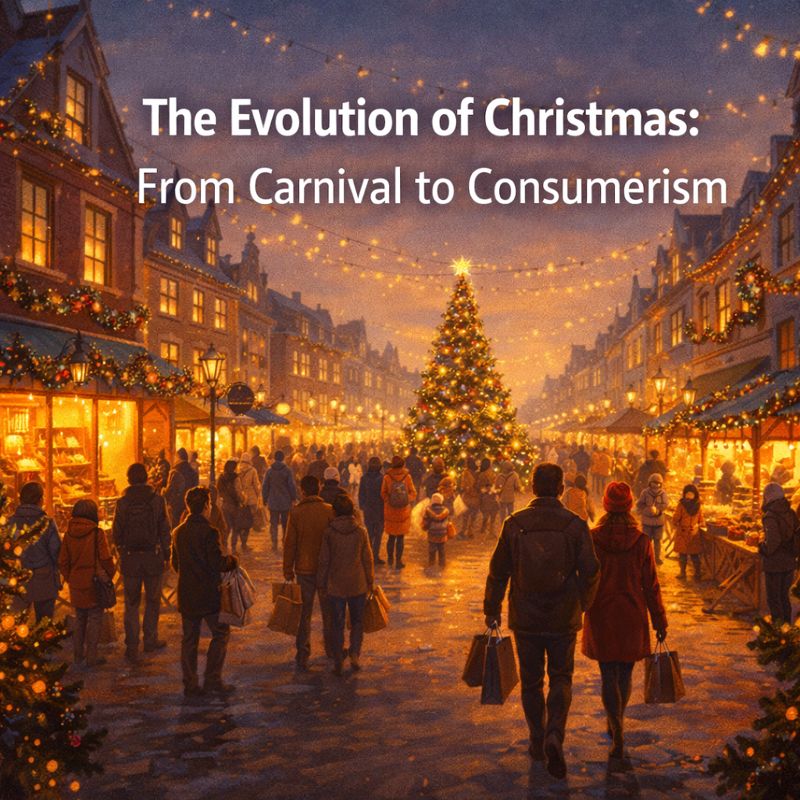
The Evolution of Christmas: From Carnival to Consumerism
ReligionHistorySociologyChristianityChristmasTraditionCultureSocial Change
Christmas, a holiday now synonymous with family gatherings and gift-giving, has a history far removed from its current domesticated form. Originally, it was a raucous winter carnival, a period of deliberate social inversion marked by excess, noise, and the suspension of societal norms. This chaotic celebration served as a crucial pressure valve in societies defined by scarcity, hard labor, and rigid hierarchies. The traditions of feasting, drinking, and mocking authority provided a temporary release from the constraints of daily life. The date itself was strategically chosen by the Church to overlay existing pagan celebrations of the winter solstice, highlighting the holiday's complex origins. In early colonial America, the Puritans even banned Christmas due to its perceived moral disorder and association with the squandering of resources. The transition from a public carnival to a private, family-centered celebration was a deliberate effort by the ruling classes to regain control over a holiday that had become a threat to social order. Figures like John Pintard advocated for moving Christmas into the home, shifting the focus from community gatherings to the family unit, and especially to children. The introduction of Santa Claus as a central figure was a cultural innovation designed to promote values of peace and good behavior, a stark contrast to the holiday's rebellious origins. Gift-giving, too, was repurposed as a means of channeling excess, replacing the abundance of food and alcohol with material goods purchased by industrial workers. Today, Christmas has become a highly commercialized event, driven by relentless marketing campaigns and the pressure to buy gifts. The holiday now speaks of consumption and nostalgia, a significant departure from its roots in scarcity and survival. Understanding this evolution reveals that traditions and culture are not static entities but rather social responses to specific problems. As such, they can be rethought and reshaped to better serve contemporary needs and values. The modern Christmas, with its emphasis on consumerism and manufactured sentiment, stands in stark contrast to its origins as a chaotic, community-based release of social tensions. This transformation underscores the dynamic nature of cultural practices and their ability to adapt to changing social and economic conditions. The holiday's journey from a wild winter carnival to a domesticated family celebration reflects broader shifts in societal values and power structures. By understanding this history, we can critically examine the contemporary celebration of Christmas and consider alternative ways of engaging with the holiday that align with our own values and priorities.
0:000:00