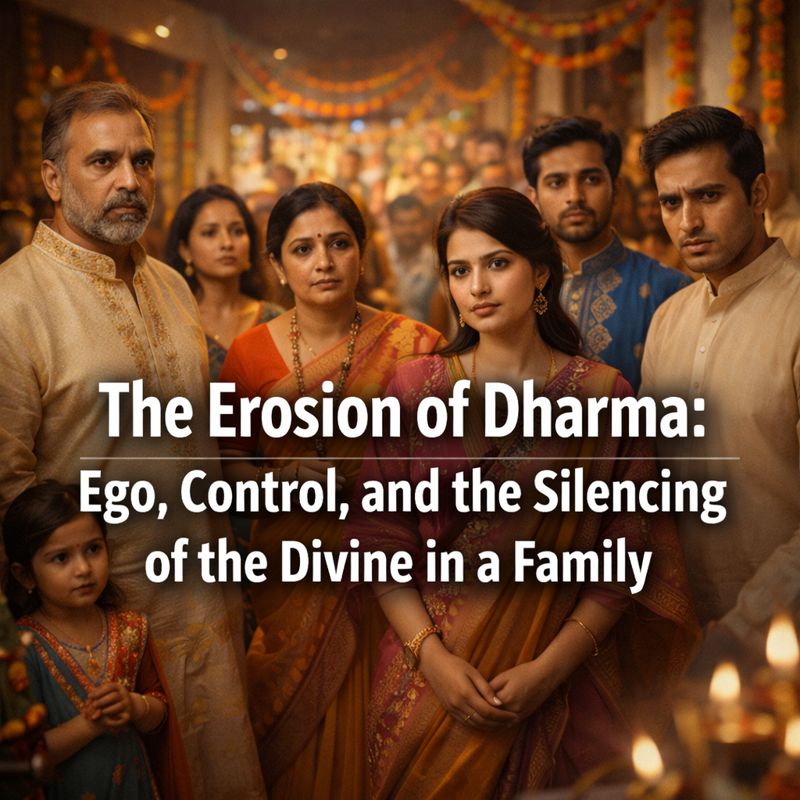
The Erosion of Dharma: Ego, Control, and the Silencing of the Divine in a Family
IndianHinduismFamily DynamicsEgoControlTraditionDharmaRelationships
In households where ego supplants divine guidance, families fracture, and tradition becomes a tool for control. When a matriarch's ego reigns supreme, the values of compassion, wisdom, and grace are silenced, replaced by suspicion and ridicule. This creates an environment where wives are not welcomed but merely tolerated, and faith is mocked rather than practiced. The essence of devotion is lost, transforming the home into a battlefield ruled by fear. The manipulation of cultural influence to instill toxic dependency, driven by spite, reveals a deeper issue of control masquerading as tradition. Daughters-in-law are treated as outsiders, subjected to demands for respect without reciprocation, fostering an environment of emotional isolation. The silent trap set for the new bride involves a household governed by a controlling mother-in-law and a manipulative brother-in-law, designed to exploit and isolate. The ultimate cruelty is the attempt to emotionally separate a mother from her child, driven by a hunger for control rather than love. The erosion of values occurs when men in the family prioritize a cruel mother's desires over their wives, rejecting the divine and embracing bitterness. This leads to the mocking of sacred traditions and the abandonment of cultural essence, turning faith into ridicule. The true tragedy lies in the potential for warmth, shared burdens, and generational wisdom that is lost to power plays and silent cruelty. In such homes, women are forced to merely survive, their existence a constant rebellion against the oppressive environment. The absence of divine presence and the dominance of ego create a space where love turns into hate, and a house remains, but it is no longer a home.
0:000:00