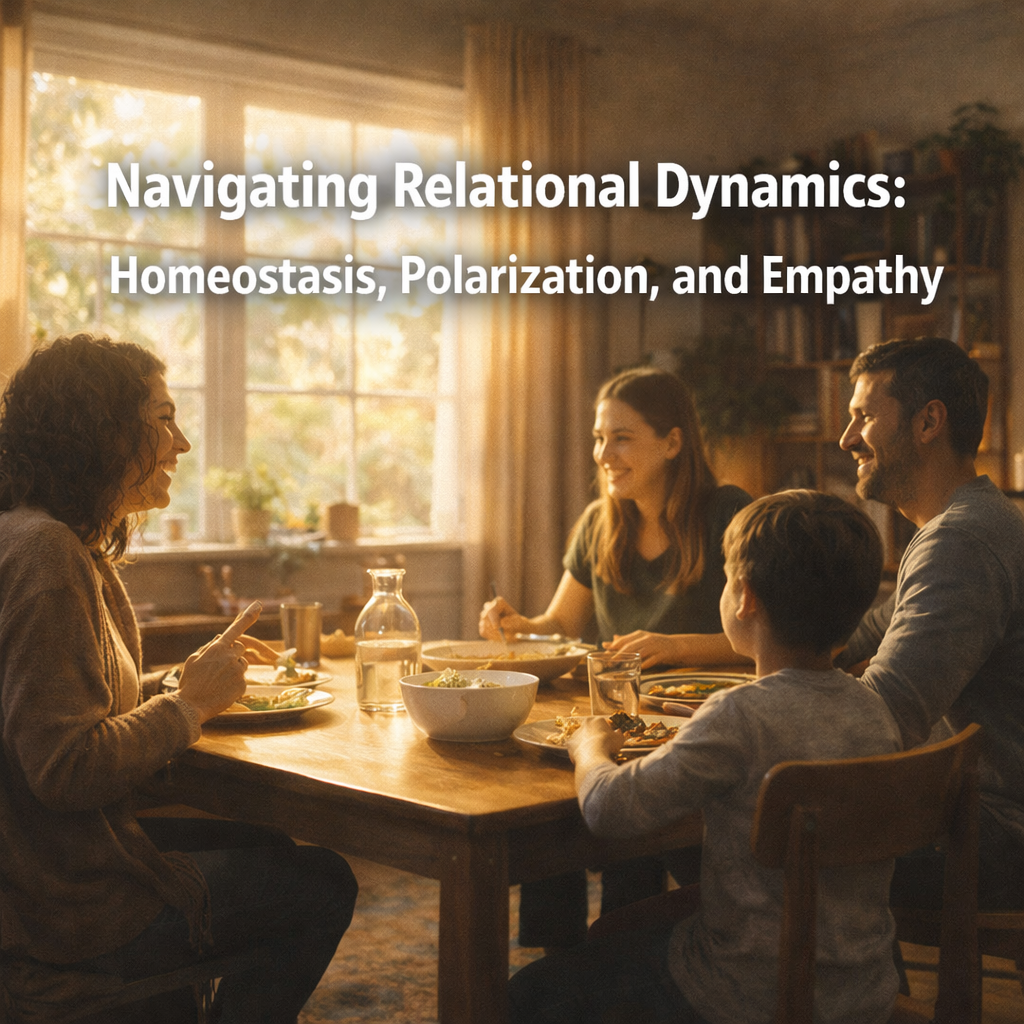
Navigating Relational Dynamics: Homeostasis, Polarization, and Empathy
relationshipsfamily systemshomeostasispolarizationempathycommunicationchangebalancerolestherapyself-awareness
Relationships, especially within families, often operate under a principle called homeostasis, a tendency to maintain balance and resist change. When one person attempts to alter their behavior, the system may push back, seeking to revert to the familiar status quo, even if it's unhealthy. This resistance to change can manifest in various ways, such as family members reacting negatively to someone asserting themselves or expressing their needs. To foster lasting change, it's essential to introduce a 'homogenizer,' something that helps the new balance take root. This could involve sustained commitment to new behaviors, addressing the underlying needs that the old behaviors fulfilled, or seeking professional guidance through family therapy.
Polarization is a common manifestation of homeostasis, where individuals adopt opposing roles to maintain equilibrium. For example, if one person is highly stressed and proactive, another might become passive and easygoing. While this can create a temporary balance, it becomes problematic when these roles become rigid and inflexible, leading to resentment and disconnection. In such cases, it's crucial to step out of the oppositional stance and move towards empathy and understanding. Instead of offering superficial positivity, acknowledge the other person's struggles and work together to find solutions. This requires flexibility, intentionality, and a willingness to challenge ingrained patterns.
Ultimately, the goal is not merely to achieve balance but to foster closeness and connection. This involves trusting others to handle their responsibilities, acknowledging their strengths, and avoiding the trap of defining oneself by their weaknesses. It also requires examining one's own contribution to the cycle and identifying any enabling or rescuing behaviors that may be perpetuating the problem. By understanding the dynamics at play and taking proactive steps to change one's own behavior, it's possible to break free from negative cycles and create a more fulfilling and harmonious relationship.
0:000:00