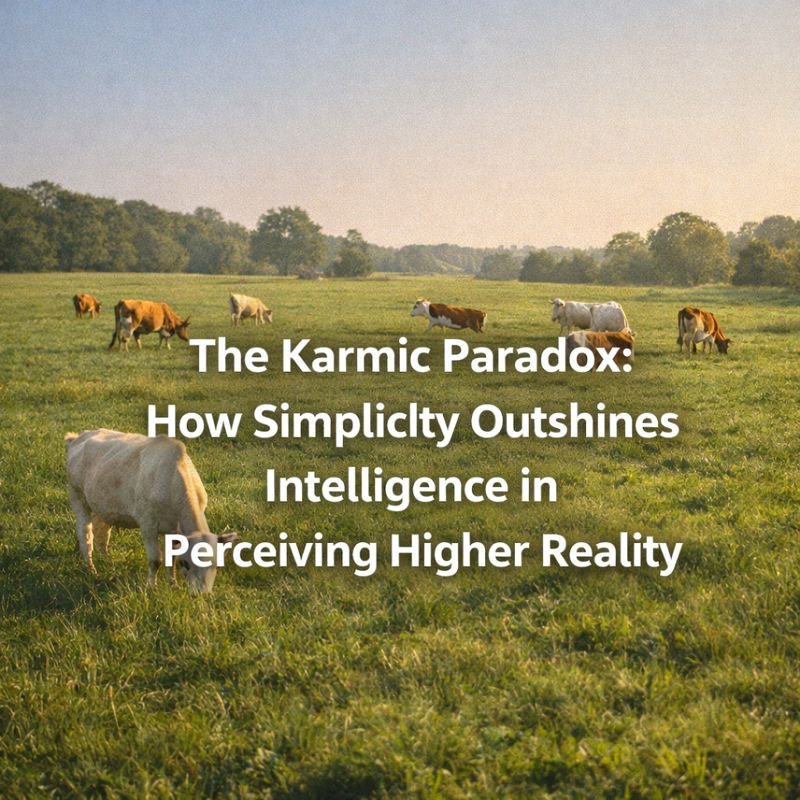
The Karmic Paradox: How Simplicity Outshines Intelligence in Perceiving Higher Reality
KarmaDharmaHinduismBhagavad GitaSanatana DharmaConsciousnessSpiritualityAnimalsIntelligenceEgo
The recognition of higher consciousness isn't exclusive to scholars or the intelligent; it's often first perceived by beings unburdened by ego, like animals in Vrindavan. Their instinctive response to the divine flute illustrates a core karmic principle: unobstructed awareness readily aligns with higher reality. Humans, with their intellect, often filter this direct experience through analysis and identity, creating a barrier to immediate perception. The Bhagavad Gita highlights this contrast, noting that what is 'night' for most—sensory noise and ego—is 'awakening' for the self-controlled, and vice versa. Stillness and receptivity, as embodied by trees and mountains, reflect a deeper alignment with dharma than brilliance driven by ego. The episode of Govardhan Hill exemplifies this, where the mountain's steadiness provides shelter, contrasting with Indra's destructive pride. Animals, often depicted with higher consciousness, demonstrate that purity of orientation outweighs cognitive capacity. Cows, revered for their non-violent sustenance and generosity, embody sattva—clarity, balance, and receptivity. Harming them is seen as consciousness-degrading because it disrupts this relational balance. Nāgas, or serpent beings, represent sensitivity and guardianship, attuned to subtle shifts in the environment. Their awareness is relational, preserving life through respect rather than control. Monkeys, like Hanuman, show that devotion and loyalty can elevate consciousness beyond intellect. Hanuman's actions are offerings, free from self-reference, leading to profound alignment. Elephants symbolize strength governed by wisdom, patience, and cosmic order. Ganesha embodies this paradox, removing obstacles by softening ego. The Rāmāyaṇa uses animals to illustrate that alignment, not capability, determines higher consciousness. Jatayu's sacrifice, the squirrel's humble contribution, and the Vānara Sena's collective alignment all demonstrate this principle. Ultimately, higher consciousness is accessed through alignment, not cognitive power. Animals reach higher perception through minimal ego, loyalty, and receptivity, while humans often fail due to dominance, identity, and knowledge overriding humility and devotion. The avatāras of Viṣṇu, often appearing as animals, further emphasize that higher consciousness doesn't require human intellect when alignment is pure. Matsya, Kurma, Varaha, and Narasimha each embody responsiveness, stability, instinct, and power aligned with dharma. The progression of avatāras highlights that animal forms embody direct alignment, while human intelligence brings ego and distortion. Spiritual clarity is about attunement, not intellect; awareness over analysis; presence over thought. Higher perception rewards clarity of orientation, not complexity.
0:000:00