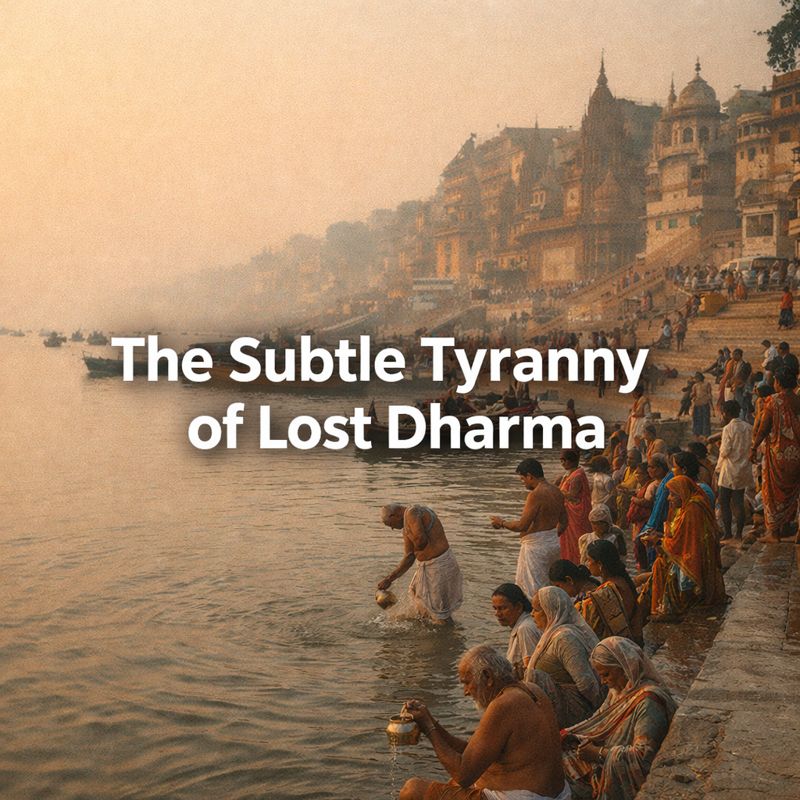
The Subtle Tyranny of Lost Dharma
IndiaHinduismDharmaKrishnaBhagavad GitaEthicsMoralityGreedPowerRenunciation
The essence of true decline lies not in grand, visible acts of destruction, but in the subtle erosion of Dharma from the heart. This insidious Ravana doesn't hoard gold alone; it strangles truth, corrupts with artful lies, and poisons hearts with pride, greed, and fear. It mocks the devout, shames the caring, and dims the fire in the eyes of the young, praising those who break the will and weakening the foundations of righteousness. This Ravana doesn't build; it binds, darkens minds, and strikes at Dharma from behind the walls of silence and seemingly sound advice. The true tragedy unfolds when elders, crowned in silence and clutching to inheritance, prioritize wealth over the well-being of the young, poisoning hearts with sharpened tongues and perpetuating a cycle of greed and violence. The forgotten path of Vanaprastha, meant for elders to relinquish worldly possessions and seek truth in silence, is now replaced by a desperate clinging to power and control. They speak of Dharma but chase the world with blinded eyes, forgetting the wisdom of letting go and embracing release. The Gita whispers a timeless truth: in relinquishing control, one finds true good. The adherence to Dharma is not merely a set of rituals or traditions, but a living, breathing force that guides our actions and shapes our character. When Dharma is compromised, the very fabric of society begins to unravel, leading to widespread suffering and moral decay. The pursuit of wealth and power, when divorced from ethical considerations, becomes a destructive force that undermines the well-being of individuals and communities. The true measure of a society's greatness lies not in its material wealth or military might, but in its commitment to upholding Dharma and ensuring the welfare of all its members. The elders have a responsibility to guide the younger generation towards the path of righteousness, not to exploit them for personal gain. The wisdom of the ages teaches us that true happiness and fulfillment come not from the accumulation of material possessions, but from the cultivation of inner peace and the pursuit of spiritual growth. The path of Vanaprastha offers a powerful antidote to the allure of worldly temptations, reminding us that true freedom lies in detachment and renunciation. The Gita's message of letting go is a timeless reminder that clinging to power and control only leads to suffering and disillusionment. By embracing the principles of Dharma, we can create a more just and compassionate world for ourselves and for future generations.
0:000:00