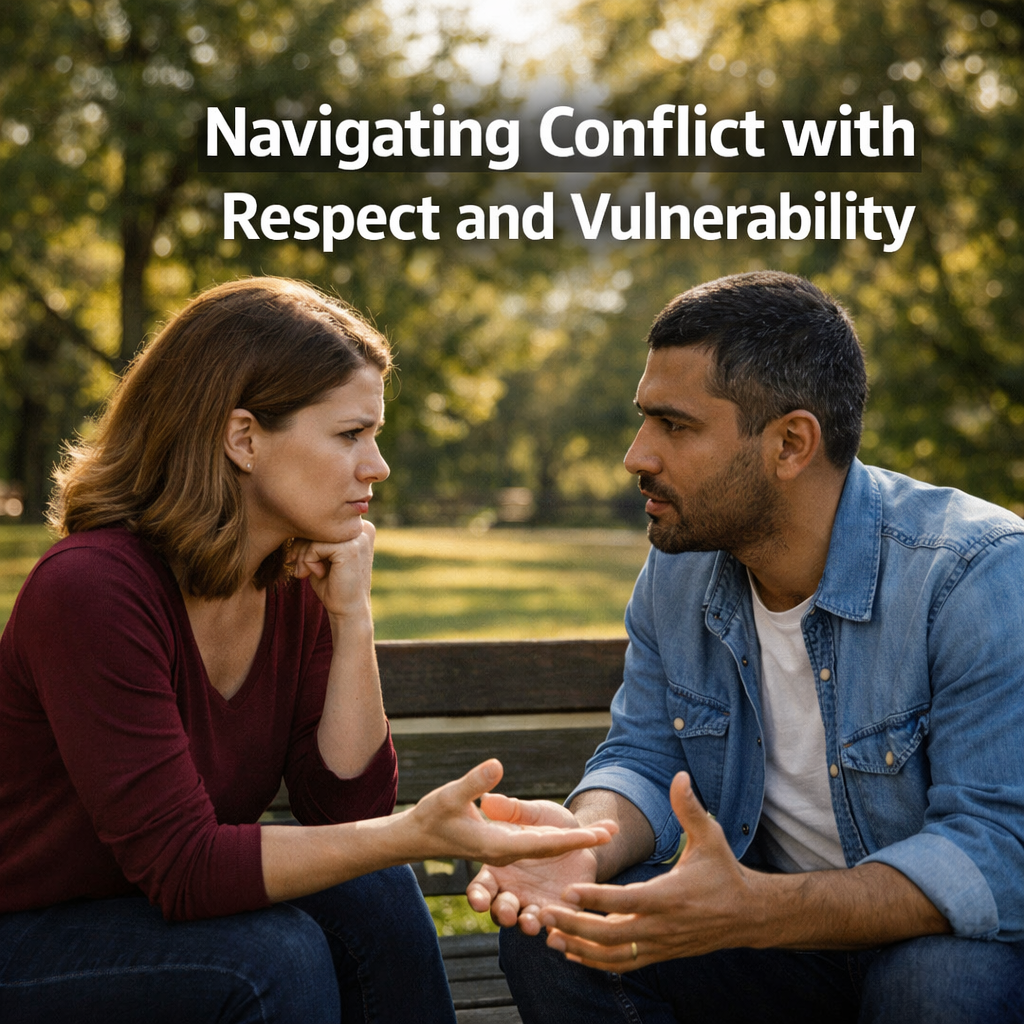
Navigating Conflict with Respect and Vulnerability
conflict resolutioncommunicationrelationshipsvulnerabilityself-regulationempathyboundariesrespect
Conflict is an inevitable part of human relationships, but it doesn't have to be destructive. The key lies in how we approach and manage these conflicts. Often, our initial reactions are fueled by hostility, blame, and contempt, which only serve to escalate the situation and damage the relationship. Instead, we must strive to engage in respectful conflict, where we prioritize understanding and empathy over winning or being right.
One of the most crucial steps in navigating conflict is self-regulation. Before addressing an emotionally charged topic, take the time to calm yourself and reflect on your feelings. This allows you to approach the conversation with a clearer mind and a more composed demeanor. Remember, your tone, body language, and words all matter. They can either contribute to a constructive dialogue or further inflame the conflict.
Vulnerability is another essential ingredient in respectful conflict. Instead of attacking or blaming the other person, focus on expressing your own feelings and experiences. Use "I" statements to communicate how their actions affect you, rather than accusing them of being lazy or uncaring. This approach fosters empathy and encourages the other person to see things from your perspective.
Setting healthy boundaries is also crucial, especially when dealing with unsafe people. However, it's equally important to avoid becoming one of those unsafe people ourselves. Hurt people hurt people, and we must be mindful of our own behavior and its impact on others. By practicing self-awareness and emotional regulation, we can break the cycle of negativity and create a more positive and supportive environment.
Ultimately, the goal of respectful conflict is not to avoid disagreements altogether, but to create a space where differences can be discussed openly and honestly, without resorting to personal attacks or defensiveness. By prioritizing empathy, vulnerability, and self-regulation, we can transform conflicts into opportunities for growth and deeper connection.
0:000:00