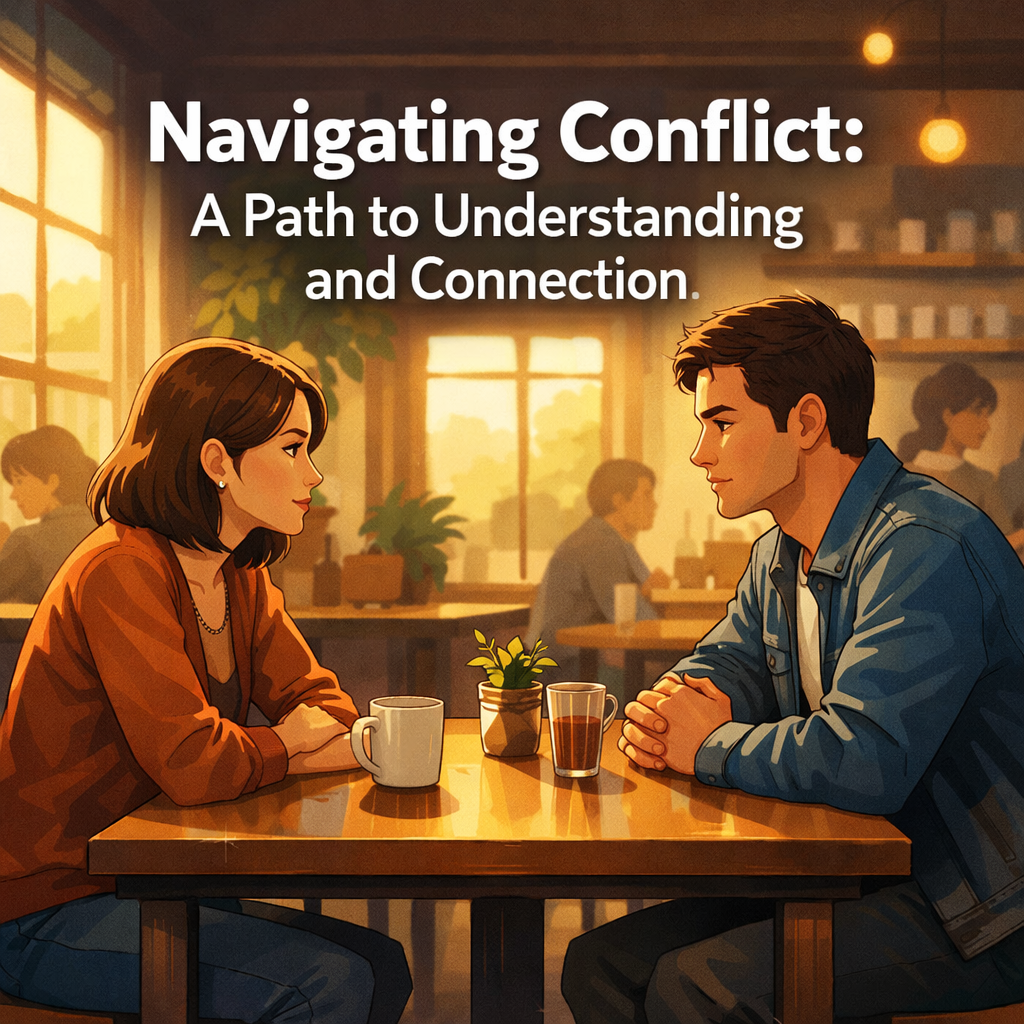
Navigating Conflict: A Path to Understanding and Connection
conflict resolutioncommunicationrelationshipsempathyvulnerabilityactive listeningself-reflectionpersonal growthforgivenessintimacy
Conflict is an inevitable part of any close relationship, but it doesn't have to lead to disconnection and hurt. Often, conflict arises from feeling unheard, invalidated, or attacked. When one partner brings up an issue, the other may react defensively, creating a cycle of escalation. This cycle is fueled by past experiences and unmet needs, where one partner feels justified in using a critical tone to get through, while the other feels blamed and inadequate. To break this cycle, both partners must take responsibility for their contributions to the conflict. This involves expressing feelings and desires in a respectful, vulnerable way, without criticism or blame. It also means listening with curiosity and validation, rather than interrupting or getting defensive. Ultimately, both partners want to feel safe, loved, respected, and valued. By understanding each other's needs and working together to meet them, couples can transform conflict into an opportunity for growth and deeper connection. This requires a willingness to be vulnerable, to acknowledge one's own shortcomings, and to prioritize the relationship over being right. It's about creating a space where both partners feel safe to express their feelings and needs without fear of judgment or rejection. This involves active listening, empathy, and a genuine desire to understand the other person's perspective. It also requires a commitment to self-reflection and personal growth, as well as a willingness to forgive and move forward. By embracing these principles, couples can navigate conflict in a way that strengthens their bond and fosters a deeper sense of intimacy and connection.
0:000:00