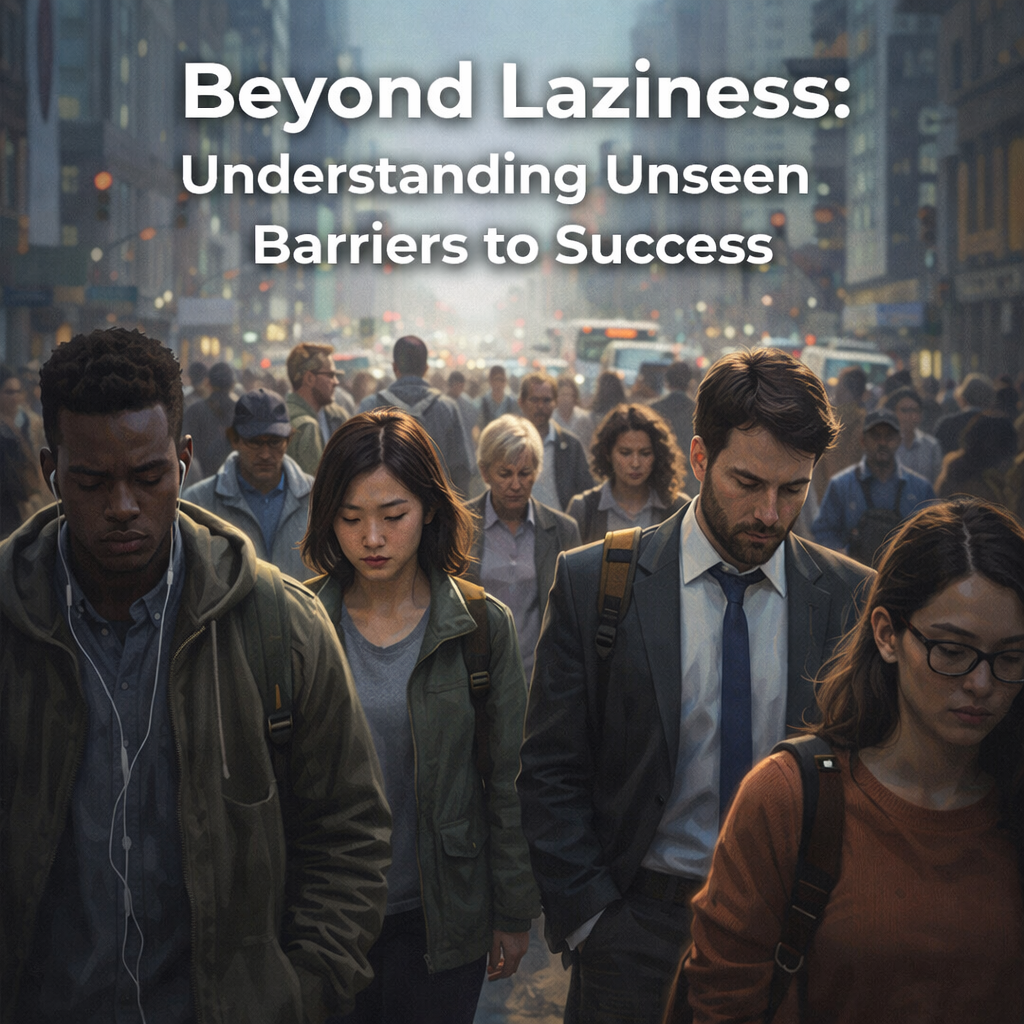
Beyond Laziness: Understanding Unseen Barriers to Success
Mental HealthProductivityPsychologyLife LessonsEmpathyUnderstandingBarriersProcrastination
The concept of laziness is often a misinterpretation of deeper, unseen barriers that individuals face. Instead of quickly judging someone as lazy, it's crucial to explore the situational and contextual factors influencing their behavior. These barriers can range from mental health challenges and executive functioning difficulties to past traumas and societal stigmas. By shifting our perspective from judgment to curiosity, we open ourselves to understanding and empathy, which are essential for fostering growth and support.
Procrastination, for instance, is frequently mistaken for laziness. However, psychological research suggests it often stems from anxiety about not meeting expectations or confusion about how to start a task. Recognizing these underlying causes allows us to address the real issues, such as fear of failure or lack of clear steps, rather than simply labeling someone as lazy. This approach encourages us to provide practical support, like breaking down tasks into smaller, manageable steps or offering emotional reassurance.
Moreover, the experiences of marginalized individuals, such as the homeless or those with mental illnesses, highlight the importance of understanding context. What might seem like poor choices on the surface often reflect coping mechanisms in response to chronic discomfort, lack of resources, or societal pressures. By acknowledging these realities, we can move beyond moralizing and offer compassionate assistance that addresses their specific needs.
Ultimately, the key takeaway is that behavior is rarely a simple matter of choice. There are always underlying factors at play, whether they are visible or not. By adopting a curious and empathetic approach, we can uncover these barriers and provide the support needed for individuals to thrive. This shift in perspective not only benefits those we seek to help but also enriches our own understanding of human behavior and the complexities of life.
0:000:00